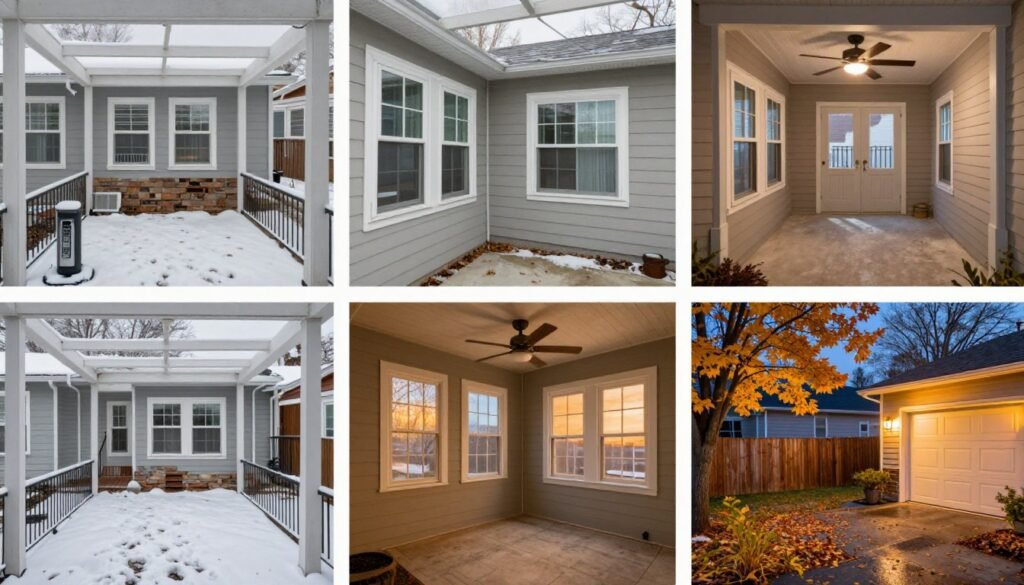
An enclosed breezeway connecting your home to your garage can transform an ordinary walkway into a functional, beautiful transition space. These versatile areas serve as more than just covered passages—they become extensions of your living space, offering protection from the elements while adding architectural interest and value to your property. Whether you’re planning a new build or looking to enclose an existing breezeway, these inspiring ideas will help you envision the perfect connection between your house and garage.
This Website contains affiliate links. That means I may earn a small commission if you purchase through my links, at no extra cost to you.
What Is an Enclosed Breezeway?
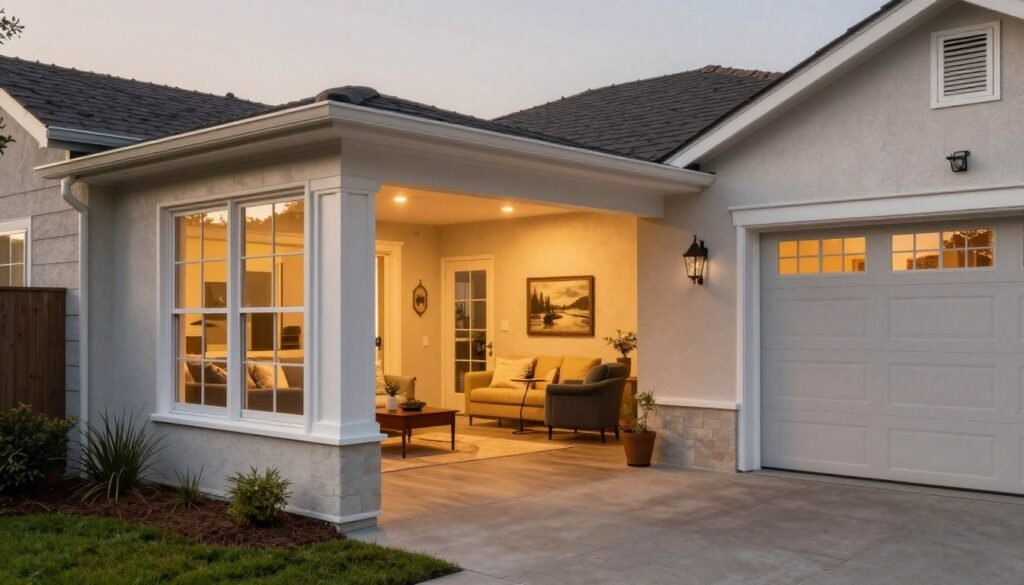
A breezeway is a covered outdoor passage that connects two structures—in this case, your main house and garage. When enclosed, this space transforms from a simple walkway into a functional room that bridges the gap between buildings while providing protection from weather and creating additional usable space.
Enclosed breezeways offer numerous advantages over open passages. They provide year-round protection from rain, snow, and harsh temperatures while creating a transition space that can serve multiple purposes. Many homeowners find these areas perfect for mudrooms, small sitting areas, or even indoor gardens.
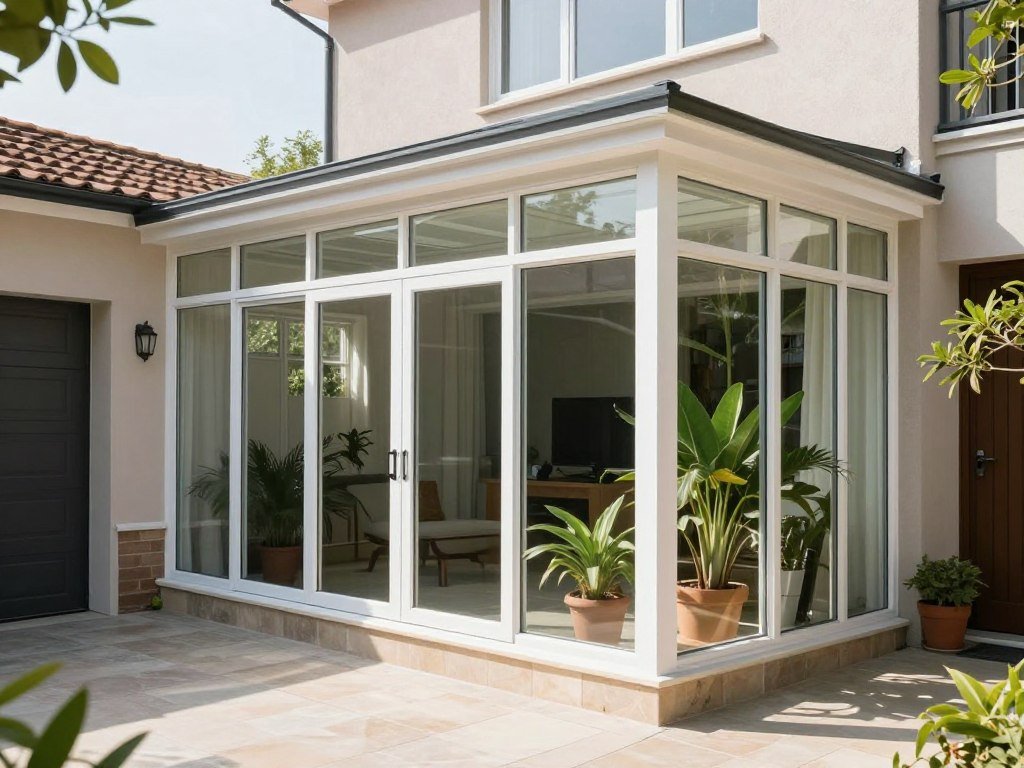
1. Sunroom Style with Glass Panels
One of the most popular enclosed breezeway ideas to garage is the sunroom approach, which uses full-height glass panels to create a bright, airy connection between structures. This design floods the space with natural light while maintaining protection from the elements.
The key to a successful sunroom-style breezeway is using quality glass that offers both insulation and UV protection. This prevents the space from becoming too hot in summer or too cold in winter. Consider adding interior blinds or shades for temperature control during extreme weather.
Create Your Glass Breezeway
Looking for high-quality glass panels for your sunroom breezeway? Find energy-efficient options that will keep your space comfortable year-round.
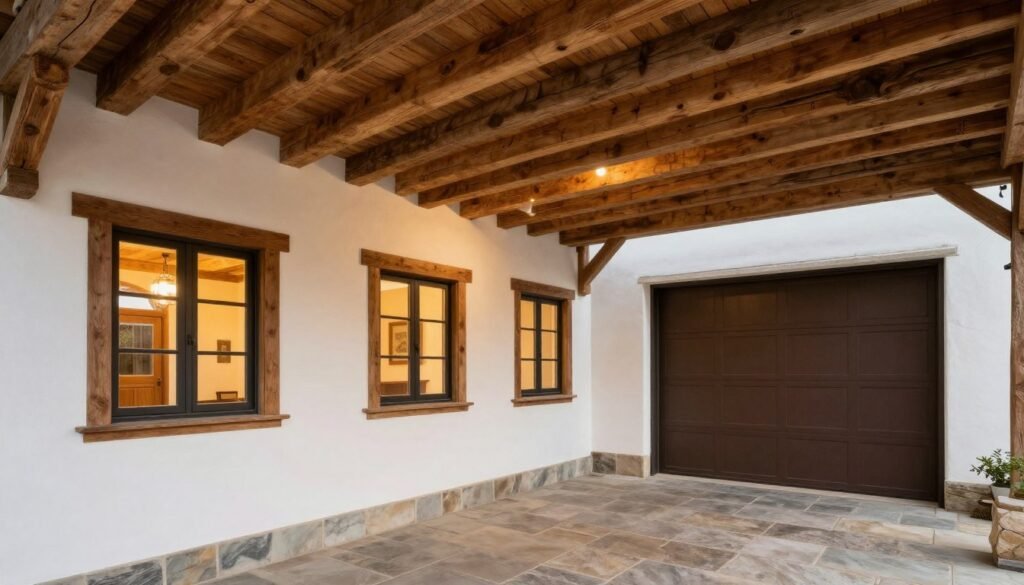
For homes with traditional or farmhouse aesthetics, a rustic enclosed breezeway with exposed wooden beams creates a warm, inviting transition between house and garage. This style works particularly well with older homes or properties aiming for countryside charm.
Incorporating natural materials like stone flooring and wooden wall paneling enhances the rustic appeal. Consider adding vintage-inspired light fixtures to complete the look. The combination of glass windows and natural wood creates a perfect balance of light and warmth.
Enhance Your Rustic Breezeway
Find the perfect rustic lighting fixtures to complement your wooden beam breezeway design.
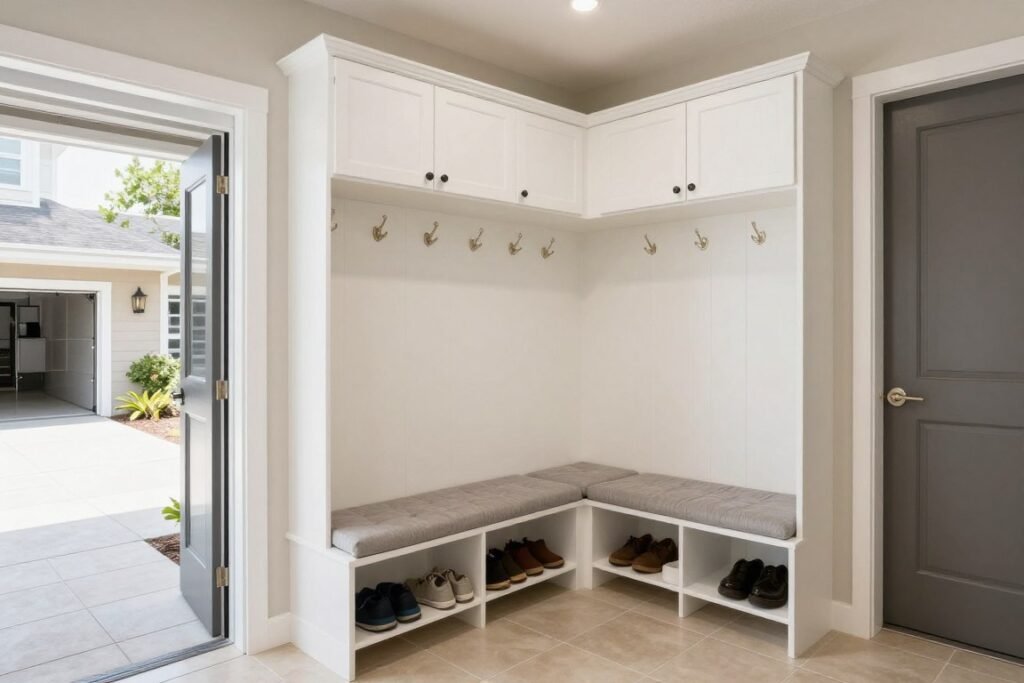
Transform your enclosed breezeway into a functional mudroom that serves as the perfect transition between outdoors and your clean home interior. This practical approach maximizes utility while maintaining an attractive connection between your house and garage.
Key elements for a successful mudroom breezeway include durable flooring that can withstand moisture, built-in storage for shoes and outerwear, and seating for putting on or removing footwear. Consider adding hooks at various heights to accommodate both adults and children.
Benefits of Mudroom Breezeways
Prevents dirt and debris from entering your main home
Creates organized storage for seasonal items
Provides a dedicated space for wet clothes and shoes
Adds functional square footage to your home
Creates a buffer zone between indoor and outdoor temperatures
Considerations
Requires careful planning for storage needs
Needs durable, water-resistant materials
May require additional heating in cold climates
Storage solutions must be balanced with walkway space
Regular cleaning needed to maintain functionality
When designing your mudroom breezeway, focus on creating systems that make daily life easier. Consider how your family uses the space and plan accordingly with appropriate storage solutions.
4. Four-Season Room with Climate Control
For maximum comfort and usability throughout the year, consider designing your enclosed breezeway as a fully climate-controlled four-season room. This approach transforms the connection between house and garage into a genuine living space that can be enjoyed regardless of outside temperatures.
Creating a successful four-season breezeway requires proper insulation, energy-efficient windows, and appropriate heating and cooling solutions. Mini-split systems work particularly well in these spaces, providing both heating and cooling without requiring extensive ductwork.
Climate Control for Your Breezeway
Find the perfect mini-split system to keep your enclosed breezeway comfortable all year long.
With proper climate control, your breezeway can function as a reading nook, small office, or even a breakfast area. The key is ensuring the space maintains a comfortable temperature without excessive energy costs.
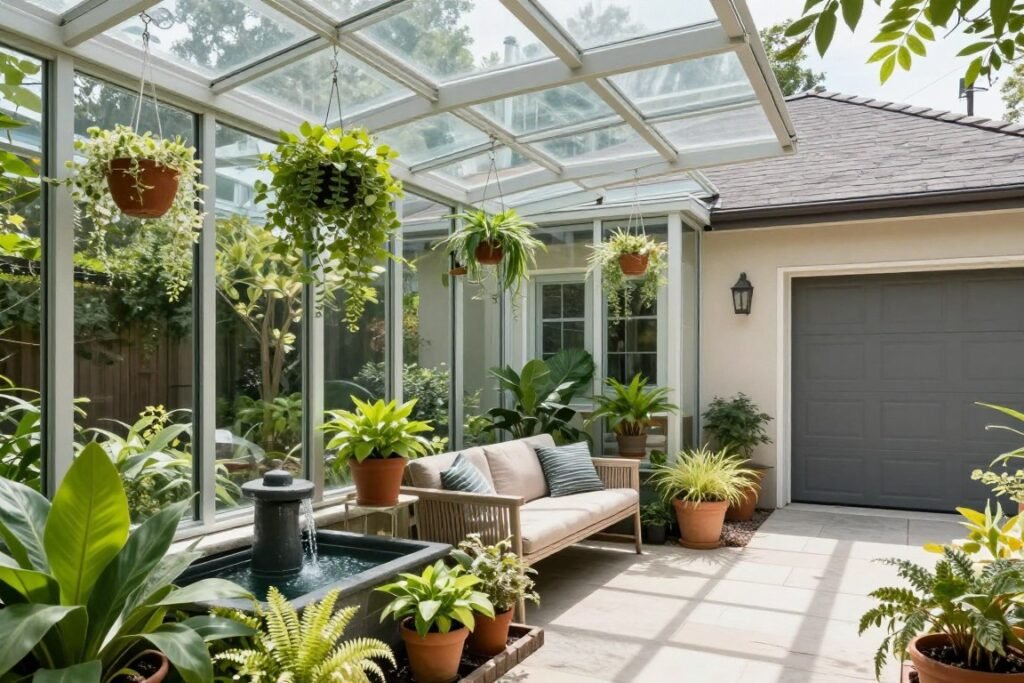
5. Indoor Garden Oasis Breezeway
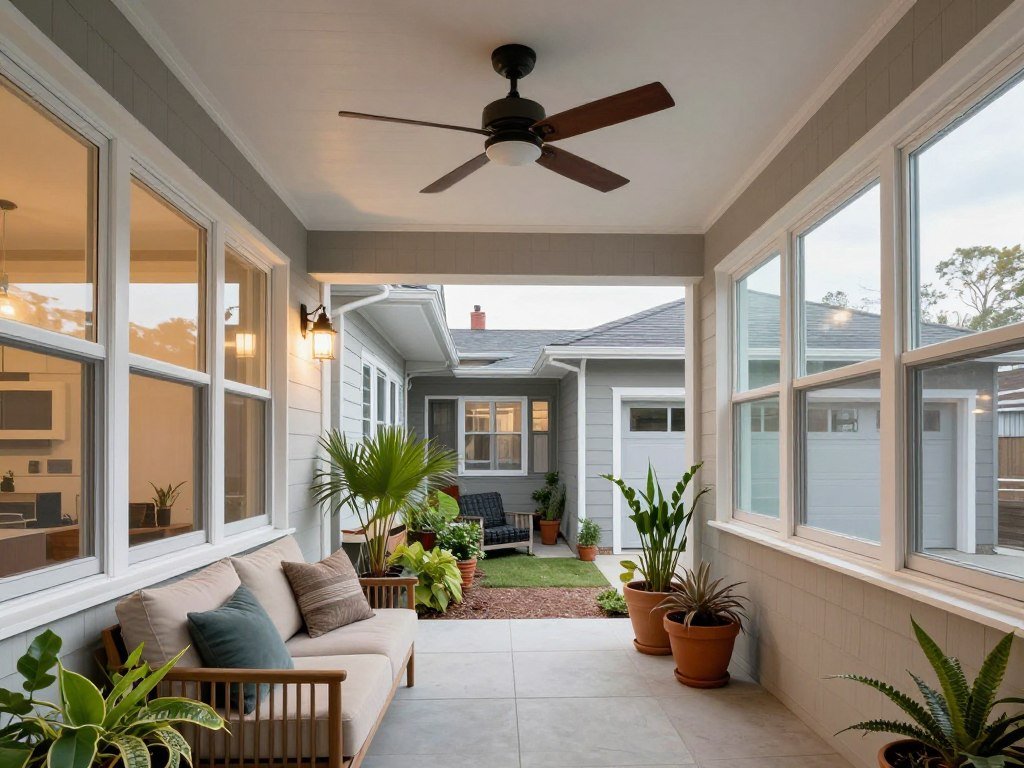
Harness the natural light of an enclosed breezeway by transforming it into a lush indoor garden that connects your home and garage. This approach creates a refreshing green space that brings nature into your daily transitions.
The abundant natural light in most enclosed breezeways creates an ideal environment for many houseplants. Consider incorporating a mix of floor plants, hanging baskets, and wall-mounted planters to create a lush, layered look without obstructing the walkway.
Best Plants for Breezeway Gardens
Boston ferns (for hanging baskets)
Snake plants (for low-maintenance corners)
Pothos (for trailing from shelves)
Fiddle leaf figs (for dramatic height)
Spider plants (for air purification)
Peace lilies (for filtered light areas)
Garden Breezeway Tips
Install drip trays under all plants
Consider automatic watering systems
Use varying heights for visual interest
Include seating for enjoying the space
Add grow lights for winter months
Choose durable flooring that handles moisture
Create Your Garden Breezeway
Find beautiful planters and stands to display your plants in your enclosed breezeway garden.
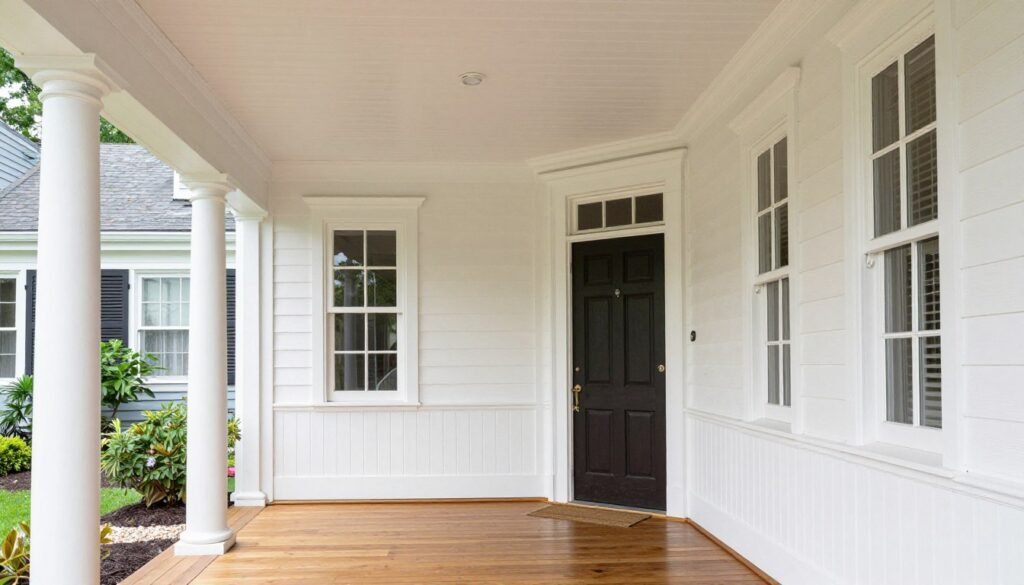
6. Traditional Enclosed Breezeway with Architectural Details
For homes with classic architecture, a traditional enclosed breezeway that incorporates architectural elements from both the main house and garage creates a seamless, elegant connection between structures.
Key elements of a traditional enclosed breezeway include consistent architectural details like crown molding, wainscoting, and trim work that matches the main house. Consider incorporating built-in window seats or display cabinets to enhance the formal character while adding functionality.
Flooring choices for traditional breezeways often include hardwood or high-quality tile that complements the home’s interior. Lighting fixtures should reflect the home’s period style, with options ranging from chandeliers to wall sconces depending on the ceiling height and overall aesthetic.
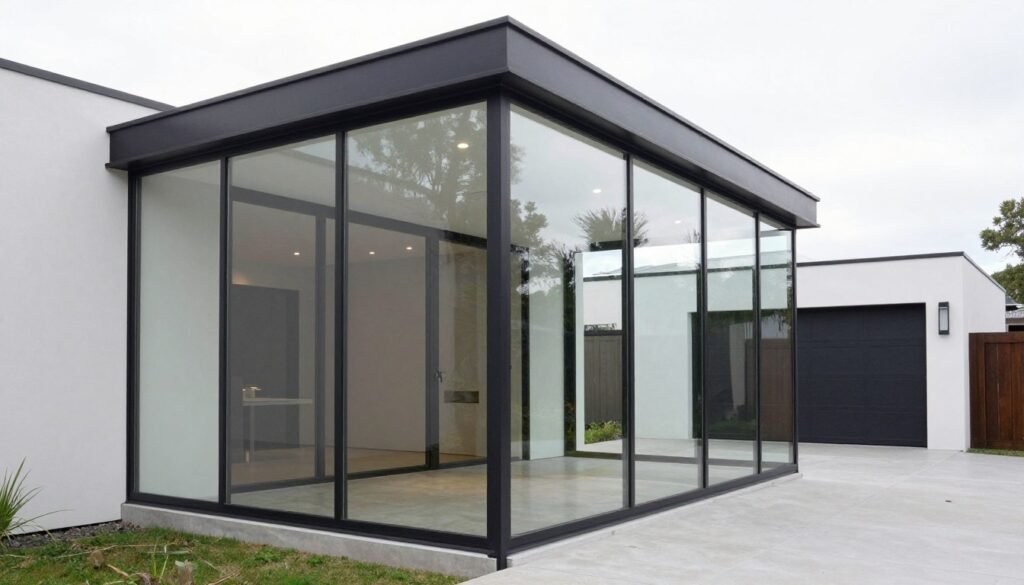
7. Modern Minimalist Glass Corridor
For contemporary homes, a sleek, minimalist glass corridor creates a striking enclosed breezeway to garage that emphasizes clean lines and transparency. This approach focuses on architectural simplicity while maximizing views and light.
The success of a minimalist glass breezeway lies in the quality and precision of its construction. Opt for high-performance glass with minimal framing to create the impression of an almost invisible connection between structures. Consider using frameless glass doors to enhance the seamless appearance.
Light Up Your Modern Breezeway
Find sleek, contemporary lighting fixtures to complement your minimalist glass breezeway design.
Flooring for minimalist breezeways often features polished concrete, large-format porcelain tiles, or seamless epoxy for a continuous, uninterrupted surface. Keep furnishings and accessories to a minimum to maintain the clean, open aesthetic.
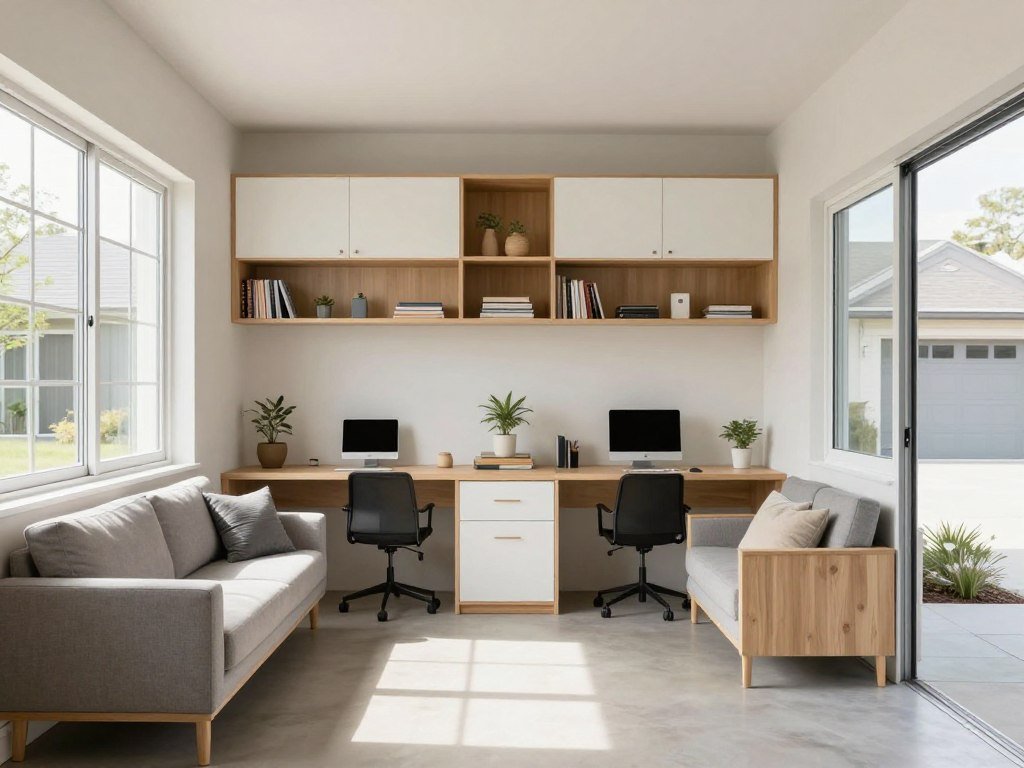
8. Multi-Purpose Breezeway Room
Maximize the utility of your enclosed breezeway by designing it as a flexible, multi-purpose space that can adapt to your family’s changing needs throughout the seasons and years.
The key to a successful multi-purpose breezeway is incorporating flexible furniture and storage solutions that allow the space to transform as needed. Consider including elements like:
Modular seating that can be rearranged
Folding or extendable tables
Built-in storage with adjustable shelving
Wall-mounted desks that can fold away when not in use
Rolling storage carts that can be moved as needed
Multi-functional furniture pieces like storage ottomans
This versatile approach allows your breezeway to serve as a home office, craft room, play area, or additional entertaining space depending on your current needs. The enclosed nature provides protection from the elements while the connection between house and garage makes it easily accessible.
9. Seasonal Considerations for Enclosed Breezeways
When planning your enclosed breezeway to garage, it’s essential to consider how the space will function throughout all seasons. Different climates present unique challenges that should influence your design decisions.
Proper drainage, dehumidifier, operable windows for ventilation
Summer
Excessive heat, glare, UV exposure
UV-filtering glass, ceiling fans, shades or blinds, cross-ventilation
Fall
Falling leaves, temperature drops, early darkness
Easy-clean surfaces, transitional heating options, good lighting
By anticipating seasonal challenges, you can design an enclosed breezeway that remains comfortable and functional year-round. Consider incorporating elements that can be adjusted seasonally, such as removable screens or interchangeable window treatments.
Year-Round Comfort Solutions
Find seasonal comfort solutions to keep your enclosed breezeway pleasant in any weather.
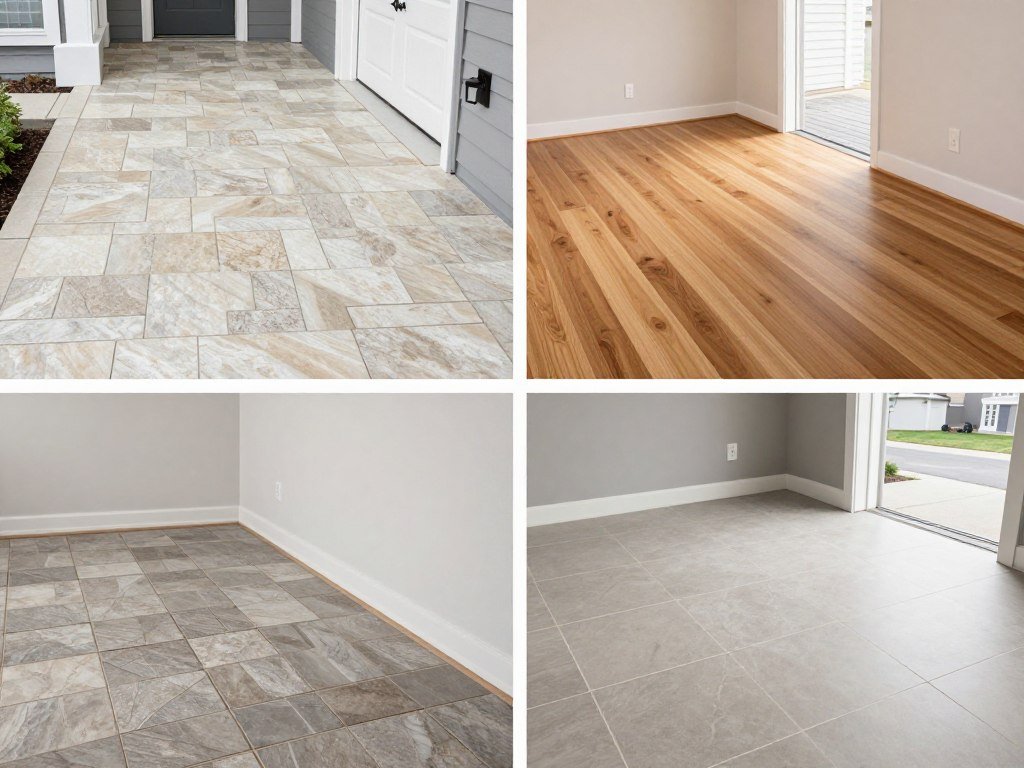
Selecting the right flooring for your enclosed breezeway is crucial for both aesthetics and functionality. The ideal flooring should withstand temperature fluctuations, potential moisture, and heavy foot traffic while complementing your design vision.
Porcelain Tile
Extremely durable and water-resistant
Available in countless styles and patterns
Works well with radiant heating systems
Easy to clean and maintain
Resistant to temperature fluctuations
Engineered Hardwood
More stable than solid wood in changing conditions
Provides warm, natural aesthetic
Available in water-resistant varieties
Can be refinished if damaged
Adds value to your home
Luxury Vinyl Plank
100% waterproof options available
Mimics wood or stone at lower cost
Soft and warm underfoot
Easy DIY installation
Highly durable against scratches
When selecting flooring for your enclosed breezeway, consider the transition to adjacent spaces. Creating smooth, level transitions between your breezeway and both your home and garage enhances both safety and visual flow.
Find Your Perfect Breezeway Flooring
Explore durable, beautiful flooring options that can withstand the unique conditions of an enclosed breezeway.
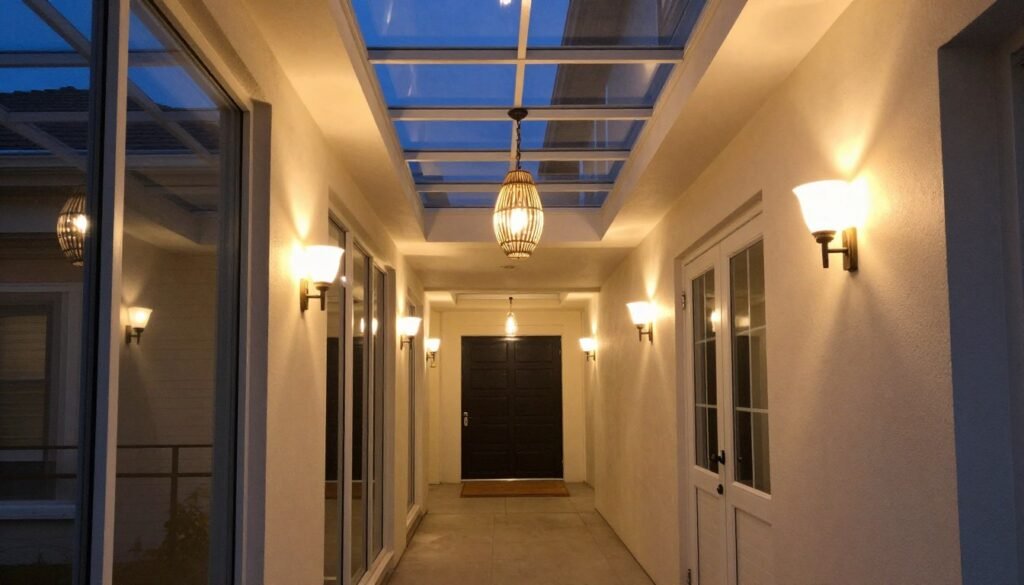
Proper lighting transforms an enclosed breezeway from a simple passage to a welcoming, functional space. A thoughtful lighting plan enhances both the aesthetics and usability of your breezeway throughout the day and evening.
The most effective breezeway lighting plans incorporate layers of light from multiple sources. Consider combining ambient lighting for overall illumination, task lighting for specific activities, and accent lighting to highlight architectural features or artwork.
Natural Lighting Enhancements
Skylights or roof windows for overhead natural light
Transom windows above doors for additional daylight
Glass blocks for privacy with light transmission
Light shelves to reflect sunlight deeper into the space
Light-colored interior finishes to maximize brightness
Artificial Lighting Options
Recessed ceiling lights for clean, unobtrusive illumination
Wall sconces to define the pathway and add warmth
Pendant lights for visual interest and focused light
LED strip lighting for subtle accent illumination
Motion-activated fixtures for convenience and security
When planning your breezeway lighting, consider how the space will be used throughout different times of day. Include dimmer switches to adjust light levels and create the appropriate atmosphere for various activities and seasons.
Illuminate Your Breezeway
Find the perfect lighting fixtures to create a welcoming atmosphere in your enclosed breezeway.
12. Budget Considerations for Enclosing a Breezeway
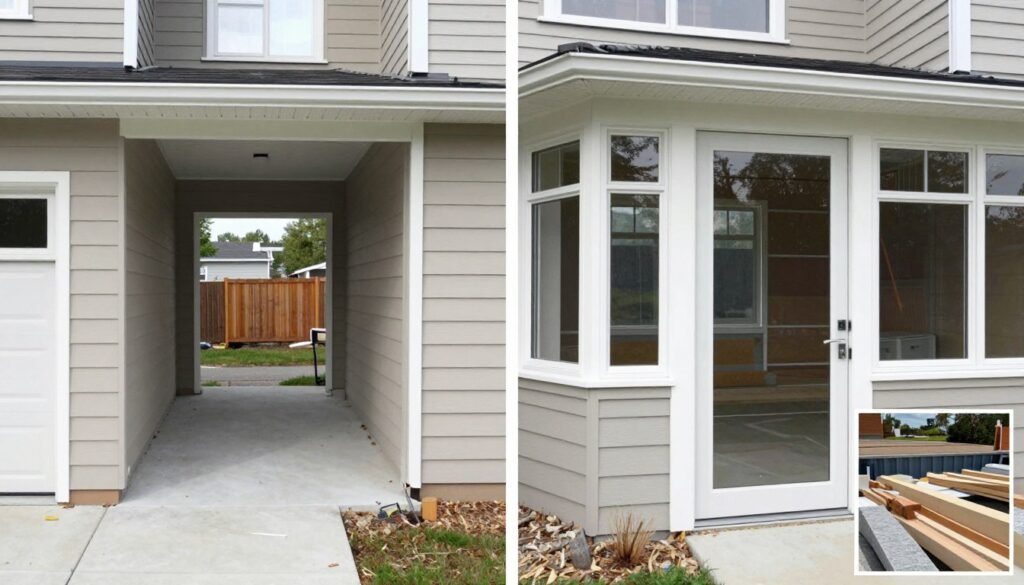
Creating an enclosed breezeway between your house and garage can vary significantly in cost depending on your design choices, materials, and whether you’re starting from scratch or modifying an existing structure.
Cost Factors Impact
4.5
Significance Rating
Size of Breezeway
4.5
Window Quality
5.0
Insulation Level
4.0
Flooring Selection
3.5
HVAC Integration
4.5
When budgeting for your enclosed breezeway project, consider both the initial construction costs and the long-term operational expenses. Energy-efficient windows and proper insulation may cost more upfront but can significantly reduce heating and cooling costs over time.
Remember that connecting two structures requires careful planning for proper drainage, foundation considerations, and roof integration. These structural elements should never be compromised to save money, as they ensure the longevity and safety of your breezeway.
For those working with limited budgets, consider phasing your project. You might start with the basic enclosure and add finishing touches like custom storage or specialty lighting over time as funds allow.
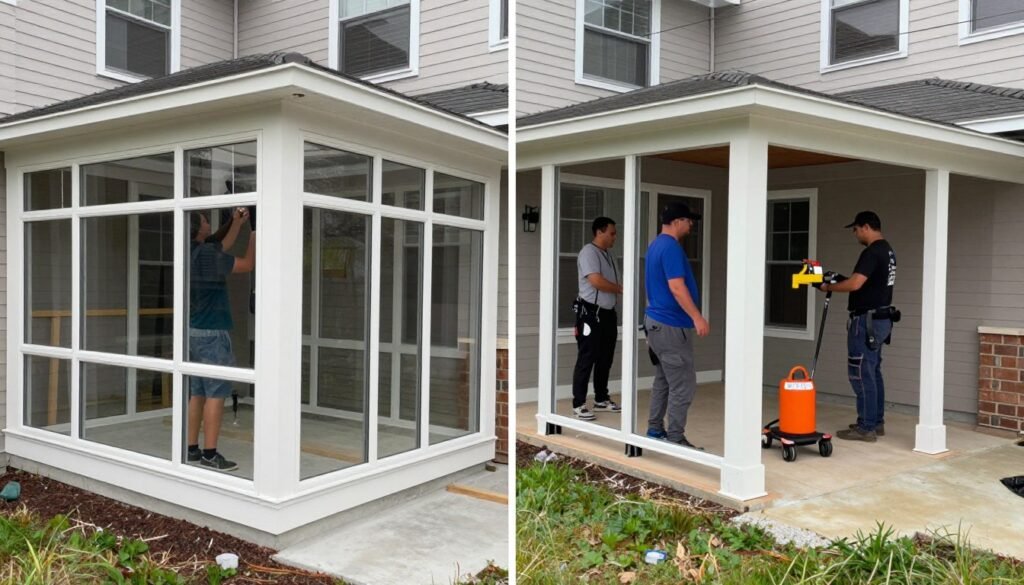
13. DIY vs. Professional Breezeway Enclosure
Deciding whether to tackle your breezeway enclosure as a DIY project or hire professionals depends on your skills, available time, and the complexity of your design vision.
DIY Approach
Potential cost savings on labor
Personal satisfaction of completing the project
Ability to work at your own pace
More control over material selection
Best for simple designs and those with construction experience
Professional Installation
Expert knowledge of building codes and permits
Access to specialized tools and techniques
Faster completion timeframe
Warranty protection on workmanship
Better results for complex designs and structural modifications
If you’re considering the DIY route, be realistic about your skills and the time commitment required. Enclosing a breezeway involves multiple construction disciplines including framing, window installation, roofing, electrical work, and finishing. Each requires specific knowledge and tools.
Even if you choose to hire professionals for the main construction, you can still participate in the project through design decisions, material selection, and perhaps handling some of the finishing work like painting or decorating.
For most homeowners, a hybrid approach works well—hiring professionals for the structural elements and technical systems while taking on some of the simpler aspects of the project personally.
14. Permit and Code Requirements
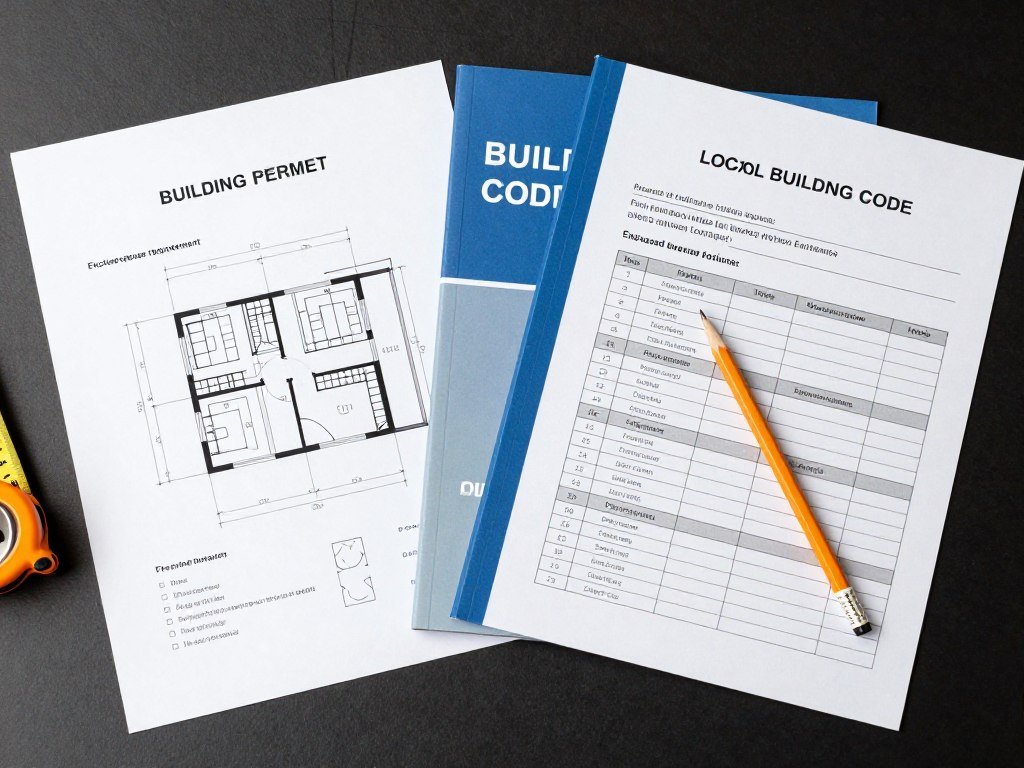
Before beginning your enclosed breezeway project, it’s essential to understand the local building codes and permit requirements that will affect your design and construction process.
Most municipalities require permits for enclosing a breezeway, as this constitutes a significant structural change to your property. The specific requirements vary by location but typically address:
Setback requirements from property lines
Maximum lot coverage percentages
Structural integrity and load-bearing capacity
Electrical and lighting code compliance
Egress requirements and emergency exits
Energy efficiency standards for windows and insulation
Roof drainage and water management
Fire separation between garage and living spaces
Working with an architect or contractor familiar with local building codes can help navigate these requirements. They can often anticipate potential issues before they arise and design solutions that will meet approval from building officials.
Failing to obtain proper permits can result in fines, forced removal of non-compliant structures, and complications when selling your home. Always check with your local building department before starting construction.
Additionally, if you live in a neighborhood with a Homeowners Association (HOA), you may need to submit your plans for approval before proceeding, even after obtaining municipal permits.
15. Bringing Your Enclosed Breezeway Vision to Life
An enclosed breezeway connecting your house to your garage offers a unique opportunity to create a functional, beautiful transition space that enhances your daily life and adds value to your home.
Whether you prefer a sunroom-style glass enclosure, a rustic space with exposed beams, or a modern minimalist corridor, the key to success lies in thoughtful planning that balances aesthetics with practicality. Consider how you’ll use the space throughout the seasons and design accordingly.
Remember that an enclosed breezeway is more than just a covered walkway—it’s an opportunity to create a unique space that reflects your personal style while solving practical needs. With careful attention to materials, lighting, climate control, and furnishings, your breezeway can become one of the most cherished areas of your home.
Start Your Breezeway Project
Ready to transform the connection between your house and garage? Find inspiration and materials to bring your enclosed breezeway vision to life.
We hope these enclosed breezeway ideas have inspired you to reimagine the connection between your house and garage. With creativity and careful planning, this transitional space can become a beautiful, functional extension of your home that you’ll enjoy for years to come.
Frequently Asked Questions About Enclosed Breezeways
How much does it typically cost to enclose a breezeway?
Enclosing a breezeway typically costs between ,000 and ,000, depending on size, materials, and complexity. Basic enclosures with standard windows fall on the lower end, while fully insulated, climate-controlled spaces with high-end finishes will be at the higher end of the range. Additional features like heated floors, custom lighting, or built-in storage will increase costs further.
Do enclosed breezeways add value to a home?
Yes, well-designed enclosed breezeways typically add value to a home by increasing the usable square footage and enhancing curb appeal. They’re particularly valuable in regions with extreme weather, where the protected passage between house and garage is highly desirable. The exact value added depends on the quality of construction, the functionality of the space, and regional preferences.
How do I prevent condensation in my enclosed breezeway?
To prevent condensation in an enclosed breezeway, ensure proper ventilation through operable windows or vents, install a dehumidifier if needed, use insulated glass windows, apply weather stripping around doors and windows, and maintain consistent temperature control. Proper insulation in walls and ceilings also helps minimize temperature differentials that cause condensation.
Can I enclose my breezeway in phases to spread out costs?
Yes, many homeowners successfully complete breezeway enclosures in phases. You might start with the basic structure and weatherproofing, then add finishing touches like custom storage, specialty flooring, or climate control systems later. However, it’s important to have a comprehensive plan from the beginning to ensure all phases work together cohesively and meet building code requirements.
What’s the best way to heat and cool an enclosed breezeway?
The most effective heating and cooling solutions for enclosed breezeways include ductless mini-split systems, radiant floor heating, small space heaters, and ceiling fans. The best choice depends on your climate, how you use the space, and whether it’s connected to your home’s existing HVAC system. In many cases, a combination approach works best—such as radiant floor heating for winter comfort and ceiling fans for summer cooling.