Your garage is more than just a place to park your car or store holiday decorations. With the right paint job, this often-overlooked space can become a workshop, home gym, or even an extension of your living area. A fresh coat of paint is one of the most cost-effective ways to dramatically transform your garage from drab to fab. In this comprehensive guide, we’ll explore creative garage painting ideas that will inspire you to reimagine this versatile space.
This Website contains affiliate links. That means I may earn a small commission if you purchase through my links, at no extra cost to you.
Inspiring Color Schemes for Your Garage Makeover
Choosing the right color scheme is the foundation of any successful garage transformation. The colors you select can make your space appear larger, brighter, and more inviting. Let’s explore some of the most effective garage paint color combinations that are trending in home design.
Bright & Modern Industrial
For a contemporary look that maximizes light reflection, consider a bright white or light gray for your walls paired with a contrasting darker floor. This combination creates a clean, professional appearance that makes your garage feel more like a premium space. Light colors also help illuminate dark corners, making it easier to find tools and supplies.
Classic & Clean Monochrome
A monochromatic color scheme using various shades of gray creates a sophisticated, timeless look. Light gray walls with darker gray trim and cabinets offer visual interest while maintaining a cohesive appearance. This palette works particularly well if your garage doubles as a workshop, as it provides a neutral backdrop that won’t compete with your projects.
Bold & Energetic Accent Walls
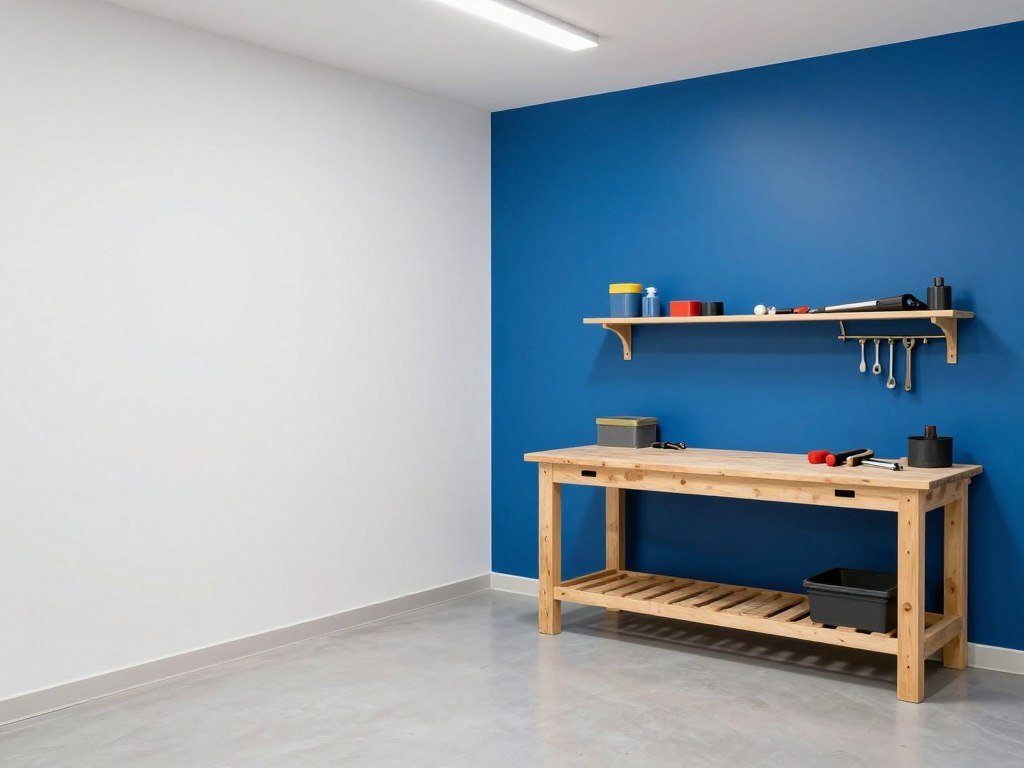
If you’re feeling adventurous, consider painting one wall in a bold color like deep blue, forest green, or even a vibrant red. This creates a focal point and adds personality to your space without overwhelming it. Accent walls work especially well behind workbenches or in areas where you want to draw attention.
For a more comfortable, inviting atmosphere, consider warm earth tones like beige, tan, or soft terracotta. These colors create a welcoming environment that transitions nicely from your home’s interior, especially if your garage serves as the main entrance to your house. Earth tones also help disguise dirt and scuffs better than stark whites.
Ready to explore color options?
Find the perfect garage wall paint in your preferred shade. Quality paints designed specifically for garage environments will ensure a long-lasting finish.
Wall Painting Strategies for Garage Transformation
Your garage walls are the largest canvas in the space and deserve special attention. The right approach to wall painting can dramatically change how your garage feels and functions.
Two-Tone Wall Technique
A practical and visually appealing approach is to use a two-tone wall technique. Paint the bottom third of your walls (approximately 3-4 feet from the floor) in a darker, more scuff-resistant color, and the upper portion in a lighter shade. This not only creates visual interest but also hides marks from car doors, bicycles, and other items that might bump against the lower walls.
Moisture-Resistant Formulations
Garages often experience temperature fluctuations and humidity changes that can affect paint adhesion and durability. Opt for moisture-resistant paint formulations specifically designed for garage environments. These paints typically contain mildewcides and offer better resistance to condensation, making them ideal for walls in areas with seasonal climate changes.
Scuff-Resistant Finishes
For maximum durability, choose paints with scuff-resistant finishes. Satin or semi-gloss sheens are excellent choices as they’re easier to clean than flat finishes and provide some reflection to enhance lighting. These finishes stand up better to the occasional bumps and scrapes that are inevitable in an active garage space.
Pro Tip: When painting garage walls, always use a primer first, especially on bare drywall or concrete. Primers improve paint adhesion and provide a uniform base that enhances the final color appearance.
Garage Floor Painting Ideas That Last
The floor is one of the most abused surfaces in your garage, enduring everything from hot tires to oil spills and heavy tool drops. A well-chosen floor coating not only improves appearance but also adds significant durability and functionality.
Epoxy Coatings: The Gold Standard
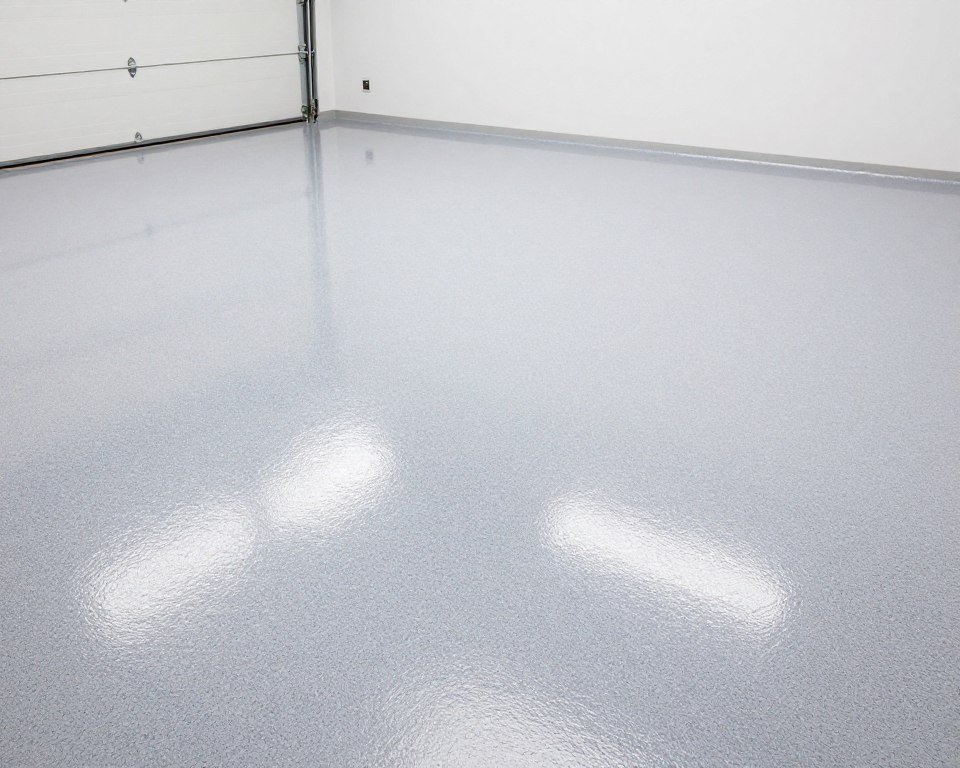
Epoxy floor coatings are the premium choice for garage floors, offering exceptional durability and a professional, showroom-quality appearance. Available in various colors and finishes, including options with decorative flakes, epoxy creates a seamless surface that resists stains, chemicals, and abrasion. While more expensive than simple paint, the longevity and performance make it a worthwhile investment.
One-Part Floor Paints: Budget-Friendly Option
If epoxy seems too complex or costly, consider one-part garage floor paints. These specialized paints are formulated to adhere to concrete and withstand moderate garage traffic. While not as durable as epoxy, they offer a significant improvement over bare concrete and come in a range of colors to complement your wall paint.
Decorative Concrete Stains
For a more natural look, concrete stains penetrate the surface to create variegated, translucent color effects. These stains react chemically with the concrete to produce unique patterns and hues that won’t peel or chip like paint might. Top with a clear sealer for protection and enhanced appearance.
Transform your garage floor
Explore epoxy coating kits that include everything you need for a professional-looking garage floor transformation.
While walls and floors often get the most attention, your garage ceiling and door are significant visual elements that shouldn’t be overlooked in your painting project.
Ceiling Considerations
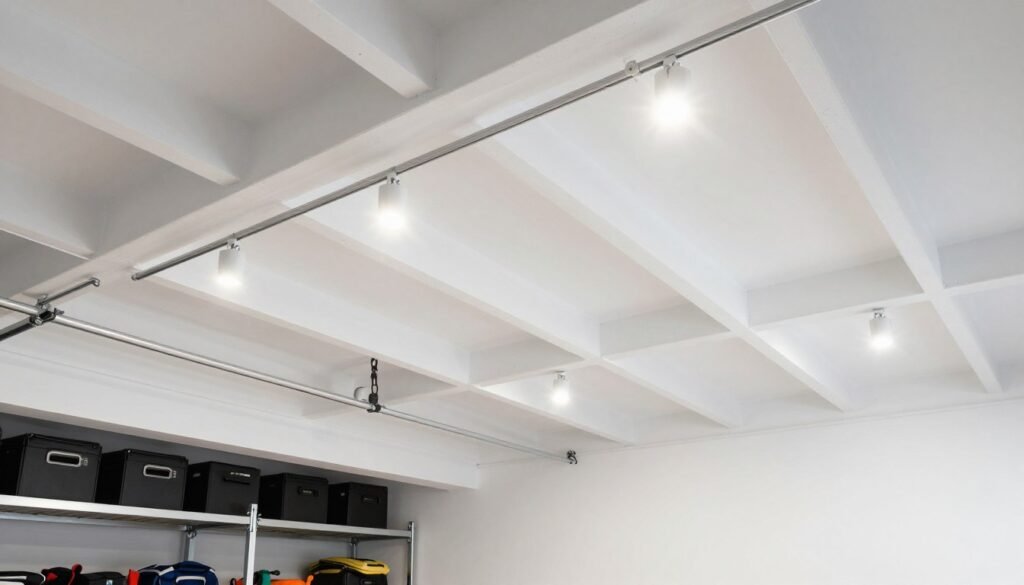
Most designers recommend painting garage ceilings white or very light colors to maximize light reflection and create a sense of height. A flat white paint is typically ideal for ceilings, as it hides imperfections and doesn’t create glare. If your garage ceiling has exposed rafters or ductwork, you have two options: paint everything the same color for a uniform look, or paint the structural elements in a contrasting color for an industrial aesthetic.
Garage Door Transformation
Your garage door represents a significant portion of your garage’s visual space from the inside. Painting the interior of your garage door to match or complement your walls creates a cohesive look. For metal doors, use a paint formulated for metal surfaces and apply a primer first for better adhesion. Consider a semi-gloss finish for easier cleaning and light reflection.
Important Note: When painting garage doors, avoid painting the tracks, springs, or any moving mechanical parts, as paint can interfere with proper operation.
Essential Preparation: The Key to Professional Results
The difference between an amateur-looking paint job and professional results often comes down to proper preparation. Taking the time to prepare your garage surfaces correctly will ensure better adhesion, smoother application, and a longer-lasting finish.
Cleaning and Degreasing
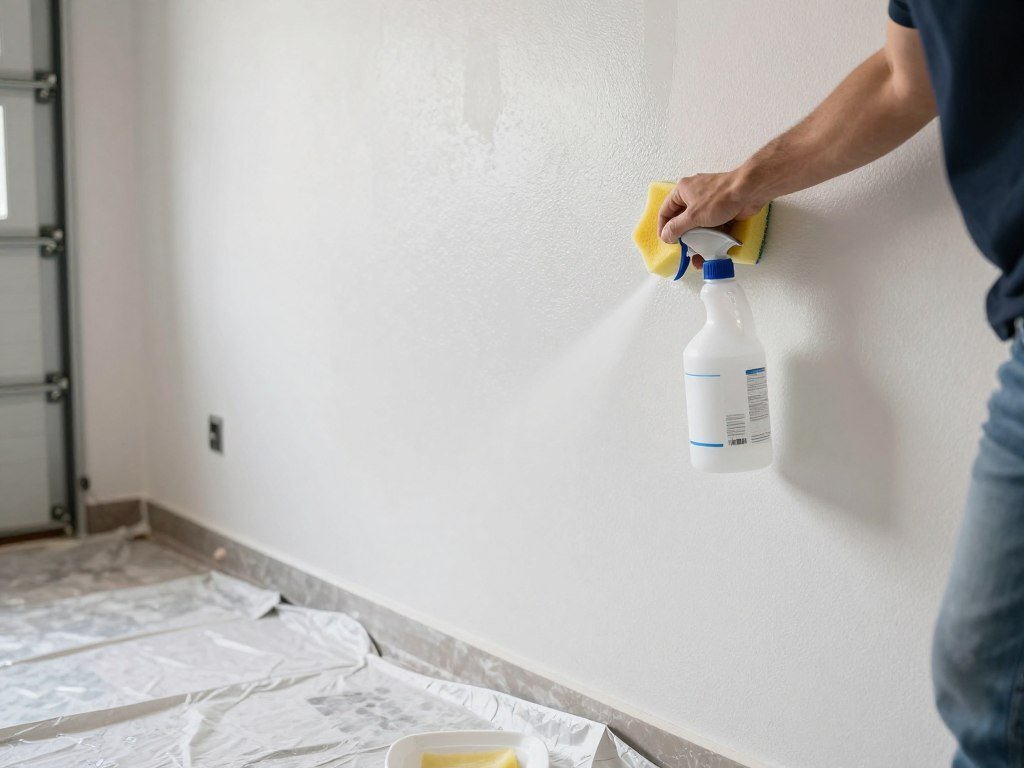
Garage surfaces typically accumulate dirt, dust, and grease that can prevent paint from adhering properly. Start by thoroughly sweeping and vacuuming all surfaces. For walls, use a degreasing cleaner to remove any oily residue, especially in areas where cars are parked or tools are used. For floors, more intensive cleaning may be necessary, including pressure washing for heavily soiled concrete.
Repairing Surface Damage
Inspect walls for cracks, holes, or dents and repair them with appropriate patching compounds. For concrete floors, fill cracks and chips with concrete patch material and allow it to cure completely. Sand patched areas smooth before painting to ensure a uniform finish.
Proper Priming
Priming is a crucial step that should never be skipped, especially on bare surfaces or when making significant color changes. For drywall, use a PVA (polyvinyl acetate) primer to seal the surface. For concrete walls and floors, use a masonry primer designed for alkaline surfaces. Metal surfaces require a rust-inhibiting primer for long-term protection.
Get the right primers for your project
Quality primers create the foundation for a successful paint job. Find the right primer for your garage surfaces.
Essential Tools and Materials for Your Garage Painting Project
Having the right tools and materials on hand before you start will make your garage painting project go more smoothly and help you achieve professional-looking results.
Wall and Ceiling Painting Tools
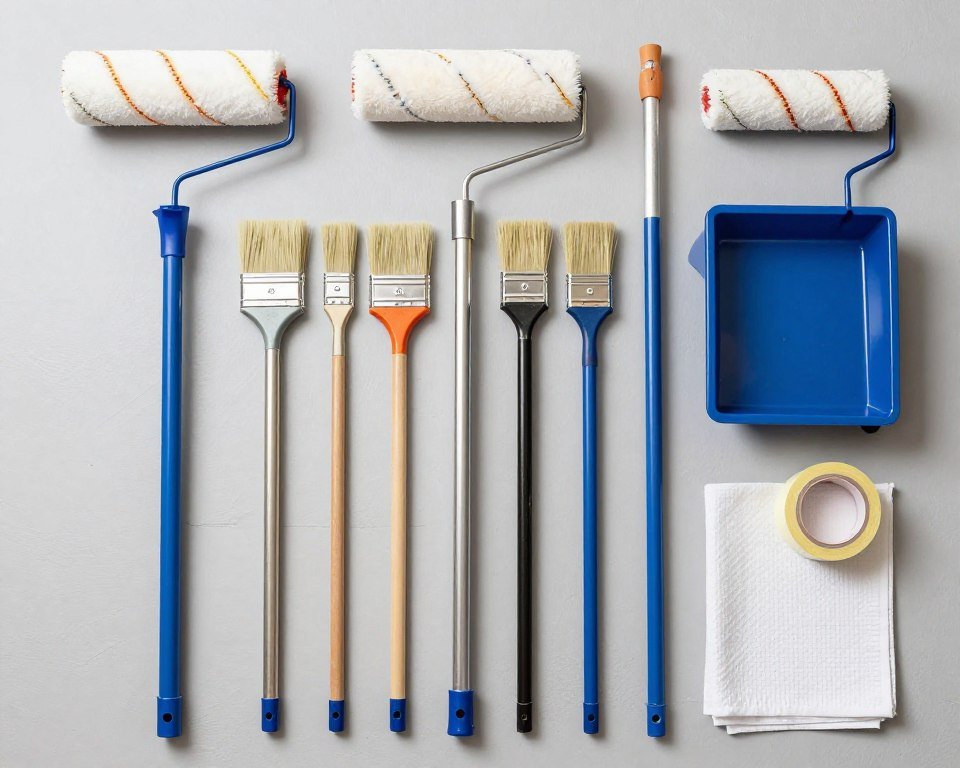
Extension poles for reaching high areas
Quality 9-inch roller frames and covers (3/8″ nap for smooth surfaces, 1/2″ for textured)
Pro Tips and Techniques for Flawless Garage Painting
Take your garage painting project to the next level with these professional techniques that will help you achieve a flawless finish.
Creating Clean Lines
For crisp, professional-looking edges where colors meet or around trim:
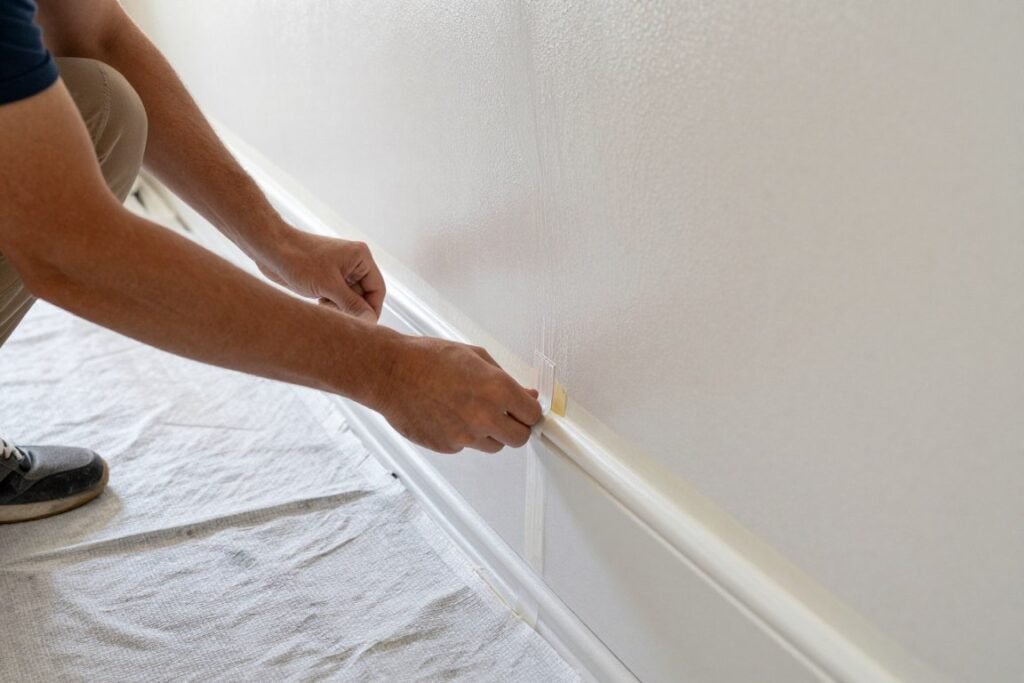
Use high-quality painter’s tape designed for your specific surface
Press the edge firmly with a putty knife to seal it and prevent bleeding
Remove tape while paint is still slightly wet for the cleanest edge
For extra precision, paint a thin line of the base color along the tape edge first to seal it
Dealing with Humidity
Garages often have humidity challenges that can affect paint application and drying:
Aim to paint when humidity is between 40-70% for optimal results
Use dehumidifiers if necessary to reduce moisture in the air
Allow extra drying time between coats on humid days
Consider humidity-resistant paint formulations for problem areas
Creating Decorative Effects
Add visual interest to your garage with these decorative painting techniques:
Stripes: Use laser levels and painter’s tape to create perfectly straight horizontal or vertical stripes
Stencils: Apply automotive or workshop-themed stencils for a personalized touch
Color blocking: Define different functional areas with distinct colors
Faux finishes: Consider concrete-look or metallic finishes for an industrial aesthetic
Safety First: Always ensure proper ventilation when painting in enclosed garage spaces. Use fans to circulate air, keep doors open when possible, and consider wearing a respirator mask, especially when using oil-based or epoxy products.
Finishing Touches: Styling Your Newly Painted Garage
Once your paint has dried, the right finishing touches will complete your garage transformation and enhance both its functionality and appearance.
Lighting Solutions
Good lighting is essential in a garage and can dramatically enhance your new paint job. Consider replacing outdated fixtures with bright LED shop lights or track lighting. Position lights to eliminate shadows in work areas and highlight storage zones. Under-cabinet lighting can add both functionality and ambiance to workbench areas.
Coordinated Storage Systems
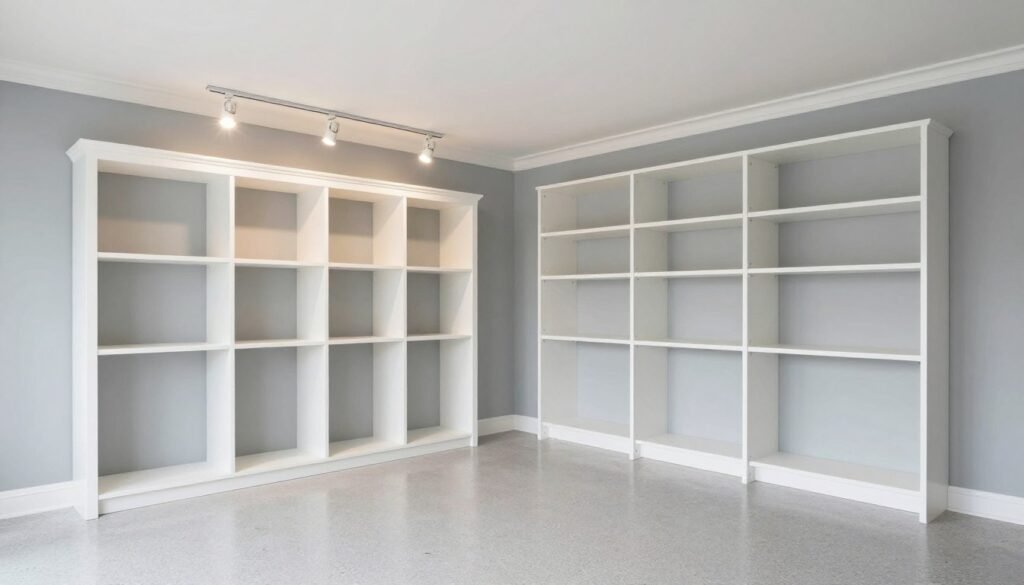
Choose storage solutions that complement your new color scheme. Wall-mounted cabinets, shelving units, and pegboards in coordinating colors create a cohesive look while maximizing space efficiency. Consider clear storage bins that allow you to see contents while maintaining a clean appearance.
Flooring Accents
If you’ve painted your garage floor, consider adding interlocking floor tiles or mats in high-traffic or work areas. These provide additional protection for your floor coating while adding comfort underfoot and visual interest. Choose colors that complement your overall color scheme.
Complete your garage transformation
Find storage solutions, lighting fixtures, and organizational tools that complement your newly painted garage.
Spring and fall are typically ideal for garage painting projects. Temperatures between 50-85°F (10-29°C) and moderate humidity levels provide optimal conditions for paint application and drying. Avoid painting during extremely hot summer days or cold winter periods, as temperature extremes can affect paint adhesion and curing.
How long should I wait before parking my car in a freshly painted garage?
For wall paint, wait at least 24-48 hours before bringing vehicles back into the garage. For floor coatings, follow the manufacturer’s recommendations carefully. Epoxy floors typically require 24 hours before light foot traffic and 72 hours before vehicle traffic. Full curing can take up to 7 days for maximum hardness and chemical resistance.
Should I paint my garage ceiling the same color as the walls?
Most design experts recommend painting garage ceilings white or a very light color to maximize light reflection and create a sense of height. However, if you have a low ceiling and want to create a more cohesive look, using the same light color for both walls and ceiling can work well. Avoid dark colors on ceilings as they can make the space feel smaller and more confined.
How do I choose the best paint finish for my garage walls?
For garage walls, satin or semi-gloss finishes are typically the best choices. These finishes are more durable and easier to clean than flat or eggshell finishes, making them ideal for the garage environment. Semi-gloss provides the highest level of durability and moisture resistance but will show wall imperfections more. Satin offers a good balance of durability and a more forgiving appearance on less-than-perfect walls.
Ready to Transform Your Garage?
A well-executed painting project can completely revolutionize your garage space, turning it from a neglected storage area into a functional, attractive extension of your home. Whether you’re creating a workshop, home gym, or simply want a cleaner, more organized space for your vehicles, the right paint choices can make all the difference.
Remember that preparation is key to a successful outcome. Take the time to properly clean, repair, and prime surfaces before applying your chosen colors. Invest in quality paints and tools that will provide lasting results. And don’t forget those finishing touches that will complete your garage transformation.
We hope these garage painting ideas have inspired you to take on your own garage makeover project. When you do, be sure to take before and after photos to document your transformation – they’ll make perfect pins to share your success with others looking for garage painting inspiration!
Start your garage transformation today
Find everything you need to bring your garage painting ideas to life with quality products delivered right to your door.