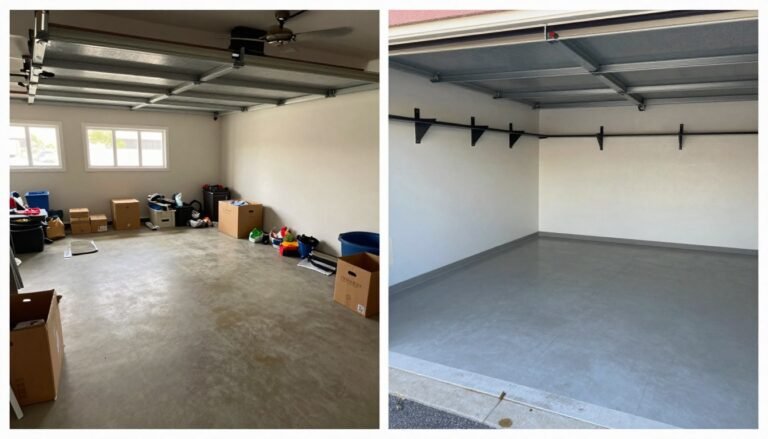
Transforming your garage into a functional workshop requires thoughtful planning and strategic organization. Whether you’re a weekend DIY enthusiast or a serious craftsperson, the right garage workshop layout can dramatically improve your productivity and enjoyment. This comprehensive guide will walk you through everything you need to know about designing an efficient, comfortable, and inspiring workspace that maximizes every square inch of your garage.
This Website contains affiliate links. That means I may earn a small commission if you purchase through my links, at no extra cost to you.
Planning Your Garage Workshop Layout
Before purchasing a single tool or storage unit, take time to evaluate your space and needs. A well-planned garage workshop layout begins with understanding the available space and how you’ll use it.
Assess Your Available Space
Start by measuring your garage dimensions accurately. Note the location of windows, doors, electrical outlets, and any permanent fixtures. Consider whether you need to maintain space for parking vehicles or if the entire garage will be dedicated to your workshop. This assessment forms the foundation of your layout planning.
Identify Your Workshop Goals
Different workshop purposes require different layouts. Are you primarily interested in woodworking, metalworking, automotive repair, or general DIY projects? Perhaps you need a multipurpose space that accommodates several activities. Your primary focus will determine your equipment needs and influence your overall layout decisions.
Ready to start planning?
A good measuring tape is essential for accurate workshop planning. Measure twice, build once!
Sketch your garage workshop layout on paper or use digital planning tools. This visual representation helps you experiment with different arrangements before committing to a final plan. Consider traffic flow, tool accessibility, and the natural progression of your work process when designing your layout.
Dividing your garage workshop into functional zones improves workflow and organization. Each zone should be dedicated to specific activities and equipped accordingly.
Workbench Zone
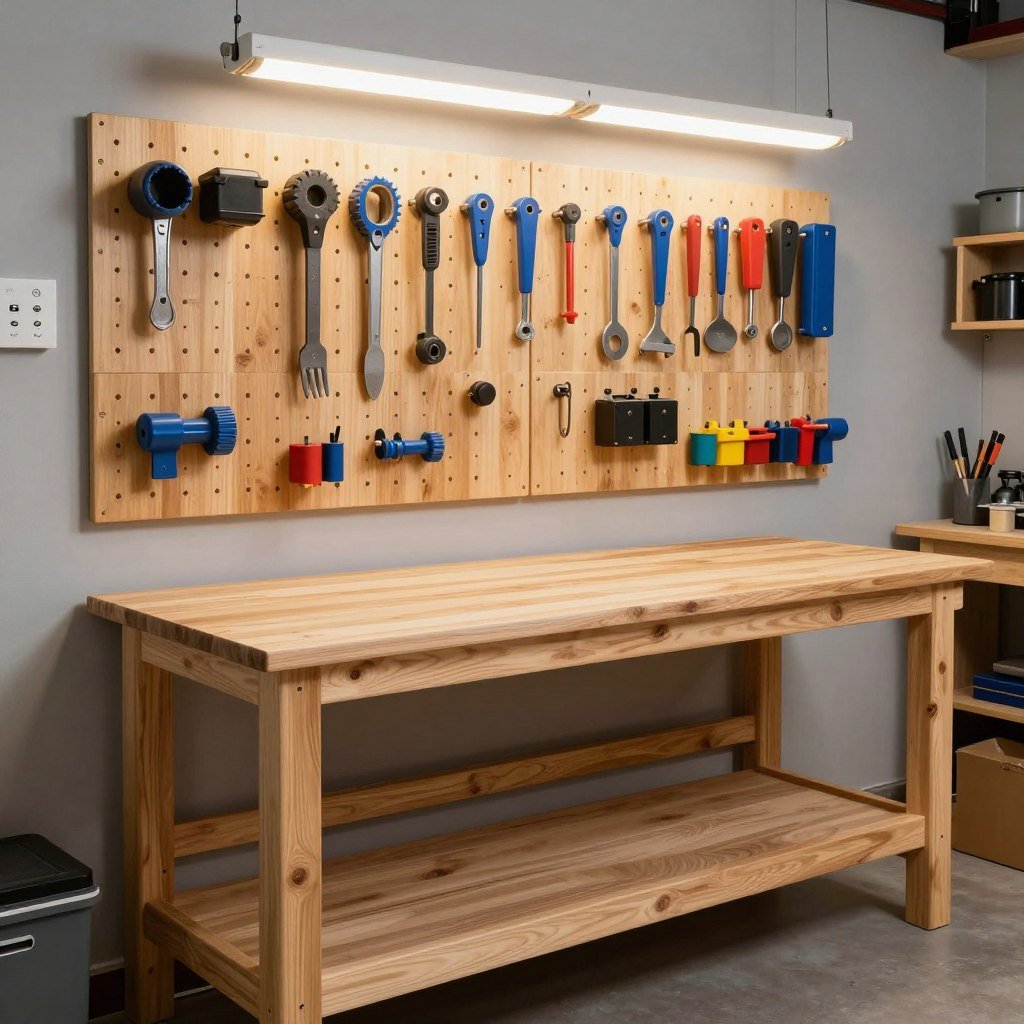
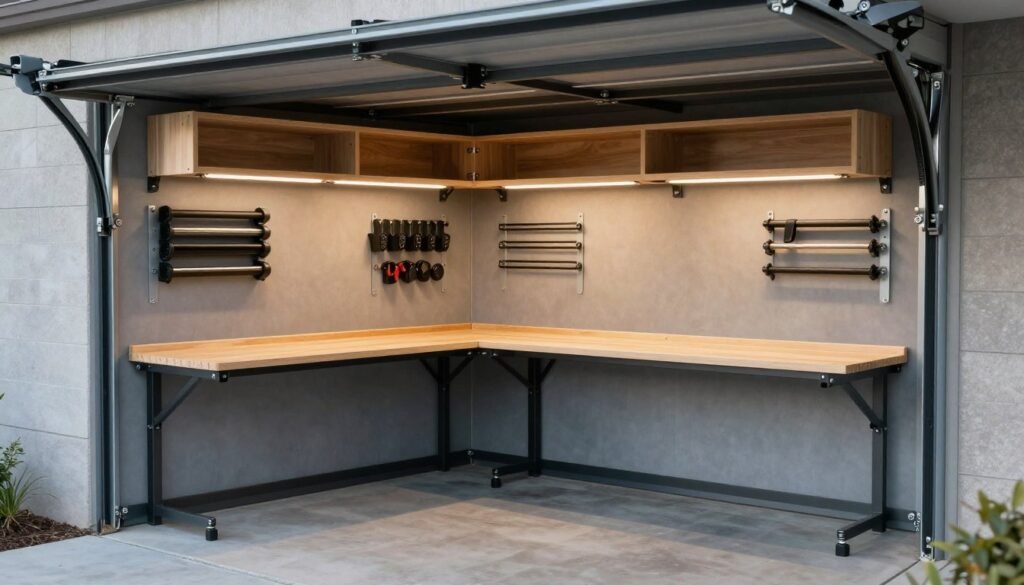
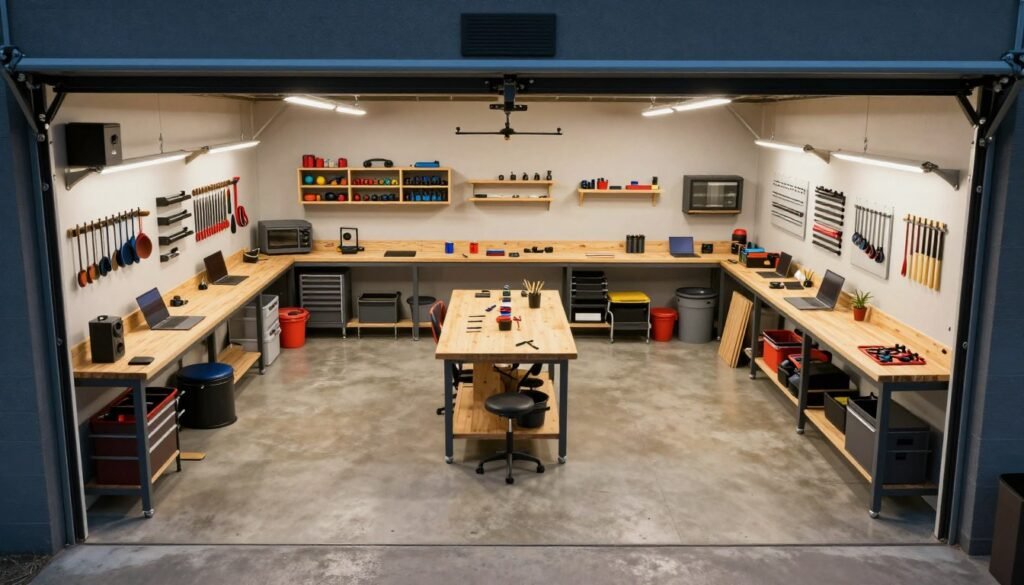
The workbench is often the heart of any garage workshop layout. Position your main workbench where it has good lighting and allows you to move freely around it. For maximum versatility, consider a workbench height of 34-36 inches for general work, though your specific needs may vary based on your height and primary activities.
Workbench Placement Tips:
Position against a wall if space is limited
Place in the center for larger projects requiring 360° access
Ensure adequate lighting above the bench
Allow at least 3 feet of clearance for movement
Consider proximity to power outlets
A quality workbench doesn’t have to be expensive. You can build your own using simple materials or invest in a pre-made option that suits your specific needs.
Find Your Perfect Workbench
Whether you prefer to build or buy, having the right workbench is crucial for your workshop.
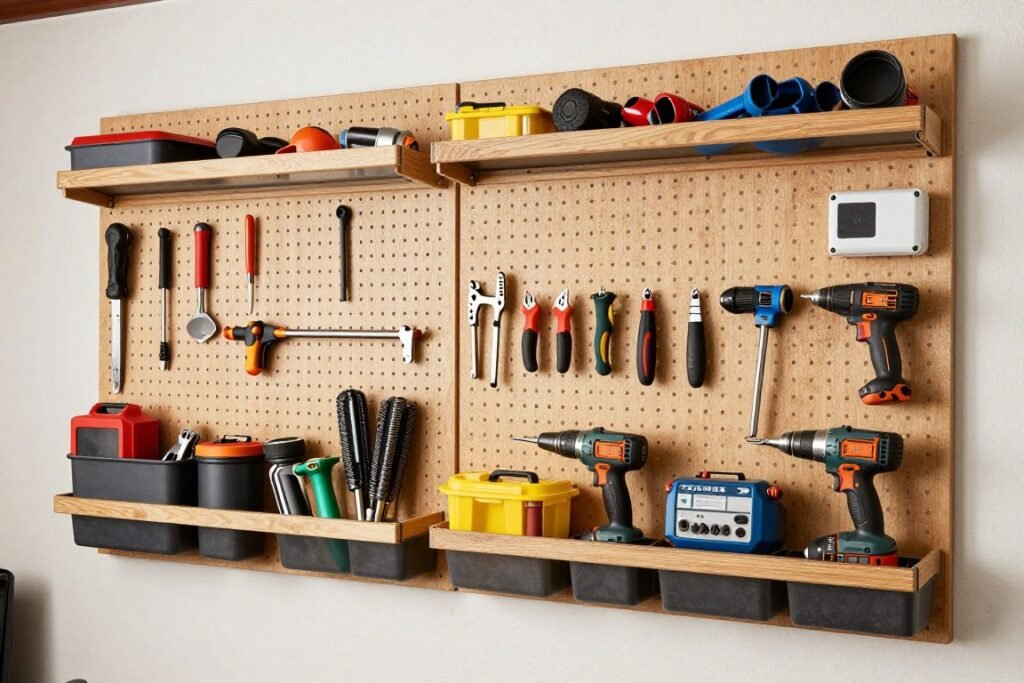
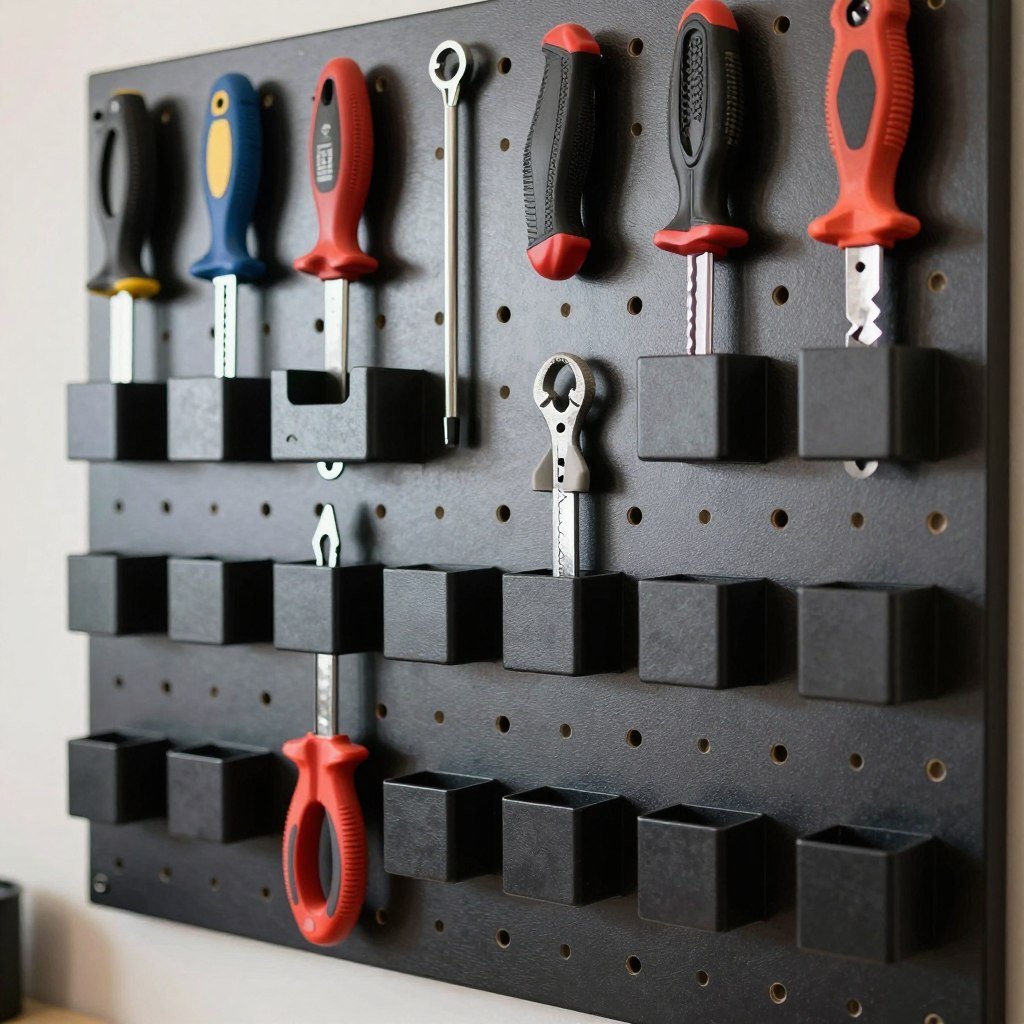
Efficient tool storage is essential for a productive garage workshop layout. Wall-mounted systems keep tools visible and accessible while maximizing floor space. Consider your workflow when positioning tool storage—frequently used tools should be within easy reach of your primary work areas.
Popular Tool Storage Solutions:
Pegboards for hanging hand tools
French cleat systems for customizable storage
Tool cabinets for secure storage of valuable items
Magnetic strips for metal tools
Wall-mounted racks for power tools
Cutting and Machining Zone
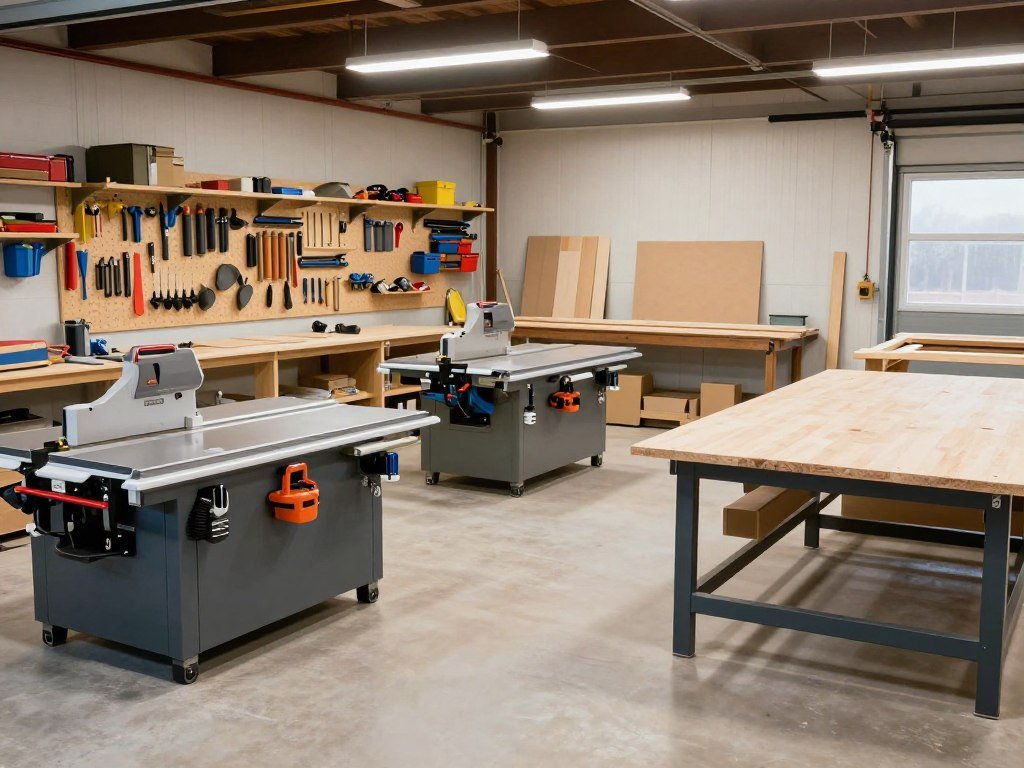
Power tools like table saws, miter saws, and drill presses require dedicated space with adequate clearance for material handling. Position these tools strategically to accommodate the size of materials you typically work with.
The table saw often serves as the centerpiece of a woodworking shop. Place it in a location that allows for feeding long boards from multiple directions. Consider building or purchasing an outfeed table to support larger workpieces.
Enhance Your Cutting Station
A good table saw stand or outfeed table can dramatically improve your workflow.
Designate a clean, flat area for assembling projects. This zone should be free from dust and debris and have adequate space for your typical project dimensions. In smaller workshops, the workbench often doubles as the assembly area.
Maximizing Storage in Your Garage Workshop
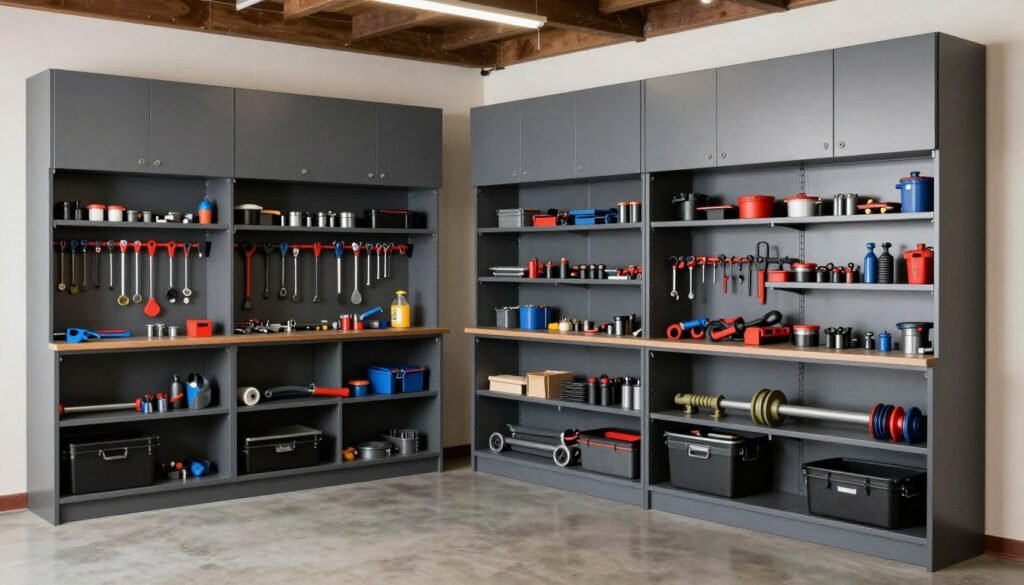
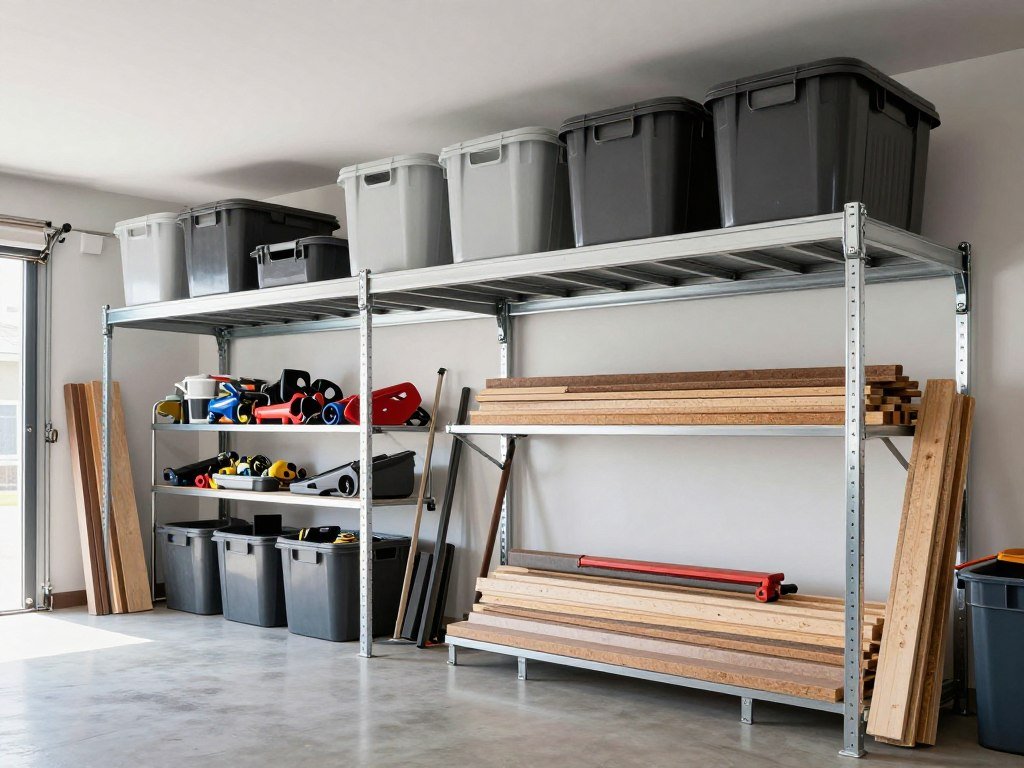
Effective storage solutions are crucial for maintaining an organized and efficient garage workshop layout. By utilizing vertical space, you can dramatically increase your storage capacity without sacrificing valuable floor area.
Wall-Mounted Storage Systems
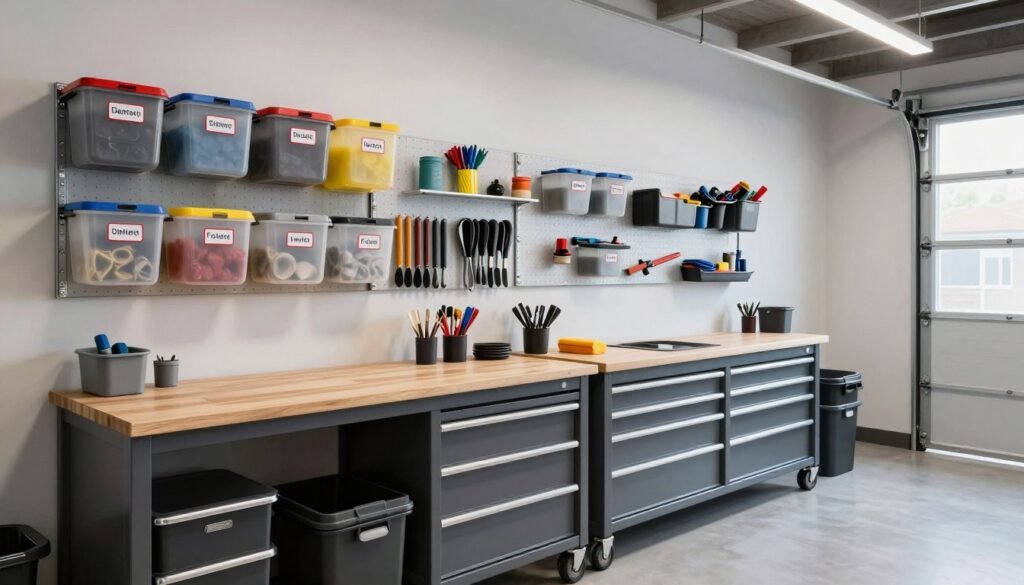
Your garage walls offer prime real estate for storage. Wall-mounted systems keep items visible, accessible, and off the floor, creating a more spacious and organized workshop environment.
Popular Wall Storage Options:
Pegboard systems for versatile tool hanging
Slat wall panels with customizable hooks and bins
French cleat systems for modular storage
Wall-mounted cabinets for dust-free storage
Specialized racks for lumber, clamps, and spray cans
Organize Your Workshop Walls
Wall storage systems can transform your workshop organization.
Don’t overlook the ceiling space in your garage workshop layout. Overhead storage racks can hold seasonal items, rarely used equipment, or bulk materials, freeing up valuable wall and floor space for your active work areas.
Mobile Storage Units
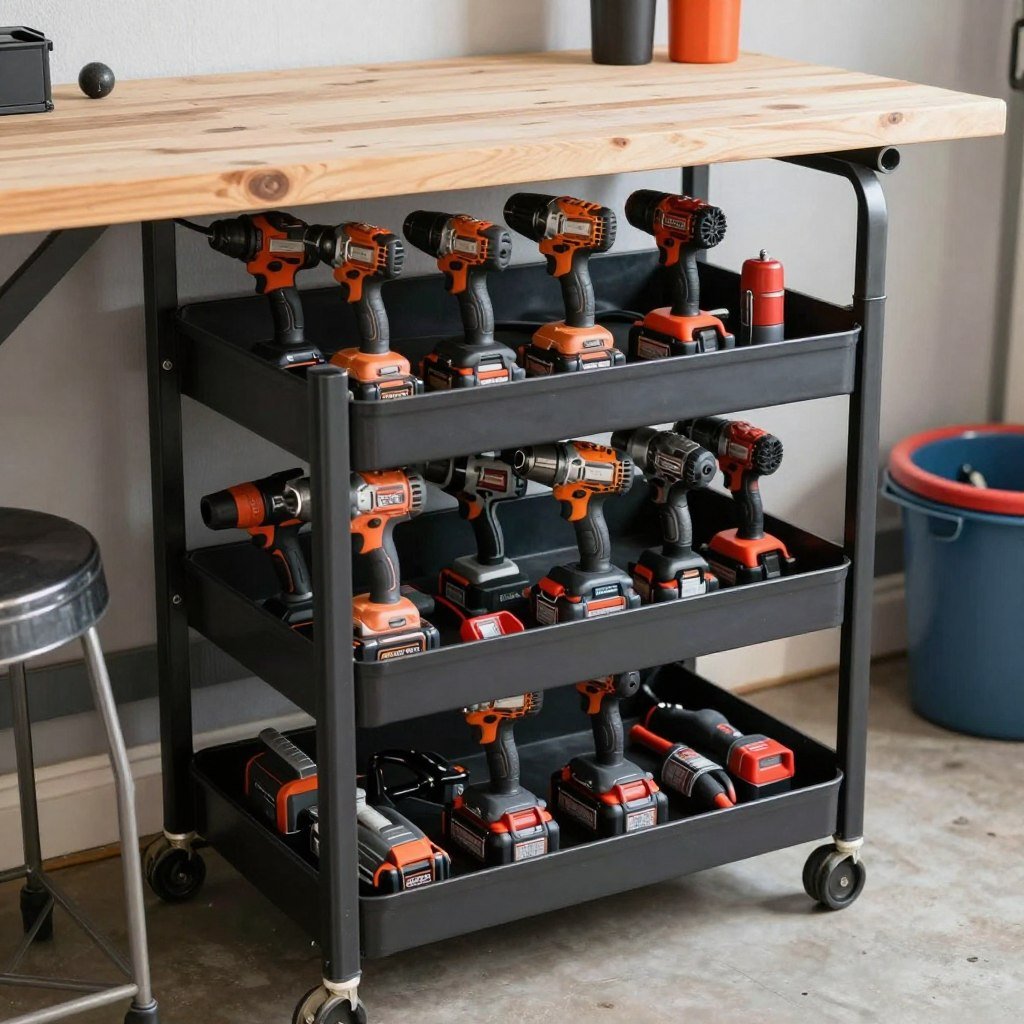
For maximum flexibility in your garage workshop layout, incorporate mobile storage solutions. Tool carts, rolling cabinets, and workstations on wheels allow you to reconfigure your space as needed for different projects.
Benefits of Mobile Storage:
Adaptable layout for different project needs
Tools can be positioned exactly where needed
Easy to clean around and under storage units
Workshop can be reconfigured quickly
Ideal for multi-purpose garages that still need to park vehicles
Lighting and Electrical Considerations
Proper lighting and accessible electrical outlets are essential components of an effective garage workshop layout. Good lighting reduces eye strain and improves work quality, while strategically placed outlets eliminate dangerous extension cord tangles.
Workshop Lighting Strategies
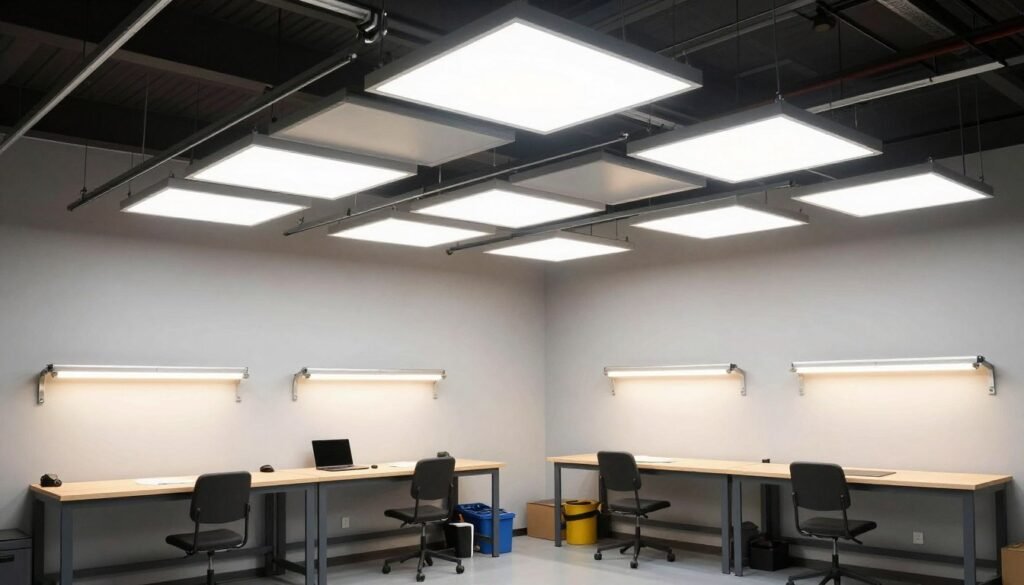
A combination of ambient and task lighting creates the ideal environment for detailed work. LED shop lights are energy-efficient and provide excellent illumination for general workshop activities, while adjustable task lights offer focused lighting for precision work.
Lighting Recommendations:
Install LED shop lights for overall illumination (4000-5000K color temperature)
Add task lighting at the workbench and machine stations
Position lights to minimize shadows on work surfaces
Consider natural light sources when planning layout
Use light-colored walls and ceilings to maximize light reflection
Illuminate Your Workshop
Proper lighting makes all the difference in work quality and safety.
Assess your power requirements based on the tools you’ll be using. Many power tools require dedicated circuits to operate safely and efficiently. Consider installing additional outlets around your garage workshop to minimize the need for extension cords.
Safety Tip: If your workshop requires significant electrical upgrades, consult with a licensed electrician. Proper electrical installation is crucial for workshop safety and may require permits depending on your location.
Flooring Options for Your Workshop
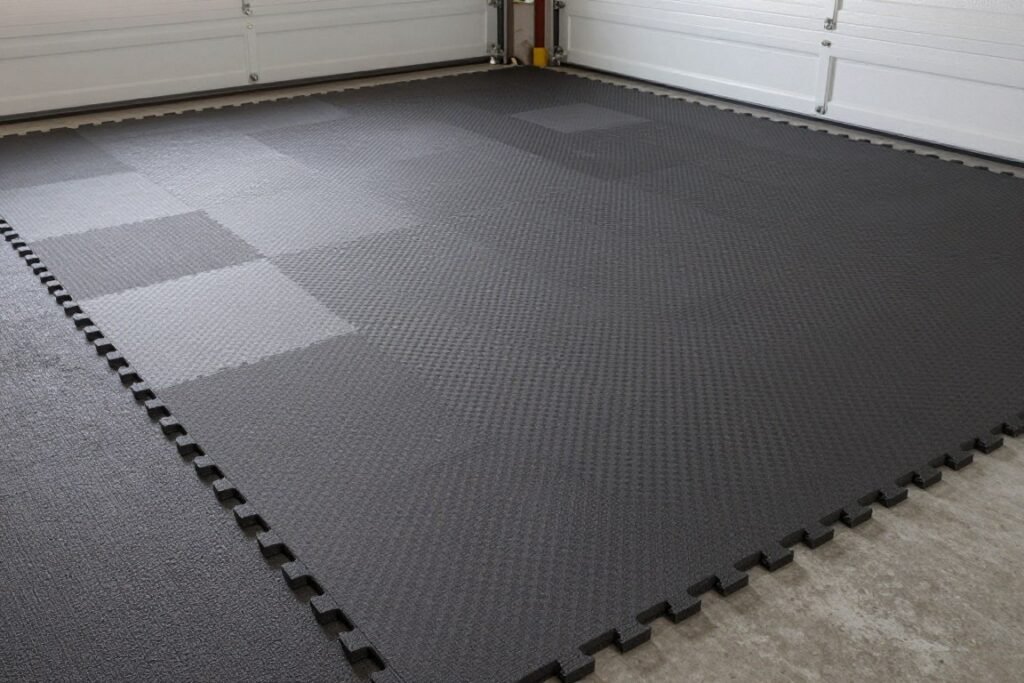
The right flooring can significantly impact comfort, safety, and functionality in your garage workshop layout. Consider durability, ease of cleaning, and comfort when selecting workshop flooring.
Popular Workshop Flooring Options
Flooring Type
Pros
Cons
Best For
Epoxy Coating
Durable, chemical-resistant, easy to clean
Requires thorough preparation, professional installation recommended
Automotive work, heavy-duty workshops
Interlocking Tiles
DIY installation, modular, reduces fatigue
Can be damaged by heavy equipment, may shift
Woodworking, general DIY workshops
Rubber Mats
Excellent shock absorption, anti-fatigue
Can be difficult to clean thoroughly
Standing workstations, areas with dropped tools
Sealed Concrete
Economical, durable, supports heavy loads
Hard on feet and legs, cold in winter
Multi-purpose garages, heavy machinery
Consider using different flooring types in different zones of your workshop. For example, anti-fatigue mats at standing workstations and more durable flooring in high-traffic or heavy-equipment areas.
Upgrade Your Workshop Floor
The right flooring improves comfort during long projects and protects your concrete.
Limited space doesn’t mean limited functionality. With strategic planning, even a small garage can become a highly efficient workshop.
Space-Saving Strategies
In small garage workshop layouts, every inch counts. Focus on maximizing vertical space and incorporating multi-functional elements that can adapt to different needs.
Small Workshop Solutions:
Wall-mounted folding workbenches that can be tucked away when not in use
Ceiling-mounted storage systems for seasonal or rarely used items
Mobile tool stations that can be repositioned as needed
Multi-purpose work surfaces that serve different functions
Nesting tables that can expand when extra work surface is needed
Tool Selection for Small Spaces
In limited space, carefully consider which tools are essential. Look for compact versions of must-have tools and consider multi-function tools that serve multiple purposes. For occasional needs, consider borrowing or renting specialized equipment rather than storing it permanently in your workshop.
Space-Saving Workshop Solutions
Make the most of your small garage with these clever storage options.
A well-designed garage workshop layout prioritizes safety alongside efficiency. Incorporating safety features from the beginning helps prevent accidents and creates a more comfortable working environment.
Essential Safety Equipment
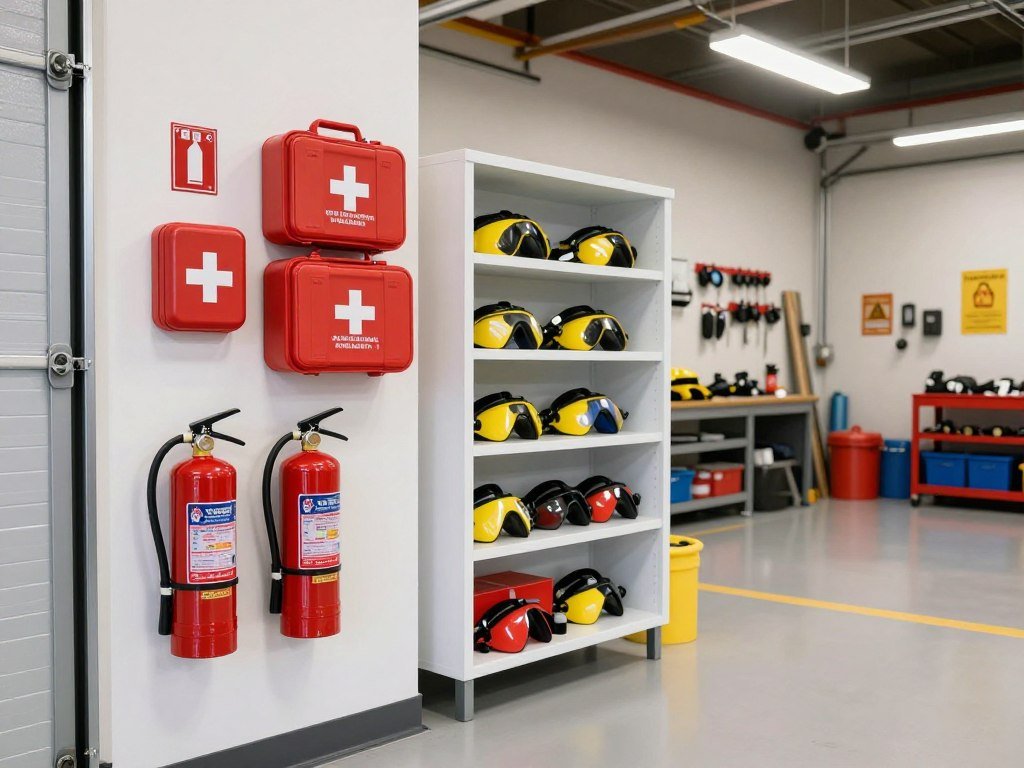
Every garage workshop should include basic safety equipment, prominently displayed and easily accessible. Make these items part of your initial workshop setup rather than afterthoughts.
Workshop Safety Checklist:
Fire extinguisher rated for workshop hazards
First aid kit stocked with workshop-specific supplies
Eye protection for different activities
Hearing protection for noisy tools
Dust masks or respirators appropriate for your work
Anti-fatigue mats at standing workstations
Adequate ventilation system
GFCI protection for electrical outlets
Prioritize Workshop Safety
Invest in quality safety equipment to protect yourself during projects.
Proper dust collection and ventilation are crucial for maintaining a healthy workshop environment. Consider your dust collection needs when planning your garage workshop layout, allowing space for dust collection equipment and planning tool placement to minimize dust spread.
Health Tip: Wood dust, especially from hardwoods and manufactured wood products, can cause serious respiratory issues. A good dust collection system is not just about cleanliness—it’s an important health investment.
Maintaining Your Organized Workshop
Creating an efficient garage workshop layout is just the beginning. Maintaining that organization requires consistent habits and periodic reassessment of your space.
Daily Workshop Habits
Develop consistent habits that maintain organization and prevent clutter from accumulating. These small daily actions make a significant difference in workshop functionality.
Organization Habits:
Clean up at the end of each work session
Return tools to designated storage locations
Sweep floors regularly to prevent dust buildup
Keep work surfaces clear when not in use
Address spills and messes immediately
Periodic Workshop Assessment
As your projects and tool collection evolve, your workshop needs may change. Schedule regular assessments of your garage workshop layout to ensure it continues to meet your needs efficiently.
“The workshop that works best isn’t necessarily the one with the most expensive tools—it’s the one organized to support your specific workflow and projects.”
Consider keeping a notebook of workshop observations—noting when certain arrangements work well and when you encounter inefficiencies. These insights will guide future improvements to your garage workshop layout.
Creating Your Ideal Garage Workshop Layout
Your garage workshop should be a reflection of your specific needs, working style, and the projects you enjoy. The perfect layout balances efficiency, safety, and inspiration—creating a space where you can work comfortably and creatively.
Remember that creating your ideal workshop is an ongoing process. Start with the fundamentals outlined in this guide, then adapt and refine your space as you gain experience and insight into your specific workflow needs.
Whether you’re setting up your first basic workshop or upgrading an existing space, focus on creating a garage workshop layout that supports your creative process and makes your time in the shop more productive and enjoyable.
Start Building Your Dream Workshop
Ready to transform your garage into the perfect workshop?