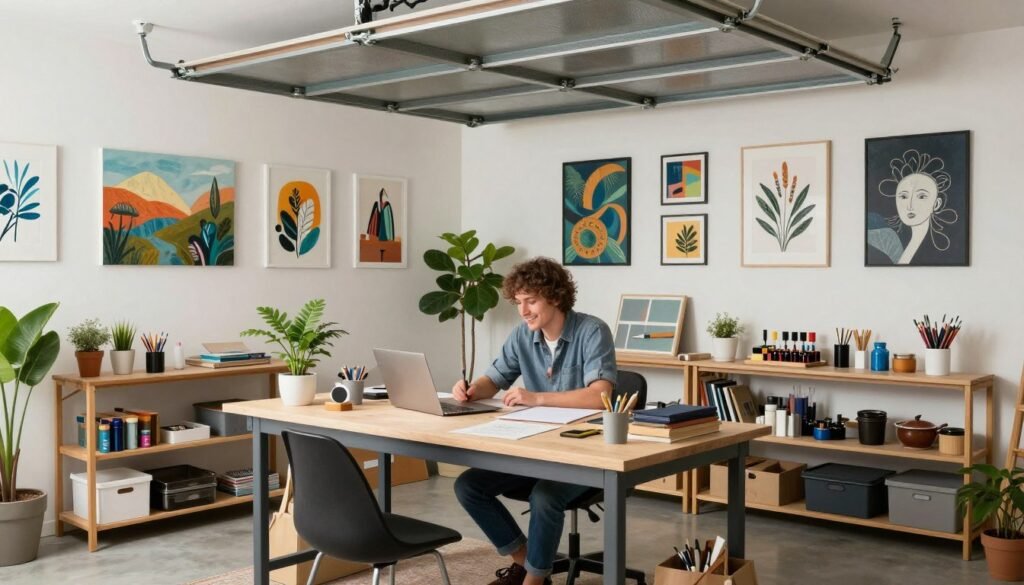
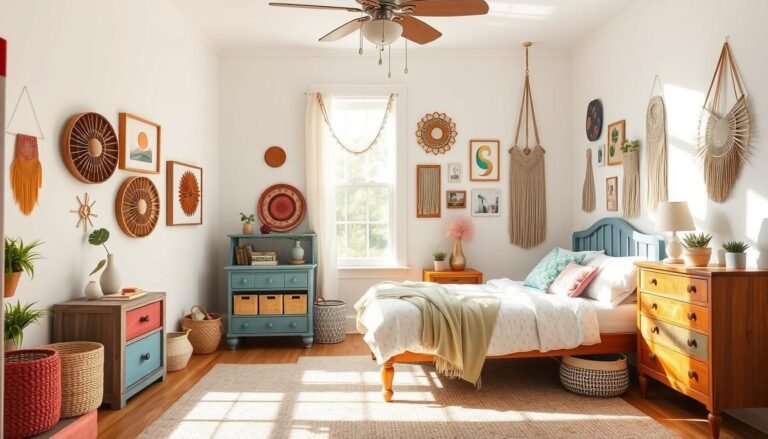
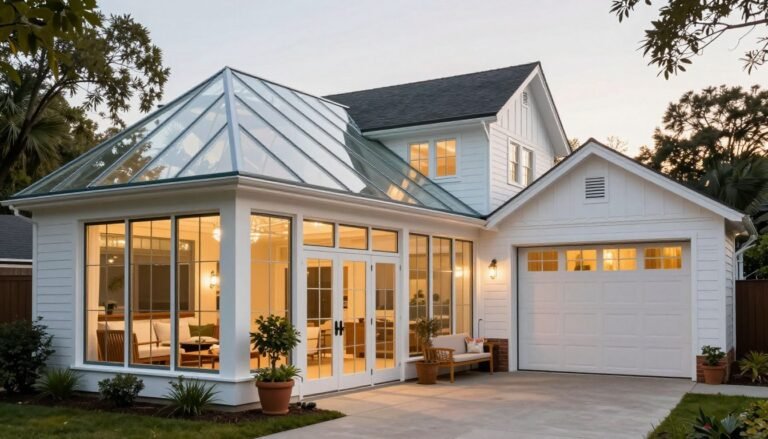
Transforming your garage into an art studio might be the perfect solution if you’re craving a dedicated creative space but don’t have room inside your home. A garage art studio offers the ideal balance of accessibility and separation – close enough for convenience but removed enough to minimize distractions and concerns about mess. Whether you’re a weekend painter, professional artist, or creative parent looking to establish a family art zone, your garage holds incredible potential.
This Website contains affiliate links. That means I may earn a small commission if you purchase through my links, at no extra cost to you.
I’ve helped dozens of artists transform underutilized garages into vibrant creative sanctuaries, and I’m excited to share everything you need to know to create your own garage art studio. This guide will walk you through the entire process, from initial planning to adding those final inspirational touches that make a space truly yours.
Planning Your Garage Art Studio Transformation
Before diving into your garage transformation, take time to assess your space and clarify your vision. This crucial planning stage will save you time, money, and potential headaches down the road.
Assessing Your Garage Space
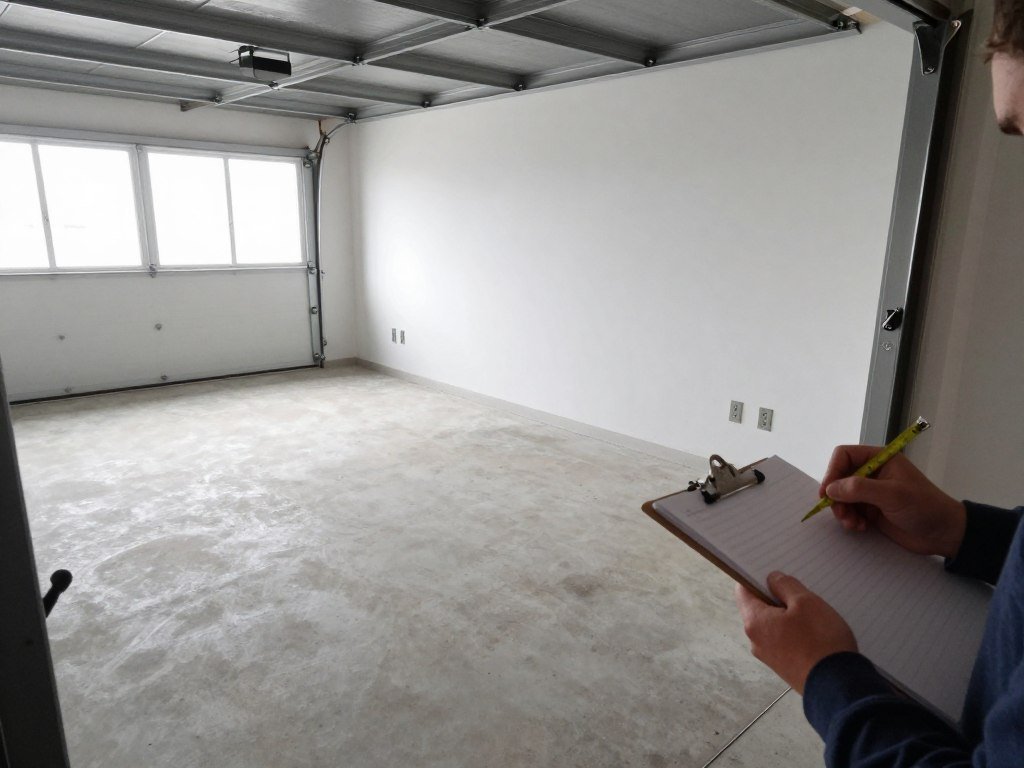
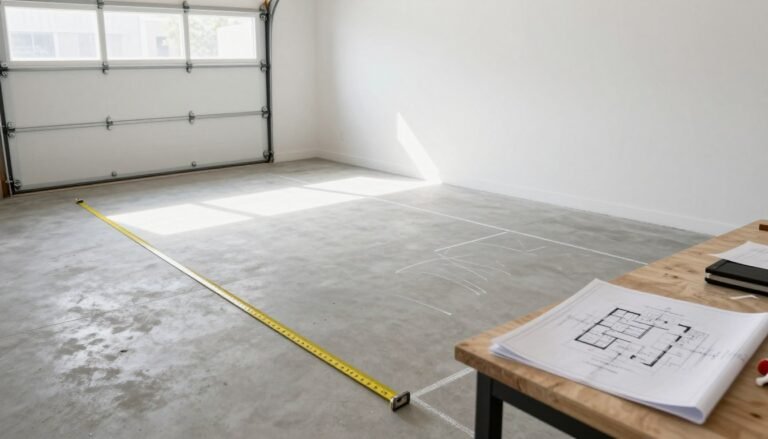
Start by emptying your garage completely or at least clearing the area you plan to use. This gives you a true sense of the available space and helps identify any issues that need addressing. Measure the dimensions carefully, noting the location of windows, doors, electrical outlets, and any permanent fixtures.
Consider these key questions as you assess your garage:
Will you be using the entire garage or just a portion?
Does the space have adequate natural light, or will you need to enhance lighting?
Is there proper ventilation, especially important if you’ll be working with paints, solvents, or other materials that produce fumes?
What’s the current condition of the floors, walls, and ceiling?
Is the space insulated? Will you need heating and cooling solutions?
Are there enough electrical outlets for your needs?
Is there access to water, or will you need to install a utility sink?
Defining Your Creative Needs
Your specific artistic pursuits will significantly influence your studio design. A painter needs different features than a potter, and a mixed-media artist has different requirements than a digital creator. Make a list of all the activities you plan to do in your studio and the equipment each requires.
Do you need space for photography or digital work?
Will children be using the space?
Do you need room for large-scale projects?
Will you need to store bulky equipment?
Do you require special ventilation for your medium?
Ready to Start Planning?
Get organized with a dedicated project planner to map out your garage art studio transformation. Track measurements, materials, budget, and timeline all in one place.
With your plan in place, it’s time to prepare your garage for its artistic makeover. This stage focuses on creating a clean, functional blank canvas that will support your creative endeavors.
Clearing and Cleaning
Begin by thoroughly cleaning the entire space. Remove cobwebs, dust, and debris from all surfaces. Sweep and power wash the floors if necessary. This deep clean not only creates a more pleasant work environment but also helps you identify any issues that need addressing, such as cracks, water damage, or pest problems.
Addressing Structural Issues
Before adding any studio elements, take care of any structural concerns. Repair cracks in the floor or walls, address any water leakage issues, and ensure doors and windows operate properly. This is also the time to consider whether you’ll need to add insulation to regulate temperature and reduce noise.
If your garage door will remain functional (perhaps you want the option to open it in good weather), consider how to make it work with your studio setup. Some artists install a track system that allows art storage to move aside when the door needs to open. Others replace the standard door with one that includes windows for natural light.
Flooring Solutions
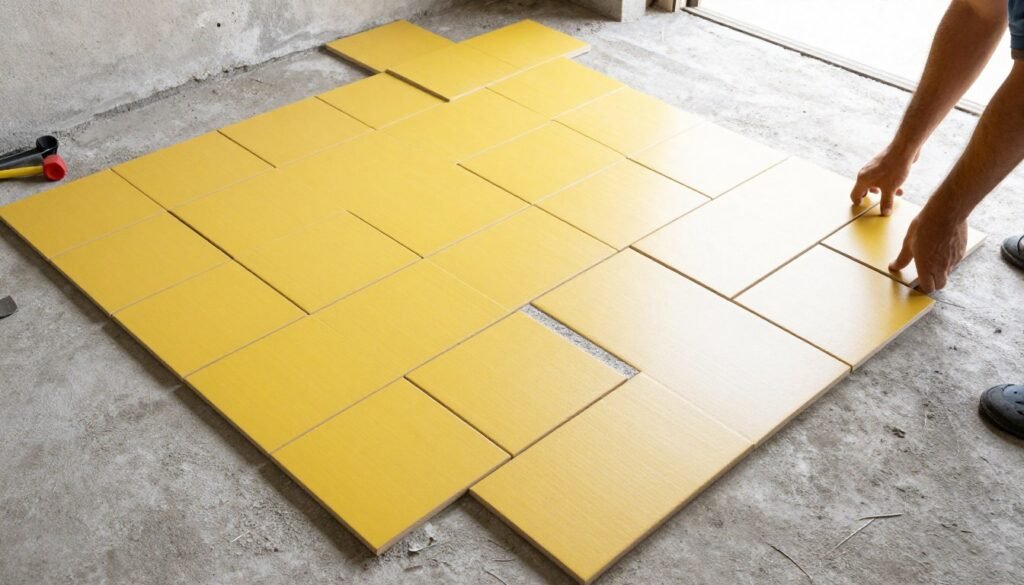
Concrete garage floors are typically cold, hard, and can generate dust. Consider installing flooring that’s more suitable for long periods of standing and working. Options include:
Epoxy Coating
Durable, easy to clean, and can brighten your space with a glossy finish. Resistant to stains from paint and other art materials.
Transforming your garage walls makes a tremendous difference in creating a proper studio atmosphere. White or light-colored walls maximize light reflection and provide a neutral backdrop for assessing colors in your artwork.
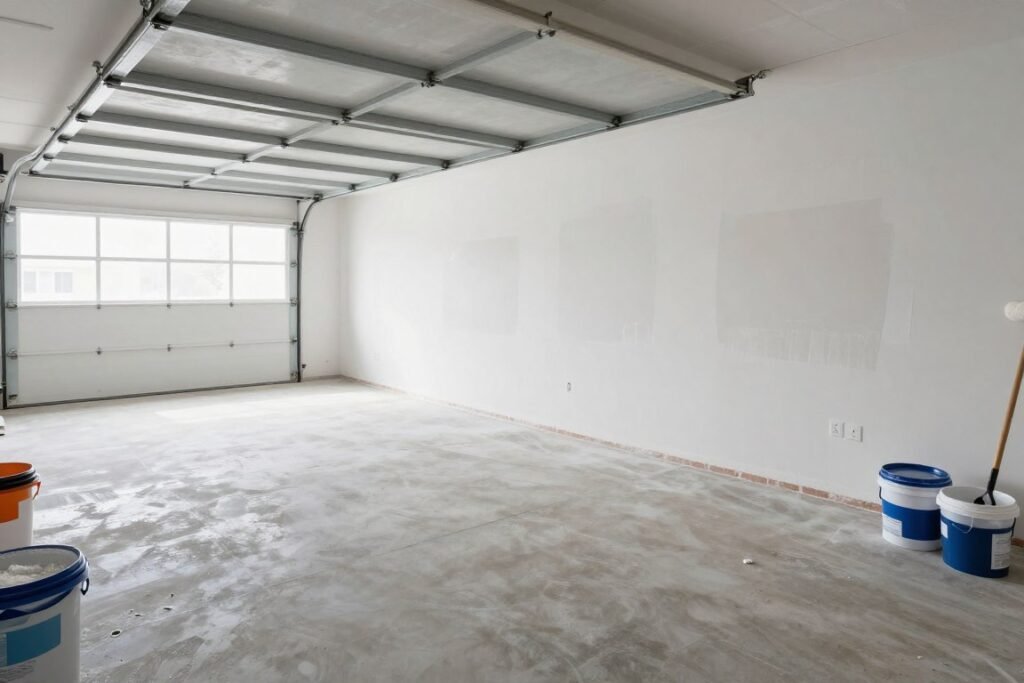
If your garage has unfinished walls with exposed studs, consider installing drywall for a more finished look and better insulation. For existing walls, repair any damage and apply a fresh coat of paint. Choose a durable, washable paint that can stand up to the occasional splatter or smudge.
Create Professional-Looking Walls
Transform your garage walls with high-quality, washable paint that will provide a clean backdrop for your creative work and stand up to the demands of an active art studio.
With the basic structure prepared, it’s time to focus on the elements that will transform your garage into a functional art studio. These key components will determine how effectively you can work in your new creative space.
Lighting Solutions
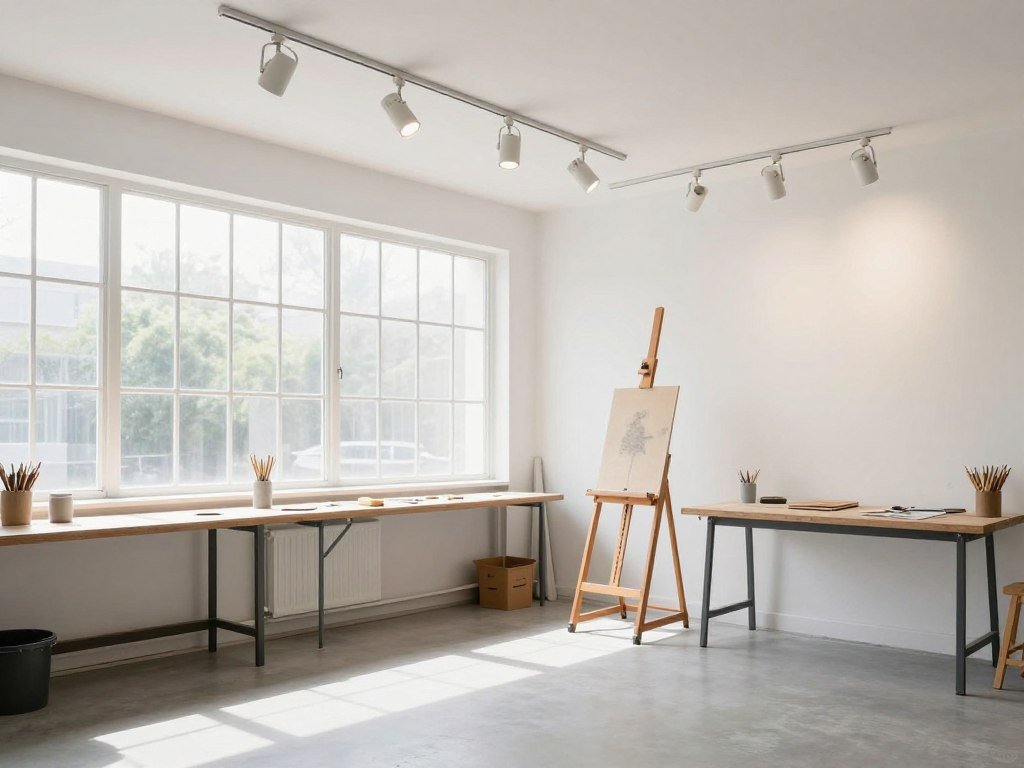
Proper lighting is absolutely critical for any art studio. Ideally, you want a combination of natural and artificial light sources that provide even, shadow-free illumination.
For natural light, consider whether you can add windows or a skylight to your garage. North-facing windows provide the most consistent, indirect light that won’t shift dramatically throughout the day. If adding windows isn’t feasible, consider replacing your garage door with one that includes windows.
For artificial lighting, aim for full-spectrum lights that mimic natural daylight. Options include:
Track lighting that can be adjusted to illuminate specific work areas
LED panel lights that provide even, shadow-free illumination
Adjustable task lighting for detailed work
Daylight-balanced bulbs (5000K-6500K color temperature) that render colors accurately
Illuminate Your Creative Work
Proper lighting makes all the difference in how you perceive color and detail in your artwork. Invest in quality lighting that mimics natural daylight.
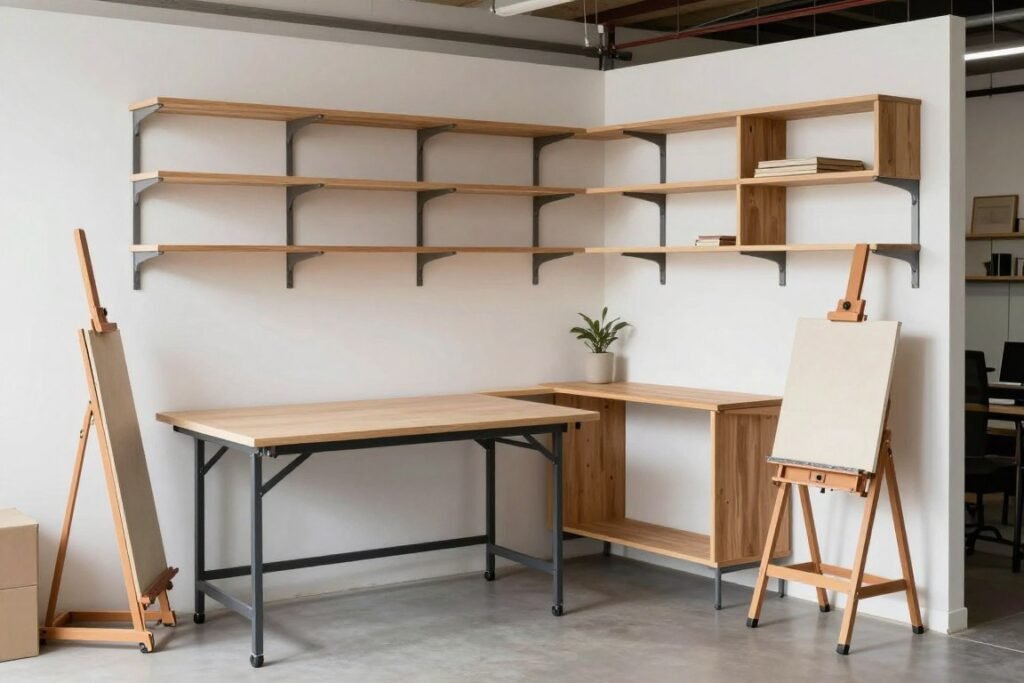
The heart of any art studio is its work surfaces. Depending on your medium, you might need different types of tables, easels, or workbenches. Consider height-adjustable options that allow you to work standing or seated.
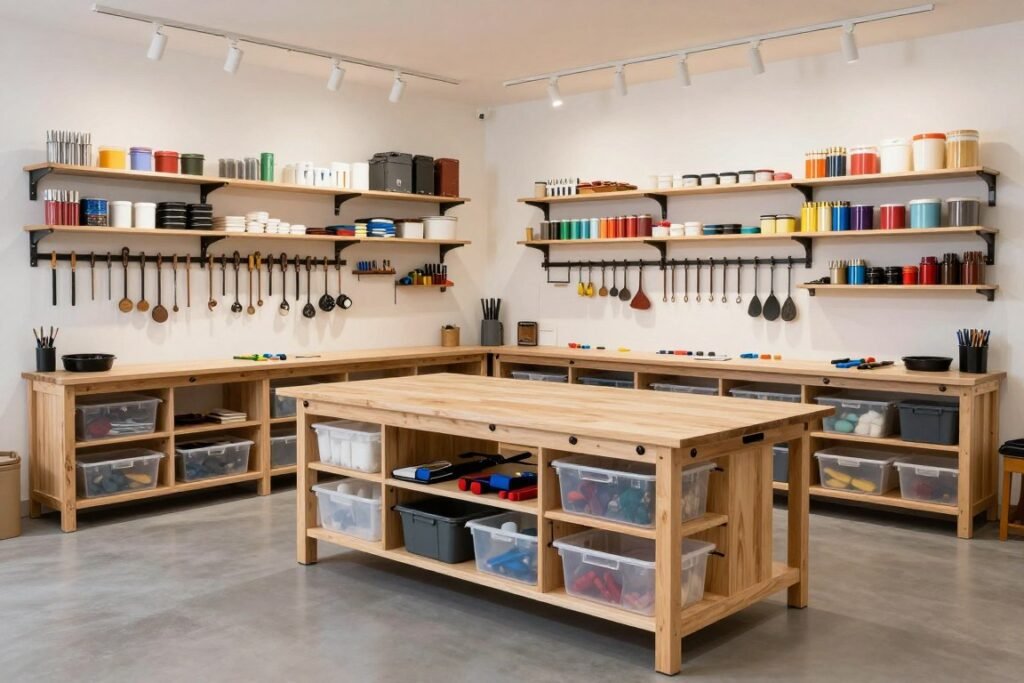
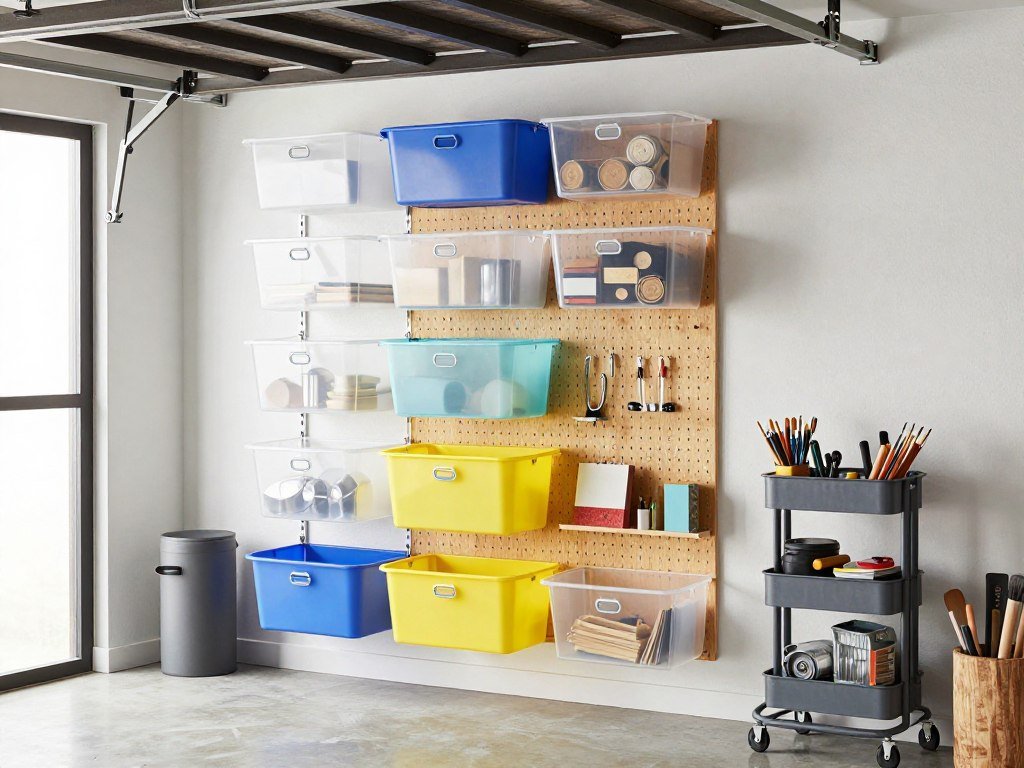
For storage, vertical solutions help maximize your available space:
Wall-Mounted Storage Options:
Pegboard systems for frequently used tools
Track systems with adjustable shelves and hooks
Floating shelves for supplies and finished pieces
Wall-mounted racks for paper, canvas, or other flat materials
Freestanding Storage Solutions:
Rolling carts that can move where needed
Flat file cabinets for artwork and paper
Clear bins and containers for visible supply storage
Repurposed furniture like dressers or bookshelves
Organize Your Creative Supplies
Keep your art materials visible, accessible, and protected with storage solutions designed for creative spaces.
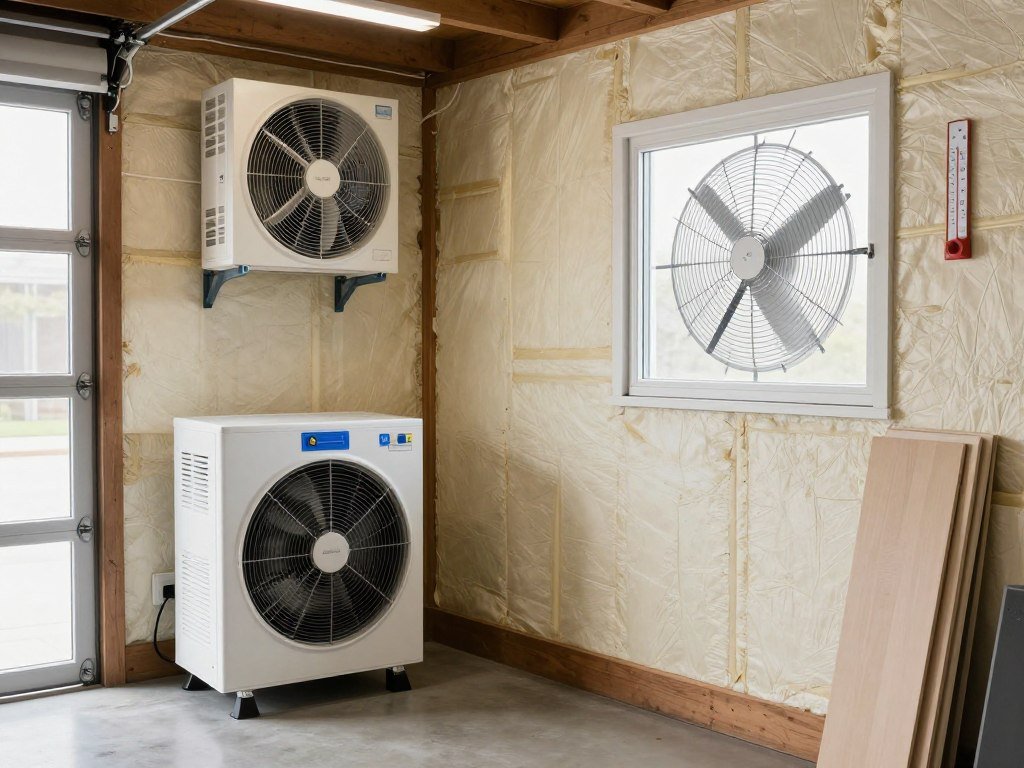
Garages typically aren’t well-insulated, which can make them uncomfortably hot in summer and cold in winter. Additionally, many art materials require proper ventilation to be used safely.
Consider these solutions for a comfortable, safe working environment:
Insulate walls, ceiling, and garage door to regulate temperature
Install a window air conditioner or portable AC unit for summer months
Use space heaters designed specifically for garage use during winter
Add an exhaust fan to remove fumes from paints, solvents, or other materials
Consider an air purifier to filter dust and particulates
Create a Comfortable Working Environment
Maintain ideal temperature and air quality in your garage art studio year-round with proper climate control solutions.
Organization and Workflow in Your Garage Art Studio
A well-organized studio enhances creativity by reducing frustration and maximizing efficiency. Think carefully about how you’ll move through your space and access materials during your creative process.
Creating Functional Zones
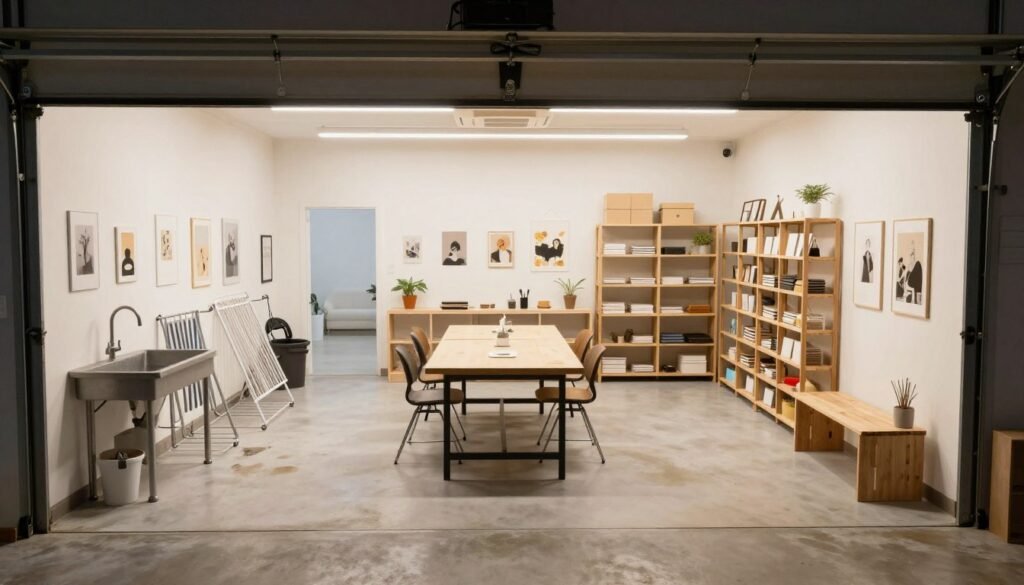
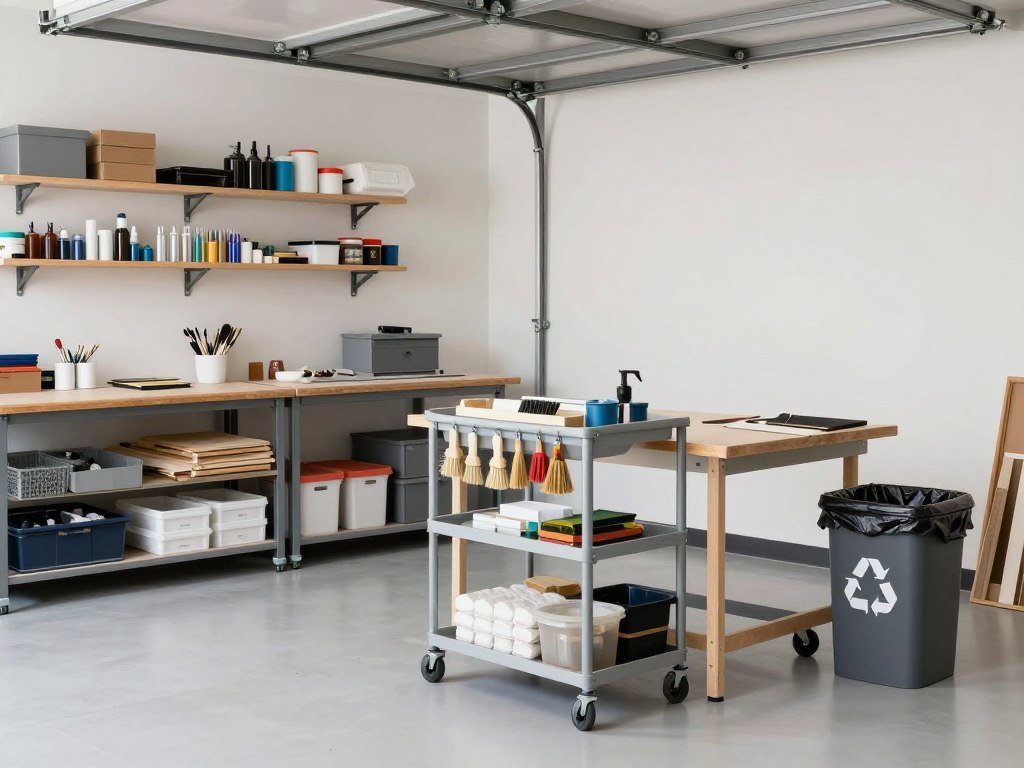
Divide your garage art studio into distinct zones based on different activities. This helps maintain order and creates a natural workflow. Consider including these zones in your layout:
Creation Zone
Your primary workspace with good lighting, comfortable standing/sitting options, and frequently used supplies within arm’s reach.
Wet Zone
Area for messy processes, ideally near a water source, with washable surfaces and good ventilation for activities involving paints, inks, or clay.
Dry Zone
Clean area for assembly, drawing, digital work, or other processes that need to stay free from dust, water, or other contaminants.
Storage Zone
Organized area for supplies, materials, and tools not in immediate use, with clear labeling and logical categorization.
Display Zone
Space to showcase finished work, reference materials, or inspiration pieces that inform your creative process.
Rest Zone
Comfortable seating area for breaks, contemplation, or meeting with clients, separated from messy work areas.
Smart Storage Solutions
Effective storage is crucial for maintaining an organized, functional art studio. The key is making supplies visible and accessible while protecting them from dust and damage.
Consider these organization principles:
Store frequently used items at eye level and within easy reach
Keep related supplies together (all painting materials in one area, drawing supplies in another)
Use clear containers so you can see contents without opening
Label everything clearly, even transparent containers
Implement a “return after use” policy to maintain organization
Consider how materials need to be stored (horizontal for paper, vertical for canvases)
Keep Your Studio Perfectly Organized
Find the perfect storage solutions to keep your creative supplies organized, visible, and protected.
If you’re working with a single-car garage or sharing the space with storage or other functions, you’ll need to be especially strategic about your layout.
Try these space-maximizing strategies:
Use folding or collapsible furniture that can be stored when not in use
Install ceiling storage racks for seasonal or rarely used items
Choose multi-purpose furniture (storage ottoman that serves as seating)
Utilize the full height of walls with shelving that reaches the ceiling
Consider a murphy-style folding workbench that can be lowered when needed
Use the back of the garage door for lightweight storage or inspiration boards
Make the Most of Limited Space
Discover space-saving solutions that help you create a fully functional art studio even in a small garage.
Adding Personality and Inspiration to Your Garage Art Studio
The final step in creating your dream garage art studio is adding elements that inspire creativity and make the space uniquely yours. These personal touches transform a functional workspace into a true creative sanctuary.
Creating an Inspiring Atmosphere
Surround yourself with elements that spark your imagination and fuel your creative process. Consider how color, texture, and personal mementos can enhance your creative experience.
Try these ideas to create an inspiring atmosphere:
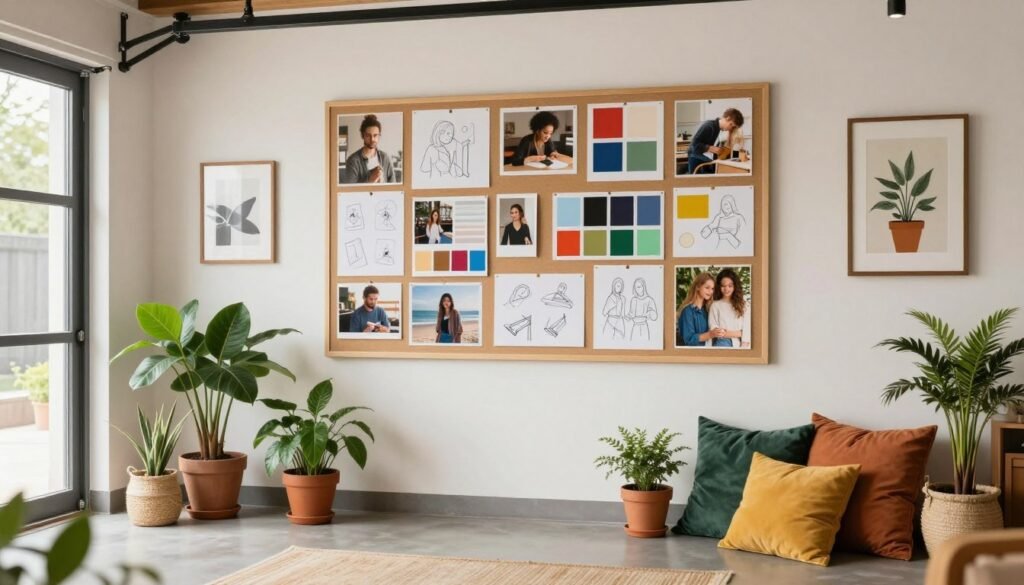
Install an inspiration board to display images, quotes, and materials that spark ideas
Add plants to bring life, color, and improved air quality to your space
Incorporate comfortable seating for contemplation and breaks
Display artwork that inspires you, whether your own or others’
Use color strategically – energizing hues in brainstorming areas, calming tones in work zones
Include a small speaker system for music that enhances your creative flow
Create Your Inspiration Board
Design a customizable space to collect and display the images, materials, and ideas that fuel your creative process.
A successful garage art studio requires ongoing maintenance to remain functional and inspiring. Establish routines that help you keep the space organized and ready for creative work.
Consider these maintenance strategies:
Schedule regular “reset” sessions to return items to their proper places
Keep cleaning supplies easily accessible for quick cleanup
Establish end-of-session routines for tools and materials that need special care
Use dust covers for equipment when the studio isn’t in use
Regularly assess your organization system and adjust as your needs change
Maintain climate control systems and check for any garage-specific issues like leaks
Keep Your Studio Clean and Ready
Find the perfect cleaning tools designed specifically for art studios and creative spaces.
Transforming your garage into an art studio is more than just a renovation project – it’s an investment in your creative practice and wellbeing. Your new studio will provide the space, functionality, and inspiration you need to explore your artistic vision without limitations.
Remember that your studio will evolve as you use it. Pay attention to what works well and what doesn’t, and don’t hesitate to make adjustments. The most effective studios grow and change alongside their artists’ practices.
I hope this guide has inspired you to take the first step toward creating your dream garage art studio. With some planning, creativity, and elbow grease, you can transform an underutilized garage into the creative sanctuary you’ve always wanted. Your artistic journey deserves a space that supports and inspires you – why not start building it today?
Ready to Transform Your Garage?
Get started with the essential supplies you’ll need to create your perfect garage art studio.