Small kitchen design challenges millions of homeowners. Every inch matters when you work with limited space. The right approach transforms cramped quarters into functional, beautiful cooking areas.
This Website contains affiliate links. That means I may earn a small commission if you purchase through my links, at no extra cost to you.
Smart design choices make small kitchens feel spacious. Strategic storage solutions maximize every corner. Thoughtful layouts improve efficiency and flow.
This guide presents proven kitchen ideas for small spaces. You’ll discover practical solutions that work in real homes. These strategies help you create the kitchen you deserve.
Maximize Vertical Storage Solutions
Wall space offers untapped potential in small kitchen design. Most homeowners underutilize the area between counter and ceiling. Vertical storage dramatically increases your available space.
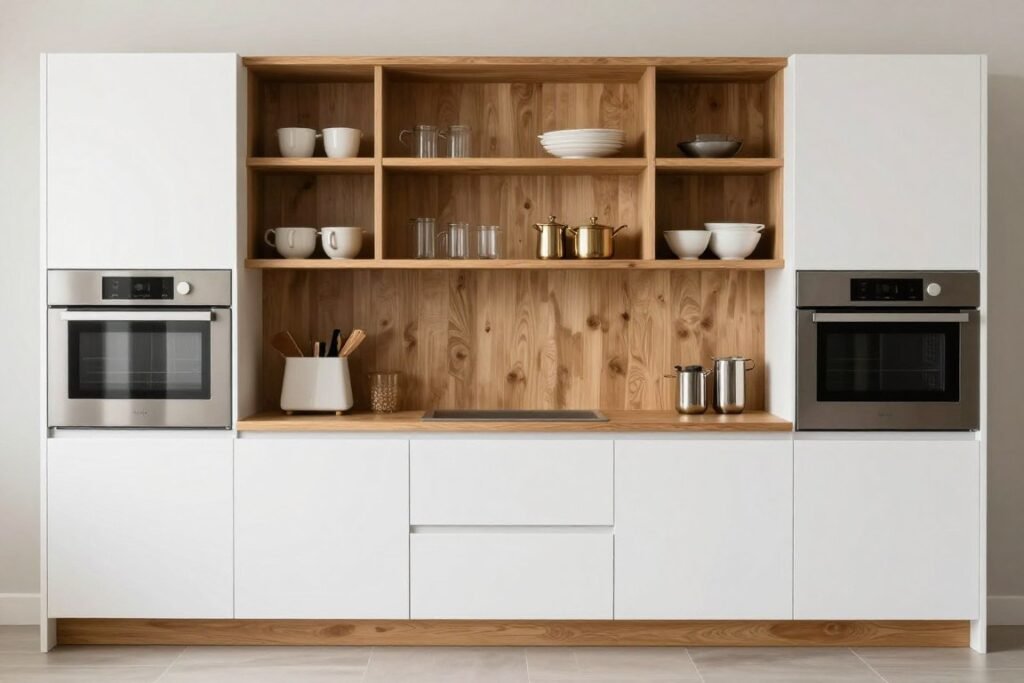
Floor-to-Ceiling Cabinetry
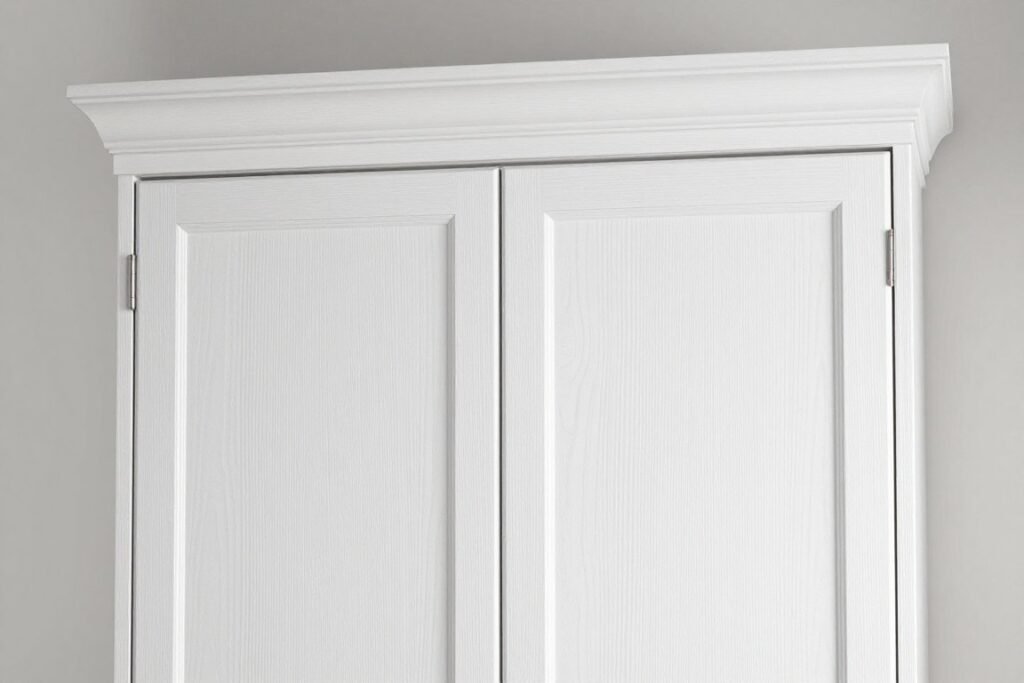
Extending cabinets to the ceiling eliminates wasted space. This approach provides 30-40% more storage than standard installations. The visual effect makes your kitchen feel taller and more open.
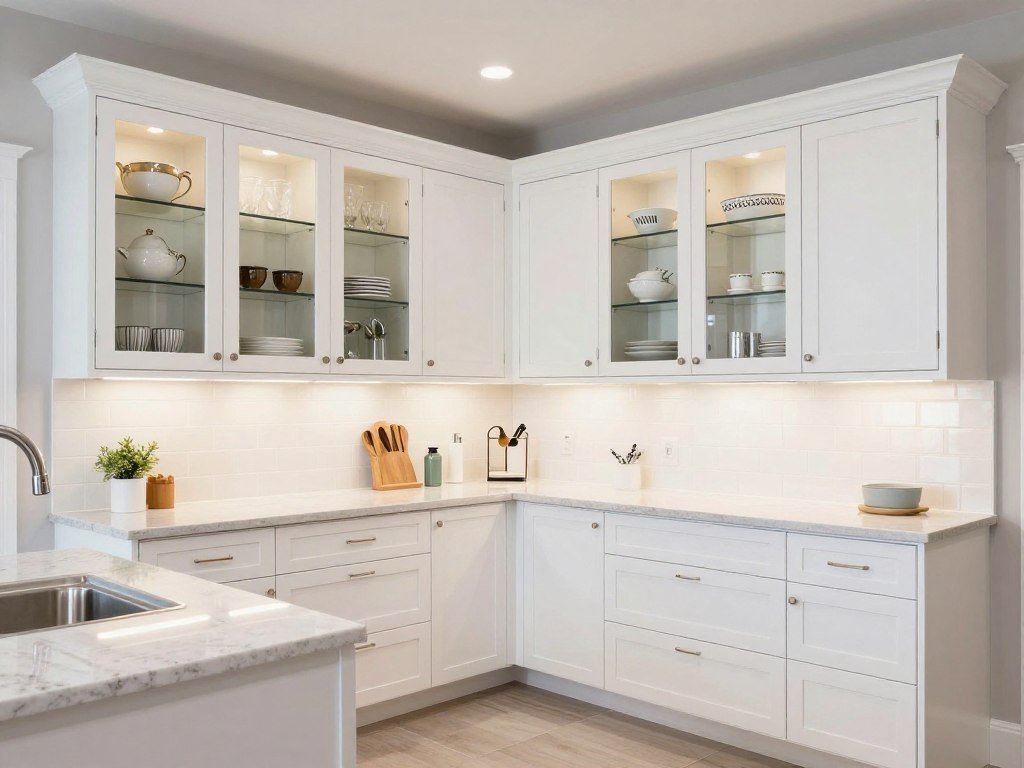
Upper cabinets should match lower units in style. Consistency creates a cohesive design that feels intentional. Glass doors on upper cabinets add depth without visual weight.
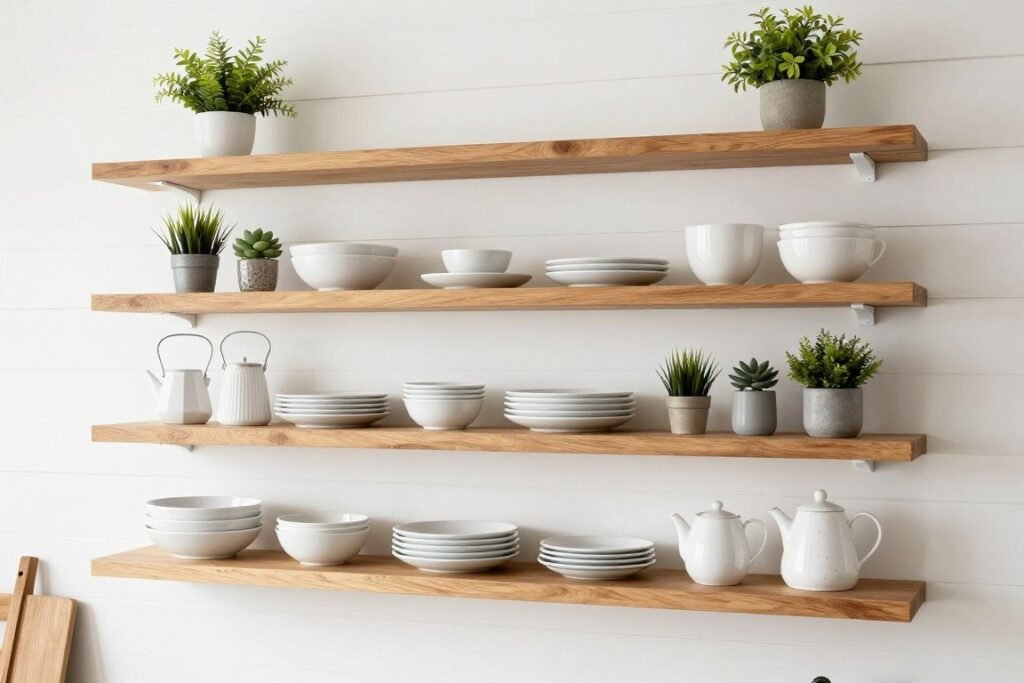
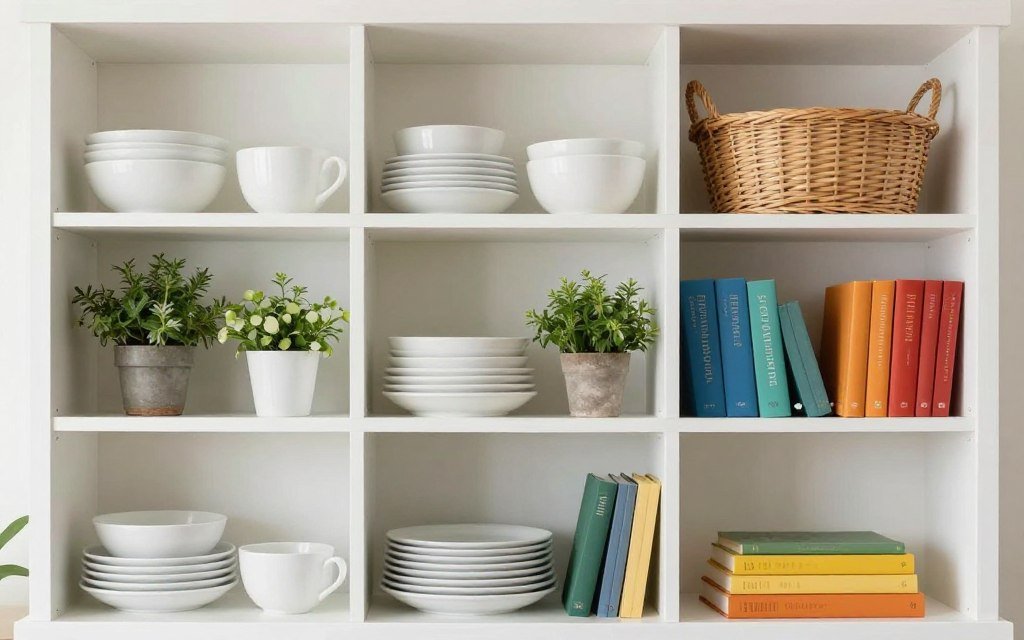
Shelves replace some wall cabinets for an airy feel. This design choice works well in galley and single-wall layouts. Open storage keeps frequently used items within easy reach.
Install shelves at varying heights for visual interest. The top shelf can extend to the ceiling for seasonal items. Middle shelves hold everyday dishes and glasses.
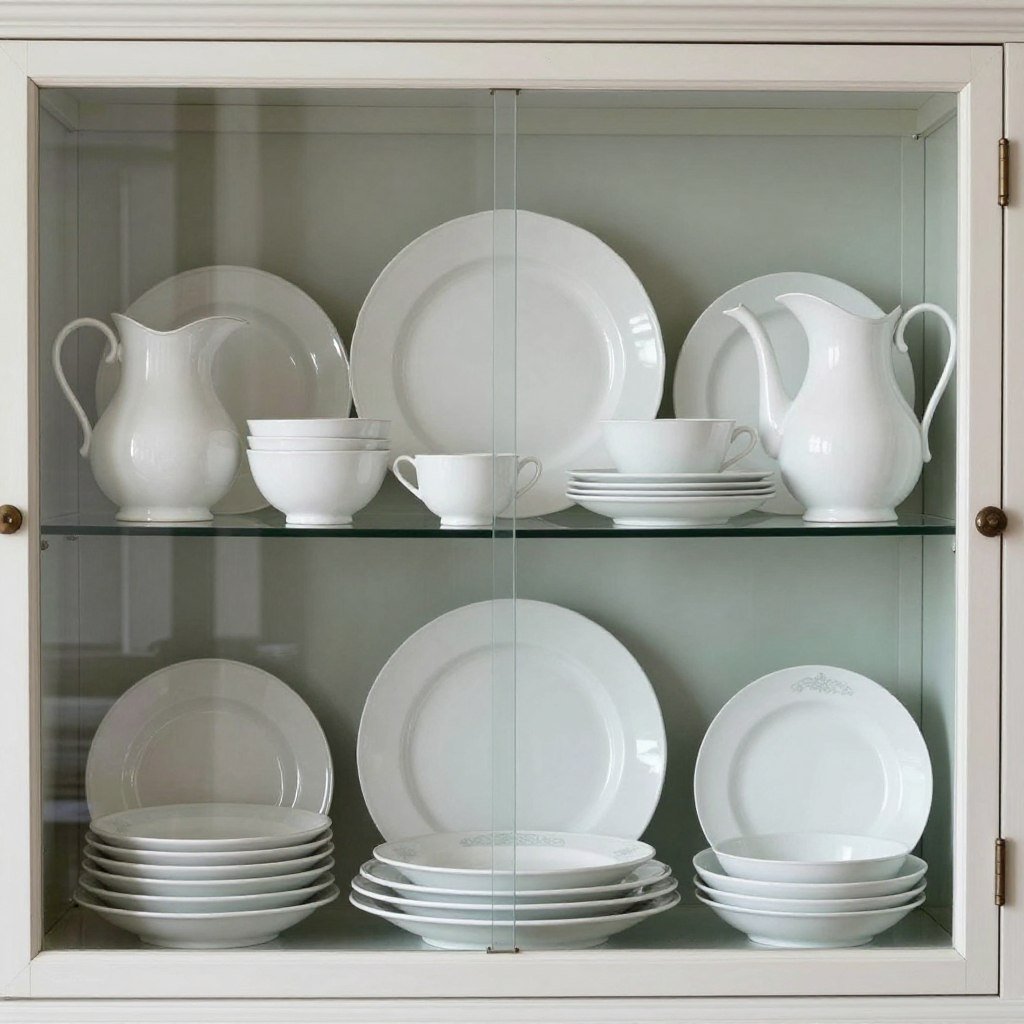
Organize items by color and size for attractive displays. White dishes create a clean, restaurant-style look. Mixing textures adds warmth to your kitchen design.
Wall-Mounted Pot Racks
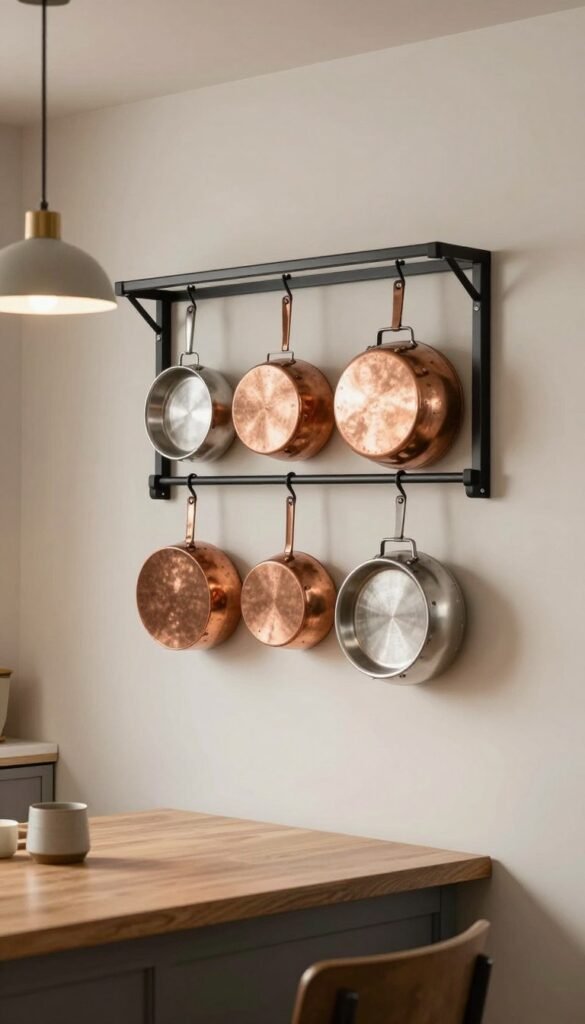
Hanging storage frees up valuable cabinet space. Pot racks work beautifully over islands or peninsula areas. They add a professional kitchen aesthetic to your home.
Choose racks that complement your kitchen style. Stainless steel suits modern designs perfectly. Wood and wrought iron fit traditional and farmhouse spaces.
Discover Vertical Storage Solutions
Transform your walls into functional storage space with smart organizational systems designed for compact kitchens.
Interior cabinet space requires smart organization. Standard shelves waste significant vertical space inside cabinets. Strategic systems multiply your effective storage capacity.
Pull-Out Shelving
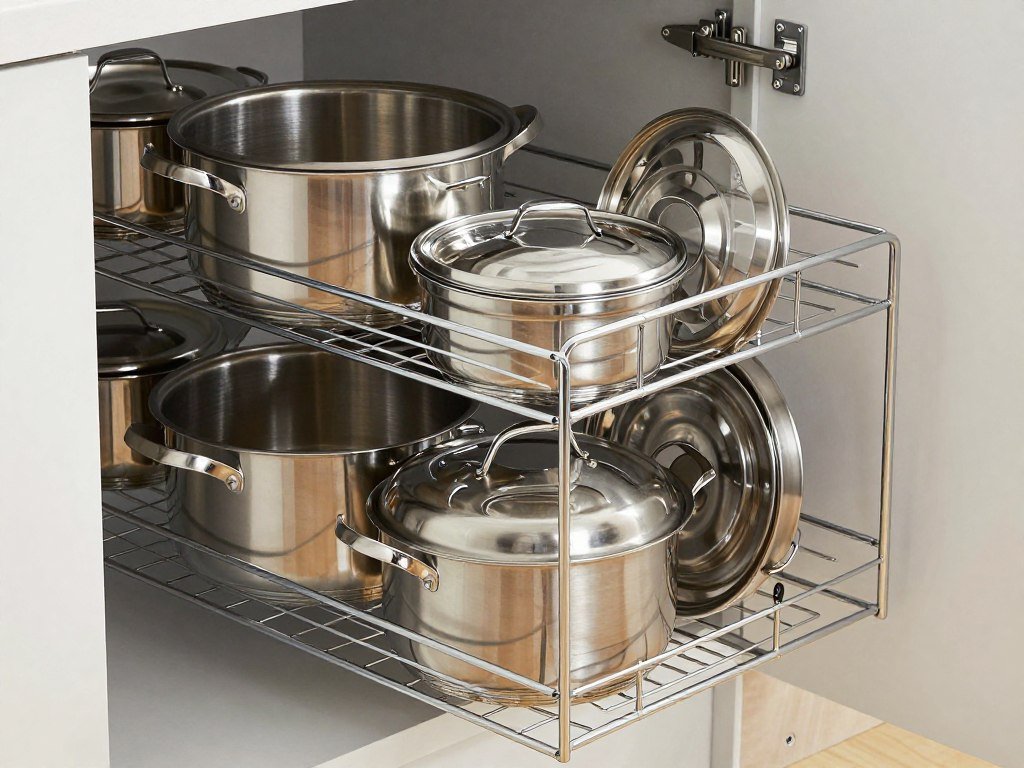
Sliding shelves provide access to deep cabinet corners. These systems prevent items from getting lost in the back. Pull-out organizers work especially well in base cabinets.
Install sliding shelves in your pantry cabinet. This upgrade makes every item visible and accessible. Time spent searching for ingredients drops dramatically.
Lazy Susan Organizers
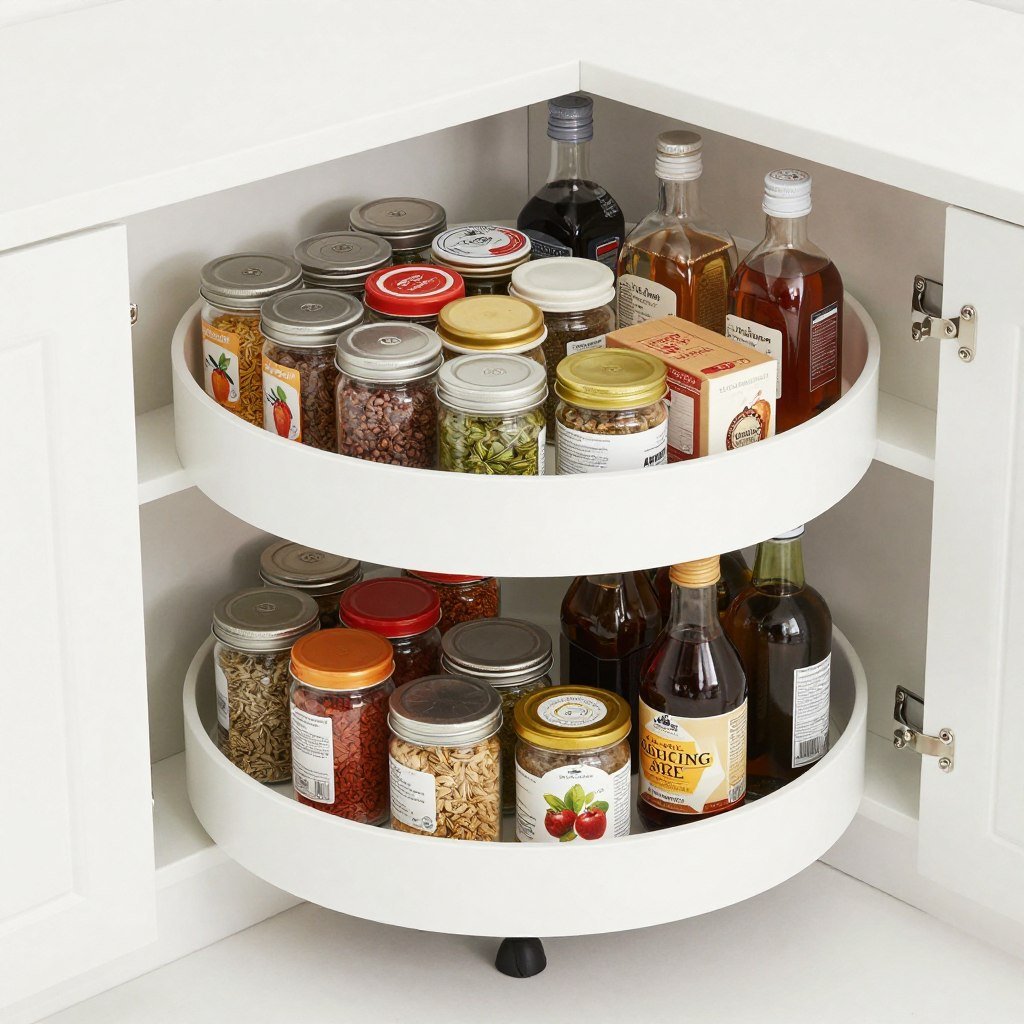
Corner cabinets challenge even experienced designers. Lazy Susan units solve the corner storage problem elegantly. Rotating shelves bring everything within reach.
Two-tier systems work best for most corner spaces. The lower level holds larger items and appliances. Upper tiers organize smaller bottles and containers.
Drawer Divider Systems
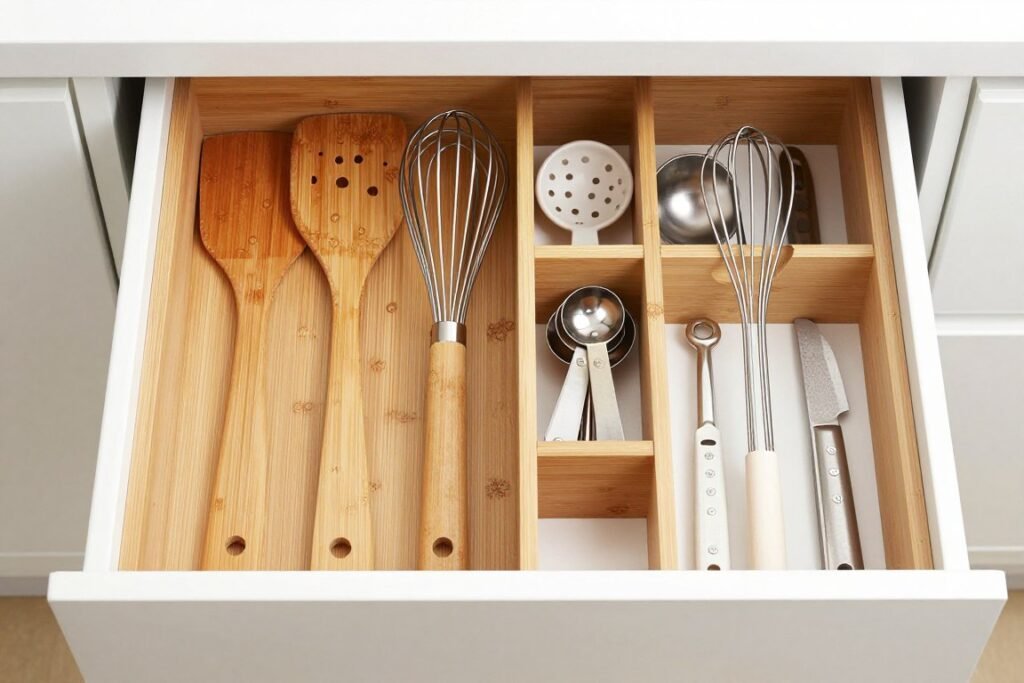
Organized drawers maximize usable space dramatically. Dividers prevent items from sliding into jumbled messes. Custom inserts create a place for every tool.
Measure your drawers before purchasing dividers. Adjustable systems offer flexibility as needs change. Bamboo and wood dividers add natural warmth to your kitchen.
Deep drawers replace lower cabinets in modern design. These pull-outs provide better access than shelves. Stack pots, pans, and larger items vertically for efficiency.
Under-Sink Solutions
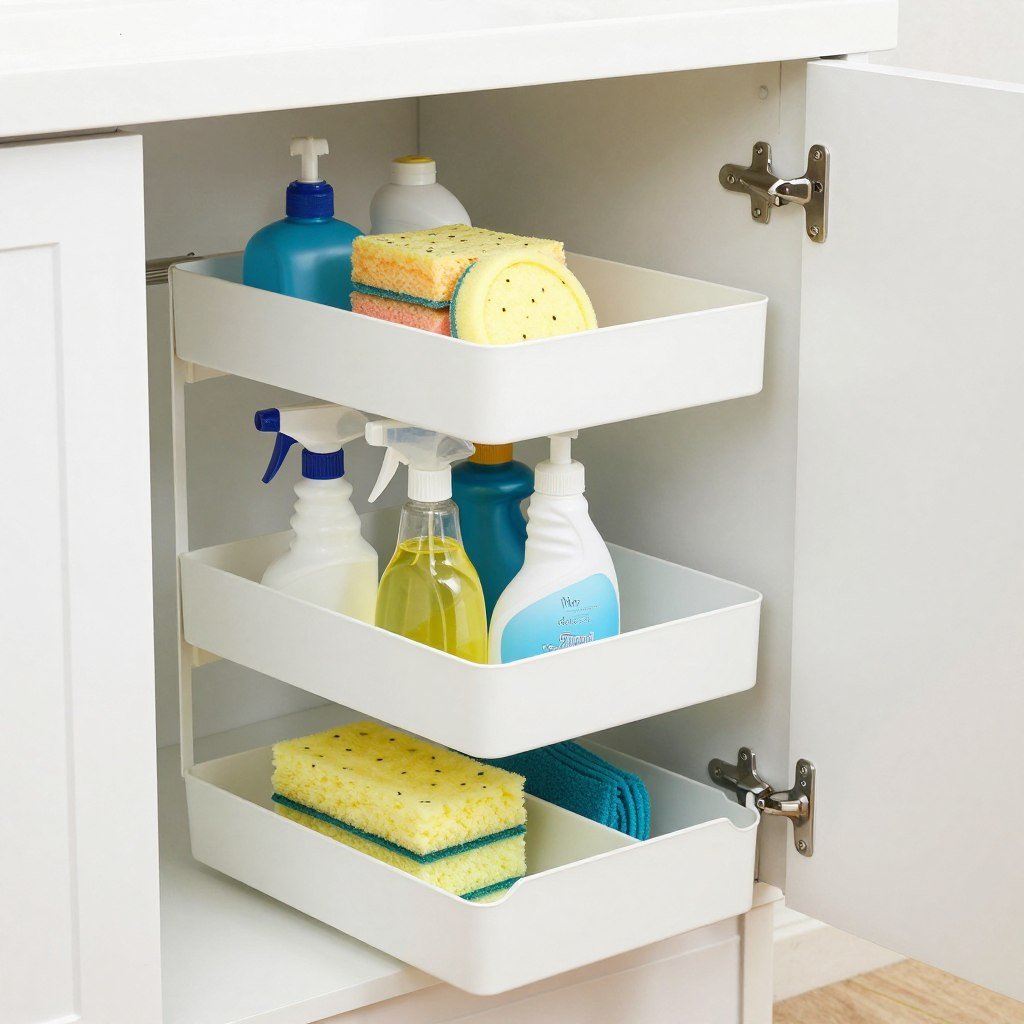
The area beneath your sink often becomes cluttered chaos. Specialized organizers work around plumbing obstacles. Sliding caddies hold cleaning supplies securely.
Install a pull-out trash bin system under your sink. This keeps waste containers hidden but accessible. Recycling bins fit alongside regular trash receptacles.
Toe-Kick Drawers
The space at cabinet bases typically goes unused. Toe-kick drawers utilize this overlooked area. These shallow compartments store flat items perfectly.
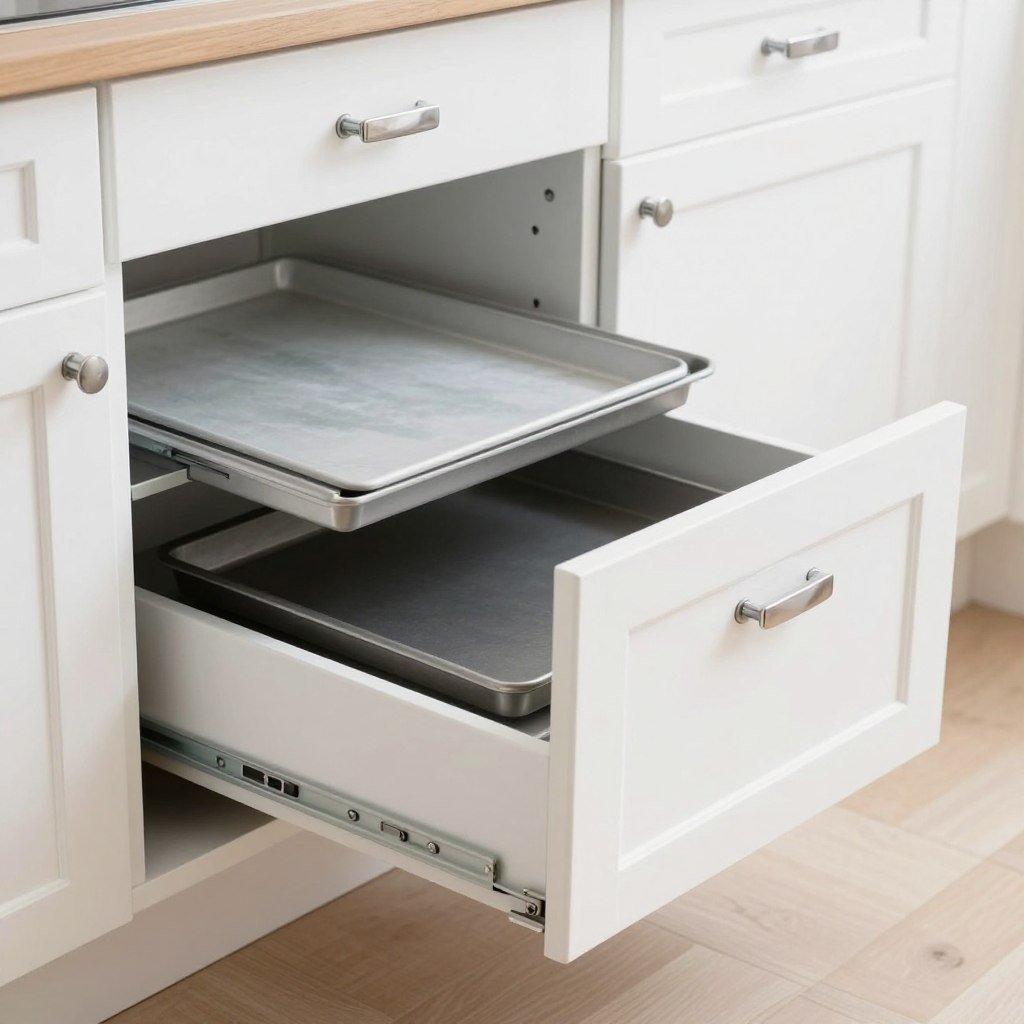
Baking sheets, cutting boards, and placemats fit ideally. The drawers maintain the clean line of your cabinetry. Most guests never notice this hidden storage.
Choose Space-Saving Appliances
Standard-size appliances overwhelm small kitchen layouts. Compact alternatives provide full functionality in smaller footprints. Modern options rival full-size models in performance.
Apartment-Size Ranges
Twenty-four-inch ranges fit where standard models cannot. These compact units offer four burners and full ovens. Many home cooks prefer the efficiency of smaller ranges.
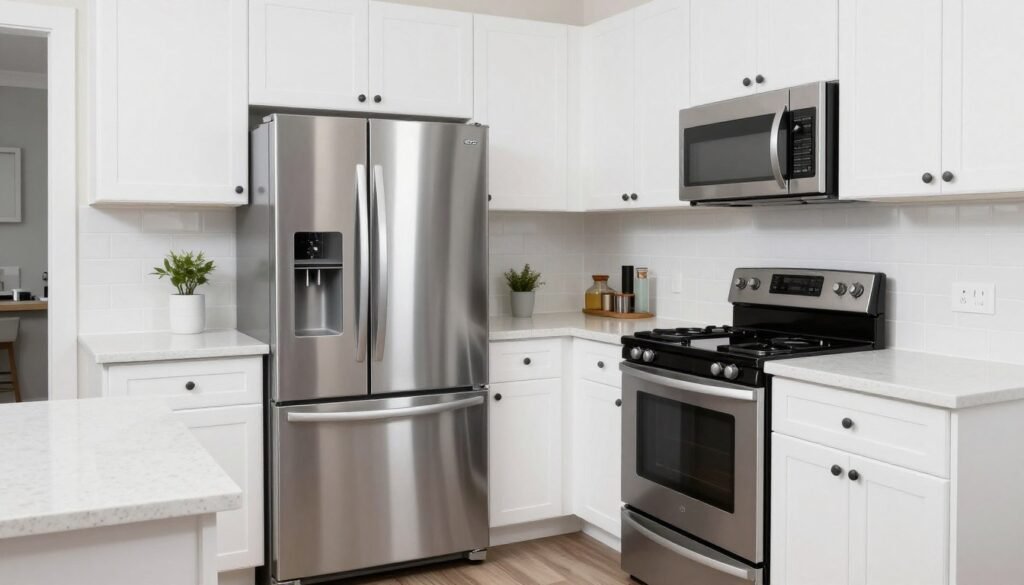
Slide-in models create a built-in appearance. The seamless design looks custom and expensive. Choose stainless steel to match other kitchen appliances.
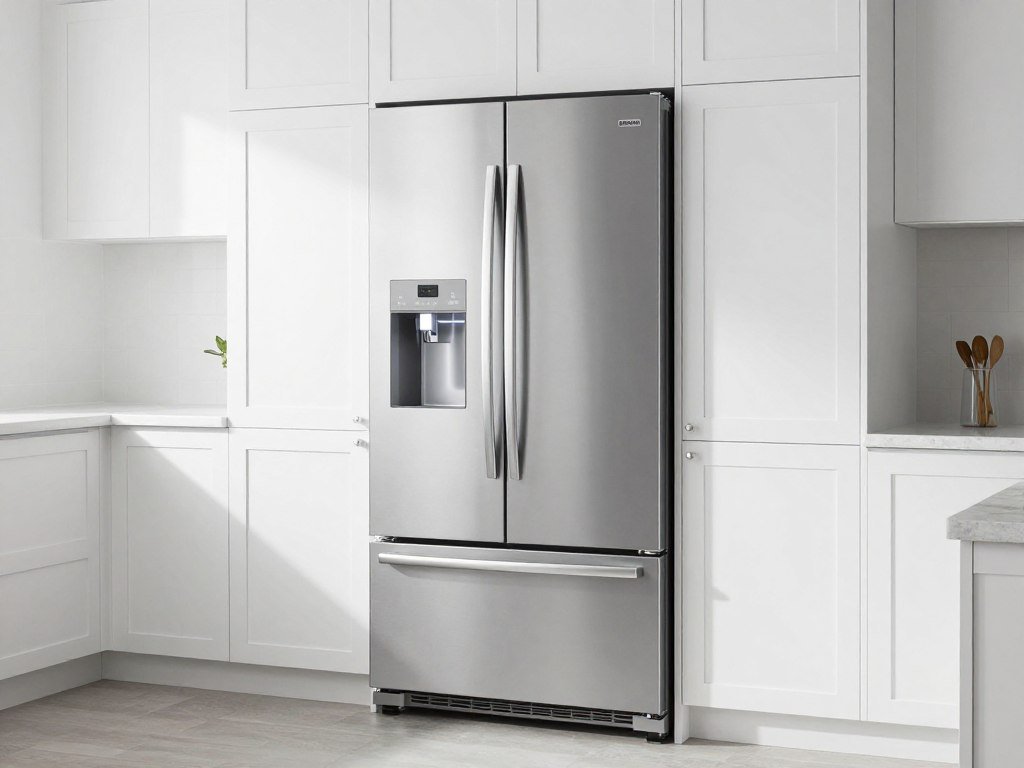
Counter-Depth Refrigerators
Standard refrigerators protrude into your kitchen space. Counter-depth models align with cabinet faces. This alignment creates a streamlined, spacious feeling.
These refrigerators sacrifice some interior volume. The trade-off improves traffic flow and visual appeal. Most families find the capacity sufficient for daily needs.
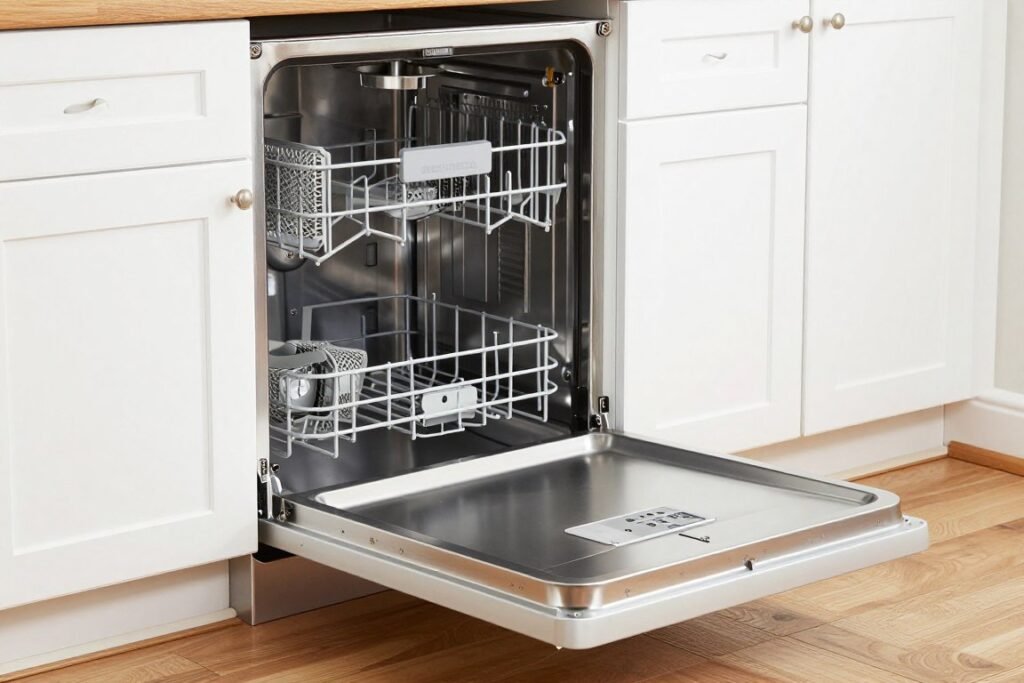
Compact Dishwashers
Eighteen-inch dishwashers work perfectly for small households. These units handle daily dish loads efficiently. Installation requires less cabinet space than standard models.
Drawer-style dishwashers offer another compact solution. Single or double drawers fit into various kitchen layouts. The design allows running smaller loads more frequently.
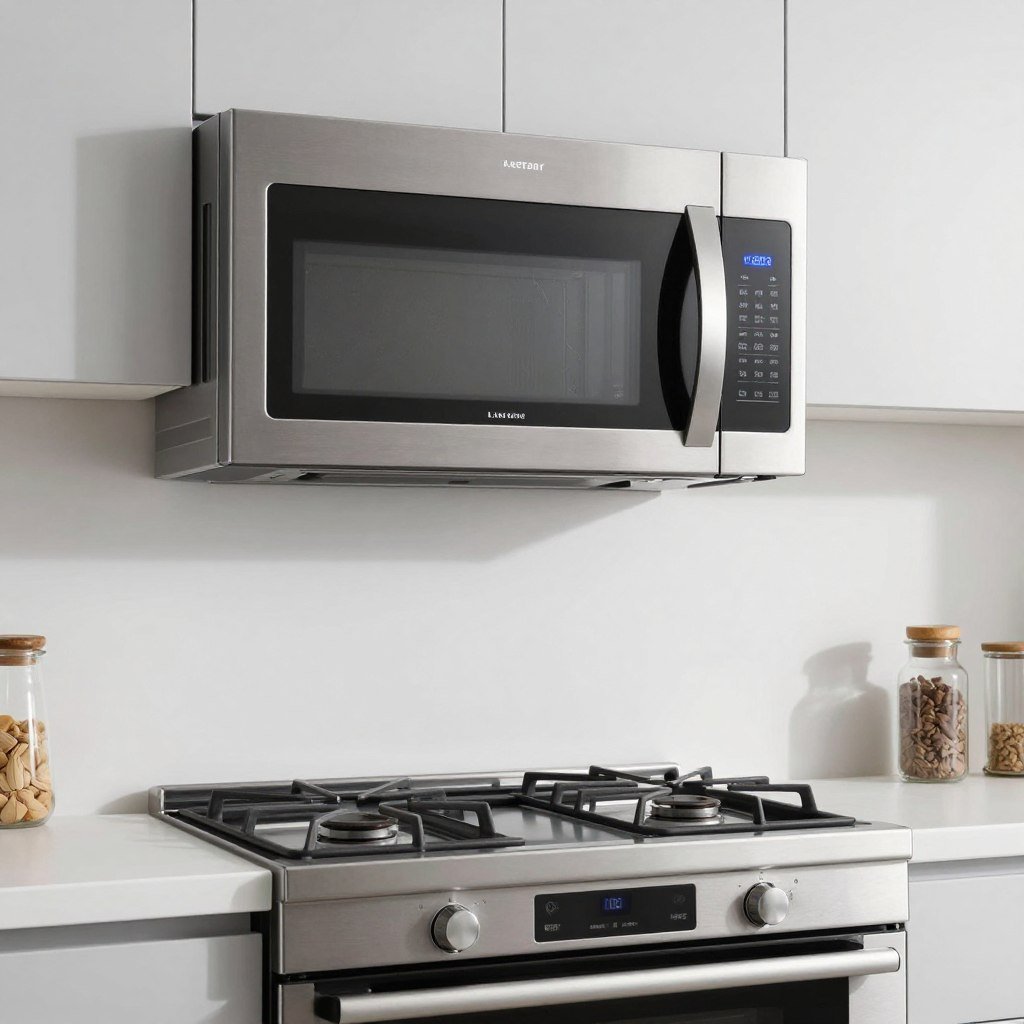
Combination Ovens
Microwave-convection combinations serve dual purposes. These appliances save significant counter and wall space. Modern units deliver excellent cooking results.
Over-the-range installation eliminates the need for separate hood vents. This position keeps countertops clear for food prep. Most models include built-in lighting features.
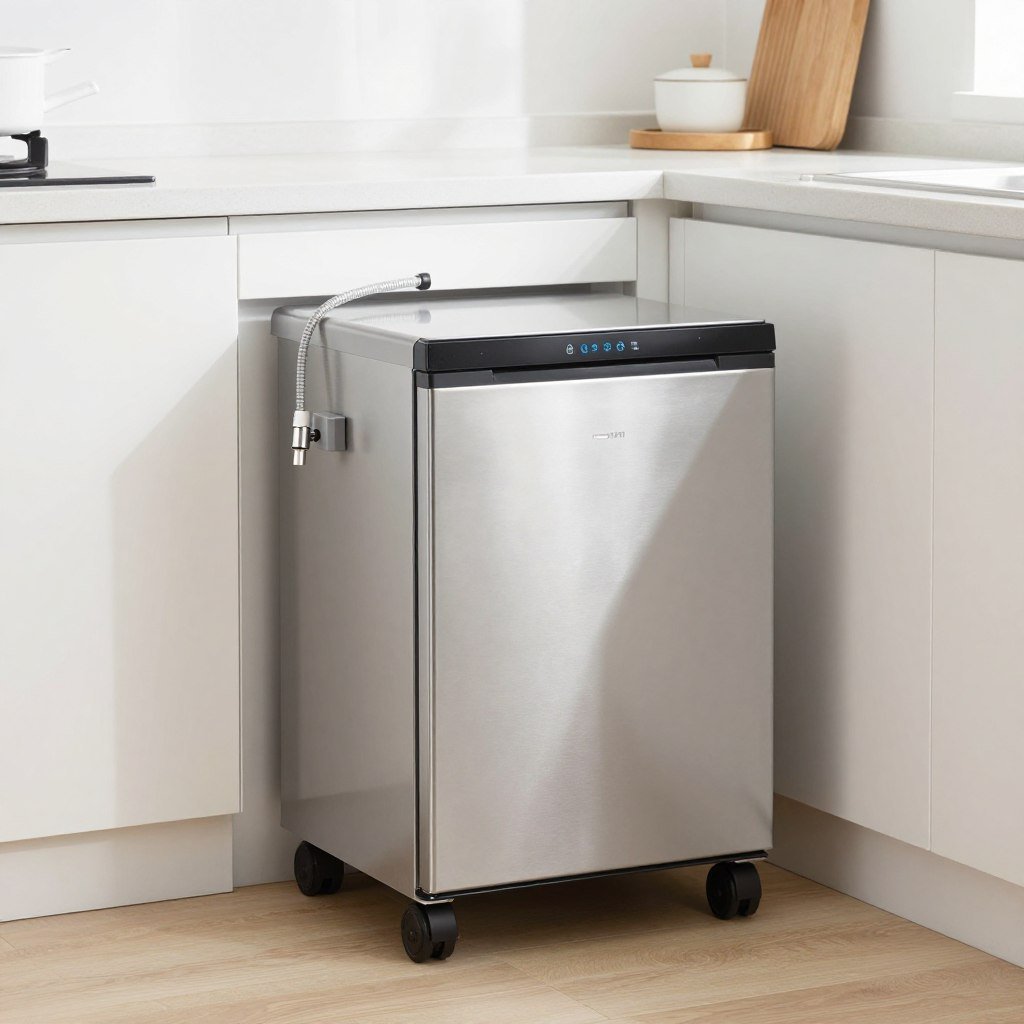
Portable Options
Portable dishwashers and cooktops offer flexibility. These units store away when not needed. Renters especially appreciate the non-permanent installation.
Rolling kitchen carts hold portable appliances securely. The cart provides additional counter space and storage. Move it aside to open up your kitchen area.
Find Your Perfect Compact Appliances
Discover space-saving appliances that deliver full functionality without overwhelming your kitchen layout.
Layout determines how well your kitchen functions. The classic work triangle still guides effective design. Small spaces benefit from specific layout configurations.
Galley Kitchen Efficiency
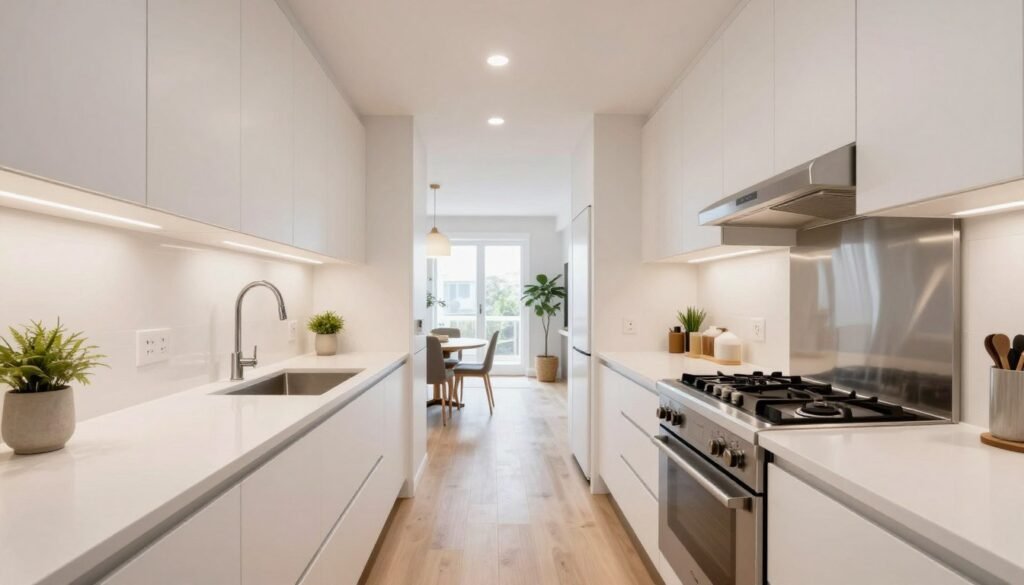
Galley layouts maximize efficiency in narrow spaces. Two parallel walls create an ideal work zone. This configuration suits rectangular rooms perfectly.
Position your sink on one wall with the range opposite. Refrigerator placement at one end completes the triangle. This arrangement minimizes steps during cooking tasks.
Keep the galley width between 42 and 48 inches. Narrower spaces feel cramped and restrict movement. Wider galleys reduce efficiency by increasing walking distance.
L-Shaped Configurations
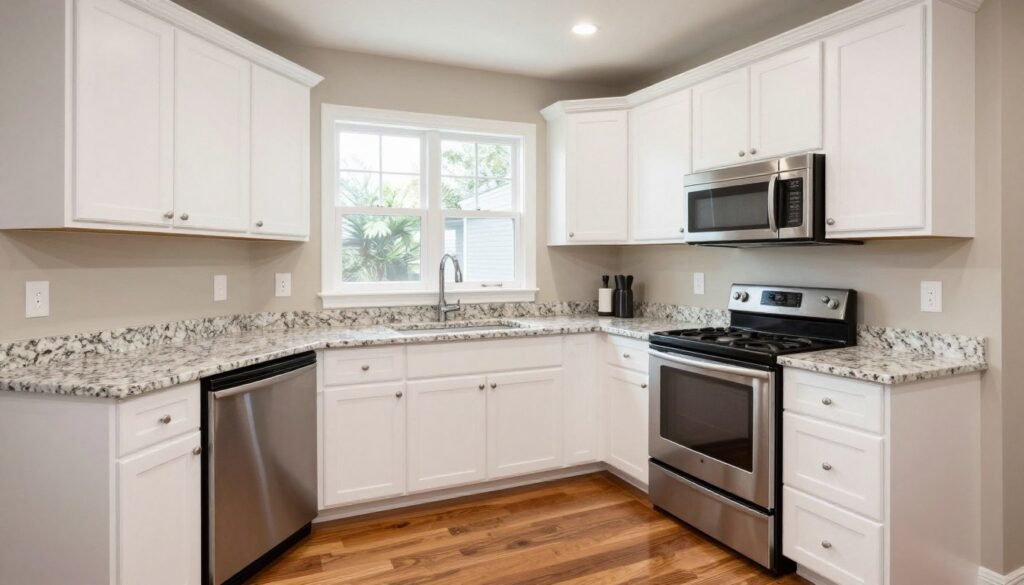
L-shaped kitchens work well in square or slightly rectangular rooms. This layout provides two adjacent walls for workspace. The design naturally creates an efficient work triangle.
Place the sink at the corner for optimal plumbing. Position the range and refrigerator on separate legs. This arrangement balances the kitchen visually and functionally.
An L-shaped layout leaves one wall open. This space accommodates a dining area or living room connection. The openness makes small homes feel more spacious.
Single-Wall Solutions
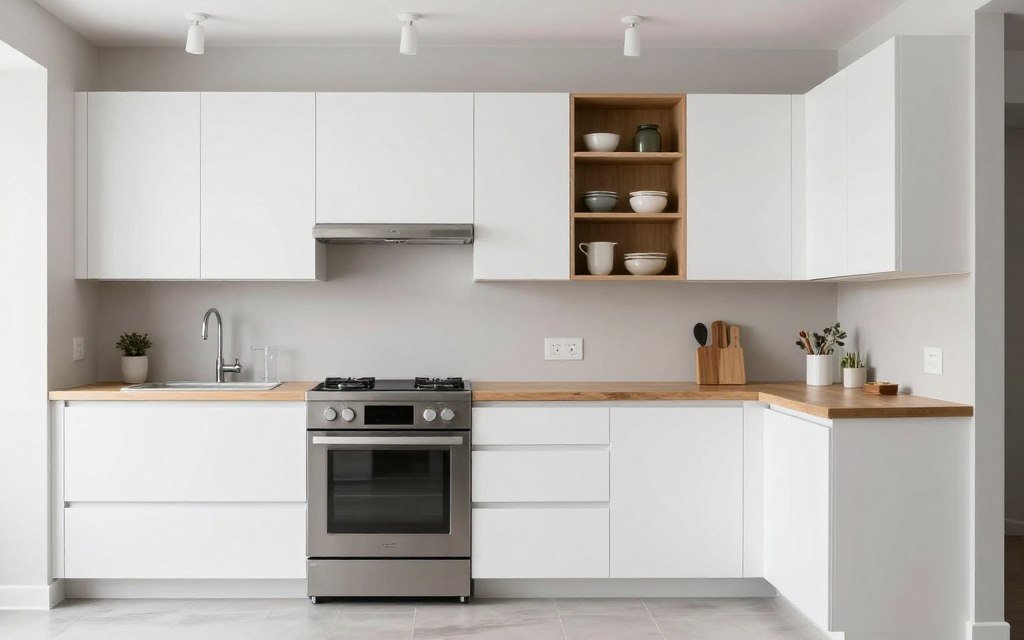
One-wall kitchens fit into extremely tight spaces. This layout works in studio apartments and tiny homes. All appliances and storage line up along a single wall.
Arrange elements in a logical cooking sequence. Place the refrigerator at one end for easy access. Position the sink in the middle with the range nearby.
Add an island or cart if space allows. This creates additional counter space and storage. Rolling options provide flexibility in small living areas.
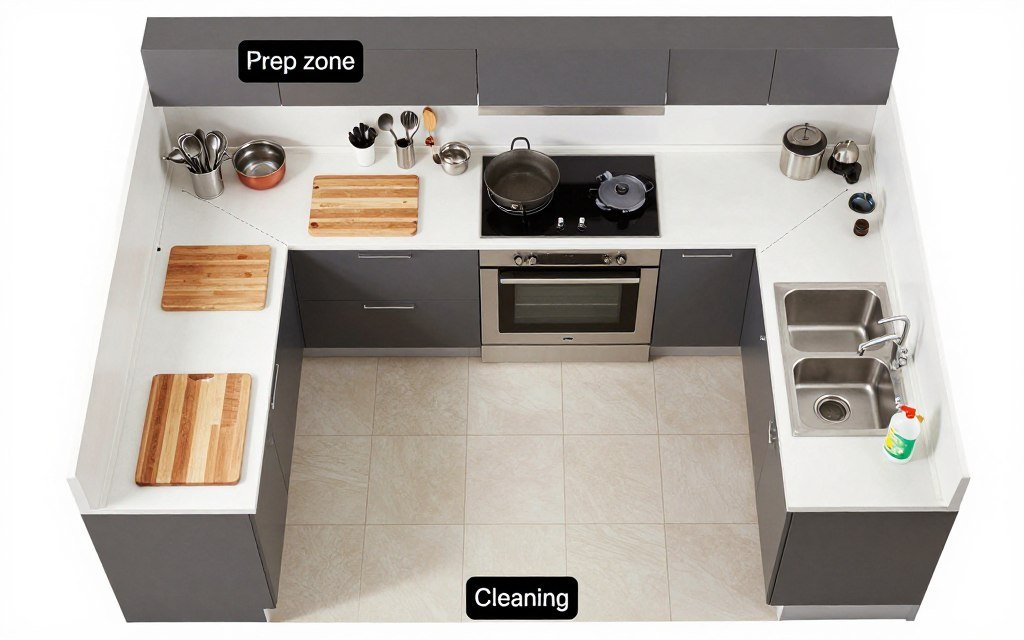
U-Shaped Designs
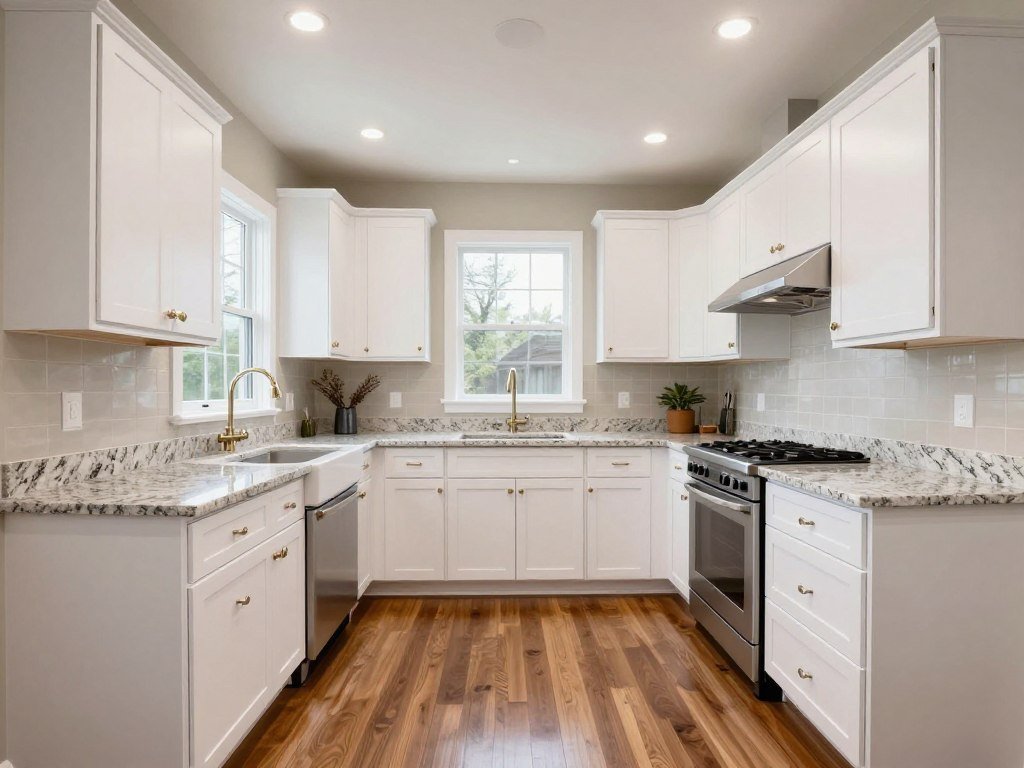
U-shaped kitchens provide maximum storage and counter space. Three walls of cabinets surround the cook. This layout suits dedicated kitchen rooms beautifully.
Ensure adequate space between opposing cabinets. Maintain at least 42 inches for comfortable movement. Wider clearances accommodate multiple cooks working simultaneously.
Corner cabinets require special attention in U-shaped designs. Lazy Susan units or pull-out systems maximize these areas. Proper corner solutions prevent wasted space.
Implement Layered Lighting Design
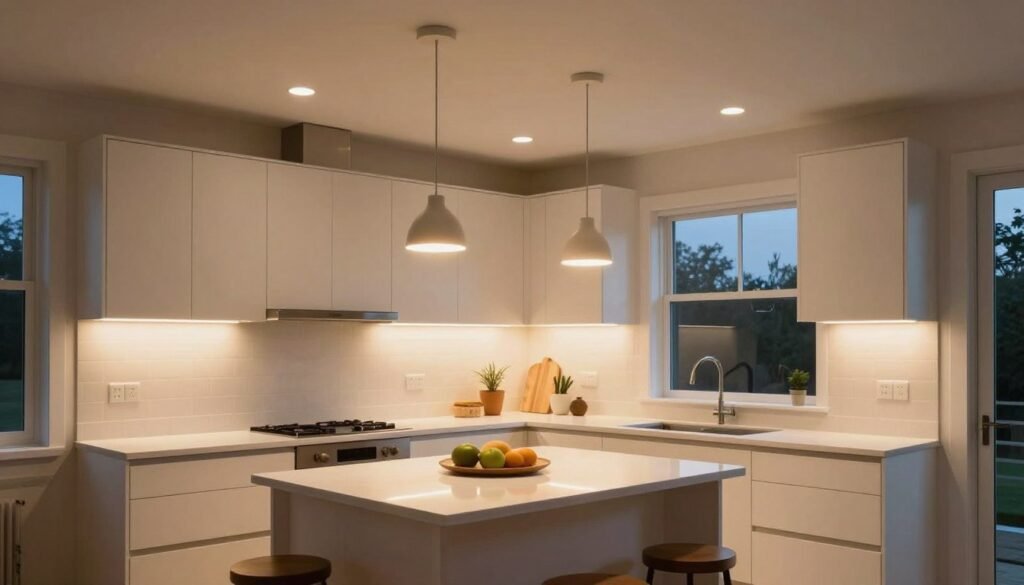
Proper lighting transforms small kitchen spaces. Dark corners make rooms feel cramped and smaller. Strategic illumination creates the illusion of expanded space.
Under-Cabinet Task Lighting
LED strips beneath upper cabinets illuminate work surfaces. This lighting eliminates shadows on countertops. Task lighting makes food preparation safer and easier.
Choose warm white LEDs for a natural appearance. Cool white light can feel harsh in home kitchens. Dimmable options provide flexibility for different times of day.
Install lighting toward the front edge of cabinets. This position prevents shadows from your body. Hide the strips behind a small lip for a polished look.
Pendant Fixtures
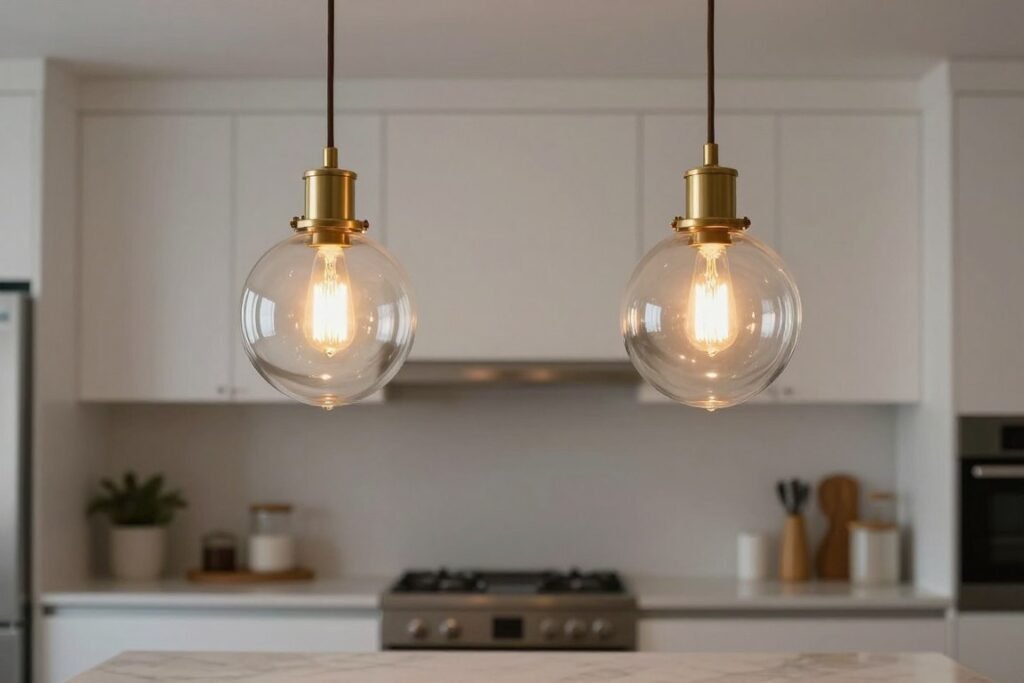
Hanging lights over islands or peninsula areas provide focal points. Pendants add style while delivering functional illumination. The vertical element draws eyes upward, creating height perception.
Select fixtures proportional to your island size. Oversized pendants overwhelm small spaces. Two smaller lights often work better than one large fixture.
Hang pendants 30 to 36 inches above counter surfaces. This height provides adequate light without blocking sightlines. Adjustable cords allow perfect positioning during installation.
Recessed Ceiling Lights
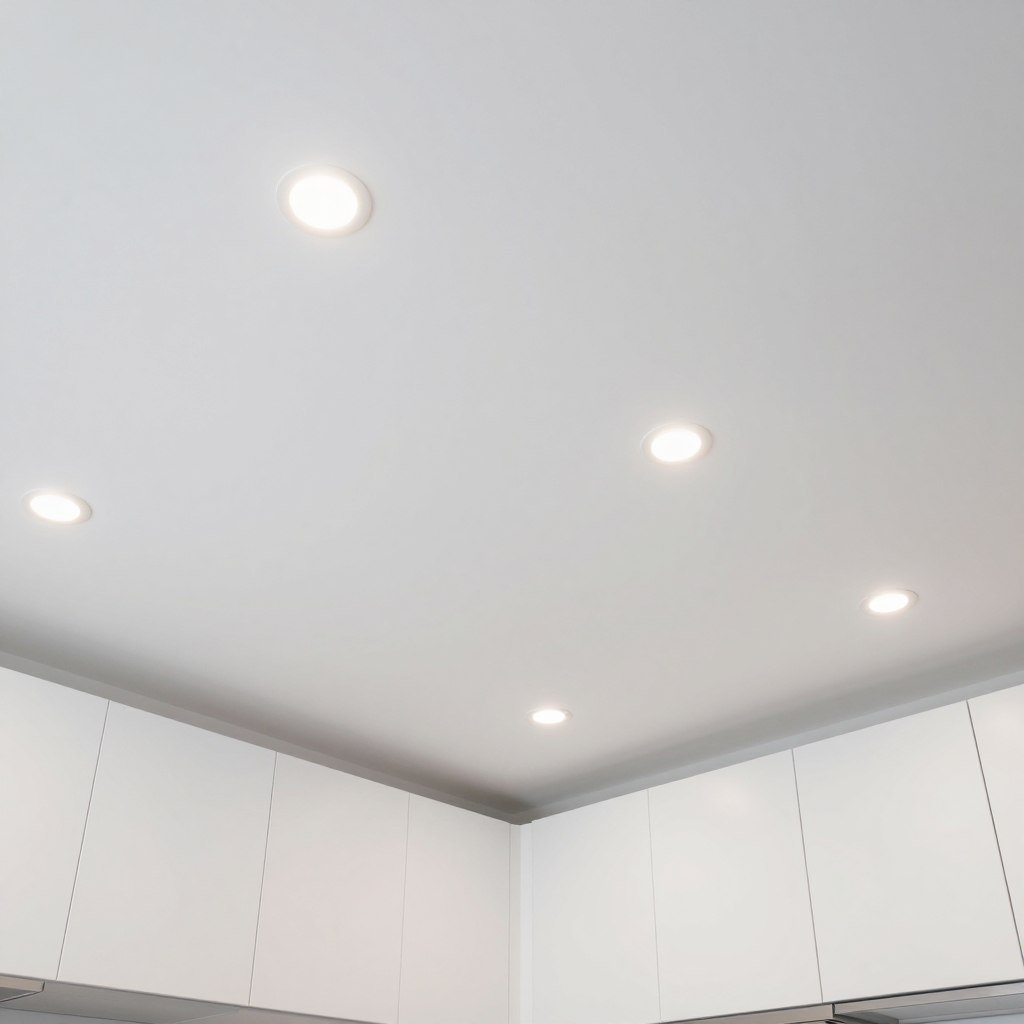
Recessed fixtures provide general ambient lighting. These lights distribute illumination evenly throughout the space. Modern LED options offer excellent efficiency and longevity.
Space recessed lights approximately 4 feet apart. This spacing prevents dark spots and shadows. Position lights to highlight key kitchen areas and features.
Cabinet Interior Lighting
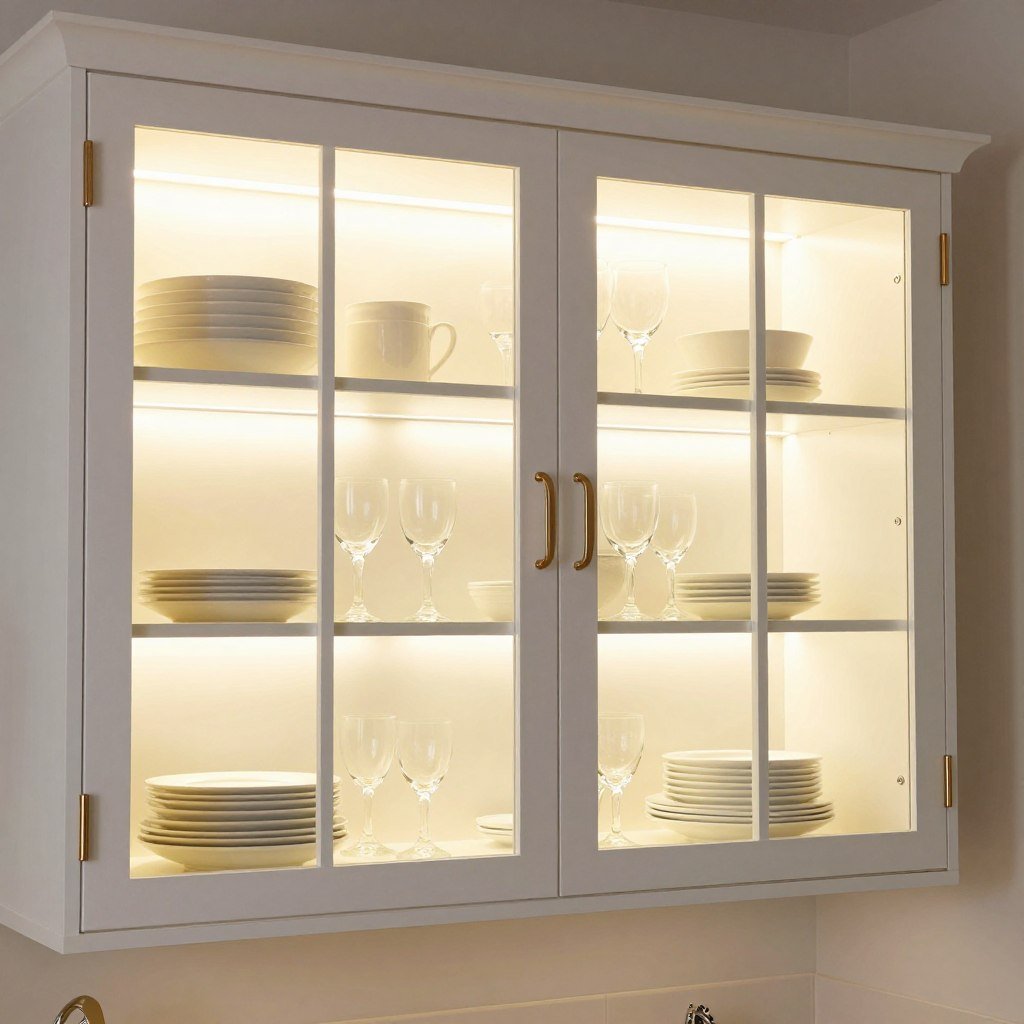
Lights inside glass-front cabinets showcase your dishware. This feature adds elegance to your kitchen design. Battery-operated puck lights offer easy installation options.
Interior lighting creates a warm, inviting ambiance. The gentle glow makes your kitchen feel welcoming. Motion-sensor options provide automatic convenience.
Toe-Kick Illumination
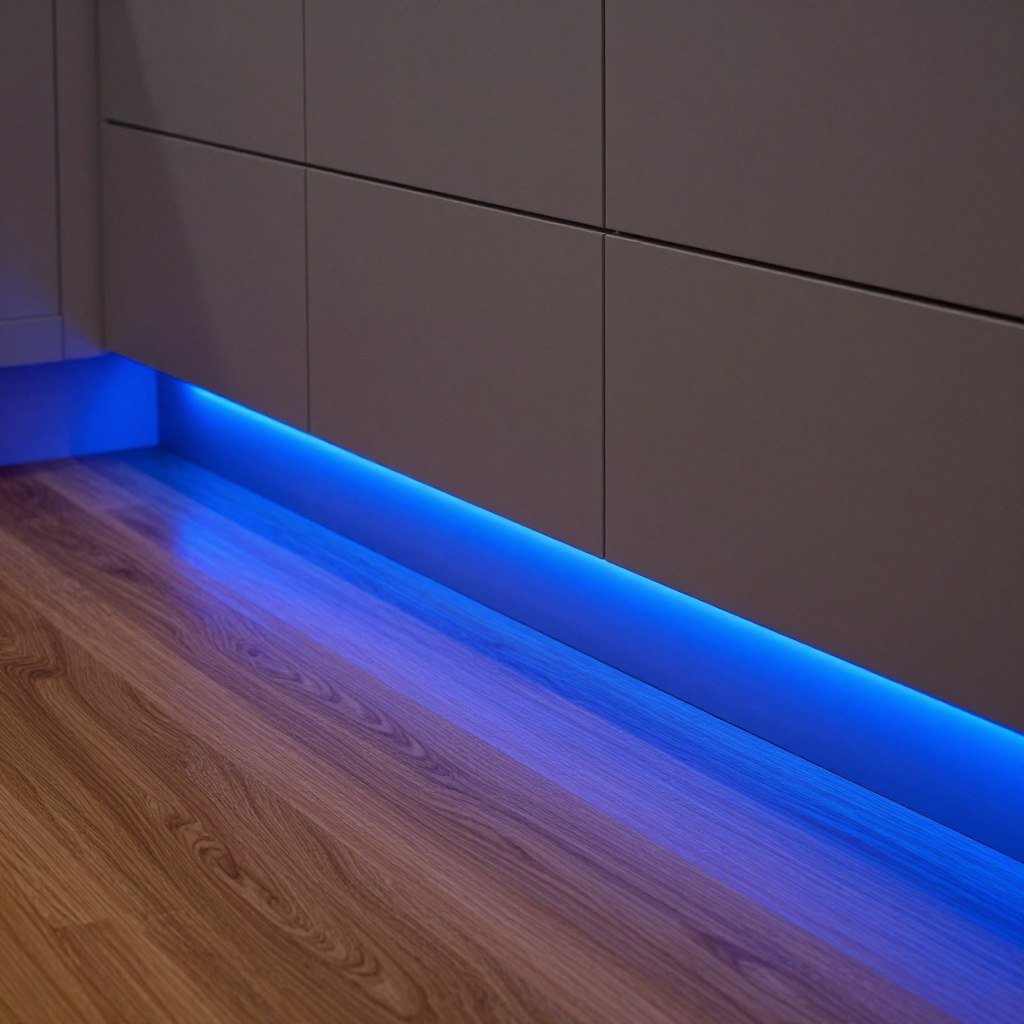
LED strips at cabinet bases provide subtle nighttime guidance. This lighting creates a floating effect for cabinets. The gentle illumination helps navigate safely after dark.
Toe-kick lights add a modern, high-end touch. Choose colors that complement your design style. White or warm tones suit most traditional kitchens.
Brighten Your Space With Smart Lighting
Discover lighting solutions that expand your small kitchen visually while improving functionality and safety.
Color dramatically affects how large a room feels. Light hues reflect more natural and artificial light. Strategic color choices make small kitchens appear significantly larger.
White and Neutral Foundations
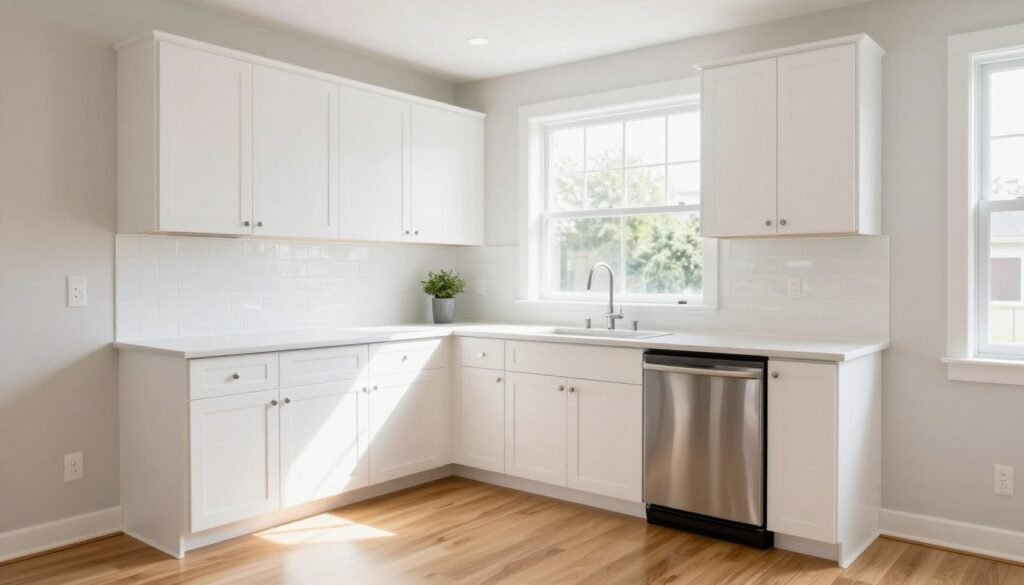
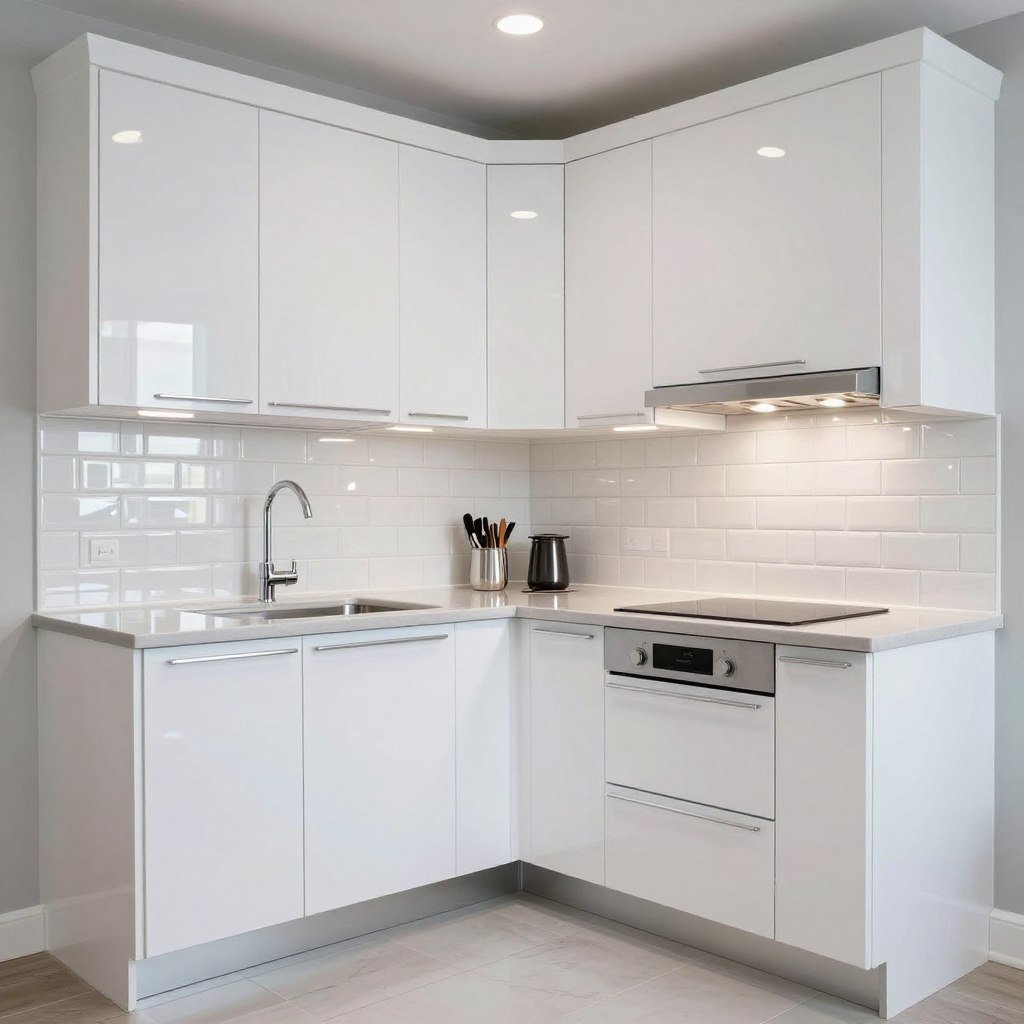
White cabinets maximize light reflection in small spaces. This classic choice never goes out of style. White creates a clean, fresh kitchen atmosphere.
Warm whites prevent a sterile, cold appearance. Off-white and cream tones add subtle warmth. These shades work beautifully with various design styles.
Neutral walls complement white cabinetry perfectly. Soft grays, beiges, and taupes provide gentle contrast. These colors create depth without overwhelming the space.
Two-Tone Cabinet Schemes
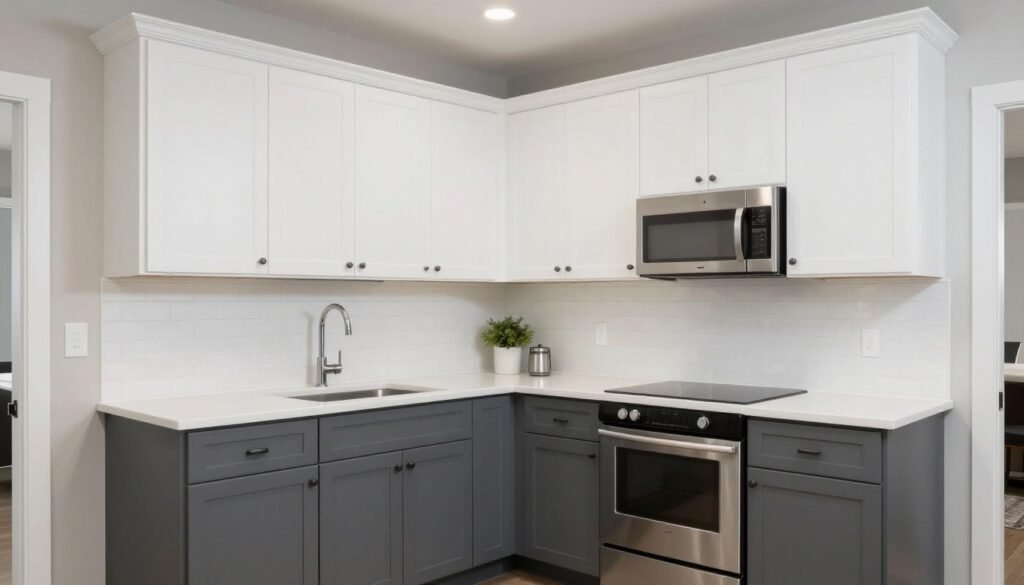
Combining two colors adds visual interest to small kitchens. Light uppers keep the space feeling open. Darker lower cabinets ground the design aesthetically.
Navy blue base cabinets pair beautifully with white uppers. This combination feels fresh and contemporary. The contrast defines different kitchen zones clearly.
Gray lower cabinets offer a sophisticated neutral option. Pair with white or cream upper units. This scheme works across multiple design styles.
Accent Color Integration
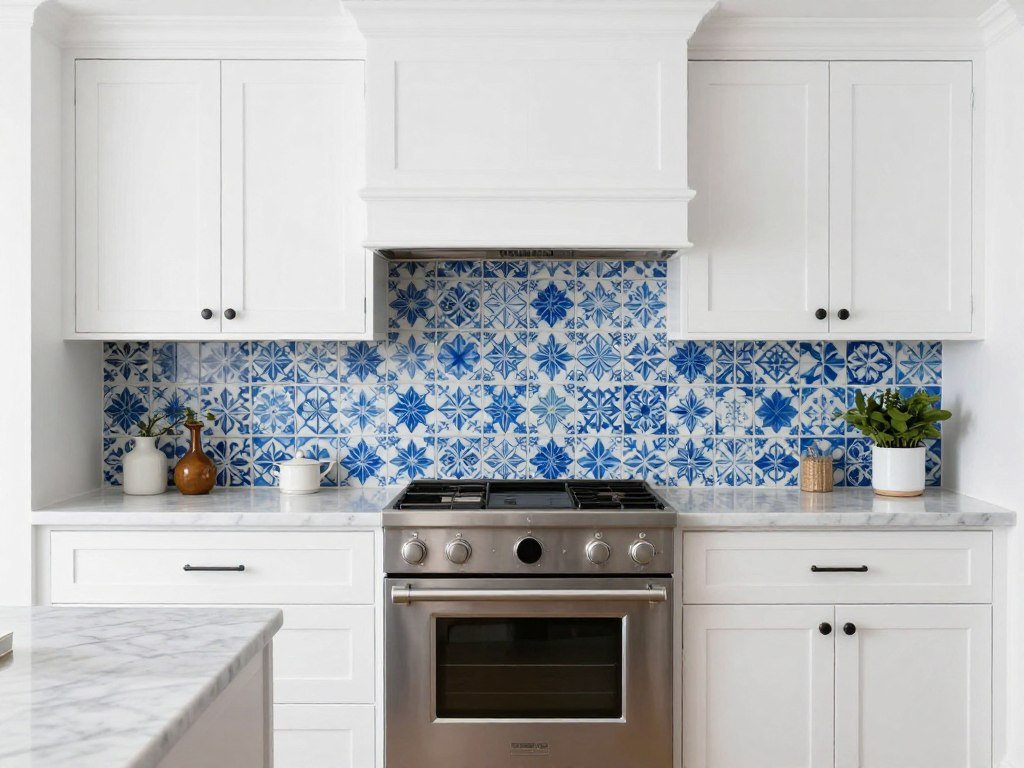
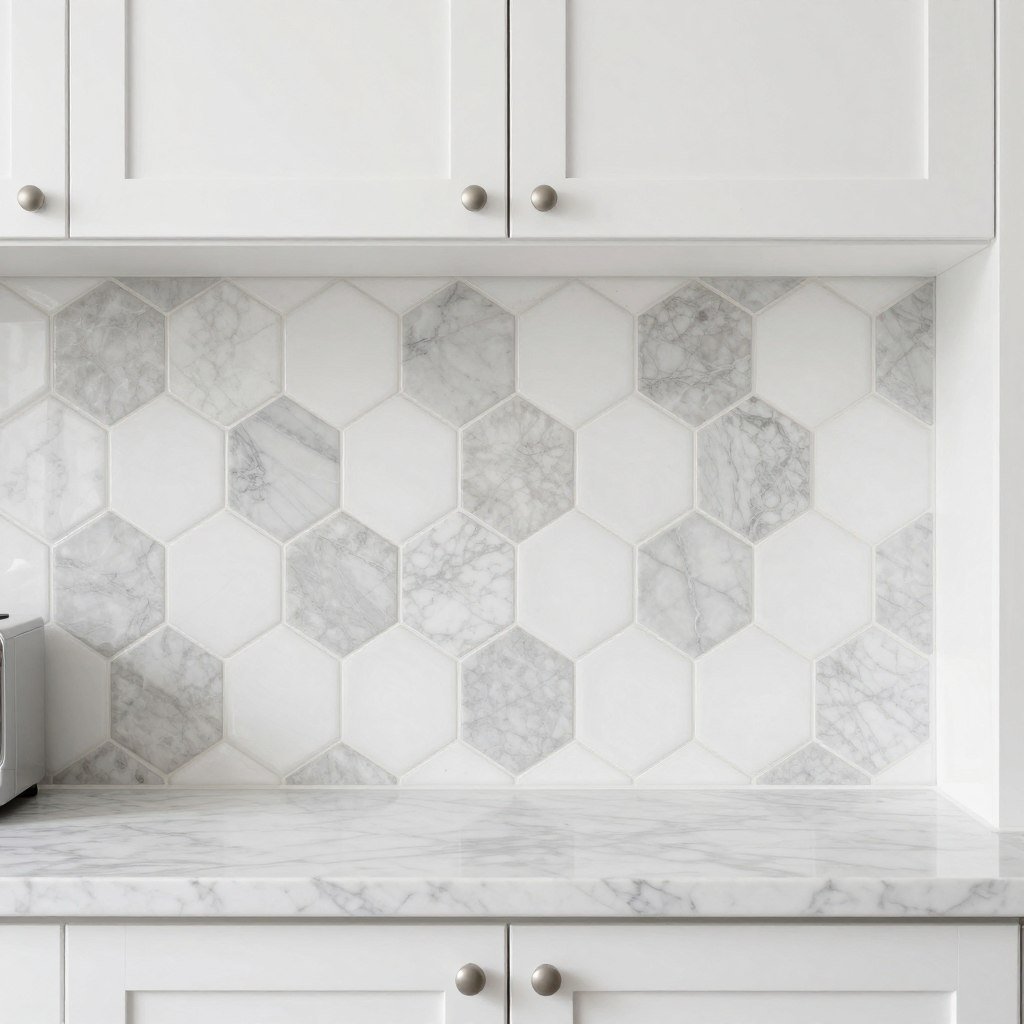
Bold backsplash tiles add personality without overwhelming. Color on this small surface area creates a focal point. The backsplash becomes your kitchen’s jewelry.
Consider blue or green tiles for a calming effect. These colors work well in various light conditions. Geometric patterns add visual interest and modern style.
Limit bold colors to replaceable elements. Paint, textiles, and accessories allow easy updates. This approach keeps your kitchen feeling fresh over time.
Reflective Surfaces
Glossy cabinet finishes bounce light around the room. This effect makes spaces feel larger and brighter. High-gloss white works particularly well in small kitchens.
Glass tile backsplashes provide subtle reflection. The shimmering surface adds depth and dimension. Light-colored glass maximizes this beneficial effect.
Ceiling Treatment
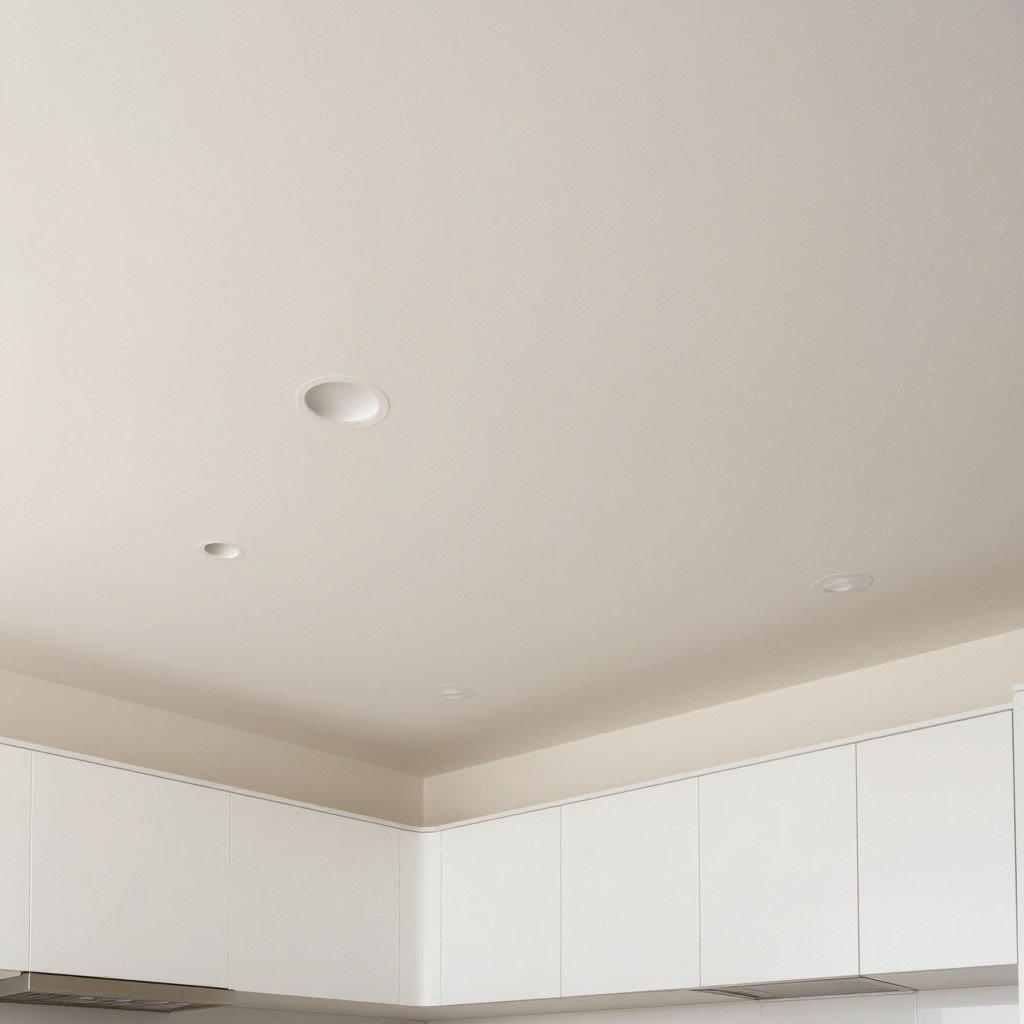
Paint ceilings in light, reflective colors. White or very pale blue expands vertical space perception. This often-overlooked surface impacts overall room brightness.
Consider a semi-gloss finish for subtle reflection. This sheen level reflects light without looking too shiny. The effect contributes to an airier kitchen feel.
Incorporate Smart Island Solutions
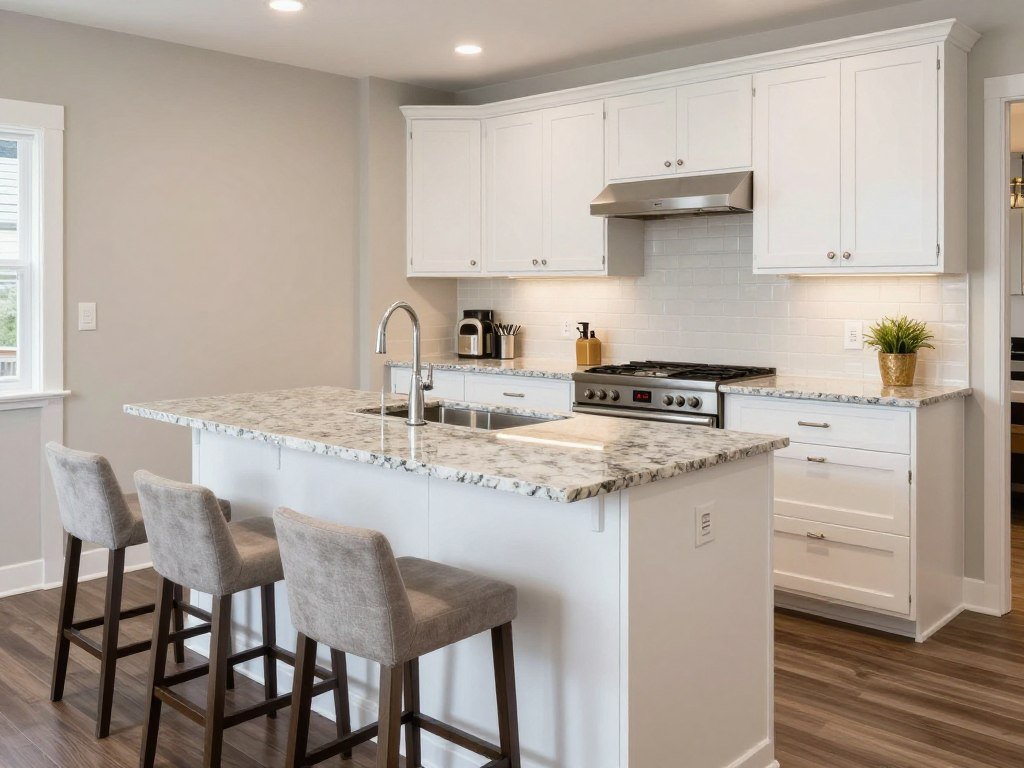
Islands add valuable counter space and storage. Not every small kitchen can accommodate a permanent island. Creative alternatives provide similar benefits with flexibility.
Narrow Island Designs
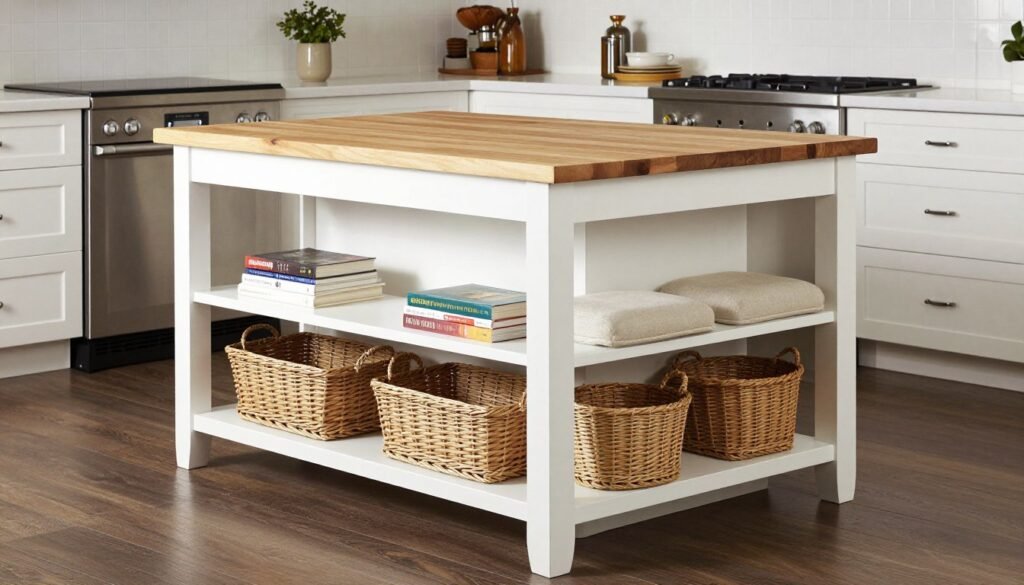
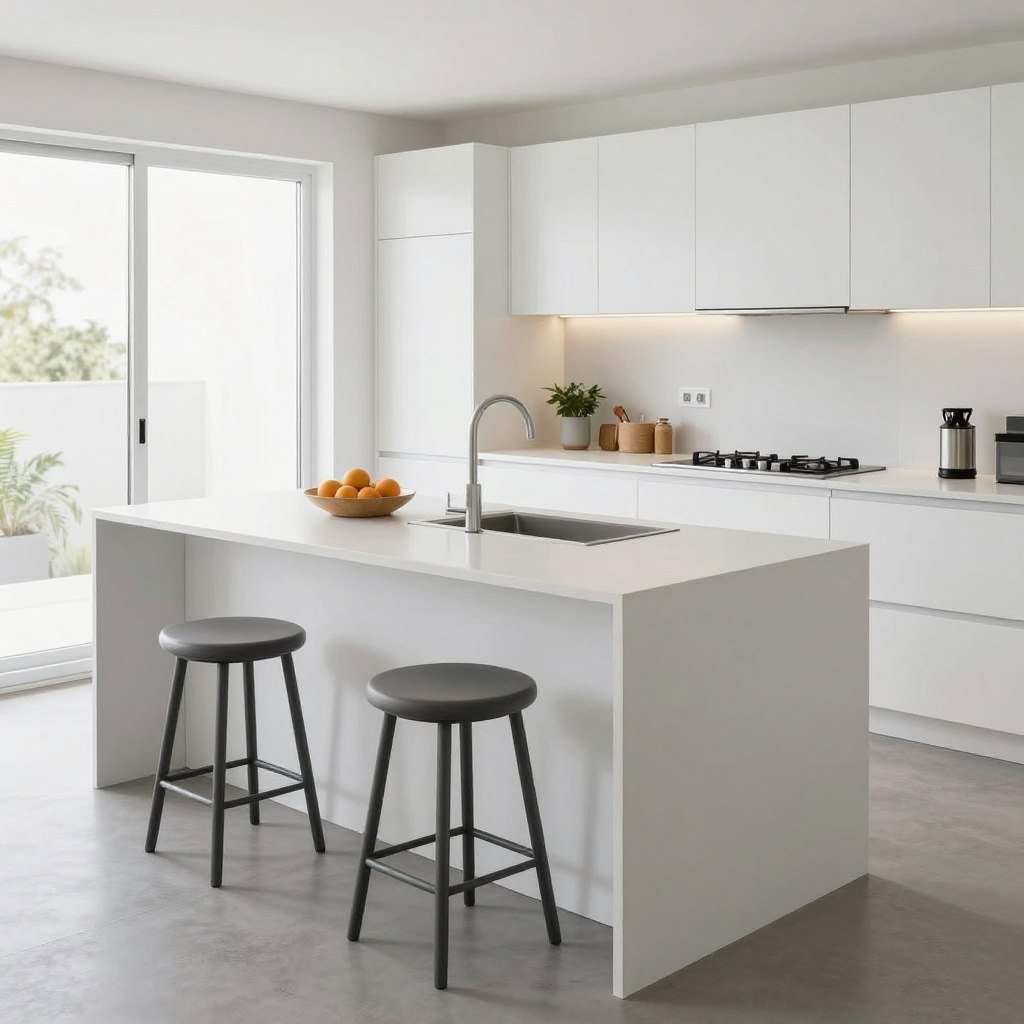
Slim islands work in kitchens with limited floor space. Twenty-four to thirty inches wide provides functionality. This size allows comfortable movement around all sides.
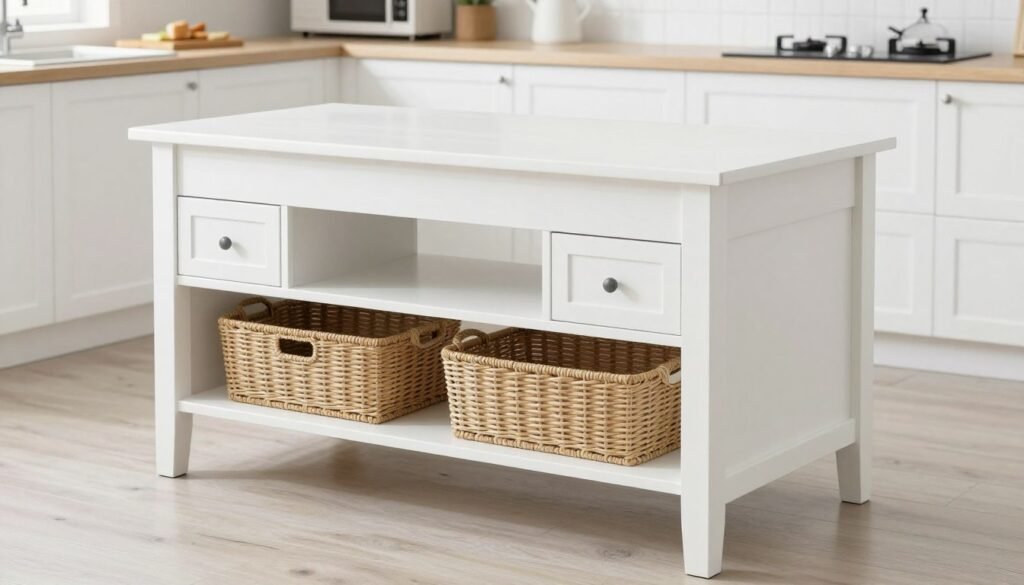
Include storage shelves or cabinets in your island design. Open shelving keeps frequently used items accessible. Closed cabinets hide less attractive necessities.
Add seating if your island exceeds 36 inches long. Two stools create a casual dining spot. This feature eliminates the need for a separate breakfast area.
Mobile Kitchen Carts
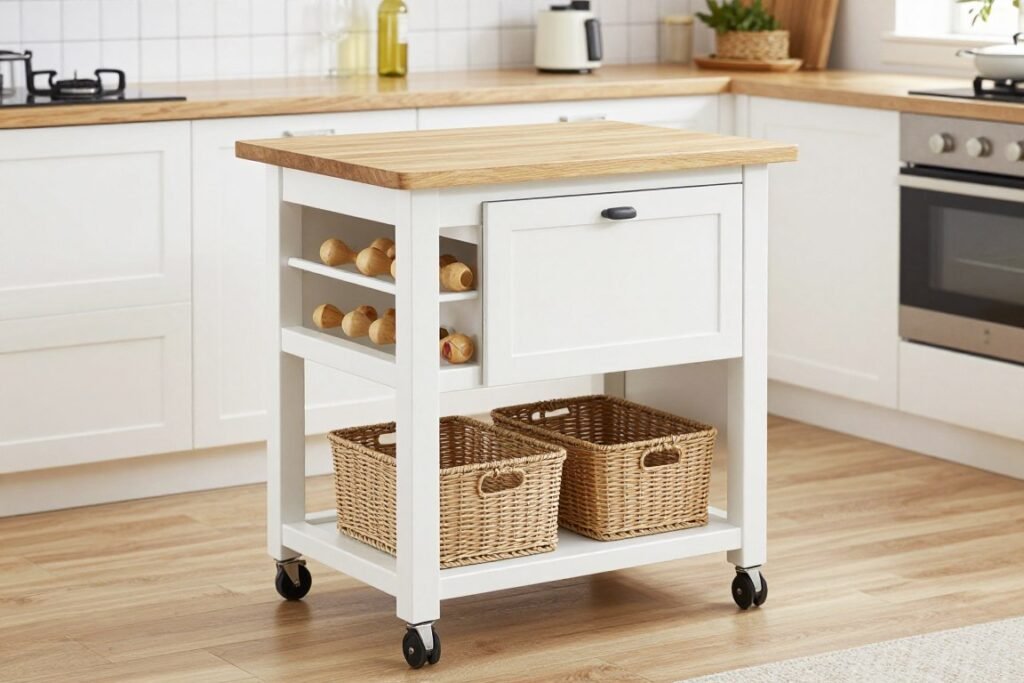
Rolling carts provide island functionality without permanent commitment. Move the cart as needed for different tasks. Store it against a wall when not in use.
Choose carts with locking wheels for stability. This feature prevents shifting during food preparation. Quality casters roll smoothly across various floor types.
Select carts with multiple storage levels. Shelves, drawers, and wine racks increase utility. Butcher block tops provide excellent cutting surfaces.
Peninsula Alternatives
Peninsulas extend from existing cabinetry or walls. This configuration provides island benefits without requiring clearance on all sides. One end remains open for seating or access.
Design peninsulas to define kitchen boundaries. This works especially well in open floor plans. The structure separates cooking and living areas naturally.
Include electrical outlets in peninsula designs. This addition supports small appliances and charging stations. Plan for outlets during the initial construction phase.
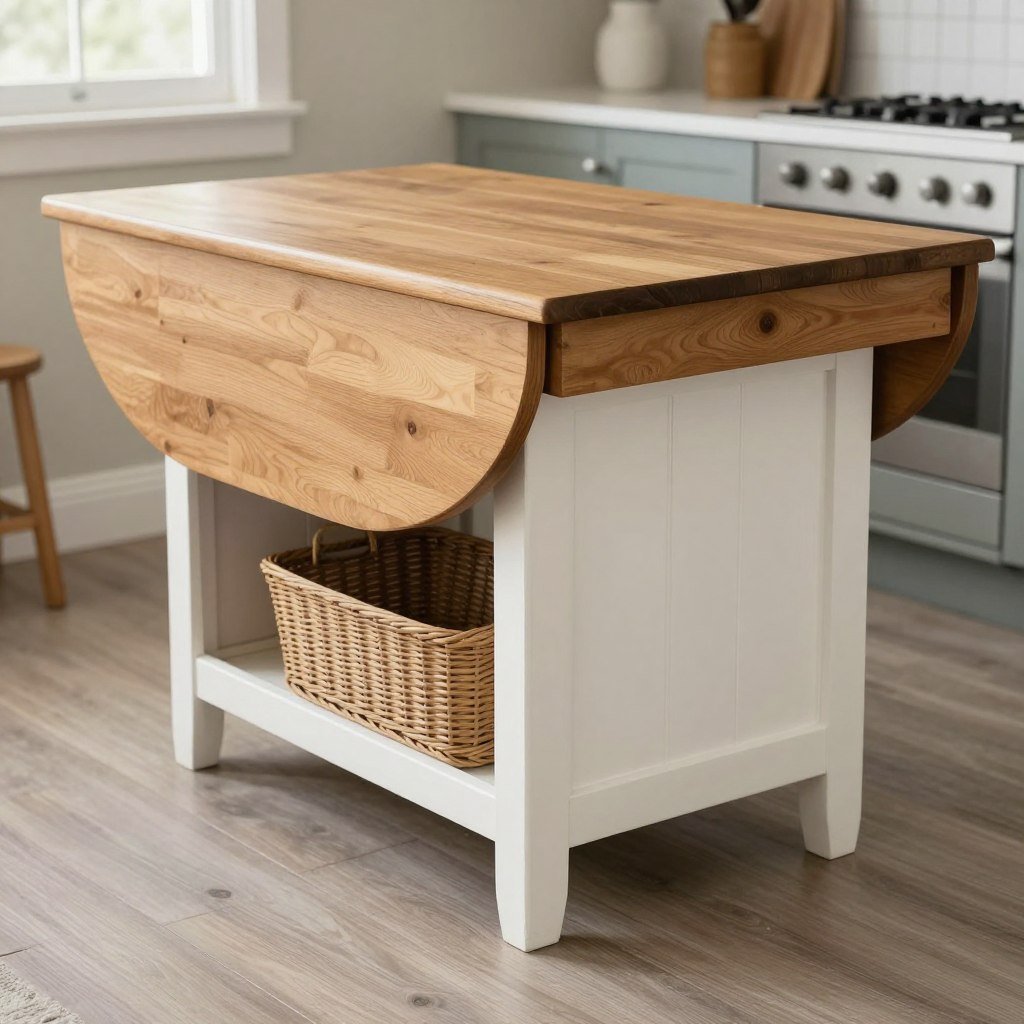
Drop-Leaf Tables
Tables with drop leaves adapt to your space needs. Extend the leaves for additional counter area. Fold them down when you need floor space.
Vintage tables add character to kitchen designs. Refinish thrift store finds for budget-friendly options. The piece serves dual purposes as workspace and dining surface.
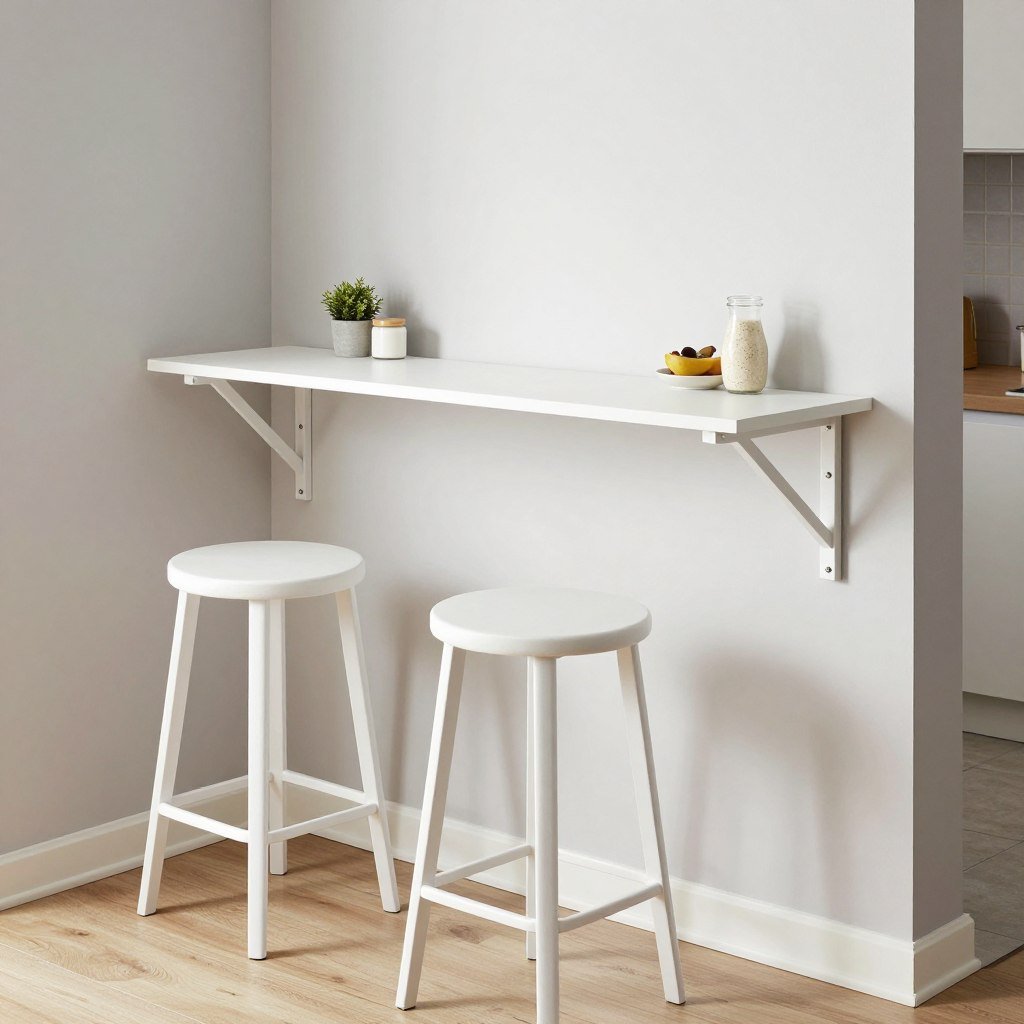
Breakfast Bars
Wall-mounted bars fold down when needed. This solution works perfectly for morning coffee and quick meals. The bar folds up to free valuable floor space.
Install bars at standard counter height for versatility. This allows the surface to serve cooking prep needs. Choose sturdy brackets rated for your intended use.
Enhance Workflow and Efficiency
Efficient kitchens save time and reduce frustration. Strategic planning makes cooking tasks flow smoothly. Small adjustments create significant functionality improvements.
Work Triangle Optimization
The work triangle connects sink, stove, and refrigerator. Ideal triangles measure between 12 and 26 feet total. This range minimizes unnecessary movement during cooking.
Each triangle leg should measure 4 to 9 feet. Shorter distances create cramped workspaces. Longer distances force excessive walking between zones.
Avoid placing obstacles within the triangle area. Kitchen islands should not disrupt the natural flow. Traffic paths should bypass the primary work zone.
Zone-Based Organization
Group related items near their point of use. Store pots and pans close to the stove. Keep dishes near the dishwasher for easy unloading.
Create a coffee station in one area. Group mugs, coffee, filters, and sugar together. This organization streamlines your morning routine significantly.
Designate a baking zone if you enjoy this activity. Store flour, sugar, mixing bowls, and pans together. Include measuring tools in this dedicated area.
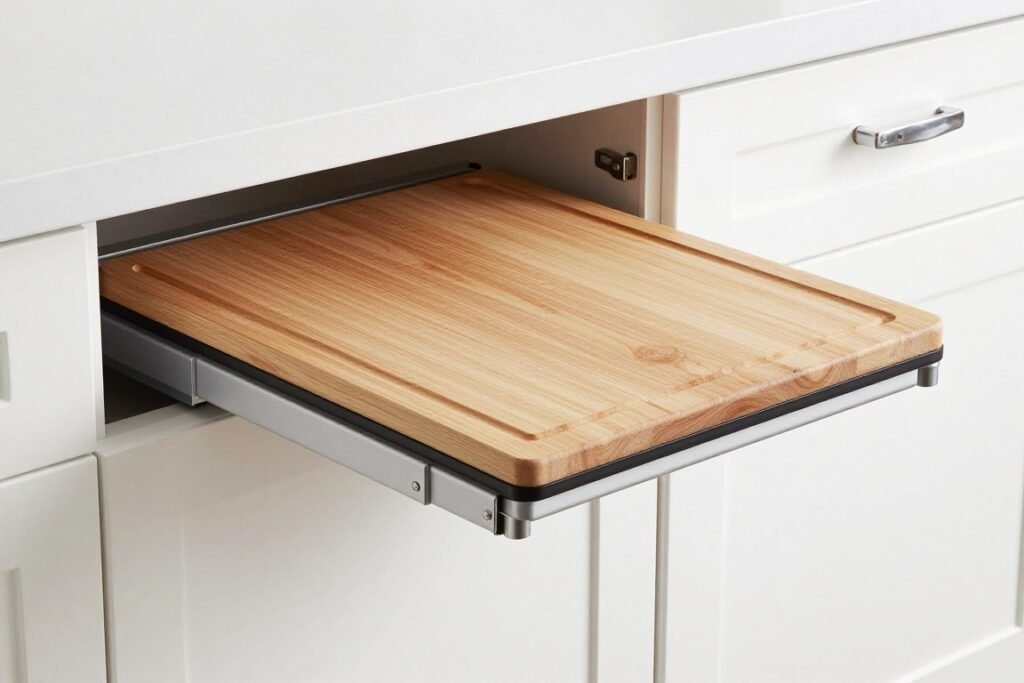
Hidden Work Surfaces
Pull-out cutting boards add counter space instantly. These boards slide out from cabinet compartments. The surface extends your workspace without taking permanent room.
Install pull-outs at comfortable working height. Position them near primary prep areas for convenience. Choose boards that lock in the extended position.
Some models include built-in colanders or waste holes. These features increase efficiency during food prep. Consider your cooking style when selecting options.
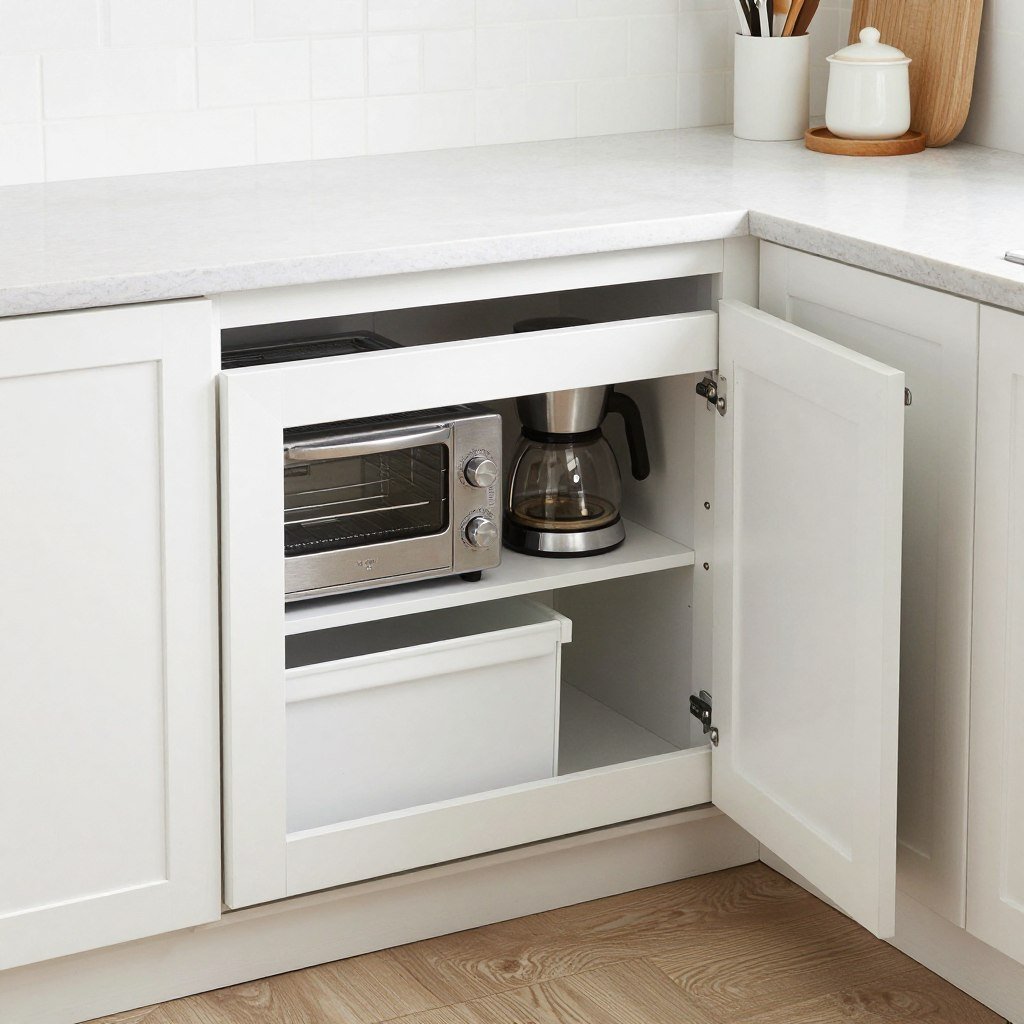
Appliance Garages
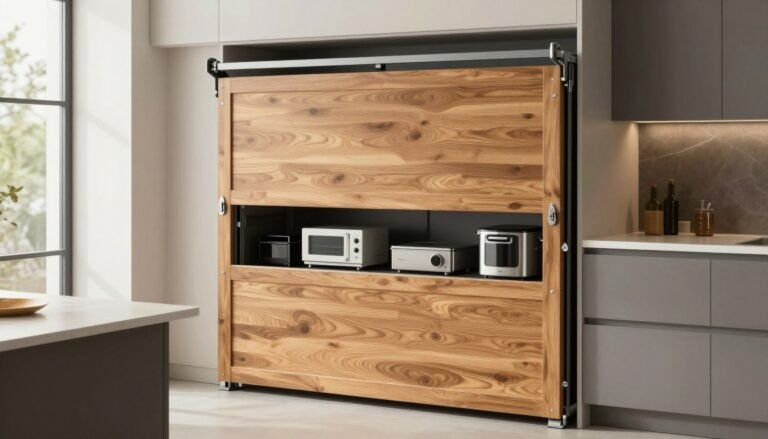
Counter appliances create visual clutter in small spaces. Appliance garages hide toasters, mixers, and coffee makers. These cabinets keep items accessible yet out of sight.
Install garages in corner areas or along back walls. Pocket doors or roll-up tambours work well. The appliances remain plugged in and ready for use.
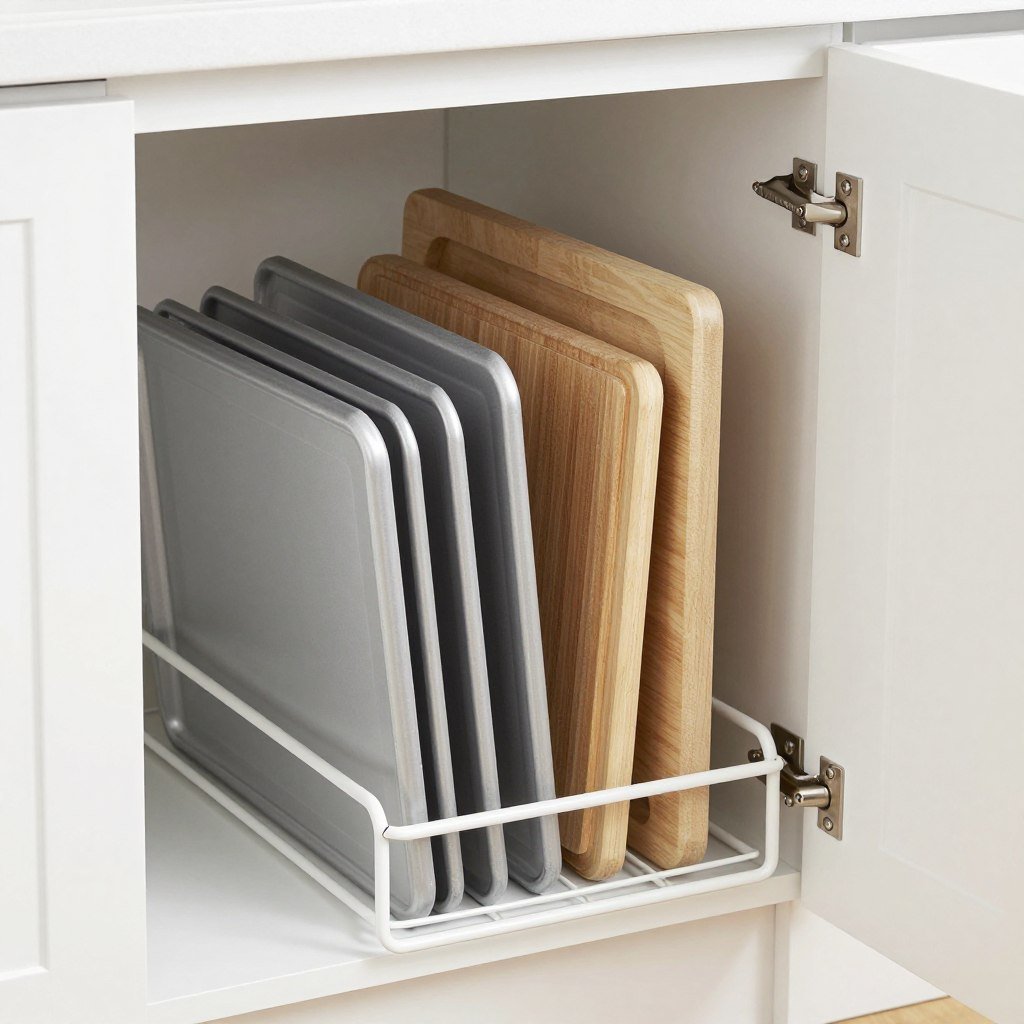
Vertical Dividers
Store baking sheets and cutting boards vertically. This orientation makes items easier to access. Dividers prevent sheets from stacking into unstable piles.
Install dividers in base cabinets near your oven. This placement creates a logical baking zone. Adjustable dividers accommodate various pan sizes.
Organize Your Kitchen for Maximum Efficiency
Discover organizational tools and systems that streamline your cooking workflow and maximize every inch of cabinet space.
Backsplash protects walls while adding design impact. The right choice expands visual space. Pattern and material selection significantly affect room perception.
Classic Subway Tile
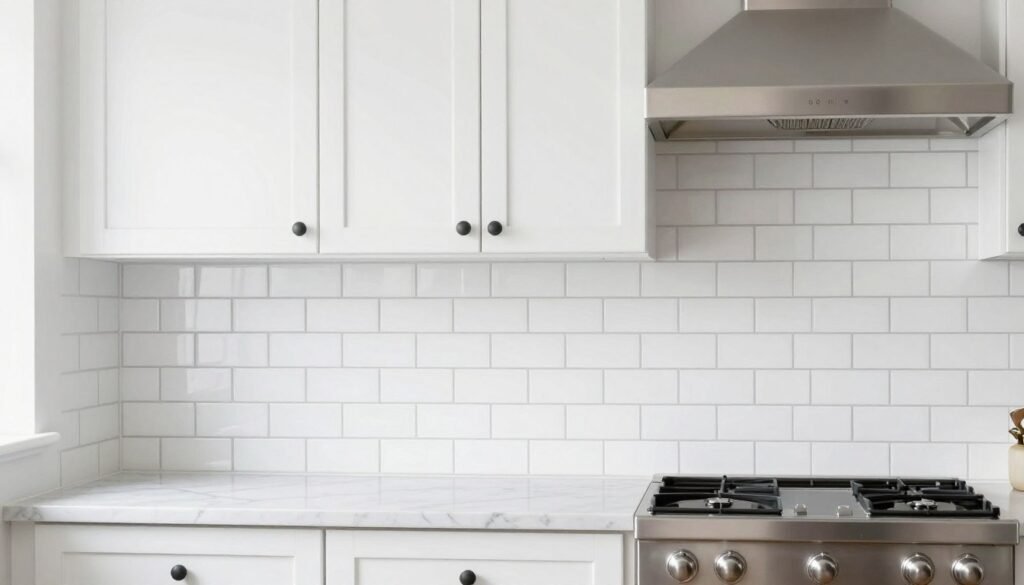
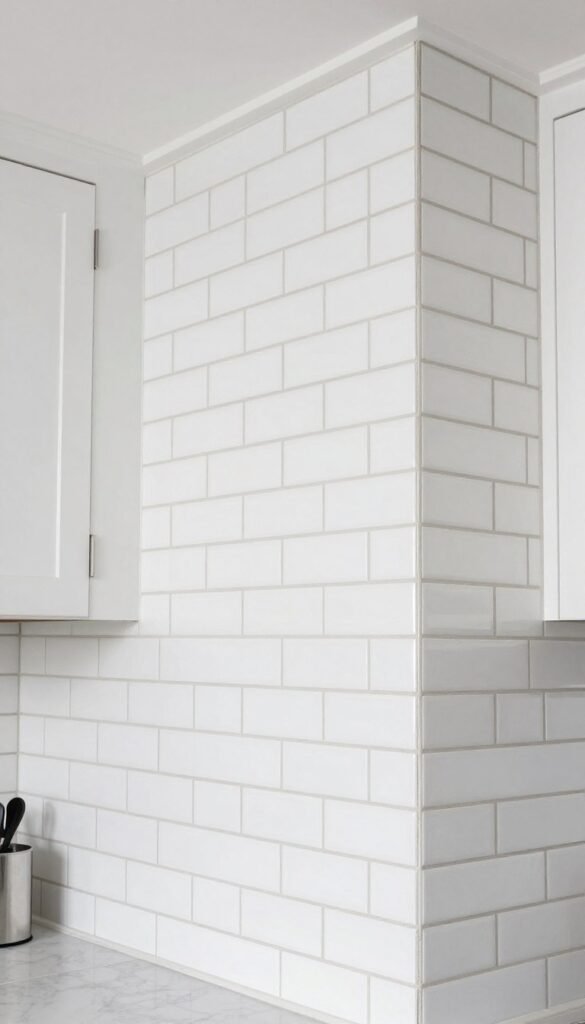
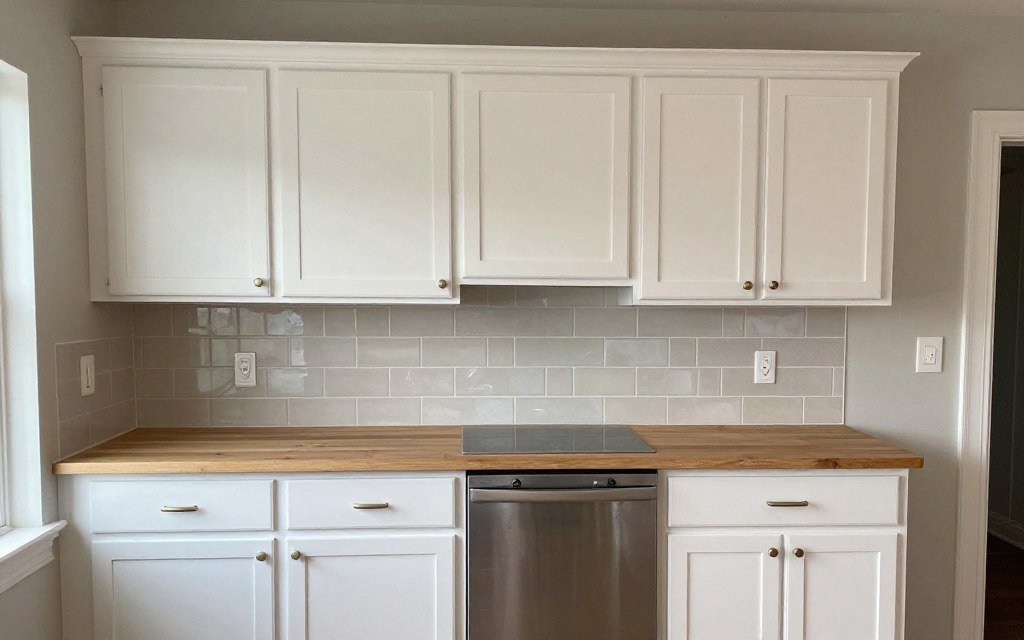
White subway tiles remain a timeless backsplash choice. The rectangular shape creates horizontal lines. This pattern makes walls appear wider than they are.
Install tiles in a traditional brick pattern for classic appeal. Vertical stack patterns offer a modern variation. Both layouts work well in small kitchen spaces.
Choose bright white tiles for maximum light reflection. The glossy surface bounces light around the room. Gray grout adds subtle definition between tiles.
Mirror and Glass Options
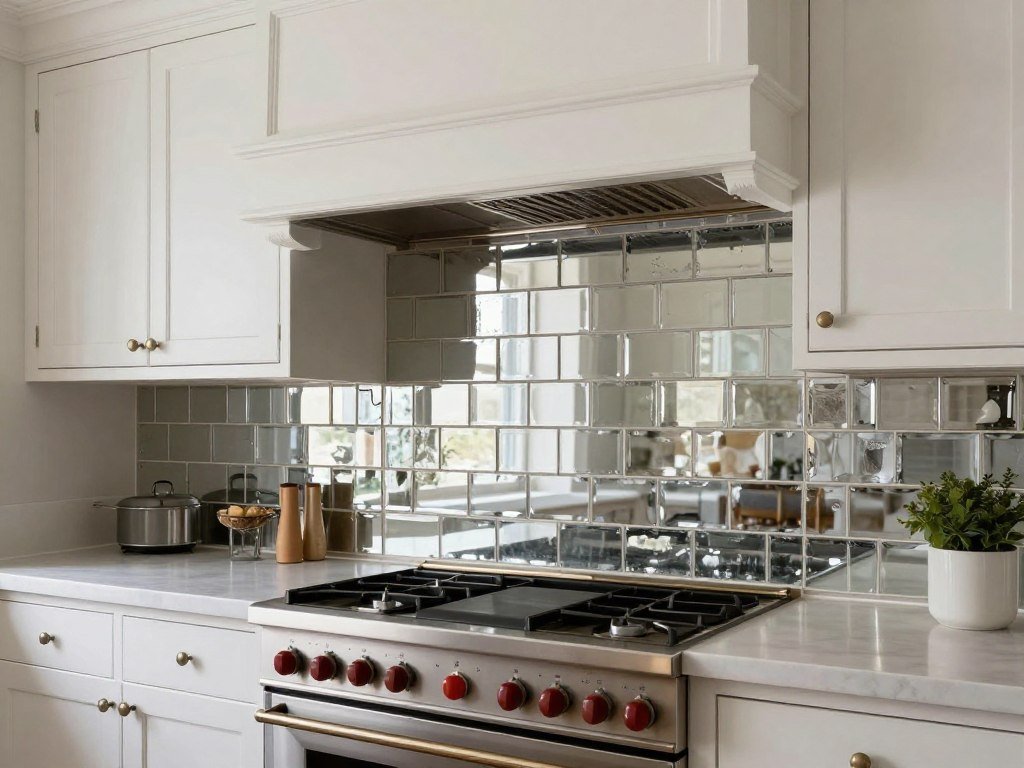
Mirror backsplashes double the visual space perception. This dramatic choice works especially well behind ranges. The reflection creates depth and brightness simultaneously.
Antique mirror tiles add vintage character. The slightly aged appearance suits various design styles. These tiles hide water spots better than clear mirrors.
Glass subway tiles provide subtle reflectivity. Colors remain soft and sophisticated. The material adds luxury without overwhelming small spaces.
Large Format Tiles
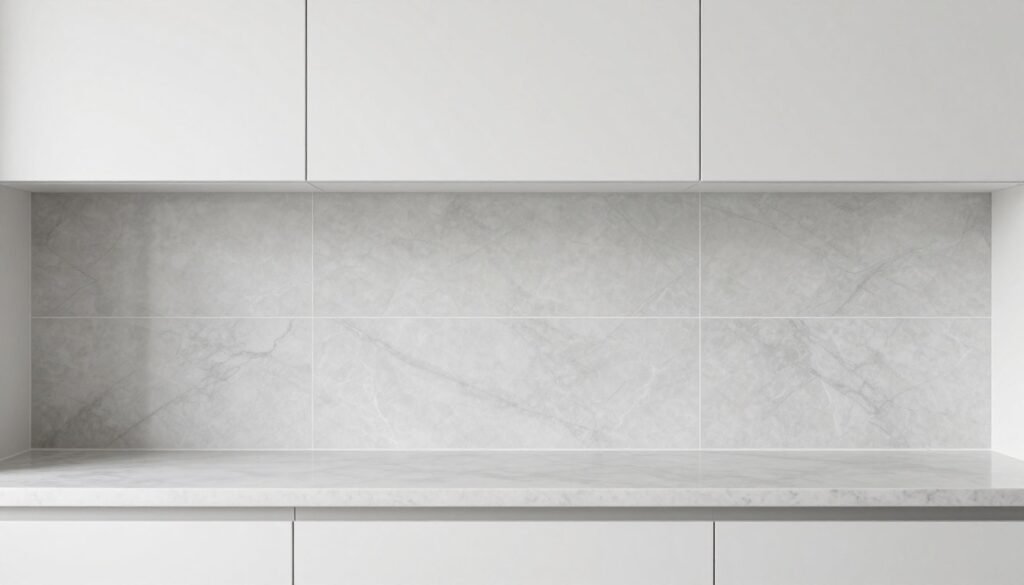
Bigger tiles mean fewer grout lines visually. This creates a cleaner, more expansive appearance. Large format tiles suit contemporary kitchen designs perfectly.
Twelve by twenty-four inch tiles work well for backsplashes. This size balances visual impact with practical installation. The proportions complement standard cabinet heights.
Light-colored large tiles maximize the space-expanding effect. Subtle veining adds interest without busy patterns. Marble-look porcelain offers luxury at lower cost.
Metallic Accents
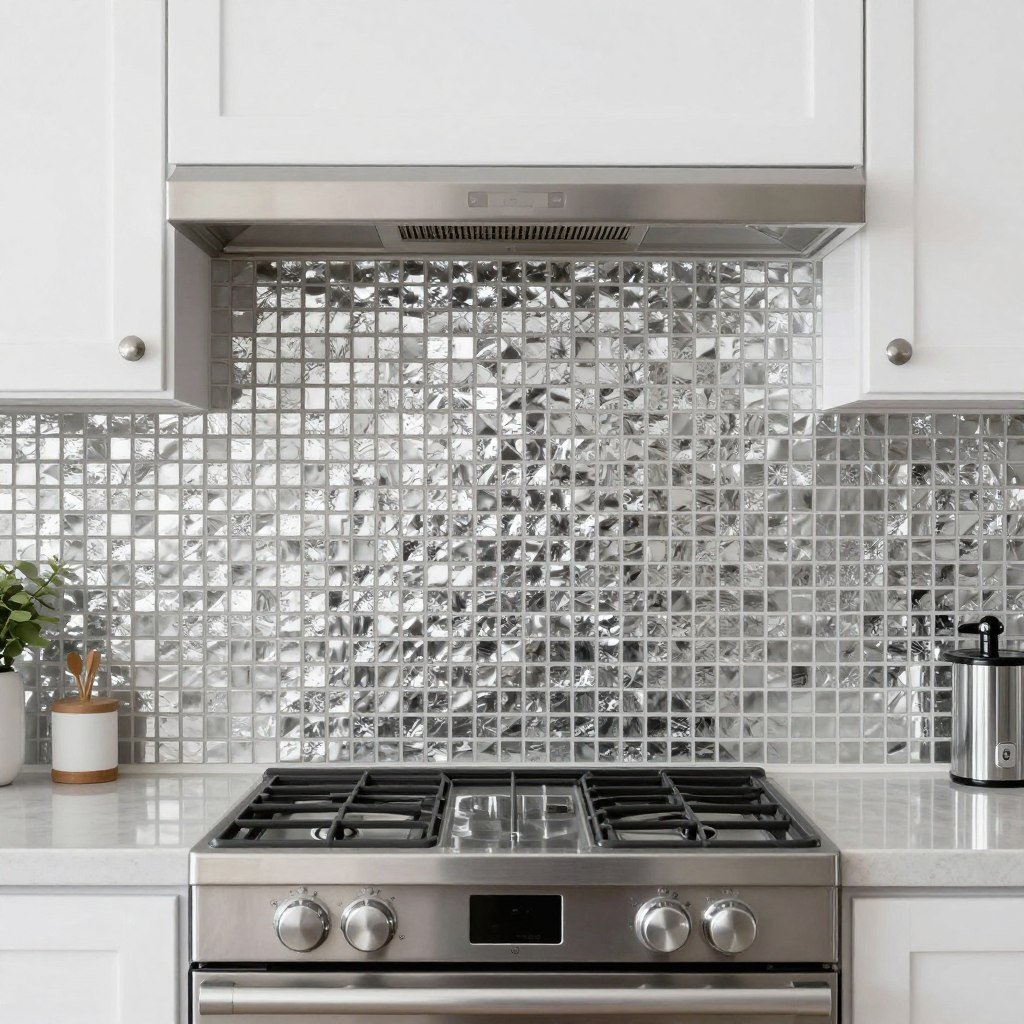
Metal tiles introduce shimmer and dimension. Stainless steel mosaics complement modern appliances. The reflective quality enhances available light beautifully.
Consider copper or bronze for warmer tones. These metals develop natural patina over time. The living finish adds character to your kitchen.
Pattern Play
Geometric patterns draw the eye upward. This vertical emphasis increases perceived ceiling height. Choose patterns with light backgrounds for best effect.
Limit bold patterns to small backsplash areas. Too much pattern overwhelms compact spaces. Balance patterned tiles with solid-colored cabinetry.
Choose Flooring That Expands Space
Floor selection impacts how large a kitchen feels. Light colors and specific patterns create spatial illusions. Durable materials ensure your floor withstands kitchen demands.
Light Wood Tones
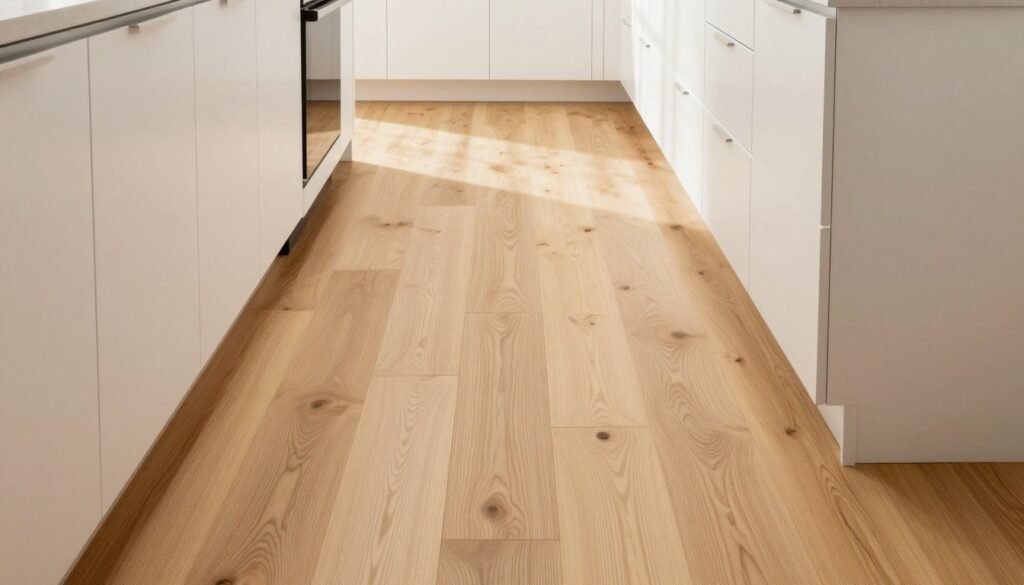
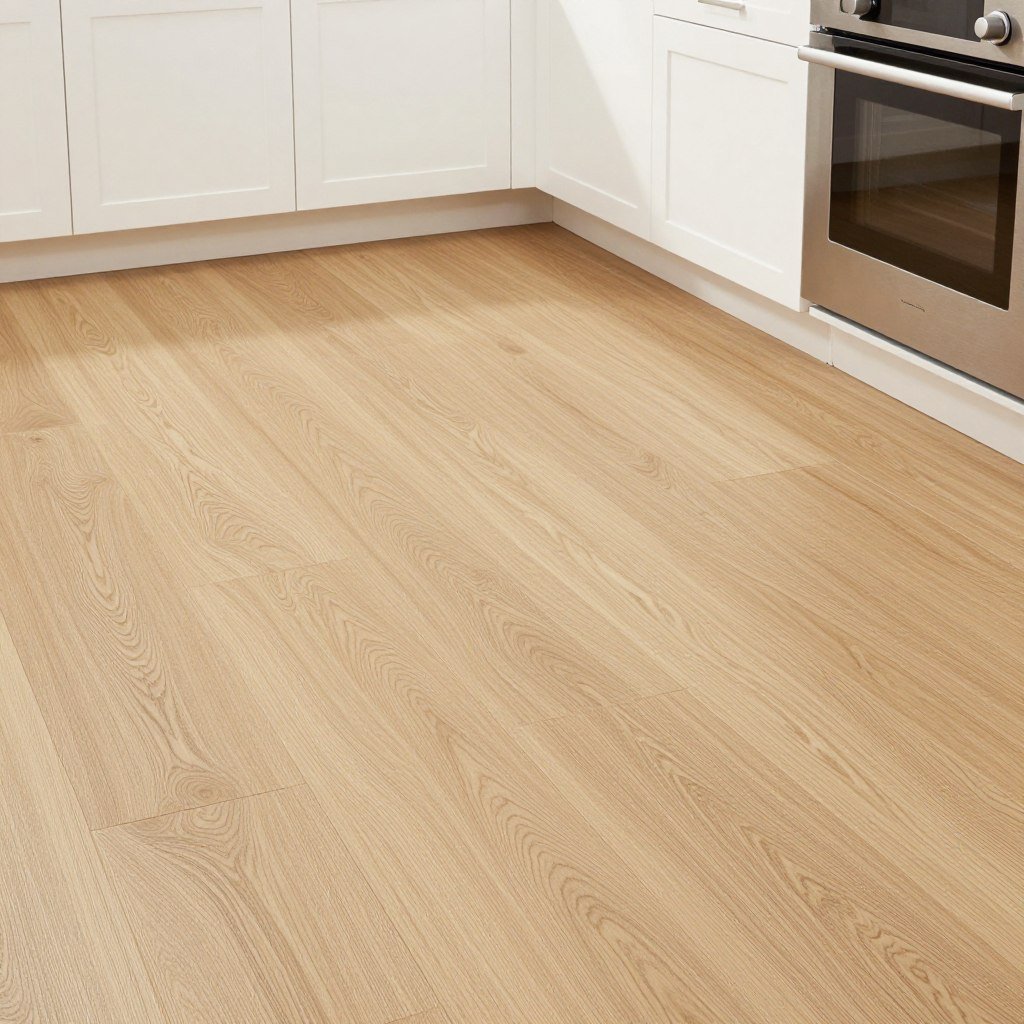
Pale hardwood floors make rooms appear larger. Oak, maple, and ash offer beautiful light options. Natural wood adds warmth without darkening the space.
Install planks running the length of narrow kitchens. This direction emphasizes the longest dimension. The lines guide eyes through the entire space.
Wide planks create a more spacious feeling. Five to seven inch widths work well in small kitchens. Wider boards mean fewer seams and visual interruptions.
Large Format Tiles
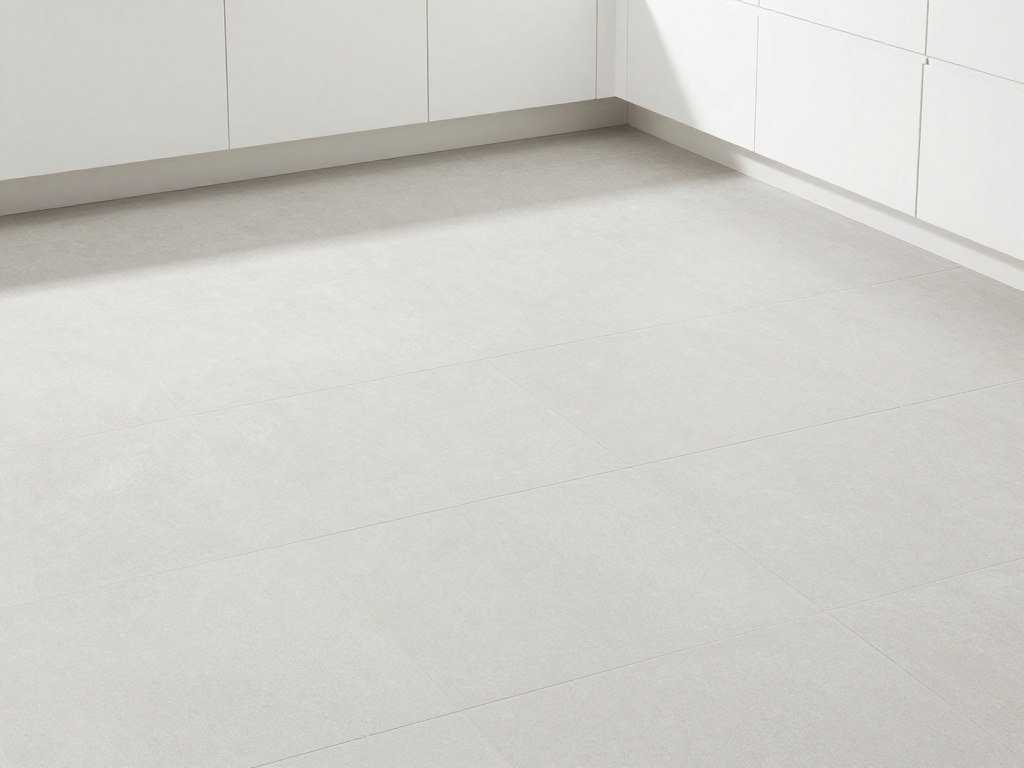
Big floor tiles reduce grout line visibility. This creates a cleaner, more expansive look. Twenty-four inch square tiles work excellently in kitchens.
Light gray or beige tiles offer versatility. These neutrals complement various cabinet colors. The subtle tone provides visual calm in busy spaces.
Porcelain tiles deliver exceptional durability. This material resists stains, scratches, and moisture. Modern porcelain mimics natural stone and wood beautifully.
Diagonal Installation
Installing floor tiles diagonally tricks the eye. This pattern makes narrow spaces appear wider. The technique works with both tile and vinyl plank.
Diagonal patterns require more material and labor. Budget approximately 10-15% extra for cuts and waste. The visual impact justifies the additional cost.
This layout works especially well in galley kitchens. The angled lines draw attention across the width. The effect counters the tunnel-like feeling of parallel walls.
Vinyl Plank Flooring
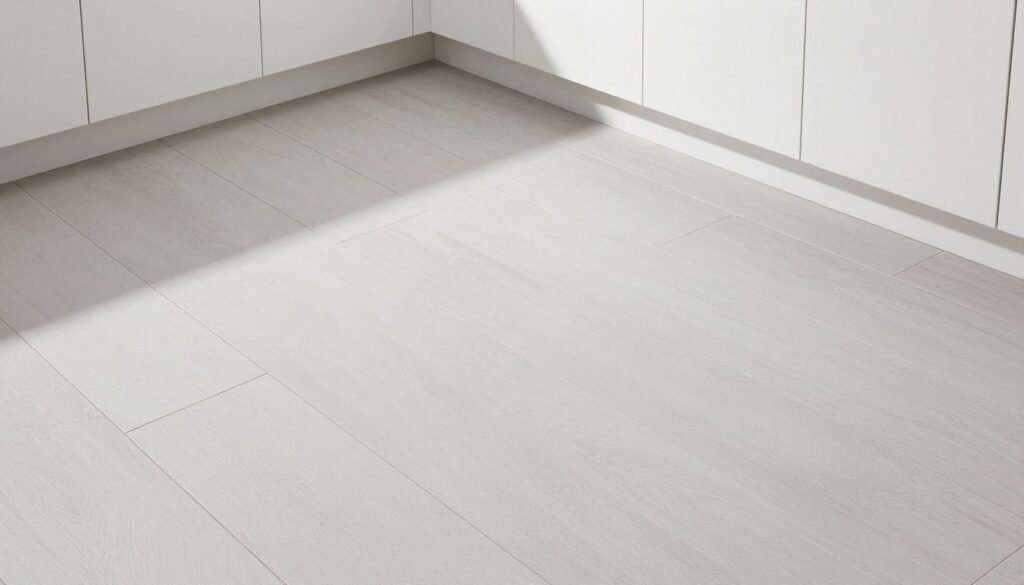
Luxury vinyl offers wood looks at lower prices. Modern products resist water damage excellently. This makes vinyl ideal for kitchen environments.
Click-lock installation suits DIY projects. Most homeowners can complete installation over a weekend. The floating floor works over various subfloor types.
Polished Concrete
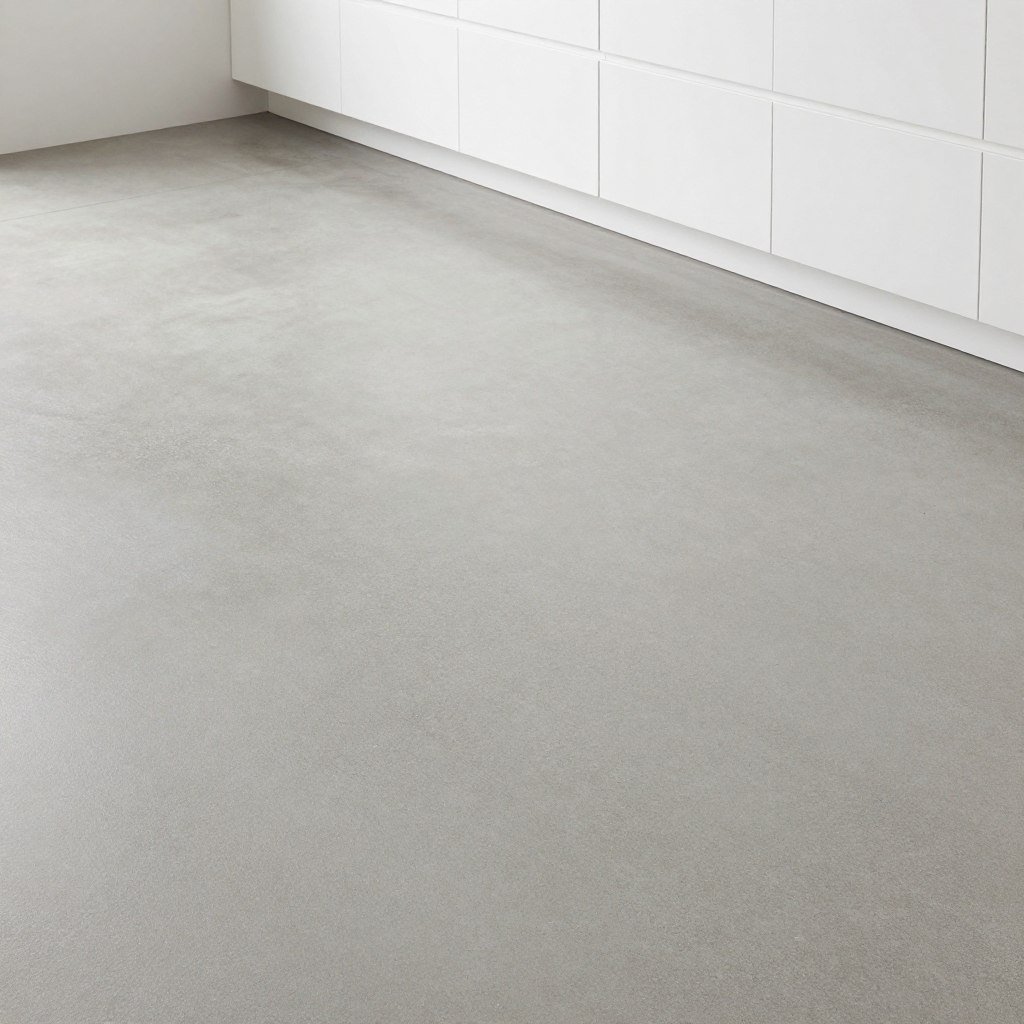
Concrete floors suit modern and industrial styles. The seamless surface feels very spacious. Light gray concrete brightens contemporary kitchens.
Polished concrete requires professional installation. The durable surface lasts for decades. Sealed concrete resists stains and moisture effectively.
Maximize Natural Light Sources
Natural light makes small kitchens feel open and airy. Window treatments should enhance rather than block light. Strategic choices balance privacy with brightness needs.
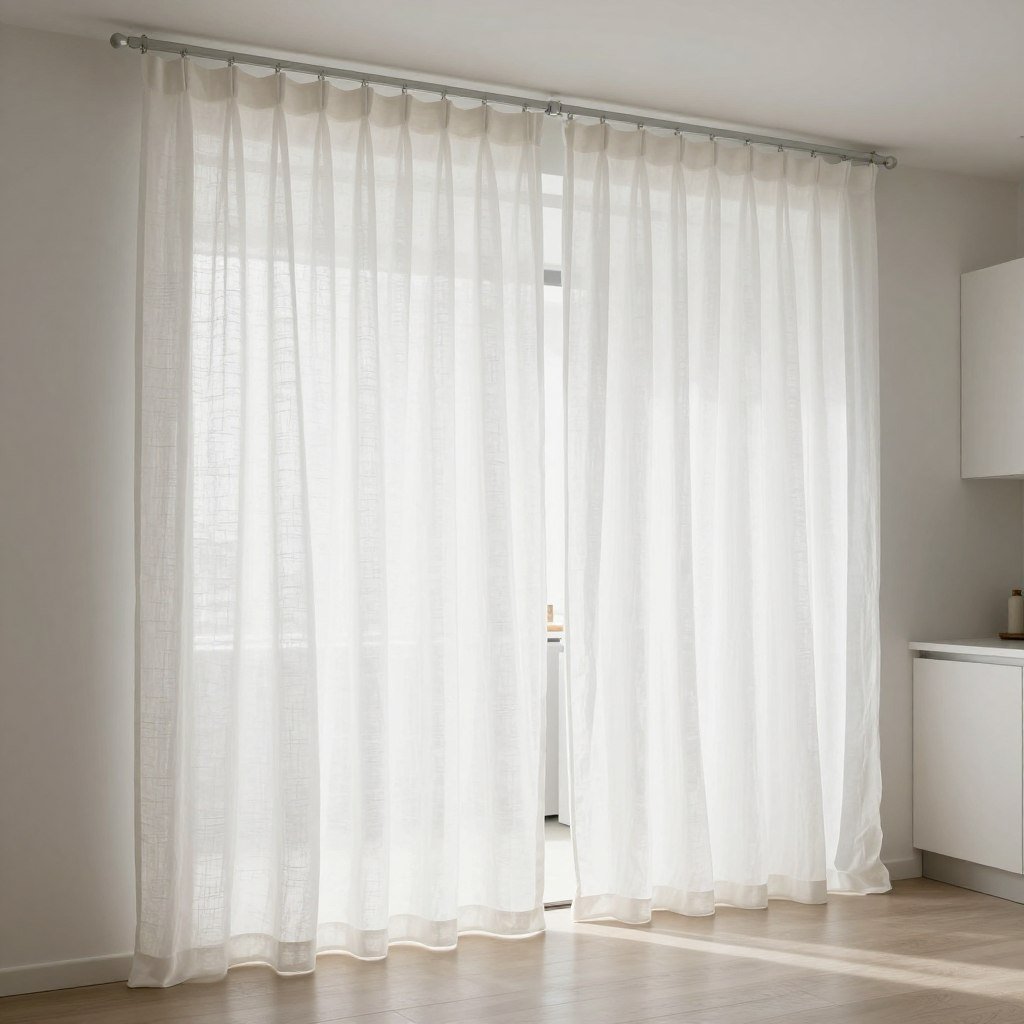
Sheer Curtain Panels
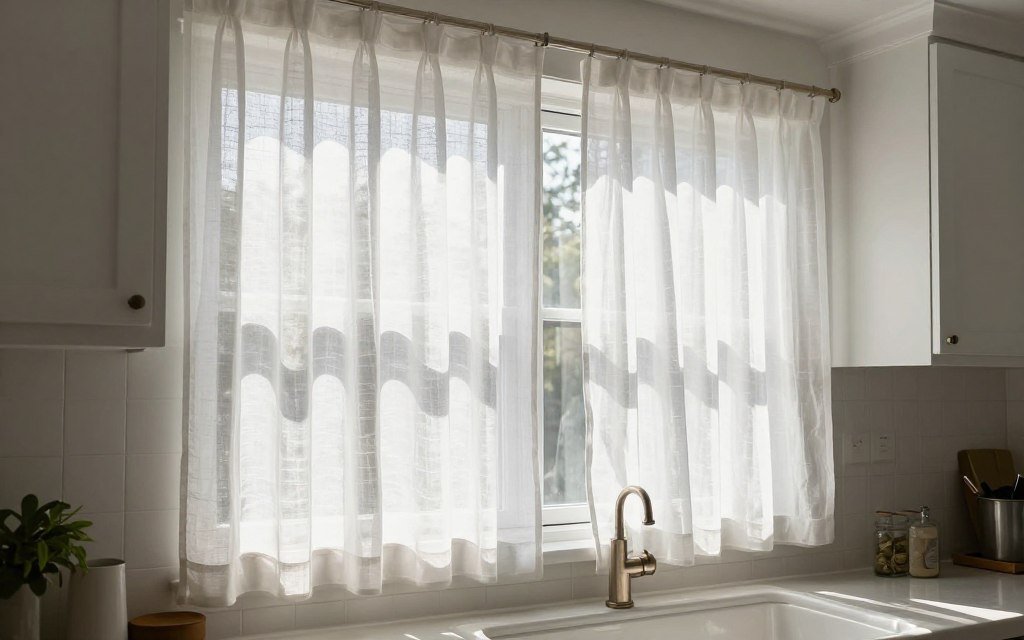
Lightweight sheers filter light while maintaining privacy. White or cream fabrics maximize brightness. These curtains soften window frames without blocking views.
Install curtain rods close to the ceiling. This placement makes windows appear taller. The extra visual height expands the entire room perception.
Choose rod pocket or grommet styles for easy opening. Curtains should pull completely aside during daytime. This allows maximum light to enter your kitchen.
Roman Shade Solutions
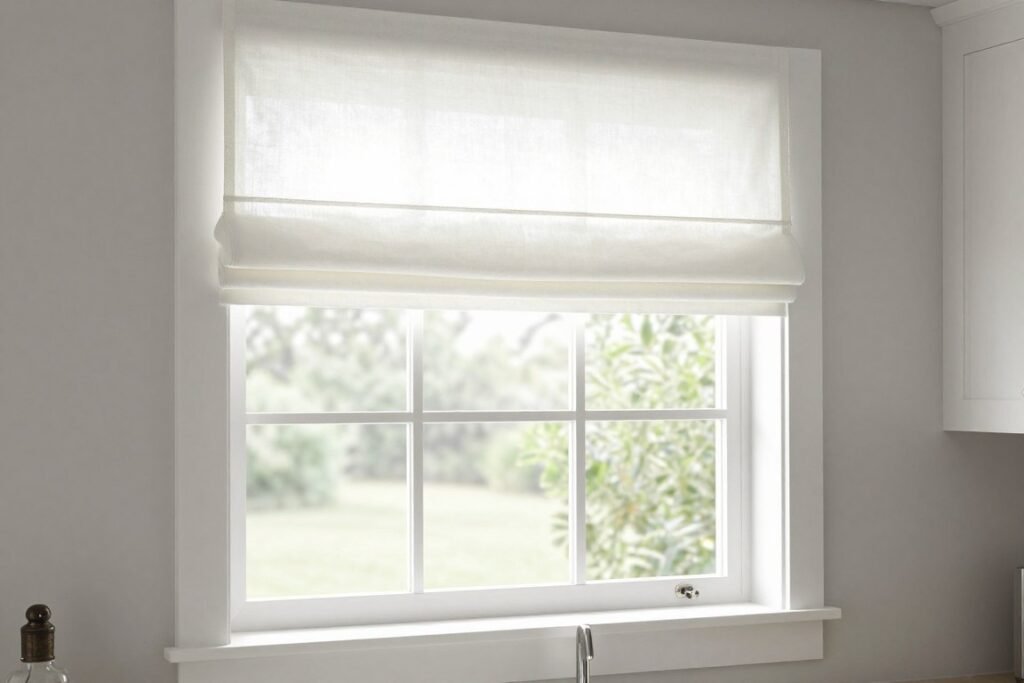
Roman shades offer clean lines and light control. Mounted inside the window frame, they preserve wall space. The tailored appearance suits various kitchen styles.
Select light-filtering fabric for daytime privacy. This material diffuses harsh sunlight beautifully. The soft glow creates a welcoming kitchen atmosphere.
Top-down bottom-up shades provide maximum flexibility. Lower the top for privacy while maintaining ceiling light. This style works perfectly for street-facing windows.
Bare Window Options
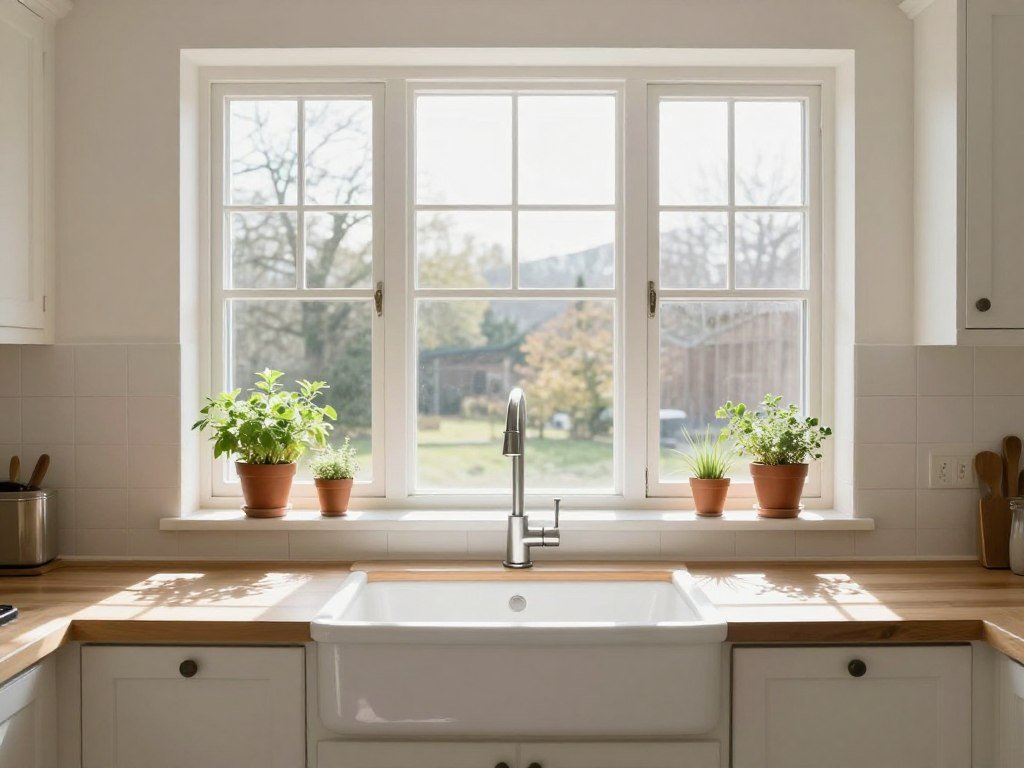
Some kitchens benefit from bare windows. This approach works when privacy is not a concern. Maximum light floods the space throughout the day.
Add window film for privacy without blocking light. Frosted or textured films obscure views while transmitting brightness. These products install easily on existing glass.
Consider the exterior view before going bare. Beautiful vistas enhance your kitchen experience. Plant window boxes outside for added greenery and charm.
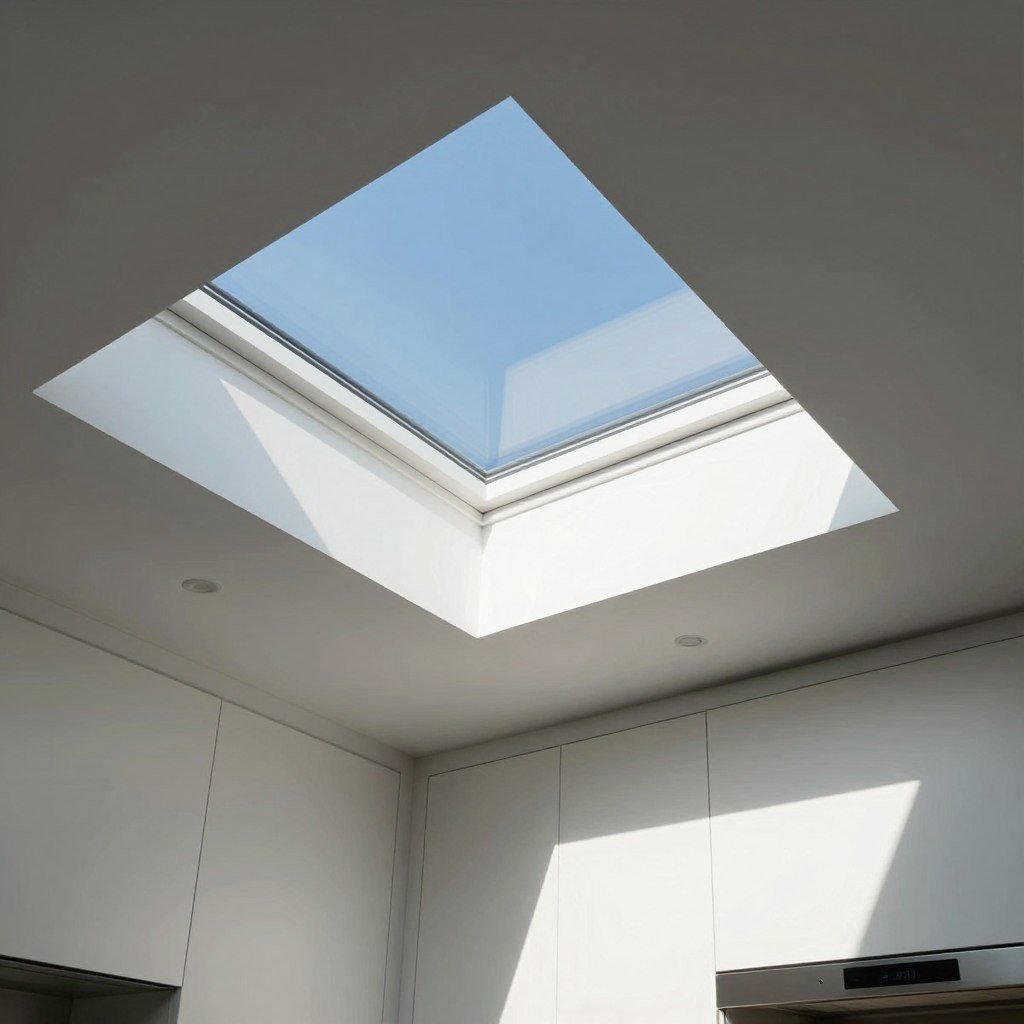
Skylight Installation
Skylights bring light from above in enclosed kitchens. This solution works when wall windows are limited. The overhead light feels natural and expansive.
Tubular skylights suit smaller budgets and spaces. These units channel light through reflective tubes. Installation typically completes in one day.
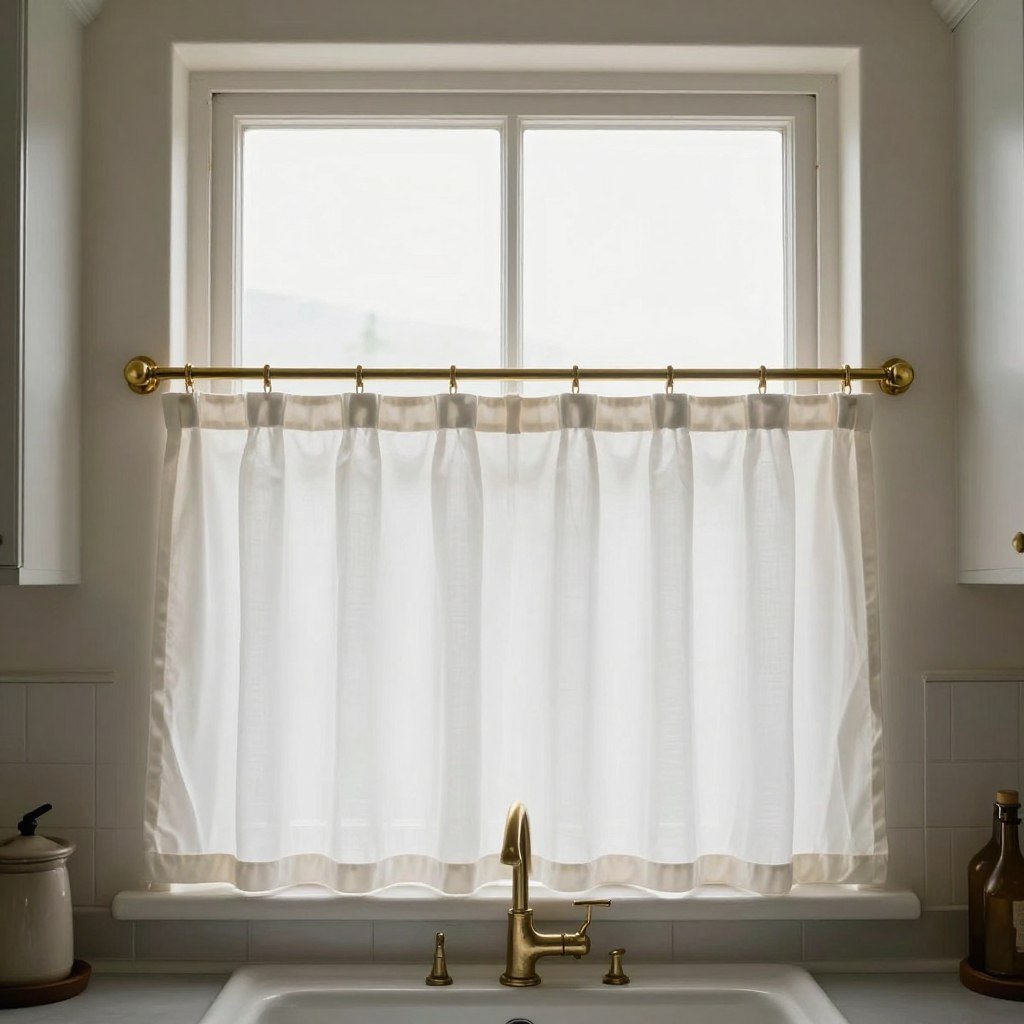
Cafe Curtains
Half curtains cover only the lower window portion. This preserves privacy at counter level. Upper windows remain uncovered for maximum light.
The style adds cottage charm to traditional kitchens. Simple tension rods make installation effortless. Change curtains seasonally for fresh looks.
Balance Open and Closed Storage
Open shelving creates an airy, spacious feeling. This storage style requires careful organization and maintenance. Strategic placement balances accessibility with visual calm.
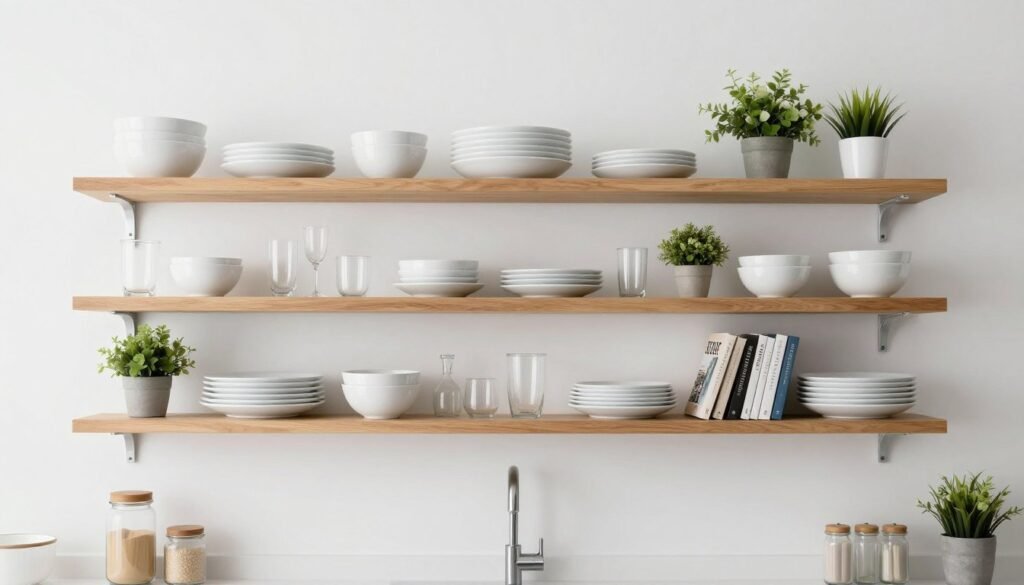
Floating Shelf Displays
Shelves without visible brackets appear to float. This creates a light, modern aesthetic. The clean lines suit contemporary and transitional kitchen designs.
Install shelves at varying heights for visual interest. Space them approximately 15 to 18 inches apart. This distance accommodates standard dish and glass sizes.
Limit open shelving to 20-30% of total storage. Too much open storage creates visual chaos. Balance openness with closed cabinets for hidden storage.
Strategic Organization
Group similar items together on open shelves. Stack white dishes for a cohesive appearance. This uniformity creates visual calm despite open display.
Incorporate baskets for small or irregular items. Woven containers add texture and warmth. They hide clutter while maintaining the open concept.
Display only attractive, frequently used items. Store occasional pieces in closed cabinets. This approach keeps shelves looking curated and intentional.
Mixed Storage Approach
Combine open shelves with traditional cabinets strategically. Place shelves in areas you want to highlight. Use cabinets for less attractive necessities.
Install open shelving flanking a window. This frames the view while providing storage. The symmetrical design feels balanced and intentional.
Consider glass-front cabinets as a middle ground. These offer protection from dust and grease. The transparent doors maintain an open, airy feeling.
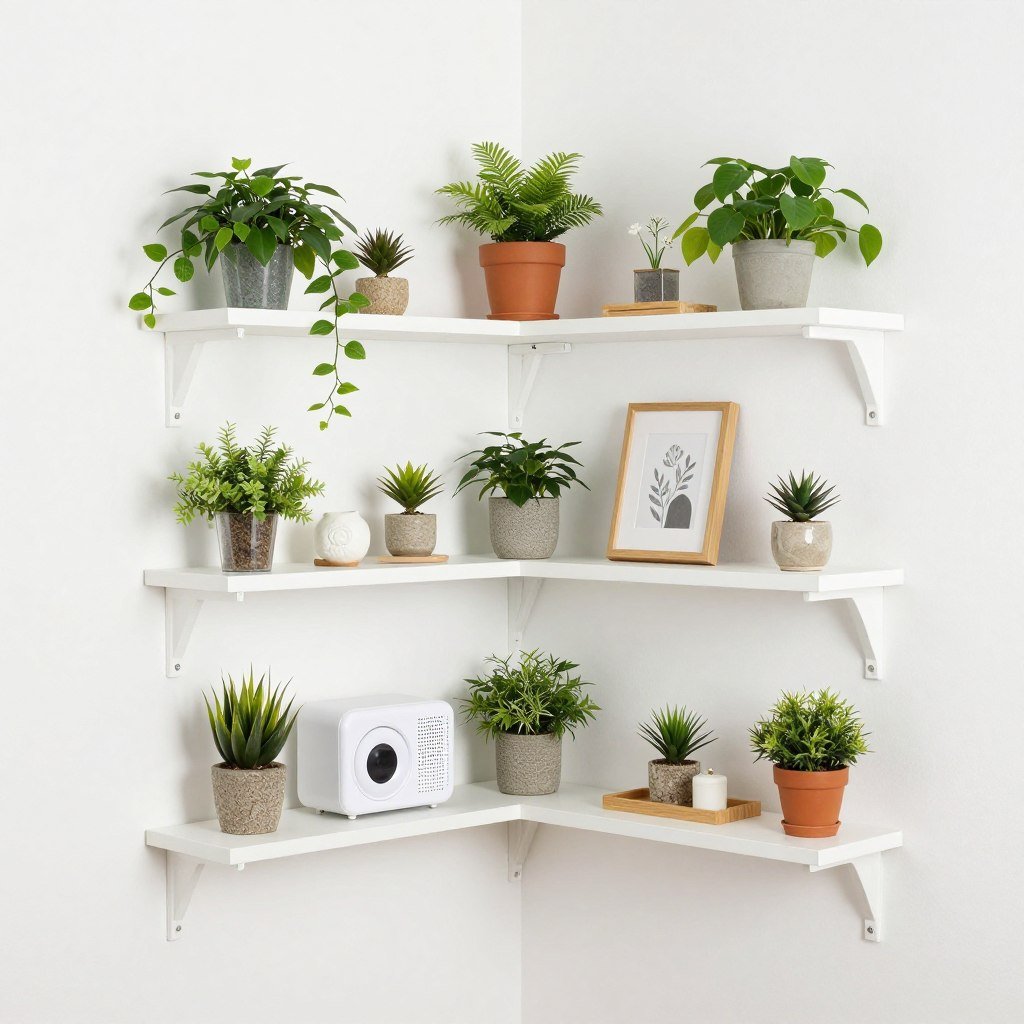
Corner Shelf Solutions
Corner areas often go underutilized in small kitchens. Floating corner shelves maximize these awkward spaces. The configuration creates interesting visual geometry.
Display decorative items on corner shelves. Plants, cookbooks, and art pieces work well. These areas suit items used less frequently than dishes.
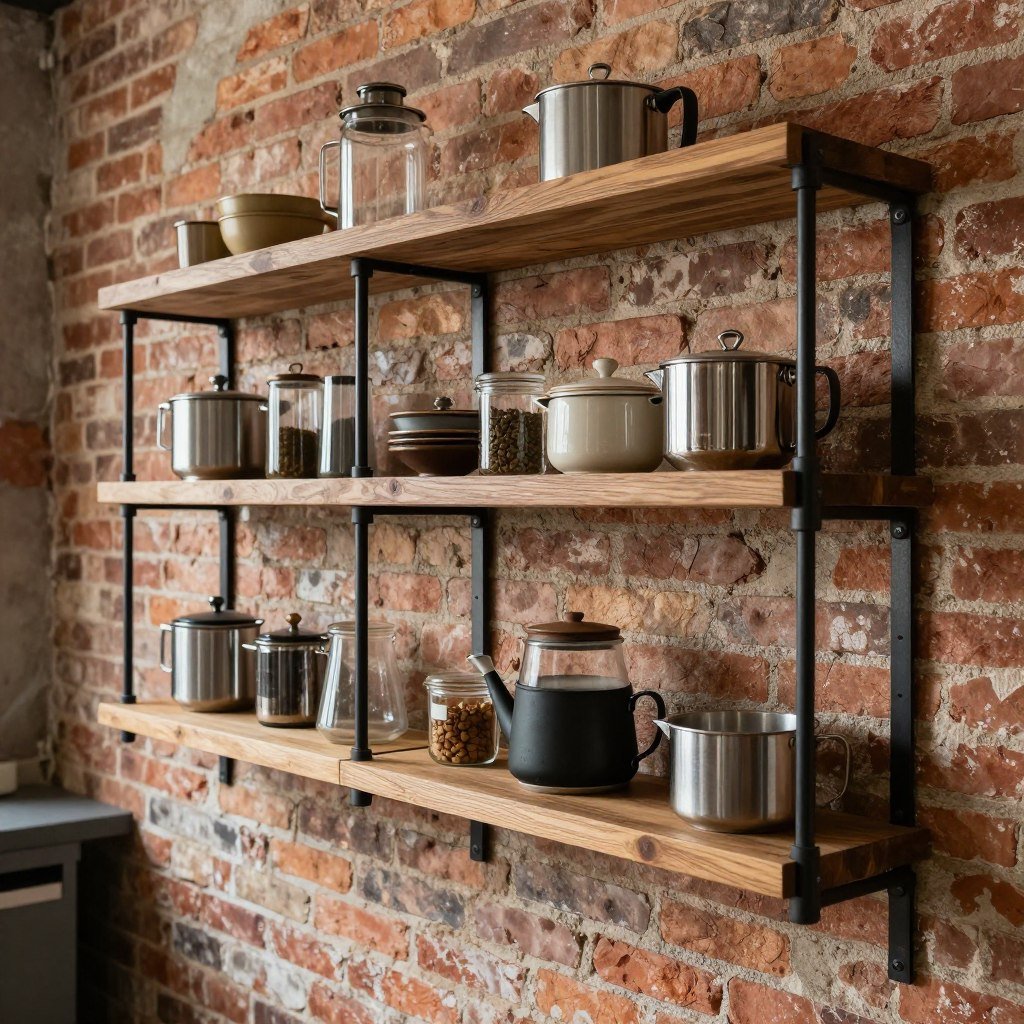
Industrial Pipe Shelving
Metal pipe brackets create an industrial-chic look. This style works beautifully in loft-style homes. The sturdy construction supports heavy cookware.
Pair black pipes with thick wood shelves. Reclaimed wood adds character and history. The combination feels both modern and timeless.
Select Multi-Purpose Furniture Pieces
Furniture that serves multiple functions maximizes small spaces. Every piece should earn its place through versatility. Strategic selections eliminate the need for single-purpose items.
Storage-Integrated Tables
Dining tables with built-in storage serve double duty. Drawers hold placemats, napkins, and flatware. Lower shelves accommodate cookbooks and serving pieces.
Drop-leaf tables expand for meals and fold for floor space. This flexibility suits small kitchen and dining areas. The compact footprint adapts to your changing needs.
Console tables can function as narrow dining surfaces. Against walls, they take minimal space. Pull out for meals, then push back when finished.
Bench Seating With Storage
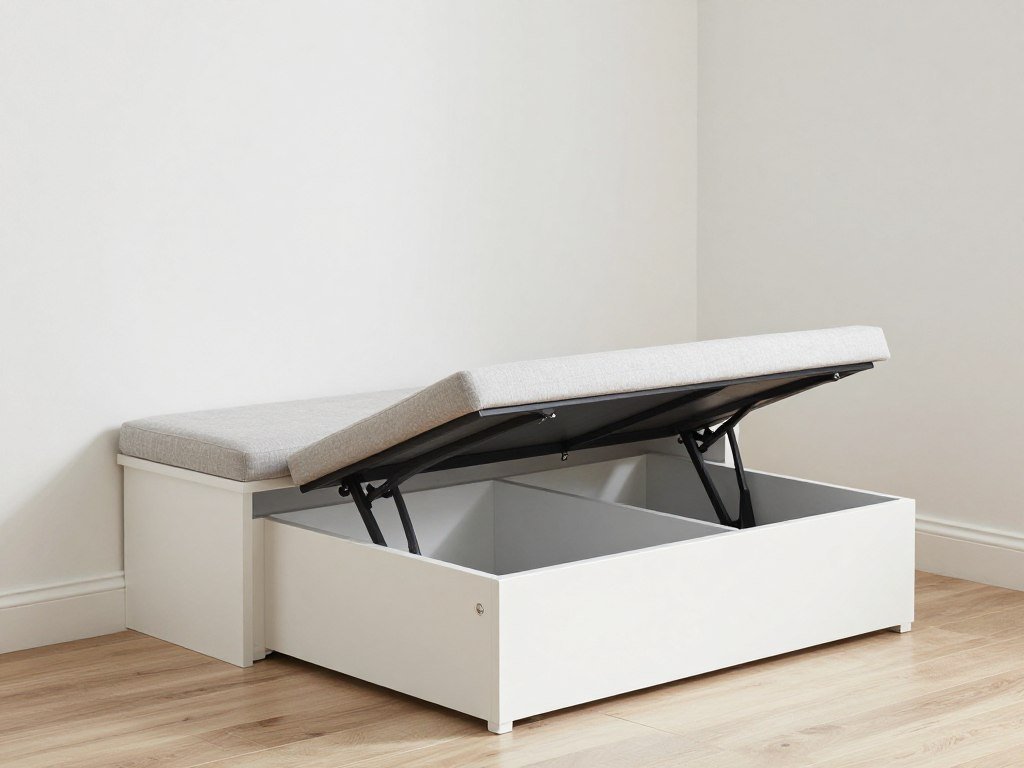
Built-in benches provide seating without chair footprints. Lift-up seats reveal storage compartments below. These hide linens, small appliances, or seasonal items.
Position benches along walls in breakfast nook areas. This arrangement saves significant floor space. The streamlined look suits contemporary kitchen designs.
Add cushions for comfort and color. Removable cushion covers allow easy cleaning. Choose fabrics that coordinate with your kitchen palette.
Wall-Mounted Fold-Down Tables
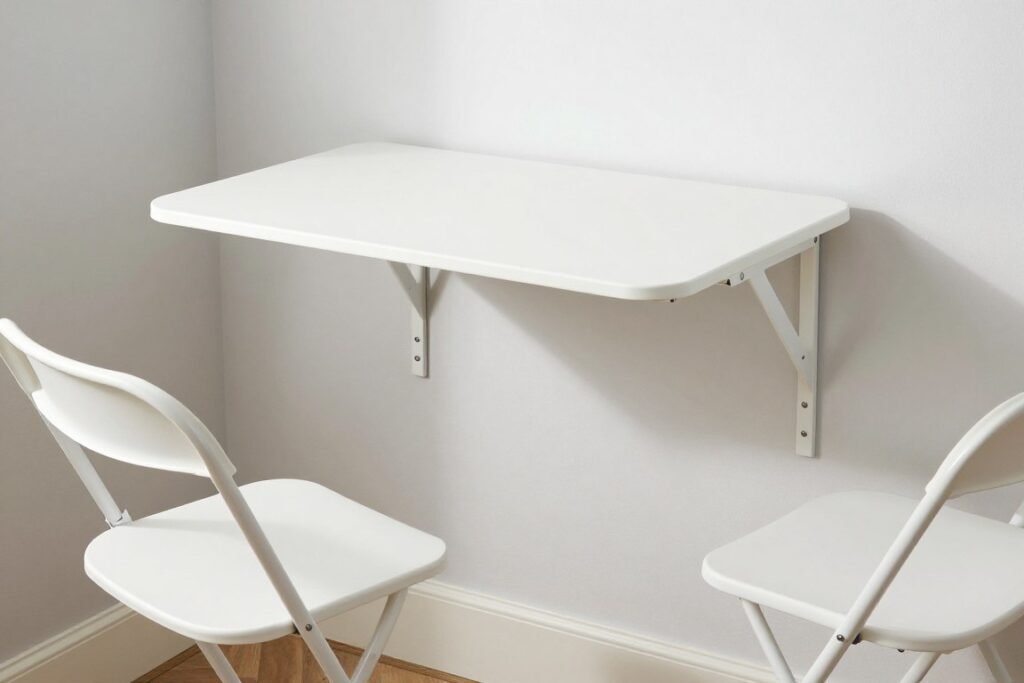
Hinged tables attach to walls and fold flat. This creates a dining surface only when needed. The space-saving design works perfectly in tiny kitchens.
Install tables at standard dining height for comfort. Ensure brackets support your intended weight load. Quality hardware makes folding mechanisms smooth and reliable.
Choose finishes that match your cabinetry. This integration makes the table feel built-in. The cohesive design looks intentional rather than makeshift.
Bar Carts
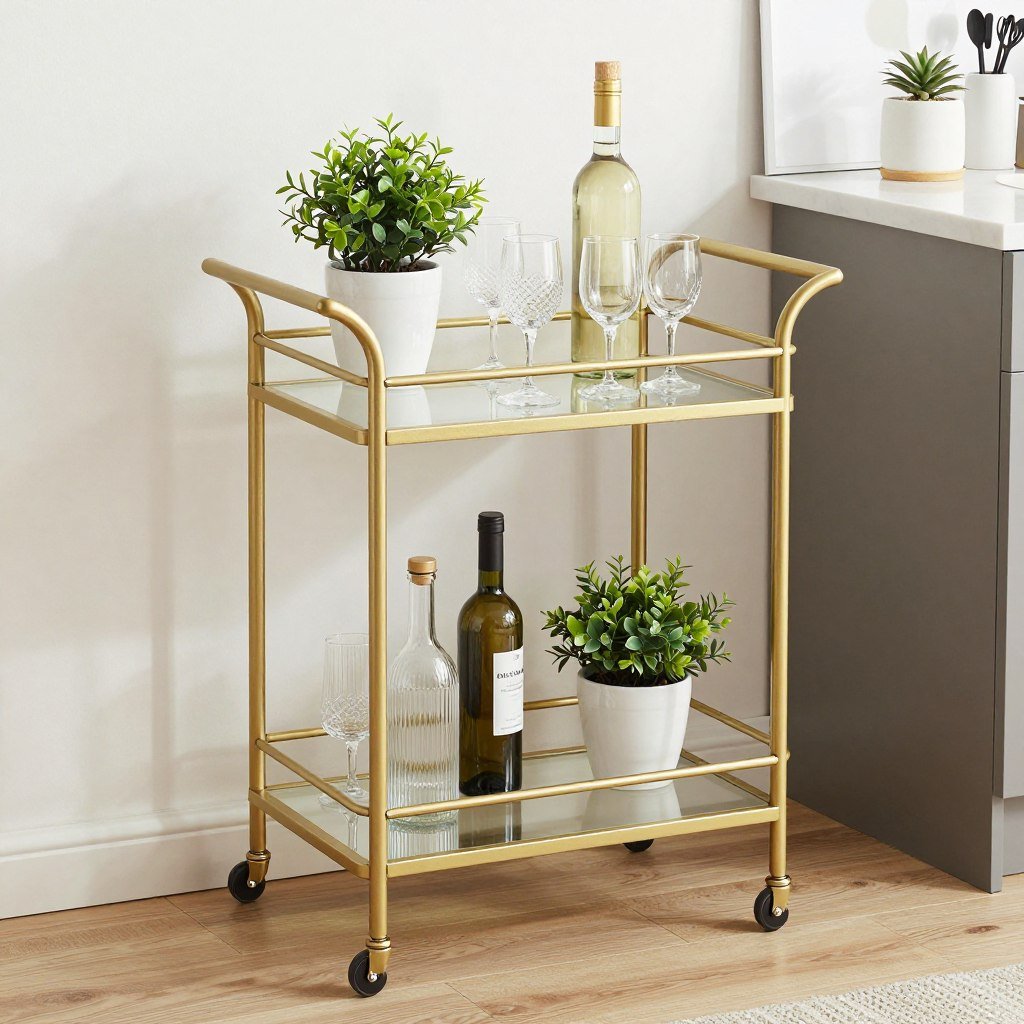
Rolling bar carts provide portable storage and serving. Use them for beverages, extra prep space, or displays. Move the cart wherever you need it most.
Choose styles that complement your kitchen design. Metal carts suit modern spaces beautifully. Wood carts fit traditional and farmhouse aesthetics.
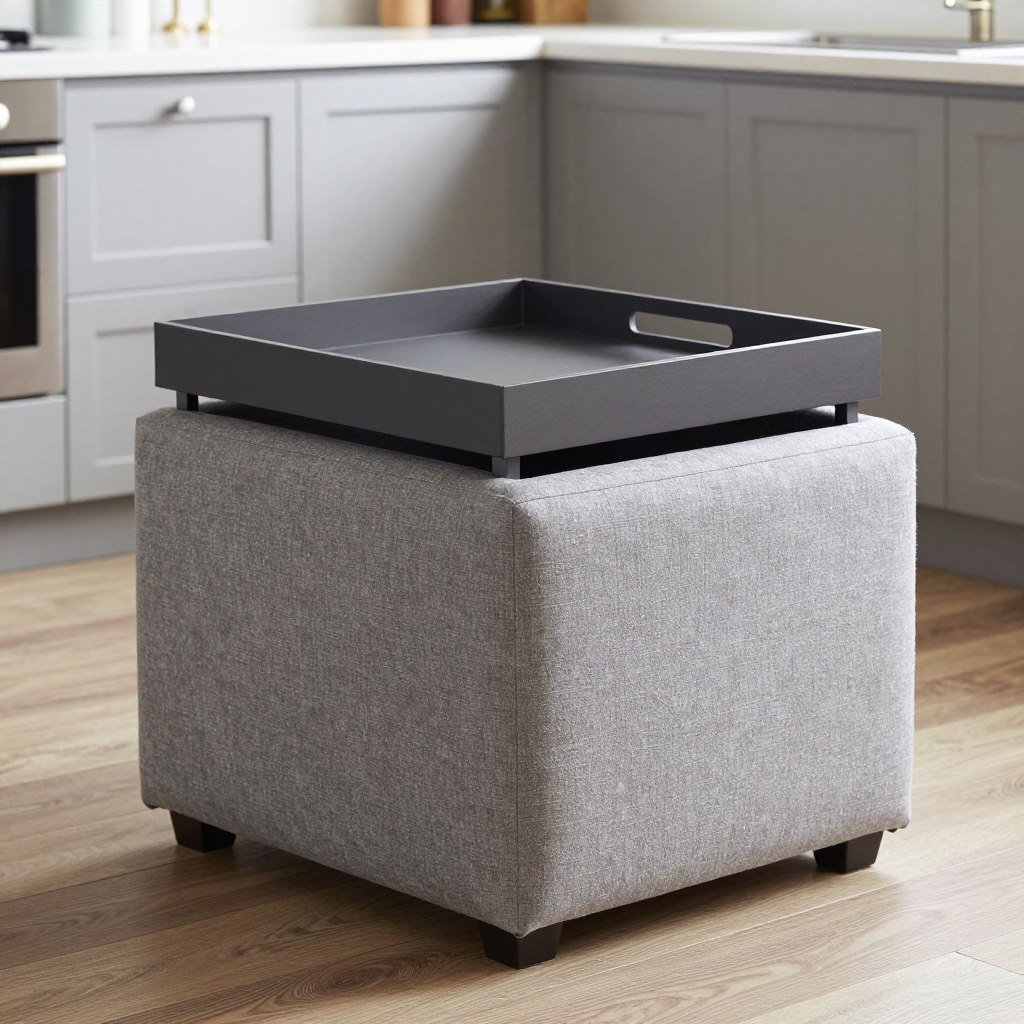
Ottoman Storage
Upholstered storage ottomans serve as seating and tables. Removable tops reveal hidden storage inside. These pieces work in kitchen dining areas beautifully.
Select ottomans with tray tops for stability. This allows them to function as side tables. Store extra linens, seasonal items, or small appliances inside.
Furnish Your Kitchen With Space-Saving Pieces
Explore versatile furniture solutions that maximize function while minimizing footprint in your compact kitchen space.
Mirrors create the illusion of doubled space. Strategic placement reflects light and views. This design trick makes small kitchens feel significantly larger.
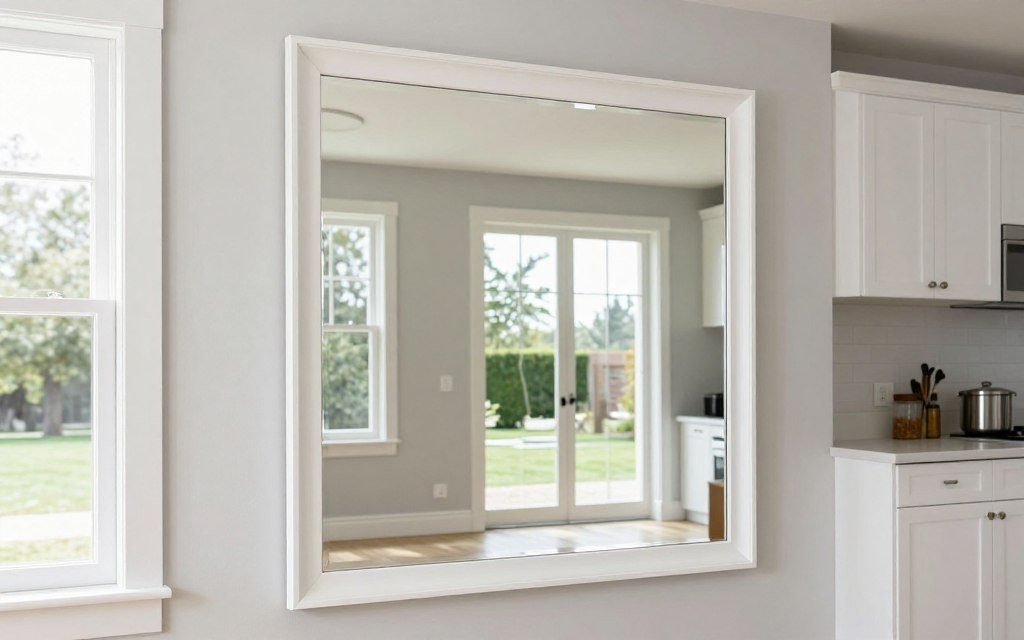
Window-Opposite Placement
Position mirrors across from windows for maximum impact. This placement reflects natural light throughout the room. The mirror effectively doubles your window’s light contribution.
Choose mirror sizes proportional to your wall space. Larger mirrors create more dramatic effects. Frame mirrors to coordinate with your kitchen style.
Antique mirrors add character while expanding space. The slightly aged glass suits vintage-inspired kitchens. Modern frameless mirrors fit contemporary designs perfectly.
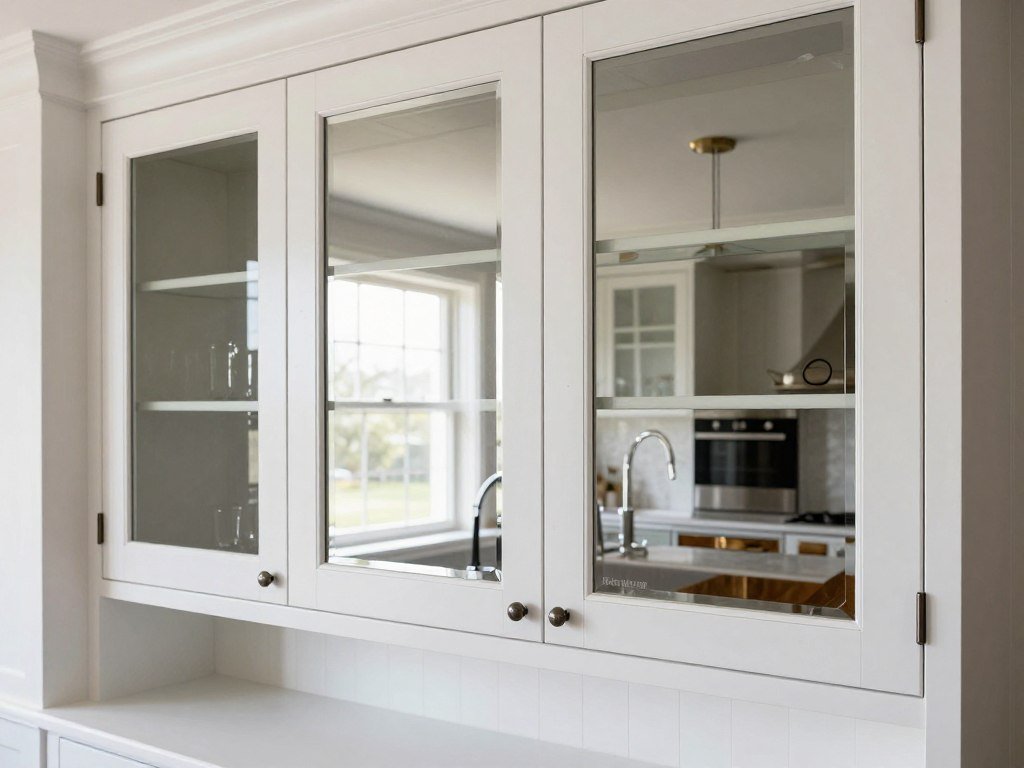
Mirrored Cabinet Doors
Replace some cabinet door panels with mirrors. This subtle approach adds reflection without overwhelming. The technique works especially well on upper cabinets.
Antique mirror panels suit traditional kitchen styles. The soft reflection feels elegant and sophisticated. Modern clear mirrors fit contemporary designs better.
Limit mirrored doors to one or two cabinets. Too many mirrors can feel disorienting. Strategic placement provides benefit without excess.
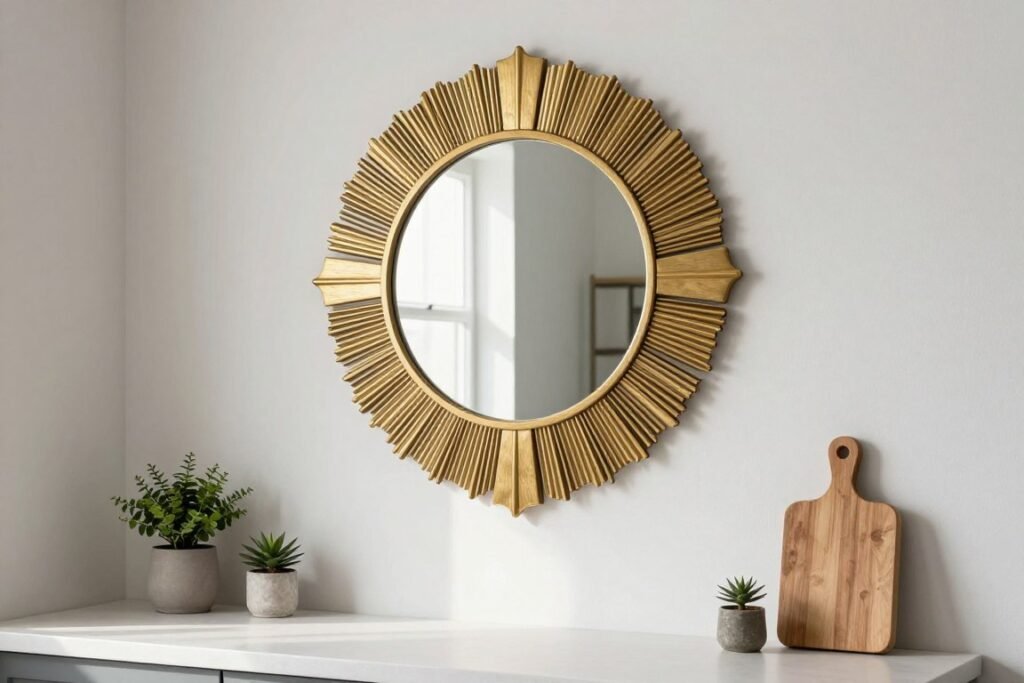
Decorative Mirror Features
Treat mirrors as functional art in your kitchen. Decorative frames add personality and style. The piece serves both aesthetic and practical purposes.
Round mirrors soften angular kitchen designs. The curved shape provides pleasing contrast. Sizes from 24 to 36 inches work well in most kitchens.
Position mirrors at eye level for best effect. This placement maximizes the space-expanding illusion. Ensure the mirror reflects attractive views, not clutter.
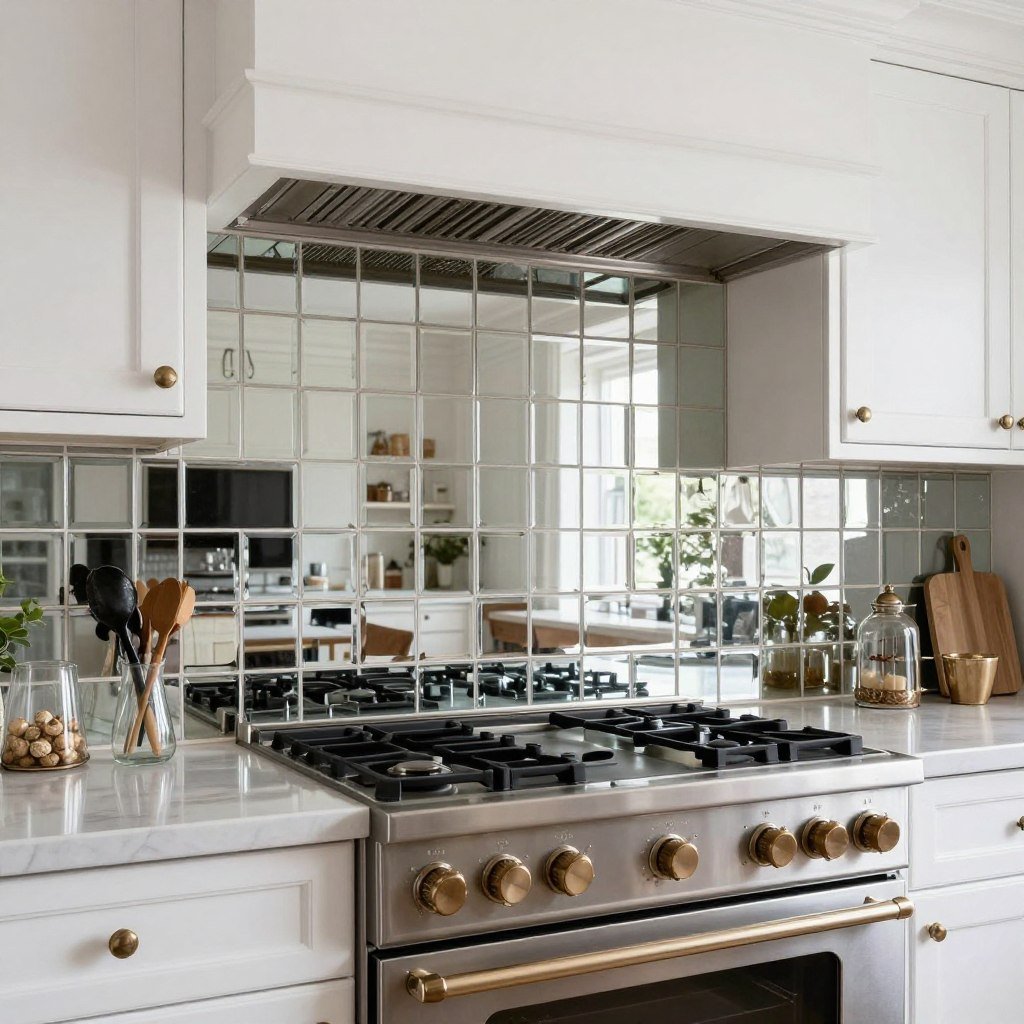
Mirror Backsplashes
Mirror tiles behind ranges create dramatic focal points. The reflection doubles the visual depth of your kitchen. This works beautifully in narrow galley layouts.
Clean mirror backsplashes require more maintenance. Cooking splatter shows on reflective surfaces. Consider this factor when planning your design.
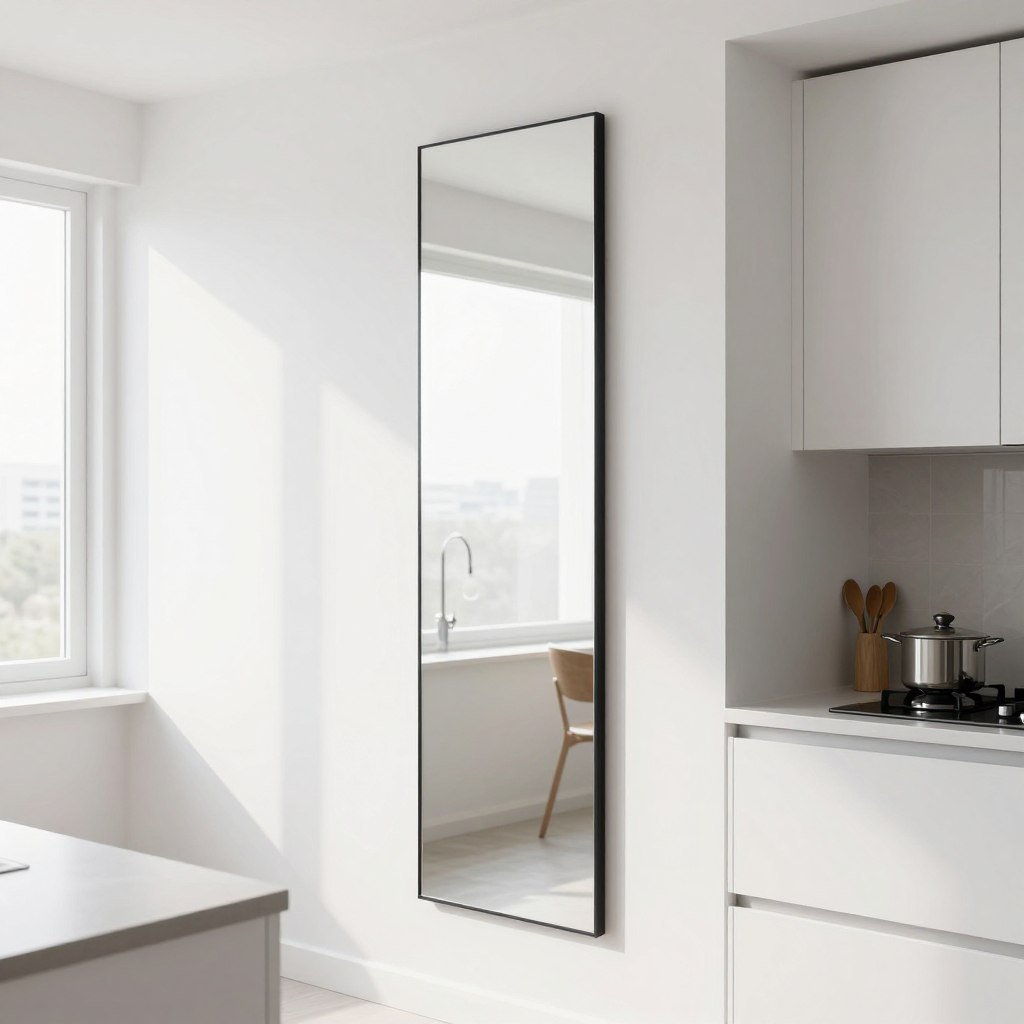
Vertical Mirrors
Tall narrow mirrors make ceilings appear higher. This vertical emphasis expands the room upward. The technique works well in galley kitchen designs.
Lean large mirrors against walls for flexible placement. This avoids permanent wall mounting. Change positions as your design evolves.
Optimize Door and Entry Solutions
Traditional doors consume valuable floor space when open. Alternative solutions improve traffic flow and room perception. Strategic door choices make kitchens feel more open.
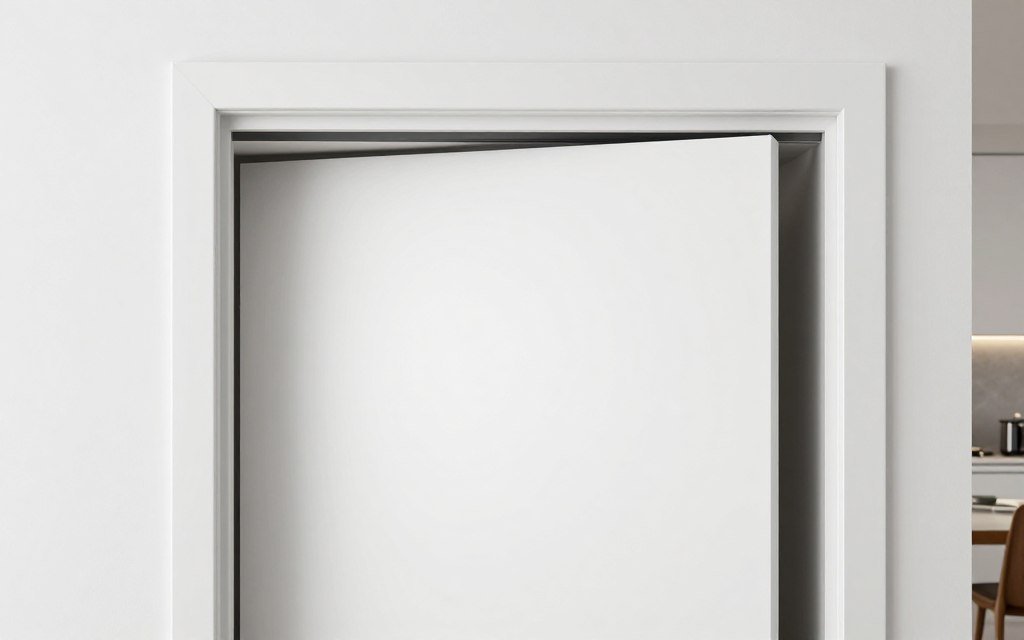
Pocket Door Installation
Pocket doors slide into wall cavities completely. This eliminates the door swing area entirely. The space savings proves significant in small kitchens.
Install pocket doors between kitchen and dining areas. This allows flexible space division. Close for formal meals, open for casual entertaining.
Glass pocket doors maintain visual connection while providing separation. This works well in open floor plan homes. The transparency preserves natural light flow.
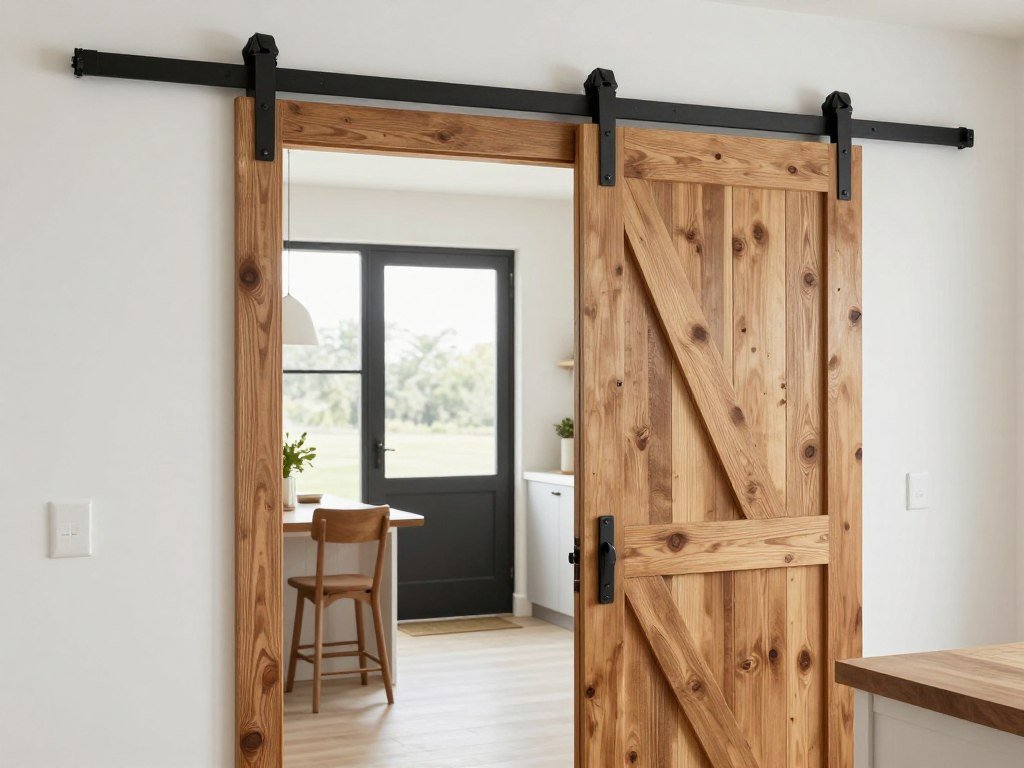
Barn Door Styles
Sliding barn doors add character while saving space. The exposed track hardware creates visual interest. This solution suits farmhouse and industrial design styles.
Choose door widths that cover the entire opening. The door should extend several inches beyond each side. This ensures complete privacy when closed.
Select hardware that complements your kitchen finishes. Black metal suits modern and industrial spaces. Bronze or copper fits traditional designs beautifully.
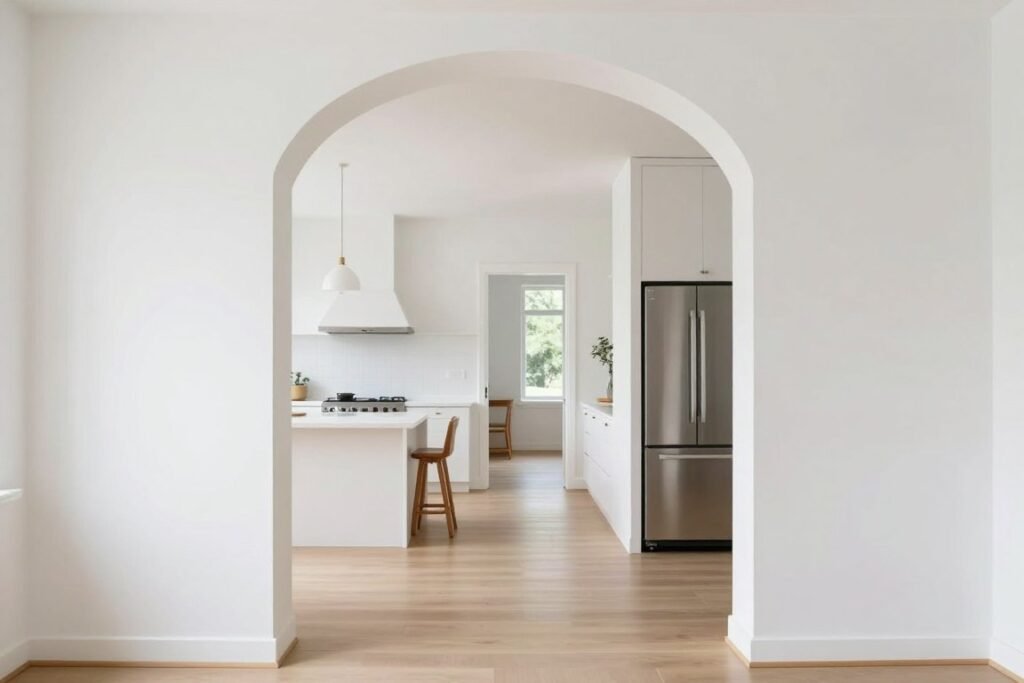
Open Archway Designs
Removing doors entirely maximizes openness and flow. Archways connect spaces without physical barriers. This approach works best in open-concept homes.
Frame openings with decorative trim for definition. White painted wood creates clean transitions. The architectural detail adds character without closing off space.
Consider partial walls or half-walls for subtle division. These define spaces without blocking light or views. The structures can incorporate storage or display shelving.
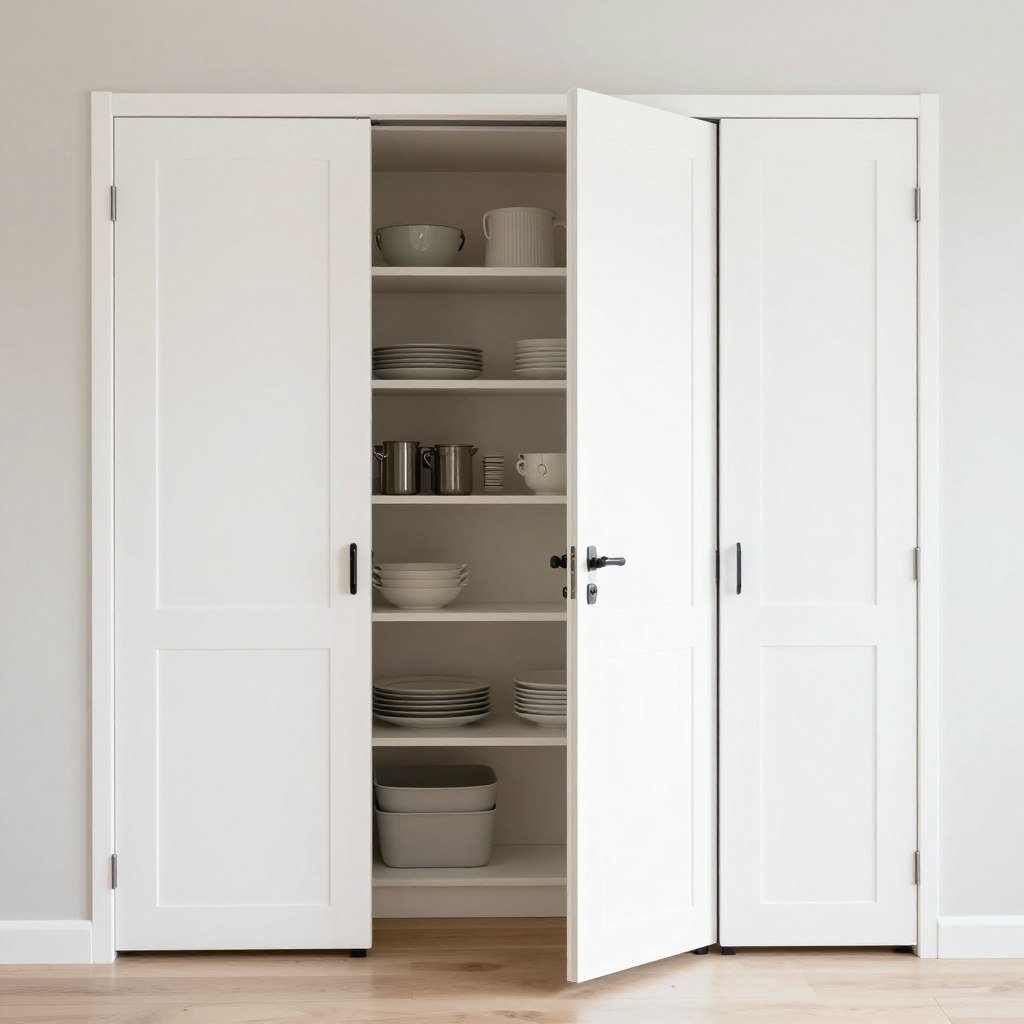
Bifold Options
Bifold doors fold in half when opening. This requires less clearance than traditional swing doors. The mechanism works well for pantries and closets.
Choose bifold doors for tight spaces. Installation suits areas where wall space is limited. The compact operation maintains full access to storage.
Curtain Dividers
Fabric panels on ceiling tracks provide ultimate flexibility. Draw curtains for privacy or open for connection. This soft division suits casual, relaxed homes.
Install tracks that allow complete panel stacking. This reveals the full opening when desired. Choose washable fabrics for kitchen environments.
Design Cozy Breakfast Nook Areas
Dedicated dining spaces enhance small kitchen functionality. Breakfast nooks utilize corners and wall areas efficiently. These intimate spaces add charm while serving practical purposes.
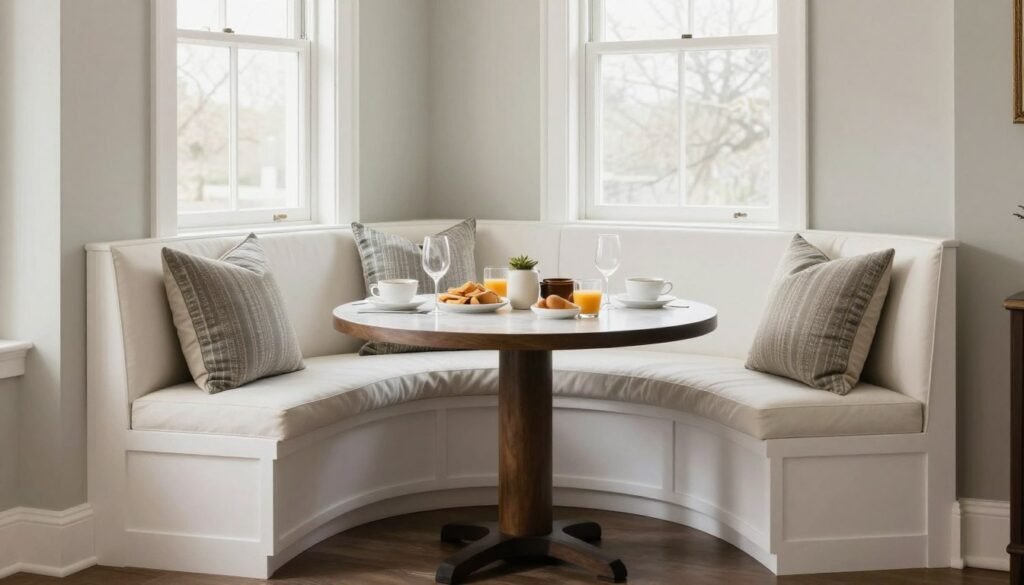
Built-In Banquette Seating
Custom banquettes maximize corner seating capacity. Built-in units accommodate more people than freestanding chairs. The integrated design looks polished and intentional.
Include storage beneath banquette seats. Lift-up cushions reveal compartments for linens and serving pieces. This dual function maximizes space efficiency beautifully.
Add cushions and pillows for comfort and color. Removable covers allow easy cleaning. Mix patterns and solids for visual interest.
Compact Table Solutions
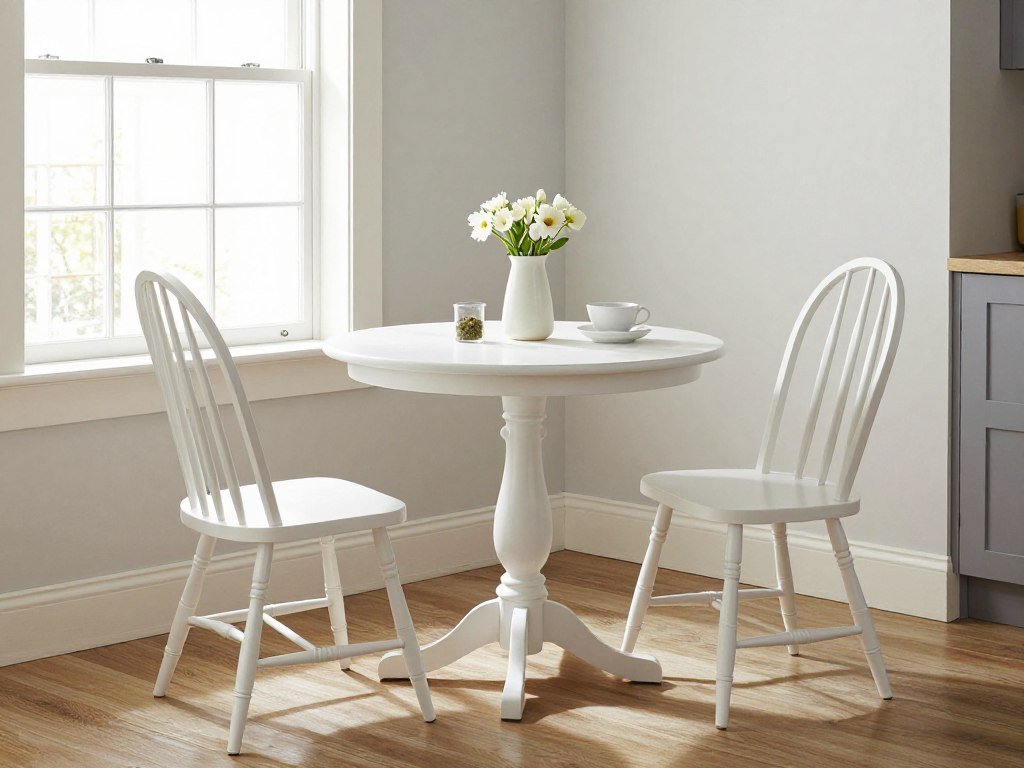
Round tables fit into corners more efficiently than square ones. The curved edges improve traffic flow around them. Pedestal bases eliminate corner leg obstacles.
Choose tables sized appropriately for your space. A 30 to 36 inch diameter seats two comfortably. Forty-two inches accommodates three to four people.
Consider drop-leaf tables for maximum flexibility. Extend leaves for meals, drop for floor space. This versatility suits small kitchen living areas.
Window Seat Integration
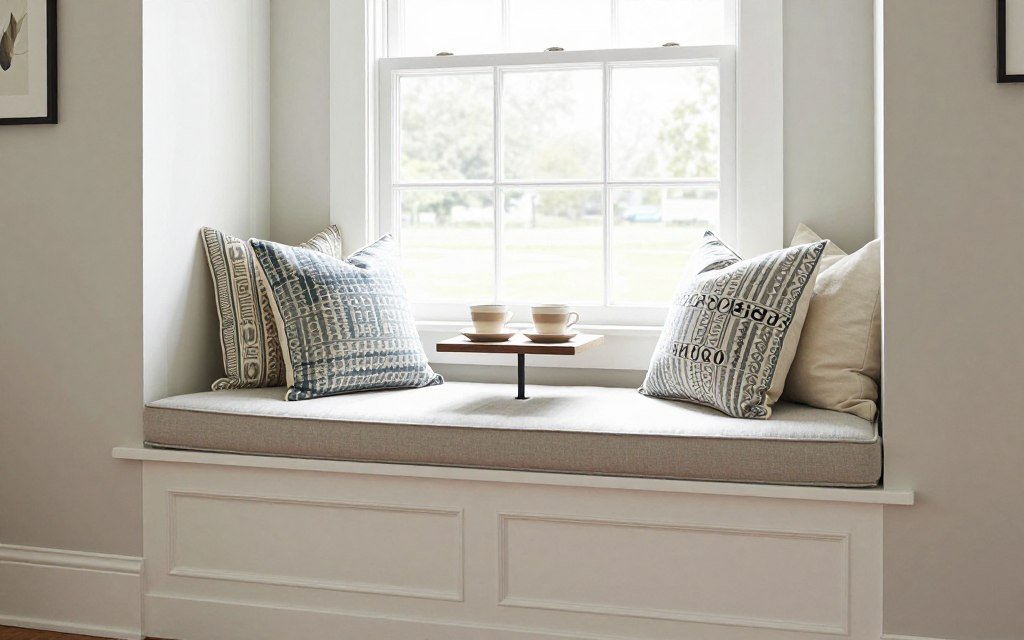
Transform window areas into dining spots. Built-in seats utilize otherwise wasted space. The window view enhances your breakfast experience.
Combine window seats with small tables or ottomans. This creates flexible dining and lounging areas. The multi-purpose space serves throughout the day.
Install window seats at standard chair height. This allows pairing with regular dining tables. Consistency in heights ensures comfortable seating arrangements.
Bar-Height Dining
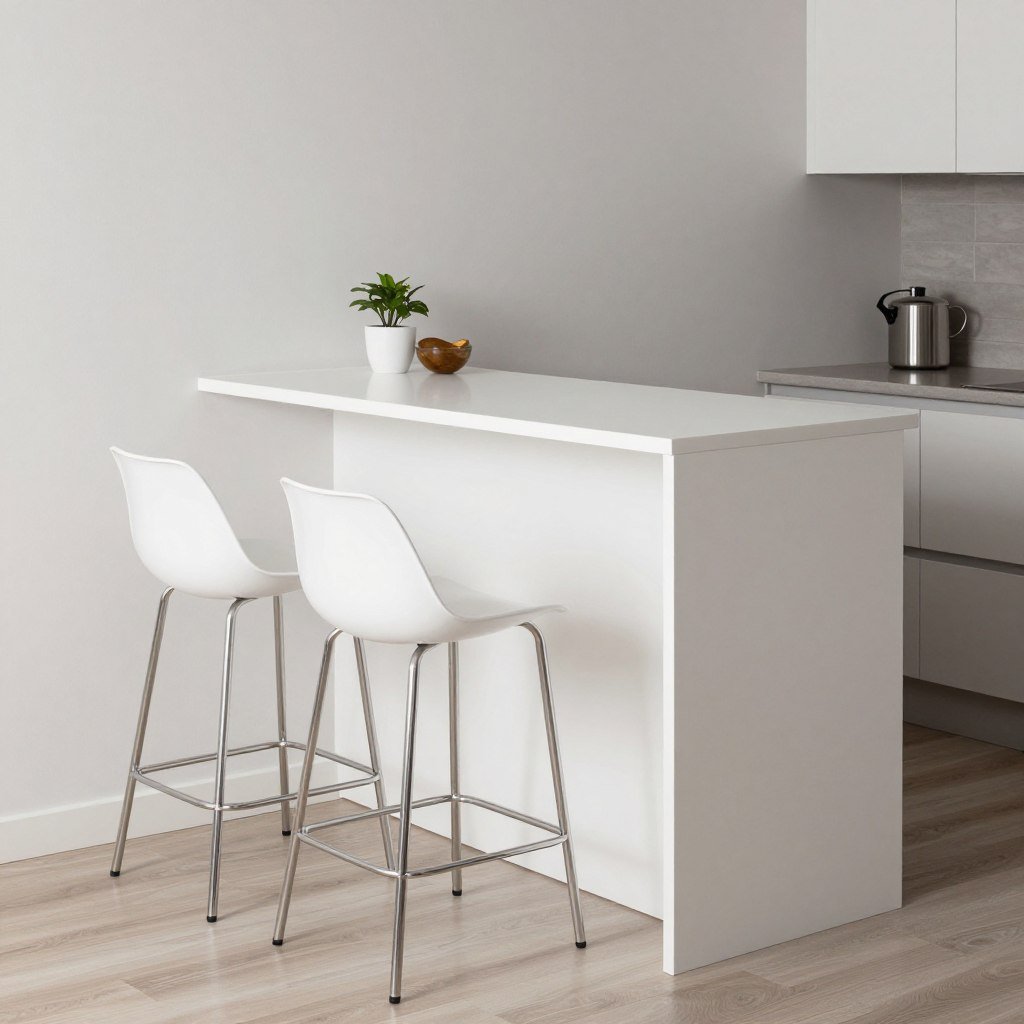
Counter-height or bar-height tables require less floor space. The elevated seating feels casual and modern. This arrangement works well for quick meals.
Choose backless stools that tuck completely under. This keeps walkways clear when not dining. Select comfortable seats for extended sitting time.
Peninsula Overhangs
Extend counter overhangs to create eating bars. This integrated approach eliminates separate dining furniture. The streamlined design maximizes floor space.
Provide at least 12 inches of overhang for knees. Fifteen inches offers more comfortable seating. Support extended counters with decorative brackets if needed.
Emphasize Vertical Space and Height
Drawing eyes upward makes rooms feel larger. Vertical design elements create height perception. Strategic choices emphasize your kitchen’s vertical dimension.
Vertical Tile Patterns
Install backsplash tiles in vertical patterns. Subway tiles in stack bond emphasize height. This breaks from traditional horizontal brick patterns effectively.
Extend backsplash tiles to the ceiling level. This eliminates the visual break of painted walls. The continuous surface makes ceilings appear higher.
Use narrow vertical tiles for maximum effect. Thin rectangles or planks accentuate vertical lines. The pattern guides eyes upward naturally.
Tall Cabinet Designs
Floor-to-ceiling cabinetry draws attention upward. These units maximize storage while emphasizing height. Crown molding at the ceiling completes the custom look.
Add vertical trim details to cabinet doors. Recessed panels with vertical orientation reinforce height. The subtle detail makes a noticeable difference.
Paint cabinets and walls in similar colors. This creates a cohesive vertical sweep. The unified color reduces visual breaks and interruptions.
Hanging Light Fixtures
Pendant lights create strong vertical elements. The fixtures draw eyes from counter to ceiling. This vertical line emphasizes room height beautifully.
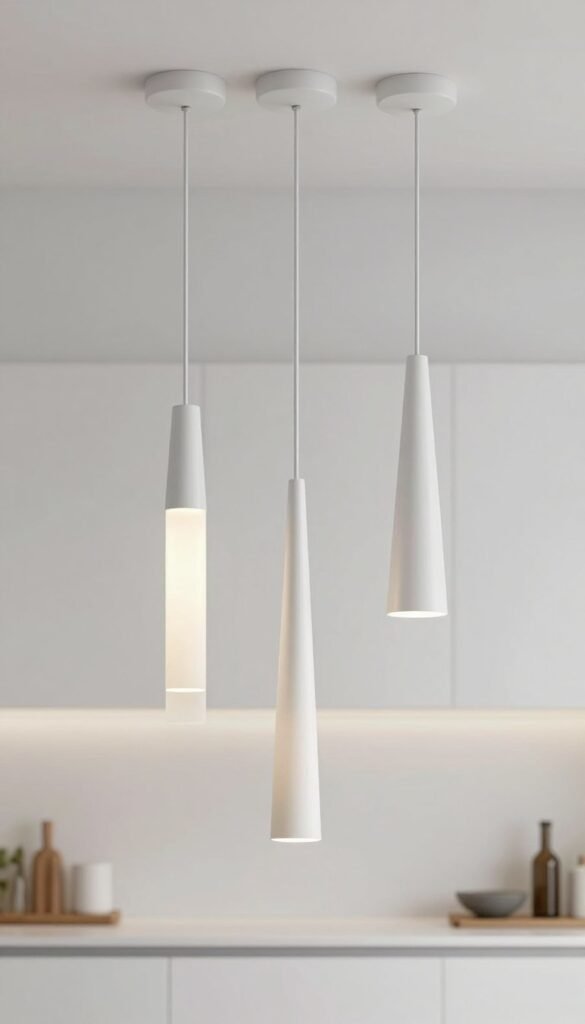
Choose pendants with elongated shapes. Cylinder or cone shapes emphasize verticality. Avoid squat, wide fixtures in small kitchens.
Hang lights at varying heights for visual interest. Staggered drops create dynamic vertical rhythm. This technique works well with multiple pendants.
Vertical Accent Walls
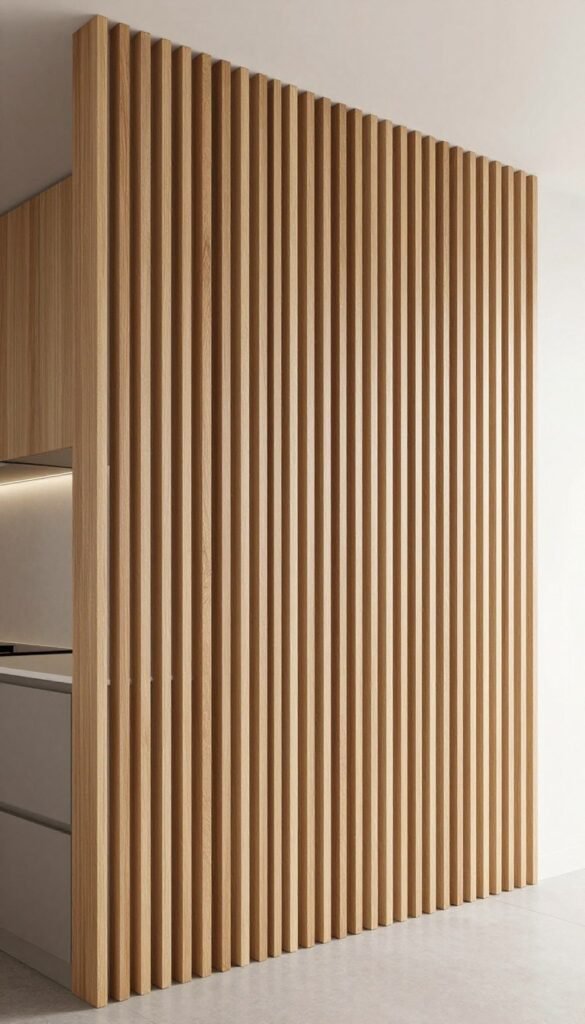
Wood slats or paneling running vertically emphasize height. This architectural detail creates strong vertical lines. The texture adds warmth and visual interest.
Paint vertical paneling in light colors. White or pale gray maximizes the height effect. The vertical grooves create subtle shadow lines.
Tall Plant Displays
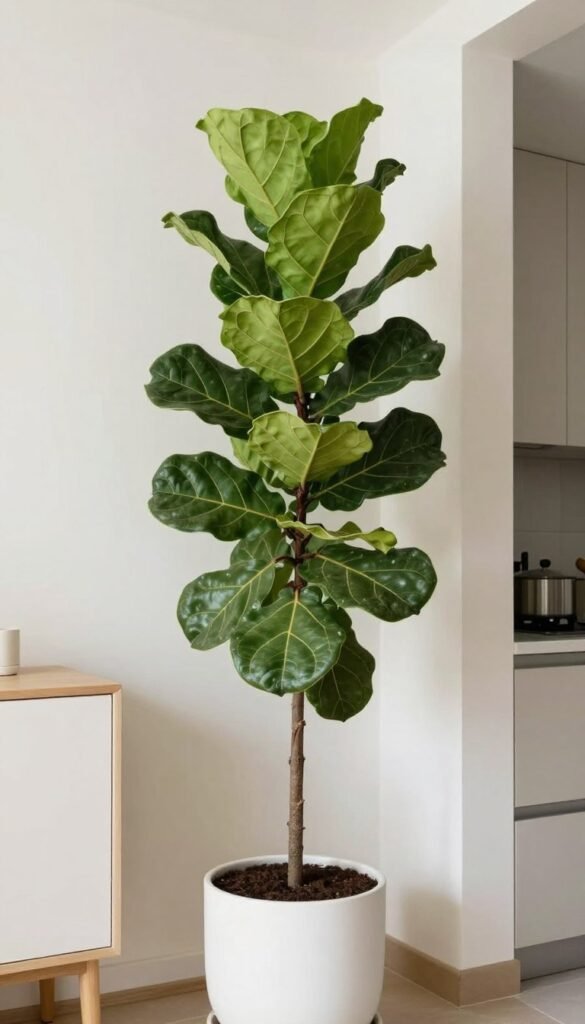
Large floor plants add organic vertical elements. Tall palms or fiddle leaf figs draw eyes upward. The living greenery adds life to kitchen spaces.
Position plants in corners to emphasize height. The vertical growth complements architectural lines. Choose varieties that thrive in kitchen light conditions.
Personalize With Style and Finishing Touches
Small kitchens deserve personality and charm. Thoughtful finishing touches make spaces feel complete. These details transform functional rooms into beloved home spaces.
Hardware and Fixture Upgrades
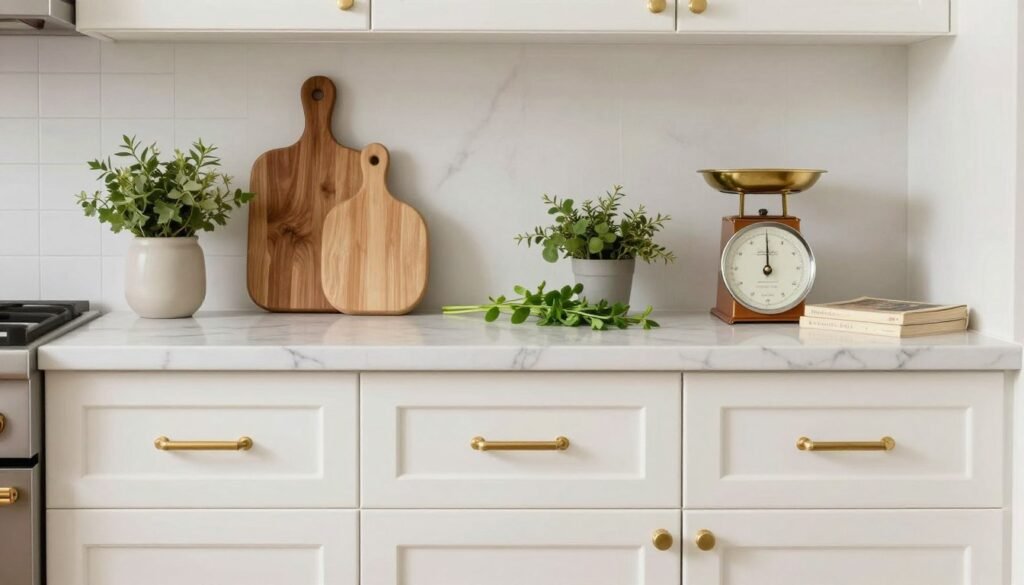
Cabinet hardware acts as jewelry for your kitchen. Updated pulls and knobs refresh the entire space. This affordable upgrade delivers significant visual impact.
Choose finishes that complement your faucet and appliances. Brushed nickel, brass, or matte black work in most kitchens. Consistency in metal finishes creates cohesion.
Consider mixing knobs and pulls for visual interest. Use knobs on doors and pulls on drawers. This combination adds subtle variety to your cabinetry.
Living Plant Elements
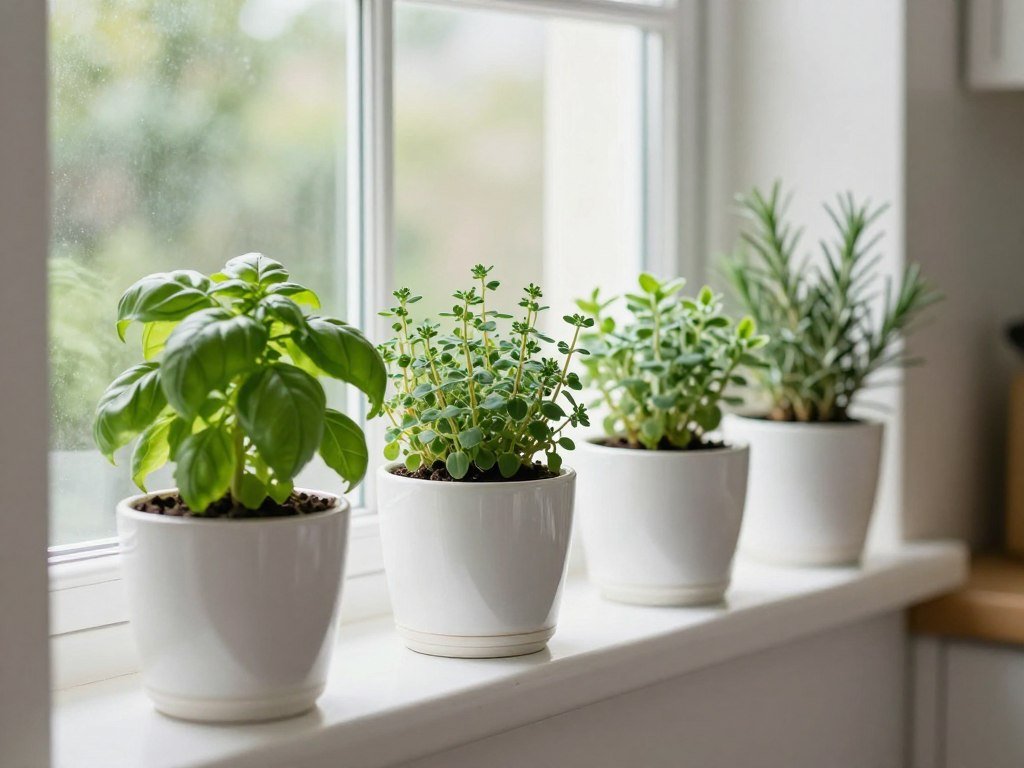
Fresh herbs on windowsills serve form and function. These living plants add color and life. The convenience of fresh herbs enhances your cooking.
Choose low-maintenance varieties for busy lifestyles. Pothos, succulents, and herbs thrive with minimal care. These plants tolerate kitchen conditions well.
Group plants in matching pots for cohesion. White ceramic containers suit most kitchen styles. Woven baskets add natural texture and warmth.
Textile Layers
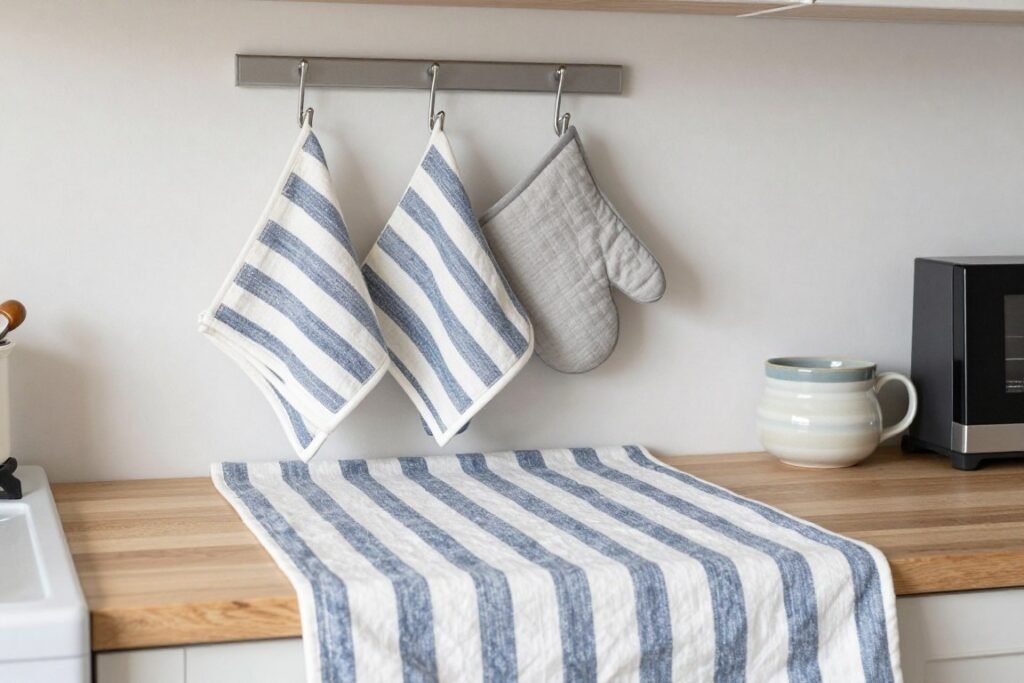
Runners, towels, and curtains add softness to hard surfaces. Textiles introduce pattern and color easily. These changeable elements allow seasonal updates.
Select machine-washable fabrics for practicality. Cotton and linen blends work beautifully. Avoid delicate materials that require special care.
Coordinate textile colors with your overall palette. Pull accent colors from backsplash or artwork. This creates intentional, cohesive design throughout.
Wall Art Selection
Artwork personalizes your kitchen space. Choose pieces that withstand humidity and temperature changes. Food-themed prints suit kitchen settings naturally.
Limit art quantity in small spaces. One or two statement pieces work better than gallery walls. The focused approach prevents visual clutter.
Curated Collections
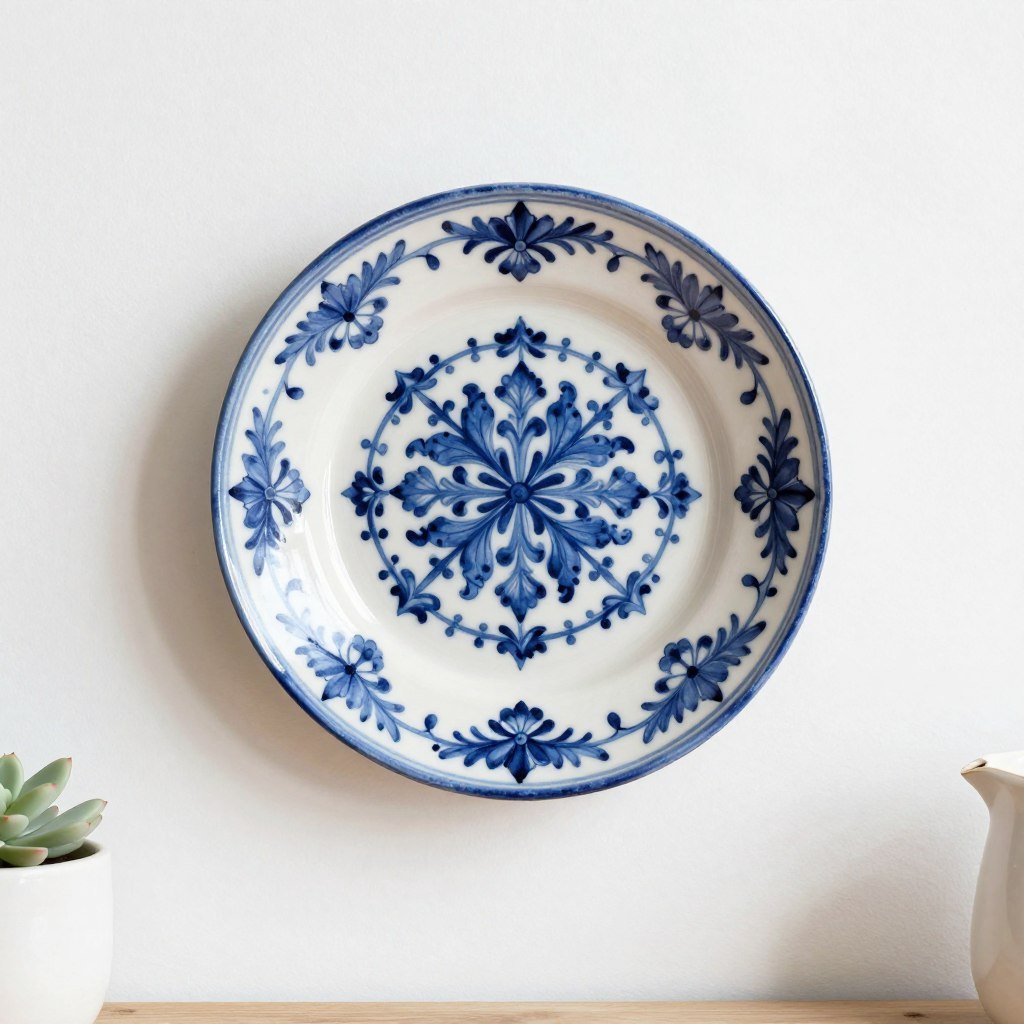
Display collections that reflect your personality. Vintage mixing bowls, pitchers, or teacups add character. Group similar items for maximum visual impact.
Limit displayed collections to maintain uncluttered appearance. Rotate seasonal items to keep displays fresh. Store excess pieces in closed cabinets.
Add the Perfect Finishing Touches
Complete your kitchen transformation with hardware, accessories, and decorative elements that express your personal style.
Transforming small kitchens doesn’t require massive budgets. Strategic priorities deliver maximum impact for your investment. Smart planning stretches renovation dollars effectively.
Prioritize High-Impact Changes
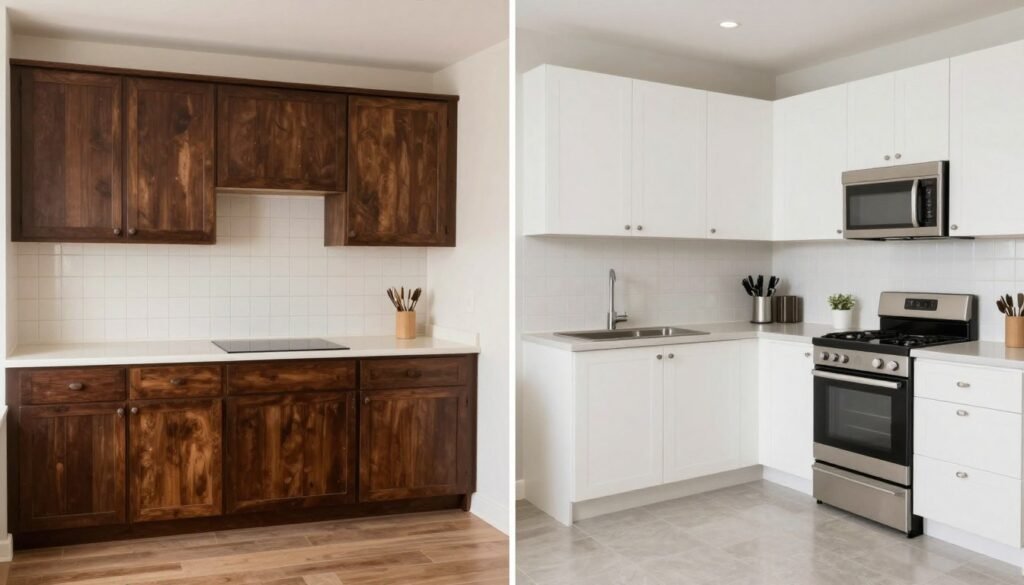
Paint delivers the biggest visual change per dollar spent. Fresh white or light paint transforms dark, dated kitchens. This single update creates dramatic before-and-after results.
Replace hardware before replacing cabinets. New pulls and knobs cost a fraction of new cabinetry. This simple swap updates the entire kitchen appearance.
Update lighting fixtures early in your renovation. Better illumination improves how everything else looks. Good lighting makes even budget materials appear more expensive.
DIY-Friendly Projects
Cabinet painting suits ambitious DIYers with time. Proper preparation ensures professional-looking results. This project saves thousands compared to replacement costs.
Peel-and-stick backsplash tiles offer easy installation. Modern products look remarkably realistic. The temporary nature suits renters perfectly.
Installing under-cabinet lighting requires minimal electrical skills. Battery-operated LED strips need no wiring. This upgrade dramatically improves kitchen functionality and ambiance.
Phased Renovation Approach
Complete kitchen updates in stages over time. This spreads costs across several budgets. The gradual approach keeps kitchens functional throughout renovations.
Start with changes that don’t require professional installation. Paint, hardware, and lighting fixtures come first. Save cabinetry and countertops for later phases.
Plan the entire renovation before beginning phase one. This ensures design cohesion across all stages. Your vision guides each decision along the way.
Salvage and Secondhand
Architectural salvage yards offer unique pieces at low costs. Vintage light fixtures add character and history. Reclaimed materials bring warmth and personality.
Shop thrift stores for furniture and accessories. Bar stools, tables, and carts cost significantly less secondhand. Quality pieces just need cleaning or minor repairs.
Splurge vs. Save
Invest in items you use daily. Quality faucets and sinks justify higher costs. These fixtures withstand constant use for years.
Save on decorative elements and accessories. Paint colors change easily and inexpensively. Towels, rugs, and curtains rotate with seasons and trends.
Transform Your Small Kitchen With Confidence
Small kitchen design challenges inspire creative solutions. Every idea presented here works in real homes. These strategies help you maximize your compact cooking space.
Start with changes that fit your budget and timeline. Small improvements accumulate into significant transformations. Your kitchen will evolve into a space you love.
Prioritize functionality alongside aesthetics in every decision. Beautiful design that doesn’t work creates daily frustration. The best kitchens balance both form and function seamlessly.
Remember that personal style matters most. Trends come and go over time. Create a kitchen that reflects your taste and serves your needs.
Small spaces offer intimacy and efficiency. Compact kitchens can feel cozy rather than cramped. The right design approach makes all the difference.
Start Your Kitchen Transformation Today
Explore everything you need to bring your small kitchen ideas to life, from storage solutions to finishing touches that make your space uniquely yours.
Your dream kitchen awaits in the space you already have. These kitchen ideas for small spaces work in apartments, condos, and compact homes everywhere. Smart design transcends square footage limitations.
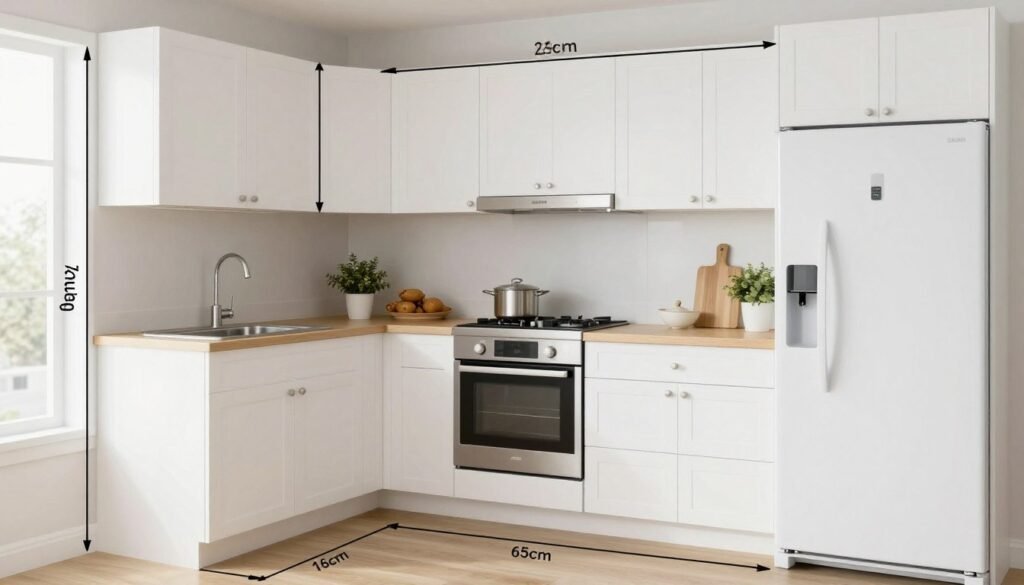
Take measurements before purchasing anything new. Know your exact dimensions to avoid costly mistakes. Proper planning prevents disappointment and wasted money.
Enjoy the process of creating your ideal kitchen. Each decision brings you closer to your goal. The journey of transformation rewards patience and thoughtful choices.