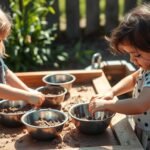
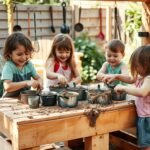
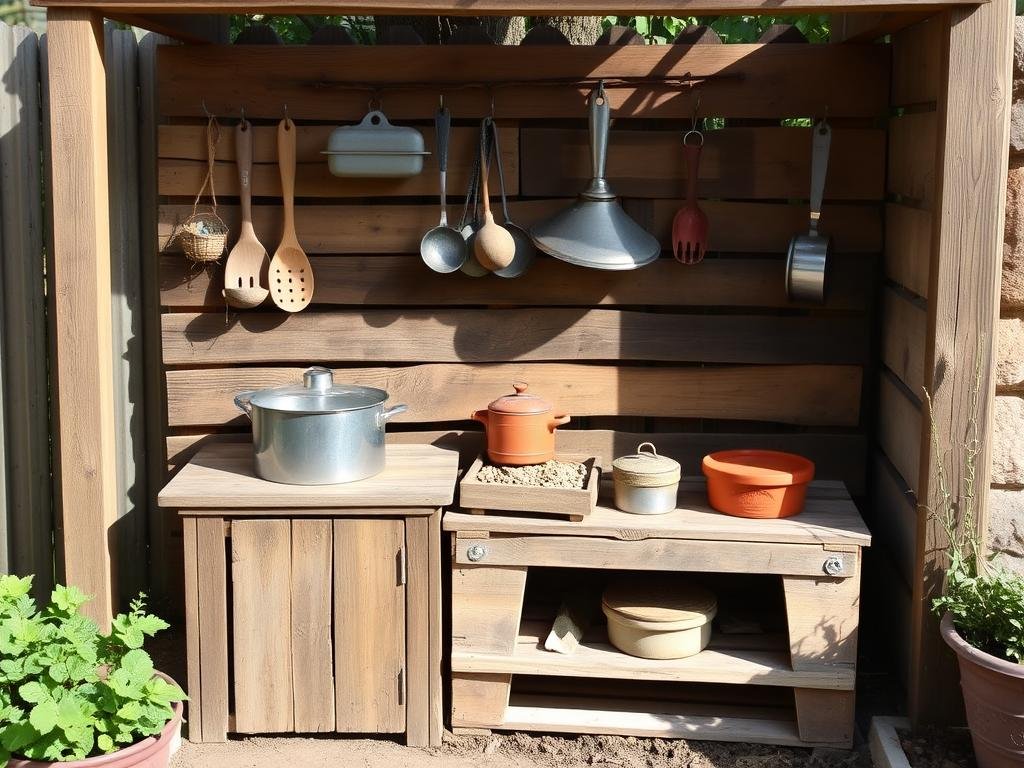
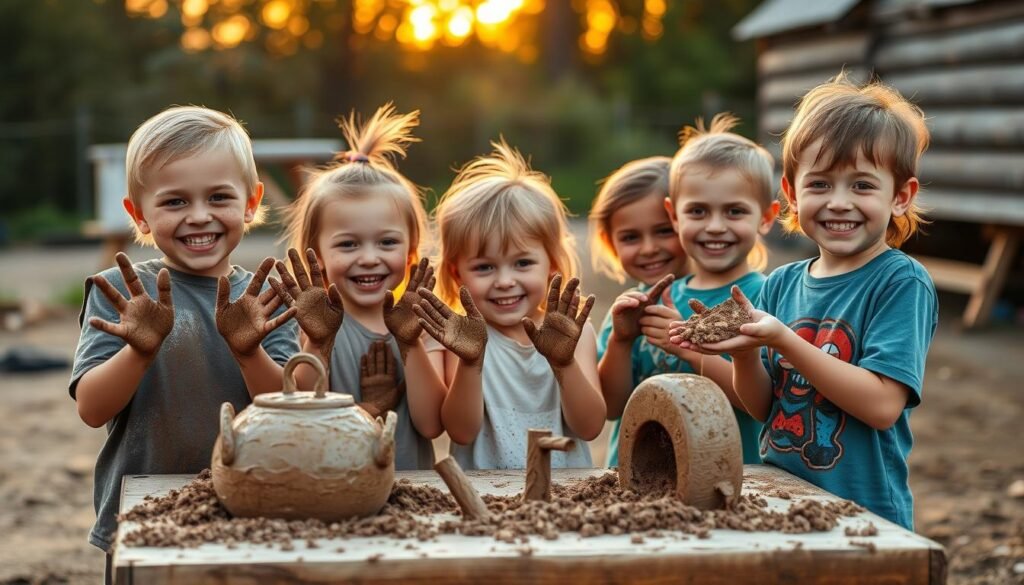
A mud kitchen transforms ordinary backyard play into a world of sensory exploration and imaginative adventures. These special outdoor spaces combine the joy of messy play with the familiar comfort of pretend cooking, creating the perfect environment for children to develop creativity, fine motor skills, and a connection with nature. Whether you’re working with a spacious garden or a compact patio, these mud kitchen ideas will help you create a magical play space that your children will treasure for years to come.
This Website contains affiliate links. That means I may earn a small commission if you purchase through my links, at no extra cost to you.
The Magic of Mud Kitchens: Benefits for Growing Minds
Before diving into the practical aspects of creating a mud kitchen, let’s explore why they’ve become such a beloved feature in children’s outdoor play spaces. Mud kitchens offer far more than just messy fun – they’re powerful learning environments that support multiple aspects of child development.
Sensory Development
The varied textures of mud, water, sand, and natural materials provide rich sensory input that helps children process and understand their world. Squishing mud between fingers, pouring water, and mixing concoctions engages multiple senses simultaneously, creating neural connections that support brain development.
Creativity and Imagination
With open-ended materials like mud, stones, and leaves, children can create anything their imagination conjures – from mud pies and nature soups to magical potions. This type of play has no predetermined outcome, allowing creativity to flourish without limitations.
Fine Motor Skills
Scooping, pouring, stirring, and molding mud develops the small muscles in children’s hands and improves hand-eye coordination – essential skills that later support writing, drawing, and other precise movements. The natural resistance of mud provides just the right amount of challenge.
Scientific Thinking
As children experiment with different consistencies of mud and various natural materials, they’re engaging in scientific inquiry. They observe cause and effect, make predictions, and solve problems – all while having fun in their outdoor laboratory.
Mud kitchens inspire rich conversations as children describe their creations, follow pretend recipes, or take orders in their mud café. This natural context for language use helps build vocabulary and communication skills in a meaningful way.
Connection with Nature
In our increasingly digital world, mud kitchens provide a direct, hands-on connection with the natural environment. This regular contact with soil, plants, and outdoor elements helps foster an appreciation for nature that can last a lifetime.
Research suggests that regular contact with soil microbes may actually strengthen children’s immune systems and potentially reduce the risk of allergies and asthma. So that messy mud play isn’t just fun – it might be helping build healthier bodies too!
DIY Mud Kitchen Ideas: From Simple to Spectacular
Creating a mud kitchen doesn’t have to be complicated or expensive. From quick setups using items you already have to more elaborate weekend projects, there’s a mud kitchen solution for every space and skill level.
Quick-Start Mud Kitchen (Ready in 30 Minutes)
Don’t let perfectionism stop you from getting started. Children don’t need a Pinterest-perfect setup to enjoy mud play. Here’s how to create a simple mud kitchen with items you likely already have:
Find a flat surface – an old table, upturned crate, or even a wide board placed across two stumps
Add containers for mixing – old pots, plastic bowls, or buckets
Include some utensils – wooden spoons, old measuring cups, or plastic kitchen tools
Create a mud source – a large flowerpot filled with soil works perfectly
Add water access – a bucket of water with a small cup for pouring
Pallet Mud Kitchen (Weekend Project)
With some basic tools and a few pallets, you can create a sturdy, functional mud kitchen that will last for years. Pallets are often available for free from local businesses or for minimal cost from hardware stores.
Disassemble 2-3 wooden pallets carefully, removing nails
Create a frame using the sturdier pallet boards, approximately counter-height for your child
Add a flat surface for the countertop
Install a backboard for hanging utensils
Add an old sink basin or large bowl to serve as the sink
Sand all surfaces thoroughly to prevent splinters
Apply a non-toxic wood sealer to protect from weather
Need tools for your DIY mud kitchen?
Find everything you need to build your own mud kitchen with these basic woodworking tools.
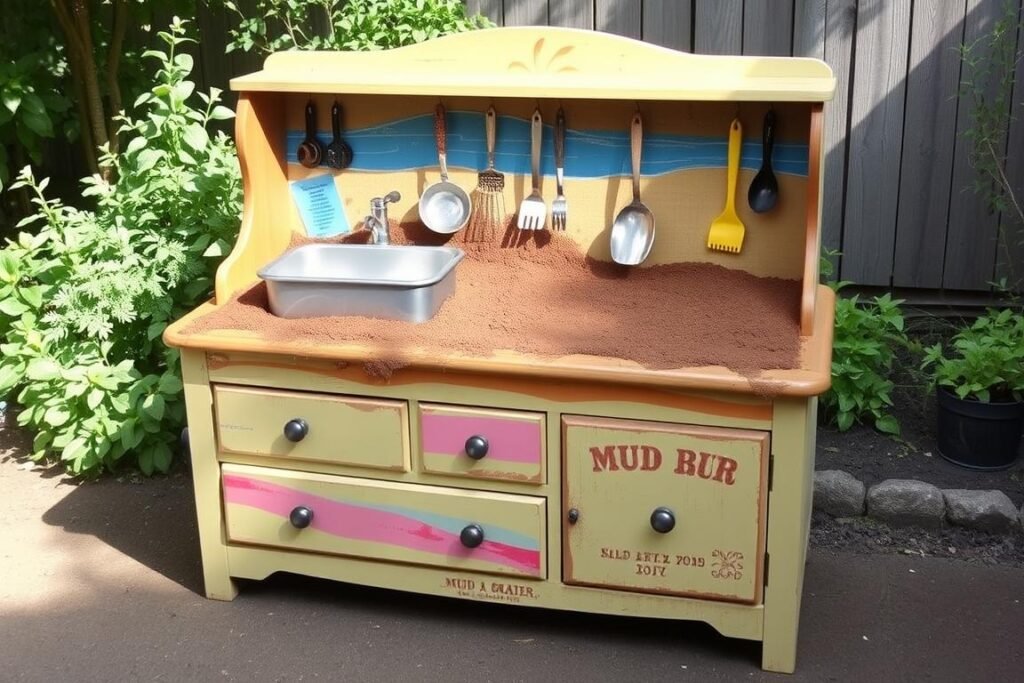
Old furniture pieces can be transformed into charming mud kitchens with minimal effort. Keep an eye out for these items at yard sales, thrift stores, or even on the curb on trash day:
Old Dresser Transformation
Remove drawers from the top section (leaving one or two at the bottom for storage), add a countertop if needed, and you’ve got an instant mud kitchen with built-in storage. The empty drawer spaces create perfect shelves for containers and supplies.
Repurposed TV Cabinet
Old entertainment centers or TV cabinets make excellent mud kitchens. The TV space becomes the counter area, while shelves and cabinets provide ample storage. Add hooks inside the doors for hanging utensils and tools.
Setting Up Your Mud Kitchen: Location and Layout
The perfect location for your mud kitchen balances convenience, comfort, and practicality. Consider these factors when choosing where to place your outdoor play space:
Ideal Locations
Near a Water Source
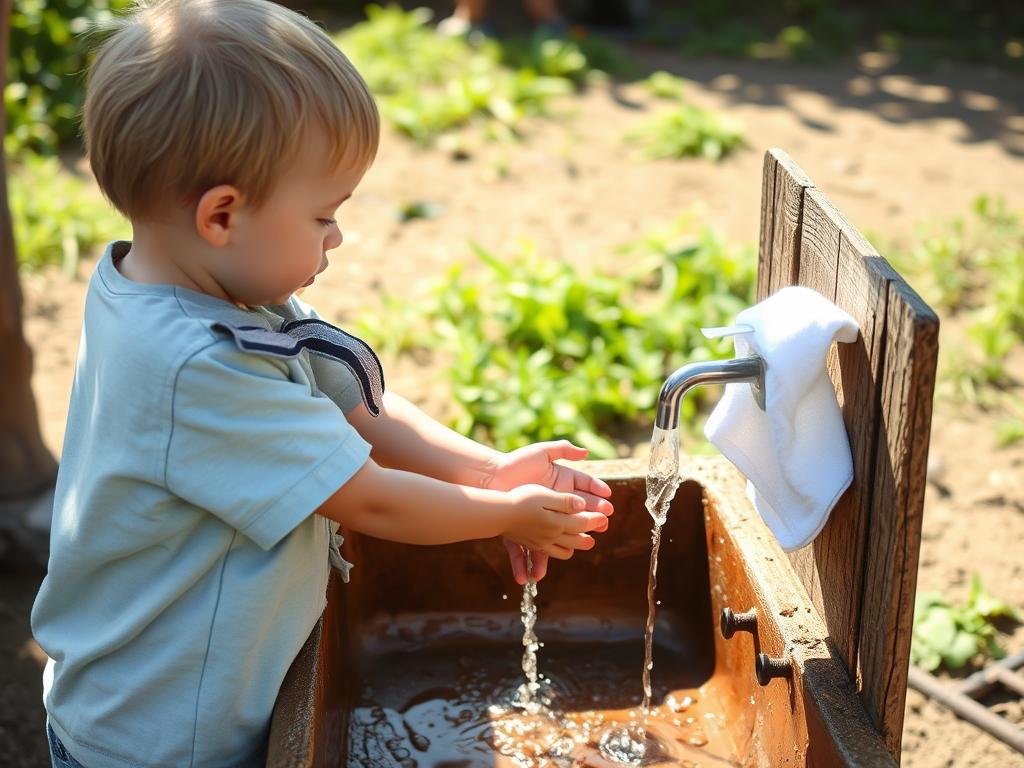
Position your mud kitchen within reach of a garden hose or water butt if possible. This makes it easy to add water for mixing and cleaning up afterward. If direct water access isn’t available, consider setting up a water station with buckets or containers that can be refilled as needed.
Partially Shaded Area
A spot with dappled shade will keep children comfortable during play on sunny days. Complete shade can make the area too cool in spring and fall, while full sun can be uncomfortable in summer. Look for a location under a tree or near a fence or building that provides some natural shade.
Visible from the House
Choose a location where you can easily supervise children while they play. This allows them independence while ensuring they’re safe. A spot visible from the kitchen window is often ideal, letting you keep an eye on the fun while preparing meals or doing other indoor tasks.
Contained Mess Zone
Accept that mud kitchens are, by nature, messy play spaces. Select an area where mud splashes won’t be problematic – away from patios or decking that might become slippery. Consider defining the mud kitchen area with a border of stones, logs, or even a small raised platform.
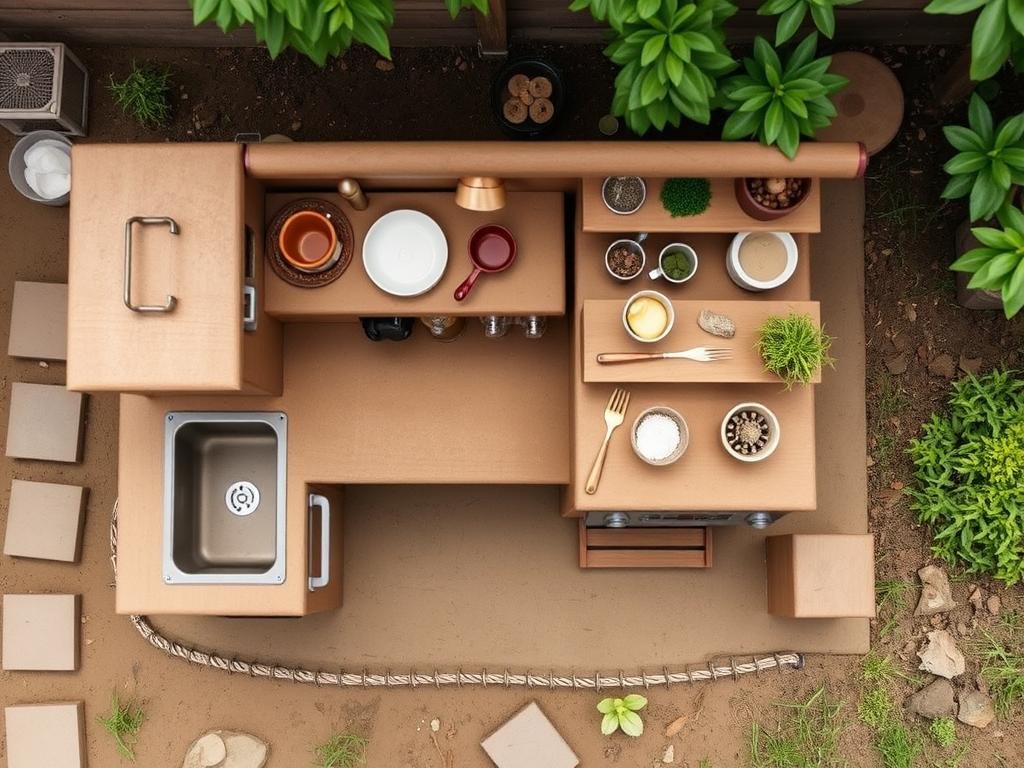
Essential Elements for Your Mud Kitchen Layout
Work Surface: A counter-height surface where children can comfortably mix and create
Sink or Basin: A container for water play and washing “dishes”
Storage Area: Shelves, hooks, or containers to organize utensils and materials
Mud Source: Dedicated space for soil/mud that’s okay to dig in and use
Display Area: A shelf or surface where children can showcase their mud creations
Essential Mud Kitchen Supplies and Accessories
The beauty of mud kitchens is that they don’t require expensive or specialized equipment. Many items can be sourced from your own kitchen, thrift stores, or dollar shops. Here’s a comprehensive list of supplies that will enhance your mud kitchen experience:
Basic Cooking Equipment
Mixing and Serving
Mixing bowls (metal or plastic)
Old pots and pans
Wooden spoons
Plastic or metal ladles
Spatulas and whisks
Measuring cups and spoons
Baking Essentials
Muffin tins
Cake pans
Silicone cupcake liners
Cookie cutters
Rolling pins
Baking sheets
Special Tools
Sieves and colanders
Funnels (various sizes)
Potato mashers
Ice cream scoops
Small mortar and pestle
Egg beaters (manual)
Stock Your Mud Kitchen
Find affordable kitchen tools perfect for mud play without sacrificing your good kitchenware.
Keeping your mud kitchen tidy encourages longer play sessions and teaches children about organization and care for their play space:
Hanging Storage: Install hooks or a pegboard on the backboard of your mud kitchen for hanging utensils
Shelving: Add simple shelves for displaying “finished dishes” or storing containers
Crates or Baskets: Use these for categorizing items (mixing tools, baking supplies, natural materials)
Jars with Lids: Perfect for storing collected natural materials like petals or seeds
Buckets: Essential for water storage and transportation
Tool Caddy: Makes it easy to carry utensils outside and put them away after play
Natural Materials and “Ingredients”
Encourage children to forage for natural materials to add to their mud creations. These items add sensory variety and spark creativity:
From the Garden
Flower petals
Leaves of different shapes
Grass clippings
Herb sprigs (mint, rosemary)
Pinecones and acorns
Textural Elements
Smooth pebbles
Small twigs
Bark pieces
Sand (different colors)
Moss
Seasonal Additions
Spring: Blossom petals
Summer: Lavender sprigs
Fall: Colorful leaves
Winter: Evergreen needles
“In the mud kitchen, children aren’t just playing – they’re scientists exploring properties of matter, chefs creating culinary masterpieces, and storytellers weaving tales through their creations.”
– Early Childhood Education Journal
Creative Mud Kitchen Play Ideas
A mud kitchen offers endless possibilities for imaginative play. Here are some inspiring ideas to extend the fun and learning in your outdoor kitchen:
Themed Mud Kitchen Days
Mud Bakery
Transform the mud kitchen into a bakery with muffin tins, cake pans, and cookie cutters. Encourage children to create a menu of mud pastries and cakes, decorated with natural items like flower petals for sprinkles or leaves for icing. Add a small chalkboard for listing the day’s special treats.
Nature’s Café
Set up a small table and chairs near the mud kitchen to create a café where children can serve their mud creations. Make simple menus using cardboard and markers, and encourage role-play with one child as the chef and others as customers or waitstaff.
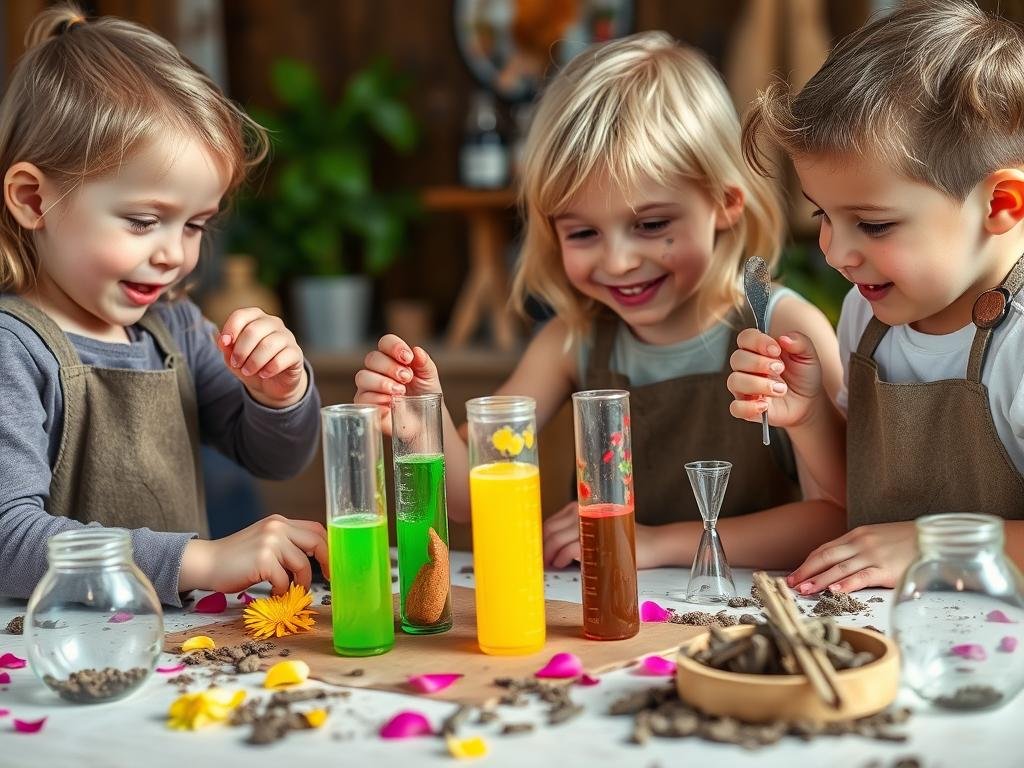
Potion Laboratory
Collect interesting containers, test tubes (plastic), and measuring tools to create a wizard’s potion lab. Children can mix colorful natural elements like flower petals with water and mud to create magical concoctions. Add food coloring for extra magic (in washable clothes only!).
Mud Construction Site
Incorporate small toy construction vehicles and tools to create a building site. Children can make mud bricks using small containers as molds, build structures, and use the vehicles to transport materials around the site.
Seasonal Mud Kitchen Activities
Spring
Flower petal perfumes
Mud seed planting
Rain puddle soup
Dandelion mud pies
Summer
Ice cube color mixing
Herb-infused mud creations
Mud ice cream shop
Berry juice potions
Fall
Leaf-decorated mud cakes
Acorn and pinecone stew
Pumpkin seed sprinkles
Mud apple pies
Winter
Snow and mud mixing experiments
Evergreen needle decorations
Warm water and mud science
Ice block construction with mud mortar
Special Occasions
Mud birthday cakes with stick candles
Holiday-themed mud creations
Mud kitchen picnics
Nature art gallery openings
Enhance Seasonal Play
Find seasonal tools and accessories to keep your mud kitchen exciting all year round.
Mud Kitchen Maintenance Hack: Keep a dedicated brush near your mud kitchen for quick cleanups. A simple hand brush with stiff bristles works perfectly for removing dried mud from surfaces and tools.
Safety Considerations for Mud Kitchens
While mud kitchens are generally safe play spaces, a few simple precautions will ensure worry-free play:
Construction Safety
Sand all wooden surfaces thoroughly to prevent splinters
Use child-safe, rounded corners where possible
Ensure the structure is stable and won’t tip over
Check regularly for protruding nails or screws
Secure any heavy elements like sinks or large containers
Material Safety
Use clean soil, free from chemicals or contaminants
Avoid toxic plants in the play area
Choose stainless steel or food-grade plastic utensils
Avoid glass or easily breakable items
Check for sharp edges on metal containers
Healthy Mud Play Guidelines
Mud Play Do’s
Wash hands before eating and after play
Supervise younger children
Cover sand/soil when not in use
Use clean water sources
Teach children not to taste their mud creations
Encourage appropriate clothing for messy play
Mud Play Don’ts
Don’t use soil from areas with animal waste
Don’t leave standing water (mosquito breeding)
Don’t use chemically treated wood
Don’t use soil from unknown sources
Don’t leave small choking hazards for toddlers
Don’t use pressure-treated lumber
Important Safety Note: Always supervise young children during mud kitchen play, especially when water is involved. Even shallow containers of water can pose a drowning risk for very young children.
Age-Appropriate Mud Kitchen Ideas
Mud kitchens can be enjoyed by children of various ages, but their interests and abilities will differ. Here’s how to adapt your mud kitchen for different age groups:
Toddlers (1-3 years)
Focus on: Simple sensory exploration
Lower work surface height (15-18 inches)
Large, easy-to-grip utensils
Simple containers for filling and emptying
Supervision at all times
Avoid small items that could be choking hazards
Preschoolers (3-5 years)
Focus on: Imaginative play and basic skills
Standard counter height (20-24 inches)
More varied utensils and tools
Simple recipes to follow with pictures
Themed play scenarios
Basic measuring and pouring activities
School Age (6-8+ years)
Focus on: Complex play and skill development
Higher counter (24-28 inches)
More sophisticated tools
Written recipes and menus
Science experiments
Multi-step projects
Find Age-Appropriate Tools
Discover the perfect tools and accessories for your child’s developmental stage.
A mud kitchen is more than just a play space – it’s a place where childhood memories are made, where imagination takes flight, and where the simple joy of mixing mud and water becomes a profound learning experience. Whether you create an elaborate wooden structure or simply set out a few containers and spoons, the magic happens in the play itself.
Remember that perfection isn’t necessary – children see possibilities where adults often see limitations. Your mud kitchen doesn’t need to match the picture-perfect versions you might see online. What matters most is creating a space where children feel free to explore, create, and connect with the natural world.
So gather some basic supplies, find a suitable spot in your outdoor space, and invite your children to discover the simple joy of mud play. The muddy hands, creative concoctions, and beaming smiles will be well worth any mess – and you’ll be giving your children the gift of outdoor play memories that will last a lifetime.
Ready to Create Your Mud Kitchen?
Find everything you need to get started with your own backyard mud kitchen adventure.
Florida’s unique climate offers both challenges and incredible opportunities for creating stunning outdoor spaces. With year-round warmth, abundant sunshine, and occasional…