Creating the perfect study room isn’t just about having a desk and chair. The right study room decor can transform an ordinary workspace into a productivity powerhouse that inspires creativity and focus. Whether you’re designing a space for remote work, school assignments, or creative projects, thoughtful decoration makes all the difference.
This Website contains affiliate links. That means I may earn a small commission if you purchase through my links, at no extra cost to you.
A well-designed study space can reduce stress, increase motivation, and help maintain focus during long work sessions. From lighting choices to color schemes, every element plays a role in creating an environment where your best work happens naturally. Let’s explore how to create a study space that’s both functional and Pinterest-worthy!
Why Study Room Decor Matters for Productivity
The environment where you work or study directly impacts your performance. Research shows that thoughtfully decorated spaces can increase productivity by up to 15%. Your study room decor choices affect everything from your mood to your ability to concentrate for extended periods.
A cluttered, poorly lit, or uncomfortable space creates mental friction that makes focusing difficult. On the other hand, a well-designed study room reduces distractions and creates a mental association with productivity. When you enter a space specifically designed for focus, your brain naturally shifts into work mode.
Beyond productivity, your study space should reflect your personality and inspire creativity. The right decor elements can transform routine tasks into enjoyable activities, making it easier to maintain motivation through challenging projects.
Ready to Transform Your Study Space?
Browse our curated collection of study room essentials to create your perfect productivity zone.
Finding the right aesthetic for your study space helps create a cohesive look that reflects your personality. Here are some popular themes that work beautifully for study rooms:
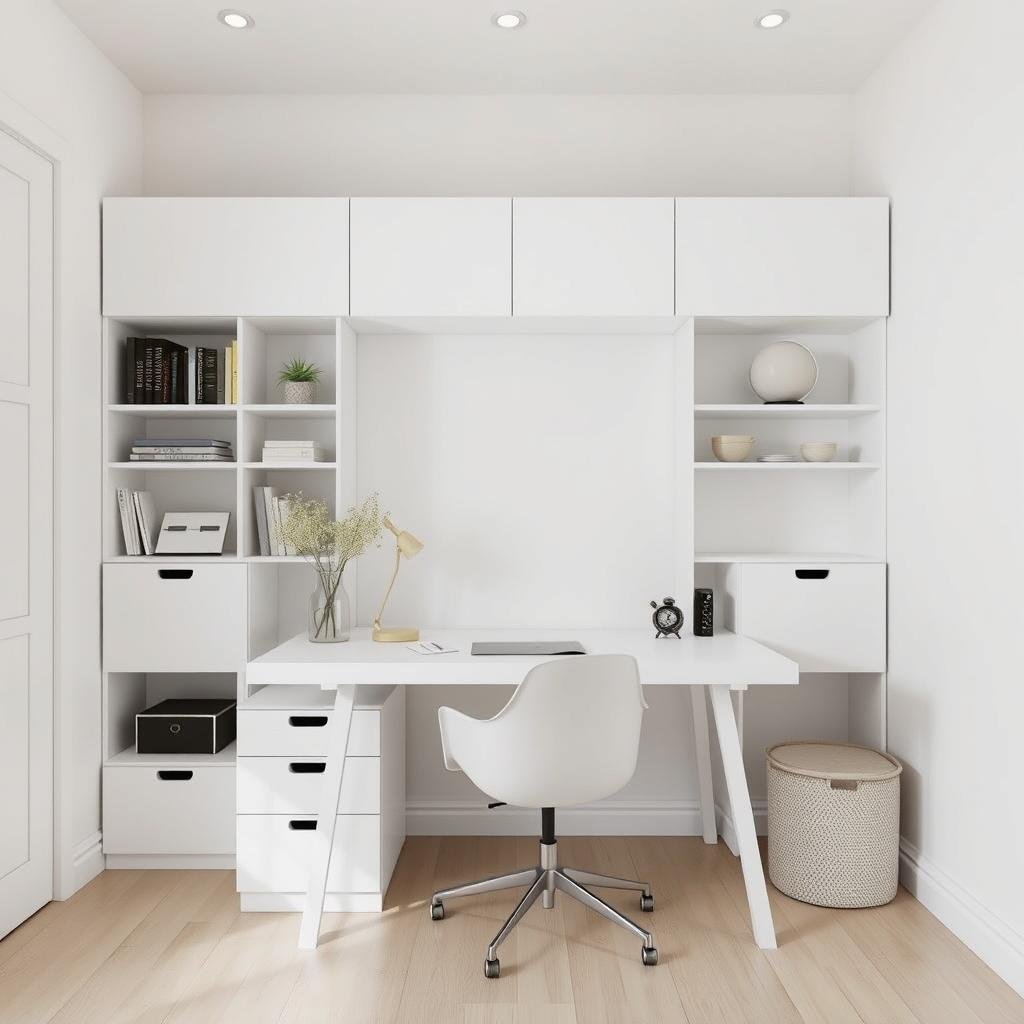
Minimalist
Clean lines, neutral colors, and clutter-free surfaces create a distraction-free environment perfect for deep focus. Minimalist study spaces use functional furniture, hidden storage, and limited decorative elements.
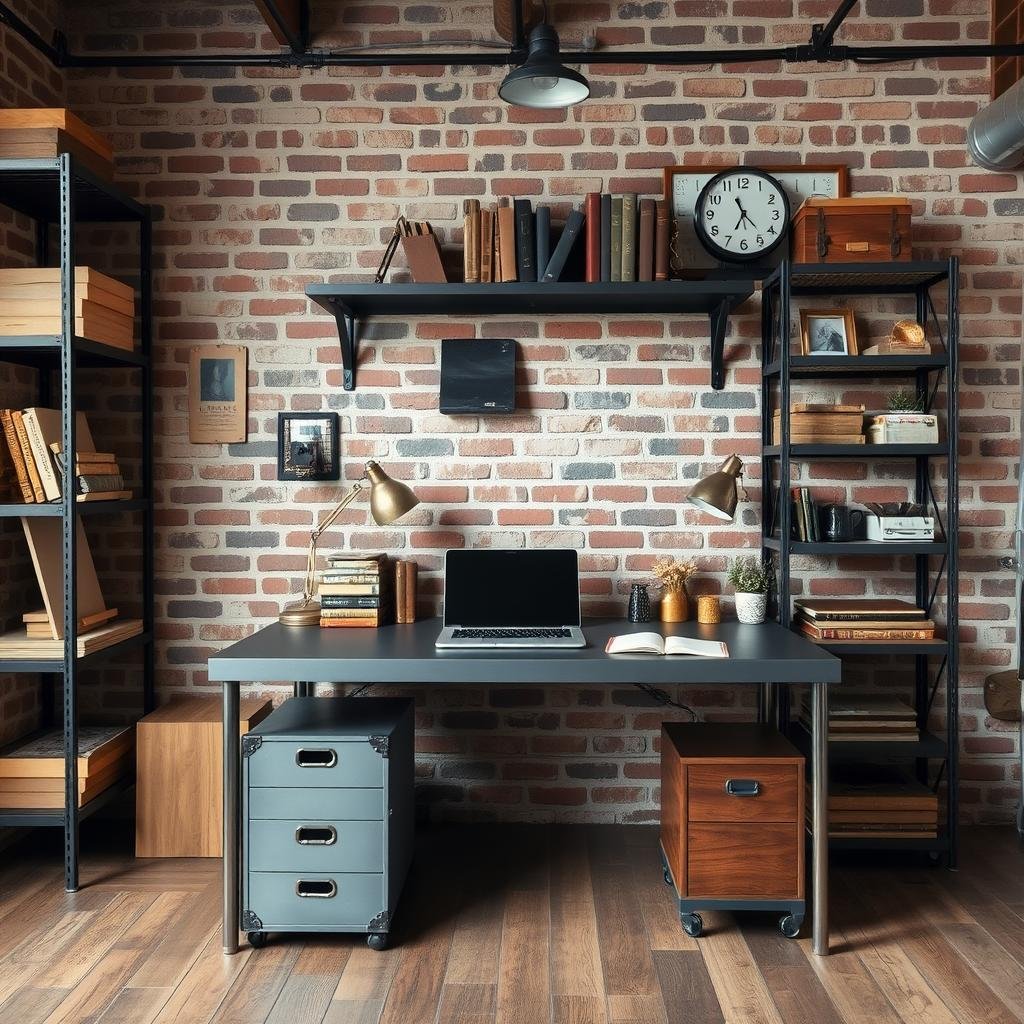
Modern Industrial
Combining raw materials like metal, wood, and exposed brick creates an edgy yet functional workspace. Industrial elements like pipe shelving, metal desk lamps, and vintage accessories add character.
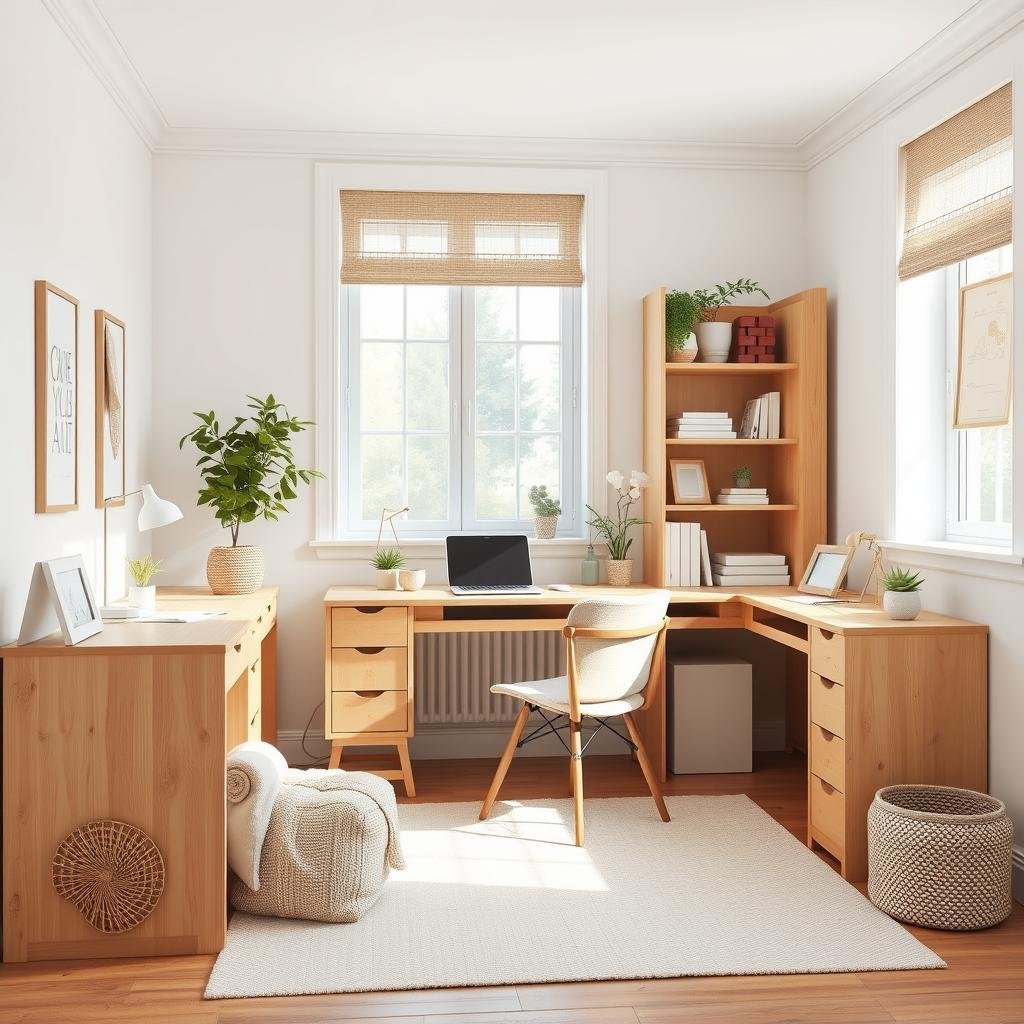
Scandinavian
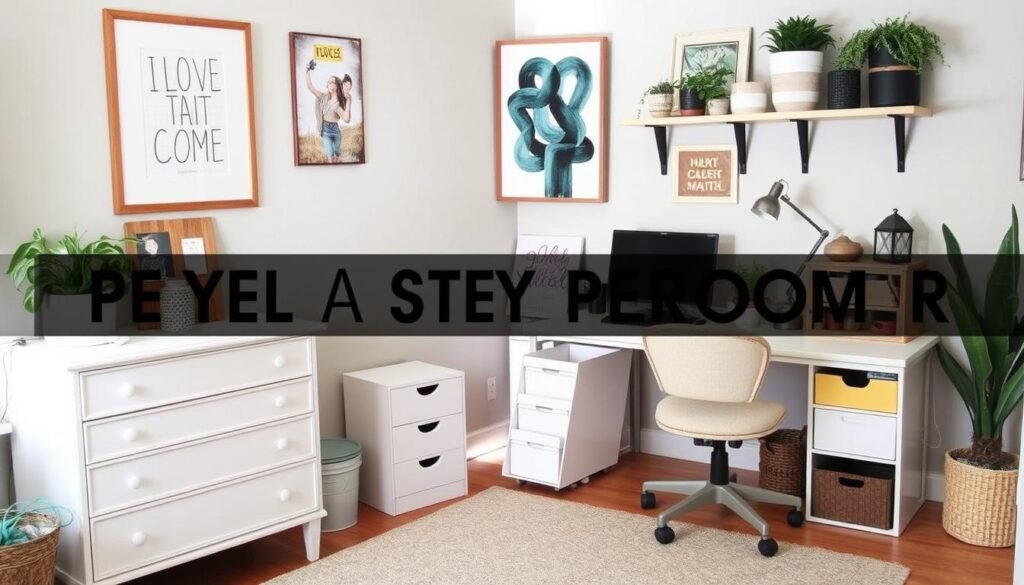
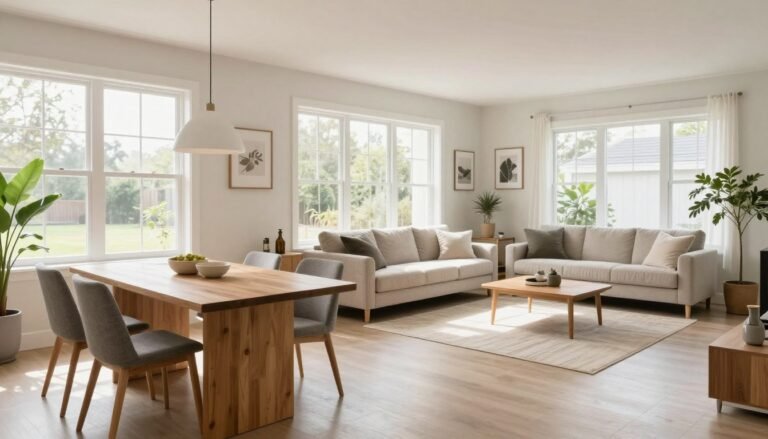
Light woods, white surfaces, and natural textiles create a bright, airy feel. Scandinavian design balances functionality with comfort, incorporating cozy elements like soft throw blankets and simple, nature-inspired decor.
Bohemian
Layered textiles, plants, and eclectic accessories create a free-spirited, creative environment. Boho study spaces mix patterns, incorporate global influences, and feature natural elements for an inspiring, relaxed atmosphere.
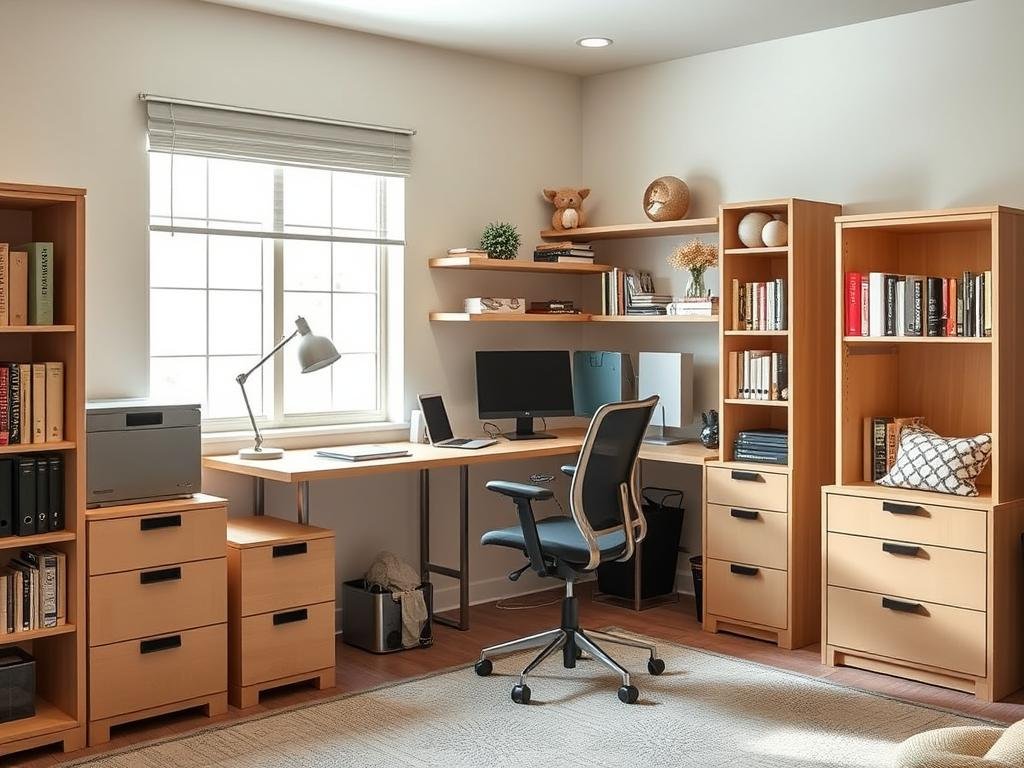
Traditional Academic
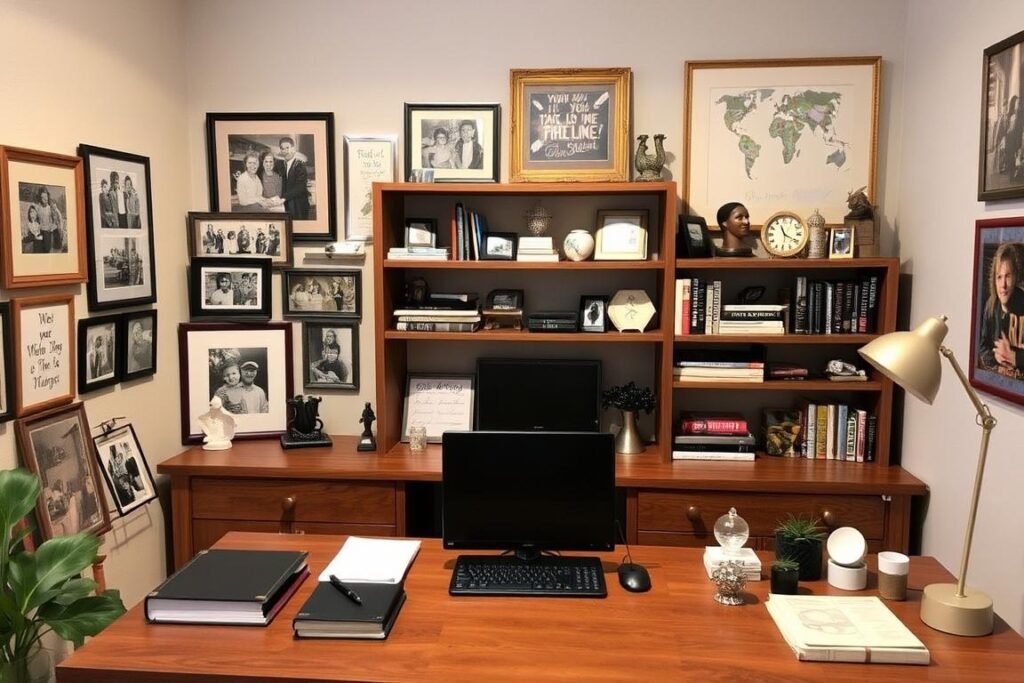
Rich wood tones, leather accents, and classic details evoke the feeling of a traditional library or study. Bookshelves, vintage desk accessories, and warm lighting create a scholarly atmosphere perfect for serious study.
Modern Farmhouse
Combining rustic elements with clean, contemporary lines creates a warm yet functional space. Shiplap walls, industrial lighting, and vintage accessories blend comfort with practicality.
When choosing a theme, consider your personal preferences and the type of work you’ll be doing. Some people thrive in vibrant, stimulating environments, while others need calm, neutral spaces to focus effectively.
Essential Furniture for a Functional Study Room
The Perfect Desk
Your desk is the foundation of your study space. Consider size, height, storage features, and style when selecting this crucial piece. Height-adjustable desks allow you to alternate between sitting and standing, promoting better posture and energy levels throughout the day.
Ergonomic Seating
A comfortable, supportive chair is essential for long study sessions. Look for adjustable height, lumbar support, and breathable materials. Your chair should allow your feet to rest flat on the floor with your knees at a 90-degree angle.
Smart Storage Solutions
Effective storage prevents clutter and helps maintain an organized workspace. Consider a combination of:
Bookshelves for reference materials and decorative items
Filing cabinets for important documents
Desk organizers for frequently used supplies
Floating shelves to maximize vertical space
Storage ottomans that double as extra seating
Secondary Seating
A comfortable reading chair or small sofa creates a dedicated space for reading or taking breaks. This secondary seating area can help prevent fatigue and provide a change of scenery within your study room.
Find Your Perfect Study Furniture
Discover ergonomic and stylish furniture pieces to create your ideal study environment.
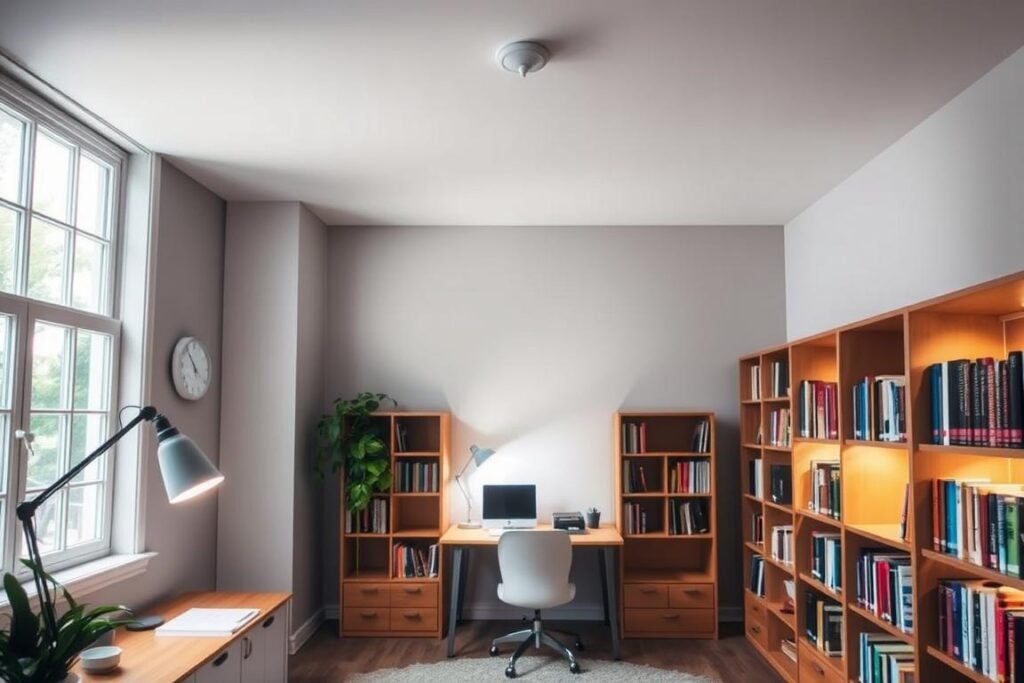
Proper lighting is crucial for reducing eye strain and maintaining focus. A well-lit study space combines multiple light sources to create optimal conditions for different activities.
Natural Light
Position your desk near a window to take advantage of natural light, which improves mood and reduces eye fatigue. Use sheer curtains or adjustable blinds to control glare and direct sunlight throughout the day.
Task Lighting
A good desk lamp is essential for focused work, especially during evening hours. Look for adjustable lamps that direct light precisely where needed. LED options with adjustable brightness and color temperature allow you to customize lighting based on the task and time of day.
Ambient Lighting
Overhead lighting or floor lamps provide general illumination for the entire room. Soft, diffused light creates a comfortable atmosphere while reducing harsh shadows and contrast.
Accent Lighting
Wall sconces, string lights, or small lamps add visual interest and create a layered lighting effect. These decorative light sources can highlight architectural features or decor elements while contributing to the overall ambiance.
“The right lighting can transform a space from merely functional to truly inspiring. In study rooms, lighting affects everything from your ability to read comfortably to your overall mood and energy levels.”
Illuminate Your Study Space
Find the perfect lighting solutions to reduce eye strain and enhance focus.
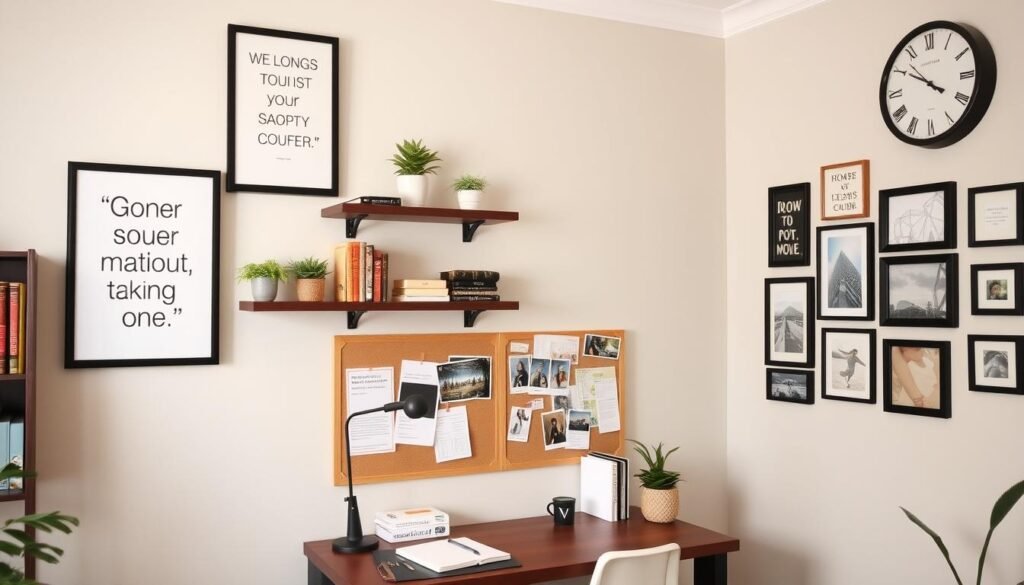
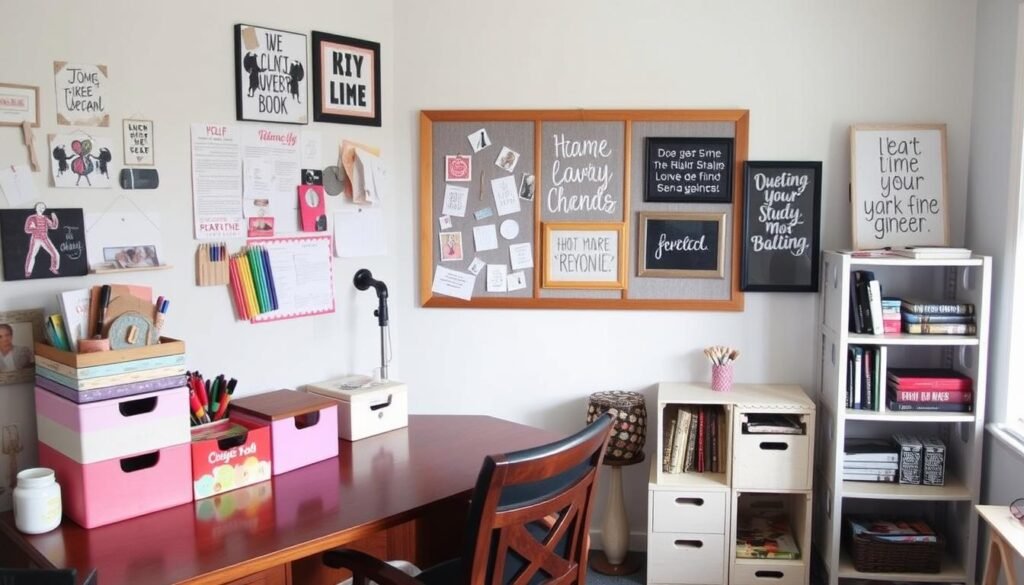
Your walls offer valuable real estate for both functional and decorative elements. Thoughtful wall decor can inspire creativity, reinforce goals, and add personality to your study space.
Motivational Art and Quotes
Surround yourself with visual reminders of your goals and inspirations. Framed quotes, vision boards, or artwork related to your field of study can provide motivation during challenging tasks.
Functional Wall Elements
Make your walls work for you with these practical additions:
Bulletin boards for important reminders and inspiration
Whiteboards or chalkboards for brainstorming
Wall calendars for scheduling and deadlines
Floating shelves for books and decorative items
Wall organizers for supplies and documents
Creating a Gallery Wall
A curated collection of artwork, photographs, and mementos adds personality while creating a visually stimulating environment. Choose pieces that inspire you or relate to your interests and goals.
Wallpaper and Paint
Consider an accent wall with patterned wallpaper or a bold paint color to add visual interest. For maximum focus, limit bright colors to one wall and keep other surfaces neutral.
Add Inspiration to Your Walls
Discover wall decor that motivates and inspires your best work.
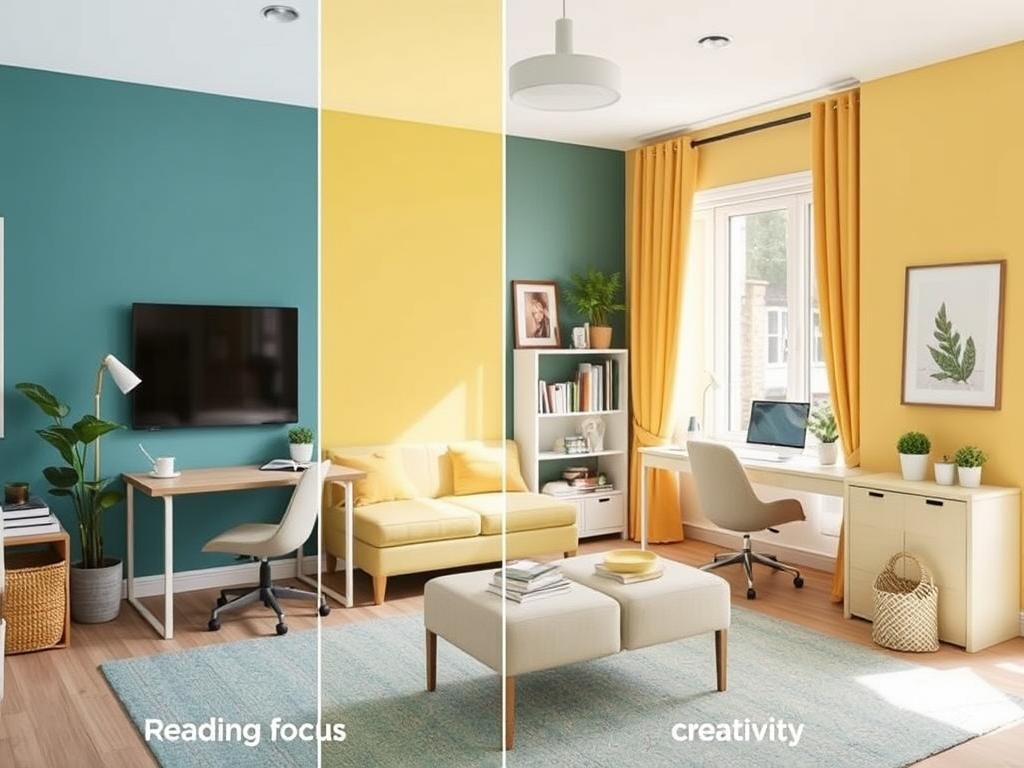
Colors significantly impact mood, energy levels, and cognitive function. Understanding color psychology can help you create a study environment that supports your specific needs.
Blues and Greens
These cool tones promote focus, concentration, and calm. Blue reduces anxiety and creates a sense of stability, while green reduces eye strain and fosters a connection to nature. These colors are ideal for spaces dedicated to intense study or detailed work.
Yellows and Oranges
Warm, energizing colors stimulate creativity and optimism. Yellow enhances memory and communication, while orange promotes enthusiasm and endurance. Use these colors as accents in brainstorming areas or creative workspaces.
Neutrals
Whites, grays, and tans create a clean, distraction-free foundation. These versatile colors pair well with any accent color and help reflect light throughout the space. Neutrals are perfect for minimalist study rooms or as base colors with strategic color accents.
Creating a Balanced Color Scheme
For most study spaces, a balanced approach works best. Consider these strategies:
Use the 60-30-10 rule: 60% dominant color (usually neutral), 30% secondary color, and 10% accent color
Create focus zones with different color treatments based on activities
Incorporate color through easily changeable elements like cushions, artwork, and accessories
Consider the natural light in your space—rooms with less natural light benefit from warmer tones
Remember that personal preference plays an important role. Choose colors that resonate with you and support the type of work you’ll be doing in your study space.
Organization Solutions for a Clutter-Free Study Room
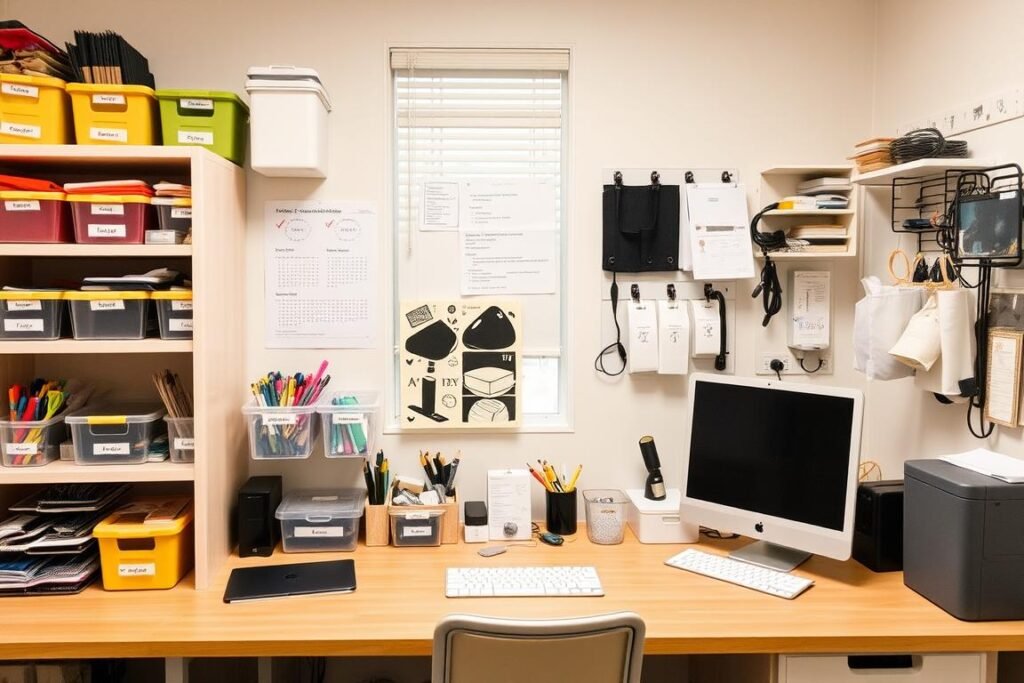
A clutter-free environment reduces distractions and helps maintain focus. Effective organization systems make it easier to find what you need and create a sense of calm in your study space.
Desktop Organization
Keep frequently used items within reach while maintaining a clean workspace:
Desk organizers for pens, markers, and small supplies
Monitor stands with built-in storage compartments
Drawer dividers for categorizing items
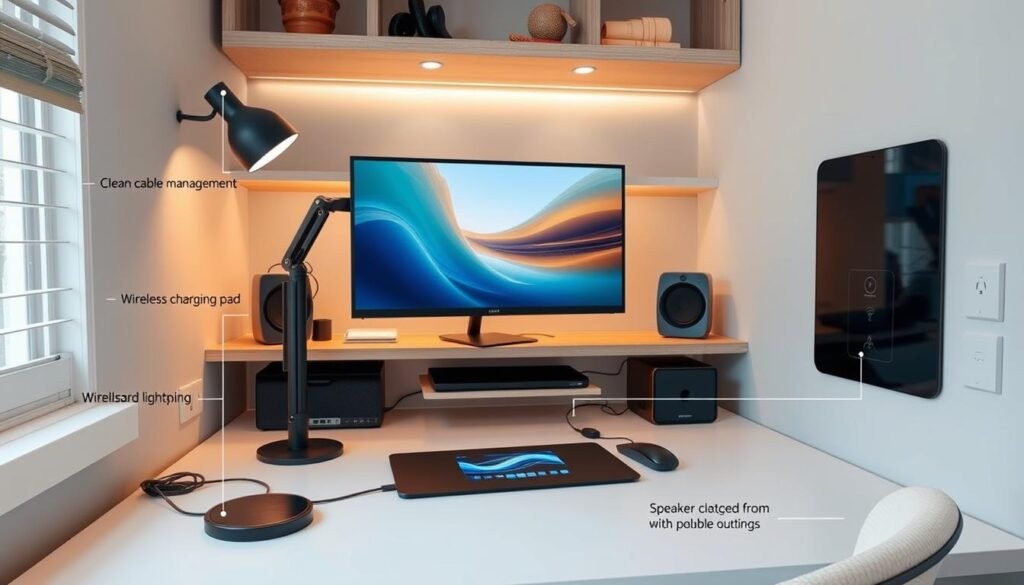
Cable management solutions to prevent cord clutter
Document trays for current projects
Digital Organization
Physical organization should extend to your digital workspace:
Create a logical file structure on your computer
Use digital calendars and task management tools
Establish a system for bookmarking important resources
Regularly clean up your desktop and downloads folder
Vertical Storage Solutions
Maximize your space by thinking vertically:
Wall-mounted shelves and cabinets
Pegboards for frequently used supplies
Stackable storage containers
Over-the-door organizers
Hanging file systems
Get Organized Today
Discover clever storage solutions to keep your study space tidy and functional.
Limited space doesn’t mean limited functionality. With clever design choices, even the smallest nook can become a productive study area.
Multi-Functional Furniture
Look for pieces that serve multiple purposes:
Desks with built-in storage
Nesting tables that can expand when needed
Storage ottomans that provide seating and organization
Murphy desks that fold away when not in use
Convertible furniture that adapts to different needs
Strategic Placement
Make the most of available space with thoughtful arrangement:
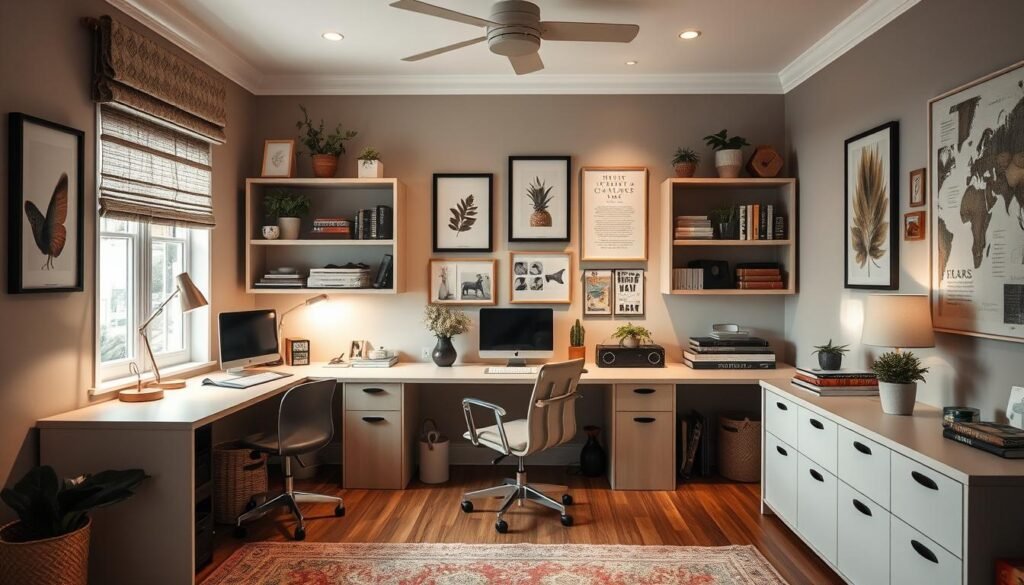
Utilize corners for L-shaped desks
Create a study nook in a closet or alcove
Position your desk under a window to maximize natural light
Use room dividers to carve out a dedicated study zone
Visual Space-Expanding Tricks
Create the illusion of more space with these design strategies:
Use light colors to make the area feel larger
Incorporate mirrors to reflect light and create depth
Choose furniture with exposed legs to create a sense of openness
Maintain a consistent color scheme to create visual flow
Minimize patterns and busy textures that can make a space feel cluttered
“The key to small space design is intentionality. Every item should earn its place through functionality, necessity, or the joy it brings to your workspace.”
DIY Study Room Decor Projects
Personalize your study space with these budget-friendly DIY projects that add character while solving common organization challenges.
Custom Desk Organizers
Create personalized storage solutions using everyday items:
Transform mason jars into pen holders with paint and decorative details
Repurpose wooden crates as desktop shelving
Cover cardboard boxes with decorative paper for stylish storage
Make a desk organizer from PVC pipes painted in coordinating colors
Personalized Wall Art
Add inspiration to your walls with these simple projects:
Create a vision board with images and quotes that motivate you
Frame fabric or wallpaper samples for instant artwork
Make a magnetic board from a cookie sheet and decorative tape
Create custom wall art with canvas and paint in colors that complement your space
Upcycled Furniture
Give old pieces new life with these transformation ideas:
Refinish a secondhand desk with paint or stain
Add new hardware to outdated drawers and cabinets
Transform an old door into a desktop by mounting it on brackets or filing cabinets
Reupholster a chair seat with fabric that coordinates with your decor
Get Crafty with Your Study Space
Find supplies for your DIY study room decor projects.
Creating a beautiful, functional study space doesn’t have to break the bank. These strategies help you achieve a stylish look while keeping costs down.
Shop Smart
Find quality pieces without the premium price tag:
Explore thrift stores, garage sales, and online marketplaces for secondhand furniture
Wait for seasonal sales to purchase new items
Check university surplus sales for office furniture
Consider open-box or floor models for significant discounts
Invest in quality for essential pieces (chair, desk) and save on accessories
Repurpose and Upcycle
Look around your home for items that can be transformed:
Repaint existing furniture to match your new decor scheme
Convert a dining table or kitchen table into a desk
Use decorative boxes and baskets you already own for storage
Transform glass jars into storage containers or vases
Focus on Impact Areas
Allocate your budget to elements that make the biggest difference:
A comfortable, ergonomic chair is worth the investment
Good lighting significantly improves functionality
Wall color (paint or removable wallpaper) can transform a space inexpensively
Plants add life and color for minimal cost
Money-Saving Tip: Create a cohesive look by limiting your color palette to 2-3 main colors. This allows you to mix and match items more easily and makes even inexpensive pieces look intentional and coordinated.
Integrating Technology in Your Study Room Decor
Modern study spaces need to accommodate various devices while maintaining an organized, aesthetically pleasing environment. These strategies help integrate technology seamlessly into your decor.
Cable Management
Tame the tangle of cords with these solutions:
Cable clips and organizers to route wires neatly
Cable boxes to hide power strips and adapters
Desk grommets to thread cables through surfaces
Cord covers that blend with walls or baseboards
Wireless options when possible to reduce cable clutter
Tech-Friendly Furniture
Look for pieces designed with technology in mind:
Desks with built-in USB ports and power outlets
Monitor arms to free up desk space
Charging stations that organize multiple devices
Furniture with integrated cable management systems
Smart Study Room Features
Enhance functionality with these tech additions:
Smart lighting that adjusts based on time of day or activities
Voice-controlled assistants for quick information
Wireless speakers that blend with your decor
Digital organization tools that sync across devices
Tech Up Your Study Space
Find smart solutions to integrate technology seamlessly into your study room.
Incorporating Natural Elements in Study Room Decor
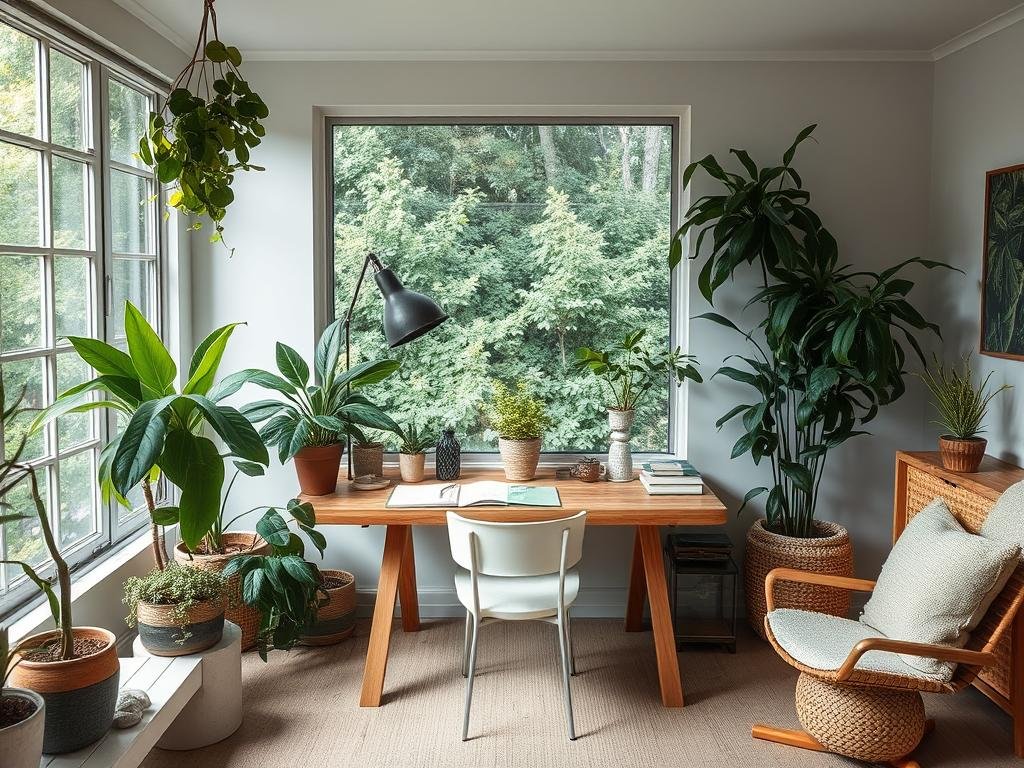
Bringing elements of nature into your study space can reduce stress, improve air quality, and enhance overall wellbeing. Research shows that biophilic design—incorporating natural elements into interior spaces—can improve cognitive function and creativity.
Indoor Plants
Add life to your study space with these desk-friendly plants:
Snake plants and ZZ plants thrive with minimal care
Pothos and philodendrons add trailing greenery to shelves
Small succulents require little maintenance
Fresh herbs like mint or basil provide pleasant aromas
Air plants can be displayed in creative containers without soil
Natural Materials
Incorporate organic textures and materials:
Wooden furniture and accessories add warmth
Stone or concrete elements provide grounding weight
Natural fiber textiles like cotton, wool, or jute add texture
Wicker or rattan storage baskets combine function with natural appeal
Nature-Inspired Decor
Even without natural materials, you can evoke nature through design:
Nature photography or botanical prints
Colors inspired by natural landscapes
Patterns that mimic natural forms (leaves, waves, etc.)
Natural scents from essential oils or candles
“Connecting with nature, even through small elements in your study space, can provide mental restoration during intense periods of focus and work.”
Personalizing Your Study Space
Your study space should reflect your unique personality and interests. Personalization not only makes the space more enjoyable but can also boost motivation and creativity.
Meaningful Displays
Surround yourself with items that inspire and motivate:
Photos of loved ones or places you’ve visited
Mementos from achievements or special events
Artwork that resonates with your interests or goals
Collections that showcase your hobbies or passions
Books that inspire you, even if they’re not directly related to your work
Custom Touches
Add unique elements that make the space distinctly yours:
Custom desk accessories in your favorite colors or patterns
Monogrammed or personalized items
Handmade decorations that showcase your creativity
Quotes or mantras that resonate with your personal philosophy
Balancing Personal and Functional
While personalization is important, maintain a balance that supports productivity:
Group personal items in designated areas to prevent clutter
Choose a few meaningful pieces rather than displaying everything
Consider how personal items affect your focus—some may be inspiring while others might be distracting
Rotate personal displays periodically to keep the space feeling fresh
Creating Your Perfect Study Room: Final Thoughts
Designing the perfect study room is a personal journey that balances functionality with aesthetics. The most effective study spaces reflect your unique needs, work style, and personality while incorporating proven design principles that enhance focus and productivity.
Remember that your study space will evolve as your needs change. Start with the essentials—a comfortable chair, proper lighting, and an organized workspace—then gradually add elements that inspire and motivate you. Don’t be afraid to experiment with different layouts, color schemes, or decor styles until you find what works best for you.
Whether you’re creating a dedicated study room or carving out a productive corner in a shared space, thoughtful decor choices can transform your work experience. By implementing the ideas we’ve explored, you’ll create a space that not only looks Pinterest-worthy but genuinely supports your productivity and wellbeing.
Ready to Transform Your Study Space?
Explore our complete collection of study room decor essentials to create your perfect productivity zone.
Blues and greens promote focus and concentration, making them excellent choices for study spaces. Neutrals like white, beige, and gray create a clean backdrop that minimizes distractions. For creative work, consider accents of yellow or orange to stimulate innovation. The best approach is often a neutral base with strategic color accents that support your specific work needs.
How can I decorate a study room on a tight budget?
Focus on paint as an affordable high-impact change, shop secondhand for furniture, repurpose items you already own, and incorporate DIY projects. Prioritize spending on essentials like a comfortable chair and good lighting while saving on decorative elements. Plants, printable artwork, and rearranging existing furniture can refresh your space with minimal expense.
What’s the best layout for a small study space?
In small spaces, prioritize vertical storage with wall-mounted shelves and floating desks. Position your desk to face a wall rather than into the room to minimize distractions. Use multi-functional furniture like storage ottomans or nesting tables, and keep the color scheme light and consistent to create visual flow. Consider a corner desk to maximize floor space.