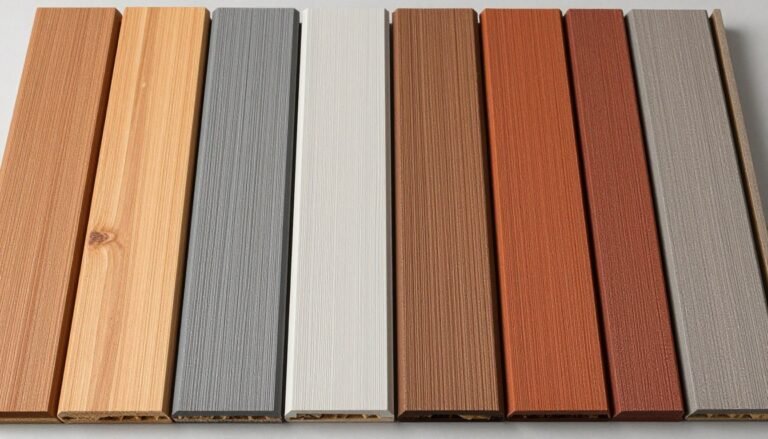
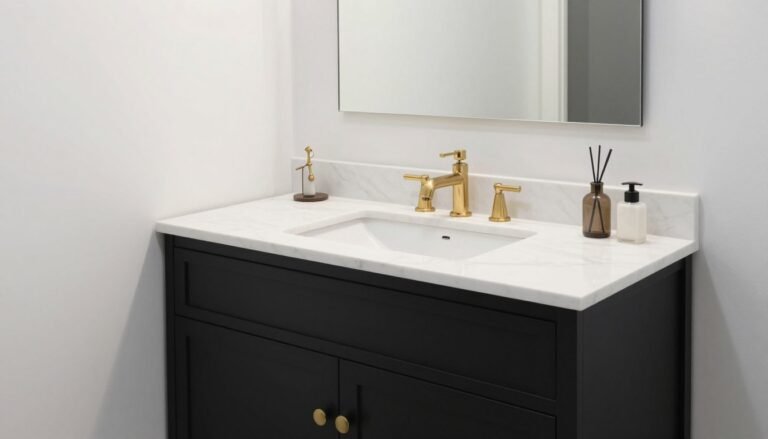
Green kitchen designs blend sustainability with style, creating spaces that are both functional and environmentally friendly. From energy-efficient appliances to materials sourced responsibly, these kitchens make a positive impact while looking great. Embracing a green approach doesn’t mean sacrificing aesthetics; instead, it opens up a world of creative possibilities for modern living.
This Website contains affiliate links. That means I may earn a small commission if you purchase through my links, at no extra cost to you.
Low-Flow Faucets and Fixtures
In a green kitchen, every detail matters, including your choice of faucets and fixtures. Low-flow faucets are a smart way to save water without sacrificing performance. They limit the amount of water that flows through, helping you reduce your water bill while being eco-friendly.
The image shows a sleek, modern faucet that perfectly fits a contemporary kitchen design. Its clean lines and shiny finish make it an attractive addition to any space. The water flowing from it is a reminder of how easy it is to conserve resources.
Choosing low-flow fixtures means you can enjoy the convenience of modern plumbing while contributing to a sustainable future. It’s a win-win situation for both your kitchen and the environment.
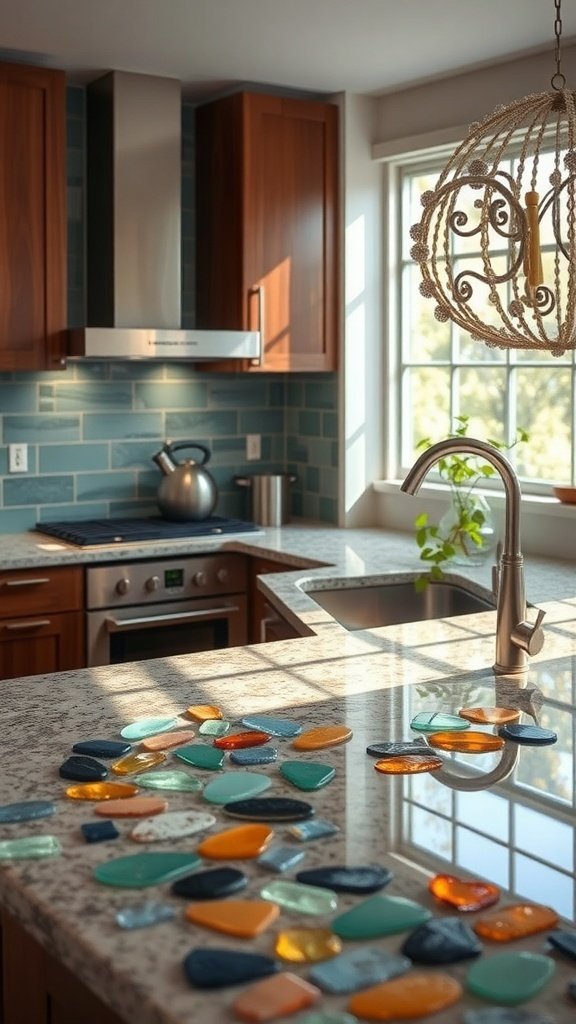
Recycled glass countertops are a fantastic choice for a green kitchen. They bring a unique look and feel to your space while being eco-friendly. The image shows a beautiful kitchen with a countertop featuring colorful pieces of glass. This adds a playful touch to the overall design.
The vibrant colors of the glass pieces create a stunning visual effect. Each piece tells a story, showcasing how materials can be repurposed into something beautiful. This not only makes your kitchen stand out but also promotes sustainability.
Using recycled glass in your kitchen design can help reduce waste and lower your carbon footprint. It’s a great way to incorporate style and environmental responsibility into your home. Plus, these countertops are durable and easy to maintain, making them a practical choice for any kitchen.
Energy-Efficient Appliances
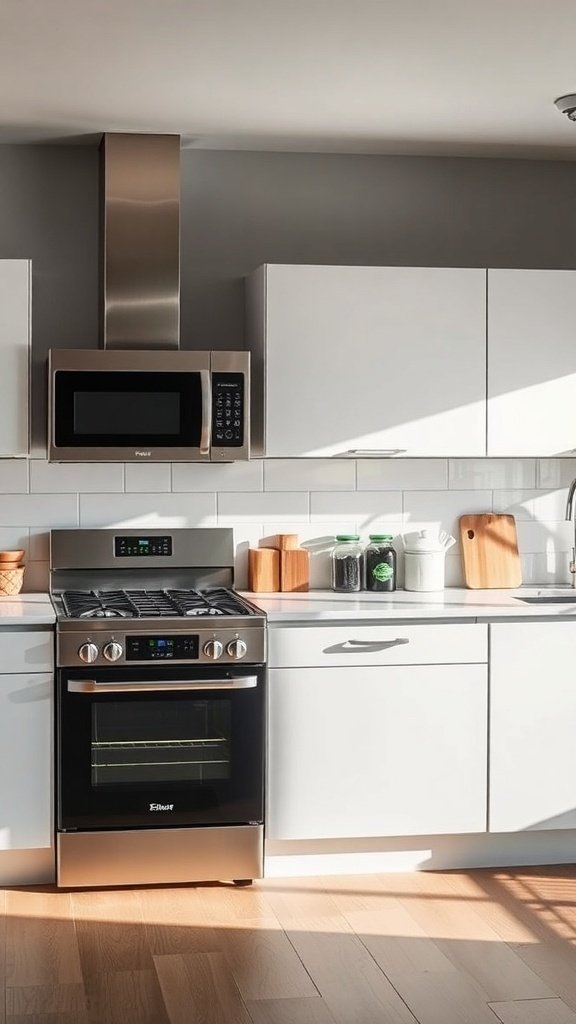
When designing a green kitchen, energy-efficient appliances play a key role. The image shows a sleek kitchen with modern appliances that not only look good but also help save energy. The stainless steel stove and microwave are perfect examples of how style can meet sustainability.
Choosing appliances with high energy ratings means you can cook and clean without worrying about high electricity bills. The oven in the image is designed to use less energy while still providing excellent cooking performance. This is a win-win for both your wallet and the environment.
Moreover, many of these appliances come with smart features. They can help you monitor energy usage and even suggest ways to save more. This kitchen setup is not just about aesthetics; it’s about making smart choices for a greener future.
Eco-Friendly Flooring Options
When thinking about a green kitchen, flooring plays a big role. The image shows a beautiful kitchen with warm wooden floors that blend perfectly with the natural elements around. This kind of flooring not only looks great but also supports eco-friendly living.
Using sustainable materials like bamboo or reclaimed wood can make a huge difference. Bamboo grows quickly and can be harvested without harming the environment. Reclaimed wood gives a unique character to your kitchen while reducing waste.
Another option is cork flooring. It’s soft underfoot and offers great insulation. Plus, cork is harvested from the bark of cork oak trees, which means the trees remain unharmed. This makes it a fantastic choice for those looking to be eco-conscious.
Lastly, consider using tiles made from recycled materials. They come in various designs and colors, allowing you to express your style while being kind to the planet. Choosing eco-friendly flooring options is a step towards a greener kitchen and a healthier home.
Sustainable Materials in Kitchen Cabinets
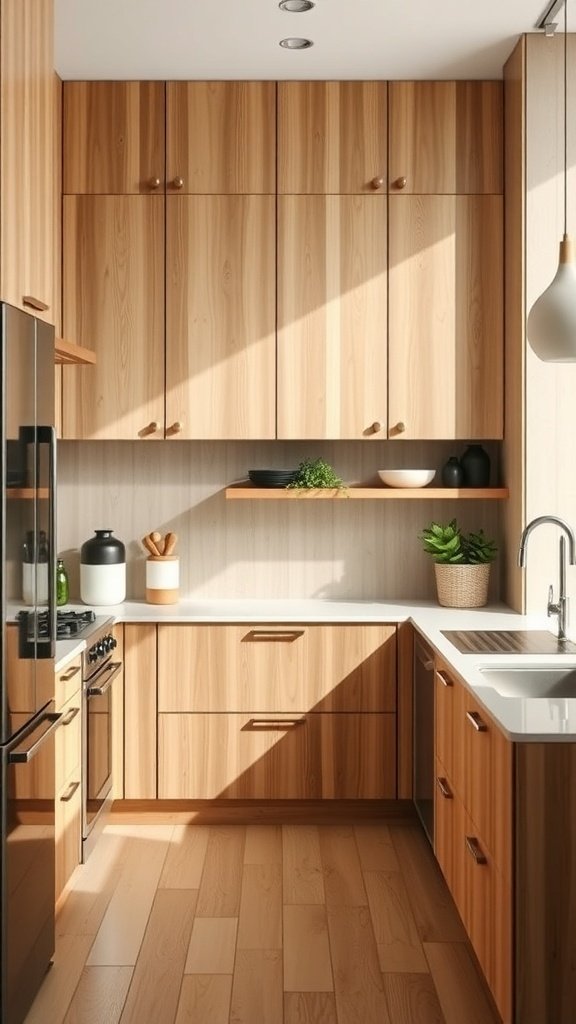
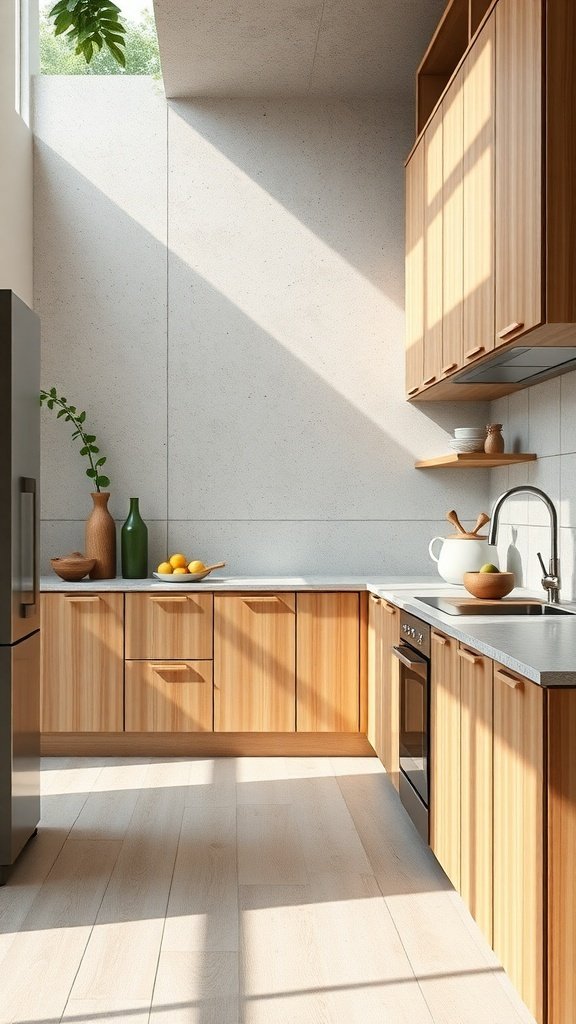
When it comes to kitchen design, choosing sustainable materials for cabinets is a smart move. The image shows a beautiful kitchen with light wood cabinets that highlight this trend. These cabinets not only look great but also contribute to a healthier environment.
Using materials like bamboo or reclaimed wood can reduce the carbon footprint of your kitchen. The natural finish of the cabinets in the image adds warmth and a touch of nature to the space. This choice reflects a commitment to sustainability while maintaining style.
Another option is to look for cabinets made from recycled materials. They can be just as durable and attractive as traditional options. The sleek lines and modern design in the image showcase how eco-friendly choices can fit seamlessly into contemporary aesthetics.
Incorporating plants, as seen in the image, also enhances the green theme. They not only purify the air but also add a lively touch to the kitchen. Overall, sustainable materials in kitchen cabinets are a fantastic way to create a stylish and eco-conscious space.
Natural Lighting and Ventilation
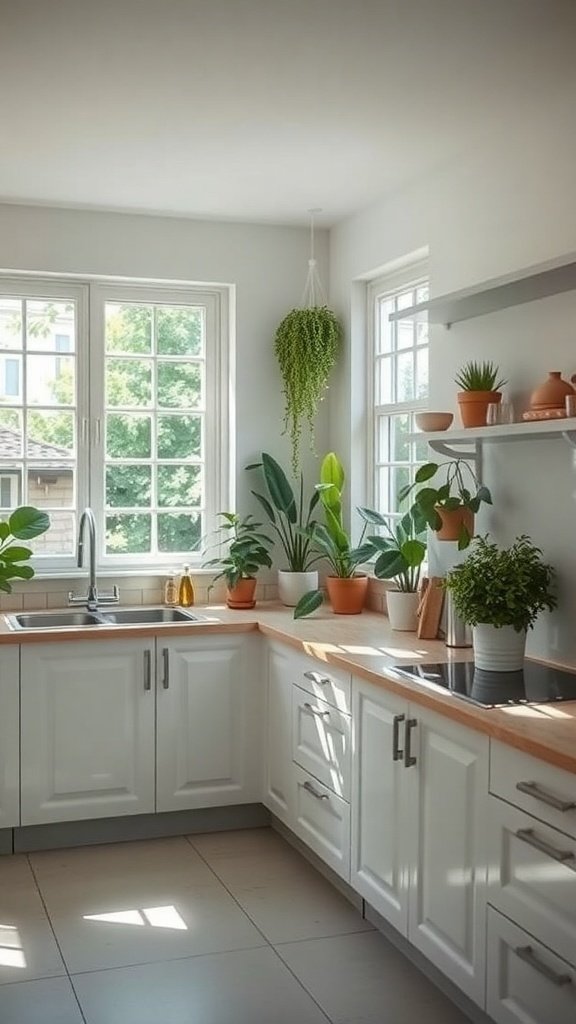
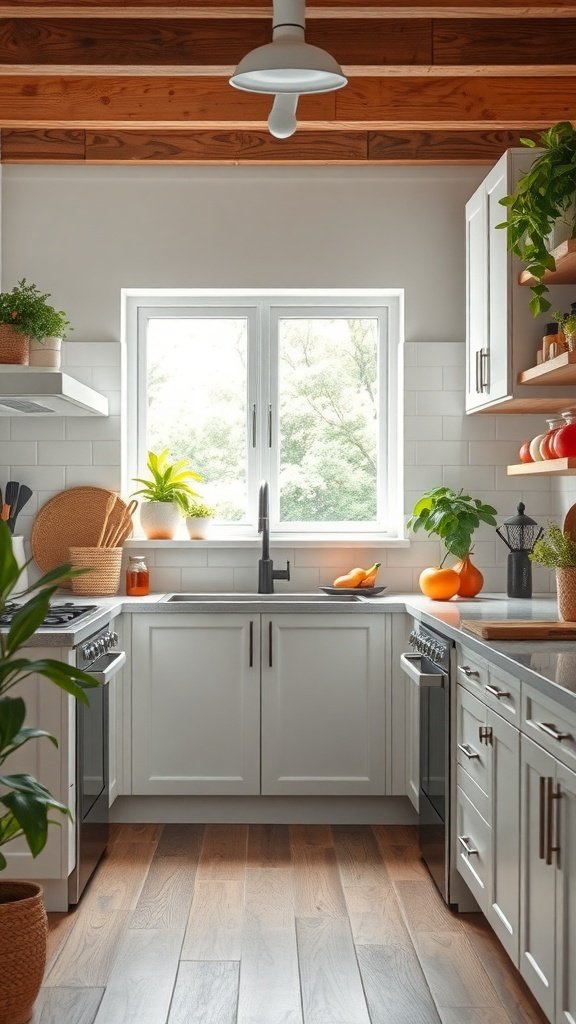
Natural lighting and ventilation are key elements in creating a welcoming kitchen space. In the image, large windows allow sunlight to flood the room, brightening up the white cabinetry and warm wooden countertops. This not only makes the kitchen look more inviting but also helps in reducing energy costs.
Plants placed near the windows add a touch of greenery, enhancing the fresh feel of the space. They thrive in natural light and contribute to better air quality. The open layout encourages airflow, making it a comfortable area for cooking and gathering.
Good ventilation is essential, especially when cooking. The design here promotes a flow of fresh air, keeping the kitchen feeling lively. This combination of light and air creates a space that feels connected to the outdoors, making it a perfect spot for family meals or entertaining friends.
Biophilic Design Elements
Green kitchen designs often embrace biophilic elements, which connect us to nature. In this image, you can see a beautiful kitchen filled with various plants. These plants not only add color but also improve air quality, making the space feel fresh and inviting.
The use of natural materials, like the wooden floor, complements the greenery. This creates a warm atmosphere that encourages relaxation and creativity. The light color palette of the cabinets and walls enhances the natural light, making the kitchen feel open and airy.
Hanging plants and potted herbs on the countertop are practical choices. They bring life to the kitchen and can even be used in cooking. Incorporating these elements helps to create a space that feels alive and connected to the outdoors.
Vertical Gardens for Fresh Herbs
Vertical gardens are a fantastic way to bring greenery into your kitchen. They not only look great but also provide fresh herbs right at your fingertips. Imagine snipping off some basil or mint while cooking your favorite dish!
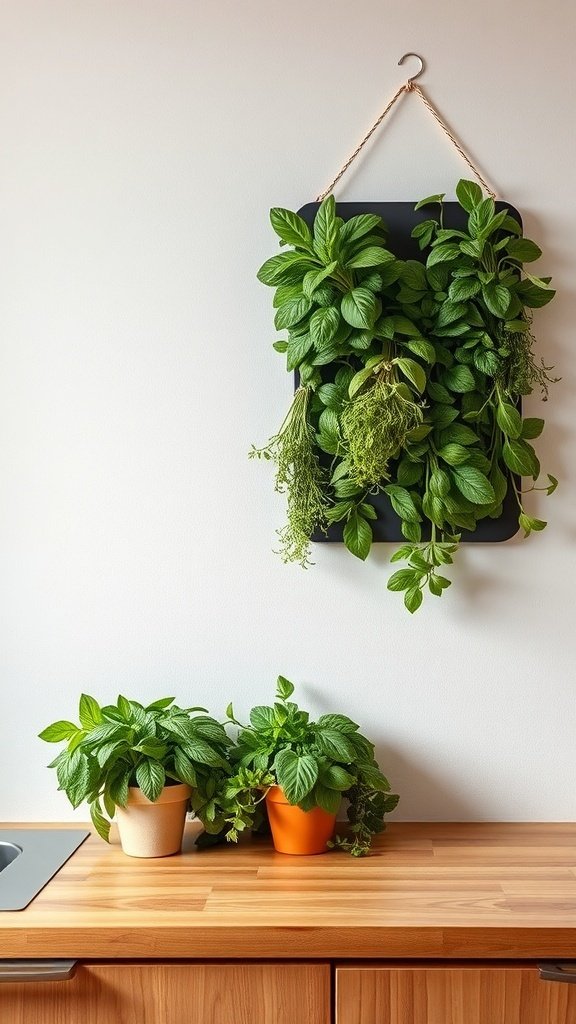
The image shows a lovely vertical garden mounted on the wall. It features lush green herbs that cascade down, creating a vibrant focal point. Below, you can see potted herbs on the countertop, adding to the fresh vibe of the kitchen.
This setup is perfect for those who may not have a lot of space. It utilizes vertical space efficiently, making it easy to grow a variety of herbs. Plus, having fresh herbs on hand can really elevate your cooking.
Whether you’re a seasoned chef or just starting out, a vertical garden can inspire creativity in the kitchen. It’s a simple way to add life and flavor to your meals!
LED Lighting for Energy Efficiency
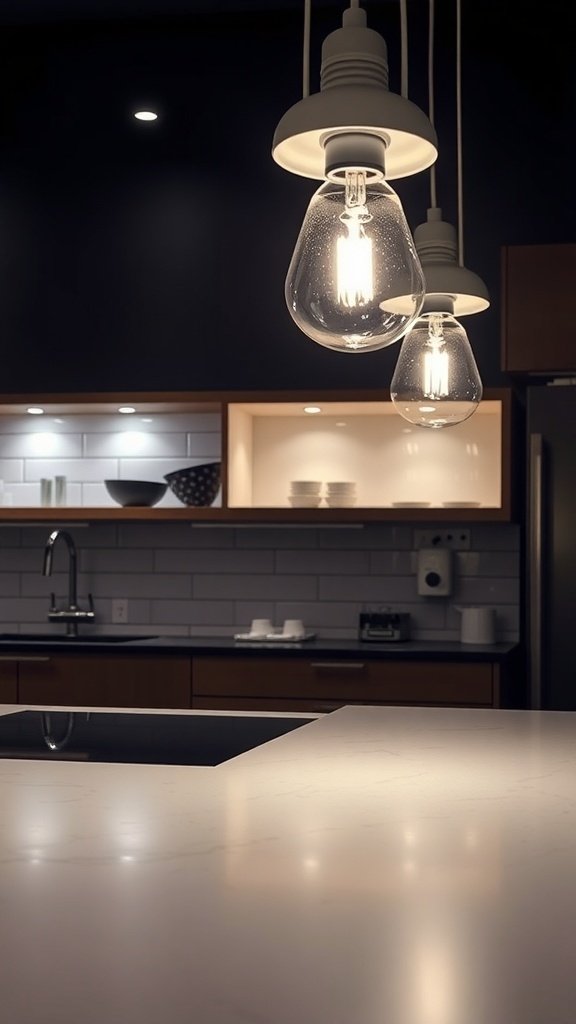
LED lighting is a fantastic choice for modern kitchens, especially in green designs. The image showcases stylish pendant lights that not only look great but also save energy. These lights can brighten up your space while keeping your electricity bills low.
Using LED bulbs helps reduce your carbon footprint. They last much longer than traditional bulbs, which means fewer replacements and less waste. This is a win-win for both your wallet and the environment.
In the kitchen, proper lighting is key. The warm glow of LED lights can create a welcoming atmosphere. Whether you’re cooking or entertaining, good lighting makes all the difference. Plus, with various designs available, you can find fixtures that match your kitchen’s style perfectly.
Consider adding under-cabinet LED strips for extra illumination. They highlight your countertops and make food prep easier. Overall, LED lighting is a smart, eco-friendly choice that enhances both functionality and aesthetics in your green kitchen.
Zero-Waste Kitchen Practices
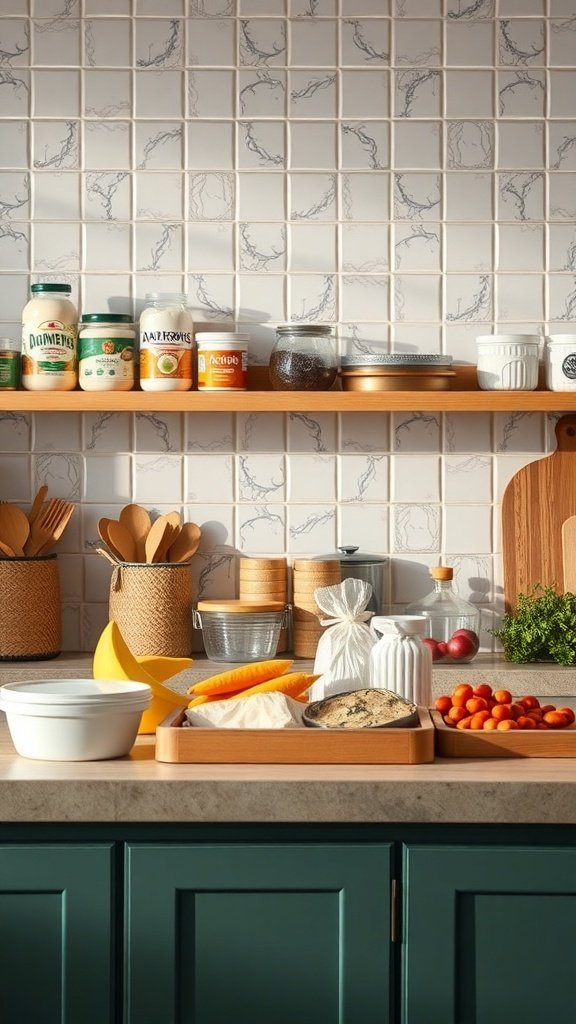
In a green kitchen, every detail counts, and zero-waste practices are key. The image shows a bright, organized kitchen with a mix of natural materials and functional items. The green cabinets add a fresh touch, while the wooden shelves hold jars and utensils, promoting a clutter-free space.
Using glass jars for storage is a great way to reduce waste. They keep food fresh and can be reused for various purposes. The kitchen also features fresh produce, like bananas and tomatoes, encouraging the use of whole foods instead of packaged items.
Another aspect of zero-waste is composting. The kitchen layout suggests easy access to ingredients, making it simple to prepare meals with minimal waste. By planning meals and using leftovers creatively, you can cut down on food scraps.
Lastly, the use of reusable containers and utensils, as seen in the image, supports a sustainable lifestyle. This kitchen is not just stylish; it embodies a commitment to reducing waste and living green.
Smart Home Technology for Energy Savings
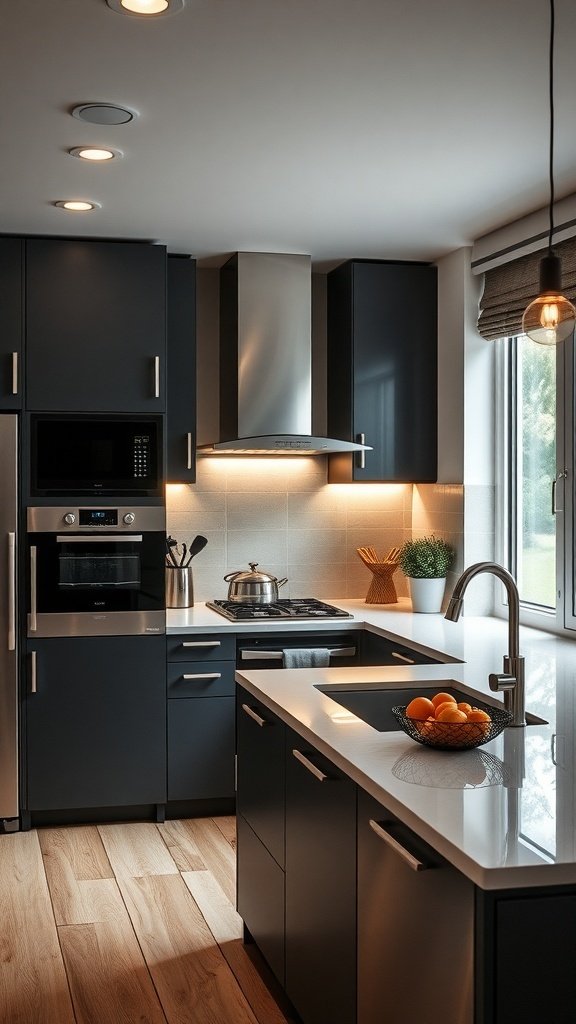
In a modern kitchen, smart home technology plays a key role in energy efficiency. The sleek design shown in the image highlights how technology can blend seamlessly with style. Smart appliances, like the oven and refrigerator, can be programmed to use less energy during off-peak hours.
Imagine controlling your kitchen devices from your phone. You can preheat the oven while you’re still at the grocery store or check the fridge’s temperature remotely. This not only saves energy but also adds convenience to your daily routine.
Lighting is another area where smart technology shines. The recessed lights in the kitchen can be set to dim or brighten based on the time of day or your mood. This feature not only enhances the kitchen’s look but also reduces electricity usage.
Integrating smart sensors can help monitor energy consumption. These sensors can alert you when appliances are using more energy than usual, allowing you to make adjustments. With these tools, you can enjoy a stylish kitchen while being mindful of your energy footprint.
Water-Efficient Landscaping Views
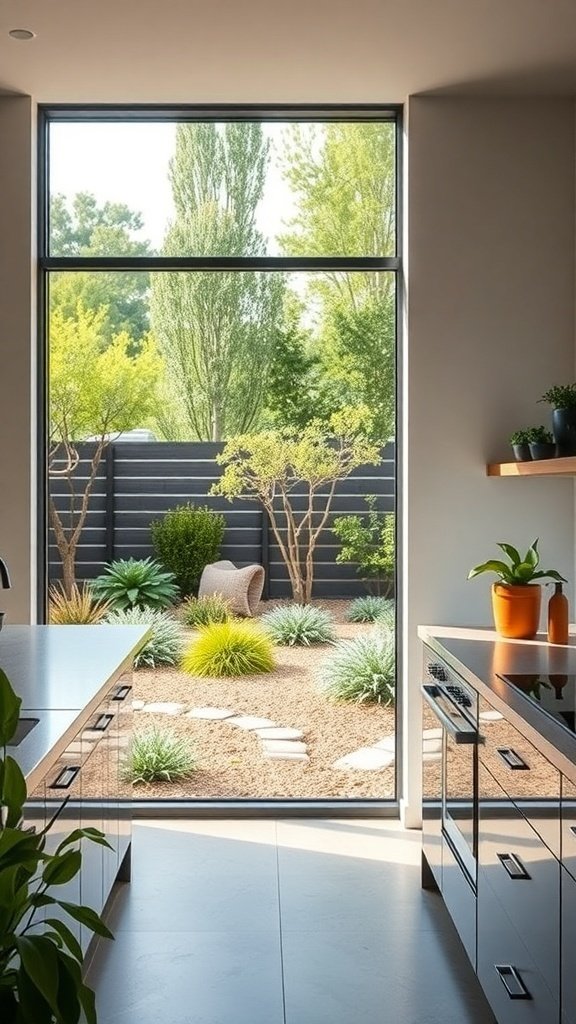
Imagine stepping into a kitchen that opens up to a stunning outdoor space. This design showcases a beautiful view of a water-efficient landscape right outside the window. The blend of greenery and carefully placed stones creates a serene atmosphere.
The plants chosen for this garden are not only visually appealing but also require minimal water. This makes them perfect for anyone looking to maintain a sustainable lifestyle. The arrangement of the plants offers a variety of textures and colors, adding life to the space.
From the kitchen, you can see the soft curves of the pathway leading through the garden. It invites you to explore while keeping maintenance easy. The natural elements bring a refreshing vibe, making cooking and entertaining feel more connected to nature.
With large windows allowing plenty of light, the kitchen feels bright and airy. This design encourages a seamless flow between indoor and outdoor living. It’s a perfect example of how water-efficient landscaping can enhance your home while being environmentally friendly.
Organic Color Palettes
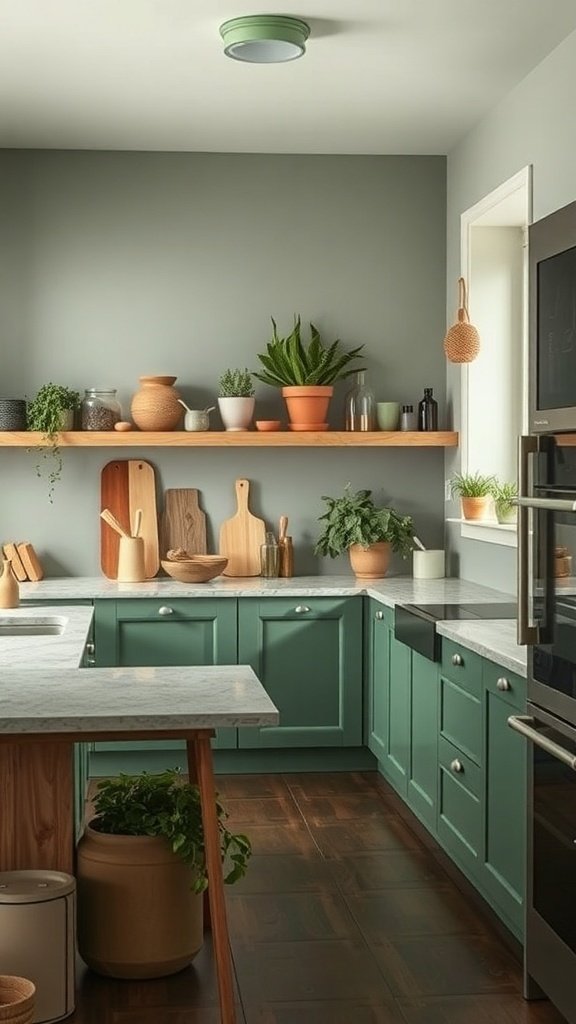
Green kitchens are a fantastic way to bring the outdoors inside. This image showcases a lovely kitchen with soothing green cabinetry and earthy accents. The soft green tones create a calming atmosphere, perfect for cooking and gathering.
The open shelves hold a mix of plants and wooden utensils, adding warmth and a touch of nature. The combination of green and natural materials makes the space feel fresh and inviting. It’s a great example of how color can influence the mood of a room.
Using organic colors like greens and browns can help create a harmonious environment. This kitchen design encourages a connection with nature, making it a delightful space to spend time in. Whether you’re cooking a meal or enjoying a cup of coffee, the organic color palette sets the perfect backdrop.
Reclaimed Wood Accents
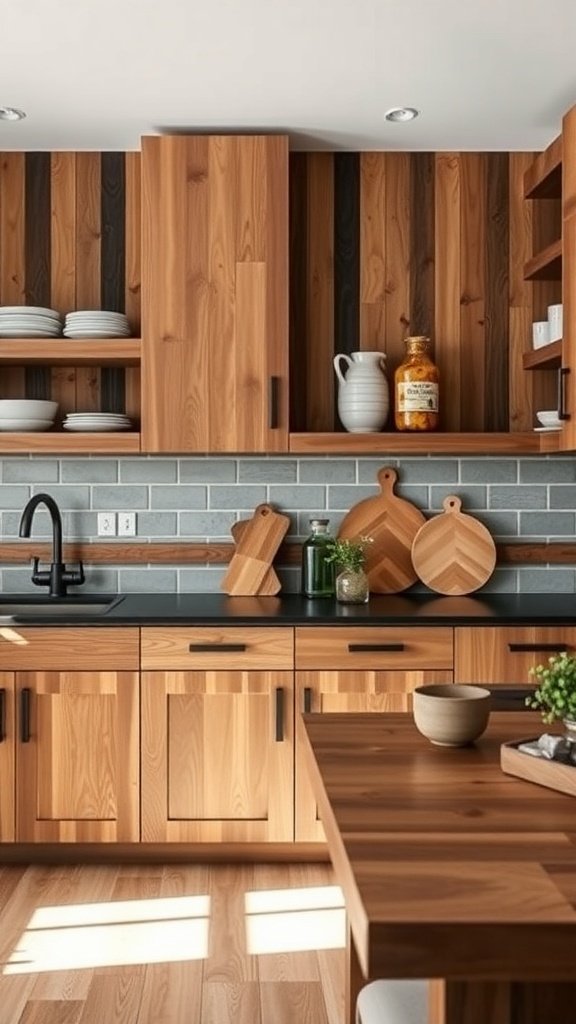
Reclaimed wood accents can truly transform a kitchen into a warm and inviting space. The image showcases a beautiful kitchen featuring rich wood cabinetry and accents that create a cozy feel. The natural grain and texture of the wood add character and charm.
In this kitchen, the combination of reclaimed wood with sleek, modern elements works perfectly. The cabinetry has a rustic touch, while the clean lines keep it contemporary. This balance makes the kitchen feel both stylish and homey.
The use of reclaimed wood is not just about aesthetics; it’s also an eco-friendly choice. By repurposing wood, you’re helping to reduce waste and give new life to materials that might otherwise be discarded. This sustainable approach is perfect for those looking to create a green kitchen.
Overall, reclaimed wood accents can bring a unique personality to your kitchen design. Whether you choose to use it for cabinets, shelves, or decorative pieces, it’s a great way to add warmth and sustainability to your home.
Composting Solutions in Kitchen Design
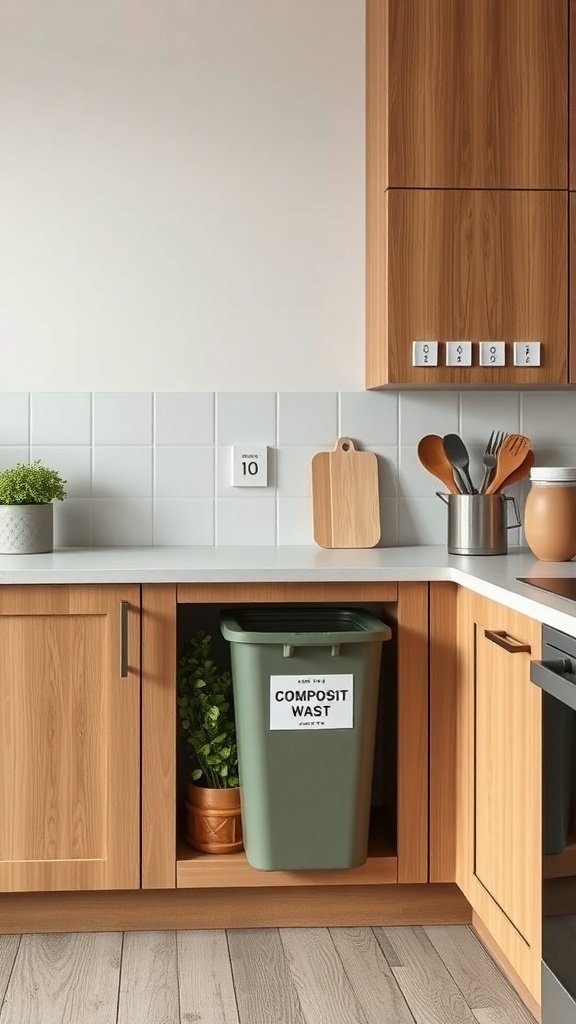
Incorporating composting solutions into kitchen design is a smart move for eco-conscious homeowners. The image shows a sleek kitchen with a designated compost bin tucked neatly under the counter. This setup not only keeps the kitchen tidy but also encourages sustainable practices.
The green compost bin stands out, clearly labeled for easy identification. It’s a reminder to sort waste effectively. Having a composting solution right in the kitchen makes it simple to dispose of organic waste, like vegetable scraps and coffee grounds, without hassle.
Alongside the compost bin, a small potted plant adds a touch of greenery. This not only beautifies the space but also emphasizes the connection between composting and nurturing plants. A well-designed kitchen can seamlessly integrate these elements, making sustainability a part of daily life.
Choosing materials like wood for cabinetry, as seen in the image, can further enhance the eco-friendly vibe. This kitchen design showcases how practical and stylish composting solutions can be, making it easier for everyone to contribute to a greener planet.
Upcycled Furniture and Decor
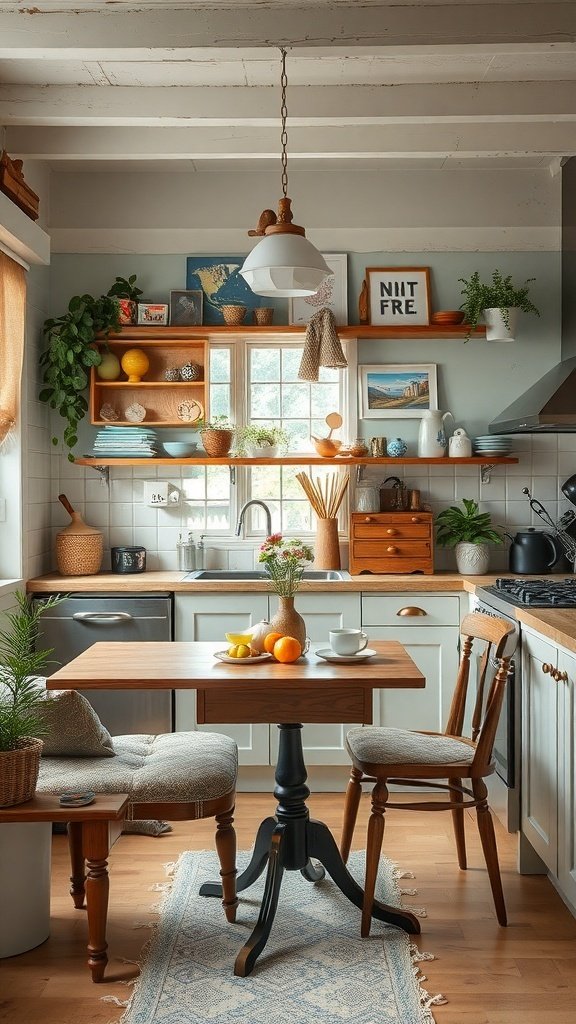
Upcycled furniture is a fantastic way to bring character into your kitchen. The image showcases a cozy kitchen with a mix of new and repurposed pieces. The wooden table, with its charming legs, stands out as a focal point. It’s perfect for casual meals or coffee breaks.
The chairs, one of which has a soft cushion, add comfort and style. They look like they have a story to tell, making the space feel warm and inviting. The open shelves above are filled with colorful dishes and plants, creating a lively atmosphere.
Using upcycled decor not only helps the environment but also allows for unique designs. The combination of textures and colors in this kitchen shows how creative you can be with reclaimed items. From the potted plants to the decorative pieces, each element adds a personal touch.
Incorporating upcycled furniture into your kitchen design can be both fun and rewarding. It encourages creativity and makes your space truly yours. So, if you’re looking to refresh your kitchen, consider giving old furniture a new life!
Functional Recycling Stations
Creating a green kitchen starts with smart recycling stations. In the image, we see a practical setup that makes recycling easy and efficient. The white recycling bin with a green symbol clearly indicates its purpose, while the bright orange container adds a pop of color and serves a specific recycling need.
Having designated bins helps keep the kitchen organized. It encourages everyone in the household to sort their waste properly. This simple act can lead to a significant reduction in landfill waste. The bins are conveniently placed under the counter, making them accessible without cluttering the kitchen space.
Incorporating these functional recycling stations into your kitchen design not only promotes sustainability but also enhances the overall look of the space. A clean and organized kitchen can inspire better cooking habits and a more eco-friendly lifestyle.
Indoor Air Quality Improvement
Creating a green kitchen is not just about aesthetics; it plays a big role in improving indoor air quality. The image shows a bright kitchen filled with various plants, which can naturally filter the air. Plants like spider plants and peace lilies are known for their air-purifying abilities.
Incorporating greenery into your kitchen can help reduce harmful pollutants and increase oxygen levels. This is especially beneficial in spaces where cooking odors and chemicals from cleaning products can linger. The vibrant greens add a refreshing touch, making the environment feel more inviting.
Moreover, having plants around can boost your mood and reduce stress. A kitchen that feels good to be in can encourage more time spent cooking and enjoying meals. So, consider adding a few potted herbs or hanging plants to your kitchen design for a healthier and happier space.
Indoor Composting Solutions
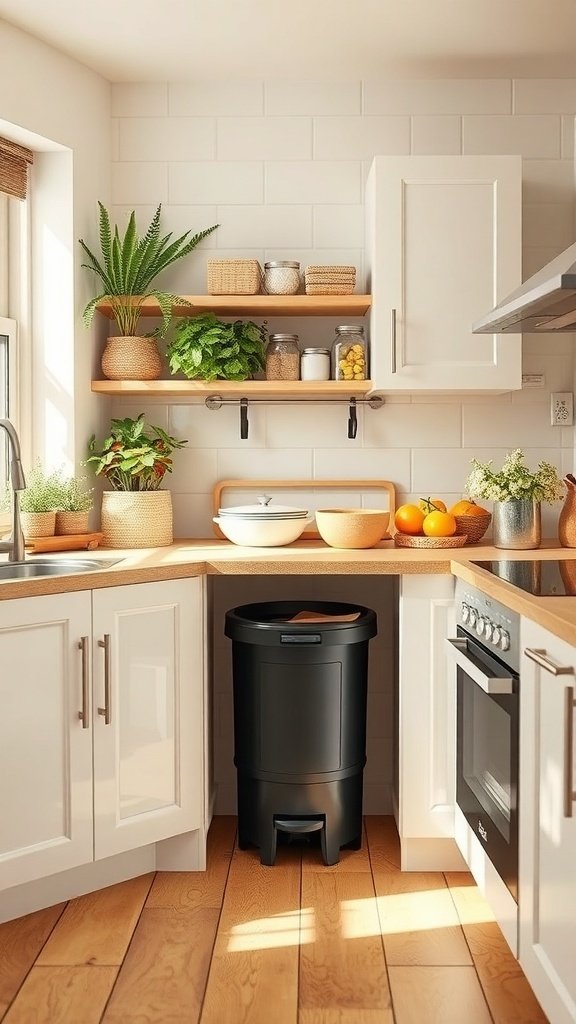
Indoor composting is a fantastic way to reduce waste and create nutrient-rich soil for your plants. In the image, we see a cozy kitchen with a compost bin tucked neatly in the corner. This setup highlights how easy it can be to incorporate composting into your daily routine.
The kitchen features natural light, wooden shelves, and vibrant plants, creating a welcoming atmosphere. The compost bin, while functional, fits seamlessly into the design. It’s a reminder that eco-friendly choices can blend beautifully with modern aesthetics.
To start composting indoors, choose a bin that suits your space. You can use kitchen scraps like fruit peels, vegetable trimmings, and coffee grounds. Just remember to balance those greens with browns like dried leaves or cardboard. This balance helps keep odors at bay and speeds up the composting process.
Having a compost bin in your kitchen not only helps the environment but also encourages you to be mindful of waste. Plus, it’s a great conversation starter for guests who visit your green kitchen!
Eco-Conscious Paint Choices
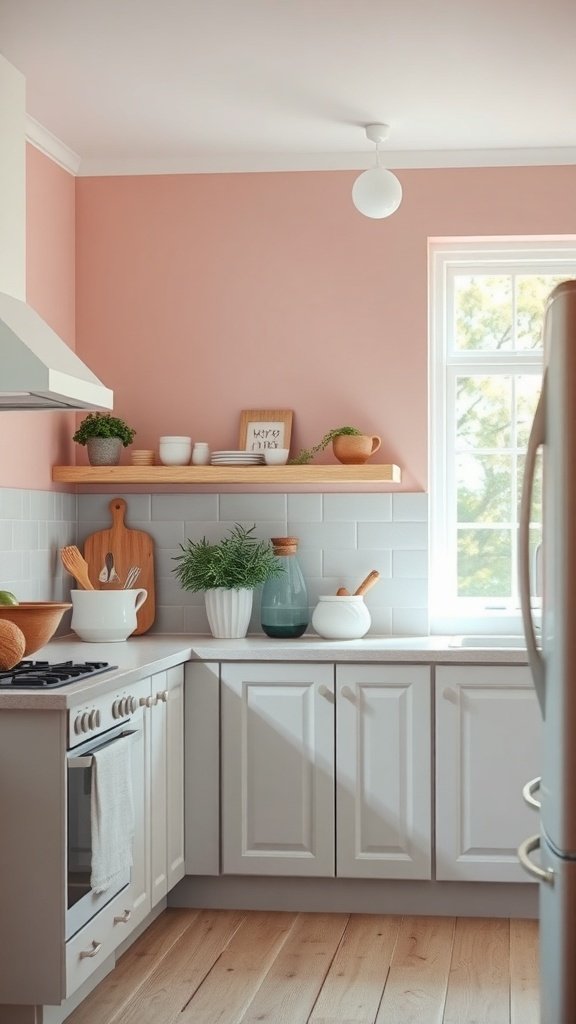
Choosing the right paint for your kitchen can make a big difference. The image shows a lovely kitchen with soft colors that create a warm and inviting space. The light pink walls complement the white cabinetry, giving it a fresh and clean look.
When selecting paint, look for eco-friendly options. These paints are low in volatile organic compounds (VOCs), which are better for indoor air quality. You can enjoy a beautiful kitchen without worrying about harmful emissions.
Natural pigments are another great choice. They come from minerals and plants, providing a unique finish that’s both sustainable and stylish. Plus, they often have a rich depth of color that synthetic paints can’t match.
Don’t forget about the finish! Matte or eggshell finishes can add a touch of elegance while being easier to clean than flat paints. This is especially important in a kitchen where spills can happen.
Overall, eco-conscious paint choices not only enhance the beauty of your kitchen but also contribute to a healthier home environment. It’s a win-win!
Sustainable Kitchen Layouts
This kitchen design showcases a perfect blend of style and sustainability. The use of natural materials, like wood and plants, creates a warm and inviting atmosphere. The open layout allows for easy movement, making cooking a breeze.
The light color palette, combined with large windows, brings in plenty of natural light. This not only enhances the space but also reduces the need for artificial lighting during the day. The shelves are a great touch, providing storage while keeping the area feeling open.
Incorporating plants adds a refreshing vibe and improves air quality. It’s a simple way to bring a bit of nature indoors. Overall, this kitchen reflects a commitment to eco-friendly living while remaining functional and stylish.
Natural Textiles for Soft Furnishings
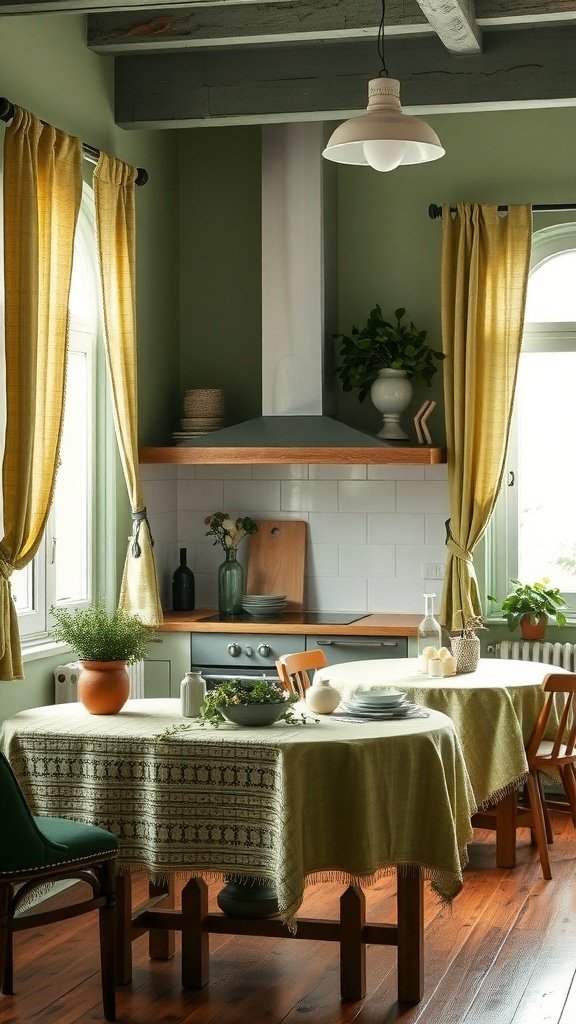
In a green kitchen, natural textiles can truly shine. The image shows a cozy space filled with soft furnishings that complement the earthy tones. The curtains in a warm yellow add a cheerful touch, while the tablecloth features a lovely green hue with intricate patterns.
Using materials like cotton or linen for these soft furnishings not only enhances the look but also brings comfort. The textures of these fabrics create a warm and inviting atmosphere, perfect for family gatherings or casual meals.
Plants on the table and shelves add a fresh vibe, connecting the kitchen to nature. This blend of textiles and greenery makes the space feel alive and welcoming. Choosing natural materials for your kitchen can transform it into a cozy retreat where you can enjoy cooking and sharing meals.
Durable and Eco-Friendly Utensils
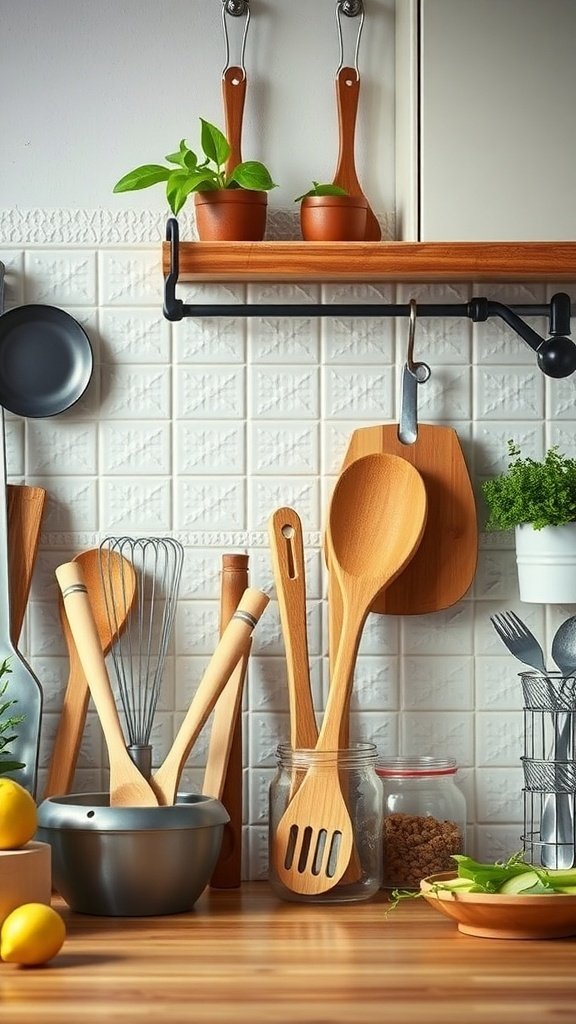
In a green kitchen, the choice of utensils plays a big role. The image showcases a charming setup filled with wooden utensils, which are both durable and eco-friendly. These utensils not only look great but also help reduce plastic waste.
Wooden spoons, spatulas, and whisks are perfect for cooking. They are sturdy and can withstand high temperatures without melting or warping. Plus, they add a natural touch to your kitchen decor. The jars and bowls in the image suggest a tidy and organized space, making cooking a pleasure.
Using eco-friendly utensils means you’re making a positive impact on the environment. Many wooden utensils are sourced from sustainable forests, ensuring that you’re not contributing to deforestation. This choice supports a healthier planet.
Incorporating plants into your kitchen, as seen in the image, enhances the green theme. They not only purify the air but also bring life to your cooking space. Pairing these elements creates a kitchen that is not just functional but also inviting.
Natural Stone Backsplashes
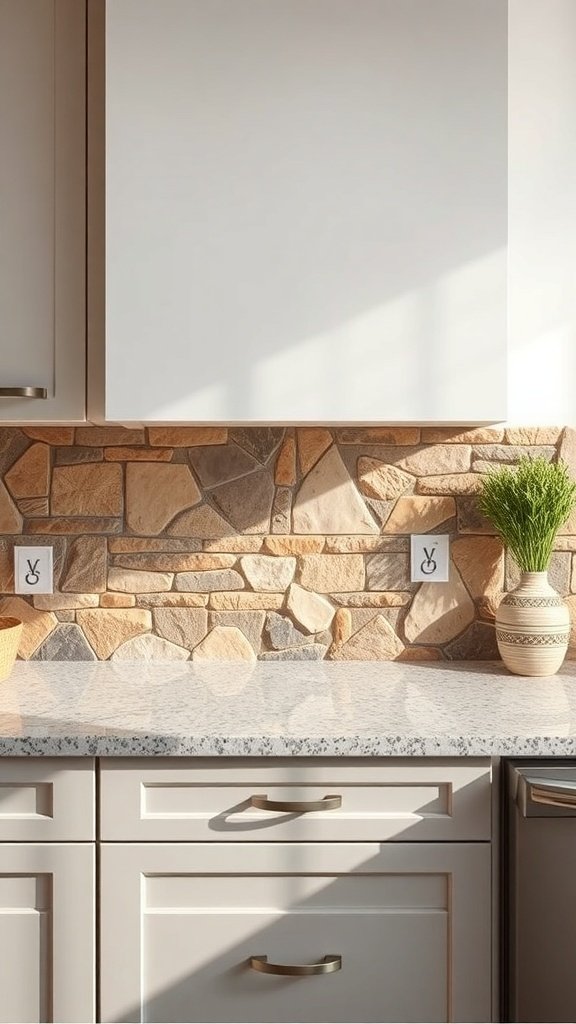
Natural stone backsplashes bring a warm and earthy feel to any kitchen. The image showcases a beautiful arrangement of stone tiles that create a stunning backdrop. The mix of colors and textures adds depth and character, making the kitchen feel inviting.
The light streaming in highlights the unique shapes of the stones, enhancing their natural beauty. This design choice pairs well with the soft cabinetry and sleek countertop, creating a harmonious look. A stone backsplash not only serves as a focal point but also offers durability and easy maintenance.
Incorporating plants, like the one in the image, adds a touch of freshness and life. It’s a simple way to enhance the overall aesthetic while bringing a bit of nature indoors. Choosing natural materials like stone can make your kitchen feel more connected to the outdoors, promoting a calming atmosphere.
Glass and Metal Recycling Stations
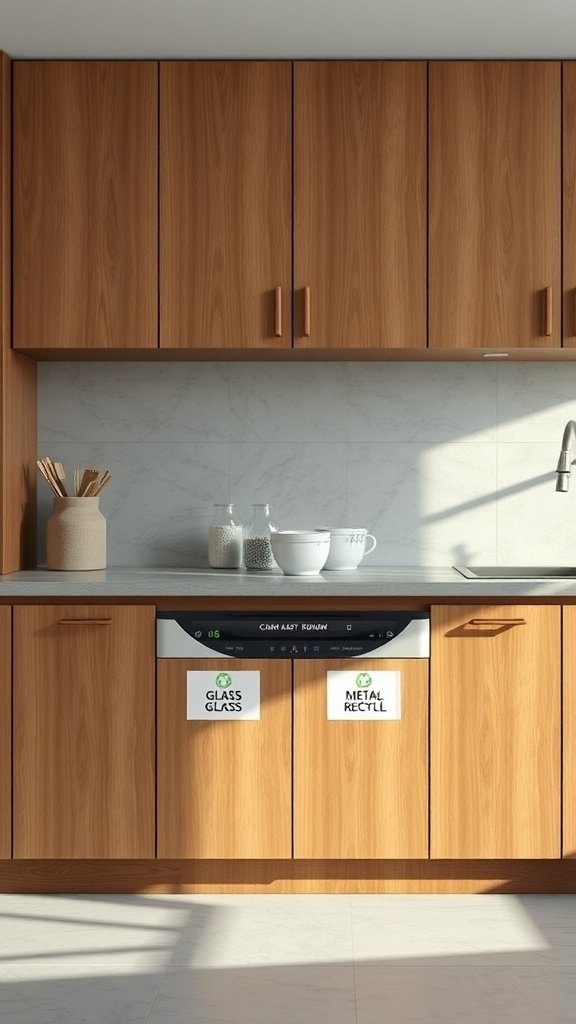
In modern kitchen designs, incorporating recycling stations is a smart way to promote sustainability. The image showcases a sleek kitchen with designated areas for glass and metal recycling. This setup not only keeps the kitchen organized but also encourages eco-friendly habits.
The cabinets are a warm wood tone, providing a cozy feel. The clear labels for ‘GLASS’ and ‘METAL’ make it easy for everyone to know where to dispose of their recyclables. This thoughtful design element can inspire family members to participate in recycling efforts.
Having these stations close at hand means you can quickly sort waste while cooking or cleaning up. It’s a small change that can make a big difference in reducing waste and promoting a greener lifestyle.
Energy-Saving Cooking Techniques
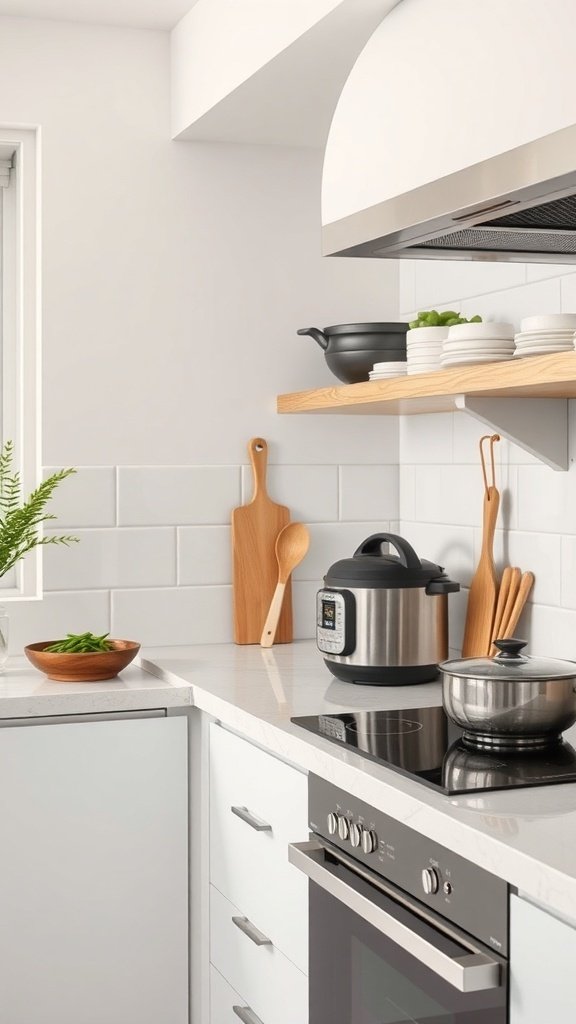
In a green kitchen, energy-saving techniques can make a big difference. The image shows a modern kitchen with sleek appliances and natural elements. This setup not only looks great but also promotes efficient cooking.
Using an electric pressure cooker, like the one in the image, can save time and energy. These devices cook food faster than traditional methods, reducing energy consumption. Plus, they keep flavors locked in, making meals even tastier.
Another tip is to use the right size pot for your burners. A smaller pot on a large burner wastes energy. Instead, match your cookware to the burner size for better heat efficiency.
Don’t forget about meal prep! Preparing ingredients in advance can help you cook faster and use less energy. Chopping veggies and marinating proteins ahead of time makes cooking a breeze.
Lastly, consider using the oven wisely. Batch cooking can save energy by making multiple meals at once. This way, you heat the oven only once for several dishes.
Flexible Kitchen Spaces
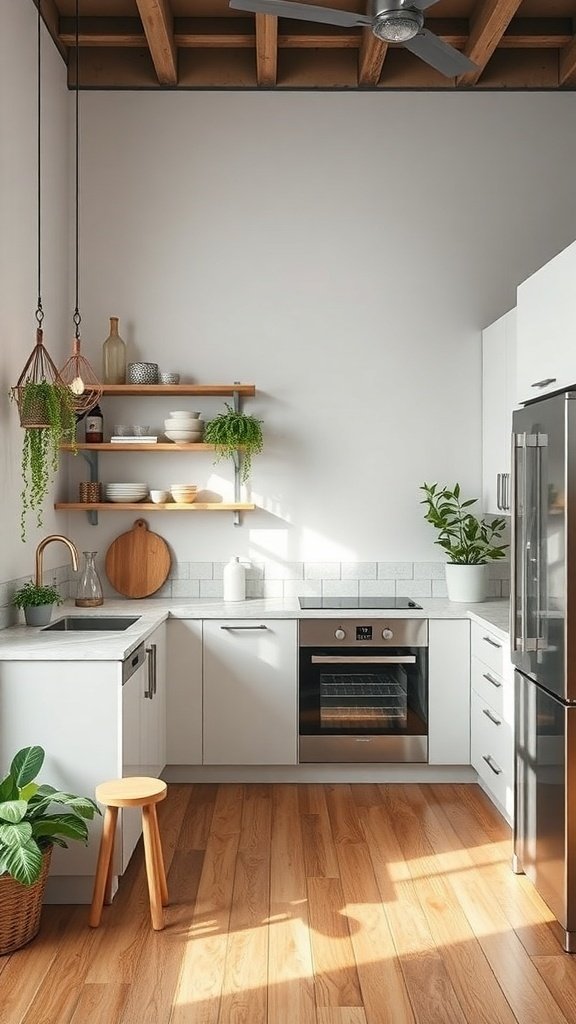
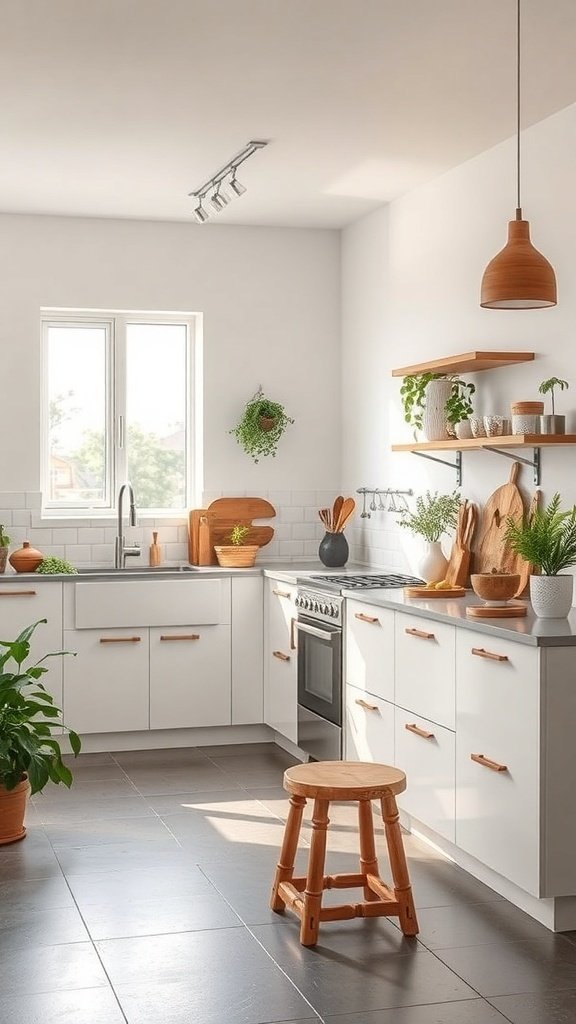
Green kitchen designs can create a refreshing vibe, making your cooking space feel alive. The image showcases a bright kitchen with natural light pouring in, highlighting its open and airy feel. The light wood flooring complements the white cabinetry, giving a clean and modern look.
This kitchen features clever storage solutions, like open shelves adorned with plants and decorative items. These elements not only add character but also make the space feel more inviting. The use of greenery brings a touch of nature indoors, enhancing the overall atmosphere.
The layout is practical and flexible, allowing for easy movement and interaction. A simple wooden stool adds functionality without cluttering the space. This design encourages cooking and socializing, making it perfect for gatherings.
Incorporating green elements in your kitchen can lead to a more sustainable lifestyle. Opting for energy-efficient appliances and using natural materials can make a big difference. Overall, this kitchen is a great example of how to blend style with functionality in a flexible kitchen space.
Smart Thermostats for Climate Control
In a green kitchen, smart thermostats play a key role in maintaining the perfect temperature. These devices help you manage your kitchen’s climate efficiently, ensuring comfort while saving energy.
The image shows a modern kitchen with sleek lines and natural elements. The use of plants adds a refreshing touch, making the space feel alive. Smart thermostats can easily blend into such designs, offering functionality without compromising aesthetics.
With a smart thermostat, you can control the temperature remotely. This means you can adjust settings while cooking or even when you’re away from home. It’s a simple way to keep your kitchen cozy and energy-efficient.
Integrating these devices into your green kitchen not only enhances comfort but also supports eco-friendly living. By optimizing energy use, you contribute to a more sustainable lifestyle.
Local Sourcing for Ingredients
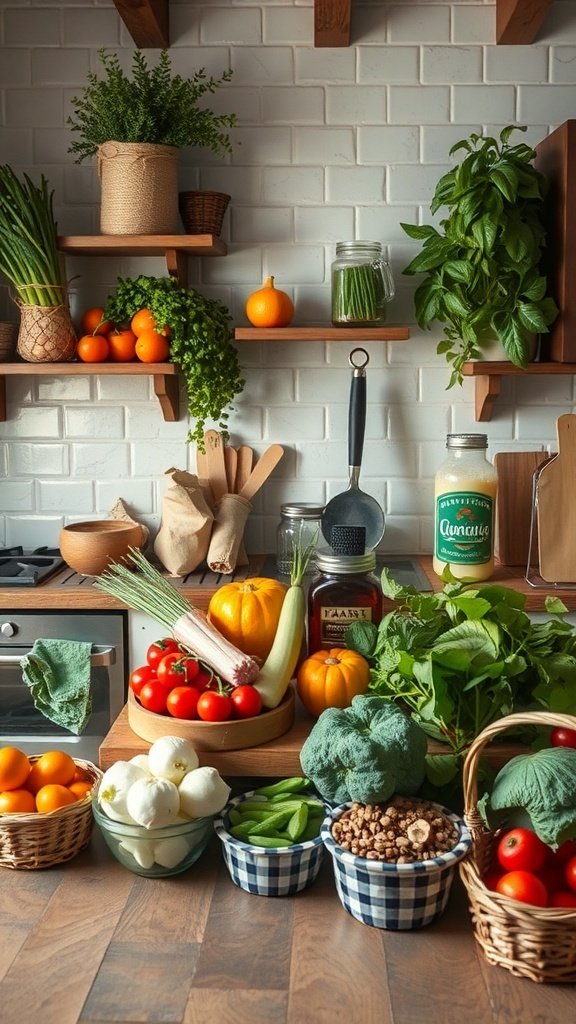
In a green kitchen, local sourcing is a key player. The image showcases a vibrant array of fresh ingredients, all ready to be transformed into delicious meals. From tomatoes to leafy greens, these ingredients not only look great but also support local farmers.
Using local produce means you get the freshest flavors. It’s a simple way to make meals healthier and tastier. Plus, buying from nearby farms reduces the carbon footprint associated with transporting food over long distances.
Imagine whipping up a salad with those crisp greens and juicy tomatoes right from your local market. It’s not just about eating; it’s about connecting with your community and knowing where your food comes from. This approach makes cooking more enjoyable and sustainable.
Natural Wood Finishes
Natural wood finishes bring warmth and charm to any kitchen. The image showcases a beautiful kitchen with rich wood cabinetry that creates a welcoming atmosphere. The smooth grain of the wood adds a touch of elegance while keeping the space feeling cozy.
In this design, the light-colored wood complements the clean lines and modern elements. The simplicity of the cabinetry allows for a seamless flow in the kitchen. The contrast of the dark handles against the wood adds a stylish touch, making the overall look more dynamic.
Green kitchen designs often incorporate elements of nature, and this space does just that. The small potted plants on the countertop enhance the natural vibe. They not only look great but also bring a bit of life into the kitchen.
Choosing natural wood finishes can be a great way to create a sustainable kitchen. Wood is a renewable resource, and when sourced responsibly, it can be an eco-friendly option. This kitchen design is a perfect example of how you can blend style with sustainability.
Sustainable Kitchen Gardens
A green kitchen design can be a wonderful way to incorporate sustainability into your home. Imagine a space filled with lush plants, herbs, and vegetables right in your kitchen. This not only adds beauty but also promotes a healthy lifestyle.
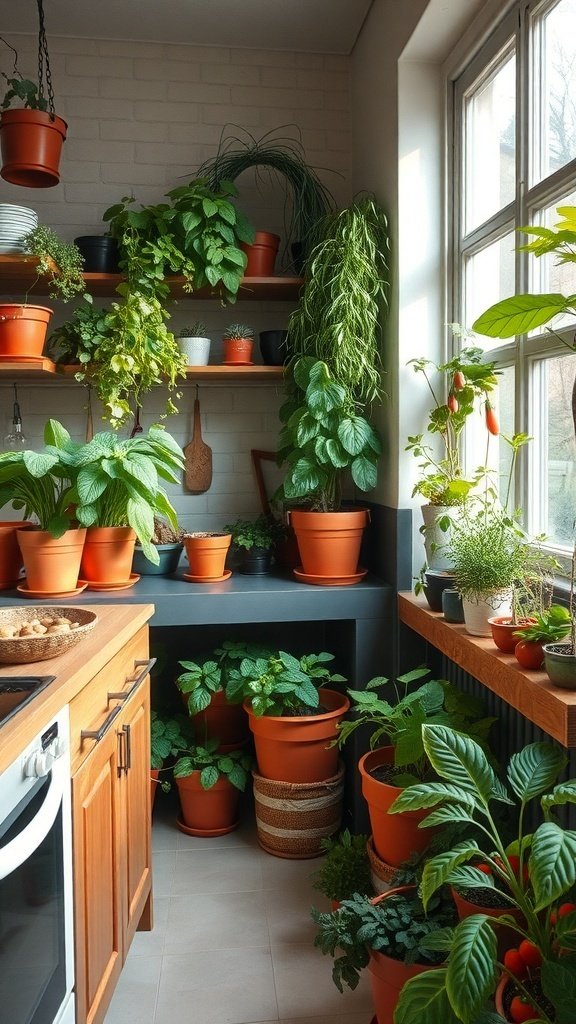
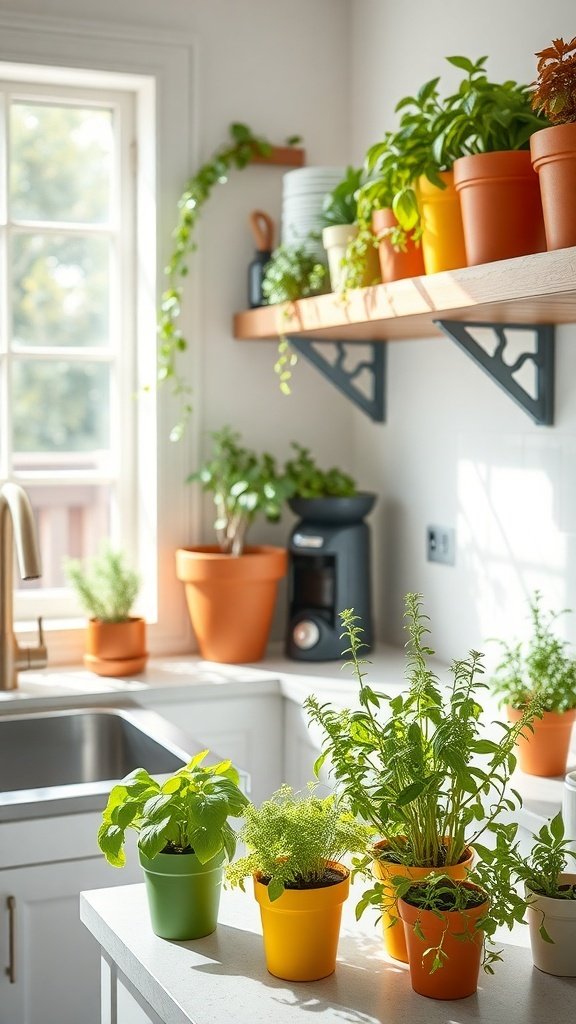
The image shows a cozy kitchen corner overflowing with greenery. Shelves are lined with potted plants, creating a vibrant atmosphere. You can see herbs and vegetables, which are perfect for cooking fresh meals. This setup encourages you to use homegrown ingredients, reducing your carbon footprint.
Having a kitchen garden is not just about aesthetics. It allows you to enjoy fresh flavors while minimizing waste. You can easily snip off some basil or parsley for your dishes. Plus, it’s a fun way to engage with nature, even indoors.
Consider adding pots of tomatoes or peppers for a splash of color and taste. The joy of harvesting your own produce is unmatched. It’s a simple step towards a more sustainable lifestyle.
Airy Open Shelving
Open shelving is a fantastic choice for a green kitchen design. It creates a light and airy feel, making the space look larger and more inviting. The image shows beautifully arranged shelves that blend seamlessly with the kitchen’s natural elements.
Notice how the wooden shelves complement the warm tones of the cabinetry. This combination adds a cozy touch while keeping everything organized and accessible. The use of plants on the shelves brings in a fresh vibe, enhancing the green theme.
Displaying dishes and kitchenware on open shelves not only showcases your style but also encourages you to keep things tidy. It’s a practical solution that adds personality to your kitchen. Plus, it’s easy to switch up the decor whenever you feel like a change!
Incorporating Local Artisans
When designing a green kitchen, incorporating local artisans can add a unique touch. The image showcases a warm, inviting kitchen filled with handcrafted wooden items. These pieces not only enhance the aesthetic but also support local craftsmanship.
Using locally sourced materials is a great way to reduce your carbon footprint. The wooden shelves and utensils in the image reflect a commitment to sustainability. Each item tells a story, connecting the kitchen to the community.
Consider adding handmade pottery or textiles from local artists. These elements can bring character and charm to your kitchen. Plus, they often use eco-friendly practices, aligning perfectly with a green design philosophy.
Incorporating local artisans not only beautifies your space but also fosters a sense of community. It’s a win-win for both your kitchen and the environment.
Green Certifications for Appliances
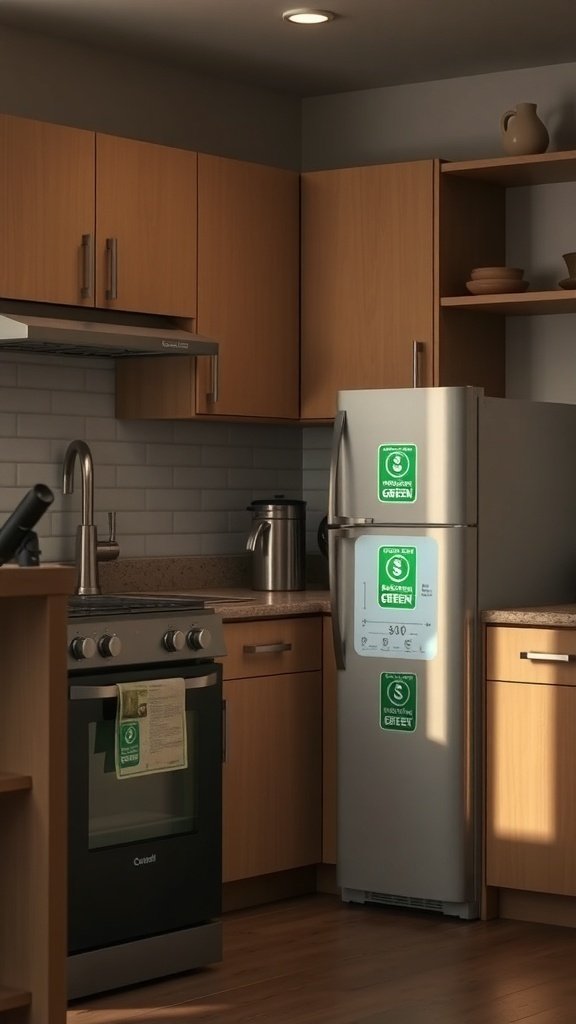
When designing a green kitchen, choosing the right appliances is key. The image shows a modern kitchen with eco-friendly appliances that are certified for their energy efficiency. You can spot labels on the fridge and oven, indicating their green credentials.
These certifications help you make informed choices. Look for Energy Star ratings or similar labels that show the appliance meets strict energy efficiency guidelines. This not only reduces your energy bills but also lessens your carbon footprint.
Incorporating these appliances into your kitchen design can create a stylish and sustainable space. The sleek look of the stainless steel fridge complements the warm wood cabinetry, making it a visually appealing choice as well.
Choosing certified appliances is a smart move for anyone looking to create a green kitchen. It’s a simple step that contributes to a healthier planet while enhancing your home’s functionality and style.
Innovative Waste Management Systems
In modern kitchens, waste management is becoming smarter and more efficient. The image showcases a sleek, dual-compartment trash bin designed for easy sorting of waste. This setup encourages recycling and composting, making it a great addition to any green kitchen.
The bin is not just functional; it fits seamlessly into the kitchen’s design. Its compact size allows it to tuck neatly between cabinets, saving space while remaining accessible. The clear labels on the bins help everyone in the household know where to toss their waste, promoting good habits.
Having a dedicated space for organic waste, like fruits and vegetables, is essential. This not only reduces landfill waste but also supports composting efforts. A well-organized waste system can make a big difference in maintaining a clean and eco-friendly kitchen.
Water-Saving Dishwashers
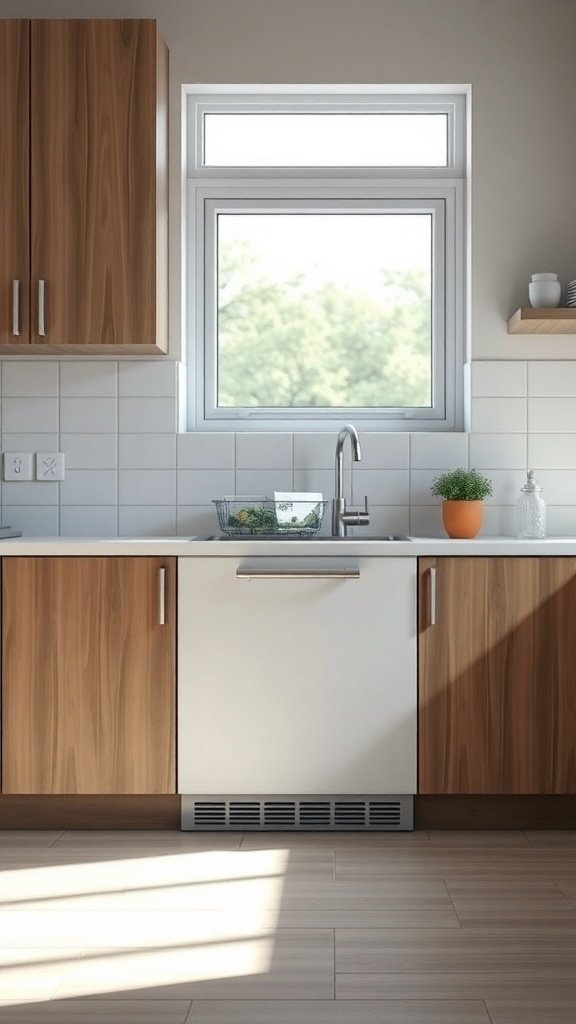
In a green kitchen, every detail matters, including your appliances. The image shows a sleek, modern dishwasher nestled between wooden cabinets. This setup not only looks great but also emphasizes functionality and sustainability.
Water-saving dishwashers are designed to use less water while still delivering a powerful clean. They often feature smart technology that adjusts water usage based on the load size. This means you can wash a full load without worrying about wasting water.
Choosing a water-efficient model can significantly reduce your household’s water consumption. Many of these dishwashers also come with energy-saving features, making them a win-win for both your utility bills and the environment.
Incorporating a water-saving dishwasher into your green kitchen design is a simple step towards a more sustainable lifestyle. It’s a small change that can make a big impact!
Sustainable Kitchen Accessories
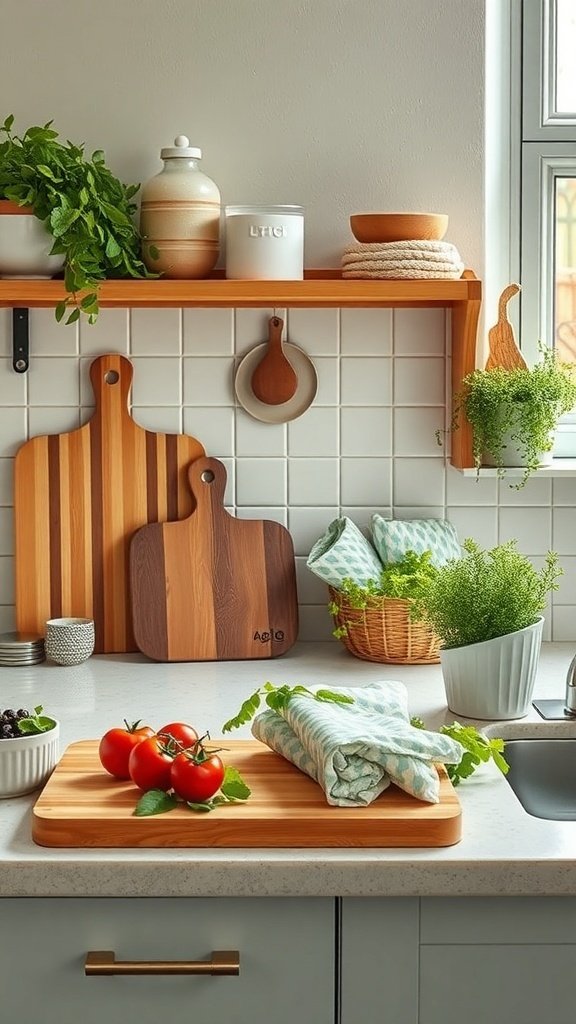
In a green kitchen, every detail counts, including the accessories you choose. The image showcases a lovely kitchen setup featuring wooden cutting boards, fresh herbs, and vibrant tomatoes. These elements not only look great but also promote sustainability.
The wooden cutting boards are a fantastic choice. They are durable and biodegradable, making them a better option than plastic. Plus, they add a warm touch to your kitchen. Fresh herbs in pots bring life to the space and can be used in your cooking, reducing waste from store-bought herbs.
Using natural materials like wood and plants helps create a healthier environment. The simple design of the kitchen accessories makes it easy to maintain a clean and organized space. This setup encourages you to cook more at home, which is a win for both your health and the planet.
Eco-Friendly Cleaning Solutions
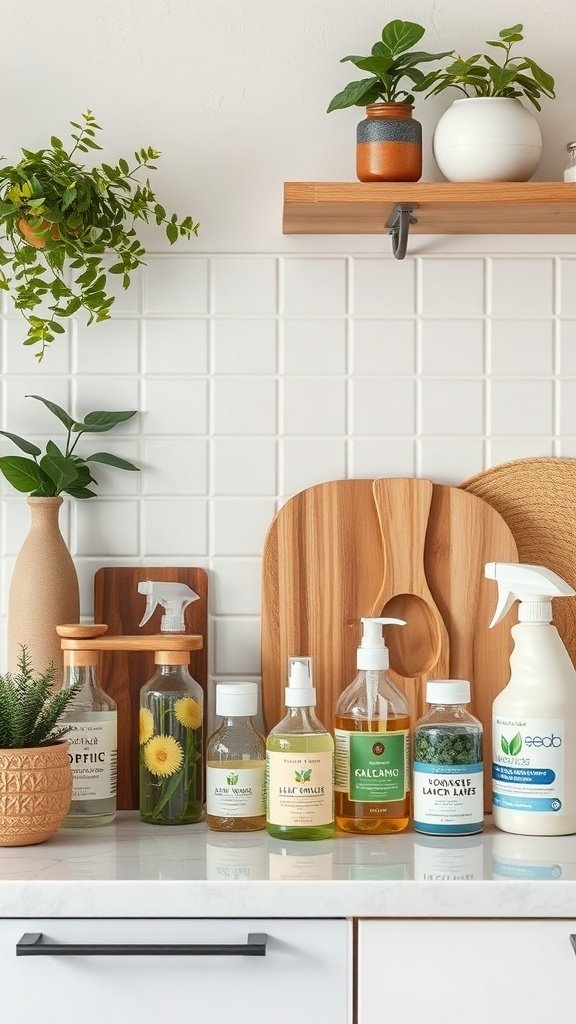
In a green kitchen, every detail matters, including how we clean. The image shows a bright and inviting kitchen space with eco-friendly cleaning products neatly arranged on the countertop. These products are often made from natural ingredients, making them safe for both your family and the environment.
Using plant-based cleaners helps reduce harmful chemicals in your home. The bottles in the image suggest a variety of options, from all-purpose sprays to specialized cleaners. This variety allows you to tackle different cleaning tasks without resorting to harsh chemicals.
Incorporating greenery into the kitchen, as seen with the plants on the shelves, not only beautifies the space but also improves air quality. It’s a reminder that a clean kitchen can be both functional and eco-friendly. Keeping your kitchen clean with these solutions supports a healthier lifestyle.
Choosing eco-friendly cleaning products is a simple yet effective way to contribute to a sustainable future. Plus, they often come in attractive packaging, adding to the aesthetic of your green kitchen. So, next time you restock your cleaning supplies, consider going green!
Cork Flooring Benefits
Cork flooring is a fantastic choice for green kitchen designs. It offers a unique blend of style and sustainability. The image showcases a bright kitchen featuring cork flooring, which adds warmth and texture to the space.
One major benefit of cork is its eco-friendliness. Cork is harvested from the bark of cork oak trees without harming them. This means it’s a renewable resource, making it a smart choice for environmentally conscious homeowners.
Cork flooring is also comfortable underfoot. Its natural cushioning makes standing for long periods easier, perfect for those who love to cook. Plus, it provides excellent insulation, keeping your kitchen cozy in the winter.
Another advantage is its sound-absorbing qualities. Cork helps to reduce noise, creating a peaceful cooking environment. This can be especially beneficial in open-concept homes where sounds can travel easily.
Lastly, cork is resistant to mold and mildew, making it a healthy option for your kitchen. With proper care, cork flooring can last for many years, adding both beauty and functionality to your green kitchen design.
Community-Sourced Kitchen Design
When it comes to kitchen design, community input can lead to some amazing results. The image showcases a bright and airy kitchen that reflects a modern yet cozy vibe. With its clean lines and natural materials, this space invites creativity and warmth.
The white cabinetry paired with wooden accents creates a fresh look. The open shelves display plants and kitchenware, adding a personal touch. This design encourages people to share their favorite kitchen items and plants, making it a true community space.
Involving the community in kitchen design means gathering ideas and inspiration from various sources. Whether it’s a favorite recipe or a unique decor piece, each contribution can help shape a kitchen that feels like home. This kitchen encourages collaboration and showcases how shared ideas can lead to beautiful spaces.
Innovative Storage Solutions
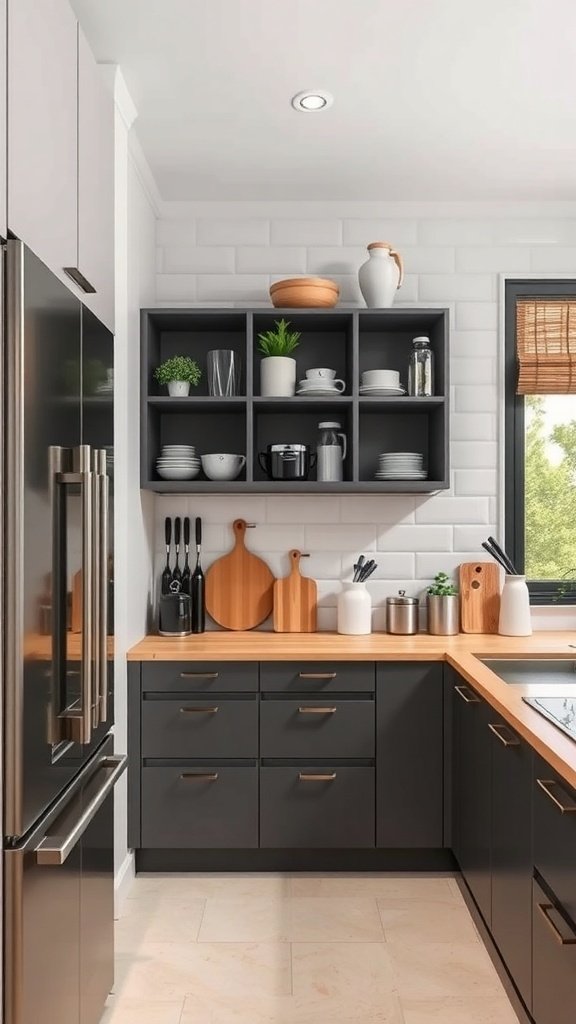
In a green kitchen, innovative storage solutions can really shine. The image shows a sleek design with dark cabinetry and a warm wooden countertop. This combination not only looks stylish but also maximizes space effectively.
The open shelving above the counter is a great way to display dishes and plants, adding a touch of personality. It keeps frequently used items within reach, making cooking more enjoyable. The dark drawers below offer hidden storage, keeping the kitchen tidy.
Using a mix of open and closed storage helps balance aesthetics and functionality. The wooden cutting boards and utensils on display add warmth, while the organized drawers ensure everything has its place. This approach creates a kitchen that feels both inviting and efficient.
Plant-Based Decor Elements
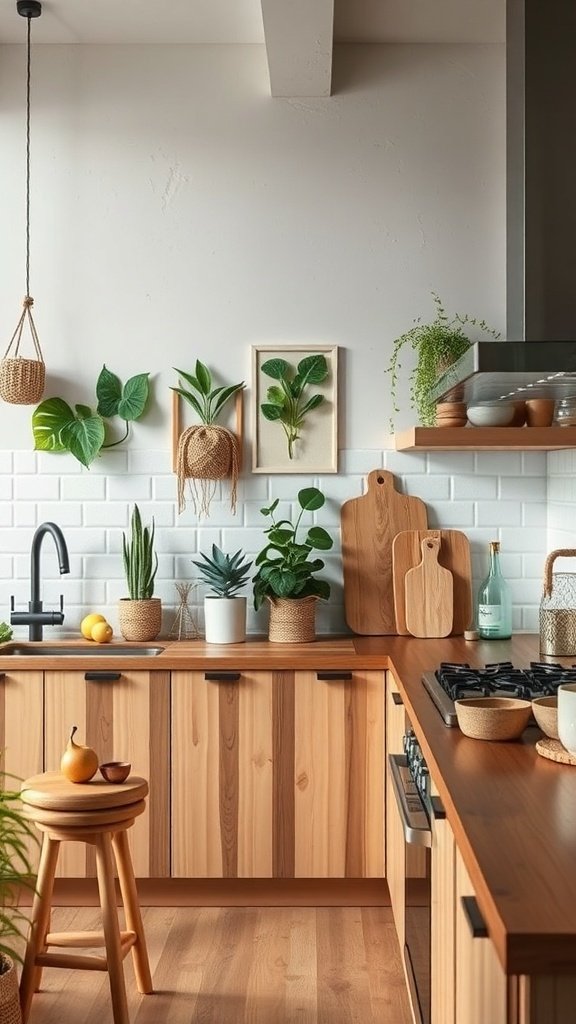
Incorporating plants into your kitchen design can create a refreshing and lively atmosphere. The image showcases a beautiful kitchen with various plants that bring a touch of nature indoors. From hanging planters to potted greens, these elements add color and texture to the space.
The wooden cabinets and countertops complement the greenery, creating a warm and inviting feel. The combination of natural materials and plants makes the kitchen not just a cooking space but a cozy gathering area.
Using plants like herbs can also be practical. They provide fresh ingredients right at your fingertips. Plus, they improve air quality, making your kitchen a healthier place to be. Consider adding small pots of basil or mint on the windowsill for easy access while cooking.
Natural Fiber Rugs and Mats
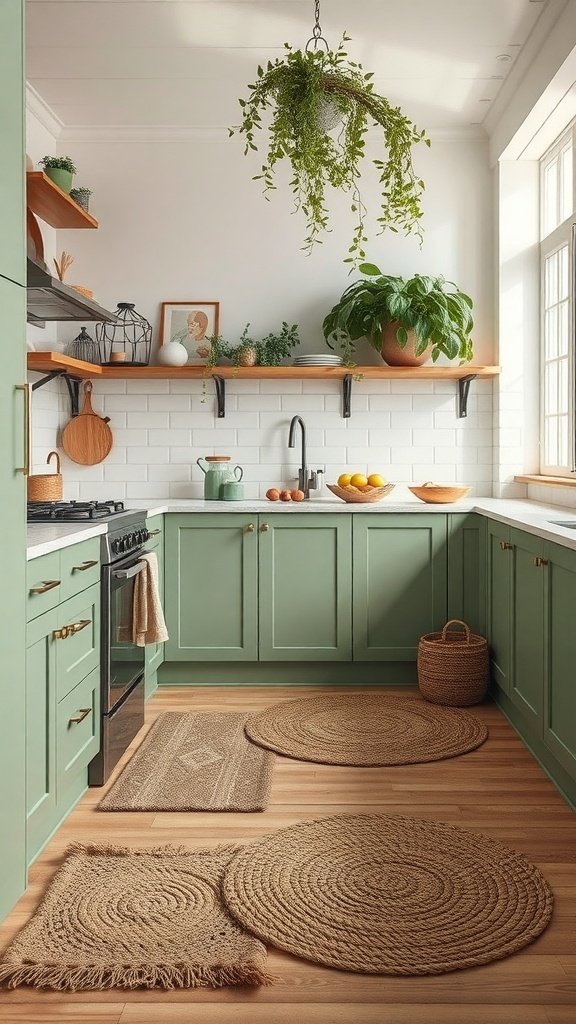
In a green kitchen, natural fiber rugs and mats add warmth and texture. The image showcases a lovely kitchen with soft, earthy tones. The green cabinets create a fresh vibe, while the natural rugs complement the overall design.
These rugs are not just stylish; they also bring comfort underfoot. Made from materials like jute or sisal, they are durable and eco-friendly. Placing them near the sink or cooking area can help catch spills and make cleaning easier.
The round and rectangular shapes in the image create a playful look. They break the monotony of straight lines in the kitchen and invite a casual atmosphere. Plus, they are easy to move around, allowing for flexibility in your kitchen layout.
Incorporating natural fiber rugs is a simple way to enhance your green kitchen. They blend seamlessly with plants and wooden accents, creating a harmonious space. Whether you’re cooking or enjoying a meal, these rugs add a cozy touch to your kitchen experience.
Energy-Efficient Appliances and Fixtures
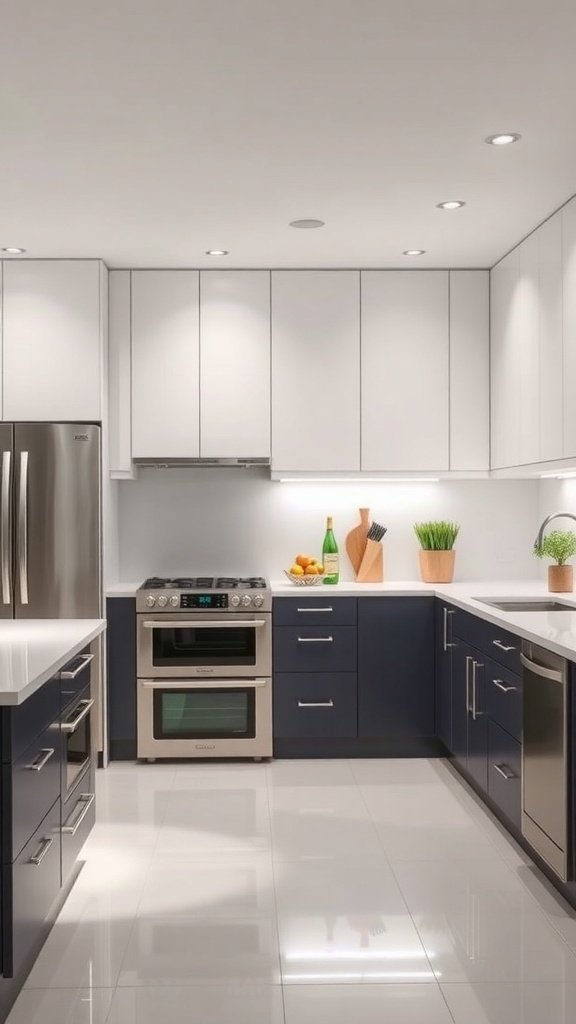
In a modern green kitchen, energy-efficient appliances play a key role. The image showcases a sleek kitchen with stainless steel appliances that not only look great but also help save energy. Choosing appliances with high energy ratings means lower utility bills and a smaller carbon footprint.
The refrigerator, oven, and dishwasher in this kitchen are designed to use less energy while still delivering top performance. For instance, the double oven allows you to cook multiple dishes at once, making meal prep more efficient.
Lighting is another important aspect. The recessed LED lights in the ceiling provide bright illumination without consuming too much energy. These fixtures last longer and reduce the need for frequent replacements.
Incorporating these energy-efficient features helps create a kitchen that is not only stylish but also environmentally friendly. It’s a win-win for your home and the planet!
Green Roofs and Skylights
Imagine a kitchen that feels fresh and alive. This space showcases a stunning design with a green roof and skylights that let in natural light. The glass ceiling not only brightens the room but also allows for plants to thrive overhead, creating a unique blend of nature and home.
The wooden cabinets and shelves complement the greenery beautifully. It’s a cozy spot where you can enjoy cooking while being surrounded by the beauty of plants. The natural materials used in the kitchen add warmth, making it a welcoming place for family and friends.
With skylights, you can enjoy the changing sky throughout the day. This feature brings a sense of openness and connection to the outdoors. It’s perfect for those who love a bright, airy atmosphere while preparing meals.
Sustainable Materials for Eco-Friendly Kitchens
When thinking about a green kitchen, sustainable materials play a key role. The image shows a bright and airy kitchen with wooden cabinets and a clean design. The use of natural wood not only adds warmth but also promotes sustainability.
Choosing materials like bamboo or reclaimed wood can make a big difference. These options are renewable and help reduce waste. The sleek countertops in the image hint at the possibility of using recycled materials, which is another great choice for eco-friendly kitchens.
Natural light floods the space, highlighting the importance of energy-efficient designs. Large windows or skylights can reduce the need for artificial lighting, saving energy. Plants, like the one seen in the corner, also contribute to a healthier environment.
Overall, this kitchen design showcases how simple choices can lead to a more sustainable lifestyle. By focusing on eco-friendly materials and designs, anyone can create a kitchen that is both stylish and kind to the planet.
Healthy Cooking Spaces
A green kitchen design can really brighten up your cooking space. This kitchen features a lovely blend of natural light and greenery, creating a refreshing atmosphere. The large window lets in plenty of sunlight, making it a perfect spot for cooking and enjoying meals.
Plants are a great addition to any kitchen. They not only add color but also help purify the air. In this kitchen, you can see various potted plants on the shelves and windowsill. They bring a bit of the outdoors inside, which can inspire healthier cooking habits.
The layout is functional and inviting. With modern appliances and a clean design, it encourages you to whip up delicious meals. The combination of white cabinets and wooden accents gives it a warm, welcoming feel. You can easily imagine preparing fresh ingredients here.
Speaking of fresh ingredients, this kitchen is ideal for cooking healthy meals. Think about making a vibrant salad or a hearty vegetable soup. Just grab some greens, tomatoes, and herbs from those lovely plants. Cooking in such a space can make the process feel more enjoyable and rewarding.
Eco-Conscious Kitchen Renovations
Renovating a kitchen with an eco-conscious mindset can be both fun and rewarding. The image shows a stunning transformation from a more traditional wooden kitchen to a bright, modern space. The new design features white cabinetry and open shelving, which creates an airy feel.
Notice how the natural light floods the room, highlighting the beautiful herringbone floor. This choice not only adds warmth but also emphasizes sustainability. Using materials like reclaimed wood or bamboo can make a big difference in your kitchen’s environmental impact.
Incorporating plants, as seen in the image, brings life to the space. Herbs or small potted plants can thrive on those shelves, making your kitchen not just a cooking area but a mini-garden too. This adds freshness and encourages a connection with nature.
Choosing energy-efficient appliances is another key aspect of eco-conscious renovations. The sleek stainless steel appliances in the image are not only stylish but also help reduce energy consumption. This is a great way to save on utility bills while being kind to the planet.
Overall, this kitchen renovation showcases how thoughtful design choices can lead to a beautiful and sustainable space. Whether you’re planning a full remodel or just a few updates, keeping eco-friendliness in mind can make a significant impact.
Indoor Gardens and Herb Planters
Indoor gardens bring a fresh vibe to any kitchen. The image shows a bright space filled with various plants, creating a lively atmosphere. From hanging herbs to potted greens, these plants add color and life.
Herb planters are a great way to grow your own fresh ingredients. Imagine snipping basil or parsley right from your kitchen. It’s not just practical; it also makes cooking more enjoyable. Plus, having greenery around can boost your mood.
Choosing pots in warm terracotta tones complements the green plants beautifully. This combination makes the space feel inviting and cozy. You can mix different herbs and plants to create a mini garden that suits your style.
Setting up an indoor garden is simple. Start with easy-to-grow herbs like mint, cilantro, or thyme. Place them near a window where they can soak up sunlight. With a little care, you’ll have a thriving indoor garden that enhances your kitchen.
Natural Color Palettes and Textures
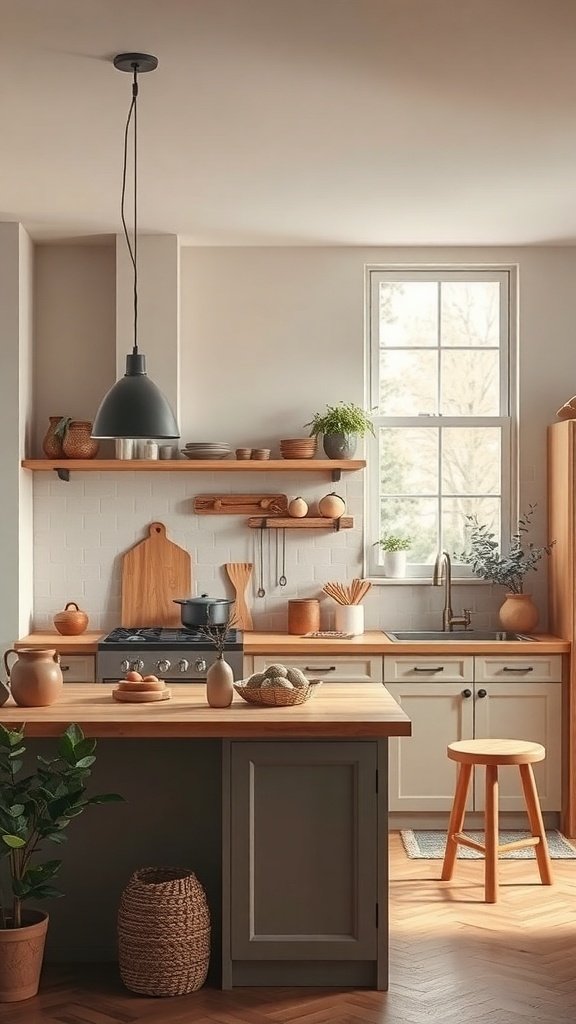
Green kitchen designs often embrace natural color palettes that evoke a sense of calm and connection to nature. The image showcases a lovely kitchen filled with soft, earthy tones. The light beige walls and warm wooden accents create a welcoming atmosphere.
The use of natural materials, like wood and woven baskets, adds texture and warmth. The wooden shelves and countertop not only look beautiful but also provide a functional space for displaying kitchen essentials. This blend of colors and textures makes the kitchen feel cozy and inviting.
Plants play a key role in enhancing the natural vibe. The small potted plant adds a pop of green, bringing life into the space. Incorporating greenery is an easy way to connect your kitchen with the outdoors, making it feel fresh and vibrant.
Overall, this kitchen design highlights how natural color palettes and textures can create a serene and stylish cooking environment. It’s a perfect example of how to blend functionality with aesthetic appeal.