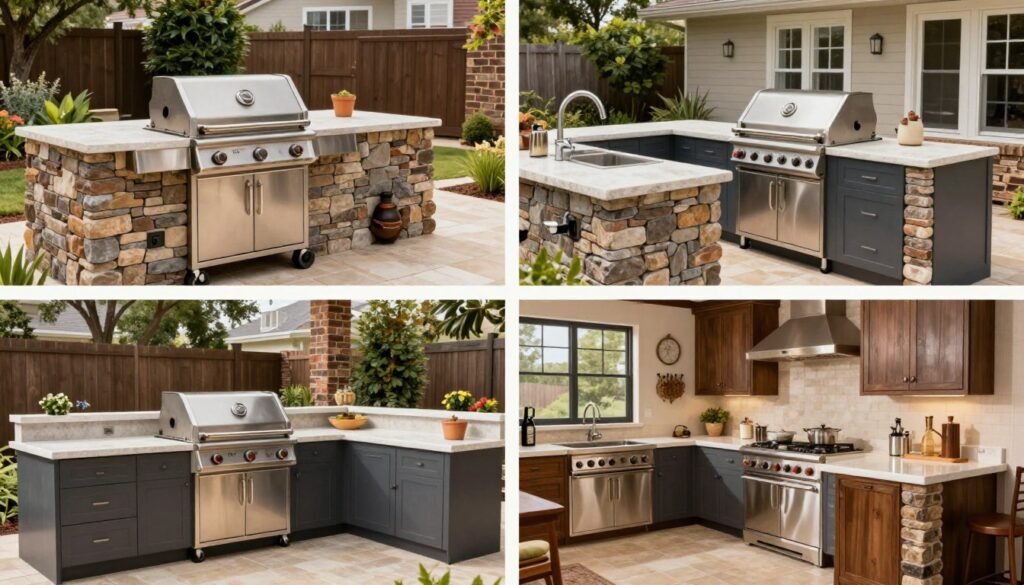
A backyard kitchen transforms your outdoor space into a culinary haven where memories are made and delicious meals come to life under the open sky. More than just a cooking area, it’s where family gatherings flourish, friendly conversations flow, and the joy of outdoor living meets the art of cooking.
This Website contains affiliate links. That means I may earn a small commission if you purchase through my links, at no extra cost to you.
Whether you’re dreaming of a simple grilling station or an elaborate outdoor culinary retreat, this guide will walk you through everything you need to know about designing, building, and enjoying your perfect backyard kitchen. From essential features to inspiring design ideas, we’ll help you create an outdoor cooking space that enhances your home and lifestyle.
Benefits of Adding a Backyard Kitchen
Before diving into design ideas and practical considerations, let’s explore why a backyard kitchen is worth the investment:
Expanded Living Space
A well-designed outdoor kitchen effectively extends your home’s living area, creating a functional space that can be enjoyed for much of the year. It transforms your backyard from a simple lawn into a purposeful extension of your home.
Enhanced Entertaining
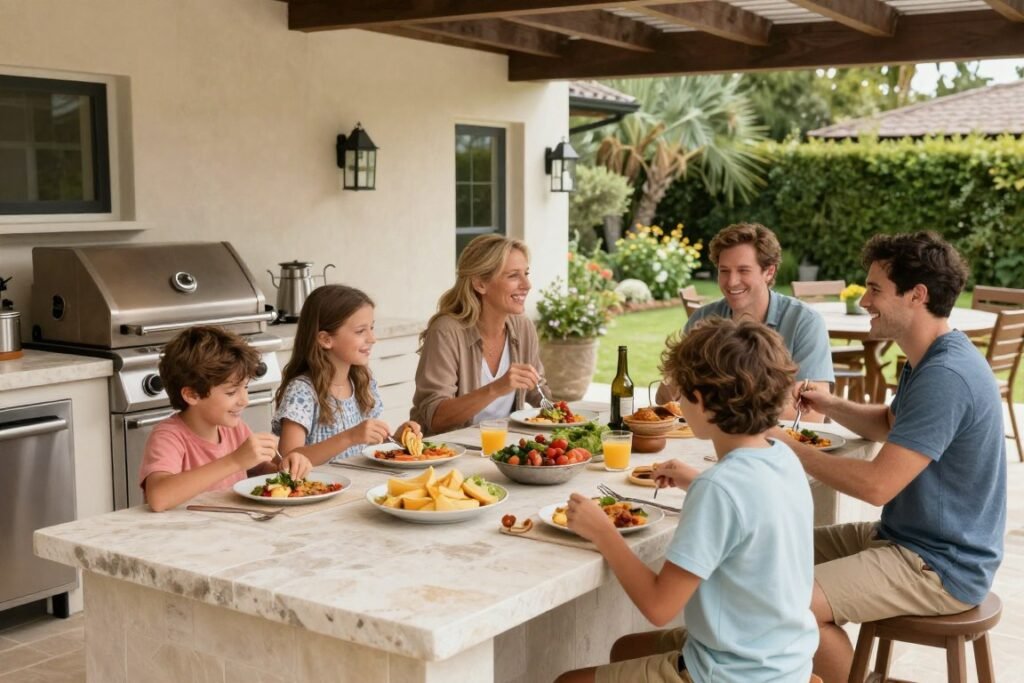
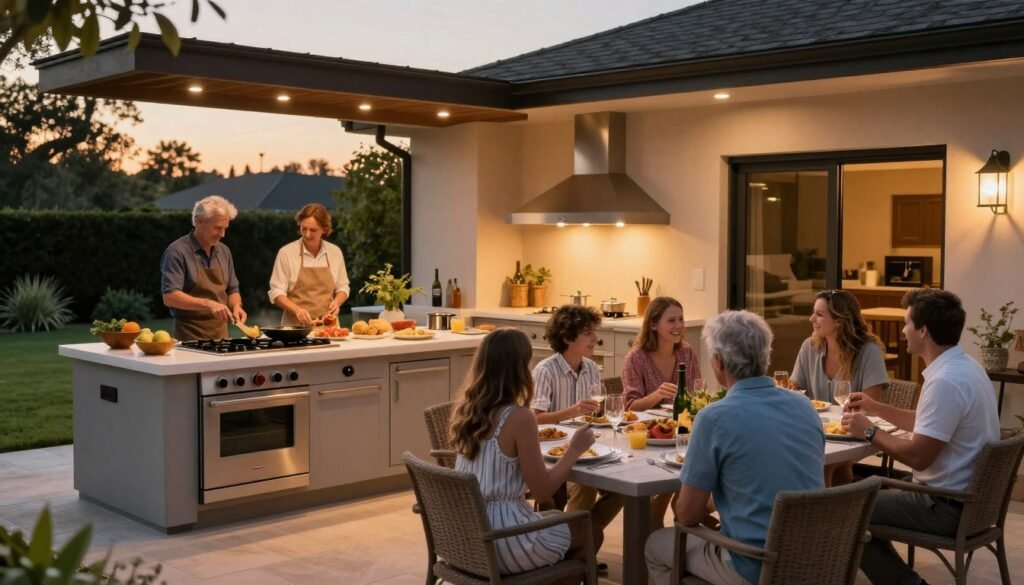
Say goodbye to the days when the cook disappears indoors while guests enjoy the outdoors. With a backyard kitchen, the chef remains part of the conversation and festivities while preparing delicious meals.
Increased Home Value
Outdoor kitchens consistently rank among the top features that increase property value. A thoughtfully designed backyard kitchen can provide an excellent return on investment when it’s time to sell your home.
Cooking outdoors keeps heat, smoke, and cooking odors outside instead of warming up your home. Many foods simply taste better when cooked outdoors, whether grilled, smoked, or wood-fired.
Energy Efficiency
Using your outdoor kitchen during warmer months means less indoor cooking, which can reduce your air conditioning costs and overall energy consumption.
Healthier Lifestyle
An inviting outdoor cooking space encourages more time spent outside and often leads to healthier cooking methods like grilling and smoking compared to some indoor cooking techniques.
Planning Your Backyard Kitchen
Creating a successful outdoor kitchen begins with thoughtful planning. Consider these key factors before breaking ground on your project:
Assess Your Space
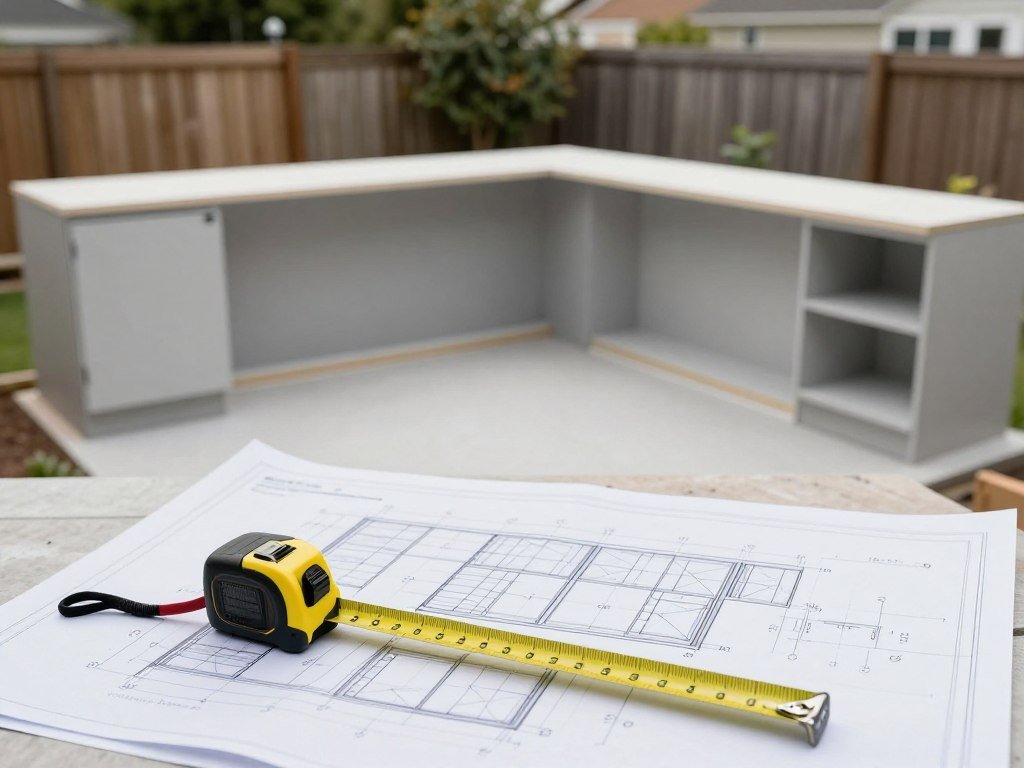
Take a critical look at your available outdoor area. Measure the dimensions and note any existing features like trees, slopes, or structures that might impact your design. Consider proximity to your indoor kitchen for convenience when transporting items back and forth.
Determine Your Budget
Backyard kitchens can range from simple grill stations costing a few thousand dollars to elaborate outdoor living spaces exceeding $50,000. Establishing a realistic budget early helps guide your decisions about materials, appliances, and features.
For those looking to create a budget-friendly outdoor kitchen, consider starting with high-quality portable elements like a premium portable grill that can later be incorporated into a built-in design.
Consider Your Cooking Style
Think about how you’ll use your outdoor kitchen. Do you primarily grill burgers and steaks, or do you envision preparing entire meals outdoors? Are you interested in specialty cooking methods like pizza ovens or smokers? Your cooking preferences will dictate the appliances and layout you need.
Plan for Weather and Seasonality
Consider your local climate and how it will affect your outdoor kitchen usage. In regions with distinct seasons, you might want to incorporate features like overhead coverage, outdoor heaters, or wind barriers to extend your outdoor cooking season.
Check Local Regulations
Before proceeding with construction, research local building codes, permits, and homeowner association rules that might affect your project. Many municipalities have specific requirements for outdoor structures, especially those involving gas lines, plumbing, or electrical work.
Essential Backyard Kitchen Layouts
The layout of your outdoor kitchen significantly impacts its functionality and flow. Here are some popular configurations to consider:
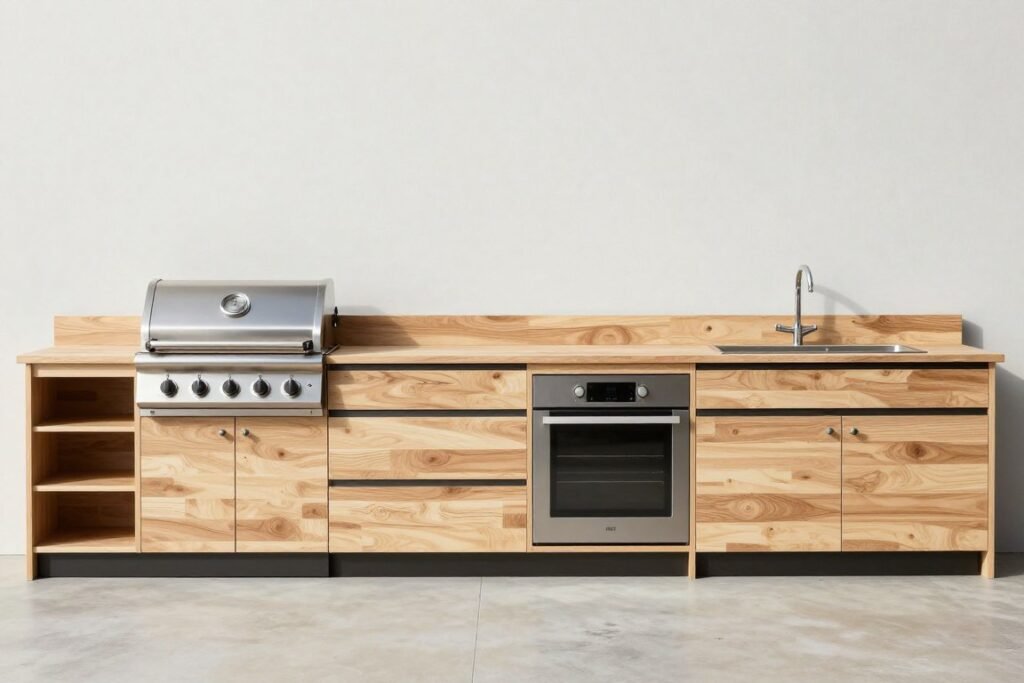
Linear Layout
The simplest and most space-efficient design, a linear layout places all elements in a straight line. This works well against a wall or fence and is ideal for smaller spaces or narrow patios.
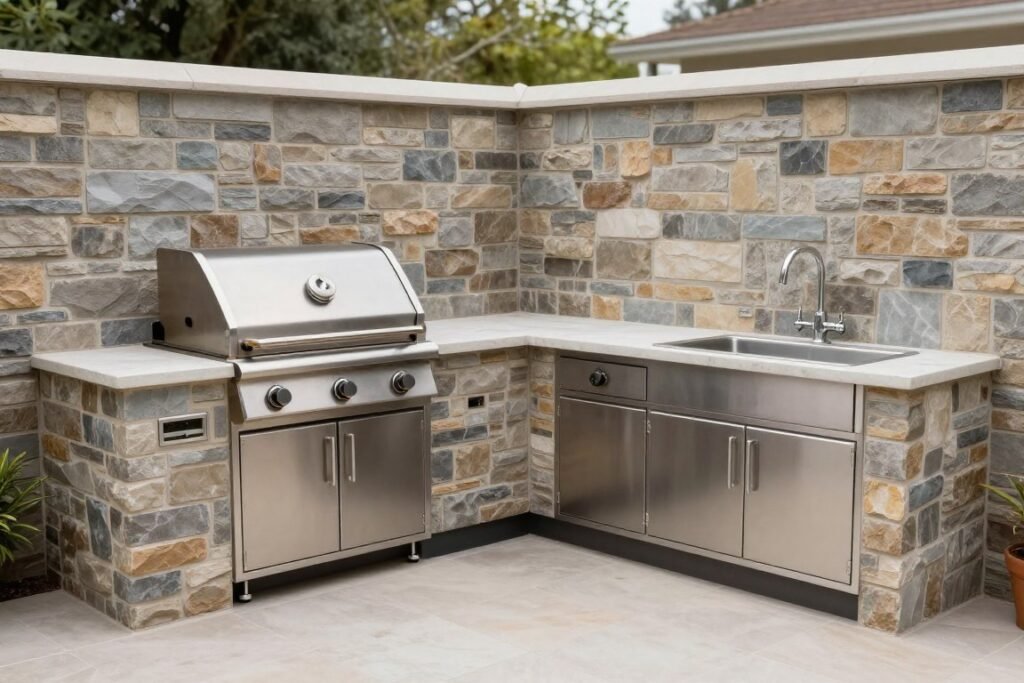
L-Shaped Layout
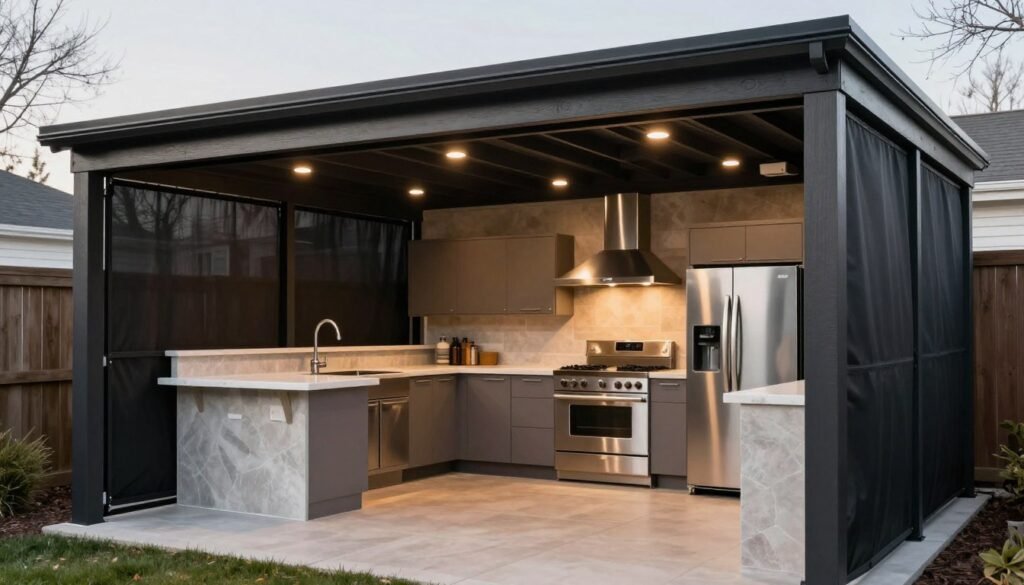
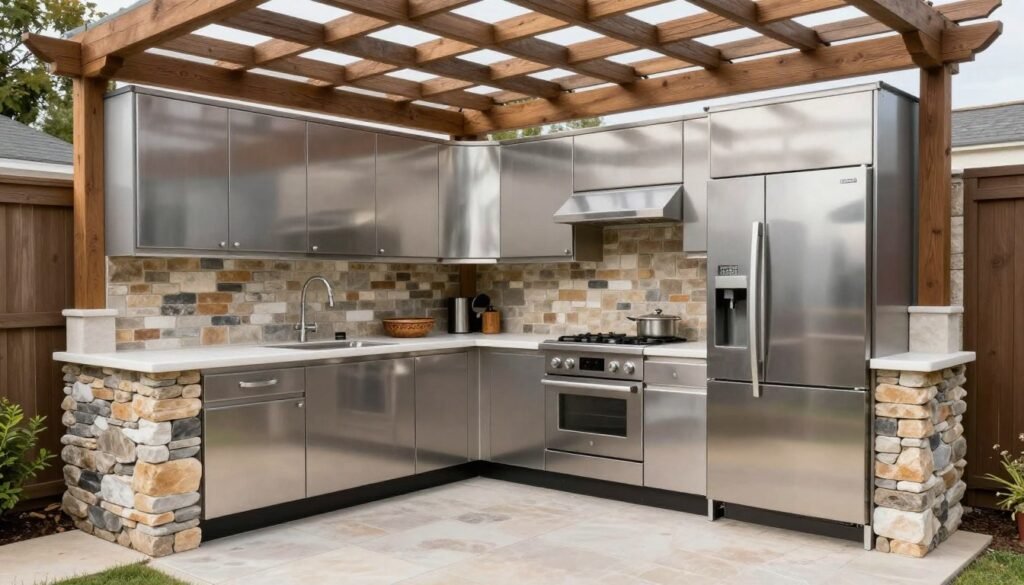
An L-shaped configuration provides more counter space and creates a partial boundary for your cooking area. This layout offers good workflow and can help define the outdoor kitchen zone within a larger patio or yard.
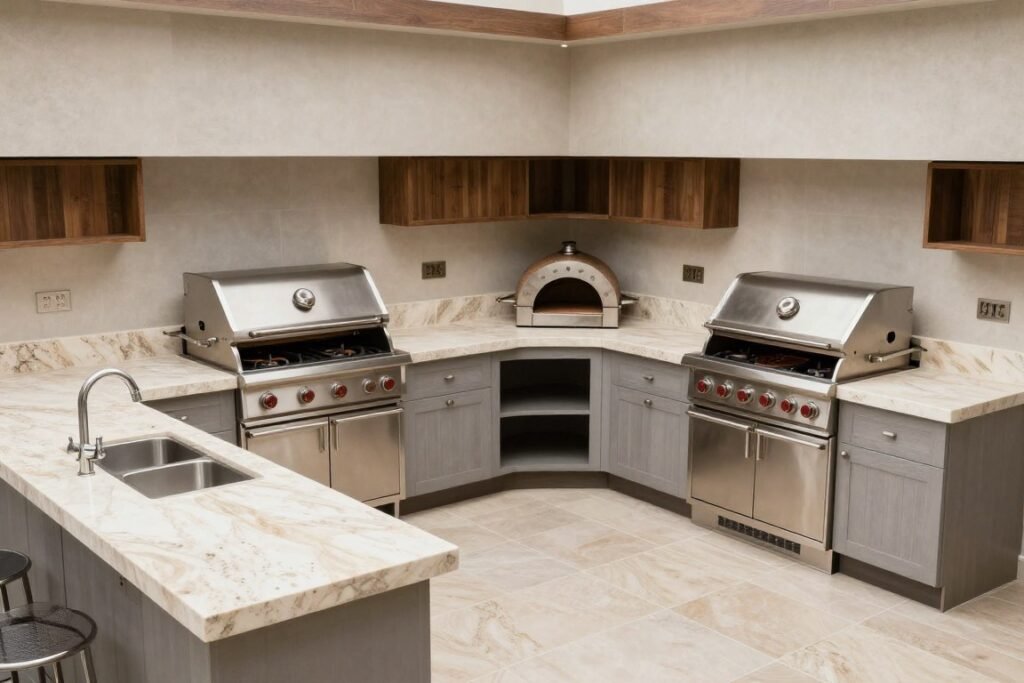
U-Shaped Layout
For serious outdoor chefs, a U-shaped layout maximizes counter space and appliance options. This design creates an efficient workflow but requires more space and typically costs more to construct.
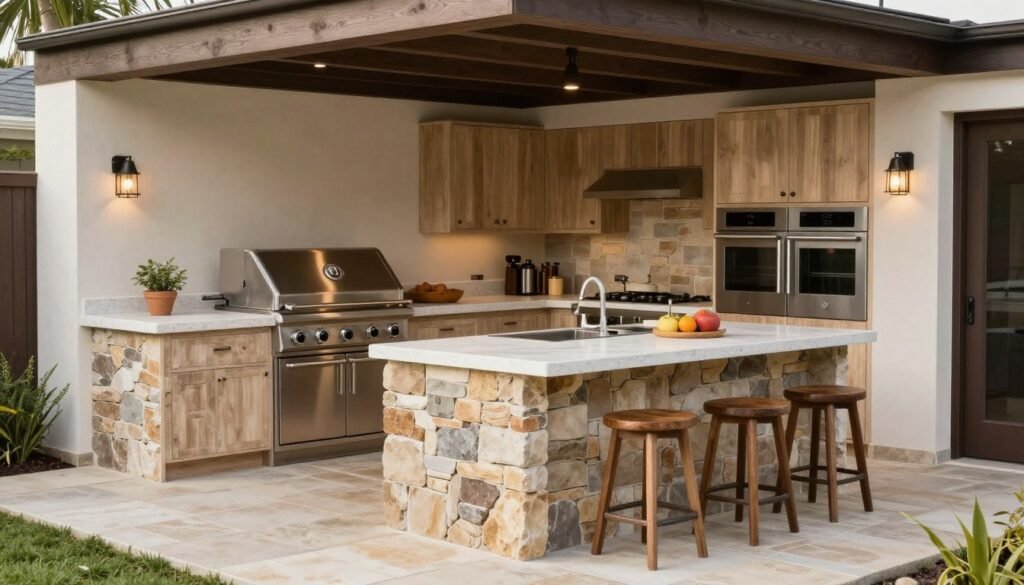
Island Layout
A standalone island creates a focal point in your outdoor space and allows for 360-degree access. This layout works well for social cooks who want to interact with guests from all sides while preparing meals.
Split-Level Layout
For yards with elevation changes, a split-level design can turn a potential challenge into a distinctive feature. This layout might place the cooking area on one level and dining on another, creating visual interest and defined zones.
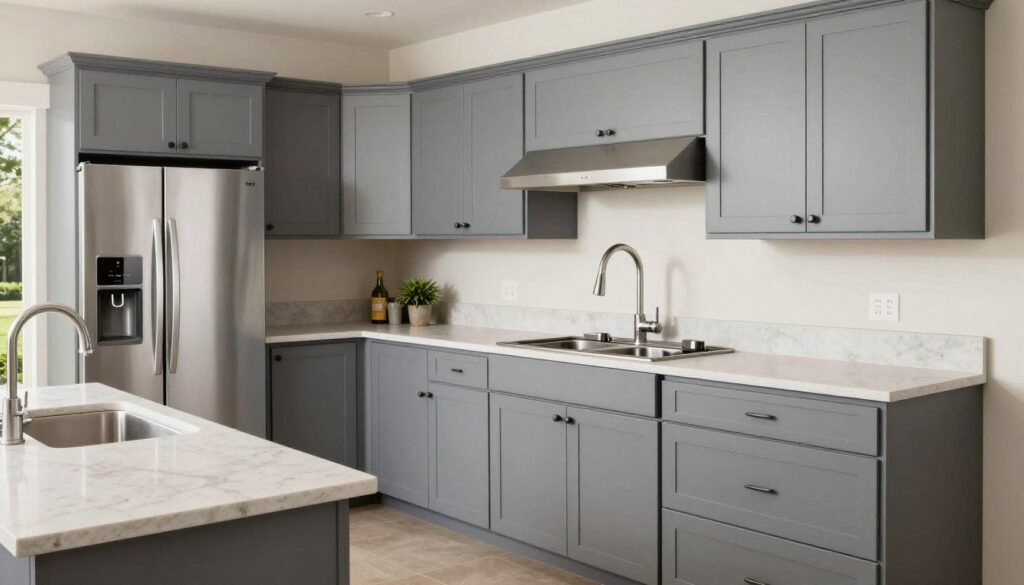
When planning your layout, consider investing in quality outdoor kitchen cabinets that provide both storage and structure for your design.
Essential Components for Your Backyard Kitchen
A functional outdoor kitchen requires certain key elements. Depending on your budget and needs, you might include some or all of these components:
Cooking Appliances
The heart of any backyard kitchen is its cooking equipment. Consider these options:
Built-in Grill
The centerpiece of most outdoor kitchens, a built-in grill offers more power and features than portable models. Choose from gas, charcoal, or pellet fuels based on your cooking preferences and desired flavor profiles.
For the ultimate grilling experience, consider a high-quality built-in gas grill with features like searing stations and rotisserie capabilities.
Side Burners
These allow you to prepare side dishes or sauces without running back to your indoor kitchen. Side burners are especially useful for boiling corn, warming sauces, or sautéing vegetables while your main dish cooks on the grill.
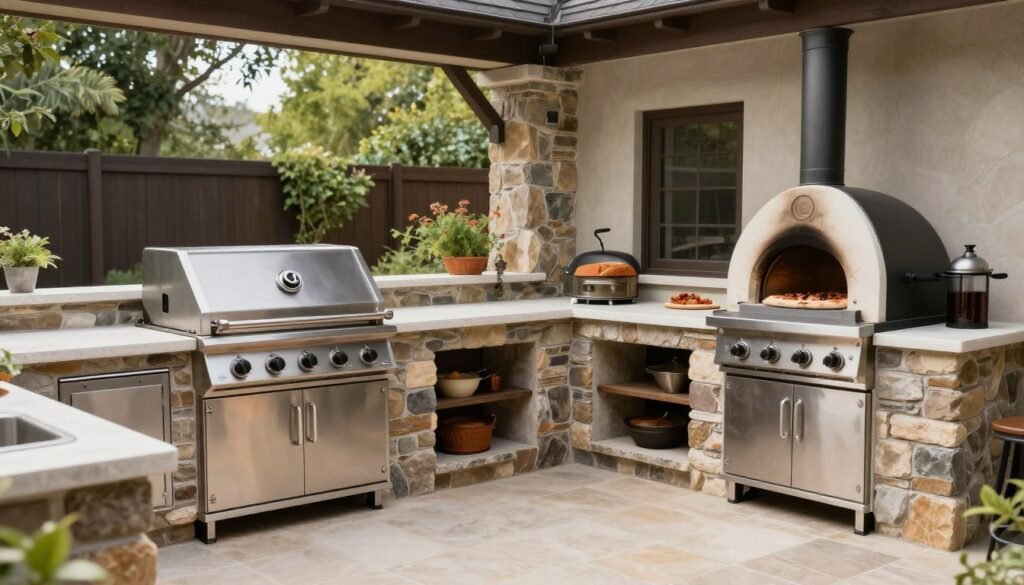
Pizza Oven
A trending addition to outdoor kitchens, pizza ovens create restaurant-quality pizzas with crispy crusts and perfectly melted toppings. Many models can also roast meats, bake bread, and prepare other dishes at high temperatures.
You can find outdoor pizza ovens in various sizes and styles to fit your space and budget.
Smoker
For barbecue enthusiasts, a dedicated smoker allows for slow-cooking meats to tender, flavorful perfection. Options range from traditional offset smokers to ceramic kamado-style cookers and electric pellet smokers.
Functional Elements
Beyond cooking appliances, these components enhance the usability of your outdoor kitchen:
Countertops and Prep Areas
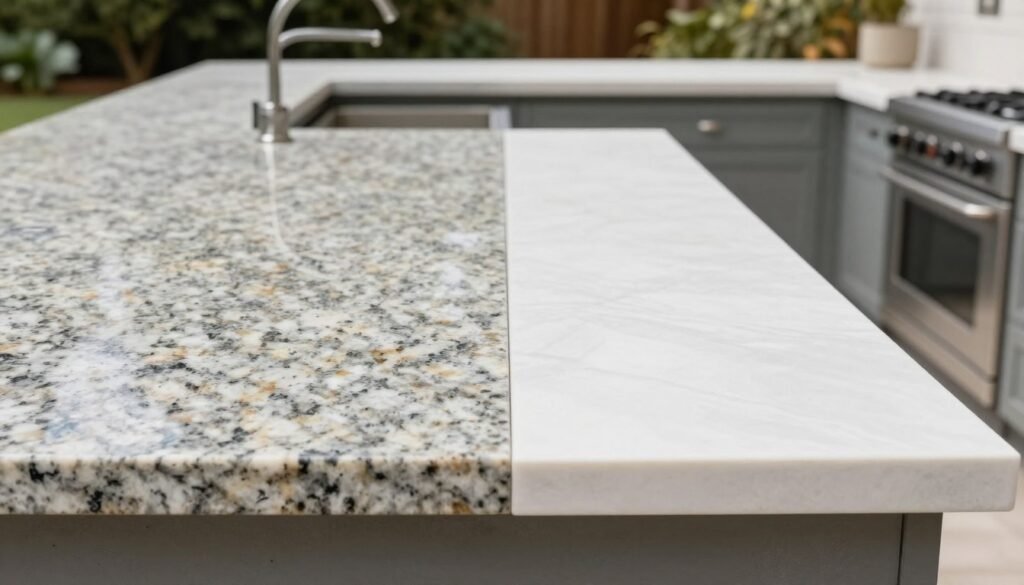
Ample counter space is essential for food preparation, plating, and serving. Outdoor countertops must withstand weather conditions, so choose materials like granite, concrete, porcelain, or specialized outdoor-rated quartz.
Sink
An outdoor sink eliminates trips inside for washing hands, rinsing produce, or cleaning utensils. Consider a deep basin model with a high-arching faucet to accommodate larger items.
Outdoor-rated refrigerators keep ingredients fresh and beverages cold without trips back to the house. Options range from compact beverage fridges to full-sized refrigerators and specialized drawers.
Storage
Weather-resistant cabinets and drawers keep utensils, tools, and serving pieces organized and protected. Look for marine-grade stainless steel or specially treated wood cabinets designed for outdoor use.
The materials you choose for your backyard kitchen must withstand weather, temperature fluctuations, and heavy use. Here are some durable options to consider:
Countertop Materials
Your outdoor countertops need to be particularly resilient. Consider these options:
Granite
A popular choice for outdoor kitchens, granite resists heat, scratches, and stains. Choose darker colors that won’t show discoloration from sun exposure. Granite requires periodic sealing but otherwise needs minimal maintenance.
Concrete
Versatile and customizable, concrete countertops can be formed to any shape and tinted to various colors. They’re extremely durable when properly sealed and can be cast with integrated features like drain boards or cutting surfaces.
Porcelain
Increasingly popular for outdoor use, porcelain slabs are non-porous, UV-resistant, and impervious to stains. They won’t harbor bacteria and can mimic the look of natural stone or other materials at a lower weight.
Structural Materials
The framework and visible surfaces of your outdoor kitchen should be both attractive and weather-resistant:
Stone Veneer
Natural or manufactured stone veneer provides a classic, upscale look that complements many home styles. It’s durable and requires little maintenance beyond occasional cleaning.
Stainless Steel
For a modern, professional look, marine-grade stainless steel cabinets and framework offer exceptional durability. Look for 316-grade stainless for the best corrosion resistance, especially in coastal areas.
Traditional and timeless, brick structures offer excellent durability and heat resistance. Brick can be painted or stained for different looks and works well with many architectural styles.
Weather-Resistant Wood
If you prefer a warmer look, consider naturally rot-resistant woods like teak, ipe, or cedar. These require more maintenance than other materials but provide an organic, inviting aesthetic.
Your outdoor kitchen should reflect your personal taste while complementing your home’s architecture. Here are some popular design directions:
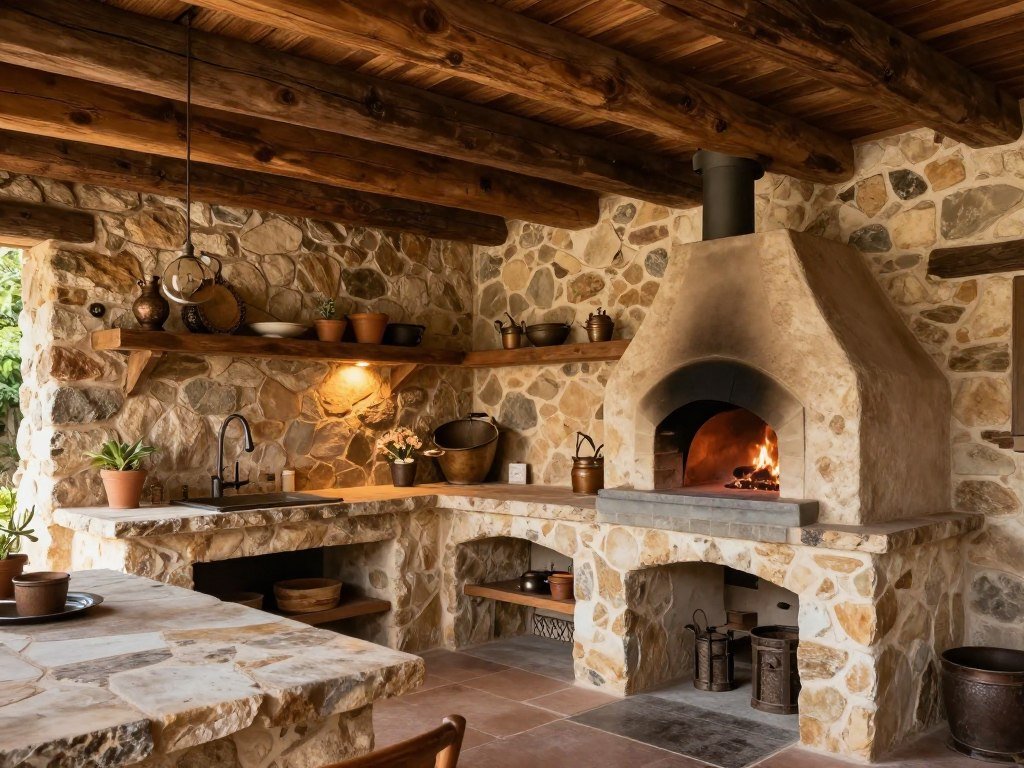
Rustic Charm
Emphasizing natural materials and a warm, inviting feel, rustic outdoor kitchens often feature stone, timber, and earthy color palettes. Consider a wood-burning pizza oven, rough-hewn countertops, and vintage-inspired accessories for an authentic rustic appeal.
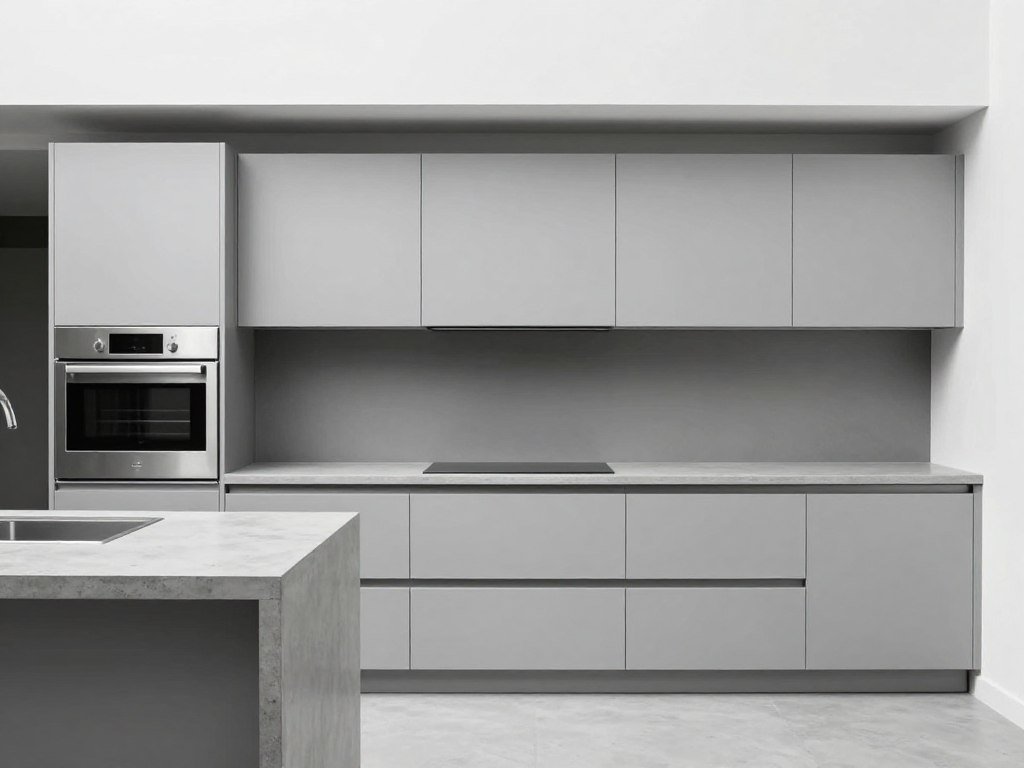
Modern Minimalist
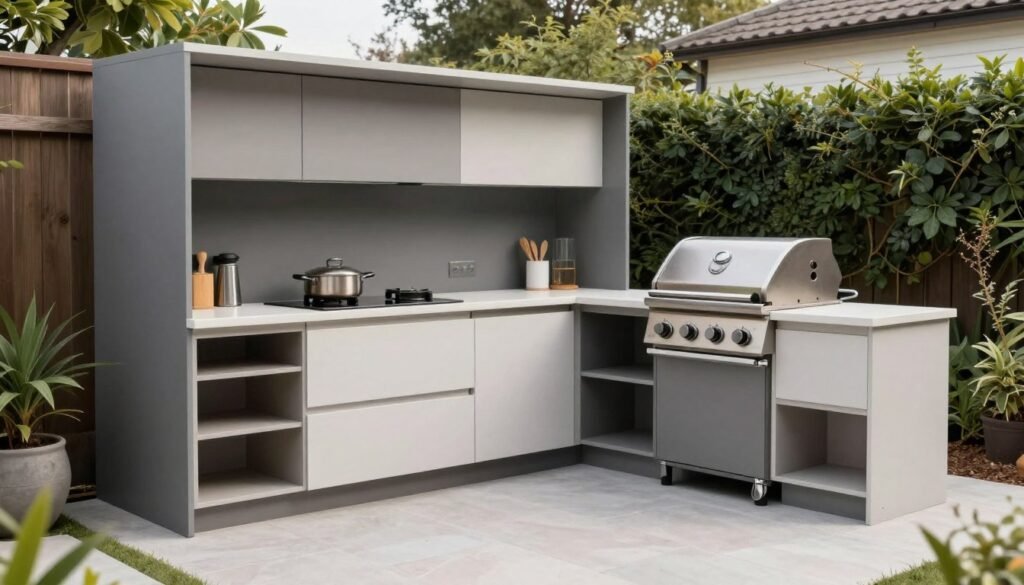
Clean lines, sleek surfaces, and a monochromatic color scheme define this contemporary style. Stainless steel appliances, concrete countertops, and minimalist cabinetry create a sophisticated outdoor cooking space that emphasizes function and form.
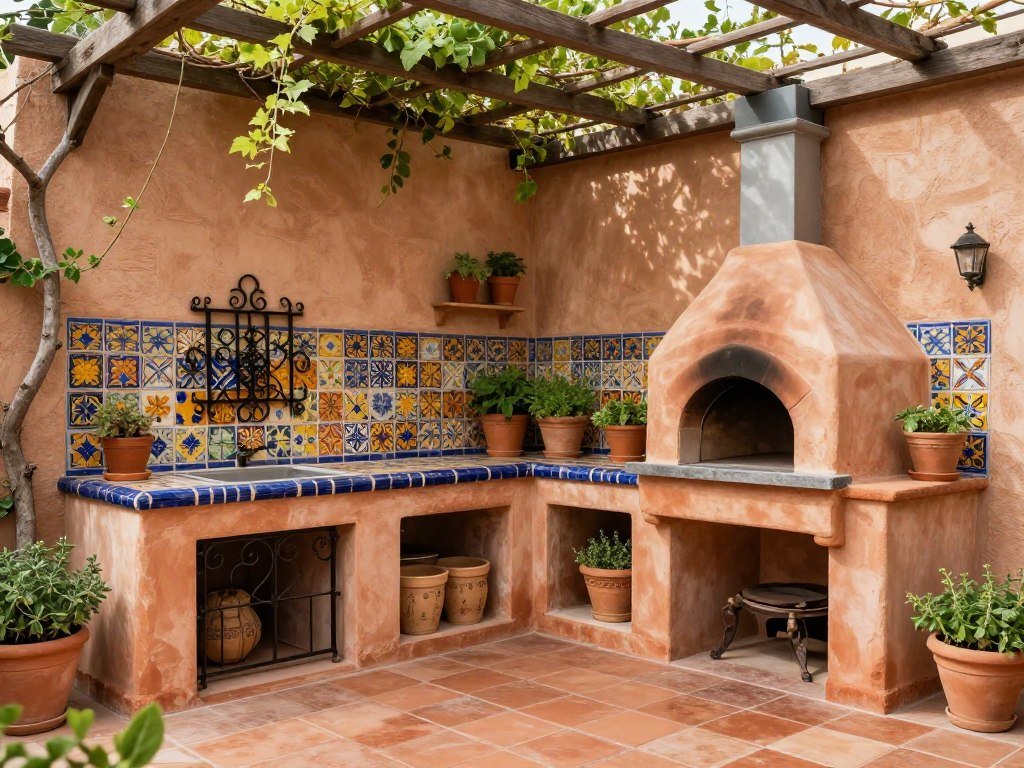
Mediterranean Inspired
Bringing the warmth of Southern Europe to your backyard, this style incorporates terracotta, colorful tiles, and wrought iron details. A wood-fired oven, herb garden, and pergola draped with vines complete the Mediterranean ambiance.
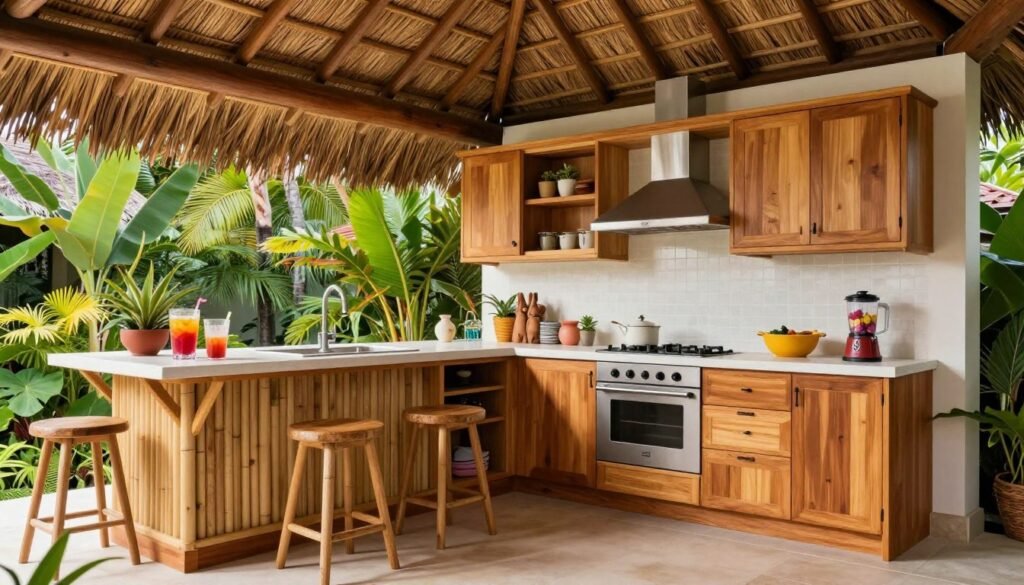
Tropical Paradise
Create a vacation-like atmosphere with teak furnishings, palm fronds, and vibrant accents. A thatched roof or bamboo elements can enhance the tropical feel, while an outdoor bar with frozen drink capabilities completes the resort-inspired experience.
For any design style, consider adding themed accessories and decor that enhance your chosen aesthetic while remaining functional for outdoor use.
Lighting Your Backyard Kitchen
Proper lighting extends the usability of your outdoor kitchen into the evening hours while creating ambiance and ensuring safety. Consider these lighting strategies:
Task Lighting
Focused illumination for cooking areas is essential for safety and functionality after sunset. Install bright, directional lights above grills, prep areas, and sinks to ensure you can see what you’re doing clearly.
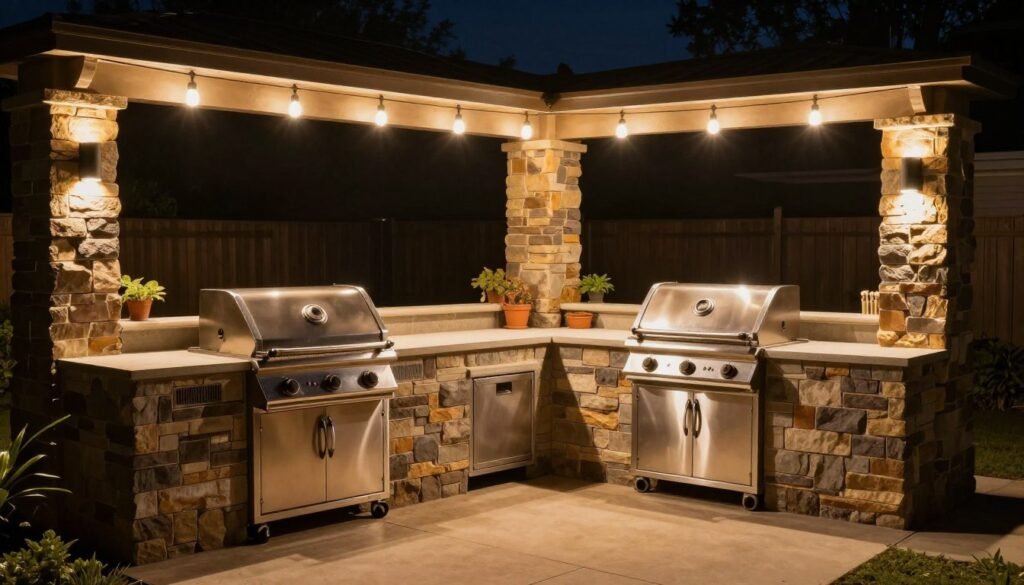
Create a warm, inviting atmosphere with overall illumination that defines the space. Options include string lights overhead, recessed lighting in a pergola, or weatherproof pendant lights above dining areas.
Accent Lighting
Highlight architectural features, landscaping, or design elements with strategic accent lighting. Consider toe-kick lights under cabinets, uplights on stonework, or illuminated shelving to add visual interest.
Smart Lighting
Programmable lighting systems allow you to create different scenes for cooking, dining, and entertaining. Many systems can be controlled via smartphone apps or voice commands for convenient adjustments.
Protecting your backyard kitchen from the elements extends its usability and preserves your investment. Consider these options for overhead coverage:
Pergolas
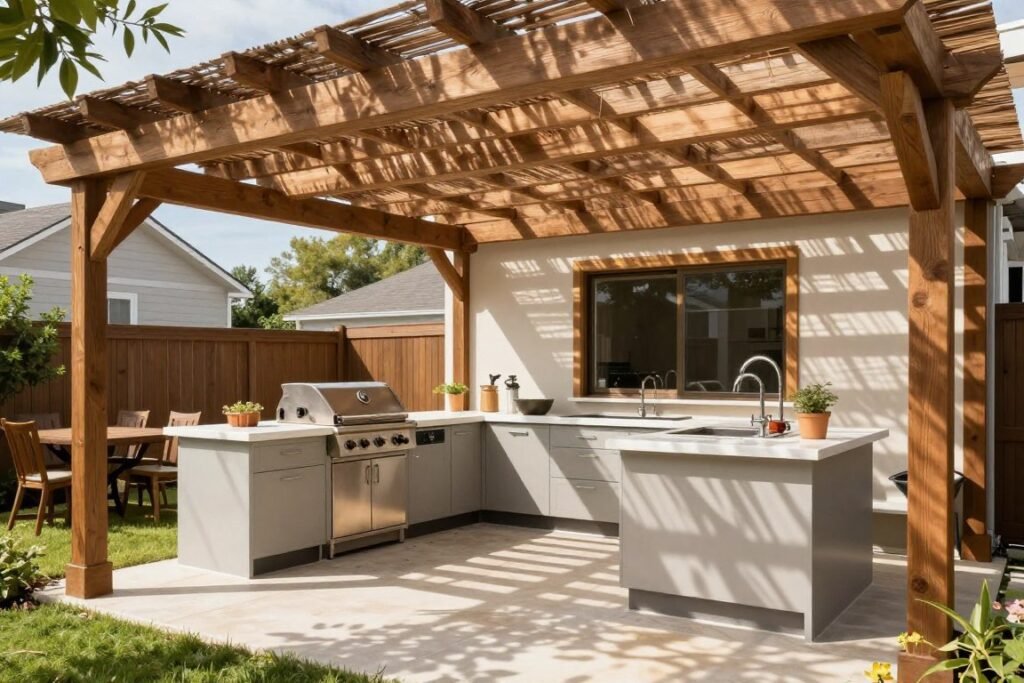
These open-beam structures provide filtered shade while maintaining an open-air feel. Add a retractable canopy or grow climbing vines for additional sun protection. Pergolas can be attached to your home or freestanding in your yard.
Pavilions
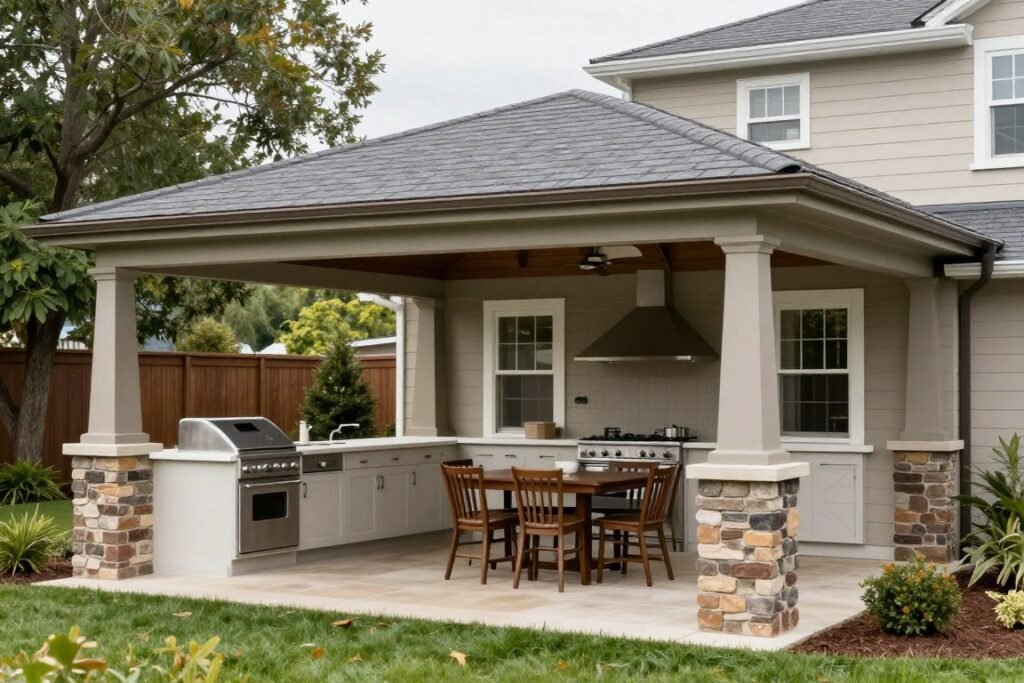
For more complete protection, a pavilion with a solid roof shields your outdoor kitchen from rain and intense sun. These structures can be designed to match your home’s architecture for a cohesive look.
Retractable Awnings
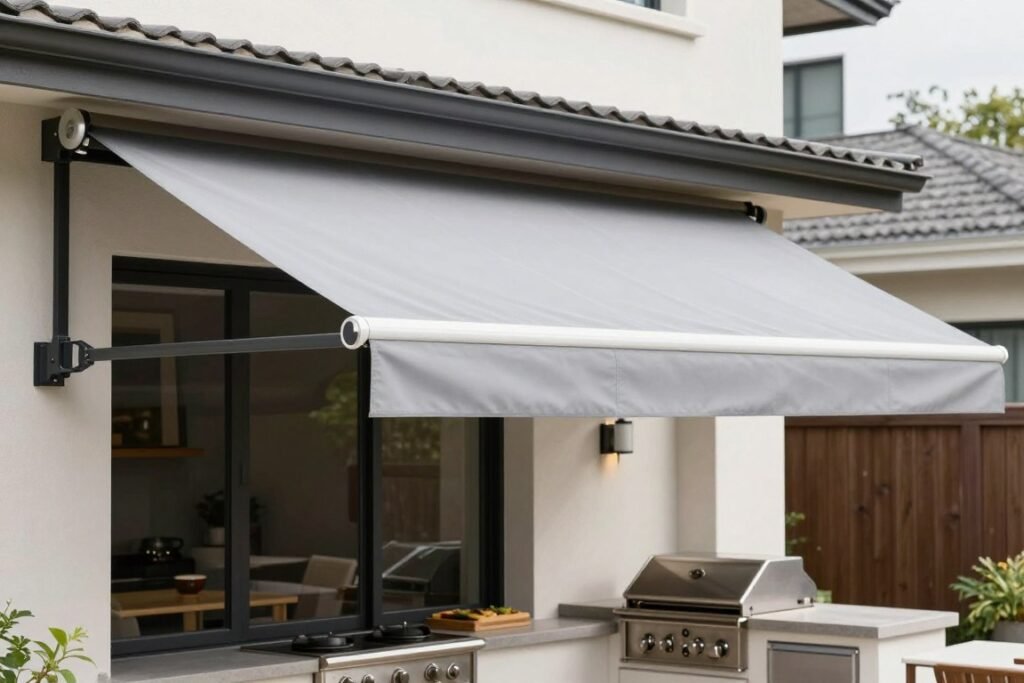
Offering flexibility for changing conditions, motorized awnings can be extended for shade or protection from light rain and retracted to enjoy sunny days or starry nights. Modern options include wind sensors that automatically retract in high winds.
Limited outdoor area doesn’t mean you can’t have a functional cooking space. These strategies make the most of compact areas:
Vertical Design
When floor space is limited, think upward. Install wall-mounted shelving, hanging utensil racks, and vertical herb gardens to maximize functionality without expanding your footprint.
Multi-Functional Elements
Choose features that serve multiple purposes, such as a counter that doubles as a bar top, built-in seating with storage underneath, or a rolling cart that can be repositioned as needed.
Utilize corner spaces that might otherwise go unused. An L-shaped design tucked into a corner can provide surprising amounts of counter space and storage while keeping the central area open.
Built-In Seating
Instead of space-consuming freestanding furniture, incorporate built-in bench seating along walls or railings. This approach saves space while creating a cohesive, designed look.
Maintaining Your Backyard Kitchen
Proper care ensures your outdoor kitchen remains beautiful and functional for years to come. Follow these maintenance guidelines:
Seasonal Cleaning
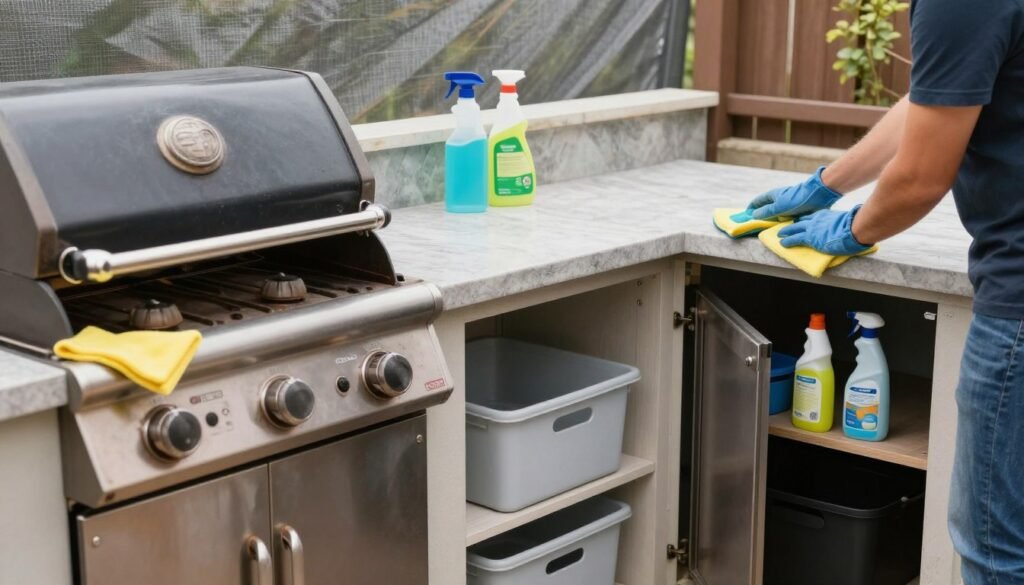
Perform a thorough cleaning at the beginning and end of your primary outdoor cooking season. Clean appliances according to manufacturer instructions, wash all surfaces, and inspect for any damage or wear that needs attention.
Follow manufacturer guidelines for maintaining grills, refrigerators, and other appliances. Regular cleaning prevents buildup that can affect performance and longevity. Check gas connections annually for safety.
Surface Protection
Depending on your materials, you may need to periodically reseal countertops, refinish wood elements, or apply protective treatments. Follow recommendations for your specific materials to maintain their appearance and durability.
Winter Preparation
In cold climates, properly winterizing your outdoor kitchen prevents damage from freezing temperatures. Shut off and drain water lines, clean and cover appliances, and protect vulnerable materials from snow and ice.
A well-designed backyard kitchen transforms your outdoor living experience, creating a space where cooking, dining, and entertaining blend seamlessly with the pleasure of being outdoors. Whether you opt for a simple grilling station or an elaborate outdoor culinary retreat, the key is thoughtful planning that addresses your specific needs, space, and budget.
Remember that your outdoor kitchen can evolve over time. Many homeowners start with basic elements and add features as their needs change or budget allows. The most successful designs prioritize quality over quantity, focusing on durable materials and well-made appliances that will stand the test of time.
With the ideas and considerations outlined in this guide, you’re well-equipped to create a backyard kitchen that enhances your home and lifestyle for years to come. Happy outdoor cooking!