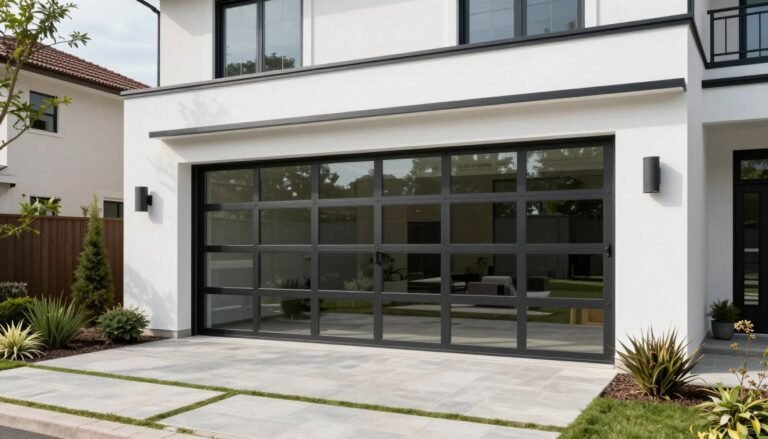
Your outdoor space is a canvas waiting to be transformed. Whether you have a sprawling yard or a compact garden, the right landscaping ideas can turn any outdoor area into a personal paradise. From creating curb appeal that makes neighbors stop and stare to designing serene backyard retreats where you can escape the daily grind, thoughtful landscaping enhances both the beauty and value of your home.
This Website contains affiliate links. That means I may earn a small commission if you purchase through my links, at no extra cost to you.
In this comprehensive guide, we’ll explore dozens of inspiring landscaping ideas that range from simple weekend projects to stunning transformations. You’ll discover how to work with your space’s natural features, incorporate sustainable practices, and create outdoor areas that reflect your personal style while remaining practical for your lifestyle.
Front Yard Landscaping Ideas That Create Lasting Impressions
Your front yard creates the first impression of your home. These landscaping ideas will help you design an entrance that welcomes guests and enhances your home’s architecture.
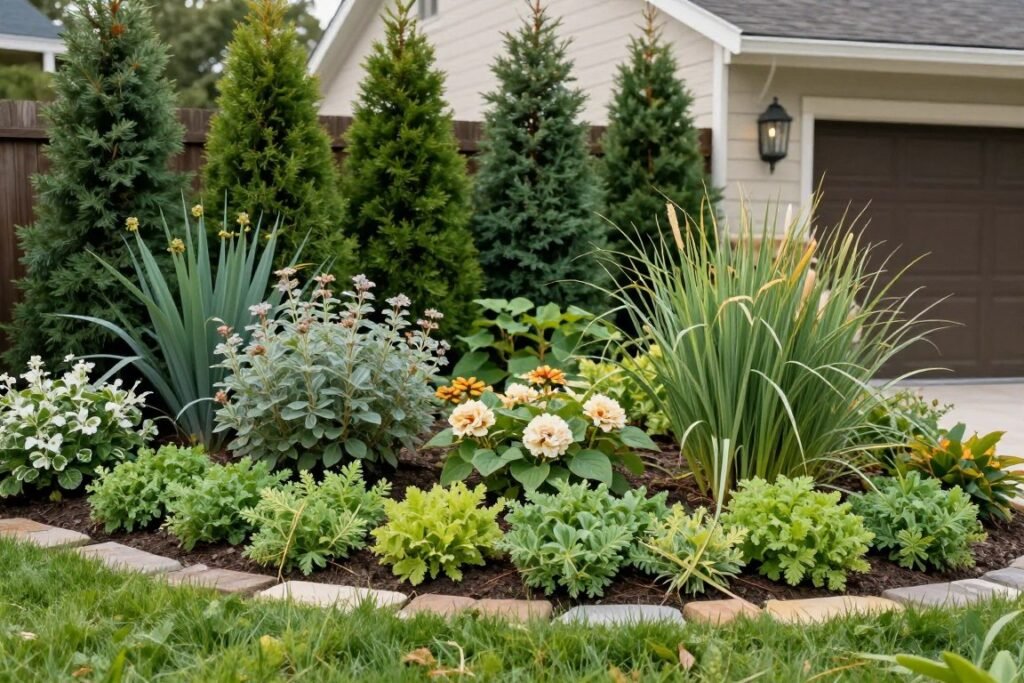
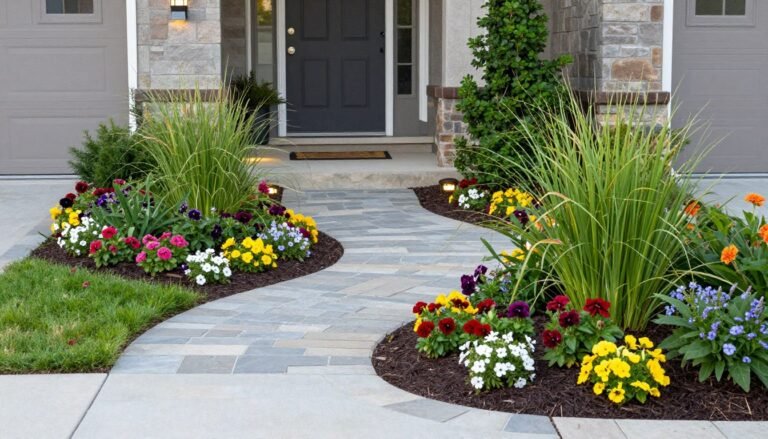
A well-designed front yard creates curb appeal and complements your home’s architecture
Frame Your Entrance with Symmetrical Plantings
Create a welcoming entrance by framing your front door with matching plants or structures. Symmetrical arrangements of evergreen shrubs, flowering plants, or decorative containers guide the eye toward your entrance while providing year-round structure. For a polished look, consider adding a pair of statement planters filled with seasonal flowers that complement your home’s color palette.
For container gardens that make a statement, you’ll need quality planters that withstand the elements. Look for durable options in various materials like weather-resistant planters that complement your home’s style.
Create visual interest by layering plants of different heights, textures, and blooming seasons. Start with taller shrubs or small trees as the backdrop, add medium-height flowering perennials in the middle, and finish with low-growing ground covers or border plants in front. This approach ensures your landscape has visual appeal throughout the year and creates a professional, designed appearance.
Layered plantings create depth and ensure year-round visual interest
Define Spaces with Borders and Edging
Clean, defined edges between your lawn, garden beds, and walkways instantly elevate your landscape’s appearance. Use materials that complement your home’s architecture—brick for traditional homes, steel for modern designs, or natural stone for a timeless look. Well-defined borders not only look professional but also make maintenance easier by preventing grass from invading flower beds.
Quality edging materials make all the difference in creating clean lines. Browse garden edging options to find the perfect match for your landscape style.
Backyard Retreat Ideas for Personal Paradise
Transform your backyard into a private oasis where you can relax, entertain, and connect with nature. These landscaping ideas focus on creating functional outdoor living spaces that extend your home’s usable area.
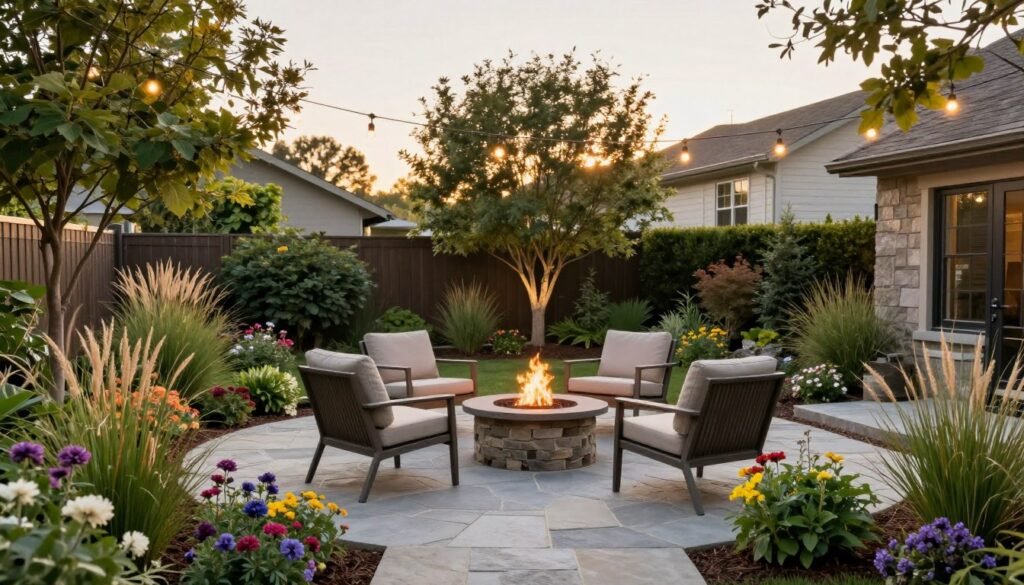
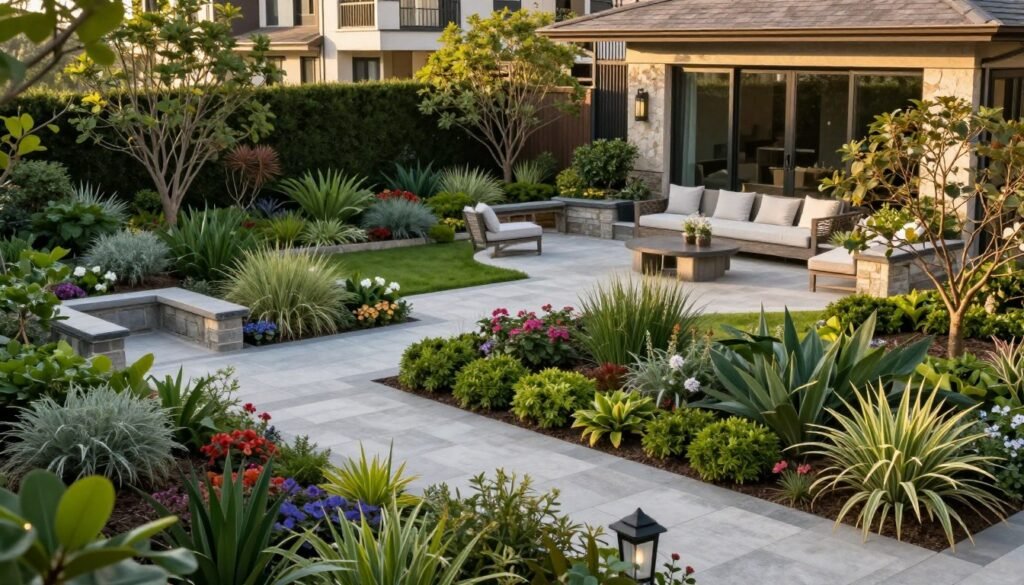
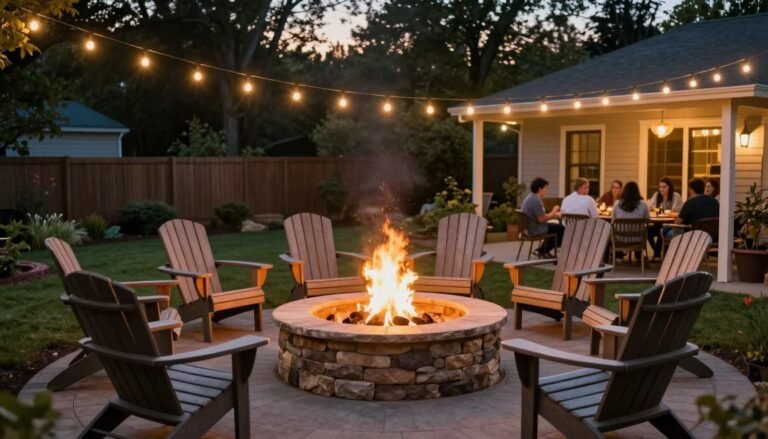
Create a backyard retreat that combines beauty with functionality
Design Outdoor Rooms for Different Activities
Just like inside your home, your backyard can be divided into “rooms” for different purposes. Create distinct areas for dining, lounging, cooking, and play by using changes in materials, levels, or plantings as natural dividers. A pergola can define a dining area, while a circle of gravel might surround a fire pit conversation zone. This approach makes even modest-sized yards feel larger and more functional.
Incorporate Water Features for Tranquility
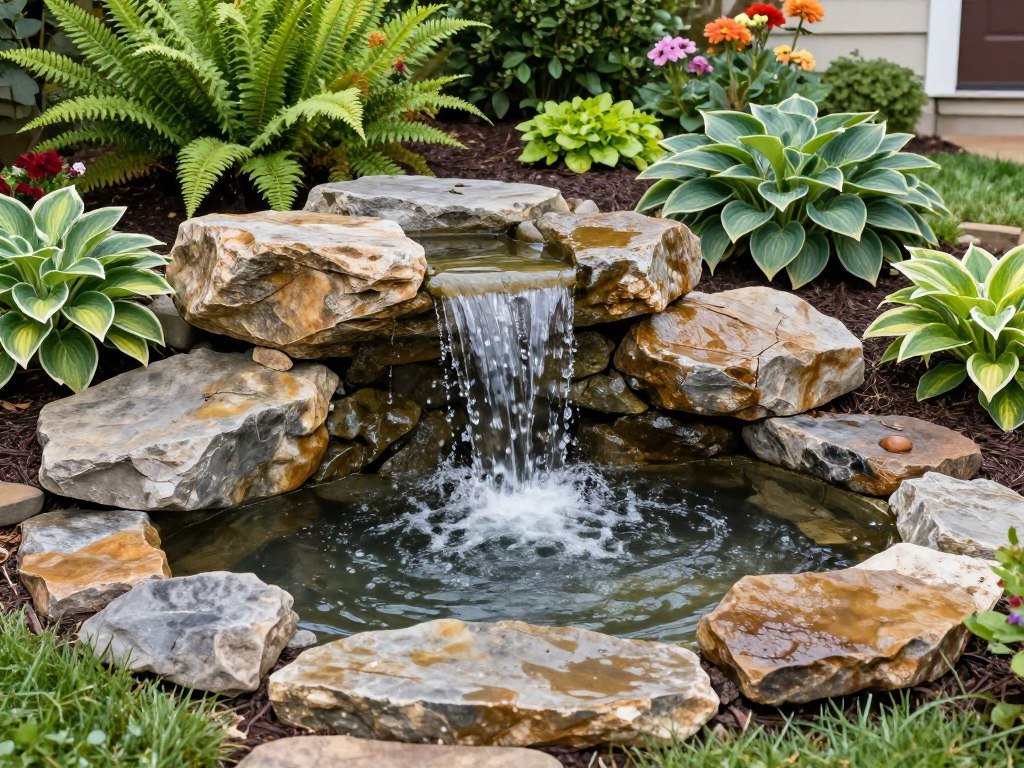
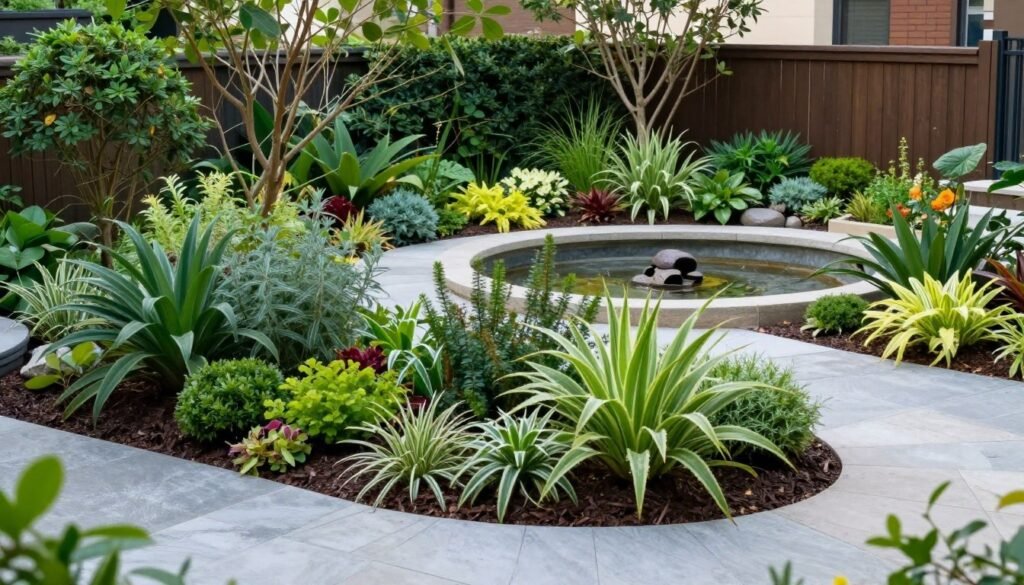
The sound of moving water adds a sensory dimension to your landscape that instantly creates a feeling of calm. Options range from elaborate ponds with waterfalls to simple tabletop fountains. For low-maintenance choices, consider self-contained water features that recirculate water and require minimal upkeep. Position water features where they can be enjoyed from main viewing areas like patios or decks.
Water features add a sensory dimension to your landscape with soothing sounds
Create Shade for Comfort and Privacy
Strategic shade elements make your outdoor spaces more comfortable during hot summer months while also providing privacy. Consider pergolas draped with flowering vines, shade sails in modern designs, or strategically placed trees. When selecting trees for shade, consider their mature size, growth rate, and whether they drop leaves or fruit that might require cleanup.
For quick shade solutions while waiting for trees to mature, explore outdoor shade structures that can be installed in a weekend.
Low-Maintenance Landscaping Ideas That Still Impress
Beautiful landscapes don’t have to demand hours of weekly maintenance. These ideas focus on creating stunning outdoor spaces that look great with minimal upkeep.
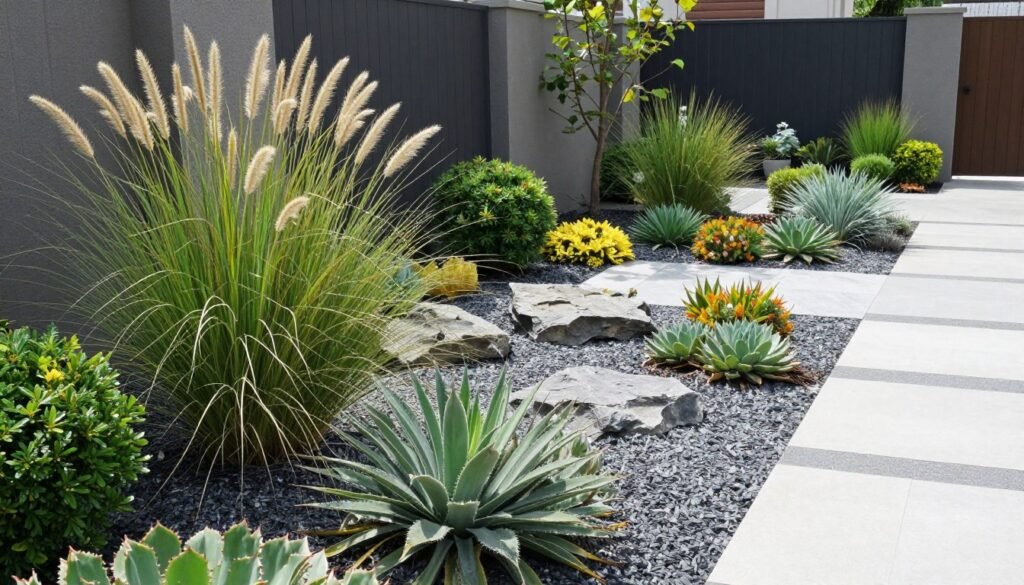
Low-maintenance landscapes combine smart plant choices with strategic hardscaping
Embrace Native Plants for Effortless Beauty
Native plants have evolved to thrive in your local climate and soil conditions, making them naturally low-maintenance once established. They typically require less water, fertilizer, and pest control than non-native species. Research plants native to your region and incorporate them into your design for a landscape that’s both ecologically friendly and easy to maintain.
Find the perfect native plants for your region with a collection of native plant gardening guides specific to your area.
Reduce Lawn Areas with Ground Covers
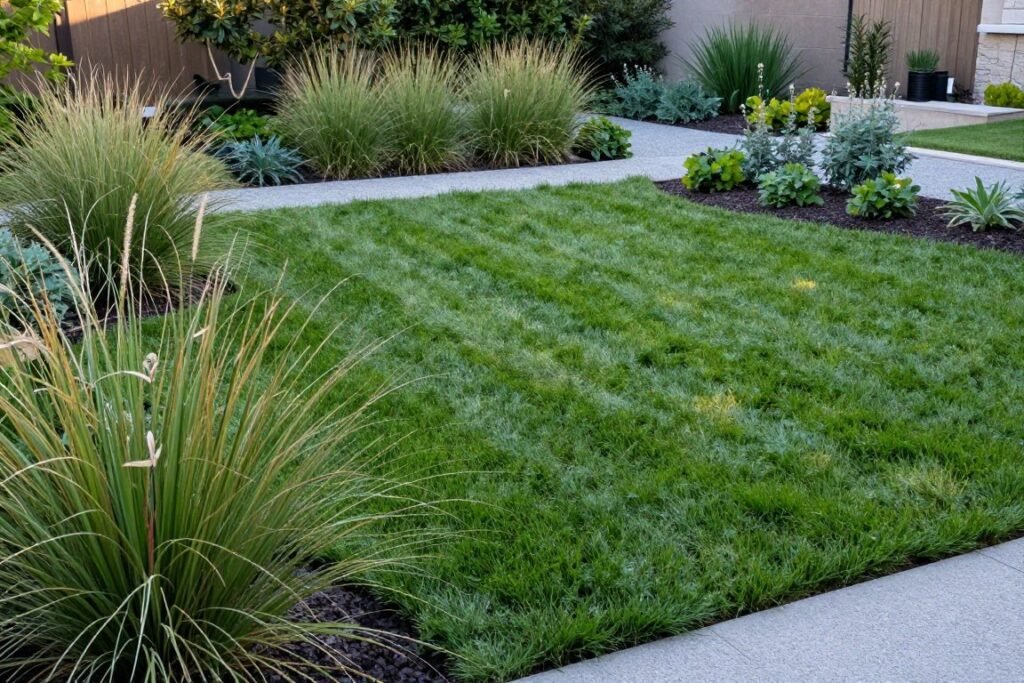
Lawns require regular mowing, watering, and fertilizing. Reduce maintenance by replacing portions of your lawn with low-growing ground covers, ornamental grasses, or hardscaping elements like gravel or pavers. Focus on keeping lawn areas where they serve a purpose, such as play spaces, and convert the rest to more sustainable alternatives.
Reducing lawn areas with ground covers and hardscaping creates a lower-maintenance landscape
Install Smart Irrigation Systems
Automated irrigation systems with smart controllers can significantly reduce water usage while ensuring plants receive exactly what they need. Drip irrigation delivers water directly to plant roots, minimizing waste through evaporation and preventing many fungal diseases that thrive in wet foliage. Group plants with similar water needs together to maximize irrigation efficiency.
Modern irrigation systems make watering efficient and hands-free. Explore smart irrigation solutions that can be controlled from your smartphone.
Garden Path Ideas That Guide and Delight
Garden paths serve both practical and aesthetic purposes, guiding visitors through your landscape while adding structure and visual interest. The right path design enhances your overall landscape theme.
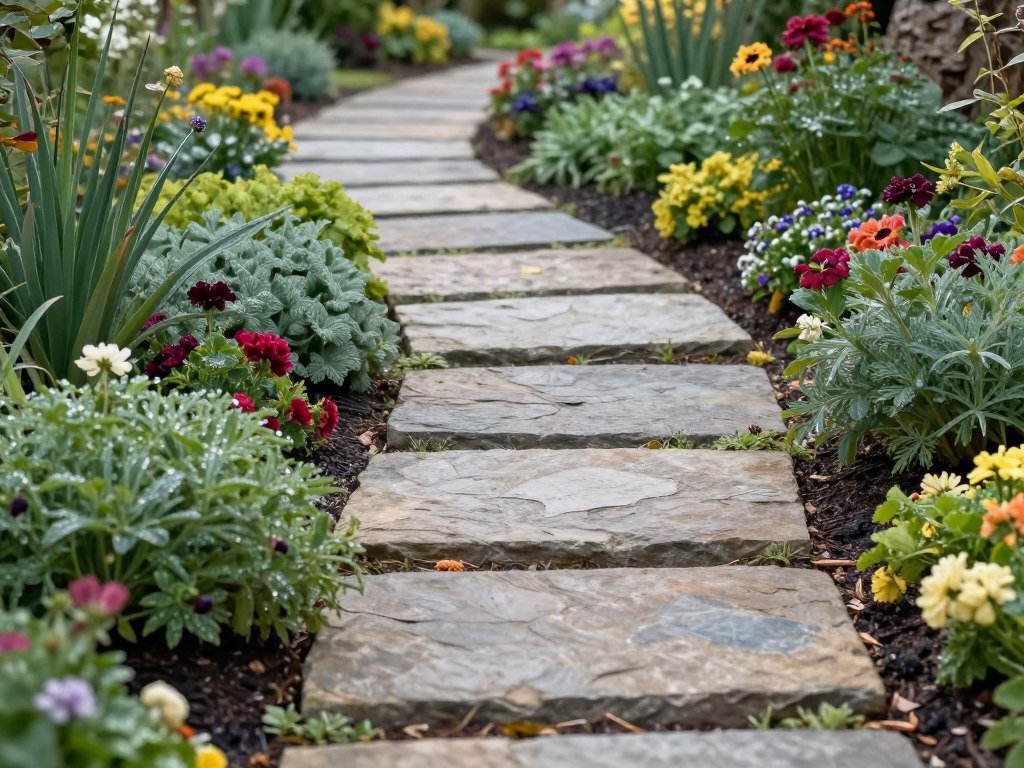
A well-designed garden path invites exploration while providing practical access
Choose Materials That Complement Your Style
The materials you select for your garden paths should reflect your overall landscape style. Natural flagstone or gravel creates a rustic, organic feel; brick or cobblestone suits traditional gardens; while concrete pavers work well in contemporary designs. Consider how the path material will look when wet, whether it might become slippery, and how it will age over time.
Quality path materials ensure your garden walkways will last for years. Find garden path materials that match your landscape vision.
Design Paths That Create Journey and Discovery
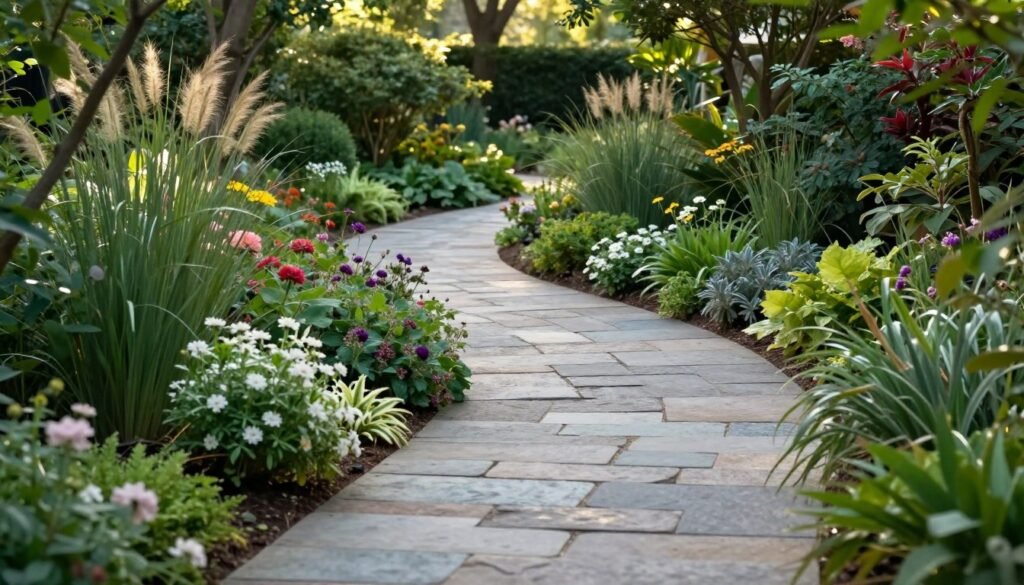
Straight paths efficiently move people from point A to point B, while curved paths slow the journey and create a sense of discovery. Consider what experience you want to create—a direct route to a destination or a meandering journey through garden rooms. Use paths to direct attention to focal points like specimen plants, water features, or seating areas.
Curved paths create a sense of journey and reveal garden features gradually
Illuminate Paths for Safety and Drama
Path lighting serves the dual purpose of safety and highlighting your landscape’s beauty after dark. Low-voltage LED path lights are energy-efficient and come in styles to match any garden theme. Solar options eliminate the need for wiring but may provide less consistent illumination. Position lights to guide movement while creating dramatic shadows and highlights on nearby plants.
The right lighting transforms your garden paths after dark. Browse garden path lighting options to extend your landscape enjoyment into the evening.
Vertical Landscaping Ideas for Small Spaces
When ground space is limited, think vertically. These ideas help you maximize your landscaping potential by utilizing walls, fences, and vertical structures.
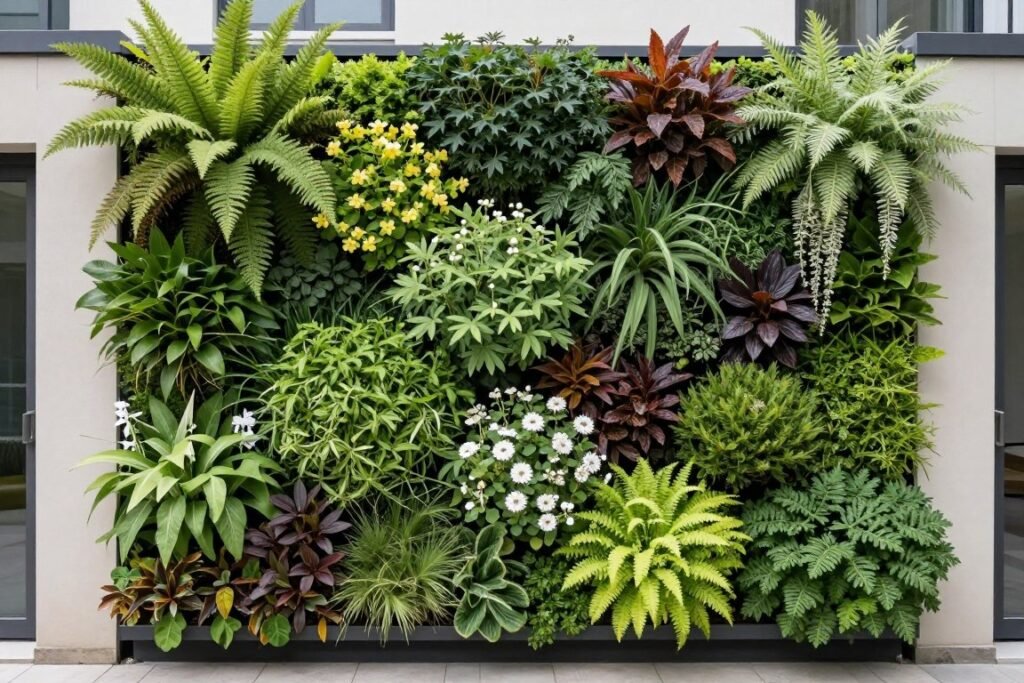
Vertical gardens transform walls and fences into living tapestries of plants
Install Living Walls for Maximum Impact
Living walls or green walls transform vertical surfaces into lush plantings that make a dramatic statement while taking up minimal ground space. Options range from modular systems with built-in irrigation to DIY approaches using pocket planters. Choose plants based on your wall’s light exposure, considering factors like growth habit and maintenance needs.
Creating a living wall is easier with the right system. Explore vertical garden systems designed for different spaces and skill levels.
Grow Climbing Plants on Trellises and Structures
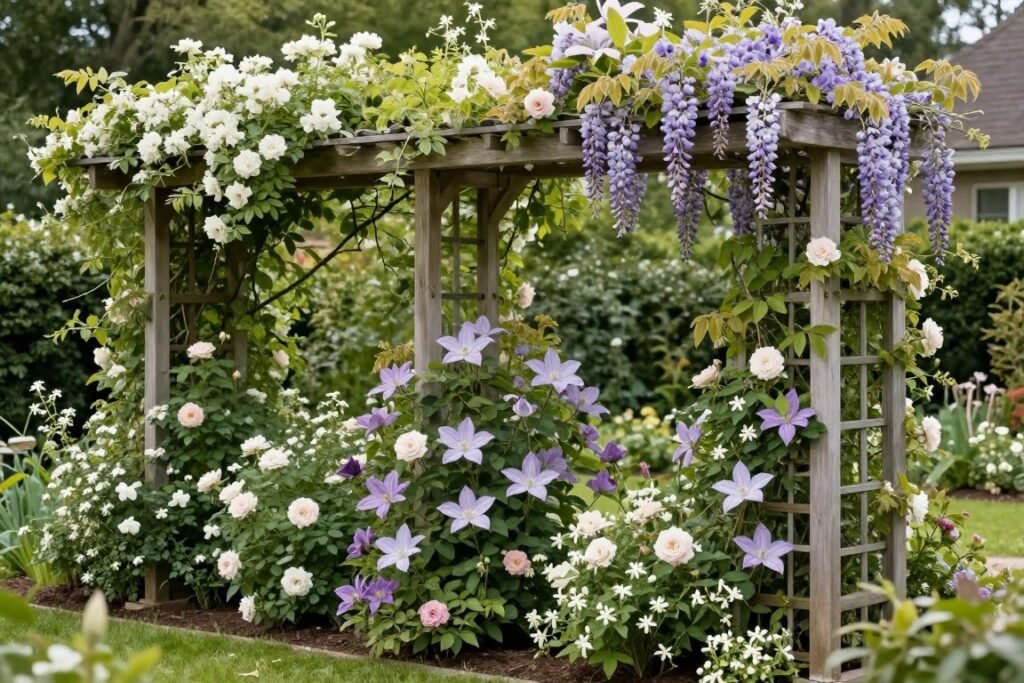
Climbing plants offer vertical interest with less infrastructure than living walls. Install trellises, arbors, or pergolas to support vines like clematis, jasmine, or climbing roses. These structures not only showcase beautiful plants but can also provide privacy, shade, and define outdoor rooms. Select climbers appropriate for your climate and the amount of support your structure provides.
Trellises and climbing plants add vertical interest while taking up minimal ground space
Create Tiered Planters and Raised Beds
Tiered or terraced planting areas make efficient use of sloped sites while creating visual interest through different levels. Raised beds with varying heights add dimension to flat landscapes and can be arranged to define spaces or create pathways. These elevated planting areas also improve drainage and soil quality while reducing the need to bend for maintenance.
Building raised beds becomes easier with the right materials. Check out raised garden bed kits that can be assembled in an afternoon.
Year-Round Interest Landscaping Ideas
The most successful landscapes provide visual interest in every season. These ideas help ensure your outdoor space remains engaging throughout the year.
Year-round landscapes incorporate plants with multiple seasons of interest
Select Plants with Multiple Seasons of Appeal
Choose plants that offer more than one season of interest—spring flowers followed by attractive foliage, fall color, and winter berries or interesting bark. Dogwoods, for example, provide spring flowers, summer foliage, fall color, and distinctive winter bark. By selecting plants with overlapping seasons of interest, your landscape will never look bare or uninteresting.
Incorporate Strong Structural Elements
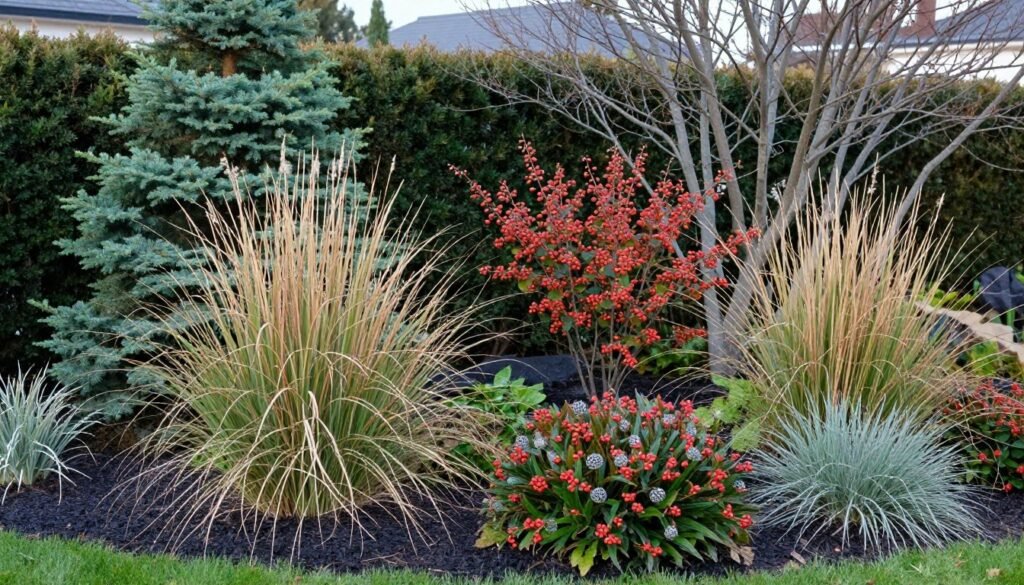
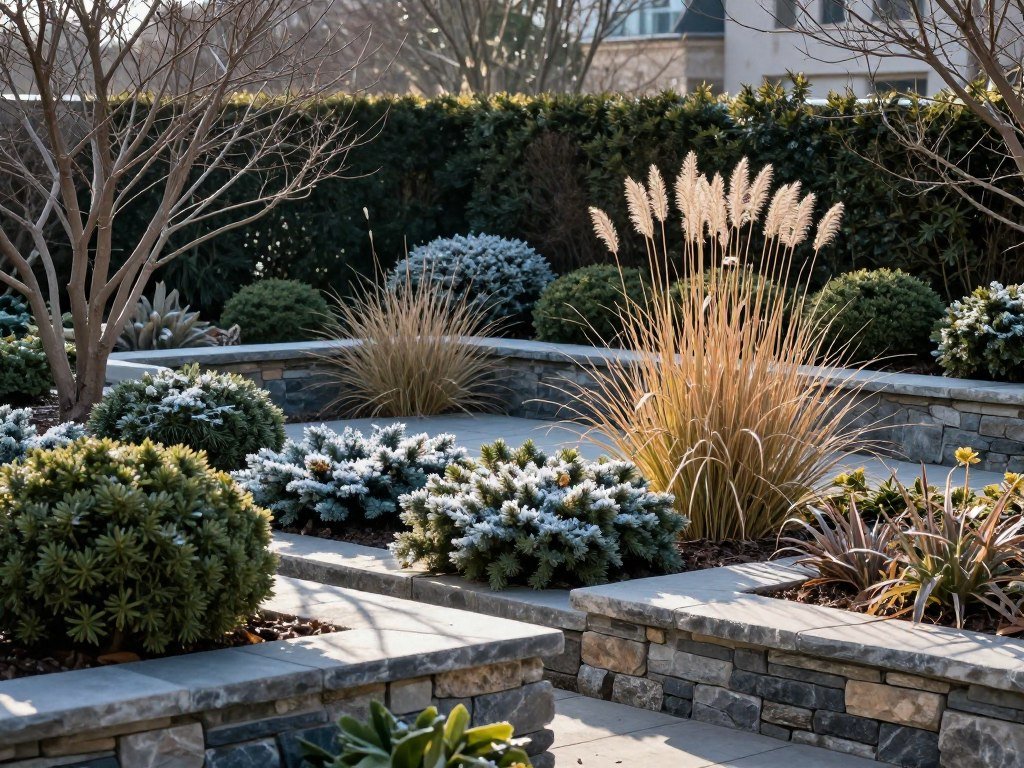
Hardscaping elements and plants with strong architectural forms provide the backbone of your landscape when deciduous plants are dormant. Evergreens, ornamental grasses that stand through winter, and shrubs with interesting branching patterns maintain visual interest during the sparse months. Structures like arbors, trellises, and garden art also contribute year-round presence.
Strong structural elements provide interest even in winter months
Plan for Seasonal Color Transitions
Map out your garden’s color progression throughout the year, ensuring something is always in bloom or displaying seasonal color. Spring bulbs give way to summer perennials, followed by fall foliage and winter berries. By planning these transitions, you’ll always have focal points drawing attention regardless of the season.
Extend your garden’s flowering season with bulbs that bloom from early spring through fall. Explore flowering bulb collections that provide successive waves of color.
Landscape Lighting Ideas That Transform Night Gardens
Strategic lighting extends the enjoyment of your landscape into the evening hours while highlighting its best features and ensuring safe navigation.
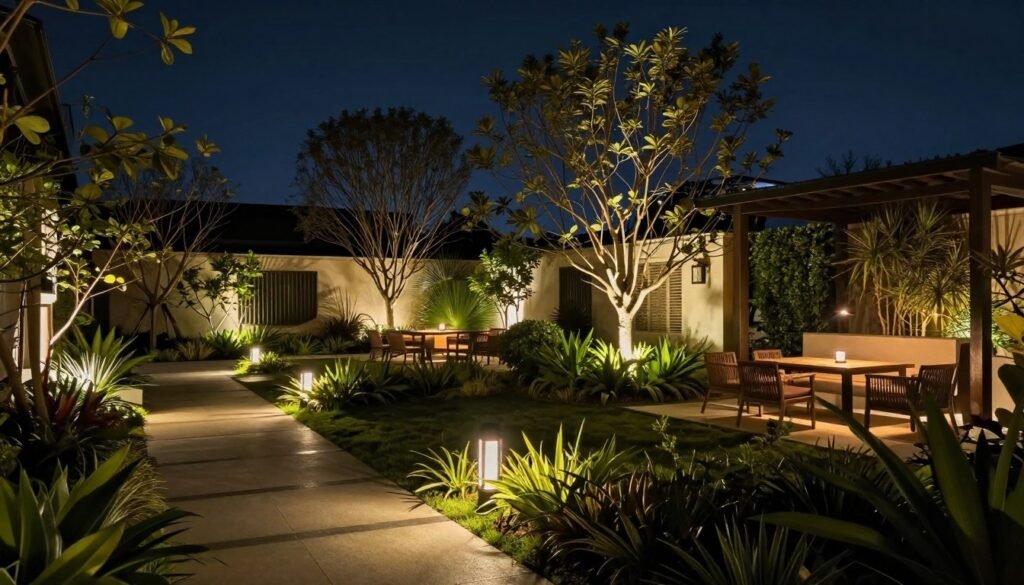
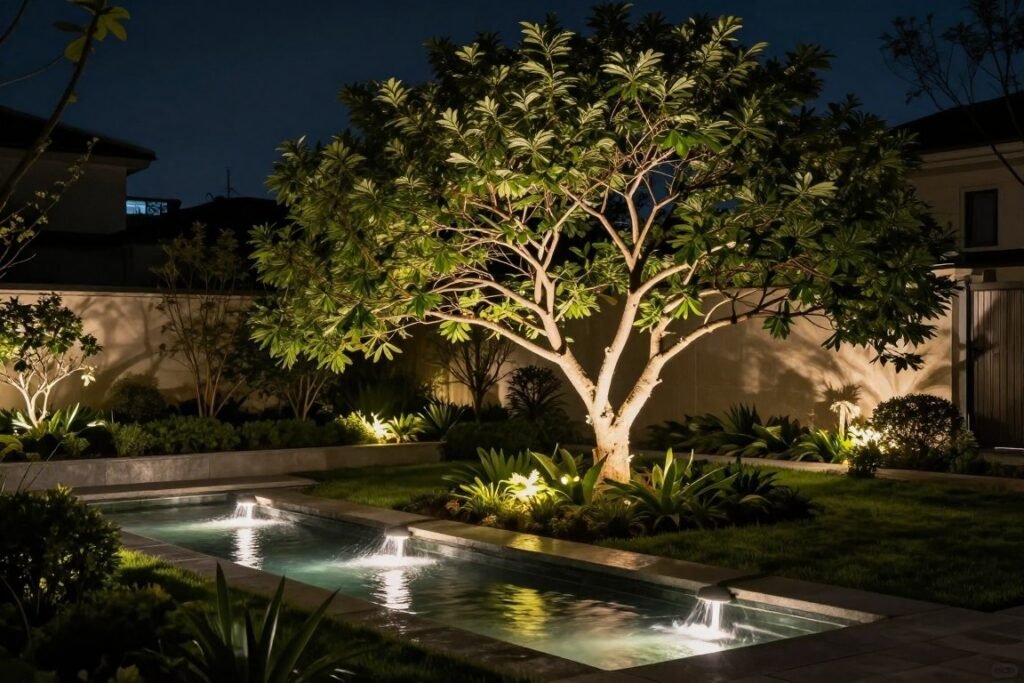
Well-designed landscape lighting creates drama and extends enjoyment into evening hours
Layer Different Types of Lighting
Effective landscape lighting combines different techniques—path lighting for safety, uplighting to highlight trees and architectural features, downlighting for gentle illumination of larger areas, and accent lighting to draw attention to special features. By layering these different approaches, you create depth, dimension, and drama in your nighttime landscape.
Create a professional lighting effect with a variety of fixture types. Browse landscape lighting kits that include multiple lighting styles.
Highlight Architectural and Natural Features
Use lighting to showcase your home’s architectural details and your garden’s standout features after dark. Grazing light across textured walls creates dramatic shadows, while uplighting trees reveals their branching structure. Water features come alive with submersible lights that capture the movement and reflective qualities of water.
Strategic lighting highlights key features and creates dramatic nighttime effects
Consider Energy-Efficient LED Systems
Modern LED landscape lighting offers energy efficiency, long bulb life, and versatility in color temperatures. Low-voltage systems are safer and easier to install than line-voltage alternatives. Consider smart lighting systems that allow programming for different scenes and remote control via smartphone apps.
Today’s landscape lighting is smarter and more efficient than ever. Explore LED landscape lighting systems that save energy while creating beautiful effects.
Sustainable Landscaping Ideas for Eco-Friendly Yards
Environmentally conscious landscaping practices create beautiful outdoor spaces while conserving resources and supporting local ecosystems.
Sustainable landscapes balance beauty with environmental responsibility
Create Rain Gardens to Manage Stormwater
Rain gardens are shallow depressions planted with water-tolerant species that capture and filter runoff from roofs, driveways, and lawns. These functional gardens prevent erosion, reduce pollution, and recharge groundwater while creating habitat for beneficial insects and birds. Position rain gardens where they can intercept water flow, typically at least 10 feet from your home’s foundation.
Use Permeable Surfaces for Hardscaping
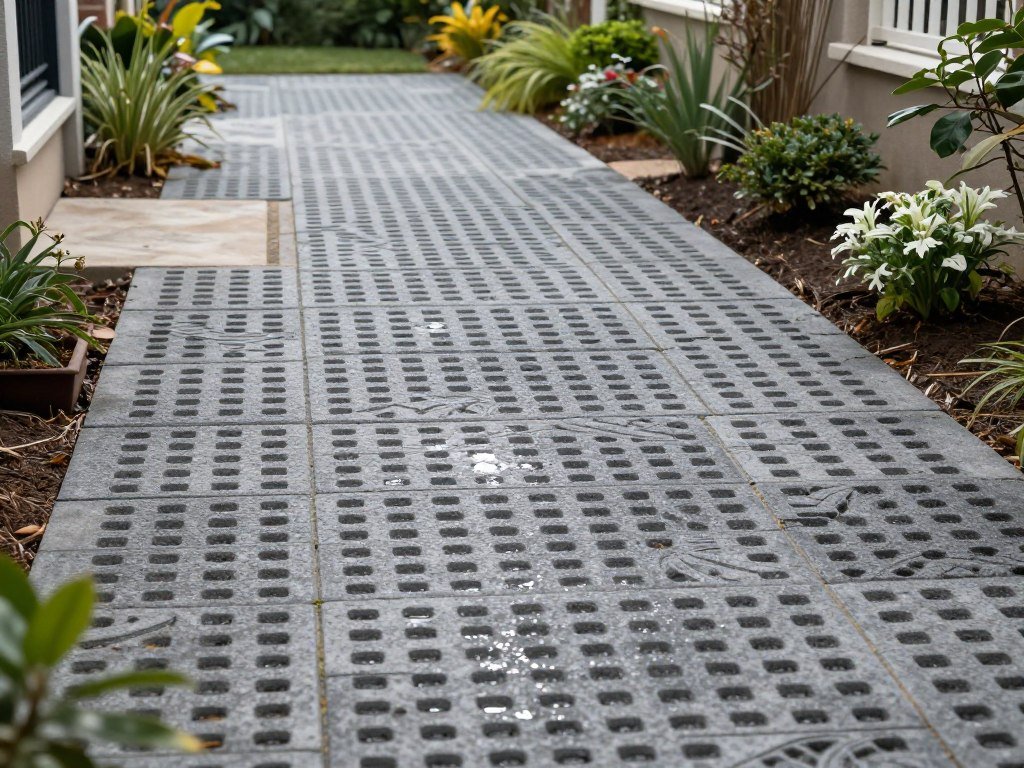
Traditional concrete and asphalt create runoff problems by preventing water from soaking into the ground. Permeable alternatives—like permeable pavers, gravel, or specialized permeable concrete—allow water to infiltrate while providing solid surfaces for patios, walkways, and driveways. These materials reduce puddles, decrease runoff, and help replenish groundwater.
Permeable surfaces allow rainwater to infiltrate while providing functional outdoor living space
Practice Water-Wise Landscaping
Water conservation in the landscape goes beyond plant selection to include smart irrigation practices, soil improvement, and thoughtful design. Group plants with similar water needs together (a practice called hydrozoning), apply mulch to retain soil moisture, and collect rainwater in barrels for irrigation during dry periods. These practices create resilient landscapes that thrive with minimal supplemental water.
Make rainwater collection simple and attractive with modern rain barrels. Check out decorative rain barrel options that complement your landscape design.
Bringing Your Landscaping Ideas to Life
Creating your dream landscape is a journey that combines inspiration, planning, and implementation. Whether you tackle projects yourself or work with professionals, the results will enhance your enjoyment of your outdoor spaces for years to come.
A thoughtfully designed landscape enhances your property and creates spaces for living and enjoying nature
Start Small and Build Over Time
You don’t need to transform your entire property at once. Begin with a single area—perhaps your front entry or a backyard patio—and expand your landscape as time and budget allow. This approach lets you learn what works in your specific conditions and adjust your plans accordingly. Each completed project will build your confidence and skills for tackling the next one.
Consider Professional Guidance
Even if you plan to do the work yourself, consulting with a landscape designer can help you avoid costly mistakes and develop a cohesive plan. Many designers offer one-time consultations that provide valuable guidance while leaving the implementation to you. For complex projects involving grading, drainage, or large hardscape elements, professional installation may be worth the investment.
Remember that your landscape is a living, evolving creation that will continue to develop and change over time. Embrace this process, learn from both successes and challenges, and enjoy the journey of creating outdoor spaces that reflect your personal style while connecting you with the natural world.
There’s something magical about European backyards that captivates our imagination. Whether it’s the sun-drenched courtyards of the Mediterranean, the manicured elegance…
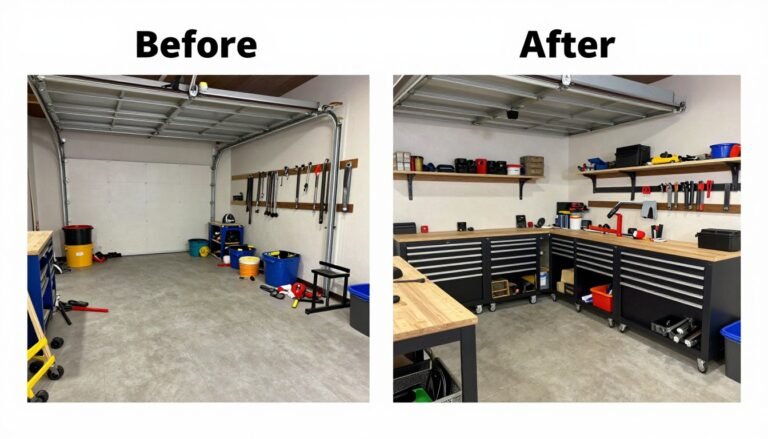
A well-organized garage workshop is the foundation of productive DIY projects. Whether you’re a weekend woodworker or a serious craftsperson, transforming…