Your front porch is more than just an entryway—it’s the first impression visitors have of your home and a reflection of your personal style. Well-designed front porch landscaping transforms this transitional space into a charming, inviting area that enhances your home’s curb appeal while creating a comfortable outdoor retreat. Whether you have a spacious wraparound porch or a modest stoop, thoughtful landscaping can elevate this space from merely functional to truly extraordinary.
This Website contains affiliate links. That means I may earn a small commission if you purchase through my links, at no extra cost to you.
In this guide, we’ll explore creative front porch landscaping ideas that balance beauty with practicality. From selecting the perfect plants and containers to incorporating decorative elements and furniture, you’ll discover how to create a front porch that welcomes guests and provides a peaceful spot to enjoy your neighborhood. Let’s transform your porch into a space that makes coming home a delight every single day.
Assessing Your Front Porch Space
Before diving into plant selection or decorative elements, take time to evaluate your porch’s unique characteristics. Understanding your space is the foundation of successful front porch landscaping that looks intentional and cohesive.
Understanding your porch’s sun exposure is crucial for selecting the right plants
Consider Your Porch Size and Layout
The dimensions of your porch will significantly influence your landscaping approach. For smaller porches, focus on vertical space with hanging plants or wall-mounted planters to maximize impact without cluttering the floor area. Larger porches can accommodate statement container gardens, furniture groupings, and multiple planting zones.
Measure your porch’s width, depth, and height to understand the space you’re working with. Note architectural features like columns, railings, and ceiling height that might impact your design. These measurements will help you select appropriately sized furniture and containers that feel proportional to the space.
Analyze Sun Exposure and Climate Conditions
Observe how sunlight moves across your porch throughout the day. Is it mostly shaded? Does it receive morning sun but afternoon shade? Perhaps it’s exposed to full sun all day? This information is critical for selecting plants that will thrive in your specific conditions.
Your local climate zone also plays a crucial role in plant selection. Consider temperature ranges, humidity levels, and typical rainfall patterns when choosing plants. Native species adapted to your region often require less maintenance and provide better habitat for local wildlife.
Coordinate with Your Home’s Architecture
Your front porch landscaping should complement your home’s architectural style. A Victorian home might call for romantic, lush plantings with ornate containers, while a modern house might be better suited to clean lines and minimalist plant groupings.
Take note of your home’s exterior colors and materials. Your landscaping palette should harmonize with these elements, creating a cohesive look that enhances rather than competes with your home’s design. For instance, if your home features warm brick tones, consider plants and containers in complementary colors.
Choosing the Right Plants for Front Porch Landscaping
Plants are the heart of any landscaping project, bringing life, color, and texture to your front porch. The right selection can create a welcoming atmosphere while adding natural beauty to your home’s entrance.
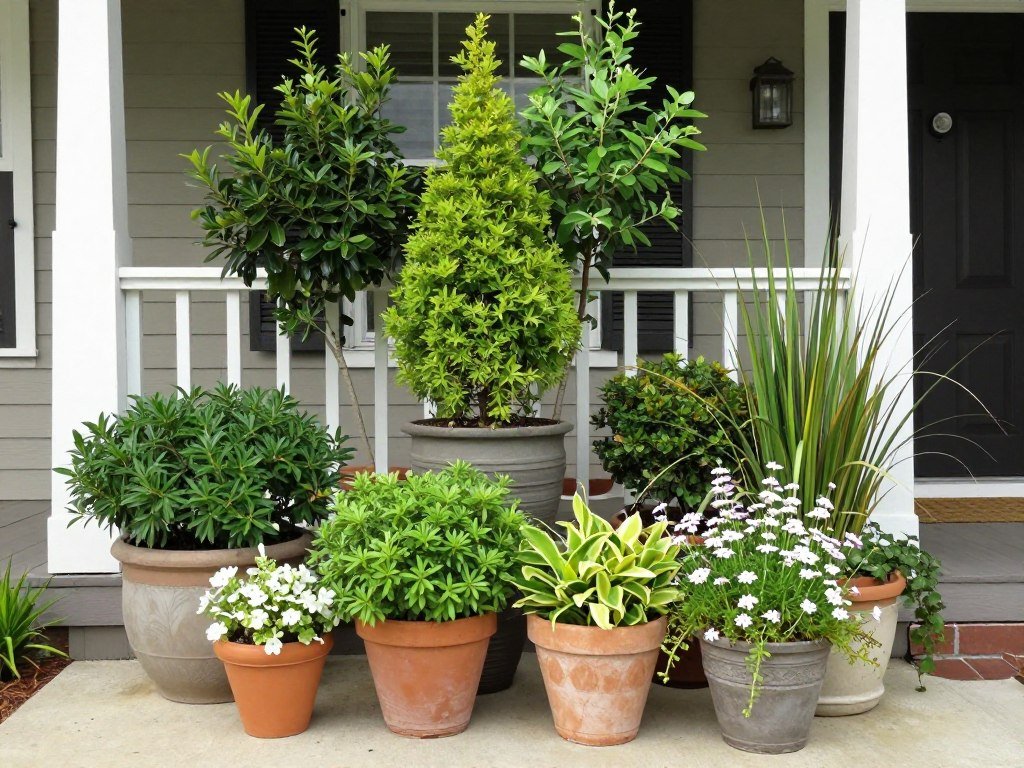
Layering plants of different heights creates visual interest and depth
Container Plants for Visual Impact
Container gardening offers flexibility and allows you to create stunning plant displays even in limited spaces. When selecting containers, choose options that complement your home’s style while being proportional to your porch size. Durable materials like fiberglass, concrete, or high-quality resin will withstand outdoor conditions better than fragile ceramic or terracotta in freeze-prone regions.
For maximum impact, vary the heights and sizes of your containers. Place larger pots with statement plants near entrances or at corners, and use smaller containers to fill in gaps or create groupings. [Find weather-resistant planters here](https://www.amazon.com/s?k=weather+resistant+outdoor+planters&tag=decorlyhome00-20) that will stand up to the elements while enhancing your porch aesthetic.
Evergreen Foundation Plants
Evergreen shrubs and plants provide year-round structure and color, serving as the backbone of your front porch landscaping. These reliable plants maintain their appearance through seasonal changes, ensuring your porch always looks inviting.
Consider compact varieties like boxwood, dwarf conifers, or small holly varieties for container growing. These plants create a polished look and can be shaped to complement your home’s architecture. For texture variation, mix in evergreen perennials like heuchera (coral bells) or hostas in shadier locations.
Seasonal Flowers for Color
While evergreens provide consistency, seasonal flowers bring vibrant color and change throughout the year. Rotate these plants as seasons shift to keep your porch looking fresh and aligned with the natural rhythm of the year.
Spring: Tulips, daffodils, pansies, and primroses bring welcome color after winter
Summer: Geraniums, petunias, calibrachoa, and begonias thrive in summer heat
Fall: Chrysanthemums, ornamental kale, and asters offer autumn tones
Winter: Cyclamen, winter pansies, and ornamental berries add interest during colder months
For easy seasonal updates, use [decorative plant stands](https://www.amazon.com/s?k=tiered+plant+stands+outdoor&tag=decorlyhome00-20) that allow you to showcase multiple plants in a compact footprint, making rotation simple when the seasons change.
Climbing Plants and Vines
Vertical gardening maximizes your porch’s potential by using walls, railings, and columns as growing spaces. Climbing plants add dimension and can soften hard architectural elements while creating a lush, established feel.
For permanent structures, consider clematis, climbing hydrangea, or jasmine varieties suited to your climate. These perennial climbers establish over time and return year after year. For quicker results or seasonal impact, try annual vines like morning glory, black-eyed Susan vine, or moonflower.
Support your climbing plants with [decorative trellises](https://www.amazon.com/s?k=decorative+garden+trellis&tag=decorlyhome00-20) that complement your porch style. These structures not only provide necessary support but also serve as architectural elements in their own right.
Container Gardening Strategies for Front Porches
Container gardening is particularly well-suited for front porch landscaping, offering flexibility, mobility, and the ability to create stunning displays in limited spaces. With thoughtful planning, your container garden can become the highlight of your front porch design.
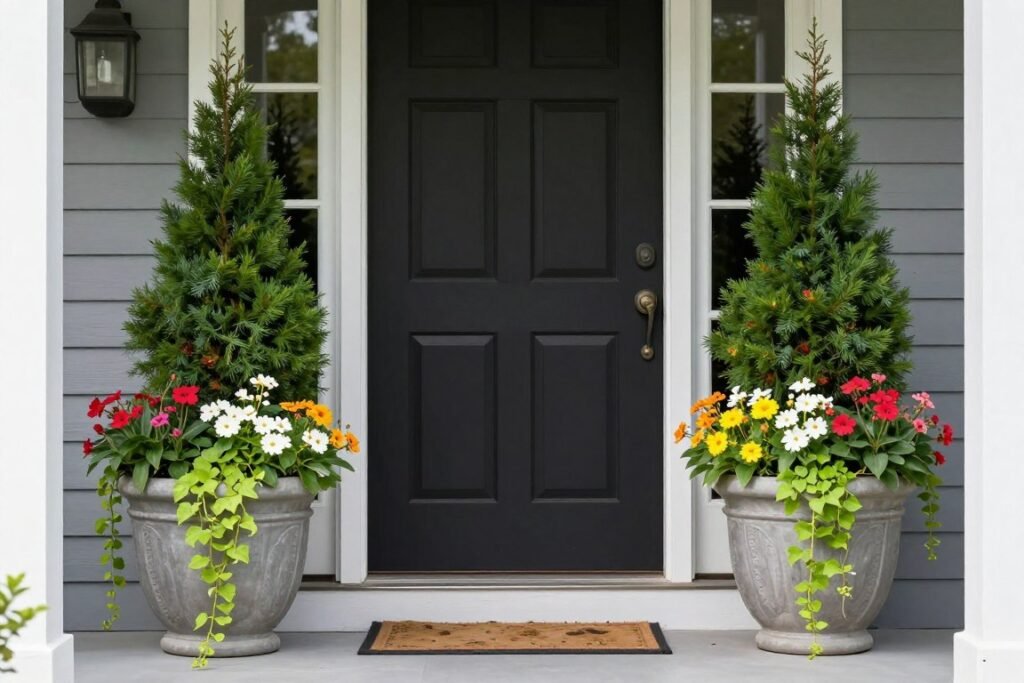
Symmetrical container arrangements create a formal, balanced entrance
Container Selection and Placement
The containers you choose are as important as the plants they hold. Select pots that complement your home’s architectural style—classic urns for traditional homes, sleek rectangular planters for modern designs, or rustic wooden barrels for farmhouse aesthetics. Ensure containers have adequate drainage holes and consider self-watering options for low-maintenance care.
Strategic placement creates maximum impact. Frame your front door with matching containers for a formal look, or create asymmetrical groupings for a more casual, collected feel. Use the rule of odd numbers—groupings of three or five containers often look more natural and visually appealing than even numbers.
Creating Depth with Layered Plantings
The most striking container gardens utilize the “thriller, filler, spiller” approach to create dimension and visual interest:
Thriller: A tall, upright plant that serves as the focal point (ornamental grasses, cannas, or small evergreen shrubs)
Filler: Medium-height, mounding plants that add fullness (geraniums, coleus, heuchera)
Spiller: Trailing plants that cascade over the edges (sweet potato vine, creeping Jenny, trailing petunias)
This combination creates containers with depth and movement that look professionally designed. For larger containers, you can include multiple plants from each category for a lush, abundant look.
Seasonal Container Rotation
One of the greatest advantages of container gardening is the ability to refresh your porch’s appearance throughout the year. Develop a seasonal rotation plan to keep your front porch looking vibrant regardless of the weather.
Consider investing in [high-quality potting soil](https://www.amazon.com/s?k=premium+potting+soil+for+containers&tag=decorlyhome00-20) and slow-release fertilizers to give your container plants the best start. For convenience, you might keep certain containers with evergreen plants as permanent fixtures while rotating smaller pots with seasonal blooms.
Low-Maintenance Container Options
If you’re concerned about maintenance, numerous plant combinations require minimal care while still providing visual impact. Succulents and sedums offer interesting textures and forms with very little watering needed. Native perennials adapted to your region naturally require less intervention once established.
Consider [self-watering planters](https://www.amazon.com/s?k=self+watering+outdoor+planters&tag=decorlyhome00-20) for areas that receive full sun or for times when you might be away from home. These innovative containers reduce watering frequency while keeping plants healthy.
Incorporating Hardscape and Furniture
Beyond plants, the hardscape elements and furniture you choose play a crucial role in creating a functional, inviting front porch landscape. These permanent features provide structure and usability to your outdoor space.
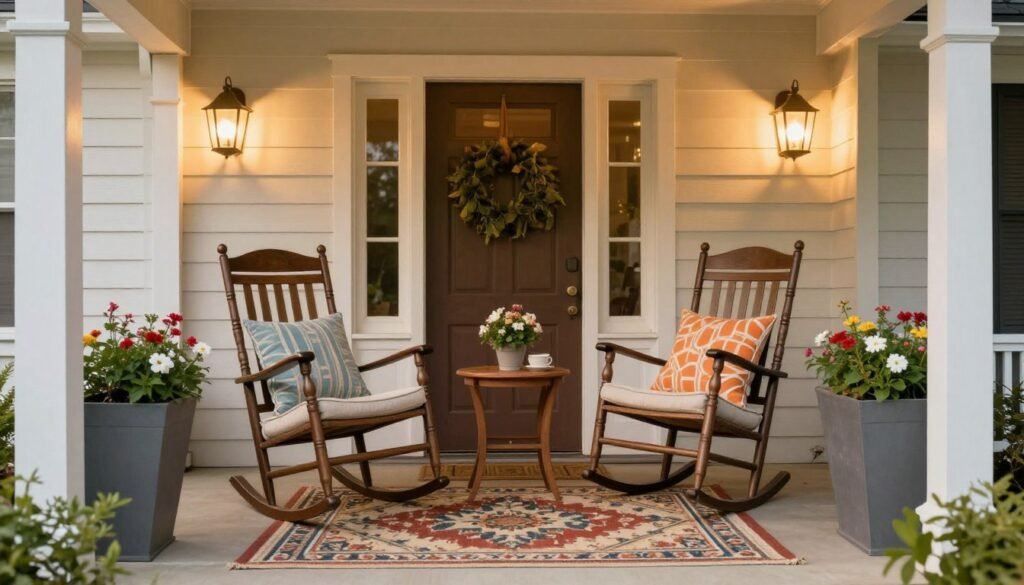
A thoughtfully arranged seating area transforms a porch into a usable outdoor room
Seating Options for Different Porch Sizes
Even the smallest porch can accommodate seating that invites relaxation and neighborhood connection. For compact spaces, consider a single chair or narrow bench that doesn’t obstruct the walkway. Medium-sized porches might accommodate a pair of chairs with a small table between them, while spacious porches can support multiple seating groups or even a porch swing.
Choose furniture that withstands outdoor conditions while complementing your home’s style. Classic [rocking chairs](https://www.amazon.com/s?k=outdoor+rocking+chairs&tag=decorlyhome00-20) offer timeless appeal, while Adirondack chairs provide casual comfort. For a more modern look, sleek metal or all-weather wicker pieces create contemporary flair.
Defining Spaces with Outdoor Rugs
An outdoor rug instantly transforms a porch into a defined, room-like space while adding color and texture underfoot. Select a rug sized appropriately for your furniture arrangement—it should be large enough that at least the front legs of all seating pieces rest on it.
Look for [weather-resistant outdoor rugs](https://www.amazon.com/s?k=weather+resistant+outdoor+rugs&tag=decorlyhome00-20) specifically designed to withstand sun, rain, and foot traffic. These durable options come in countless patterns and colors to complement any design scheme while being practical for outdoor use.
Small Tables and Surfaces
Functional surfaces enhance the usability of your porch, providing places to set drinks, books, or decorative items. Side tables between chairs, small console tables against walls, or even wall-mounted folding tables for very tight spaces all add convenience without sacrificing style.
Consider multi-functional pieces like storage benches or garden stools that can serve as both seating and table surfaces as needed. These versatile elements maximize your porch’s functionality while maintaining a clean, uncluttered appearance.
Railings and Structural Elements
If your porch has railings, incorporate them into your landscaping plan. Railing planters add greenery without consuming floor space, while climbing plants can transform railings into living walls of foliage and flowers.
For porches without built-in railings, consider adding decorative screens or lattice panels to create privacy or define boundaries. These structural elements can serve both practical and aesthetic purposes in your front porch landscape design.
Adding Layers with Decorative Elements
The finishing touches you add to your front porch landscaping are what truly personalize the space and reflect your unique style. These decorative elements create layers of interest that make your porch feel thoughtfully designed and welcoming.
Layering decorative elements adds depth and personality to your porch design
Outdoor Pillows and Textiles
Textiles add comfort, color, and pattern to your porch, instantly making it feel more inviting. Weather-resistant pillows on seating areas not only provide physical comfort but also offer an opportunity to introduce seasonal colors or patterns that can be easily changed.
Look for [outdoor pillows and cushions](https://www.amazon.com/s?k=weather+resistant+outdoor+pillows&tag=decorlyhome00-20) made with fade-resistant, quick-drying fabrics designed specifically for outdoor use. These specialized textiles resist mildew and maintain their appearance despite exposure to the elements.
Lanterns and Decorative Lighting
Decorative lighting serves both functional and aesthetic purposes on your front porch. During the day, lanterns and light fixtures act as sculptural elements; at night, they create ambiance and extend the usability of your space.
Mix lighting types for a layered effect: wall sconces for general illumination, table lamps for task lighting, and [decorative lanterns](https://www.amazon.com/s?k=outdoor+decorative+lanterns&tag=decorlyhome00-20) for ambient glow. Battery-operated or solar options eliminate the need for electrical outlets and provide flexibility in placement.
Seasonal Decorative Accents
Rotating seasonal decor keeps your front porch looking fresh and current throughout the year. These temporary elements allow you to celebrate seasons and holidays without permanent commitments.
The key is to maintain a cohesive look by limiting your color palette and ensuring seasonal elements complement your permanent porch features.
Door Decor and Wall Art
Your front door serves as a natural focal point for decorative elements. A seasonal wreath or door hanging creates immediate visual interest and can be changed frequently to reflect the time of year or your current mood.
Don’t overlook vertical wall space on your porch. Weather-resistant wall art, decorative thermometers, or even mounted planters can transform blank walls into design opportunities. [Outdoor wall decor](https://www.amazon.com/s?k=outdoor+wall+decor+weatherproof&tag=decorlyhome00-20) specifically designed to withstand the elements ensures these pieces will maintain their appearance despite exposure to weather.
Lighting Your Front Porch Landscape
Thoughtful lighting design extends the enjoyment of your front porch into the evening hours while enhancing safety and security. A well-lit porch creates a welcoming atmosphere and highlights your landscaping features after dark.
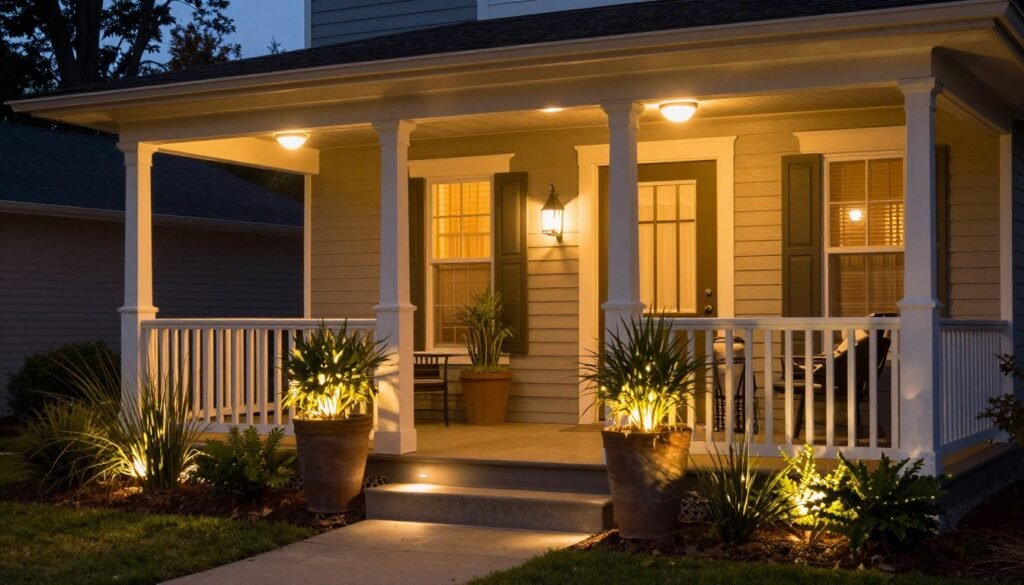
Layered lighting creates depth and highlights key landscaping features
Functional Safety Lighting
Safety lighting ensures secure navigation to and around your porch. Illuminate steps, level changes, and the path to your door to prevent trips and falls. Wall-mounted fixtures or recessed lights in overhead structures provide general illumination for the entire porch area.
Consider motion-activated security lights for areas that don’t need constant illumination. These provide light when needed while conserving energy. [Motion sensor lights](https://www.amazon.com/s?k=motion+sensor+porch+lights&tag=decorlyhome00-20) come in various styles that can complement your home’s architecture while providing practical functionality.
Ambient and Mood Lighting
Beyond safety, lighting creates atmosphere and extends your porch’s usability into evening hours. String lights draped overhead create a magical canopy effect, while lanterns placed on tables or steps add warm pools of light at varying heights.
Battery-operated flameless candles offer the warm glow of candlelight without fire concerns, making them perfect for porches with overhead coverage. Group them in different sizes for a layered effect that mimics real candles.
Plant Highlighting Techniques
Strategic lighting can showcase your landscaping features after dark. Uplight statement container plants from below to create dramatic shadows and highlight interesting plant structures. Small spotlights can illuminate climbing vines or architectural elements of your porch.
[Solar-powered accent lights](https://www.amazon.com/s?k=solar+garden+accent+lights&tag=decorlyhome00-20) are particularly useful for highlighting plants, as they can be placed without concern for wiring and automatically activate at dusk. Position these to draw attention to your favorite landscaping elements.
Energy-Efficient Options
Today’s lighting technology offers energy-efficient options that reduce electricity usage while providing beautiful illumination. LED bulbs use a fraction of the energy of traditional incandescents while lasting significantly longer, making them ideal for outdoor fixtures that may be difficult to access for bulb changes.
Solar-powered lighting eliminates electricity costs entirely, using stored solar energy to power lights after dark. While these may provide less intense illumination than wired options, they’re perfect for accent lighting and areas where running electrical lines would be challenging.
Low-Maintenance Front Porch Landscaping Tips
Creating a beautiful front porch landscape doesn’t have to mean committing to hours of weekly maintenance. With smart planning and appropriate plant selection, you can design a stunning entrance that requires minimal upkeep.
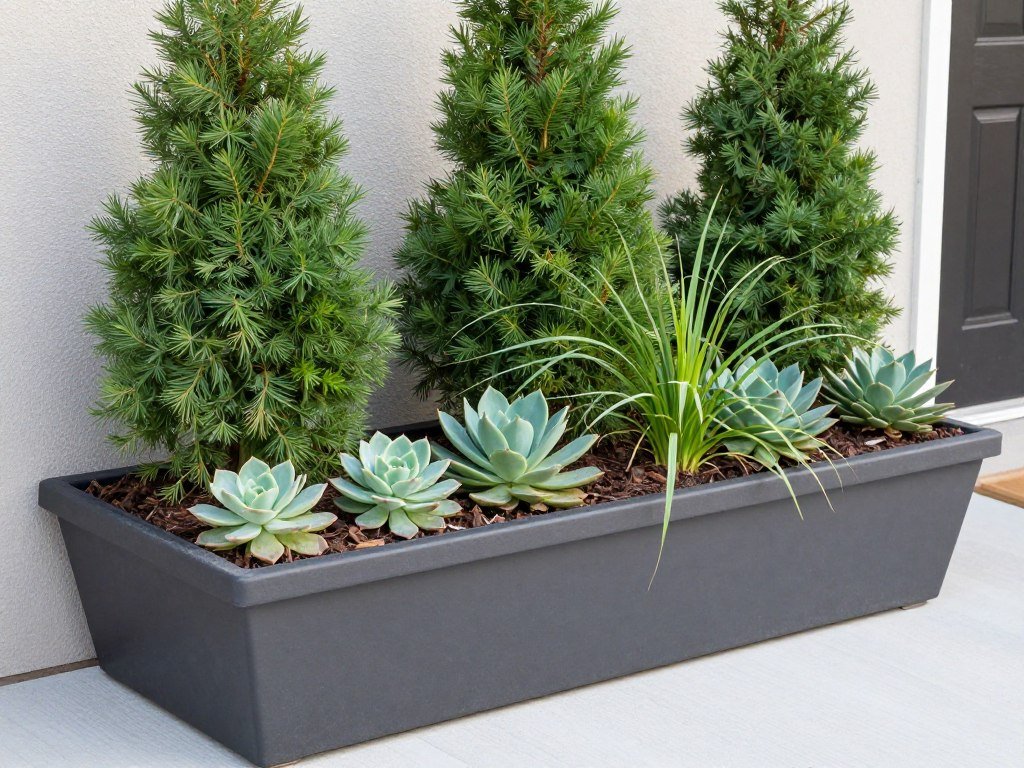
Drought-tolerant plants and quality containers reduce maintenance needs
Drought-Tolerant Plant Selection
Water-wise plants significantly reduce maintenance time while still providing visual impact. Look for species with silvery, fuzzy, or waxy leaves—these adaptations often indicate drought tolerance. Succulents, ornamental grasses, lavender, and many native plants thrive with minimal watering once established.
Group plants with similar water needs together in the same containers to prevent overwatering some while underwatering others. This practice, known as hydrozoning, ensures all plants receive appropriate care while conserving water.
Time-Saving Container Strategies
The right containers can dramatically reduce maintenance requirements. Self-watering planters extend the time between watering sessions, while larger containers hold more soil and dry out less quickly than smaller ones.
Consider [self-watering planters](https://www.amazon.com/s?k=self+watering+planters+outdoor&tag=decorlyhome00-20) with water reservoirs that plants can access as needed. These innovative containers can reduce watering frequency to once every week or two, depending on weather conditions and plant selection.
Mulching for Moisture Retention
A layer of mulch on the soil surface of your containers serves multiple purposes: it reduces water evaporation, suppresses weeds, moderates soil temperature, and gives containers a finished look. For decorative containers, consider small-sized mulch options like mini bark chips or decorative stones that complement your container style.
Apply a 1-2 inch layer of mulch to container surfaces, being careful not to pile it against plant stems, which can cause rot. Refresh the mulch layer as needed to maintain its benefits and appearance.
Automated Watering Solutions
For the ultimate in low-maintenance care, consider automated watering systems designed for container gardens. Drip irrigation kits can be customized to deliver precise amounts of water directly to each container, eliminating the need for manual watering in most weather conditions.
[Automatic watering timers](https://www.amazon.com/s?k=automatic+plant+watering+system+outdoor&tag=decorlyhome00-20) connect to your outdoor faucet and can be programmed to water on specific days and times. These systems are particularly valuable during hot summer months or when you’re traveling.
Durable, Weather-Resistant Materials
Choose furniture, containers, and decorative elements made from materials designed to withstand outdoor conditions. This reduces the need to store items during inclement weather and prevents premature deterioration.
Look for furniture made from teak, cedar, aluminum, or high-quality resins that resist weather damage. For textiles, select fabrics specifically designed for outdoor use that resist fading, mildew, and moisture damage.
Seasonal Front Porch Landscaping Maintenance
While low-maintenance strategies reduce daily care requirements, some seasonal tasks ensure your front porch landscaping remains healthy and attractive throughout the year. Creating a simple maintenance calendar helps you stay on top of these periodic needs.
Regular seasonal refreshes keep your porch looking current and well-maintained
Spring Refresh Tasks
Spring is the perfect time to rejuvenate your front porch landscape after winter. Begin by thoroughly cleaning containers, furniture, and porch surfaces to remove winter debris and dirt. Inspect plants for winter damage, pruning as needed to remove dead or damaged growth.
This is also the ideal time to refresh potting soil in containers. While you don’t need to replace all soil annually, removing the top few inches and replacing with fresh potting mix provides new nutrients for growing plants. Apply slow-release fertilizer to give plants a boost as they enter the growing season.
Summer Maintenance Routine
Summer’s heat and growth spurts require regular attention to keep your porch looking its best. Establish a consistent watering schedule based on weather conditions and plant needs. Morning watering is generally most efficient, allowing foliage to dry before evening to prevent disease issues.
Deadhead flowering plants regularly to encourage continued blooming and prevent seed formation. This simple practice—removing spent flowers before they set seed—redirects the plant’s energy into producing more blooms rather than seeds, extending the flowering period significantly.
Fall Preparation Steps
As temperatures cool, prepare your porch landscape for the transition to winter. Replace summer annuals with fall-appropriate options like chrysanthemums, ornamental kale, or pansies that tolerate cooler temperatures.
Reduce watering frequency as growth slows and temperatures drop. Begin transitioning tender perennials that won’t survive winter outdoors to protected locations or take cuttings to propagate new plants for next year.
Winter Protection Measures
In regions with freezing winters, take steps to protect both plants and containers from damage. Move especially vulnerable plants indoors or to protected locations. For plants remaining outdoors, consider [frost protection covers](https://www.amazon.com/s?k=plant+frost+protection+covers&tag=decorlyhome00-20) that can be placed over them during extreme cold snaps.
Elevate containers slightly off the porch surface using pot feet or small pieces of wood to prevent freezing to the porch and allow drainage. Empty and store purely decorative containers made from materials that might crack in freezing temperatures, such as ceramic or terracotta.
Front Porch Landscaping Design Inspiration
Drawing inspiration from established design styles can help you create a cohesive front porch landscape that complements your home’s architecture and reflects your personal taste. Here are several popular approaches to consider as starting points for your own unique design.
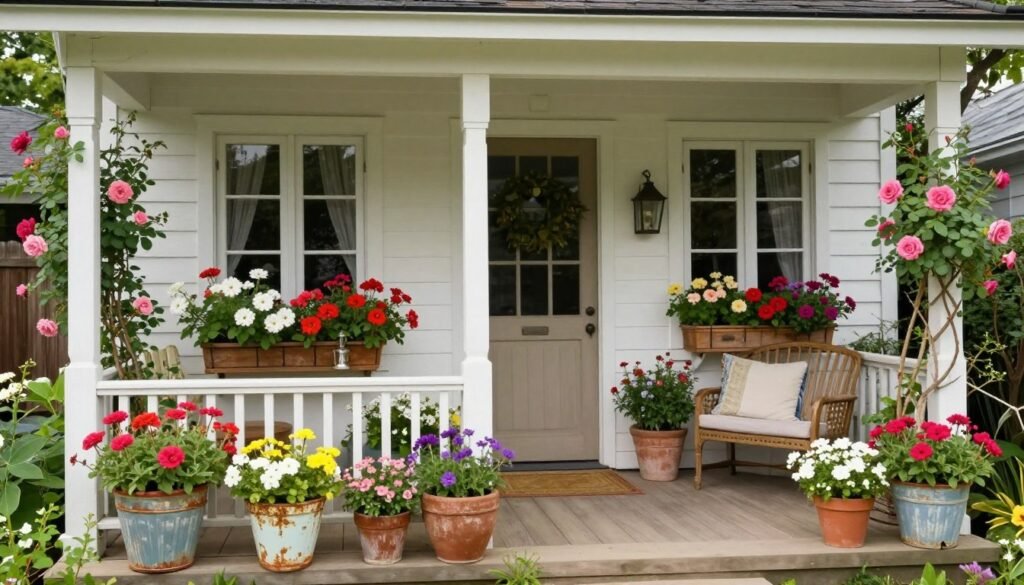
Cottage-style porches embrace abundant flowers and a slightly untamed aesthetic
Cottage Garden Porch
Cottage-style front porch landscaping embraces abundance and a slightly untamed aesthetic. This approach features a profusion of flowering plants in a seemingly casual arrangement that actually requires thoughtful planning to execute well.
Key elements include:
Mixed container plantings with plenty of flowering varieties
Vintage or weathered containers that appear collected over time
Climbing roses or flowering vines on trellises or porch columns
Comfortable, casual seating with floral cushions
Window boxes overflowing with seasonal blooms
This style works particularly well with traditional, farmhouse, or Victorian home styles, creating a romantic, welcoming entrance.
Modern Minimalist Approach
For contemporary homes or those seeking a clean, uncluttered aesthetic, a minimalist approach to front porch landscaping creates sophisticated impact through restraint and careful curation.
Defining characteristics include:
Limited color palette, often monochromatic or with just one accent color
Architectural plants with strong forms (succulents, ornamental grasses)
Simple, geometric containers in concrete, metal, or matte finishes
Careful attention to proportion and negative space
Quality over quantity—fewer, larger statement pieces
This streamlined approach complements modern architecture and creates a serene, uncluttered entrance that still offers visual interest through texture and form.
Seasonal Showcase Design
If you enjoy regularly refreshing your porch’s appearance, a seasonal showcase design provides a framework for quarterly updates while maintaining some consistent elements for continuity.
This approach features:
Permanent structural elements (evergreen plants, furniture, lighting)
Designated areas for seasonal displays that change throughout the year
Color schemes that shift with the seasons
Containers that remain in place while their contents change
Decorative elements that can be easily swapped (pillows, door wreaths)
This flexible approach allows you to maintain a fresh, current look while celebrating seasonal changes and holidays throughout the year.
Tropical Retreat Style
Even in non-tropical climates, you can create a lush, exotic feel on your front porch through strategic plant selection and accessories that evoke faraway destinations.
Characteristic elements include:
Bold-leaved plants like cannas, elephant ears, and banana plants
Vibrant color accents in containers and textiles
Natural materials like bamboo, rattan, and teak
Hanging baskets with trailing foliage creating layers
This approach creates a vacation-like atmosphere that makes coming home feel like arriving at a resort retreat. [Find tropical-inspired outdoor decor here](https://www.amazon.com/s?k=tropical+outdoor+decor&tag=decorlyhome00-20) to complete the look.
Budget-Friendly Front Porch Landscaping Ideas
Creating an impressive front porch landscape doesn’t require a substantial investment. With creativity and strategic planning, you can achieve professional-looking results without breaking the bank.
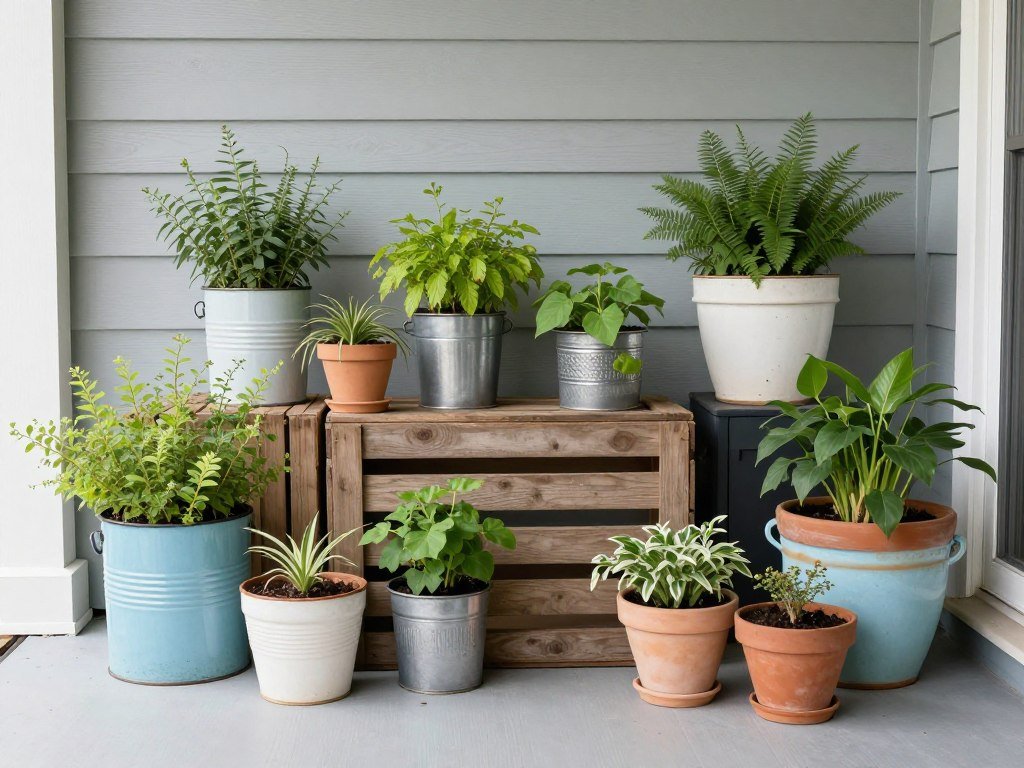
Repurposed containers and propagated plants create impact without high costs
DIY Container Projects
Create unique containers from repurposed items to add character while saving money. Vintage toolboxes, wooden crates, galvanized buckets, or even colorful rain boots can be transformed into charming planters with the addition of drainage holes.
For a cohesive look on a budget, purchase inexpensive plastic pots and upgrade them with paint. Chalk paint adheres well to plastic and can give basic containers the appearance of more expensive ceramic or concrete planters at a fraction of the cost.
Plant Division and Propagation
One of the most economical ways to increase your plant collection is through division and propagation. Many perennials can be divided every few years, essentially giving you free plants. Hostas, daylilies, ornamental grasses, and many other common garden plants respond well to division.
Learn simple propagation techniques like taking stem cuttings from existing plants. Many popular container plants, including coleus, sweet potato vine, and begonias, root easily in water or moist soil, allowing you to create new plants without additional purchases.
Gradual Implementation Strategy
Instead of attempting to complete your entire front porch landscape at once, consider a phased approach that spreads costs over time. Begin with key focal points like containers flanking your front door, then gradually add additional elements as your budget allows.
Invest in quality soil and a few statement plants first, as these form the foundation of your design. Decorative elements and accessories can be added later to complete the look once the essential components are in place.
Thrift Store and Yard Sale Finds
Second-hand shopping can yield incredible finds for your front porch landscape. Look for containers, furniture pieces, and decorative elements that can be refreshed with paint or minor repairs. Vintage items often have character and quality construction that surpasses many new budget options.
Visit thrift stores, yard sales, and online marketplace listings regularly, as inventory changes frequently. Keep a list of items you’re seeking to avoid impulse purchases that don’t fit your overall design plan.
Seed Starting for Annual Color
Growing annuals from seed rather than purchasing mature plants can save significantly, especially if you use many flowering annuals in your design. Start seeds indoors 6-8 weeks before your last frost date to have blooming plants ready when weather permits.
[Find quality seed starting supplies here](https://www.amazon.com/s?k=seed+starting+kit&tag=decorlyhome00-20) to grow your own plants for a fraction of the cost of nursery-grown specimens. This approach not only saves money but also gives you access to unusual varieties not commonly available as started plants.
Creating Your Perfect Front Porch Landscape
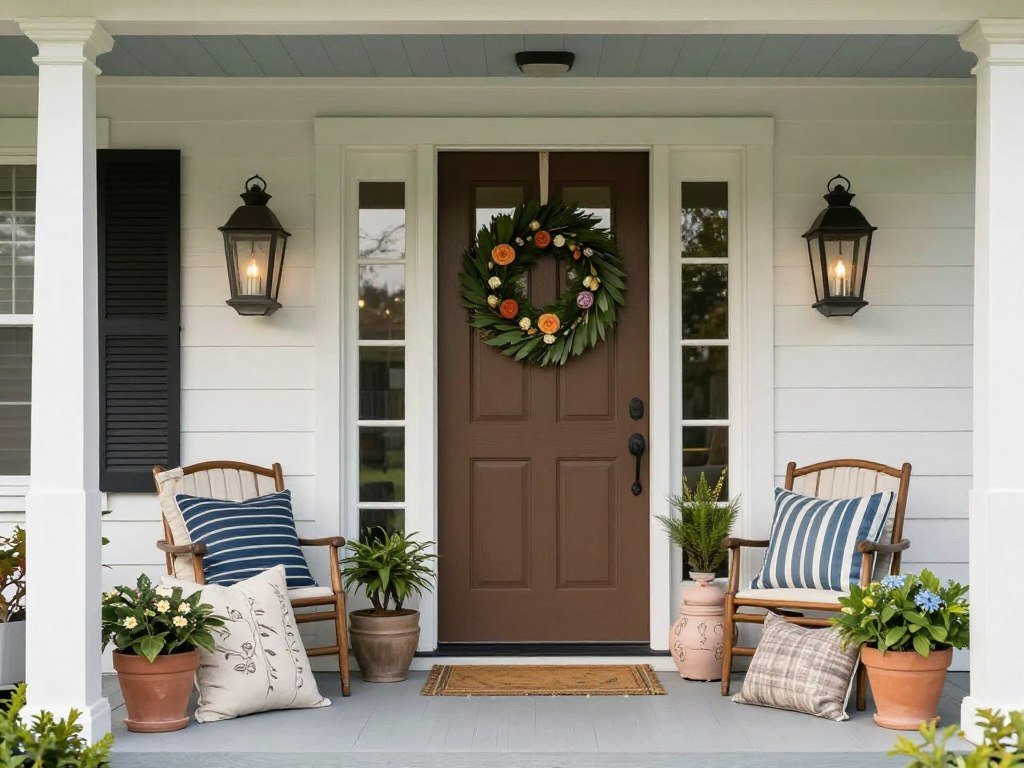
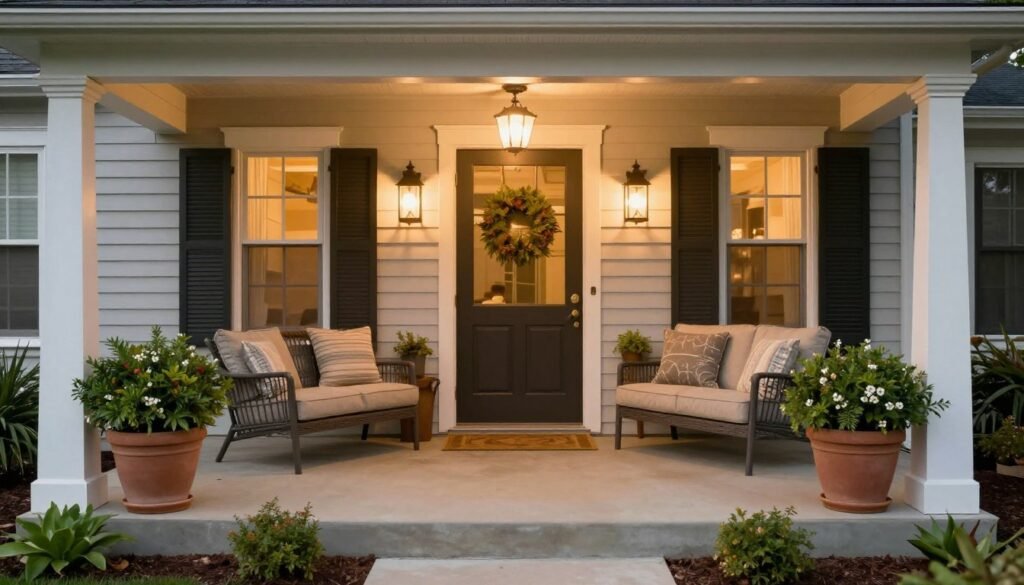
A thoughtfully designed front porch enhances your home’s curb appeal while creating an inviting outdoor living space
Your front porch is a unique opportunity to express your personal style while enhancing your home’s curb appeal. As you’ve seen throughout this guide, successful front porch landscaping balances aesthetics with practicality, creating a space that’s both beautiful and functional.
Begin your front porch transformation by assessing your specific conditions—the architecture of your home, the size of your porch, and your local climate all influence which approaches will work best. Start with a clear vision, but remain flexible as you implement your design, allowing room for inspiration and adjustment along the way.
Remember that front porch landscaping is never truly “finished”—it’s a living canvas that evolves with the seasons and over the years. Embrace this ongoing process, making small improvements and seasonal refreshes that keep your entrance looking its best year-round.
Whether you prefer abundant cottage-style plantings or sleek modern minimalism, the most important aspect of your front porch landscape is that it welcomes you home each day. Create a space that brings you joy when you arrive and projects the warmth of your hospitality to everyone who visits.
We hope this guide has inspired you to transform your front porch into a landscape that enhances your home and reflects your unique style. With thoughtful planning and the ideas presented here, you’re well-equipped to create a front porch that makes a beautiful first impression for years to come.
Ready to Transform Your Front Porch?
Save these ideas to your Pinterest boards for future reference and inspiration. Start small with one or two ideas that resonate with you, then build on your success as your confidence grows!