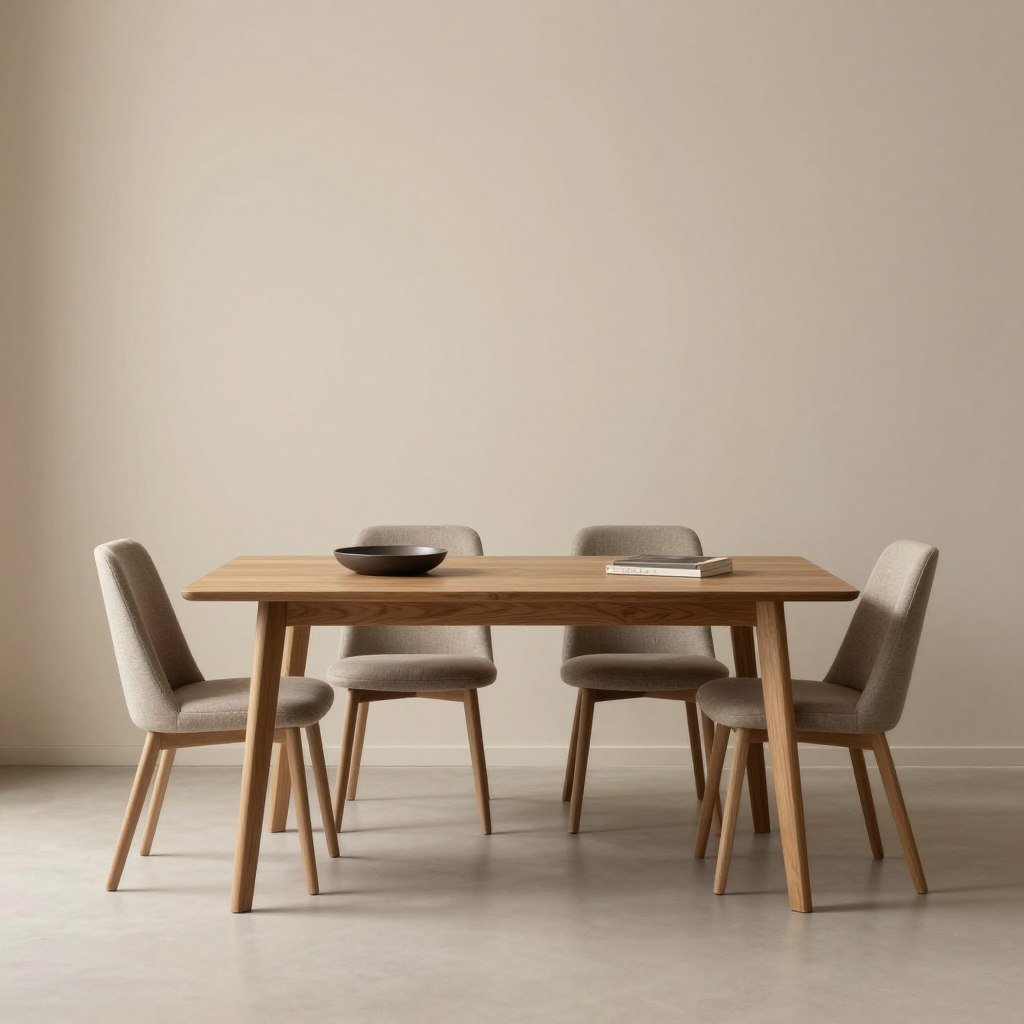
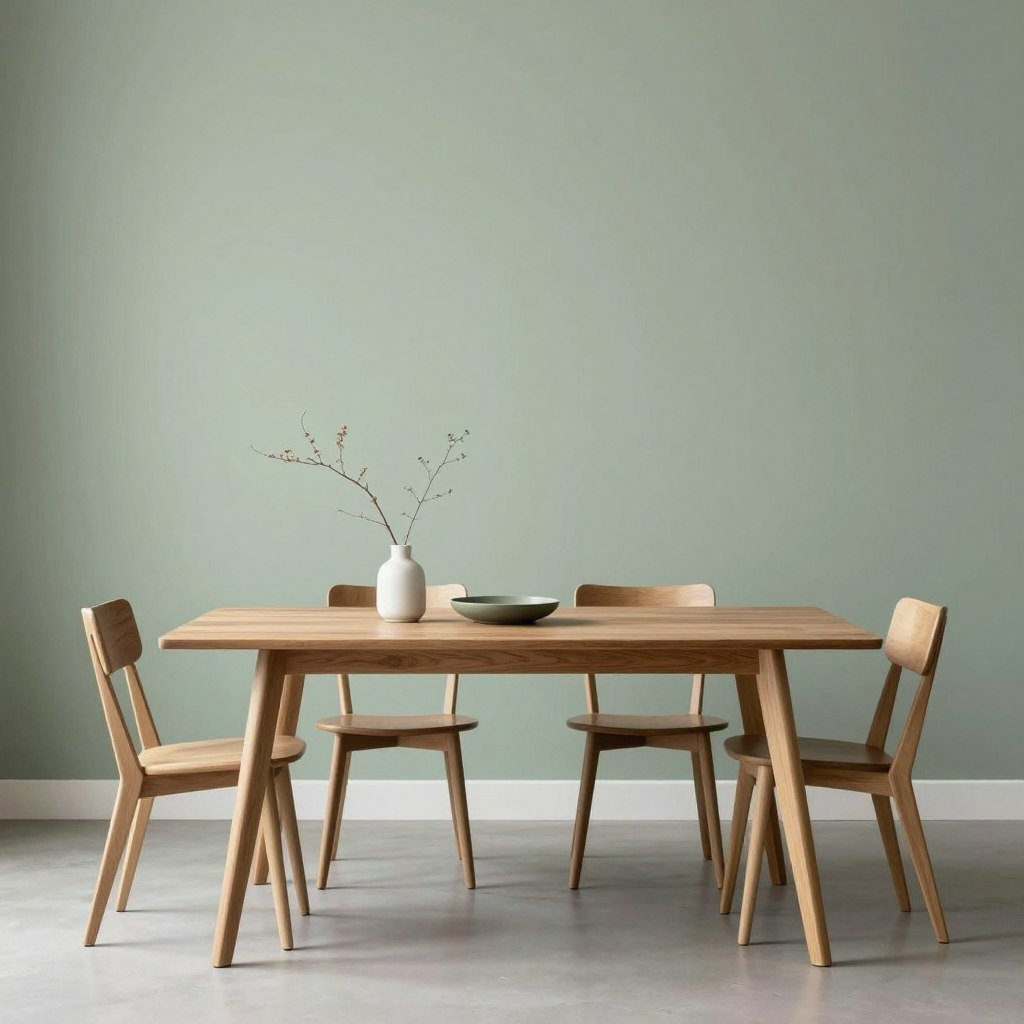
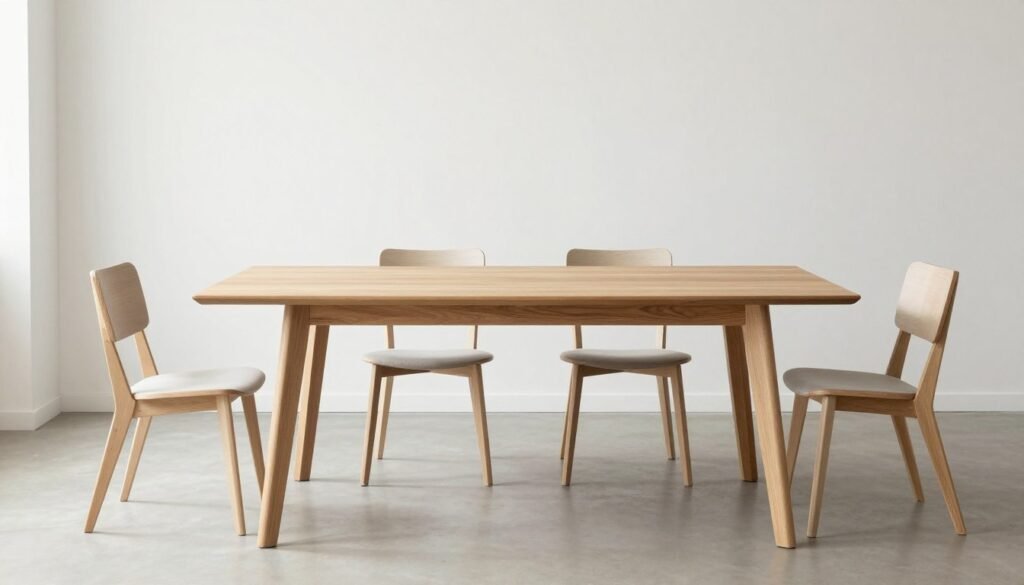
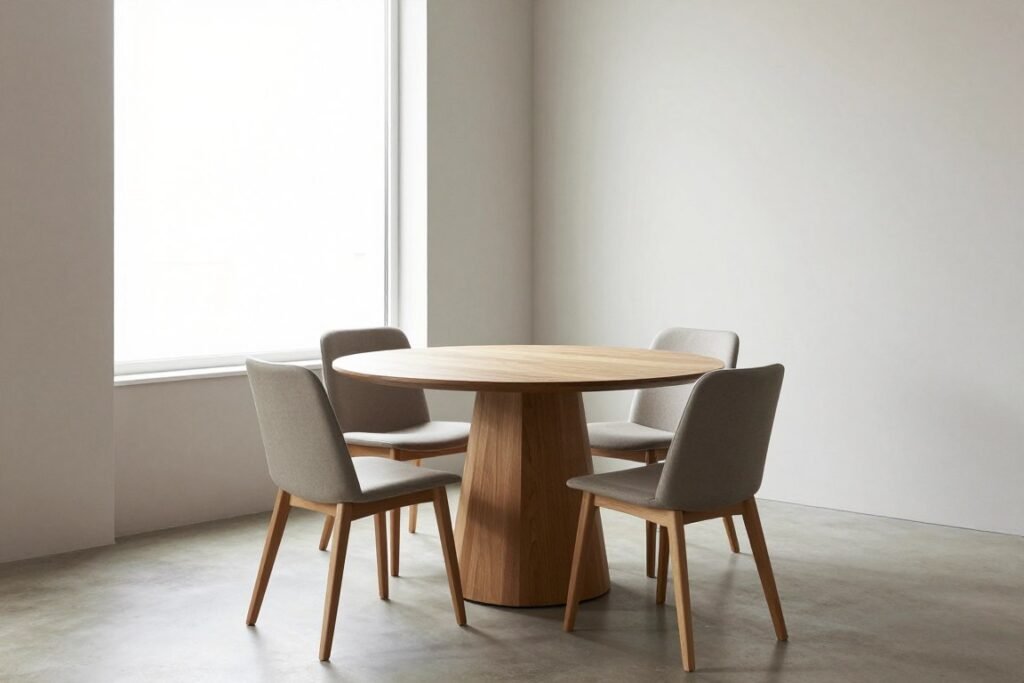
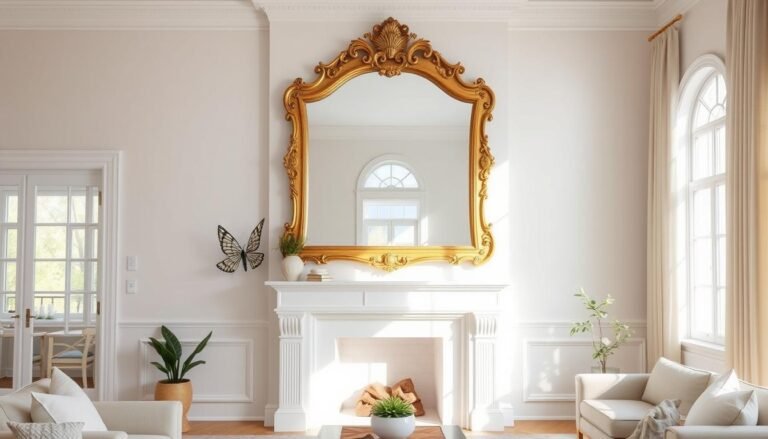
A minimalist dining room creates a serene sanctuary where meals become meaningful moments of connection. By embracing clean lines, thoughtful furniture choices, and intentional decor, you can transform your dining space into a peaceful retreat that celebrates the beauty of simplicity. This comprehensive guide will walk you through everything you need to know about creating a minimalist dining room that balances function, comfort, and timeless style.
This Website contains affiliate links. That means I may earn a small commission if you purchase through my links, at no extra cost to you.
The Minimalist Dining Room Philosophy: Less Is More
At its core, minimalism isn’t about deprivation—it’s about intention. A minimalist dining room focuses on quality over quantity, keeping only what serves a purpose or brings joy. This approach creates a space that feels open, calm, and thoughtfully curated.
The minimalist philosophy extends beyond aesthetics to embrace a more mindful way of living. When your dining space is free from unnecessary objects and visual clutter, you can focus more fully on the experience of sharing meals and conversations with loved ones.
Key Minimalist Principles
Intentional simplicity in design
Focus on function and purpose
Quality materials that last
Clean lines and uncluttered spaces
Thoughtful curation of objects
Benefits of a Minimalist Dining Room
Creates a calm, peaceful atmosphere
Makes cleaning and maintenance easier
Highlights quality furniture and design
Promotes mindful dining experiences
Offers versatility for different uses
Creating the Perfect Minimalist Color Palette
Color sets the foundation for your minimalist dining room. While stark white spaces were once the hallmark of minimalism, today’s approach embraces a more nuanced palette of neutrals and natural tones that create warmth and dimension.
Base Colors for Minimalist Dining Rooms
Whites & Creams
Crisp whites and soft creams create an airy, open feeling and serve as the perfect backdrop for natural materials and subtle textures.
Beiges, taupes, and warm grays add depth and coziness to a minimalist space without overwhelming the clean aesthetic.
Natural Tones
Soft earth tones like sage green, terracotta, or muted blue can add subtle color while maintaining the calm minimalist feel.
For a truly harmonious minimalist dining room, limit your palette to 2-3 main colors plus 1-2 accent tones. This restraint creates visual cohesion while still allowing for depth and interest. You can find beautiful neutral paint options to create this foundation by exploring neutral paint collections designed specifically for creating serene spaces.
Selecting the Perfect Minimalist Dining Furniture
Furniture forms the backbone of your minimalist dining room. Each piece should serve a clear purpose while contributing to the overall aesthetic through clean lines and quality materials.
The Dining Table: Your Room’s Centerpiece
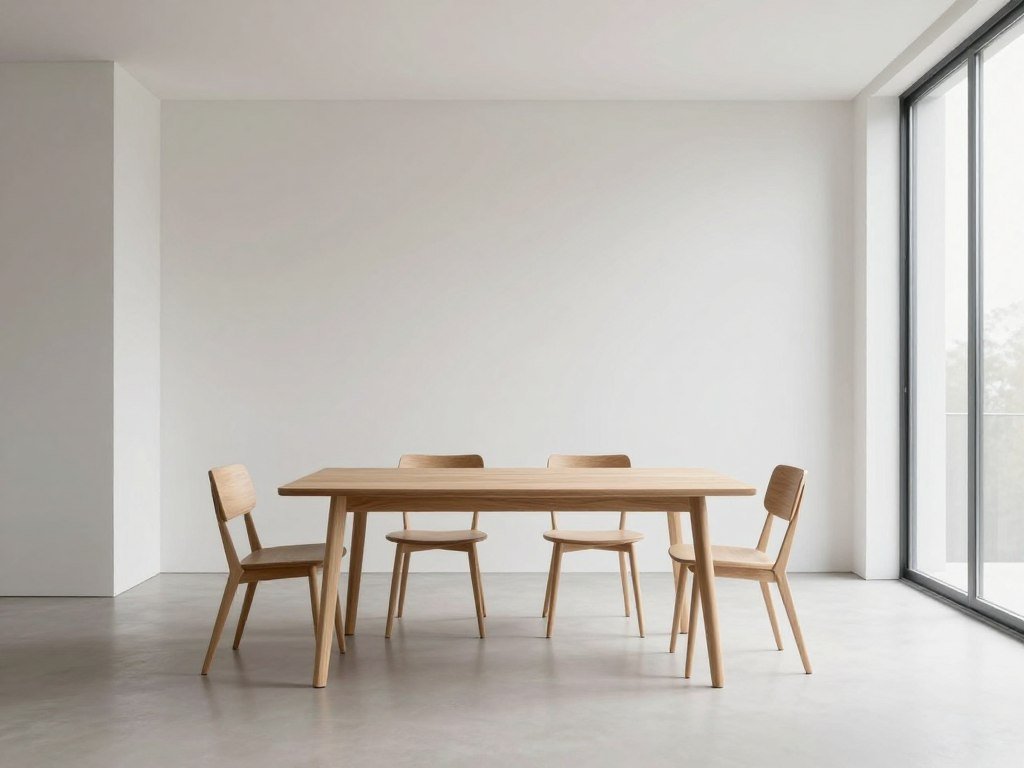
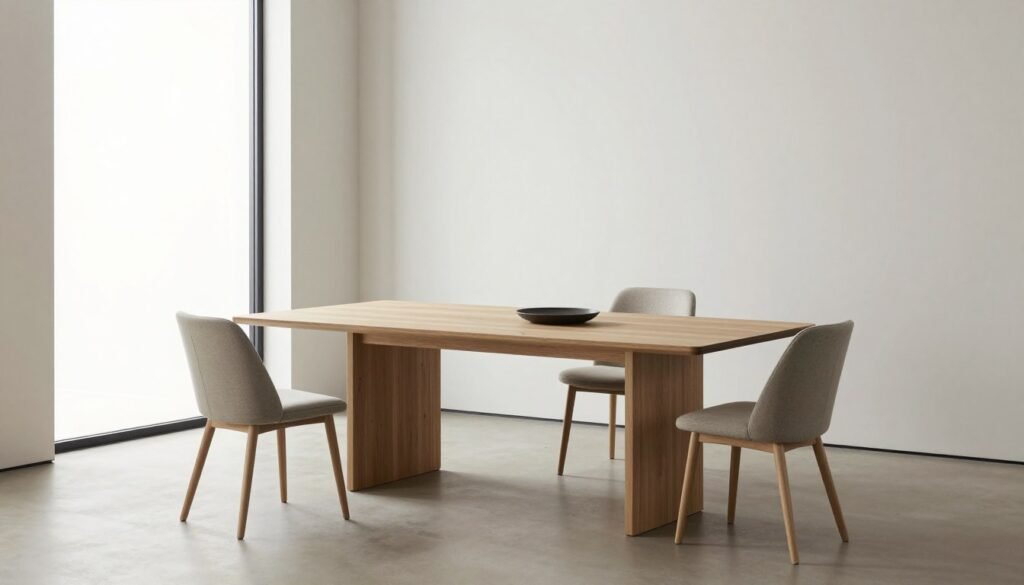
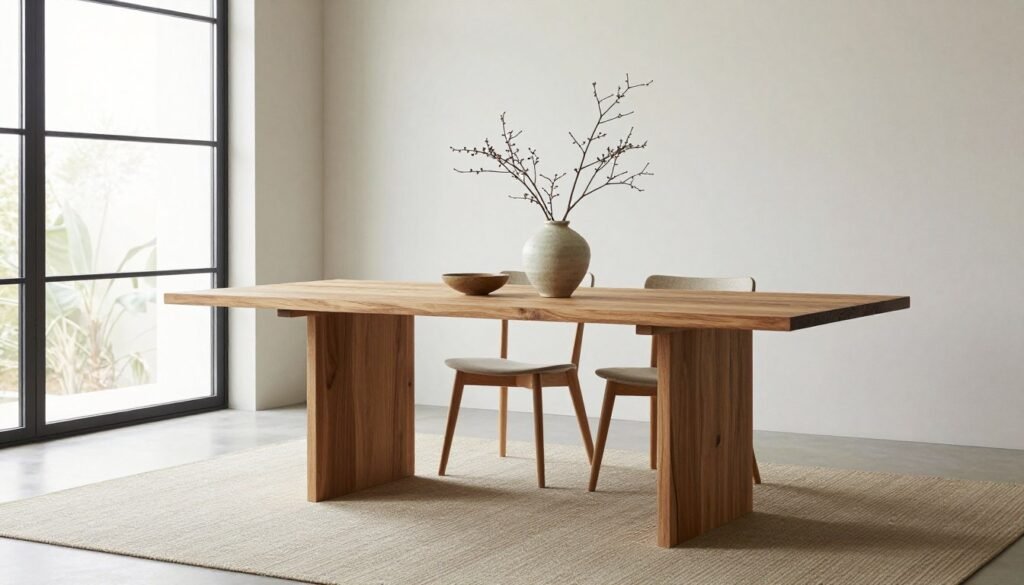
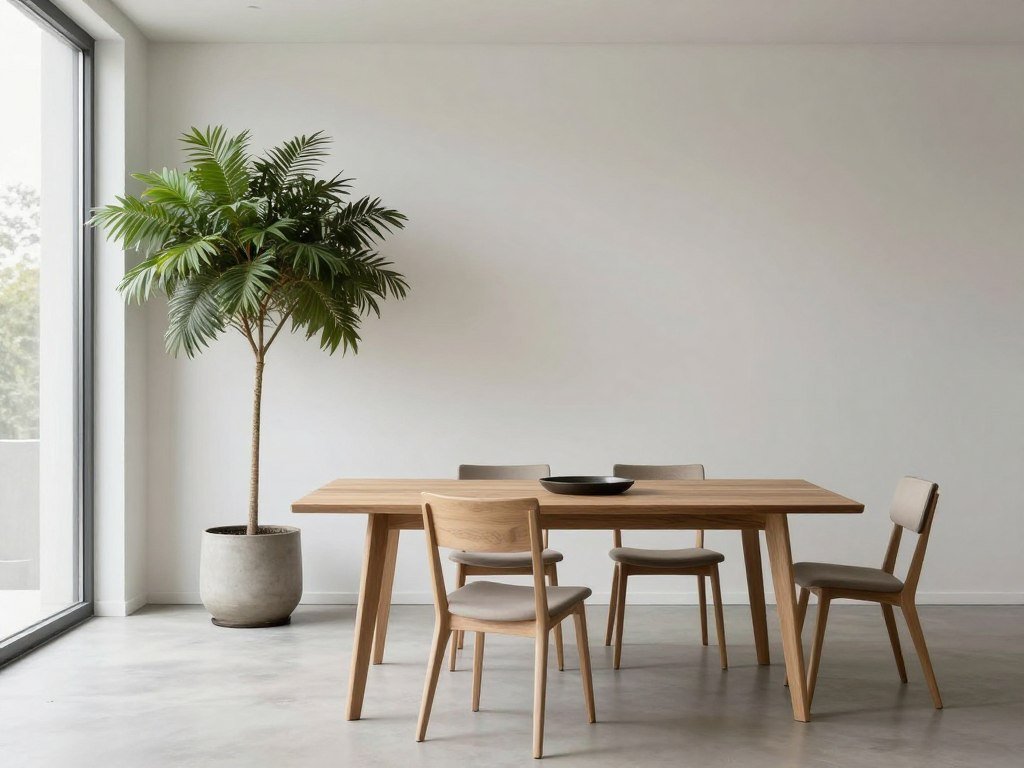
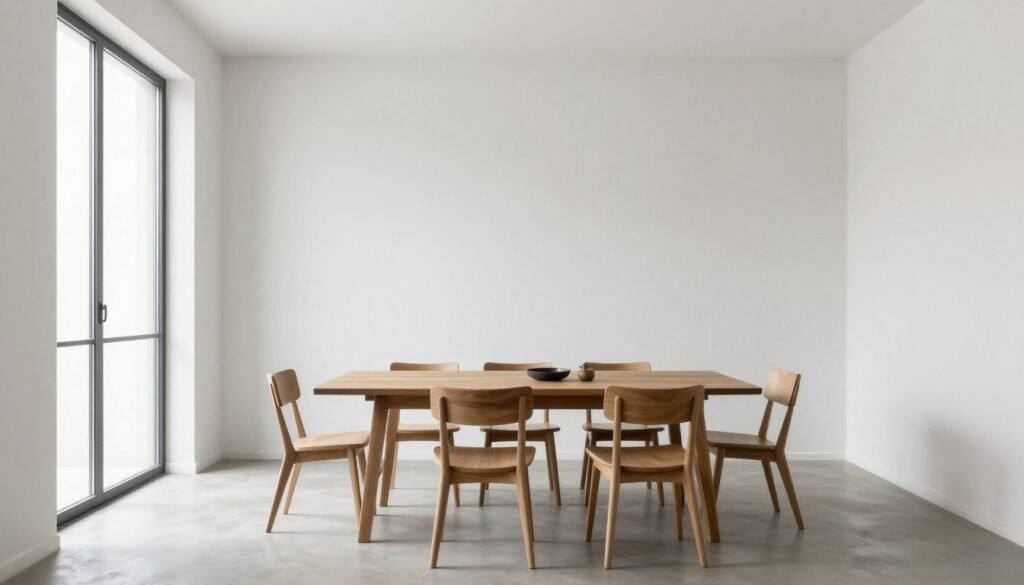
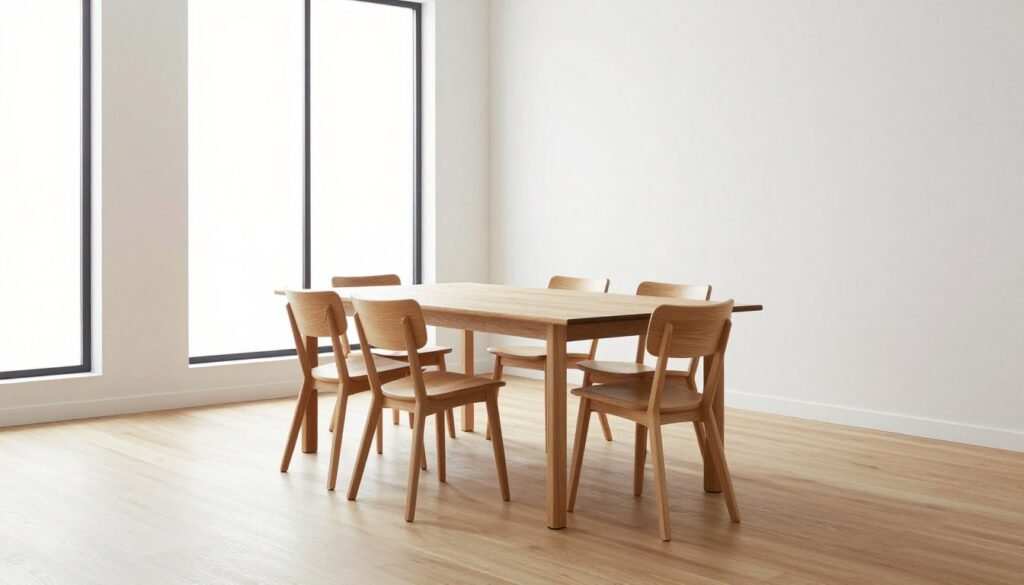
Your dining table anchors the entire space, so choose one with a simple silhouette that will stand the test of time. Look for tables with clean lines, quality materials, and thoughtful craftsmanship. Rectangular tables work well in most spaces, while round tables create a more intimate dining experience and work beautifully in smaller areas.
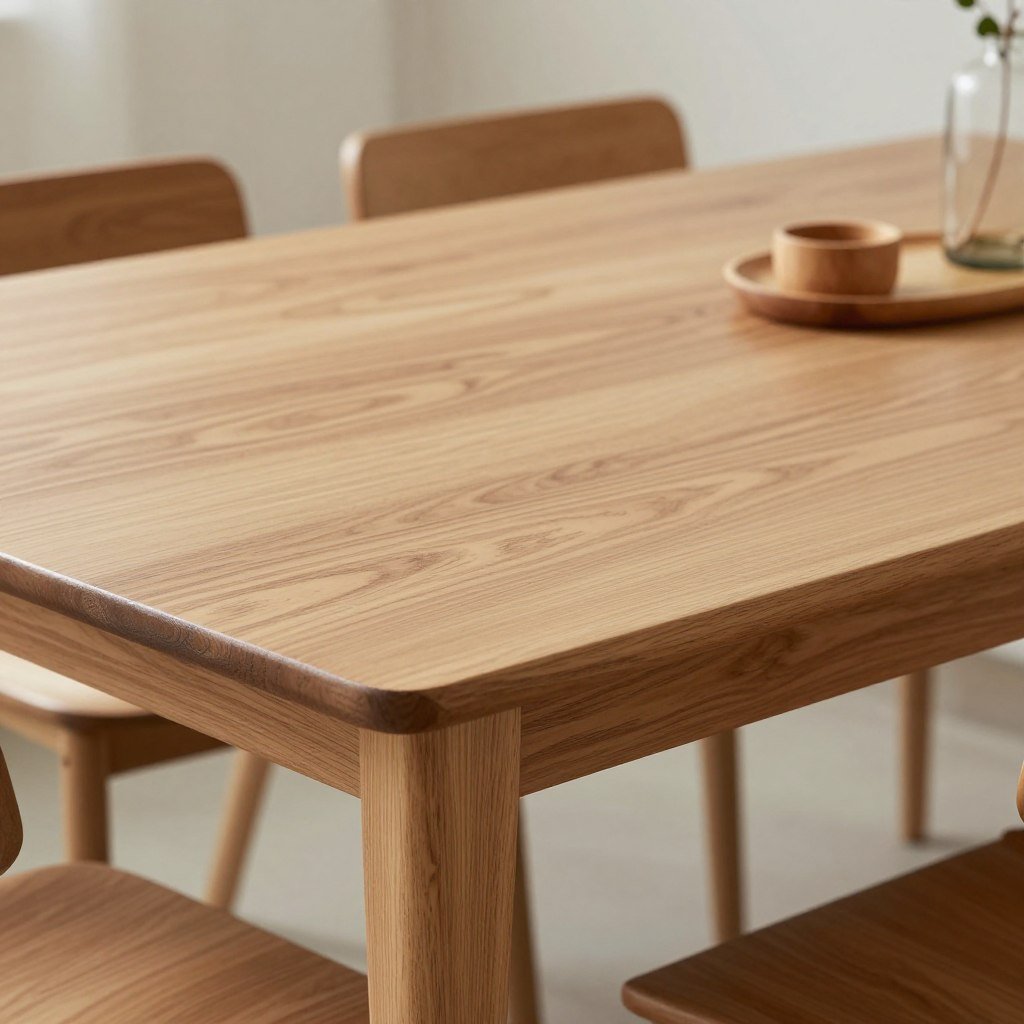
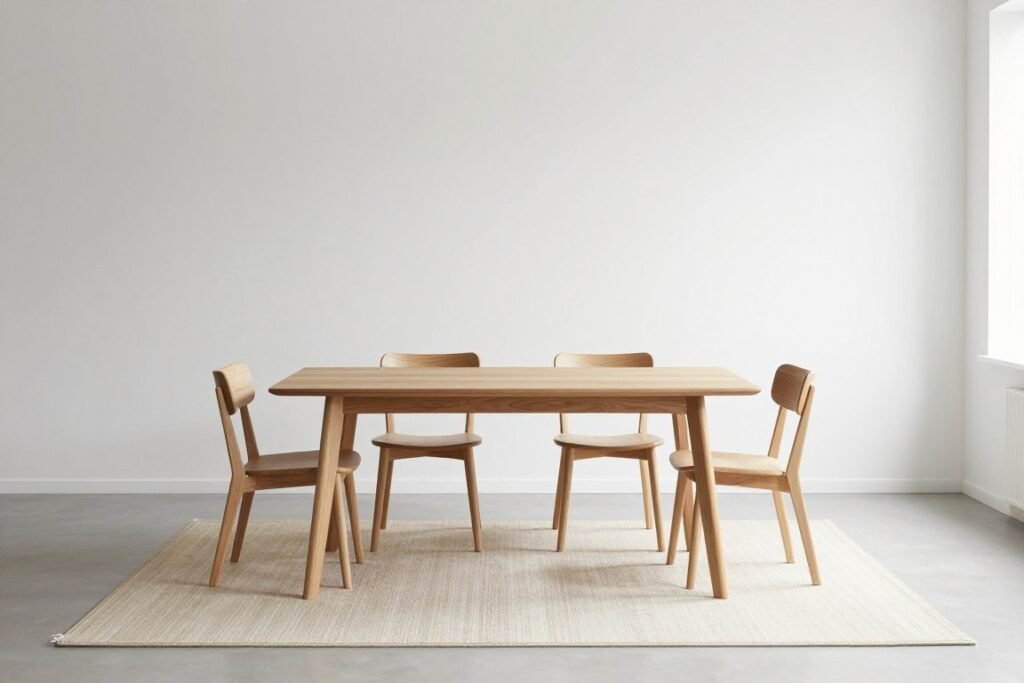
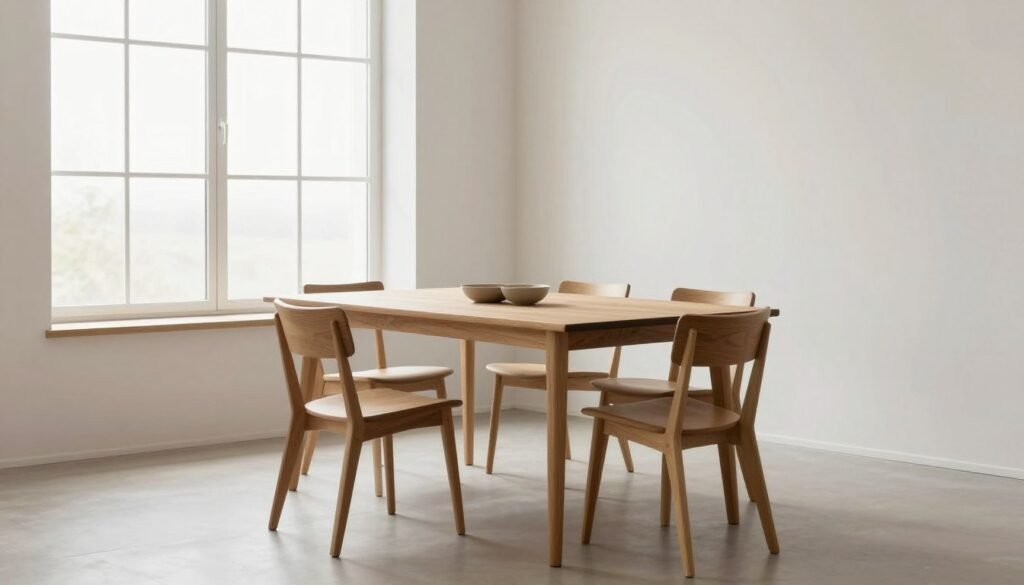
For a truly minimalist look, consider a dining table with a simple design in natural wood, glass, or a combination of materials. Oak, walnut, and ash are excellent choices that bring warmth and texture to your space.
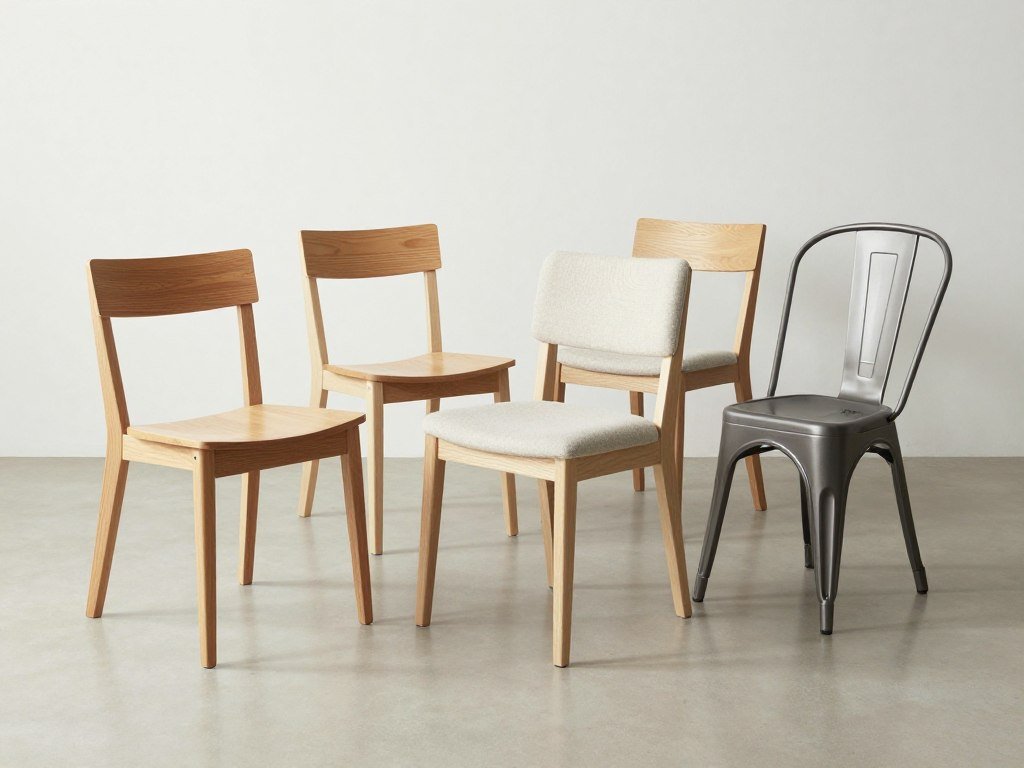
Dining Chairs: Comfort Meets Simplicity
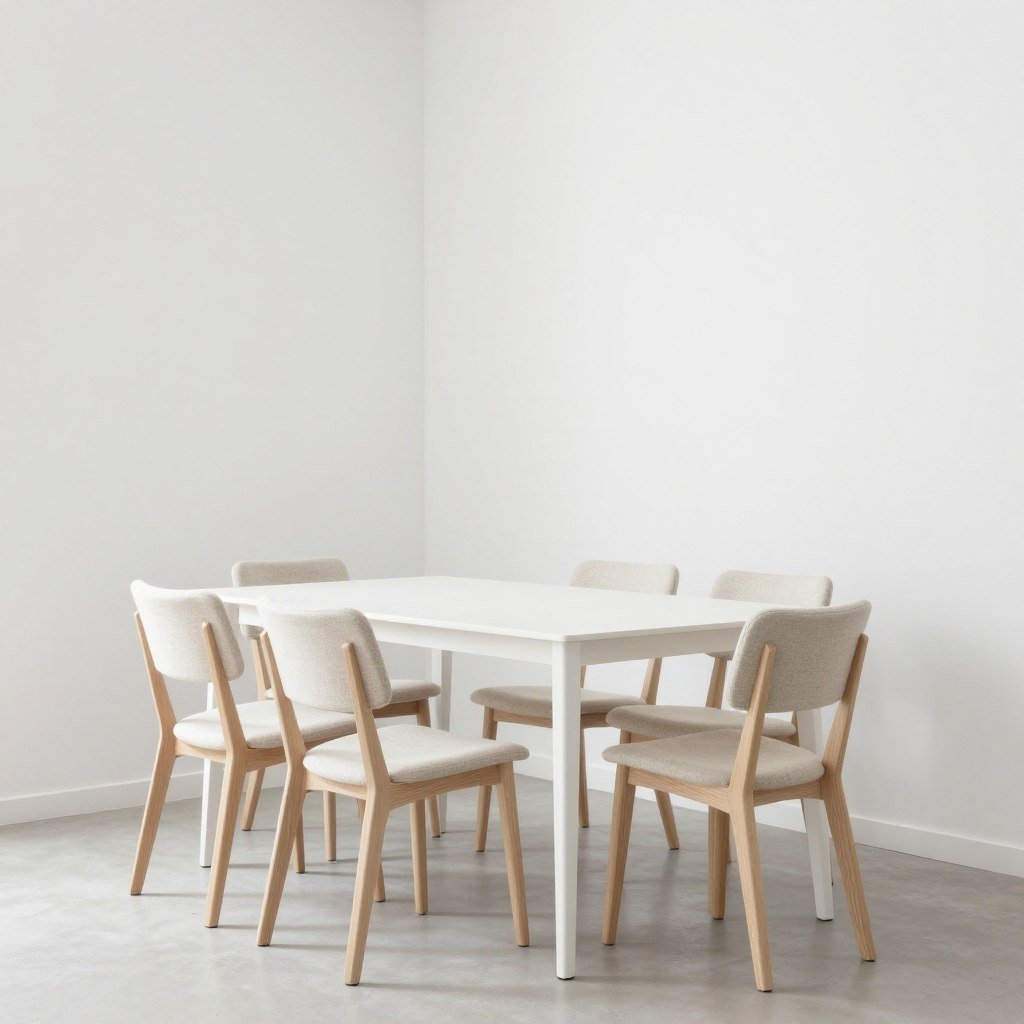
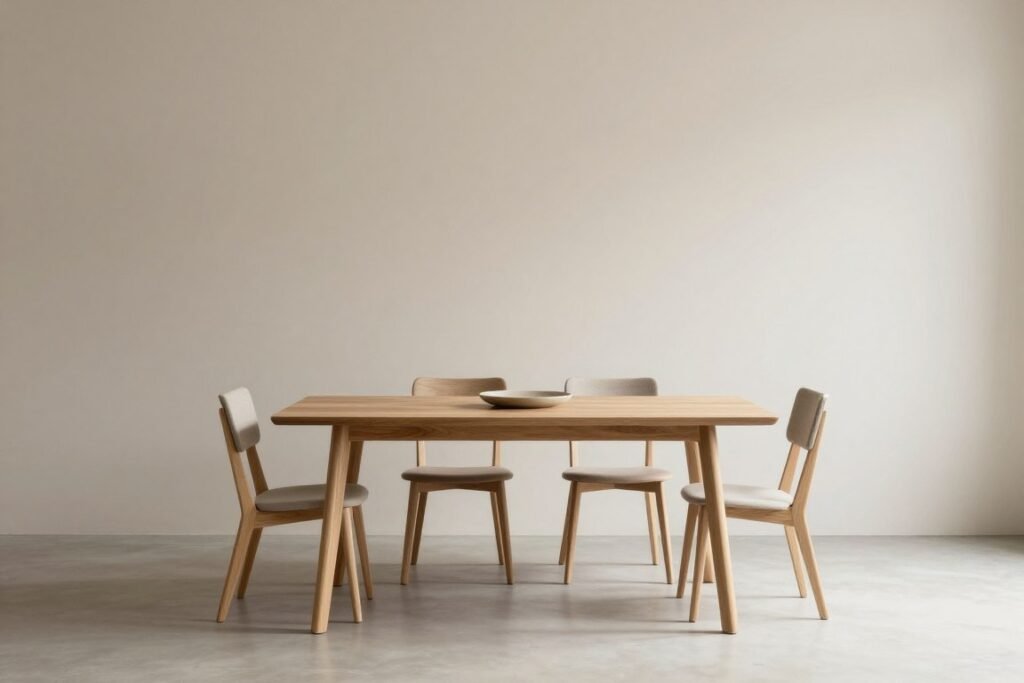
Minimalist dining chairs should balance form and function, offering comfort without unnecessary ornamentation. Look for chairs with clean profiles and quality construction that complement your table without overwhelming it.
Consider mixing materials for subtle interest—wooden chairs with your table, or perhaps upholstered dining chairs in a neutral fabric for added comfort. For smaller spaces, stackable chairs or benches that tuck under the table can maximize functionality while maintaining clean lines.
Storage Solutions: Hidden Organization
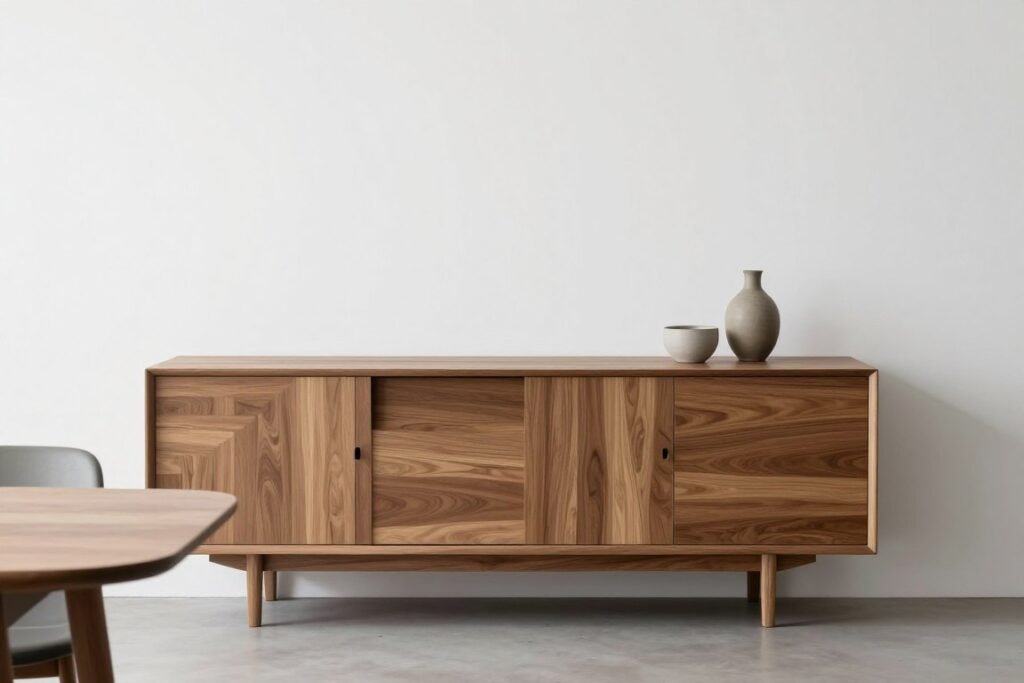
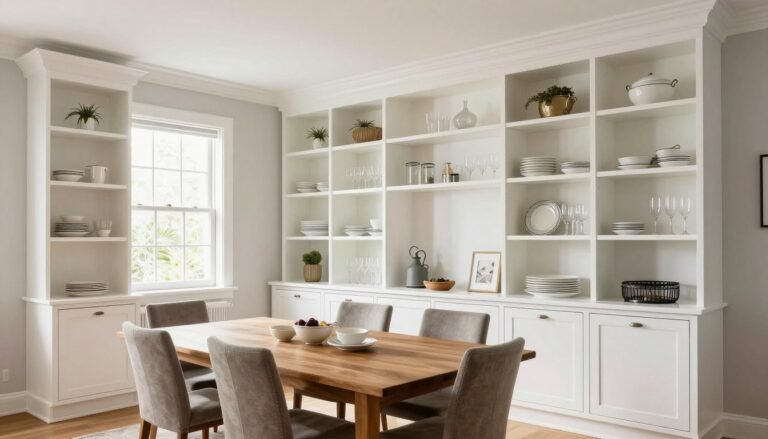
A key principle of minimalist dining rooms is keeping surfaces clear and clutter hidden. A streamlined sideboard or credenza provides essential storage while contributing to your room’s aesthetic. Look for pieces with clean lines and minimal hardware that can store dining essentials out of sight.
For the perfect balance of style and function, explore minimalist storage furniture that complements your dining table and chairs while providing practical organization for linens, serving pieces, and other dining necessities.
Lighting Your Minimalist Dining Room
Lighting plays a crucial role in creating the perfect atmosphere in your minimalist dining room. The right lighting fixtures not only illuminate your space but also serve as sculptural elements that enhance your design.
Statement Pendant Lighting
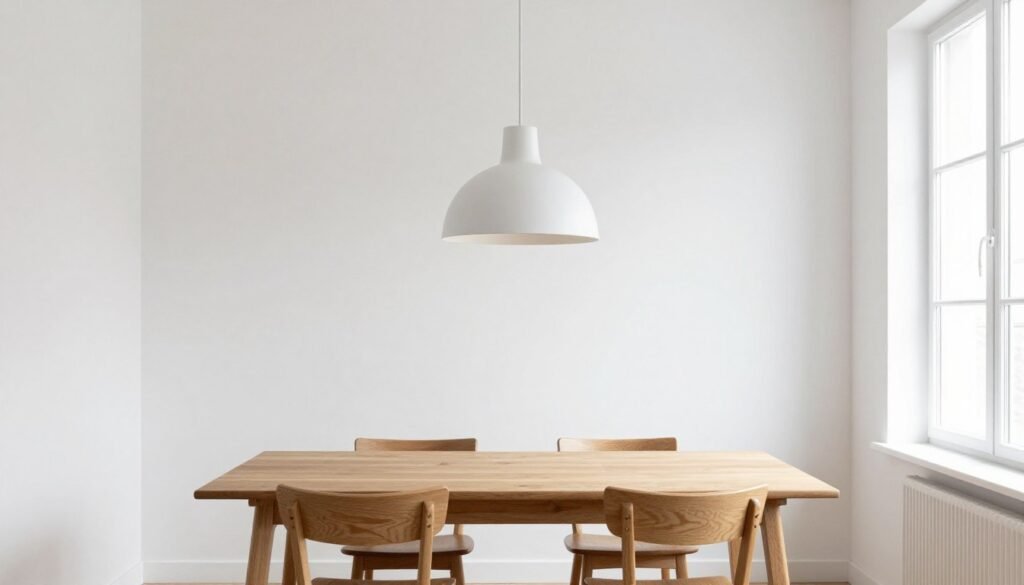
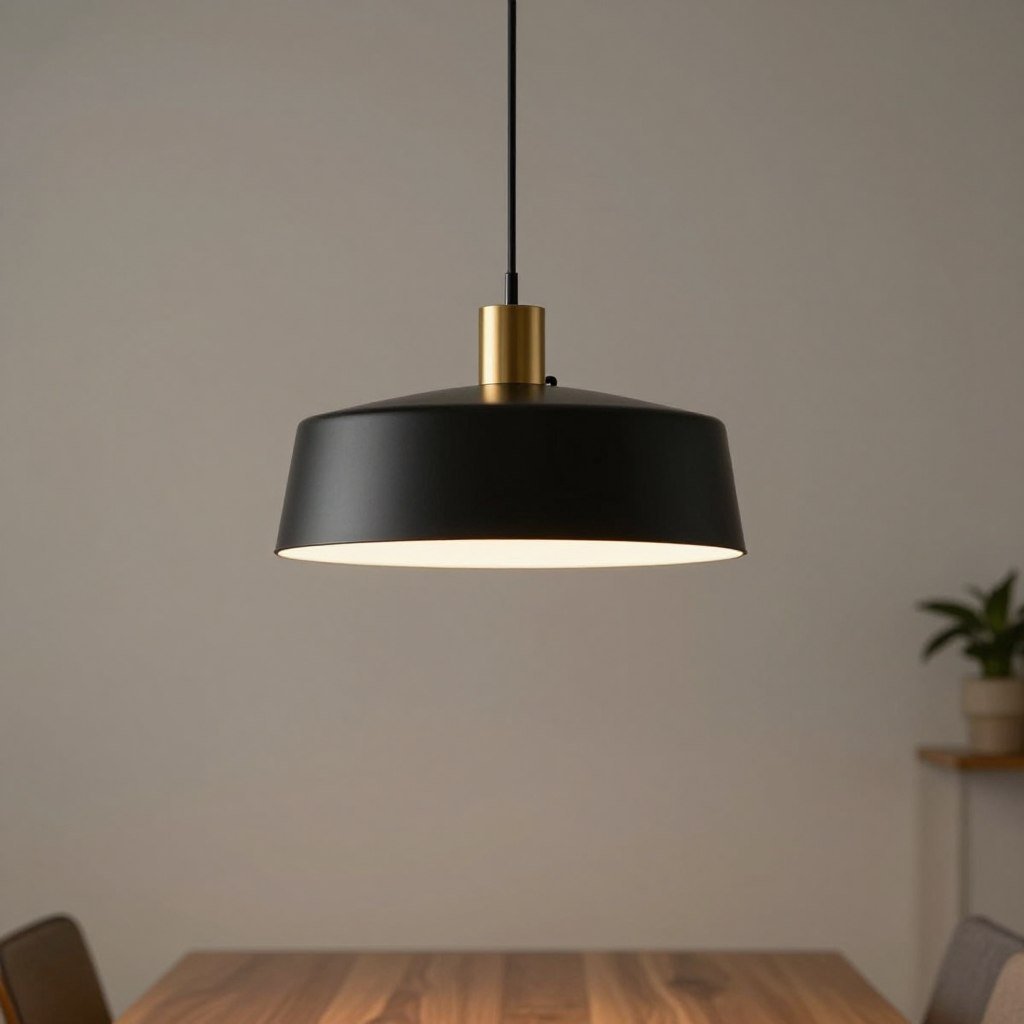
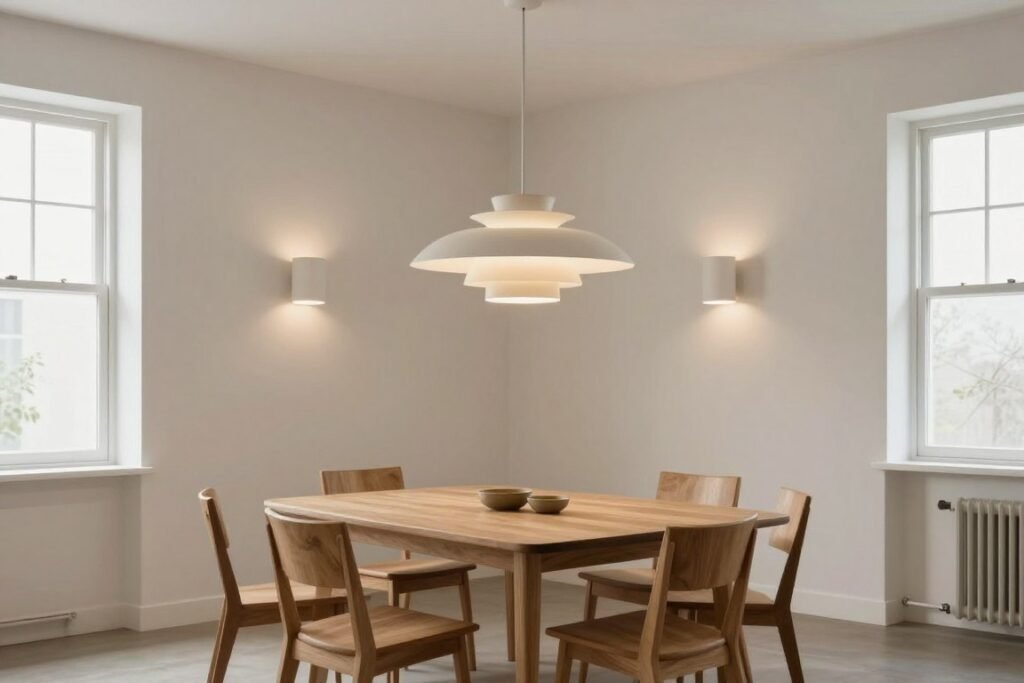
In a minimalist dining room, a well-chosen pendant light or chandelier can serve as a focal point without overwhelming the space. Look for fixtures with clean lines, simple shapes, or interesting materials that complement your overall aesthetic.
Position your pendant light approximately 30-36 inches above your dining table for optimal illumination without obstructing sightlines across the table. For a truly striking look, explore minimalist pendant lighting options that make a statement through their simplicity.
Layered Lighting Approach
While a statement pendant creates a focal point, a truly well-designed minimalist dining room incorporates multiple layers of light. Consider adding:
Wall sconces for ambient lighting and visual interest
Recessed lighting for general illumination
A small table lamp on a sideboard for a warm glow
Candles for special occasions and added warmth
Dimmers are essential in a minimalist dining room, allowing you to adjust the mood from bright and energizing for family meals to soft and intimate for dinner parties. This flexibility ensures your lighting serves both functional and atmospheric purposes.
Incorporating Natural Elements and Textures
Natural materials and varied textures are essential to prevent a minimalist dining room from feeling cold or sterile. These elements add warmth, depth, and sensory interest while maintaining clean lines and visual simplicity.
Material Selection for Warmth
Wood
Incorporate wood through your dining table, chairs, flooring, or accent pieces to add warmth and organic texture.
Natural Fibers
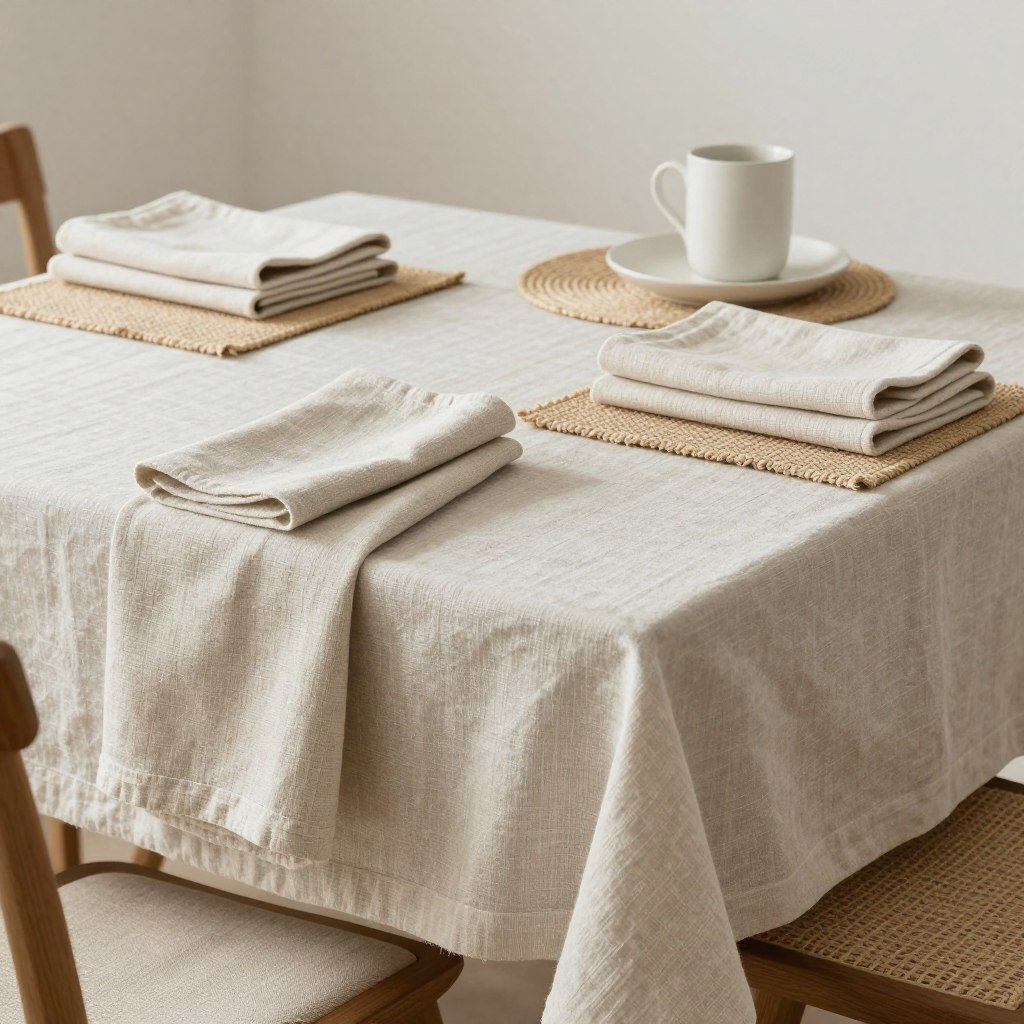
Linen napkins, cotton tablecloths, jute placemats, or a sisal rug add subtle texture without visual clutter.
Stone & Ceramics
Marble, concrete, or ceramic elements add subtle variation in texture while maintaining a clean aesthetic.
The key to incorporating textures successfully is maintaining a cohesive color palette. When materials vary but colors remain harmonious, you create depth without visual chaos. For beautiful textural elements that enhance your minimalist dining room, explore neutral table linens and textiles that add subtle interest through their natural materials.
The Power of Plants in Minimalist Dining Rooms
Plants bring life, color, and organic shape to minimalist dining rooms while purifying the air and creating a connection to nature. In minimalist spaces, select a few statement plants rather than many small ones for maximum impact with minimal visual clutter.
Choosing the Right Plants
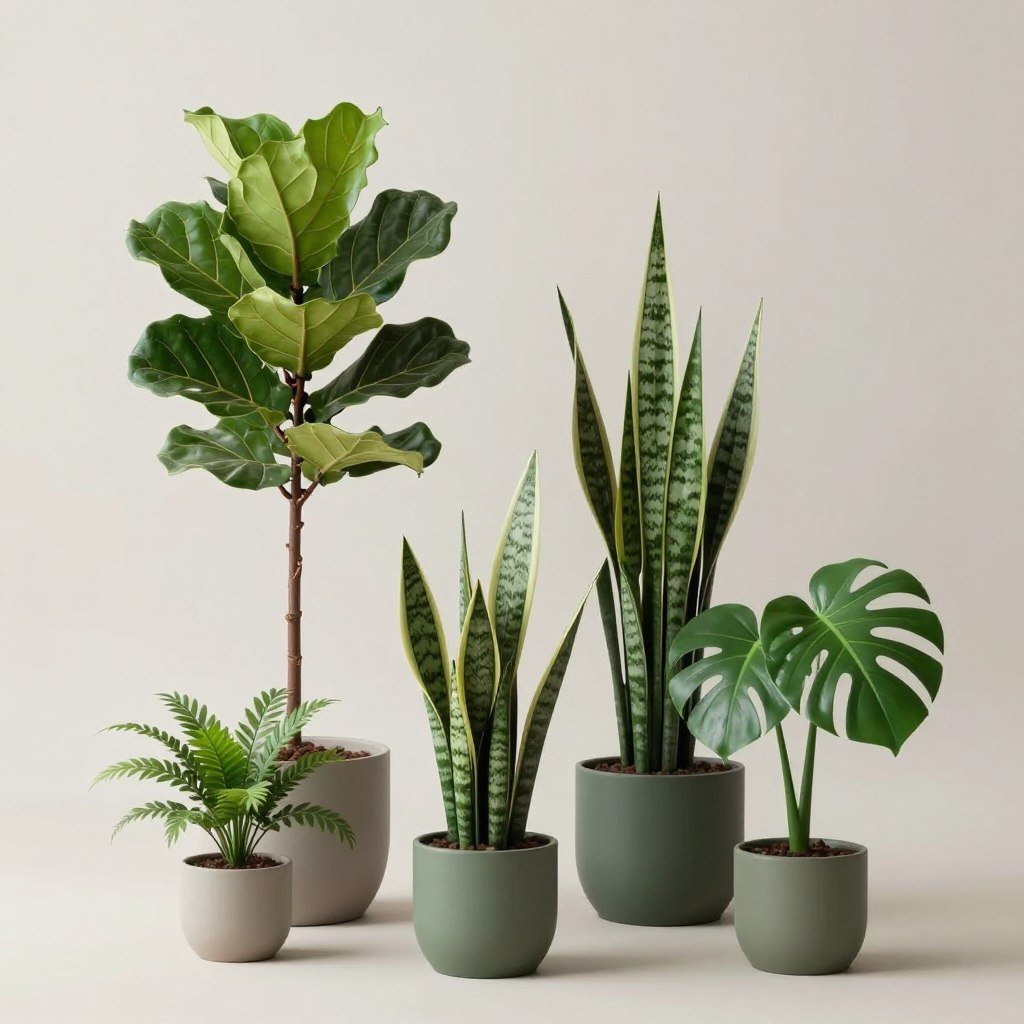
For minimalist dining rooms, select plants with architectural shapes and interesting silhouettes that serve as living sculptures. Consider these options:
Fiddle Leaf Fig – Bold, sculptural leaves create a dramatic focal point
Olive Tree – Delicate foliage adds subtle texture and Mediterranean charm
Monstera – Distinctive cut leaves create visual interest without fussiness
ZZ Plant – Glossy foliage and low maintenance make it perfect for busy spaces
Styling with Plants
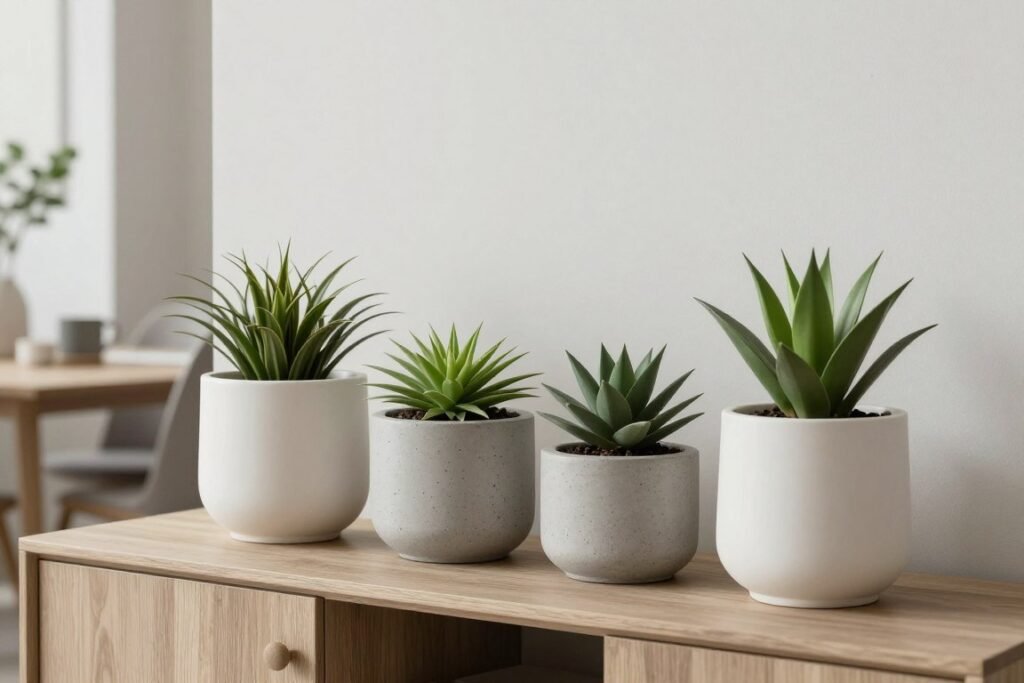
In true minimalist fashion, let your plants shine by placing them in simple, understated planters that complement your color palette. Ceramic, concrete, or woven baskets in neutral tones allow the plant itself to be the star.
For maximum impact with minimal effort, consider minimalist planters that enhance your dining room’s aesthetic while showcasing your carefully selected greenery.
Wall Treatments for Minimalist Dining Rooms
Walls provide the backdrop for your minimalist dining room and set the tone for the entire space. While white walls are a classic choice, today’s minimalist approach embraces subtle variation and thoughtful wall treatments.
Paint Techniques and Finishes
Even within a neutral palette, different paint finishes can create subtle dimension:
Matte finishes – Create a soft, velvety look that hides imperfections
Eggshell – Offers a slight sheen that’s still subdued and elegant
Limewash – Provides subtle texture and movement without pattern
Color blocking – Using two neutral tones to create architectural interest
Minimalist Wall Decor
In keeping with minimalist principles, wall decor should be intentional and impactful. Consider:
A single large-scale artwork creates impact without clutter. Look for pieces with simple compositions, limited color palettes, or abstract forms that complement your space. For a curated selection of options, explore minimalist wall art that can serve as a focal point in your dining room.
Alternatively, consider a wall-mounted sculpture, a simple mirror to reflect light, or even leaving walls completely bare to emphasize architectural features and create a sense of spaciousness.
Minimalist Table Settings and Dining Accessories
The way you set your table and the dining accessories you choose should reflect the same minimalist principles as the rest of your space. Focus on quality materials, simple forms, and items that enhance the dining experience.
Everyday Table Settings
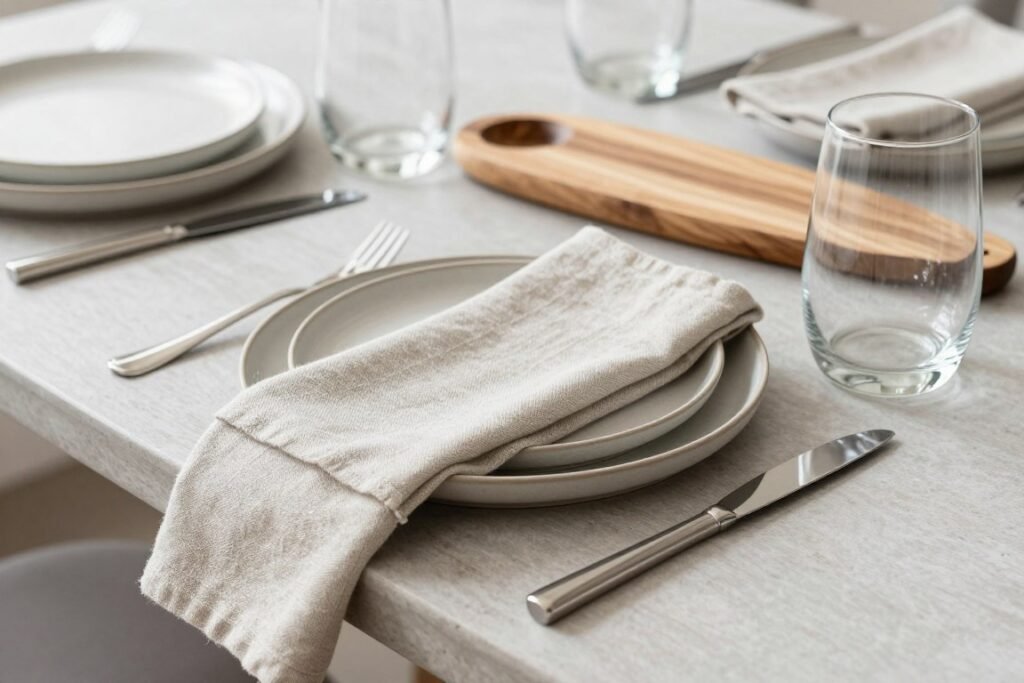
For daily meals, embrace simplicity with:
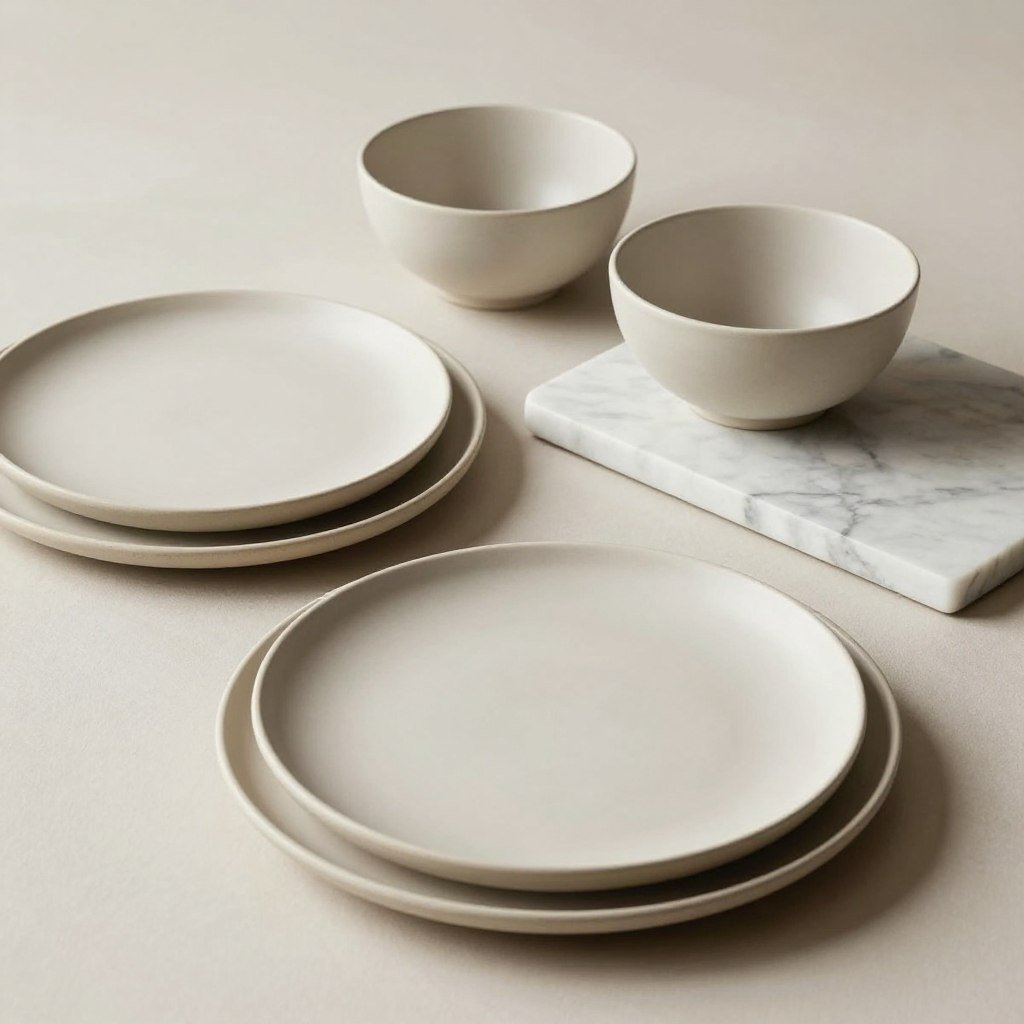
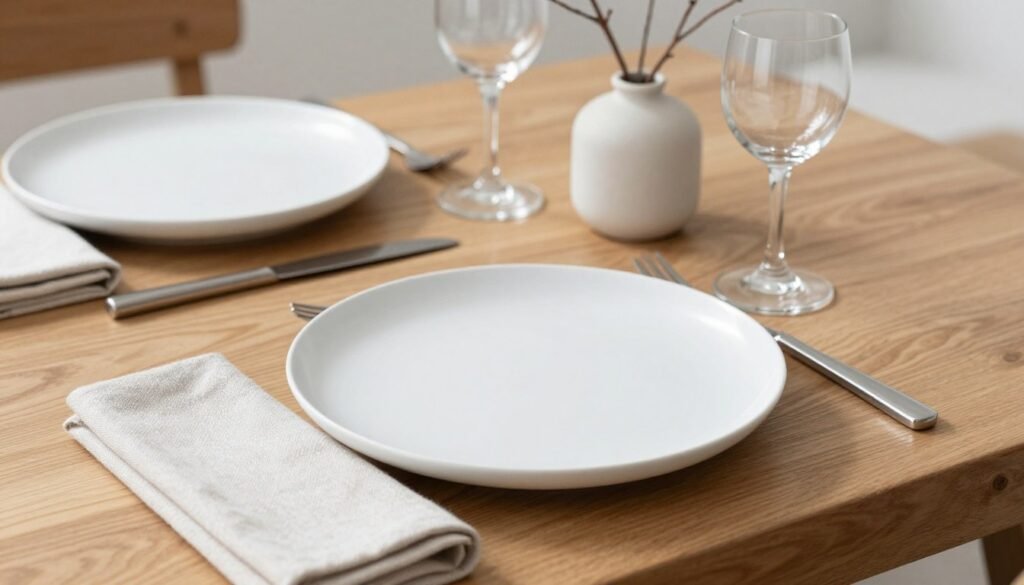
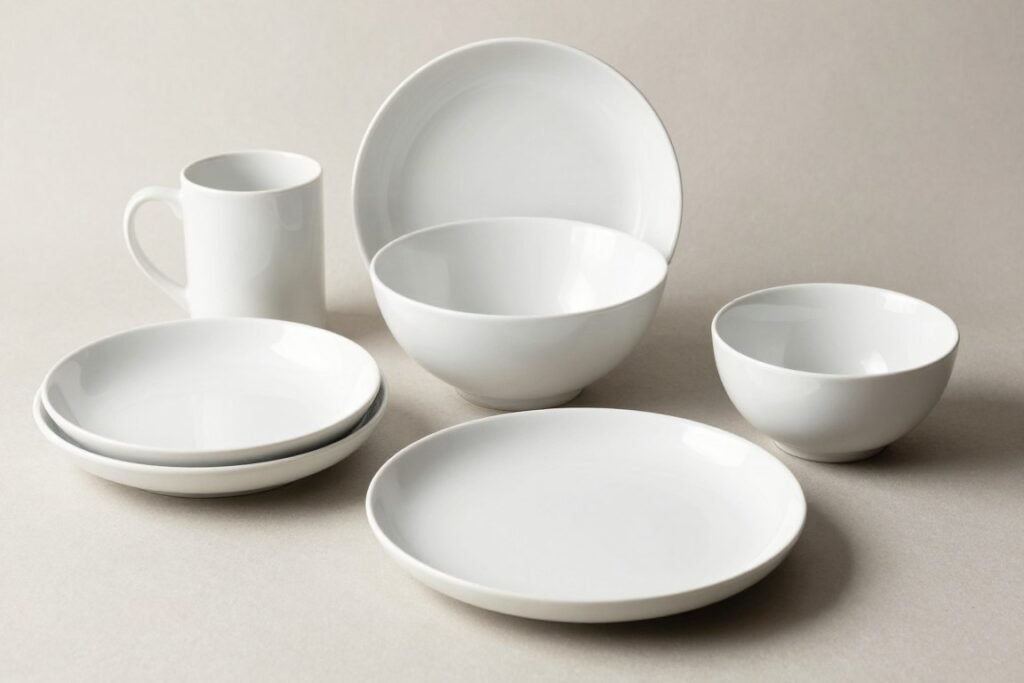
Simple white or neutral dinnerware with clean lines
High-quality, minimal glassware without excessive decoration
Streamlined flatware in stainless steel or matte black
Linen napkins in colors that complement your palette
A single, low centerpiece that doesn’t obstruct conversation
Quality matters more than quantity in a minimalist dining room. Invest in fewer, better pieces that you truly love and will use regularly. For beautiful options that align with minimalist principles, consider minimalist dinnerware collections that emphasize clean lines and timeless design.
Special Occasion Settings
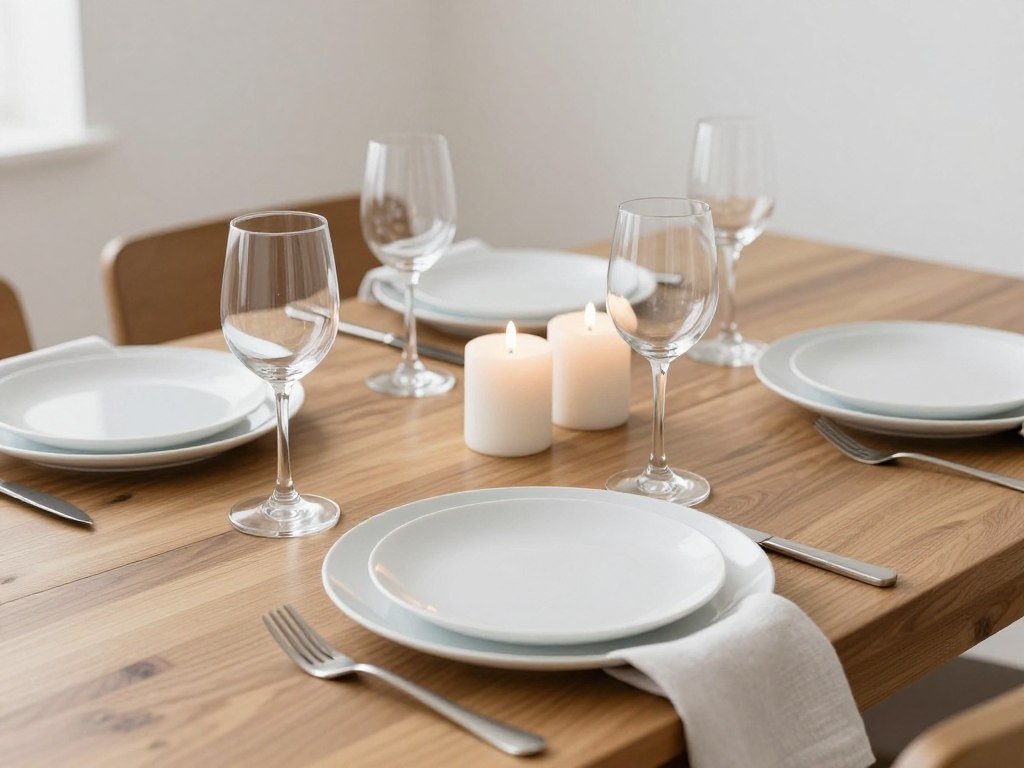
For entertaining, maintain the minimalist aesthetic while adding thoughtful touches:
Even for special occasions, resist the urge to overcrowd the table. A few well-chosen elements—like taper candles in simple holders, a runner in natural linen, or a centerpiece of seasonal branches—create atmosphere without clutter.
Window Treatments for Minimalist Dining Rooms
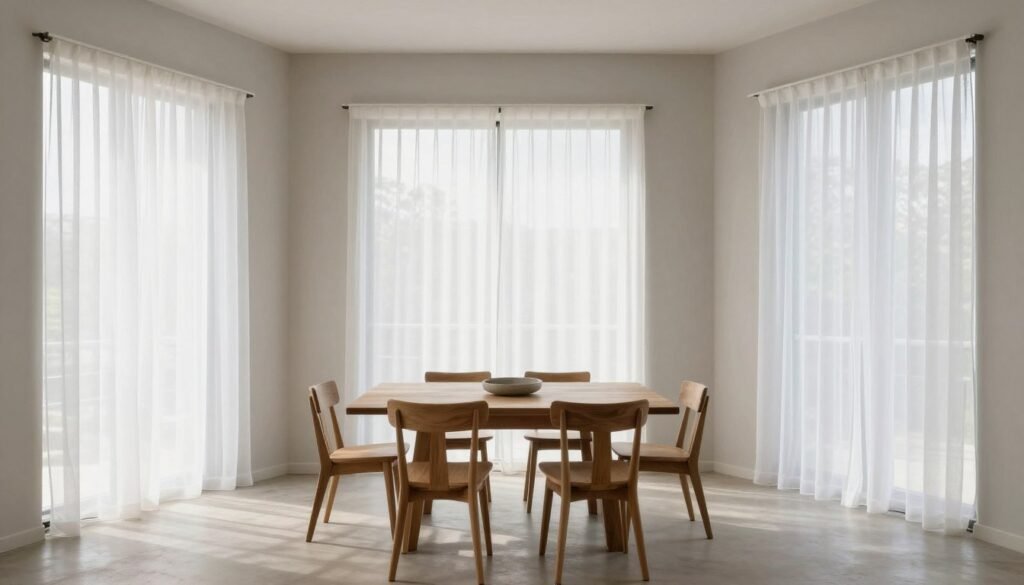
Natural light is a cornerstone of minimalist design, so window treatments should enhance rather than obstruct it. The goal is to frame your windows beautifully while maintaining clean lines and visual simplicity.
Minimalist Window Treatment Options
Sheer linen curtains that filter light beautifully
Simple roller blinds in neutral tones
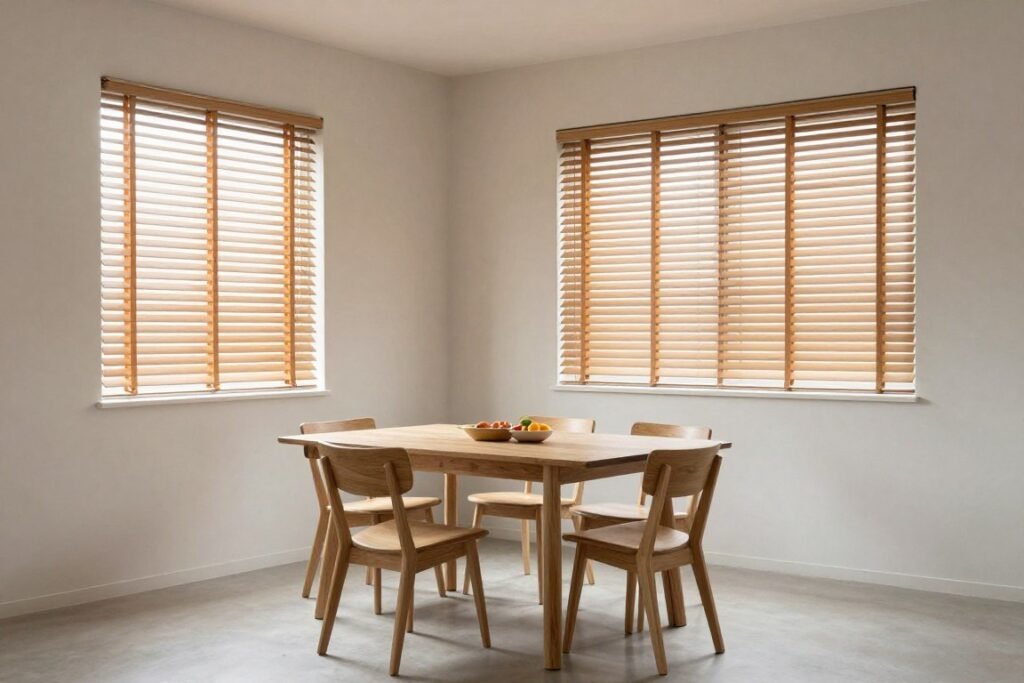
Wooden blinds that add warmth and texture
No window treatments at all for architectural windows
When selecting window treatments, choose materials and colors that blend with your walls for a seamless look, or select a contrasting material (like natural wood blinds against white walls) for subtle definition. For a range of options that complement minimalist dining rooms, explore minimalist window coverings that balance function and style.
Flooring Options for Minimalist Dining Rooms
Flooring creates the foundation of your minimalist dining room and should balance practicality with aesthetic appeal. The best options offer durability for this high-traffic area while contributing to the clean, cohesive look of your space.
Ideal Flooring Materials
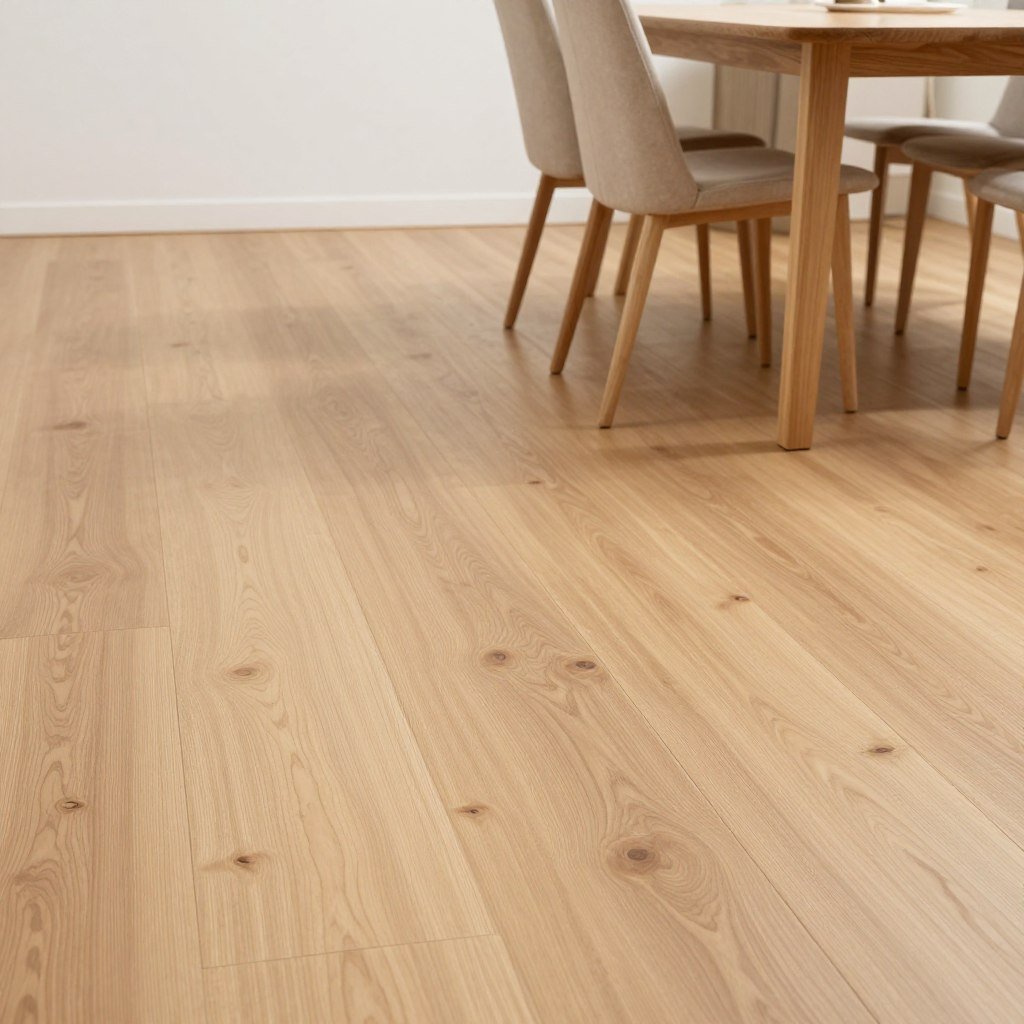
Hardwood
Timeless and warm, hardwood flooring in light to medium tones creates a natural foundation that complements minimalist furniture.
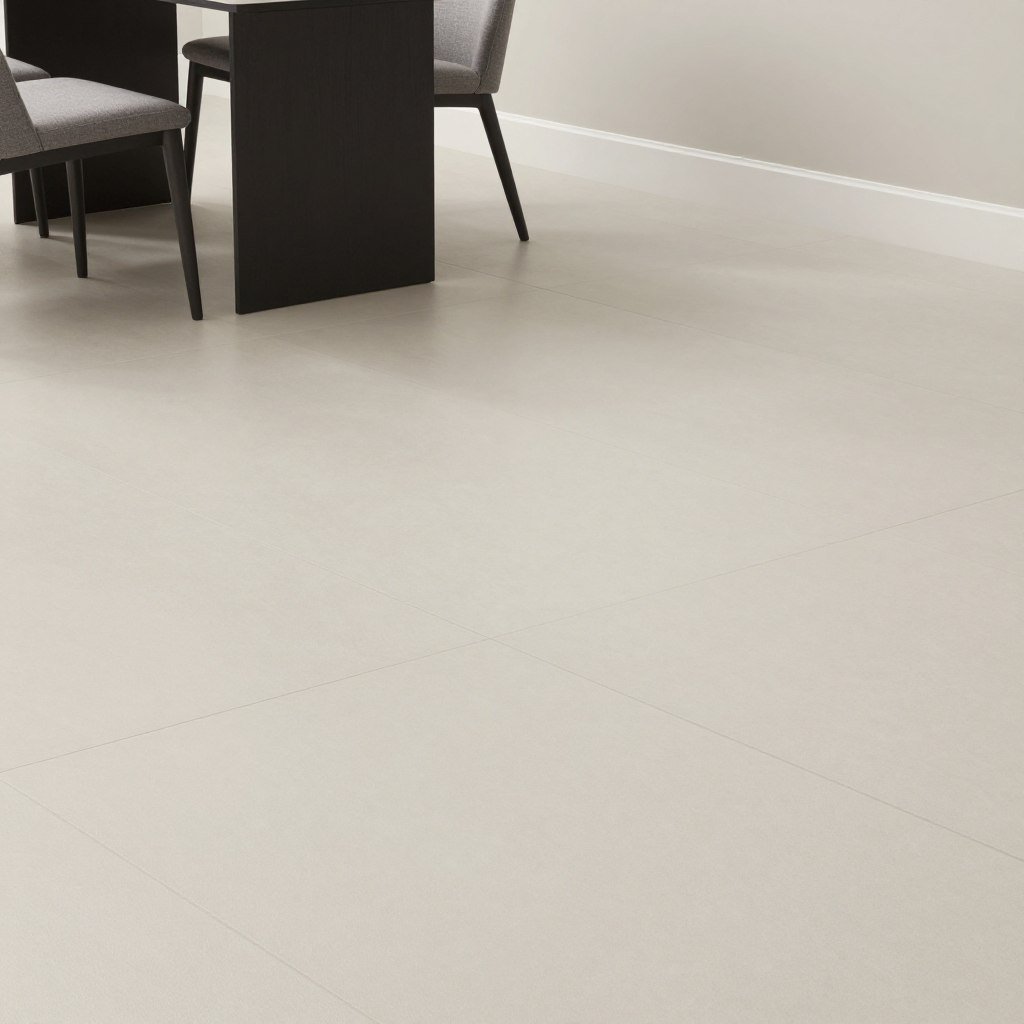
Large-Format Tile
Oversized porcelain or natural stone tiles with minimal grout lines create a sleek, continuous surface perfect for minimalist spaces.
Polished Concrete
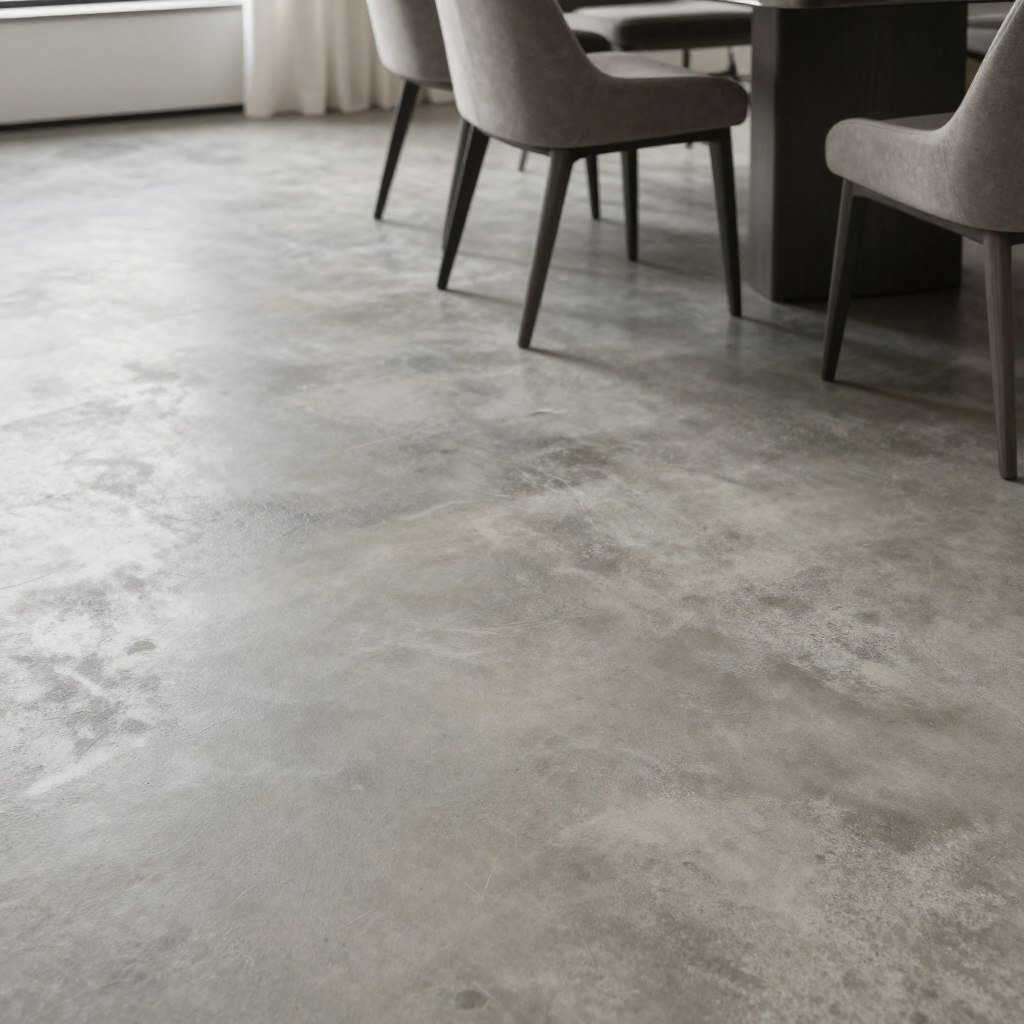
For a contemporary minimalist look, polished concrete offers durability and a seamless appearance that highlights furniture.
Area Rugs in Minimalist Dining Rooms
A well-chosen area rug can define your dining space, add warmth, and protect flooring. For minimalist dining rooms, consider:
Choose a rug that extends at least 24 inches beyond all sides of your table to accommodate chairs when pulled out. Natural fibers like wool, jute, or sisal in solid colors or subtle patterns work beautifully in minimalist spaces. For dining areas, flat-weave rugs are typically more practical than high-pile options.
To find the perfect foundation for your minimalist dining room, explore minimalist area rugs that combine durability with clean, simple design.
Creating a Minimalist Dining Experience
A minimalist dining room isn’t just about aesthetics—it’s about creating a space that encourages mindful, present eating experiences. When distractions are minimized, the food, company, and conversation naturally take center stage.
Daily Rituals in Your Minimalist Dining Room
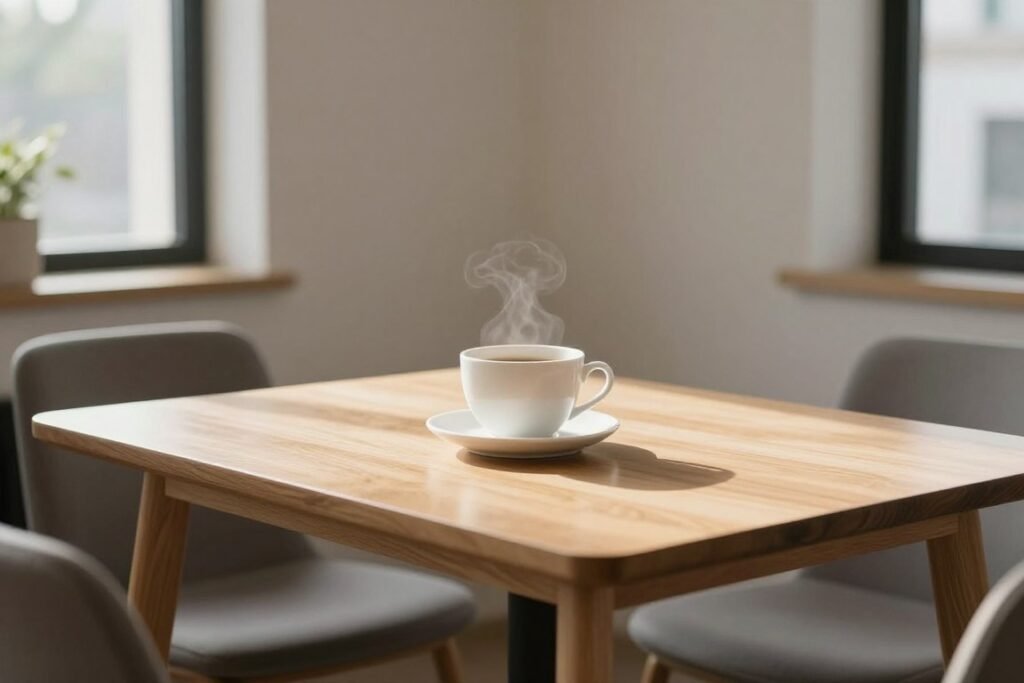
Imagine starting your day with morning coffee at your clean, uncluttered table. Sunlight streams through simple window treatments, illuminating the warm wood grain of your table. There’s nothing to distract from the moment—just the aroma of coffee, perhaps a simple vase with fresh flowers, and the peaceful beginning of a new day.
Later, as family gathers for dinner, conversation flows naturally in this calm environment. Without visual noise competing for attention, everyone connects more deeply. The simple beauty of thoughtfully prepared food stands out against minimal place settings, making even everyday meals feel special.
Maintaining Your Minimalist Dining Room
The beauty of a minimalist dining room lies in its simplicity, but maintaining this aesthetic requires ongoing intention. Develop these habits to preserve your serene space:
Clear the table completely after meals
Store seasonal items away when not in use
Regularly evaluate items to ensure everything serves a purpose
Establish a “one in, one out” rule for new acquisitions
Create designated storage spaces for dining essentials
Remember that minimalism is a practice, not a perfect end state. Your dining room will evolve as your needs change, but the principles of intentionality and simplicity can guide your decisions at every stage.
Embracing the Minimalist Dining Room Lifestyle
Creating a minimalist dining room goes beyond design choices—it’s about cultivating a space that supports connection, mindfulness, and appreciation for simple pleasures. By focusing on quality over quantity, embracing natural materials, and eliminating unnecessary clutter, you create a dining environment that feels both timeless and deeply personal.
As you implement the ideas from this guide, remember that minimalism isn’t about deprivation—it’s about making room for what truly matters. Your minimalist dining room will become a sanctuary where meals are savored, conversations flow freely, and the beauty of simplicity is celebrated every day.
We hope you’ve found inspiration for your own minimalist dining space. If you’ve enjoyed this guide, please save it to your Pinterest board to reference as you create your own serene dining sanctuary. Your perfect minimalist dining room awaits!
Ready to Create Your Minimalist Dining Room?
Start with quality foundation pieces that will stand the test of time, then layer in thoughtful details that reflect your personal style while maintaining clean, minimalist principles.
Small bathrooms present unique design challenges. Limited space can feel cramped and cluttered without the right approach. A minimalist small bathroom…