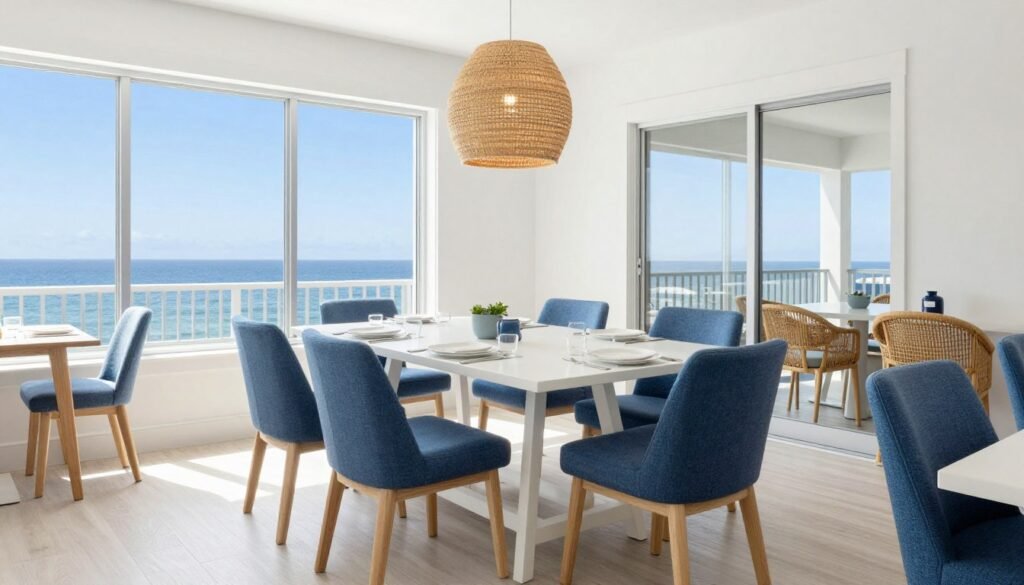
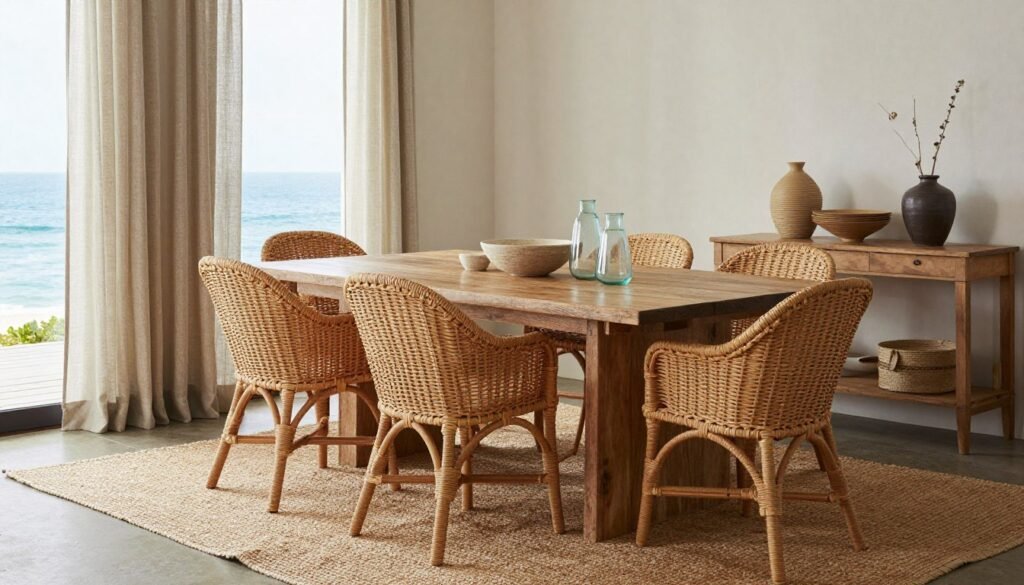
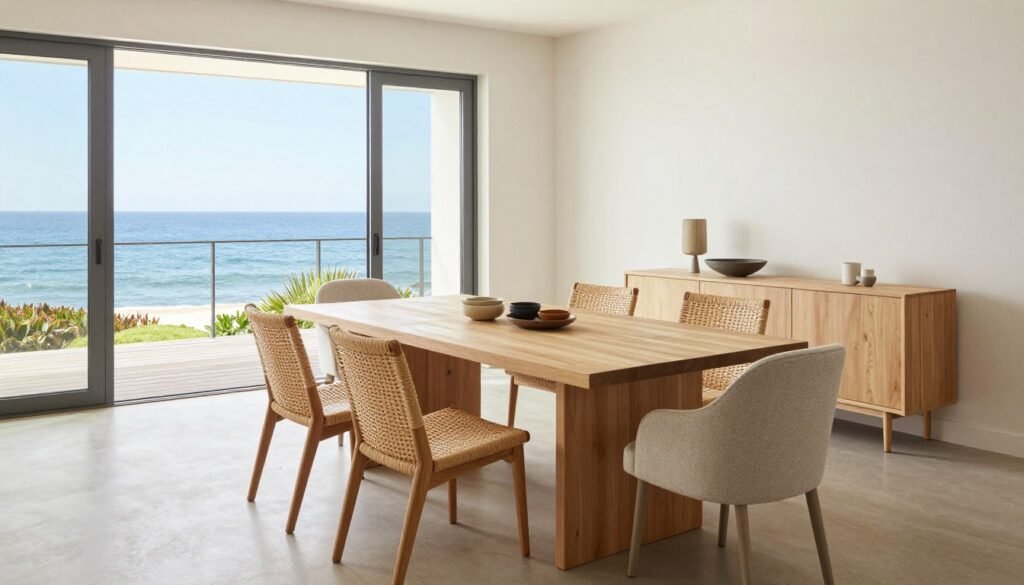
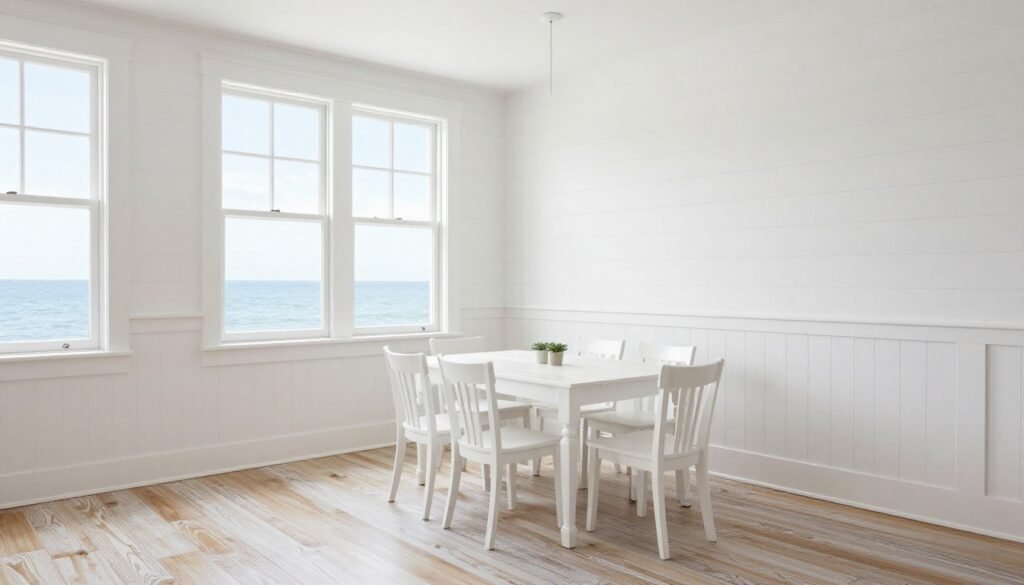
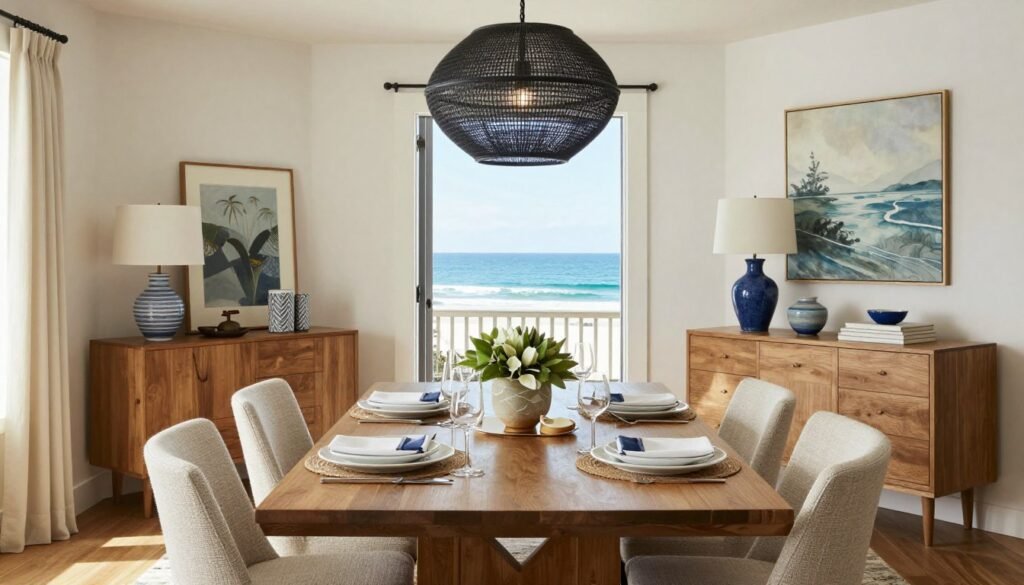
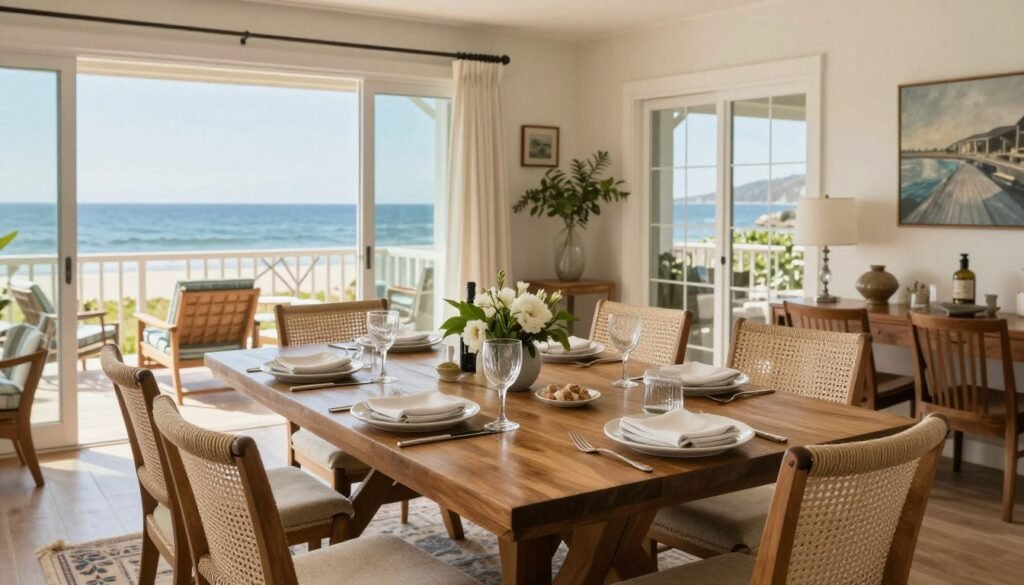
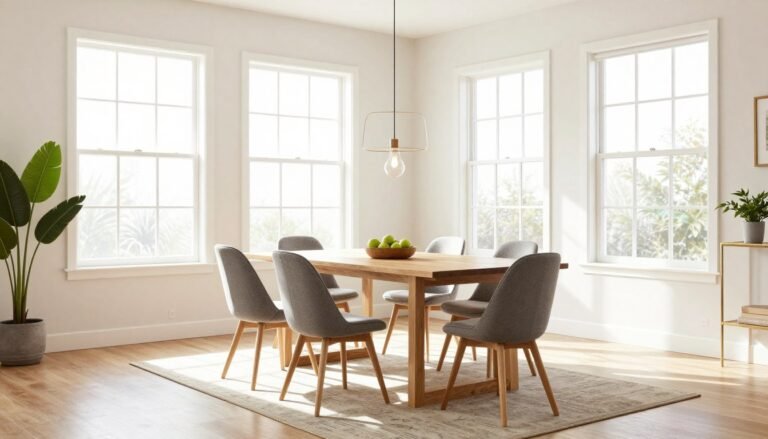
Imagine sitting down to dinner with the serene feeling of ocean breezes, soft natural light, and the relaxed elegance of a seaside retreat. A coastal dining room brings this tranquil atmosphere into your home, creating a space that feels both refreshing and timeless. Whether you live miles from the nearest shoreline or have ocean views from your windows, capturing this sought-after style is about embracing light, texture, and a thoughtful color palette that evokes the natural beauty of coastal environments.
This Website contains affiliate links. That means I may earn a small commission if you purchase through my links, at no extra cost to you.
In this comprehensive guide, we’ll explore how to create a coastal dining room that balances relaxed beach house vibes with sophisticated design elements. From selecting the perfect furniture and lighting to adding those finishing decorative touches, you’ll discover everything you need to transform your dining space into a coastal-inspired retreat that welcomes family and friends with warmth and style.
Understanding True Coastal Style
Before diving into specific design elements, it’s important to understand what defines authentic coastal style. Unlike heavily themed nautical decor (think anchors, rope, and sailor motifs) or tropical designs dominated by bold patterns, true coastal style is more subtle and sophisticated. It draws inspiration from the natural elements of shoreline environments—light, air, water, and sand—to create spaces that feel open, relaxed, and connected to nature.
The essence of coastal dining room design lies in its ability to create a sense of casual elegance. It’s about capturing the feeling of a leisurely meal in a beach house where time slows down and the stresses of everyday life fade away. This style works particularly well in dining spaces because it encourages lingering conversations and creates an atmosphere of unpretentious hospitality.
Coastal vs. Nautical: Understanding the Difference
While nautical style leans heavily on maritime themes with literal interpretations (ship wheels, anchors, and navy stripes), coastal style is more subtle. It captures the essence of seaside living through texture, light, and a more refined color palette. Think of coastal as the sophisticated cousin of nautical—it hints at the ocean without explicitly stating it.
The beauty of coastal dining room design is its versatility. You can adapt it to complement modern, traditional, or transitional homes. Whether you prefer the crisp, clean lines of contemporary design or the comfortable familiarity of traditional elements, coastal style can be tailored to suit your personal aesthetic while maintaining its essential breezy character.
The foundation of any successful coastal dining room begins with the right color palette. These colors should evoke the natural elements found at the shoreline—from the varied blues of the ocean and sky to the warm neutrals of sand and driftwood.
Core Colors for Coastal Dining Spaces
Whites and Creams: Crisp whites and soft creams form the perfect backdrop, reflecting light and creating an airy feel. Consider Benjamin Moore’s “Simply White” or “Cloud White” for walls that brighten your space. Find white paint samples here.
Ocean Blues: From pale aqua to deep navy, blues add depth and character. Use lighter blues for larger surfaces and deeper tones as accents. Sea glass blue is particularly effective in creating a coastal atmosphere.
Sandy Neutrals: Beige, taupe, and warm gray tones ground the space and add warmth. These colors work beautifully for flooring, rugs, and larger furniture pieces.
Driftwood Grays: Weathered gray tones add sophistication and mimic the natural aging process of wood exposed to salt air and sun.
Accent Colors: Soft corals, sea glass greens, and muted yellows can be incorporated as subtle accents that add interest without overwhelming the serene palette.
The key to a successful coastal color scheme is balance. Aim for approximately 60% light neutrals (whites, creams), 30% mid-tones (blues, sandy beiges), and 10% accents or darker tones. This creates visual interest while maintaining the light, airy feel essential to coastal style.
Create Your Coastal Color Palette
Start with paint samples to find the perfect coastal hues for your dining room walls and trim. Experiment with different shades of white and blue to find the combination that creates your ideal atmosphere.
Texture plays a crucial role in coastal dining room design, adding depth, interest, and that authentic beach house feel. The right combination of materials creates a multi-sensory experience that makes the space feel lived-in and welcoming.
Key Materials for Coastal Dining Rooms
Natural Fibers
Incorporate jute, sisal, or seagrass through rugs, placemats, or even lighting fixtures. These materials bring warmth and an organic quality that’s essential to coastal style. Find natural fiber rugs here.
Light Woods
Opt for white oak, bleached woods, or whitewashed finishes that recall driftwood or sun-bleached pier boards. These lighter tones keep the space feeling bright and airy.
Rattan and Cane
These materials add visual interest and a distinctly coastal feel. Look for dining chairs with cane backs or rattan elements that bring texture without heaviness. Browse rattan dining chairs.
Linen and Cotton
Soft, natural fabrics in light colors create a relaxed, breezy feel. Consider linen napkins, tablecloths, or curtains that move gently with air circulation.
Glass and Ceramics
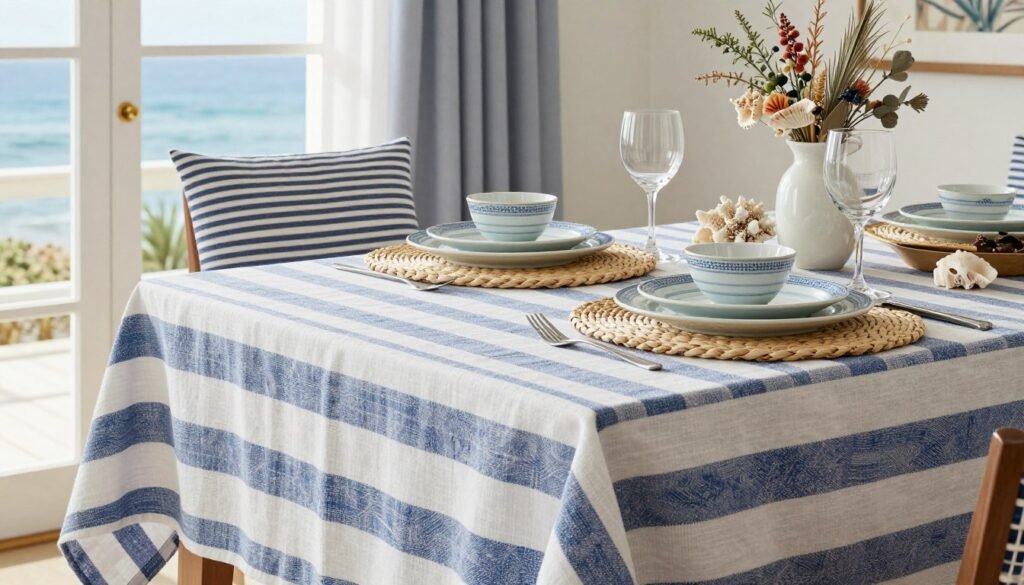
Clear or sea glass-colored vessels, vases, and tableware add a reflective quality that mimics water. Blue and white ceramics are classic coastal elements that add pattern without overwhelming.
Weathered Metals
Brushed brass, aged bronze, or matte silver finishes add subtle gleam without the harshness of highly polished metals. These work beautifully for light fixtures, hardware, and decorative accents.
The magic of coastal style comes from layering these textures thoughtfully. A dining room with a sisal rug underfoot, linen curtains framing the windows, a weathered wood table, and rattan chairs creates depth through contrasting textures while maintaining a cohesive coastal feel.
Furniture Selection and Layout
The furniture you choose for your coastal dining room sets the foundation for both style and function. Coastal dining spaces typically feature pieces that balance casual comfort with elegant simplicity.
Dining Tables
The table is the centerpiece of any dining room. For coastal style, look for tables with these characteristics:
Light to medium wood tones that evoke driftwood, weathered pier boards, or sun-bleached oak
Simple, clean lines rather than heavy, ornate details
Round tables work well in smaller spaces and create a more intimate dining experience
Rectangular tables with slightly weathered or distressed finishes add character
Extendable options provide flexibility for entertaining while maintaining proper scale Shop extendable dining tables
Dining Chairs
Seating options for coastal dining rooms offer opportunities to introduce texture and comfort:
Woven chairs with rattan, cane, or seagrass elements add instant coastal character
Slipcovered chairs in white or natural linen create a relaxed, elegant look
Mixed seating with different chair styles or a combination of chairs and benches adds casual charm
Complete your coastal dining room with thoughtful storage pieces:
Buffets or sideboards in light wood or painted finishes provide essential storage
Glass-front cabinets display coastal-themed dishware or collections
Open shelving styled with a mix of practical and decorative items adds personality
Layout Considerations
The arrangement of furniture in a coastal dining room should prioritize flow, light, and views:
Allow at least 36 inches between the table edge and walls or other furniture
Position the table to take advantage of natural light and views when possible
For rectangular rooms, align the table with the longer dimension
Consider a round table for square rooms or to improve traffic flow
Remember that coastal style embraces a certain relaxed imperfection. Don’t be afraid to mix and match furniture pieces as long as they share common elements like color tone, scale, or material quality.
Walls and Floors: Creating the Foundation
Wall Treatments
The walls of your coastal dining room set the tone for the entire space. Consider these options to create the perfect backdrop:
Paint: Light, airy colors like soft whites, pale blues, or gentle greens create the perfect coastal atmosphere. Benjamin Moore’s “White Dove” or Sherwin Williams’ “Sea Salt” are popular choices.
Shiplap: This horizontal wood paneling instantly evokes coastal architecture and adds texture and dimension to walls. Explore shiplap options here.
Wainscoting: Adding wainscoting to the lower portion of walls creates architectural interest and a classic coastal look, especially when painted in crisp white.
Grasscloth: For a more sophisticated coastal look, consider textured grasscloth wallpaper in neutral tones that adds depth without overwhelming the space.
Accent Wall: Create a focal point with a subtle pattern or slightly deeper color on one wall, perhaps behind a buffet or sideboard.
Flooring Options
The right flooring anchors your coastal dining room and complements the overall design:
Light Wood: Blonde or honey-toned hardwood floors create warmth while maintaining brightness. Wide planks enhance the casual coastal feel.
Whitewashed Wood: For a more beachy look, consider whitewashed or limed oak flooring that mimics sun-bleached boardwalks.
Luxury Vinyl Plank: For practicality in dining spaces, waterproof luxury vinyl in wood-look finishes offers durability with coastal style.
Area Rugs: Define the dining area with a natural fiber rug like jute, sisal, or seagrass. Look for options with low pile height for easy chair movement and cleaning. Shop washable natural fiber rugs.
When selecting flooring, consider the practical aspects of a dining space. Choose materials that can withstand spills and are easy to clean, while still contributing to your coastal aesthetic. If you already have darker flooring, lighten the space with a large area rug in a natural material to achieve the coastal look.
Lighting: Setting the Coastal Mood
Lighting in a coastal dining room should mimic the bright, airy quality of seaside environments while creating warmth and ambiance for evening gatherings. A thoughtful lighting plan incorporates multiple sources at different heights to create layers of light.
Statement Pendant Lighting
The chandelier or pendant above your dining table serves as both a functional light source and a design focal point:
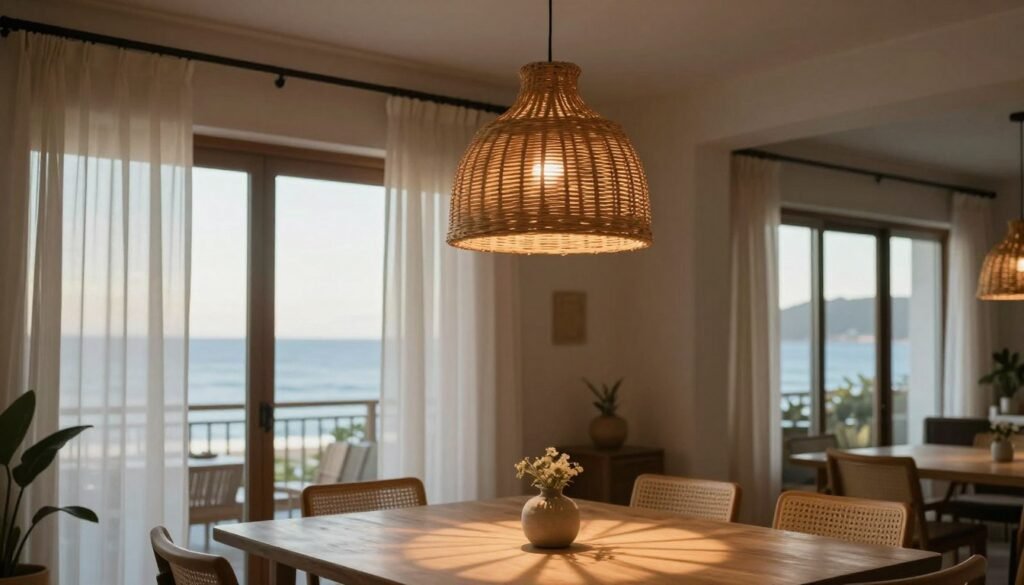
Woven Pendants: Rattan, seagrass, or bamboo fixtures filter light beautifully and add natural texture. Browse rattan pendant lights.
Beaded Chandeliers: Wood or shell-beaded fixtures add organic texture and coastal charm.
Glass Fixtures: Clear, seeded, or sea glass-colored pendants reflect light and recall water elements.
Rope Details: Fixtures with rope accents add a subtle nautical touch without being too literal.
For proper scale, choose a pendant or chandelier with a diameter approximately 1/2 to 2/3 the width of your table. Hang it 30-36 inches above the table surface for optimal lighting and sightlines.
Supplemental Lighting
Complete your lighting plan with these additional sources:
Wall Sconces: Add sconces on sideboard walls to create ambient light and highlight artwork or collections.
Buffet Lamps: Place a pair of table lamps on a sideboard for additional light and to create a warm glow during evening meals.
Recessed Lighting: Install dimmable recessed lights around the perimeter of the room for adjustable ambient lighting.
Candles: Incorporate glass hurricane lanterns or simple pillar candles for a flickering glow that recalls seaside evenings.
Dimmers are essential in dining rooms, allowing you to adjust the mood from bright and energetic for family breakfasts to soft and intimate for dinner parties. Consider smart lighting options that allow you to program different scenes for various occasions.
Illuminate Your Coastal Dining Space
The right lighting fixture can transform your dining room and become a stunning focal point that anchors your coastal design.
The finishing touches in your coastal dining room bring personality and complete the design. These smaller elements allow you to express your unique interpretation of coastal style through carefully selected textiles and decorative accents.
Window Treatments
Window coverings in a coastal dining room should frame views while maintaining the light, airy quality of the space:
Sheer Linen Curtains: Allow diffused light to filter through while adding softness. Shop sheer linen curtains.
Woven Wood Shades: Add texture and warmth while still allowing some light to penetrate.
Simple Roman Shades: In neutral tones or subtle patterns provide clean lines and functionality.
Plantation Shutters: Offer a classic coastal look with adjustable light control.
Table Linens
Textiles on your dining table can be changed seasonally or for different occasions:
Table Runners: Opt for natural linen or cotton in solid neutrals or subtle stripes.
Placemats: Woven seagrass, jute, or rattan placemats add texture and protect your table. Find woven placemats here.
Napkins: Soft linen or cotton napkins in whites, blues, or sandy neutrals complete your table setting.
Wall Decor
Adorn your walls with art and objects that enhance the coastal atmosphere:
Oversized Mirrors: Reflect light and views, making the space feel larger and brighter. Browse coastal mirrors.
Abstract Seascapes: Choose art that suggests water, horizon lines, or beach scenes without being too literal.
Botanical Prints: Coastal plants and seaweed illustrations add scientific interest and subtle color.
Black and White Photography: Beach scenes or coastal landscapes in monochrome add sophistication.
Tabletop Accessories
Complete your dining experience with thoughtfully selected tableware and centerpieces:
Blue and White Ceramics: Classic coastal colors in simple patterns or solid colors.
Clear or Sea Glass: Drinking glasses, carafes, or vases in varying blue-green tones.
Natural Centerpieces: Arrangements of coastal grasses, white flowers, or simple greenery in low vessels.
Candle Holders: Glass hurricanes with pillar candles or simple votives create ambiance. Shop hurricane candle holders.
Incorporating Natural Elements
Natural elements are essential to authentic coastal style, bringing the outside in and creating a connection to shoreline environments. The key is incorporating these elements with restraint and sophistication.
Botanical Elements
Plants add life, color, and texture to your coastal dining room:
Potted Plants: Choose varieties that thrive in coastal environments like palms, succulents, or olive trees.
Fresh Flowers: Simple arrangements of white blooms, coastal grasses, or eucalyptus create an effortless natural accent.
Incorporate subtle nods to marine life and coastal findings:
Coral Specimens: Real or replica coral pieces make beautiful sculptural elements. Shop decorative coral.
Sea Urchins: These delicate natural forms add interesting texture to tablescapes or shelves.
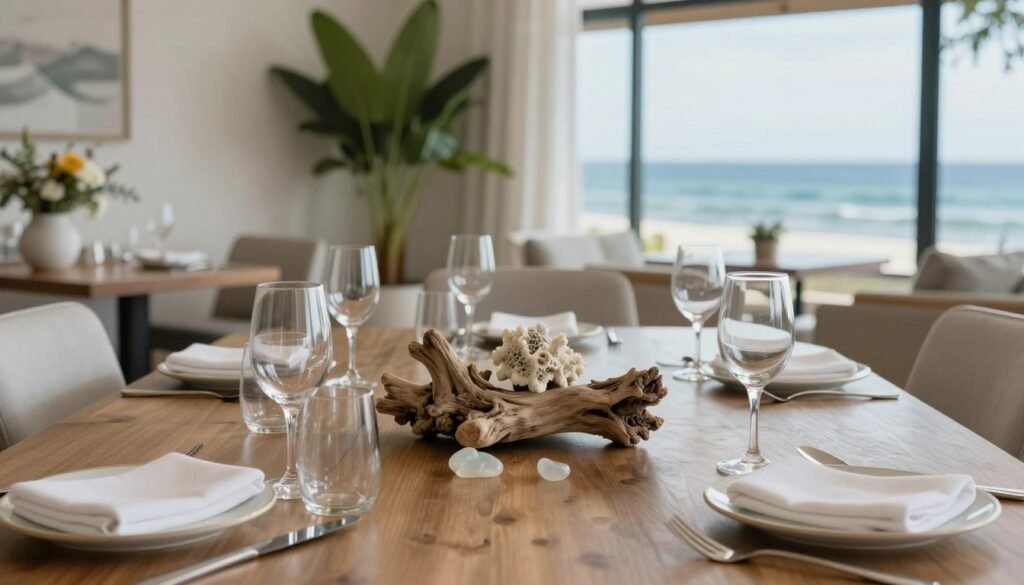
Driftwood: Small pieces of weathered wood bring organic shape and coastal character.
Sea Glass: Collected in bowls or vessels, these frosted gems add color and seaside charm.
The key to incorporating natural elements successfully is moderation. Select a few special pieces rather than creating overwhelming displays. Let each natural element have space to be appreciated, and consider rotating seasonal items to keep your dining room feeling fresh and dynamic.
For a more sophisticated approach, choose larger statement pieces rather than collections of small items. A single striking piece of driftwood or a large coral specimen on a sideboard makes more impact than multiple smaller pieces scattered throughout the space.
Seasonal Adaptations for Your Coastal Dining Room
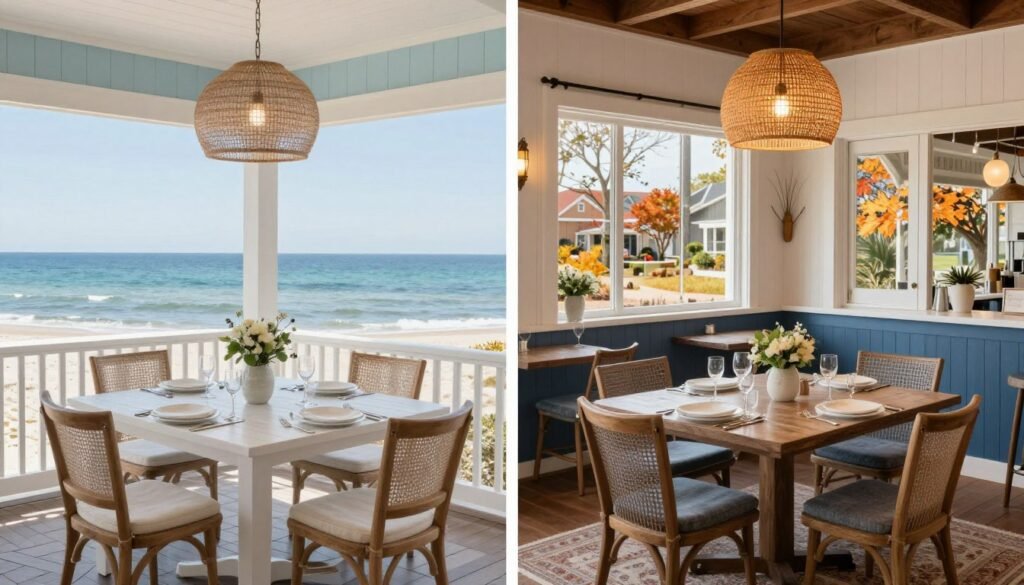
One of the beauties of coastal style is its adaptability throughout the seasons. With a few thoughtful changes, you can maintain your coastal dining room’s essence while acknowledging seasonal shifts.
Summer
Embrace the height of coastal style with these warm-weather elements:
Lightest color palette with plenty of whites and pale blues
Minimal window treatments to maximize natural light
Fresh flowers and green plants
Lightweight linen table runners and napkins
Clear glassware that catches and reflects light
Fall
Transition to autumn while maintaining coastal character:
Introduce warmer neutrals like sand, taupe, and soft amber
The foundation of your coastal dining room—the furniture, major color elements, and key decorative pieces—remains consistent throughout the year. Seasonal changes come through easily swapped elements like textiles, botanicals, and smaller accessories. This approach allows you to enjoy your coastal style year-round while keeping the space feeling fresh and aligned with the changing seasons.
Styling Tips for a Pinterest-Worthy Coastal Dining Room
Creating a truly Pinterest-worthy coastal dining room is about thoughtful styling that balances beauty and function. These professional styling tips will help you achieve a space that looks curated yet lived-in.
Table Styling
Master the art of setting a beautiful coastal dining table:
Layer textures: Start with a table runner, add woven placemats, then layer plates, napkins, and glassware.
Create height variation: Use elements of different heights for visual interest—taller candlesticks, medium vases, and low salt cellars.
Embrace negative space: Don’t overcrowd the table; allow breathing room between elements.
Add unexpected elements: A small piece of coral as a napkin weight or sea glass scattered among candles adds personality.
Vignette Creation
Style surfaces like sideboards and buffets with these principles:
Work in odd numbers: Groups of three or five items create more visual interest than even numbers.
Vary heights and shapes: Combine tall candlesticks, medium vessels, and low, wide bowls.
Add something living: Plants or fresh flowers bring life and movement to styled surfaces.
Include something personal: Family photos in simple frames or collected items with meaning add soul to your space. Browse coastal picture frames
Photography Tips
Capture your coastal dining room beautifully for social media:
Shoot in natural light: Turn off overhead lights and shoot during the day when natural light fills the space.
Find your angles: Capture the room from corners to show depth and relationship between elements.
Style for the season: Update your photos with seasonal touches to keep content fresh.
Focus on details: Close-up shots of beautifully styled place settings or centerpieces make engaging content.
Remember that the most Pinterest-worthy spaces feel attainable and personal. While perfection in styling is appealing in photos, your coastal dining room should ultimately feel welcoming and comfortable for real-life gatherings. Balance beauty with function by ensuring that your styled elements don’t interfere with conversation or comfortable dining.
Bringing Your Coastal Dining Room to Life
Creating your perfect coastal dining room is a journey of thoughtful choices and personal expression. By embracing the core elements of coastal style—light, texture, natural materials, and a serene color palette—you’ve laid the foundation for a space that feels both timeless and fresh.
Remember that the most successful coastal dining rooms balance design principles with real-life functionality. This is a space meant for gathering, sharing meals, and creating memories. Let your design choices support these meaningful experiences by creating an atmosphere that feels welcoming, comfortable, and authentically you.
As you continue to refine your coastal dining room, allow it to evolve naturally over time. Add pieces that have meaning, experiment with seasonal changes, and don’t be afraid to adapt the style to suit your personal preferences. The beauty of coastal design lies in its flexibility and its ability to create spaces that feel both special and deeply livable.
Start Your Coastal Dining Room Transformation
Ready to bring your coastal dining room vision to life? Begin with key foundation pieces that will anchor your design and set the tone for your space.
We hope this guide has inspired you to create a coastal dining room that captures the serene, refreshing qualities of shoreline living. Whether you’re starting from scratch or refreshing your existing space, the principles and ideas shared here will help you achieve a dining room that feels like a perfect getaway—right in your own home.
Small bathrooms present unique design challenges. Limited space can feel cramped and cluttered without the right approach. A minimalist small bathroom…