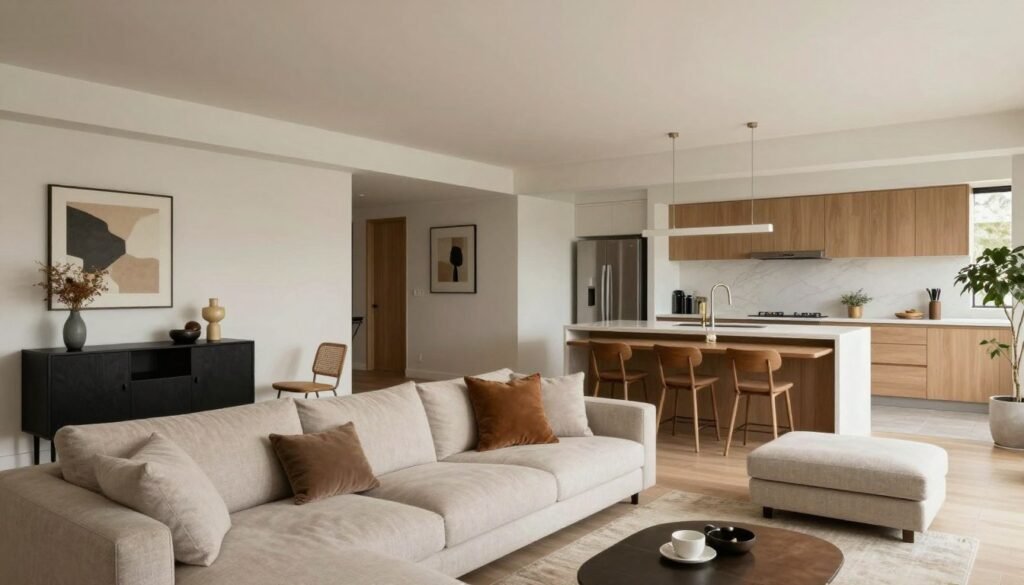
Open concept kitchen dining living room designs have revolutionized modern homes, creating spaces that feel expansive, bright, and connected. By removing walls that traditionally separated these areas, homeowners can enjoy improved flow, better natural light, and enhanced social interaction. Whether you’re planning a renovation, building a new home, or simply reimagining your current space, this guide will walk you through everything you need to know about creating a stunning and functional open concept layout.
This Website contains affiliate links. That means I may earn a small commission if you purchase through my links, at no extra cost to you.
The Allure of Open Concept Living
Open floor plans have maintained their popularity for good reason. By eliminating barriers between the kitchen, dining area, and living room, these designs create a sense of spaciousness that transforms even modest-sized homes. The kitchen becomes the true heart of the home, allowing the cook to remain part of conversations while preparing meals. Families benefit from improved sightlines, making it easier to keep an eye on children while handling kitchen tasks.
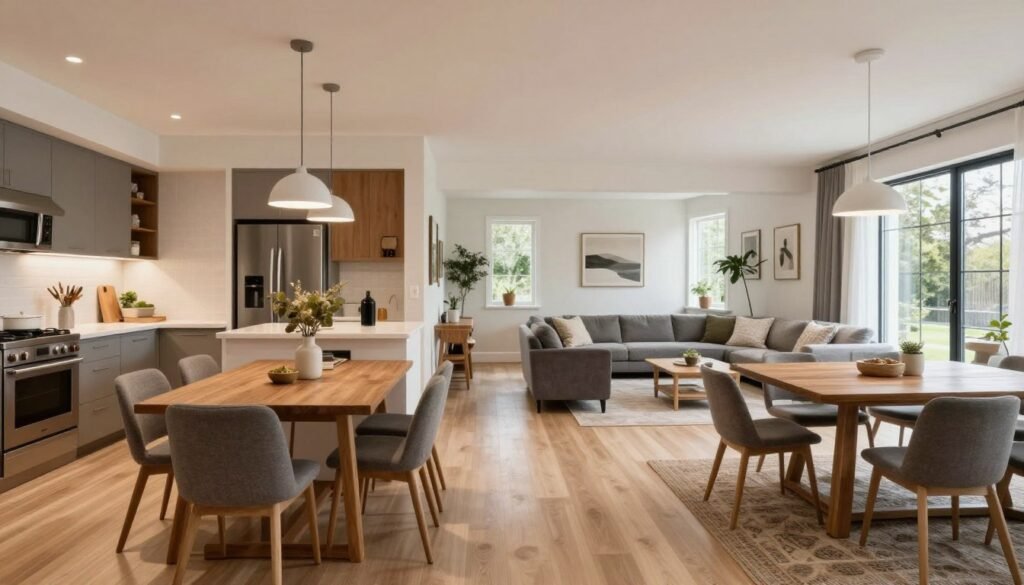
Natural light flows freely through an open concept space, creating a bright and welcoming atmosphere
Beyond the practical benefits, open concept designs offer tremendous flexibility. The same space can accommodate intimate family dinners, large gatherings, or quiet evenings, adapting to your changing needs. The removal of walls also allows natural light to penetrate deeper into the home, creating brighter, more inviting spaces that feel connected to the outdoors.
For those who love to entertain, an open concept kitchen dining living room is ideal. Hosts can prepare food while engaging with guests, and the flow between spaces makes movement effortless. This social aspect is perhaps the most compelling reason behind the enduring popularity of open concept designs.
Zoning is Key: Defining Spaces Without Walls
The biggest challenge in open concept kitchen dining living room designs is creating distinct zones that feel cohesive yet serve different functions. Without walls to define spaces, you’ll need to employ other design strategies to create visual boundaries.
Strategic furniture placement creates natural boundaries between zones. A sofa with its back to the kitchen defines the living area while maintaining the open feel. Consider using a console table behind the sofa to create a subtle barrier that doesn’t block sightlines. For smaller spaces, a thoughtfully positioned sectional sofa can effectively delineate the living area from the rest of the space.
Furniture arrangement creates natural boundaries between kitchen, dining, and living areas while maintaining visual connection
Area Rugs to Define Zones
Area rugs are perhaps the most effective tool for defining separate spaces within an open concept layout. A large rug anchors the living area, visually separating it from the kitchen and dining spaces. Choose a substantial area rug that accommodates all your living room furniture, with at least the front legs of each piece resting on the rug. For the dining area, select a rug that extends at least 24 inches beyond the table on all sides to accommodate chairs when pulled out.
Lighting to Create Distinct Areas
Different lighting schemes help define separate zones within your open concept space. Pendant lights over the dining table or kitchen island create focal points that naturally delineate these areas. In the living area, floor lamps and table lamps provide task lighting while contributing to the zone’s distinct identity. Consider installing statement pendant lights that complement your overall design while clearly marking different functional areas.
Ceiling Elements as Zone Definers
Changes in ceiling height or design can subtly mark transitions between spaces. A coffered ceiling over the dining area or wooden beams in the living room create visual separation without interrupting the open flow. Even subtle ceiling treatments like paint color changes or recessed lighting patterns can effectively define zones while maintaining the spacious feel of an open concept.
The Heart of the Home: Kitchen as the Anchor
In an open concept layout, the kitchen serves as the anchor that grounds the entire space. Its design sets the tone for the adjoining areas and creates a focal point that naturally draws people in.
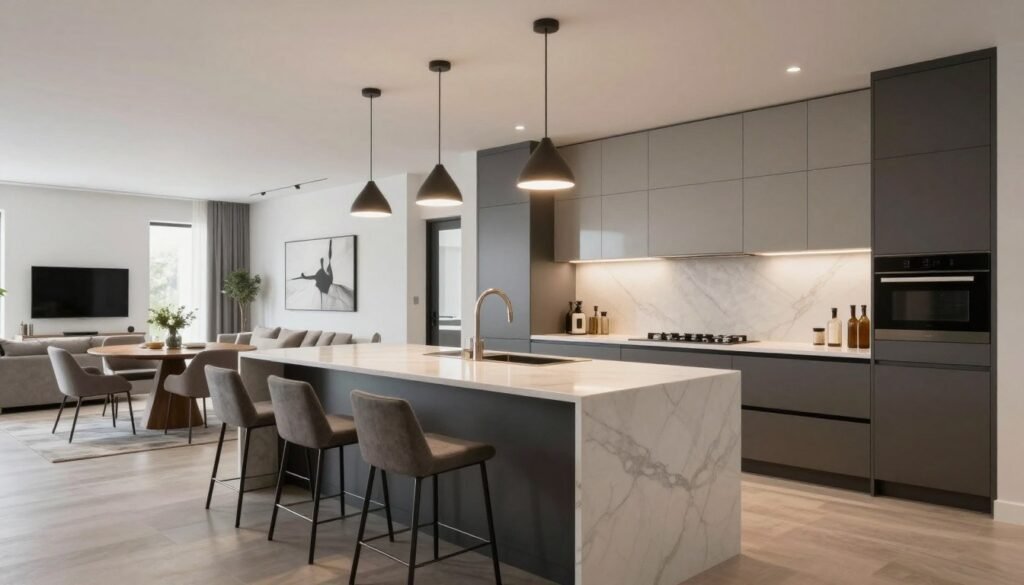
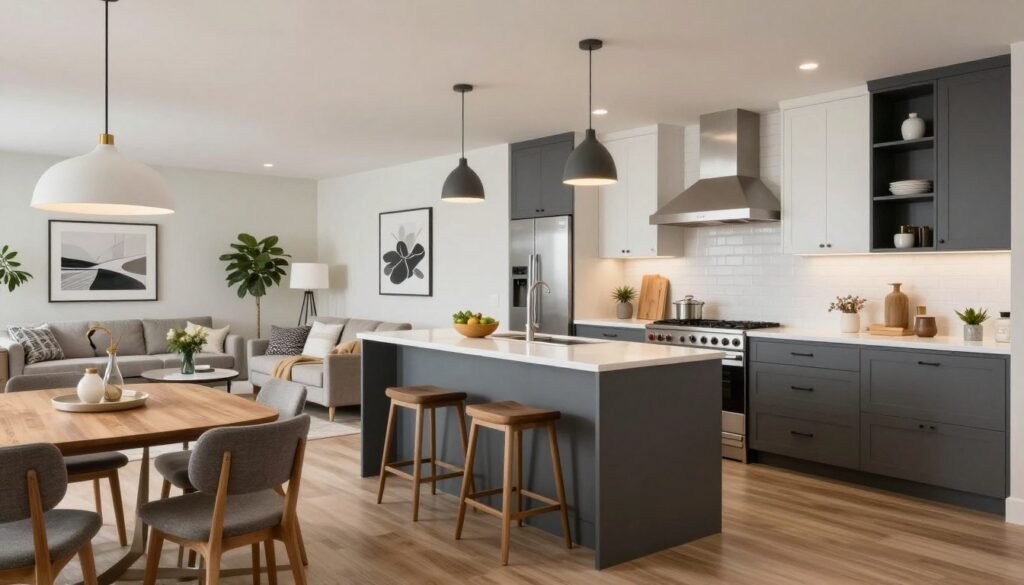
A well-designed kitchen island serves as both a functional workspace and a visual anchor in an open concept layout
Island and Peninsula Layouts
Kitchen islands and peninsulas are ideal for open concept spaces, creating a natural boundary while maintaining visual connection. An island with seating allows for casual dining and socializing, bridging the kitchen and living areas. For maximum functionality, consider an island with built-in storage and enough overhang (at least 12 inches) to accommodate comfortable seating.
When designing your island, think about how it will look from the living area, as it will always be visible. Choose materials and finishes that complement your overall design scheme. Islands with waterfall countertops, where the surface material continues down the sides, create an especially elegant look from all angles.
Maintaining Sightlines
Preserving clear sightlines throughout your open concept kitchen dining living room is essential. Avoid tall cabinets or appliances that block views between spaces. Instead, opt for lower-profile elements that maintain the open feel. If possible, position the sink or cooktop on the island facing the living area, allowing the cook to interact with family and guests.
Consider the “work triangle” (the path between sink, stove, and refrigerator) when planning your kitchen layout, ensuring it functions efficiently while integrating seamlessly with the surrounding spaces. An efficient kitchen layout becomes even more important in an open concept design, as the kitchen is always on display.
Material & Cohesion: Creating a Unified Look
A successful open concept kitchen dining living room relies on cohesive design elements that tie the different zones together. Without thoughtful material selection and color coordination, the space can feel disjointed despite the lack of walls.
Developing a Cohesive Color Palette
A unified color palette is perhaps the most important factor in creating a cohesive open concept space. Choose 3-5 colors that work well together and repeat them throughout all zones. This doesn’t mean everything must match exactly—variations in shade and intensity add visual interest while maintaining harmony.
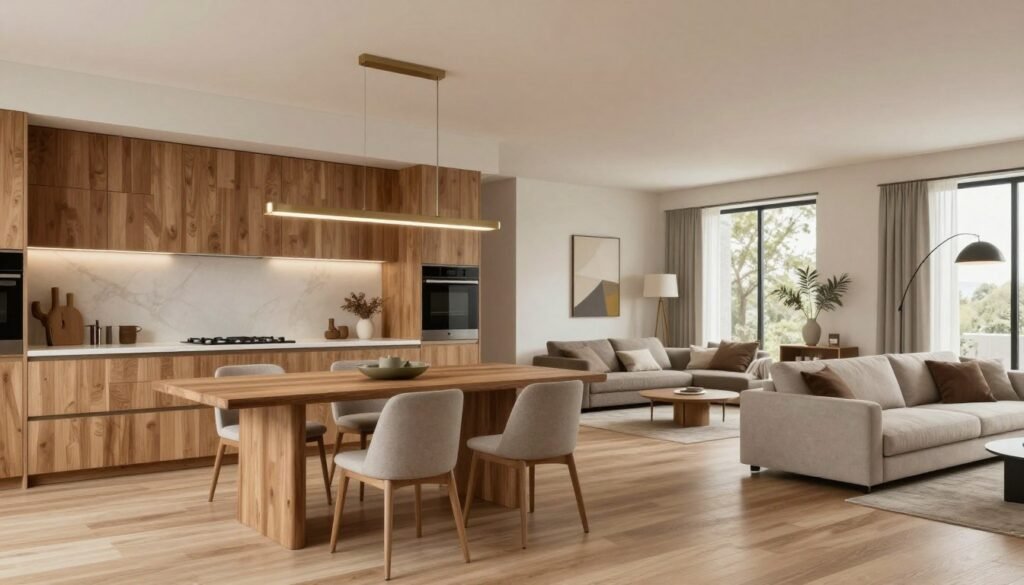
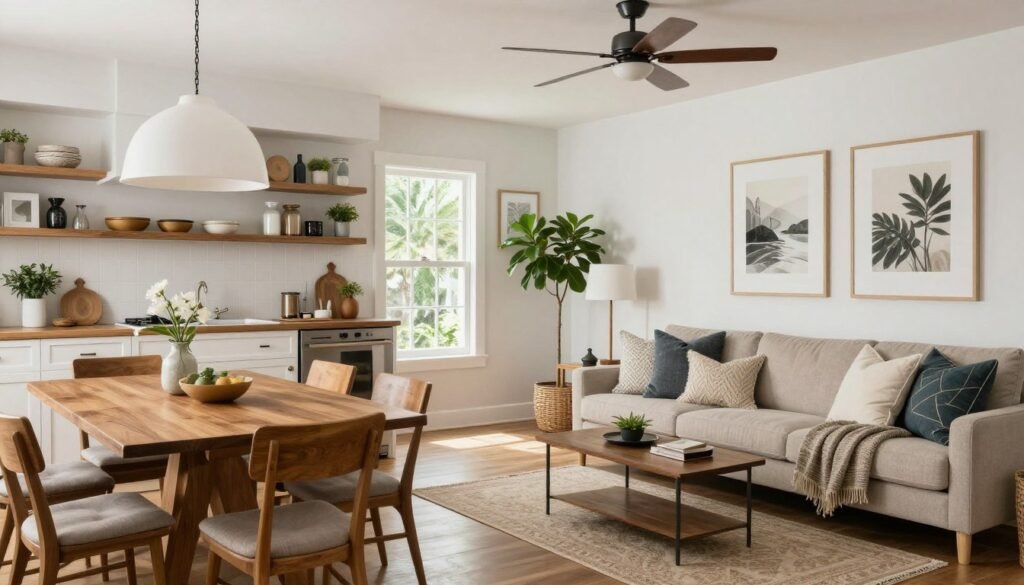
Consistent materials and a cohesive color palette create visual harmony across all zones
Consider using a 60-30-10 approach: 60% dominant color (usually a neutral), 30% secondary color, and 10% accent color. This creates balance while allowing for visual interest. For a timeless look, choose neutral paint colors for walls and larger elements, adding personality through accessories that can be easily changed.
Repeating Materials Throughout the Space
Material repetition creates visual connections between different zones. If your kitchen features wood cabinetry, incorporate similar wood tones in the dining table or living room furniture. Metal finishes should be consistent throughout—mixing brass, chrome, and black metal can create a disjointed look unless done very intentionally.
Consider using the same countertop material for your kitchen island and a console table in the living area, or repeat your backsplash tile in a fireplace surround. These thoughtful connections help the eye move smoothly through the space, reinforcing the cohesive design.
Balancing Textures
While maintaining cohesion, incorporate a variety of textures to add depth and interest to your open concept space. Balance hard surfaces like stone, wood, and metal with soft textiles such as textured throw pillows, upholstered furniture, and window treatments. This layering of textures creates a rich, inviting environment that feels thoughtfully designed rather than flat or monotonous.
Lighting for Mood & Function: A Layered Approach
A well-planned lighting scheme is crucial for an open concept kitchen dining living room. Different activities require different types of lighting, and a layered approach allows you to adjust the atmosphere according to time of day and function.
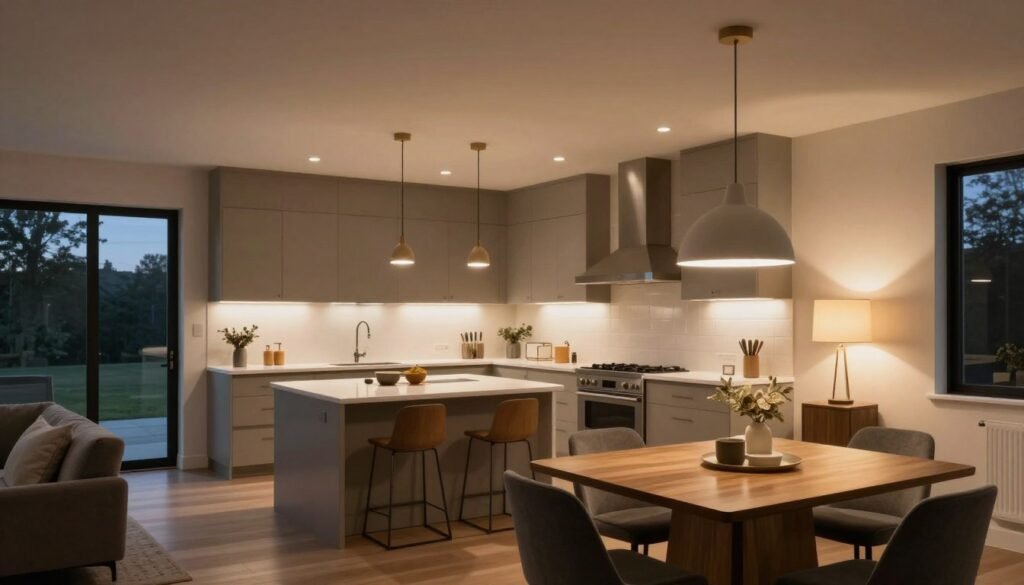
Layered lighting creates atmosphere and defines different functional areas within the open concept space
Ambient Lighting
Ambient lighting provides overall illumination and sets the base level of light throughout your open concept space. Recessed ceiling lights work well for this purpose, creating even lighting without visual interruption. Consider installing these lights on dimmer switches to adjust the brightness according to time of day and activity.
For a more architectural approach, cove lighting or LED strips concealed in ceiling details can wash walls with light, creating a soft, diffused glow that makes the space feel larger. These indirect lighting solutions add sophistication while eliminating harsh shadows.
Task Lighting
Task lighting illuminates specific work areas, making activities like cooking, reading, or working more comfortable. In the kitchen, under-cabinet lights brighten countertops, while pendant lights over the island or sink provide focused illumination for food preparation. The dining area benefits from a chandelier or pendant light positioned directly over the table, creating a well-lit space for meals and other activities.
In the living area, floor lamps beside seating provide task lighting for reading, while table lamps on side tables or consoles offer additional focused light. Choose fixtures that complement your overall design while providing the appropriate light intensity for each task.
Accent Lighting
Accent lighting adds drama and highlights architectural features or decorative elements. Wall sconces can draw attention to artwork or textured walls, while picture lights specifically illuminate framed pieces. Consider using adjustable track lighting to highlight particular features while adding a contemporary touch.
Don’t overlook the importance of consistent color temperature across all lighting sources. Mixing warm and cool lights can create a disjointed feel, so aim for consistency (typically warm white, around 2700-3000K) throughout your open concept space.
Furniture & Flow: Arranging for Comfort and Movement
Furniture selection and arrangement in an open concept kitchen dining living room requires careful consideration of both function and flow. The right pieces, properly positioned, create comfortable zones while facilitating easy movement throughout the space.
Thoughtful furniture arrangement creates distinct zones while maintaining easy flow between areas
Selecting the Right Scale
Furniture scale is critical in open concept spaces. Pieces that are too large can make the area feel cramped, while those that are too small may look lost in the expansive layout. Measure your space carefully and consider the proportions of each piece relative to the room and to other furniture.
For the living area, a substantial sectional sofa can help define the space while providing ample seating. In the dining area, choose a table that accommodates your family’s daily needs but can expand for larger gatherings. The kitchen island should be proportional to the overall kitchen size, with enough clearance (at least 36 inches) for comfortable movement around it.
Creating Conversation Areas
Arrange seating to facilitate conversation and connection. In the living area, position sofas and chairs to face each other, ideally no more than 8 feet apart for comfortable interaction. A coffee table or ottoman at the center provides a functional surface while anchoring the arrangement.
For the dining area, round or oval tables often work well in open concept spaces, as their curved edges facilitate movement around them. Ensure there’s at least 36 inches between the edge of the table and any walls or furniture to allow for comfortable seating and passage.
Maintaining Clear Pathways
Establish clear pathways between different zones, with at least 36 inches of clearance for major walkways. Avoid positioning furniture in ways that create obstacles or force awkward routes through the space. Consider the natural flow of traffic when planning your layout, ensuring direct paths between frequently used areas.
Floating furniture (pieces placed away from walls) often works better in open concept spaces than pushing everything against the perimeter. This approach creates more intimate groupings while defining distinct zones within the larger area.
The Final Layer: Textiles, Art, and Accessories
The finishing touches in your open concept kitchen dining living room bring personality and warmth to the space. Thoughtfully selected textiles, artwork, and accessories unify the design while expressing your unique style.
Textiles, artwork, and carefully chosen accessories add personality while maintaining design cohesion
Textiles That Connect
Textiles add softness, color, and pattern to your open concept space. Choose throw pillows and blankets that incorporate your accent colors, creating visual links between different zones. Window treatments should be consistent throughout the space, though they can vary slightly between areas if they share common elements.
In the dining area, chair upholstery or cushions can echo colors found in the living room textiles. Kitchen textiles like dish towels and chair cushions provide another opportunity to reinforce your color scheme and create cohesion across zones.
Artwork That Unifies
Artwork plays a crucial role in unifying an open concept space. Select pieces that complement your color palette and reflect the overall style of your home. A large statement piece can serve as a focal point, while a gallery wall might incorporate various elements that tie different zones together.
Consider the scale of your artwork relative to the walls—open concept spaces often have large wall areas that benefit from appropriately sized pieces. Art that’s too small can look lost, while properly scaled works create impact and help define the space.
Accessories With Purpose
Carefully chosen accessories add the final layer of personality to your open concept kitchen dining living room. Rather than cluttering the space with numerous small items, select fewer, larger pieces that make a statement. Substantial vases, bowls, or sculptures create visual interest without appearing busy.
Plants bring life and texture to open concept spaces, softening the transition between zones. Consider a large floor plant in the living area, herbs in the kitchen, and a fresh centerpiece on the dining table to create connections through natural elements.
Remember that in an open concept layout, all accessories are visible from multiple angles. Choose items that look good from all sides and contribute to the overall design story you’re telling.
Real Challenges & Solutions: Making Open Concept Work
While open concept kitchen dining living room designs offer numerous benefits, they also present unique challenges. Understanding these potential issues and implementing thoughtful solutions ensures your space functions beautifully for everyday life.
Thoughtful design solutions address common challenges of open concept living
Managing Kitchen Odors
Without walls to contain cooking smells, effective ventilation becomes essential in an open concept layout. Invest in a high-quality range hood with adequate CFM (cubic feet per minute) capacity for your space and cooking style. For maximum effectiveness, choose a hood that extends slightly beyond the cooktop on all sides.
Consider your cooking habits when planning your kitchen layout. If you frequently prepare foods with strong odors, positioning the cooktop against a wall rather than on an island can help contain smells. Regular maintenance of ventilation systems ensures they continue to function efficiently.
Controlling Noise
Sound travels easily in open concept spaces, potentially creating a noisy environment. Incorporate soft, sound-absorbing materials like rugs, curtains, and upholstered furniture to dampen noise. Consider acoustic panels disguised as artwork for particularly reverberant spaces.
When selecting appliances, prioritize quiet operation—especially for dishwashers and range hoods that may run while people are relaxing in adjacent areas. Built-in sound insulation around appliances can further reduce noise transmission.
Minimizing Visual Clutter
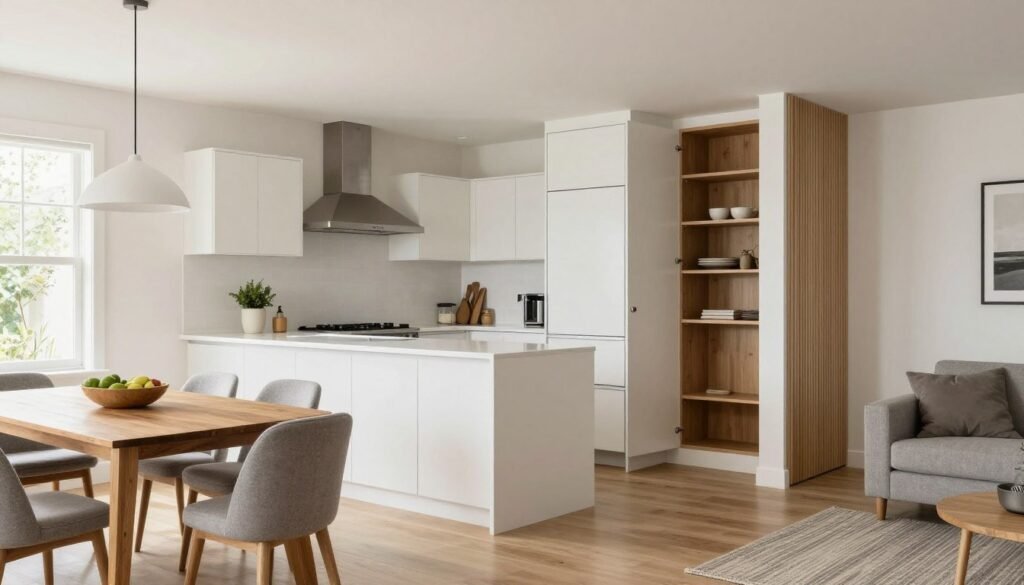
Without walls to hide mess, clutter can quickly overwhelm an open concept space. Ample storage is essential—consider floor-to-ceiling cabinets along one wall, a walk-in pantry if space permits, or furniture pieces that offer concealed storage.
For the kitchen, appliance garages keep small appliances out of sight when not in use, while drawer organizers and pantry systems maintain order behind cabinet doors. In the living area, ottomans with storage, built-in bookshelves, and media cabinets provide places to tuck away items that might otherwise create visual noise.
Creating Privacy When Needed
While openness is the hallmark of these designs, there are times when some separation is desirable. Consider incorporating flexible dividers that can be deployed when needed—sliding barn doors, decorative screens, or even curtains can temporarily define spaces without permanently closing them off.
For homes where multiple activities occur simultaneously, creating a small, separate nook for working or reading provides a retreat from the main open area. This balance of openness and occasional privacy makes the space more versatile and comfortable for all household members.
Bringing It All Together: Your Open Concept Vision
Creating a successful open concept kitchen dining living room is a balance of thoughtful planning and personal expression. By carefully considering how you’ll define zones, maintain cohesion, and address practical challenges, you can design a space that’s both beautiful and functional for your lifestyle.
A thoughtfully designed open concept space balances functionality with aesthetic appeal
Remember that successful open concept living is about creating a space that works for your specific needs. Consider how you actually live—do you entertain frequently? Work from home? Have young children? Tailoring your design to your real-life requirements ensures the space will serve you well for years to come.
Start by establishing a clear vision for your open concept kitchen dining living room. Create a mood board that captures your desired aesthetic, including colors, materials, and the overall feeling you want to achieve. This visual guide will help you make consistent decisions throughout the design process.
Whether you’re working with an existing open layout or planning a renovation to create one, the principles remain the same: define zones while maintaining flow, create cohesion through thoughtful material and color selection, and address practical considerations like lighting, acoustics, and storage.
With careful planning and attention to both form and function, your open concept kitchen dining living room can become the heart of your home—a space where family and friends gather, memories are made, and daily life unfolds in a setting that’s as beautiful as it is practical.
Ready to Transform Your Space?
Start your open concept journey with the right foundations. Explore quality furniture, lighting, and decor that will help define your zones while creating a cohesive, beautiful space.