Creating a functional small living room with dining area can feel like solving a puzzle. You want both spaces to work well without feeling cramped or compromised. The good news? With thoughtful planning and clever design tricks, your compact combo space can become both practical and stylish.
This Website contains affiliate links. That means I may earn a small commission if you purchase through my links, at no extra cost to you.
In this guide, we’ll explore layout strategies, furniture selection, and visual techniques that maximize every inch of your dual-purpose room. Whether you’re in a studio apartment or working with an open-concept space, these ideas will help you create distinct zones that flow beautifully together.
Smart Space Planning for Small Living-Dining Combos
The foundation of any successful small living room with dining area starts with a well-thought-out floor plan. Before purchasing furniture or accessories, take time to understand your space and how you’ll use it daily.
Strategic furniture placement creates natural zones without walls
Assess Your Space Dimensions
Start by measuring your room’s exact dimensions. Note the location of windows, doors, electrical outlets, and any architectural features that might impact your layout. This information will help you determine what size furniture will fit comfortably.
Related Posts:

Consider Traffic Flow
Leave clear pathways (at least 30 inches wide) for movement throughout the room. Avoid placing furniture in ways that create obstacles or force awkward navigation around the space. Good traffic flow makes even small rooms feel more spacious.
Prioritize Your Activities
Think about how you’ll use each area most often. Do you entertain frequently? Work from home? Watch movies regularly? Allocate more space to the functions that matter most to your lifestyle.
Essential Space Planning Tools
Get accurate measurements with a laser distance measure for precise furniture planning in your small living room with dining area.
5 Effective Layout Ideas for Combined Spaces
These proven layout configurations work particularly well for small living room with dining area combinations. Each creates distinct zones while maintaining an open, flowing feel.
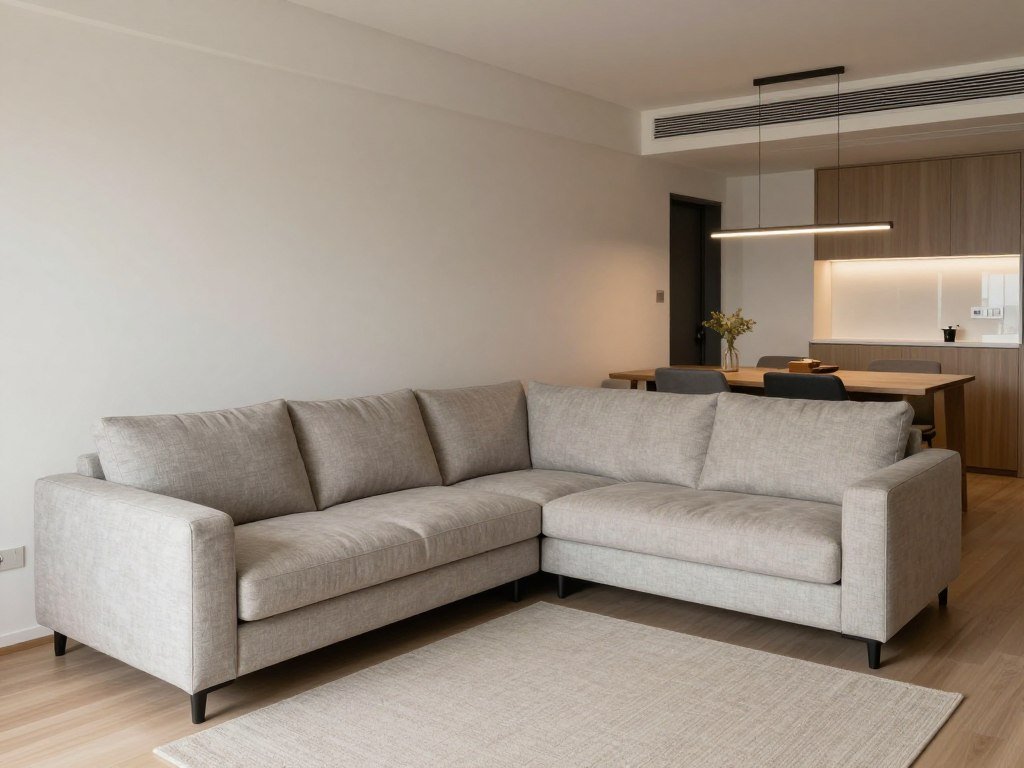
L-shaped arrangement creates natural division between living and dining zones
1. Back-to-Back Arrangement
Position your sofa with its back toward the dining area, creating a natural divider. Place a narrow console table behind the sofa to define the boundary further while providing additional storage or display space for both zones.
2. L-Shaped Corner Setup
Anchor your living area in one corner with an L-shaped sectional, then position your dining set in the opposite corner. This creates a diagonal division that maximizes the available space and provides clear visual separation.
3. Window-Adjacent Dining
Place your dining table near or against a window. This arrangement maximizes natural light for meals and frees up the room’s center for living room furniture. A round table works especially well in this configuration.
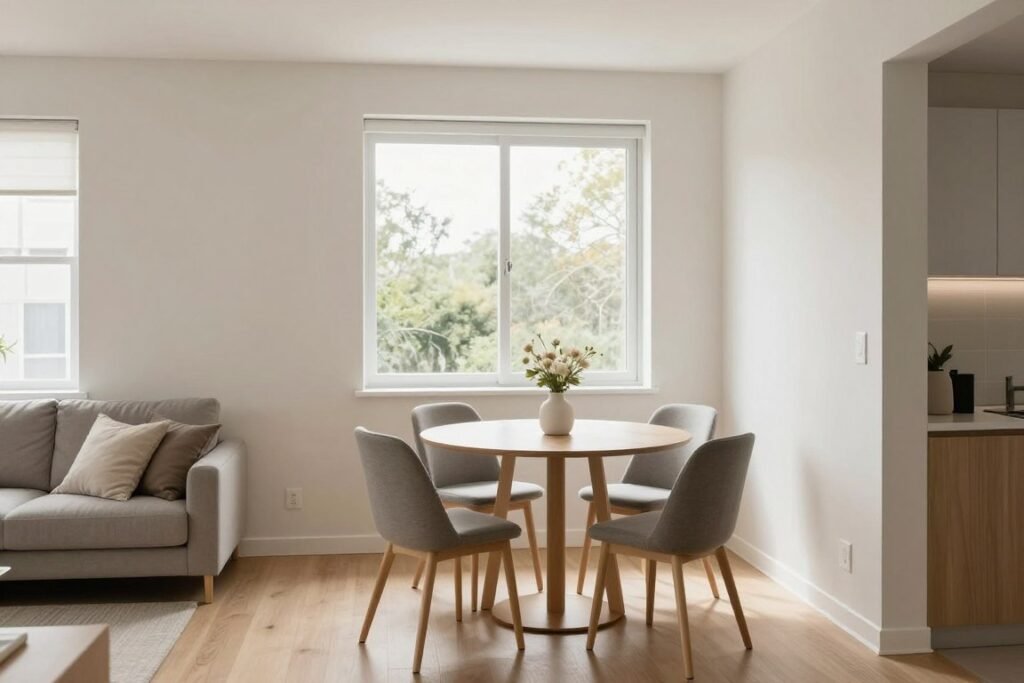
Window-adjacent dining maximizes natural light and saves floor space
4. Parallel Zoning
Arrange your living and dining furniture in parallel lines, with the sofa and dining table running alongside each other. This works well in narrow rectangular rooms and creates a clean, organized look with clear pathways.
5. Central Living, Perimeter Dining
Place your living room furniture in the center of the room, with the dining area along one wall. This layout works well when your dining needs are occasional rather than daily, as it prioritizes the living space.
Visualize Your Layout
Try a room planner app to experiment with different furniture arrangements before making any purchases.
Space-Saving Furniture for Small Living Room with Dining Area
The right furniture makes all the difference in a compact dual-purpose space. Look for pieces that are appropriately scaled, multi-functional, and visually lightweight.
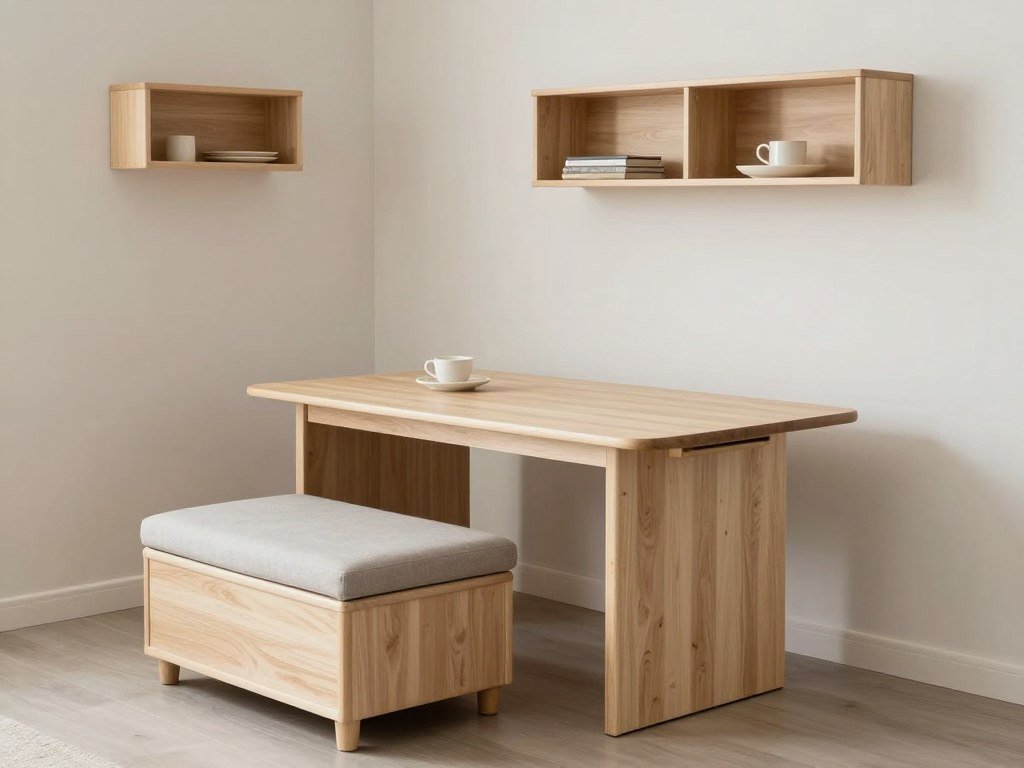
Multi-functional pieces maximize functionality without overwhelming the space
Living Room Furniture Essentials
Compact Seating
Choose a loveseat or apartment-sized sofa instead of a full-sized sectional. Look for pieces with exposed legs that create a sense of openness by allowing you to see the floor beneath them.
Multi-Functional Tables
Select coffee tables with storage compartments or nesting side tables that can be expanded when needed and tucked away when not in use.
Vertical Storage
Utilize wall space with floating shelves or tall, narrow bookcases. These provide essential storage without consuming valuable floor space.
Dual-Purpose Pieces
Consider ottomans that serve as both seating and storage, or a sleeper sofa if you occasionally need guest accommodations.
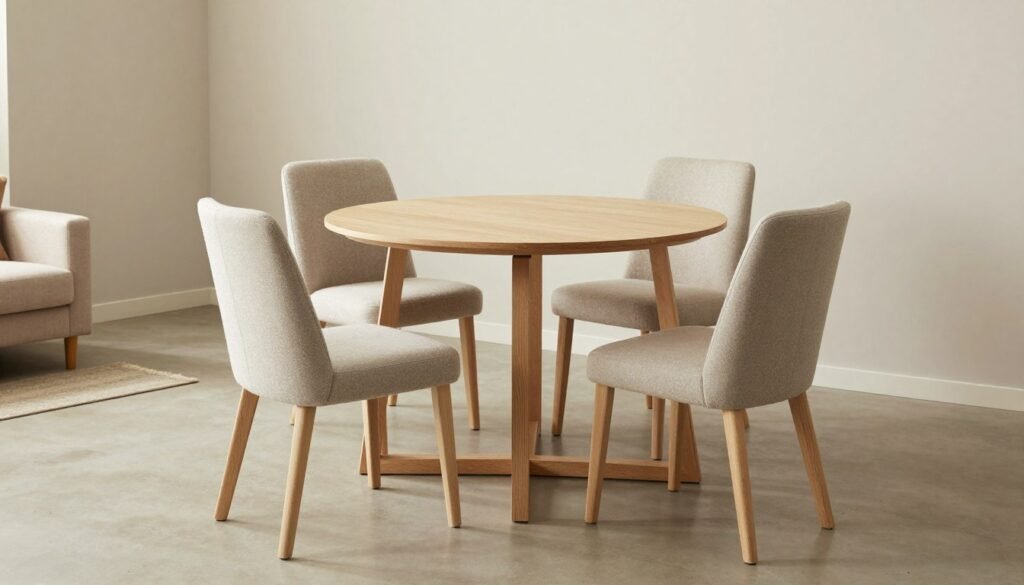
Space-efficient dining furniture that can be tucked away when not in use
Dining Area Furniture Solutions
Space-Efficient Tables
Round tables eliminate sharp corners and improve traffic flow. Drop-leaf or extendable tables can be expanded only when needed, saving space day-to-day.
Bench Seating
Replace some dining chairs with a bench that can slide completely under the table when not in use. This arrangement often accommodates more people in less space.
Slim-Profile Chairs
Choose dining chairs without arms that can tuck fully under the table. Look for visually lightweight designs that won’t make the space feel cluttered.
Wall-Mounted Options
Consider a wall-mounted drop-down table for extremely tight spaces. These can be folded up when not in use, freeing up floor space completely.
Space-Saving Dining Solutions
Explore drop-leaf and extendable dining tables that adapt to your changing needs.
Creating Distinct Zones in Your Combo Space
Even without walls, you can create clear visual boundaries between your living and dining areas. These techniques help define separate zones while maintaining an open, cohesive feel.
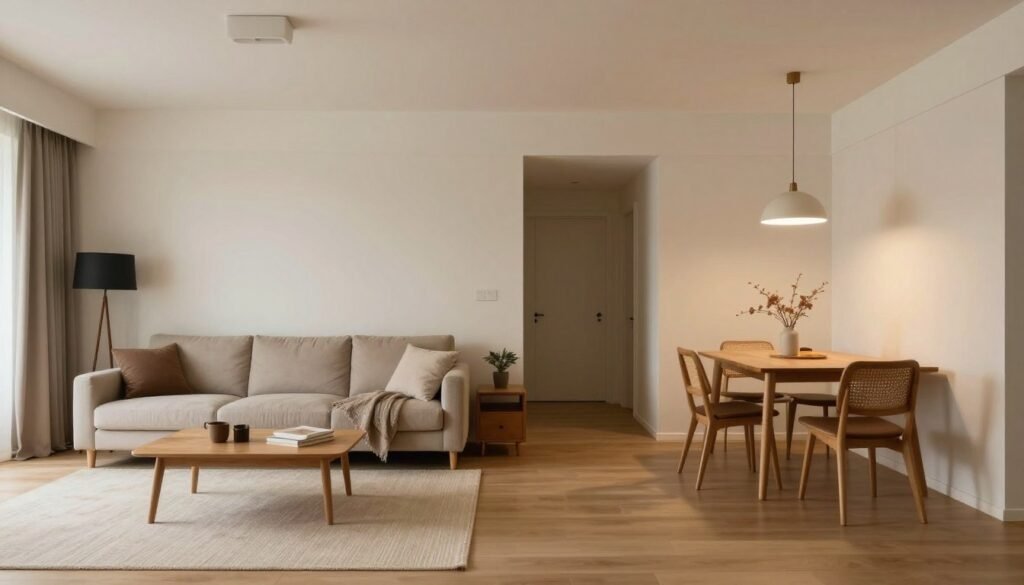
Area rugs and lighting create visual boundaries between zones
Area Rugs as Boundaries
Place a rug under your living room seating arrangement to visually anchor the space. Choose a size that allows all furniture legs to sit either completely on or completely off the rug for a deliberate look.
Lighting as Zone Definers
Install different lighting fixtures for each area. A pendant light or chandelier over the dining table paired with floor or table lamps in the living area creates distinct atmospheres for each zone.
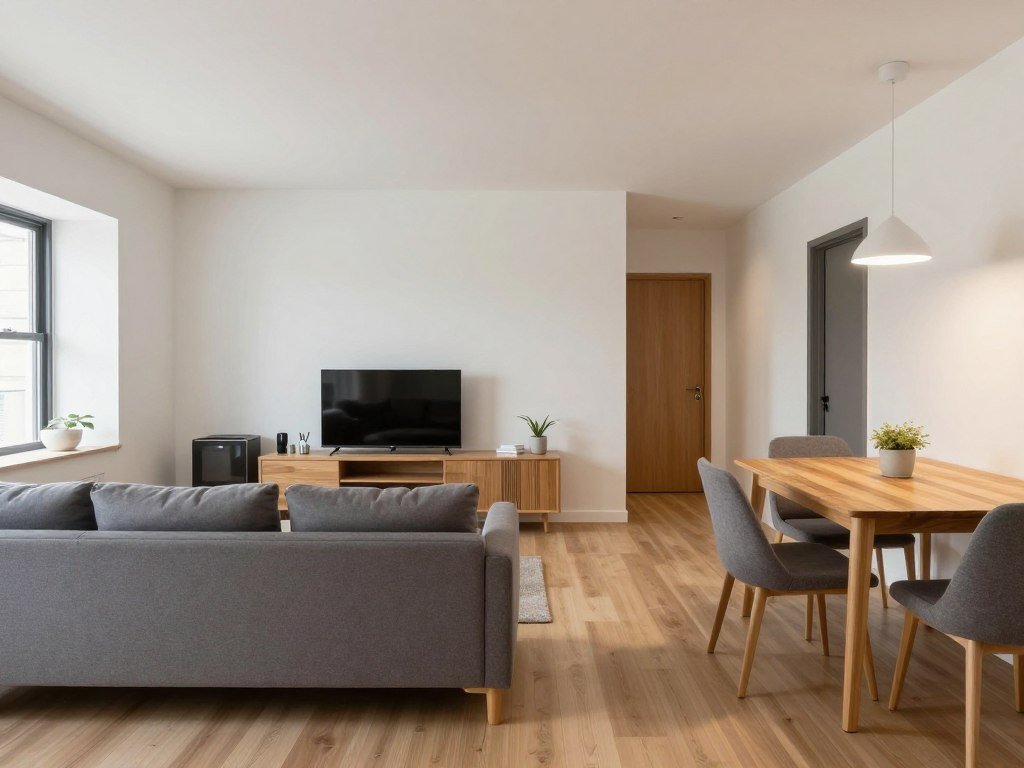
Furniture groupings create natural boundaries between functional areas
Color Coordination with Variation
Use a consistent color palette throughout the space for cohesion, but vary the intensity or accent colors between zones. This creates subtle differentiation while maintaining visual harmony.
Partial Dividers
Consider a see-through bookshelf, a console table, or even a row of tall plants to create a semi-transparent boundary between areas. These dividers maintain openness while suggesting separate zones.
Define Your Zones
Area rugs are one of the most effective ways to visually separate your living and dining spaces.
Creating Visual Harmony Across Both Areas
While defining separate zones is important, maintaining visual cohesion ensures your small living room with dining area feels intentional and well-designed rather than disjointed.
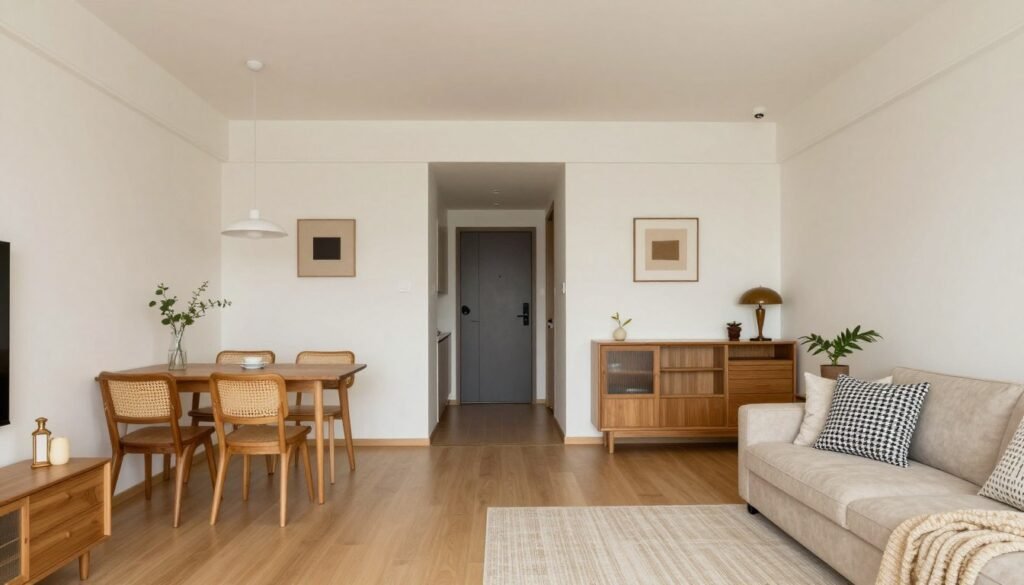
Consistent color palette and complementary materials create visual flow
Consistent Color Palette
Choose a core color scheme and apply it throughout both zones. This doesn’t mean everything must match exactly—variations in tone and intensity add interest while maintaining harmony.
Repeating Materials
Echo the same materials in both areas. If your dining table has wooden elements, incorporate wood in your coffee table or shelving. This repetition creates a sense of intentional design.
Unified Style Direction
Maintain a consistent design style across both zones. Mixing vastly different styles (like ultra-modern dining with rustic farmhouse living) can make a small space feel chaotic and smaller.
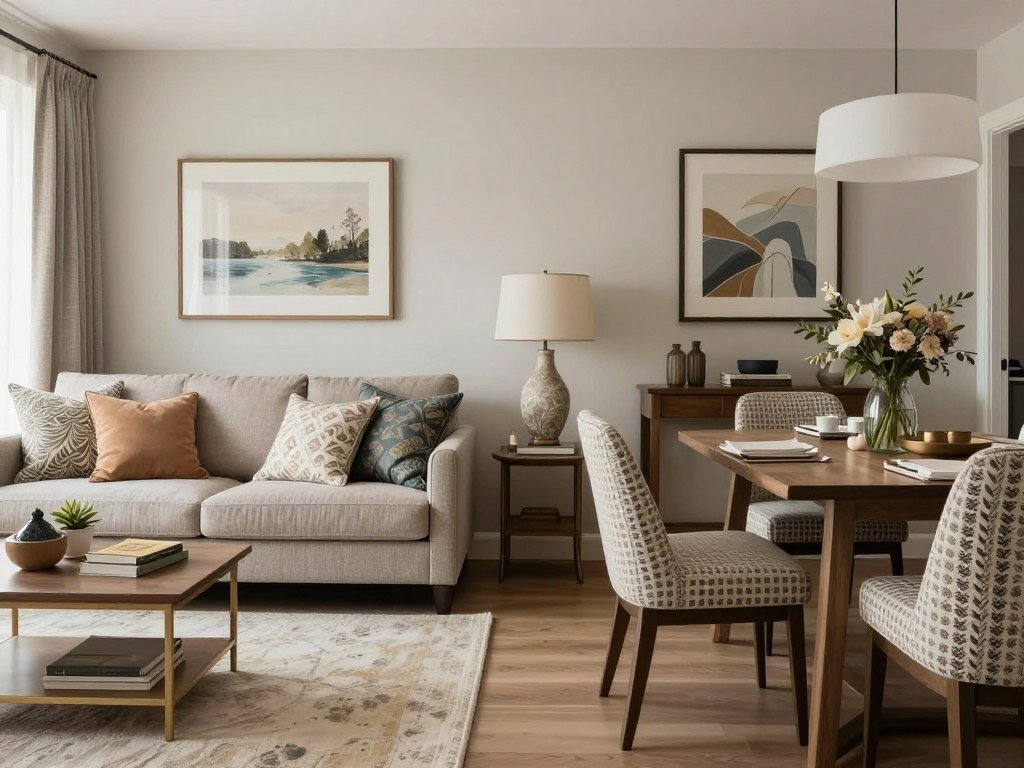
Complementary textiles and accessories create a unified look
Connecting Through Textiles
Use fabrics to tie your spaces together. Dining chair upholstery or seat cushions can incorporate colors from your living room throw pillows. Table linens can echo patterns found in your living area.
Consistent Hardware and Fixtures
Keep metal finishes consistent throughout both zones. Mixing too many different metals (like brass, chrome, and black iron) can create visual clutter in a small space.
Coordinate Your Look
Throw pillows and table linens in coordinating colors can tie your living and dining areas together beautifully.
Maximizing Vertical Space and Storage
In a small living room with dining area, your walls become valuable real estate. Utilizing vertical space keeps your floor area open while providing essential storage and display opportunities.
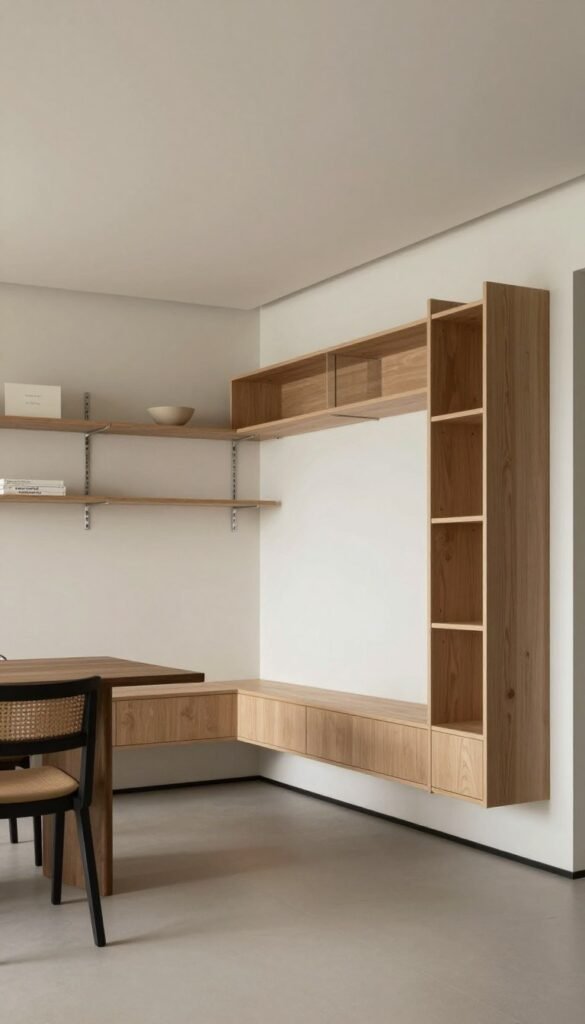
Wall-mounted solutions maximize storage without consuming floor space
Floor-to-Ceiling Shelving
Install shelving units that extend all the way to the ceiling. This draws the eye upward, making the room feel taller, while providing substantial storage space for books, decorative items, and even dining essentials.
Floating Furniture
Consider wall-mounted or floating pieces like desks, console tables, or even dining benches. These provide function without the visual weight of furniture that sits on the floor.
Vertical Patterns
Incorporate vertical stripes or patterns on a feature wall to create the illusion of height. This simple visual trick can make your ceiling appear higher than it actually is.
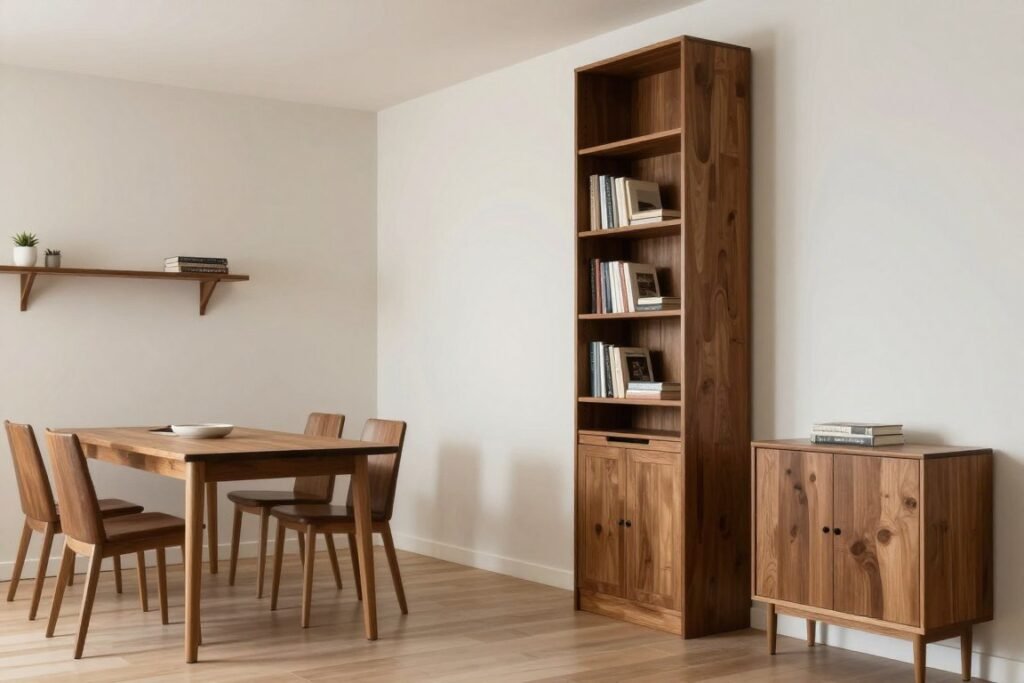
Tall, narrow furniture provides storage while maintaining floor space
Multi-Level Lighting
Install lighting at different heights—ceiling fixtures, wall sconces, and table lamps—to draw the eye to different levels of the room, creating a sense of dimension and space.
Hidden Storage Solutions
Look for furniture with concealed storage capabilities, like ottomans with removable tops, dining benches with under-seat storage, or coffee tables with drawers or shelves.
Maximize Your Walls
Floating shelves provide display and storage space without the bulk of traditional bookcases.
Optical Tricks to Make Your Space Feel Larger
Strategic design choices can create the illusion of more space in your small living room with dining area. These visual tricks fool the eye into perceiving greater spaciousness.
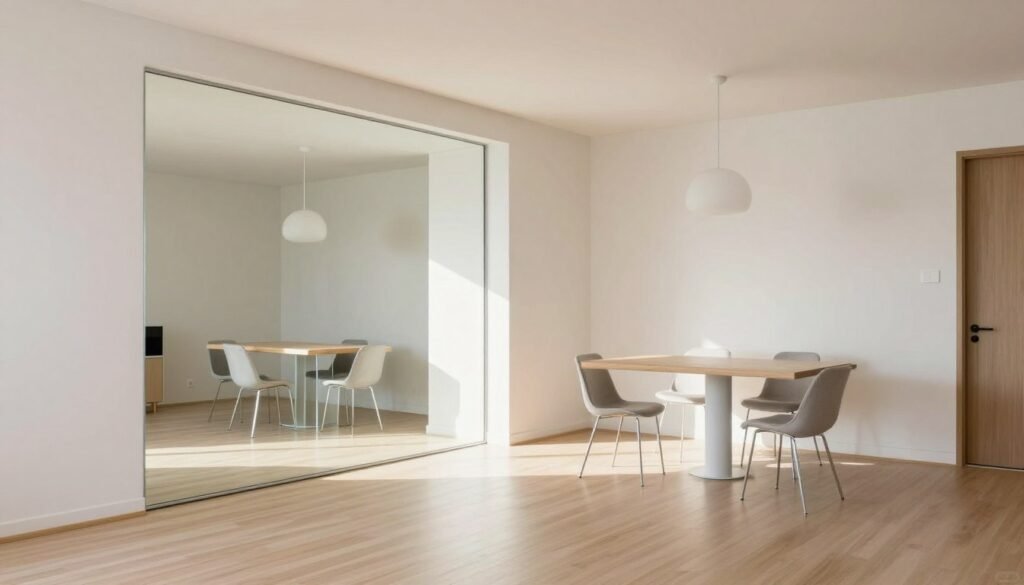
Strategically placed mirrors reflect light and visually double your space
Strategic Mirror Placement
Position a large mirror to reflect either a window or the longest view in your room. This visually doubles the space and bounces natural light throughout the area, making it feel brighter and more open.
Light Color Palette
Choose lighter colors for walls, large furniture pieces, and flooring. Light hues reflect more light and make walls appear to recede, creating a sense of openness.
Glass and Transparent Elements
Incorporate glass-topped tables, lucite chairs, or other transparent furniture. These pieces serve their function without the visual weight of solid furniture, allowing the eye to travel through them.
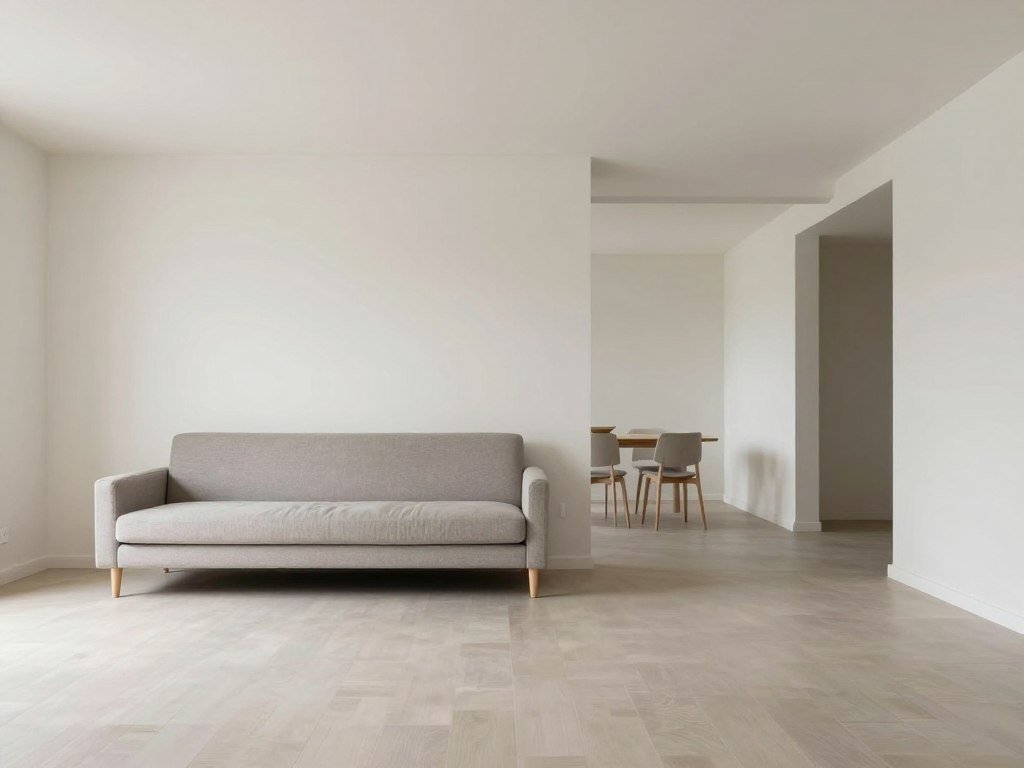
Furniture with visible legs and light colors create an airy, open feel
Continuous Flooring
Use the same flooring material throughout both zones. Changing flooring creates a visual break that can make the space feel chopped up and smaller. Continuous flooring creates flow and expands the perceived space.
Scaled-Down Patterns
If you love patterns, choose smaller-scale designs for a small space. Large, bold patterns can overwhelm a compact room and make it feel cluttered.
Create Visual Space
A well-placed mirror can instantly make your small living room with dining area feel twice as large.
Creating Your Perfect Small Living Room with Dining Area
Designing a small living room with dining area doesn’t have to mean compromise. With thoughtful planning, strategic furniture choices, and clever visual tricks, your compact space can be both functional and beautiful.
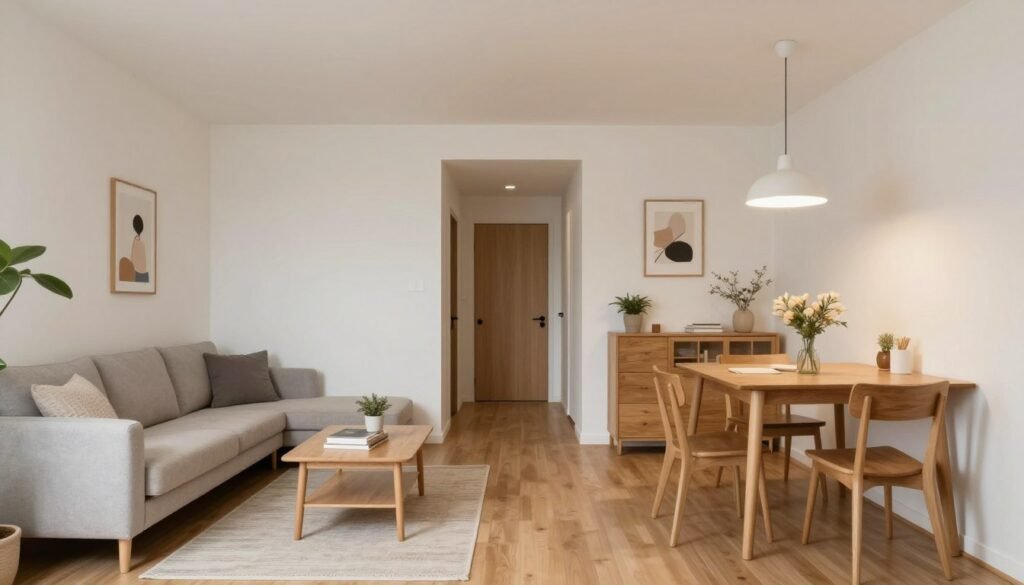
A well-designed combo space proves that small can be both functional and beautiful
Remember that successful small-space design is about quality over quantity. Choose fewer, better pieces that serve multiple functions rather than filling your space with too many items. Edit ruthlessly and be intentional about every element you include.
Most importantly, design your space to reflect how you actually live. A beautiful room that doesn’t accommodate your daily needs won’t feel like home, no matter how stylish it looks. Your small living room with dining area should be a perfect balance of form and function—a space that works as good as it looks.
Start Your Transformation
Ready to transform your small living room with dining area? Start with a clear plan and quality foundation pieces.