Garage doors are more than just functional entryways to your home’s storage space—they’re a significant design element that can dramatically enhance your property’s curb appeal and value. With countless styles, materials, and smart features available today, finding the perfect garage door can be both exciting and overwhelming. This comprehensive guide will walk you through everything you need to know about garage doors, from classic designs to cutting-edge technology, helping you make an informed decision for your home.
This Website contains affiliate links. That means I may earn a small commission if you purchase through my links, at no extra cost to you.
Popular Types of Garage Doors
Understanding the different types of garage doors available is the first step in making the right choice for your home. Each style offers unique benefits in terms of space efficiency, appearance, and functionality.
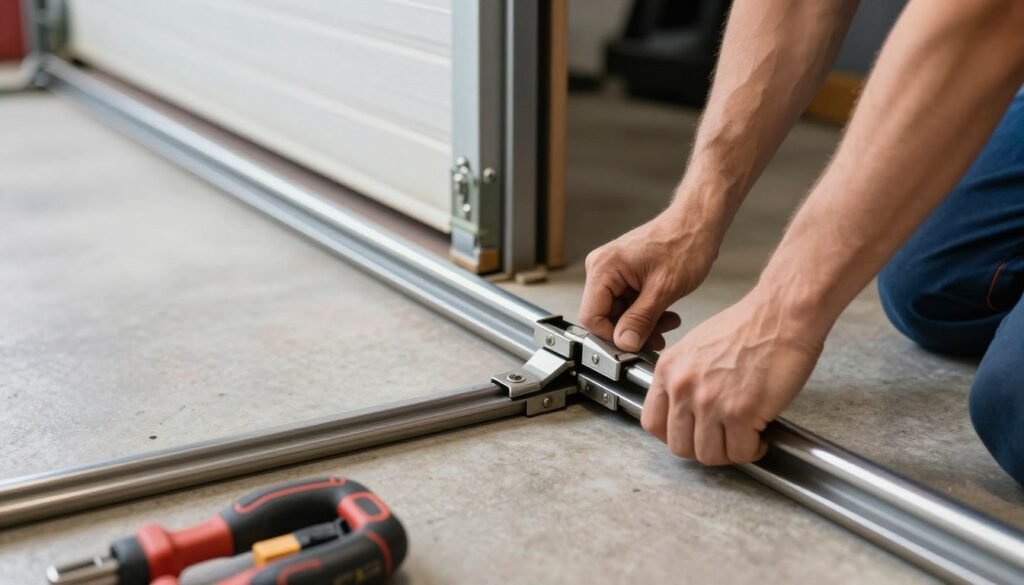
The most common residential garage door type, sectional doors consist of panel sections connected with hinges. As the door opens and closes, wheels at the edge of each panel roll inside a vertical track on each side of the door opening.
Space-efficient vertical operation
Excellent insulation options
Wide variety of design choices
Compatible with most openers
Roll-Up Garage Doors
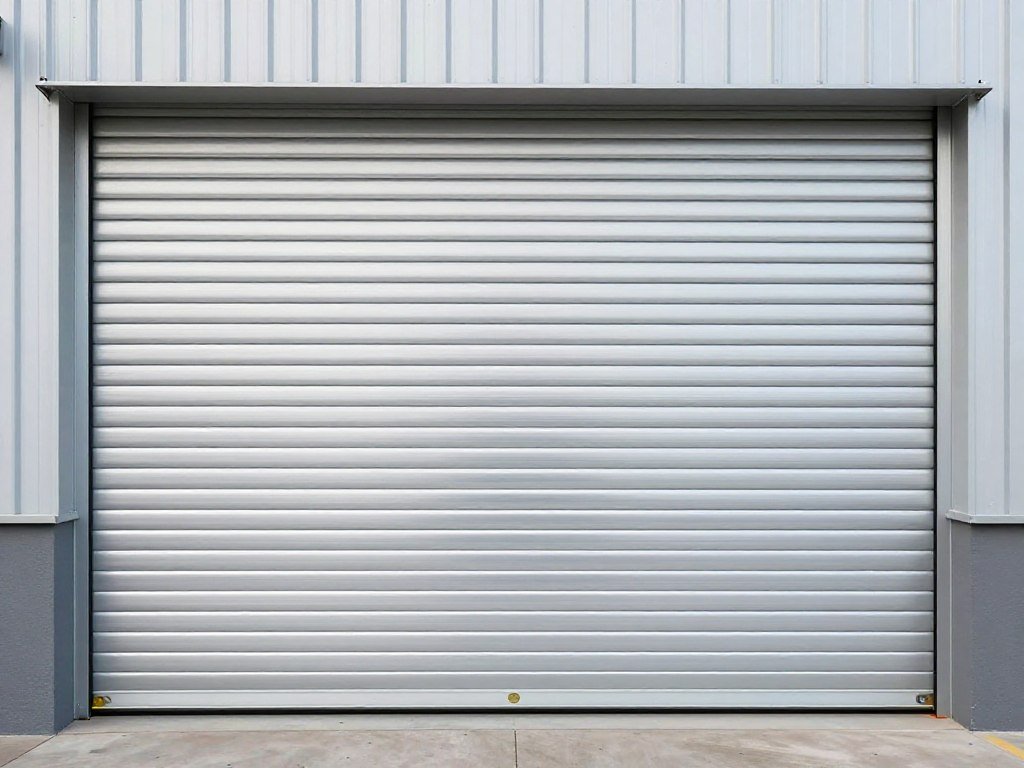
Roll-up garage doors consist of slats that roll around a drum above the opening. These doors are ideal for locations where headroom is limited or where you need to maximize ceiling space.
Perfect for limited overhead space
Durable and low-maintenance
Enhanced security features
Compact storage when open
Side-Hinged Garage Doors
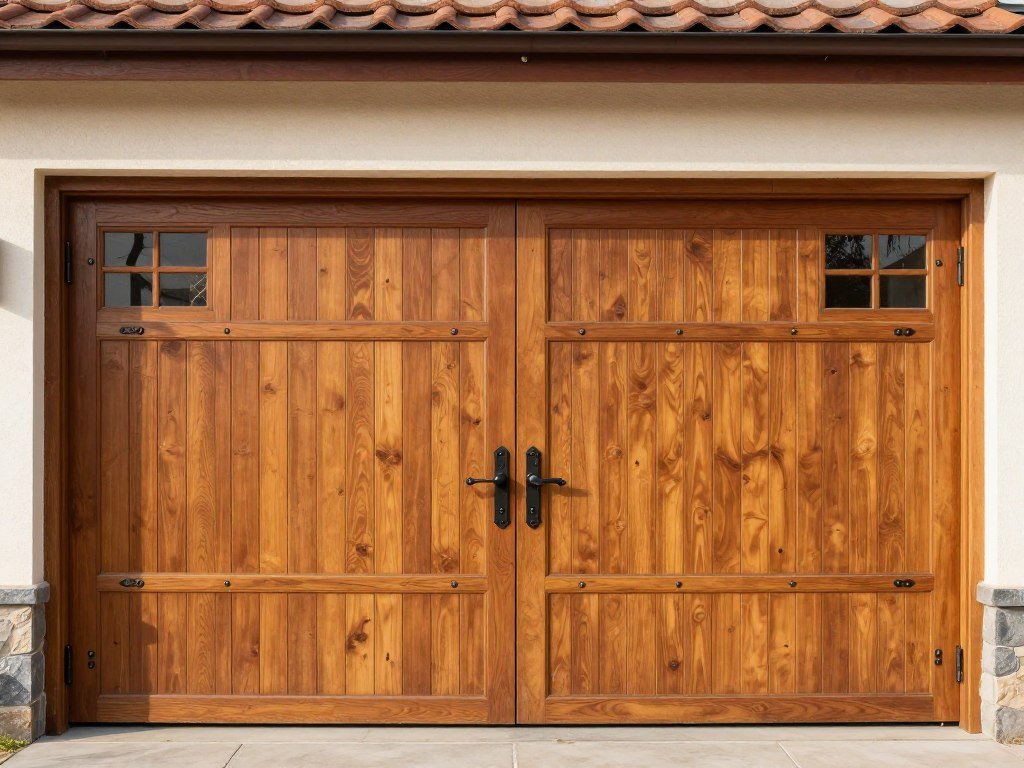
Traditional side-hinged doors open outward like conventional doors. They’re perfect for garages that are used as workshops or where ceiling-mounted storage might interfere with overhead tracks.
Traditional, carriage house look
Easy partial access when needed
No ceiling tracks required
Great for converted garage spaces
Tilt-Up/Canopy Garage Doors
Tilt-up doors consist of a single panel that pivots up and overhead into the garage. The canopy-style door projects about a third of its length outside the garage when open.
Simple mechanism with fewer moving parts
Cost-effective option
Clean, uninterrupted appearance
Sliding Garage Doors
Similar to barn doors, sliding garage doors slide horizontally to one or both sides of the garage opening, parallel to the wall. They’re ideal for garages with limited ceiling height.
No overhead tracks or hardware
Excellent for spaces with low ceilings
Unique architectural statement
Garage Door Materials: Choosing the Right Option
The material of your garage door affects not only its appearance but also its durability, maintenance requirements, and energy efficiency. Here’s a breakdown of the most popular garage door materials to help you make an informed choice.
Steel Garage Doors
Excellent durability and strength
Lower cost than wood
Low maintenance requirements
Available in various insulation options
Can mimic wood appearance with texturing
Resistant to warping and cracking
Steel Door Considerations
Can dent under impact
May rust if protective finish is damaged
Lower-gauge steel can be less durable
Less authentic appearance than real wood
Can be noisy without proper insulation
Find Your Perfect Steel Garage Door
Browse a wide selection of steel garage doors in various styles, colors, and insulation options.
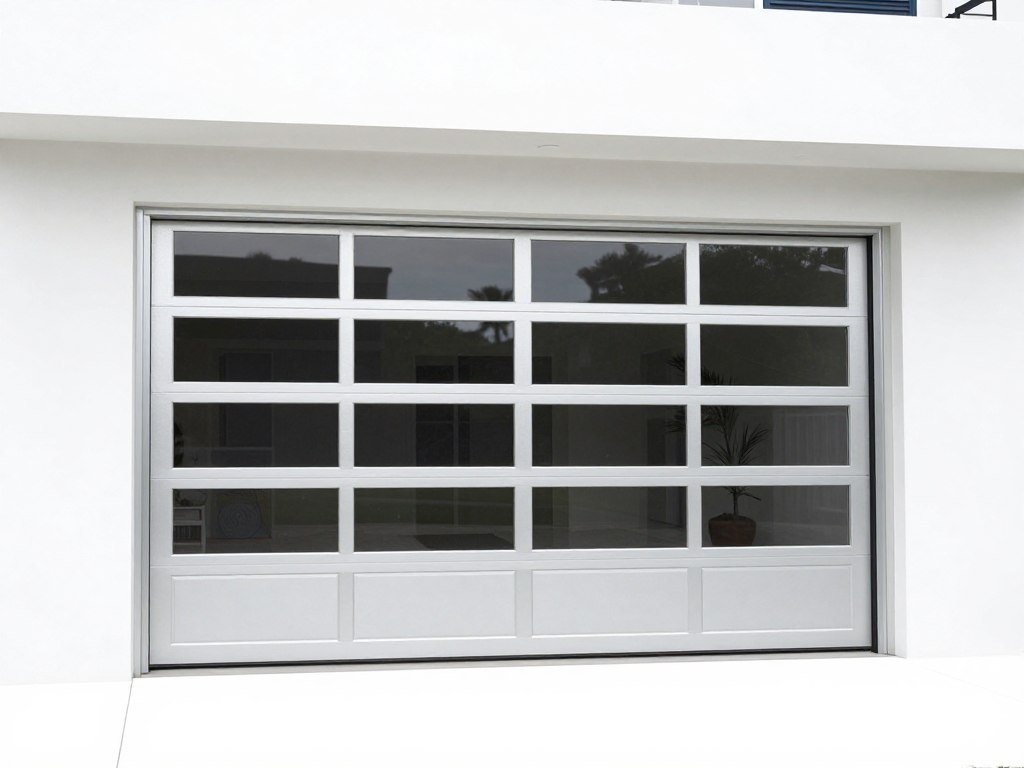
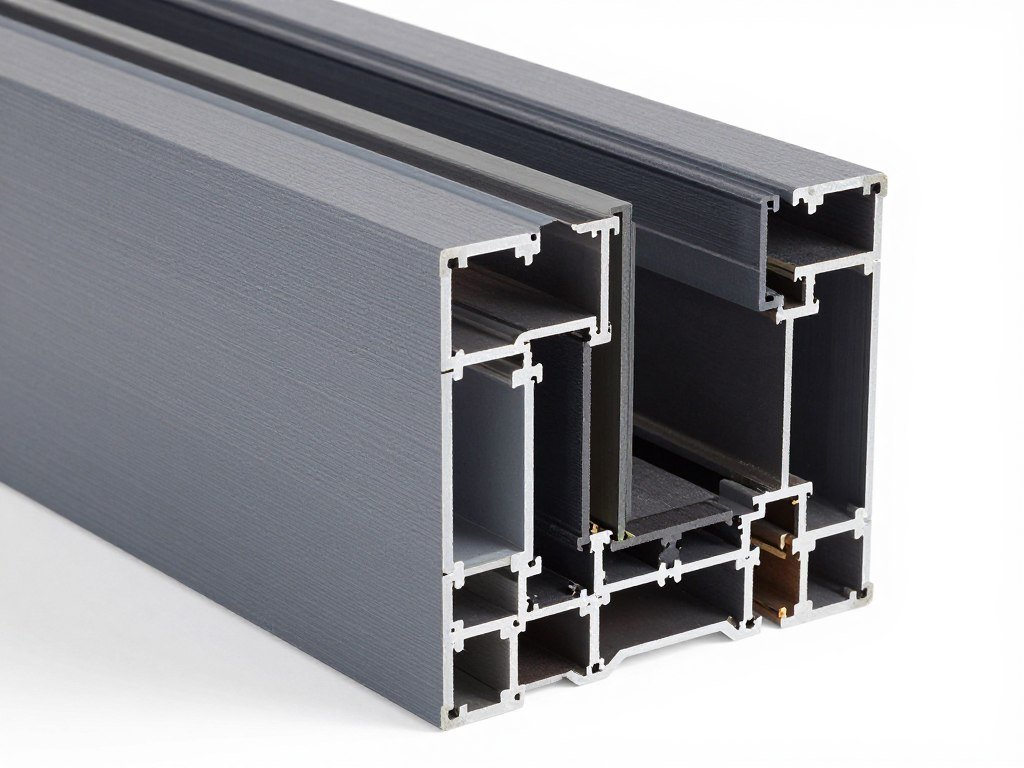
Aluminum doors are lightweight and resistant to rust, making them ideal for coastal areas. Modern designs often feature aluminum frames with glass panels for a contemporary look.
Lightweight and easy to operate
Rust-resistant for coastal homes
Modern, sleek appearance
Low maintenance requirements
Fiberglass Garage Doors
Fiberglass doors consist of an aluminum frame with fiberglass panels. They resist dents and rust while offering excellent insulation properties.
Excellent resistance to dents
Won’t rust or corrode
Good insulation properties
Can mimic wood grain appearance
Vinyl Garage Doors
Vinyl doors are highly resistant to dents and scratches. They’re low-maintenance and offer good insulation, making them perfect for family homes.
Extremely durable and dent-resistant
Never needs painting
Won’t rot, rust, or corrode
Child-friendly durability
Garage Door Design Trends
Today’s garage doors offer endless design possibilities to complement your home’s architecture. From traditional carriage house styles to sleek contemporary designs, here are the latest trends in garage door aesthetics.
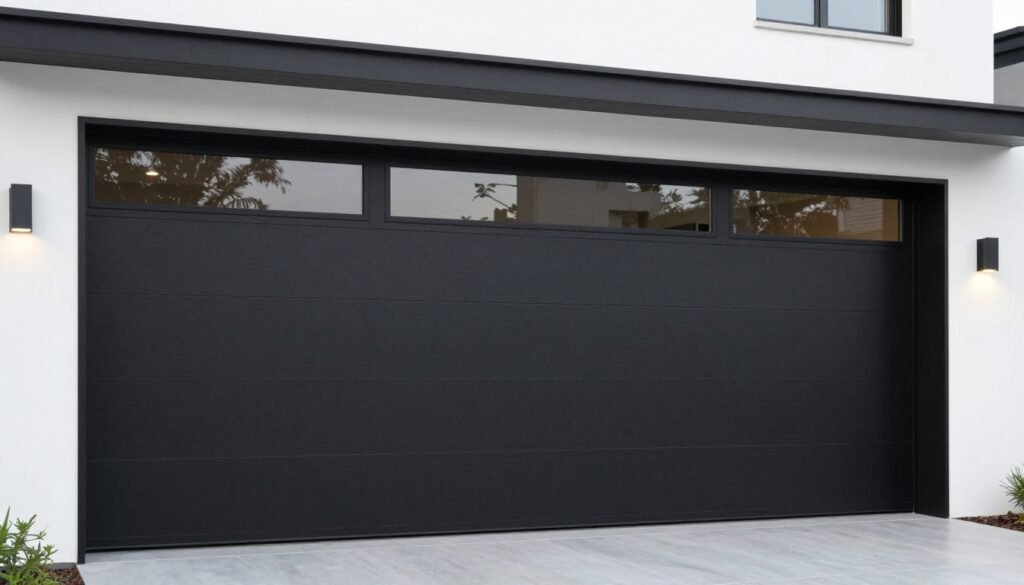
Contemporary Minimalist
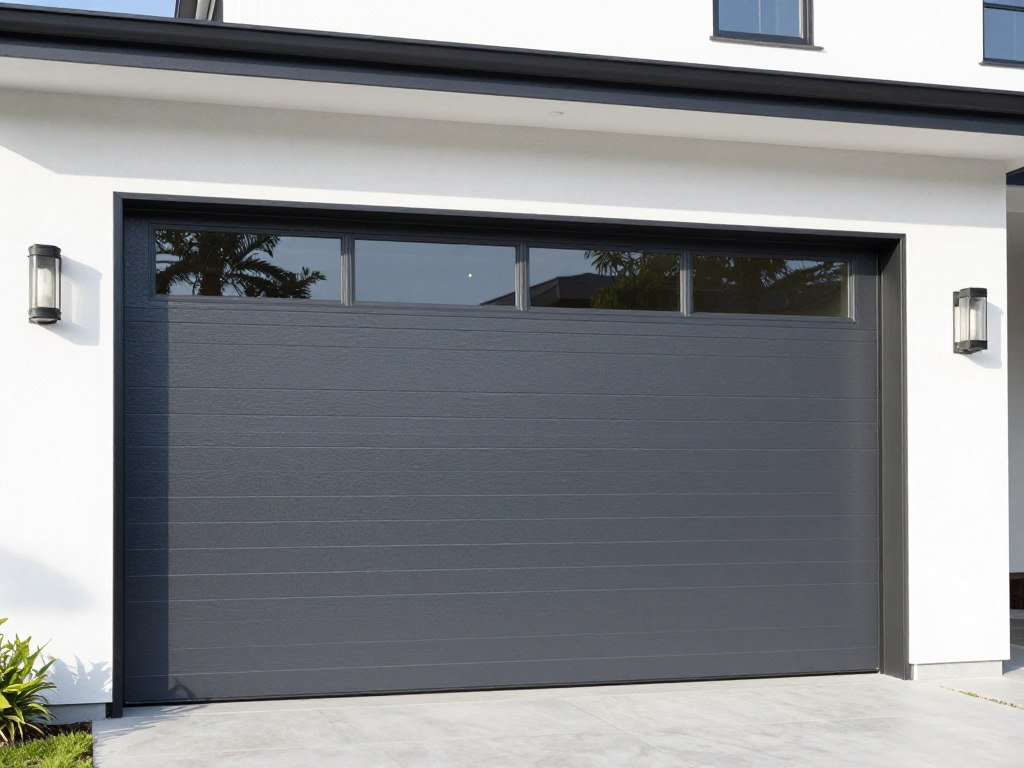
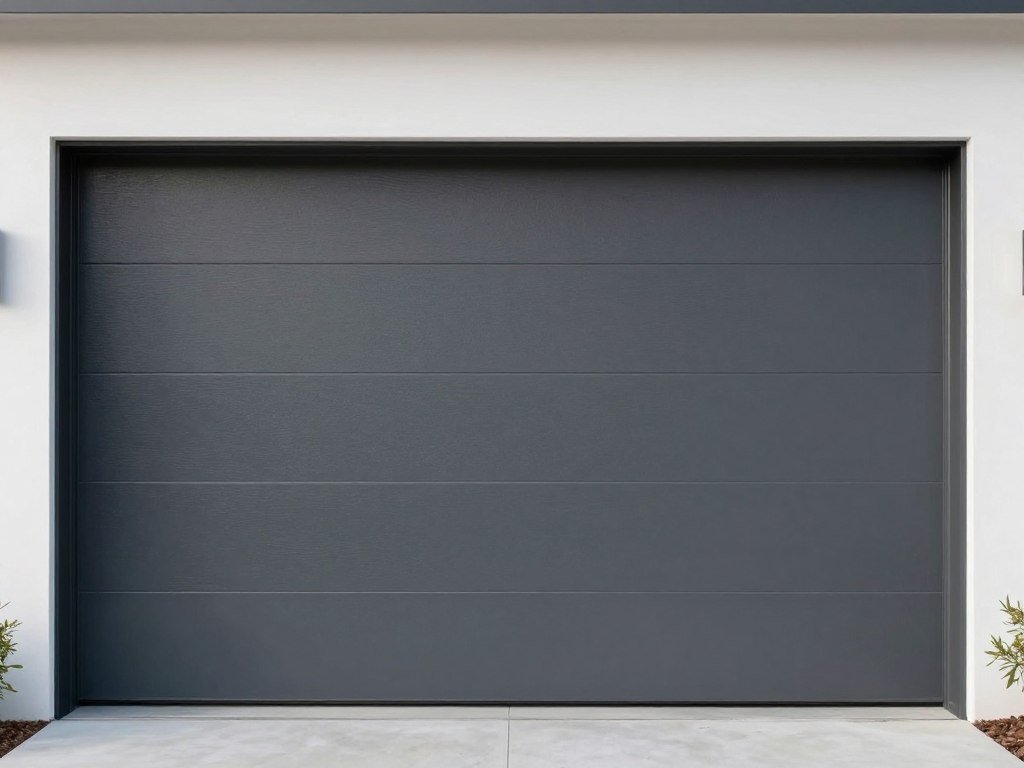
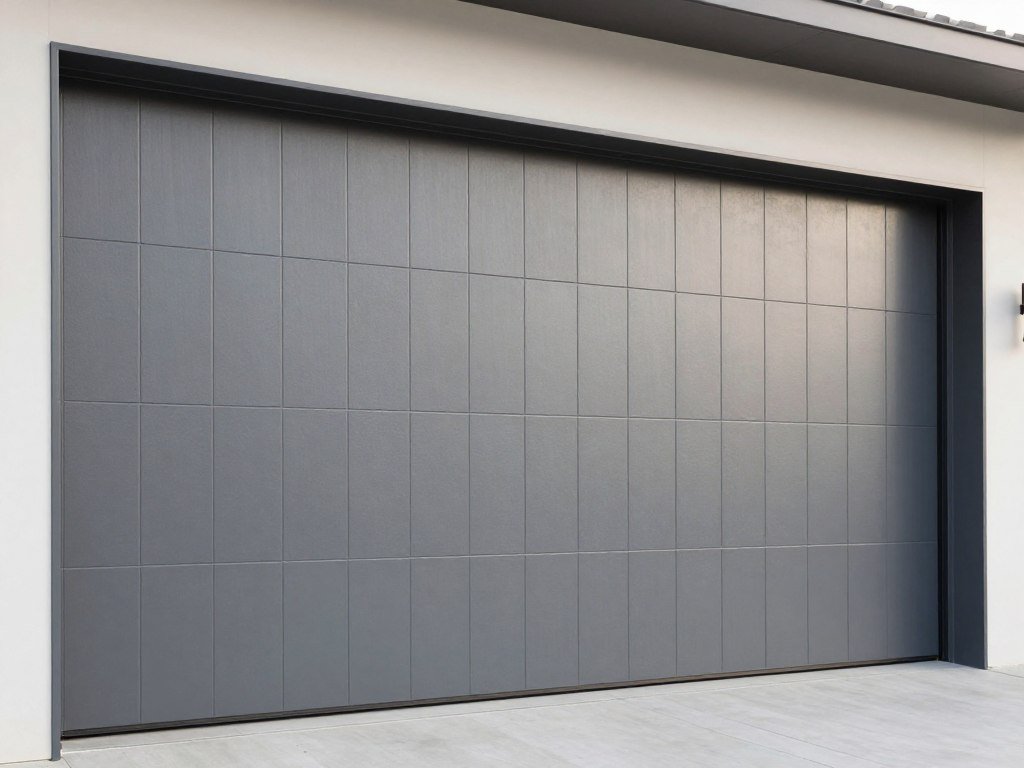
Clean lines, minimal ornamentation, and bold colors characterize contemporary garage door designs. These doors often feature horizontal lines and large windows for a sleek, modern look.
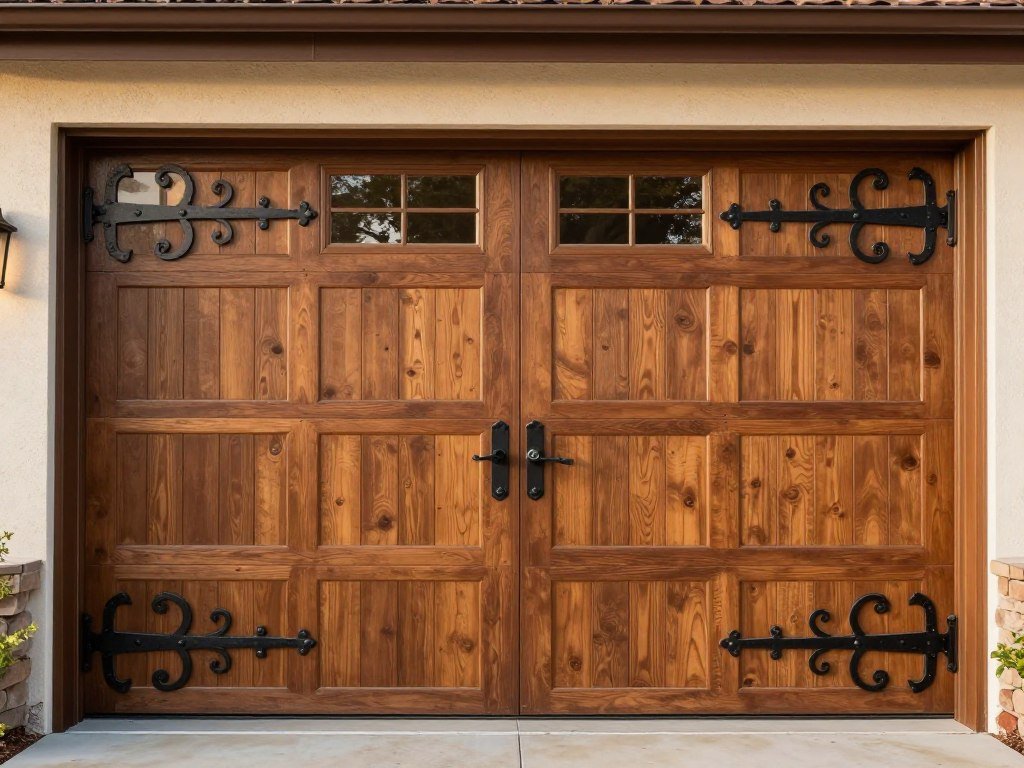
Carriage House Revival
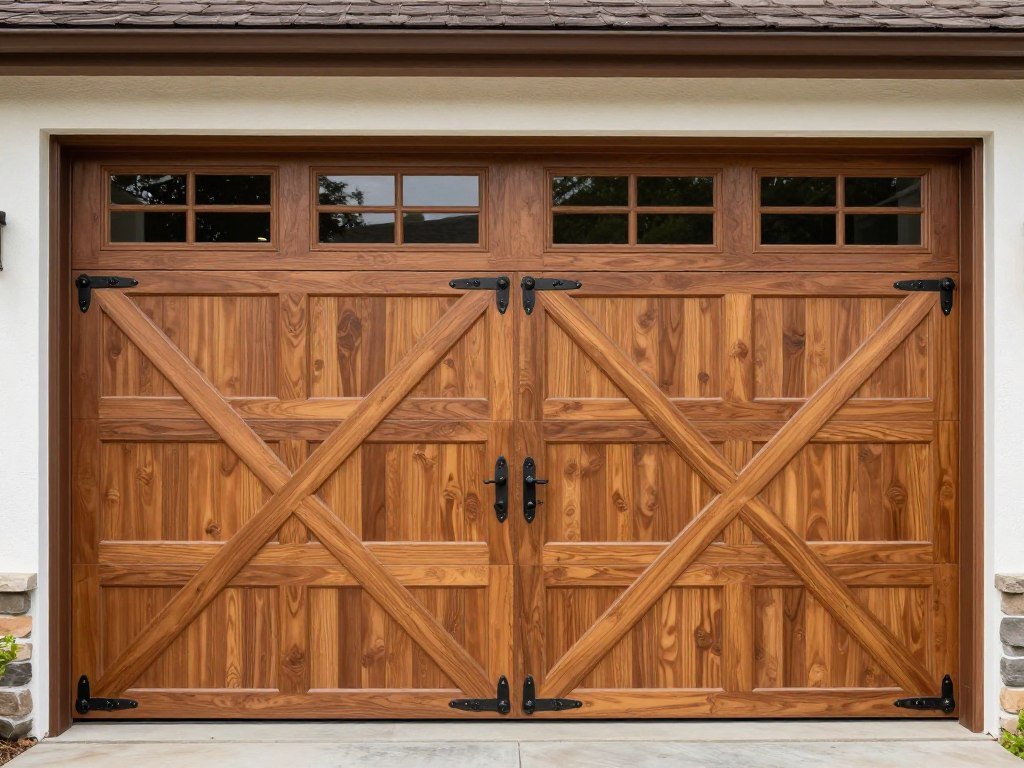
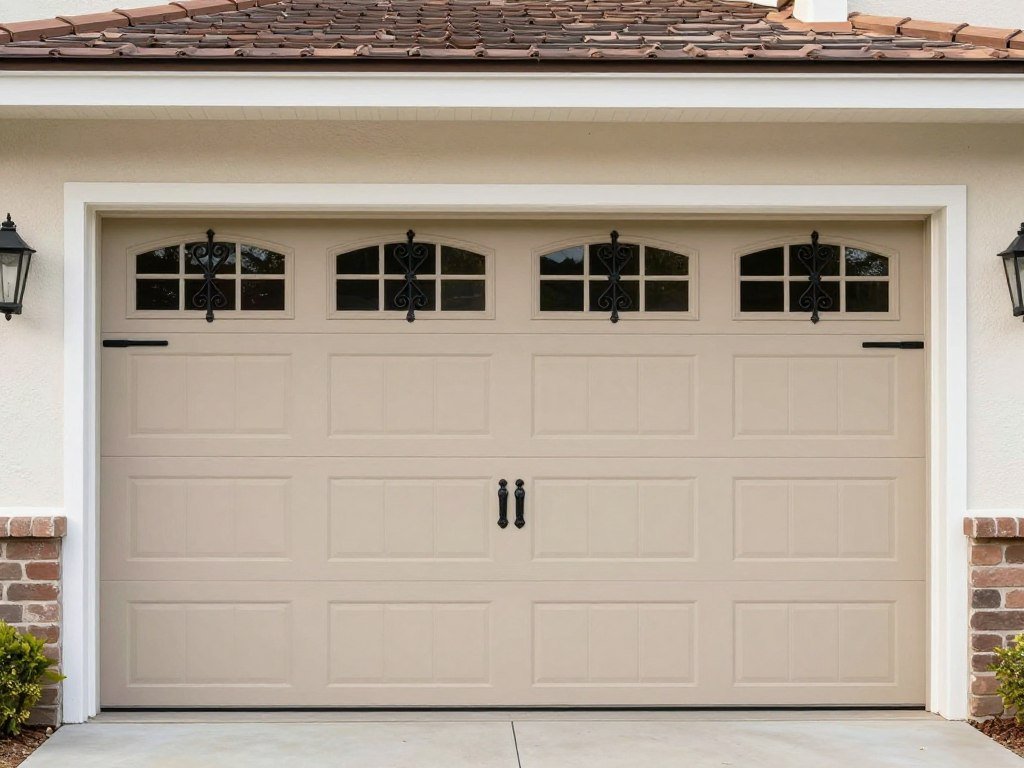
Inspired by historic carriage houses, these doors feature decorative hardware, windows, and panel designs that mimic the appearance of traditional swing-out doors while offering modern convenience.
Full-View Glass
Popular in modern and mid-century homes, full-view doors feature aluminum frames with glass panels. They create a stunning visual connection between indoor and outdoor spaces.
Color Trends for Garage Doors
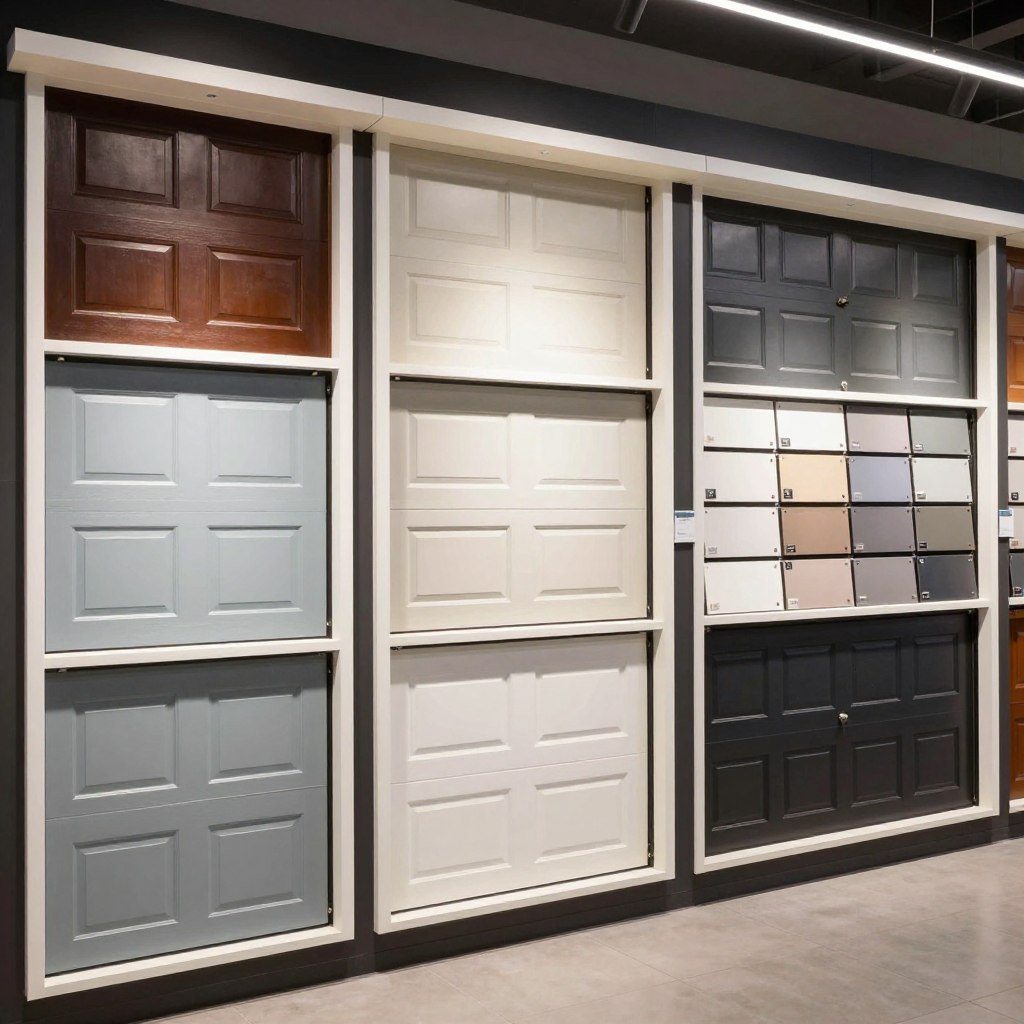
The right color can transform your garage door from a purely functional element to a key design feature. Current color trends include:
Bold blacks and charcoals for a dramatic, contemporary look
Soft neutrals like greige, taupe, and warm gray for versatility
Natural wood tones for warmth and traditional appeal
Statement colors like navy blue, forest green, or burgundy
Color-matched to trim for a cohesive exterior design
Update Your Garage Door’s Look
Find everything you need to refresh your garage door’s appearance, from paint to decorative hardware.
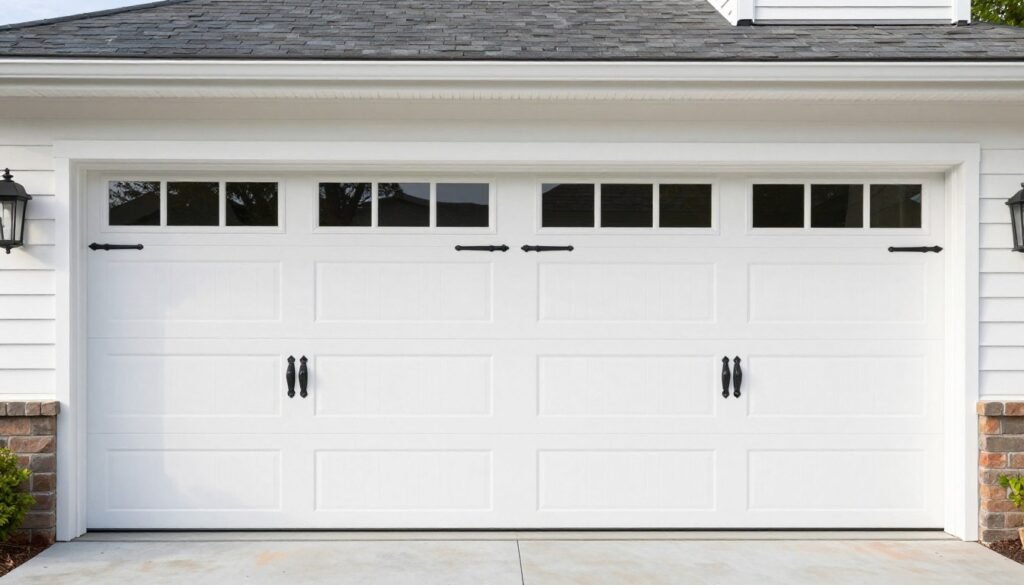
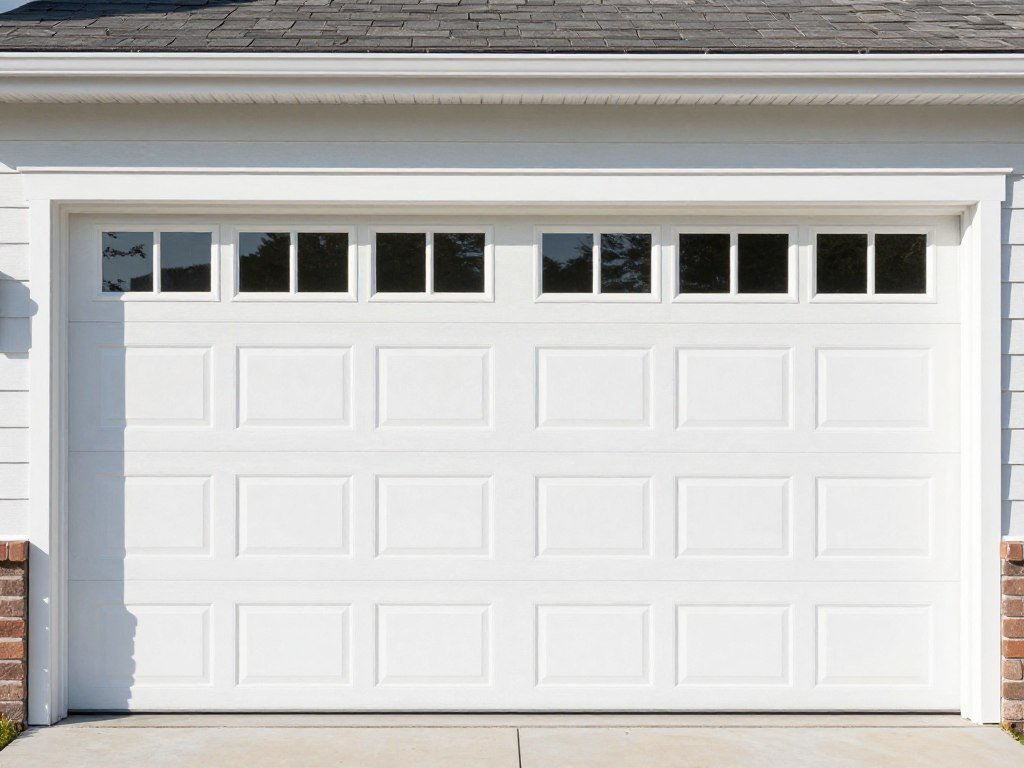
Windows add character to garage doors while allowing natural light into your garage space. Popular window styles include:
Traditional rectangular windows along the top row
Decorative arched or cathedral-style windows
Square grid patterns for craftsman or colonial homes
Full-height vertical window panels for modern designs
Custom arrangements to match your home’s windows
Garage Door Openers and Smart Features
Modern garage door openers offer convenience, security, and connectivity that go far beyond simple remote controls. Here’s what to consider when choosing a garage door opener system.
Types of Garage Door Openers
Chain Drive Openers
Chain drive openers use a metal chain to move the garage door. They’re the most common and economical option, though they tend to be noisier than other types.
Most affordable option
Reliable and durable
Good for detached garages
Easy to maintain
Belt Drive Openers
Belt drive openers use a rubber belt instead of a chain, resulting in much quieter operation. They’re ideal for attached garages, especially those with living spaces above.
Significantly quieter operation
Smooth performance
Less vibration
Perfect for attached garages
Screw Drive Openers
Screw drive openers use a threaded steel rod to move the door. They have fewer moving parts, requiring less maintenance, and operate at moderate noise levels.
Fewer moving parts
Lower maintenance needs
Faster opening speeds
Good for heavy doors
Smart Garage Door Features
Today’s garage door openers can integrate with your smart home system, offering unprecedented convenience and security features:
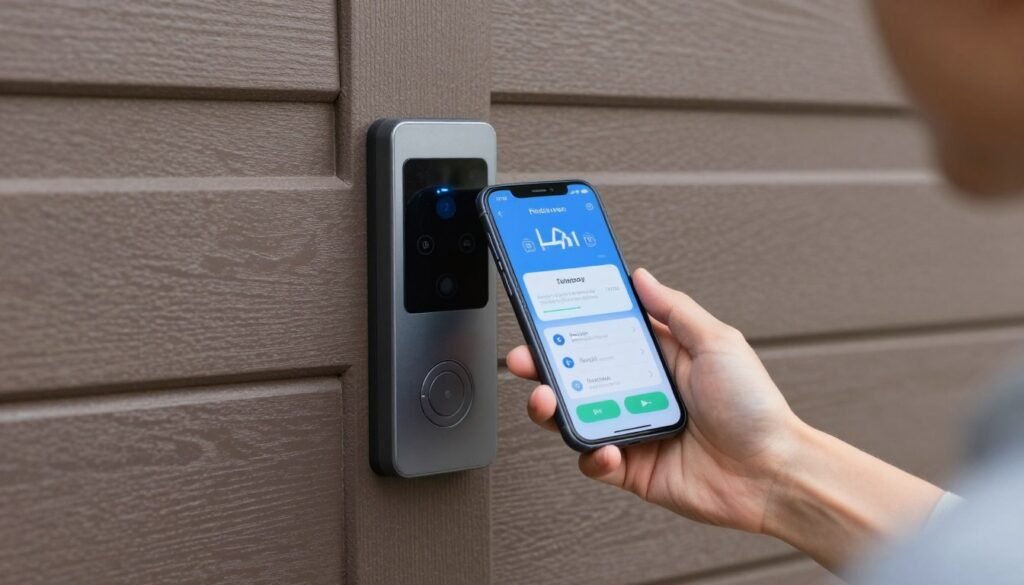
Smartphone control allows you to open, close, and monitor your garage door from anywhere
Voice assistant compatibility with Amazon Alexa, Google Assistant, and Apple HomeKit
Video monitoring lets you see your garage in real-time
Automatic opening when your car approaches using geofencing technology
Scheduling features to automatically close your door at certain times
Activity alerts notify you when your garage door opens or closes
Smart Garage Hub Controllers
Don’t want to replace your entire opener? Smart garage hub controllers can add connectivity to your existing garage door opener, giving you remote access and smart home integration.
Works with most existing openers
Easy DIY installation
Smartphone control capabilities
Much more affordable than replacement
Garage Door Maintenance Tips
Regular maintenance keeps your garage door operating smoothly and safely while extending its lifespan. Here are essential maintenance tasks every homeowner should perform.
Monthly Maintenance
Visual inspection of cables, springs, and rollers
Test auto-reverse safety features
Check and tighten hardware
Inspect weather stripping for damage
Listen for unusual noises during operation
Seasonal Maintenance
Lubricate moving parts (springs, hinges, rollers)
Clean tracks and remove debris
Wash door exterior with mild detergent
Check balance by disconnecting opener
Inspect and replace weatherstripping if needed
Annual Professional Service
Comprehensive spring inspection
Cable and pulley system check
Opener motor and chain/belt assessment
Safety sensor alignment and testing
Complete door balance adjustment
Essential Garage Door Maintenance Kit
Keep your garage door in top condition with these maintenance essentials.
Never attempt to adjust or repair garage door springs yourself. These components are under extreme tension and can cause serious injury or death if mishandled. Always call a professional for spring repairs.
Troubleshooting Common Garage Door Issues
Door won’t open or close completely
Check for obstacles in the door’s path and ensure safety sensors are aligned and unobstructed. Verify that limit settings on your opener are properly adjusted. If problems persist, the track may be misaligned or there could be an issue with the opener itself.
Noisy operation
Lubricate all moving parts including hinges, rollers, and springs with a silicone-based lubricant. Tighten any loose hardware. If you have a chain-drive opener, ensure the chain is properly tensioned. Consider upgrading to a belt-drive opener for quieter operation.
Door reverses before closing completely
This is typically caused by misaligned safety sensors or incorrect close-force settings. Clean sensor lenses and check their alignment. If needed, adjust the close-force setting according to your opener’s manual. For persistent issues, professional adjustment may be required.
Remote control not working
First, replace the batteries. If that doesn’t work, reprogram the remote following your opener’s instructions. Check for nearby sources of interference. For persistent issues, the remote may need replacement or there could be a problem with the opener’s receiver.
Essential Garage Door Safety Features
Modern garage doors include several safety features designed to prevent accidents and injuries. Understanding these features is crucial for maintaining a safe home environment.
Auto-Reverse Mechanism
All garage door openers manufactured after 1993 are required to have an auto-reverse feature that causes the door to reverse direction if it encounters an obstacle while closing.
How to Test:
Place a 2×4 board flat on the ground under the door
Close the door using the wall button or remote
The door should reverse immediately upon contact
If it doesn’t, adjust the close-force setting or call a professional
Photoelectric Sensors
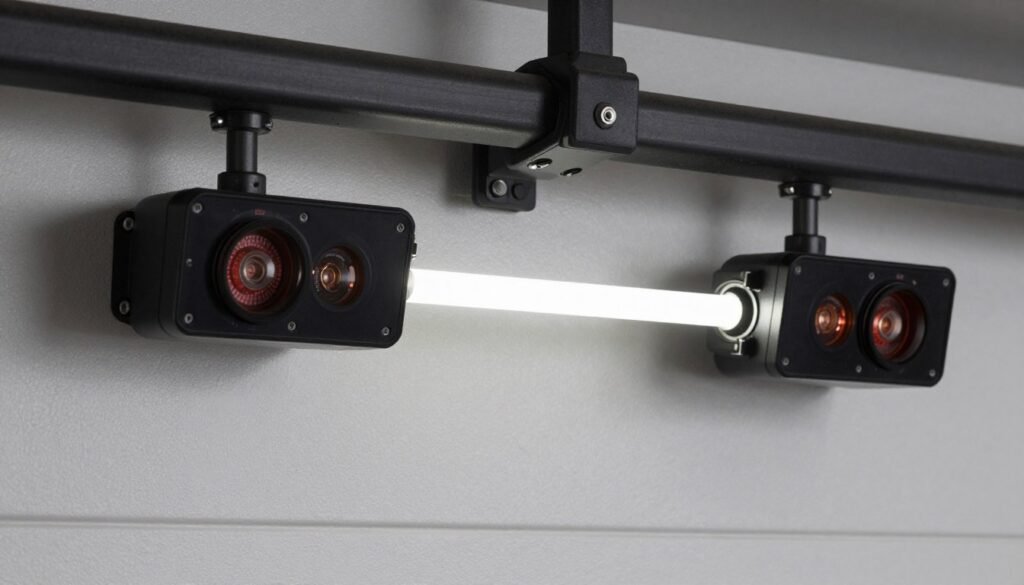
These sensors create an invisible beam across the door opening. If anything breaks this beam while the door is closing, it will immediately reverse direction.
How to Test:
Locate the sensors near the floor on each side of the door
Start closing the door with your remote or wall button
Wave an object between the sensors
The door should immediately reverse
Manual Release
In case of power failure or emergency, all garage door openers have a manual release that disconnects the door from the opener, allowing you to operate it by hand.
How to Use:
Locate the red handle hanging from the opener trolley
Pull straight down to disconnect
The door can now be opened manually
To reconnect, operate the opener or manually align the trolley
Child Safety Tips
Mount the wall control button at least 5 feet above the floor, out of children’s reach
Explain to children that garage doors are not toys
Keep remote controls away from children
Never allow children to play “beat the door” games
Consider a keypad with a changing security code for older children who need access
Upgrade Your Garage Door Safety
Find replacement sensors, safety edges, and other security features to keep your family safe.
An insulated garage door can significantly reduce energy costs, especially if your garage is attached to your home or contains living space. Here’s what you need to know about energy-efficient garage doors.
Understanding R-Values
R-value measures thermal resistance—how well a material prevents heat transfer. The higher the R-value, the better the insulation. For garage doors:
R-6 to R-9: Basic insulation, suitable for detached garages in mild climates
R-10 to R-13: Good insulation for attached garages in most climates
R-14 to R-17: Excellent insulation for homes in extreme climates or garages used as living spaces
R-18+: Premium insulation for severe climates or climate-controlled workshops
Insulation Types
Polystyrene Insulation
Polystyrene (styrofoam) insulation comes in rigid panels that fit between the inner and outer layers of the door. It’s more affordable but offers lower R-values than polyurethane.
More economical option
Typically provides R-values of 3-7
Lightweight and easy to install
Good for moderate climates
Polyurethane Insulation
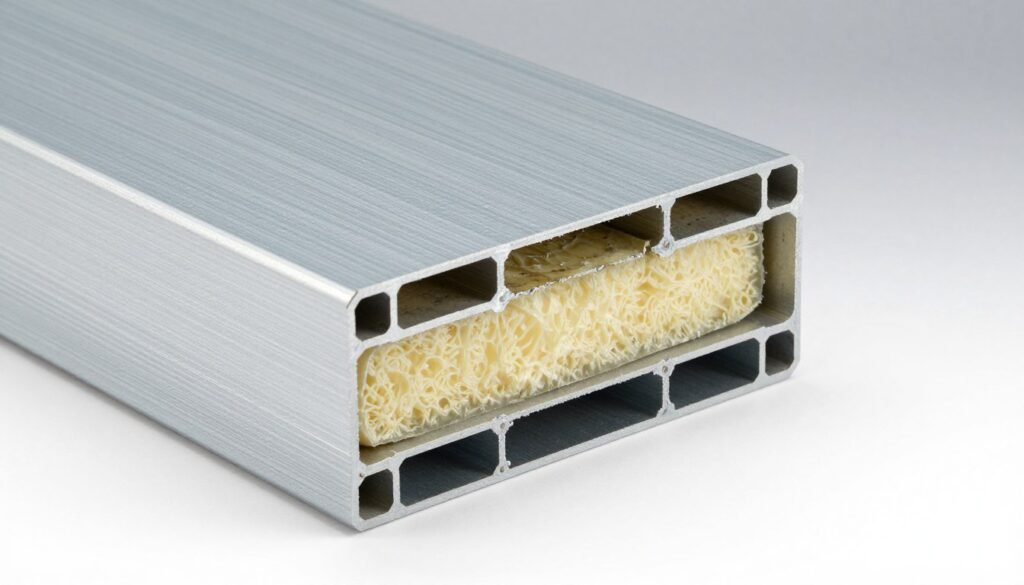
Polyurethane is injected as a foam that expands to fill the entire space between panels. It bonds to the door surfaces, adding structural strength while providing superior insulation.
Higher R-values (up to R-17.5)
Adds structural strength to the door
Better sound insulation properties
Ideal for extreme climates
Additional Energy-Saving Features
Weatherstripping: High-quality seals around the perimeter prevent air leakage
Thermal breaks: Separation between inner and outer door panels reduces heat transfer
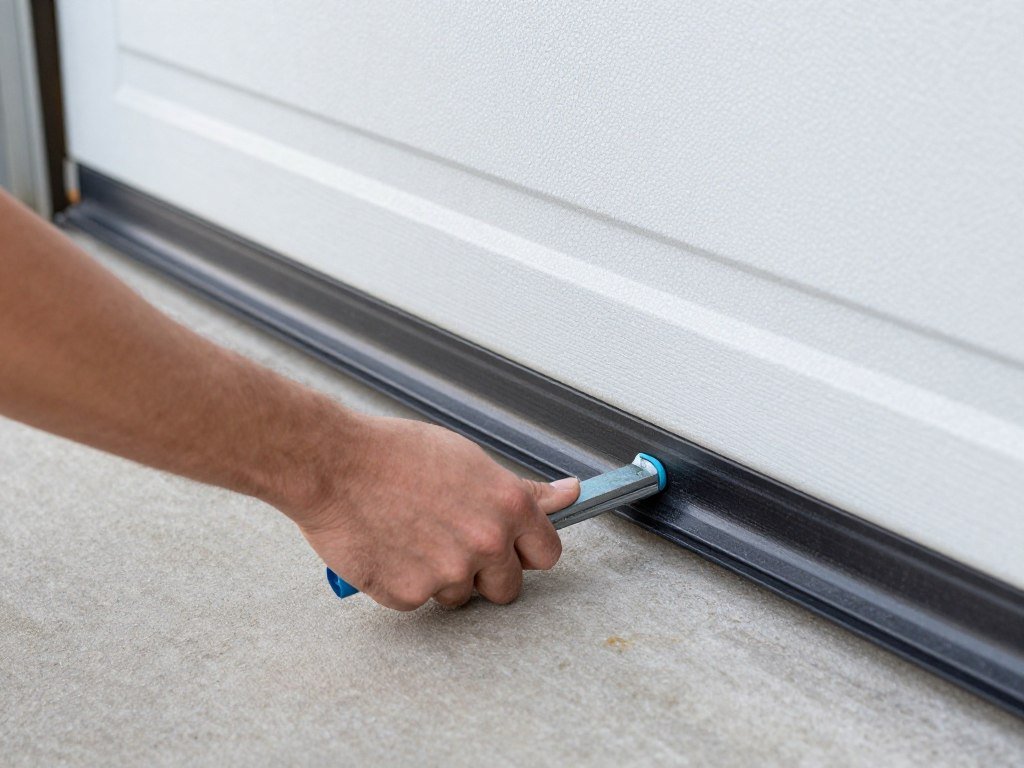
Bottom seals: Flexible rubber gaskets that conform to uneven floors
Double-glazed windows: Insulated glass prevents heat loss through windows
Section joints: Interlocking or tongue-and-groove section joints minimize air infiltration
Improve Your Garage’s Energy Efficiency
Find weatherstripping, seals, and insulation kits to reduce energy costs.
Installing a garage door is a significant project that requires careful consideration of your skills, tools, and time. Here’s what you need to know about DIY versus professional installation.
Professional Installation
Expertise and experience ensure proper installation
Typically includes warranty on both parts and labor
Proper tools and equipment for safe installation
Usually completed in a single day
Includes disposal of old door and hardware
Professionals handle heavy lifting and spring tensioning
DIY Installation
Significant cost savings on labor
Flexible timeline to work at your own pace
Satisfaction of completing a major home improvement
Deeper understanding of your door’s mechanics
Requires at least two people for safe installation
Spring installation can be dangerous without proper tools
Important Safety Warning
Garage door springs are under extreme tension and can cause serious injury or death if mishandled. If you choose to install your garage door yourself, consider purchasing a door with pre-installed springs or hiring a professional specifically for the spring installation.
Cost Considerations
Cost Factor
DIY Installation
Professional Installation
Basic Single-Car Door
$600-$1,200 (materials only)
$850-$1,900 (includes labor)
Basic Double-Car Door
$800-$1,500 (materials only)
$1,050-$2,200 (includes labor)
Custom Wood Door
$1,500-$4,000 (materials only)
$2,000-$5,000 (includes labor)
Opener Installation
$150-$500 (unit cost only)
$250-$650 (includes labor)
Required Tools
$100-$300 (if not already owned)
Included
Old Door Removal
DIY or additional disposal fees
Usually included
Ready for a New Garage Door?
Browse a wide selection of garage doors in various styles, materials, and price points.
Choosing the right garage door involves balancing aesthetics, functionality, durability, and budget. By understanding the various types, materials, and features available, you can make an informed decision that enhances your home’s appearance and value while meeting your practical needs.
Remember that a garage door is a long-term investment—most quality doors will last 15-30 years with proper maintenance. Taking the time to research your options and select the right door for your specific situation will pay dividends in curb appeal, energy efficiency, and daily convenience for years to come.
Whether you prefer the timeless elegance of wood, the durability of steel, or the modern appeal of full-view glass, today’s market offers endless possibilities to complement your home’s architecture and reflect your personal style. With the right garage door, you can transform what was once a purely functional element into a stunning design feature that makes a statement about your home.
Start Your Garage Door Transformation
Explore all garage door options and accessories to find your perfect match.