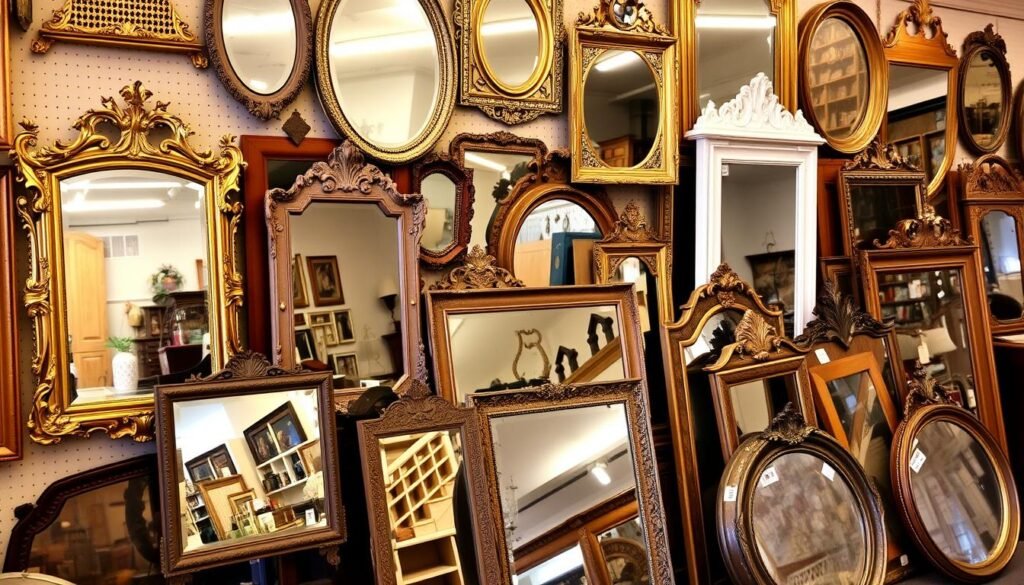
For centuries, antique mirrors have graced the walls of grand estates, elegant châteaus, and sophisticated homes, adding depth, character, and a touch of history to interior spaces. These reflective treasures do more than just capture our image—they tell stories of craftsmanship from bygone eras, reflecting both light and the artistic sensibilities of their time. Whether you’re an experienced collector or simply drawn to the unique patina and character that only time can create, antique mirrors offer a distinctive way to elevate your home’s aesthetic while connecting to design traditions that have endured for generations.
This Website contains affiliate links. That means I may earn a small commission if you purchase through my links, at no extra cost to you.
The Rich History of Antique Mirrors
The journey of mirrors from rare luxury items to decorative staples spans centuries of innovation and artistry. Early mirrors were small, precious objects made from polished metal or obsidian. It wasn’t until the 16th century in Venice that glass mirrors as we know them began to take shape, when craftsmen on the island of Murano perfected the technique of backing glass with a mixture of tin and mercury.
This revolutionary process transformed mirrors from curiosities into coveted status symbols. The Venetians guarded their mirror-making secrets so jealously that artisans were forbidden to leave the island—those who attempted to share these techniques faced severe penalties, including death.
By the 17th and 18th centuries, France and England had developed their own mirror-making industries, each bringing distinctive national styles to frame design. The Palace of Versailles’ famous Hall of Mirrors, completed in 1684, showcased the height of French mirror craftsmanship and established mirrors as essential elements in sophisticated interior design.
Throughout the Victorian era and into the early 20th century, mirrors evolved in style while remaining symbols of refinement. The distinctive aging patterns we now prize in antique mirrors—known as “foxing” or “spotting”—were once considered flaws but are now cherished characteristics that authenticate a mirror’s age and history.
Bring History Home
Discover a selection of carefully curated antique-style mirrors that capture the essence of these historical treasures.
Antique mirrors come in a fascinating array of styles, each reflecting the aesthetic sensibilities of its era. Understanding these distinctive styles can help you identify authentic pieces and find mirrors that complement your home’s design theme.
Victorian Mirrors (1837-1901)
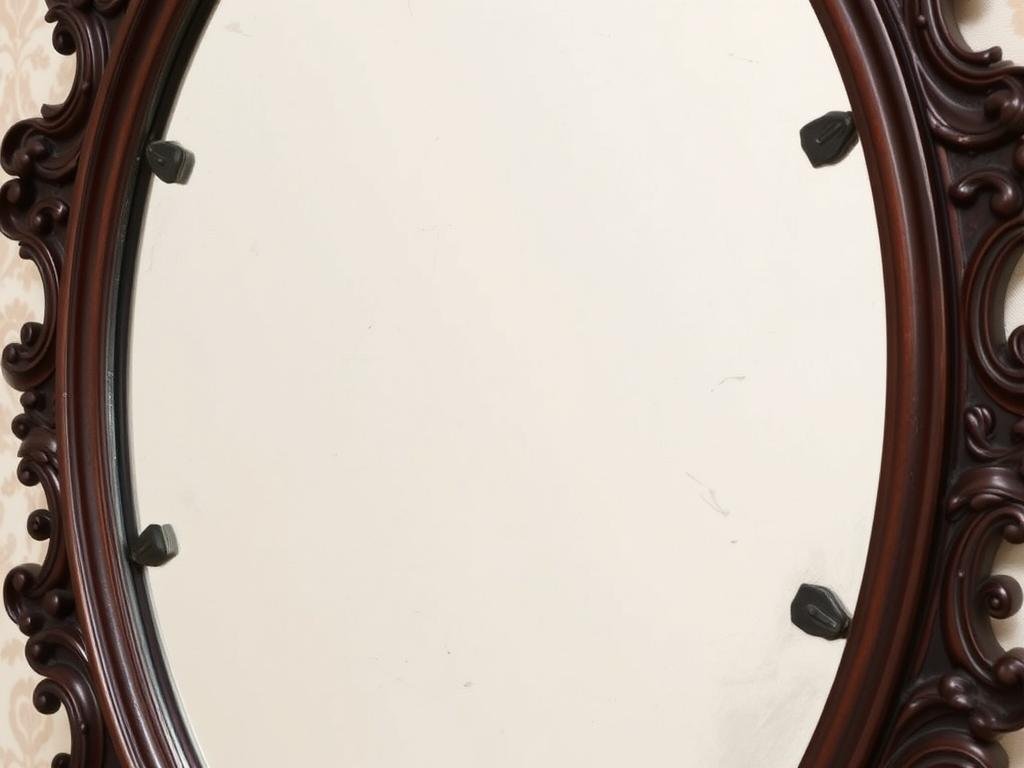
Victorian mirrors embody the ornate sensibilities of their era, featuring elaborate wooden frames with intricate carvings of flowers, fruits, and scrollwork. Often made from mahogany, walnut, or rosewood, these mirrors frequently incorporate Gothic arches or rounded tops. The glass typically shows distinctive foxing patterns—those charming spots and cloudy areas that develop with age. Victorian mirrors range from modest wall-hanging pieces to imposing floor-length designs that served as status symbols in wealthy households.
Art Deco Mirrors (1920s-1930s)
Art Deco mirrors represent the bold modernism of the 1920s and 30s, characterized by geometric patterns, symmetrical designs, and clean lines. These mirrors often feature stepped frames, sunburst patterns, or fan motifs. Materials like chrome, colored glass, and exotic woods reflect the era’s fascination with new materials and manufacturing techniques. The glass in authentic Art Deco mirrors may show subtle aging, but these pieces generally maintain clearer reflections than their Victorian predecessors.
Baroque and Rococo Mirrors (17th-18th centuries)
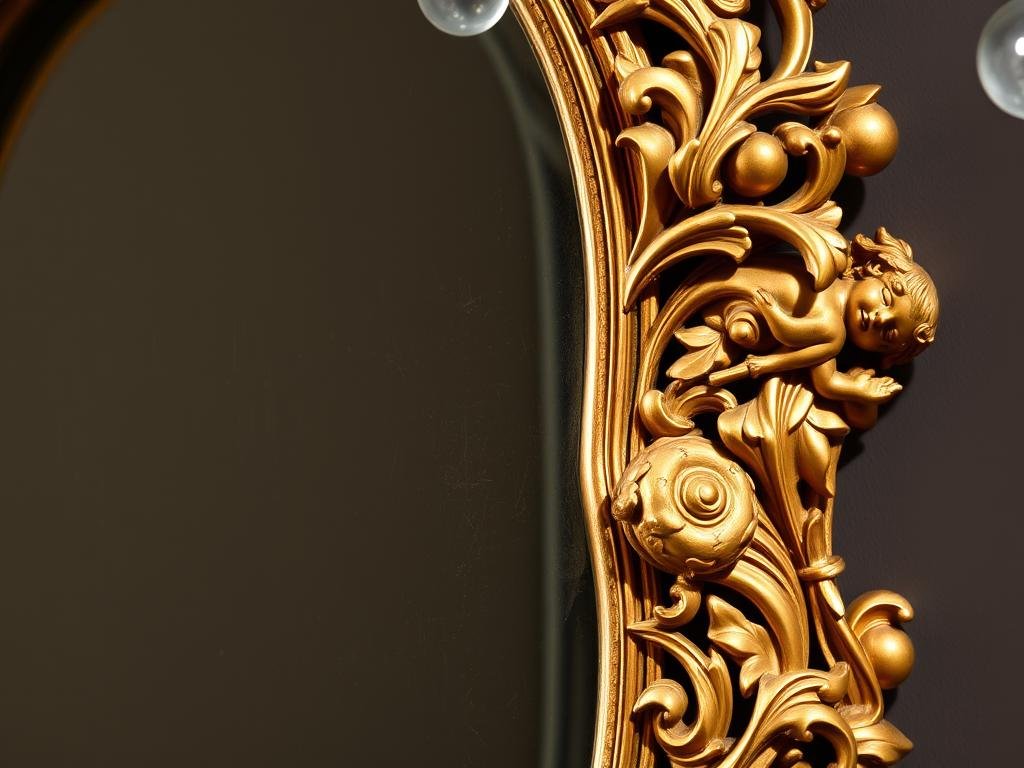
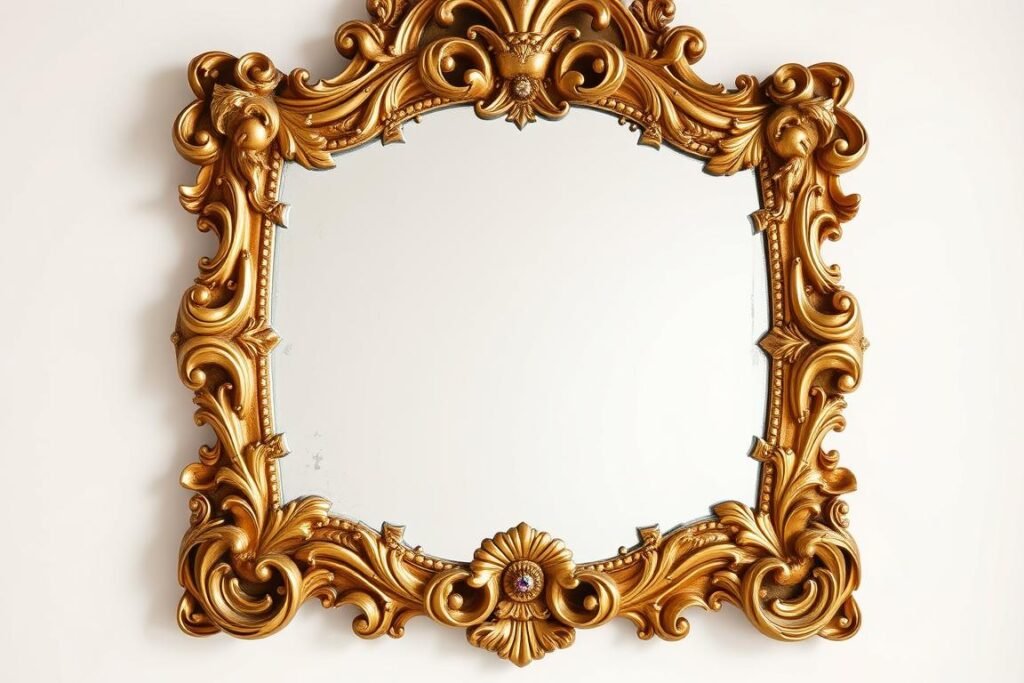
Baroque and Rococo mirrors represent the height of ornamental extravagance. Baroque mirrors (early-mid 17th century) feature dramatic, theatrical frames with bold carvings, often incorporating religious motifs, cherubs, and natural elements. Rococo mirrors (mid-18th century) evolved toward more delicate, asymmetrical designs with shell motifs, C-scrolls, and naturalistic elements like flowers and vines. Both styles typically feature gilded frames that have developed a rich patina over centuries. The glass in these mirrors is often hand-blown, resulting in slight waviness and imperfections that add to their character.
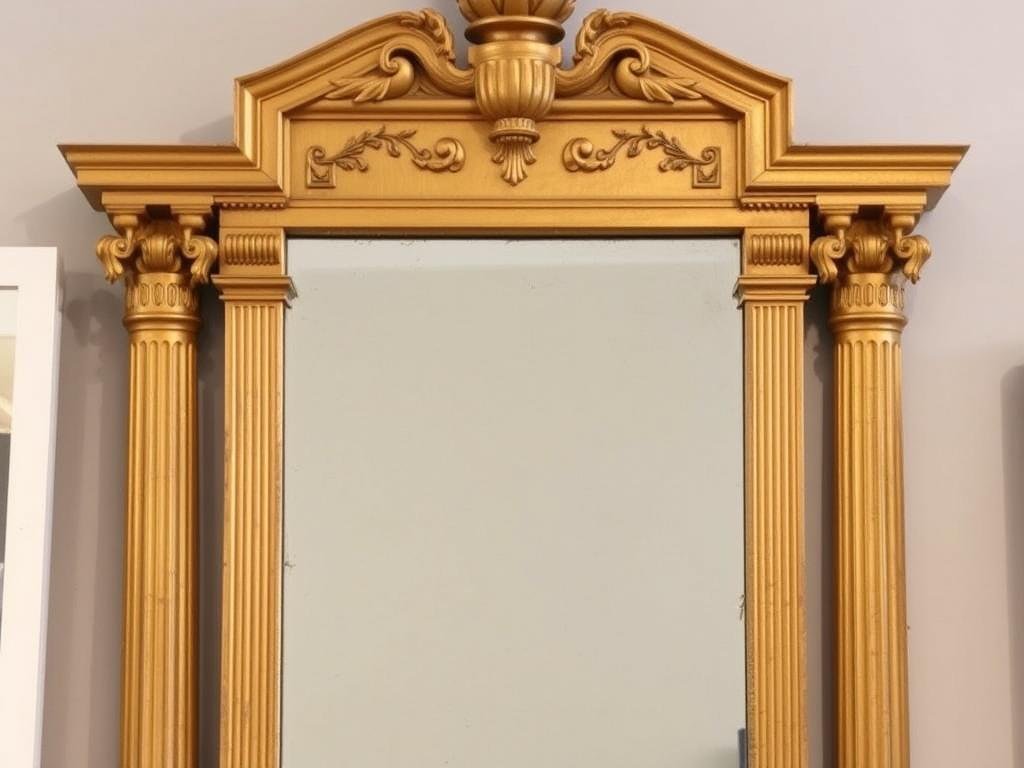
Neoclassical mirrors reflect a return to classical order and symmetry, inspired by Greek and Roman antiquity. These mirrors feature architectural elements like columns, pediments, and classical motifs such as laurel wreaths, urns, and Greek key patterns. Frames are typically finished in gold leaf or painted in subtle colors like ivory or pale blue with gilt accents. The glass in these mirrors often shows distinctive aging patterns that contrast beautifully with their refined, architectural frames.
Federal and Empire Mirrors (early 19th century)
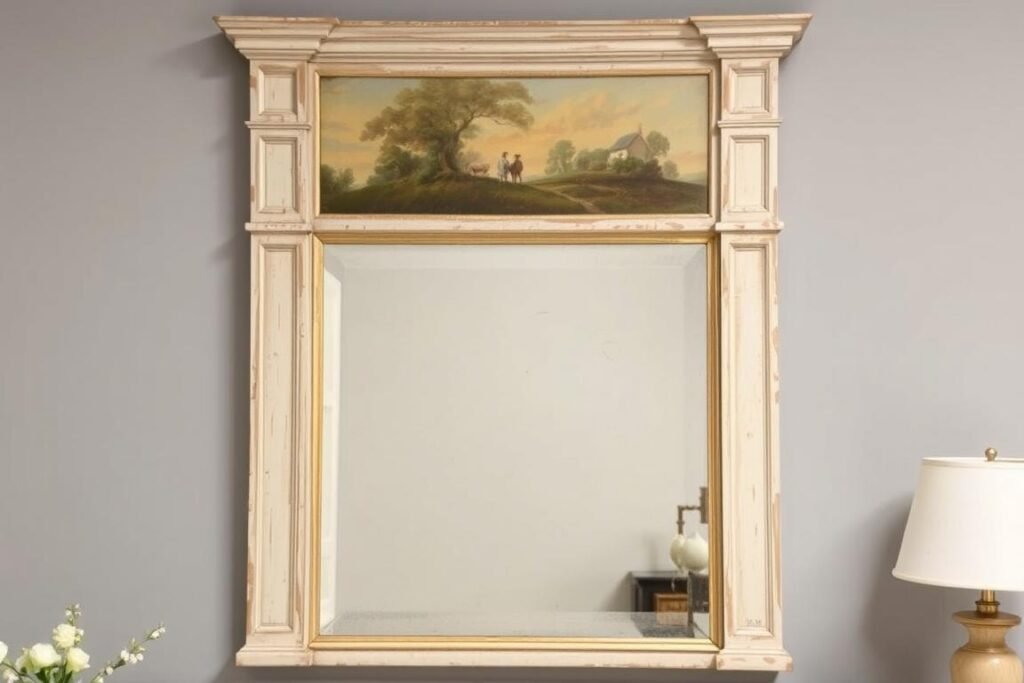
Federal (American) and Empire (French) mirrors share a bold, imperial aesthetic influenced by ancient Rome. These mirrors often feature eagles, stars, and other patriotic motifs, particularly in American pieces. Frames are typically made from mahogany or gilt wood with strong architectural elements. A distinctive feature of many Federal mirrors is the split upper panel, which might contain a painted scene or decorative element. The glass in these mirrors frequently shows the beautiful spotting and clouding that collectors prize.
Find Your Perfect Style
Explore a variety of antique-inspired mirrors in different historical styles to match your home’s aesthetic.
Distinguishing genuine antique mirrors from modern reproductions requires attention to several key details. While reproductions can be beautiful additions to your home, authentic antique mirrors carry both historical significance and potential investment value.
Examine the Glass
Look for foxing patterns – authentic antique mirrors develop distinctive dark spots and cloudy areas over time as the silver backing oxidizes
Check for waviness or imperfections in the glass – older mirrors (pre-1900) were made with hand-blown glass that isn’t perfectly flat
Observe the reflection quality – antique mirrors typically offer a softer, slightly hazier reflection than modern mirrors
Look for bubbles or inclusions in very old glass – these imperfections are signs of early glass-making techniques
Inspect the Frame
Examine construction methods – look for hand-cut dovetail joints, square nails, or wooden pegs rather than modern fasteners
Check for signs of hand-carving – slight irregularities in carved details suggest authentic craftsmanship
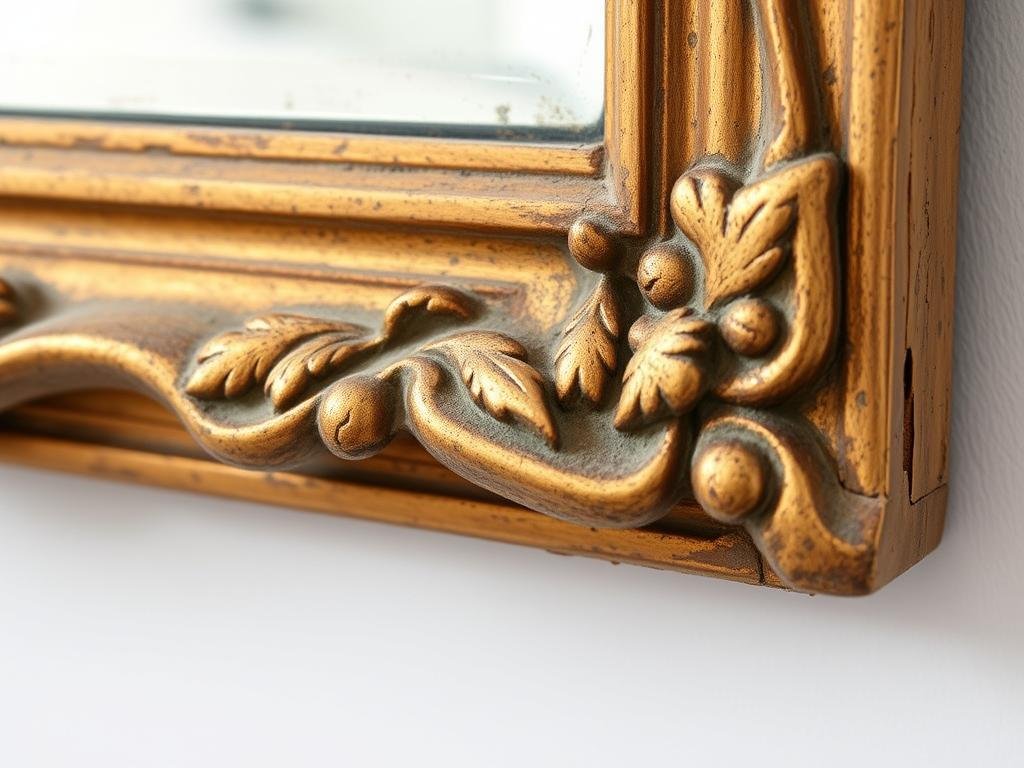
Assess the patina – genuine antique frames develop a distinctive aged appearance that’s difficult to replicate
Look for appropriate wear – authentic pieces show logical patterns of wear consistent with age and use
Evaluate the Backing
Original wood backing should show appropriate aging and may have darkened over time
Look for old paper labels from manufacturers or retailers, which can help date and authenticate a piece
Check for old hardware like hand-forged hanging mechanisms or original screws
Expert Tip: When examining a potential antique mirror purchase, bring a small flashlight to shine at an angle across the surface. This technique, called “raking light,” helps reveal the texture and imperfections characteristic of genuine antique glass and frames.
Care for Your Treasures
Discover products specifically designed to safely clean and maintain antique mirrors without damaging their delicate surfaces.
Creative Ways to Incorporate Antique Mirrors in Modern Decor
Antique mirrors bring character, depth, and a sense of history to contemporary spaces. Their versatility allows them to enhance virtually any room in your home, from grand entryways to intimate powder rooms.
Statement Pieces in Entryways
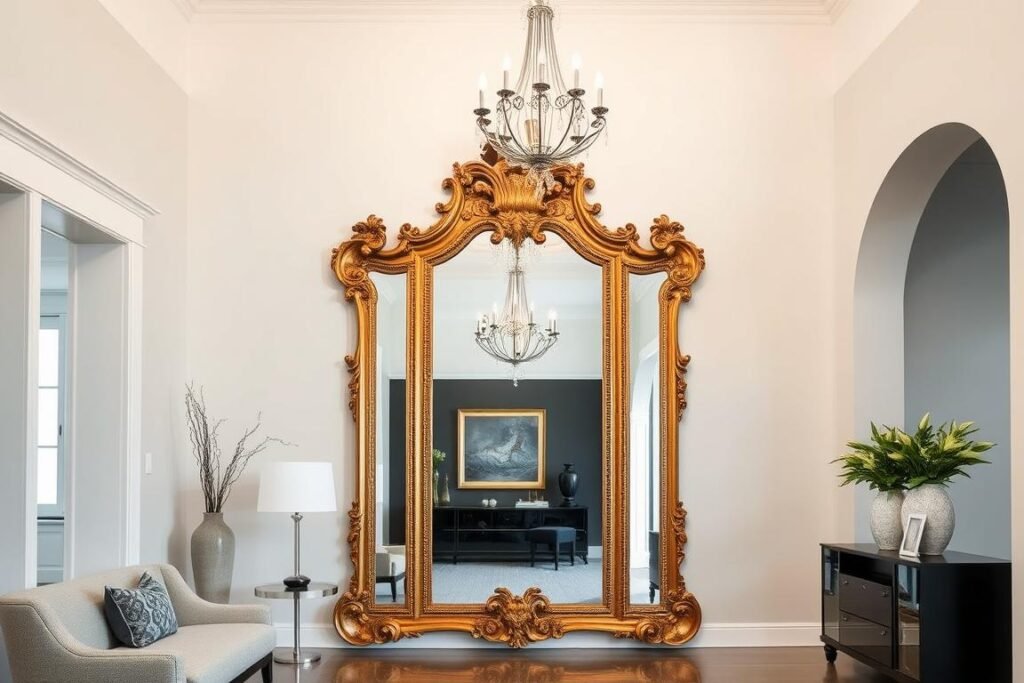
An entryway offers the perfect opportunity to make a dramatic first impression with a substantial antique mirror. Position a large, ornate piece opposite your front door to create depth and reflect light into the space. The juxtaposition of an elaborate gilt frame against clean, contemporary walls creates a compelling visual tension that immediately establishes your home’s design personality. For added functionality, place a slim console table beneath the mirror to create a practical vignette for keys and mail.
Gallery Walls with Character
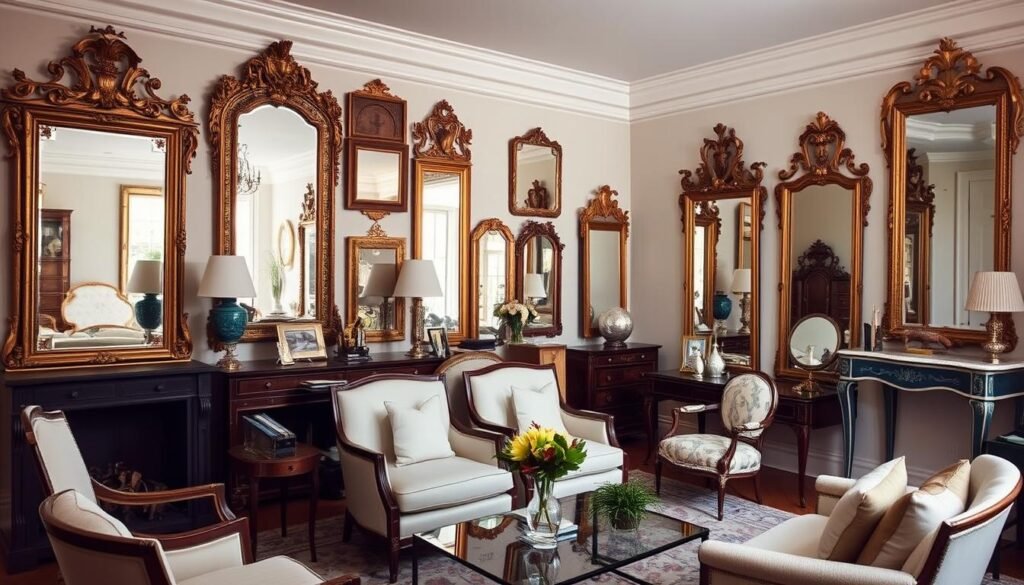
Create a captivating gallery wall by combining antique mirrors of various sizes and styles with artwork and photographs. The mirrors will reflect light and glimpses of the room, adding dimension to your composition. Mix oval, rectangular, and uniquely shaped mirrors with different frame finishes for an eclectic yet cohesive display. For maximum impact, arrange your collection on a wall opposite a window to capture and distribute natural light throughout the space.
Luxurious Bathroom Accents
Bathrooms offer perfect opportunities to incorporate antique mirrors in unexpected ways. Replace a standard builder-grade mirror with a characterful antique piece above your vanity for instant sophistication. The aged patina and foxing of an antique mirror create a soft, flattering reflection that adds warmth to typically sterile bathroom environments. For smaller powder rooms, consider covering an entire wall with antique mirror panels to create the illusion of expanded space while adding old-world glamour.
Layered Vignettes
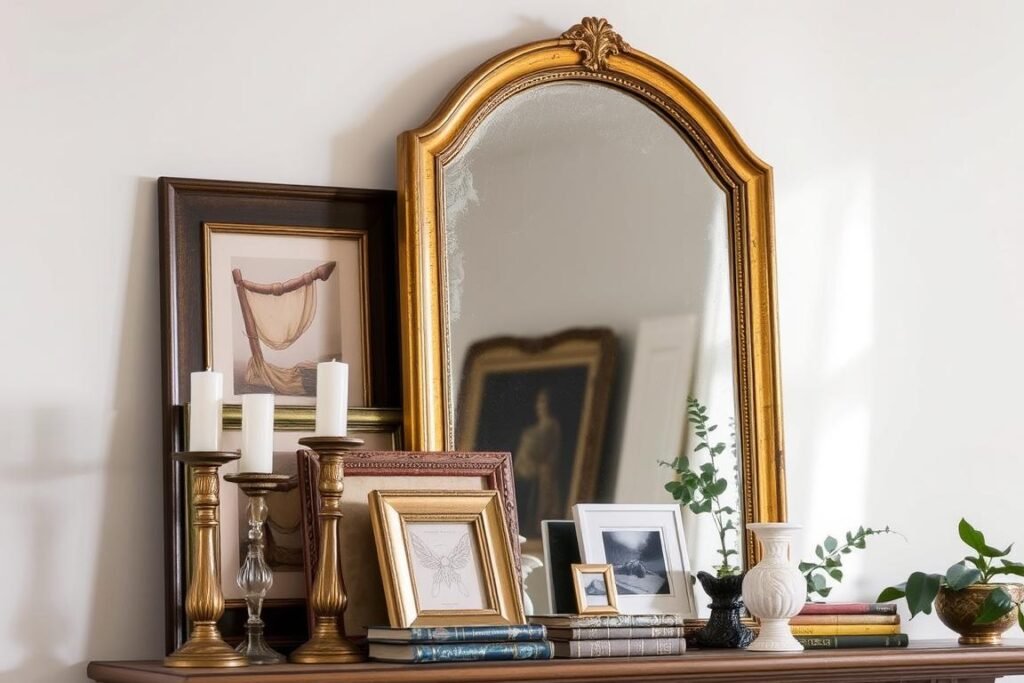
Create depth and visual interest by incorporating antique mirrors into layered vignettes on mantels, console tables, or dressers. Lean a medium-sized mirror against the wall as a backdrop, then layer smaller framed artwork or photographs in front. Add dimension with objects of varying heights—candlesticks, small sculptures, or botanical elements—positioned so they’re partially reflected in the mirror. This technique creates a sophisticated, collected-over-time aesthetic that draws the eye and invites closer inspection.
Unexpected Placements
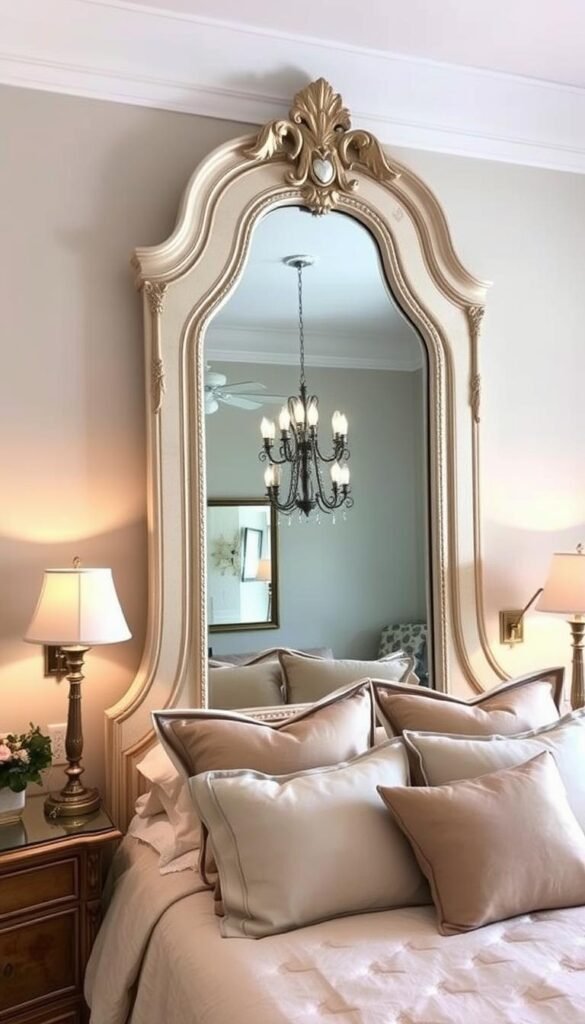
Use a tall trumeau mirror as an unexpected headboard alternative, creating a romantic focal point that reflects ambient light from bedside lamps.
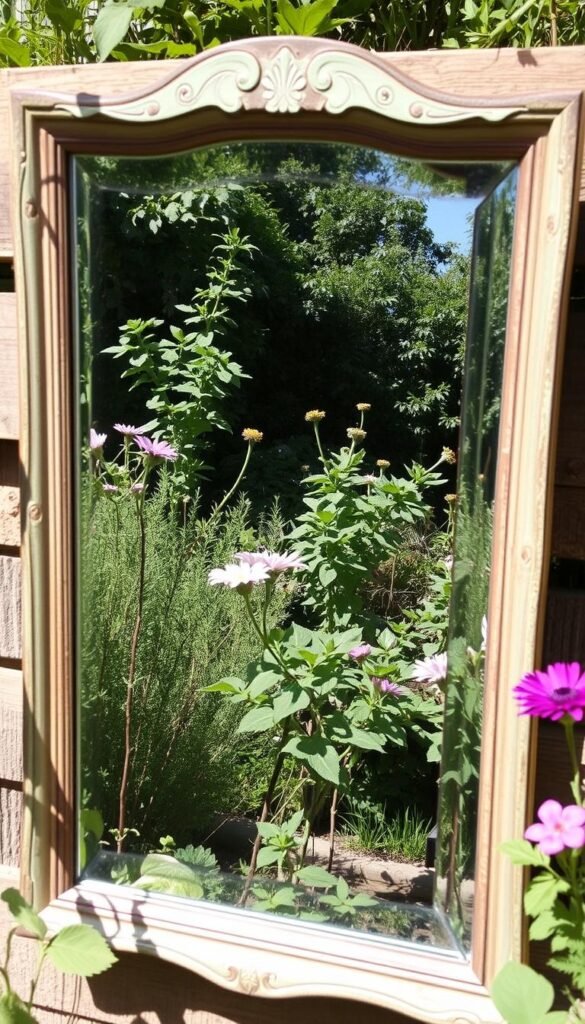
Mount a weather-resistant antique mirror in your garden to create the illusion of expanded space and reflect favorite plantings for doubled visual impact.
Create Your Own Inspired Space
Ready to transform your home with the timeless elegance of antique mirrors? Find the perfect piece to complement your decor.
While professional restoration is recommended for valuable antique mirrors, there are several gentle DIY approaches that can help preserve and enhance your treasured pieces.
Frame Cleaning and Preservation
Dust thoroughly using a soft, natural-bristle brush to remove surface debris from carved details and crevices
Test any cleaning solution on an inconspicuous area first to ensure it won’t damage the finish
For gilded frames, use a cotton swab lightly dampened with distilled water mixed with a few drops of mild dish soap, then immediately dry with a clean cotton swab
For wooden frames, apply a small amount of high-quality furniture wax using a soft cloth, working in the direction of the wood grain
Address minor chips in gesso or plaster frames using a conservation-grade gesso applied with a small artist’s brush
Stabilize loose joints with a small amount of wood glue applied with a toothpick, then clamp gently until dry
Caution: Never use commercial metal polishes on gilt frames, as they can remove the thin layer of gold leaf. Similarly, avoid household cleaners containing ammonia or alcohol, which can damage historic finishes.
Glass Maintenance
Clean the glass surface using a lint-free microfiber cloth lightly dampened with distilled water or a mixture of equal parts distilled water and white vinegar
Spray cleaning solution onto the cloth, never directly onto the mirror, to prevent liquid from seeping behind the glass and damaging the silvering
Avoid the edges of the mirror where the silvering is most vulnerable to moisture damage
Dry immediately with a clean, soft cloth to prevent streaking and moisture damage
For stubborn spots, try a small amount of isopropyl alcohol on a cotton swab, testing first in an inconspicuous area
Preservation Tip: Consider applying a thin layer of Renaissance Wax (a microcrystalline wax polish developed for museum conservation) to the frame of valuable antique mirrors. This creates a protective barrier against dust and environmental damage without altering the appearance.
Creating the Antique Look
If you have a modern mirror that you’d like to give an antique appearance, there are several techniques to create the distinctive aged look of vintage glass:
Remove the backing from a new mirror, working in a well-ventilated area while wearing protective gloves
Spray a mixture of equal parts white vinegar and water onto the silver backing, allowing it to create natural-looking spots
Enhance the effect by dabbing areas with a mixture of 1 part muriatic acid to 10 parts water using a sponge (use extreme caution and proper protective equipment)
Create a mottled effect by spraying areas with a solution of bleach and water
Once satisfied with the appearance, seal the back with mirror backing paint to prevent further deterioration
Reattach the backing and place in a vintage-style frame for a complete antique look
Safety Warning: Working with chemicals like muriatic acid requires proper ventilation, eye protection, chemical-resistant gloves, and careful handling. Consider safer alternatives like commercially available mirror antiquing kits if you’re concerned about working with strong chemicals.
Restoration Made Easy
Find all the supplies you need to restore or create your own antique-look mirrors.
Shopping Guide: Finding the Perfect Antique Mirror
Whether you’re seeking an authentic antique piece or a quality reproduction that captures vintage charm, there are numerous sources to explore for finding the perfect mirror for your space.
Where to Shop
Antique Shops & Markets
Offer authentic pieces with history and character. Prices vary widely based on age, condition, and rarity. Negotiation is often possible, and you can examine pieces in person before purchasing.
Online Marketplaces
Sites like Etsy, eBay, and 1stDibs offer extensive selections of both authentic antiques and quality reproductions. Read descriptions carefully and check seller ratings before purchasing.
Amazon
Provides convenient access to a wide range of antique-style mirrors with reliable shipping and return policies. Particularly good for quality reproductions that capture vintage aesthetics.
What to Consider When Purchasing
Size and proportion – Measure your space carefully and consider the visual weight of ornate frames
Condition – Decide whether you prefer pristine pieces or those with characterful wear
Authenticity – Request documentation for investment-quality antiques
Weight – Antique mirrors can be surprisingly heavy; ensure your wall can support the piece
Reflective quality – Decide whether you need a functional mirror or primarily a decorative piece
Restoration needs – Factor in additional costs for professional restoration if required
Return policies – Especially important for online purchases where you can’t examine the piece in person
Investment Value
Some antique mirrors represent not just beautiful decorative objects but potential investments. Mirrors from renowned periods or makers can appreciate in value over time. Particularly desirable are:
Venetian mirrors from the 17th-18th centuries with etched glass details and original mercury glass
Signed pieces from notable manufacturers like Chippendale, Hepplewhite, or La Barge
Rare examples with unusual shapes, materials, or historical provenance
Mirrors in exceptional condition with minimal restoration and original components
For investment-quality pieces, consider consulting with an appraiser who specializes in antique furniture and decorative arts to ensure you’re making an informed purchase.
Recommended Antique-Style Mirrors
If you’re looking for quality reproductions that capture the charm of antique mirrors without the high price tag of authentic pieces, consider these options available on Amazon:
Baroque-Inspired Gilt Mirrors
These ornate reproductions capture the dramatic flair of 17th-century design with scrollwork, acanthus leaves, and cherub motifs. Look for pieces with quality gilding and antiqued glass for authentic character.
Mid-Century Sunburst Mirrors
These iconic starburst designs add retro glamour to contemporary spaces. Look for variations with mixed-length rays and antiqued gold finishes that suggest decades of gentle aging.
French Trumeau Mirrors
These distinctive mirrors feature a painted panel above the mirror portion, often depicting pastoral scenes or classical motifs. Look for pieces with distressed finishes and architectural details for authentic French country charm.
Find Your Perfect Antique Mirror
Explore Amazon’s extensive collection of antique and vintage-style mirrors to add timeless elegance to your home.
Antique mirrors stand as testament to centuries of craftsmanship and design evolution. Whether you invest in an authentic piece with centuries of history or choose a quality reproduction that captures vintage charm, these reflective treasures offer far more than mere functionality—they bring depth, character, and a sense of timelessness to contemporary spaces.
The beauty of antique mirrors lies in their versatility. From ornate Baroque showpieces that command attention to subtle Victorian accents that add quiet sophistication, there’s an antique mirror style to complement every interior aesthetic. Their gently aged reflections soften and warm our modern environments, creating spaces that feel both elegant and lived-in.
As you incorporate these historic elements into your home, you participate in a design tradition that spans centuries—connecting your personal space to the artistic sensibilities of generations past while creating an environment uniquely your own. Whether displayed as solitary statement pieces or combined in thoughtful collections, antique mirrors invite both admiration and reflection, in every sense of the word.
Start Your Collection Today
Ready to bring the timeless elegance of antique mirrors into your home? Explore our curated selection and find the perfect piece to reflect your personal style.
Determining the age of an antique mirror involves examining several elements: the style and construction of the frame, the quality and condition of the glass, and any signs of period-appropriate aging. Look for hand-blown glass with slight waviness in very old mirrors, hand-cut dovetail joints or square nails in the frame construction, and authentic patina that develops over decades. The distinctive foxing patterns in the glass—those charming dark spots and cloudy areas—are also indicators of age, though these can be artificially created in reproductions.
What causes the spotting (foxing) in antique mirror glass?
The characteristic spotting or foxing in antique mirrors occurs when the silver backing oxidizes over time. This natural chemical process is influenced by environmental factors like humidity, temperature fluctuations, and exposure to pollutants. In very old mirrors (pre-1900), the mercury used in the silvering process can crystallize, creating distinctive patterns. Each antique mirror develops unique foxing patterns, which collectors and designers prize as evidence of authenticity and character.
How should I clean an antique mirror without damaging it?
Clean antique mirror glass with extreme care to preserve its delicate silvering. Use a soft microfiber cloth lightly dampened with distilled water or a mixture of equal parts distilled water and white vinegar. Always spray the cleaning solution onto the cloth, never directly onto the mirror, to prevent liquid from seeping behind the glass. Avoid cleaning near the edges where the silvering is most vulnerable. For the frame, dust regularly with a soft brush and clean according to the material—different techniques apply for gilt, wood, or painted frames.
Are antique mirrors with damage still valuable?
Antique mirrors with some damage can still hold significant value, particularly if they’re rare examples or from desirable periods. Minor foxing and aging of the glass is actually desirable and enhances authenticity. Frame damage like small chips or gilt wear can often be professionally restored. However, extensive damage to the frame structure, large missing sections, or replacement glass will significantly reduce value. For investment-quality pieces, it’s best to consult with an appraiser who specializes in antique furniture and decorative arts.
What’s the difference between a reproduction and a genuine antique mirror?
Genuine antique mirrors typically show evidence of hand-craftsmanship and natural aging processes that are difficult to replicate perfectly. Authentic pieces often have irregularities in the frame carving, patina that’s developed over decades, and glass with characteristic aging patterns. Reproductions, while often beautiful, typically have more uniform construction, modern fasteners like Phillips-head screws, and artificially distressed finishes. The glass in reproductions may be artificially “antiqued” but lacks the distinctive crystallization patterns found in very old mercury mirrors.