Your front yard is the first impression visitors have of your home. A thoughtfully designed front landscape not only enhances your property’s curb appeal but also creates a welcoming atmosphere that reflects your personal style. Whether you’re looking to completely redesign your front yard or simply add a few finishing touches, this guide will walk you through inspiring front landscaping ideas that combine beauty, functionality, and sustainability.
This Website contains affiliate links. That means I may earn a small commission if you purchase through my links, at no extra cost to you.
Planning Your Front Yard Landscape
Before diving into your front landscaping project, take time to evaluate your space and envision what you want to achieve. Consider your home’s architectural style, the climate in your region, and how much maintenance you’re willing to commit to.
A well-planned front yard creates a harmonious balance between hardscaping and plant elements
Evaluating Your Space
Start by assessing what you already have. Note the size and shape of your yard, existing plants worth keeping, and any challenging areas like slopes or shady spots. Consider how much sun different parts of your yard receive throughout the day, as this will determine which plants will thrive in each location.
Setting Clear Goals
Ask yourself what you want your front yard to become. Do you need more privacy from the street? Are you looking to create a low-maintenance landscape? Would you like to incorporate a seating area where you can enjoy your morning coffee? Having clear goals will help guide your design decisions.
Define your style preference (formal, cottage garden, modern, natural)
Consider how you’ll use the space (purely decorative or functional)
Establish a realistic budget for your project
Determine if you’ll DIY or hire professionals for certain aspects
Research any HOA restrictions or local regulations
Having the right tools makes any landscaping project easier. Quality garden tools will not only make the work more efficient but also more enjoyable. A good set of basic landscaping tools includes a durable shovel, rake, pruners, and a wheelbarrow for moving soil and plants.
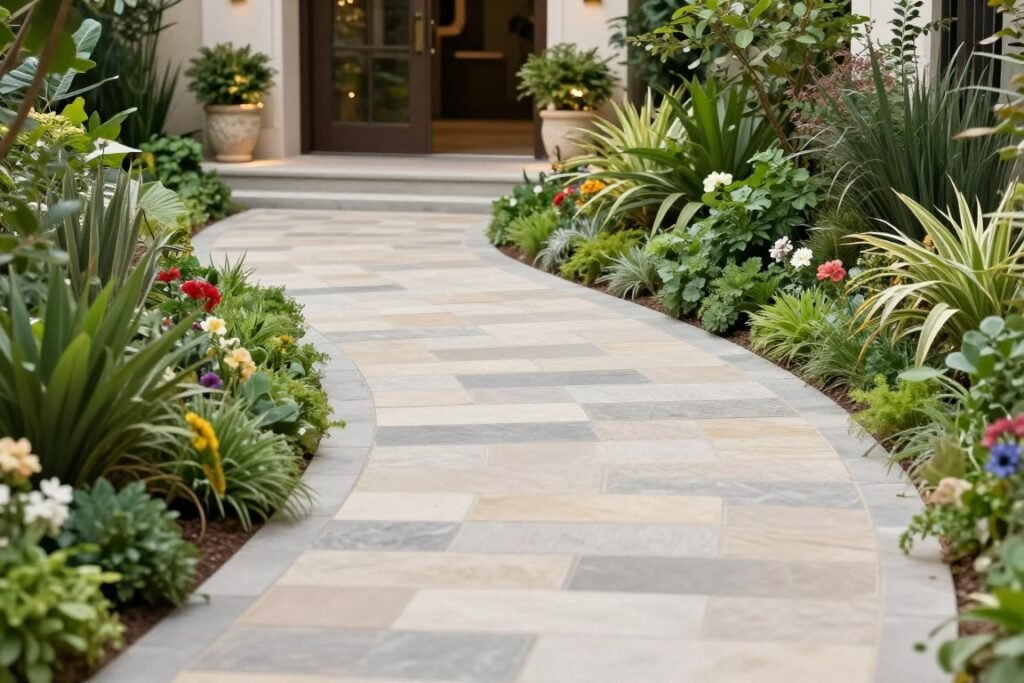
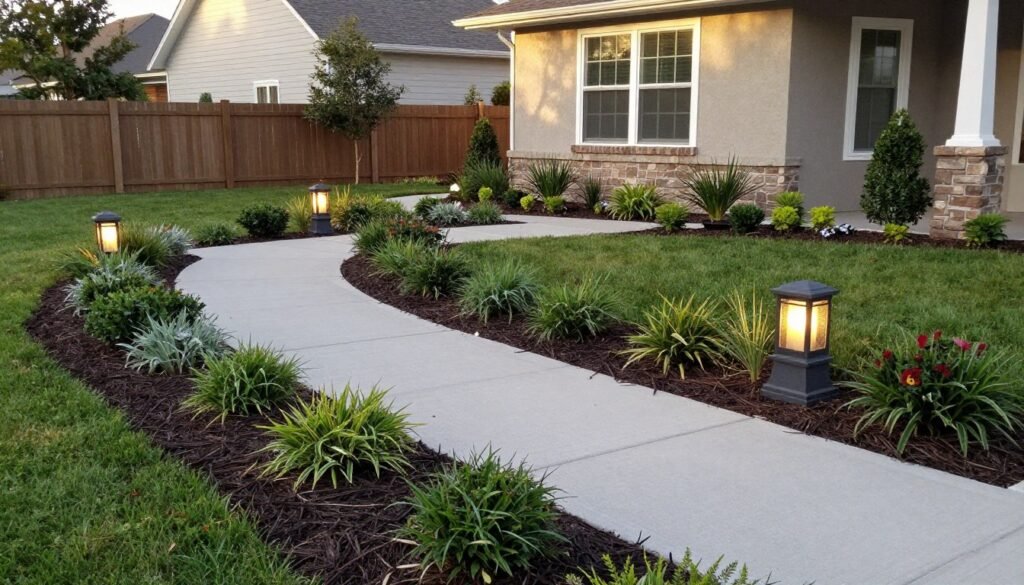
Your front walkway and entrance are focal points that guide visitors to your door. A well-designed pathway not only serves a practical purpose but also enhances your home’s curb appeal and complements your overall landscape design.
A curved pathway creates visual interest and a more inviting approach to your home
Pathway Materials
The material you choose for your walkway should complement your home’s exterior and landscape style. Popular options include:
Natural Stone
Flagstone, slate, and limestone create a timeless, organic look that works with many architectural styles. These materials are durable and develop character over time.
Pavers and Brick
Available in various colors, shapes, and patterns, pavers offer versatility and are relatively easy to install. They provide a more structured look that works well with traditional homes.
Gravel and Crushed Stone
These budget-friendly options provide good drainage and a casual, relaxed feel. They work particularly well in cottage-style or informal landscapes.
Concrete
Modern stamped or colored concrete offers durability and endless design possibilities, from mimicking natural stone to creating unique patterns and textures.
Pathway lighting not only enhances safety but also creates a warm, welcoming atmosphere after dark. Solar-powered path lights are an eco-friendly option that’s easy to install without wiring.
Illuminate Your Pathway
Solar pathway lights add safety and ambiance to your front walkway without complicated installation:
Selecting Low-Maintenance and Climate-Appropriate Plants
Choosing the right plants is crucial for creating a front yard that looks beautiful year-round with minimal effort. Focus on selecting plants that are well-suited to your climate, soil conditions, and the amount of sunlight your yard receives.
Layering plants of different heights creates depth and visual interest in your front landscape
Foundation Plants
These plants frame your home and provide structure to your landscape. Choose evergreen shrubs for year-round interest, mixing in deciduous plants for seasonal color changes.
Evergreen Shrubs
Boxwood (Buxus) – Classic, formal appearance
Yew (Taxus) – Versatile, takes well to pruning
Holly (Ilex) – Glossy leaves and winter berries
Juniper – Drought-tolerant with interesting texture
Flowering Shrubs
Hydrangea – Spectacular summer blooms
Spirea – Easy-care with spring or summer flowers
Weigela – Attracts pollinators with tubular blooms
Azalea – Spring color explosion (for acidic soils)
Perennials for Seasonal Interest
Incorporate perennials that bloom at different times to ensure your front yard has color throughout the growing season. Choose varieties that match your maintenance preferences and climate conditions.
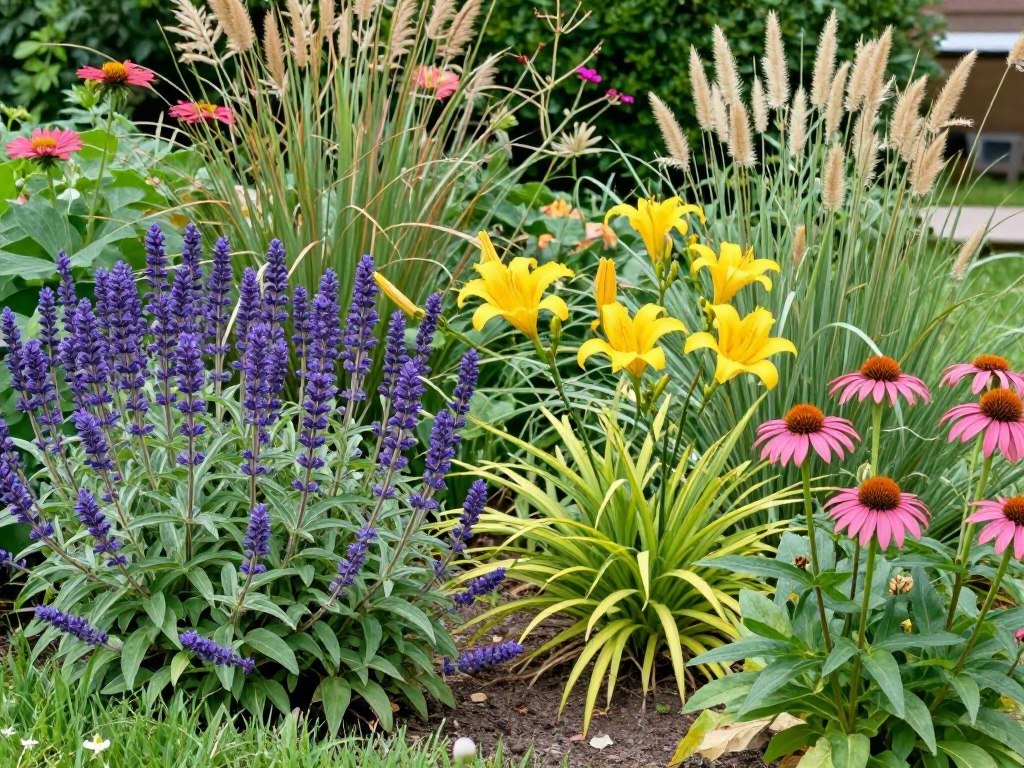
A mix of perennials provides changing colors and textures throughout the growing season
Spring Bloomers
Daffodils and Tulips – Classic spring bulbs
Bleeding Heart – Elegant arching stems
Columbine – Delicate, unique flowers
Summer Bloomers
Coneflower (Echinacea) – Drought-tolerant
Black-eyed Susan (Rudbeckia) – Long-blooming
Daylily – Nearly indestructible perennial
Fall Interest
Sedum – Drought-tolerant with late blooms
Aster – Daisy-like flowers in purple or pink
Ornamental grasses – Beautiful seed heads
Year-Round Structure
Hosta – Shade-loving foliage plant
Heuchera (Coral Bells) – Colorful foliage
Lavender – Fragrant, drought-tolerant
When selecting plants, consider their mature size to ensure they won’t outgrow their space. Group plants with similar water and light requirements together for easier maintenance and healthier growth.
Protect Your Plant Investment
Quality mulch helps retain moisture, suppress weeds, and keep your plants healthy:
Hardscaping elements provide structure, function, and visual interest to your front landscape. These permanent features create a framework for your plantings and can dramatically enhance your home’s curb appeal.
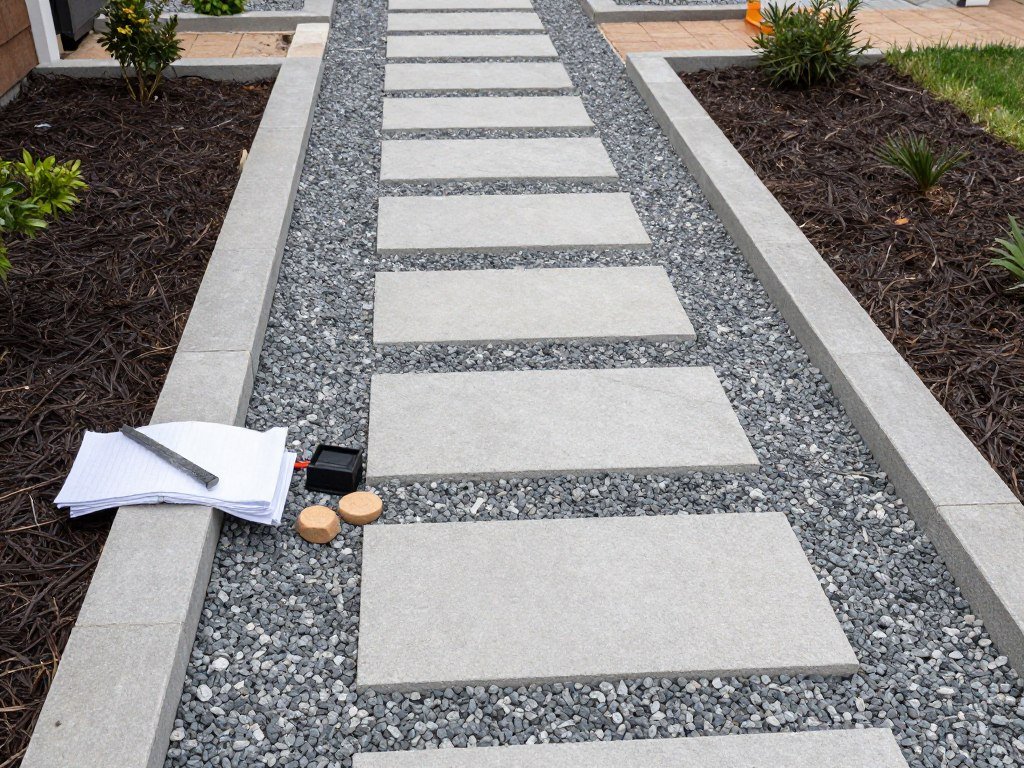
Hardscape elements like stone borders and lighting create structure and highlight key features
Landscape Borders and Edging
Borders define the edges of your planting beds and create clean lines between different areas of your landscape. They also help contain mulch and prevent grass from invading your garden beds.
Metal Edging
Sleek and nearly invisible, metal edging creates clean, modern lines and is highly durable. It’s ideal for curved designs and separating lawn from planting beds.
Stone and Brick
Natural stone or brick edging adds a classic, timeless look to your landscape. These materials can be stacked for raised beds or laid flush with the ground for a subtle border.
Concrete Curbing
Poured concrete curbing offers endless design possibilities with various colors, textures, and shapes. It creates a permanent, maintenance-free border that withstands the elements.
Wood and Composite
Timber or composite edging brings warmth and a natural feel to your landscape. It works particularly well in cottage or rustic-style gardens.
Decorative Rocks and Boulders
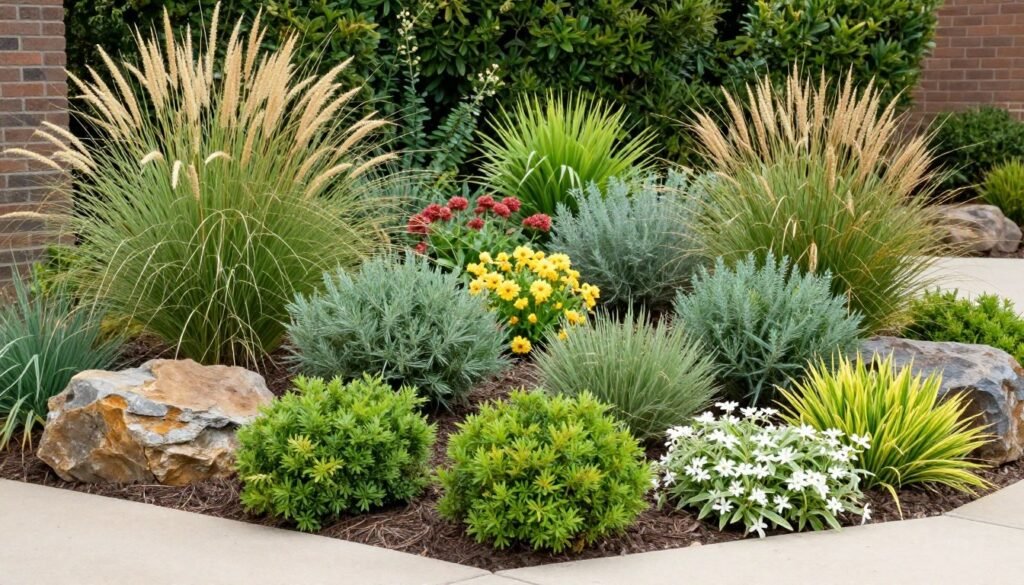
Strategically placed rocks and boulders add natural texture and year-round interest to your landscape. They can serve as focal points, help manage slopes, or create microenvironments for specific plants.
Decorative boulders create focal points and add natural texture to your landscape
River rocks and decorative gravel can be used as an alternative to traditional mulch in planting beds. They provide excellent drainage, don’t decompose, and add interesting texture to your landscape.
Define Your Garden Edges
Quality landscape edging creates clean lines and keeps grass out of your garden beds:
A truly successful front landscape looks appealing in every season. By carefully selecting plants and features that shine at different times of the year, you can ensure your front yard never looks bare or uninspiring.
A well-designed landscape incorporates elements that provide visual interest in every season
Winter Structure
When designing your front landscape, consider how it will look during the dormant season. Incorporate elements that provide visual interest even when deciduous plants have lost their leaves.
Evergreen foundation: Include a mix of evergreen shrubs and trees that maintain their foliage year-round
Interesting bark: Plants like river birch, paperbark maple, or red-twig dogwood offer visual appeal in winter
Architectural elements: Trellises, arbors, or garden art create structure regardless of season
Ornamental grasses: Many varieties maintain their form through winter, adding movement and texture
Seasonal Color Transitions
Plan your plantings to ensure something is blooming or providing interest in each season. This creates a landscape that evolves throughout the year rather than having one brief period of glory.
Thoughtful plant selection ensures your landscape transitions beautifully between seasons
Spring Focus
Early-blooming bulbs, flowering trees like dogwood or redbud, and spring perennials bring your landscape to life after winter dormancy.
Summer Showstoppers
Summer-blooming perennials and annuals, hydrangeas, and ornamental grasses create a lush, vibrant landscape during the growing season.
Fall Drama
Trees and shrubs with brilliant fall foliage, late-blooming perennials, and ornamental grasses with showy seed heads extend the garden’s appeal.
Winter Interest
Plants with colorful berries, interesting seed pods, and distinctive branching patterns provide visual interest during the dormant months.
Incorporating garden lighting extends your landscape’s appeal into the evening hours and throughout the year. Highlight architectural features of your home, illuminate pathways, and showcase specimen plants or garden art.
Highlight Your Landscape
Landscape lighting enhances your home’s beauty after dark and improves safety:
Many homeowners face similar challenges when landscaping their front yards. With creative solutions and thoughtful design, these problems can be transformed into opportunities to create a unique and beautiful landscape.
Terraced garden beds transform a challenging slope into an attractive landscape feature
Sloped Yards
A sloped front yard presents both challenges and design opportunities. With the right approach, you can transform a difficult slope into a stunning landscape feature.
Terracing: Create level planting areas with retaining walls made of stone, timber, or concrete blocks
Groundcover plants: Use spreading plants with strong root systems to prevent erosion on gentle slopes
Stepped pathways: Design walkways that navigate the slope comfortably with steps or switchbacks
Dry creek beds: Install decorative rock channels to manage water runoff while adding visual interest
Privacy Concerns
If your home is close to the street or neighboring properties, creating privacy in your front yard can be a priority. These solutions add screening without creating an unwelcoming fortress effect.
Living Screens
Strategically placed trees, tall shrubs, or ornamental grasses create natural privacy barriers that enhance your landscape rather than walling it off.
Partial Barriers
Low walls, decorative fencing, or trellises with climbing plants provide a sense of separation while maintaining an open, welcoming feel.
Small Spaces
Limited space doesn’t mean limited design possibilities. With careful planning, even the smallest front yard can make a big impact.
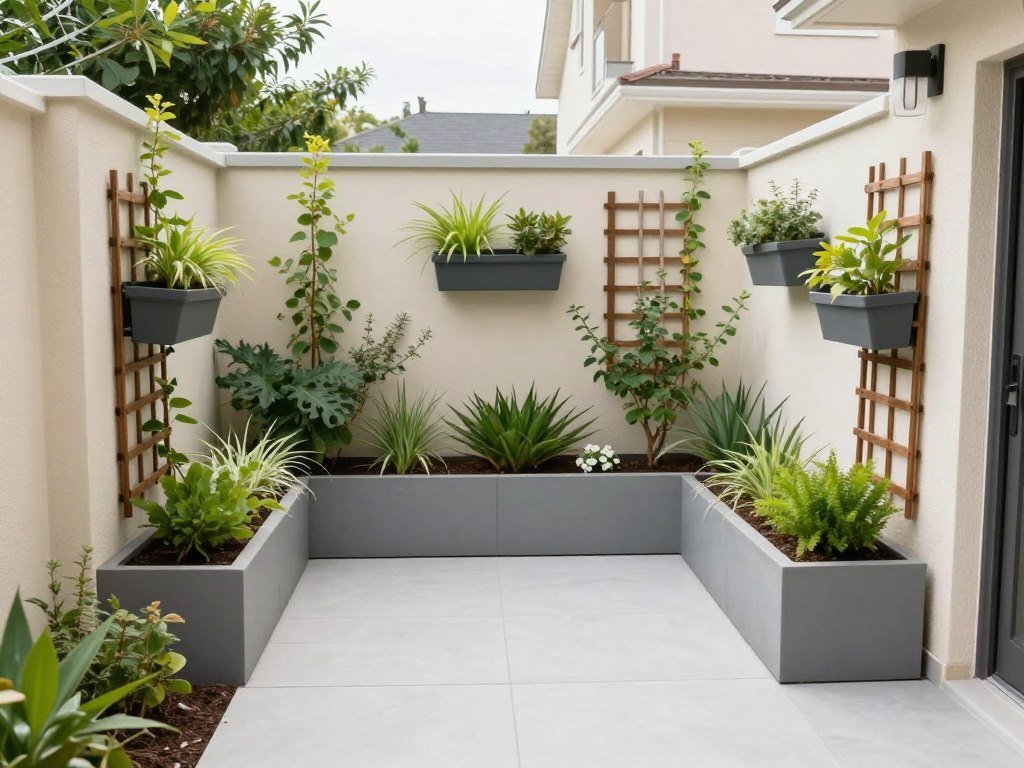
Vertical elements and container plantings maximize impact in a small front yard
Vertical gardening: Use trellises, wall planters, or tall narrow plants to add height without width
Container gardens: Incorporate planters of various sizes to add color and flexibility
Focal points: Create one strong visual element rather than many competing features
Simplified color palette: Limit your plant selection to a few complementary colors for a cohesive look
Proper irrigation is essential for maintaining a healthy landscape, especially in challenging conditions. Consider installing a drip irrigation system to deliver water efficiently directly to plant roots, reducing waste and promoting deeper root growth.
Water Smarter, Not Harder
A drip irrigation system saves water while keeping your plants healthy:
Creating a beautiful front landscape doesn’t have to break the bank. With some creativity, planning, and willingness to invest your time, you can transform your front yard on a modest budget.
Strategic planning and DIY effort can transform your front yard without breaking the bank
Start Small and Phase Your Project
Instead of tackling your entire front yard at once, break your landscaping project into manageable phases. This approach allows you to spread the cost over time while still making steady progress.
Begin with the most visible areas first, like the entry walkway or area directly in front of your home
Complete one section entirely before moving to the next
Create a master plan to ensure all phases will eventually work together cohesively
Focus on structural elements first (pathways, borders, trees) before adding decorative touches
Smart Plant Shopping
Plants typically represent a significant portion of landscaping costs, but there are many ways to build your garden affordably.
Division and Propagation
Many perennials can be divided every few years. Ask friends and neighbors if you can divide some of their established plants—most gardeners are happy to share.
End-of-Season Sales
Shop nursery clearance sales in late summer and fall. Plants may not look their best, but with proper care, they’ll thrive next season at a fraction of the cost.
Start Small
Purchase younger, smaller plants that cost less but will grow to full size within a few seasons. One-gallon perennials establish quickly and often catch up to larger plants within a year.
Native Plants
Choose native species that are adapted to your local conditions. They typically require less water, fertilizer, and maintenance once established.
DIY Hardscaping
Many hardscaping projects are within reach of a motivated DIYer with basic tools and a willingness to learn.
Simple DIY hardscaping projects like pathways and edging can dramatically improve your landscape
Simple pathways: Create walkways using affordable materials like gravel, stepping stones, or mulch
Basic edging: Install plastic, metal, or stone edging to define planting beds
Mulching: Apply a layer of mulch to instantly improve the appearance of planting beds while suppressing weeds
Upcycled elements: Repurpose materials like reclaimed brick, concrete blocks, or fallen timber for borders and features
When planning your DIY projects, invest in quality tools that will last through multiple projects. Having the right equipment makes the work easier and produces better results.
Mulch for Instant Improvement
A fresh layer of mulch instantly enhances your landscape while helping plants thrive:
Creating a beautiful front landscape is a rewarding journey that enhances your home’s value while providing daily enjoyment. By thoughtfully combining hardscape elements, appropriate plants, and personal touches, you can transform your front yard into a space that welcomes visitors and makes you smile every time you arrive home.
A thoughtfully designed front landscape enhances your home’s architecture while creating a welcoming approach
Remember that landscaping is an ongoing process. Your front yard will evolve as plants mature and your preferences change. Embrace this evolution and don’t be afraid to make adjustments as you learn what works best in your unique space.
Whether you implement these ideas all at once or gradually over time, each improvement to your front landscaping contributes to creating a more beautiful, functional, and welcoming home. The effort you invest in your front yard not only enhances your property’s curb appeal but also creates a space that reflects your personal style and connects you to the natural world right outside your door.
Ready to Start Your Transformation?
Begin your front landscaping journey with quality tools and supplies:
Creating an aesthetic room that reflects your personality while staying on-trend has become increasingly popular, especially on platforms like Pinterest and…
There’s something magical about showering outdoors—the sensation of warm water cascading down while gentle breezes caress your skin and sunlight filters…