There’s something undeniably charming about a well-designed dining nook. These intimate spaces transform ordinary corners into inviting retreats where family gatherings, morning coffees, and evening conversations naturally unfold. Whether you’re working with a small apartment or looking to maximize an underutilized corner in your home, a thoughtfully crafted dining nook can become the heart of daily life and special moments alike.
This Website contains affiliate links. That means I may earn a small commission if you purchase through my links, at no extra cost to you.
Why Your Home Deserves a Dedicated Dining Nook
A dining nook does more than just provide a place to eat—it creates a dedicated space that enhances your home’s functionality and charm. Unlike formal dining rooms that might go unused between special occasions, a well-designed nook becomes part of your daily routine.
A sunny corner transformed into an inviting dining nook with built-in seating maximizes both space and natural light
Popular Dining Nook Styles to Consider
The beauty of dining nooks lies in their versatility. From sleek modern designs to rustic farmhouse charm, there’s a style to complement every home aesthetic. Let’s explore some of the most popular approaches to dining nook design.
Modern Minimalist Nooks
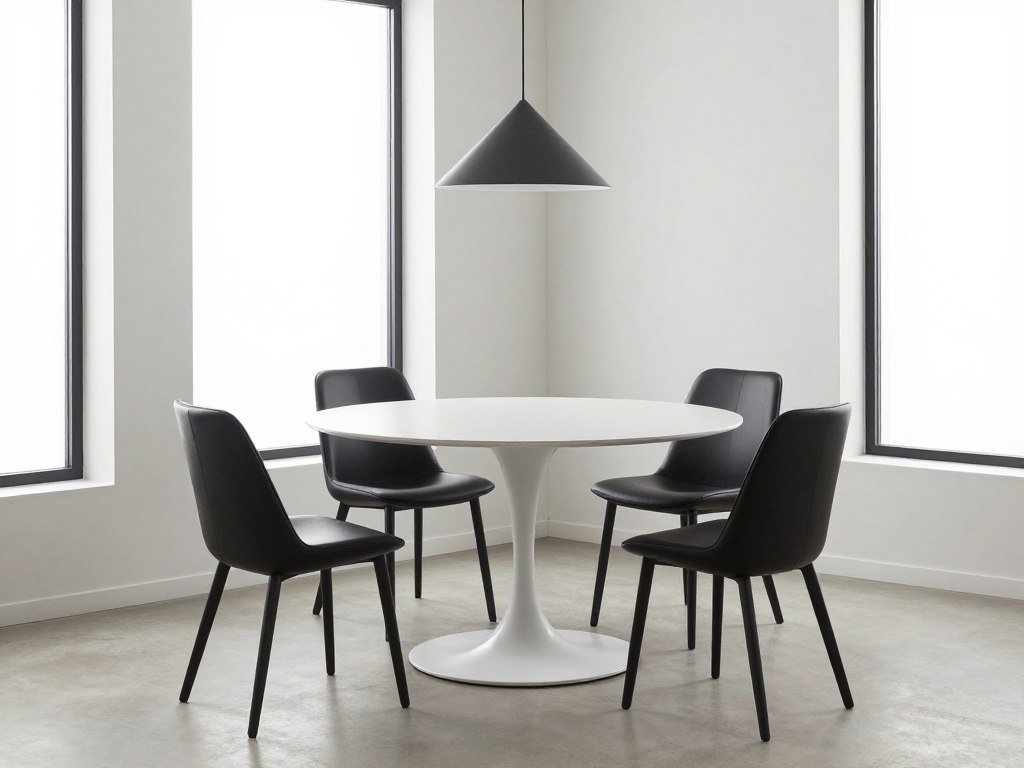
Clean lines, neutral colors, and thoughtful simplicity define the modern dining nook. These spaces focus on functionality without sacrificing style, often featuring sleek furniture and subtle statement pieces.

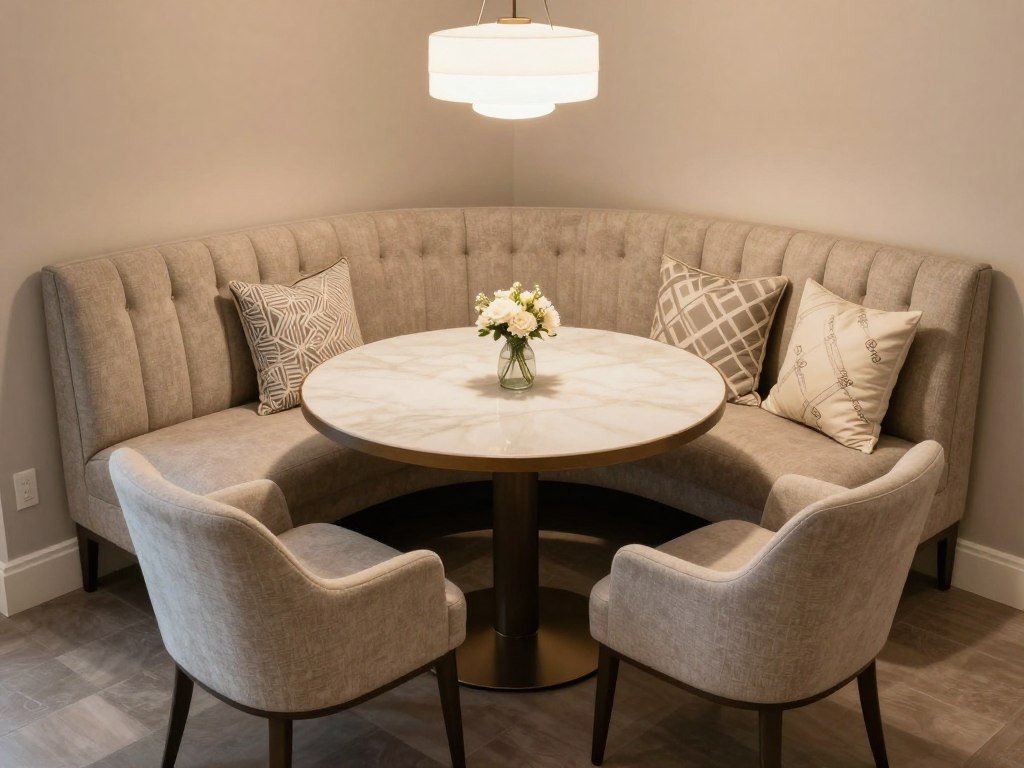
Modern dining nooks embrace clean lines and a less-is-more approach to create a timeless appeal
Streamlined furniture with minimal ornamentationNeutral color palette with strategic pops of colorStatement lighting fixtures as focal pointsGeometric patterns and clean linesMulti-functional pieces that maximize spaceFor a modern minimalist dining nook, consider a round tulip table paired with sleek chairs and a geometric pendant light to create a stylish focal point.
Farmhouse Style Nooks
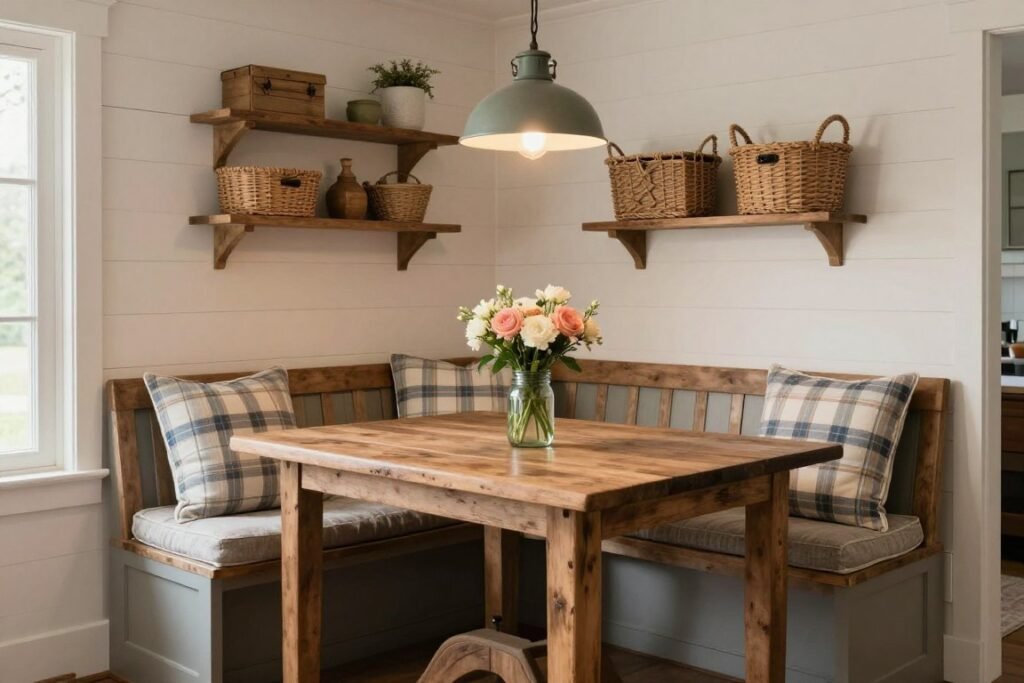
Farmhouse dining nooks exude warmth and rustic charm. These spaces often feature natural wood elements, vintage-inspired details, and comfortable seating that invites long, leisurely meals.

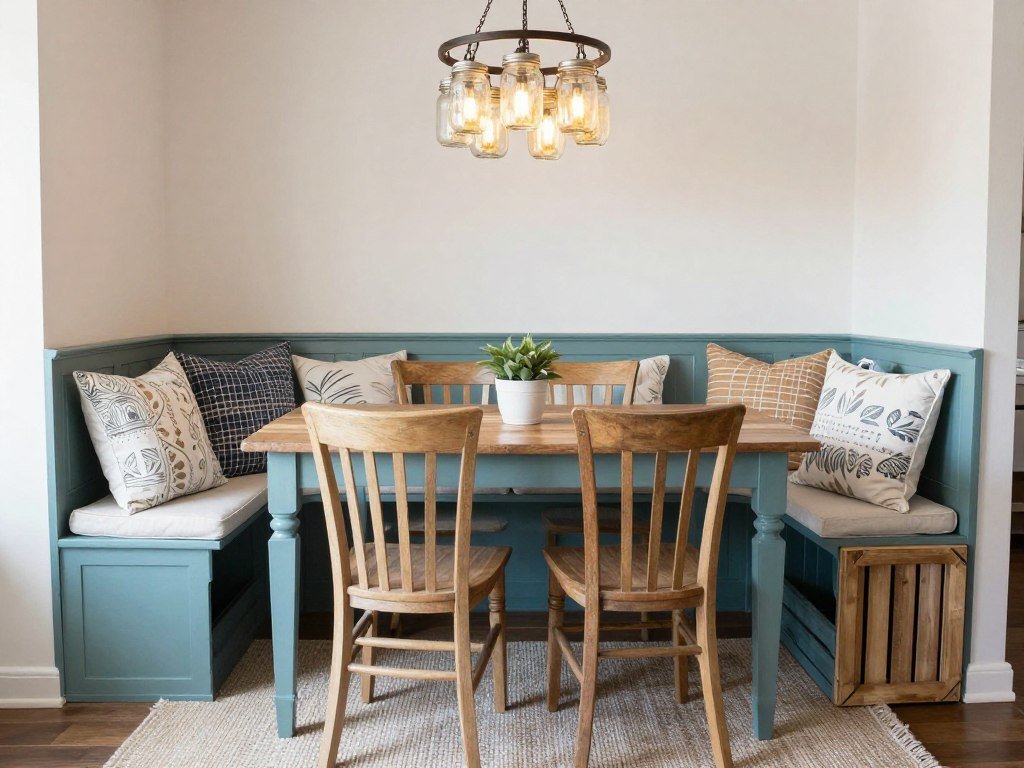
Farmhouse dining nooks blend rustic elements with comfortable textiles for an inviting, lived-in feel
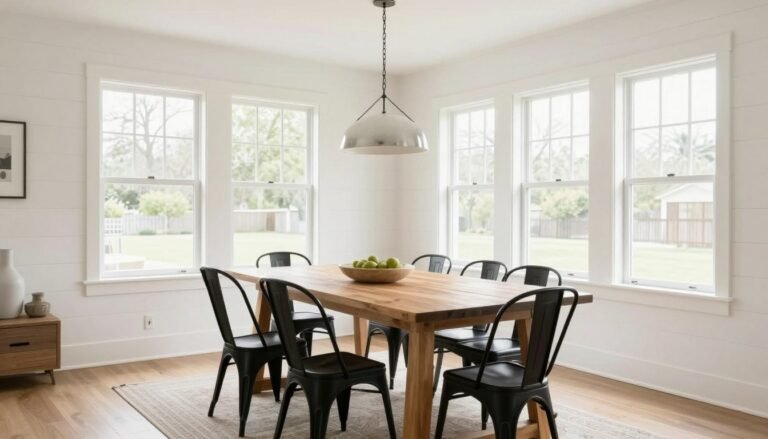
Distressed or reclaimed wood tables and benchesSoft textiles like plaid, ticking stripes, or floral patternsVintage-inspired lighting fixturesOpen shelving with displayed dishwareNatural elements like fresh flowers or potted herbsCreate your farmhouse dining nook with a farmhouse-style table and vintage-inspired pendant lighting to establish that perfect rustic atmosphere.
Window Nooks
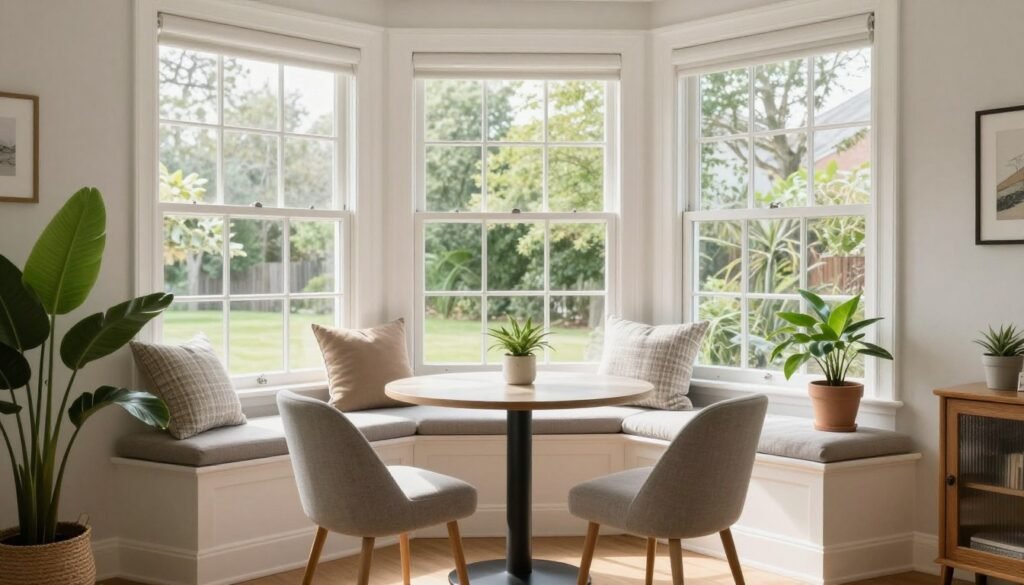
Window dining nooks capitalize on natural light and views, creating bright, cheerful spaces perfect for morning coffee or watching the seasons change while enjoying a meal.

Window nooks transform bay windows and sunny corners into perfect breakfast spots with abundant natural light
Built-in window seating with comfortable cushionsSmall-scale tables that don’t block the viewIndoor plants that thrive in the natural lightLight, airy window treatments that filter light without blocking itWeather-resistant fabrics for areas with direct sunlightEnhance your window nook with custom window seat cushions and sun-loving indoor plants to create a refreshing dining atmosphere.
Banquette and Booth-Style Nooks
Reminiscent of favorite restaurants, banquette seating offers a perfect blend of comfort and space efficiency. These built-in or freestanding bench seating arrangements maximize seating while minimizing the footprint.
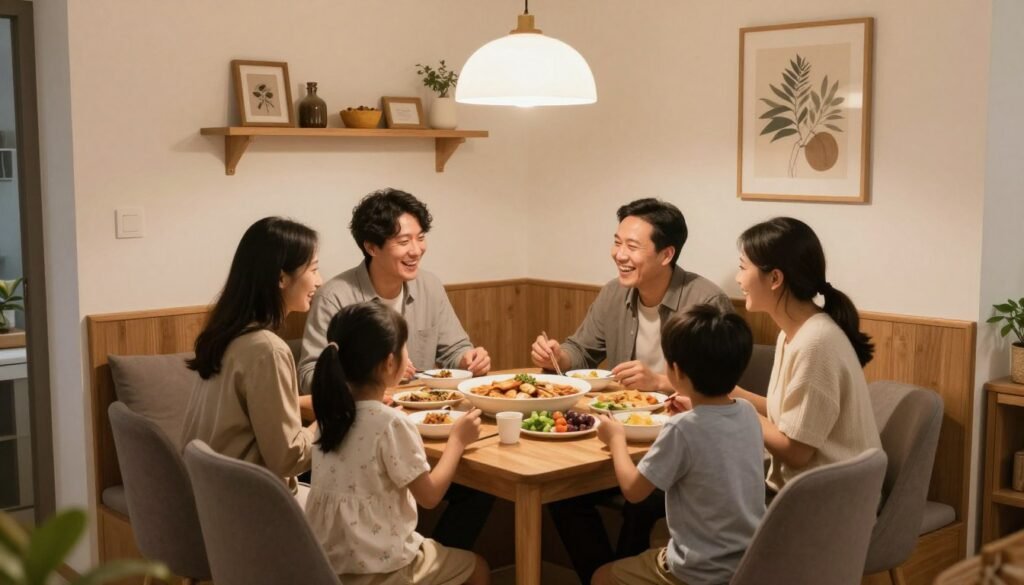
Banquette seating creates a restaurant-like experience at home while maximizing seating capacity
L-shaped or U-shaped built-in seating that hugs the wallStorage drawers or lift-top bench seatingDurable, easy-to-clean upholstery fabricsCombination of fixed seating and movable chairsSpace-efficient pedestal tablesCreate your own banquette dining nook with a storage bench and pedestal dining table for that perfect restaurant-booth feel at home.
Planning Your Perfect Dining Nook
Before diving into furniture shopping or rearranging your space, take time to thoughtfully plan your dining nook. Careful consideration of your space, needs, and lifestyle will ensure you create a nook that’s both beautiful and functional.
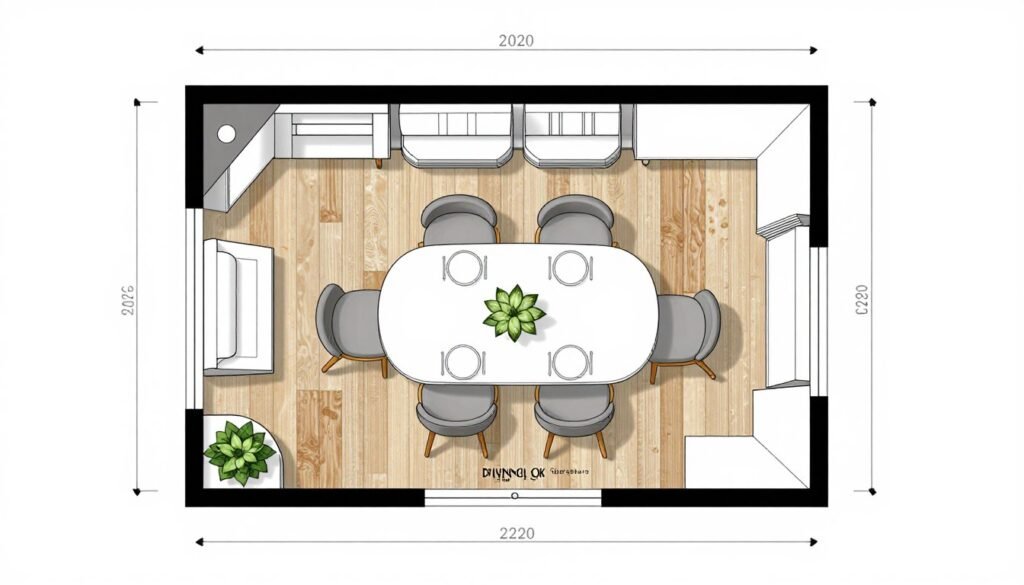
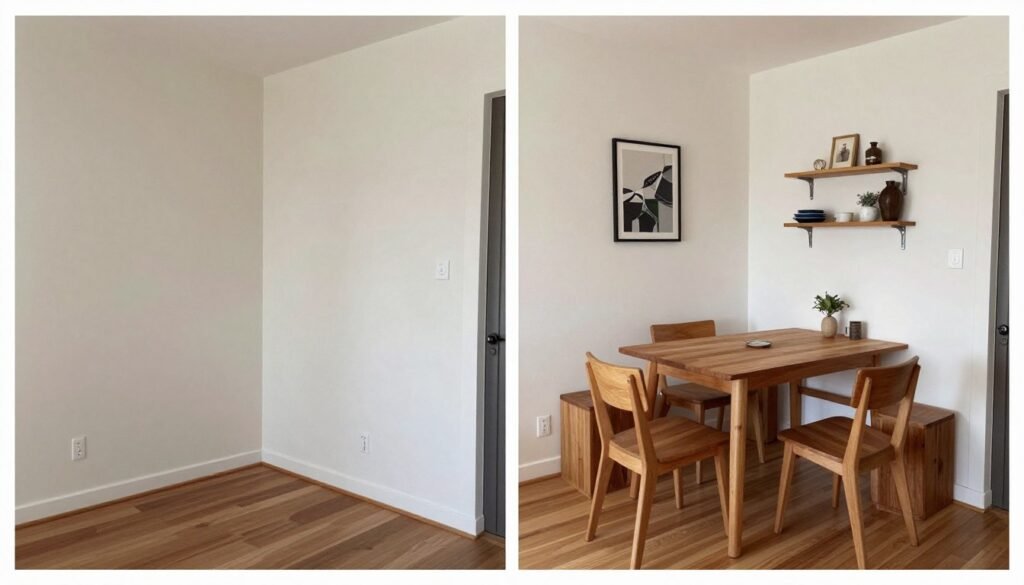
Careful planning and measuring ensures your dining nook will fit perfectly in your available space
Assessing Your Space
Start by identifying the perfect spot for your dining nook. Look for underutilized corners, alcoves, or window areas that could be transformed. Consider these key factors:
Measurements – Carefully measure your available space, including width, depth, and height. Don’t forget to account for traffic flow around the nook.Natural Light – Positioning near windows creates a bright, inviting atmosphere and saves on lighting costs during daytime.Proximity to Kitchen – Ideally, your dining nook should be conveniently located near the kitchen to minimize the distance for serving meals.Existing Features – Consider architectural elements like bay windows, recessed areas, or built-in shelving that could be incorporated into your design.Traffic Patterns – Ensure your nook won’t obstruct natural pathways through your home.Choosing the Right Shape and Configuration
The shape of your dining nook should complement your space while maximizing seating and comfort. Common configurations include:
L-Shaped Nooks
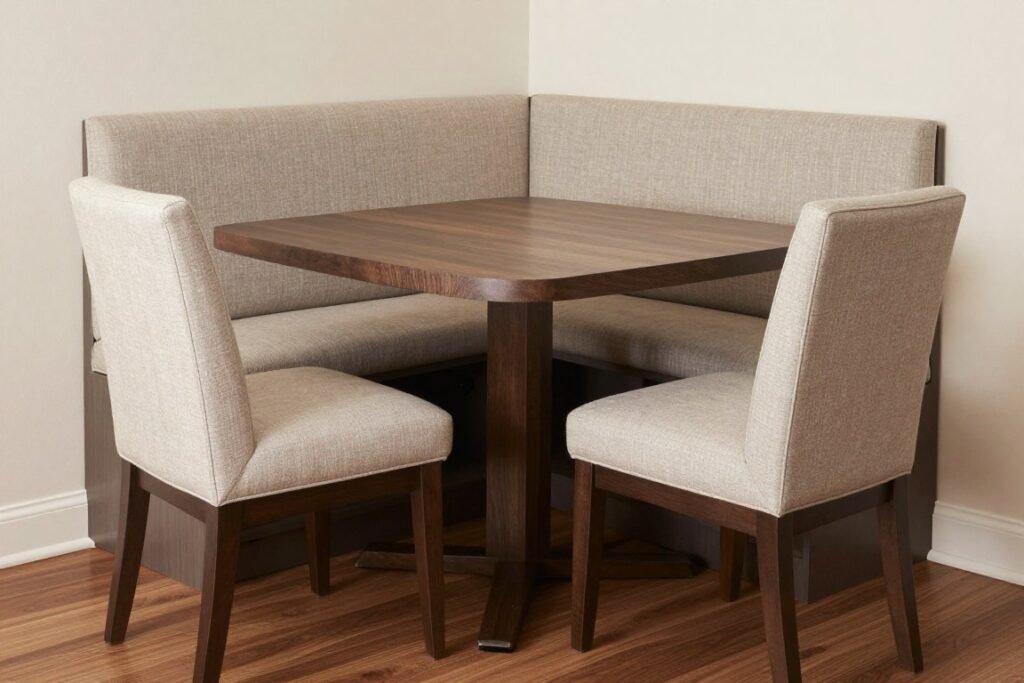
Perfect for corners, these nooks feature seating along two adjoining walls, often with a table positioned in the corner. This arrangement maximizes seating while keeping the footprint compact.
Linear Nooks
Ideal for narrow spaces or along a single wall, these straight-line arrangements often feature a bench against the wall paired with chairs on the opposite side of the table.
U-Shaped Nooks
Offering maximum seating capacity, these surround the table on three sides with built-in seating, creating a cozy, enclosed feeling perfect for family gatherings.
Island or Floating Nooks
For open-concept spaces, a nook can be created in the middle of a room with strategic furniture placement and defining elements like area rugs or pendant lighting.
Selecting the Right Seating
Your choice of seating impacts both the comfort and functionality of your dining nook. Consider these options:
Mixing seating types creates flexibility and visual interest in your dining nook design
Built-in Benches – Space-efficient and often incorporate storage; can be custom-built or created with furniture pieces.Banquettes – Upholstered bench seating that offers restaurant-like comfort and style.Window Seats – Utilize existing window areas with added cushions for comfortable seating.Freestanding Benches – Offer flexibility to rearrange as needed and can be moved to other areas when not in use.Mixed Seating – Combine bench seating on one side with individual chairs on the other for a dynamic, flexible arrangement.Find the perfect seating for your dining nook with storage benches or upholstered dining chairs that combine comfort with style.
Essential Elements of a Stunning Dining Nook
Creating a dining nook that’s both functional and beautiful requires attention to several key elements. Each component plays an important role in the overall success of your space.
The Perfect Table
Your table is the centerpiece of your dining nook and should be chosen with care. Consider these factors when selecting the ideal table:
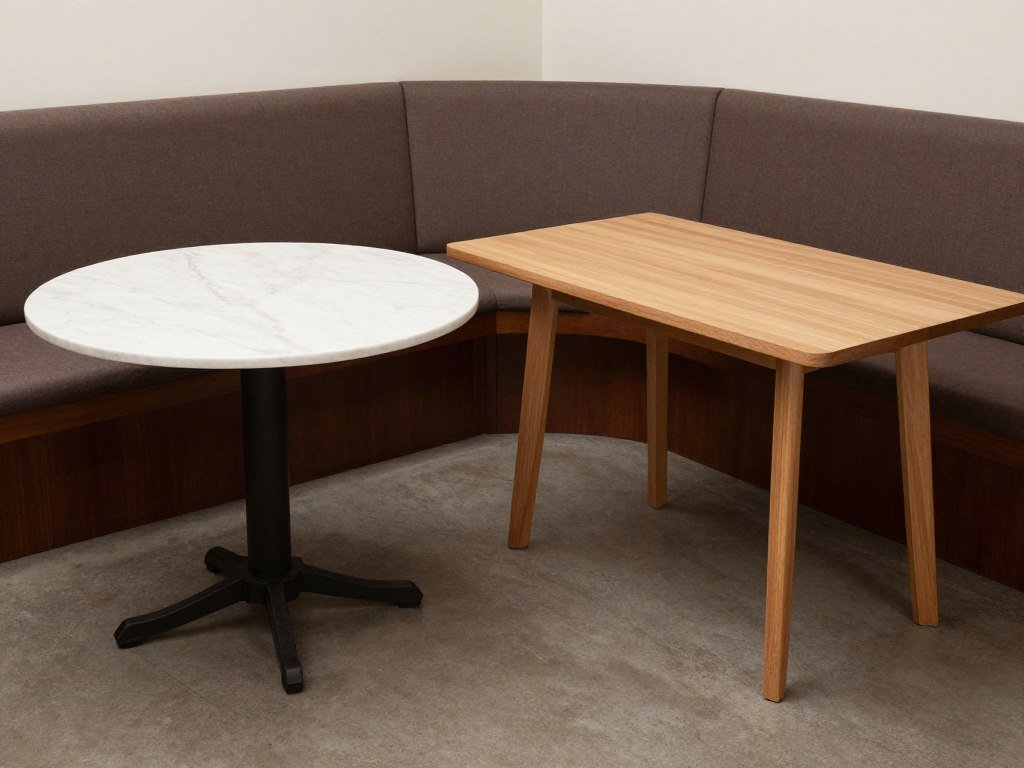
The right table shape can make or break your dining nook’s functionality and flow
Size and Scale – Choose a table that fits your space while allowing for comfortable movement around it. A general rule is to leave at least 24 inches between the table edge and the wall or other furniture.Shape – Round or oval tables work well in tight spaces as they have no sharp corners and facilitate conversation. Rectangular tables maximize seating along bench areas.Base Design – Pedestal tables allow for easier entry and exit from bench seating compared to four-legged tables.Expandability – Consider drop-leaf or extendable tables if you occasionally need to accommodate more guests.Height – Standard dining height is 30 inches, but counter-height (36 inches) or bar-height (42 inches) options can work well in certain spaces.Find the perfect centerpiece for your dining nook with a space-efficient round pedestal table or drop-leaf table for flexibility.
Lighting That Sets the Mood
Proper lighting transforms your dining nook from merely functional to truly magical. A well-lit nook enhances both the atmosphere and usability of the space.
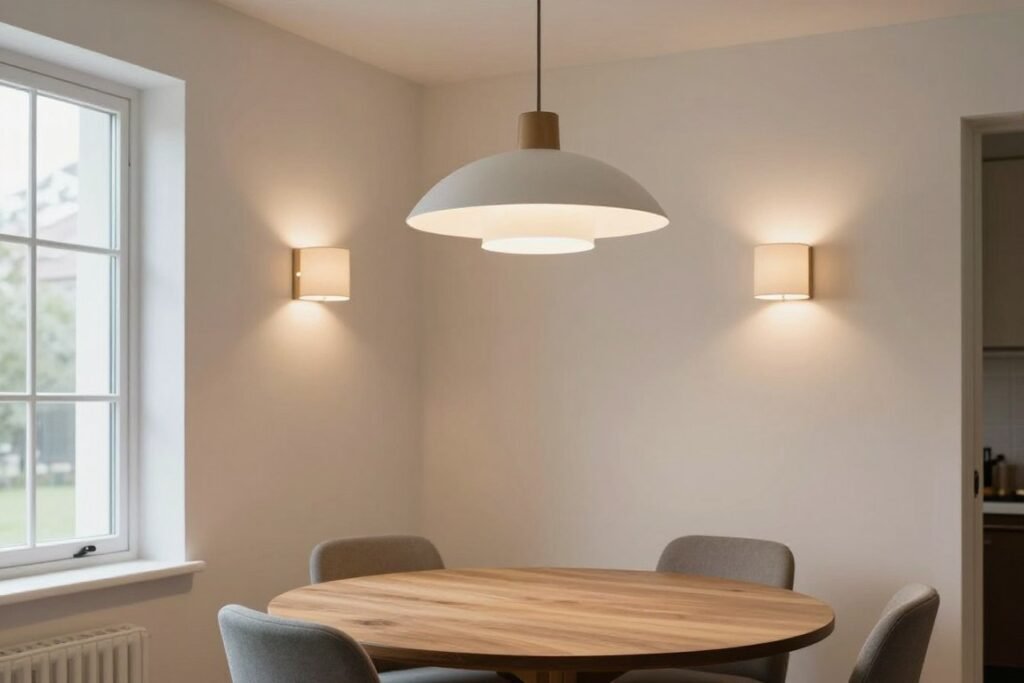
Layered lighting creates ambiance and ensures your dining nook is properly illuminated for various activities
Pendant Lighting – Hanging fixtures centered over the table provide focused task lighting while serving as a design focal point.Wall Sconces – These provide ambient lighting and can highlight architectural features or artwork in your nook.Natural Light – Position your nook to take advantage of windows when possible, using sheer curtains to filter harsh direct sunlight.Dimmers – Installing dimmer switches allows you to adjust lighting levels for different moods and times of day.Layered Approach – Combine multiple light sources at different heights for the most flexible and flattering illumination.Illuminate your dining nook perfectly with a statement pendant light or dimmable wall sconces for adjustable ambiance.
Textiles and Soft Furnishings
Textiles add comfort, color, and personality to your dining nook. These soft elements transform a basic eating area into a cozy retreat.
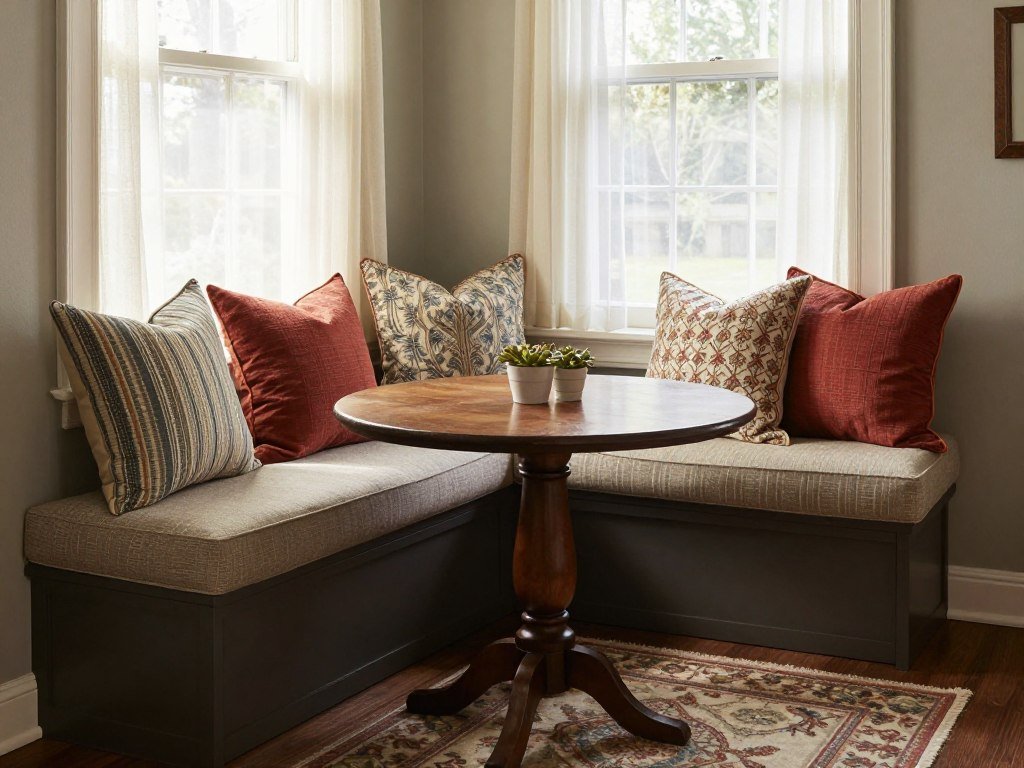
Textiles add warmth, comfort, and personality to your dining nook
Bench Cushions – Choose cushions at least 2-3 inches thick for comfort during long meals. Consider washable covers for easy maintenance.Throw Pillows – Add color, pattern, and back support with decorative pillows that can be easily changed seasonally.Window Treatments – Curtains, blinds, or shades control light and add privacy while contributing to your overall design scheme.Table Linens – Tablecloths, runners, and napkins add color and protect your table surface.Area Rugs – Define your dining space and add warmth underfoot with an appropriately sized rug (extend at least 24 inches beyond the table edge on all sides).Add comfort to your dining nook with custom bench cushions and durable throw pillows that can withstand daily use.
Styling Your Dining Nook: The Finishing Touches
The styling details are what transform a functional dining nook into a personalized, inviting space that reflects your taste and enhances your home.
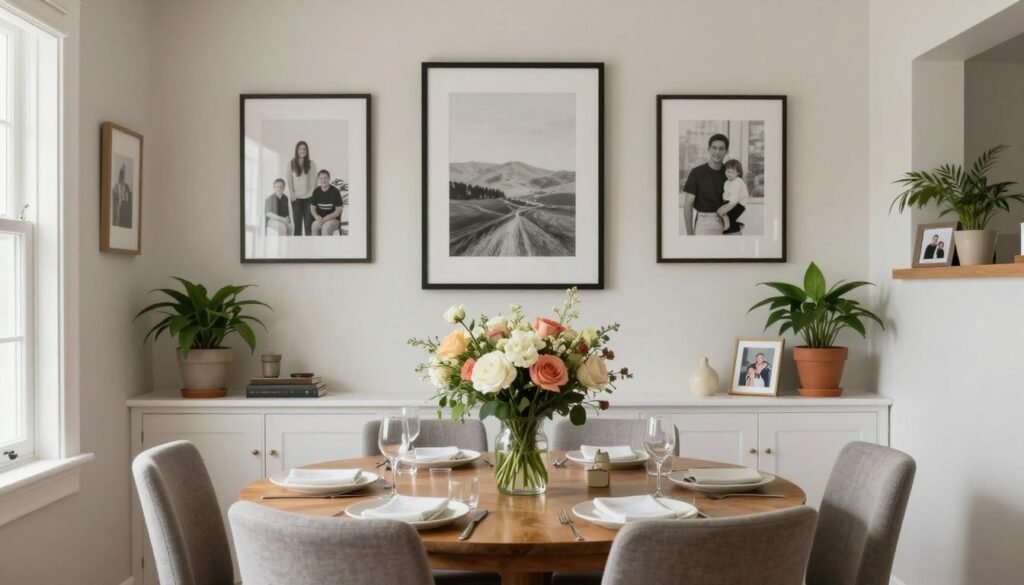
Thoughtful styling transforms a basic dining nook into a personalized, magazine-worthy space
Wall Treatments and Artwork
The walls surrounding your dining nook offer prime real estate for adding personality and visual interest to your space.
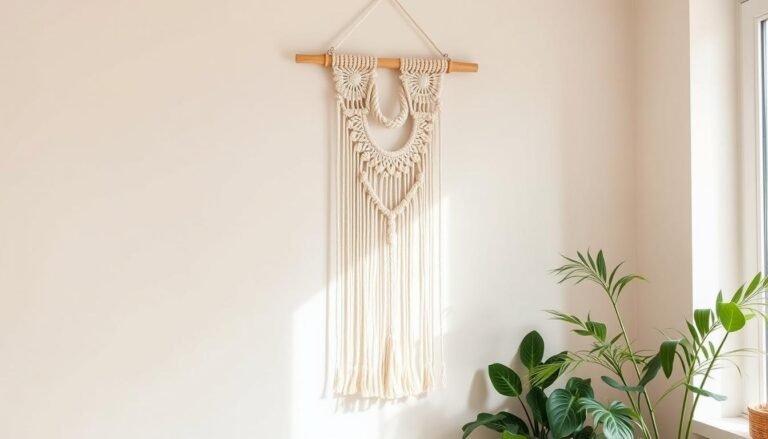
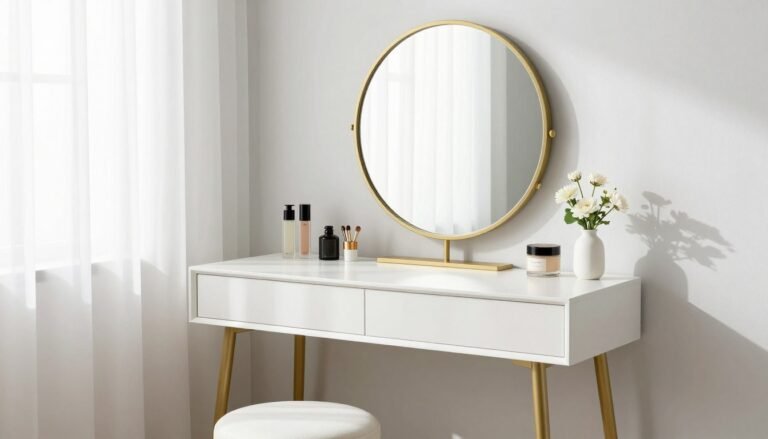
Gallery Walls – Create a collection of framed artwork, photographs, or prints that reflect your style and interests.Accent Wall – Use paint, wallpaper, or paneling to define your dining area and create a focal point.Mirrors – Strategically placed mirrors reflect light and make small dining nooks feel more spacious.Floating Shelves – Install shelving to display decorative items or store frequently used dining essentials.Wall Planters – Bring life to your walls with hanging plants or herb gardens, especially nice in kitchen-adjacent nooks.Transform your dining nook walls with floating shelves or a collection of coordinated wall art that reflects your personal style.
Centerpieces and Table Décor
The dining table presents an opportunity to express your creativity through seasonal displays and functional décor.

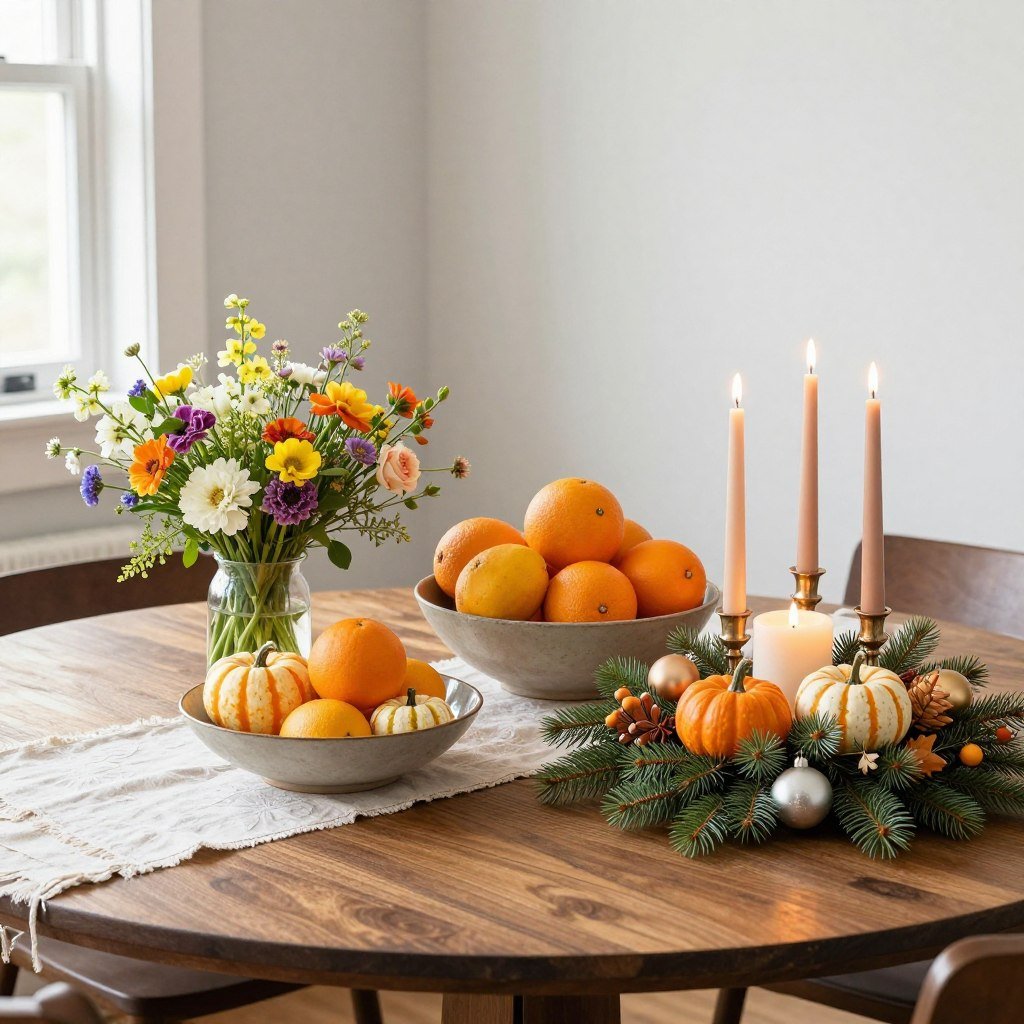
Rotating centerpieces seasonally keeps your dining nook fresh and relevant year-round
Fresh Flowers or Plants – Living elements add color, fragrance, and a sense of vitality to your dining area.Candles – Create ambiance with tapers, pillars, or tea lights in beautiful holders.Seasonal Displays – Rotate décor elements to reflect the changing seasons or upcoming holidays.Functional Items – Beautiful salt and pepper sets, oil dispensers, or napkin holders can be both practical and decorative.Low-Profile Arrangements – Keep centerpieces under 12 inches tall to allow for easy conversation across the table.Create beautiful tablescapes with low-profile centerpieces and elegant candle holders that won’t interfere with conversation.
Greenery and Natural Elements
Plants and natural materials bring life, texture, and a connection to the outdoors into your dining nook.
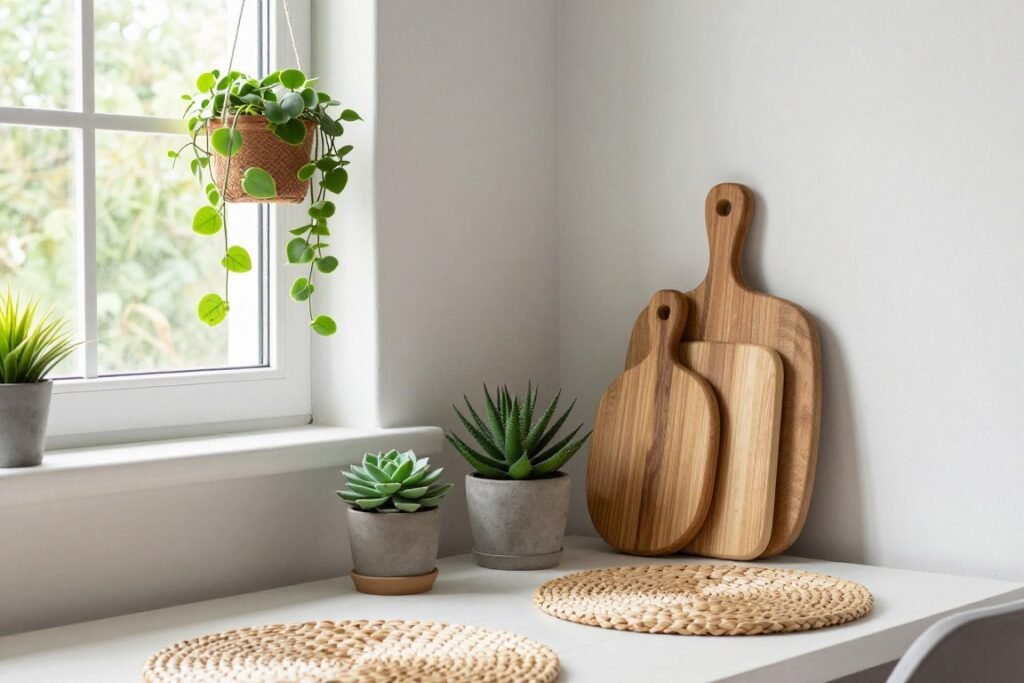
Plants and natural materials add life, texture, and a connection to nature in your dining space
Low-Maintenance Plants – Succulents, snake plants, or pothos thrive with minimal care while adding life to your space.Herb Garden – Small potted herbs provide both beauty and functionality for cooking.Natural Fibers – Incorporate jute, rattan, or woven elements through placemats, chair seats, or light fixtures.Wood Accents – Cutting boards, bowls, or serving pieces add warmth and organic texture.Stone Elements – Marble serving pieces, coasters, or decorative objects add elegant natural texture.Bring nature into your dining nook with easy-care indoor plants and natural fiber placemats for organic texture.
DIY and Small Space Dining Nook Hacks
Creating a dining nook doesn’t have to involve major renovations or custom carpentry. With some creativity and smart solutions, you can craft a charming nook in even the smallest spaces.
Even the smallest corners can be transformed into functional dining nooks with the right approach
Renter-Friendly Solutions
No need to renovate or build permanent fixtures—these renter-friendly ideas create the look and function of a dining nook without altering your space.
Freestanding Benches – Use storage benches or trunks that can be repositioned or taken with you when you move.Wall-Mounted Drop-Leaf Tables – These can be folded down when not in use to reclaim floor space.Removable Wallpaper – Define your dining area with temporary wallpaper that won’t damage walls.Floor Lamps Instead of Pendants – Arc floor lamps can provide overhead lighting without hardwiring.Command Hooks and Strips – Hang artwork, small shelves, or other décor without making holes in the walls.Create a renter-friendly dining nook with versatile storage ottomans and peel-and-stick wallpaper that won’t damage your walls.
Budget-Friendly Ideas
A beautiful dining nook doesn’t have to break the bank. These affordable solutions deliver style without the high price tag.
Thrifted finds, DIY projects, and creative repurposing can create a stylish dining nook on a tight budget
Thrift Store Furniture – Look for solid wood pieces that can be refinished or painted to suit your style.DIY Cushions – Create custom bench cushions using foam, fabric, and basic sewing skills (or no-sew alternatives).Repurposed Items – Transform crates into bench seating or use an old door as a tabletop.Mix and Match Seating – Collect chairs in different styles but paint them the same color for a cohesive look.Affordable Artwork – Frame fabric scraps, calendar pages, or printable art for inexpensive wall décor.Create an affordable dining nook with DIY cushion materials and furniture paint to transform thrifted finds.
Clever Small Space Solutions
When space is at a premium, these ingenious ideas help you create a functional dining area without overwhelming your room.
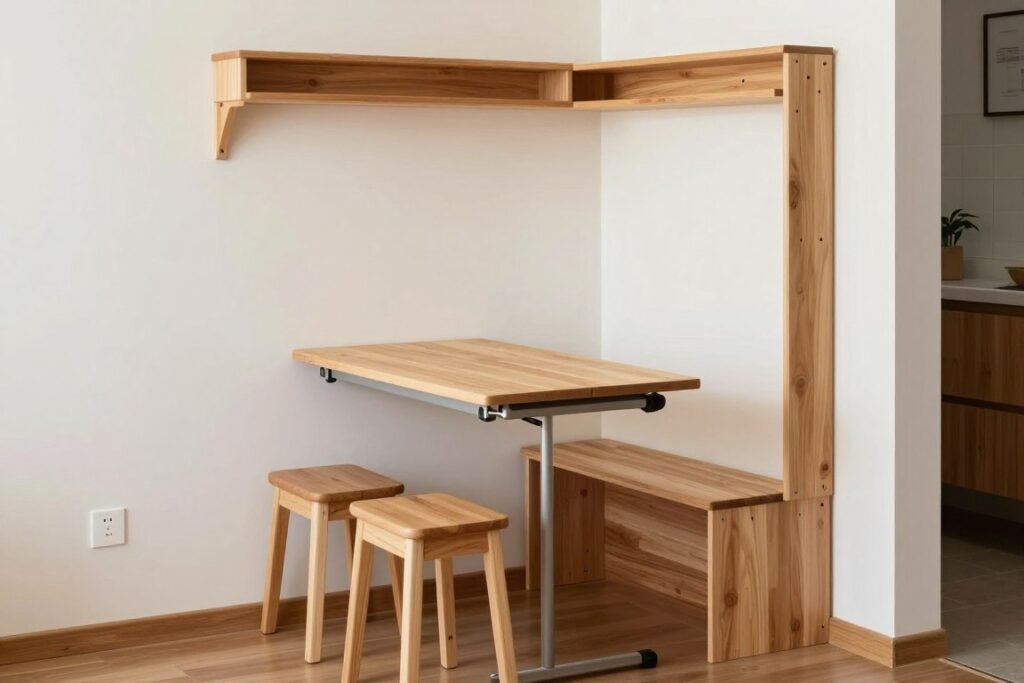
Smart space-saving solutions allow even the tiniest apartments to include a functional dining area
Convertible Furniture – Tables that expand, fold down, or serve multiple purposes maximize functionality.Corner Banquettes – Utilize often-wasted corner space with L-shaped seating arrangements.Nesting Stools or Chairs – These can be tucked away completely when not in use.Vertical Storage – Install shelving above your dining area to store less-frequently used items.Mirrors – Strategically placed mirrors create the illusion of more space and reflect light.Maximize your small space with wall-mounted folding tables and nesting stools that can be tucked away when not in use.
Creating Your Own Perfect Dining Nook
A well-designed dining nook becomes more than just a place to eat—it’s where morning coffees are savored, family stories are shared, and memories are made. By thoughtfully considering your space, needs, and personal style, you can create a dining nook that enhances both your home and your daily life.
The true measure of a successful dining nook is the memories and connections created within it
Remember that the most important aspect of any dining nook is how it serves your lifestyle. Whether you’re creating a quiet breakfast corner, a homework station that doubles as a dining area, or an intimate spot for dinner parties, your nook should reflect your needs and personality.
We hope this guide has inspired you to create your own perfect dining nook. Start with a clear vision, implement these ideas one step at a time, and soon you’ll have a charming, functional space that becomes the heart of daily life in your home.
Love These Dining Nook Ideas?
Save this article to your “Home Decor” or “Dining Nook Ideas” board on Pinterest for future reference! And don’t forget to follow us for more inspiring home design ideas.
Save to Pinterest