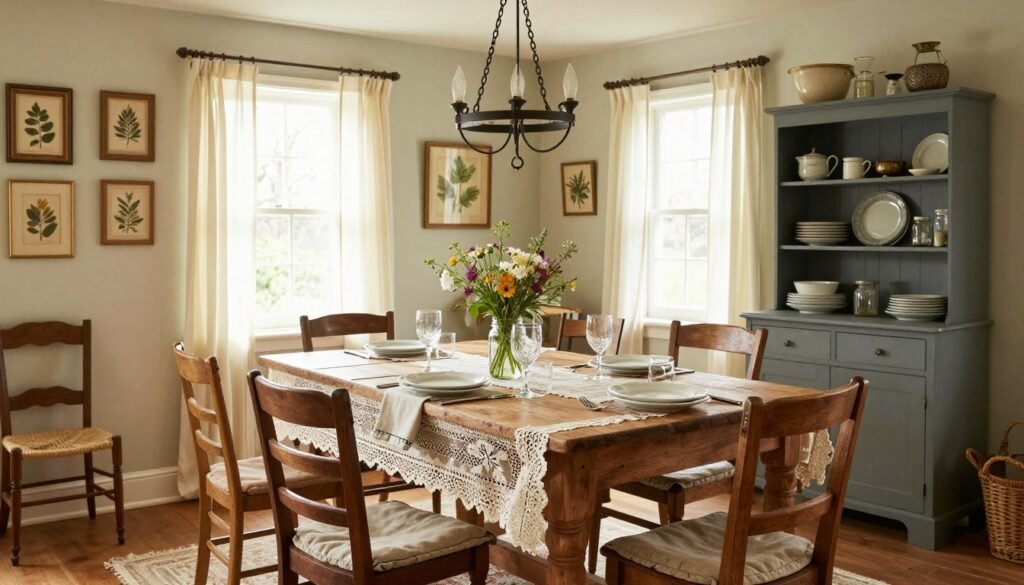
There’s something undeniably magical about a cottage core dining room that transports you to a simpler time. Picture yourself surrounded by weathered wood, delicate florals, and the soft glow of candlelight as you gather with loved ones around a table that tells stories of generations past. This isn’t just a design trend—it’s a heartfelt return to the comforts of rural living, where meals are savored slowly and every element has purpose and history. Whether you have a dedicated dining space or a small nook in your kitchen, the cottagecore aesthetic can transform ordinary meals into moments that feel plucked from a storybook.
This Website contains affiliate links. That means I may earn a small commission if you purchase through my links, at no extra cost to you.
In this guide, we’ll explore how to create a dining space that captures the essence of cottagecore—that perfect blend of nostalgia, nature, and nurturing that has captivated so many hearts. From selecting the perfect farmhouse table to arranging dried herbs from your garden, every detail contributes to an atmosphere where time seems to slow and connections deepen. Let’s begin our journey into creating a dining room that feels like a warm embrace, where modern life fades away and the simple pleasures of home take center stage.
The Heart of the Home: Your Cottagecore Table
The dining table stands as the undeniable heart of any cottage core dining room—a gathering place where stories are shared, meals are savored, and memories take root. The ideal cottagecore table bears the gentle marks of time and use, telling its own story through every scratch, dent, and patina that has developed over years of loving use.
Seek out a farmhouse table crafted from solid wood with turned legs or a trestle base that speaks of craftsmanship and tradition. Oak, pine, and maple all develop beautiful character as they age, becoming more precious with each passing year. The surface should be substantial enough to accommodate hearty country meals but not so overwhelming that it dominates your space.
For authentic cottagecore charm, consider a table with a weathered or distressed finish that appears to have witnessed generations of family gatherings. If your budget allows, antique and vintage tables offer unmatched character, though well-crafted reproductions can also capture the essence of countryside charm. Look for tables with simple, unfussy lines—ornate carvings or highly polished surfaces belong to more formal aesthetics.
Don’t worry about perfection; in fact, embrace the opposite. A table that shows its history through gentle wear tells a more compelling story than one that appears untouched. If you’re considering rustic farmhouse dining tables, look for pieces with natural wood grain visible and construction that promises to stand the test of time.
In the world of cottagecore dining, perfectly matched chair sets give way to something far more interesting—a thoughtfully collected assortment of seating that appears to have been gathered over time. This approach not only adds visual interest but also embodies the cottagecore philosophy of appreciating items with history and character.
Begin your collection with wooden chairs in various traditional styles—Windsor, ladder-back, spindle, and bentwood designs all work beautifully together when united by a common element. This connecting thread might be similar wood tones, complementary painted finishes, or coordinating cushions that tie everything together visually.
Consider painting some chairs in soft, muted colors like sage green, butter yellow, or dusty blue to add gentle color to your dining space. Distressed finishes that allow some of the wood to show through feel especially authentic to the cottagecore aesthetic. Add simple cushions in small floral prints, subtle checks, or natural linen to make longer meals comfortable.
When selecting chairs, prioritize sturdiness and comfort alongside appearance. Each piece should invite lingering conversations over steaming mugs of tea or homemade apple pie. Look for vintage-style wooden dining chairs with good bones that can be restored or refreshed with new cushions if needed.
Textiles That Tell a Story: Linens and Layers
Textiles bring softness, color, and personality to your cottage core dining room, transforming a simple wooden table into a canvas for seasonal expression. Unlike more formal dining spaces, cottagecore embraces textiles with character—those slight imperfections and signs of loving use that tell a story of meals shared and memories made.
Begin with a foundation of natural fabrics that feel good to the touch—linen, cotton, and hemp all develop beautiful texture with washing and use. A simple tablecloth in cream, oatmeal, or soft white creates a neutral base that can be layered upon for different occasions. For everyday charm, consider gingham checks or subtle stripes that evoke countryside simplicity.
Layering is key to creating visual interest—place a runner down the center of your tablecloth, perhaps in a complementary pattern or texture. Cloth napkins in soft florals or faded prints add color and practicality, while reducing waste in true cottagecore fashion. Don’t be afraid to mix patterns when they share a common color palette—small florals, delicate checks, and simple stripes can coexist beautifully.
Handcrafted textiles like crocheted doilies, embroidered napkins, or hand-stitched table runners bring an irreplaceable touch of authenticity. If you’re not fortunate enough to have inherited these treasures, look for vintage lace tablecloths and embroidered linen napkins that carry the patina of time.
Vintage Storage: Hutches, Sideboards, and Open Shelving
Storage pieces in a cottage core dining room serve dual purposes—they keep necessities organized while displaying treasured collections that add character and personal history to your space. Unlike built-in cabinetry, freestanding pieces like hutches and sideboards contribute to the unfitted, evolved-over-time feeling that defines authentic cottagecore style.
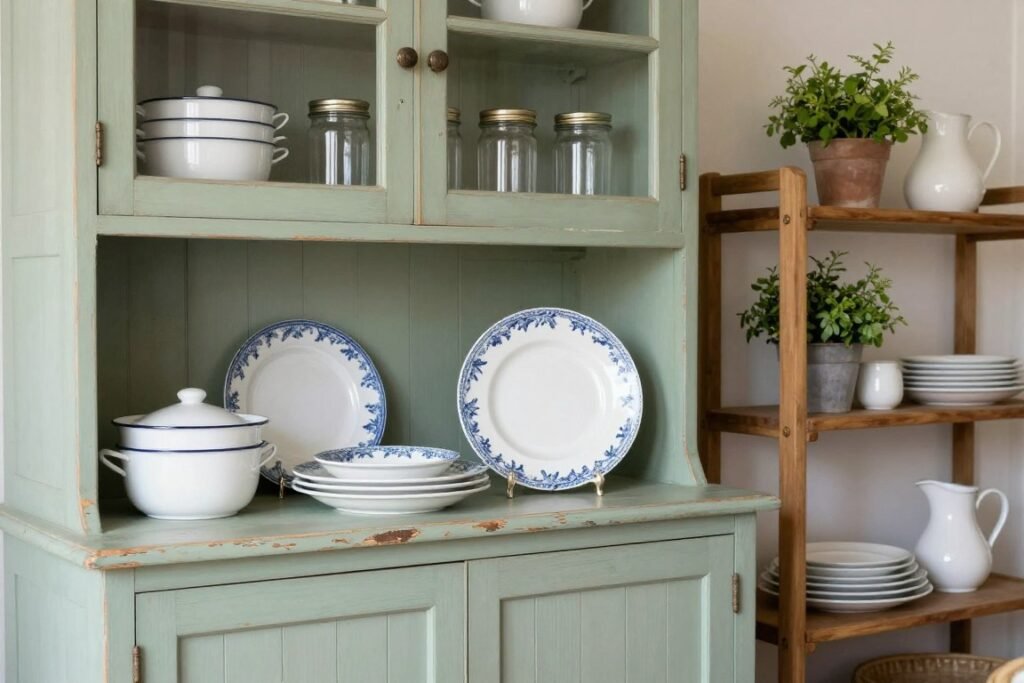
A painted hutch or china cabinet becomes the perfect backdrop for displaying heirloom dishes, collected glassware, or vintage serving pieces. Look for pieces with glass-fronted upper cabinets and solid lower storage, ideally with some visible signs of age and use. Soft, muted paint colors like sage green, dusty blue, or creamy white allow your collections to shine while adding gentle color to the room.
Open shelving mounted on brackets or simple wooden wall shelves offer another opportunity to display everyday beauty. Arrange white ironstone pitchers, blue and white transferware, or collections of wooden cutting boards in thoughtful vignettes. The key is creating displays that feel natural and useful rather than precious or untouchable.
Don’t overlook the charm of smaller storage pieces like wooden crates, woven baskets, or vintage wooden boxes for corralling napkins, candles, or table linens. These humble containers add texture while keeping essentials organized and accessible. For authentic cottage style, look for vintage-style hutch cabinets with character and presence.
Bringing the Garden Indoors: Natural Elements
The essence of cottagecore lies in its connection to nature and the changing seasons—nowhere is this more beautifully expressed than through the natural elements that bring life and freshness to your dining space. Unlike more formal dining rooms where floral arrangements might be structured and perfect, cottagecore embraces the casual beauty of flowers and greenery that appear freshly gathered from garden or woodland.
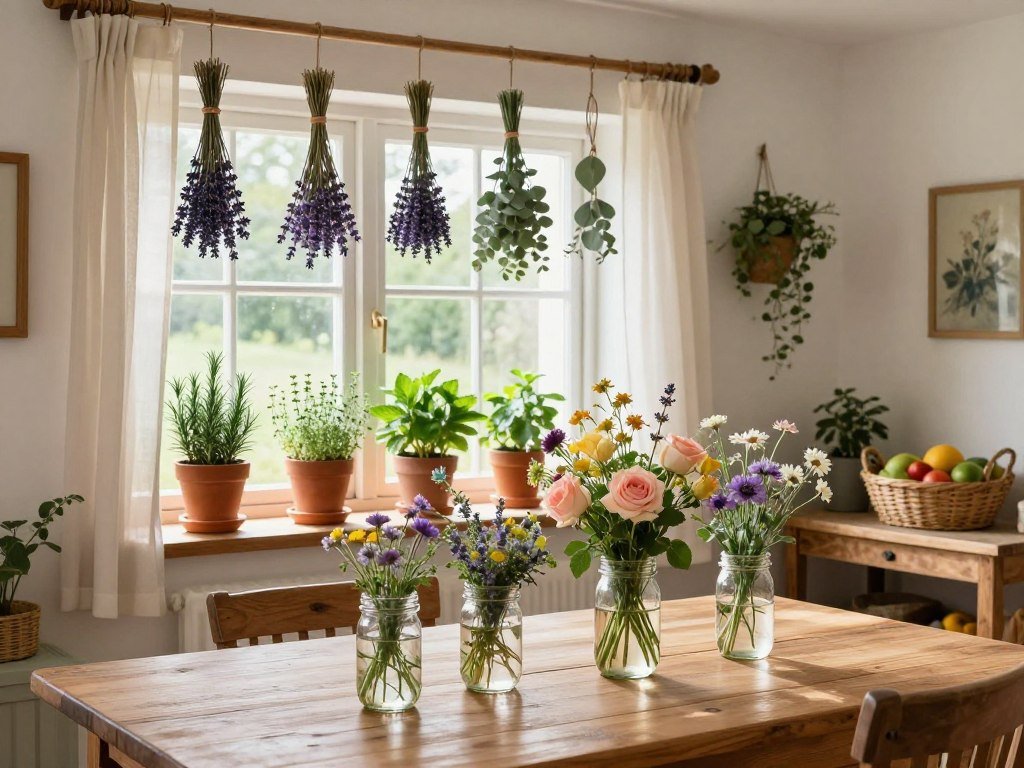
Simple arrangements of seasonal blooms in humble vessels create centerpieces that feel authentic and attainable. Clear glass mason jars, ironstone pitchers, or weathered ceramic vases filled with whatever your garden offers—daisies, cosmos, Queen Anne’s lace, or flowering herbs—bring immediate life to your table. The beauty lies in their imperfection and seasonal authenticity.
Potted herbs on windowsills or open shelving add fragrance, color, and practicality—snip fresh rosemary or thyme directly onto your plate. Small pots of ivy, pothos, or other trailing plants soften the lines of shelving and add movement to the space. For year-round natural beauty, consider dried elements like bundles of lavender, eucalyptus, or wheat arranged in simple bouquets or woven into wreaths.
Wooden elements like cutting boards, bowls, and utensils add warmth and organic texture. Display a collection of rustic wooden cutting boards leaning against a wall or arrange wooden bowls filled with seasonal fruits or vegetables as functional decor that changes with the harvest.
Creating Ambiance: Lighting Your Cottagecore Dining Room
Lighting in a cottage core dining room should feel warm, layered, and reminiscent of simpler times before harsh overhead fixtures became the norm. The goal is creating an atmosphere that encourages lingering conversations and makes everyone at your table look and feel their best—something that can only be achieved through thoughtful lighting at multiple levels.
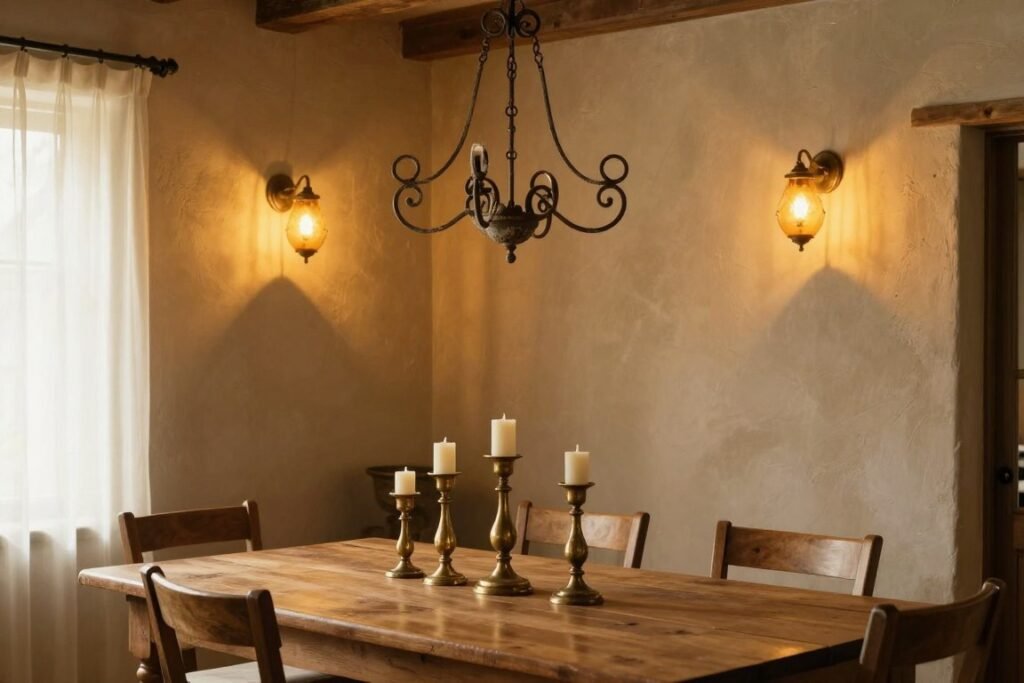
Begin with a statement fixture centered above your table that sets the tone for your space. A wrought iron chandelier with a distressed finish, a simple wooden fixture with candle-style bulbs, or even a repurposed item like an old ladder hung horizontally with simple pendant lights can create a focal point with character. Choose fixtures with warm-toned bulbs (2700-3000K) that cast a flattering glow rather than cool, bluish light.
Supplement your main fixture with wall sconces that add mid-level lighting and create depth in your dining space. Simple iron or brass sconces with glass shades feel appropriately vintage without being fussy. Position them to highlight artwork, collections on open shelving, or to frame a window or doorway.
No cottagecore dining room is complete without the flickering warmth of candlelight. Collect vintage brass candlesticks, simple wooden holders, or clear glass lanterns to scatter across your table and sideboard. Group them in odd numbers at varying heights for visual interest. For everyday use, high-quality flameless candles can provide similar ambiance without worry.
Natural light should be maximized through simple window treatments that filter rather than block sunlight. Consider sheer linen curtains or vintage-style chandeliers that add character while providing practical illumination.
Setting the Backdrop: Wall Treatments and Color
The walls of your cottage core dining room provide the backdrop against which all other elements will shine. Unlike contemporary spaces that often favor stark white walls, cottagecore embraces soft color, texture, and pattern that create a sense of history and warmth.
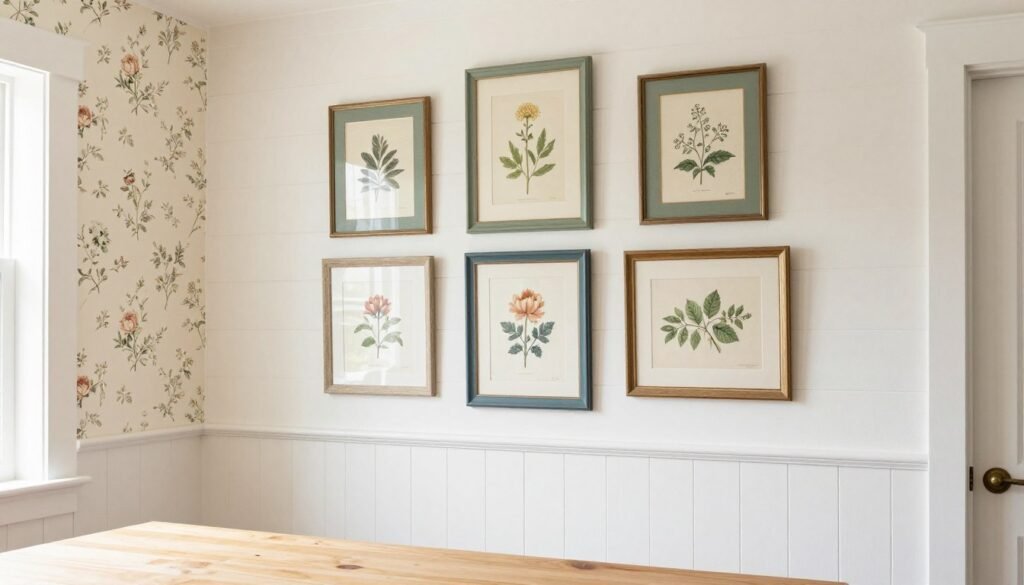
Consider wall treatments that add character and dimension—vertical shiplap painted in soft white evokes farmhouse simplicity, while beadboard wainscoting topped with delicate floral wallpaper creates charming contrast. These architectural details can be added to even the most basic spaces, immediately infusing them with cottagecore character.
When selecting paint colors, look to nature for inspiration. Soft sage green, butter yellow, dusty blue, or warm cream all create the perfect backdrop for wooden furniture and vintage accessories. Even white walls should have a warm undertone that feels soft rather than stark. Consider using different but complementary colors on upper and lower portions of walls for added interest.
Wall decor should feel collected rather than coordinated. Group botanical prints in vintage frames, hang plates in an artful arrangement, or display pressed flowers and herbs in simple glass frames. These personal touches add layers of interest while reflecting the cottagecore appreciation for nature and handcrafted beauty.
Seasonal Celebrations: Changing Your Space Through the Year
One of the most delightful aspects of cottagecore dining is how easily the space can be transformed to celebrate the changing seasons. Unlike more formal dining rooms that might remain static year-round, a cottagecore space embraces the natural rhythm of the year through simple, meaningful changes that keep your dining area feeling fresh and connected to the world outside.
Spring brings the opportunity to celebrate renewal—place small terracotta pots of forced bulbs down the center of your table, scatter bud vases with early blooms like snowdrops or daffodils, and switch heavy winter linens for lighter fabrics in soft florals or gentle stripes. Pastel colored eggs in a simple nest or basket bring Easter charm without being overly themed.
Summer dining embraces abundance—mason jars overflowing with garden roses, bowls of fresh berries, and simple arrangements of wildflowers and grasses create an effortless feeling of countryside plenty. Lighter tablecloths in butter yellow or sky blue, paired with simple white dishes, let the season’s natural beauty take center stage.
Autumn calls for deeper colors and textures—small white pumpkins, bowls of apples, and arrangements of dried wheat, maple leaves, or hydrangea blooms bring harvest warmth to your table. Amber glass, copper accents, and linens in rust or golden tones reflect the changing landscape outside.
Winter dining becomes especially magical with the glow of extra candles, evergreen branches arranged down the center of your table, and simple white lights strung across a hutch or window. Look for seasonal table linens that can be changed throughout the year to refresh your space effortlessly.
Cottagecore on a Budget: Thrifty Ways to Create Charm
Creating a cottage core dining room doesn’t require an unlimited budget—in fact, some of the most authentic cottagecore spaces are created through thrift, creativity, and patience rather than purchasing everything new. The cottagecore aesthetic celebrates items with history and character, making second-hand finds and DIY projects not just budget-friendly alternatives but actually preferable to mass-produced new pieces.
Begin with the foundation pieces—check Facebook Marketplace, estate sales, and thrift stores for solid wood dining tables that can be refreshed with paint or simply a good cleaning and conditioning. Basic wooden chairs can be transformed with paint in soft, cottagecore-friendly colors and simple cushions made from vintage fabric or affordable drop cloths.
Build your tableware collection gradually, mixing and matching pieces rather than buying complete sets. White plates pair beautifully with almost anything, allowing you to add patterned serving pieces or colored glassware as you find them. Thrift stores often have beautiful china pieces for just a few dollars each.
Create your own wall art by framing pressed flowers or herbs from your garden, pages from old botanical books, or even pretty gift wrap with nature motifs. Simple wooden frames can be painted to coordinate with your color scheme. For textile accents, look for vintage tablecloths that can be cut and hemmed to create napkins or runners.
Mason jars, often available at thrift stores or garage sales for pennies, serve multiple purposes from drinking glasses to vases or food storage. Look for vintage blue mason jars or clear ones that can be used in countless ways throughout your dining space.
Embracing the Cottagecore Dining Experience
A true cottage core dining room goes beyond decorative elements to embrace a philosophy of living—one that celebrates slowness, connection, and the simple pleasures of sharing food with loved ones. As you create your own cottagecore dining space, remember that the ultimate goal isn’t picture-perfect styling but rather creating an environment that encourages lingering conversations, unhurried meals, and the kind of memories that sustain us.
The most authentic cottagecore dining rooms feel collected rather than decorated, with each piece telling part of your story. Allow your space to evolve gradually, adding elements that truly speak to you rather than rushing to complete a “look.” The patina of use that develops over time—the slight wear on chair arms, the subtle stains on a beloved tablecloth, the collection of dishes that grows with each special find—these are the details that create genuine character.
Embrace the cottagecore practice of setting a proper table, even for everyday meals. Cloth napkins, real dishes, and simple fresh flowers elevate ordinary moments into small celebrations. Consider starting traditions like Sunday suppers, afternoon tea, or seasonal gatherings that make full use of your thoughtfully created space.
Above all, remember that the true heart of cottagecore dining isn’t found in perfect styling but in the warmth of hospitality, the joy of shared meals, and the creation of a space where everyone feels welcomed and nourished in body and spirit. Your cottage core dining room should be your favorite place to gather—a space that feels like a warm embrace, inviting you to slow down and savor the simple pleasures of home.