Modern landscaping transforms ordinary outdoor spaces into sleek, functional extensions of your home. With its emphasis on clean lines, geometric shapes, and thoughtful minimalism, this design approach creates outdoor areas that are both visually striking and surprisingly low-maintenance. Whether you’re planning a complete yard renovation or simply looking to update your existing landscape with contemporary elements, this guide will walk you through the essential principles, materials, and techniques that define modern landscape design.
This Website contains affiliate links. That means I may earn a small commission if you purchase through my links, at no extra cost to you.
The Philosophy Behind Modern Landscaping
Modern landscaping draws inspiration from mid-century architectural movements that emphasized simplicity, functionality, and harmony with nature. Unlike traditional garden designs that often feature abundant flowering plants and organic shapes, modern landscapes prioritize structure, form, and thoughtful restraint.
The core philosophy centers around creating outdoor spaces that feel like natural extensions of your home’s architecture. This approach values intentional design over decorative excess, resulting in landscapes that feel both sophisticated and serene. By focusing on a few key elements rather than overcrowding the space, modern landscaping creates a sense of calm that many find deeply appealing in today’s busy world.
Modern landscapes also typically incorporate sustainable practices, using drought-tolerant plants, efficient irrigation systems, and locally-sourced materials to reduce environmental impact while creating spaces that require less ongoing maintenance.
Key Design Principles of Modern Landscaping
Understanding the fundamental principles of modern landscape design will help you create a cohesive outdoor space that truly embodies contemporary style. These principles serve as the foundation for all design decisions, from material selection to plant placement.
Clean Lines and Geometric Shapes
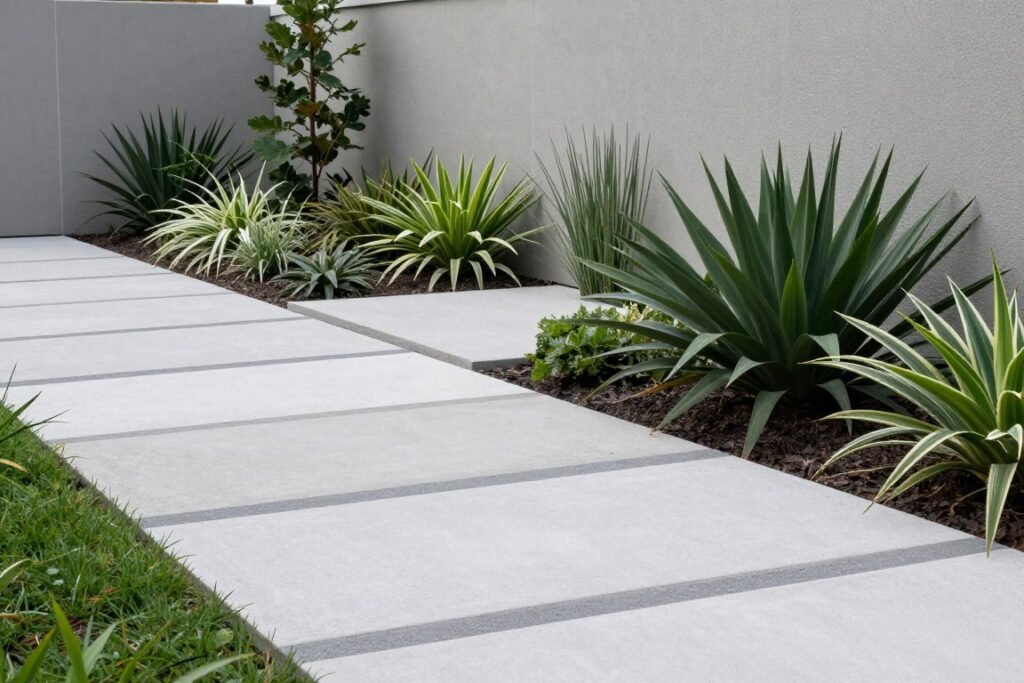
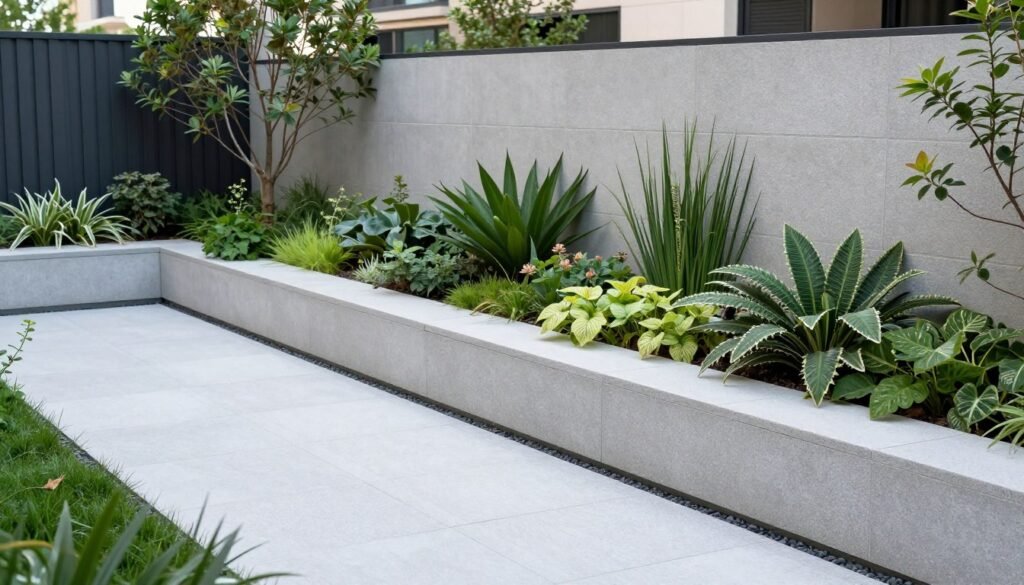
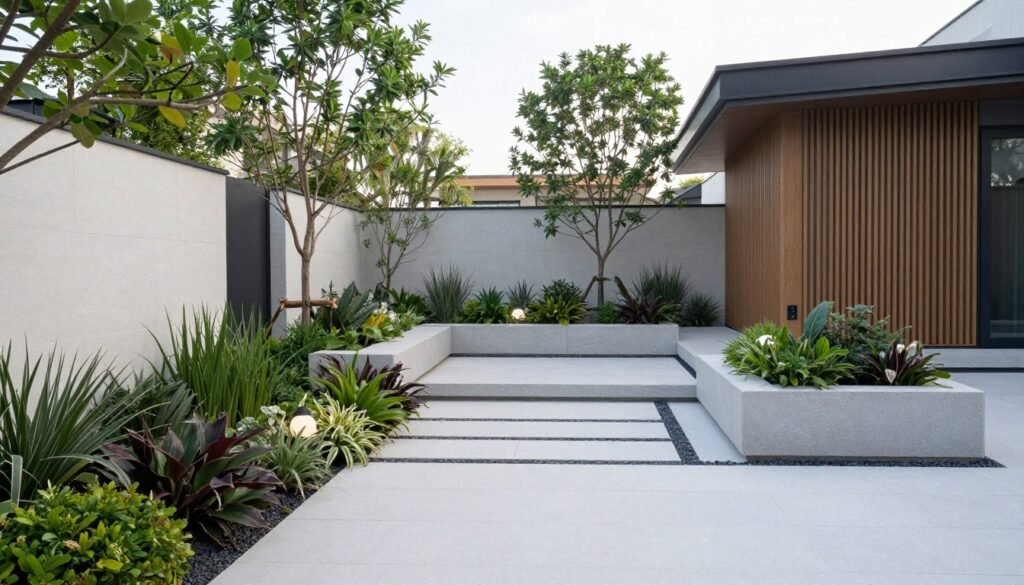
Modern landscapes are defined by strong, deliberate lines and geometric forms. Straight pathways, rectangular planting beds, and cubic structures create a sense of order and intentionality. These clean lines often contrast beautifully with the natural forms of carefully selected plants, creating visual tension that draws the eye and defines spaces.
The “less is more” philosophy is central to modern landscaping. Rather than filling every available space, modern designs embrace negative space and carefully consider each element’s purpose and placement. This restraint creates a sense of calm and allows each component to make a stronger visual impact.
Indoor-Outdoor Connection
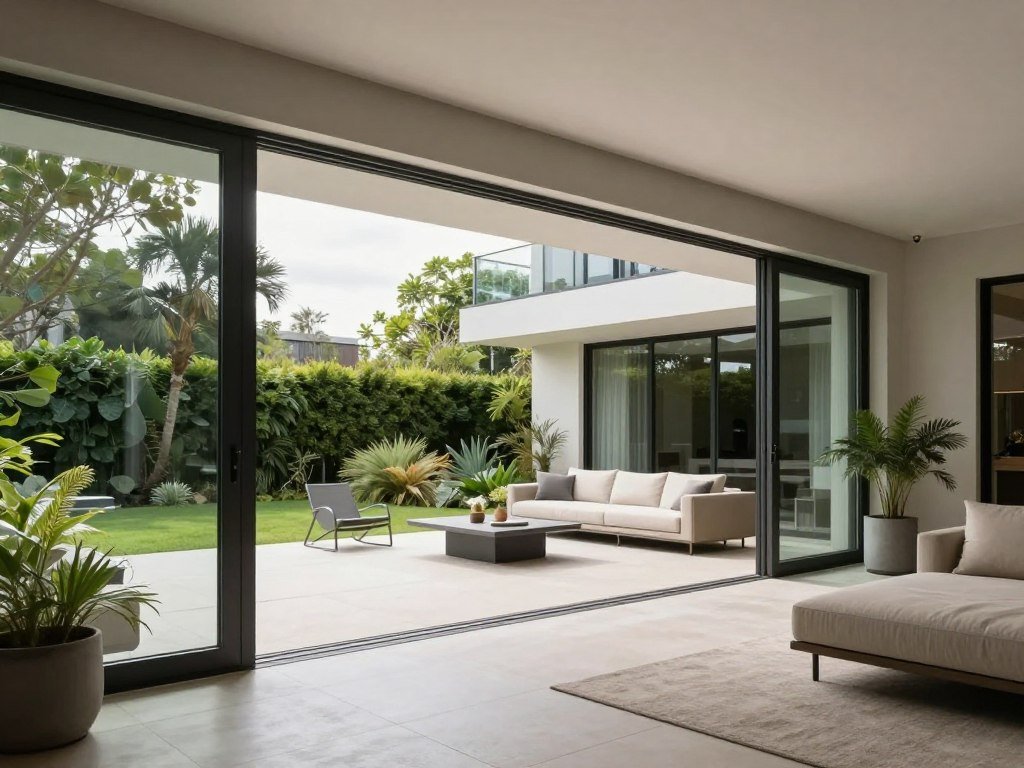
Modern landscapes aim to blur the boundaries between indoor and outdoor living. Large glass doors, continuous flooring materials, and aligned sight lines help create this seamless transition, making your outdoor space feel like a natural extension of your home.
Functional Zoning
Modern landscapes divide outdoor areas into distinct functional zones for dining, lounging, cooking, or play. These zones are often defined by changes in materials, elevation, or structural elements rather than traditional fences or borders.
Essential Materials for Modern Landscapes
The materials you choose play a crucial role in establishing a modern aesthetic. Contemporary landscapes typically feature a limited palette of materials that complement each other while providing textural contrast.
Concrete
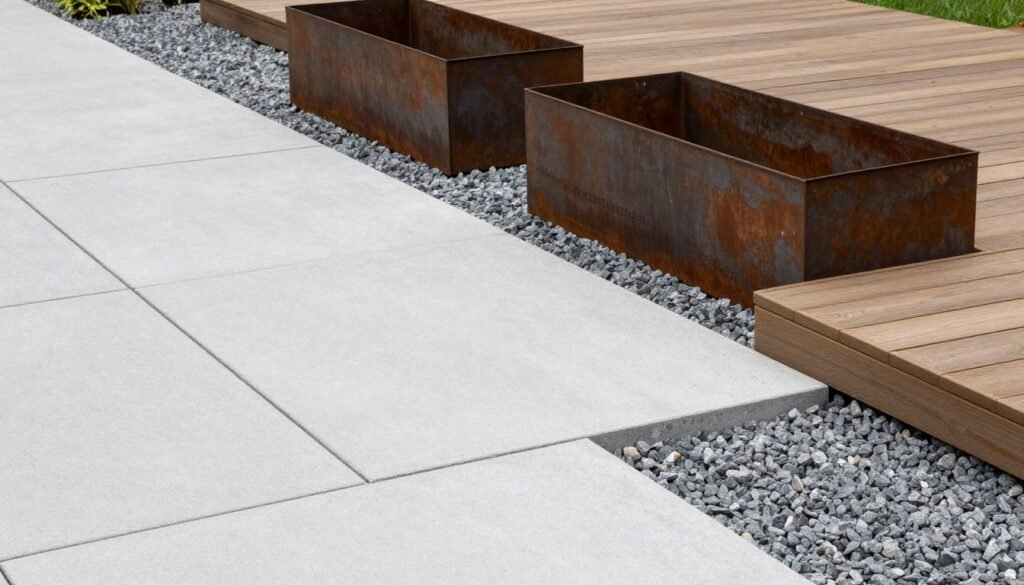
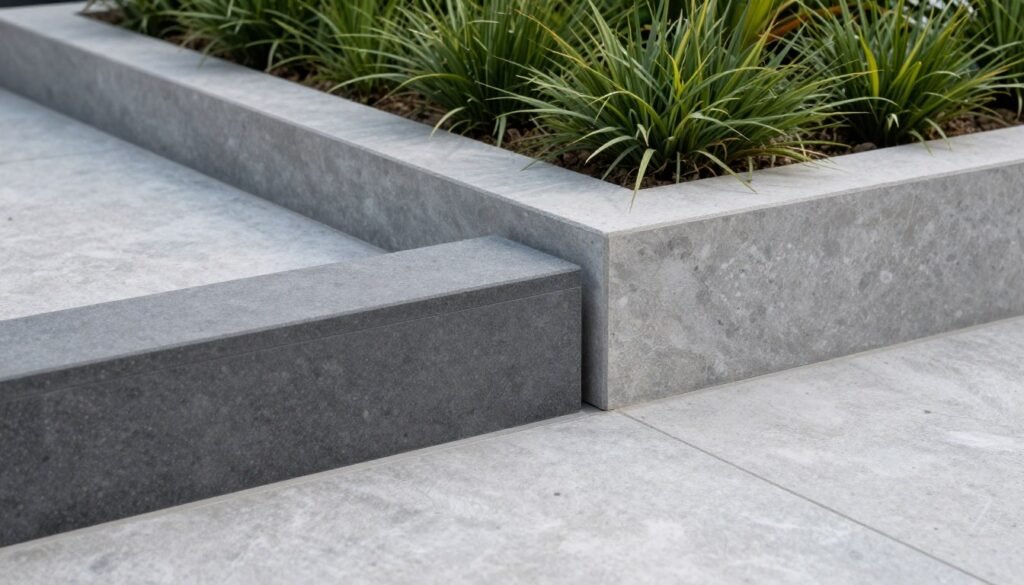
Concrete is perhaps the quintessential modern landscaping material. Its versatility allows it to be formed into sleek patios, walkways, walls, and even custom furniture. Modern designs often showcase concrete in its raw state or with minimal finishing to highlight its industrial character.
For a truly contemporary look, consider large-format concrete pavers with minimal joints, poured concrete with decorative scoring, or concrete walls with clean edges and minimal ornamentation. The natural gray tones provide a neutral backdrop that allows architectural plants and other elements to stand out.
Enhance Your Modern Landscape with Concrete Elements
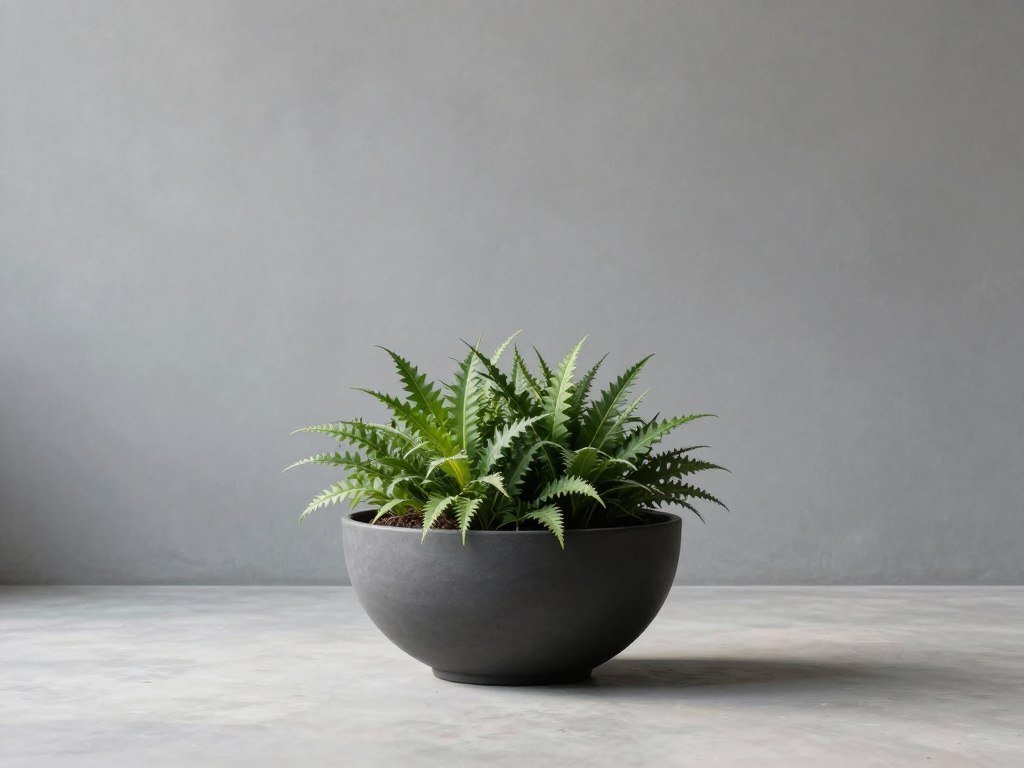
Add sleek, contemporary style to your outdoor space with concrete planters, pavers, and decorative elements that define modern landscape design.
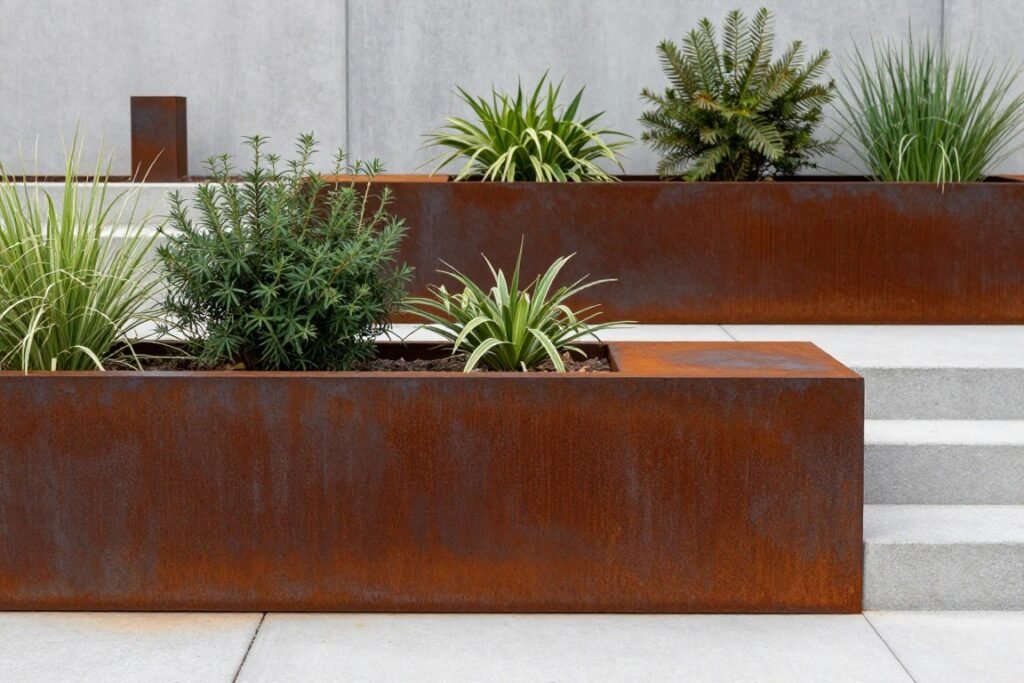
Weathering steel (often called Corten) develops a rich, rust-colored patina that adds warmth to modern landscapes while maintaining a contemporary edge. Used for retaining walls, planters, water features, and decorative screens, metal elements create striking focal points and architectural interest.
Aluminum, stainless steel, and powder-coated metals also feature prominently in modern landscape elements like fencing, pergolas, and furniture, offering durability and clean lines that complement other materials.
Wood
While wood might seem traditional, it plays an important role in warming up modern landscapes. Contemporary designs typically feature wood in clean, geometric forms rather than rustic applications. Think smooth decking boards installed in linear patterns, slatted privacy screens, and minimalist benches with straight lines.
Ipe, cedar, and thermally modified woods are popular choices for their durability and ability to weather gracefully over time. These materials create a natural contrast to harder elements like concrete and metal.
Gravel and Aggregates
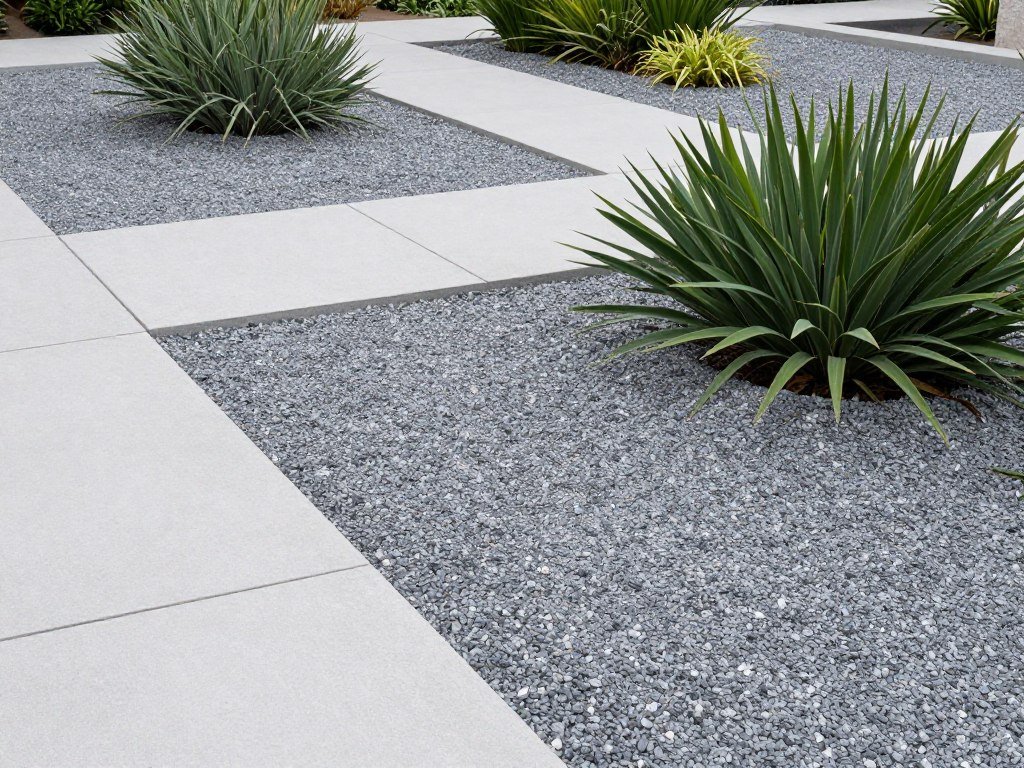
Decorative gravels and crushed stone provide texture and permeability in modern landscapes. Often used as ground cover between concrete pavers, around specimen plants, or as a low-maintenance alternative to lawns, these materials come in various colors and sizes to complement your design.
Black lava rock, white marble chips, and earth-toned decomposed granite are particularly effective in creating visual contrast and defining different zones within the landscape.
Plant Selection for Modern Landscapes
Plant selection in modern landscaping focuses on architectural forms, interesting textures, and deliberate placement rather than abundant flowering varieties. The emphasis is on creating year-round visual interest through foliage, form, and structural elements.
Architectural Plants
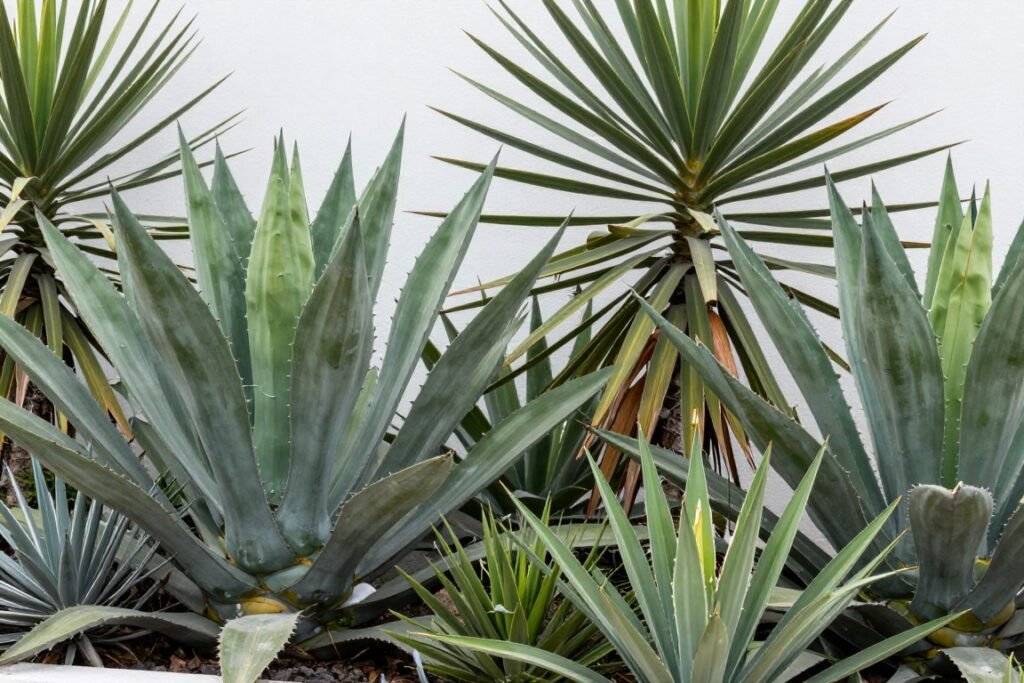
Plants with strong, distinctive shapes form the backbone of modern landscape designs. These architectural specimens create dramatic focal points and maintain visual interest throughout the seasons.
Popular choices include:
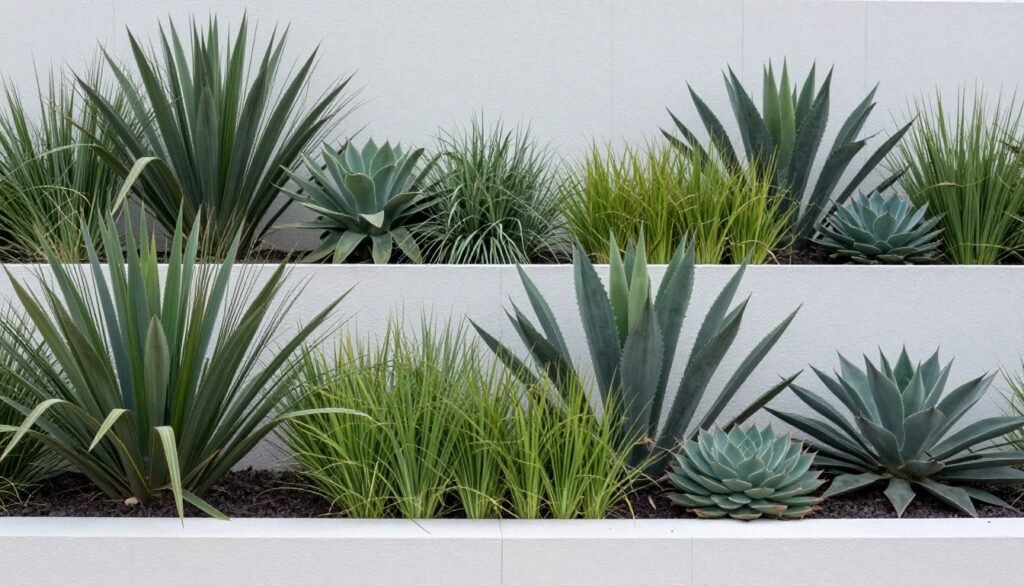
Agave and aloe varieties with their geometric rosette forms
Yucca plants with their sword-like leaves and striking silhouettes
Dracaena and cordyline varieties for their strong vertical elements
Japanese maples for their sculptural branching patterns
Horsetail reed for its clean, vertical lines
Ornamental Grasses
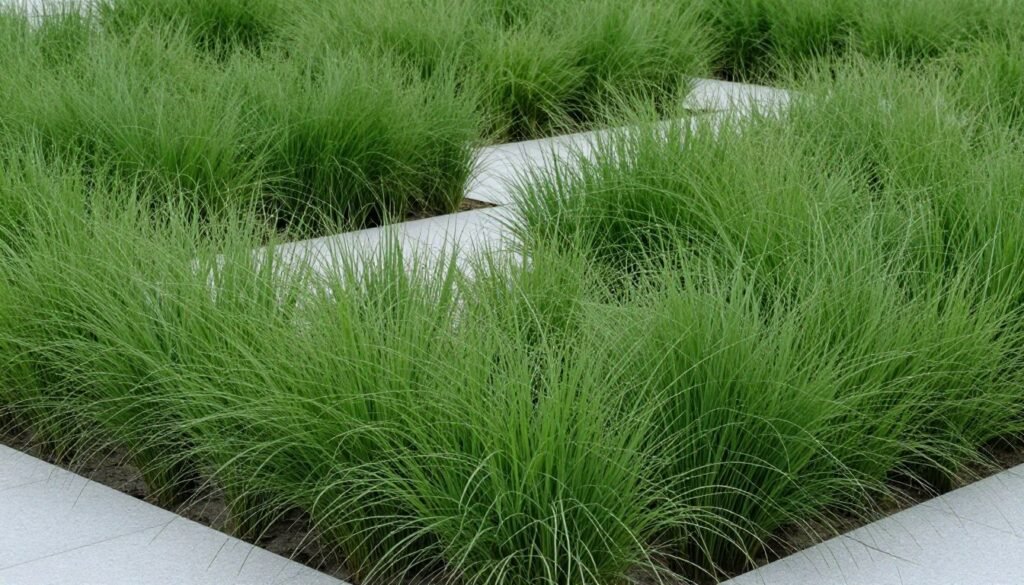
Grasses add movement, texture, and a softening effect to the hard edges of modern landscapes. Their linear forms complement geometric hardscaping while providing seasonal interest as they change throughout the year.
Consider incorporating:
Feather reed grass (Calamagrostis) for its upright, architectural form
Blue fescue for its compact, blue-gray mounds
Mexican feather grass for its fine texture and flowing movement
Black mondo grass for dramatic color contrast
Mass Plantings and Repetition
Modern landscapes often feature mass plantings of a single species rather than varied collections. This approach creates bold visual impact and reinforces the clean, organized aesthetic that defines contemporary design.
Consider planting large drifts of the same grass, succulent, or perennial to create dramatic sweeps of texture and color. Repeating the same plant in different areas also helps create cohesion throughout the landscape.
Create Your Modern Plant Palette
Find architectural plants and ornamental grasses that will give your landscape the contemporary look you desire.
Beyond the basic materials and plants, several key elements help define the modern landscape aesthetic. These features add functionality, visual interest, and a contemporary feel to your outdoor space.
Water Features
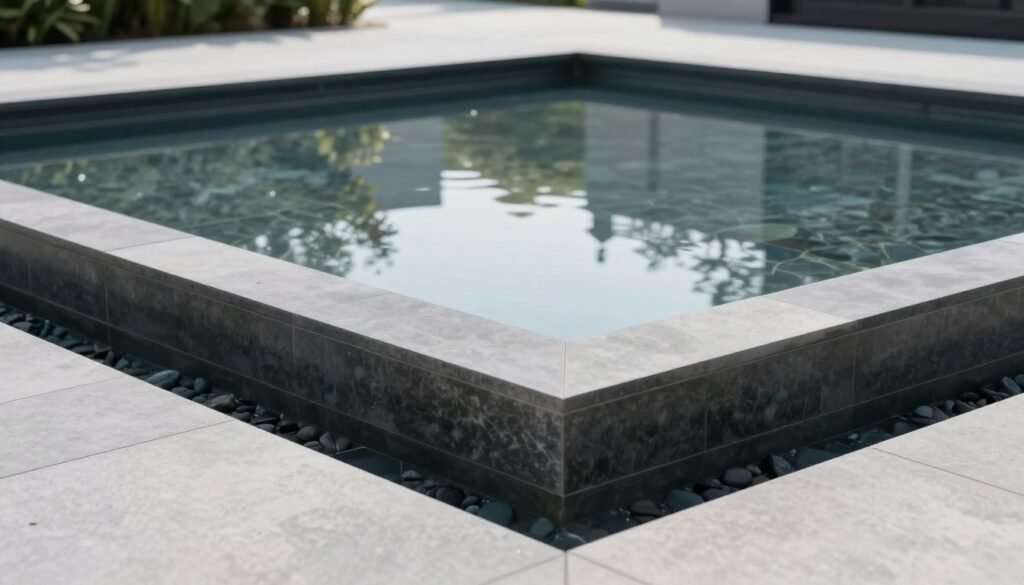
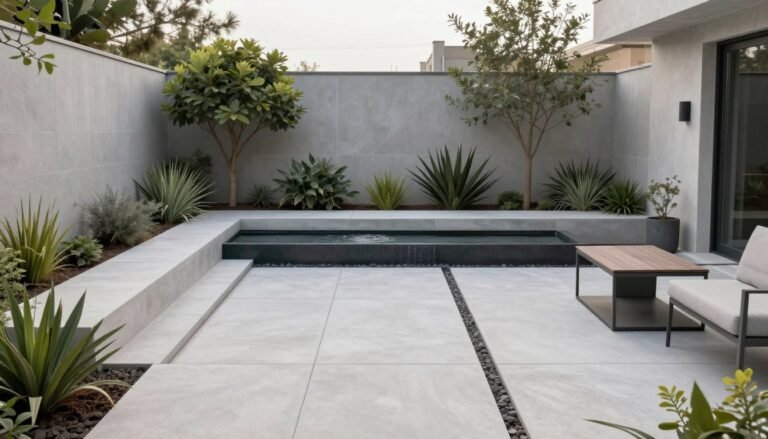
Water features in modern landscapes tend toward the geometric and architectural rather than naturalistic. Think reflecting pools with clean edges, wall fountains with simple spouts, or water channels with precise lines. These features often incorporate the same materials used elsewhere in the landscape, such as concrete or steel, to maintain design cohesion.
The sound of moving water adds a sensory dimension to the landscape while creating a focal point that draws the eye. For a truly contemporary look, consider water features that emphasize horizontal planes and minimal vertical elements.
Add a Contemporary Water Feature
Enhance your modern landscape with a sleek water feature that creates visual interest and soothing ambient sound.
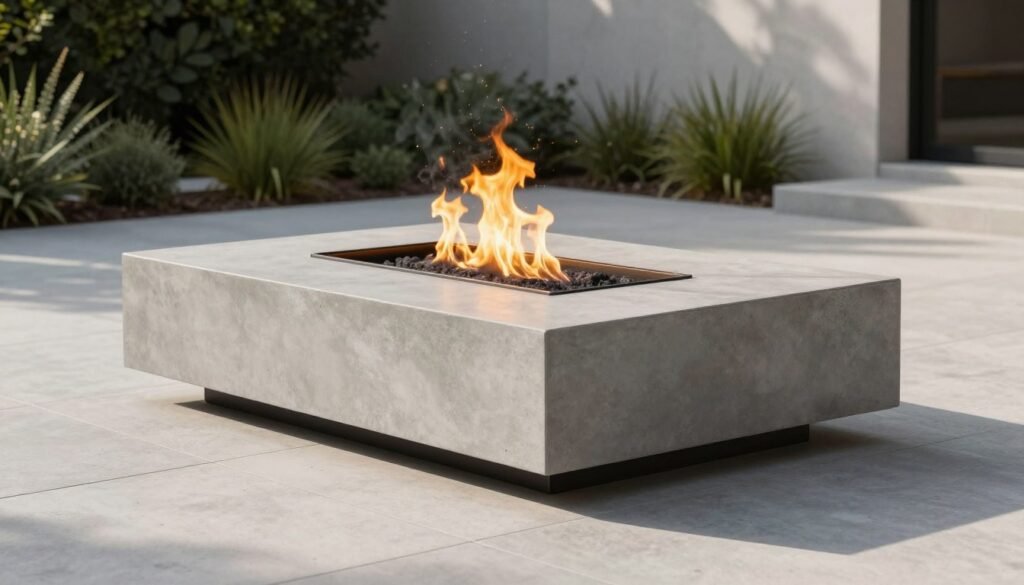
Fire features create gathering points and extend the usability of outdoor spaces into cooler evenings. Modern fire elements typically feature clean lines, minimal ornamentation, and integration with other hardscape materials.
Popular options include linear fire tables, square or rectangular fire pits with clean edges, and built-in fireplaces with minimal detailing. Materials like concrete, steel, and glass complement the modern aesthetic while providing durability and heat resistance.
Outdoor Lighting
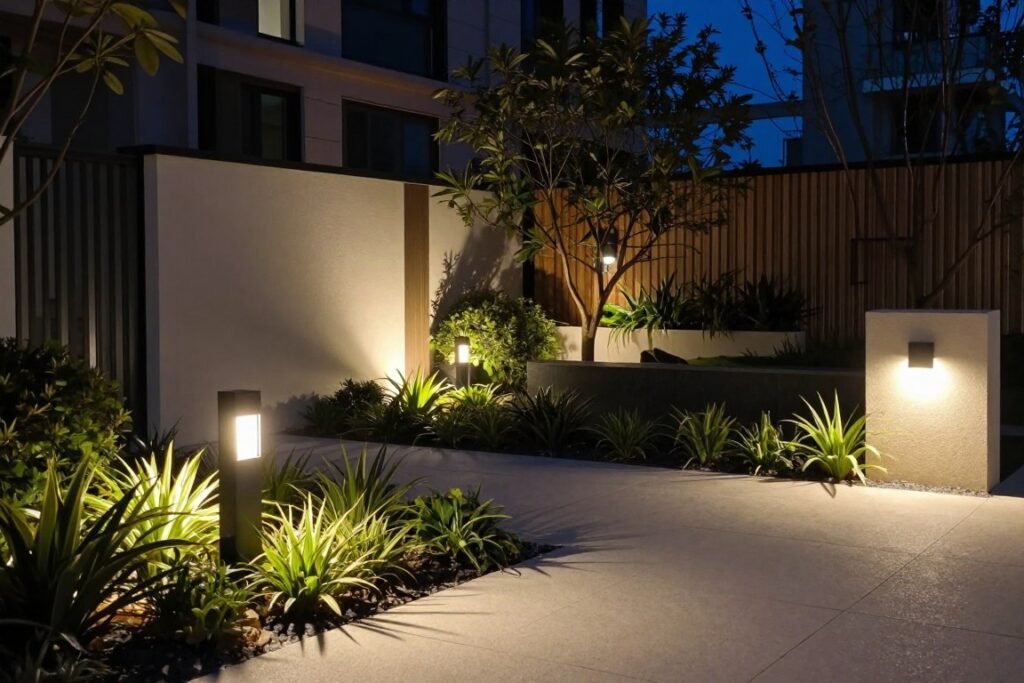
Strategic lighting transforms modern landscapes after dark, highlighting architectural elements, illuminating pathways, and creating ambiance. Contemporary lighting fixtures often become design elements in their own right, with clean lines and minimal profiles that complement the overall aesthetic.
Consider recessed path lights that create pools of light without visible fixtures, wall-mounted sconces with geometric forms, or minimalist bollard lights that provide functional illumination with contemporary style. LED technology offers energy efficiency and flexibility in creating different lighting effects.
Illuminate Your Modern Landscape
Find contemporary outdoor lighting that enhances your landscape’s beauty after dark while providing essential illumination.
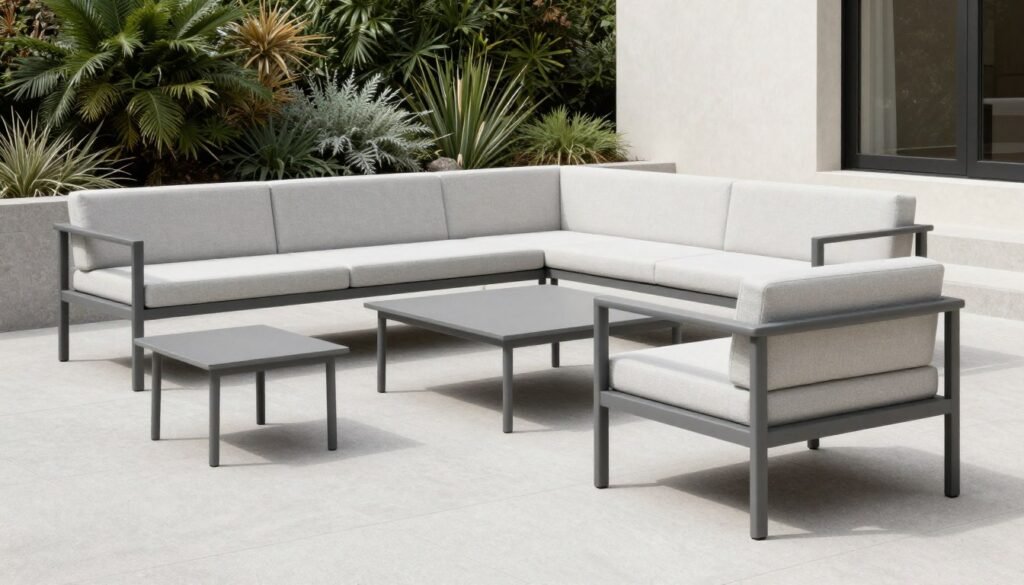
Outdoor furniture in modern landscapes follows the same principles as the hardscape elements: clean lines, minimal ornamentation, and high functionality. Look for pieces with simple geometric forms, mixed materials, and neutral colors that complement your overall design.
Materials like powder-coated aluminum, teak in simple forms, and all-weather wicker in geometric patterns work well in modern settings. Consider built-in seating that integrates with retaining walls or planters for a seamless look that maximizes space.
Practical Tips for Creating a Modern Landscape
Creating a successful modern landscape requires thoughtful planning and attention to detail. These practical tips will help you implement contemporary design principles effectively while avoiding common pitfalls.
Start with a Clear Plan
Modern landscapes rely on intentional design and careful proportions. Before breaking ground, create a detailed plan that addresses spatial relationships, sight lines, and material transitions. Consider how the landscape will be viewed from inside your home as well as how it will function for outdoor living.
Embrace Restraint
One of the biggest challenges in creating modern landscapes is knowing when to stop. Resist the urge to fill every space or include too many different materials or plant species. Sometimes the most powerful design move is what you choose to leave out.
Focus on Quality Over Quantity
Modern landscapes benefit from investing in fewer, higher-quality elements rather than many lesser-quality ones. A single striking planter, well-crafted bench, or architectural specimen plant often creates more impact than numerous smaller features.
Consider Maintenance Requirements
While modern landscapes often require less maintenance than traditional gardens, they still need regular care to maintain their clean, intentional appearance. Choose materials and plants that will age gracefully and consider how the landscape will evolve over time.
Create Year-Round Interest
Select plants and features that provide visual appeal throughout all seasons. Since modern landscapes rely less on flowering plants for interest, focus on foliage texture, bark characteristics, and structural elements that look good year-round.
Pay Attention to Edges and Transitions
The junctions between different materials and spaces are particularly important in modern design. Invest in proper edging materials, consider how one surface transitions to another, and maintain clean lines between planting beds and hardscape elements.
Essential Tools for Modern Landscape Maintenance
Keep your contemporary landscape looking its best with quality tools designed for precision maintenance.
Embracing Modern Landscaping in Your Outdoor Space
Modern landscaping offers a refreshing alternative to traditional garden styles, creating outdoor spaces that feel both contemporary and timeless. By embracing clean lines, thoughtful restraint, and quality materials, you can transform your yard into a sophisticated extension of your home that requires less maintenance while providing more enjoyment.
Whether you implement a complete modern landscape or simply incorporate contemporary elements into your existing outdoor space, the principles of simplicity, functionality, and intentional design will help you create an environment that enhances your lifestyle and complements your home’s architecture.
Remember that successful modern landscapes evolve over time. As plants mature and materials weather, your outdoor space will develop character while maintaining its contemporary aesthetic. With thoughtful planning and quality implementation, your modern landscape will provide beauty and functionality for years to come.
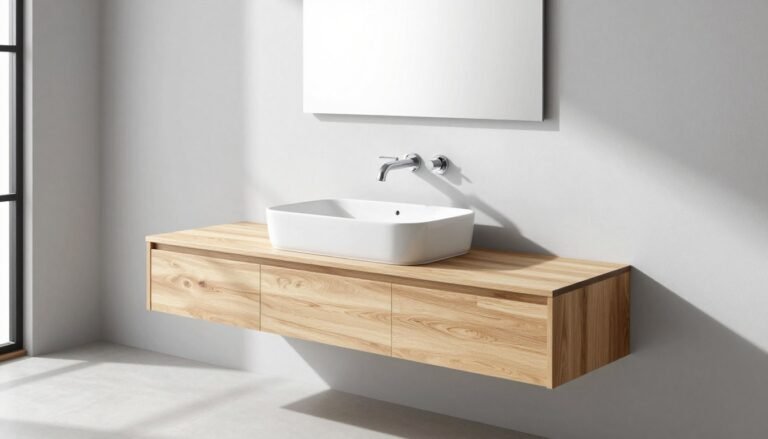
Floating vanities have revolutionized bathroom design with their sleek, modern appearance and practical benefits. These wall-mounted fixtures create an illusion of…