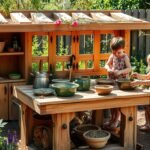
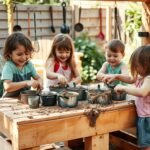
When my daughter first discovered the joy of mixing mud and water in our backyard, her face lit up with a kind of wonder that no tablet or toy could replicate. That simple moment of sensory exploration led us to create a dedicated mud kitchen—a decision that has since provided countless hours of imaginative play, learning, and development. If you’re looking for a way to reconnect your children with nature while fostering creativity and independence, a mud kitchen for kids might be exactly what your family needs.
This Website contains affiliate links. That means I may earn a small commission if you purchase through my links, at no extra cost to you.
This guide will walk you through everything you need to know about mud kitchens—from understanding their developmental benefits to setting up your own custom space, whether you have a sprawling backyard or a tiny balcony. We’ll cover essential components, creative play ideas, and practical tips for managing the inevitable (but worthwhile) mess. Let’s dive into the wonderful world of mud kitchens and discover why they’ve become such a beloved feature in family-friendly outdoor spaces.
The Surprising Benefits of Mud Kitchen Play
Before we dive into the practical aspects of creating a mud kitchen, let’s explore why these simple play spaces have become so highly recommended by early childhood educators and developmental experts alike.
Developmental Advantages
Physical Development
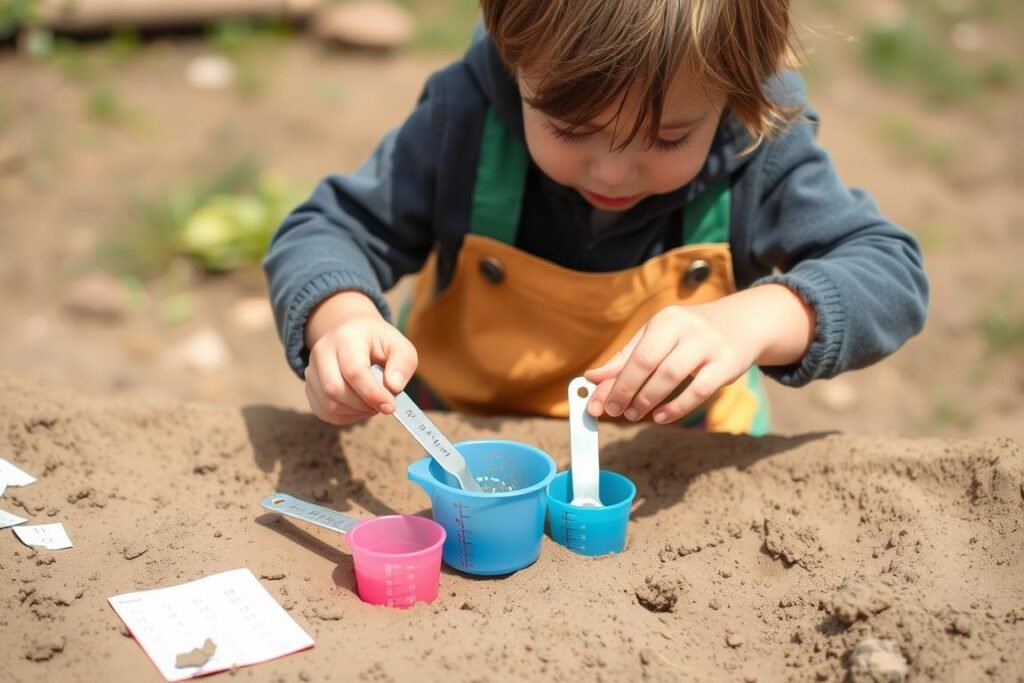
Scooping, pouring, stirring, and molding mud helps children develop fine motor skills and hand-eye coordination. The physical nature of mud kitchen play—carrying water, digging in soil, and manipulating tools—also strengthens gross motor skills and builds physical stamina.
Cognitive Growth
When children experiment with different “ingredients” and observe how materials interact, they’re engaging in scientific thinking. They learn about concepts like volume, weight, and transformation while developing problem-solving skills and creative thinking.
The varied textures, smells, and visual elements of mud kitchen play provide rich sensory input that helps children process and organize sensory information—a crucial developmental task. This sensory-rich environment can be especially beneficial for sensory-seeking children.
Emotional Regulation
There’s something inherently calming about playing with natural materials. The open-ended nature of mud play allows children to express themselves freely and work through emotions in a low-pressure environment. Many parents report that outdoor mud play has a grounding effect on children who struggle with emotional regulation.
Social and Language Skills
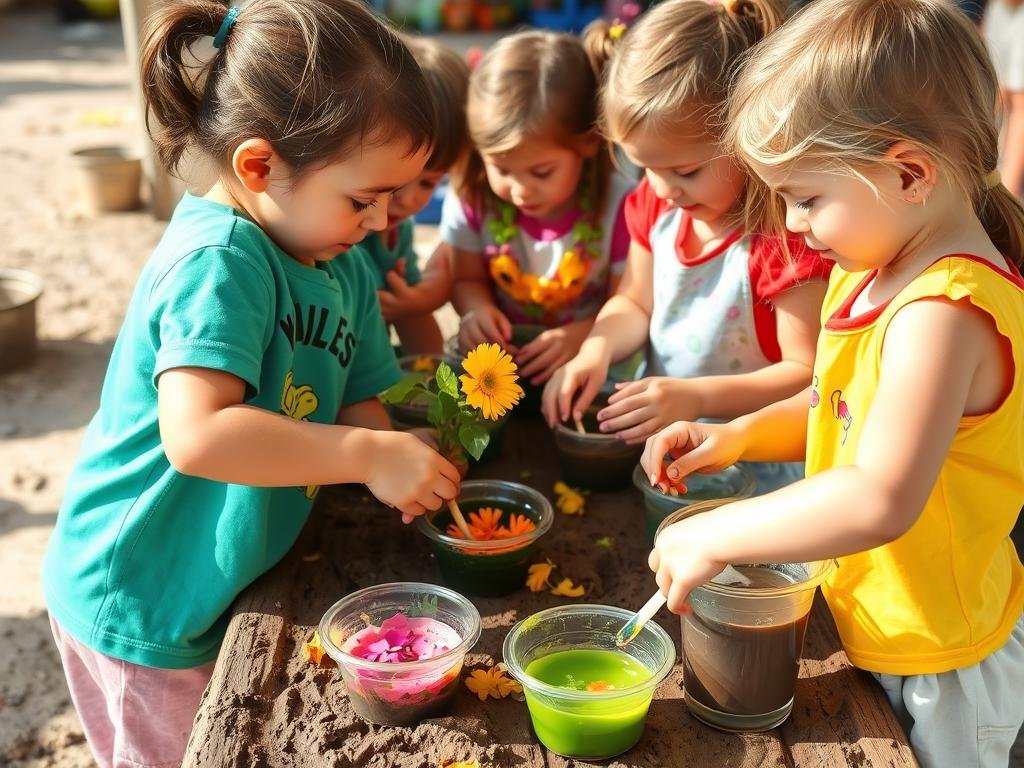
Mud kitchens naturally encourage social interaction and cooperative play. Children take on roles, negotiate with playmates, and develop communication skills as they create their mud “recipes” and imaginative scenarios. The pretend play aspect of mud kitchens—creating “meals” and “serving” them—helps develop language skills through storytelling and descriptive vocabulary.
Connection to Nature
In our increasingly digital world, mud kitchens provide a meaningful way for children to connect with the natural environment. This regular interaction with nature helps foster environmental awareness and a sense of stewardship from an early age. Studies have shown that children who regularly engage with nature tend to develop more positive environmental attitudes as they grow.
Health Bonus: Exposure to diverse microbes in soil may actually strengthen children’s immune systems! Research suggests that the “hygiene hypothesis”—the idea that limited exposure to naturally occurring microorganisms may increase susceptibility to allergies and autoimmune conditions—has merit. A little dirt might be exactly what the doctor ordered!
DIY vs. Pre-Made: Choosing the Right Mud Kitchen for Your Family
When it comes to setting up a mud kitchen for kids, you have two main options: building one yourself or purchasing a pre-made version. Each approach has its advantages, and the best choice depends on your specific circumstances, skills, and preferences.
DIY Mud Kitchen Benefits
Highly customizable to your space and needs
Often more affordable, especially if using repurposed materials
Can involve children in the building process for added learning
Opportunity to repurpose items that might otherwise be discarded
Can be adjusted as your child grows or needs change
DIY Mud Kitchen Challenges
Requires time, tools, and some building skills
May not be as durable as commercial options if not properly built
Could have safety concerns if not carefully constructed
Might look less polished than store-bought versions
Initial planning and material gathering can be time-consuming
Popular DIY Approaches
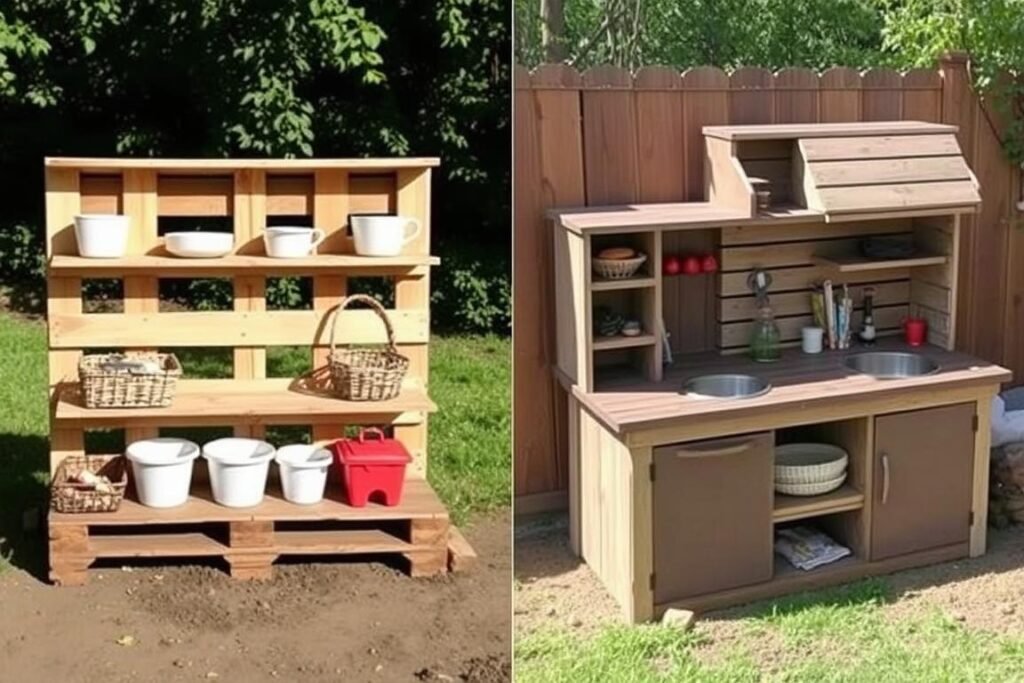
Pallet Transformation
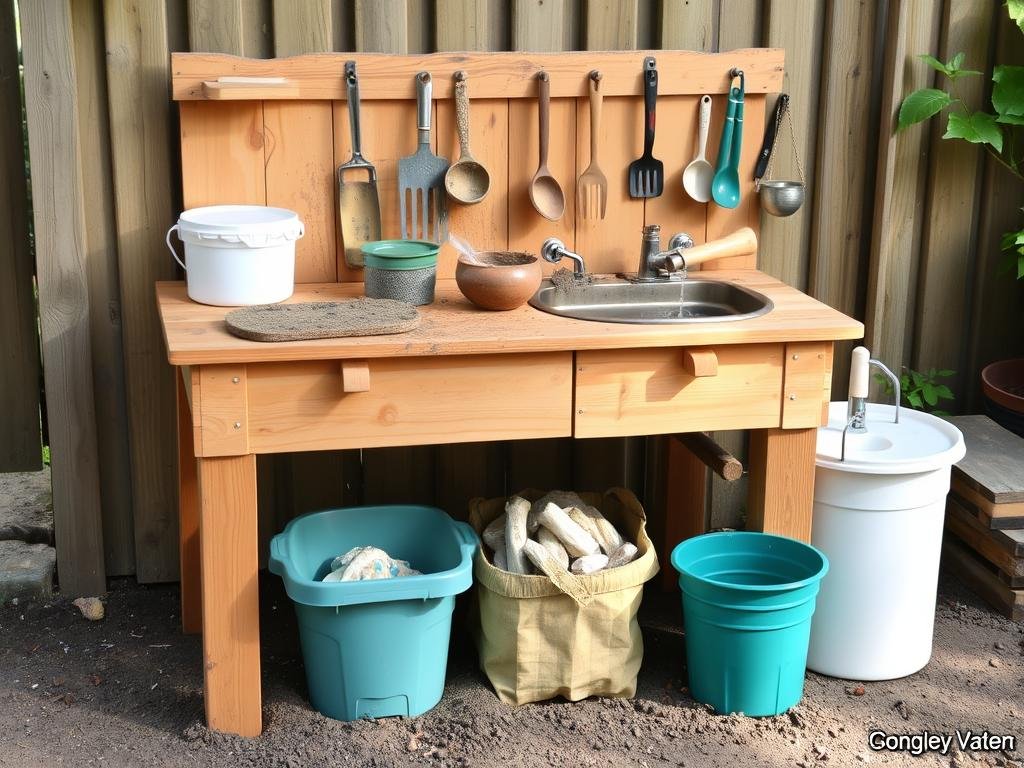
Wooden pallets make excellent starting materials for mud kitchens. With some basic tools, you can transform one or two pallets into a functional play kitchen. Add a plastic tub as a sink, some hooks for hanging utensils, and a simple shelf, and you’re good to go!
Repurposed Furniture
Old cabinets, dressers, or nightstands can be weatherproofed and transformed into charming mud kitchens. Look for pieces being given away on local buy-nothing groups or thrift stores. A coat of outdoor paint and some simple modifications can work wonders.
Simple Table Setup
If you’re not ready for a full build, start with a weather-resistant table or even a few crates stacked together. Add containers for mud and water, some basic tools, and you have a functional mud kitchen that can evolve over time.
Pre-Made Mud Kitchen Options
If DIY isn’t your thing, there are plenty of ready-made mud kitchens available to purchase. These range from basic models to elaborate play systems with multiple features.
Ready to Shop for Pre-Made Mud Kitchens?
Browse a variety of options to find the perfect mud kitchen for your outdoor space. From simple designs to feature-rich models, there’s something for every family.
When choosing between DIY and pre-made options, consider your available time, budget, space constraints, and how long you expect the mud kitchen to be used. Many families start with a simple DIY setup and upgrade over time as they see how much their children enjoy the play experience.
Essential Components for the Perfect Mud Kitchen
Whether you’re building or buying a mud kitchen for kids, certain key components will ensure hours of engaging play. Here’s what to include in your setup:
The Foundation: Work Surface and Structure
Work Surface
The heart of any mud kitchen is a sturdy, child-height work surface where mixing, pouring, and creating can happen. Aim for a height that allows comfortable play without hunching or stretching—generally around elbow height for your child. The surface should be weather-resistant and easy to wipe down.
Looking for child-sized outdoor tables that can serve as a mud kitchen work surface?
A “sink” creates endless opportunities for pouring, mixing, and washing. This can be as simple as a plastic tub or basin that fits into your work surface, or something more elaborate with drainage. Some families repurpose old kitchen sinks for an authentic feel. The key is making it removable for easy cleaning.
Tools and Utensils
The right tools transform a simple mud setup into a fully functional play kitchen. Look for durable items that can withstand outdoor conditions and rough play.
Mixing and Measuring
Wooden spoons and spatulas
Whisks and mashers
Measuring cups and spoons
Bowls of various sizes
Muffin tins and cake pans
Pouring and Straining
Small watering can
Funnels of different sizes
Colanders and sieves
Plastic bottles and containers
Ladles and scoops
Creative Extras
Cookie cutters
Rolling pins
Ice cube trays
Mortar and pestle
Small spray bottles
Stock Your Mud Kitchen with Quality Tools
Find durable, child-friendly kitchen tools that are perfect for outdoor play and will stand up to the elements.
Water is essential for mud kitchen play, but you’ll want a controlled source to prevent flooding your play area. Options include:
A large container with a spigot that children can operate
Repurposed plastic jugs that children can pour from
A rain barrel with a child-safe tap (with adult supervision)
A garden hose with a gentle spray nozzle (if you don’t mind the water usage)
Pinterest Tip: Create a “mud kitchen essentials” pin showing your must-have tools with the caption “These 10 simple tools transformed our mud kitchen play! #MudKitchenForKids #OutdoorPlay”
Natural “Ingredients” for Mud Kitchen Creativity
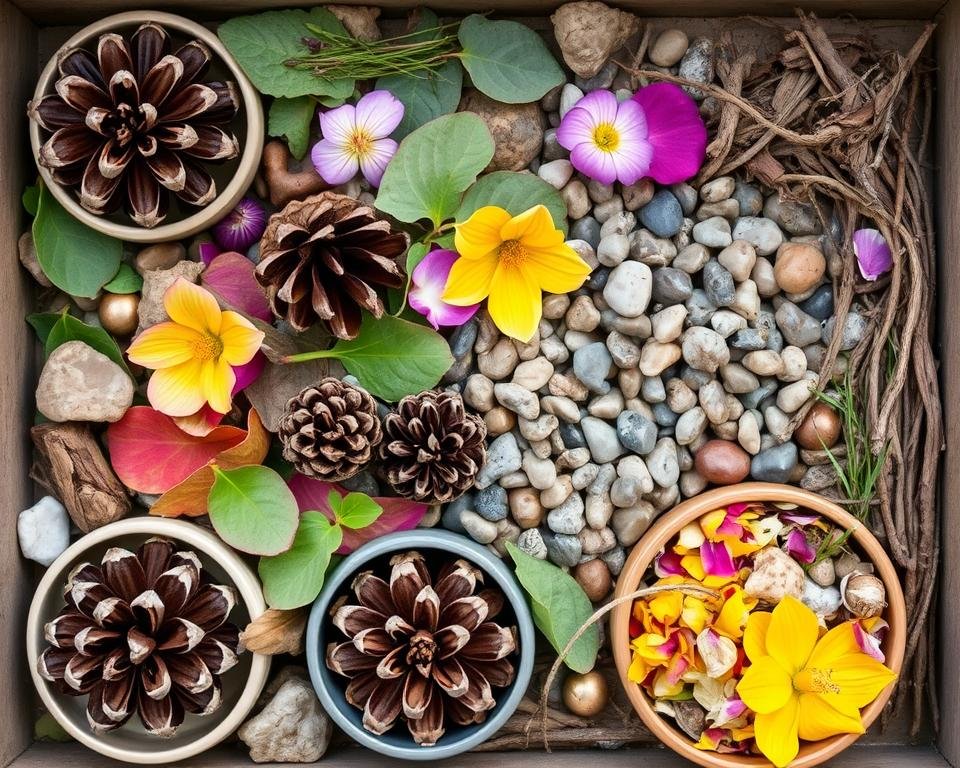
The magic of a mud kitchen for kids comes alive with the addition of natural materials that serve as “ingredients” for imaginative creations. These materials change with the seasons, providing endless variety and learning opportunities throughout the year.
Seasonal Natural Materials
Season
Natural Materials
Play Possibilities
Spring
Flower petals, grass clippings, dandelions, fresh herbs, small twigs with new buds
Snow “baking,” ice sculptures, frozen “treats,” rock arrangements
Collecting and Storing Natural Materials
Turn gathering materials into its own adventure! Take a nature walk with your children and bring along small bags or containers to collect interesting items. This process helps children develop observation skills and appreciation for the natural world.
Storage Tips
Use clear containers so children can see what’s available
Label containers with pictures for pre-readers
Rotate materials regularly to maintain interest
Allow some materials to dry before storing (leaves, flowers)
Sustainable Practices
Teach children to gather materials respectfully
Take only what you need from natural areas
Avoid picking rare plants or protected species
Compost used natural materials when play is finished
Enhance Your Nature Collection
Looking for tools to help your little ones collect and explore natural materials? Check out these kid-friendly gardening tools perfect for gathering mud kitchen ingredients.
Pinterest Tip: Create a seasonal pin showing “Spring Mud Kitchen Ingredients” with beautiful natural materials and the caption “Refresh your mud kitchen for spring with these natural treasures! #MudKitchenForKids #NaturePlay”
Safety Considerations and Maintenance Tips
While mud kitchen play is wonderfully messy fun, a few simple safety measures and maintenance routines will keep the experience positive for everyone involved.
Safety First
Material Safety
Use non-toxic, child-safe materials throughout your mud kitchen
Avoid pressure-treated lumber which may contain harmful chemicals
Sand wooden surfaces to prevent splinters
Ensure there are no sharp edges or protruding nails
Check that the structure is stable and won’t tip over during play
Play Safety
Establish clear rules about not eating mud or natural materials
Supervise younger children, especially around water
Use shallow containers for water to prevent drowning hazards
Teach proper tool handling (no running with utensils)
Consider a mud kitchen location visible from the house
Hygiene Considerations
While a little dirt is beneficial, basic hygiene practices keep mud kitchen play healthy:
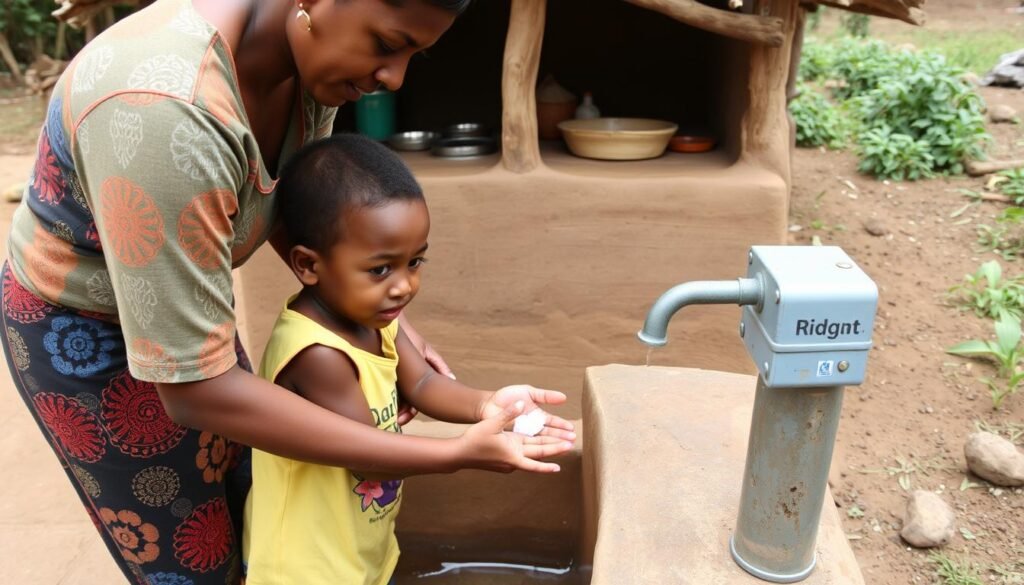
Set up a simple handwashing station nearby with soap and water
Establish a routine of washing hands before and after play
Use clean soil or potting mix rather than dirt from high-traffic or potentially contaminated areas
Regularly clean tools and containers with mild soap and water
Cover sand areas when not in use to prevent animal contamination
Create a simple outdoor handwashing station with these portable water containers perfect for mud kitchen cleanup.
A little regular maintenance keeps your mud kitchen in good condition year after year:
Daily/After Play
Rinse tools and containers
Empty water containers
Return loose parts to storage
Weekly
Wash tools thoroughly
Wipe down surfaces
Check for loose parts or damage
Seasonal
Apply protective finish to wooden parts
Replace worn or damaged tools
Refresh soil and play materials
“The messier the play, the more important the cleanup routine. We made a game of washing tools after mud kitchen play—my daughter loves spraying everything with the hose almost as much as she loves making mud pies!”
— Sarah, mother of two
Creative Play Ideas for Your Mud Kitchen
Once you’ve set up your mud kitchen for kids, the real magic begins! Here are creative play ideas to inspire hours of imaginative fun and learning:
Imaginative Play Scenarios
Mud Bakery
Transform the mud kitchen into a bustling bakery where children create mud “cakes,” “cookies,” and “pies” decorated with natural items. Add muffin tins, cake pans, and cookie cutters to enhance the experience. Children can write menus on a small chalkboard and take “orders” from family members.
Nature’s Potions Lab
Encourage children to become scientists creating magical potions and mixtures. Provide measuring tools, funnels, and clear containers to observe how different materials mix together. Add food coloring (in squeeze bottles for control) to create colorful concoctions that change as they’re combined.
Mud Restaurant
Set up a small table and chairs near the mud kitchen where “customers” can be served. Children can create menus, take orders, and serve their mud creations on plates or in bowls. This scenario encourages role-playing, language development, and social skills as children negotiate roles and interact.
Seasonal Play Ideas
Spring and Summer
Flower petal perfumes and potions
Mud ice cream shop with natural “toppings”
Seed planting station with small pots
Berry juice extraction experiments
Mud painting with sticks as brushes
Fall and Winter
Leaf soup with colorful fall leaves
Pinecone bakery with acorn decorations
Snow ice cream in winter months
Frozen nature treasures in ice cube trays
Hot chocolate mud shop with stick stirrers
Enhance Creative Play
Add these water play accessories to take your mud kitchen activities to the next level of fun and learning.
For older children or those who need new inspiration, try these engaging challenges:
Recipe Creation: Challenge children to create and document their own mud “recipes” with specific measurements and ingredients
Mud Sculptures: See who can create the most interesting sculpture using mud and natural materials
Color Mixing: Using natural materials like berries, leaves, and flower petals, experiment with creating different colors
Mini Worlds: Create small landscapes or fairy gardens using mud as the base and natural materials as decorations
Mud Kitchen Olympics: Set up fun challenges like “fastest mud pie,” “tallest mud tower,” or “most creative nature plate”
Pinterest Tip: Create a pin showing “5 Mud Kitchen Play Scenarios” with the caption “Transform ordinary mud play into extraordinary learning adventures! #MudKitchenForKids #OutdoorPlay”
Incorporating Educational Elements into Mud Kitchen Play
Mud kitchen play naturally incorporates many learning opportunities, but with a little intentionality, you can enhance the educational value even further. Here’s how to weave key learning concepts into mud kitchen fun:
Math and Science Connections
Mathematical Concepts
Measuring ingredients with cups and spoons (volume)
Counting items (one-to-one correspondence)
Sorting materials by size, type, or color (classification)
Creating patterns with natural materials (sequencing)
Using terms like “more,” “less,” “half,” and “double” (comparison)
Scientific Exploration
Observing how materials change when mixed with water (states of matter)
Testing what sinks and floats (density)
Exploring how different soils behave when wet (properties of materials)
Watching how water moves through sieves and funnels (flow and filtration)
Noticing how mud dries in the sun (evaporation)
Literacy and Language Development
Mud kitchens provide rich opportunities for language development and early literacy skills:
Create a weather-resistant recipe book where children can “write” or dictate their mud recipes
Add a small chalkboard for menus, signs, or labels
Introduce vocabulary related to cooking, nature, and science during play
Encourage storytelling about the “dishes” being created
Read books about cooking, gardening, or mud play before or after mud kitchen sessions
Find child-friendly, weather-resistant writing tools perfect for outdoor learning at your mud kitchen.
Mud kitchens naturally accommodate various learning preferences:
Kinesthetic Learners
These children learn through movement and touch. They thrive with the hands-on nature of mud play, enjoying the physical aspects of digging, pouring, and molding. Encourage whole-body movements like stirring large pots or carrying water buckets.
Visual Learners
Visual learners benefit from seeing processes and results. Provide clear containers to observe mixing, add picture-based recipe cards, or create visual sequences of steps. Encourage these children to arrange materials by color or create visually appealing “dishes.”
Auditory Learners
These children process information through listening and speaking. Engage them with songs about cooking or nature, encourage verbal descriptions of their creations, and ask open-ended questions that prompt discussion about their mud kitchen experiences.
“I was amazed at how much science vocabulary my four-year-old picked up through mud kitchen play. She now confidently uses words like ‘dissolve,’ ‘mixture,’ ‘solid,’ and ‘liquid’ in everyday conversation—all from playing with mud and water!”
— Elena, preschool teacher and parent
Pinterest Tip: Create a pin showing “10 STEM Learning Activities for Your Mud Kitchen” with the caption “Turn messy play into educational gold with these simple mud kitchen science experiments! #MudKitchenForKids #OutdoorLearning”
Mud Kitchens for Small Spaces: Balcony and Apartment Solutions
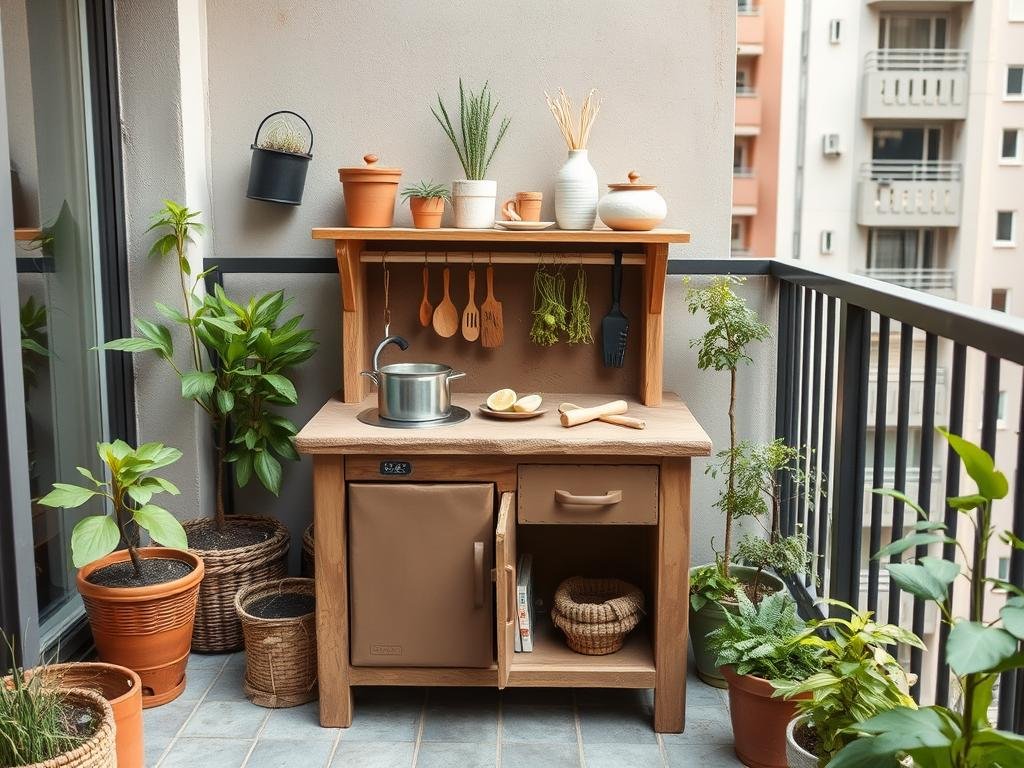
Don’t have a spacious backyard? No problem! Mud kitchens can be adapted for balconies, patios, and other small outdoor spaces with a few creative adjustments.
Space-Saving Mud Kitchen Ideas
Portable Solutions
Use a plastic storage tub as a self-contained mud kitchen that can be stored away when not in use
Create a “mud kitchen in a box” with all supplies packed in a weather-resistant container
Try a folding table that can be set up for play and folded away afterward
Use a rolling cart that can be moved between indoor and outdoor spaces
Vertical Designs
Install a fold-down table attached to a wall or railing
Use pegboards or wall-mounted organizers for vertical tool storage
Stack crates or shelving units to create vertical play spaces
Hang fabric pockets on a fence or railing to store smaller items
Containing the Mess in Small Spaces
In limited areas, managing the inevitable mud kitchen mess becomes even more important:
Use a large plastic tarp or splash mat under the play area for easy cleanup
Opt for deep containers that contain splashes and spills
Keep a small handheld vacuum or broom nearby for quick cleanups
Establish a simple cleanup routine that children help with after play
Consider using a water table as the base for your small-space mud kitchen
Perfect for Small Spaces
Discover water tables and sensory bins that make excellent bases for apartment-friendly mud kitchens.
Even in urban environments, you can incorporate natural elements into mud kitchen play:
Grow herbs or small plants in containers near your mud kitchen
Collect natural materials during walks to parks or green spaces
Use potting soil rather than digging up limited garden space
Create a small “nature treasure” collection box for special finds
Consider a small vertical garden that can provide both play materials and beauty
Pinterest Tip: Create a pin showing “5 Mud Kitchen Ideas for Small Balconies” with the caption “Limited space? No problem! These compact mud kitchens bring nature play to any size outdoor area. #BalconyMudKitchen #SmallSpacePlay”
Embracing the Mud Kitchen Journey
As we’ve explored throughout this guide, a mud kitchen for kids offers far more than just messy play—it provides a rich environment for development, learning, and connection with nature. Whether you opt for an elaborate backyard setup or a simple balcony solution, the benefits remain the same: children engaged in meaningful, self-directed play that nurtures their bodies, minds, and spirits.
Remember that your mud kitchen doesn’t need to be perfect or Pinterest-worthy to be valuable. The most important ingredients are your willingness to embrace a little mess and your child’s natural curiosity and creativity. Start simple, add elements as you go, and let your children’s interests guide the evolution of this special play space.
As you embark on your mud kitchen journey, celebrate the moments of discovery, the joyful expressions, and even the inevitable cleanup sessions—they’re all part of the beautiful process of childhood. Your mud kitchen will likely become a cherished memory for your children, a place where imagination flowed as freely as the mud and water they combined in countless creative ways.
Ready to Create Your Mud Kitchen?
Browse everything you need to set up the perfect mud kitchen for your children and start creating memories that will last a lifetime.
“The mud kitchen has been the single most-used feature in our backyard for three years running. Through all seasons and weather, it draws my children outdoors and into their imaginations. It’s messy, it’s simple, and it’s absolutely magical.”
A well-organized garage transforms your home’s functionality, creating space for vehicles while keeping tools, sports equipment, and seasonal items accessible. The…