The desire for outdoor privacy is universal. Whether you’re looking to block the view of a neighbor’s window, create a secluded retreat, or simply define your outdoor space, thoughtful privacy landscaping between houses offers an elegant solution that enhances your property’s beauty while providing the seclusion you crave. Unlike stark fences or walls, natural privacy screens blend seamlessly with your landscape, creating living barriers that change with the seasons and improve with age.
This Website contains affiliate links. That means I may earn a small commission if you purchase through my links, at no extra cost to you.
In this comprehensive guide, we’ll explore how to transform that narrow space between neighboring properties into a lush, private sanctuary using strategic plantings, creative designs, and thoughtful hardscaping elements. From fast-growing evergreens to layered perennial borders, you’ll discover privacy solutions that match your space, climate, and maintenance preferences.
Key Considerations Before Creating Your Privacy Landscape
Before selecting plants or designing your privacy screen, several important factors will influence your choices and ultimate success. Taking time to assess these elements will help you create a privacy solution that thrives in your specific environment.
Available Space and Width
The width of the area between houses is perhaps the most critical factor in your privacy landscaping plan. Narrow spaces require careful plant selection to avoid overcrowding, while wider areas allow for more layered, complex designs. Measure your available space carefully, considering not just the current width but how much room plants will need as they mature.
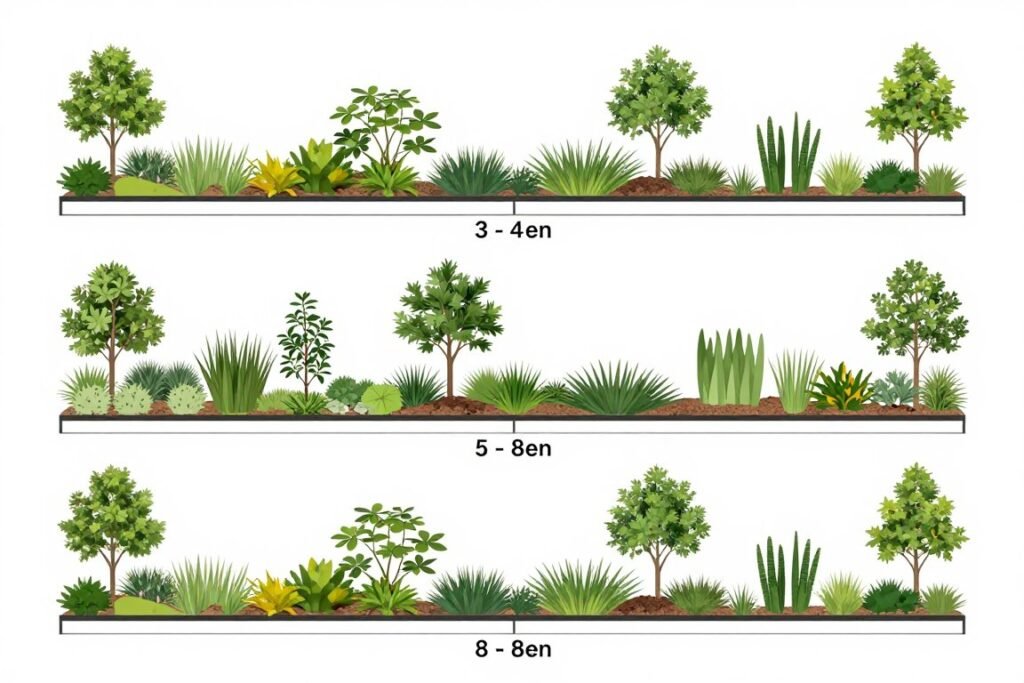
For very narrow spaces (3-4 feet), consider columnar trees or espalier techniques. Medium spaces (5-8 feet) can accommodate a single row of shrubs or small trees. Wider areas (8+ feet) allow for layered plantings with multiple rows of vegetation at varying heights.
Sunlight Conditions
Observe how sunlight moves through your property throughout the day. Most privacy plants prefer full sun (6+ hours of direct sunlight), but if your space is shaded by buildings or existing trees, you’ll need shade-tolerant options. Remember that light conditions may change seasonally, especially in northern climates.
Related Posts:


Soil Type and Drainage
Healthy soil is the foundation of successful landscaping. Test your soil to determine its composition (clay, loam, or sandy) and pH level. Most privacy plants prefer well-draining soil with moderate moisture retention. Areas with poor drainage may require raised beds or soil amendments before planting.
Test Your Soil for Better Results
Understanding your soil composition is crucial for selecting the right plants. A simple soil test kit can help identify pH levels and nutrient content.
Desired Height and Growth Rate
Consider how tall your privacy screen needs to be to effectively block unwanted views. Are you screening a single-story window or a second-floor balcony? Fast-growing plants provide quicker results but may require more maintenance, while slower-growing varieties often develop denser foliage and need less pruning.
Climate and Hardiness Zone
Your local climate determines which plants will thrive in your landscape. Check your USDA hardiness zone and select plants rated for your region. Consider extreme weather conditions like winter winds, summer heat, or seasonal drought that might affect plant health.
Once you’ve assessed these key factors, you’re ready to explore the wide variety of plant options that can create your perfect privacy screen.
Evergreen Trees and Shrubs for Year-Round Privacy
Evergreen plants form the backbone of most privacy landscapes, providing consistent screening throughout all seasons. Their dense foliage creates effective visual barriers while adding year-round structure and color to your garden.
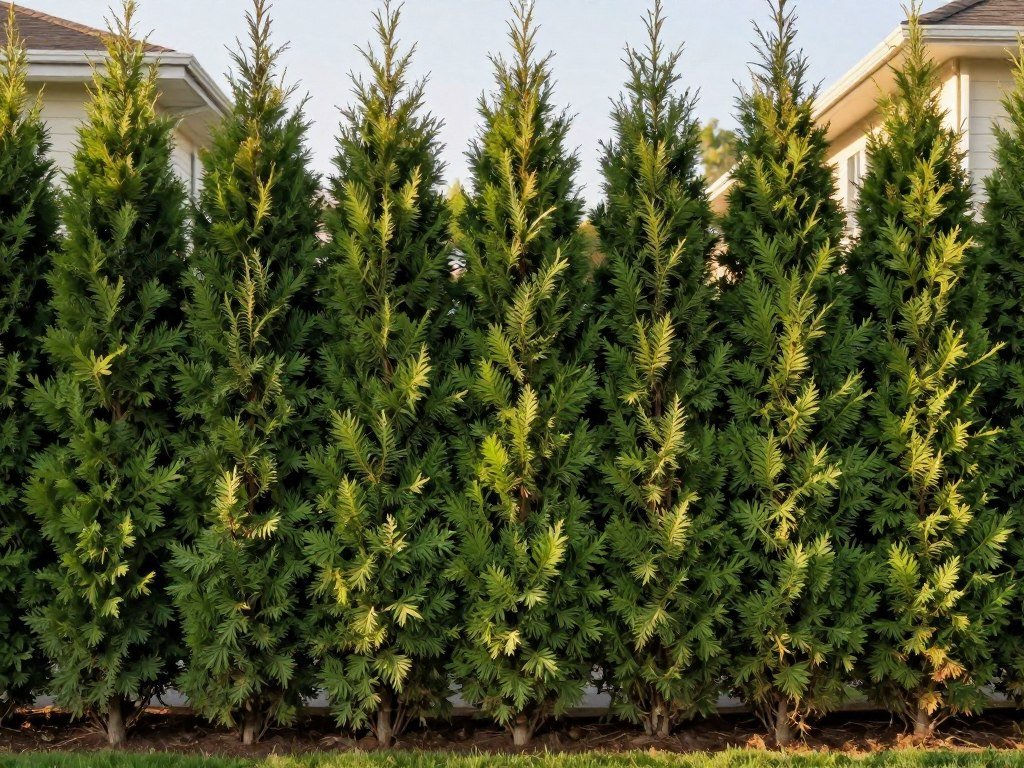
Arborvitae (Thuja)
Arborvitae varieties are among the most popular choices for privacy screens due to their dense foliage and columnar growth habit. ‘Green Giant’ can grow 3-5 feet per year, reaching heights of 30-40 feet, while ‘Emerald Green’ offers a more compact option at 12-14 feet tall. These versatile evergreens adapt to various soil conditions and require minimal pruning to maintain their shape.
Cypress Trees
Leyland cypress grows quickly (2-3 feet per year) with soft, feathery foliage that creates an elegant screen. Italian cypress offers a dramatic vertical accent with its narrow, columnar form. Both varieties provide excellent privacy but require adequate spacing to prevent disease issues in humid climates.
Holly (Ilex)
Holly varieties like ‘Nellie R. Stevens’ and ‘Dragon Lady’ combine privacy with ornamental appeal, featuring glossy evergreen leaves and bright red berries in winter. These dense shrubs reach 15-25 feet tall and 8-12 feet wide, making them ideal for medium to large spaces between properties.
Start Your Privacy Screen with Quality Plants
Emerald Green Arborvitae is one of the most popular choices for creating privacy screens between houses, offering dense foliage and a manageable size.
Juniper (Juniperus)
‘Spartan’ juniper offers excellent drought tolerance with a naturally pyramidal shape that requires minimal maintenance. ‘Skyrocket’ juniper provides a narrow, columnar form perfect for tight spaces. Both varieties feature blue-green foliage that adds interesting color to your landscape.
Boxwood (Buxus)
For formal privacy screens, boxwoods offer dense, evergreen foliage that responds well to shearing. While slower growing than other options, their fine texture and ability to be shaped into hedges make them ideal for traditional landscape designs. ‘Green Velvet’ and ‘Winter Gem’ varieties offer improved cold hardiness.
When planting evergreens for privacy, space them according to their mature width to allow proper air circulation while still creating a continuous screen. Most varieties benefit from regular watering during their first two growing seasons until they establish deep root systems.
Deciduous Trees and Shrubs for Seasonal Privacy
While deciduous plants lose their leaves in winter, they offer unique benefits for privacy landscaping: faster growth rates, spectacular seasonal changes, and often more ornamental features than their evergreen counterparts. They’re ideal for areas where winter privacy is less critical or as companions to evergreen foundations.
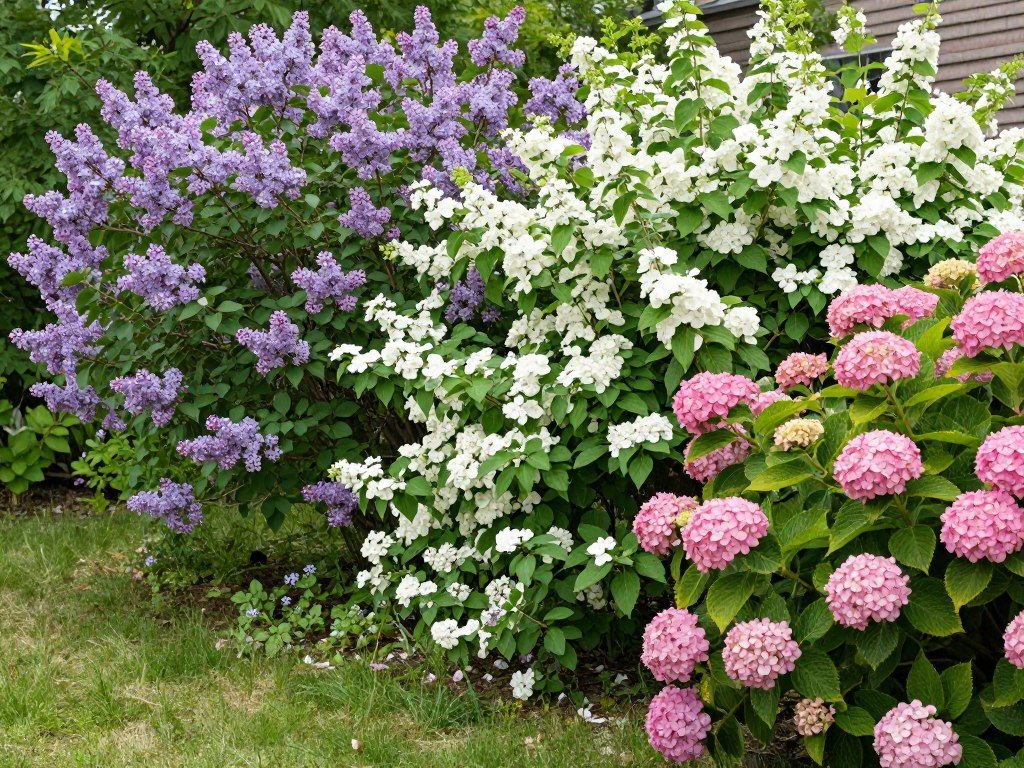
Lilac (Syringa)
Common lilac grows 8-15 feet tall and wide, creating substantial privacy while offering intoxicating fragrance during its spring bloom period. For smaller spaces, dwarf varieties like ‘Miss Kim’ reach just 4-6 feet. Lilacs prefer full sun and well-draining soil, rewarding minimal care with decades of reliable screening.
Viburnum
Versatile viburnums offer multi-season interest with spring flowers, summer berries, and often spectacular fall color. ‘Blue Muffin’ arrowwood viburnum reaches 5-7 feet tall, while ‘Chicago Lustre’ can grow to 10-12 feet. Their dense branching structure provides excellent screening even in winter when leaves have fallen.
Hydrangea
For partial shade locations, panicle hydrangeas like ‘Limelight’ or ‘Pinky Winky’ create 6-8 foot privacy screens with spectacular summer blooms that persist into fall. These low-maintenance shrubs adapt to various soil types and require minimal pruning to maintain their shape.
Rose of Sharon (Hibiscus syriacus)
This summer-flowering shrub grows 8-12 feet tall with a naturally vase-shaped form. Its tropical-looking blooms appear from midsummer through fall when many other shrubs have finished flowering. Plant several varieties for continuous color from July through September.
Add Color to Your Privacy Screen
Hydrangeas offer beautiful blooms and substantial screening, making them perfect additions to privacy landscapes between houses.
Bamboo
For rapid privacy, clumping bamboo varieties like Fargesia create impressive screens within 2-3 seasons. Unlike running bamboos that can become invasive, clumping types stay contained while reaching heights of 8-15 feet. Their year-round foliage provides substantial screening with an exotic, tropical appearance.
When incorporating deciduous plants into privacy screens, consider layering them with evergreens or installing decorative fencing that can provide structure during winter months when leaves have fallen. Many deciduous varieties offer the advantage of faster establishment and more dramatic seasonal interest than evergreens.
Climbing Vines and Structural Elements
For narrow spaces or areas where vertical height is needed quickly, combining climbing plants with structural supports creates effective privacy screens that occupy minimal ground space. These living walls add texture, movement, and often fragrance to your landscape.
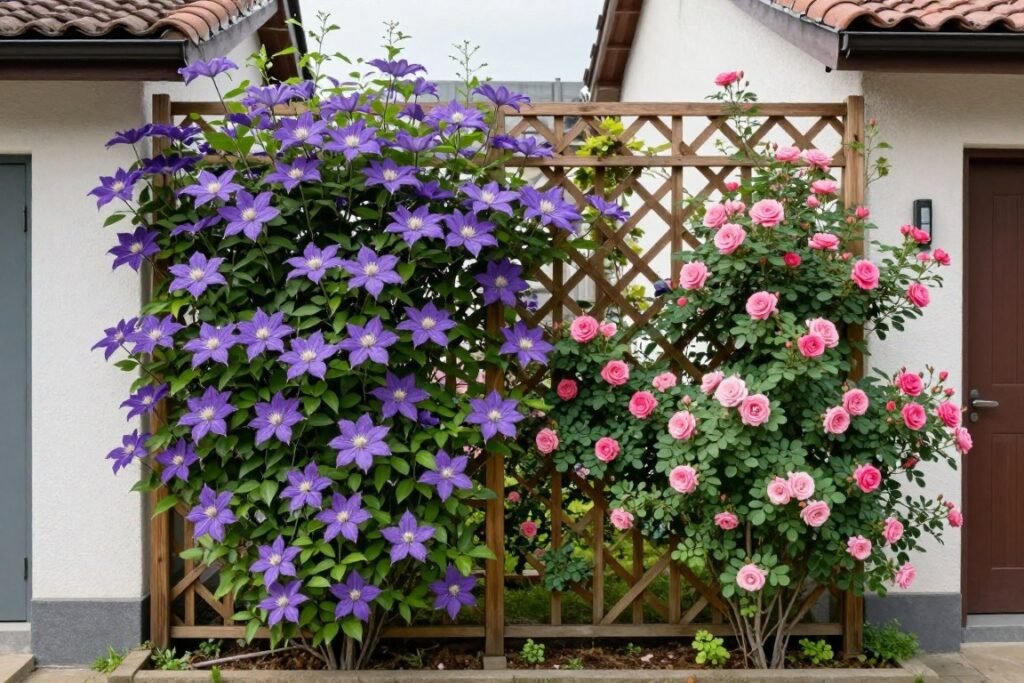
Trellis and Vine Combinations
Wooden or metal trellises provide immediate structure while plants establish. For lasting privacy, choose sturdy designs that can support mature vines. Lattice panels, cattle panels, or custom-built wooden frameworks all make excellent supports for climbing plants.
Create an Instant Privacy Structure
A quality garden trellis provides immediate structure while your climbing plants establish, creating an attractive privacy screen between properties.
Clematis
These flowering vines produce spectacular blooms in various colors while climbing 8-12 feet high. Combine early, mid, and late-season varieties for continuous color from spring through fall. Most clematis prefer “cool feet, warm heads” – plant low-growing perennials around their base while allowing the vines to climb into sunlight.
Climbing Roses
For romantic, cottage-style privacy, climbing roses create fragrant, flowering screens on trellises or fences. ‘New Dawn’ offers exceptional disease resistance with pale pink blooms, while ‘Zéphirine Drouhin’ thrives in partial shade with thornless stems. Most climbing roses reach 8-12 feet tall and bloom repeatedly throughout summer.
Honeysuckle (Lonicera)
Honeysuckle vines combine rapid growth with intoxicating fragrance, climbing 10-20 feet in just a few seasons. ‘Major Wheeler’ coral honeysuckle attracts hummingbirds with its tubular red blooms, while ‘Scentsation’ offers yellow flowers with exceptional perfume. These adaptable vines thrive in sun or partial shade.
Pergolas and Arbors
For defining outdoor rooms or creating privacy from above, pergolas and arbors provide architectural structure that can be enhanced with climbing plants. These features work particularly well for screening views from second-story windows or creating intimate garden spaces.
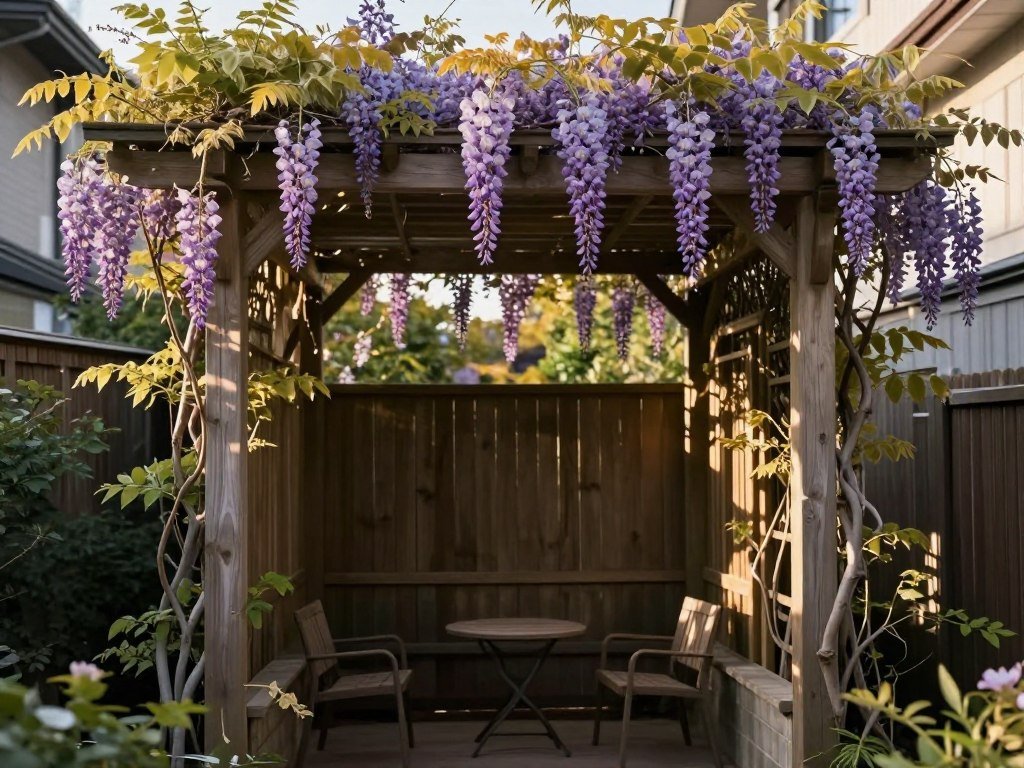
When using structural elements with climbing plants, ensure your support system is sturdy enough to handle the mature weight of the vines. Most climbing plants benefit from gentle training and occasional pruning to direct their growth and maintain a tidy appearance.
Ornamental Grasses and Tall Perennials
For a softer, more naturalistic approach to privacy, ornamental grasses and tall perennials create seasonal screens with exceptional movement, texture, and wildlife value. These plants work well in contemporary landscapes or as companions to more structural privacy elements.
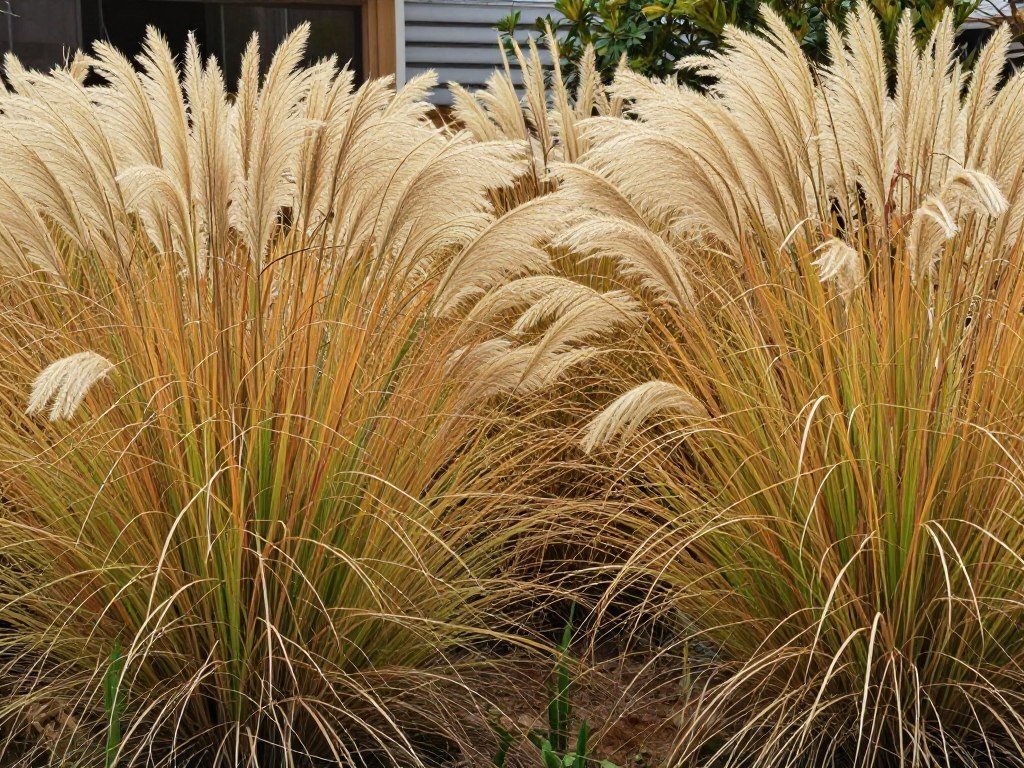
Miscanthus (Maiden Grass)
These architectural grasses form impressive 6-8 foot tall clumps crowned with feathery plumes in late summer. ‘Morning Light’ offers finely textured foliage with cream variegation, while ‘Gracillimus’ creates a fountain-like form with arching leaves. Most varieties maintain their structure through winter, providing year-round interest.
Panicum (Switchgrass)
Native switchgrass varieties like ‘Northwind’ and ‘Shenandoah’ combine upright growth with exceptional drought tolerance. Reaching 4-6 feet tall, these grasses develop colorful fall foliage and airy seed heads that persist through winter, creating four-season privacy with minimal maintenance.
Tall Perennials
Joe-pye weed, Russian sage, and tall garden phlox can create seasonal privacy screens reaching 4-6 feet tall. These flowering perennials attract pollinators while providing substantial summer screening. Combine several varieties for continuous bloom from June through September.
Add Movement to Your Privacy Screen
Ornamental grasses create dynamic, low-maintenance privacy screens that add movement and sound to your landscape.
While grasses and perennials may not provide complete year-round screening, their seasonal presence and natural aesthetic make them excellent choices for layered privacy designs. Most require minimal maintenance – simply cut back ornamental grasses in late winter and divide every 3-4 years to maintain vigor.
Design Tips for Effective Privacy Landscaping
Creating truly effective privacy between houses requires thoughtful design that balances screening needs with aesthetic considerations. These design principles will help you create privacy landscapes that enhance your property’s beauty while providing the seclusion you desire.
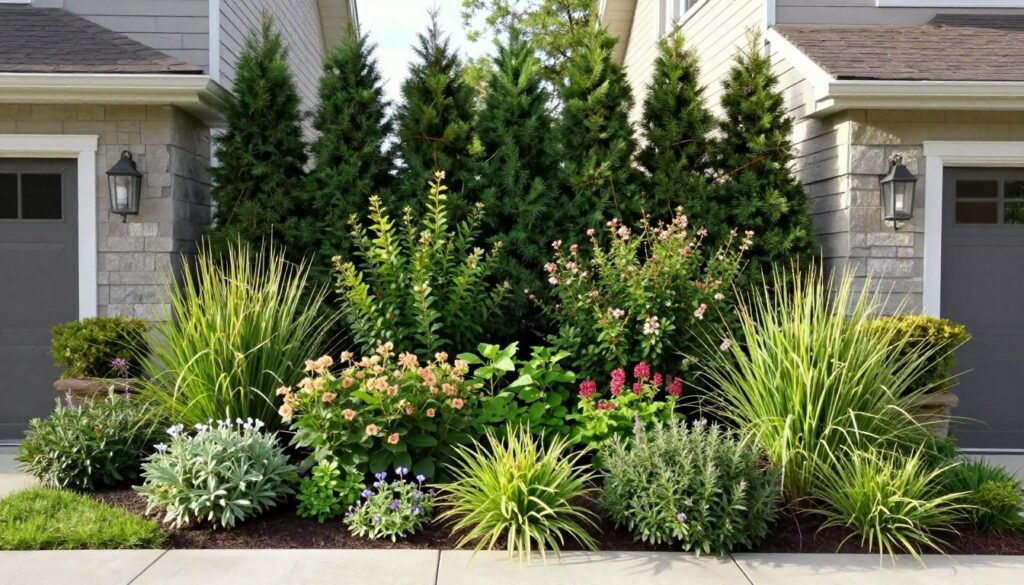
Layer Plants for Depth and Interest
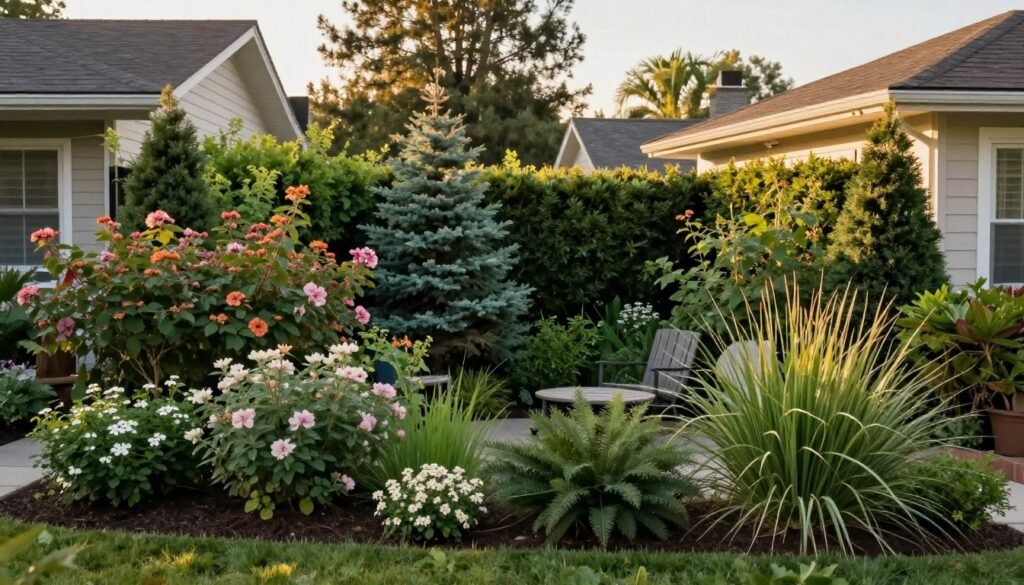
Rather than creating a single-row “green wall,” design your privacy screen with multiple layers of vegetation. Place taller plants toward the back, medium-height plants in the middle, and shorter species in front. This approach creates visual depth while providing more effective screening than a single plant type.
Embrace Curves Instead of Straight Lines
Curved planting beds feel more natural and inviting than straight rows. Gentle curves create visual interest and make your landscape feel more spacious. This approach works particularly well in informal garden styles and helps privacy screens blend with surrounding landscape features.
Mix Textures and Colors
Combine plants with different leaf shapes, sizes, and colors to create visual interest throughout the seasons. Pair fine-textured plants like ornamental grasses with bold-leaved shrubs like viburnum. Include plants with seasonal highlights – spring flowers, summer berries, fall color – to ensure year-round appeal.
Incorporate Hardscaping Elements
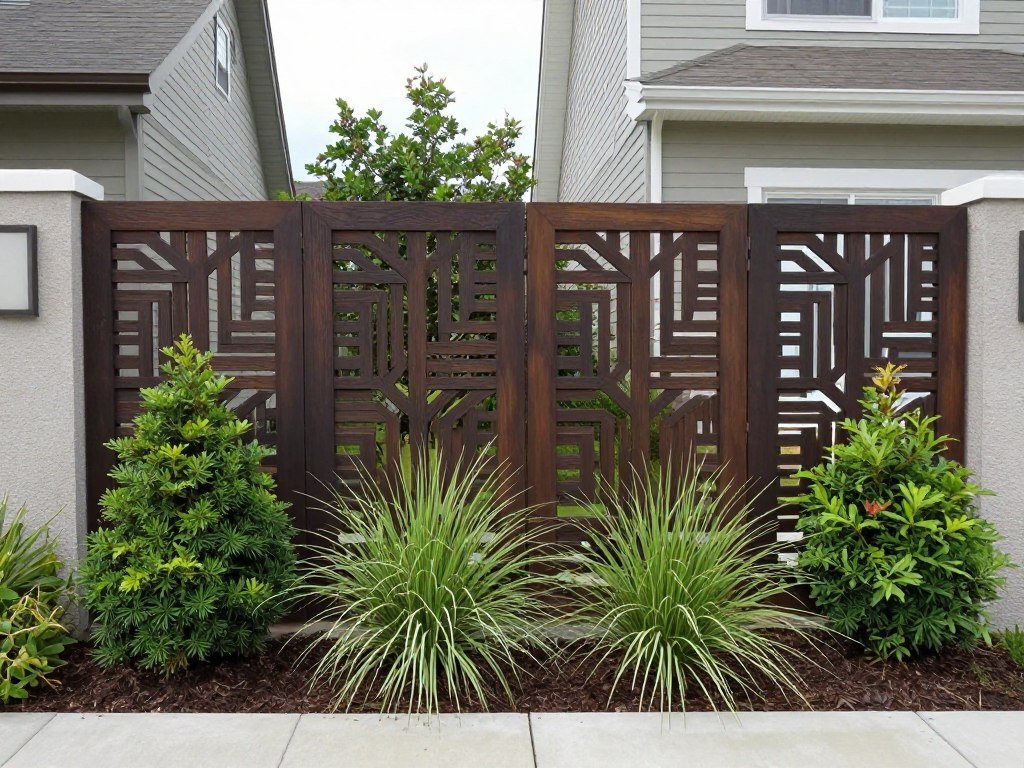
Decorative panels, short sections of fencing, or stone walls can complement plantings while providing immediate privacy in key areas. These structural elements create “backbone” for your design while plants establish and grow. Consider materials that complement your home’s architecture for a cohesive look.
Create Outdoor “Rooms”
Use privacy plantings to define specific areas within your landscape – a dining space, meditation garden, or play area. This approach not only provides privacy from neighbors but also creates intimate spaces within your own yard. Consider how privacy elements can frame views and direct movement through your landscape.
Enhance Your Design with Decorative Elements
Decorative panels and screens can provide immediate privacy while complementing your plantings for a designer-quality landscape.
Remember that effective privacy landscaping evolves over time. Create a design that accommodates the mature size of plants while providing adequate screening during the establishment period. Consider temporary privacy solutions like decorative screens while waiting for plants to reach their full potential.
Installation and Maintenance Tips
The success of your privacy landscape depends on proper installation and ongoing care. These practical tips will help your plants establish quickly and thrive for years to come, creating the effective, beautiful screen you envision.
Proper Spacing and Planting Techniques
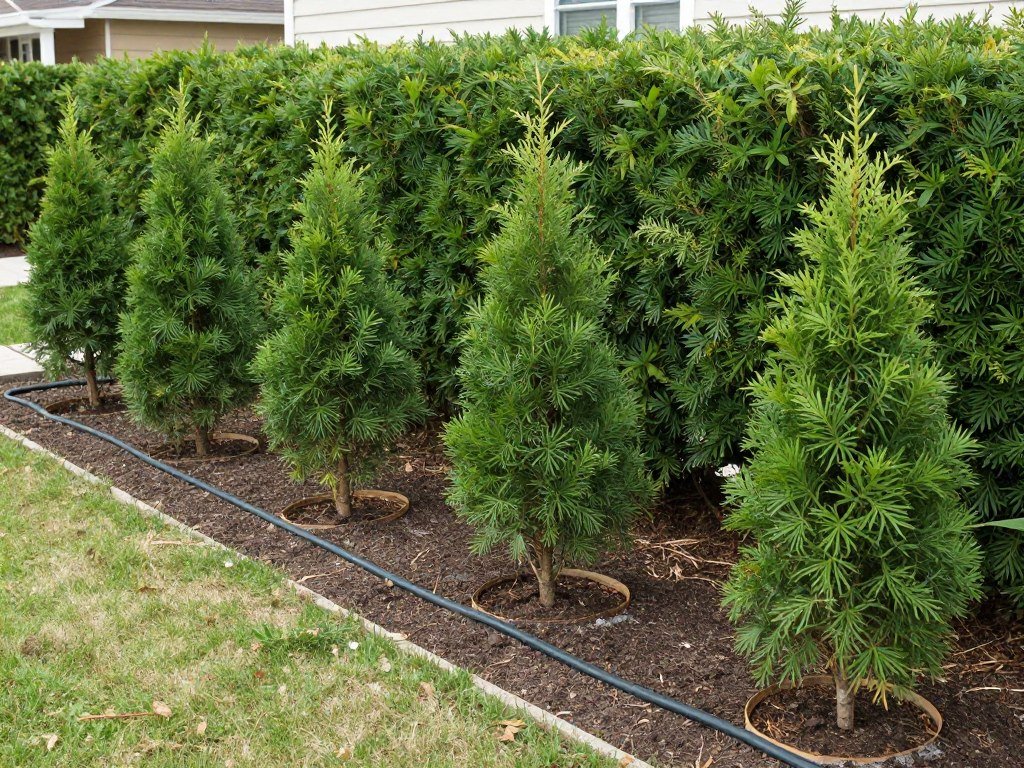
Space plants according to their mature width to prevent overcrowding while still creating a continuous screen. For most privacy hedges, this means placing plants 2/3 to 3/4 of their mature width apart. Dig planting holes twice as wide as the root ball but no deeper, as planting too deep is a common cause of plant failure.
Soil Preparation and Amendments
Prepare soil thoroughly before planting by removing weeds and incorporating compost or other organic matter. For clay soils, add compost and coarse sand to improve drainage. In sandy soils, add compost to improve water retention. Consider raised beds in areas with poor drainage or compacted soil.
Watering Schedules
Newly planted privacy screens require consistent moisture during their first growing season. Water deeply once or twice weekly rather than frequent shallow watering to encourage deep root development. Consider installing drip irrigation or soaker hoses to deliver water efficiently directly to root zones.
Water Efficiently with Drip Irrigation
A drip irrigation system helps establish new privacy plantings with minimal water waste, delivering moisture directly to plant roots.
Mulching Benefits
Apply 2-3 inches of organic mulch around plants to suppress weeds, conserve moisture, and moderate soil temperature. Keep mulch several inches away from plant stems to prevent rot and disease issues. Replenish mulch annually as it breaks down and enriches the soil.
Pruning Techniques
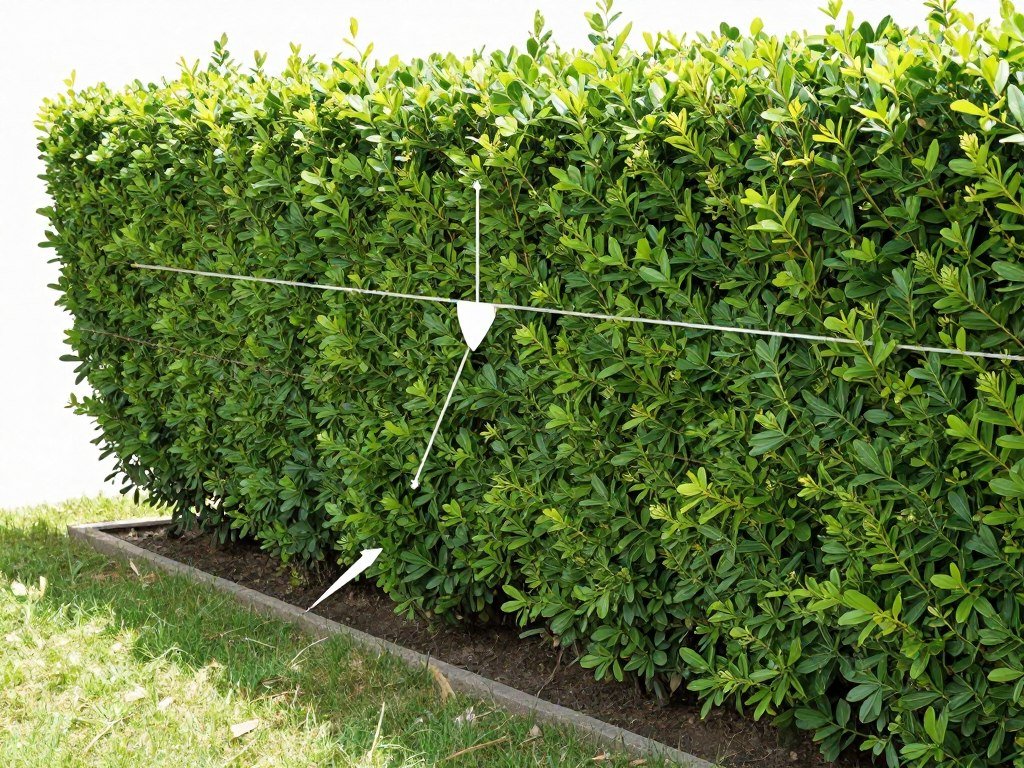
Most privacy plants benefit from light pruning during the first few years to encourage dense, bushy growth. For formal hedges, begin shaping when plants reach the desired height, keeping the base wider than the top to ensure light reaches lower branches. For natural screens, limit pruning to removing dead or damaged branches.
Long-Term Care
Established privacy screens require less intensive care but still benefit from annual maintenance. Apply slow-release fertilizer in spring according to plant needs. Monitor for pests and diseases, addressing issues promptly before they affect the entire screen. Renew mulch annually and prune as needed to maintain desired form.
With proper installation and consistent care, your privacy landscape will mature into a beautiful, effective screen that enhances your property while providing the seclusion you desire. Remember that patience is key – most privacy plantings reach their full potential within 3-5 years, improving with each growing season.
Creating Your Perfect Privacy Oasis
Privacy landscaping between houses offers a unique opportunity to transform utilitarian spaces into beautiful, functional gardens that enhance your outdoor living experience. By thoughtfully combining plants, structures, and design principles, you can create natural barriers that provide seclusion while adding value and beauty to your property.
Remember that effective privacy landscaping is a journey, not an overnight transformation. Begin with a thoughtful plan based on your specific site conditions, privacy needs, and aesthetic preferences. Invest in quality plants appropriate for your climate and space constraints. Provide proper care during the establishment period, and your patience will be rewarded with a living screen that improves with each passing season.
Whether you choose the year-round reliability of evergreens, the seasonal drama of deciduous plants, the vertical impact of climbing vines, or a harmonious combination of all these elements, your privacy landscape can become one of your property’s most valuable and enjoyable features.
We hope this guide has inspired you to see the space between houses not as a challenge but as an opportunity to create something truly special – a natural sanctuary that provides privacy while connecting you more deeply to the natural world. Save this article for future reference as you embark on your privacy landscaping journey, and enjoy the process of creating your own perfect outdoor retreat.
Start Your Privacy Landscape Today
Ready to transform that space between houses into a private oasis? Find everything you need to get started with your privacy landscaping project.