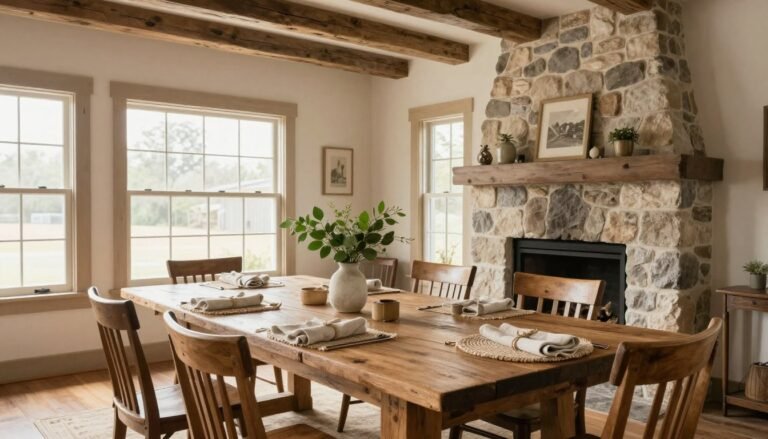
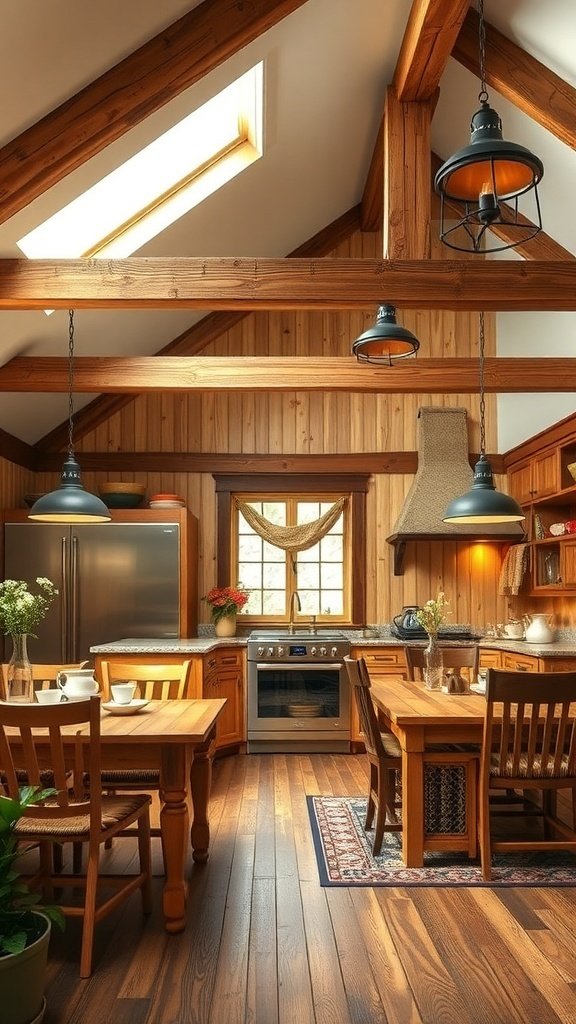
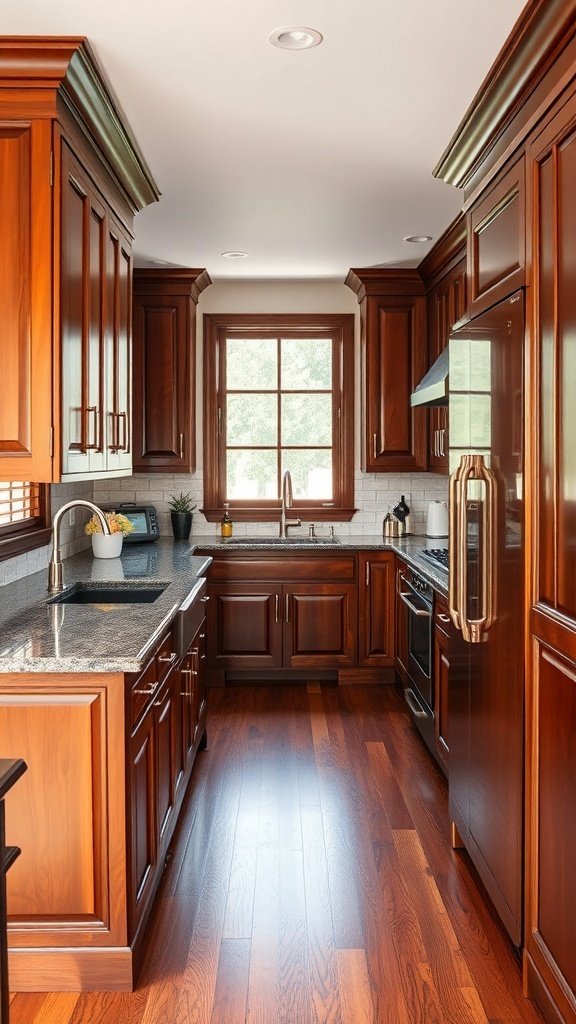
The open kitchen concept has revolutionized modern home design, breaking down barriers between cooking spaces and living areas to create flowing, sociable environments. These versatile layouts not only make small spaces feel larger but also transform the kitchen into the true heart of the home—a place where family gathers, conversations flow, and memories are made over delicious meals. Whether you’re planning a complete renovation or looking for inspiration to refresh your current space, this guide will walk you through everything you need to know about creating a stunning open kitchen design that perfectly balances style and functionality.
This Website contains affiliate links. That means I may earn a small commission if you purchase through my links, at no extra cost to you.
The Benefits of Open Kitchen Design
Open kitchen layouts have gained tremendous popularity for good reason. These designs eliminate walls and barriers, creating a seamless flow between cooking, dining, and living spaces. This integration offers numerous advantages that enhance both the functionality and atmosphere of your home.
Enhanced Social Interaction
Open kitchens eliminate the isolation often experienced by the cook. Whether you’re preparing a quick weeknight dinner or hosting a holiday feast, you can maintain conversations with family and guests while working in the kitchen. This social aspect transforms cooking from a solitary chore into a shared experience.
Improved Light and Spaciousness
By removing walls, natural light can flow freely throughout the space. Windows in adjacent rooms now benefit the kitchen area, creating a brighter, more welcoming environment. Even smaller homes feel more spacious and airy with an open kitchen layout, making it an excellent solution for compact living spaces.
Related Posts:


Better Traffic Flow
Open kitchens eliminate bottlenecks and cramped pathways. With thoughtful design, you can create efficient traffic patterns that allow multiple people to move through the space comfortably. This improved flow is particularly valuable during gatherings when several people might be helping with meal preparation or serving.
Key Elements of Open Kitchen Design
Creating a successful open kitchen requires careful consideration of several design elements. From layout planning to color coordination, each aspect contributes to the overall functionality and aesthetic appeal of your space.
Layout Options for Open Kitchens
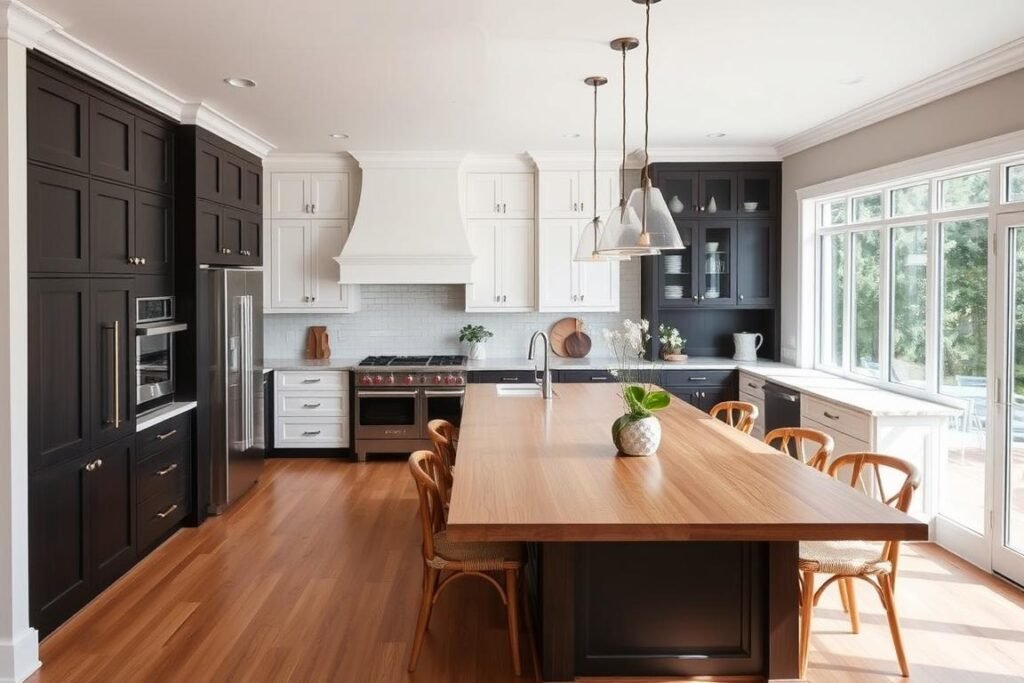
The right layout forms the foundation of an effective open kitchen design. Consider these popular configurations based on your space and needs:
L-Shaped Layout
An L-shaped kitchen utilizes two adjacent walls to create a natural work triangle. This layout works exceptionally well in open concepts as it leaves one or two sides completely open to the adjoining space. Add an island for additional counter space and to create a natural boundary between the kitchen and living areas.
U-Shaped Layout
For those who need maximum storage and counter space, a U-shaped layout offers three walls of cabinetry and work surfaces. In an open concept, one “wall” is often a peninsula that opens to the living or dining area, creating a natural division while maintaining the open feel.
Galley with Island
A modified galley kitchen with one wall removed and replaced by an island creates an efficient workspace while opening to adjacent areas. This layout is particularly effective in smaller homes where space is at a premium but openness is desired.
Single Wall with Island
For truly open spaces, a single wall of cabinetry paired with a substantial island offers maximum openness. This minimalist approach works well in contemporary homes and lofts where the kitchen integrates completely with living spaces.
Color Schemes and Visual Continuity
In open kitchen designs, color coordination becomes even more important as the kitchen is visually connected to adjacent spaces. Creating a cohesive color scheme helps the areas flow together while still maintaining distinct zones.
Neutral Foundation
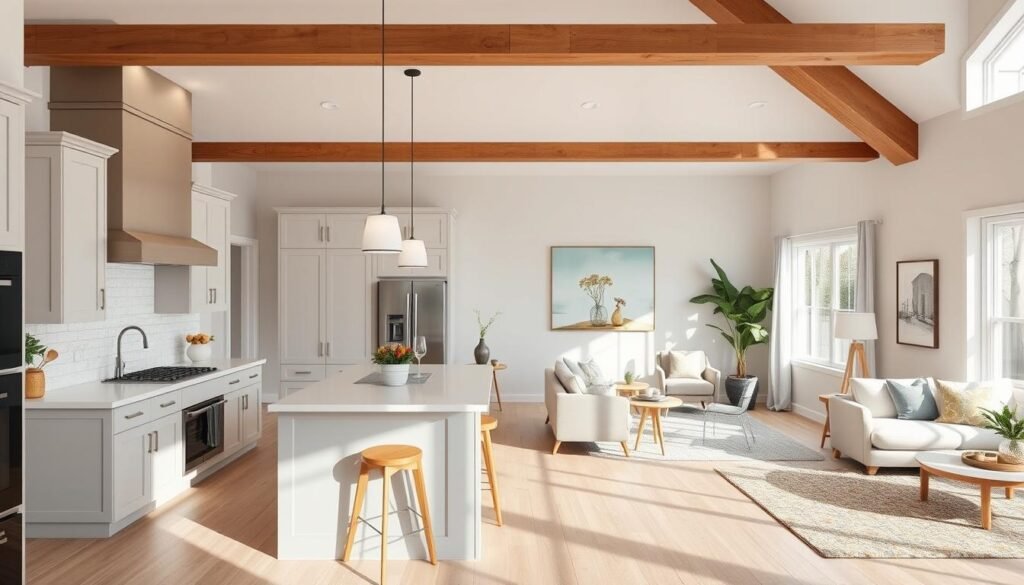
Start with a neutral base palette that works throughout the open space. Whites, grays, beiges, and soft earth tones create a versatile backdrop that allows for easy coordination between zones. This approach is particularly effective in smaller spaces where visual continuity helps maintain a sense of spaciousness.
Accent Colors
Use accent colors strategically to define different functional areas while maintaining cohesion. For example, incorporate the same accent color in kitchen backsplash tiles, living room throw pillows, and dining chair upholstery to create a subtle visual connection between spaces.
Material Consistency
Repeat key materials throughout the open space to reinforce visual continuity. Wood tones from kitchen cabinets might be echoed in dining furniture or living room shelving. Similarly, metal finishes from kitchen fixtures can be carried through in lighting and accessories in adjacent areas.
Lighting Strategies for Open Kitchens
Effective lighting is crucial in open kitchen designs, serving both functional and aesthetic purposes. A well-planned lighting scheme enhances the usability of the space while helping to define different zones.
Illuminate Your Open Kitchen
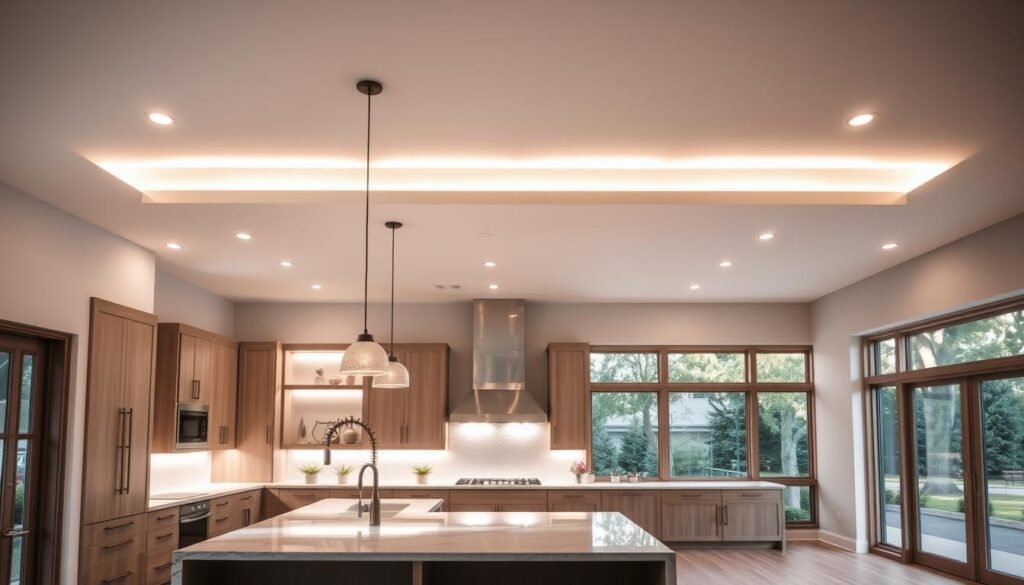
Looking for the perfect pendant lights to hang over your kitchen island? Explore a variety of stylish options that can transform your open kitchen’s appearance and functionality.
Task Lighting
Ensure work areas are well-illuminated with targeted task lighting. Under-cabinet lights illuminate countertops, while recessed ceiling fixtures provide overhead illumination for food preparation areas. Consider adjustable options that allow you to control light intensity based on the task at hand.
Ambient Lighting
Create a warm, inviting atmosphere with ambient lighting that softly illuminates the entire space. Recessed ceiling lights with dimmers offer flexible general lighting that can be adjusted according to time of day and activities. This layer of lighting helps the open space feel cohesive.
Accent Lighting
Use decorative fixtures as focal points that define different zones within the open layout. Pendant lights over an island or dining table not only provide illumination but also serve as visual anchors that help delineate spaces. Choose fixtures that complement your overall design aesthetic.
Flooring Considerations
Flooring plays a significant role in open kitchen designs, helping to either unify the space or define separate functional zones.
Continuous Flooring
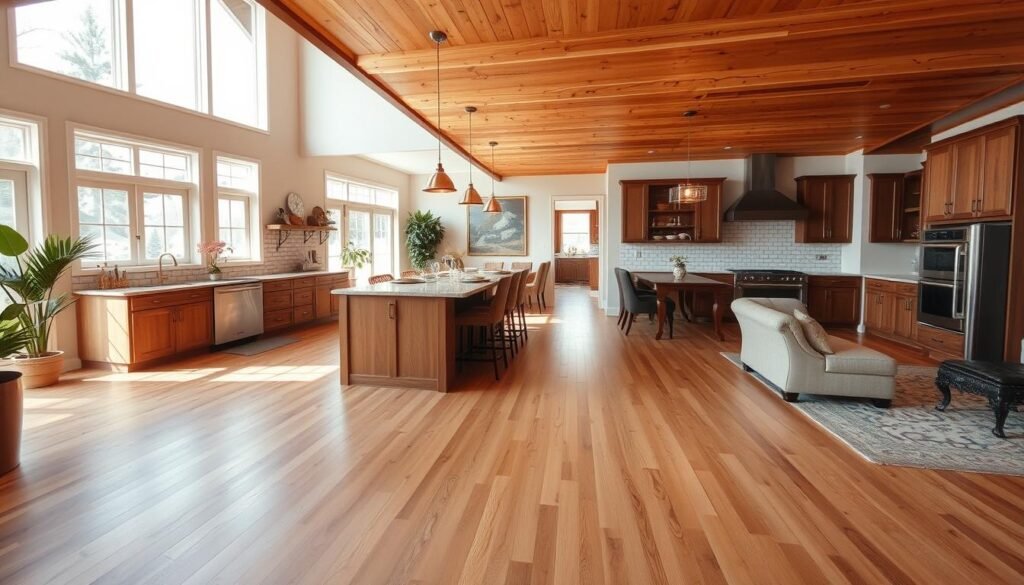
Using the same flooring material throughout the open space creates a seamless flow that visually expands the area. Hardwood, luxury vinyl plank, and large-format tile are excellent options for continuous flooring that can withstand kitchen demands while looking beautiful in living and dining areas.
Defined Zones
Alternatively, different flooring materials can be used to subtly define functional areas within the open layout. For example, tile in the kitchen area transitioning to hardwood in the dining and living spaces creates visual boundaries without physical barriers. Ensure materials complement each other for a cohesive look.
Storage and Organization Solutions for Open Kitchens
Without walls to accommodate upper cabinets, open kitchens require creative storage solutions to maintain functionality while preserving the clean, spacious aesthetic that makes these designs so appealing.
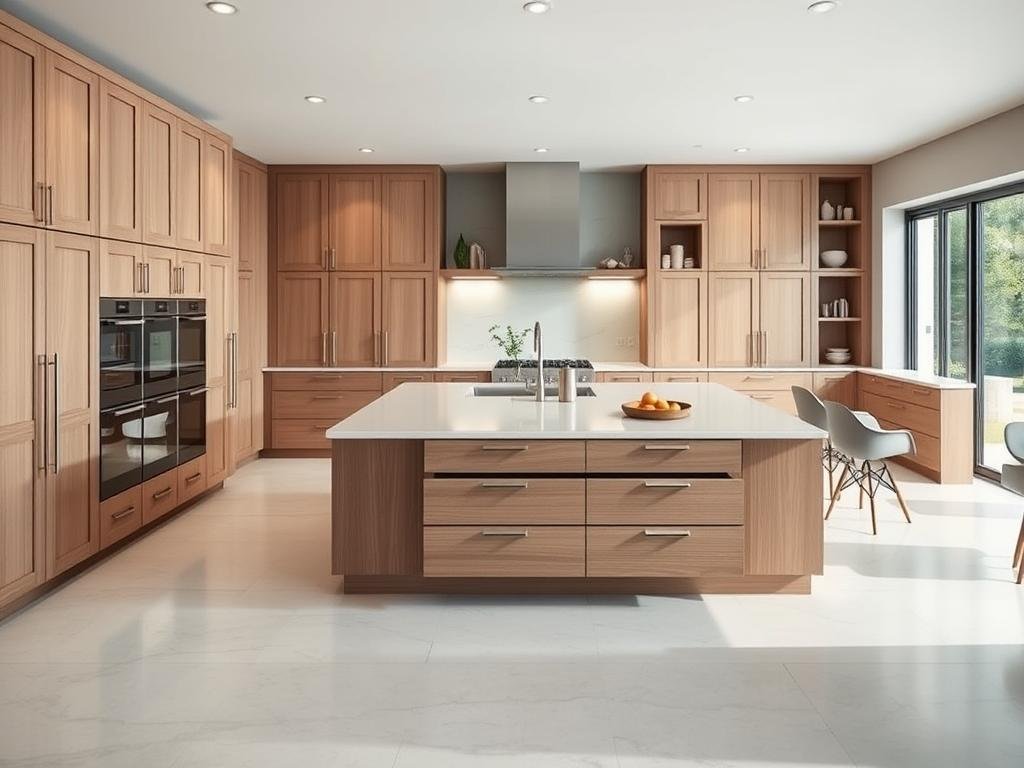
Maximizing Island Storage
Islands serve as the centerpiece of many open kitchens and offer valuable storage opportunities. Incorporate deep drawers for pots and pans, specialized storage for cutting boards and baking sheets, and even refrigerator drawers or wine coolers if space allows. Consider a multi-level island with a raised bar that conceals kitchen mess from the living area view.
Floor-to-Ceiling Cabinetry
Make the most of available wall space with tall cabinetry that extends to the ceiling. These full-height units can house pantry items, small appliances, and seasonal cookware. For a cohesive look, match these cabinets to your other kitchen cabinetry or use complementary finishes that tie in with adjacent living spaces.
Strategic Open Shelving
Open shelving serves both functional and aesthetic purposes in open kitchens. Use these shelves to display attractive dishware, cookbooks, or decorative items that complement your overall design scheme. Place everyday items on lower shelves for easy access and reserve higher shelves for less frequently used or purely decorative pieces.
Organize Your Open Kitchen
Discover stylish and functional storage solutions that will help keep your open kitchen organized and clutter-free.
Smart Storage Accessories
Maximize the functionality of your cabinetry with specialized storage accessories that make every inch count while keeping items organized and accessible.
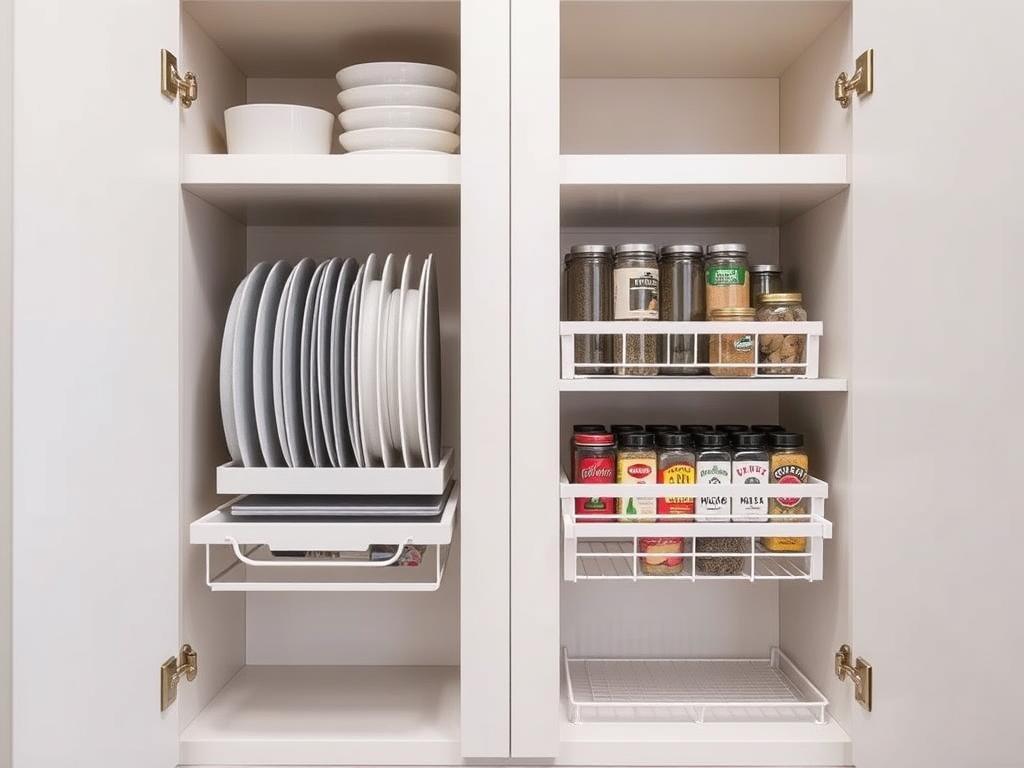
Pull-Out Solutions
Incorporate pull-out shelves, drawers, and racks to make deep cabinets more accessible. These mechanisms allow you to utilize the full depth of cabinets while keeping items visible and within easy reach. Consider specialized pull-outs for trash and recycling bins to keep them hidden but accessible.
Vertical Dividers
Maximize cabinet space with vertical dividers for storing cutting boards, baking sheets, and serving platters. These simple organizers transform awkward cabinet spaces into efficient storage zones, preventing items from stacking and making each piece easily accessible.
Drawer Organizers
Keep drawers tidy with customizable dividers and inserts designed for specific items. Utensil organizers, spice drawer inserts, and adjustable dividers for cookware help maintain order and make finding items effortless, even in a busy kitchen environment.
Maintaining a Clutter-Free Appearance
Since open kitchens are always visible from adjacent living spaces, controlling visual clutter becomes essential to maintaining an attractive, welcoming environment.
Appliance Garages
Keep countertops clear by incorporating appliance garages—cabinets with doors that can be opened to access coffee makers, toasters, and other frequently used small appliances. These specialized storage spaces allow you to keep devices plugged in and ready to use while concealing them when not in use.
Hidden Charging Stations
Designate a drawer or cabinet section as a charging station for phones, tablets, and other devices. Include built-in outlets or USB ports to keep cords organized and devices out of sight while charging, preventing electronic clutter from accumulating on countertops.
Decor and Styling Tips for Open Kitchens
The decorative elements you choose for your open kitchen help define its character while creating visual connections with adjacent living spaces. Thoughtful styling transforms a functional cooking area into an inviting heart of the home.
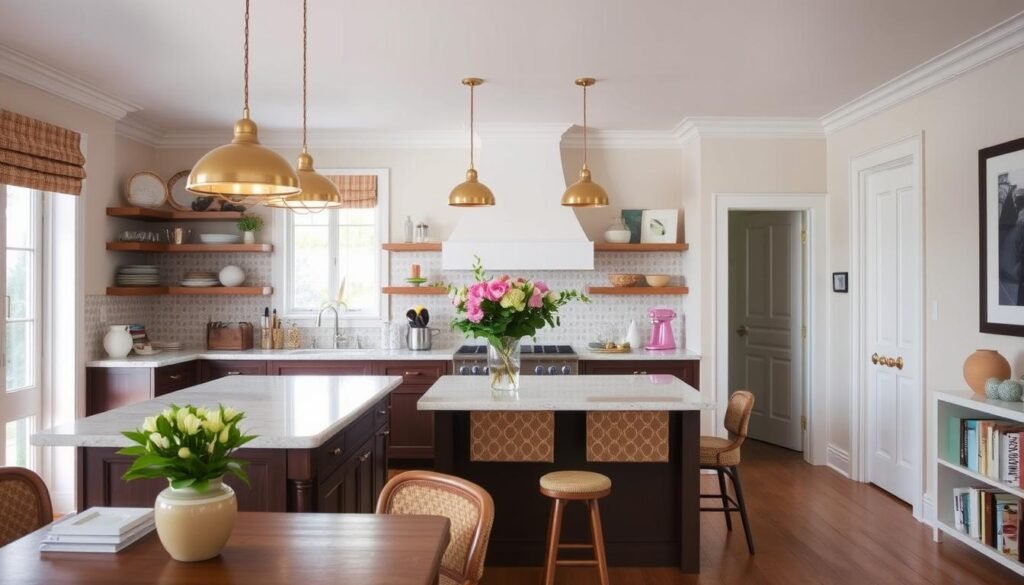
Creating Visual Harmony
In open kitchen designs, decorative elements should create cohesion between the kitchen and adjacent living spaces while expressing your personal style.
Color Coordination
Use decorative accessories to reinforce your color scheme across different zones. Kitchen textiles, artwork, and even small appliances can incorporate accent colors that appear in adjacent living spaces, creating visual threads that tie the open areas together while maintaining distinct functional zones.
Textural Elements
Introduce varied textures to add depth and interest to your open kitchen. Contrast smooth countertops with textured backsplashes, incorporate natural wood elements, or add fabric through window treatments and chair upholstery. These textural variations create visual richness while maintaining cohesion through color coordination.
Balanced Styling
Achieve a polished look by balancing decorative and functional elements. Group items in odd numbers, vary heights and sizes, and incorporate both practical and purely decorative pieces. This approach creates visually pleasing vignettes that enhance the space without creating clutter.
Style Your Open Kitchen
Find beautiful decorative accessories that will add personality and style to your open kitchen design.
Statement Pieces and Focal Points
Incorporate eye-catching elements that draw attention and express personality while enhancing the overall design of your open kitchen.
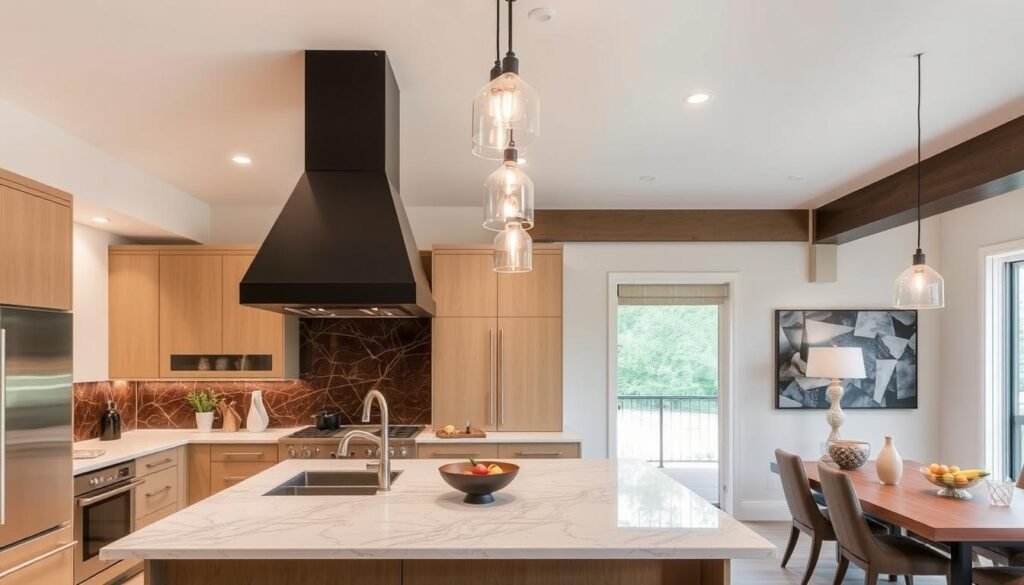
Distinctive Lighting
Pendant lights over an island or dining table serve as both functional lighting and sculptural elements that define the space. Choose fixtures that make a statement while complementing your overall design aesthetic—whether that’s sleek and modern, rustic and organic, or classically elegant.
Architectural Features
Highlight architectural elements like exposed beams, vaulted ceilings, or large windows that frame beautiful views. These structural features add character and visual interest to your open kitchen while creating a sense of spaciousness and connection to surrounding areas.
Artistic Touches
Incorporate artwork that complements your kitchen design while expressing your personal taste. Consider a gallery wall of framed prints, a large statement canvas, or sculptural objects displayed on open shelving. These artistic elements add personality and create visual connections with adjacent living spaces.
Functional Decor Elements
In open kitchens, even practical items can contribute to the overall aesthetic when thoughtfully selected and displayed.
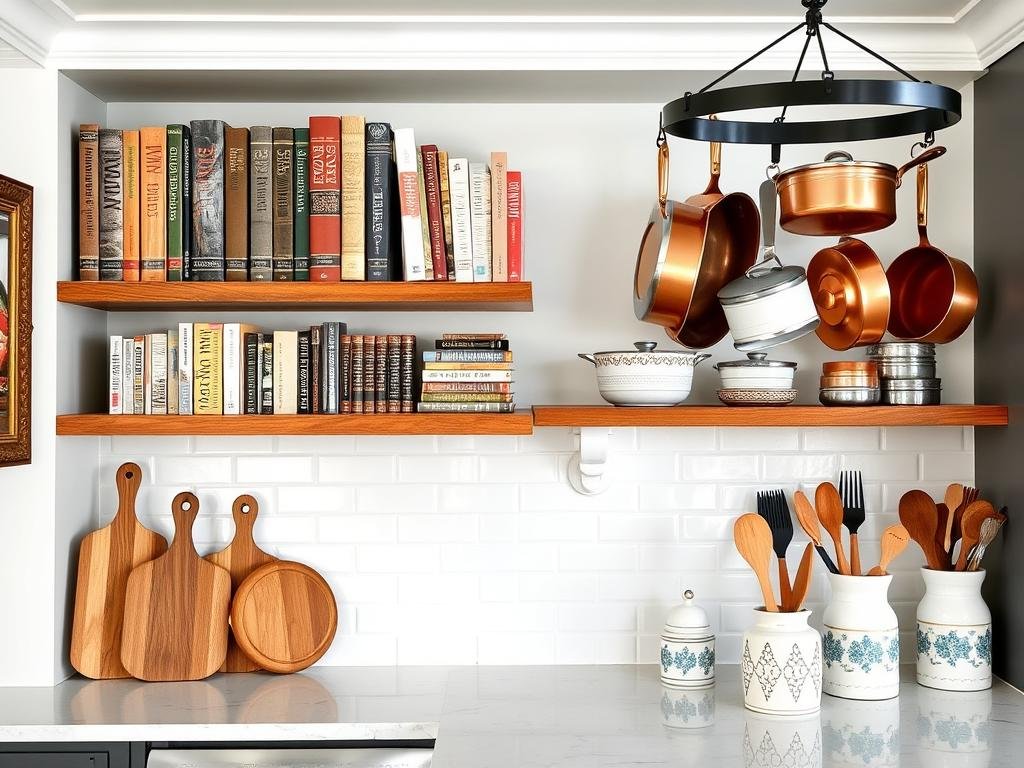
Culinary Collections
Display beautiful cookware, distinctive cutting boards, or a curated collection of cookbooks on open shelving or hanging from pot racks. Choose items with visual appeal that complement your color scheme and design aesthetic while remaining functional for everyday cooking.
Natural Elements
Incorporate plants, fresh herbs, or flowers to add life and color to your open kitchen. A small herb garden on the windowsill, potted plants on open shelving, or a vase of fresh flowers on the island brings natural elements into the space while enhancing both appearance and atmosphere.
Essential Products for Your Open Kitchen Design
Creating a functional and beautiful open kitchen often requires specific products that enhance both form and function. Here are some key items to consider for your open kitchen design project.
Versatile Kitchen Islands
A well-designed island serves as the centerpiece of many open kitchens, providing additional work space, storage, and often a casual dining area that bridges the kitchen and living spaces.
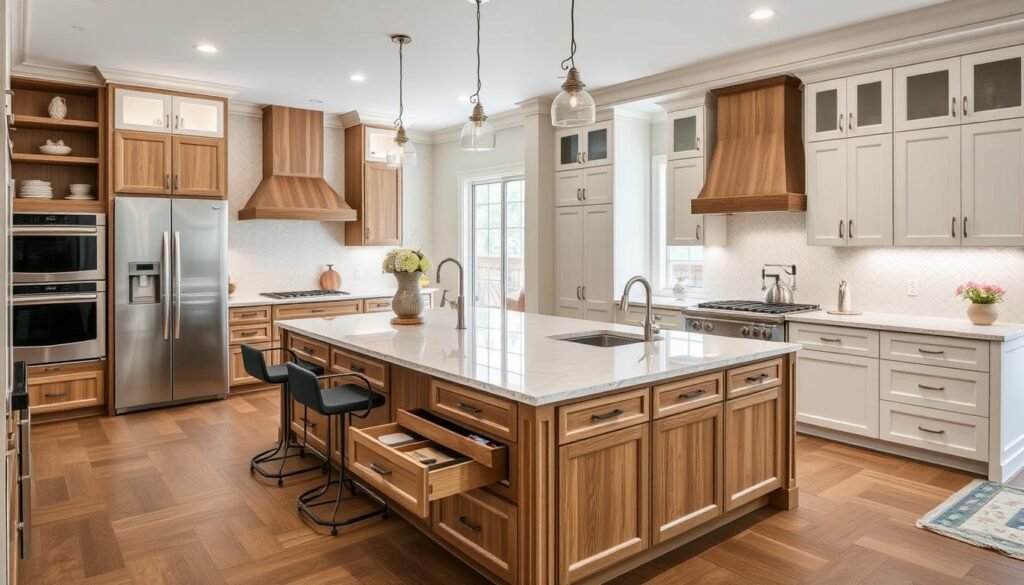
Kitchen islands come in countless styles, sizes, and configurations to suit your specific needs. Look for options with built-in storage, seating capacity, and durable countertop materials that can withstand daily use. For smaller spaces, consider portable islands or carts that offer flexibility.
Find Your Perfect Kitchen Island
Discover kitchen islands in various styles and sizes to become the centerpiece of your open kitchen design.
Stylish Bar Stools
Bar stools provide casual seating at islands and peninsulas, creating a comfortable spot for quick meals, homework sessions, or conversations with the cook.
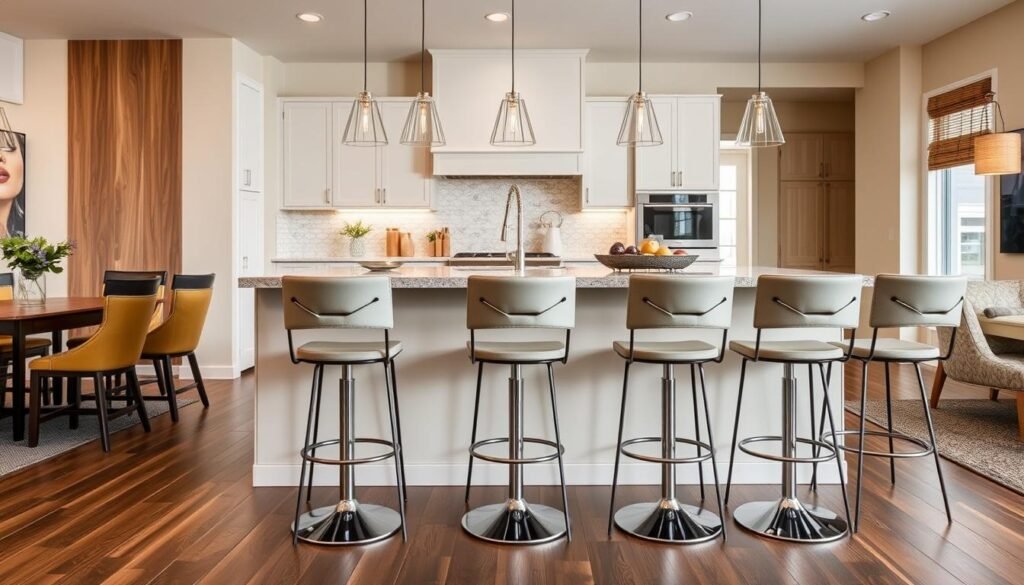
When selecting bar stools, consider both style and comfort. Look for the correct height for your counter or island (typically bar height at 30″ or counter height at 24-26″), back support for comfort during longer sitting periods, and materials that complement your kitchen design while standing up to daily use.
Complete Your Island with Perfect Seating
Browse a selection of comfortable, stylish bar stools that will enhance your open kitchen’s functionality and appearance.
Open Shelving Systems
Open shelving has become a signature element in many open kitchen designs, offering both storage and display opportunities while maintaining an airy, spacious feel.
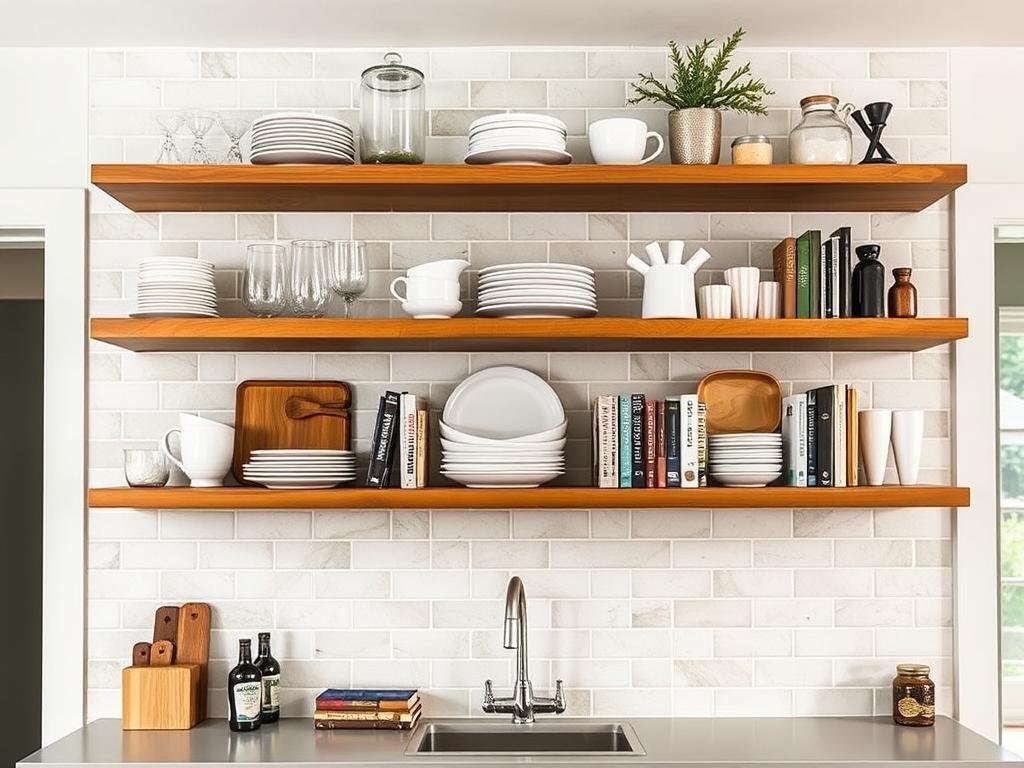
Consider floating shelves in materials that complement your cabinetry, wall-mounted systems with adjustable brackets for flexibility, or freestanding units that can define spaces within your open layout. Remember that items on open shelves will be constantly visible, so choose pieces that are both functional and attractive.
Add Style with Open Shelving
Explore open shelving options that will add character and functionality to your open kitchen design.
Statement Lighting Fixtures
Lighting plays a crucial role in open kitchen designs, providing necessary illumination while helping to define different functional zones within the space.
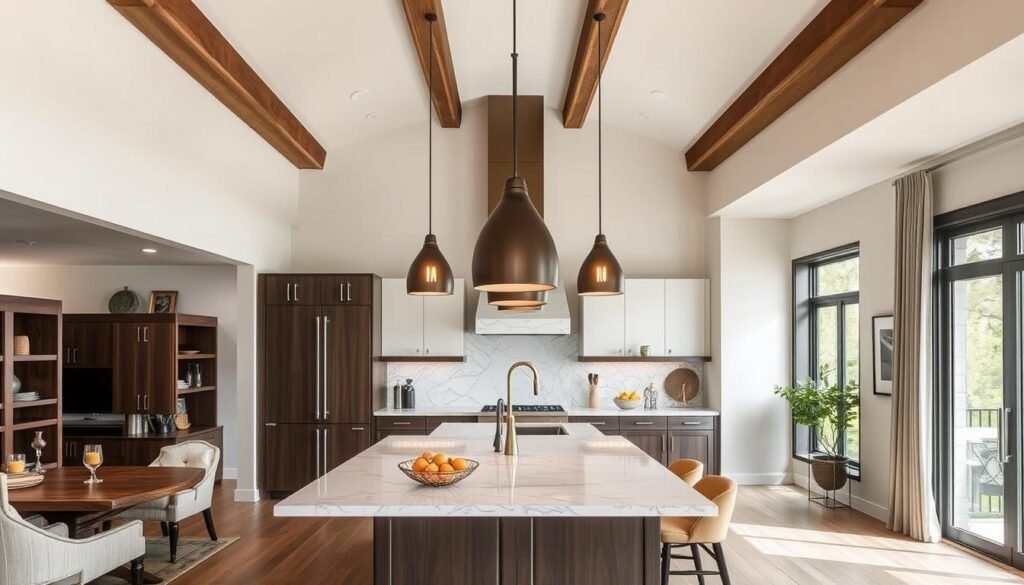
Pendant lights over islands and dining tables create focal points while providing task lighting for work surfaces. Consider the scale of your space when selecting fixtures—larger pendants make a bold statement in spacious kitchens, while smaller or more streamlined options work better in compact areas. Choose styles that complement your overall design aesthetic.
Illuminate Your Space with Style
Find the perfect lighting fixtures to enhance both the functionality and appearance of your open kitchen.
Creating Your Perfect Open Kitchen
Designing an open kitchen is a journey that balances practical considerations with aesthetic preferences to create a space that truly works for your lifestyle. By thoughtfully addressing layout, storage, lighting, and decor, you can create an open kitchen that not only looks beautiful but functions efficiently for everyday cooking and entertaining.
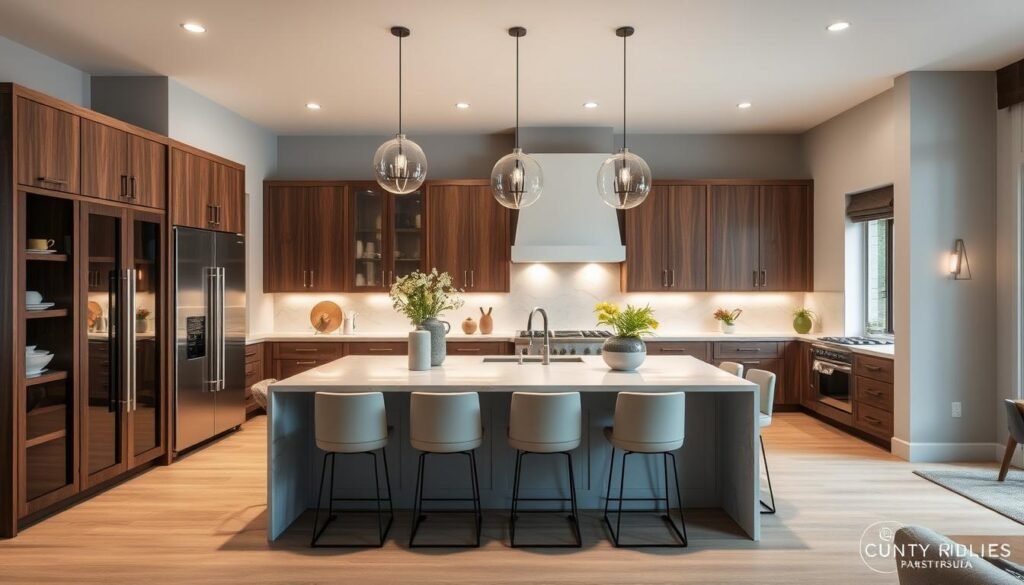
Remember that the most successful open kitchen designs reflect the unique needs and preferences of the people who use them. Whether you’re planning a complete renovation or making smaller updates to an existing space, focus on creating a kitchen that supports your cooking habits, accommodates your storage needs, and expresses your personal style while maintaining a harmonious connection with surrounding living areas.
With careful planning and attention to detail, your open kitchen can become not just a functional cooking space but the true heart of your home—a place where family and friends gather, conversations flow, and memories are made for years to come.
Start Your Open Kitchen Transformation
Ready to create your dream open kitchen? Explore essential products that will help bring your vision to life.