A well-designed paver patio can transform your outdoor living area into a stunning retreat that enhances both your lifestyle and property value. Whether you’re planning a cozy corner for morning coffee or an expansive entertainment space, the right patio pavers design can make all the difference. In this comprehensive guide, we’ll explore everything from popular patterns and materials to creative layout ideas that will help you create a patio that’s both beautiful and functional.
This Website contains affiliate links. That means I may earn a small commission if you purchase through my links, at no extra cost to you.
Choosing the Perfect Paver Material for Your Patio Design
The material you select for your patio pavers will significantly impact both the aesthetic appeal and longevity of your outdoor space. Each type offers unique benefits and characteristics to consider when planning your patio pavers design.
Concrete Pavers: Versatility and Value
Concrete pavers are among the most popular choices for patio designs due to their remarkable versatility and cost-effectiveness. Available in countless shapes, sizes, and colors, these pavers can mimic the look of more expensive materials while providing excellent durability.
Advantages of Concrete Pavers
Extensive design options and color choices
Excellent durability in various climates
Cost-effective compared to natural stone
Easy to replace individual pavers if damaged
Low maintenance requirements
Limitations of Concrete Pavers
May fade over time with sun exposure
Less unique appearance than natural stone
Can develop efflorescence (white residue)
Lower-quality options may crack in freeze-thaw cycles
Looking for quality concrete pavers for your project? Browse concrete paver options to find the perfect match for your design vision.
Natural Stone Pavers: Timeless Elegance
Natural stone pavers bring unmatched beauty and character to any patio design. With options like flagstone, slate, limestone, and travertine, these pavers offer unique textures and colors that create a sophisticated, organic feel.
Popular Patio Paver Patterns to Transform Your Outdoor Space
The pattern you choose for your patio pavers can dramatically impact the overall look and feel of your outdoor space. From classic arrangements to more complex designs, each pattern brings its own character and structural benefits.
Herringbone Pattern: Timeless Elegance with Superior Stability
The herringbone pattern is one of the most popular choices for patio pavers design, drawing inspiration from European streets and courtyards. This V-shaped interlocking design not only creates visual interest but also provides exceptional stability, making it ideal for high-traffic areas.
The herringbone pattern can be laid at either 45 or 90-degree angles, with each paver placed perpendicular to the adjacent ones. This arrangement creates a dynamic, woven appearance that adds depth and texture to your patio. The interlocking nature of this pattern makes it particularly resistant to shifting, even under heavy use or in areas with freeze-thaw cycles.
Want to create a herringbone pattern for your patio? Shop rectangular pavers perfect for creating this classic design.
Running Bond Pattern: Classic Simplicity
The running bond pattern resembles traditional brickwork and offers a clean, organized appearance that works beautifully in both contemporary and classic landscapes. This pattern is created by staggering each row of pavers by half the length of the paver, creating an offset brick-like arrangement.
The running bond pattern is particularly versatile, working well with various paver sizes and shapes. It’s also one of the more straightforward patterns to install, making it a popular choice for DIY enthusiasts. For added visual interest, consider using pavers in contrasting colors or varying the direction of the pattern in different sections of your patio.
Ready to create a running bond patio? Explore brick paver options that work perfectly with this classic pattern.
Basketweave Pattern: Traditional Charm
Also known as parquet, the basketweave pattern creates the appearance of woven baskets by alternating the direction of rectangular pavers. This pattern typically features pairs of pavers laid vertically, followed by pairs laid horizontally, creating a repeating, interwoven design.
The basketweave pattern adds texture and visual interest to your patio while maintaining a traditional, classic feel. It works particularly well in formal garden settings or with traditional home architecture. For the best results, use rectangular pavers with a length that’s exactly twice their width.
Circular Pattern: Creating a Focal Point
Circular paver patterns make a bold statement and can serve as a stunning focal point in your outdoor space. These designs feature pavers arranged in concentric circles or fan-like formations, often with contrasting colors to enhance the visual impact.
Circular patterns work exceptionally well around features like fire pits, water features, or seating areas. They can be used as a standalone design element or incorporated into a larger patio with a different primary pattern. While more complex to install, the dramatic effect is well worth the extra effort.
Ready to Start Your Patio Project?
Find all the tools you need to create beautiful paver patterns for your outdoor space.
Beyond patterns and materials, the overall design style of your paver patio should complement your home’s architecture and your personal aesthetic. Here are some popular design approaches to consider for your patio pavers project.
Modern Minimalist Paver Designs
Modern patio designs feature clean lines, geometric patterns, and a minimalist approach to color and texture. These designs often incorporate large-format pavers with minimal joints and a monochromatic or two-tone color scheme.
Key elements of modern paver designs include:
Large-format pavers with minimal joints
Stack bond or linear running bond patterns
Monochromatic color schemes (often in grays, blacks, or whites)
Clean, precise edges and transitions
Geometric shapes and strong lines
Create a sleek, modern patio with large-format pavers that deliver a contemporary look.
Rustic Mediterranean Paver Designs
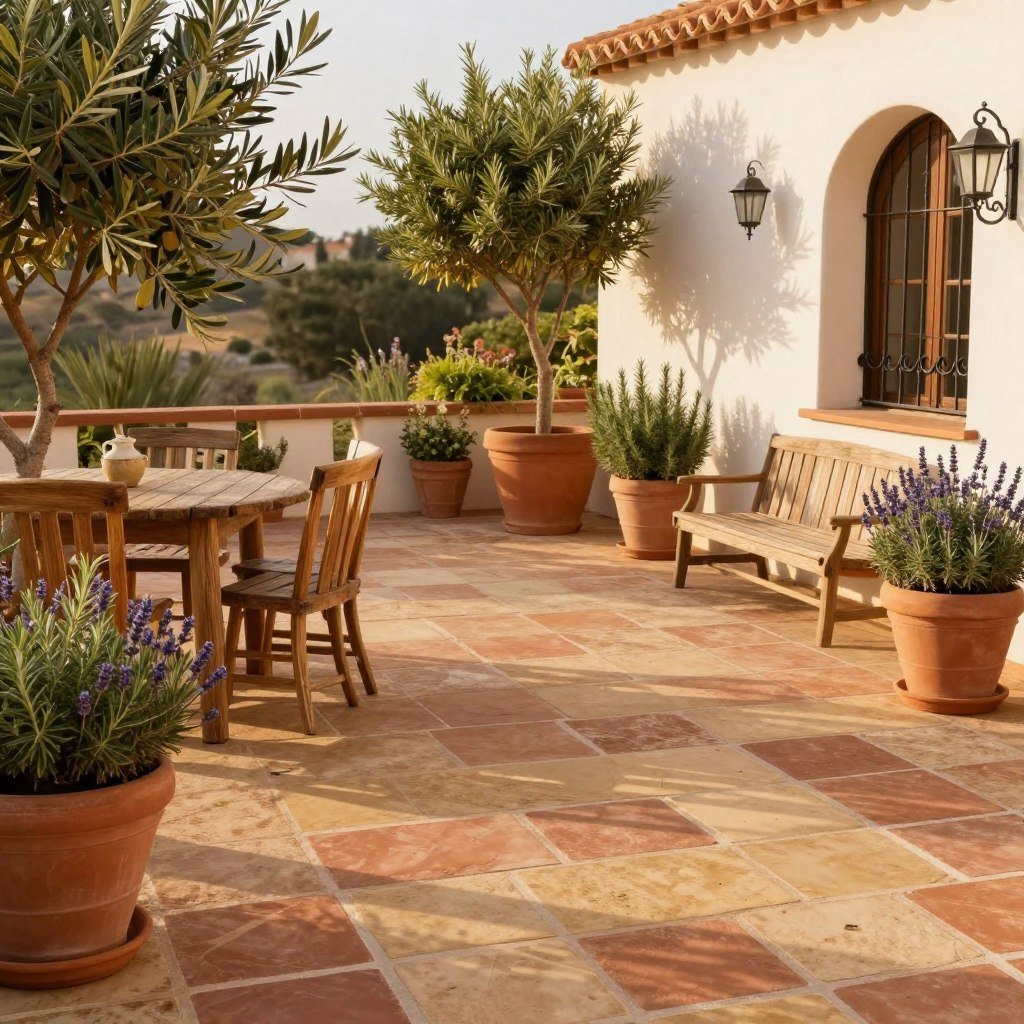
Mediterranean-inspired patio designs evoke the warm, inviting ambiance of European courtyards. These designs typically feature natural stone or tumbled pavers in warm earth tones, arranged in organic or traditional patterns.
Characteristic elements of Mediterranean paver designs include:
Tumbled pavers or natural stone with weathered finishes
Warm color palettes (terracotta, sand, olive, ochre)
Mixed-size patterns or cobblestone arrangements
Curved edges and organic shapes
Integration with lush plantings and water features
Traditional Cottage Garden Paver Designs
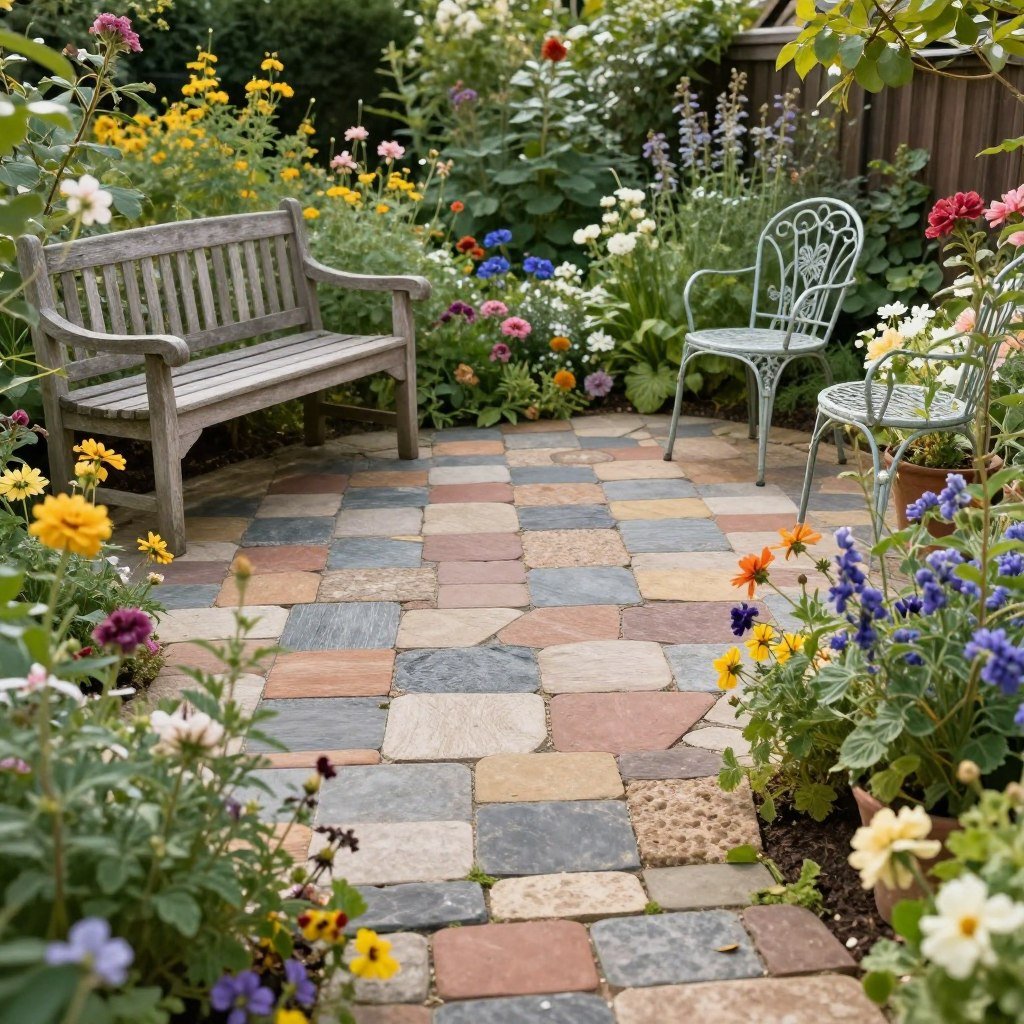
Cottage garden patio designs blend structure with natural elements for a charming, lived-in feel. These designs often incorporate smaller pavers in varied colors, arranged in classic patterns like basketweave or herringbone.
Key features of cottage garden paver designs include:
Smaller-scale pavers with visible joints
Mixed colors and textures for a handcrafted look
Traditional patterns like basketweave or herringbone
Softened edges with plantings that spill onto the paving
Integration with surrounding garden elements
Create a charming cottage garden patio with tumbled pavers that offer a weathered, timeless appeal.
Essential Layout Considerations for Your Patio Pavers Design
A successful patio pavers design goes beyond just selecting materials and patterns. Thoughtful layout planning ensures your patio is both beautiful and functional for years to come.
Sizing Your Patio for Optimal Function
The size of your patio should be determined by how you plan to use the space. Consider the furniture arrangements and activities you envision, then plan accordingly.
Patio Use
Recommended Minimum Size
Considerations
Dining Area (4-6 people)
10′ x 12′ (120 sq ft)
Allow 3′ of clearance around the table for chairs and movement
Conversation Area
12′ x 12′ (144 sq ft)
Accommodate seating arrangement plus coffee table or fire pit
Outdoor Kitchen
14′ x 16′ (224 sq ft)
Space for cooking equipment, prep areas, and dining
Multi-purpose Space
16′ x 18′ (288 sq ft)
Separate zones for dining, lounging, and other activities
Creating Zones in Your Patio Design
For larger patios, consider dividing the space into distinct functional zones. This can be achieved through changes in paver patterns, subtle level changes, or the strategic placement of planters and other elements.
Effective zoning strategies for patio pavers design include:
Using different paver patterns to define separate areas
Creating borders between zones with contrasting pavers
Incorporating slight level changes to distinguish spaces
Using large planters or built-in features as dividers
Aligning zones with the natural flow of traffic to and from your home
Integrating Your Patio with the Landscape
A well-designed patio should feel like a natural extension of both your home and your landscape. Consider how your paver patio will connect to existing structures and garden elements.
Tips for seamless landscape integration:
Echo architectural elements of your home in your paver choices
Create gradual transitions between paved areas and planted spaces
Use curved edges or irregular patterns to blend with natural landscapes
Incorporate planting pockets within larger patio designs
Consider how the patio will look from different viewpoints, including from inside your home
Plan Your Perfect Patio Layout
Get the tools you need to measure and plan your ideal patio space.
A truly outstanding patio pavers design incorporates complementary elements that enhance both the beauty and functionality of your outdoor space.
Edging and Borders
Well-designed borders and edging not only provide a finished look to your patio but also help contain the pavers and prevent shifting over time. Consider using contrasting materials or colors to create visual interest and definition.
Popular edging options for paver patios include:
Soldier course borders (pavers placed vertically along the edge)
Contrasting color or material borders
Natural stone edging for a rustic look
Metal edging for clean, modern designs
Raised brick or stone borders that double as seating
Strategic lighting extends the usability of your patio into the evening hours while highlighting design features and improving safety. Consider a combination of ambient, task, and accent lighting for the best effect.
Effective patio lighting approaches include:
Recessed paver lights integrated directly into your patio surface
Path lights along walkways and patio perimeters
String lights or overhead fixtures for ambient illumination
Spotlights to highlight architectural features or plantings
Water features add a sensory dimension to your patio, providing soothing sounds and visual interest. From simple fountains to elaborate ponds, water elements can be seamlessly integrated into your paver design.
Popular water features for paver patios include:
Freestanding fountains as focal points
Pondless waterfalls for visual impact without maintenance
Built-in water channels or rills integrated with the paver design
Small reflection pools surrounded by special paver borders
Bubbling rock features that require minimal space
Patio Pavers Design: Installation Considerations
Whether you’re planning a DIY project or hiring professionals, understanding the basics of paver installation will help you achieve the best results for your patio design.
Proper Base Preparation
The longevity and stability of your paver patio depend largely on proper base preparation. Skipping this crucial step can lead to settling, shifting, and an uneven surface over time.
Key steps in base preparation include:
Excavating to the proper depth (typically 7-12 inches depending on soil and climate)
Installing geotextile fabric to prevent weed growth and improve stability
Adding and compacting a gravel base layer (4-8 inches)
Applying a 1-inch layer of leveling sand
Ensuring proper slope for drainage (about 1/4 inch per foot)
Deciding whether to install your paver patio yourself or hire professionals depends on several factors, including your experience level, the complexity of your design, and the size of your project.
DIY Installation Benefits
Significant cost savings on labor
Personal satisfaction of completing the project
Flexibility to work at your own pace
Control over every aspect of the installation
Professional Installation Benefits
Expertise in proper techniques and best practices
Access to specialized tools and equipment
Faster completion timeframe
Warranty protection for the installation
Better handling of complex designs and challenges
Maintenance Considerations
Different paver materials and designs require varying levels of maintenance. Consider your willingness to perform regular upkeep when selecting your patio pavers design.
Common maintenance tasks include:
Regular sweeping to remove debris
Periodic washing to remove stains and prevent moss growth
Reapplying joint sand every 1-3 years
Sealing certain types of pavers to enhance color and prevent staining
Draw inspiration from these stunning patio designs that showcase various patterns, materials, and styles. Each example demonstrates how thoughtful paver selection and arrangement can create a unique and inviting outdoor space.
Find the perfect pavers to recreate these inspiring designs: Shop paver collections for your dream patio.
Creating Your Perfect Patio Pavers Design
Designing a paver patio is an exciting opportunity to extend your living space and enhance your home’s outdoor appeal. By carefully considering patterns, materials, layout, and complementary elements, you can create a patio that perfectly suits your lifestyle and aesthetic preferences.
Remember that the best patio designs balance beauty with functionality, creating spaces that are not only visually appealing but also practical for everyday use. Whether you prefer the classic elegance of a herringbone pattern, the rustic charm of natural stone, or the clean lines of a modern design, the perfect patio pavers design is one that reflects your personal style and enhances your enjoyment of outdoor living.
Ready to transform your outdoor space with a stunning paver patio? Start by gathering inspiration, planning your layout, and selecting the materials and patterns that speak to you. With thoughtful design and proper installation, your new patio will provide years of enjoyment and add significant value to your home.
Start Your Patio Transformation Today
Explore our curated collection of patio design resources and find everything you need to create your dream outdoor space.