Railroad ties bring rustic charm and structural integrity to any landscape design. These durable wooden beams have been repurposed from railway tracks to become versatile elements in garden design. Whether you’re looking to build raised beds, create a retaining wall, or design garden steps, railroad ties offer an affordable and attractive solution with timeless appeal. This guide will walk you through everything you need to know about landscaping with railroad ties, from creative project ideas to important safety considerations.
This Website contains affiliate links. That means I may earn a small commission if you purchase through my links, at no extra cost to you.
What Are Railroad Ties and Why Use Them in Landscaping?
Railroad ties (also called railway sleepers) are the rectangular supports laid perpendicular to railroad tracks. Traditionally made from hardwood like oak and treated with preservatives, these sturdy timbers were designed to withstand extreme weather conditions and heavy loads. When railroad tracks are upgraded or removed, these ties often become available for repurposing.
The appeal of railroad ties in landscaping comes from their:
Natural, weathered appearance that adds rustic charm
Exceptional durability and resistance to decay
Substantial size and weight that provides structural stability
Versatility for various landscaping applications
Cost-effectiveness compared to other hardscape materials
You can find both authentic reclaimed railroad ties and new, untreated alternatives specifically manufactured for landscaping purposes. The latter address environmental concerns while maintaining the aesthetic appeal of traditional ties.
Ready to start your railroad tie project?
Find the perfect railroad ties and necessary tools for your landscaping project.
Creosote Concerns: Older reclaimed railroad ties were typically treated with creosote, a wood preservative that the EPA classifies as a probable human carcinogen. For safety, consider these alternatives:
New untreated hardwood railroad ties
Ties made from naturally pest-resistant woods like cedar or cypress
Composite railroad tie lookalikes
If you do use traditional creosote-treated railroad ties, follow these safety guidelines:
Avoid using them for vegetable gardens or children’s play areas
Wear protective clothing (gloves, long sleeves, dust mask) when handling
Never burn treated railroad ties as the fumes are toxic
Consider lining garden beds with heavy plastic if using for planting
Keep them away from water sources and areas with direct human contact
Always check local regulations before purchasing, as some areas restrict the use of creosote-treated wood in residential settings.
10 Creative Railroad Ties Landscaping Projects
Railroad ties offer endless possibilities for transforming your outdoor space. Here are ten inspiring projects to consider:
1. Raised Garden Beds
Raised garden beds made from railroad ties create defined growing spaces that improve drainage and soil quality while adding visual interest to your garden. For food safety, consider using new untreated ties or lining the inside with heavy plastic if using reclaimed ties.
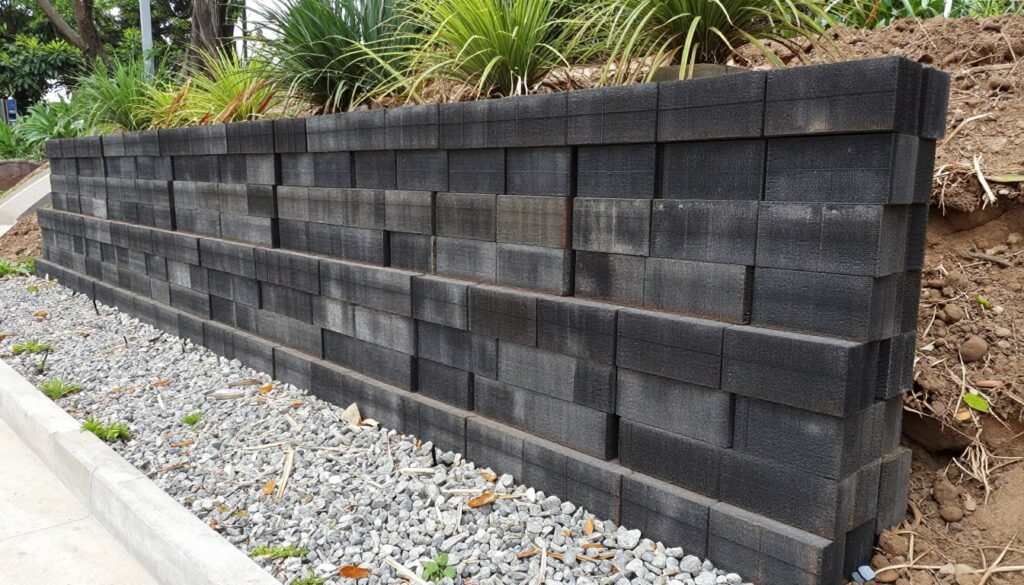
2. Retaining Walls
One of the most popular uses for railroad ties is building retaining walls to manage slopes and create level areas in your yard. These walls can transform an unusable hillside into functional garden space while preventing soil erosion.
3. Garden Steps and Staircases
Create rustic garden steps by stacking and staggering railroad ties. These sturdy stairs are perfect for navigating sloped areas and can be filled with gravel or planted with low-growing ground covers between steps for added visual interest.
4. Path Edging
Define garden paths by using railroad ties as edging. This creates clean lines throughout your landscape while keeping mulch or gravel contained within the pathway.
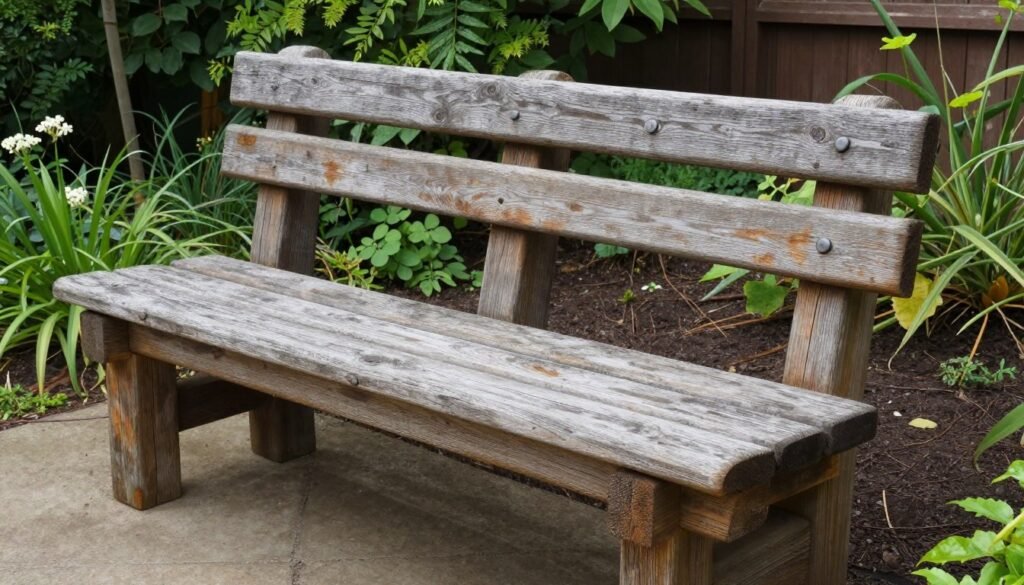
5. Rustic Benches and Seating
Construct simple yet sturdy outdoor seating by stacking and securing railroad ties. These benches require minimal tools and materials while providing durable seating that withstands the elements.
Need tools for your railroad tie projects?
Get the right equipment to make your landscaping project easier and more professional.
Create standalone planter boxes for patios, decks, or garden focal points. These substantial containers provide excellent insulation for plant roots and add rustic charm to any outdoor space.
7. Garden Borders
Use single railroad ties laid horizontally to create defined borders between lawn areas and garden beds. This simple application adds structure to your landscape design while making maintenance easier.
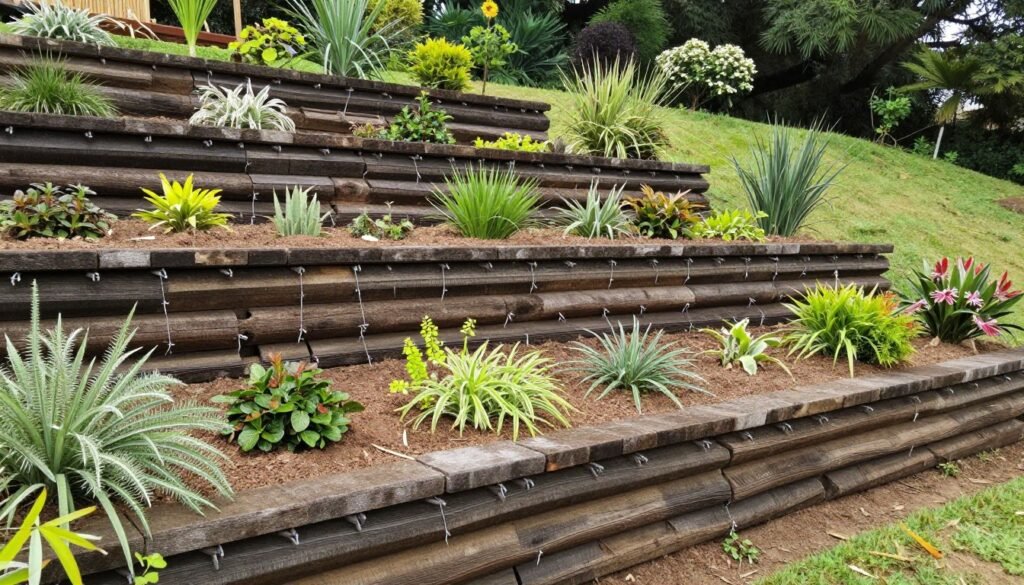
8. Terraced Gardens
Transform steep slopes into productive garden space by creating a series of terraced beds with railroad tie retaining walls. Each level provides a flat growing area while the overall effect creates visual interest and architectural structure.
9. Fire Pit Surrounds
Create a defined seating area around a fire pit using railroad ties to form a perimeter. This application combines functionality with rustic appeal for outdoor entertaining spaces.
10. Water Feature Frames
Frame ponds or water features with railroad ties to create clean edges and transition zones between water elements and surrounding landscape areas.
Step-by-Step Guide: Building a Railroad Tie Retaining Wall
Let’s walk through the process of building a basic railroad tie retaining wall, one of the most popular railroad ties landscaping projects:
Materials You’ll Need:
Railroad ties (quantity depends on wall dimensions)
1/2-inch rebar or steel pins (twice the length of a single tie)
Gravel for drainage
Level
Tape measure
Drill with long auger bit
Sledgehammer
Shovel and rake
Landscape fabric (optional)
Get your retaining wall supplies
Find everything you need for your railroad tie retaining wall project.
Dig a trench approximately 6 inches deep and 2 inches wider than your railroad ties. The bottom should be level and slightly sloped away from the wall for drainage. Tamp the soil firmly to create a solid foundation.
Step 2: Create a Drainage Base
Add a 4-inch layer of gravel to the trench and tamp it down. This provides essential drainage that prevents water pressure from building up behind the wall, which could cause it to fail over time.
Step 3: Position the First Course
Lay the first row of railroad ties on the gravel base. Use a level to ensure they’re perfectly horizontal in both directions. This first course is critical as any errors will be magnified as you build upward.
Step 4: Secure with Pins
Drill holes through the railroad ties into the ground below. The holes should be slightly larger than your rebar or steel pins. Drive the pins through the ties and at least 12 inches into the ground to anchor the first course securely.
Step 5: Add Drainage Behind the Wall
Place landscape fabric against the back of the first course (optional but recommended) and add a 6-inch layer of gravel behind it. This creates a drainage zone that directs water downward rather than pushing against the wall.
Step 6: Install the Second Course
Place the second row of ties on top of the first, staggering the joints for strength (like brickwork). Each tie in the second row should overlap the joints of the first row. This creates a much stronger structure than stacking them directly on top of each other.
Step 7: Connect the Courses
Drill through the second course into the first and drive pins through both layers to connect them securely. Continue adding gravel behind the wall as you build upward.
Step 8: Complete the Wall
Continue adding courses, staggering joints, pinning each layer to the one below, and adding drainage material behind the wall until you reach the desired height. For walls taller than 3 feet, consider consulting a professional as they may require additional engineering.
Step 9: Backfill and Finish
Once your wall is complete, backfill the area behind the drainage gravel with soil. Consider adding plants near the top of the wall to help stabilize the soil and enhance the appearance of your new landscape feature.
Maintaining Your Railroad Tie Landscaping
Railroad ties are relatively low-maintenance, but proper care will extend their lifespan and keep your landscaping looking its best:
Inspect regularly: Check for signs of shifting, warping, or decay, especially after severe weather events.
Maintain drainage: Ensure that drainage systems around your railroad tie structures remain clear and functional.
Seal untreated ties: If using new untreated railroad ties, apply a wood sealer every 2-3 years to extend their lifespan.
Control vegetation: Remove any unwanted plants growing in the joints between ties.
Reinforce as needed: Add additional pins or supports if you notice any movement or instability in your structures.
With proper installation and maintenance, railroad tie landscaping features can last 10-15 years or more, providing lasting beauty and function to your outdoor space.
Protect your investment
Find the right sealants and preservatives to extend the life of your railroad tie projects.
Eco-Friendly Alternatives to Traditional Railroad Ties
If you’re concerned about the environmental impact of traditional railroad ties but love their aesthetic, consider these eco-friendly alternatives:
Naturally rot-resistant woods: Cedar, redwood, and black locust offer natural durability without chemical treatments.
Heat-treated wood: These undergo a non-chemical process that improves durability and pest resistance.
Composite railroad tie lookalikes: Made from recycled plastic and wood fibers, these offer the appearance of railroad ties with greater longevity and no chemical concerns.
Concrete ties: Designed to mimic the look of wood, these offer extreme durability and are completely inert in the landscape.
Reclaimed timbers: Salvaged from old barns and buildings, these provide character without the creosote concerns of railroad ties.
These alternatives allow you to achieve the rustic, substantial look of railroad ties while addressing environmental and safety concerns.
Start Your Railroad Ties Landscaping Project Today
Railroad ties offer a perfect blend of rustic charm, durability, and versatility for your landscaping projects. Whether you’re building a simple raised bed or transforming your entire yard with terraced gardens, these substantial timbers provide structure and character that few other materials can match.
Remember to consider safety aspects when selecting your materials, properly prepare your site for drainage and stability, and follow best practices for construction. With careful planning and proper installation, your railroad tie landscaping features will enhance your outdoor space for many years to come.
Ready to transform your landscape?
Get all the supplies you need to create beautiful railroad tie landscaping features in your yard.
Creating an aesthetic room that reflects your personality while staying on-trend has become increasingly popular, especially on platforms like Pinterest and…