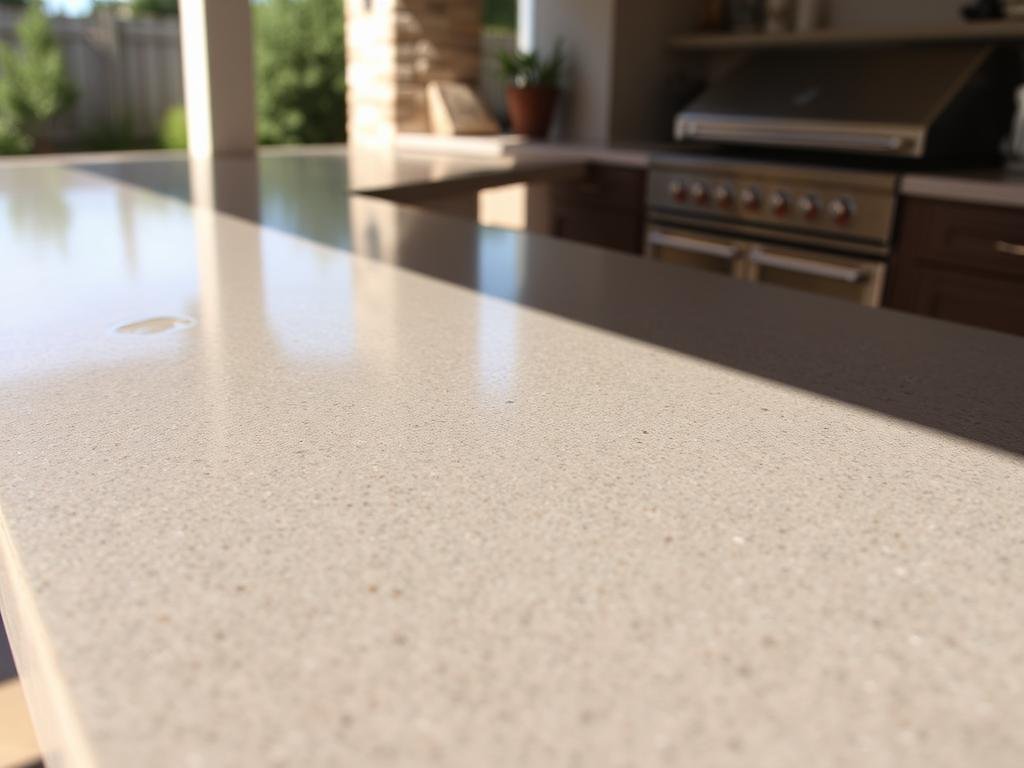
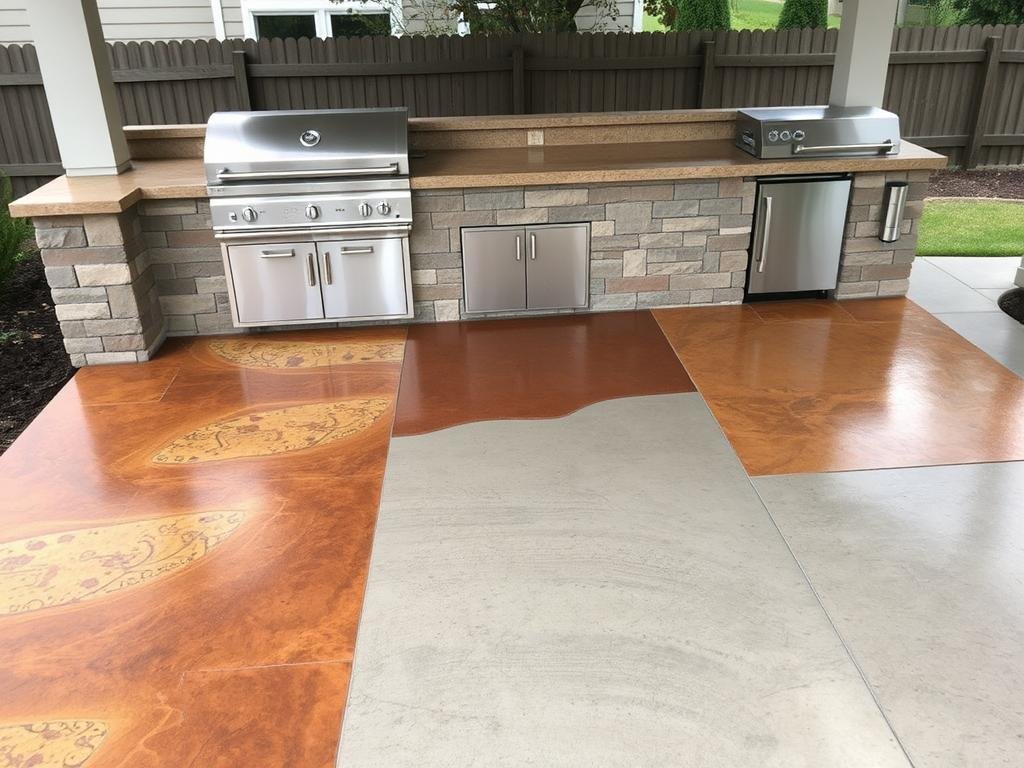
Transforming your backyard into an entertainment hub starts with a durable, stylish concrete outdoor kitchen. Unlike traditional indoor kitchens that wear down from weather exposure, concrete outdoor kitchens stand the test of time while offering unlimited design possibilities. Whether you’re dreaming of a simple cooking station or an elaborate outdoor entertaining space, concrete provides the perfect foundation for your vision.
This Website contains affiliate links. That means I may earn a small commission if you purchase through my links, at no extra cost to you.
In this comprehensive guide, we’ll explore everything you need to know about concrete outdoor kitchens—from initial planning and design inspiration to construction basics and styling tips. By the end, you’ll have all the knowledge needed to create an outdoor cooking space that enhances your home’s value and transforms how you entertain.
Why Choose a Concrete Outdoor Kitchen?
When planning your outdoor cooking space, material selection makes all the difference in longevity, maintenance requirements, and overall aesthetic. Concrete stands out as a superior choice for several compelling reasons:
Unmatched Durability
Concrete outdoor kitchens are built to last decades with proper sealing and maintenance. Unlike wood that rots or metal that rusts, concrete withstands harsh weather conditions, from scorching summer heat to freezing winters. This exceptional durability makes it perfect for outdoor applications where exposure to elements is constant.
Endless Customization Options
Unlike prefabricated kitchens, concrete can be molded into virtually any shape or size. You can customize everything from countertop thickness to edge profiles, creating truly one-of-a-kind designs. Add integral sinks, cutting boards, or trivets—the possibilities are limited only by your imagination.
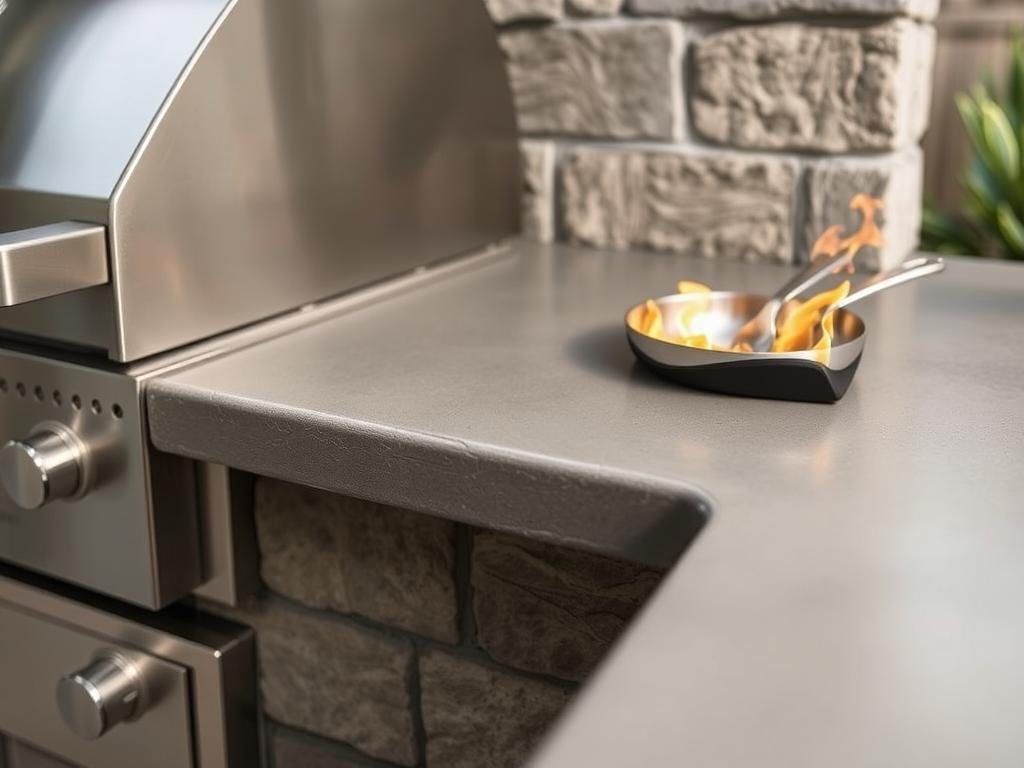
Concrete’s natural heat resistance makes it ideal for cooking areas. Unlike some synthetic materials that can warp or melt under high temperatures, properly sealed concrete handles hot cookware with ease. This makes it perfect for areas surrounding grills, pizza ovens, or other heat-generating appliances.
Cost-Effective Luxury
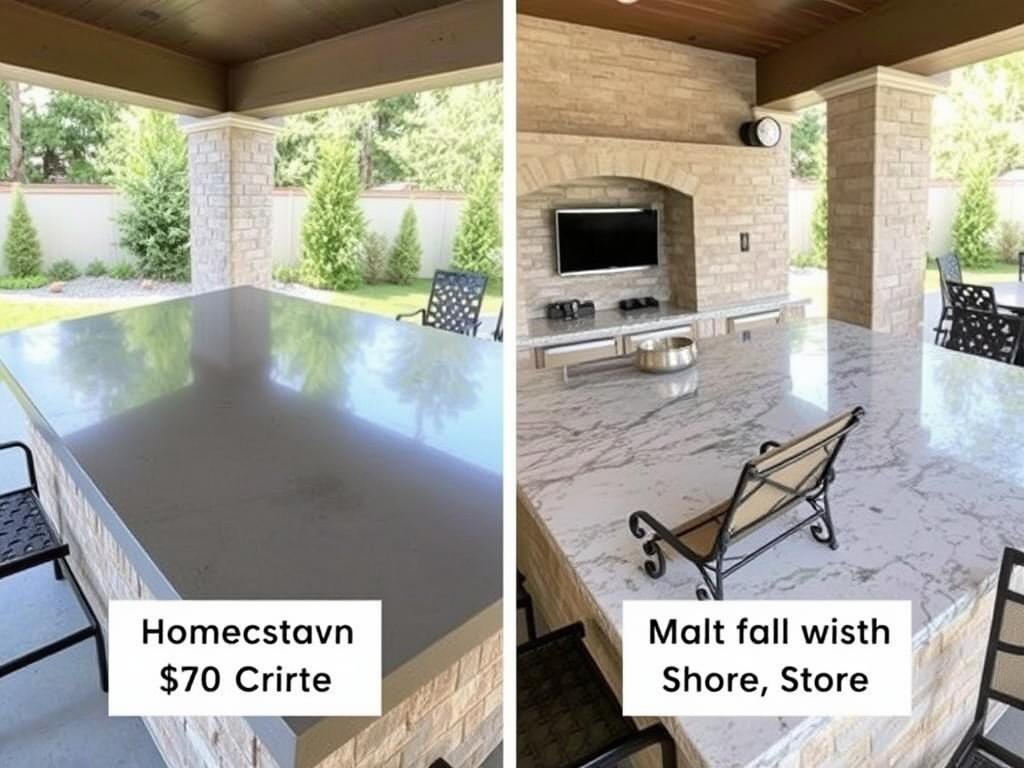
While natural stone options like granite or marble come with premium price tags, concrete delivers similar aesthetic appeal at a fraction of the cost. DIY-friendly concrete mixes make this an accessible project for homeowners looking to create high-end outdoor living spaces without breaking the budget.
Love these concrete kitchen ideas? Pin this guide to your Outdoor Living board for later!
Before mixing your first batch of concrete, proper planning ensures your outdoor kitchen meets your needs and complements your existing outdoor space. Consider these essential factors:
Layout and Zoning
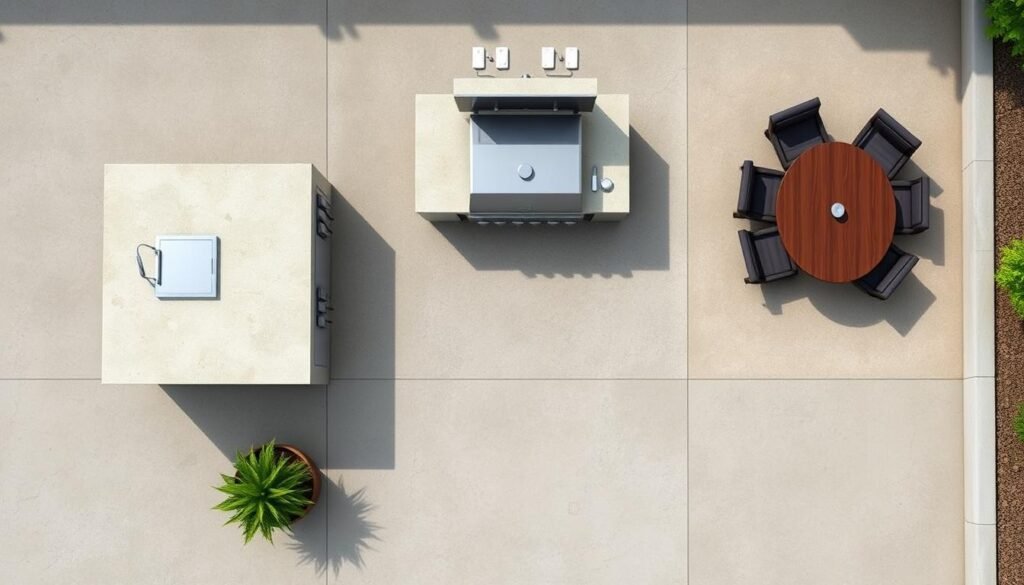
Effective outdoor kitchens typically feature distinct zones for preparation, cooking, and dining. When sketching your layout, consider workflow between these areas to create a functional space that makes outdoor cooking enjoyable rather than cumbersome.
Size and Proportions
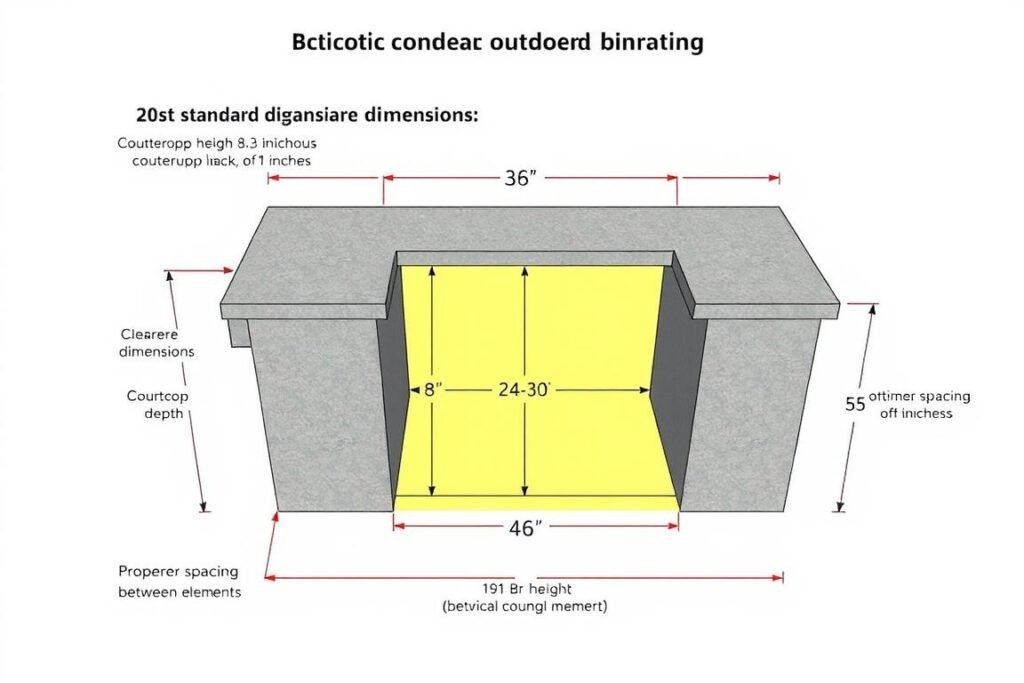
Consider how many people you typically entertain and the appliances you’ll include. Standard countertop height is 36 inches, while bar-height counters measure 42 inches. For countertop depth, 24 inches provides adequate workspace, though 30 inches offers more comfort for food preparation and appliance installation.
Integration with Existing Space
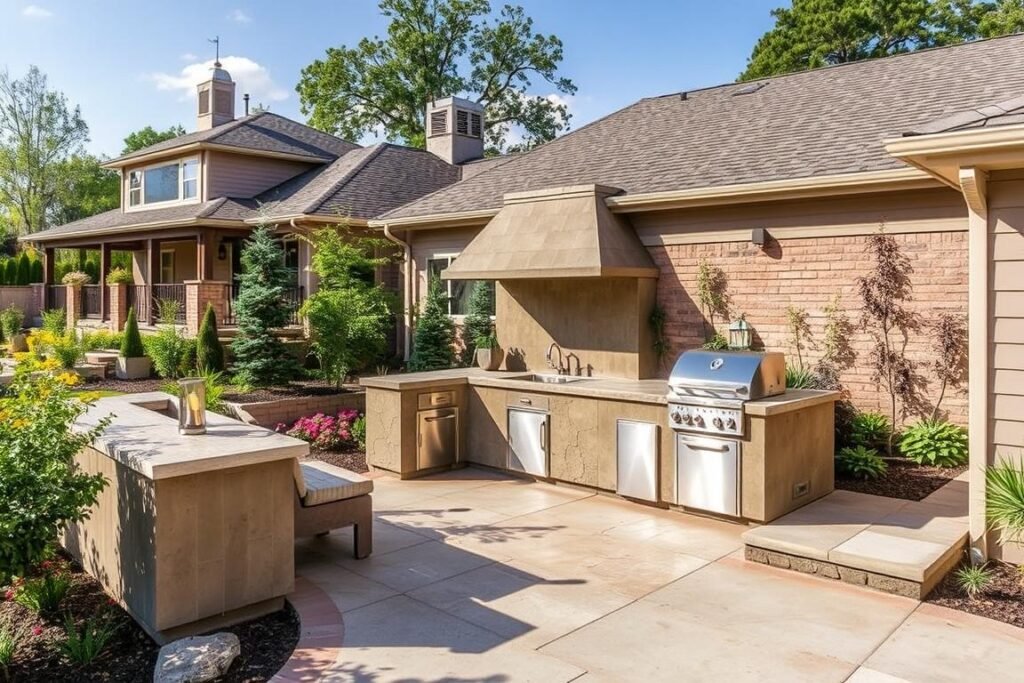
Your concrete outdoor kitchen should complement your home’s architecture and existing landscape. Consider sightlines from inside your home, proximity to indoor kitchen for convenience, and protection from prevailing winds. Position cooking areas away from high-traffic pathways to prevent accidents.
Utility Planning
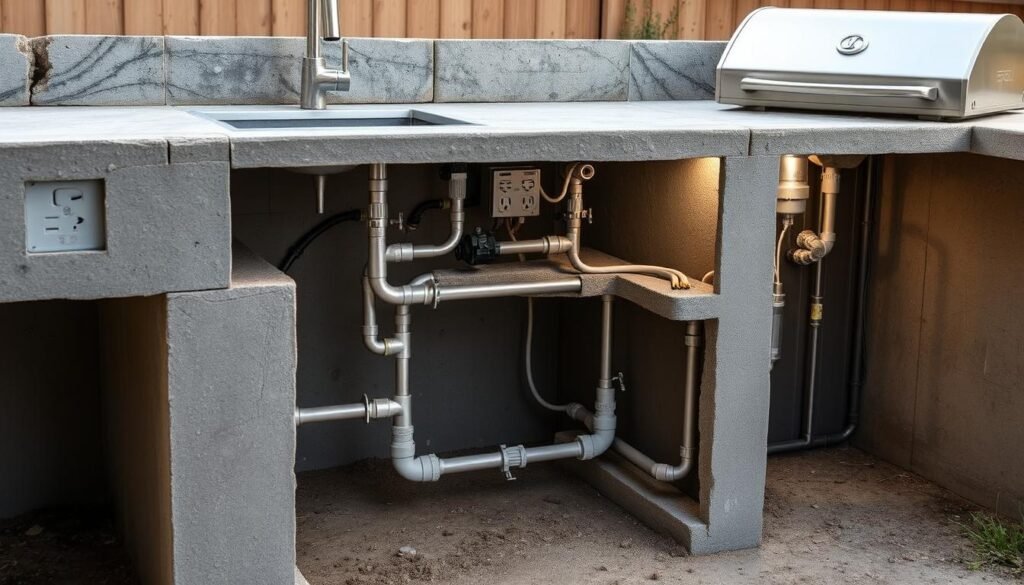
Before construction begins, plan for necessary utilities:
Water Lines
If including a sink, you’ll need water supply and drainage. Consider freeze protection in colder climates and local plumbing codes for outdoor installations.
Gas Lines
Built-in grills and side burners require proper gas line installation by qualified professionals to ensure safety and compliance with local codes.
Electrical
Plan for GFCI-protected outlets for refrigerators, lighting, and small appliances. Consider future needs when planning electrical capacity.
“The time spent planning your concrete outdoor kitchen will pay dividends in functionality and enjoyment for years to come. Measure twice, pour once!”
Design Inspiration & Styles for Concrete Outdoor Kitchens
Concrete’s versatility allows it to complement virtually any architectural style. Here are some popular design directions to inspire your project:
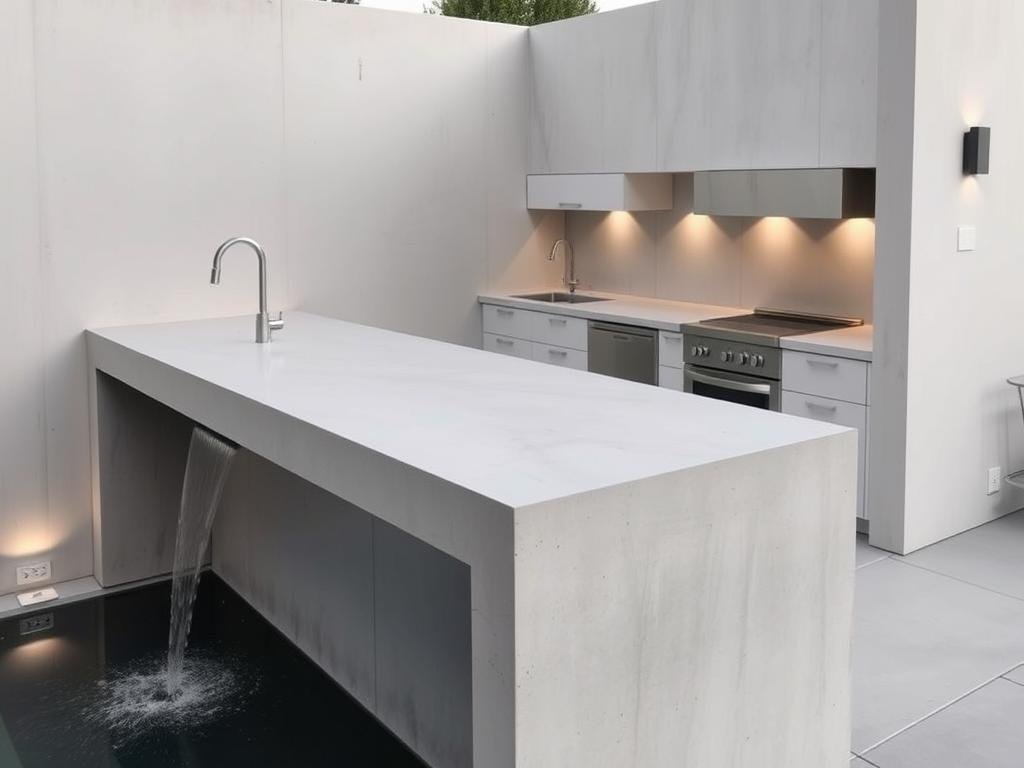
Modern Minimalist
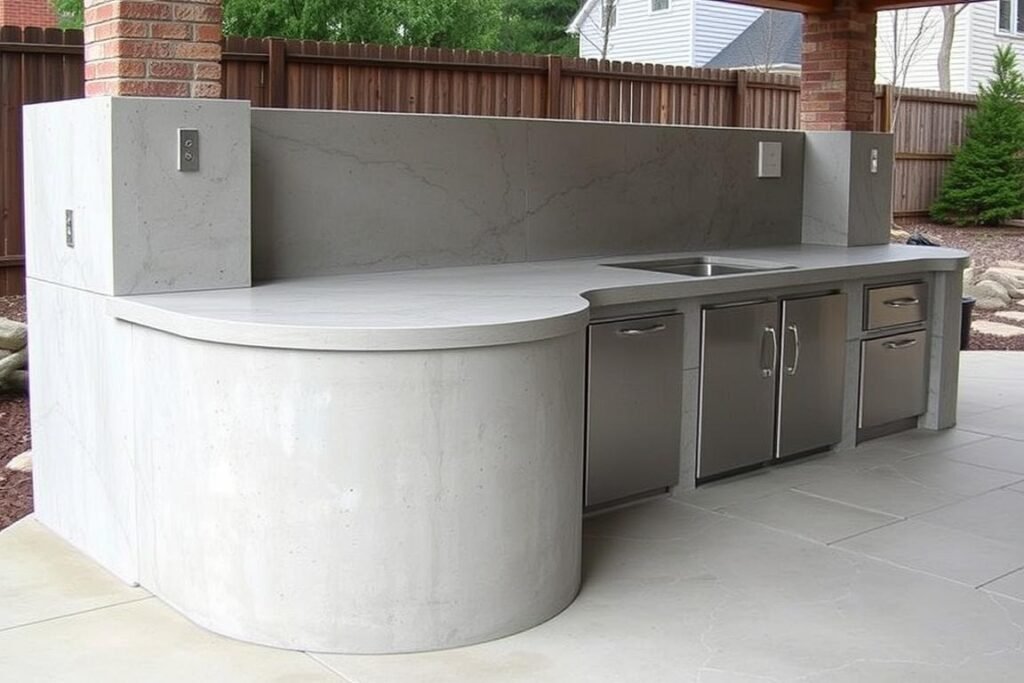
Clean lines, smooth polished surfaces, and monolithic forms characterize this contemporary approach. Consider waterfall edges where concrete extends vertically to the ground for dramatic effect. Pair with stainless steel appliances and minimal hardware for a sleek, sophisticated look.
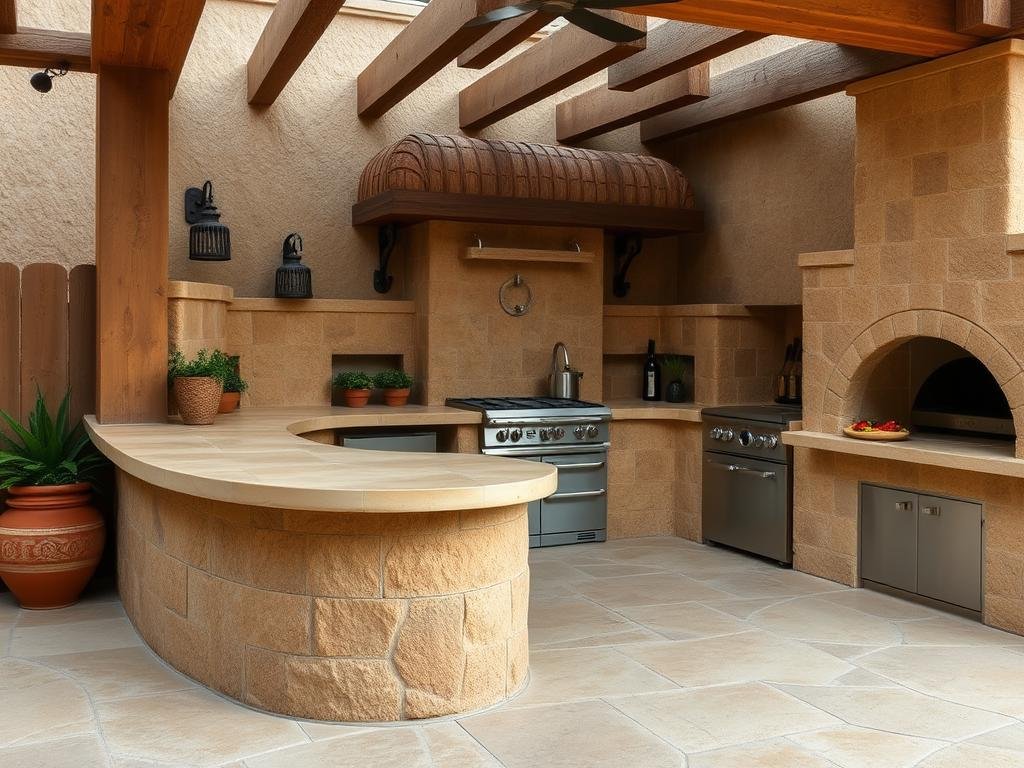
Rustic Mediterranean
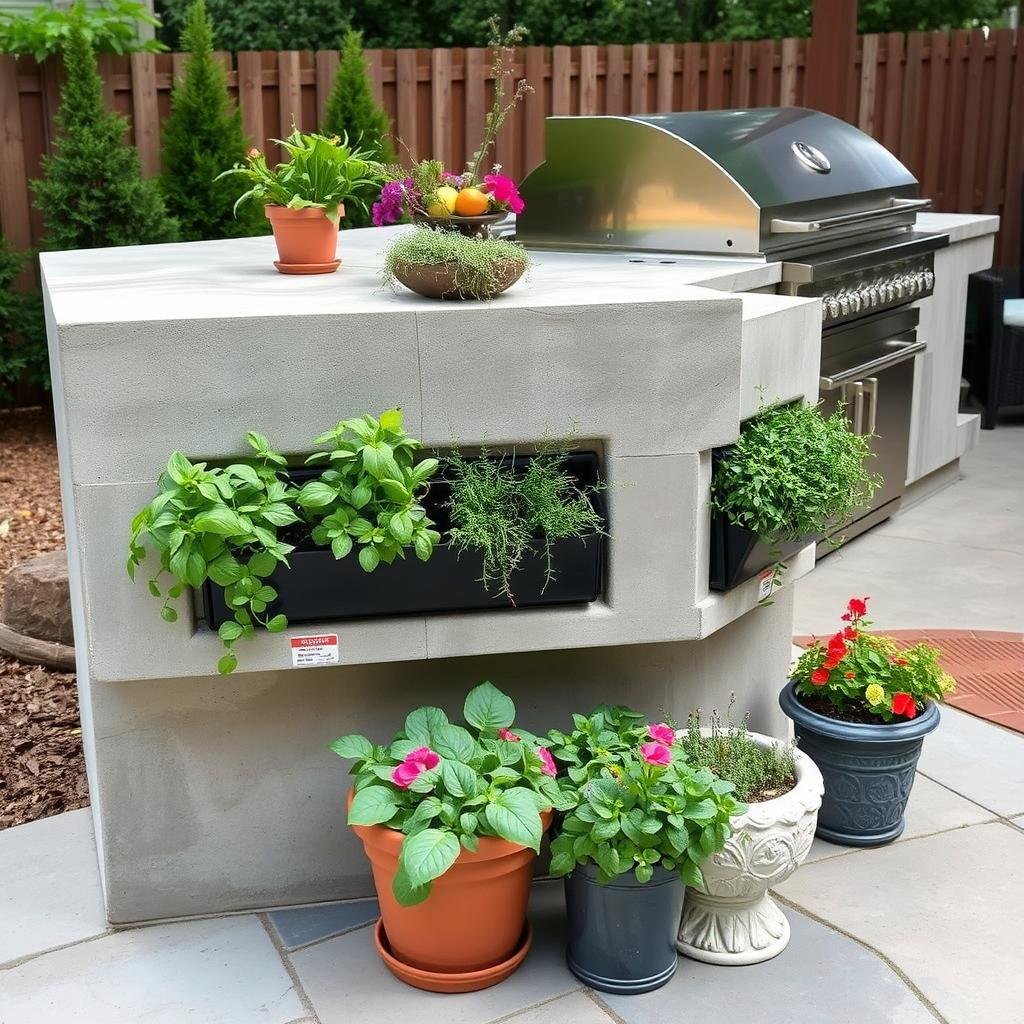
Warm earth tones, textured surfaces, and organic shapes create a welcoming, timeworn aesthetic. Consider stamped concrete that mimics natural stone, integrated herb planters, and terra cotta accents for authentic Mediterranean charm.
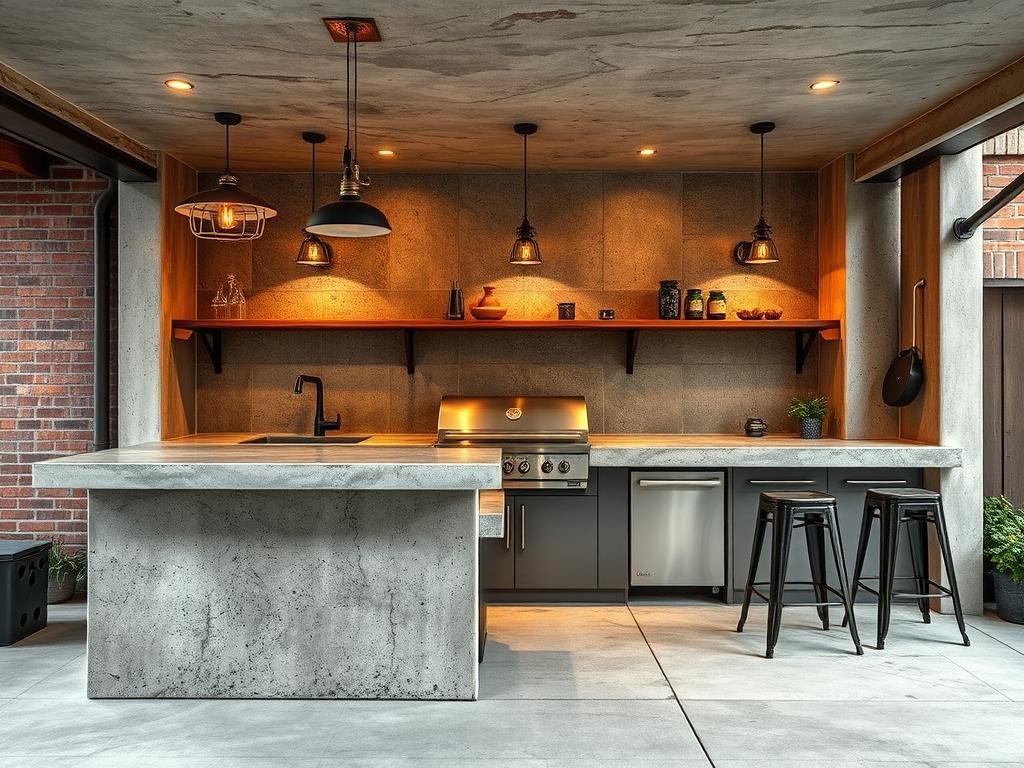
Industrial Chic
Embrace concrete’s raw nature with visible aggregate, exposed formwork marks, and metal accents. This style celebrates the material’s industrial heritage while creating a stylish, urban outdoor entertainment space.
Concrete Finish Options
The finish you choose dramatically impacts your kitchen’s final appearance:
Finish Type
Appearance
Maintenance
Best For
Polished
Smooth, reflective surface with marble-like quality
Low – easy to clean, requires resealing every 1-2 years
Modern, contemporary designs
Stamped
Textured surface mimicking stone, brick, or tile
Medium – texture can trap dirt, requires regular cleaning
Rustic, traditional designs
Acid-Stained
Variegated, translucent color with marble-like veining
Low to medium – requires proper sealing
Mediterranean, Tuscan-inspired designs
Exposed Aggregate
Textured surface with visible stones and pebbles
Medium – requires periodic resealing
Industrial, beach-inspired designs
Inspired by these concrete kitchen designs? Pin your favorite style to your Outdoor Projects board!
Essential Components & Features of a Concrete Outdoor Kitchen
A well-designed concrete outdoor kitchen combines functionality with style through these key elements:
Concrete Countertops
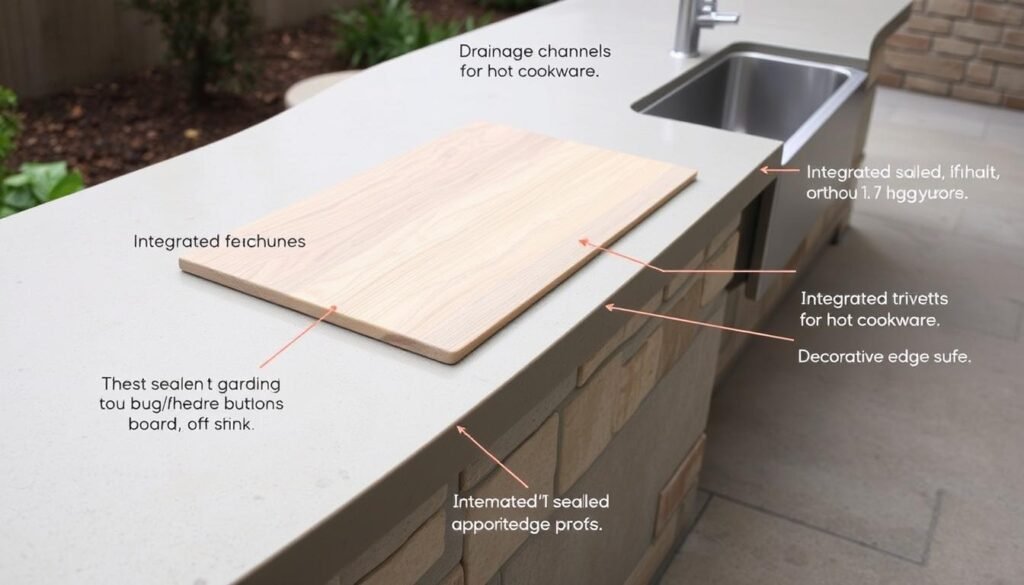
The centerpiece of any outdoor kitchen, concrete countertops offer durability and design flexibility. Standard thickness ranges from 1.5 to 2 inches, though thicker edges (often achieved through “false edges”) create a more substantial appearance. Consider integrating cutting boards, trivets, or drain boards directly into your concrete design.
Islands and Base Structures
Concrete islands serve as the foundation for your outdoor kitchen. Options include:
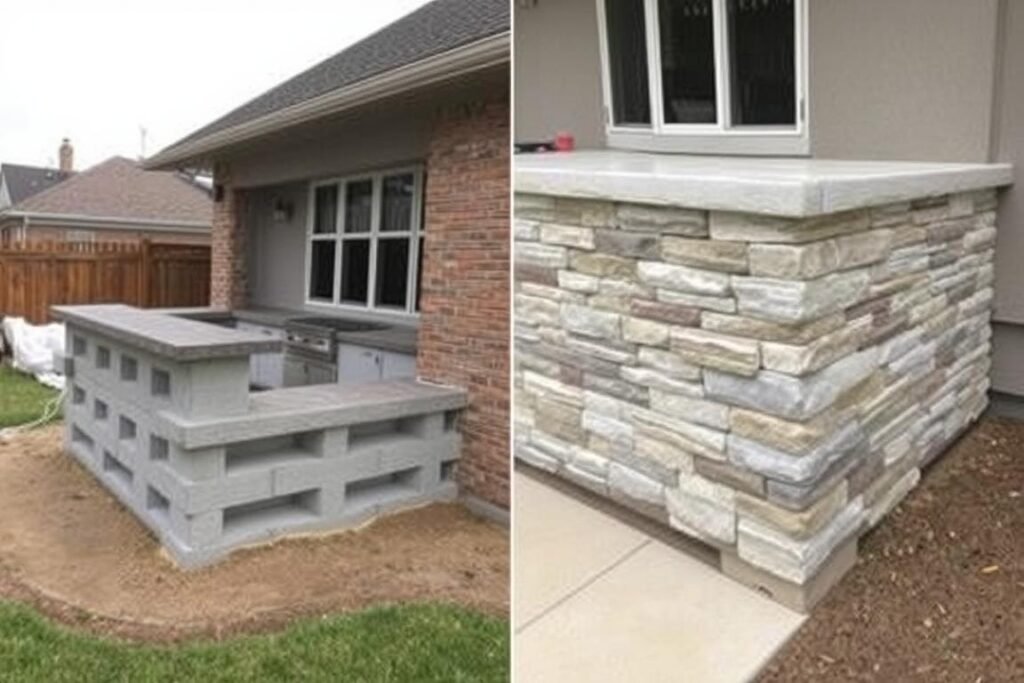
Masonry Block Base
Concrete blocks or bricks create a sturdy foundation that can be veneered with stone, tile, or stucco. This traditional approach offers excellent durability and load-bearing capacity for heavy countertops and appliances.
Concrete Form Base
Poured concrete forms create a monolithic structure with seamless integration between base and countertop. This approach allows for curved designs and contemporary aesthetics but requires more complex formwork during construction.
Built-In Appliances and Features
Your concrete outdoor kitchen can accommodate various built-in elements:
Cooking Stations
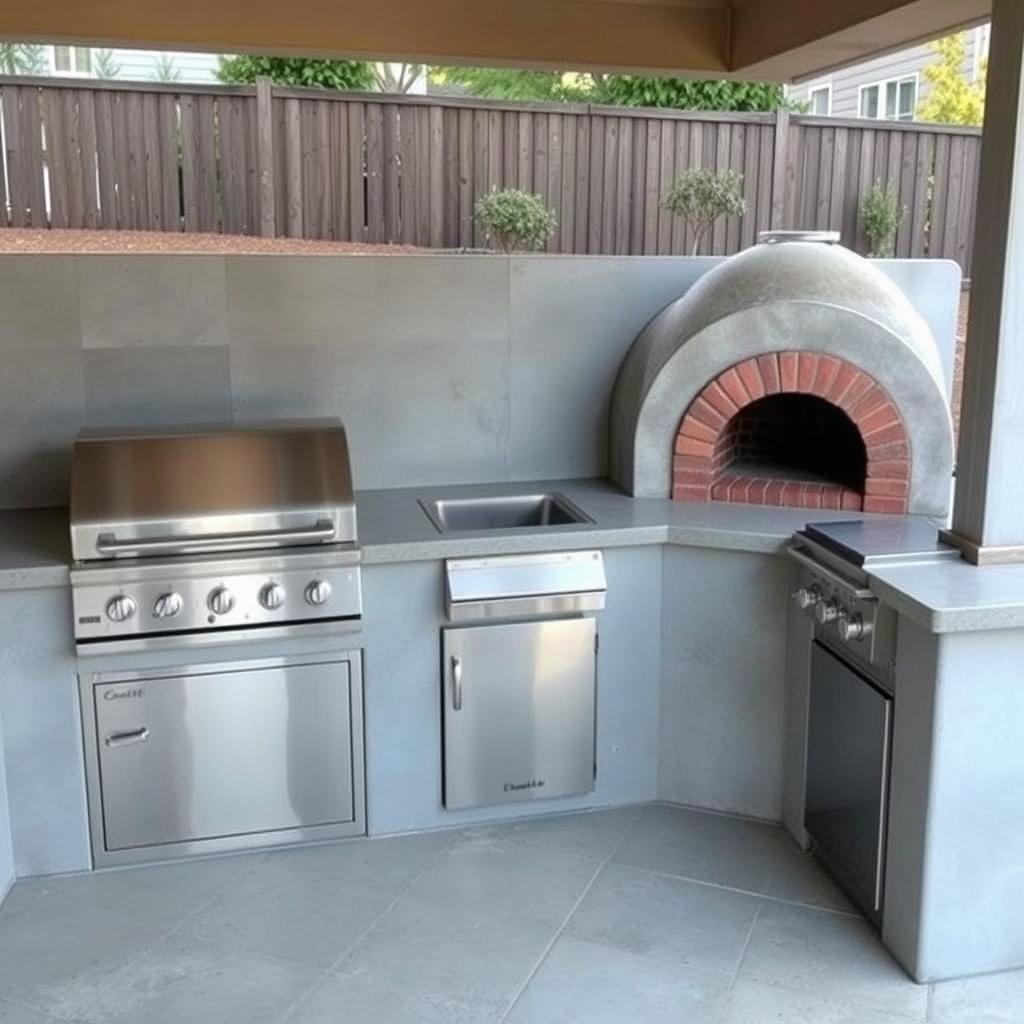
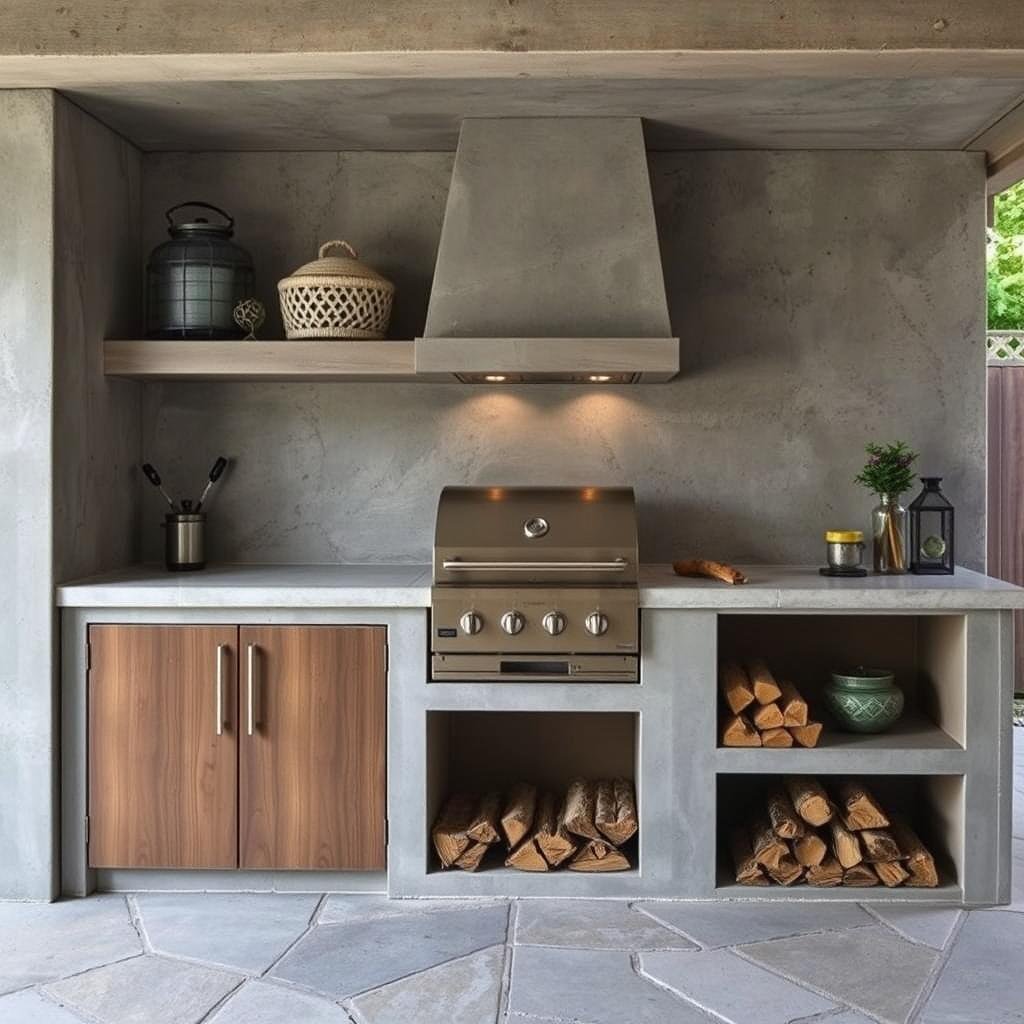
Beyond standard grills, consider integrating pizza ovens, smokers, or side burners. Concrete’s heat resistance makes it ideal for surrounding high-temperature cooking appliances.
Sink and Refrigeration
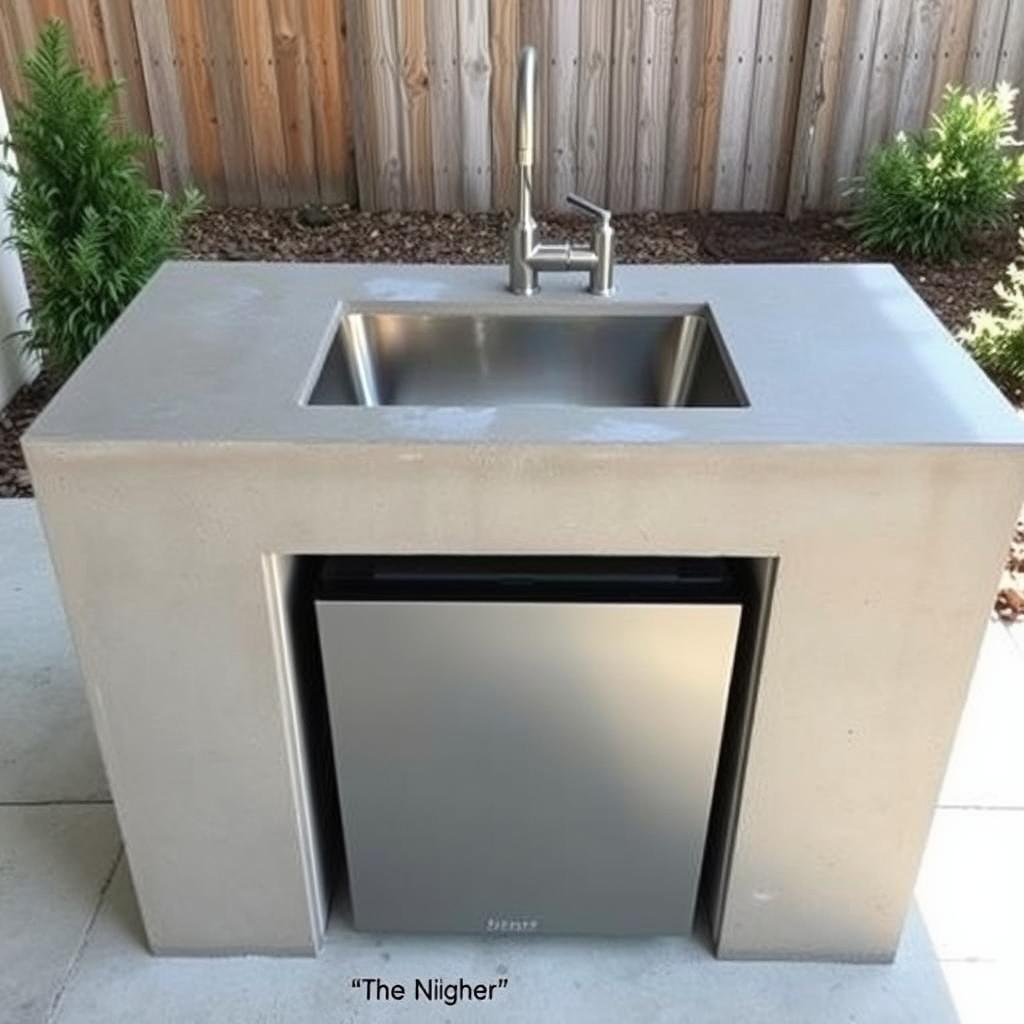
Outdoor-rated sinks and refrigerators enhance functionality. Concrete can be formed to integrate seamlessly with these elements, creating a cohesive look.
Storage Solutions
Incorporate concrete shelving, cabinets with weather-resistant doors, or open niches for wood storage. These elements add functionality while maintaining design continuity.
Essential Tools for Your Outdoor Kitchen
Outfit your new concrete outdoor kitchen with durable tools designed for outdoor cooking.
The Build Process: Creating Your Concrete Outdoor Kitchen
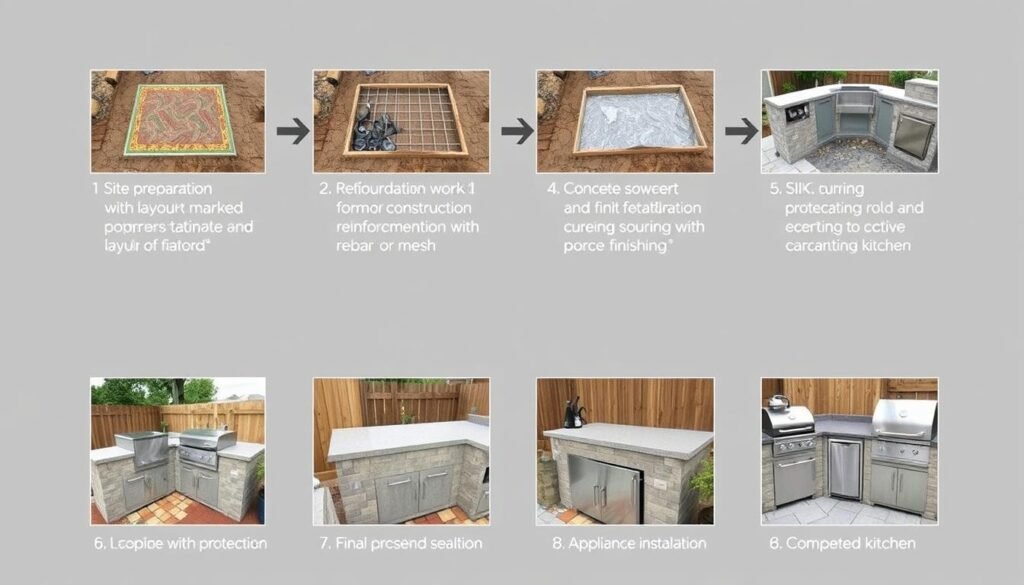
While professional installation is an option, many homeowners with DIY experience tackle concrete outdoor kitchens themselves. Here’s a high-level overview of the construction process:
Site Preparation: Ensure proper drainage, level ground, and proximity to utilities. For permanent installations, a concrete slab foundation is recommended.
Formwork Construction: Build forms using melamine-coated particle board for smooth concrete surfaces. Apply silicone caulk to inside corners for rounded edges.
Reinforcement Installation: Add steel reinforcement mesh or rebar to prevent cracking and increase structural integrity. Keep reinforcement centered within the concrete thickness.
Concrete Mixing and Pouring: Use high-strength concrete mix (minimum 5000 PSI) with fiber reinforcement for outdoor applications. Mix to manufacturer’s specifications and pour carefully to avoid air pockets.
Vibration and Initial Finishing: Vibrate forms to eliminate air bubbles. Level with a screed board and allow to set until thumbprint hard before troweling.
Curing: Allow concrete to cure for at least 48 hours before removing forms. Continue curing for 7-28 days depending on climate conditions.
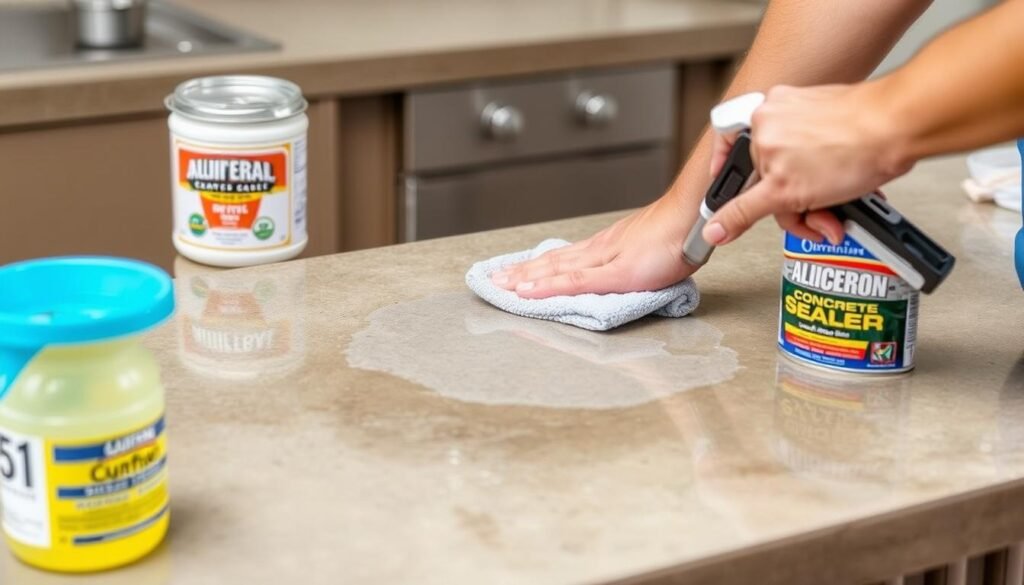
Finishing and Sealing: Sand edges, fill any pinholes with slurry, and apply food-safe concrete sealer designed for outdoor use. Multiple coats provide maximum protection.
Appliance Installation: Install grills, sinks, and other fixtures according to manufacturer instructions. Use appropriate weather-resistant materials for all connections.
Essential Concrete Supplies
Get the right materials for your concrete outdoor kitchen project.
Concrete cures best between 50-85°F (10-29°C). In hot weather, use cold water in your mix and cure under damp burlap. In cold weather, use warm water and insulate forms to maintain temperature. Never let fresh concrete freeze.
Styling & Accessorizing Your Concrete Outdoor Kitchen
Once construction is complete, thoughtful styling transforms your concrete outdoor kitchen into an inviting entertainment space:
Seating Options
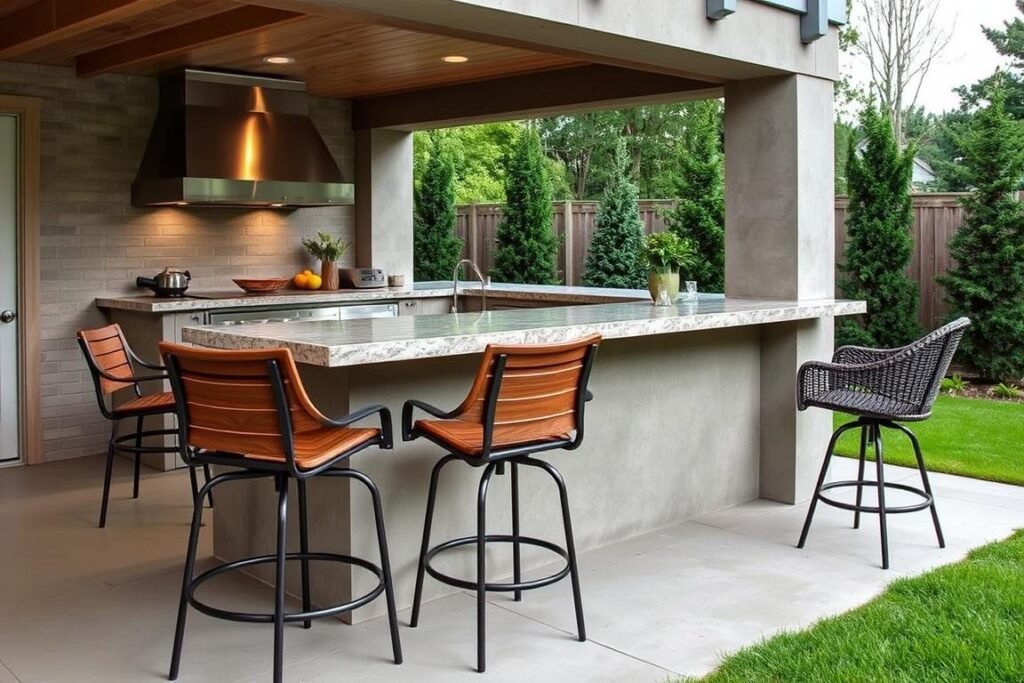
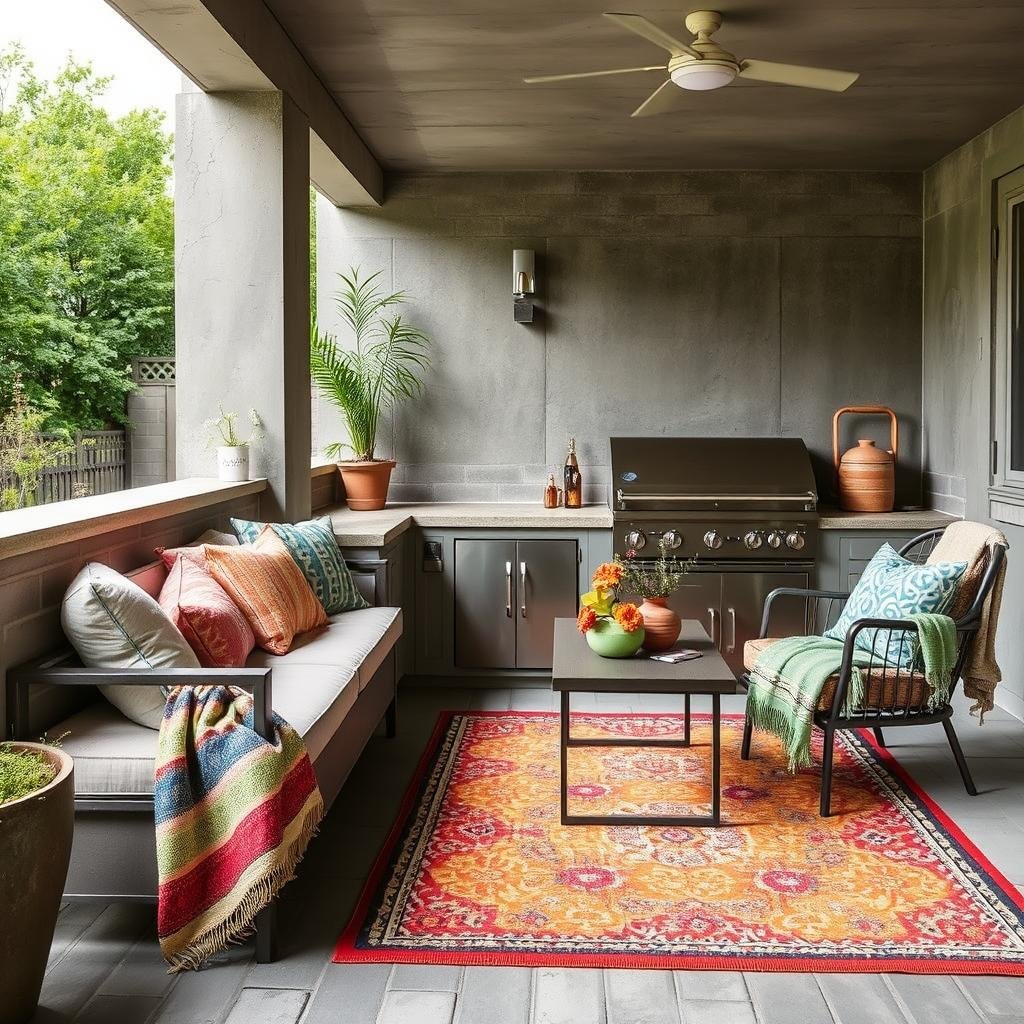
Complement your concrete counters with appropriate seating. Bar-height stools work well for casual dining areas, while dining tables adjacent to cooking areas create more formal settings. Consider weather-resistant materials like teak, metal, or synthetic wicker with outdoor-rated cushions.
Find durable, stylish seating for your outdoor kitchen space.
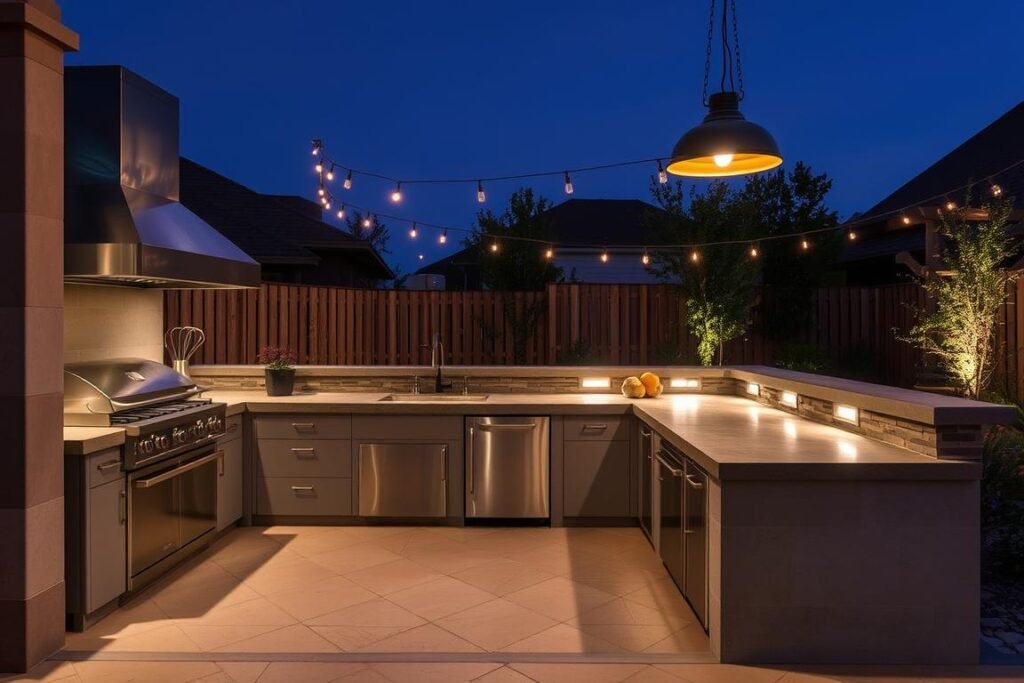
Extend usability into evening hours with strategic lighting. Consider task lighting over cooking areas, ambient lighting for dining spaces, and accent lighting to highlight architectural features of your concrete structures. Solar-powered options eliminate the need for complex wiring.
Create the perfect ambiance with outdoor-rated lighting.
Soften concrete’s industrial nature with carefully chosen accessories:
Textiles
Weather-resistant cushions, throws, and outdoor rugs add comfort and color. Choose materials specifically designed for outdoor use to prevent mildew and fading.
Plantings
Integrate herb planters into your concrete design or add container gardens nearby. Plants soften the hardscape and provide fresh ingredients for outdoor cooking.
Serving Ware
Outdoor-specific dishes, glassware, and serving pieces complete the experience. Choose durable materials like melamine, acrylic, or enamelware that withstand outdoor use.
“The beauty of concrete is its chameleon-like ability to take on different personalities through styling. From minimalist modern to rustic farmhouse, accessories transform the look while concrete provides the enduring foundation.”
— Outdoor Design Expert
Love these styling ideas? Pin them to your Outdoor Entertaining board!
Maintenance & Care for Your Concrete Outdoor Kitchen
Proper maintenance ensures your concrete outdoor kitchen remains beautiful and functional for decades:
Routine Care
Daily Cleaning: Wipe surfaces with mild soap and water. Avoid acidic cleaners (vinegar, citrus) that can etch concrete and damage sealers.
Stain Prevention: Clean spills promptly, especially acidic substances like wine, tomato sauce, or citrus juices that can etch concrete surfaces.
Cutting Boards: Always use cutting boards rather than cutting directly on concrete surfaces to prevent damage to both your knives and countertops.
Hot Items: While concrete is heat-resistant, extreme temperature changes can cause thermal shock. Use trivets under very hot cookware.
Seasonal Maintenance
Resealing
Apply fresh sealer every 1-3 years depending on exposure and wear. Water beading on the surface indicates effective sealing; when water absorbs rather than beads, it’s time to reseal.
Protect your investment with quality concrete sealers.
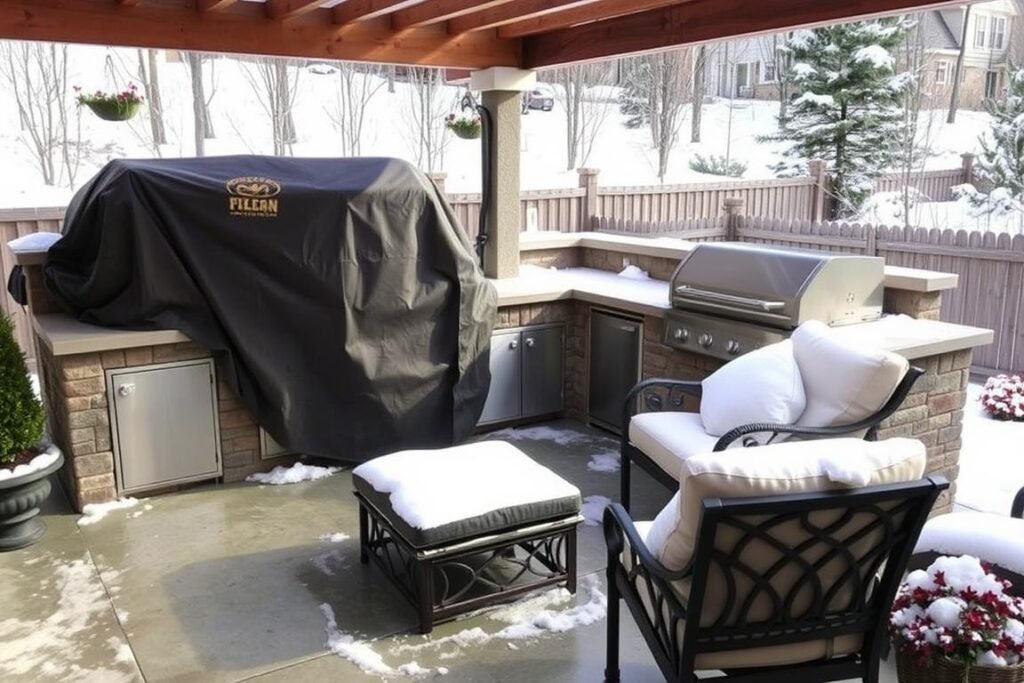
In cold climates, properly winterize water lines to prevent freezing. Cover cooking appliances and furniture with weather-resistant covers. Apply an additional coat of sealer before winter for extra protection.
Repair Tips
Small cracks can be filled with matching concrete slurry. For larger damage, consult a concrete professional. Keep a small amount of your original concrete mix (or record the exact formula) to ensure repairs match your original surface.
Ready to Create Your Dream Concrete Outdoor Kitchen?
A concrete outdoor kitchen represents the perfect blend of durability, customization, and style for outdoor living spaces. Whether you choose to DIY or hire professionals, concrete provides an enduring foundation for countless meals and memories under the open sky.
As you begin planning your project, remember that concrete’s versatility allows you to create a truly personalized space that reflects your lifestyle and complements your home. From simple cooking stations to elaborate outdoor entertainment hubs, concrete adapts to your vision while standing the test of time.
Start Your Concrete Outdoor Kitchen Journey Today
Begin gathering inspiration and planning your dream outdoor cooking space.
Open concept kitchen dining living room designs have revolutionized modern homes, creating spaces that feel expansive, bright, and connected. By removing…