Your patio is more than just an outdoor area—it’s an extension of your home, a place for relaxation, entertainment, and making memories. The right patio furniture layout can transform even the most modest space into a functional, inviting retreat that reflects your lifestyle and enhances your home’s value. Whether you’re working with a compact balcony, a long narrow deck, or a spacious backyard, thoughtful furniture arrangement is the key to creating an outdoor oasis you’ll love spending time in.
This Website contains affiliate links. That means I may earn a small commission if you purchase through my links, at no extra cost to you.
In this comprehensive guide, we’ll explore the principles of effective patio furniture layout, share creative arrangement ideas for spaces of all shapes and sizes, and provide practical tips to help you design an outdoor living area that’s both beautiful and functional. From creating conversation zones to dining areas, from maximizing small spaces to incorporating shade and privacy—we’ve got you covered with everything you need to know about arranging your outdoor furniture.
Essential Principles of Patio Furniture Layout
Before diving into specific layout ideas, it’s important to understand the fundamental principles that guide effective outdoor space planning. These concepts will help you create a patio that’s not only aesthetically pleasing but also practical and comfortable for everyday use.
Understanding the fundamental principles of furniture arrangement helps create a balanced, functional outdoor space
Define Your Focal Point
Every well-designed patio has a focal point that anchors the space and draws the eye. This could be a stunning fire pit, a beautiful view, an outdoor fireplace, or even a striking piece of furniture. Once you’ve identified your focal point, arrange your furniture to complement and enhance this feature. For spaces without a natural focal point, consider creating one with a statement fire pit or an eye-catching outdoor rug.
Prioritize Traffic Flow
A successful patio layout ensures easy movement throughout the space. Allow at least 3-4 feet of walking space between furniture pieces and keep pathways clear to entrances, exits, and high-traffic areas. Consider how people will move between your home, the grill, seating areas, and other features of your outdoor space. The flow should feel natural and intuitive, not forcing guests to navigate an obstacle course of furniture.
Related Posts:






Create Functional Zones
Think about how you want to use your outdoor space and create distinct zones for different activities. You might want a dining area, a lounging space, and perhaps a spot for a fire pit or grill. By defining these zones, you’ll be able to select the right furniture and accessories to suit each area, making your patio more functional and visually interesting.
Consider Scale and Proportion
The size of your furniture should be proportional to your patio’s dimensions. Oversized pieces can overwhelm a small space, while too-small furniture might get lost in a larger area. Measure your space carefully before purchasing furniture, and consider how different pieces will work together. A good rule of thumb is to leave at least 18 inches between a coffee table and seating, and ensure dining tables have at least 36 inches of clearance on all sides.
Patio Furniture Layout Ideas for Small Spaces
Don’t let limited square footage discourage you—small patios and balconies can be just as stylish and functional as larger spaces with the right furniture layout. The key is choosing appropriately sized pieces and arranging them strategically to maximize every inch.
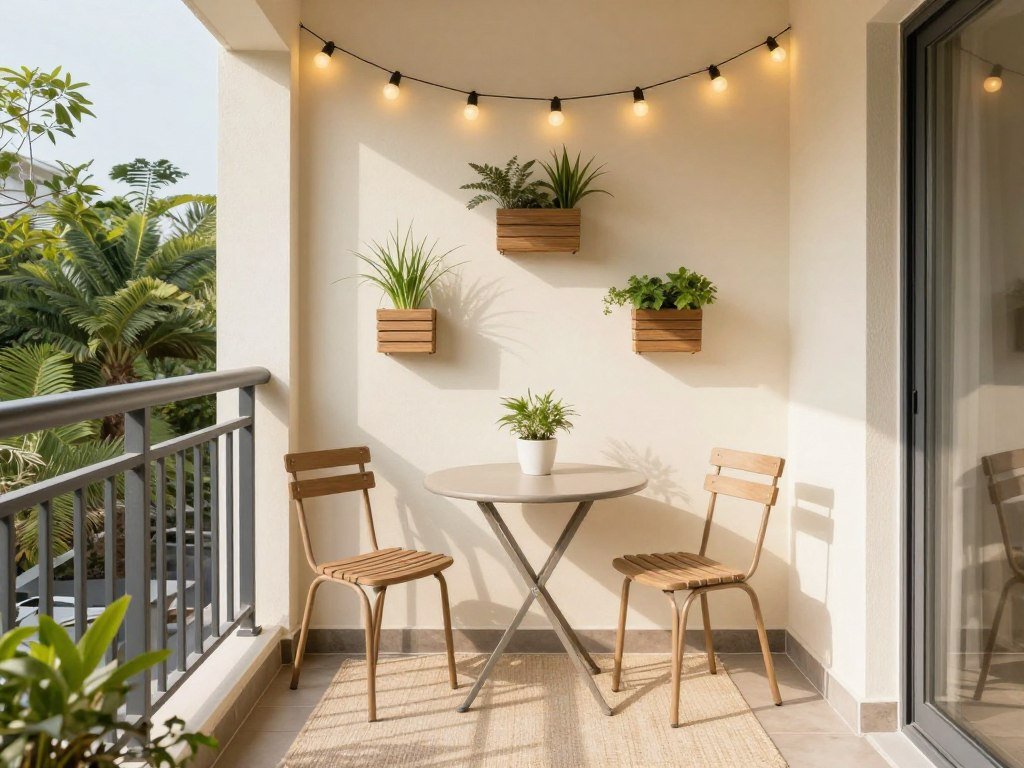
Small spaces can be transformed with the right scale furniture and smart vertical storage solutions
Bistro Sets for Intimate Gatherings
A compact bistro set is perfect for small patios and balconies. These typically include a small round table and two chairs, providing just enough space for morning coffee or an intimate dinner without overwhelming your limited area. Look for foldable options that can be tucked away when not in use, or consider a wall-mounted drop-leaf table that can be folded down when needed.
Corner Sectionals to Maximize Seating
Make the most of awkward corners with a small corner sectional. These pieces fit snugly into corners, providing ample seating without wasting valuable floor space. Pair with a compact coffee table or ottoman that can double as extra seating when needed. Choose furniture with built-in storage to keep outdoor essentials organized and out of sight.
Vertical Solutions
When floor space is limited, think vertically. Wall-mounted planters, hanging baskets, and tall, narrow shelving units can add greenery and storage without taking up precious square footage. Consider a vertical herb garden for both beauty and functionality, or install a trellis with climbing plants to create a living wall that adds privacy and visual interest.
Multi-Functional Furniture
In small spaces, every piece should earn its keep. Look for multi-functional furniture like storage benches, nesting tables, or convertible pieces that can adapt to different needs. An ottoman with hidden storage can serve as a coffee table, extra seating, and a place to stash outdoor cushions or gardening supplies.
Patio Furniture Layouts by Purpose
Different activities call for different furniture arrangements. Whether you’re creating a space for lively conversations, outdoor dining, or peaceful relaxation, the right layout can enhance your experience and make your patio more functional for your specific needs.
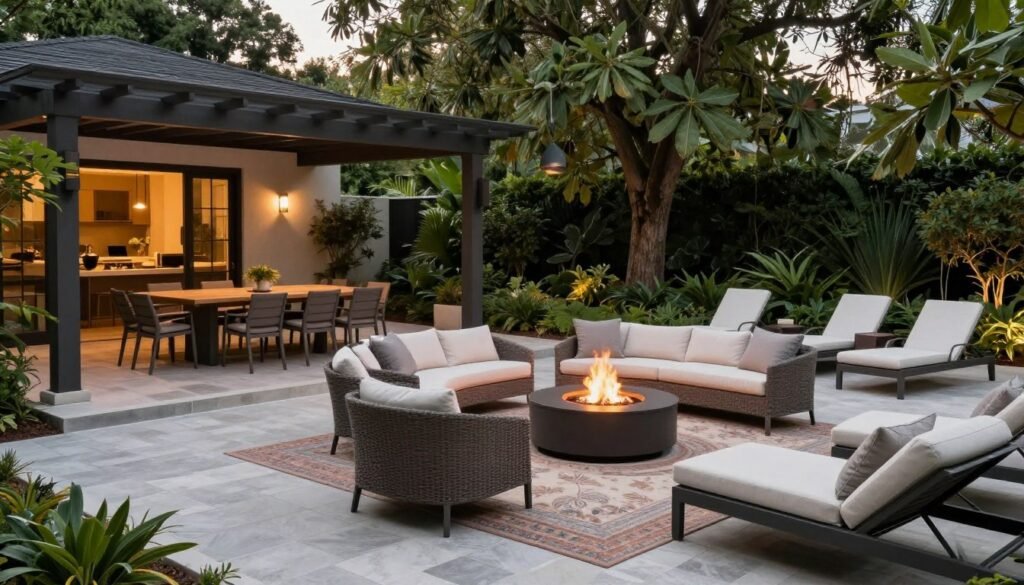
Creating distinct zones for different activities makes your patio more versatile and functional
Conversation Areas: Bringing People Together
The key to a successful conversation area is arranging seating so that people can easily see and talk to one another. A circular or U-shaped arrangement works best, with seating pieces no more than 8 feet apart to facilitate easy conversation. Center the seating around a focal point like a coffee table or fire pit, and ensure there’s a side table within reach of each seat for drinks and snacks.
Classic Conversation Layout
- Two loveseats or sofas facing each other
- Coffee table centered between them
- Optional accent chairs at either end
- Side tables within arm’s reach of each seat
Circular Conversation Layout
- Four to six chairs arranged in a circle
- Fire pit or round coffee table at center
- Equal spacing between all seats
- Open space for easy entry and exit
Dining Areas: Feasting Al Fresco
Outdoor dining areas should be functional, comfortable, and appropriately sized for your space and entertaining needs. The standard rule is to allow 24 inches of table width per person and at least 36 inches of clearance around the table for chairs and movement. Consider the shape of your patio when choosing a table—rectangular tables work well in long, narrow spaces, while round tables are perfect for square patios.
For a complete outdoor dining experience, consider adding a dining set that includes a table and matching chairs. Place your dining area close to the kitchen or grill for convenience, and add shade with an umbrella or pergola to make dining comfortable throughout the day.
Lounging and Sunbathing: Relaxation Stations
Create a dedicated space for relaxation with comfortable chaise lounges or daybeds. Position these pieces to take advantage of sun or shade, depending on your preference, and arrange them with enough space between for easy movement and a sense of privacy. Add side tables for books, drinks, and sunscreen, and consider incorporating an umbrella or canopy that can be adjusted as the sun moves.
Fire Pit Gatherings: Cozy Evening Retreats
A fire pit creates a natural gathering spot and extends the usability of your patio into cooler months. Arrange seating in a circle around the fire pit, leaving enough space (at least 2 feet) for safety and comfort. Adirondack chairs, deep seating pieces, or even built-in benches work well for this purpose. For added functionality, consider a fire pit table that combines the warmth of a fire feature with the practicality of a table surface.
Patio Furniture Layouts for Different Patio Shapes
The shape of your patio significantly influences the most effective furniture arrangement. By working with—rather than against—your patio’s natural shape, you can create a more harmonious and functional outdoor living space.
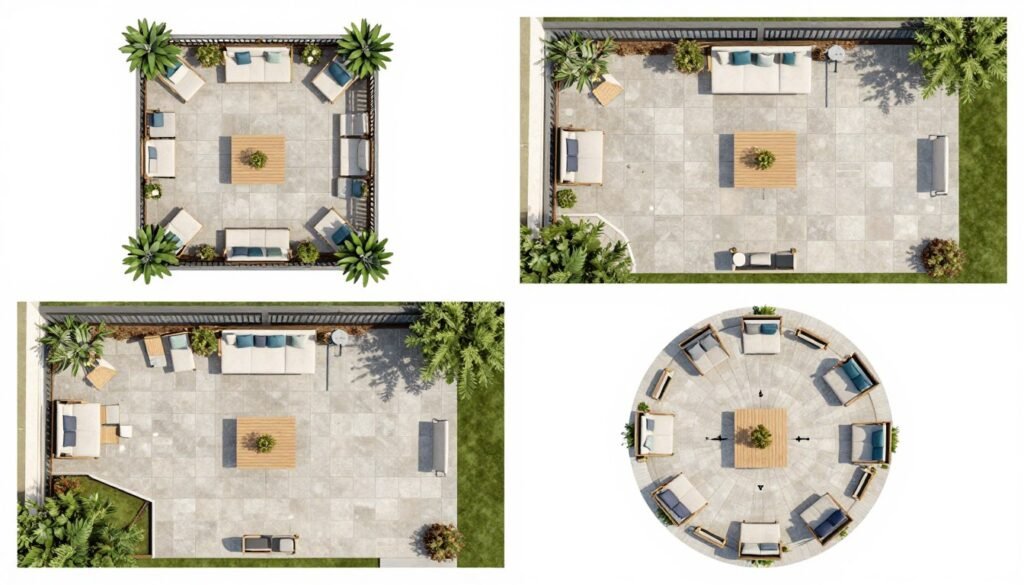
Different patio shapes require tailored furniture arrangements to maximize functionality
Square Patios: Balanced and Symmetrical
Square patios lend themselves to symmetrical furniture arrangements. A central focal point, such as a fire pit or coffee table, with seating arranged around it creates a balanced, cohesive look. You can also divide a square patio into distinct zones—perhaps a dining area on one side and a lounging area on the other—separated by planters or an outdoor rug to define each space.
Rectangular Patios: Linear and Zoned
Long, narrow patios work best with furniture arranged along the length of the space. Consider creating multiple zones that flow into one another—perhaps a dining area at one end, a conversation area in the middle, and a lounging space at the other end. Use outdoor rugs to define each zone and create visual separation without physical barriers.
L-Shaped Patios: Embracing the Angle
L-shaped patios offer a natural division of space that you can enhance with your furniture arrangement. Use the corner as a transition point between two distinct areas—perhaps a dining set in one section and a conversation area in the other. Alternatively, place a large sectional sofa in the corner to create a cozy, enclosed feeling for your seating area.
Circular or Curved Patios: Flowing and Organic
Curved patios call for furniture arrangements that follow the natural flow of the space. Curved sectionals or rounded furniture pieces work particularly well in these areas. Arrange seating to follow the curve of the patio edge, perhaps around a central fire pit or table. Avoid rigid, rectangular pieces that fight against the organic shape of the space.
Enhancing Your Patio Furniture Layout with Accessories
The right accessories can elevate your patio furniture layout from merely functional to truly exceptional. These finishing touches not only add style and personality but can also improve comfort, define spaces, and extend the usability of your outdoor living area throughout the day and evening.
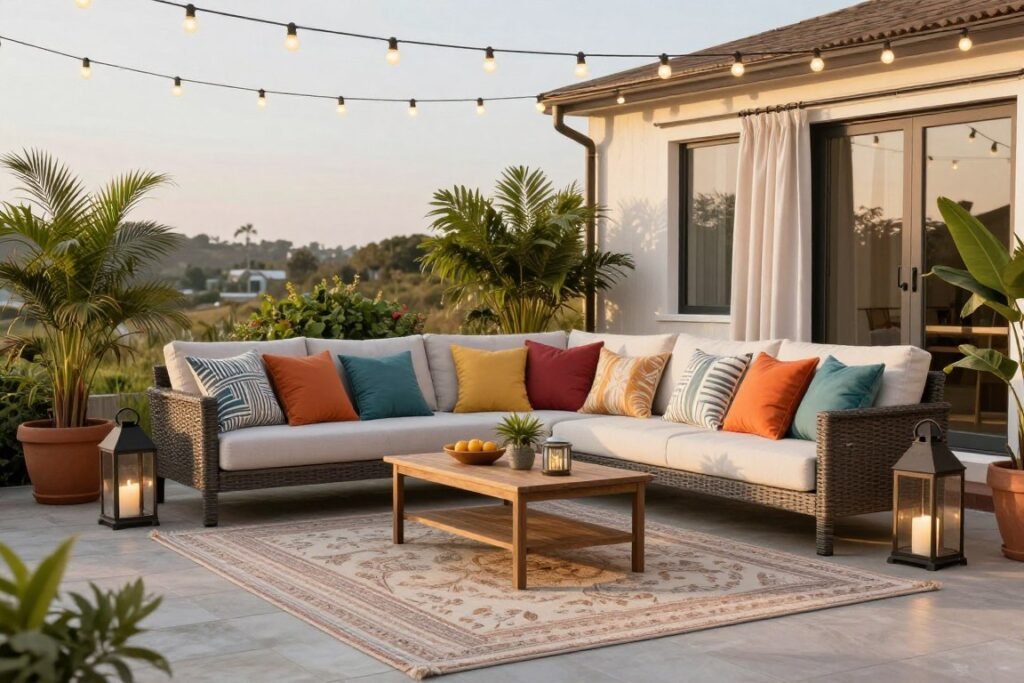
Thoughtfully chosen accessories transform a basic patio into a stylish outdoor living space
Outdoor Rugs: Defining Spaces
An outdoor rug does more than add color and texture—it helps define different zones within your patio and creates a sense of cohesion among your furniture pieces. Place a rug under your dining table (sized large enough that chairs remain on the rug when pulled out) or in your conversation area to visually anchor the space. Choose weather-resistant materials like polypropylene that can withstand sun, rain, and heavy foot traffic.
Lighting: Extending Usability
Strategic lighting extends the usability of your patio into the evening hours and creates ambiance. Layer different types of lighting for the best effect: overhead string lights for general illumination, table lamps or lanterns for ambient lighting, and pathway lights for safety and navigation. Solar-powered options eliminate the need for electrical outlets, while string lights draped overhead create a magical, starlit feeling.
Shade Solutions: Comfort Throughout the Day
Incorporate shade elements to make your patio comfortable regardless of the sun’s position. Options range from patio umbrellas and canopies to pergolas and shade sails. Position these elements to provide maximum coverage during the hottest parts of the day, and consider adjustable options that can be moved as the sun shifts position.
Planters and Greenery: Bringing Life to Your Space
Strategically placed plants soften hard edges, provide privacy, and bring life to your patio. Use planters of varying heights to create visual interest, tall plants to define boundaries or screen unsightly views, and hanging baskets to add greenery without taking up floor space. Choose plants suited to your climate and the specific light conditions of your patio for easy maintenance.
Seasonal Considerations for Patio Furniture Layout
Your patio furniture layout may need to evolve with the seasons to ensure comfort and functionality year-round. By making simple adjustments and additions, you can extend the usability of your outdoor space beyond the summer months.
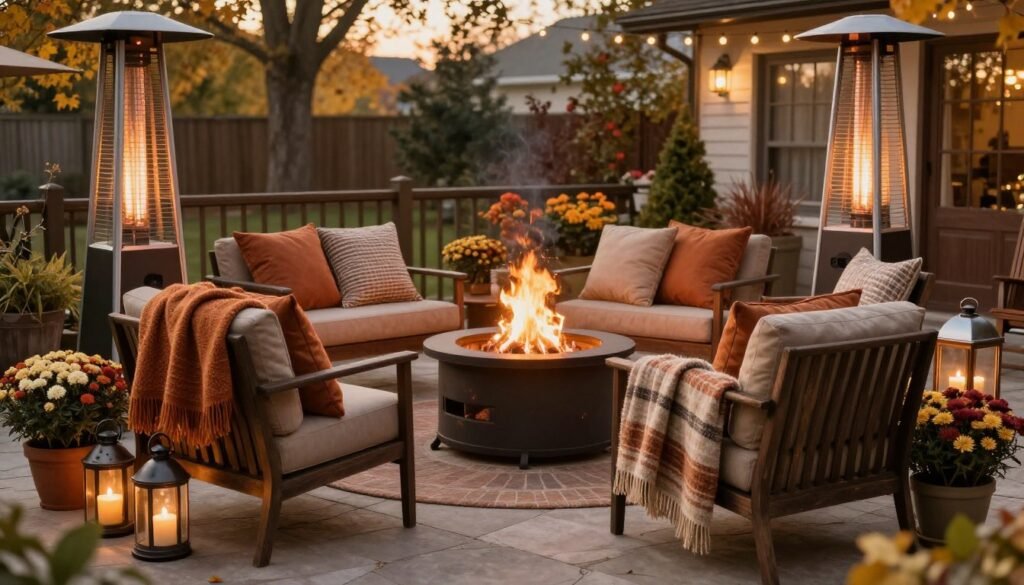
Adapting your patio layout for cooler seasons with fire features and cozy textiles
Spring and Summer: Maximizing Outdoor Living
During warmer months, focus on creating shade and airflow. Position seating to take advantage of natural breezes, and incorporate umbrellas or shade sails to provide relief from the sun. Consider adding a misting system or outdoor fans for especially hot climates. This is also the time to maximize your dining and entertaining areas, as summer is prime time for outdoor gatherings.
Fall and Winter: Creating Cozy Retreats
As temperatures drop, rearrange your furniture to create more intimate groupings centered around heat sources like fire pits or outdoor heaters. Add weather-resistant throw blankets and cushions in warm colors and textures to invite lingering even on cooler evenings. Consider patio heaters or infrared heating elements that can extend your outdoor season significantly.
Year-Round Considerations
Some elements of your patio layout should work regardless of season. Ensure covered areas for protection from both sun and rain, and consider wind patterns when positioning lighter furniture pieces. Choose durable, weather-resistant materials that can withstand year-round exposure, or invest in high-quality furniture covers for pieces that need to remain outdoors during inclement weather.
Bringing Your Patio Furniture Layout to Life
Creating the perfect patio furniture layout is both an art and a science—it requires careful planning, consideration of your specific needs and space, and a touch of creativity. By applying the principles and ideas we’ve explored in this guide, you can transform your outdoor area into a functional, beautiful extension of your home that enhances your lifestyle and provides a space for relaxation, entertainment, and making memories.
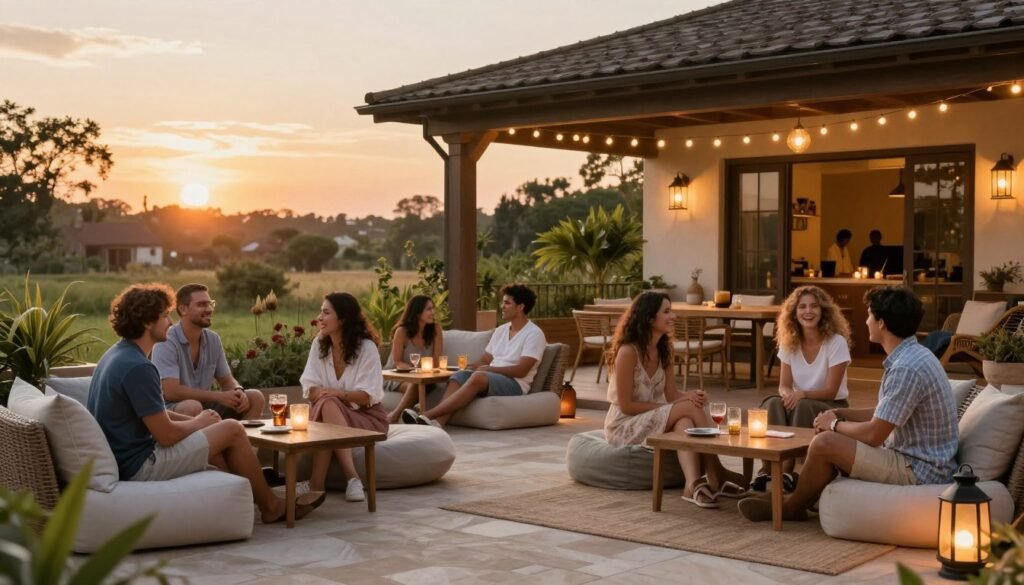
A well-designed patio becomes a natural gathering place for making memories with friends and family
Remember that the best patio furniture layout is one that works for your unique space and lifestyle. Don’t be afraid to experiment with different arrangements until you find what feels right. And as your needs change over time, your patio layout can evolve too—that’s the beauty of outdoor living spaces.
Whether you’re working with a tiny balcony or a sprawling backyard, the principles of good design remain the same: create flow, define zones, consider scale, and add personal touches that make the space uniquely yours. With thoughtful planning and the right furniture pieces, your patio can become your favorite “room” in your home—an outdoor oasis that invites you to relax, entertain, and enjoy the beauty of outdoor living.
Ready to Transform Your Outdoor Space?
Browse our curated selection of quality outdoor furniture and accessories to bring your patio layout vision to life. From conversation sets to dining tables, fire pits to lighting solutions—we’ve got everything you need to create your perfect outdoor oasis.