Your laundry room might be the smallest space in your home, but it doesn’t have to feel cramped or chaotic. Whether you’re working with a closet-sized area or a narrow corner, the right design choices can turn even the tiniest laundry spot into an efficient, organized workspace. Many homeowners struggle with limited laundry space, but smart solutions exist that maximize every inch without sacrificing functionality or style.
This Website contains affiliate links. That means I may earn a small commission if you purchase through my links, at no extra cost to you.
Small laundry rooms present unique challenges. Clothes pile up because there’s nowhere to put them. Detergent bottles clutter countertops. The washer and dryer barely fit, leaving no room for folding or storage. These common frustrations don’t mean you have to accept a messy, inefficient space. With thoughtful planning and creative design, your tiny laundry room can become one of the hardest-working areas in your home.
Understanding Your Small Laundry Room Layout
Before diving into tiny laundry room ideas, you need to assess what you’re working with. Measure your space carefully, noting the dimensions of walls, doorways, and any existing fixtures. Small laundry rooms come in various configurations, from closets to alcoves to narrow galley-style rooms. Each layout type demands different solutions.
Common Small Laundry Room Configurations
Closet laundry rooms typically measure between three and six feet wide. These compact areas work best with stackable washer dryer units that free up floor space for storage. Galley-style laundry rooms offer more length but limited width, making them ideal for side-by-side machines with overhead cabinets. Corner laundry areas fit into unused nooks and benefit from custom shelving that follows the wall angles.
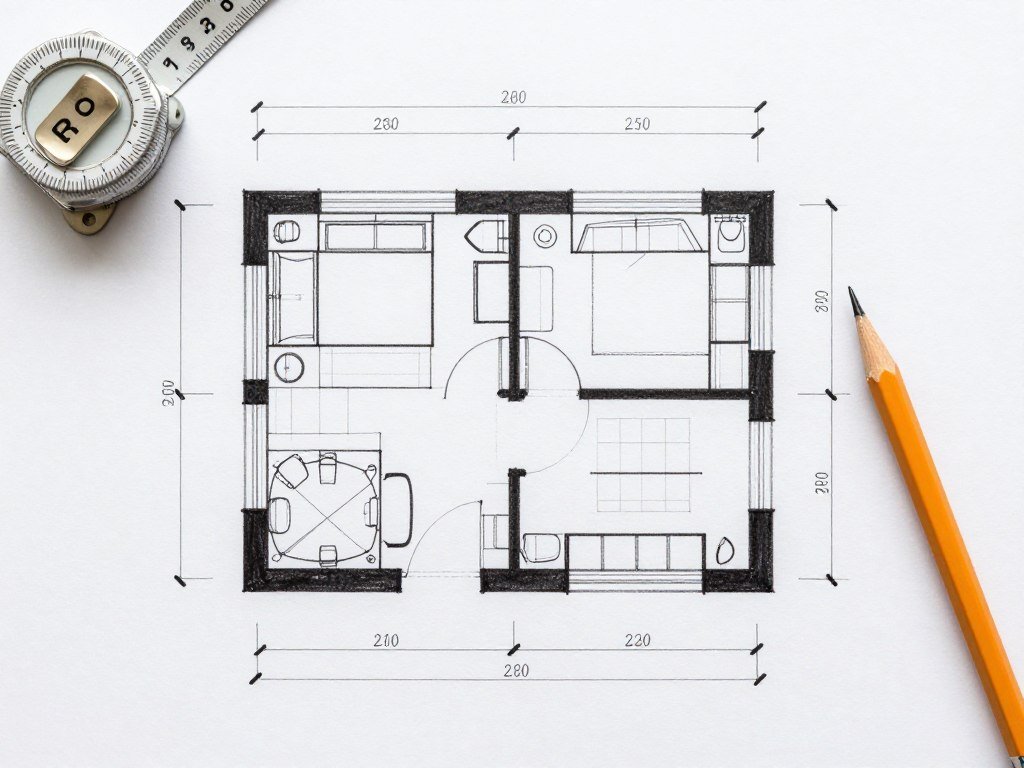
Identifying your plumbing and electrical limitations helps you plan realistically. Most small laundry rooms have fixed hookup locations that determine where your washer and dryer must go. Understanding these constraints early prevents costly mistakes and helps you design around permanent fixtures.
Related Posts:






Vertical Space Opportunities
The biggest mistake in small laundry room design is ignoring vertical space. Walls offer tremendous storage potential that most people overlook. From floor to ceiling, you have options for shelving, cabinets, hooks, and hanging rods. Taking advantage of height makes a dramatic difference in functionality.
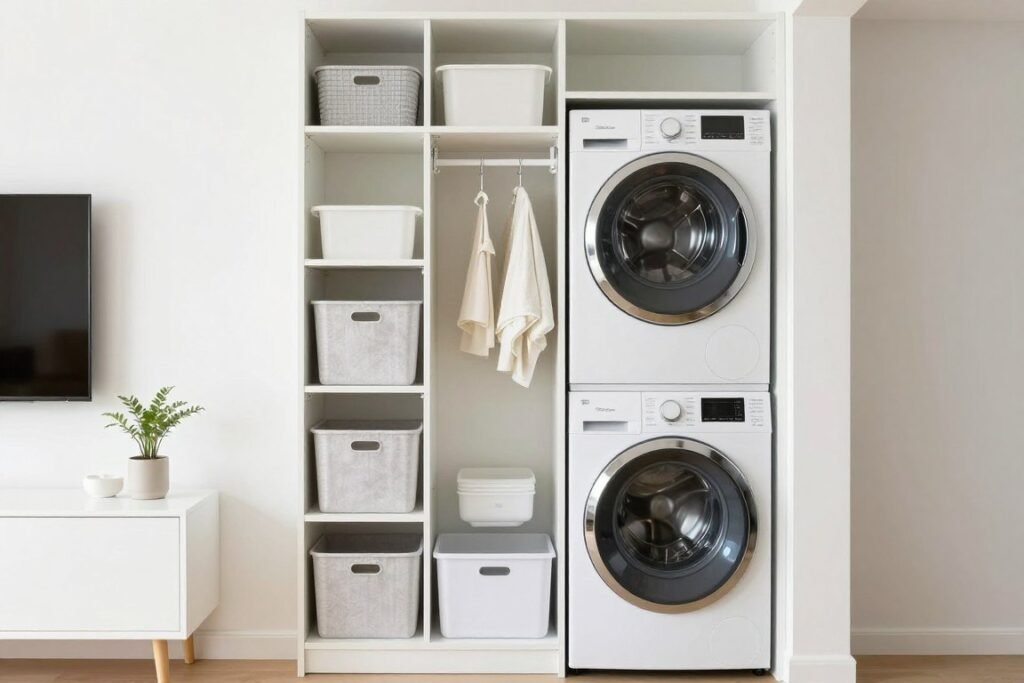
Standard laundry rooms waste the space above the washer and dryer. Installing cabinets or open shelving in this zone instantly adds storage for detergent, fabric softener, and cleaning essentials. The area above the door frame also provides an often-forgotten spot for shallow shelving.
Smart Storage Solutions for Tiny Laundry Rooms
Storage makes or breaks a small laundry room. Without proper organization systems, supplies spread across countertops and floors, making the space feel even smaller. Strategic storage keeps everything accessible while maintaining a clean, uncluttered appearance.
Cabinet Systems That Maximize Space
Upper cabinets provide hidden storage that keeps your laundry room looking tidy. Choose cabinets that extend to the ceiling rather than leaving gaps that collect dust. Full-height cabinets offer more storage capacity in the same footprint, making them essential for small spaces.
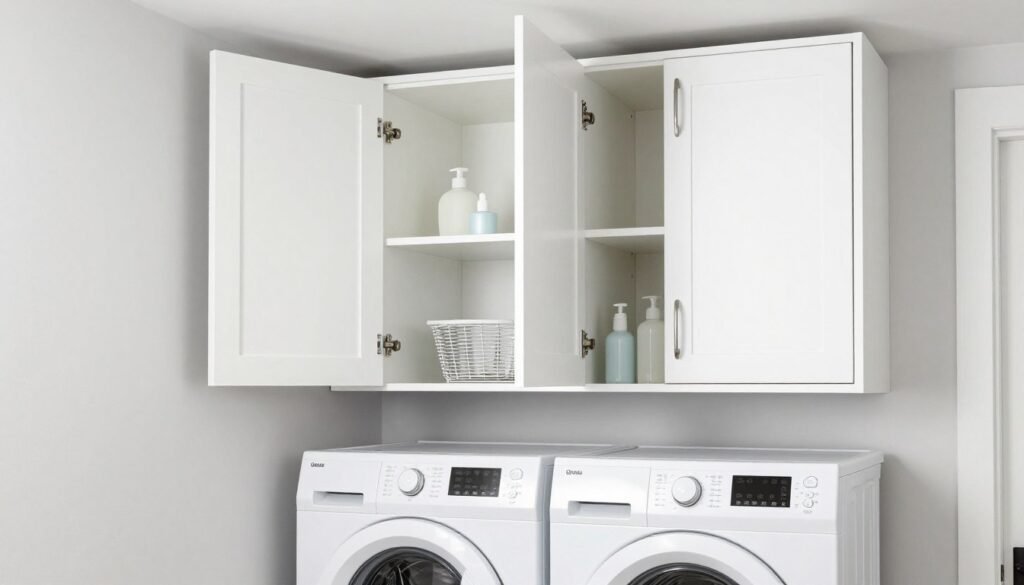
Base cabinets work well in galley laundry rooms where you have wall space beside the machines. These units can house laundry baskets, cleaning supplies, and even a pull-out drying rack. Look for cabinets with adjustable shelves that adapt to different storage needs over time.
Essential Cabinet Storage
Upper and base cabinet systems transform tiny laundry rooms by providing organized, accessible storage. Quality cabinets designed for small spaces feature adjustable shelving, soft-close hinges, and moisture-resistant materials that withstand the humid laundry environment. Installing the right cabinet system eliminates clutter and creates a functional workspace.
Open Shelving for Easy Access
Open shelving provides quick access to frequently used items. Unlike cabinets, shelves let you see everything at a glance, which saves time when you’re rushing through laundry tasks. This storage type works particularly well for items you use daily, like detergent and stain removers.
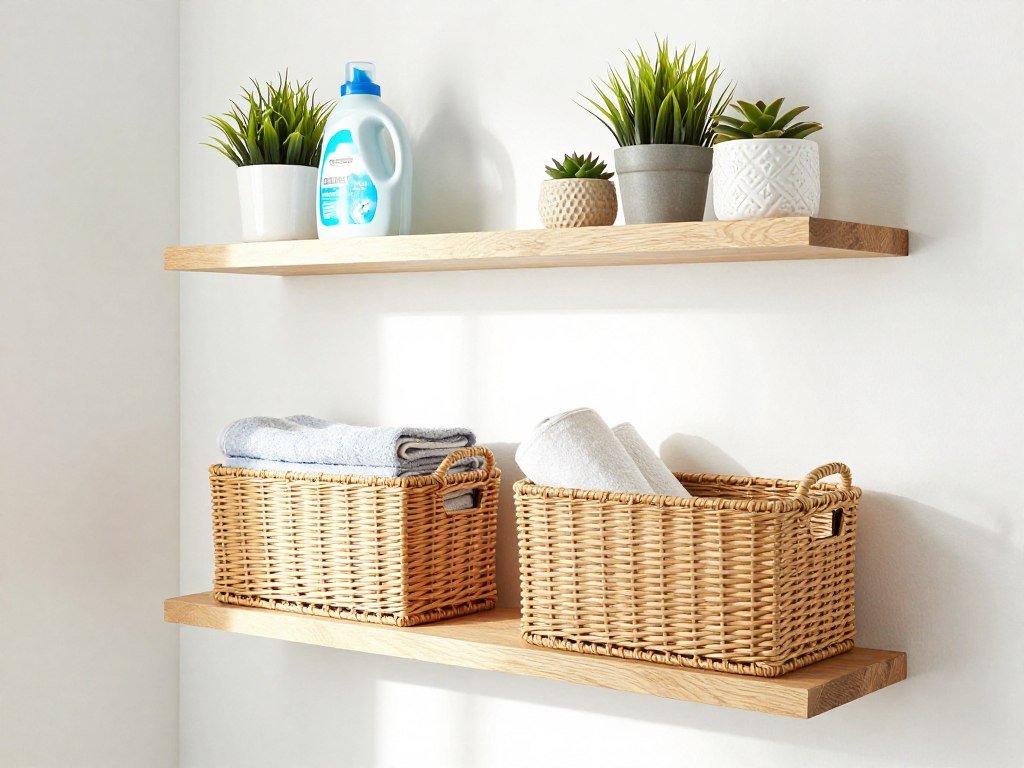
Floating shelves create storage without visual bulk. These wall-mounted units appear to hover, making your small laundry room feel more open than traditional bracket-supported shelves. Install them at varying heights to accommodate different items, from tall bottles to small containers.
Metal wire shelving offers a budget-friendly alternative that handles moisture better than wood. These industrial-style racks allow air circulation, which prevents mildew growth on stored items. They’re also adjustable, letting you modify shelf heights as your storage needs change.
Hidden Storage Behind Doors
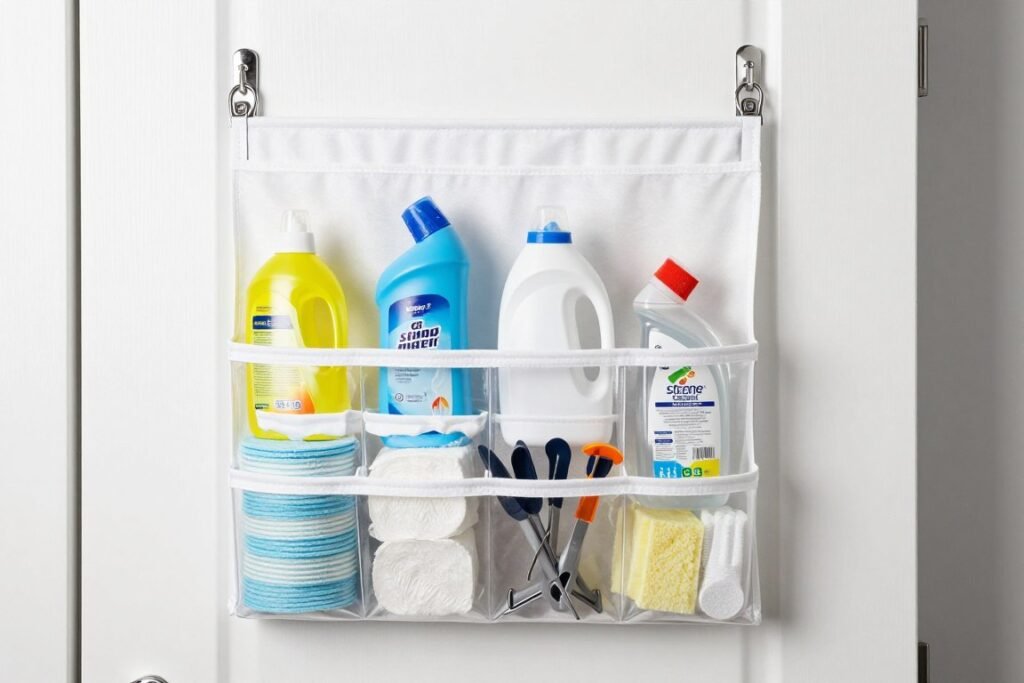
The back of your laundry room door offers valuable storage real estate. Over-the-door organizers with pockets hold supplies, dryer sheets, and small tools without taking up any floor or wall space. This spot is perfect for items you need regularly but don’t want displayed on open shelves.
Organization Systems That Keep Laundry Under Control
Storage provides space, but organization systems determine how efficiently you use it. The right organizational tools transform chaotic storage into streamlined workflows. Even the smallest laundry room functions smoothly when everything has a designated spot.
Sorting Systems for Small Spaces
Laundry sorting typically requires multiple baskets that consume floor space. In tiny laundry rooms, traditional sorting systems don’t fit. Wall-mounted sorting bags offer a vertical solution that separates whites, colors, and delicates without cluttering the floor.
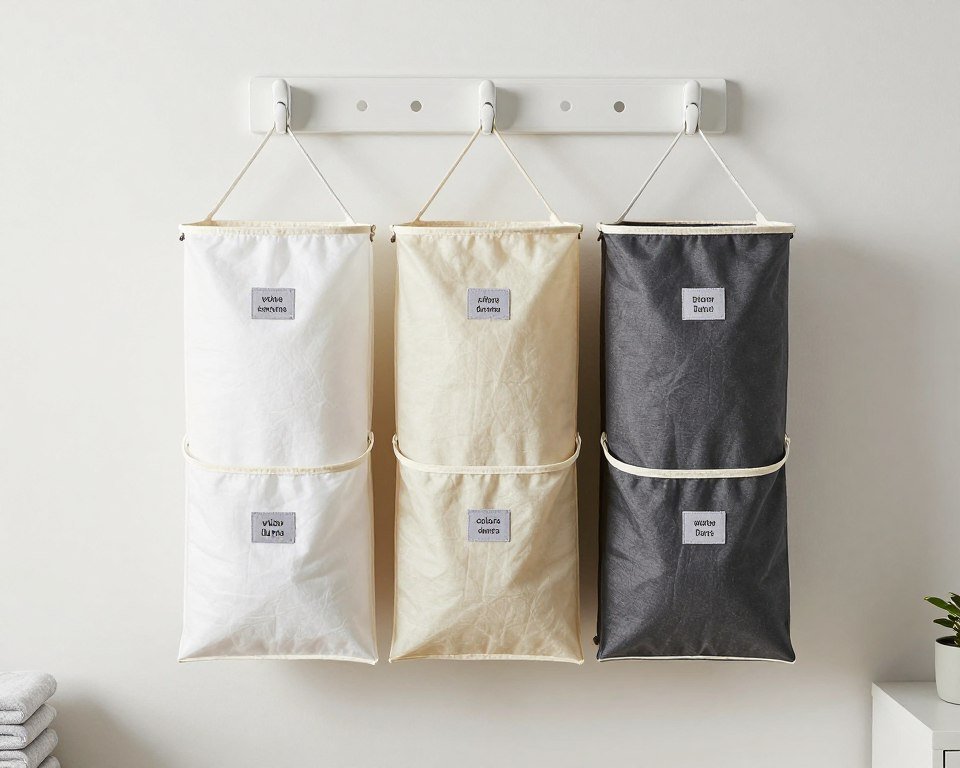
Pull-out hampers built into base cabinets provide another space-efficient sorting option. These systems slide out when needed and tuck away when not in use, keeping your small laundry room floor clear. Some designs include multiple compartments within a single cabinet space, maximizing sorting capability.
Smart Sorting Solutions
Laundry sorting systems designed for small spaces help you stay organized without sacrificing precious floor area. Wall-mounted sorters, pull-out hampers, and compact multi-compartment baskets keep clothing separated by wash type while maintaining an uncluttered appearance. These solutions streamline your laundry routine and make the most of limited space.
Containers and Bins That Maximize Shelf Space
Random items scattered on shelves waste space and create visual chaos. Uniform containers and bins group similar items together, making shelves more efficient and attractive. Clear bins let you see contents at a glance, while labeled opaque containers maintain a cohesive appearance.
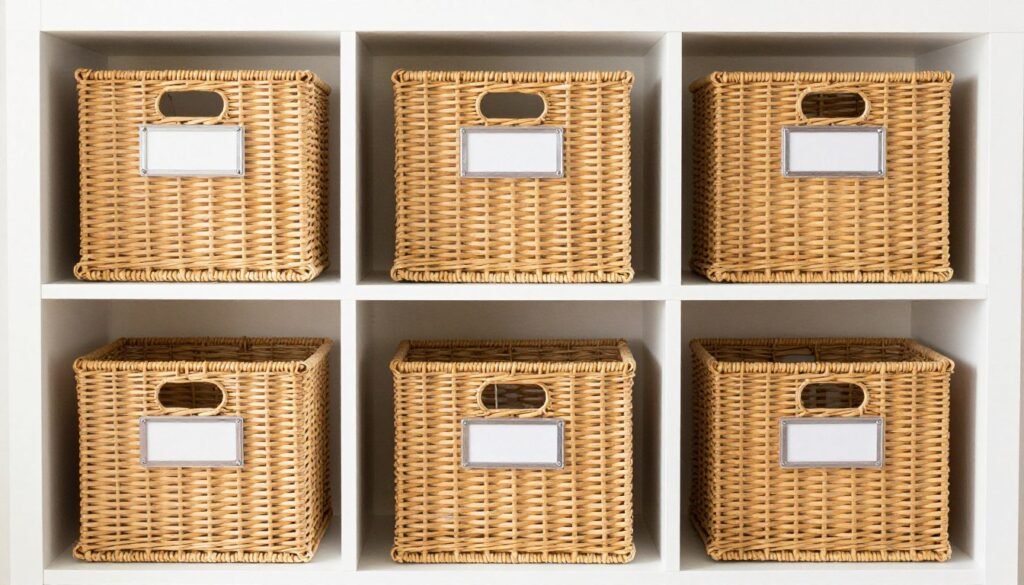
Stackable bins multiply your vertical storage capacity. These containers nest on top of each other, allowing you to store more in the same shelf footprint. Choose bins with handles for easy access, especially for those stored on high shelves.
Drawer organizers keep smaller items like clothespins, stain sticks, and sewing supplies from becoming jumbled messes. These dividers create designated spots within drawers, preventing the chaos that makes small spaces feel overwhelming.
Drying Rack Solutions
Air-drying clothes saves energy and extends garment life, but traditional drying racks occupy significant floor space. Wall-mounted drying racks fold flat when not in use, providing all the functionality without permanent space consumption. These units swing out when needed and tuck against the wall afterward.
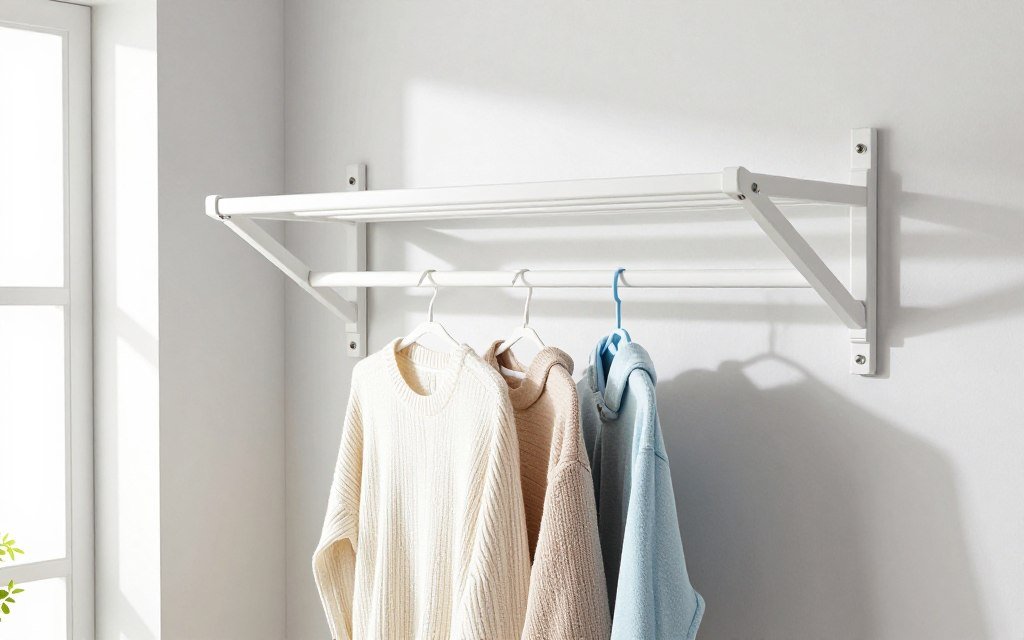
Retractable clotheslines offer another compact drying option. Mounted to opposite walls, these lines pull out when needed and retract into their housing when not in use. They’re ideal for small items like socks and undergarments that don’t require full rack space.
Ceiling-mounted drying racks utilize overhead space that typically goes unused. These pulley systems raise and lower, letting you load items at a comfortable height then lift them out of the way. This solution works particularly well in laundry rooms with high ceilings.
Space-Saving Drying Options
Compact drying racks and retractable lines provide essential air-drying capability without consuming valuable floor space. Wall-mounted, ceiling-mounted, and folding designs offer flexibility for tiny laundry rooms, allowing you to dry delicate clothing items efficiently. These solutions fold away or retract when not needed, maintaining an open feel in your small space.
Choosing the Right Washer and Dryer for Small Laundry Rooms
Your washer and dryer consume the most space in any laundry room. In tiny areas, appliance selection becomes critical. The wrong machines leave no room for storage or workflow, while the right choices create an efficient, functional space.
Stackable Washer Dryer Units
Stackable units cut your appliance footprint in half by utilizing vertical space. These machines free up floor area for storage cabinets, sorting systems, or even a small folding counter. Most manufacturers offer stacking kits that securely attach the dryer above the washer.
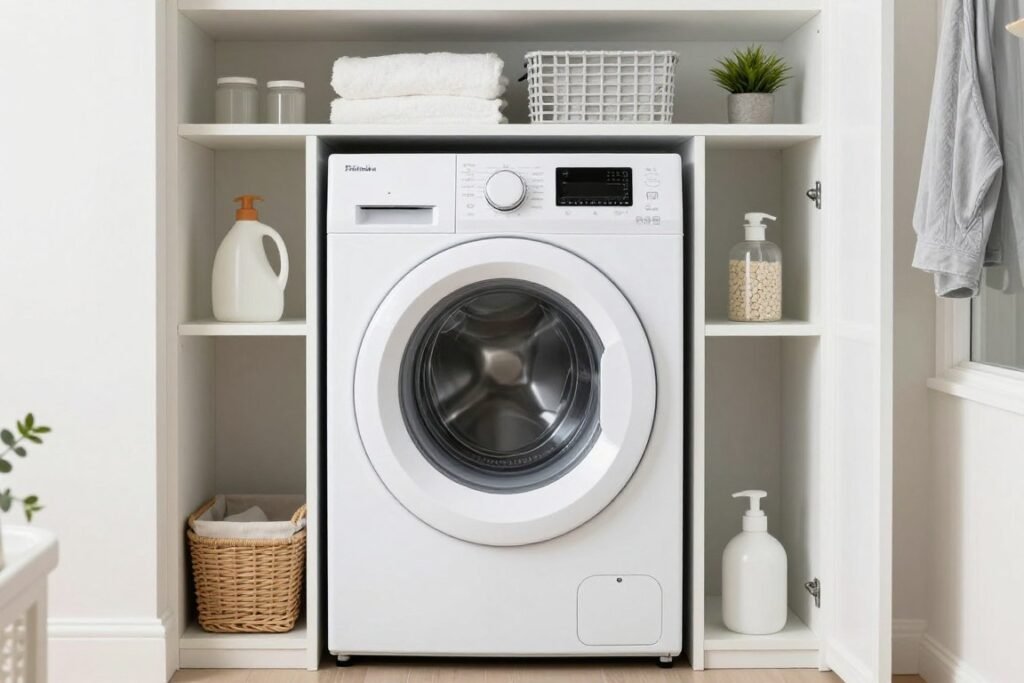
Front-loading machines work best for stacking configurations. These washers allow you to place the dryer directly on top without clearance issues. Top-loading washers can’t stack effectively because you need access to the lid, eliminating the space-saving advantage.
All-in-one washer dryer combos take stacking a step further by combining both functions in one machine. These units wash and dry in the same drum, requiring only washer hookups and saving even more space. They’re ideal for the smallest laundry closets where even stacked separate units won’t fit.
Compact Washer Dryer Solutions
Stackable and combo washer dryer units are game-changers for tiny laundry rooms. These space-efficient appliances provide full washing and drying capability while occupying minimal floor area. Modern compact units offer the same cleaning performance as full-size machines, with advanced features and energy efficiency that make them practical choices for small spaces.
Compact and Portable Options
Compact washers and dryers measure smaller than standard units, typically around 24 inches wide compared to the standard 27 inches. Those few inches make a significant difference in tight spaces, often determining whether you can fit cabinets alongside your machines.
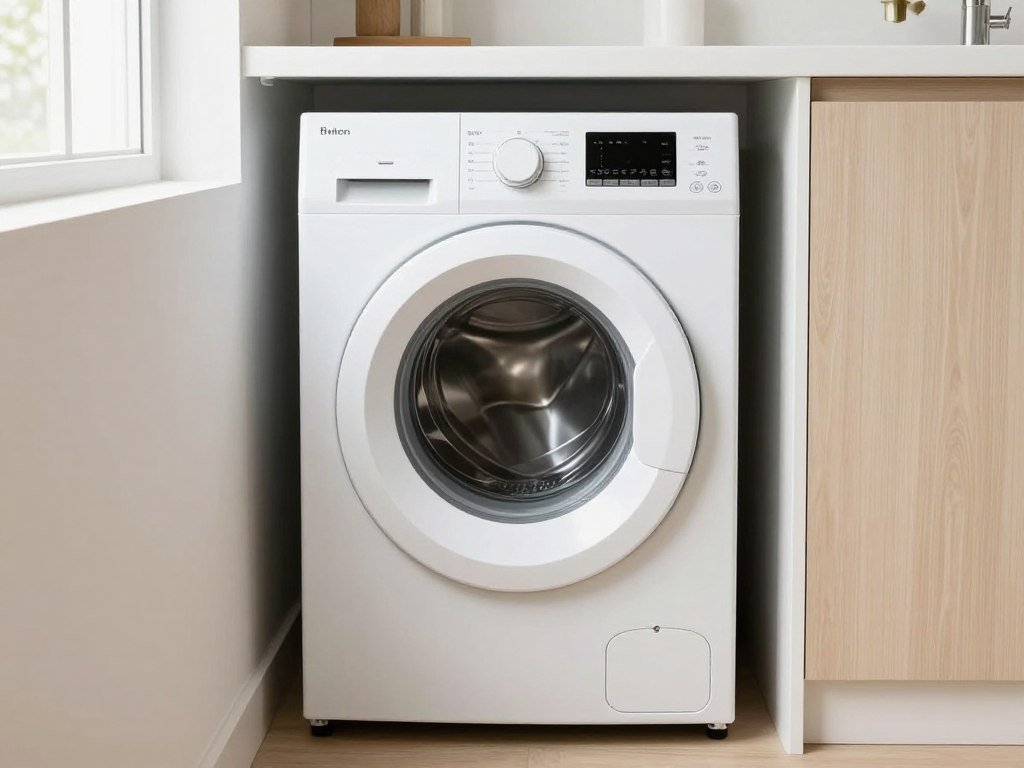
Portable washing machines offer ultimate flexibility for renters or those with extremely limited space. These lightweight units roll to your sink, connect to the faucet, and drain into the basin. After washing, they store in a closet or under a counter, leaving your small laundry area completely clear.
Ventless dryers eliminate the need for exterior venting, which expands placement options significantly. These machines use condensation or heat pump technology to dry clothes without venting hot, moist air outside. You can place them anywhere with a power outlet, not just near exterior walls.
Design Choices That Make Small Laundry Rooms Feel Larger
Smart design creates the illusion of more space even in the tiniest laundry room. Color choices, lighting, and materials all influence how spacious the room feels. Strategic design elements transform cramped areas into comfortable, functional spaces.
Color Schemes for Small Spaces
Light colors reflect light and make small rooms feel more open. White, cream, and pale gray create an airy atmosphere in tiny laundry rooms. These neutral tones also provide a clean backdrop that makes organization systems and storage solutions visually cohesive.
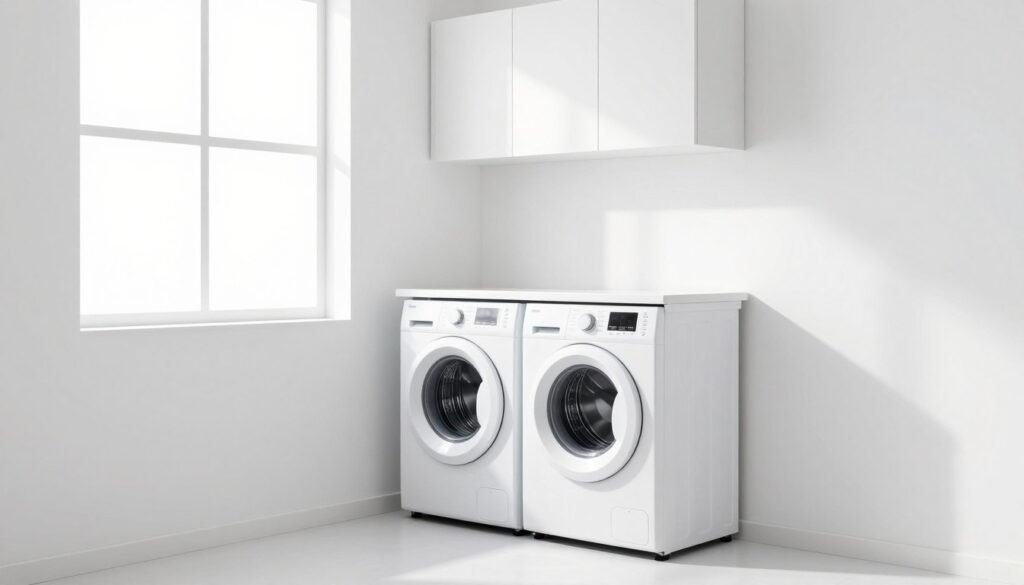
Monochromatic color schemes create visual continuity that makes spaces feel larger. Using varying shades of one color family eliminates visual breaks that chop up small rooms. This approach works with any color, though lighter values produce the most spacious feeling.
Adding an accent color prevents white laundry rooms from feeling sterile. A pop of blue, green, or yellow in accessories, containers, or a single accent wall adds personality without overwhelming the space. Keep accent colors consistent to maintain the cohesive look that makes small rooms feel larger.
Lighting Strategies
Good lighting makes any space feel more open and functional. Small laundry rooms often lack natural light, making artificial lighting crucial. Layered lighting that combines ambient, task, and accent sources creates the most inviting, functional space.
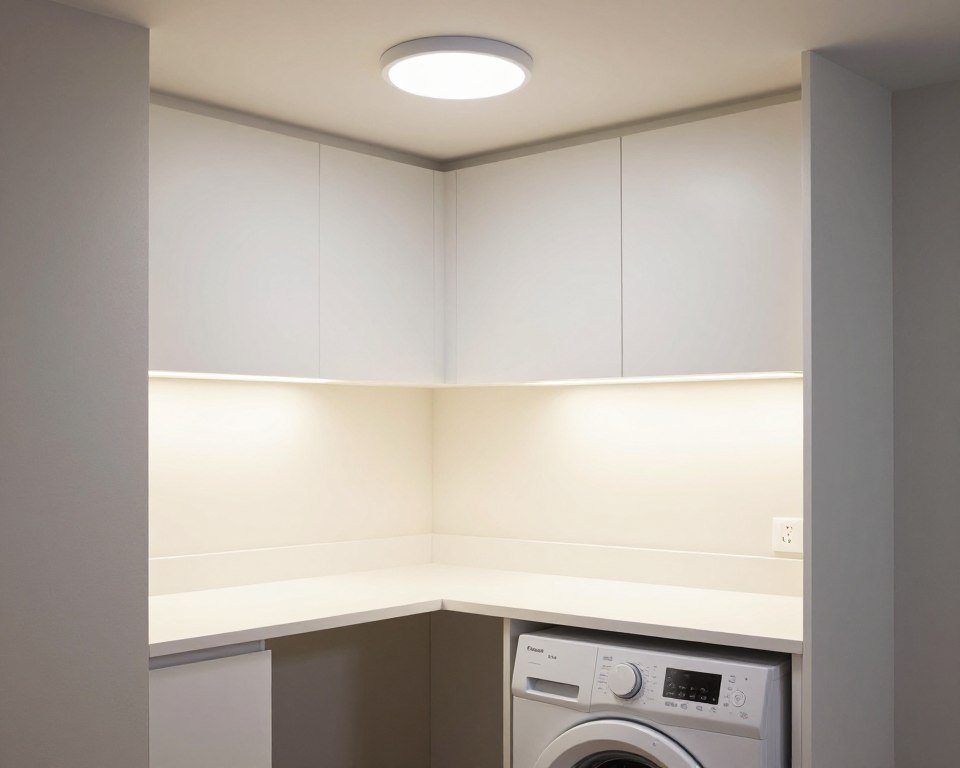
Under-cabinet lighting illuminates countertops and work areas without taking up space. LED strip lights install easily beneath upper cabinets, providing focused task lighting exactly where you need it. This lighting layer eliminates shadows that make small spaces feel cramped.
Overhead lighting should be bright enough to eliminate dark corners that visually shrink rooms. Recessed ceiling lights work well in laundry rooms because they don’t protrude into the space. Position lights to illuminate all areas evenly, avoiding the single central fixture that creates harsh shadows.
Material Selections
Reflective materials bounce light around small spaces, making them feel larger. Glossy cabinet finishes, glass-front doors, and polished hardware all contribute to this effect. Even small touches like chrome faucets add light-reflecting surfaces.
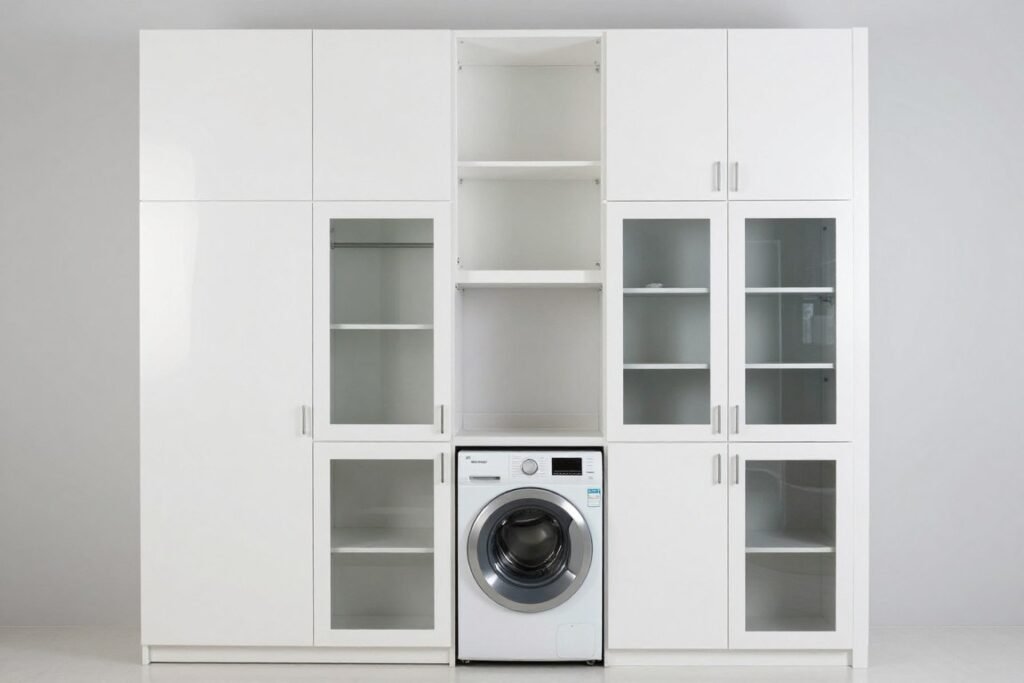
Durable materials matter in laundry rooms where moisture and cleaning chemicals are constant factors. Choose water-resistant or waterproof materials for countertops, floors, and walls. Quartz countertops, vinyl plank flooring, and semi-gloss paint finishes withstand the laundry environment while remaining easy to clean.
Layout Configurations for Maximum Efficiency
How you arrange elements in your small laundry room determines how well it functions. Even with the right storage and appliances, poor layout creates bottlenecks and wasted space. Thoughtful configuration makes every square foot work harder.
Creating a Folding Area
Folding space ranks among the most-wanted features in laundry room design, yet small laundry rooms rarely include it. Wall-mounted drop-down tables provide folding surfaces that disappear when not needed. These hinged platforms attach to the wall and fold flat, taking up virtually no space in their stored position.
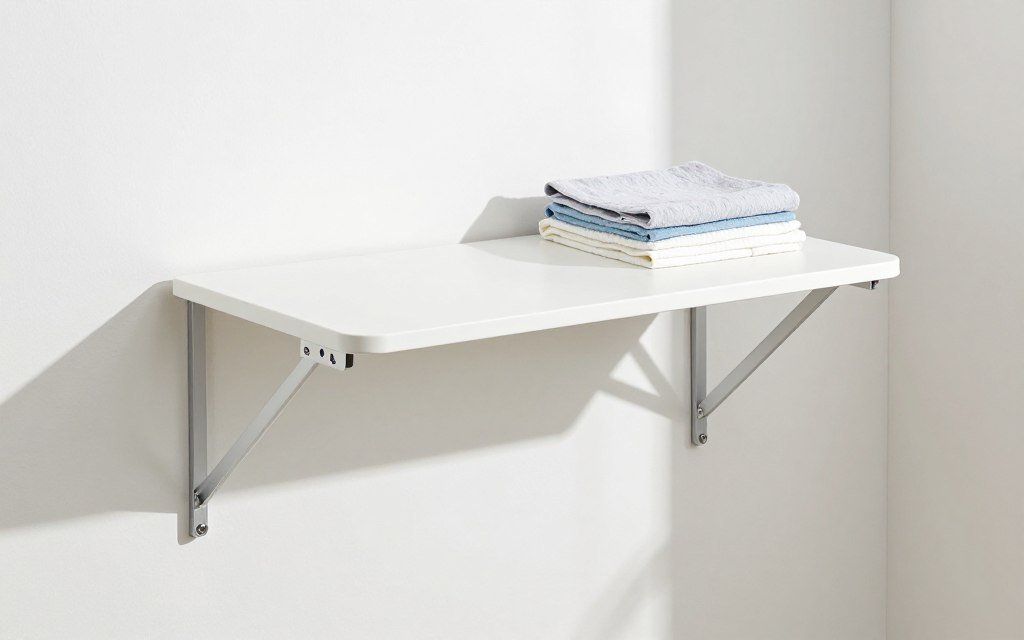
Countertops over side-by-side machines create permanent folding surfaces while covering the gap between units. This approach requires front-loading machines or enough depth to accommodate top-loading lids. The counter provides valuable workspace for sorting, folding, and pre-treating stains.
Pull-out cutting boards designed for kitchens also work well as compact folding surfaces. Install one or two between cabinets at a comfortable height. They slide out when you need them and tuck away to maintain clear floor space.
Workflow Optimization
Efficient laundry workflow follows a logical path from dirty clothes to clean, folded garments. Arrange your space to support this progression. Sorting happens first, so place hampers near the entry. Washing and drying come next, followed by folding and storage.
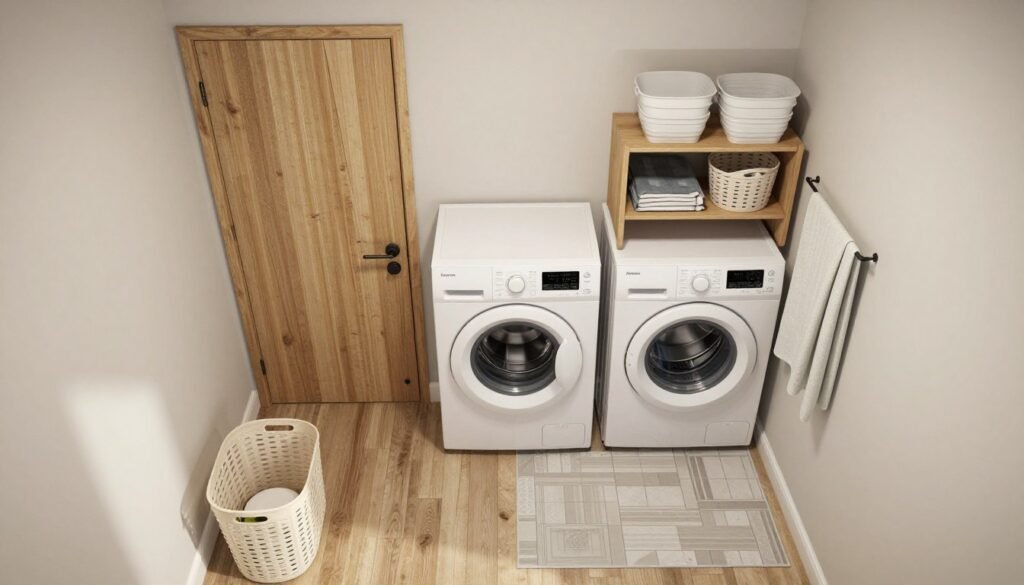
Keep frequently used supplies within easy reach of the washer. Detergent, fabric softener, and stain removers should be accessible without moving from the machine. This proximity reduces steps and makes laundry tasks faster.
Designate a spot for items that need special attention. A small basket or hook for clothes requiring stain treatment prevents them from being forgotten in the regular wash pile. This simple system saves garments from permanent staining.
Creative Solutions for Challenging Spaces
Some tiny laundry rooms present unique challenges that standard solutions don’t address. Awkward angles, sloped ceilings, and unusual dimensions require creative thinking. These special situations often lead to the most innovative, personalized designs.
Under-Stairs Laundry Rooms
The space beneath staircases often goes unused, but it can house a complete laundry setup. The sloped ceiling creates a natural spot for stacked or compact machines, with the tallest area accommodating the appliances. Custom shelving that follows the stair angle maximizes the irregular space.
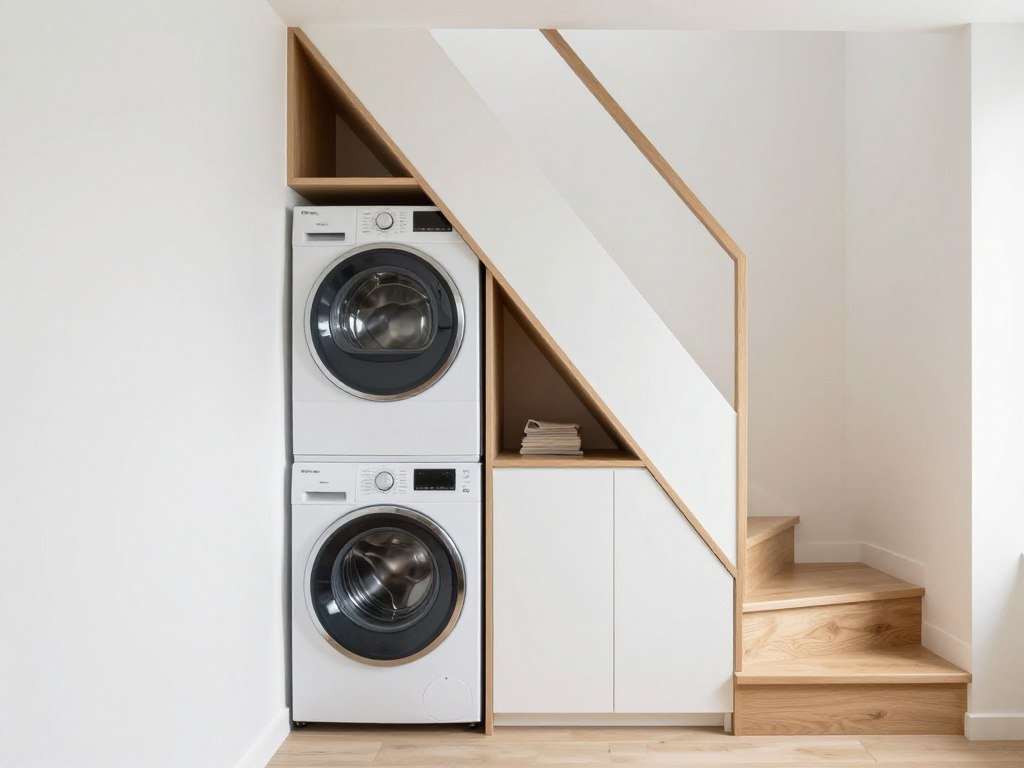
Adding a curtain or bi-fold doors conceals the under-stairs laundry when not in use. This treatment maintains a clean appearance in shared living spaces while providing easy access when needed. Choose hardware that doesn’t interfere with the sloped ceiling.
Closet Conversions
Bedroom or hallway closets convert easily into tiny laundry rooms. Standard closets measure about 24 inches deep, perfect for compact or stackable washer dryer units. Adding ventilation, water supply, and drainage requires professional installation but transforms unused storage into a valuable amenity.
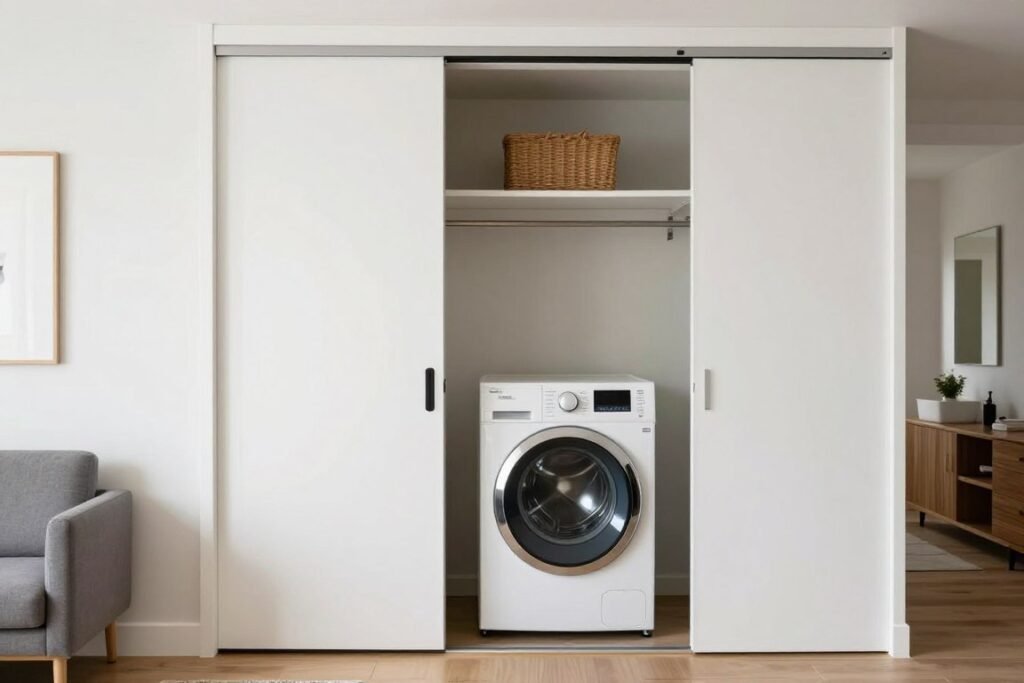
Maximizing closet laundry rooms requires utilizing every inch of wall space. Floor-to-ceiling shelving on the sides of the machines stores supplies and essentials. The back wall above the dryer provides additional shelving or a hanging rod for air-drying.
Multi-Purpose Mudroom Laundry Combinations
Combining laundry facilities with a mudroom creates an efficient multi-purpose space. These rooms handle two high-traffic functions, making the most of square footage. Design choices need to accommodate both purposes without compromising either.
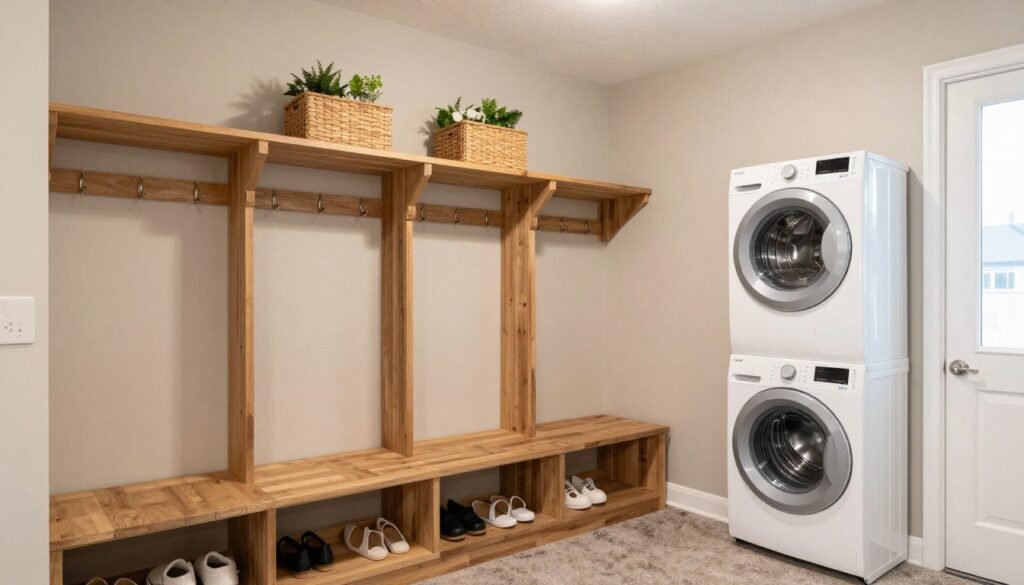
Separate zones within the space prevent the areas from feeling cluttered. Position laundry appliances and storage in one section, with mudroom functions like coat hooks and shoe storage in another. Visual separation through different wall colors or flooring types reinforces the distinct zones.
Shared storage works well in mudroom laundry combinations. Cabinets can house both laundry supplies and outdoor gear, maximizing efficiency. Pull-out hampers double as convenient places to toss dirty sports uniforms or work clothes immediately upon entering the home.
Maintenance and Practical Considerations
A well-designed tiny laundry room needs regular maintenance to stay functional and attractive. The humid environment and constant use require attention to cleaning, ventilation, and upkeep. Planning for maintenance from the start prevents problems down the road.
Ventilation Requirements
Proper ventilation prevents moisture buildup that leads to mold and mildew. Small laundry rooms trap humidity more easily than larger spaces, making ventilation especially important. If your room has a window, open it during and after washing to allow moisture to escape.
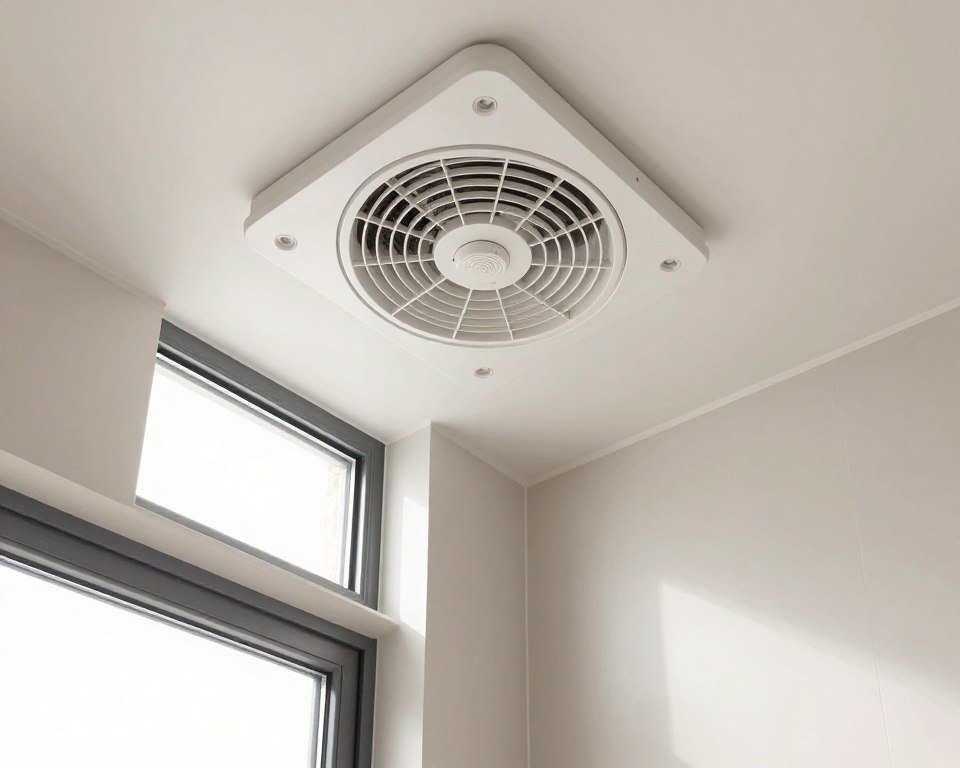
Exhaust fans remove humid air mechanically when natural ventilation isn’t available. Install a fan rated for bathroom use, as these handle moisture well. Run the fan during laundry tasks and for 30 minutes afterward to fully clear humidity from the space.
Dryer venting requires special attention in tiny spaces. Ensure your dryer vents to the exterior through the shortest, straightest path possible. Long, winding vent runs reduce efficiency and increase fire risk. Clean dryer vents regularly to maintain proper airflow.
Easy-Clean Surfaces
Small laundry rooms benefit from surfaces that wipe clean easily. Spills and splashes happen frequently, so choose materials that resist staining and don’t require special cleaning products. Semi-gloss or satin paint finishes on walls clean more easily than flat paint.
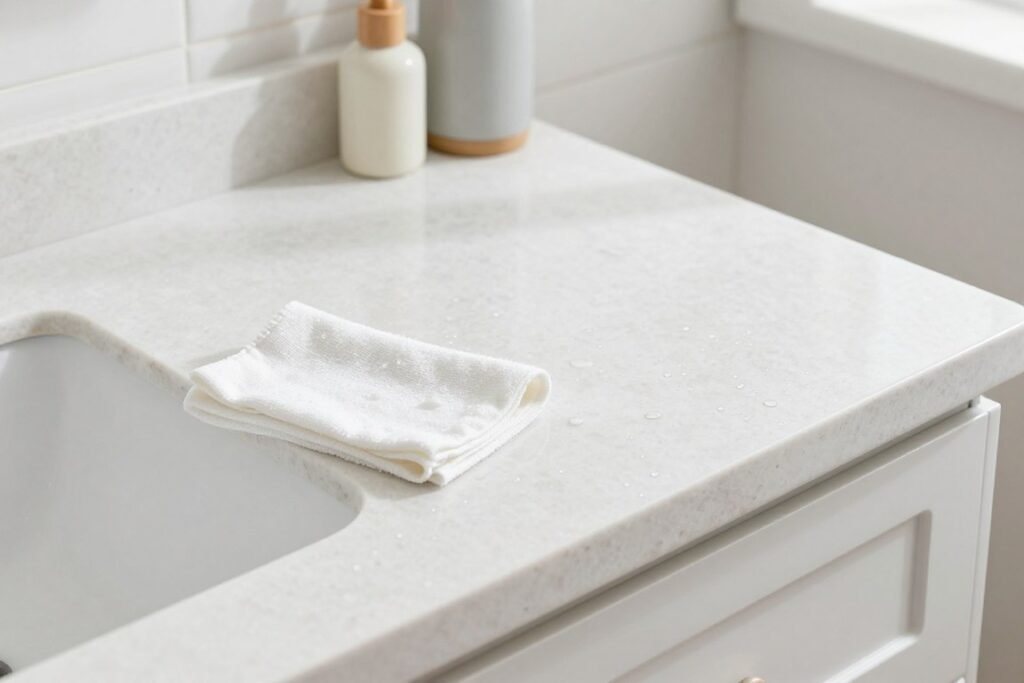
Sealed countertops prevent water damage and staining from laundry products. Quartz, solid surface, and sealed granite all perform well in laundry environments. Avoid porous materials like unsealed wood that absorb moisture and chemicals.
Washable flooring makes maintenance simple in small laundry rooms where every surface gets heavy use. Luxury vinyl plank, ceramic tile, and sheet vinyl all handle moisture while remaining easy to clean. These materials also resist damage from dropped items or appliance vibration.
Budget-Friendly Tiny Laundry Room Ideas
Creating an efficient, attractive small laundry room doesn’t require a large budget. Many improvements cost little while delivering significant impact. Strategic spending on key elements produces professional results without the professional price tag.
DIY Storage Projects
Building your own shelving and storage saves money while allowing customization for your exact space. Simple floating shelves require only boards, brackets, and basic tools. These DIY projects cost a fraction of pre-made storage systems while fitting your specific dimensions perfectly.
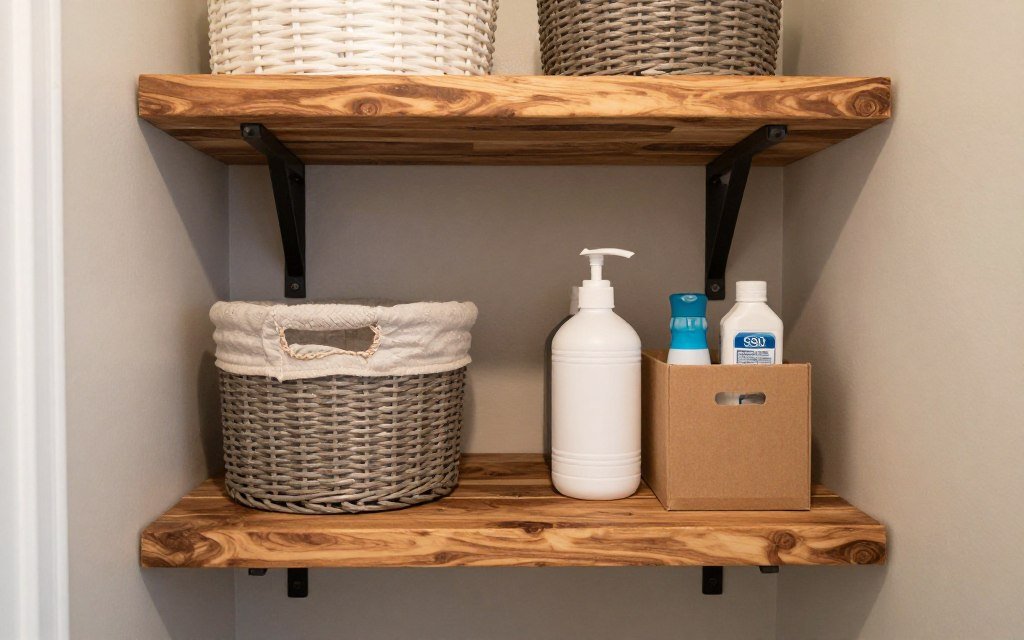
Repurposing furniture creates unique storage solutions at minimal cost. Old dressers become laundry room storage with a fresh coat of paint and new hardware. Bookshelves from thrift stores work perfectly for organizing supplies and storing baskets.
Pegboard walls provide adaptable storage that grows with your needs. Install a painted pegboard on one wall and add hooks, baskets, and shelves as needed. This system costs very little but handles everything from hanging supplies to storing small tools.
Paint and Simple Updates
Fresh paint transforms tiny laundry rooms for minimal investment. A bright white or light neutral instantly modernizes the space and makes it feel larger. Paint costs less than any other improvement while delivering dramatic visual impact.
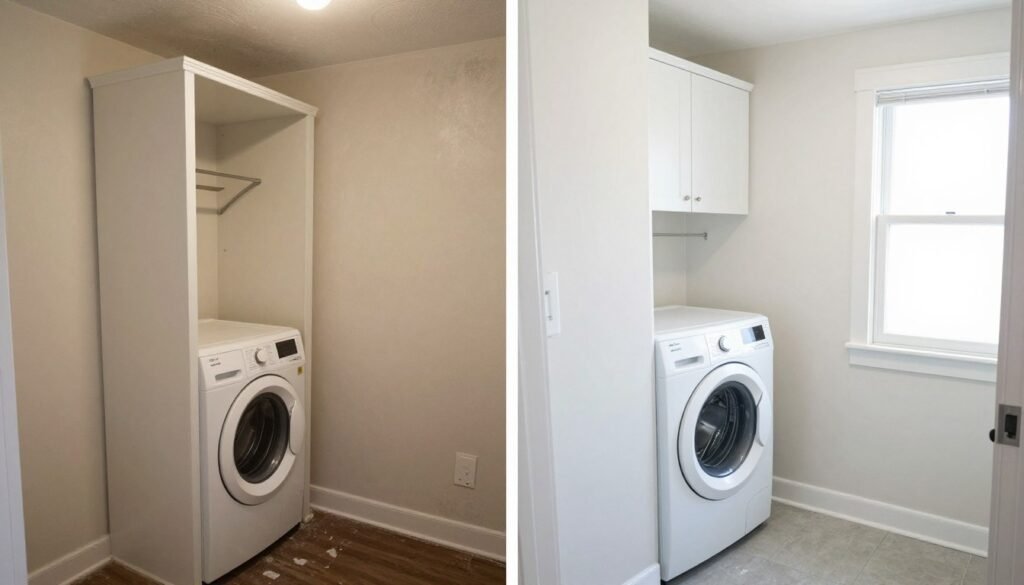
Updating hardware refreshes cabinets and doors without the cost of replacement. New knobs, pulls, and hinges in a modern finish make old cabinets look current. This simple change takes minutes per piece but dramatically improves the room’s appearance.
Peel-and-stick products offer affordable updates that renters can install and remove. Temporary wallpaper adds pattern and color to small laundry rooms. Peel-and-stick tile covers outdated floors without permanent installation, perfect for apartments or rental properties.
Affordable Organization Essentials
Budget-friendly storage and organization products help maximize your tiny laundry room without breaking the bank. Baskets, bins, hooks, and simple shelving systems create order and efficiency at a fraction of the cost of custom solutions. Smart shopping for versatile, durable products delivers professional results on any budget.
Thrifted and Secondhand Finds
Thrift stores and online marketplaces offer storage solutions at deep discounts. Wire shelving units, baskets, and containers appear regularly at secondhand shops. A quick cleaning makes these items ready for use in your laundry room at a fraction of retail prices.
Estate sales and moving sales provide opportunities to find quality cabinets and storage furniture. People selling entire households often price items to move quickly. With patience, you can find solid wood cabinets or metal shelving that would cost hundreds new.
Special Features That Add Functionality
Beyond basic storage and appliances, certain features elevate tiny laundry room functionality. These additions solve specific problems or streamline particular tasks. While not essential, they make laundry work easier and more pleasant.
Utility Sink Installation
A small utility sink handles tasks that shouldn’t go in your washer. Hand-washing delicates, soaking stained items, and rinsing muddy shoes all require a sink. Even a compact 15-inch sink provides these capabilities without consuming much space.
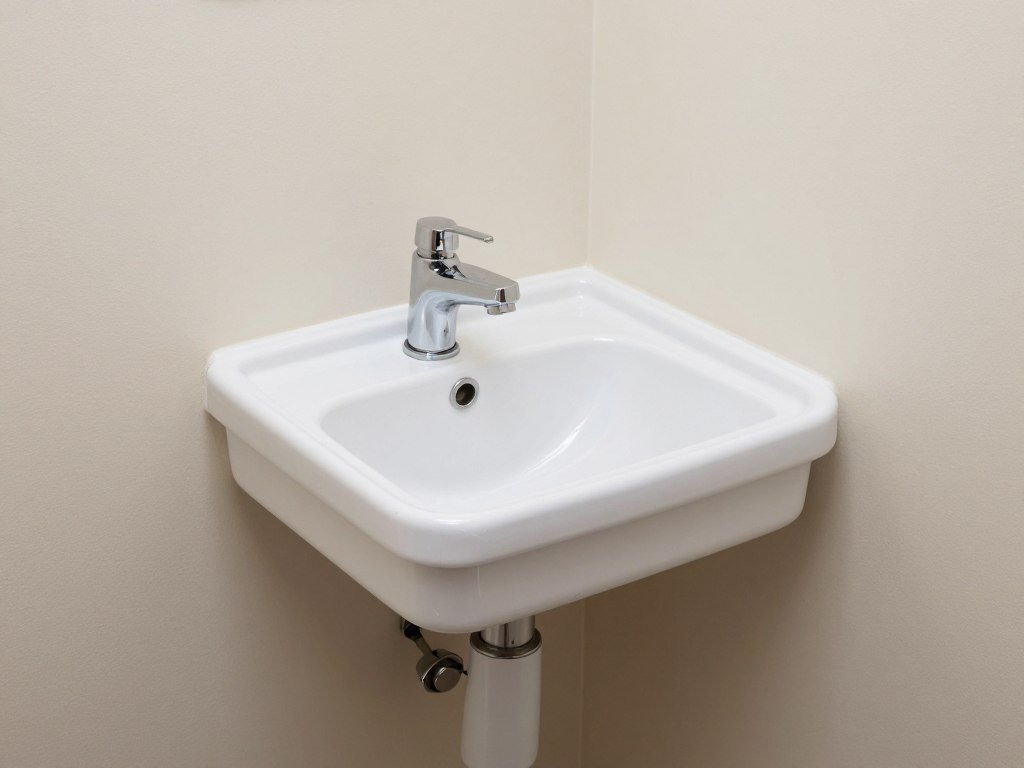
Wall-mounted sinks save floor space compared to vanity-style installations. These units attach directly to the wall with exposed plumbing underneath. The open area below remains available for storage baskets or a small stool.
Faucets with pull-down sprayers add versatility to small sinks. The extended reach lets you fill buckets, rinse large items, and clean the sink itself more easily. Choose a compact model designed for bar or prep sinks to maintain proportion in your tiny space.
Ironing Solutions
Ironing boards take up significant storage space, but built-in or wall-mounted alternatives solve this problem. Over-the-door ironing boards hang flat against the door when not in use, requiring zero floor or wall space. Pull-down models mount inside cabinets, disappearing completely when stored.

Tabletop ironing boards provide a compact alternative to full-size boards. These smaller surfaces work well for quick touch-ups and small items. They store easily on shelves or in cabinets, emerging only when needed.
Smart Home Integration
Smart washers and dryers send alerts when cycles complete, letting you move loads promptly without constant checking. This feature prevents wrinkles and musty smells while freeing you from waiting in the laundry room. Many newer machines include this capability or offer it as an add-on.

Motion-sensor lighting automatically illuminates your laundry room when you enter. This hands-free convenience matters when you’re carrying laundry baskets. Battery-powered LED options install without electrical work, making them accessible for renters.
Style Ideas for Small Laundry Rooms
Functional doesn’t mean boring. Tiny laundry rooms can reflect your personal style while remaining practical. Design choices that align with your home’s aesthetic create cohesive, attractive spaces you’ll enjoy using.
Modern Minimalist Approach
Modern minimalist design emphasizes clean lines, neutral colors, and uncluttered surfaces. This style naturally suits small laundry rooms where excess decoration competes with functionality. White or light gray cabinets, simple hardware, and hidden storage maintain the streamlined aesthetic.
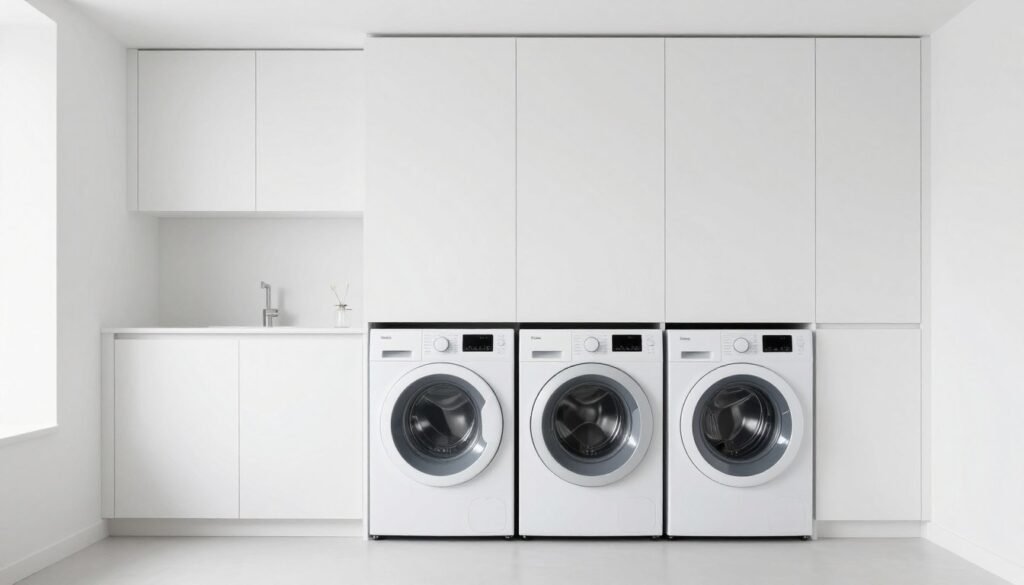
Concealing appliances behind cabinet panels enhances the minimalist look. Front-loading machines fit into cabinetry systems, creating a seamless appearance. This approach works particularly well in laundry rooms visible from living spaces.
Farmhouse Charm
Farmhouse style brings warmth and character to tiny laundry rooms through natural materials and vintage touches. Shiplap walls, open shelving with brackets, and apron-front sinks create the signature farmhouse aesthetic. Even small doses of these elements establish the style.
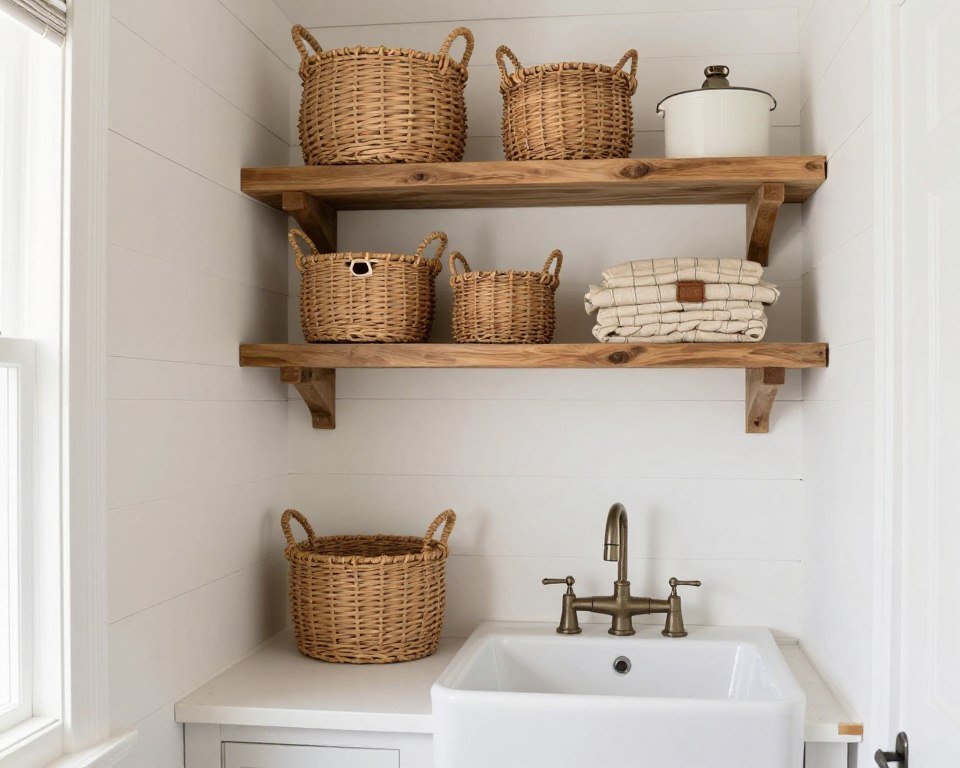
Mixing white with natural wood tones achieves farmhouse style in compact spaces. White cabinets paired with wood shelving or wood countertops balance the look without overwhelming small rooms. Add vintage-inspired hardware and simple decor for authentic farmhouse charm.
Bold and Colorful
Who says laundry rooms must be neutral? Bold color creates energy and personality in small spaces. A vibrant accent wall, colorful cabinets, or patterned wallpaper transforms utilitarian spaces into design features.
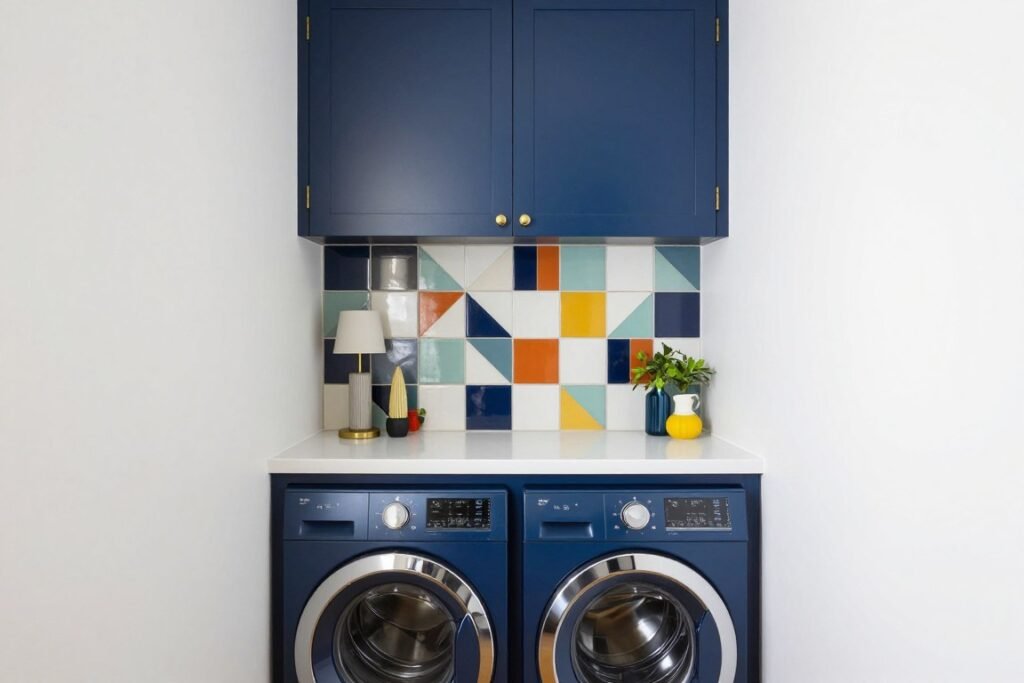
Patterned tile adds visual interest without cluttering small laundry rooms. A geometric or floral tile backsplash becomes a focal point that draws the eye. Keep surrounding surfaces simple to let the pattern shine without overwhelming the space.
Common Mistakes to Avoid
Even well-planned tiny laundry rooms fall short when common mistakes occur. Learning from others’ errors saves time, money, and frustration. Awareness of potential pitfalls leads to better design decisions from the start.
Ignoring Electrical and Plumbing Requirements
Beautiful design means nothing if appliances can’t connect properly. Verify electrical capacity before purchasing high-efficiency machines that may require 220-volt outlets. Confirm water supply locations match your planned washer placement. These practical considerations must drive layout decisions.
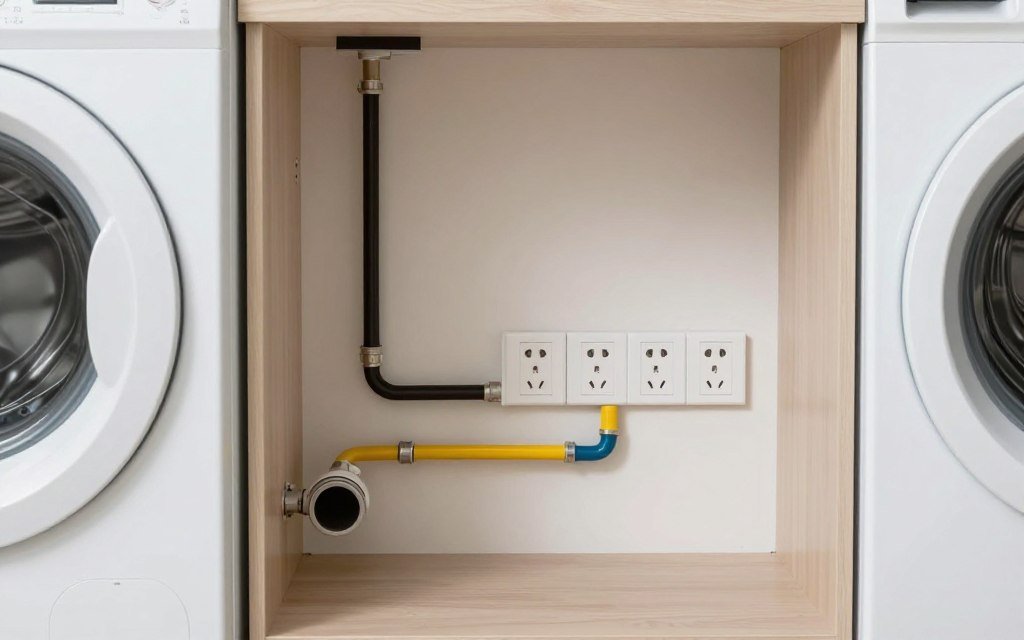
Dryer venting paths need planning before finalizing appliance locations. Dryers must vent to the exterior, limiting placement options. Long vent runs reduce efficiency and create safety hazards. Position dryers where venting runs short and straight.
Insufficient Lighting
Dim lighting makes small rooms feel cramped and caves make laundry tasks difficult. One central ceiling light rarely provides adequate illumination. Layer multiple light sources to eliminate shadows and create a bright, welcoming space.
Forgetting task lighting over work areas creates frustration during detail-oriented tasks. Treating stains, sorting delicates, and folding all require good visibility. Install dedicated lighting over counters, folding areas, and sorting zones.
Overlooking Door Swing
Appliance doors and room doors require clearance to open fully. A door that bumps into the washer or blocks access to cabinets creates daily annoyance. Measure door swings during planning to avoid this common mistake.
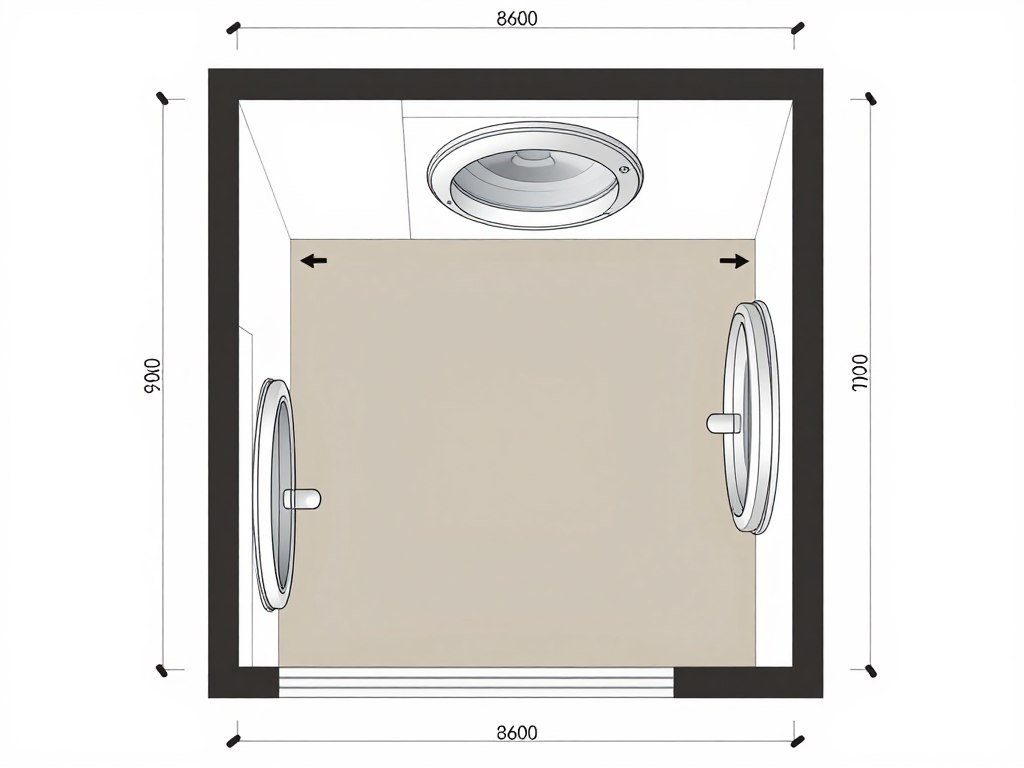
Pocket doors or barn-style sliding doors eliminate swing clearance issues. These space-saving door styles work particularly well in tiny laundry rooms where every inch matters. They provide full access while consuming no floor space.
Neglecting Storage for Cleaning Supplies
Laundry rooms naturally become storage spots for cleaning supplies, mops, brooms, and vacuums. Failing to plan for these items leads to cluttered, inefficient spaces. Designate specific storage for cleaning tools during the design phase.
Tall, narrow cabinets accommodate brooms and mops without consuming much floor space. These vertical storage units tuck into corners or beside appliances, keeping cleaning tools accessible but out of sight.
Transforming Your Tiny Laundry Room
Tiny laundry room ideas prove that small spaces can be highly functional and attractive. From stackable washer dryer units to creative storage solutions, options exist for every space and budget. The key lies in thoughtful planning that maximizes vertical space, optimizes workflow, and incorporates storage at every opportunity.
Your small laundry room transformation starts with honest assessment of your space, needs, and priorities. Measure carefully, plan thoroughly, and implement solutions systematically. Whether you tackle the entire project at once or improve the space gradually, each enhancement makes laundry tasks easier and more pleasant.
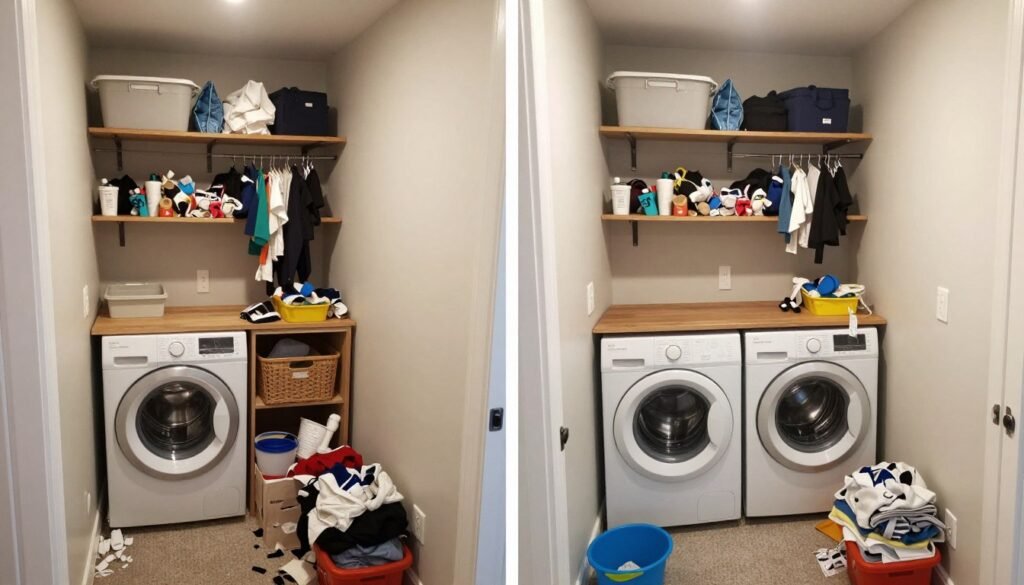
Remember that the best laundry room design balances aesthetics with practicality. Beautiful cabinets matter little if they don’t hold what you need. Trendy colors lose appeal if the room doesn’t function well. Prioritize solutions that improve your daily routine while creating a space that feels good to use.
Small laundry rooms work hard every day. Investing time and thought into their design pays dividends in efficiency, organization, and reduced stress. With the right approach, even the tiniest laundry space becomes a valuable asset to your home rather than a source of frustration.