Every parent knows the struggle. Toys scattered across the living room floor. Blocks hiding under the furniture. Board games missing pieces. The daily battle against toy clutter can feel overwhelming.
This Website contains affiliate links. That means I may earn a small commission if you purchase through my links, at no extra cost to you.
But here’s the truth: effective toy storage isn’t about having a bigger house or spending thousands on custom solutions. It’s about finding practical storage ideas that work with your space and lifestyle.
This guide shares real solutions for storing kids toys throughout your home. Whether you’re organizing a dedicated playroom or finding ways to store toys in your living room without sacrificing style, you’ll find ideas that fit your space.
From simple baskets to creative shelving solutions, these storage ideas help families reclaim their space. You’ll learn how to make toys easy to put away, teach children organizational skills, and create a home that works for the whole family.
Ready to Transform Your Space?
Explore our curated selection of toy storage solutions on Amazon to find the perfect fit for your home.
Living Room Toy Storage Ideas That Don’t Compromise Style
The living room often becomes ground zero for toy clutter. This shared family space needs storage solutions that keep toys accessible while maintaining an adult aesthetic.
Related Posts:
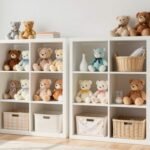
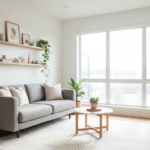



Smart storage in the living room means choosing pieces that serve double duty. The key is finding furniture and organizational tools that blend seamlessly with your existing decor.
Ottoman Storage Solutions
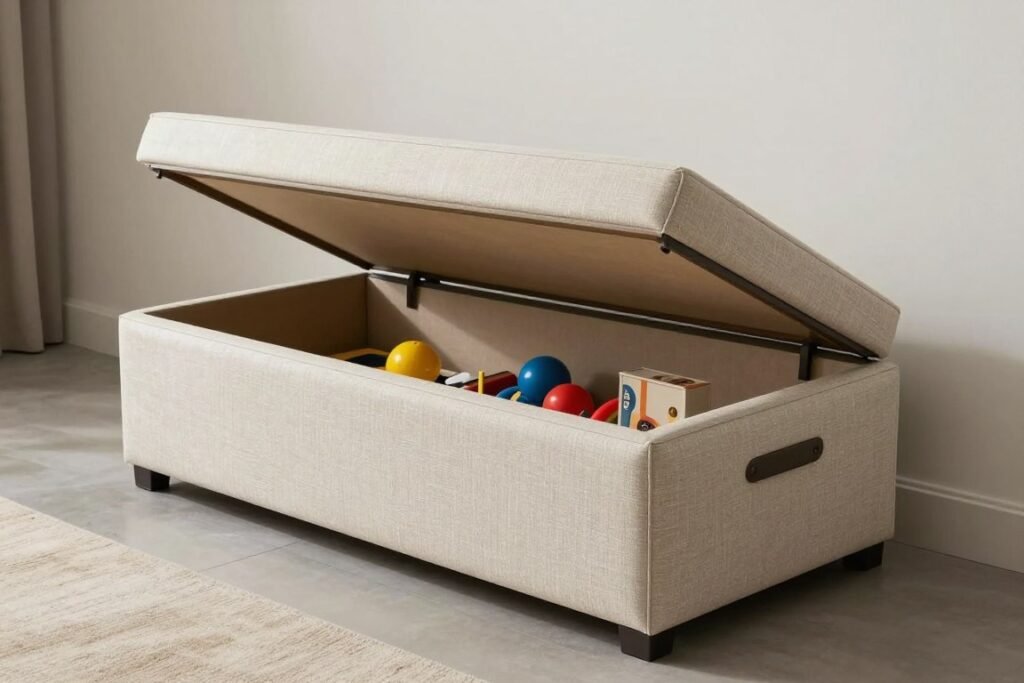
Storage ottomans offer the perfect combination of function and style. These versatile pieces provide hidden storage space while serving as extra seating or a coffee table.
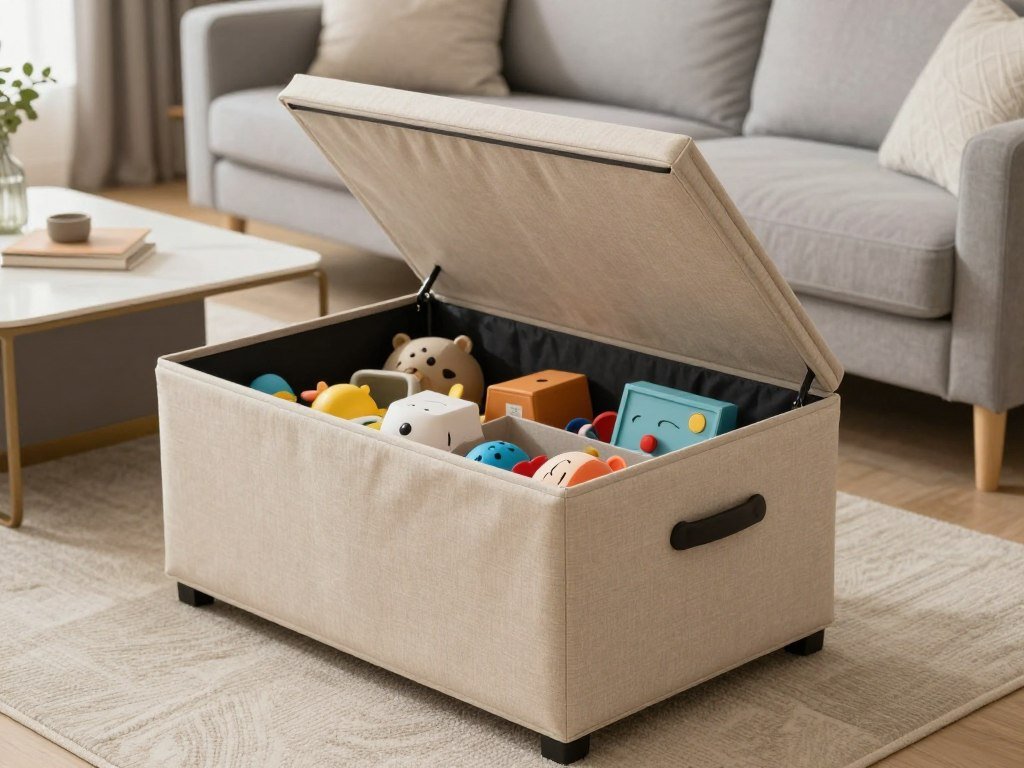
Choose ottomans with removable lids for easy access. Kids can quickly toss toys inside at cleanup time. The flat top surface lets you display decorative items or use it as a footrest.
Large ottomans work well for storing bigger items like stuffed animals or building blocks. Smaller ottomans can hold board games or art supplies.
Console Table Storage
Console tables behind your sofa create valuable storage real estate. Look for tables with shelves or baskets underneath.
Place decorative baskets on lower shelves to corral small toys. The baskets keep items hidden while remaining within reach for kids. This setup works especially well for storing toys near the main seating area.
Choose baskets in materials that match your living room style. Woven seagrass baskets add texture. Wire baskets create an industrial look. Fabric bins come in countless colors and patterns.
Built-In Solutions
If you have built-in shelving, dedicate the lower shelves to toy storage. This arrangement keeps fragile decor items up high and puts toys at kid height.
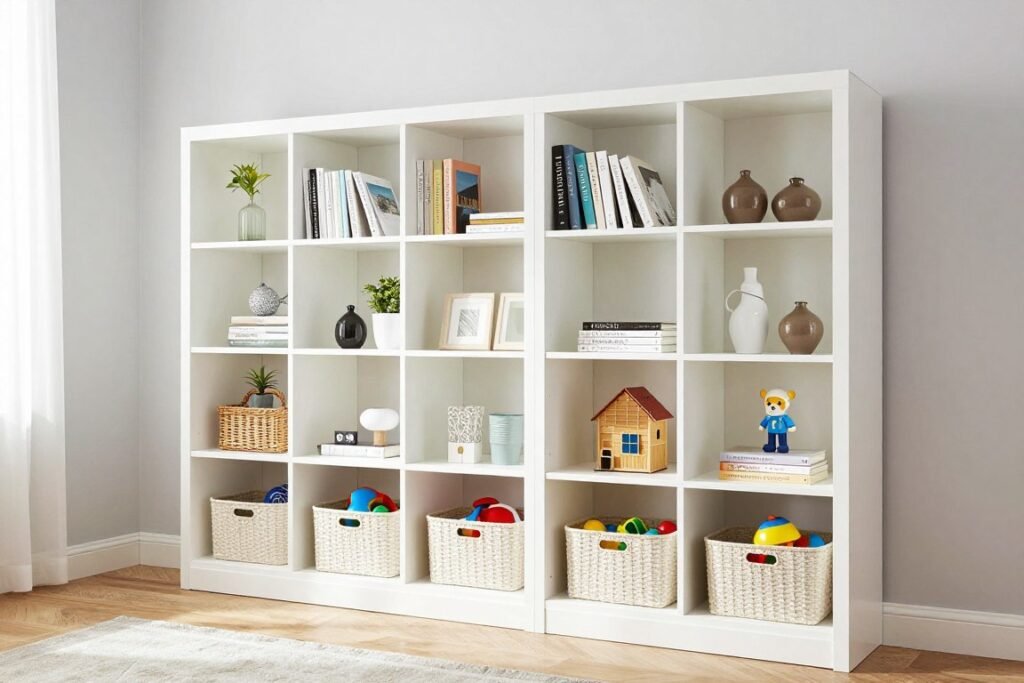
Use uniform storage bins or baskets for a cohesive look. Label each container so kids know where items belong. Clear bins let you see contents at a glance.
Rotate toys seasonally by moving some items to higher shelves. This strategy keeps the living room from feeling cluttered while keeping favorite toys accessible.
Find Living Room Storage Solutions
Browse stylish storage options that blend with your living room decor while keeping toys organized.
Playroom Storage Ideas for Maximum Organization
A dedicated playroom offers unlimited storage possibilities. With the right organizational system, you can create a space where kids can easily find and put away their toys.
The best playroom storage solutions grow with your children. Focus on flexible systems that adapt as toy collections change over the years.
Open Shelving Systems
Open shelves provide the foundation for an organized playroom. These versatile units display toys while keeping everything visible and accessible.
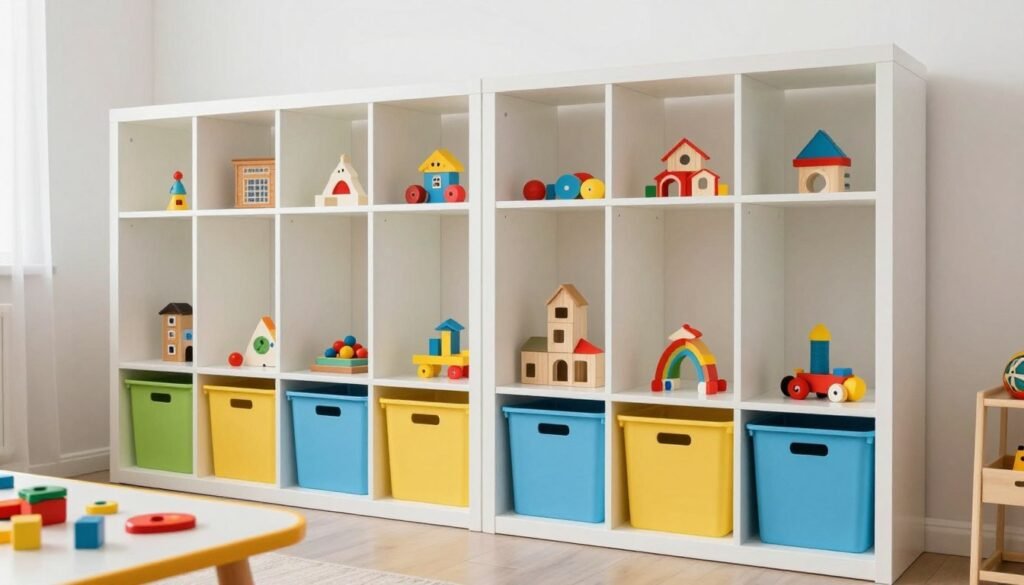
Install sturdy shelving units at different heights. Place frequently used toys on lower shelves where kids can reach them independently. Use upper shelves for items that need adult supervision or toys you want to rotate into play.
Cube shelving works especially well in playrooms. Each cube becomes a designated home for specific toy types. Add fabric bins or baskets to create hidden storage within the open framework.
The Zone System
Divide your playroom into activity zones. Create separate areas for different types of play: building blocks, art supplies, dress-up clothes, and board games.
Each zone needs its own storage solution. Use a low bookshelf for the reading zone. Set up a rolling cart for art supplies. Hang hooks or install a clothing rod for the dress-up area.
This organizational approach helps kids understand where items belong. It also makes cleanup faster because everything has a clear home.
Toy Rotation Strategy
Too many toys available at once can overwhelm children and create clutter chaos. Implement a toy rotation system to manage the volume.
Store half the toys in closed cabinets or bins. Keep the other half out on open shelves. Every few weeks, swap the collections. This strategy makes old toys feel new again and keeps the room less cluttered.
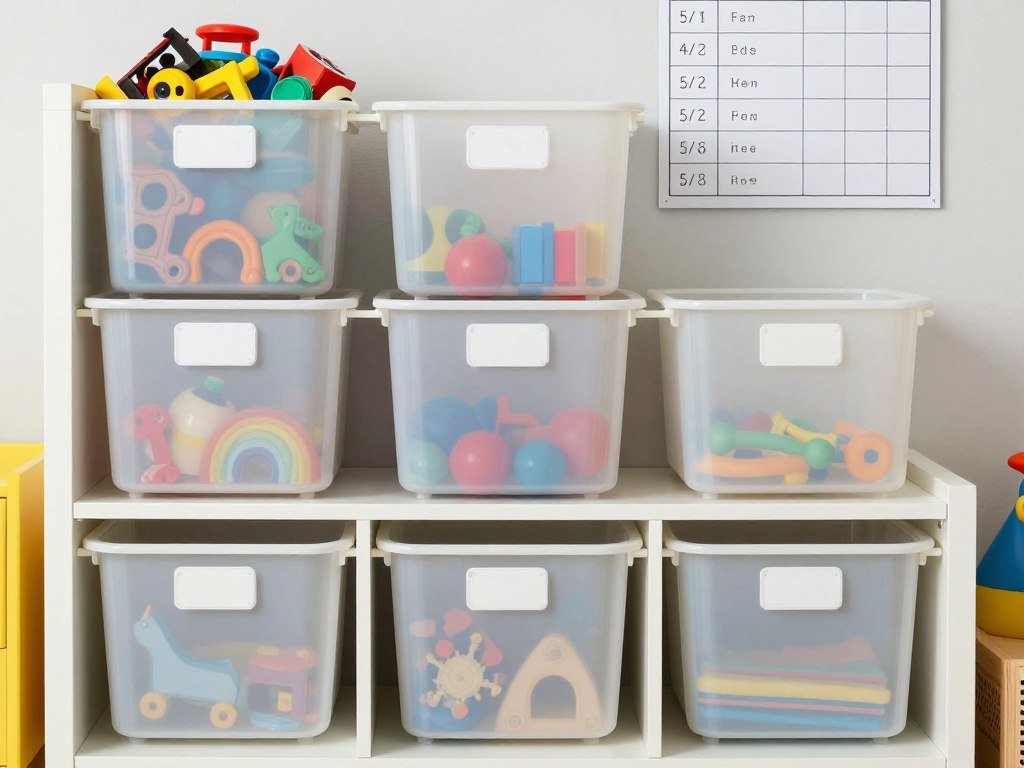
Label rotation bins by toy type or theme. Store seasonal toys during off-months. Keep special occasion toys packed away until appropriate times.
Low Bins and Baskets
Young children need storage they can manage independently. Low bins and baskets at floor level encourage kids to participate in cleanup.
Choose bins with handles for easy carrying. Avoid containers that are too large or heavy when filled. Kids should be able to lift and move their storage solutions.
Place bins strategically around the room. Position a bin near the building block area. Keep a basket by the door for outdoor toys. This thoughtful placement makes putting things away feel natural.
Create Your Perfect Playroom
Discover versatile storage solutions designed specifically for playroom organization and toy management.
Bedroom Toy Storage Ideas That Maximize Space
Kids’ bedrooms often pull double duty as sleeping and play spaces. Smart storage solutions help maximize limited square footage while keeping the room functional.
The goal is creating storage that works at bedtime and playtime. Choose solutions that hide visual clutter when it’s time to wind down for sleep.
Under-Bed Storage
The space under the bed offers valuable real estate for toy storage. This often-wasted area can hold a surprising amount when properly utilized.
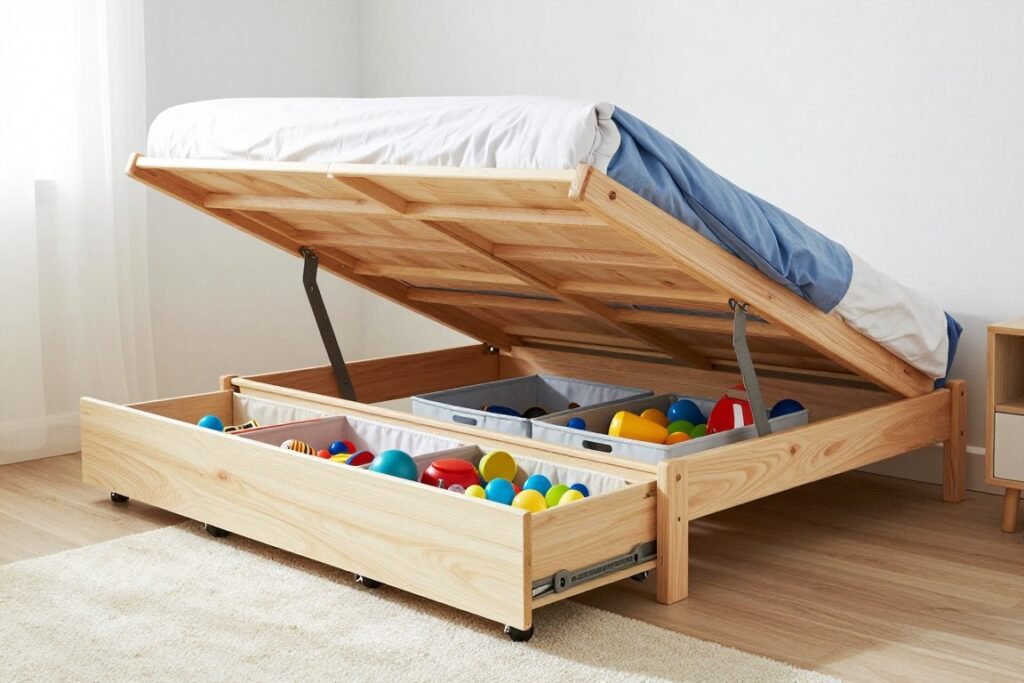
Rolling storage bins slide easily in and out from under the bed. Kids can access their toys without adult help. Look for shallow containers that fit standard bed heights.
Consider beds with built-in storage drawers. These specialized bed frames include deep drawers that pull out from the bed’s side or foot. The drawers provide ample space for larger toys, stuffed animals, or seasonal items.
Under-bed storage works perfectly for items kids don’t need daily access to. Store dress-up clothes, special toys, or games that get played occasionally.
Closet Organization
Transform bedroom closets into toy storage powerhouses. Most kids don’t need the full closet space for hanging clothes, leaving room for creative storage solutions.
Install additional shelving in the closet to create multiple storage levels. Use the floor space for larger toy bins. Add hanging organizers on the closet door for small items.
Place a low clothing rod at kid height for dress-up costumes. Use the space above for storage bins on shelves. This two-tier approach maximizes vertical space.
Wall-Mounted Solutions
Wall storage keeps floors clear and makes small bedrooms feel more spacious. Floating shelves, pegboards, and wall-mounted bins free up valuable floor space.
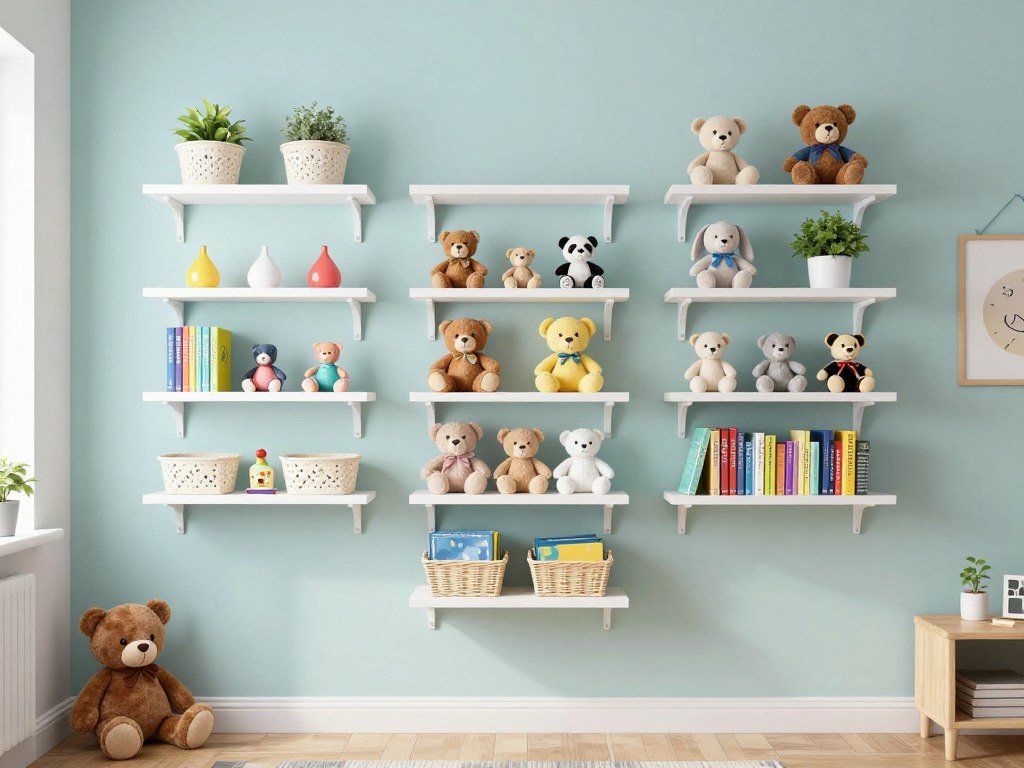
Install floating shelves to display favorite toys and books. Position them at a height where kids can reach but not so low they present a climbing hazard.
Pegboards offer customizable storage that adapts as needs change. Hang baskets for small toys. Add hooks for costumes or bags. Rearrange the configuration whenever necessary.
Wall pockets or hanging organizers work well for small items. These fabric solutions hold art supplies, small cars, or action figures without taking up any floor space.
Multi-Functional Furniture
Choose bedroom furniture that provides hidden storage. A storage bench at the foot of the bed holds toys while offering seating. A desk with drawers keeps art supplies organized.
Bookshelf headboards create storage right at the bedside. Kids can store current favorites within easy reach at night.
Consider toy boxes that double as seating or side tables. These multi-use pieces work especially well in smaller bedrooms where every item needs to serve multiple purposes.
Maximize Bedroom Storage Space
Explore space-saving storage solutions perfect for kids’ bedrooms and small spaces.
Small Space Toy Storage Solutions
Limited square footage doesn’t mean sacrificing organization. Small spaces require creative thinking and strategic storage choices.
The key is maximizing vertical space and choosing multi-functional storage solutions. Every inch counts when working with limited room.
Vertical Storage Strategies
Think upward when floor space is scarce. Tall, narrow shelving units provide substantial storage without eating up valuable floor area.
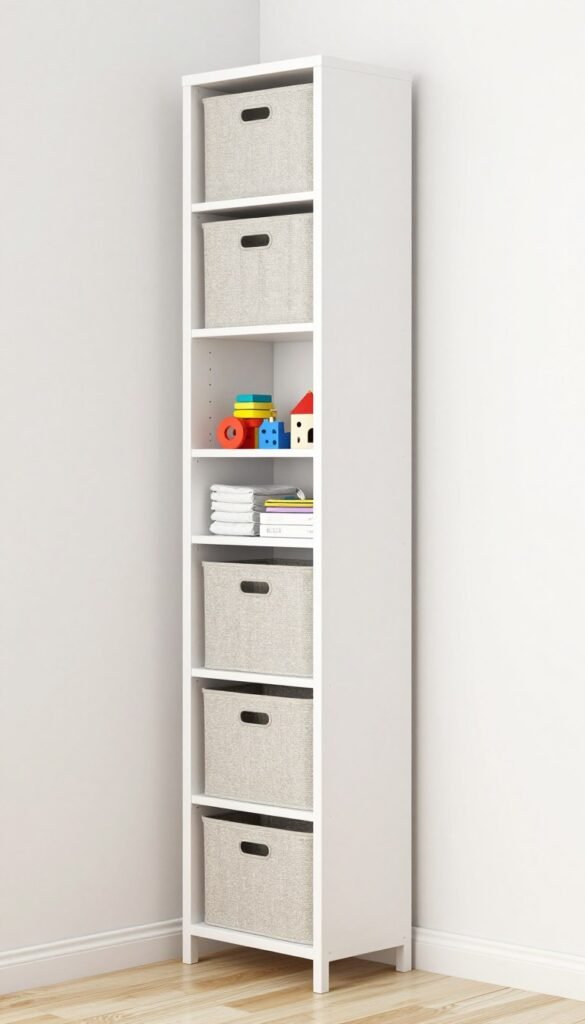
Install shelves that reach toward the ceiling. Use lower shelves for frequently accessed toys. Reserve upper shelves for items you rotate in and out of play or seasonal decorations.
Corner shelving units make use of often-wasted corner space. These specialized units fit snugly into corners while providing multiple shelves for storage.
Over-the-door organizers add storage without requiring any floor space. Hang them on bedroom doors, closet doors, or even bathroom doors for bathroom toy storage.
Furniture with Hidden Storage
Every piece of furniture in a small space should earn its place. Choose items that provide hidden storage compartments.
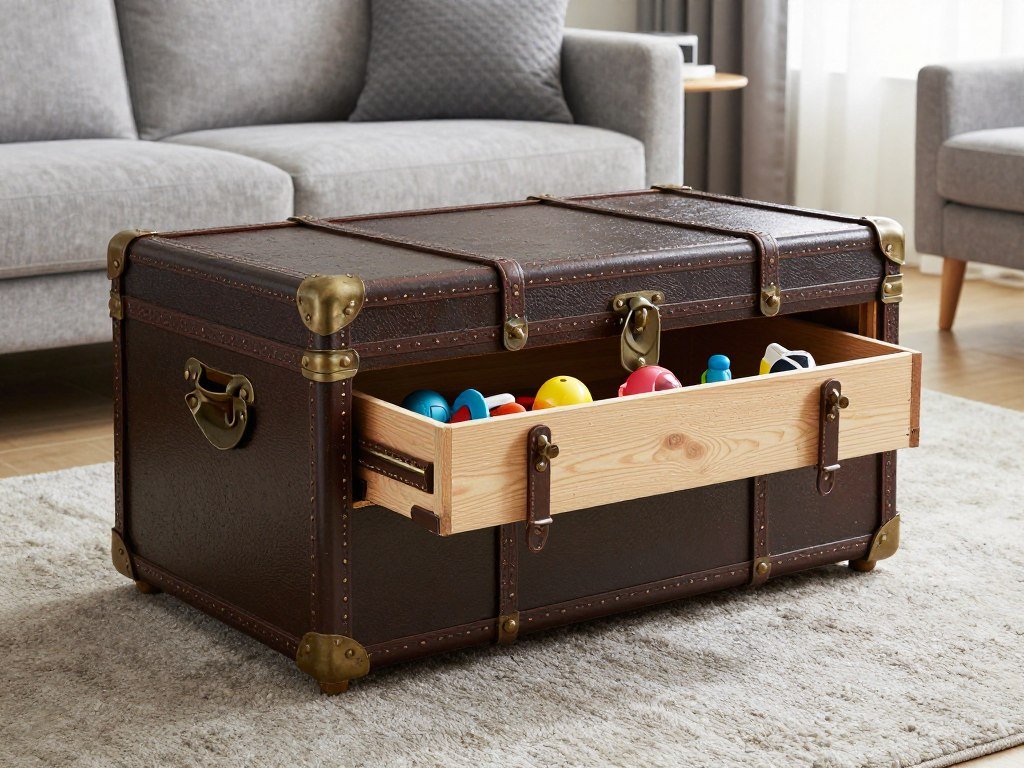
Coffee tables with lift-top surfaces reveal storage underneath. Side tables with drawers hold small toys. Benches with storage compartments keep living areas tidy.
These solutions help maintain a clean aesthetic in small spaces. Toys stay accessible but hidden from view when not in use.
Clear Storage Containers
Clear bins and containers help small spaces feel less cluttered. You can see contents without opening each container, making toy hunting faster.
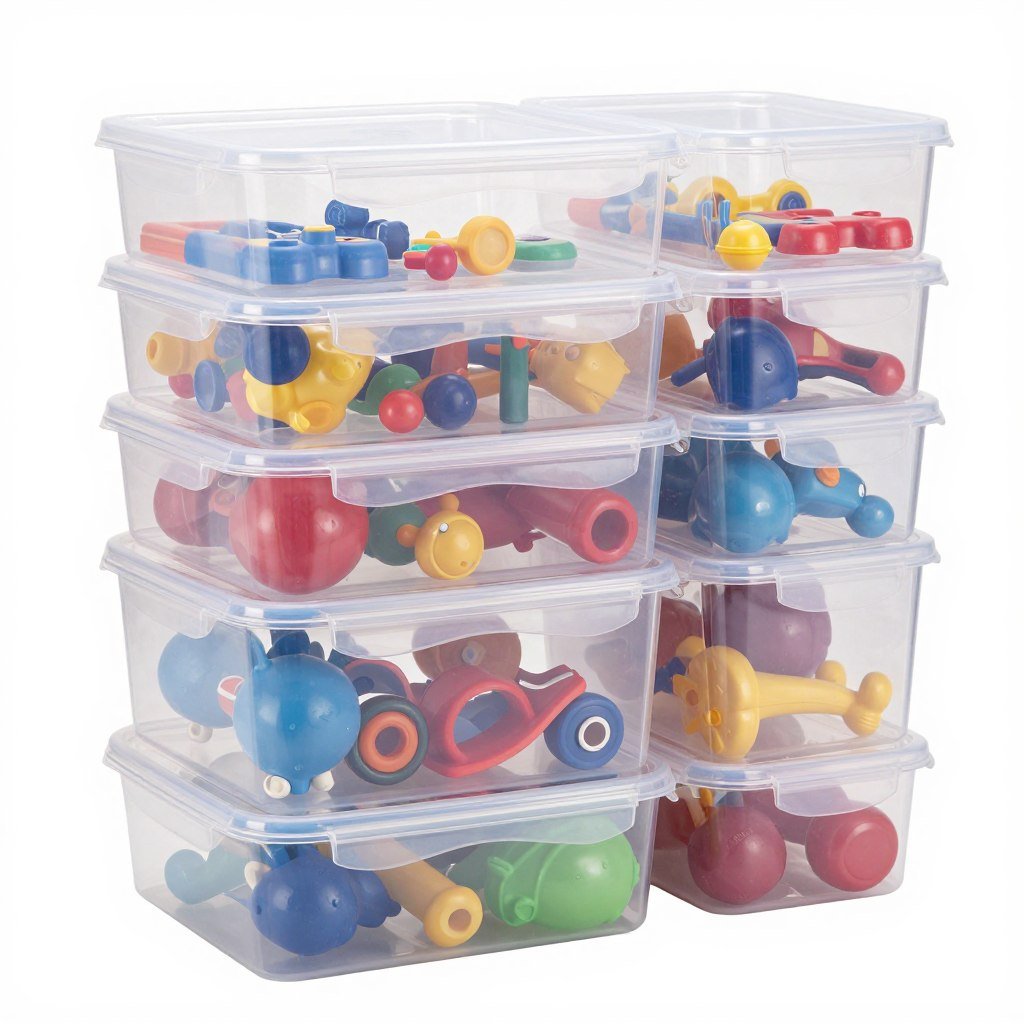
Stack clear containers to build upward instead of outward. Label the ends so you can identify contents when containers are stacked.
Clear shoe organizers work wonderfully for small toys. Each pocket holds small cars, action figures, or art supplies. Hang them on walls or doors to keep items visible and accessible.
Mobile Storage Solutions
Rolling carts provide flexible storage that moves where you need it. Use a cart in the living room during play time, then roll it to a closet or corner when guests arrive.
Choose carts with multiple tiers to maximize storage capacity. Use baskets or bins on each level to keep items contained.
Mobile storage works especially well in studio apartments or multi-purpose rooms where space needs constantly shift throughout the day.
Smart Storage for Small Spaces
Find space-saving storage solutions designed to maximize every square inch of your home.
Storage Solutions for Specific Toy Types
Different toys require different storage approaches. Organizing by toy type makes cleanup easier and helps kids learn organizational skills.
Matching the storage solution to the toy type ensures everything has a proper home. This approach prevents the dreaded miscellaneous toy pile.
Building Block Storage
Building blocks and construction toys need accessible storage that encourages independent play. Large, open containers work best.
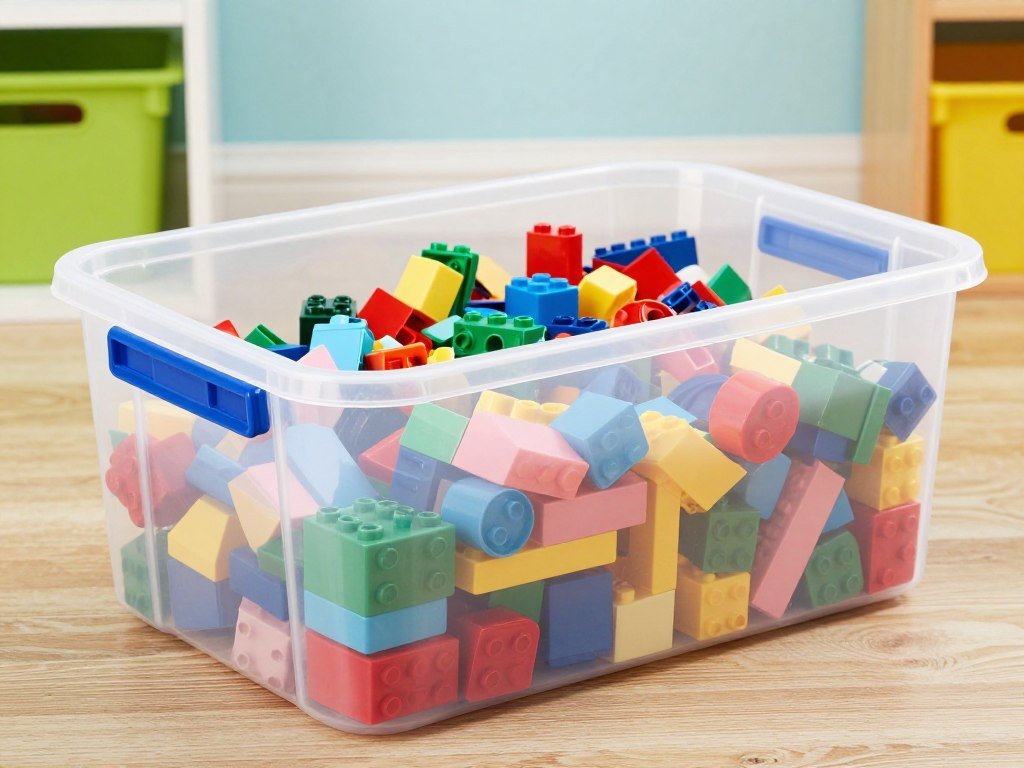
Choose bins with flat bottoms so kids can build directly in the container. Look for handles that make carrying easier. Avoid bins that are too deep; kids shouldn’t have to dig to find pieces.
Store instruction manuals separately in a binder or magazine holder. This keeps them from getting lost in the bin with the blocks.
For extensive collections, sort blocks by color or type in separate containers. This organization helps older children find specific pieces for complex builds.
Stuffed Animal Solutions
Stuffed animals multiply quickly and can overtake a room. Creative storage solutions keep them contained while displaying favorites.
Hanging storage nets or hammocks mount in room corners. These mesh solutions hold many stuffed animals while keeping them visible and accessible.
Bean bag chairs with storage compartments serve double duty. Fill the chair’s outer shell with stuffed animals to create comfy seating while storing toys.
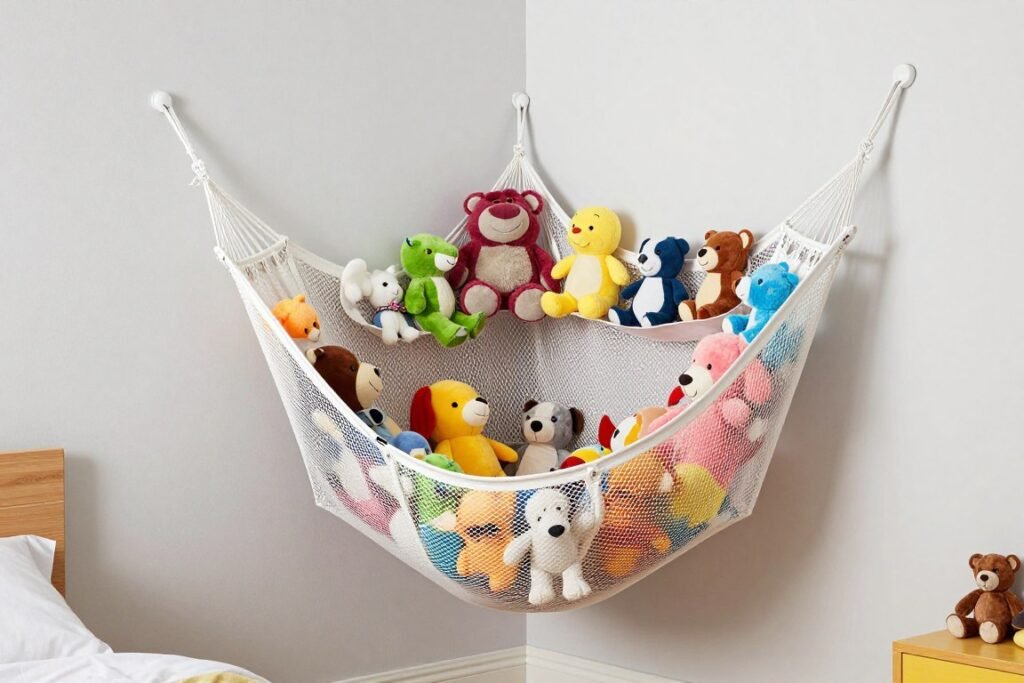
Large woven baskets work well for stuffed animal storage. Place them in corners or beside beds for easy access during bedtime.
Art Supply Organization
Art supplies need compartmentalized storage to prevent chaos. Small items like crayons, markers, and colored pencils require dedicated spaces.
Rolling carts with multiple drawers keep supplies organized and mobile. Kids can roll the cart to the kitchen table for art time, then return it to storage.
Use drawer dividers or small containers within larger drawers. Separate crayons from markers. Keep scissors and glue sticks in their own compartments.
Wall-mounted paper organizers hold coloring books and drawing paper flat. This storage prevents bent pages and makes paper easily accessible.
Board Game Storage
Board games stack awkwardly and often fall over. Proper storage keeps games intact and prevents lost pieces.
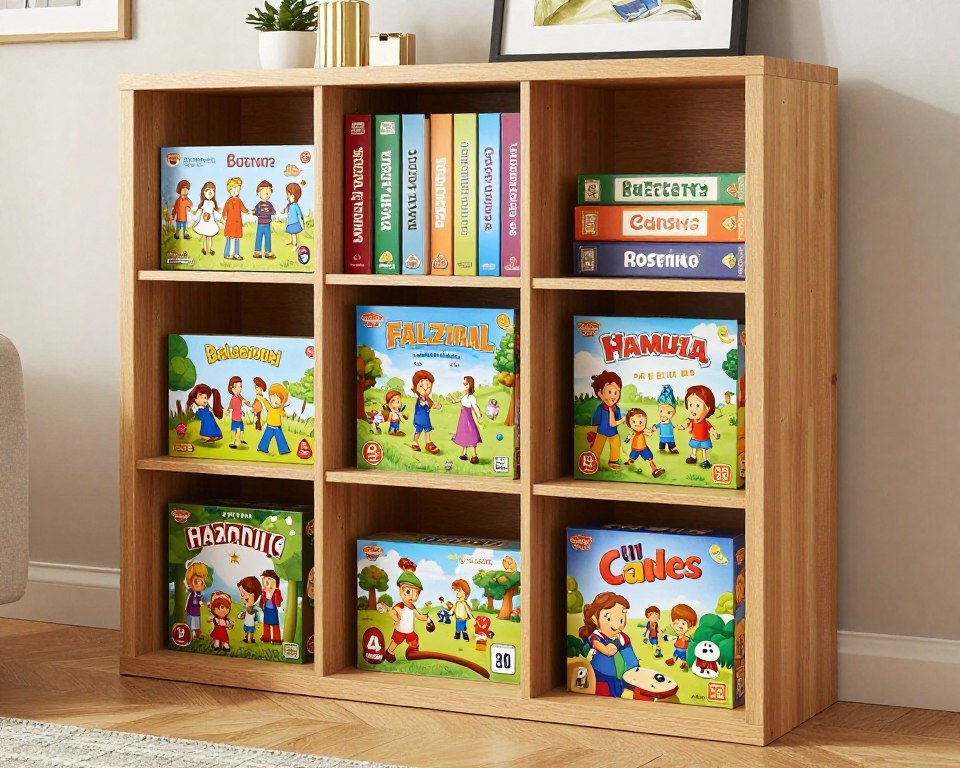
Store games vertically like books on a bookshelf. This arrangement prevents boxes from crushing under weight and makes titles visible.
Use plastic bags or small containers to keep game pieces from falling out of worn boxes. Label each bag with the game name.
Consider transferring games from bulky boxes to slim storage cases. This approach saves significant space while keeping all components together.
Small Toy Organization
Small toys like action figures, toy cars, and small dolls need contained storage to prevent loss and clutter.
Tackle boxes or craft organizers with multiple compartments work perfectly. Each section holds different toy types.
Clear hanging shoe organizers provide individual pockets for small toys. Mount them on walls or doors for visible, accessible storage.
Small baskets or bins on shelves group similar items together. Label each container so kids know where each toy type belongs.
Organize by Toy Type
Find specialized storage solutions perfect for different toy categories in your home.
Budget-Friendly DIY Toy Storage Ideas
Effective toy storage doesn’t require expensive custom solutions. Creative DIY projects transform everyday items into functional storage at a fraction of the cost.
These budget-friendly ideas prove that organization is accessible to every family regardless of financial constraints.
Repurposed Furniture Projects
Old furniture can become valuable storage with minimal effort. A fresh coat of paint and new hardware transform outdated pieces.
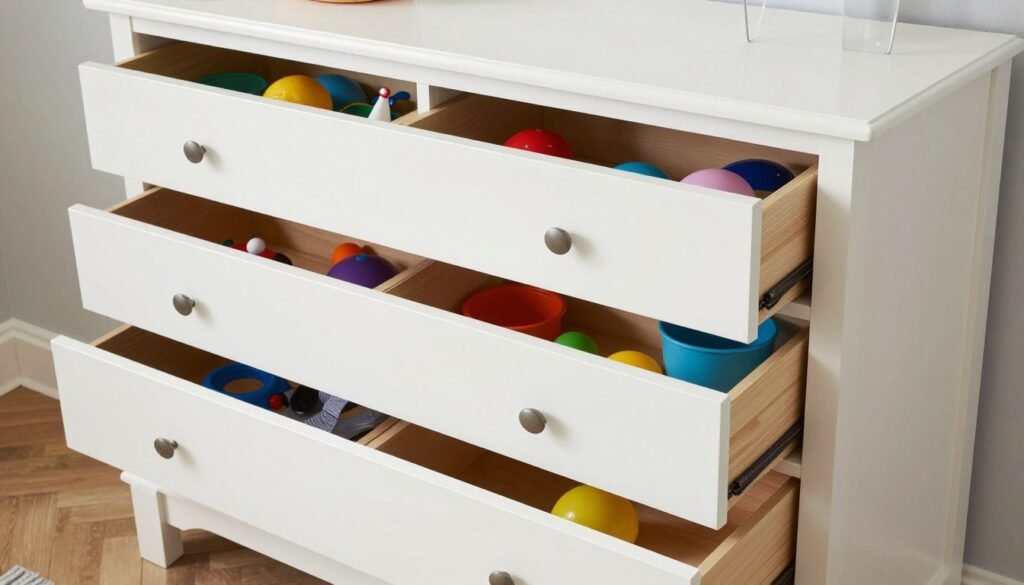
Convert an old dresser into a toy storage unit. Remove some drawers and add baskets or bins. Paint the dresser to match the room’s decor.
Transform a bookshelf by adding fabric bins or baskets. This quick update creates hidden storage while maintaining the shelf’s display function.
Repurpose a coffee table by adding baskets underneath. Choose baskets that fit the open shelves perfectly.
PVC Pipe Storage Solutions
PVC pipes create inexpensive organizational tools for specific toy types. These versatile materials adapt to countless storage needs.
Cut PVC pipes into short sections and mount them on a board or wall to create holders for toy cars, stuffed animals, or building blocks.
Create a boot tray with sections for outdoor toys. Cut larger diameter pipes and arrange them in a tray for easy cleanup after outdoor play.
Wooden Crate Storage
Wooden crates from craft stores stack to create custom shelving units. These rustic pieces add character while providing practical storage.
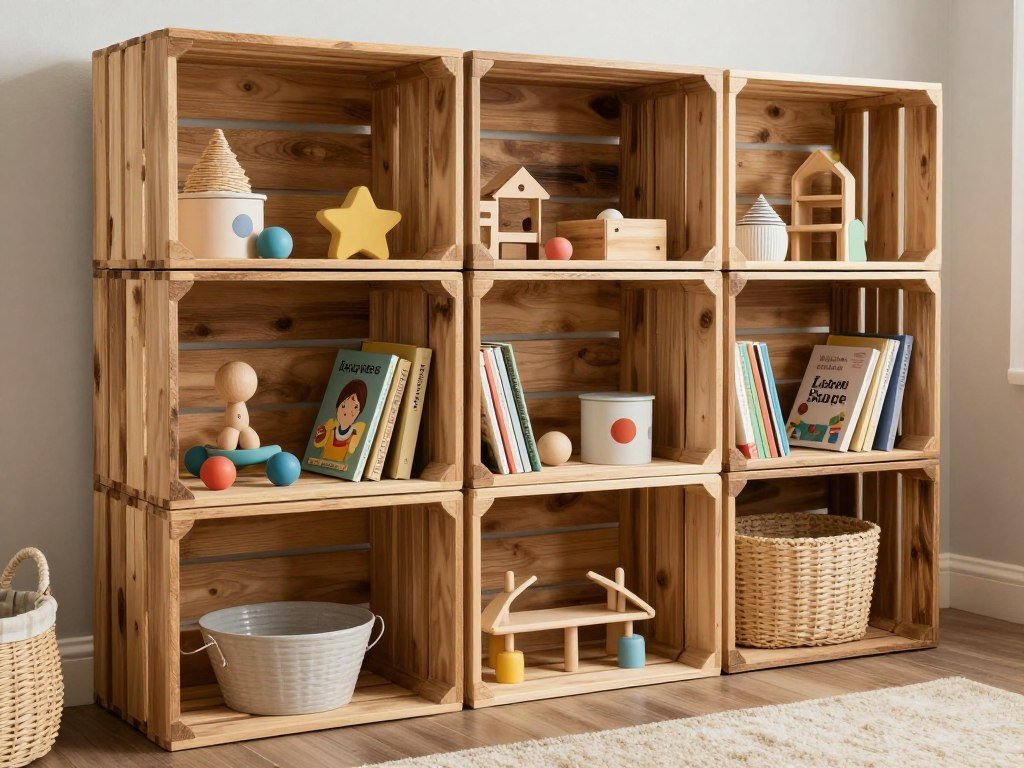
Stack crates on their sides to create cubbies. Secure them together with screws or wood glue. Paint or stain them to match your decor.
Add wheels to the bottom of crates to create mobile storage bins. Kids can roll toys from room to room.
Mount single crates on walls to create individual storage cubes. These wall-mounted options save floor space.
Fabric Basket DIY
Sew custom fabric baskets sized perfectly for your shelving units. Choose fabrics that coordinate with your room’s colors.
Use canvas or duck cloth for sturdy baskets that hold their shape. Interface the fabric for extra stability.
Create collapsible baskets with cardboard inserts. These softer options work well for stuffed animals or soft toys.
Label Making Tips
Labels transform any storage system into an organizational powerhouse. Clear labeling helps kids learn where items belong.
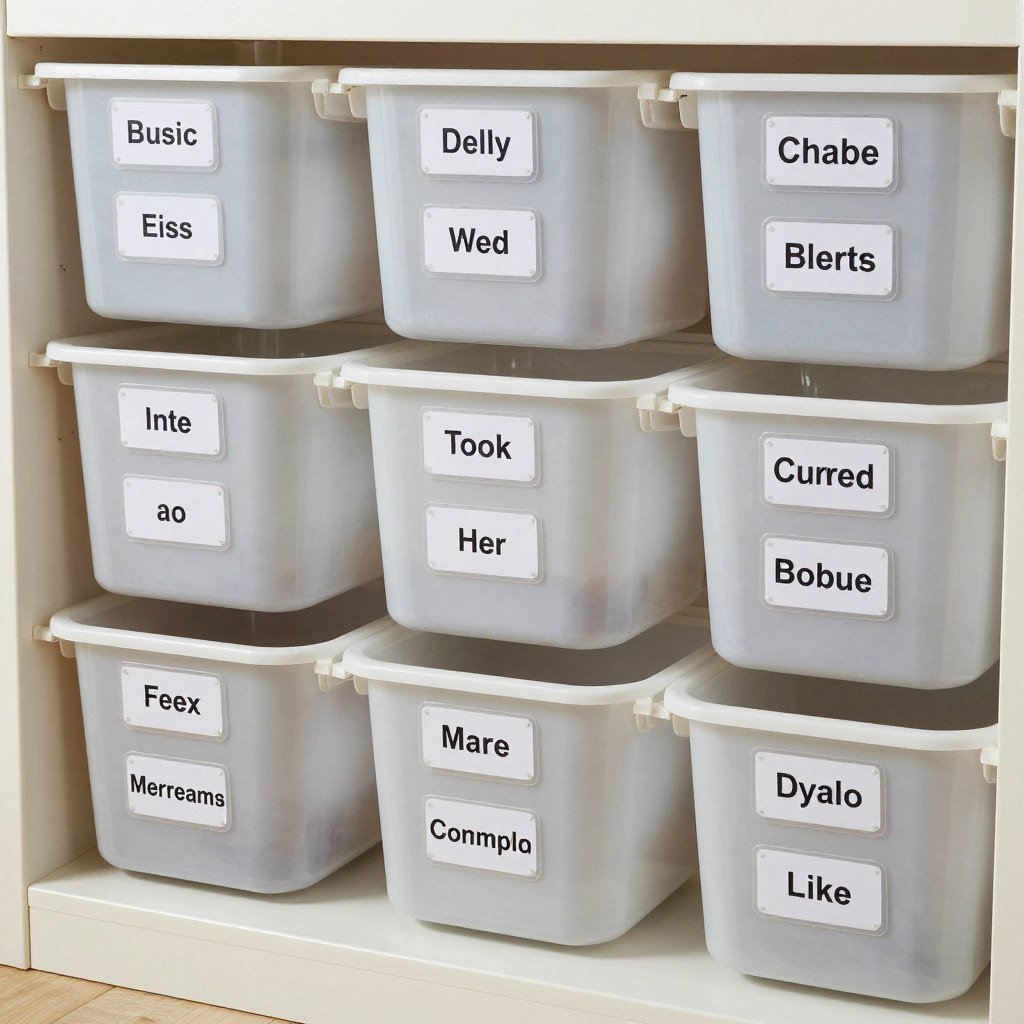
Create picture labels for young children who can’t read yet. Print or draw images of toy types for each container.
Use a label maker for a professional look. Clear, uniform labels help maintain organization long-term.
Laminate paper labels to protect them from wear. This simple step extends label life significantly.
Get Started with DIY Storage
Find materials and supplies to create your own budget-friendly toy storage solutions.
Outdoor Toy Storage Ideas
Outdoor toys need weatherproof storage that keeps items protected from elements. Proper outdoor storage extends toy life and prevents lawn clutter.
The right outdoor storage solutions keep yards tidy while making outdoor toys easy to access for play.
Deck Box Storage
Deck boxes provide weather-resistant storage for outdoor toys. These large containers sit on patios or porches for convenient access.
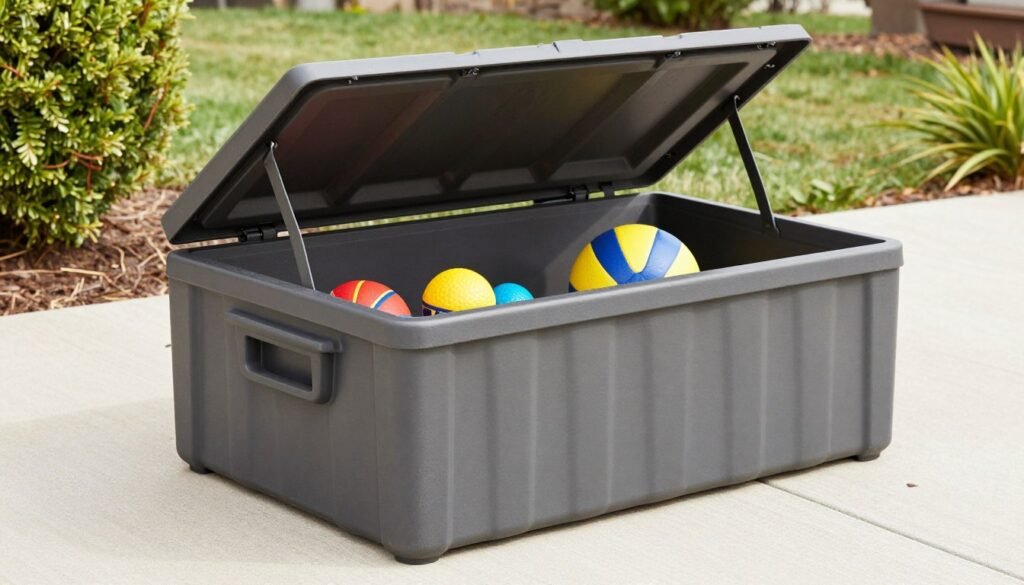
Choose deck boxes with secure lids that lock to keep contents dry. Look for UV-resistant materials that won’t fade or crack in sunlight.
Size your deck box to accommodate your largest outdoor toys. Measure bikes, scooters, or sports equipment before purchasing.
Position deck boxes near the door for easy access during outdoor play. This placement encourages kids to put toys away immediately.
Garage Organization
Garages offer ample space for outdoor toy storage. Wall-mounted systems keep toys off the garage floor.
Install pegboards or slatwall systems to hang bikes, helmets, and outdoor gear. These systems adapt as storage needs change.
Use large plastic bins on garage shelves for smaller outdoor toys. Label bins clearly so kids can find and return items independently.
Create a designated toy zone in the garage. Keep outdoor toys separate from tools and automotive items.
Shed Storage Solutions
Outdoor sheds provide dedicated space for toy storage. These standalone structures keep toys separate from living spaces.
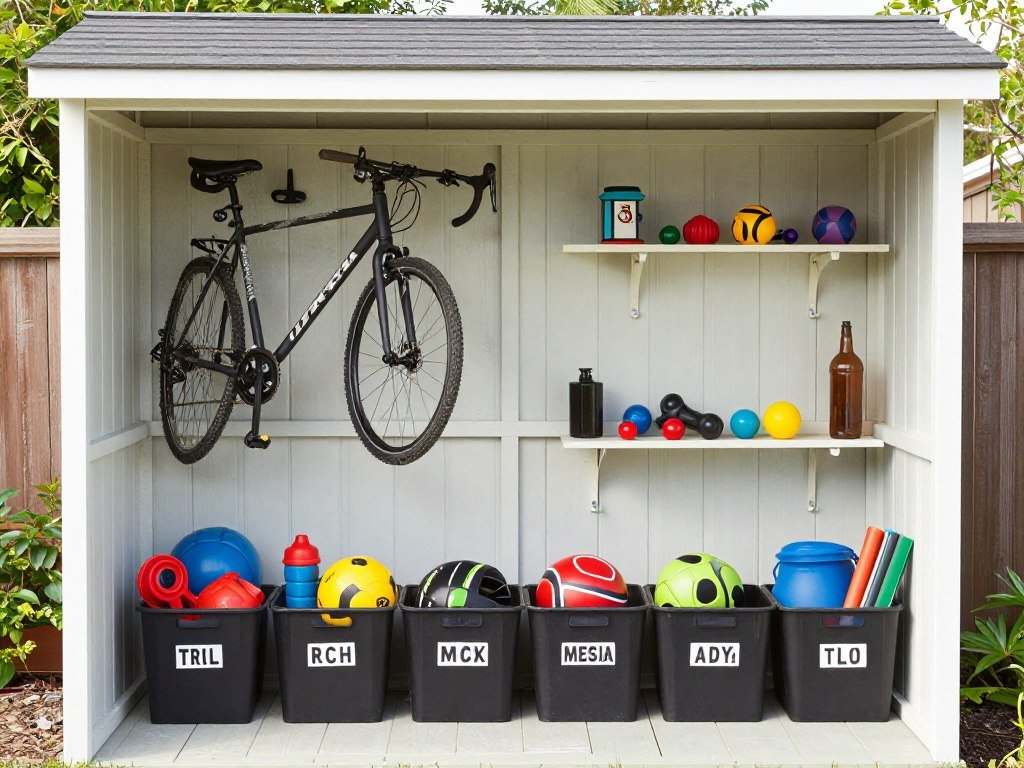
Maximize shed space with wall hooks for hanging items. Mount bikes vertically to save floor space.
Add shelving units inside sheds for smaller items. Use clear containers so contents remain visible.
Ensure shed ventilation to prevent moisture buildup. Damp storage damages toys and creates mildew issues.
Pool Toy Storage
Pool toys need special storage that allows them to dry completely. Standing water in toys creates sanitation issues.
Mesh bags allow pool toys to drain and dry. Hang bags on hooks near the pool area.
Rolling carts designed for pool toys move easily between storage and pool. Many include drainage holes for wet items.
Store pool chemicals separately from toys. Safety should always guide pool area organization.
Sports Equipment Organization
Balls, bats, and outdoor sports gear need accessible storage that keeps items contained.
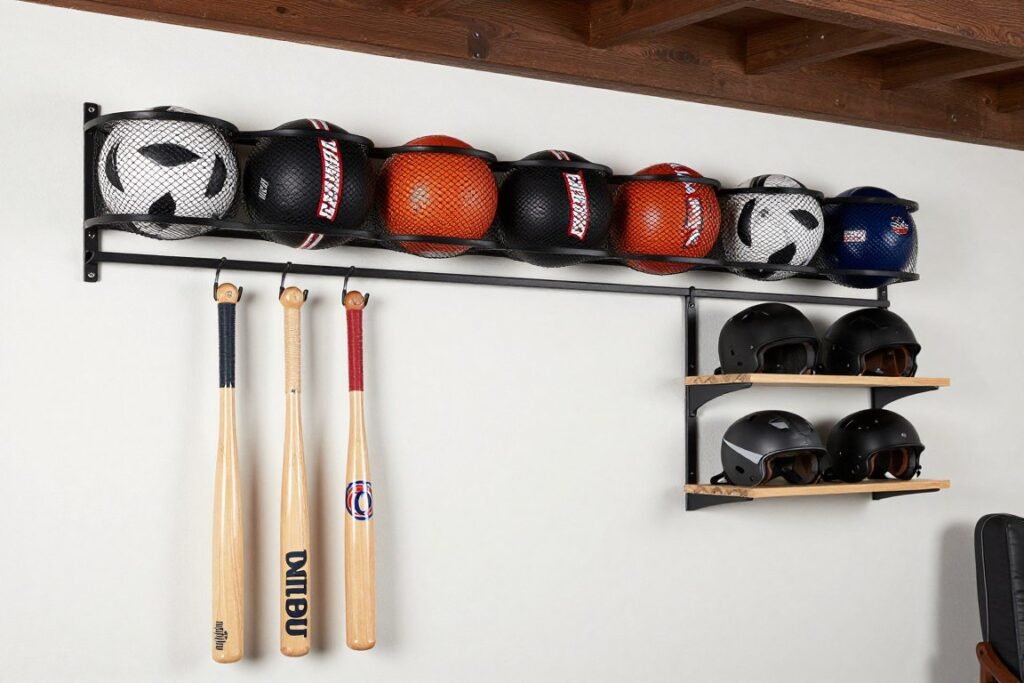
Milk crates or mesh bins hold multiple balls while allowing visibility. Stack crates to save floor space.
Hang hockey sticks, baseball bats, and tennis rackets on wall hooks. This storage keeps equipment off floors and prevents damage.
Create a sports station near the garage exit. Kids can grab equipment on the way out and return it when they come back inside.
Organize Outdoor Play Spaces
Find weatherproof storage solutions for outdoor toys and sports equipment.
Teaching Kids to Use Storage Systems
The best storage system in the world fails if children don’t use it. Teaching organizational skills helps kids take ownership of their spaces.
With patience and the right strategies, children learn to maintain organized play areas. These skills benefit them throughout their lives.
Age-Appropriate Storage
Match storage solutions to your child’s developmental stage. Young children need simple systems they can manage independently.
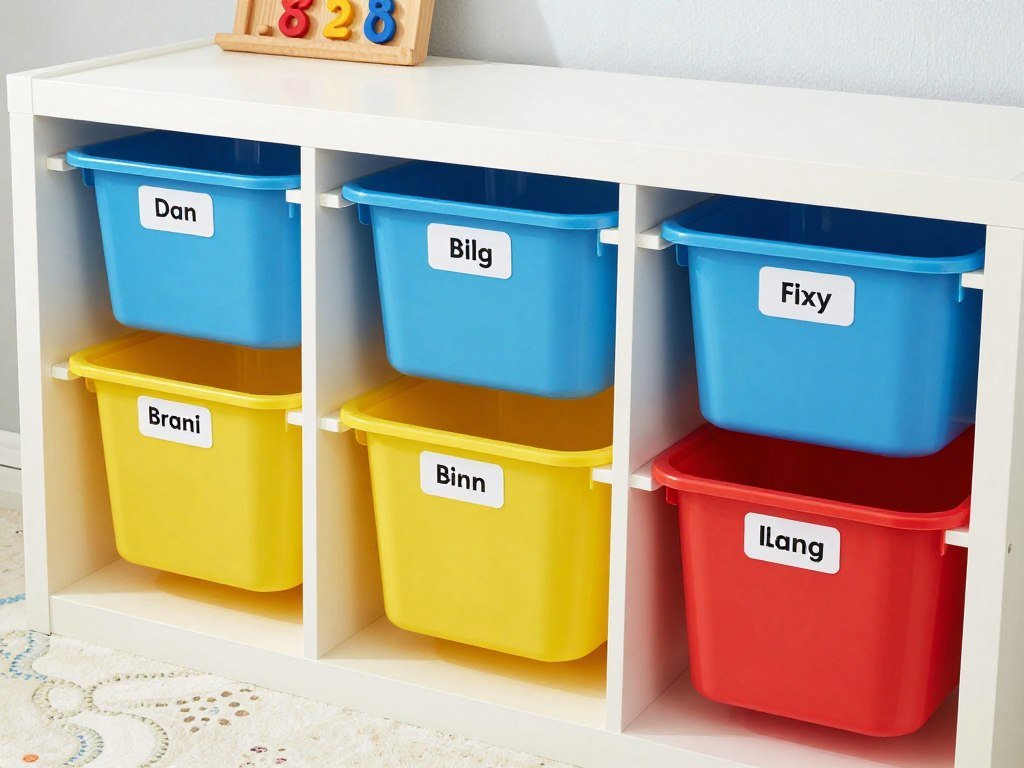
Toddlers need large containers with simple sorting. One bin for blocks, another for stuffed animals. Keep categories broad and visual.
Preschoolers can handle more specific sorting. Separate cars from trains. Keep art supplies in different containers based on type.
School-age children can maintain complex organizational systems. They can alphabetize books or sort toys by multiple criteria.
Creating Cleanup Routines
Consistent routines make organization automatic. Establish clear expectations for when cleanup happens.
Set a timer for cleanup time. Give kids a specific window to put toys away. The timer makes cleanup feel like a game.
Create cleanup songs or games. Race to see how many toys fit in the bin during one song. Make organization fun rather than a chore.
Implement the one-toy-out rule. Kids must put away the current toy before getting another. This prevents overwhelming messes.
Visual Organization Cues
Visual systems help kids understand where items belong. These cues reduce the mental load of organization.
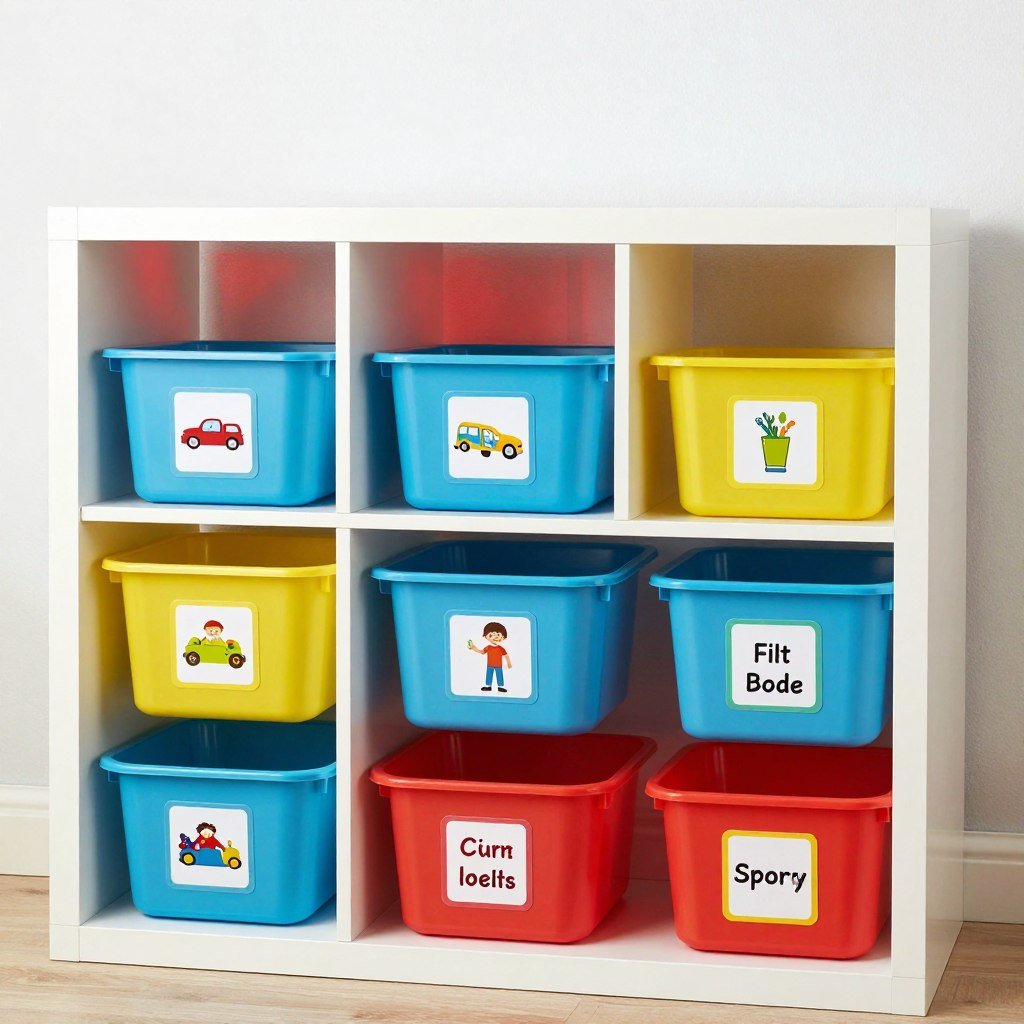
Color-code storage containers. Red bins for art supplies, blue for blocks, green for outdoor toys. Colors provide instant recognition.
Use picture labels showing what belongs in each container. Photos work better than words for young children.
Outline storage spots with tape on shelves. Show kids exactly where each bin returns.
Involving Kids in Organization Decisions
Children who help create organizational systems feel invested in maintaining them. Include kids in storage planning.
Let children choose container colors or label designs. This ownership increases the likelihood they’ll use the system.
Ask for input on toy placement. Kids know which toys they use together and can suggest logical groupings.
Respect their organizational logic even if it differs from yours. The goal is creating systems kids will actually use.
Praise and Positive Reinforcement
Acknowledge efforts to maintain organization. Positive feedback encourages continued participation.
Celebrate small wins. Praise specific actions like remembering to put away blocks without reminders.
Create reward systems for consistent cleanup habits. Sticker charts or special privileges motivate continued effort.
Model organizational behavior. Kids learn by watching adults maintain organized spaces.
Build Organizational Skills
Find kid-friendly storage solutions and organizational tools that encourage independence.
Maintaining Your Toy Storage System
Creating an organizational system is just the beginning. Regular maintenance keeps storage functional as toy collections evolve.
Consistent upkeep prevents storage systems from deteriorating into chaos. These strategies help maintain order long-term.
Regular Decluttering
Toys accumulate quickly. Schedule regular decluttering sessions to keep collections manageable.
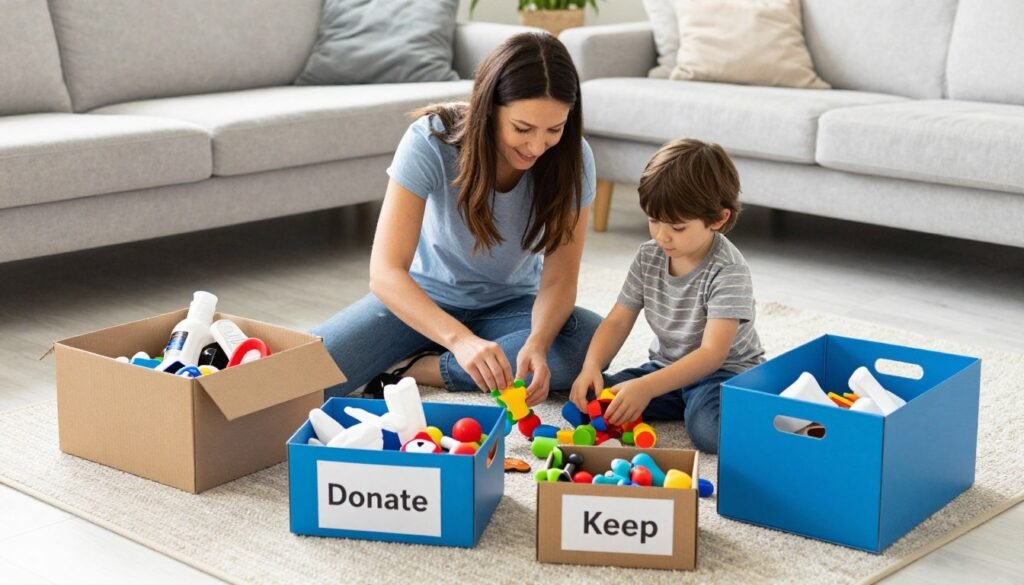
Conduct toy audits quarterly. Involve kids in deciding which toys to keep, donate, or discard.
Remove broken toys immediately. Don’t let damaged items take up valuable storage space.
Rotate toys seasonally. Pack away summer outdoor toys during winter months. This rotation keeps active toy collections smaller.
The One-In-One-Out Rule
Prevent toy overflow by implementing a replacement rule. When a new toy arrives, an old one leaves.
This strategy works especially well around birthdays and holidays when new toys flood in. Kids learn to make thoughtful decisions about their possessions.
Donate outgrown toys to make room for age-appropriate items. This natural progression keeps toy collections current.
Storage System Adjustments
As children grow, their storage needs change. Adapt systems to match developmental stages and changing interests.
Babies need large bins for soft toys. Toddlers benefit from simple sorting systems. School-age children can maintain detailed organizational schemes.
Don’t force a system that isn’t working. If kids consistently struggle with organization, adjust the approach.
Deep Cleaning Storage Areas
Storage containers and shelving need periodic cleaning. Dust and grime accumulate in playrooms and toy storage areas.
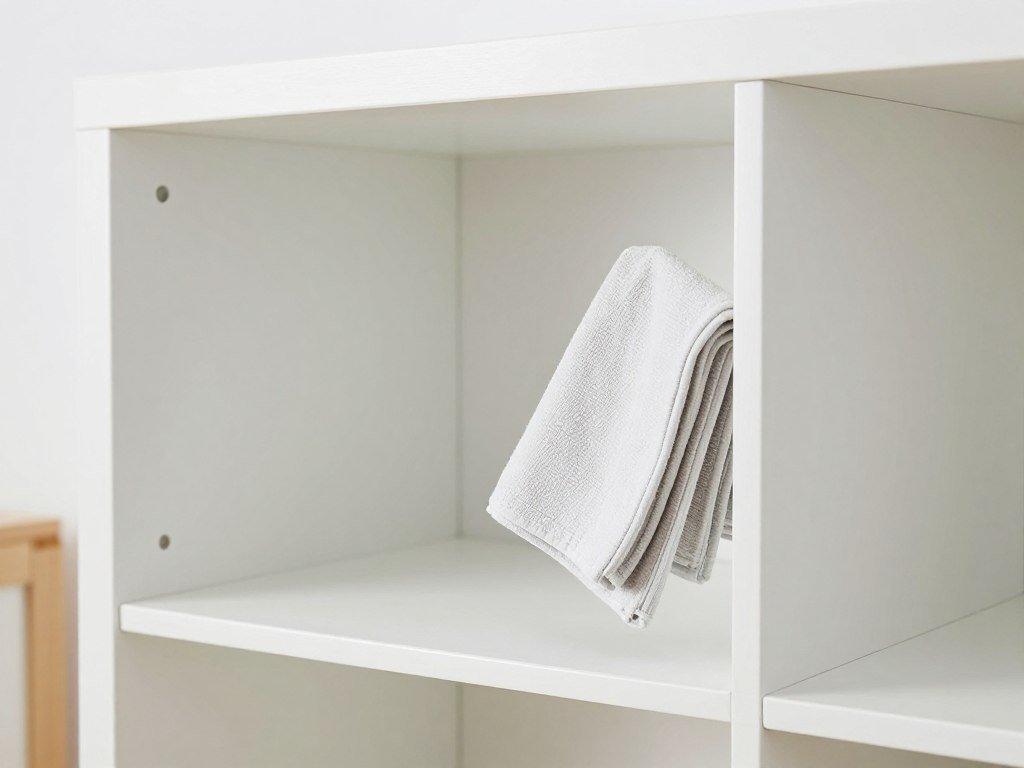
Empty shelves completely twice a year for thorough cleaning. Wipe down surfaces and vacuum corners.
Wash storage bins and baskets regularly. Some plastic bins are dishwasher safe. Hand wash fabric baskets.
Check for damage during cleaning sessions. Replace broken storage containers before they cause organizational problems.
Updating Labels and Categories
As toy collections change, update organizational categories. Last year’s system might not fit current needs.
Replace worn labels promptly. Illegible labels defeat organizational purposes.
Adjust category definitions as needed. Combine categories that no longer need separation. Create new categories for expanding collections.
Family Storage Meetings
Hold brief family meetings to assess storage effectiveness. Ask what’s working and what needs adjustment.
Kids can identify problem areas better than parents sometimes. Listen to their feedback about storage accessibility.
Implement requested changes when reasonable. This collaborative approach maintains buy-in from all family members.
Maintain Your Organization
Find tools and solutions to help maintain your toy storage system over time.
Creating Your Perfect Toy Storage Solution
Effective toy storage transforms homes from chaotic to calm. The right combination of storage solutions, organizational strategies, and family habits creates sustainable systems.
Remember that perfection isn’t the goal. Functional storage that your family actually uses beats picture-perfect systems that nobody maintains.
Start small with one area or one toy type. Implement a storage solution and give it time to work. Adjust as needed based on your family’s real-world usage patterns.
The best toy storage ideas are those that fit your unique space, budget, and lifestyle. Whether you choose expensive custom built-ins or budget-friendly DIY solutions, consistency matters more than cost.
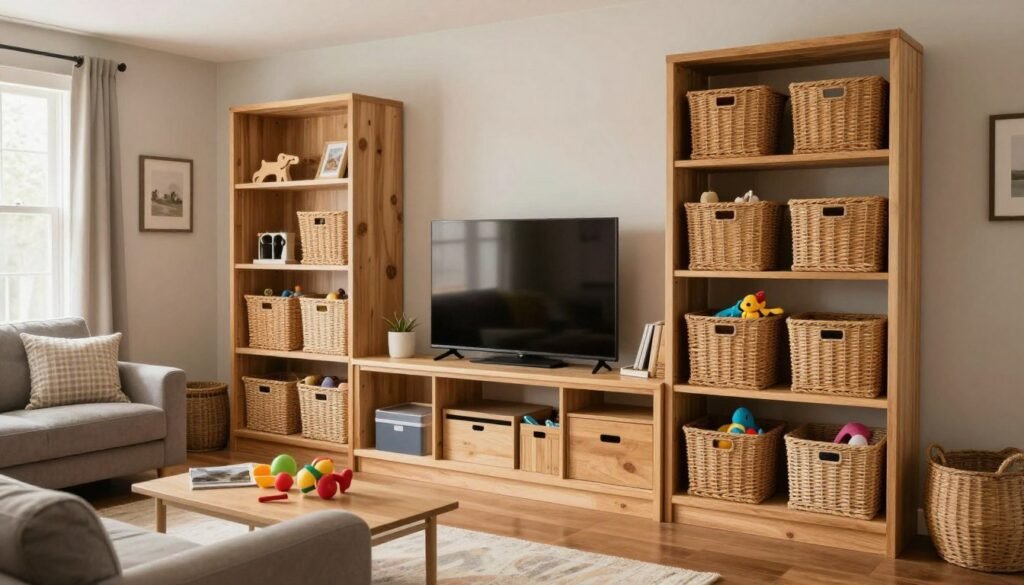
Teach your children organizational skills through these systems. The habits they learn now will serve them throughout life. Kids who understand organization feel more in control of their environments.
Storage needs evolve as children grow. What works for toddlers won’t suit teenagers. Build flexibility into your systems so they adapt over time without requiring complete overhauls.
Your home should work for your family. Don’t sacrifice living space to toy storage, but don’t ignore the need for organization either. Find the balance that lets your family enjoy both playtime and peaceful, clutter-free moments.
Take action today. Choose one storage idea from this guide and implement it this week. Small changes create momentum for bigger organizational transformations.
A well-organized home reduces stress, saves time, and creates space for what matters most: quality time with your family. Your perfect toy storage solution is waiting to be discovered.