A well-organized garage transforms your home’s functionality and your daily life. The right garage shelving system can turn a chaotic catch-all space into an efficient, accessible storage area where everything has its place. Whether you’re tired of stepping over sports equipment, searching endlessly for tools, or just want to reclaim your parking space, strategic shelving is the foundation of garage organization that lasts.
This Website contains affiliate links. That means I may earn a small commission if you purchase through my links, at no extra cost to you.
Assessing Your Garage Storage Needs
Before purchasing any garage shelving, take time to evaluate your specific storage requirements. This crucial planning step ensures you select solutions that truly work for your space and items.
Inventory Your Items
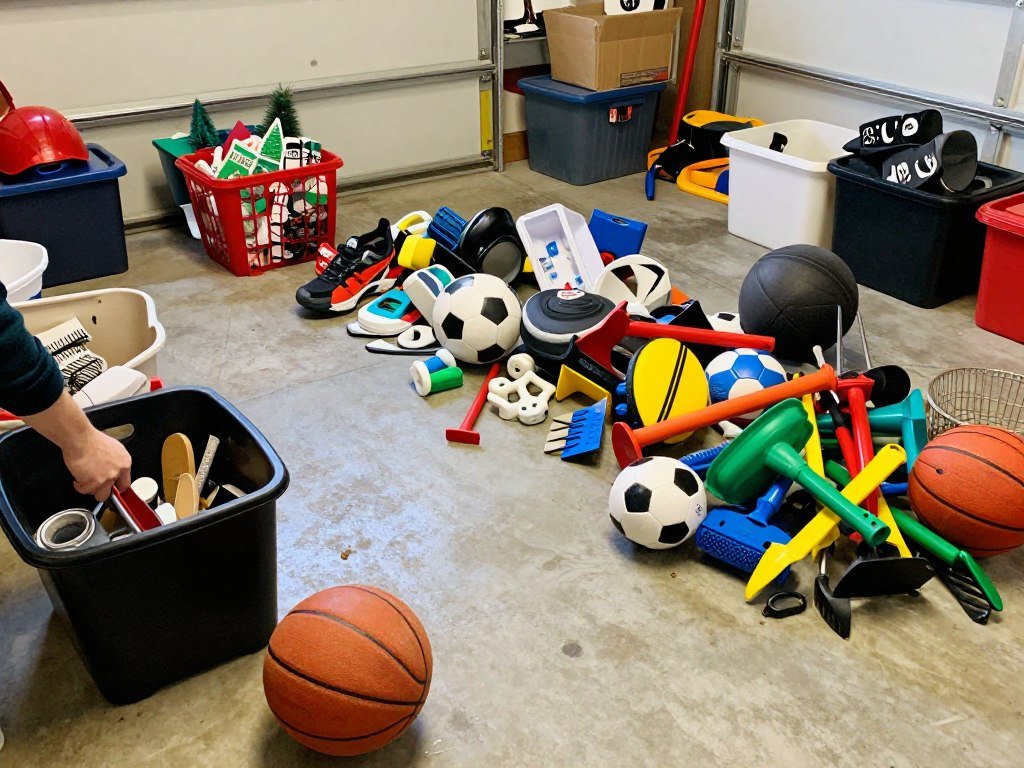
Start by categorizing what you need to store. Common garage storage categories include:
- Seasonal items (holiday decorations, camping gear)
- Sports equipment and recreational items
- Tools and workshop supplies
- Gardening equipment and supplies
- Automotive supplies and accessories
- Home maintenance items
Measure Your Space
Accurate measurements are essential for selecting appropriate shelving. Measure:
- Total available wall space
- Ceiling height
- Floor space that can be dedicated to freestanding units
- Depth available without interfering with vehicle parking
- Location of outlets, switches, windows, and doors
Define Your Storage Goals
Consider what you want to achieve with your garage organization:
Related Posts:






- Maximizing floor space for parking
- Creating a functional workshop area
- Ensuring easy access to frequently used items
- Safely storing seasonal equipment
- Accommodating items of varying sizes and weights
Ready to start organizing?
Get the essential measuring tools you’ll need for proper garage planning.
Types of Garage Shelving Systems
Different shelving options offer unique benefits. Understanding the varieties available helps you choose the right combination for your specific needs.
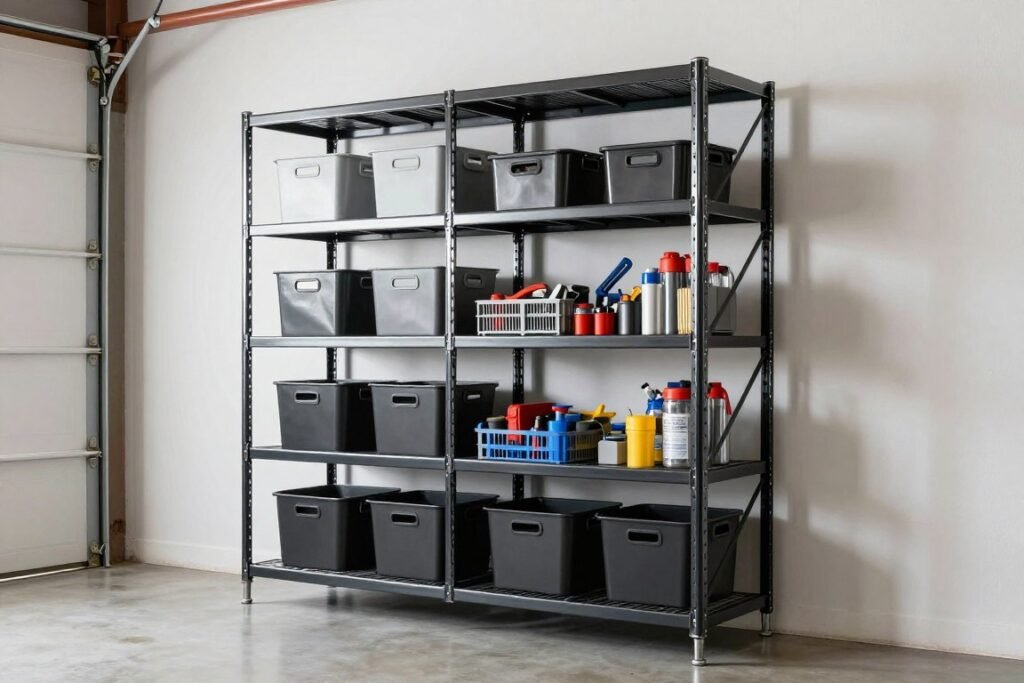
Freestanding Shelving Units
These versatile units require no wall attachment and can be repositioned as needed. Ideal for renters or those who prefer flexibility in their garage layout.
Key Features:
- Weight capacity typically ranges from 250-4000 lbs per shelf
- Available in metal, plastic, or wood construction
- Some models include wheels for mobility
- Adjustable shelf heights accommodate items of various sizes
- Assembly generally requires minimal tools
Wall-Mounted Shelving
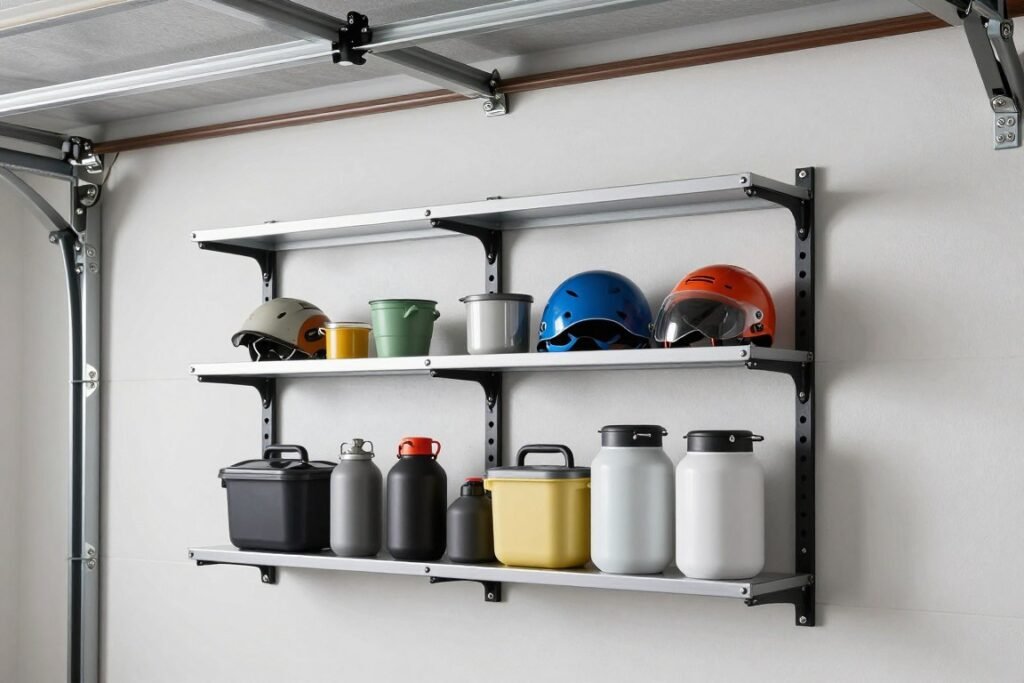
Wall-mounted systems maximize floor space and provide secure storage for heavier items. These systems attach directly to wall studs for stability.
Key Features:
- Keeps floor clear for parking and movement
- Available in fixed or adjustable configurations
- Weight capacities typically range from 100-600 lbs per shelf
- Options include brackets with boards or complete shelf systems
- Some systems integrate with track systems for customization
Overhead Ceiling Storage
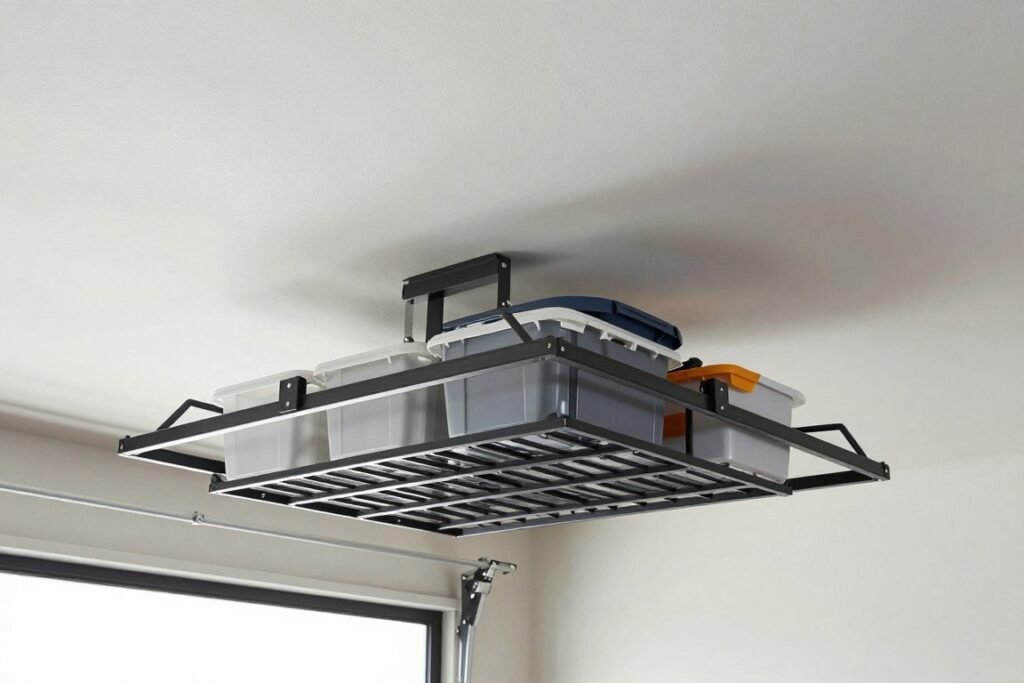
Ceiling-mounted racks utilize unused overhead space, perfect for seasonal items or bulky equipment you access infrequently.
Key Features:
- Maximizes use of vertical space
- Ideal for long-term storage of seasonal items
- Available in fixed or pulley-operated systems
- Weight capacities typically range from 250-600 lbs
- Requires secure mounting to ceiling joists
Maximize Your Vertical Space
Explore overhead storage options to utilize every inch of your garage.
Specialty Storage Solutions
Purpose-built storage systems address specific organization challenges and accommodate uniquely shaped items.
Popular Specialty Options:
- Tool organizers and pegboards
- Sports equipment racks (bikes, balls, rackets)
- Garden tool organizers
- Bin and container shelving
- Tire racks and automotive storage
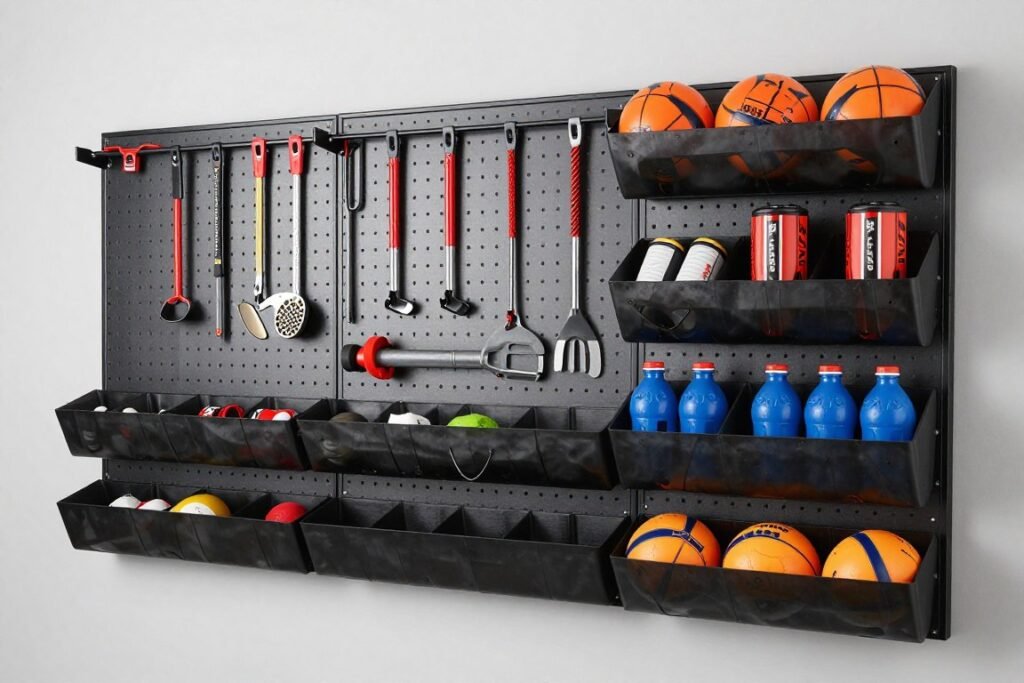
Organize Your Tools
Discover specialized tool storage solutions for your workshop area.
Shelving Materials Comparison
| Material | Pros | Cons | Best For |
| Steel/Metal | High weight capacity, durability, resistance to moisture | Can rust if not properly coated, typically more expensive | Heavy items, tools, automotive supplies |
| Plastic | Lightweight, won’t rust, easy to clean, affordable | Lower weight capacity, can warp under heavy loads | Lightweight items, areas with high humidity |
| Wood | Attractive appearance, customizable, good strength | Susceptible to moisture damage, may require finishing | Visible areas, custom solutions, workshop surfaces |
| Wire Shelving | Air circulation, visibility of items, prevents dust buildup | Small items can fall through, uneven surface | Ventilation needs, storage bins, visible inventory |
Find Your Perfect Shelving Solution
Browse a wide selection of garage shelving options to match your specific needs.
Planning Your Garage Shelving Layout
A thoughtful layout maximizes efficiency and ensures your garage remains functional for its primary purposes while providing ample storage.
Create Functional Zones
Organize your garage into dedicated areas based on how you use the space and access items:
- Frequently Used Items Zone: Position at eye level and near the entrance for easy access
- Seasonal Storage Zone: Place in overhead or less accessible areas
- Workshop Zone: Consolidate tools and project materials in one area
- Sports/Recreation Zone: Group related equipment together
- Gardening Zone: Position near the garage door for easy outdoor access
- Automotive Zone: Keep car supplies near where you park
- Hazardous Materials Zone: Store safely away from heat sources and children’s reach
- Recycling/Trash Zone: Convenient but out of the main pathway
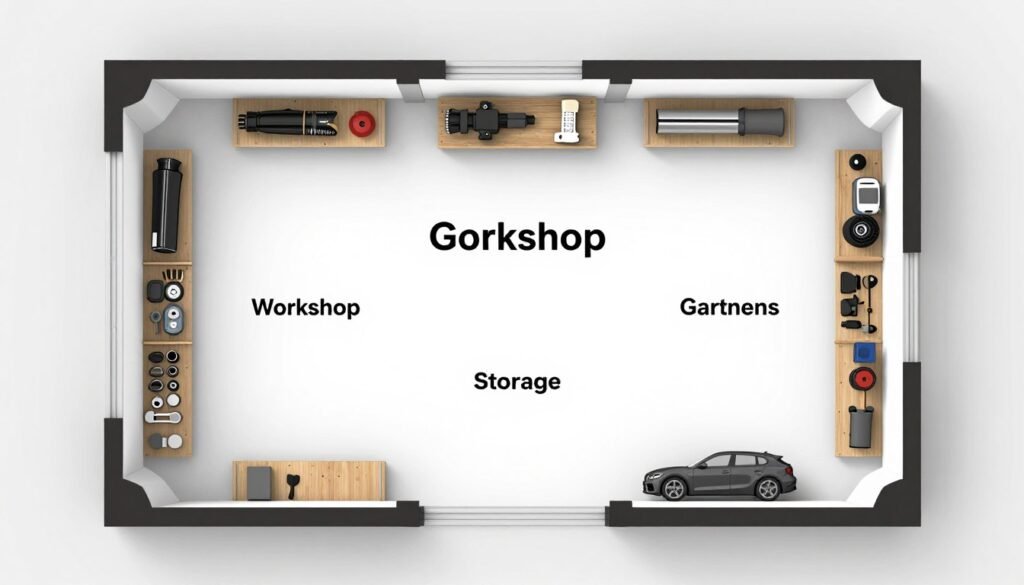
Optimize Vertical Space
Effective garage organization utilizes the entire vertical space from floor to ceiling:
- Floor to 3 feet: Heavy items, wheeled storage, bulky equipment
- 3-6 feet (eye level): Frequently used items, tools, everyday supplies
- 6+ feet: Seasonal items, long-term storage, lightweight bulky items
- Ceiling: Rarely accessed items, holiday decorations, luggage
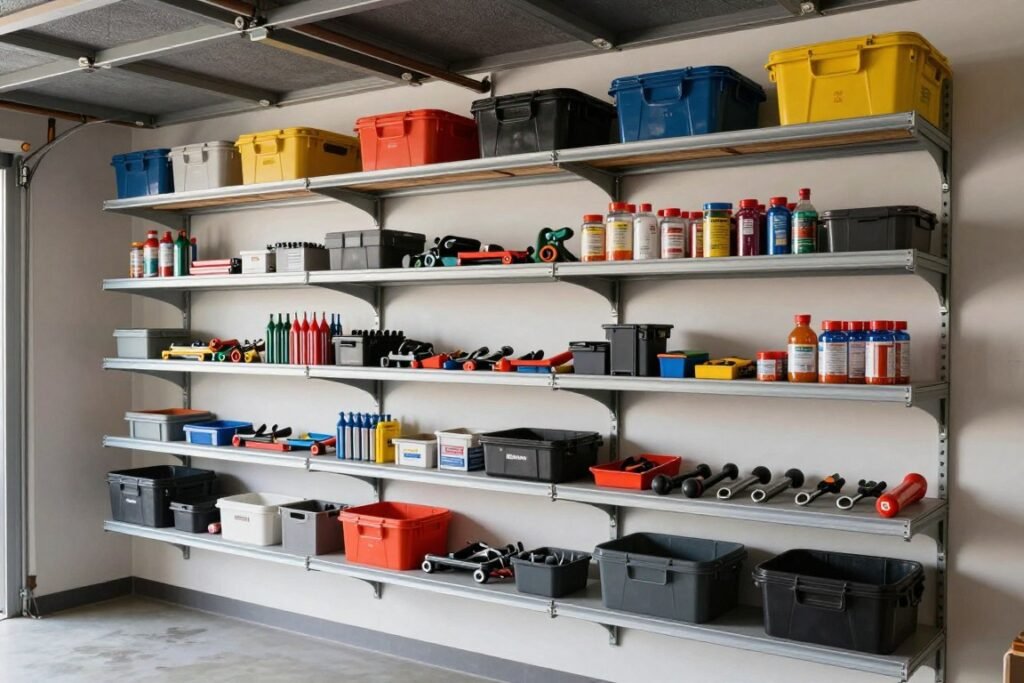
Plan for Accessibility
Consider how you’ll access items when designing your shelving layout:
- Leave adequate clearance for vehicle doors to open
- Ensure walkways remain clear (minimum 3 feet wide)
- Position frequently used items within easy reach
- Consider using pull-out shelves for deep storage areas
- Allow space for step stools or ladders to access high storage
Ready to Plan Your Layout?
Get storage bins and organizers to complement your new shelving system.
Installation Guide for Garage Shelving
Proper installation ensures your shelving is safe, stable, and functions as intended. Follow these general guidelines while always referring to manufacturer instructions for your specific shelving system.
Essential Tools for Installation
- Stud finder
- Level (2-4 foot recommended)
- Tape measure
- Drill and appropriate bits
- Screwdriver set
- Pencil for marking
- Safety glasses and gloves
- Helper for larger units
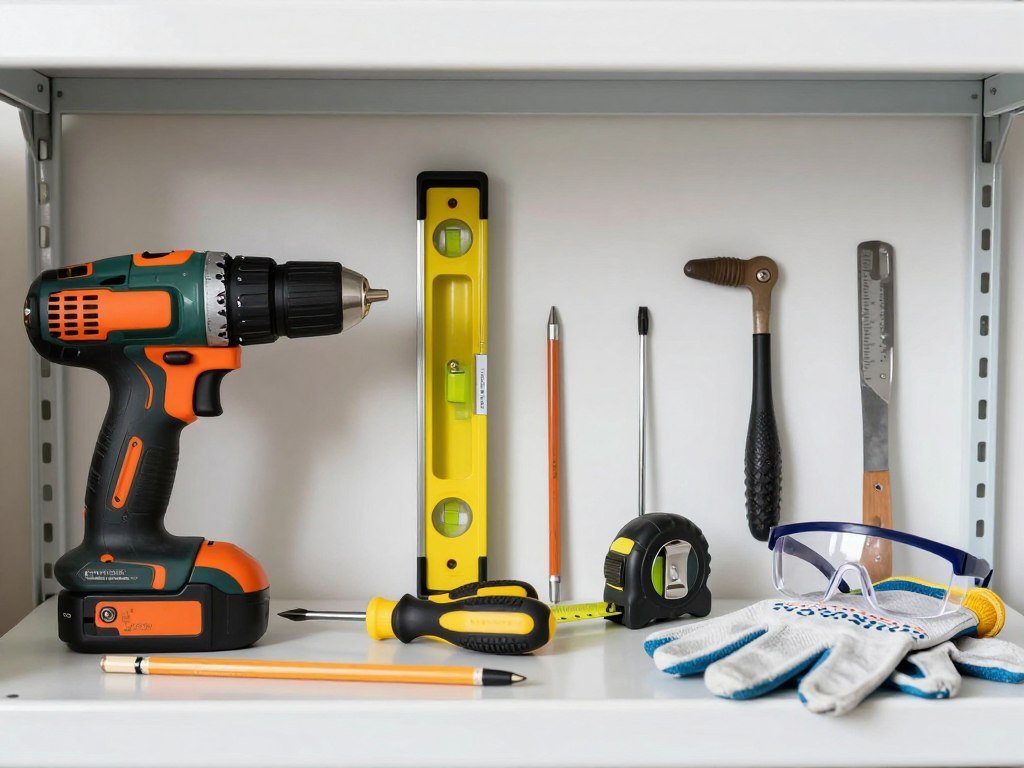
Wall-Mounted Shelving Installation
- Locate and mark wall studs using a stud finder
- Determine desired shelf height and mark level lines
- Attach brackets to wall studs using appropriate screws
- Ensure brackets are level before final tightening
- Secure shelving material to brackets
- Test stability before loading with items
Safety Tip: Always mount into wall studs, never rely on drywall anchors alone for garage shelving that will hold significant weight.
Freestanding Unit Assembly
- Clear adequate floor space for assembly
- Inventory all parts before beginning
- Follow manufacturer’s assembly sequence
- Tighten all connections securely
- Level the unit using adjustable feet if available
- Consider anchoring tall units to wall for stability
Warning: Uneven floors can make freestanding units unstable. Use shims or adjustable feet to ensure level installation.
Ceiling Storage Installation
- Locate ceiling joists using a stud finder
- Mark mounting points ensuring they align with joists
- Pre-drill holes for lag bolts or mounting hardware
- Secure mounting brackets to ceiling joists
- Attach storage rack to mounting brackets
- Verify all connections are tight before loading
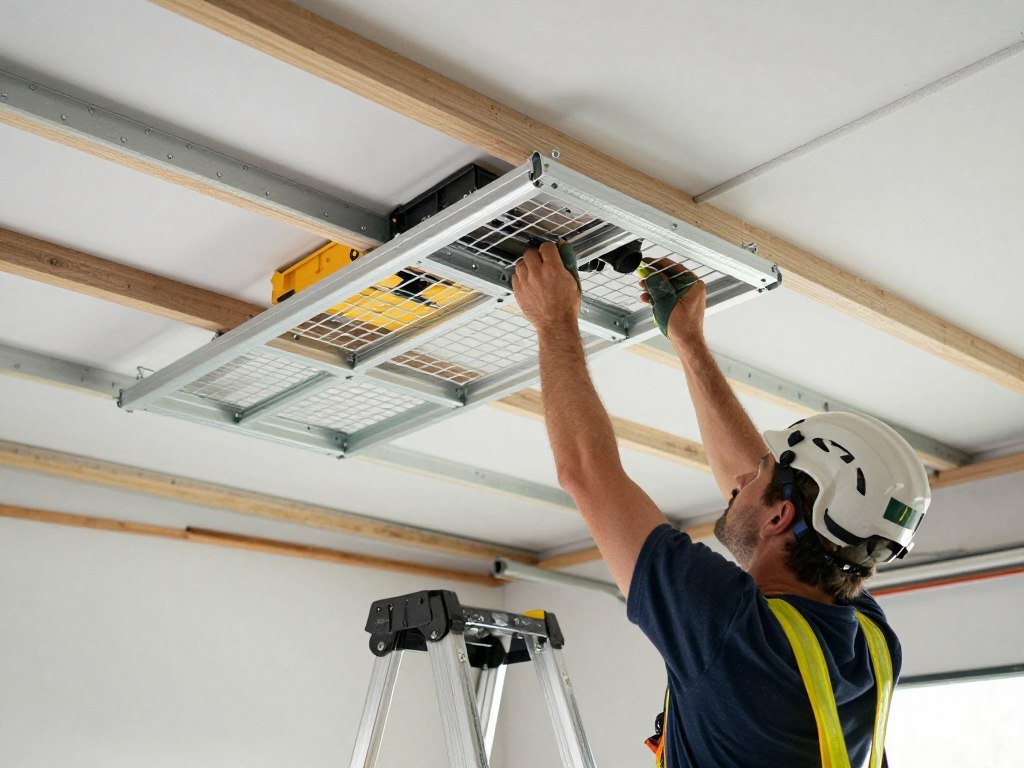
Get the Right Installation Tools
Ensure a safe and secure installation with proper tools.
Organizing Your Garage Shelving System
Once your shelving is installed, implementing smart organization strategies will maximize efficiency and help maintain order long-term.
Categorize and Containerize
Group similar items together and use appropriate containers to keep them organized:
Container Types for Garage Storage:
- Clear plastic bins: Visibility of contents, stackable, moisture-resistant
- Lidded totes: Dust protection, stackability, good for seasonal items
- Open bins: Easy access for frequently used items
- Specialty organizers: For specific items like sports equipment
Effective Categorization Strategies:
- Group by activity (gardening, sports, automotive)
- Group by season (winter, summer, holiday)
- Group by frequency of use (daily, occasional, rarely)
- Group by family member (individual sports equipment, projects)
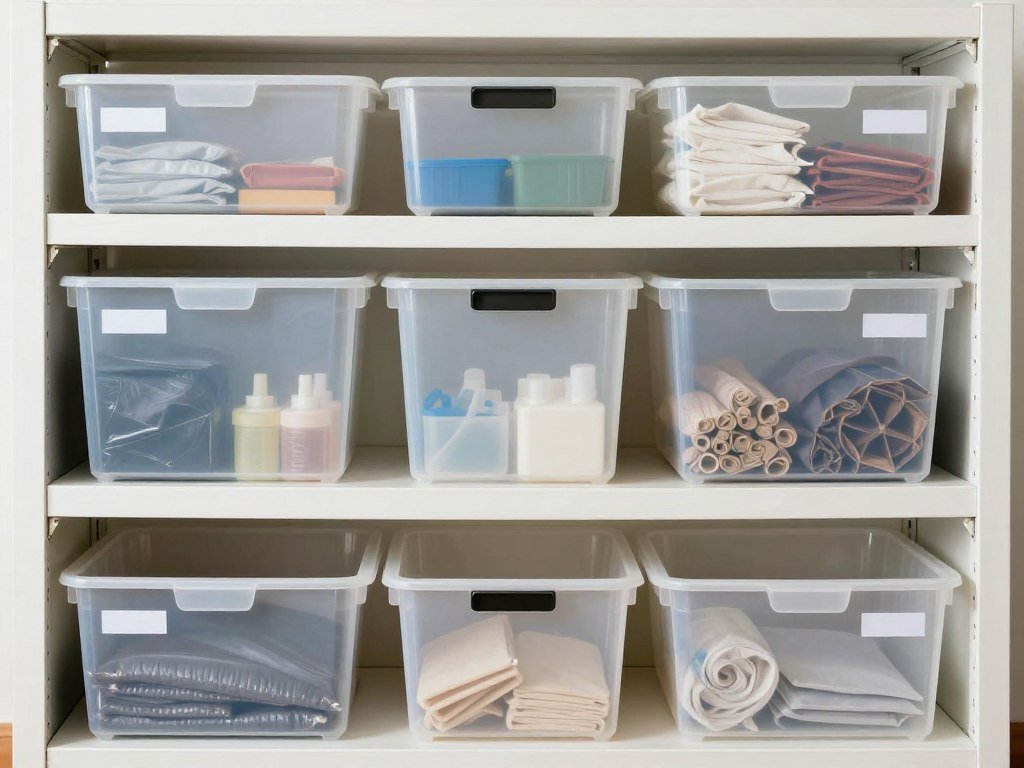
Labeling Systems
Clear labeling is crucial for maintaining organization and quickly finding items:
- Use waterproof, high-contrast labels that are easy to read
- Consider color-coding by category or season
- Label both the front and top of containers for visibility from different angles
- Create an inventory list for bins with multiple items
- Use picture labels for households with children or non-readers

Strategic Item Placement
Position items based on weight, frequency of use, and logical groupings:
- Place heaviest items on lower shelves to prevent tipping
- Position frequently used items at eye level for easy access
- Store seasonal items on higher shelves or overhead racks
- Keep dangerous items out of children’s reach
- Group items used together near each other
Complete Your Organization System
Find durable labels and organization accessories for your garage.
Maintaining Your Garage Shelving System
Regular maintenance ensures your garage organization system remains functional, safe, and effective long-term.
Regular Inspection and Cleaning
- Check all fasteners and connections quarterly, tightening as needed
- Inspect shelving for signs of overloading or damage
- Dust shelves and containers regularly to prevent buildup
- Clean spills immediately to prevent staining or damage
- Check for signs of pests and address promptly
Seasonal Reorganization
Perform a thorough review and reorganization of your garage storage at least twice yearly:
- Rotate seasonal items to more accessible locations as needed
- Reassess item categories and adjust groupings as your needs change
- Purge unused or unnecessary items to prevent clutter buildup
- Update labels if contents have changed
- Evaluate if current shelving still meets your needs

Preventing Common Issues
Best Practices
- Respect weight limits of shelving
- Distribute weight evenly across shelves
- Use appropriate containers for items
- Maintain clear walkways and access
- Address small issues before they become problems
Common Mistakes
- Overloading shelves beyond capacity
- Storing heavy items on high shelves
- Allowing “just for now” items to accumulate
- Ignoring loose fasteners or connections
- Failing to label containers clearly
Transform Your Garage with Effective Shelving
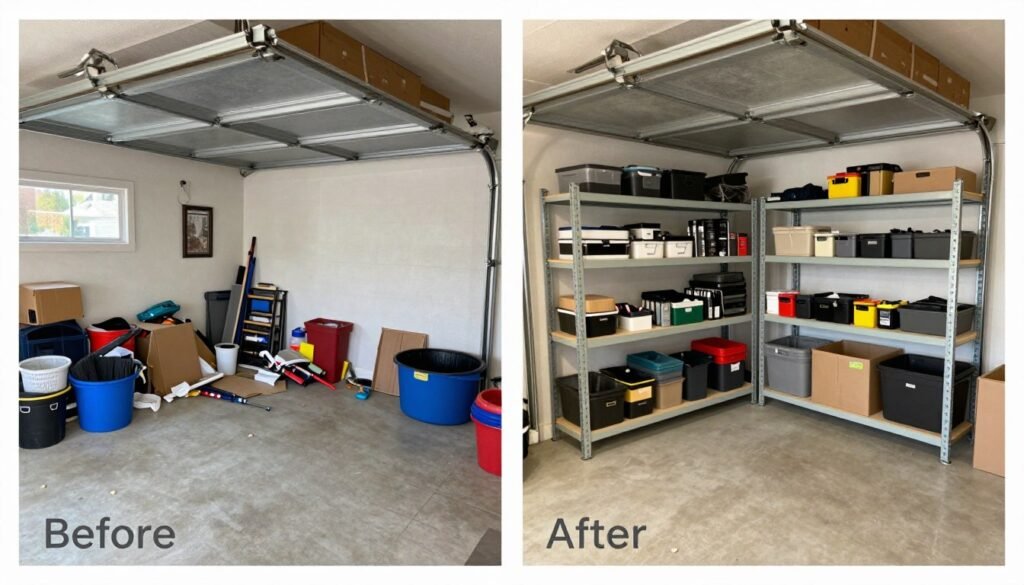
A well-planned garage shelving system does more than just create storage—it transforms how you interact with your space and belongings. By selecting the right shelving types, planning a thoughtful layout, and implementing smart organization strategies, you can create a garage that enhances your home’s functionality and your daily life.
Remember that garage organization is an ongoing process. As your needs change, be willing to adjust your system. The time invested in creating and maintaining an organized garage pays dividends in time saved searching for items, space reclaimed, and the satisfaction of a well-ordered environment.
Start your transformation today by assessing your needs, selecting appropriate shelving, and implementing the organization strategies outlined in this guide. Your future self will thank you every time you easily find exactly what you need in your beautifully organized garage.
Ready to Transform Your Garage?
Explore all the garage shelving options to start your organization project today.
Frequently Asked Questions About Garage Shelving
What is the most cost-effective garage shelving option?
For budget-conscious homeowners, wire shelving units or DIY wood shelving offer the best value. Wire shelving typically costs -100 per unit and requires minimal tools for assembly. Wood shelving using plywood and brackets can be even more economical if you have basic carpentry skills. Plastic resin shelving is another affordable option, particularly suitable for lighter items and humid environments.
How much weight can garage shelving typically hold?
Weight capacity varies significantly by shelving type and material. Standard metal freestanding units typically support 250-500 pounds per shelf, while heavy-duty industrial shelving can hold 1,000-4,000 pounds per shelf. Wall-mounted shelving generally supports 100-300 pounds per shelf when properly installed into studs. Always check manufacturer specifications and never exceed recommended weight limits to ensure safety.
Can I install garage shelving myself or should I hire a professional?
Most freestanding shelving units and basic wall-mounted systems can be installed by homeowners with basic DIY skills and tools. The key requirements are the ability to locate wall studs, use a level, and operate a drill. Complex ceiling systems or custom installations might benefit from professional help, especially if you’re uncertain about locating ceiling joists or if your garage has unusual construction features.
What’s the best shelving for a moisture-prone garage?
For garages with humidity or moisture issues, choose materials that resist rust and mildew. Plastic resin shelving is completely impervious to moisture. Powder-coated or galvanized steel offers good moisture resistance while maintaining strength. Stainless steel provides excellent durability in humid environments but at a higher price point. Avoid particle board or MDF shelving, as these materials deteriorate quickly when exposed to moisture.
How do I maximize storage in a small garage?
In small garages, vertical storage is key. Utilize wall-mounted shelving and overhead ceiling racks to keep floor space clear. Consider adjustable systems that can be reconfigured as needs change. Use the space above garage doors with specialized overhead storage. Implement corner shelving units to utilize often-wasted corner spaces. Finally, choose multi-functional storage where possible, such as workbenches with built-in storage or shelving units with integrated hooks and tool holders.