Your front entry is the first impression visitors have of your home. It sets the tone for what lies beyond and reflects your personal style. A thoughtfully designed front entry doesn’t just enhance curb appeal—it creates a welcoming transition from the outside world to your private sanctuary. Whether you have a spacious front yard or a modest entryway, the right landscaping can transform this space into something truly special. Let’s explore inspiring ideas to create a front entry that makes you smile every time you come home.
This Website contains affiliate links. That means I may earn a small commission if you purchase through my links, at no extra cost to you.
Planning Your Front Entry Landscape
Before diving into plant selections or hardscaping elements, take time to evaluate your space and consider what you want to achieve. A successful front entry landscape balances aesthetics with functionality while complementing your home’s architecture.
Assess Your Space and Style
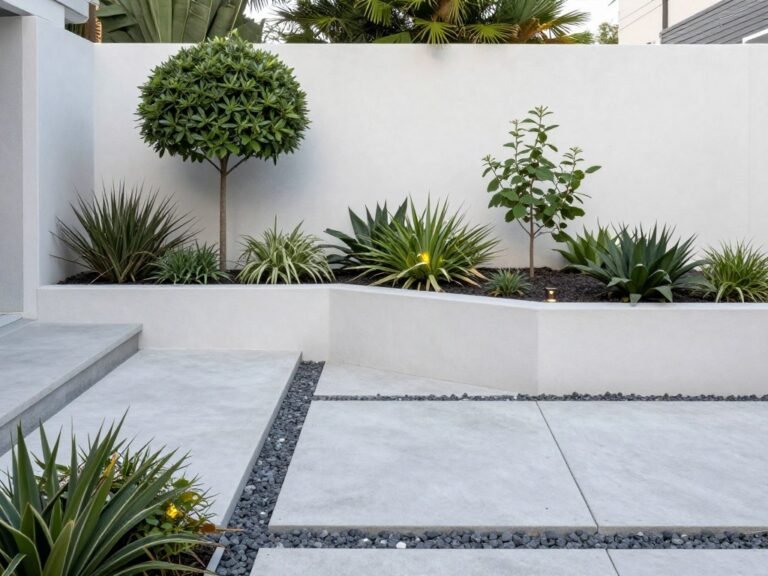
Start by considering your home’s architectural style. A cottage garden approach with informal plantings works beautifully with craftsman or farmhouse styles, while clean lines and structured plantings complement modern or contemporary homes. Take note of existing elements you want to keep, areas that need improvement, and the overall flow from the street to your door.
Consider Traffic Flow
How do people approach and enter your home? A well-designed entry guides visitors naturally toward your front door. Pathways should be at least 4 feet wide to allow two people to walk side by side comfortably. Consider how your landscaping will interact with daily activities like bringing in groceries or receiving deliveries.
Evaluate Light Conditions
Observe how sunlight moves across your front entry throughout the day. Note areas of full sun, partial shade, or deep shade, as this will determine which plants will thrive in different spots. South-facing entries may need shade-providing elements, while north-facing entries might benefit from brightness-enhancing features.
Creating Welcoming Pathways
The path to your front door is more than just a functional element—it’s an opportunity to create anticipation and guide the eye toward your home’s entrance. A thoughtfully designed pathway invites exploration and enhances your home’s curb appeal.
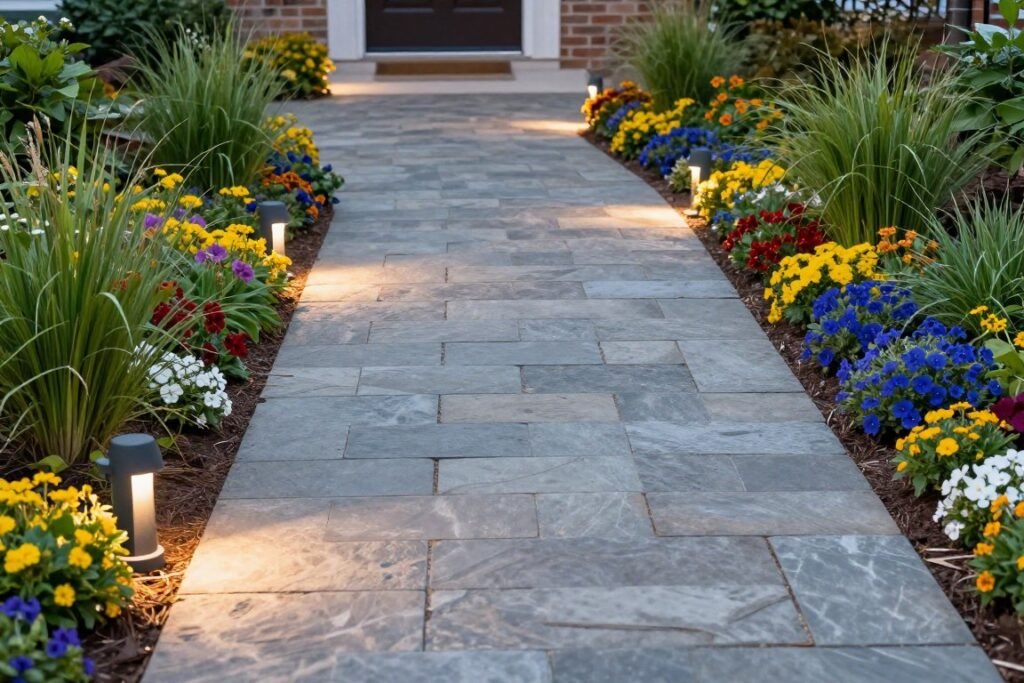
Choose materials that complement your home’s exterior and withstand your local climate. Natural stone pavers create a timeless look, while brick offers traditional charm. Concrete pavers come in various colors and patterns to match any style. For a more budget-friendly option, consider gravel or decomposed granite with sturdy edging.
Straight pathways create a formal, direct approach, while curved paths add interest and a sense of journey. Consider widening the path near the entrance to create a small landing area. This provides space for visitors to gather and makes the approach feel more welcoming. Edge your pathway with low plants or lighting to define the space and guide movement.
Lighting Considerations
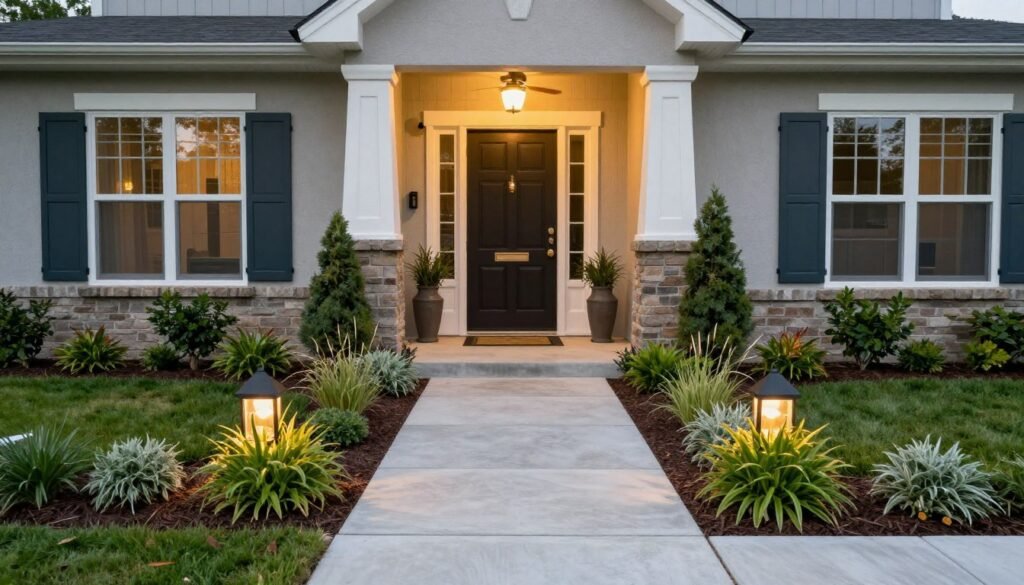
Pathway lighting serves both practical and aesthetic purposes. It ensures safe navigation after dark while highlighting the beauty of your landscape. Solar path lights are an eco-friendly, easy-to-install option, while low-voltage lighting systems offer more consistent illumination and design flexibility.
Foundation plantings soften the transition between your home’s structure and the surrounding landscape. When thoughtfully designed, they frame your entrance and create a cohesive look that enhances architectural features.
Layered Planting Approach
Create depth and visual interest with a layered approach to foundation plantings. Place taller shrubs at the corners and medium-height plants along the foundation. Add lower-growing perennials and groundcovers at the front edge. This creates a natural progression that draws the eye toward your entrance while maintaining proper scale.
Evergreen Anchors
Incorporate evergreen shrubs as the backbone of your foundation plantings. They provide year-round structure and consistency even when deciduous plants are dormant. Boxwoods, yews, hollies, and dwarf conifers are excellent choices that can be maintained at appropriate sizes for front entries.
Start your foundation planting with quality evergreens: Shop evergreen shrubs suited for foundation plantings.
Adding Seasonal Interest
Complement your evergreen foundation with plants that provide seasonal color and texture. Spring-flowering shrubs like azaleas or rhododendrons, summer perennials, fall-color specialists like burning bush, and winter-interest plants with colorful stems or berries ensure your entry looks appealing year-round.
Creating Focal Points
Every well-designed front entry benefits from a focal point that captures attention and anchors the overall design. These standout elements create visual interest and reflect your personal style while guiding the eye toward your entrance.
Specimen Trees
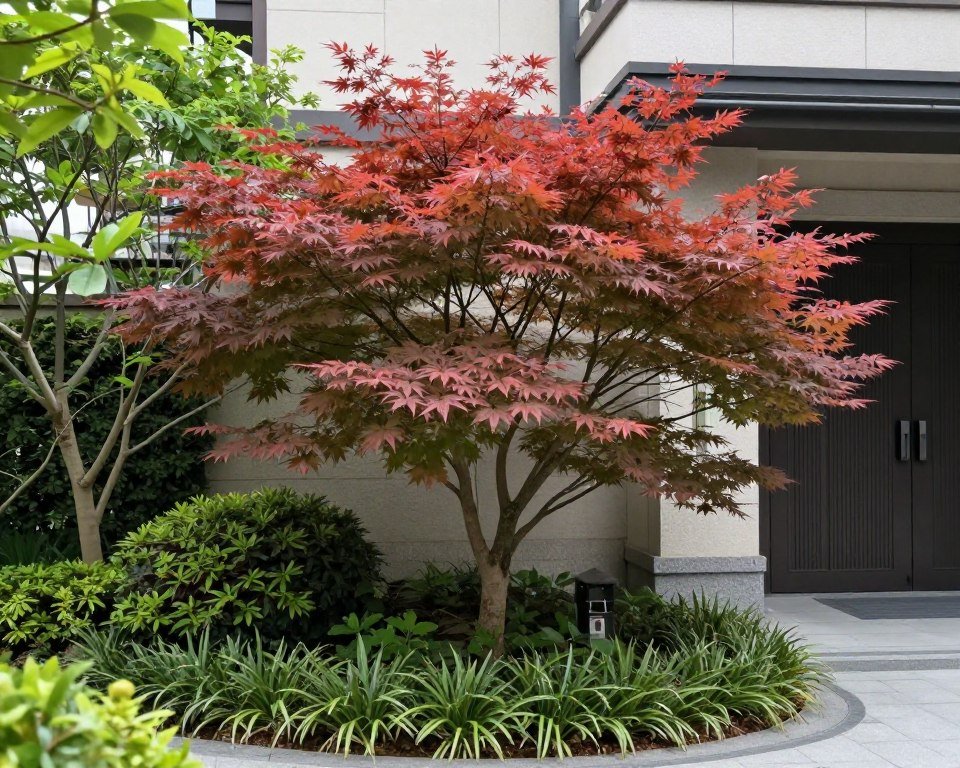
A carefully selected ornamental tree can serve as a stunning focal point in your front entry landscape. Japanese maples, flowering dogwoods, or dwarf crabapples offer beautiful form, seasonal color, and appropriate scale for front yards. Position these statement trees where they can be appreciated from both the street and your front windows.
Water Features
The gentle sound and reflective quality of water adds a sensory dimension to your front entry. Consider a small fountain, bubbling urn, or modest reflecting pool. These features create a sense of tranquility while serving as conversation pieces. Choose water features with appropriate scale—they should enhance rather than overwhelm your entrance.
Add the soothing element of water to your entry: Explore outdoor fountains designed for front yards.
Architectural Elements
Structures like arbors, trellises, or decorative gates create instant focal points while adding vertical interest to your front entry. These elements can frame views, support climbing plants, and create a sense of arrival. Choose designs and materials that complement your home’s architecture for a cohesive look.
Enhancing Your Entry with Container Gardens
Container gardens offer flexibility and instant impact for your front entry. They allow you to introduce color and texture in precise locations, even where planting in the ground isn’t possible. Containers also provide opportunities to change displays seasonally, keeping your entry fresh and interesting throughout the year.
Container Selection
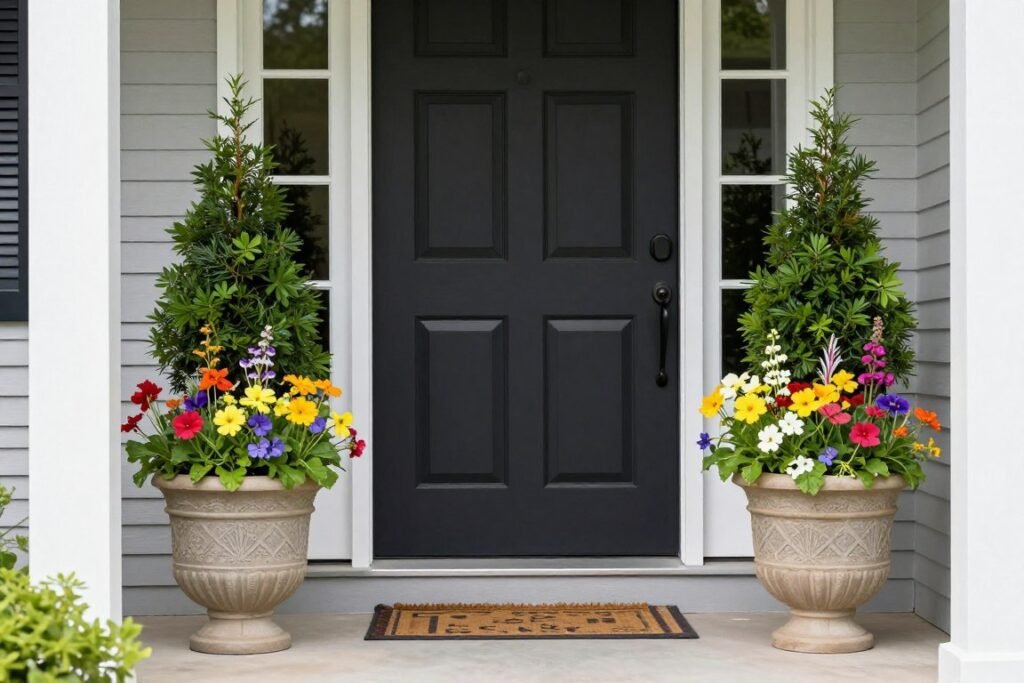
Choose containers that complement your home’s style and color palette. For traditional homes, consider classic urns or terracotta pots. Contemporary homes pair well with sleek, simple designs in concrete or metal. Ensure containers are appropriately sized—too small and they’ll look insignificant, too large and they may overwhelm the space.
Find the perfect containers for your entry: Shop outdoor planters designed for front entries.
Placement Strategies
Symmetrical arrangements of matching containers flanking your front door create a formal, balanced look. For a more relaxed approach, try grouping containers of varying heights and sizes to create an asymmetrical but still balanced composition. Place containers where they’ll have maximum impact—near the front door, alongside steps, or at pathway junctions.
Plant Selection for Containers
Follow the “thriller, filler, spiller” approach for dynamic container gardens. Include a tall, striking plant as the centerpiece (thriller), mid-height plants to fill the middle space (filler), and trailing plants to cascade over the edges (spiller). Consider seasonal changes and choose plants with similar light and water requirements for each container.
Lighting Your Front Entry
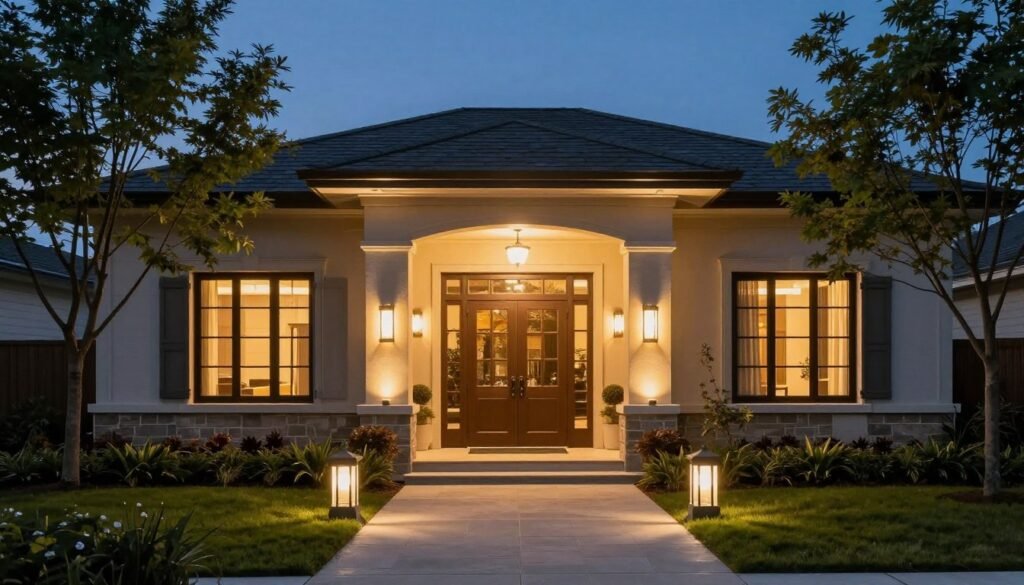
Thoughtful lighting transforms your front entry from merely functional to magical after dark. Beyond safety and security, well-designed lighting highlights architectural features, illuminates pathways, and creates a warm, welcoming atmosphere for evening arrivals.
Layered Lighting Approach
Create depth and dimension with multiple types of lighting. Combine ambient lighting (overall illumination), task lighting (for specific functions like navigating steps), and accent lighting (to highlight features). This layered approach creates a more sophisticated and nuanced nighttime landscape.
Highlighting Key Features
Use uplighting to showcase specimen trees, architectural details, or textured walls. Downlighting from trees or structures creates a moonlight effect on pathways and plantings. Backlighting silhouettes interesting plant forms against walls. These techniques add drama and interest to your nighttime landscape.
LED lighting offers long-lasting, energy-efficient illumination for your landscape. Solar options eliminate wiring needs but may provide less consistent light. Low-voltage systems strike a balance between performance and energy efficiency. Consider installing timers or smart controls to automate your lighting for convenience and energy savings.
Designing for Year-Round Appeal
A truly successful front entry landscape maintains its appeal throughout the changing seasons. With thoughtful planning, your entrance can offer something beautiful to enjoy year-round, from spring’s fresh blooms to winter’s structural elegance.
Spring Planning
Incorporate early-blooming bulbs like crocus, daffodils, and tulips to announce spring’s arrival. Flowering trees and shrubs like cherry, redbud, or forsythia create dramatic seasonal displays. Plant these where they can be appreciated from both inside and outside your home.
Summer Interest
Summer brings abundant growth and color opportunities. Include long-blooming perennials like coneflowers, salvias, and daylilies for reliable color. Ornamental grasses reach their peak in late summer, adding movement and texture. Consider heat tolerance when selecting summer plants, especially for south-facing entries.
Plan for autumn’s spectacular display with plants selected for fall foliage. Burning bush, oakleaf hydrangea, and Japanese maples offer reliable fall color. Late-season perennials like asters and autumn sedums extend the flowering season. Consider adding ornamental berries for additional fall and winter interest.
Winter Structure
Winter reveals the bones of your landscape, making structural elements especially important. Evergreens provide consistent color, while deciduous plants with interesting branching patterns create winter beauty. Consider plants with colorful bark, like red-twig dogwood, or those that hold seed heads for winter interest and wildlife value.
Front Entry Landscaping for Small Spaces
Limited space doesn’t mean limited possibilities. Small front entries can be transformed into charming, welcoming spaces with strategic design choices that maximize impact while respecting spatial constraints.
Vertical Thinking
When horizontal space is limited, look upward. Utilize vertical elements like trellises, wall planters, or climbing plants to add greenery without consuming precious ground space. Espalier fruit trees or climbing roses against walls create visual interest while maintaining an open feel.
Scale-Appropriate Selections
Choose plants and features sized appropriately for small spaces. Dwarf varieties of trees and shrubs deliver character without overwhelming limited areas. Consider narrow, columnar plants for areas where width is restricted but height is available.
Find perfect plants for compact spaces: Shop dwarf shrubs ideal for small front entries.
Multi-Functional Elements
In small spaces, each element should serve multiple purposes. A decorative wall might provide seating, a raised planter could define space boundaries, and carefully selected plants might offer fragrance, color, and wildlife value simultaneously. This layered approach creates richness without clutter.
Creating a Low-Maintenance Front Entry
A beautiful front entry doesn’t have to demand constant attention. With thoughtful planning and smart plant selection, you can create an impressive landscape that looks great with minimal maintenance requirements.
Plant Selection for Easy Care
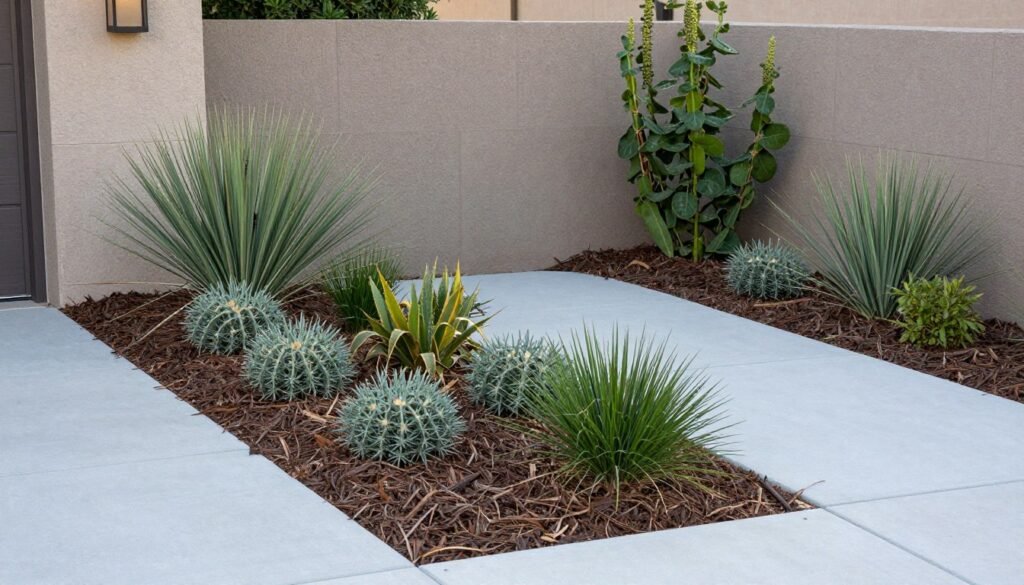
Choose native and adapted plants that thrive in your local conditions without extensive intervention. These plants typically require less water, fertilizer, and pest management once established. Group plants with similar needs together to streamline maintenance tasks and prevent over or under-tending certain areas.
Mulching Strategies
Apply a 2-3 inch layer of quality mulch to suppress weeds, retain moisture, and moderate soil temperature. Organic mulches like shredded bark or compost improve soil as they break down. Leave a small mulch-free zone around plant stems and tree trunks to prevent rot and pest issues.
Simplify maintenance with quality mulch: Explore mulch options for your landscape beds.
Efficient Irrigation
Install drip irrigation or soaker hoses to deliver water directly to plant roots, reducing waste and discouraging weed growth. Group plants with similar water needs together in hydrozones. Consider smart controllers that adjust watering based on weather conditions for maximum efficiency with minimal oversight.
Adding Personality with Finishing Touches
The final layer of your front entry landscaping involves those personal touches that make the space uniquely yours. These details may be small, but they contribute significantly to the overall impression and character of your entrance.
House Numbers and Mailboxes
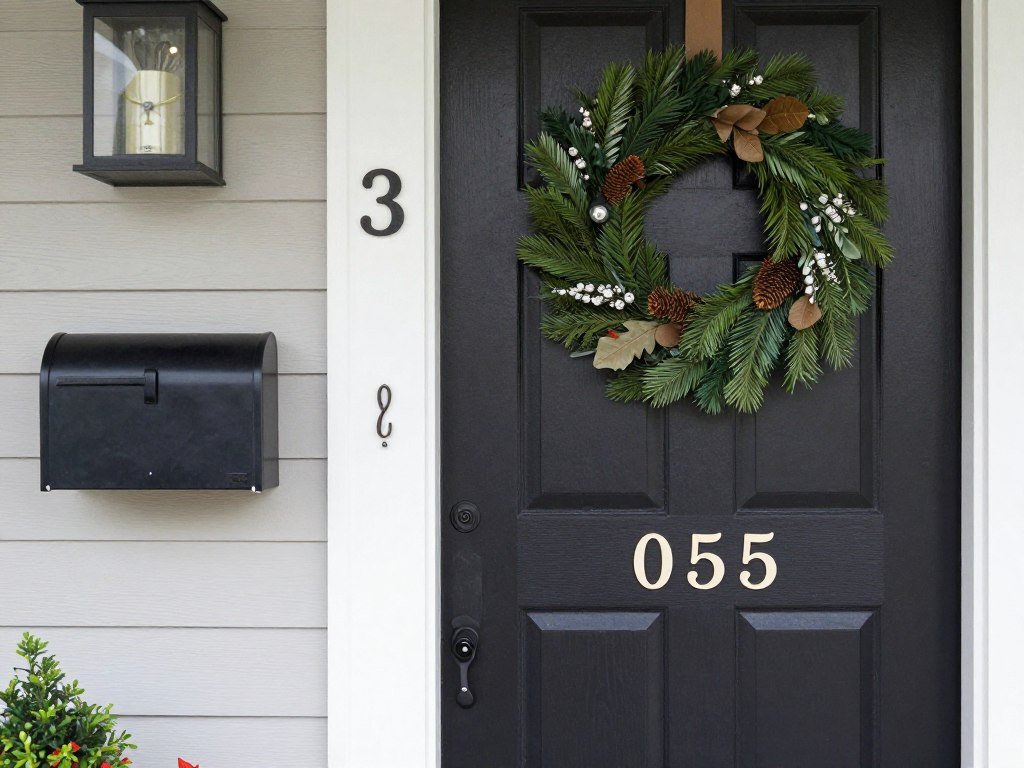
Upgrade utilitarian elements like house numbers and mailboxes to decorative versions that complement your home’s style. These functional necessities become design features when thoughtfully selected. Position numbers where they’re easily visible from the street, and consider lighting them for nighttime visibility.
Your front door itself offers opportunities for seasonal expression. A fresh coat of paint in a welcoming color makes a dramatic difference. Seasonal wreaths or door hangings add personality and can be changed to reflect the time of year or upcoming holidays. Consider the door hardware as jewelry for your entrance—upgraded handles, knockers, and kick plates add polish.
Weather-Resistant Art
Garden sculptures, weather-resistant wall art, or decorative flags add personality to your landscape. Choose pieces that resonate with your aesthetic and complement the scale of your space. Position art where it can be appreciated but won’t impede movement or compete with your home’s architecture.
Your front entry is more than just the path to your door—it’s an expression of welcome, a reflection of your style, and an introduction to your home. By thoughtfully considering each element from pathways and plantings to lighting and personal touches, you can create an entrance that delights you every time you come home and warmly welcomes everyone who visits.
Remember that great landscapes evolve over time. Start with a solid plan addressing the key elements we’ve discussed, but allow room for your front entry to grow and change as you discover what works best for your space and lifestyle. The most successful landscapes are those that balance beauty with functionality while authentically reflecting the people who call the house home.
Ready to Transform Your Front Entry?
Start your front entry landscaping project with quality materials that will bring your vision to life. From plants to pathway materials, lighting to decorative accents, the right elements make all the difference.