Your front yard creates the first impression of your home, setting the tone for what lies beyond your front door. Whether you have a sprawling lawn or a compact urban space, thoughtful front of house landscaping can dramatically enhance your property’s curb appeal and create a welcoming atmosphere for both residents and visitors. This guide explores essential principles, inspiring styles, and practical tips to help you create a front yard that beautifully complements your home while reflecting your personal style.
This Website contains affiliate links. That means I may earn a small commission if you purchase through my links, at no extra cost to you.
Core Principles of Front Yard Landscaping
A well-balanced front yard creates visual harmony through thoughtful placement of elements
Balance and Proportion
Creating visual harmony in your front yard starts with proper balance. Consider the size and scale of your home when selecting plants and hardscape elements. For larger homes, substantial trees and wider pathways maintain proportion, while smaller properties benefit from more delicate plantings and narrower walkways. Aim for a mix of heights, with taller elements toward the back and sides, gradually stepping down to lower plants near walkways and the street.
Creating Focal Points
Every compelling landscape needs a focal point that draws the eye. In front yard design, this might be an ornamental tree, a decorative boulder, a water feature, or even your front door enhanced with container plantings. Position your focal point where it’s visible from multiple angles, including from the street and inside your home. Remember that less is more—too many competing focal points can create visual confusion.
Ready to create your perfect focal point?
Explore a variety of ornamental trees that make stunning centerpieces for any front yard landscape.
Related Posts:






Year-Round Interest
The most successful front yard landscapes look beautiful in every season. Achieve this by incorporating a mix of deciduous and evergreen plants, choosing specimens with interesting bark or structure for winter appeal, and selecting perennials with varied blooming periods. Consider how your landscape will appear during each season and plan accordingly to ensure there’s always something visually engaging throughout the year.
Front Yard Landscaping Styles
Classic Traditional
Traditional front yard landscaping emphasizes symmetry and formal arrangements. Characterized by manicured hedges, boxwood borders, and geometric patterns, this timeless style complements colonial, Tudor, and Victorian architecture. Key elements include centered walkways, paired plantings on either side of the entrance, and carefully shaped shrubs. This style conveys elegance and attention to detail while providing a structured framework that looks polished year-round.
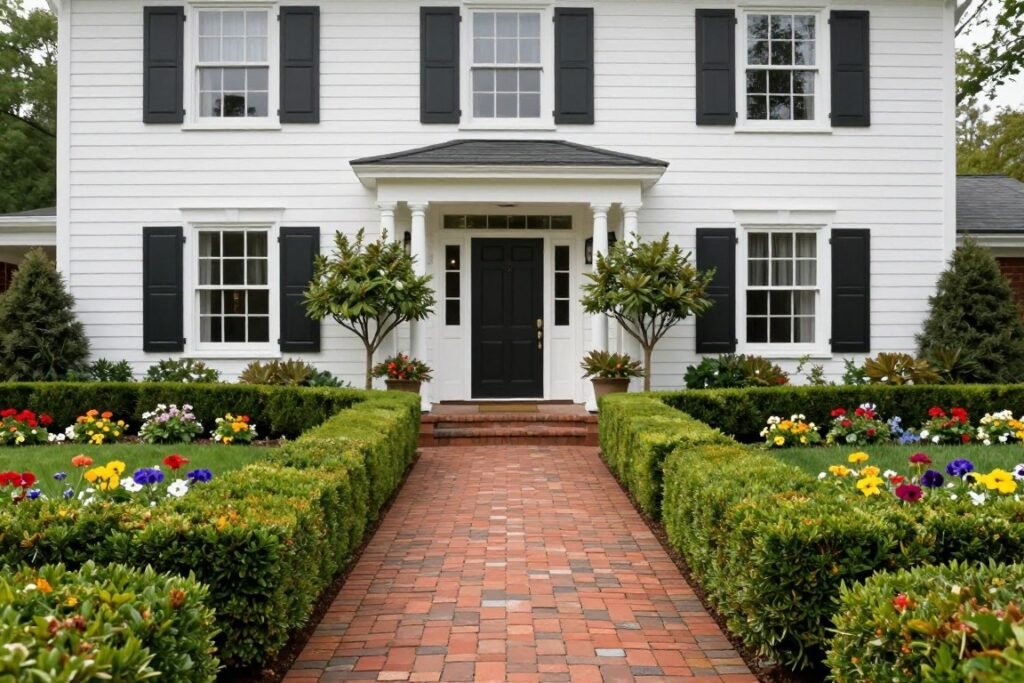
Traditional landscaping emphasizes symmetry and formal arrangements
Cottage Garden Charm
For a more relaxed and romantic approach, cottage-style front yards blend colorful flowers, textural plants, and whimsical elements. This style features abundant blooms, climbing plants, and an artfully casual arrangement that appears effortless despite careful planning. Curved pathways, picket fences, and vintage accessories enhance the charm. Cottage gardens work beautifully with craftsman, bungalow, and farmhouse architectural styles.
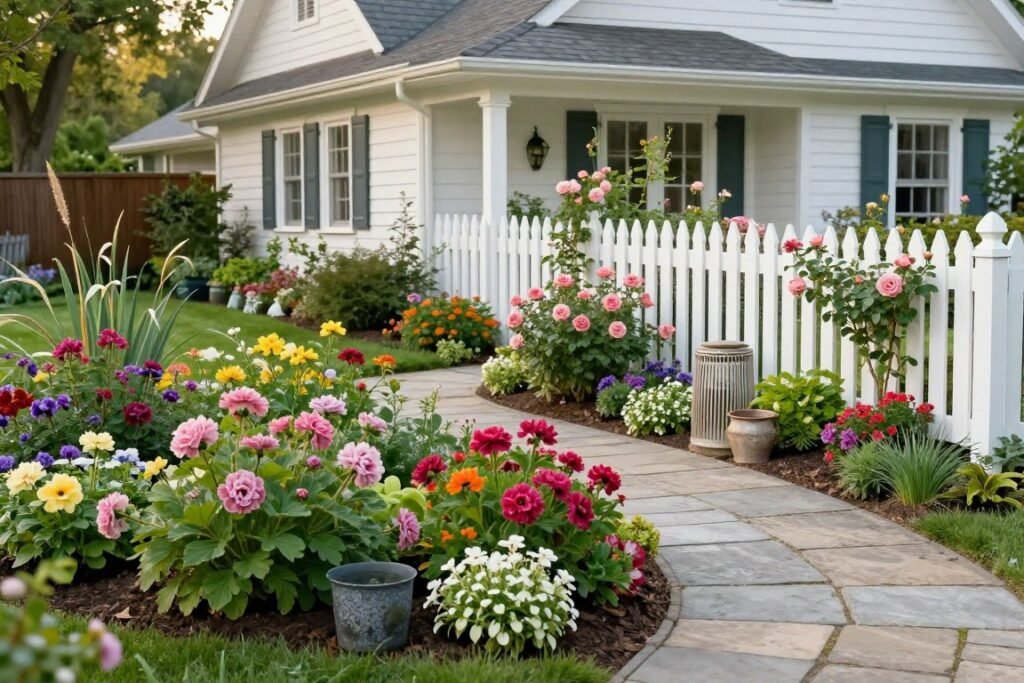
Cottage gardens create a relaxed, flower-filled approach to front yard landscaping
Modern Minimalist
Contemporary homes benefit from clean-lined, minimalist landscaping that emphasizes geometric forms and architectural plants. This style features limited plant varieties used in bold groupings, substantial hardscaping with sleek materials, and carefully selected specimen plants as sculptural elements. The color palette typically remains restrained, focusing on varying shades of green with occasional bold accents. Modern landscapes prioritize form and texture over abundant flowers.
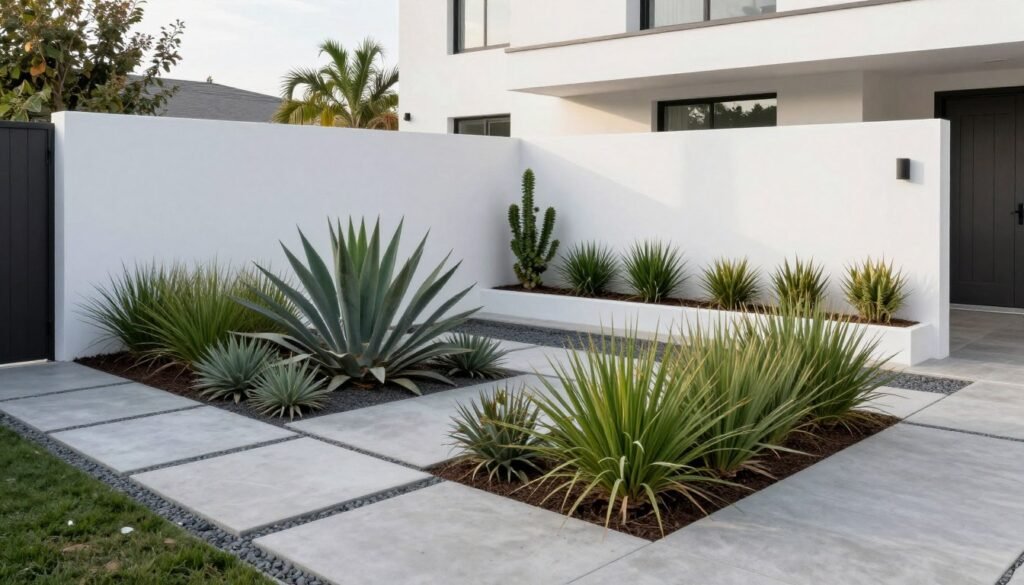
Modern landscapes emphasize clean lines and architectural plant forms
Drought-Tolerant Xeriscape
Water-wise xeriscaping has evolved from purely functional to highly aesthetic. This approach combines drought-resistant plants, efficient irrigation, and permeable hardscaping to create beautiful, sustainable front yards. Ornamental grasses, succulents, and native plants arranged in naturalistic groupings form the foundation, while gravel, decomposed granite, and stone elements add texture. This style works particularly well in arid regions but can be adapted for any climate using locally appropriate plant selections.
Create a water-wise landscape
Find everything you need to design a beautiful drought-tolerant front yard that saves water and maintenance time.
Essential Elements for Front of House Landscaping
Welcoming Pathways and Entryways
Your front walkway does more than provide access—it guides the visitor experience and frames your home’s entrance. Consider width (at least 4 feet for comfortable passage), material (which should complement your home’s architecture), and layout (straight paths feel formal, while curved ones create a more relaxed journey). Enhance the entry point with container plantings, decorative lighting, or architectural elements that draw attention to your front door.
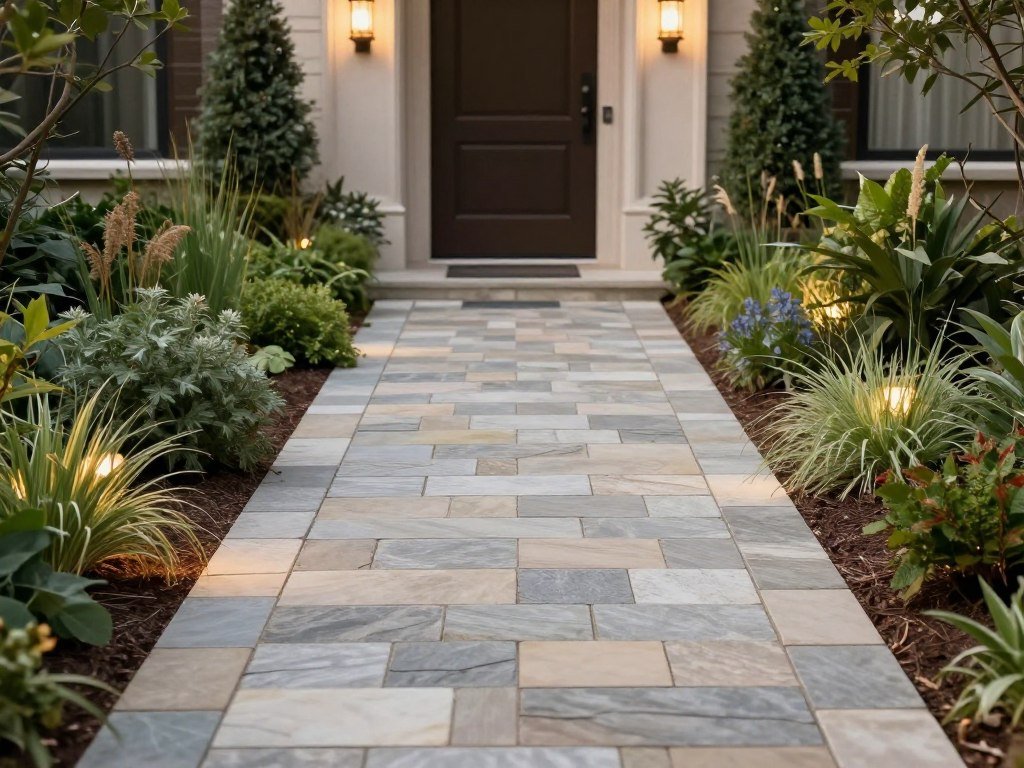
A well-designed pathway guides visitors while enhancing your landscape’s visual appeal
Foundation Plantings That Enhance Architecture
Foundation plantings serve to soften the transition between your home and the landscape while highlighting architectural features. Layer plants with varying heights—taller shrubs at corners and between windows, medium-height plants along walls, and lower specimens near entrances. Choose at least 50% evergreens for year-round structure, then add deciduous shrubs and perennials for seasonal interest. Allow adequate space between plants and keep them at least 2-3 feet from the foundation to prevent moisture issues.
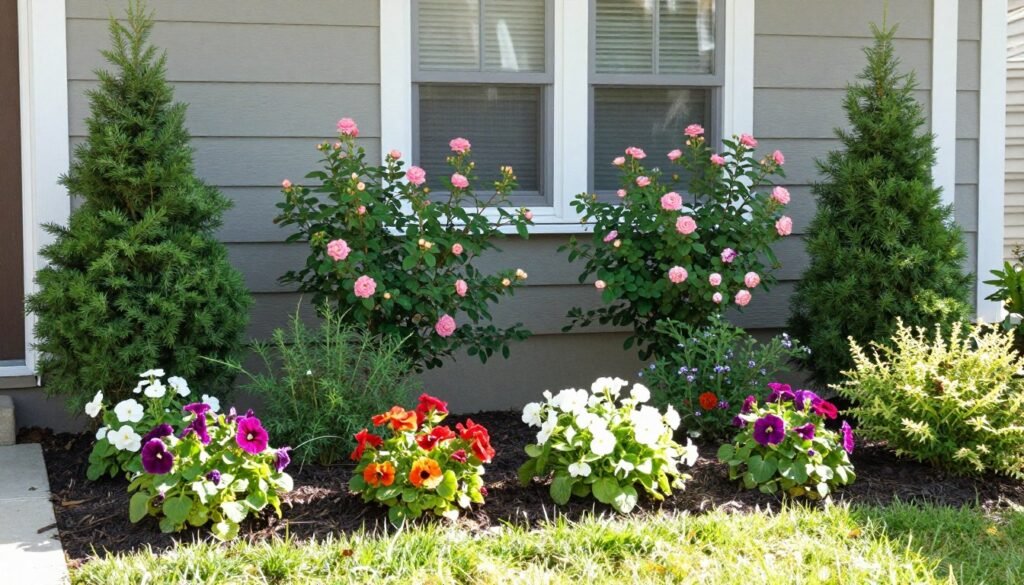
Thoughtful foundation plantings soften your home’s base while highlighting its architecture
Lawn Alternatives and Ground Covers
While traditional lawns remain popular, many homeowners are reducing turf areas in favor of more diverse, lower-maintenance alternatives. Consider replacing portions of your lawn with ground covers like creeping thyme, sedum, or clover; ornamental grasses that provide movement and texture; or expanded planting beds that require less water and mowing. For areas that remain as lawn, choose grass varieties suited to your climate and light conditions to minimize care requirements.
Ready to reduce lawn maintenance?
Discover beautiful ground covers that require less water and mowing than traditional grass.
Strategic Outdoor Lighting
Thoughtful lighting extends your landscape’s beauty into the evening hours while improving safety and security. Layer different lighting types: path lights to guide movement, uplights to highlight trees and architectural features, downlights to illuminate planting beds, and accent lighting for focal points. Solar options offer easy installation, while low-voltage systems provide more consistent illumination. Position lights to avoid glare and focus on creating gentle pools of light rather than harsh, uniform brightness.
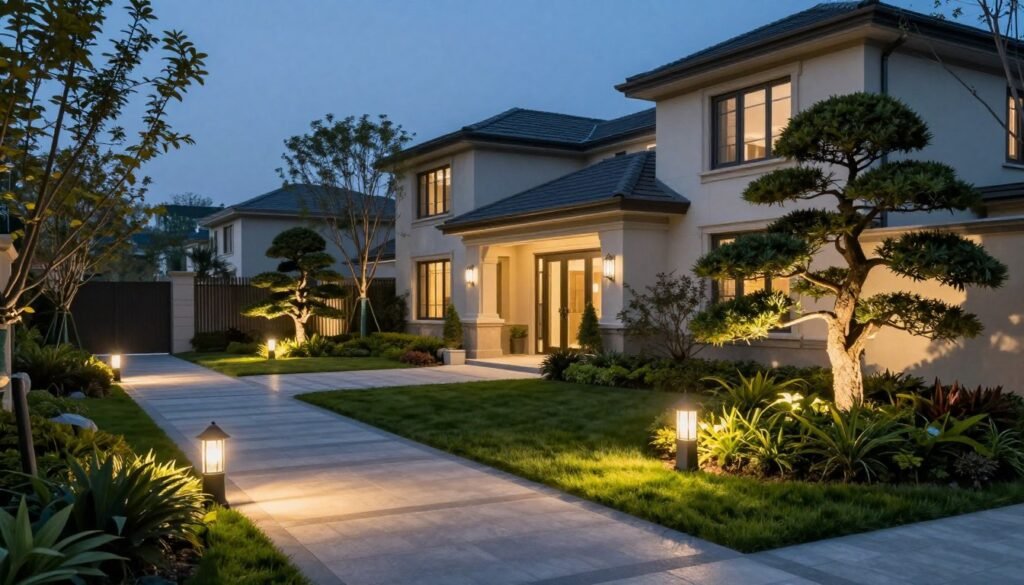
Strategic lighting enhances safety while showcasing your landscape’s best features after dark
Selecting the Right Plants for Front of House Landscaping
Trees as Anchors
A well-placed tree creates structure and permanence in your front yard landscape. For smaller properties, consider ornamental varieties like Japanese maple, dogwood, or redbud that won’t overwhelm the space. Larger yards can accommodate shade trees such as oak, maple, or elm positioned to provide afternoon shade for the home. When selecting trees, consider mature size, seasonal features (flowers, fall color, interesting bark), and maintenance requirements like leaf cleanup and pruning needs.
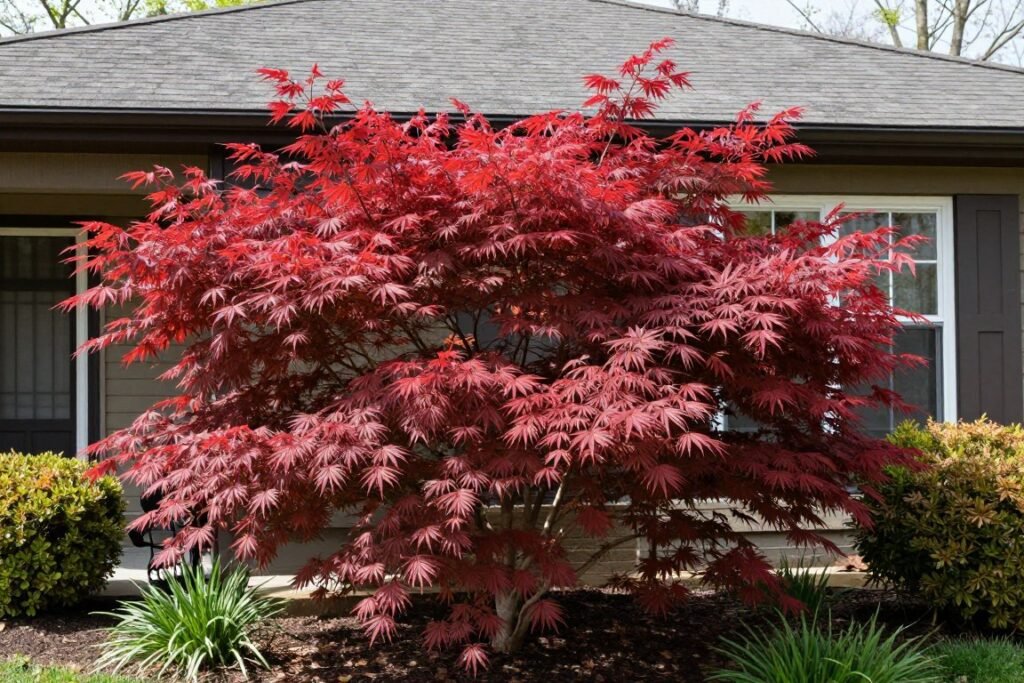
Ornamental trees like Japanese maple create beautiful focal points in front yard landscapes
Shrubs for Structure and Screening
Shrubs form the backbone of most front yard plantings, providing year-round structure and visual weight. Evergreen varieties like boxwood, holly, and juniper maintain form throughout the seasons, while flowering shrubs such as hydrangea, viburnum, and spirea offer seasonal color. Use larger shrubs to frame views, define boundaries, or screen utilities, and smaller varieties to create transitions between trees and perennials. Group shrubs with similar water and light requirements for easier maintenance.
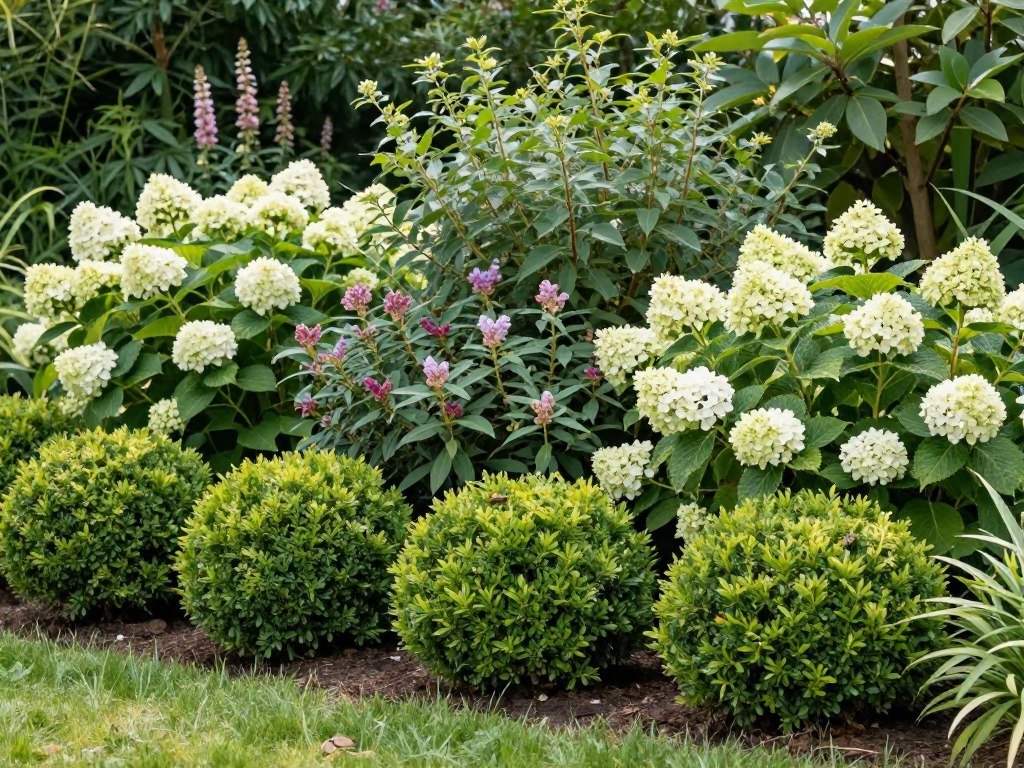
A thoughtful mix of evergreen and flowering shrubs provides year-round interest
Perennials and Seasonal Color
Perennials add dynamic seasonal interest to your front yard with changing flowers, foliage, and textures throughout the year. Choose varieties with staggered blooming periods to ensure continuous color, and include plants with attractive seed heads or winter structure. Place taller perennials toward the back of beds, mid-height varieties in the middle, and ground-hugging plants at the edges. Consider maintenance needs—some perennials require regular division or deadheading, while others need minimal care.
Add year-round color to your landscape
Discover low-maintenance perennials that provide beautiful blooms season after season.
Hardscaping Elements for Front Yards
Driveways and Parking Areas
Your driveway occupies significant visual space in your front yard, making material selection crucial. Options range from traditional asphalt and concrete to more decorative choices like pavers, stamped concrete, or gravel. Consider permeability—materials that allow water infiltration reduce runoff and benefit your landscape. Soften expansive driveways with border plantings, or create a more distinctive entrance with a different material for the final approach to your garage or parking area.
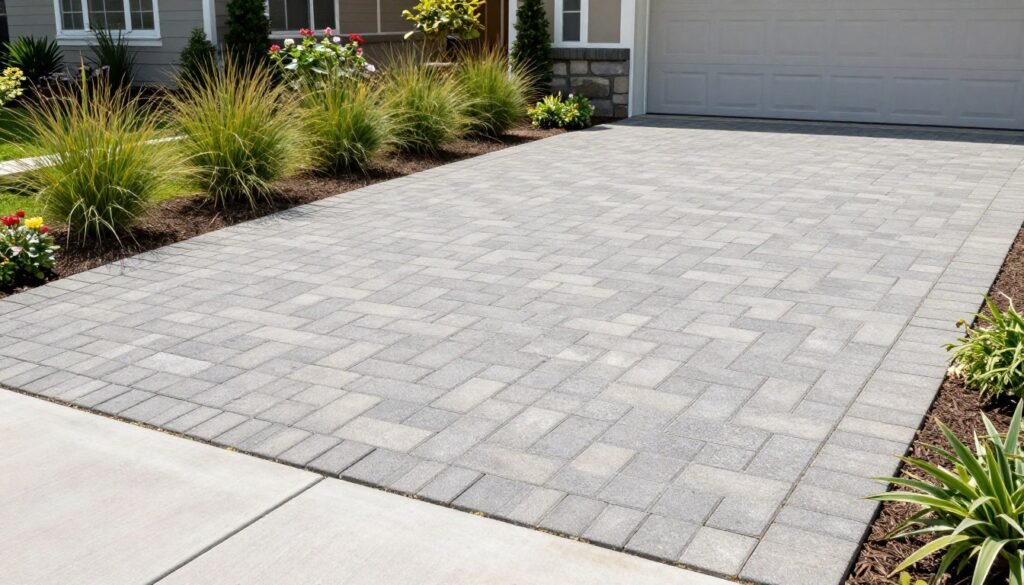
Decorative pavers create an attractive driveway while allowing water infiltration
Retaining Walls and Terraces
For sloped front yards, retaining walls and terraces create usable space while preventing erosion. Materials should complement your home’s architecture—natural stone for traditional homes, clean-lined block for contemporary styles. Incorporate planting pockets within walls for softening, and consider the wall height carefully—anything over 3 feet typically requires engineering and permits. Terraced designs with multiple lower walls often look more natural than a single tall structure.
Decorative Borders and Edging
Crisp edges between lawn, planting beds, and hardscape elements elevate your landscape’s appearance. Options include stone, brick, concrete, metal, or plastic edging, each offering different aesthetics and durability. Choose materials that complement other hardscape elements in your yard for cohesion. Well-defined borders not only look polished but also make maintenance easier by preventing grass from invading beds and containing mulch or ground covers.
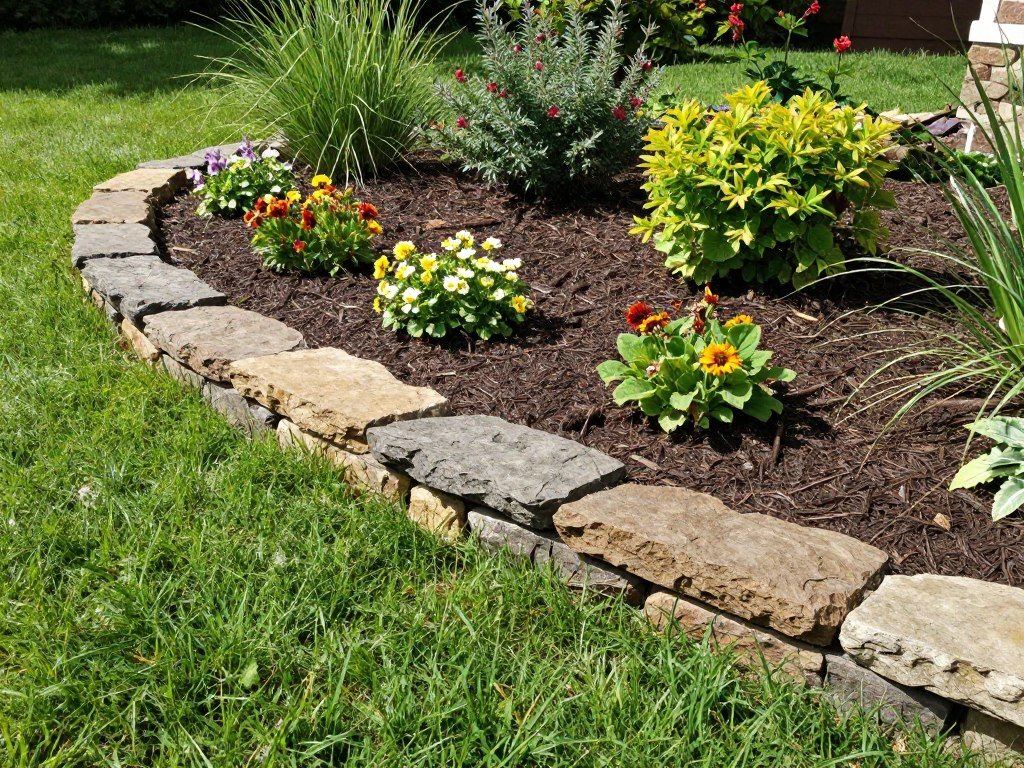
Decorative stone edging creates clean lines between planting beds and lawn areas
Decorative Accents for Front of House Landscaping
Mailboxes and House Numbers
Functional elements like mailboxes and house numbers offer opportunities to express style while improving navigation to your home. Choose designs that complement your architecture and landscaping theme—wrought iron for traditional homes, sleek metals for contemporary styles. Create a mini garden around your mailbox with low-maintenance perennials or groundcovers. Position house numbers where they’re clearly visible from the street, with contrasting colors for legibility.
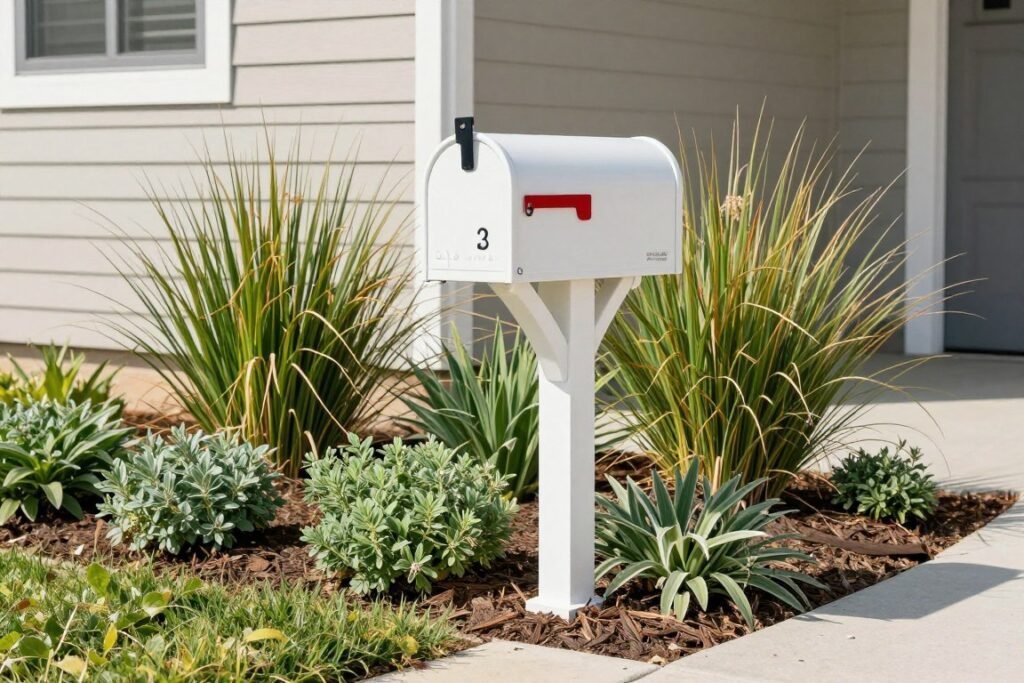
A thoughtfully designed mailbox area enhances curb appeal while providing practical function
Water Features
The sound and movement of water add sensory richness to front yard landscapes. Options range from simple bubbling fountains to more elaborate ponds or streams. For most front yards, self-contained features that recirculate water are most practical. Position water elements where they can be enjoyed from both inside and outside the home, and consider visibility from the street—a fountain near the entrance creates an inviting focal point for visitors.
Add the soothing sound of water
Discover easy-to-install fountains and water features that create instant ambiance in your front yard.
Garden Art and Sculptures
Thoughtfully selected garden art personalizes your landscape and creates year-round interest. Choose pieces that reflect your personality while complementing your home’s style—classical statuary for traditional gardens, abstract sculptures for contemporary spaces. Scale matters—select pieces proportionate to your yard size and position them where they create focal points without cluttering the landscape. Weather-resistant materials like stone, metal, or high-fired ceramics ensure longevity in outdoor conditions.

Garden art creates personality and year-round interest in your front landscape
Planning Your Front of House Landscaping Project
Assessing Your Site
Before purchasing plants or materials, thoroughly evaluate your site conditions. Document sun patterns throughout the day, noting full sun (6+ hours), partial sun (4-6 hours), and shaded areas. Test soil drainage by digging a 12-inch hole, filling with water, and observing how quickly it drains. Identify existing features to work around or enhance, such as mature trees or architectural elements. Consider views both from the street and from inside your home, as well as traffic patterns and functional needs.
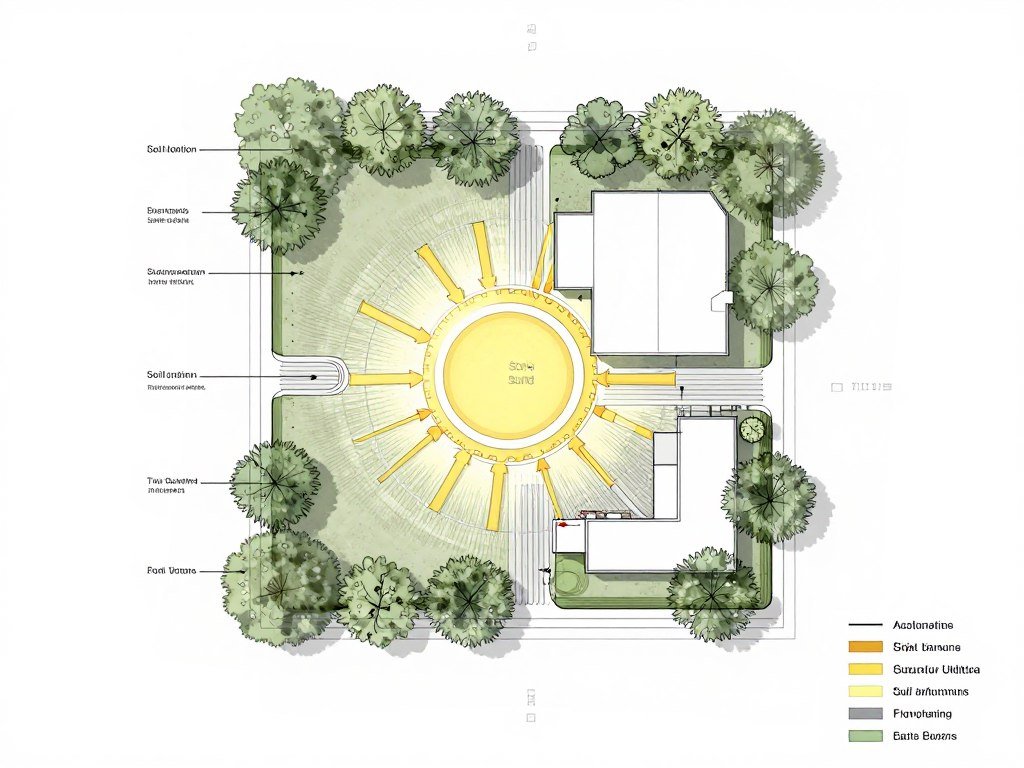
A thorough site analysis helps identify opportunities and constraints before you begin planting
Creating a Landscape Plan
Translate your site assessment into a basic plan that addresses both practical needs and aesthetic goals. Start with hardscape elements like driveways and walkways, then add trees and major shrubs as anchors. Fill in with smaller shrubs, perennials, and ground covers. Consider maintenance zones—grouping plants with similar water and care requirements. Even a simple sketch with plant locations and types will help prevent costly mistakes and ensure a cohesive design.
Phasing Implementation
Most front yard transformations benefit from phased implementation, allowing you to spread costs while ensuring each element is properly installed. Begin with major hardscape features and large trees that form the backbone of your design. Next, add foundation plantings and key focal points. Finally, incorporate perennials, ground covers, and decorative elements. This approach allows you to adjust the plan as you go and prevents overwhelming maintenance of newly installed plants.
Ready to start planning?
Find the essential tools you need to measure, plan, and implement your front yard landscape design.
Maintaining Your Front Yard Landscape
Seasonal Care Calendar
Establish a maintenance calendar that addresses key tasks for each season. Spring typically involves pruning, fertilizing, mulching, and planting new specimens. Summer focuses on watering, deadheading spent blooms, and monitoring for pests. Fall requires leaf cleanup, cutting back perennials, and preparing plants for winter. Winter is ideal for structural pruning of dormant trees and shrubs. Regular attention prevents small issues from becoming major problems and keeps your landscape looking its best year-round.
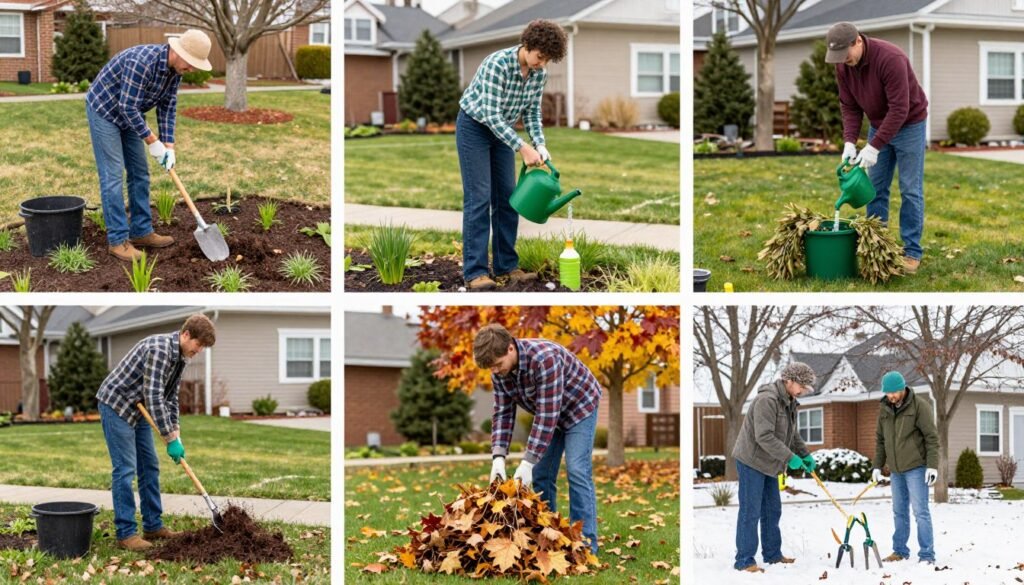
Regular seasonal maintenance keeps your front yard looking its best throughout the year
Water-Wise Practices
Efficient irrigation conserves resources while keeping plants healthy. Group plants with similar water needs, apply mulch to retain moisture, and water deeply but infrequently to encourage deep root growth. Consider drip irrigation or soaker hoses that deliver water directly to plant roots with minimal waste. For lawn areas, water in the early morning to reduce evaporation, and adjust irrigation schedules seasonally to account for rainfall and temperature changes.
Sustainable Approaches
Environmentally friendly practices benefit both your landscape and the broader ecosystem. Choose organic fertilizers and pest controls that won’t harm beneficial insects or contaminate waterways. Compost yard waste to create nutrient-rich soil amendments. Select native plants that support local wildlife and require fewer resources to thrive. Consider permeable hardscaping that allows water infiltration rather than contributing to runoff and erosion.
Make maintenance easier
Discover tools and products that help you maintain a beautiful front yard with less time and effort.
Creating Your Perfect Front of House Landscape
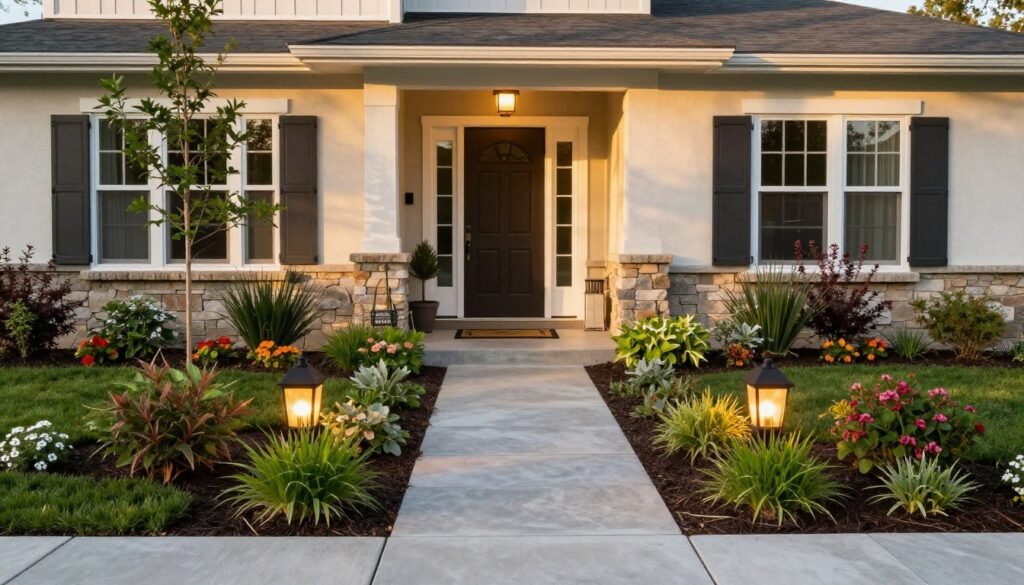
A thoughtfully designed front yard creates a welcoming impression while reflecting your personal style
Your front yard is more than just the space between your home and the street—it’s an opportunity to create a welcoming entrance, express your personal style, and enhance your daily experience of coming home. By applying the principles and ideas in this guide, you can transform your front of house landscaping into a beautiful, functional space that brings joy throughout the seasons.
Remember that great landscapes evolve over time. Start with a solid framework of hardscaping and key plantings, then allow your design to mature and develop as you discover what works best for your specific conditions and preferences. Whether you implement changes all at once or phase them in gradually, each improvement contributes to creating a front yard that beautifully welcomes you home.