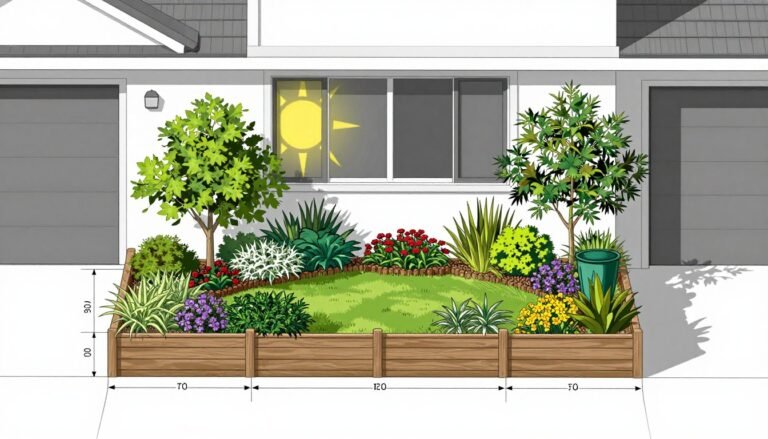
Looking to create a stunning outdoor space that requires minimal upkeep while adding natural beauty to your property? Landscaping with rocks offers the perfect solution for homeowners seeking both aesthetic appeal and practicality. From elegant river rock borders to dramatic boulder focal points, rock landscaping transforms ordinary yards into extraordinary outdoor retreats that look beautiful year-round—regardless of climate or season.
This Website contains affiliate links. That means I may earn a small commission if you purchase through my links, at no extra cost to you.
As a versatile and enduring landscaping material, rocks provide texture, dimension, and character that traditional landscaping often lacks. Whether you’re aiming to reduce water usage, minimize maintenance, or simply create a more visually interesting yard, this guide will walk you through everything you need to know about landscaping with rocks—from selecting the right materials to implementing creative designs that will make your outdoor space truly shine.
Benefits of Landscaping with Rocks
Before diving into specific rock types and design ideas, let’s explore why rock landscaping has become increasingly popular among homeowners and professional landscapers alike.
Low Maintenance Appeal
Unlike traditional grass lawns that require regular mowing, watering, and fertilizing, rock landscapes need minimal attention once installed. Rocks don’t need watering, trimming, or replacement, making them perfect for busy homeowners or those looking to reduce yard work.
A properly installed rock landscape can last for decades with only occasional cleaning or rearranging. This durability translates to significant time and cost savings over the years compared to traditional landscaping materials.
In an era of increasing water restrictions and environmental awareness, rock landscaping offers significant water conservation benefits. Rocks don’t require irrigation, and when properly installed with landscape fabric underneath, they help reduce evaporation from the soil below.
By replacing portions of your lawn with rock features, you can dramatically reduce your outdoor water usage while still maintaining a beautiful yard. This makes rock landscaping particularly valuable in drought-prone regions or areas with water restrictions.
Year-Round Visual Appeal
Unlike seasonal plants that may look sparse or dormant during certain times of the year, rocks maintain their beauty regardless of season or weather conditions. Their natural colors and textures provide consistent visual interest throughout the year.
Even in winter when most plants have died back, a thoughtfully designed rock landscape continues to offer structure, texture, and visual appeal to your outdoor space. This year-round attractiveness makes rock landscaping an excellent investment in your property’s curb appeal.
Ready to Start Your Rock Landscaping Project?
Find all the landscaping rocks and supplies you need to create your perfect outdoor space.
The type of rock you choose can dramatically impact both the aesthetic and functionality of your landscape design. Each rock type offers unique characteristics in terms of size, shape, color, and practical applications.
River Rocks
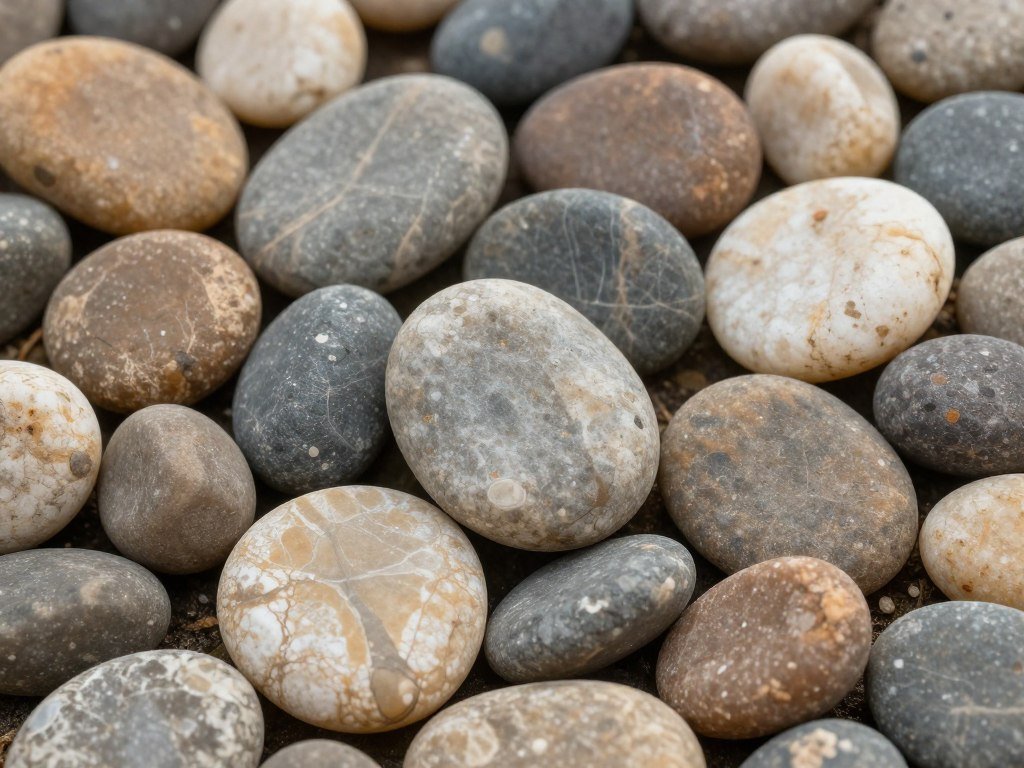
Smooth, rounded stones shaped by flowing water over time, river rocks come in various sizes and colors. Their polished appearance adds a tranquil, water-inspired element to any landscape.
Best uses: Water features, dry creek beds, pathways, and garden borders. Their smooth texture makes them safe for areas where children play.
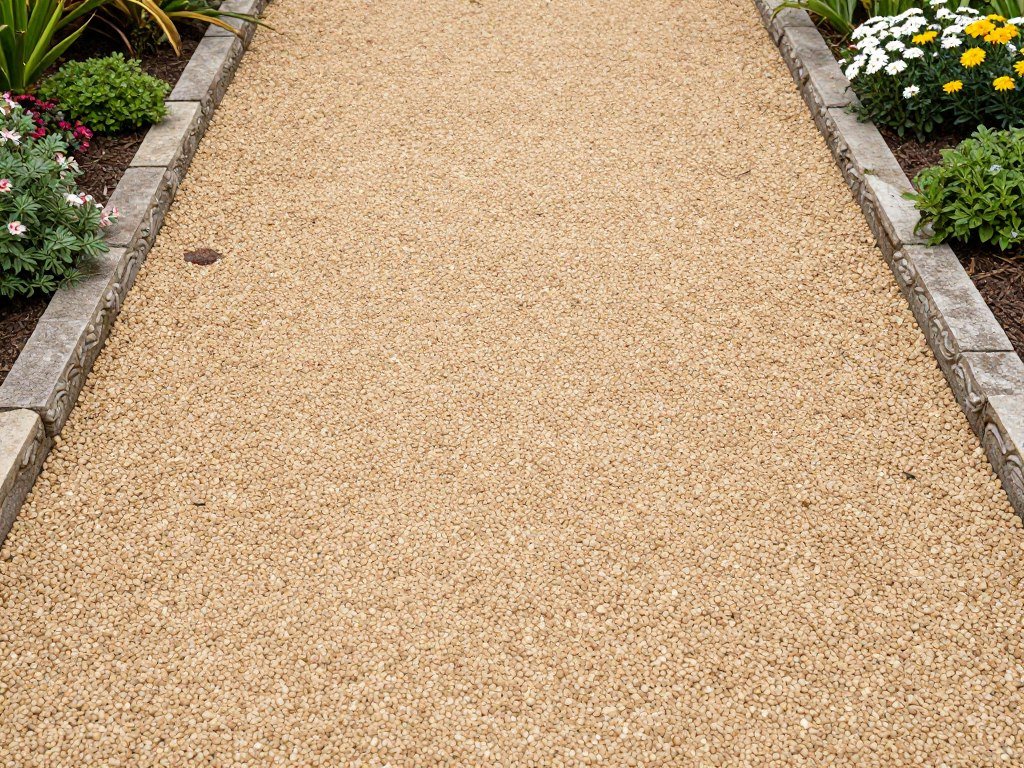
Small, rounded stones typically 1/8″ to 3/8″ in size, pea gravel comes in various earth tones and provides excellent drainage. Its smaller size makes it comfortable to walk on and easy to work with.
Best uses: Pathways, driveways, patios, and as filler between larger stones. Creates a pleasing crunching sound underfoot.
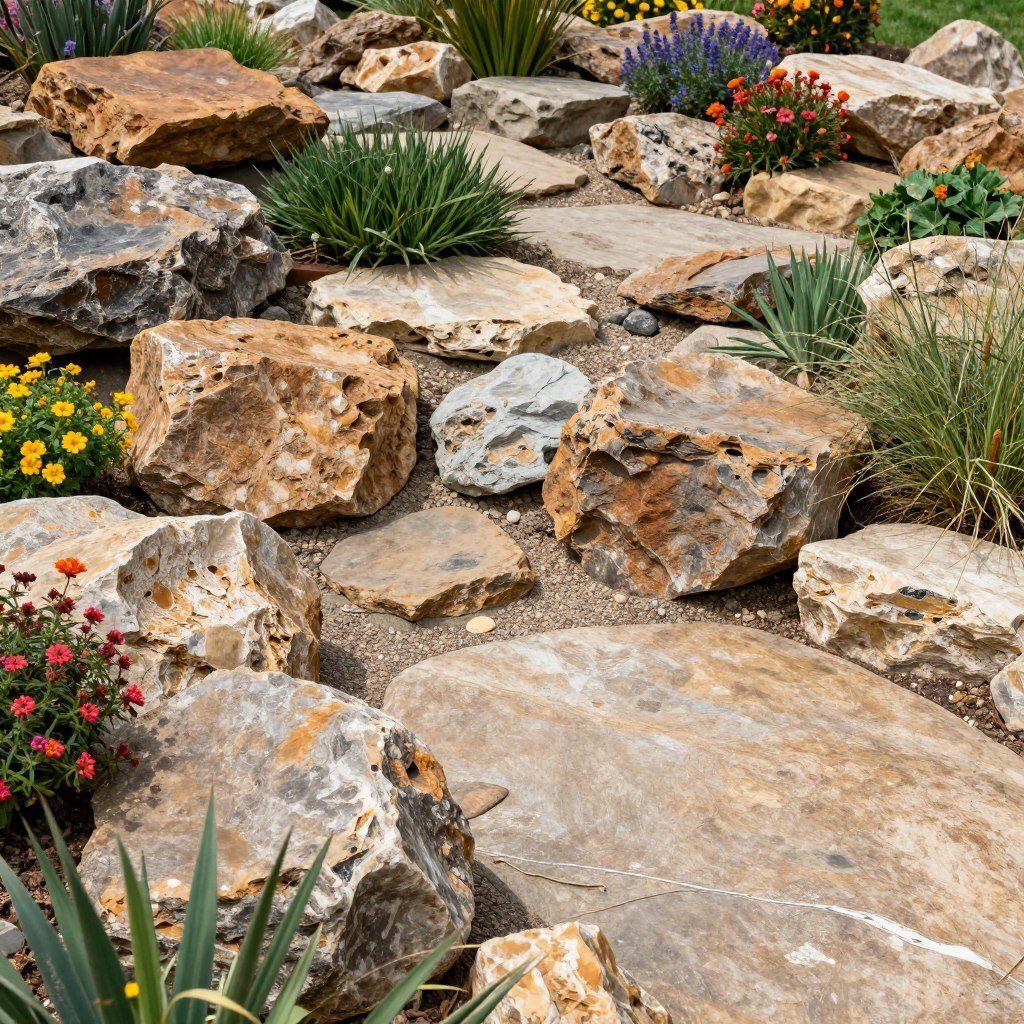
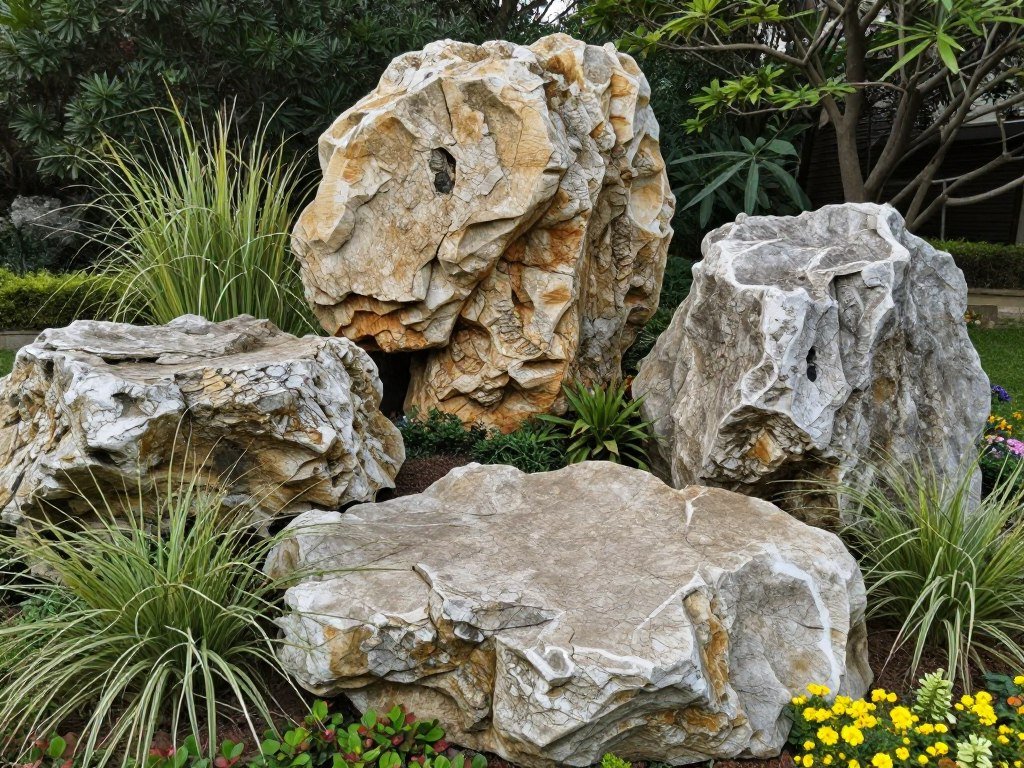
Large, impressive rocks that serve as statement pieces in your landscape. Boulders create instant focal points and add a sense of permanence and natural beauty to any outdoor space.
Best uses: Focal points, retaining walls, creating elevation changes, and defining different areas of your landscape.
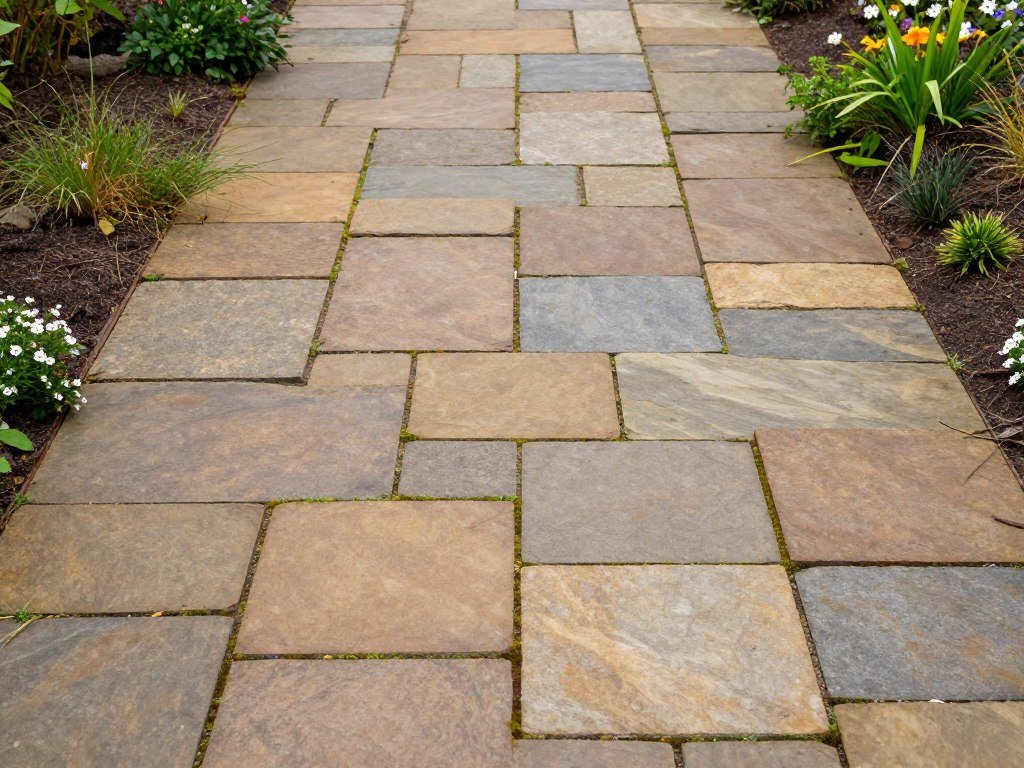
Flat, irregularly shaped stones that create a natural-looking surface. Available in various colors including blues, reds, and tans, flagstone adds elegant, earthy charm to landscapes.
Best uses: Pathways, stepping stones, patios, and pond edges. Can be set in mortar or arranged with gaps for plants to grow between.
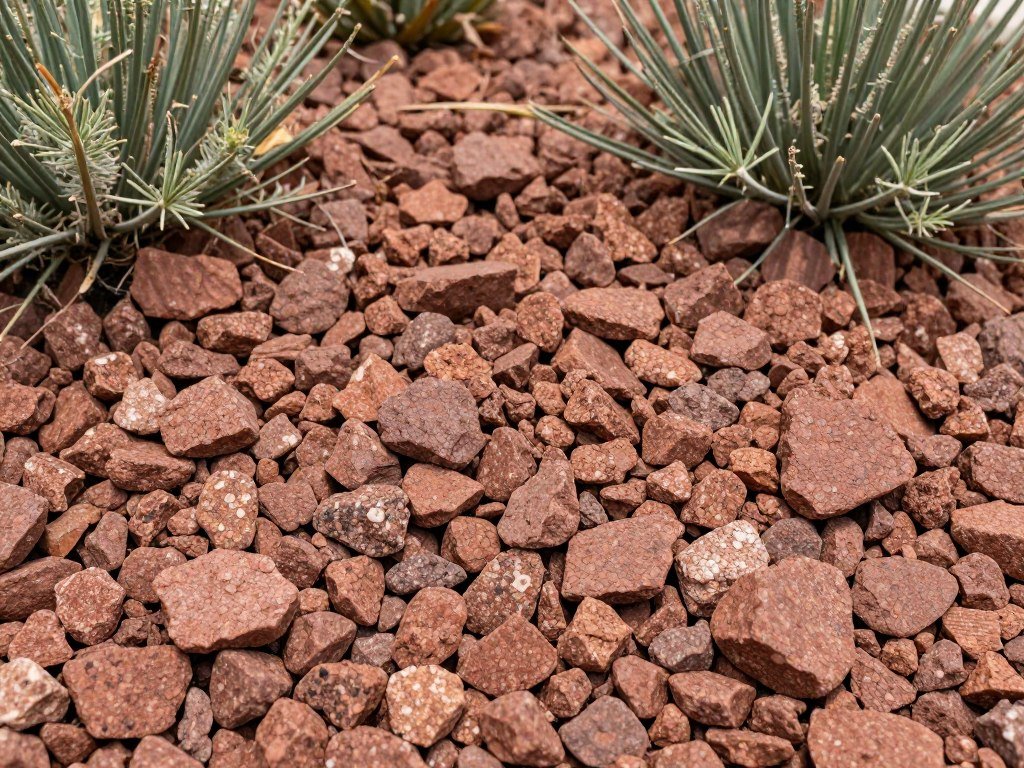
Angular, small stones with a natural look that compacts well, providing a stable surface. Available in various colors, crushed granite offers excellent drainage and a distinctive texture.
Best uses: Pathways, driveways, and around drought-tolerant plants. Stays in place better than rounded stones on slopes.
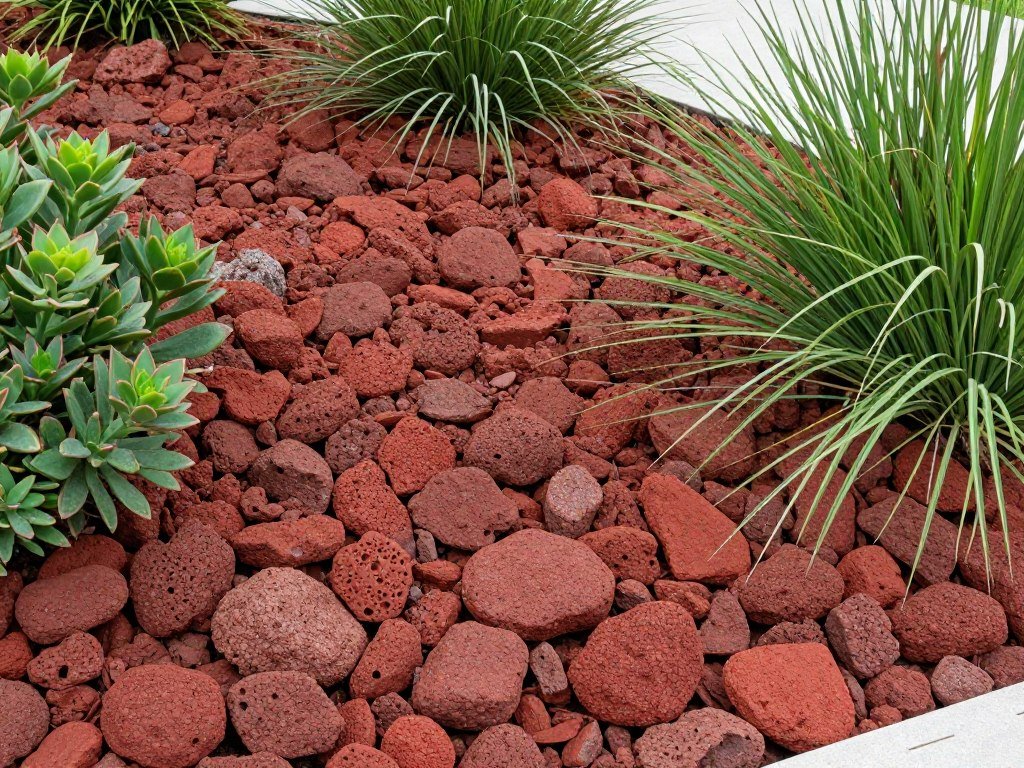
Lightweight, porous volcanic rock typically in red or black colors. Its unique texture and vibrant color options make it a distinctive choice for contemporary landscapes.
Best uses: Garden beds, around fire features, and in areas where weight is a concern. Excellent for drainage and weed suppression.
Now that you’re familiar with the different types of landscaping rocks available, let’s explore some creative ways to incorporate them into your outdoor space. These ideas range from simple weekend projects to more elaborate landscape transformations.
Dry Creek Beds
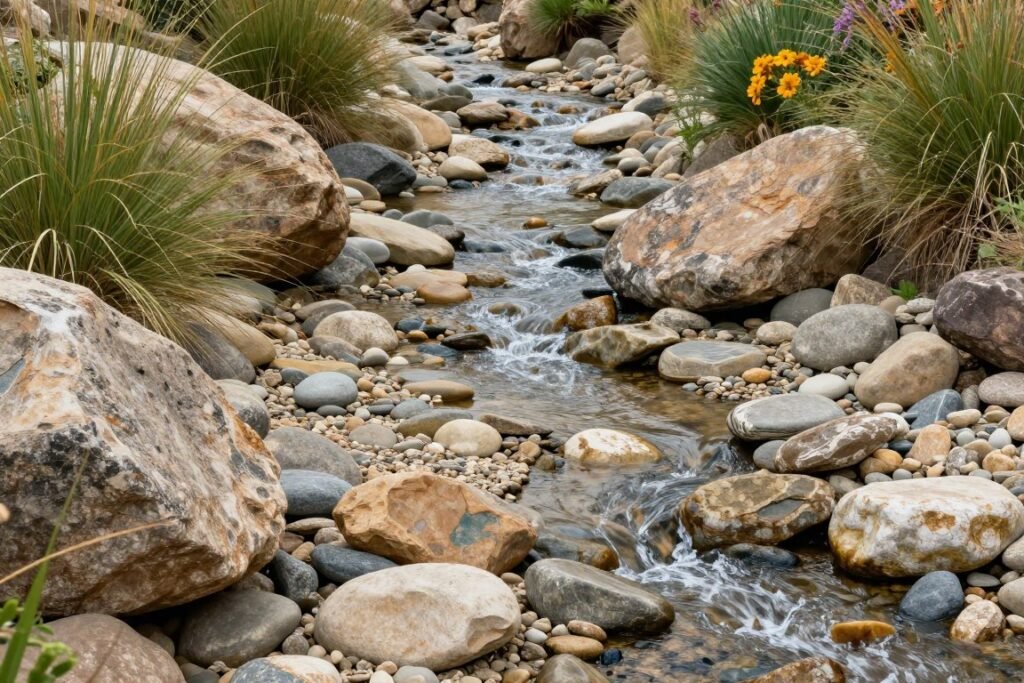
A dry creek bed is both decorative and functional, mimicking a natural waterway while helping with drainage issues. Using various sizes of river rocks and boulders, you can create a winding creek bed that looks like it was formed naturally over time.
For the most natural appearance, use larger stones along the edges and smaller ones in the middle. Add a few strategic boulders and incorporate native plants along the banks to enhance the natural look. Even in dry weather, a well-designed creek bed adds visual interest and texture to your landscape.
Create Your Own Dry Creek Bed
Find all the supplies you need to build a beautiful dry creek bed in your yard.
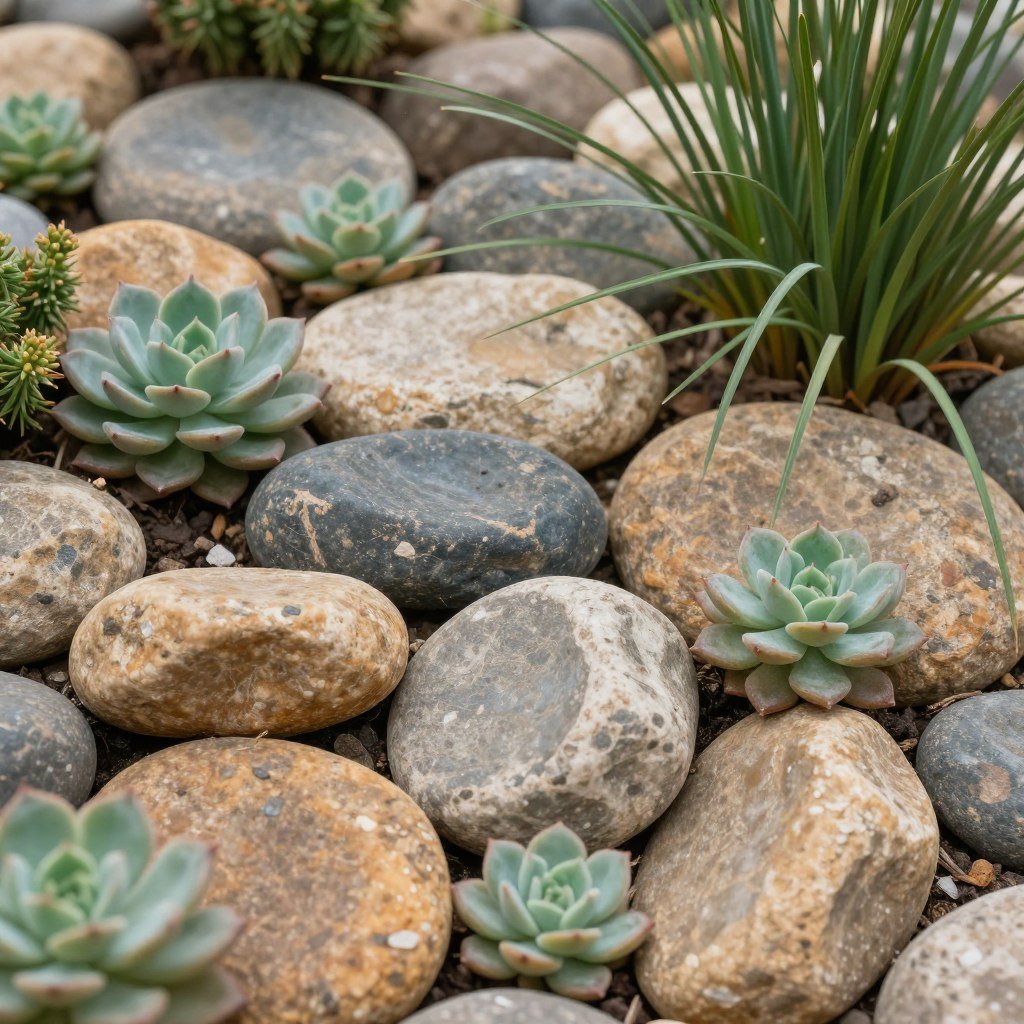
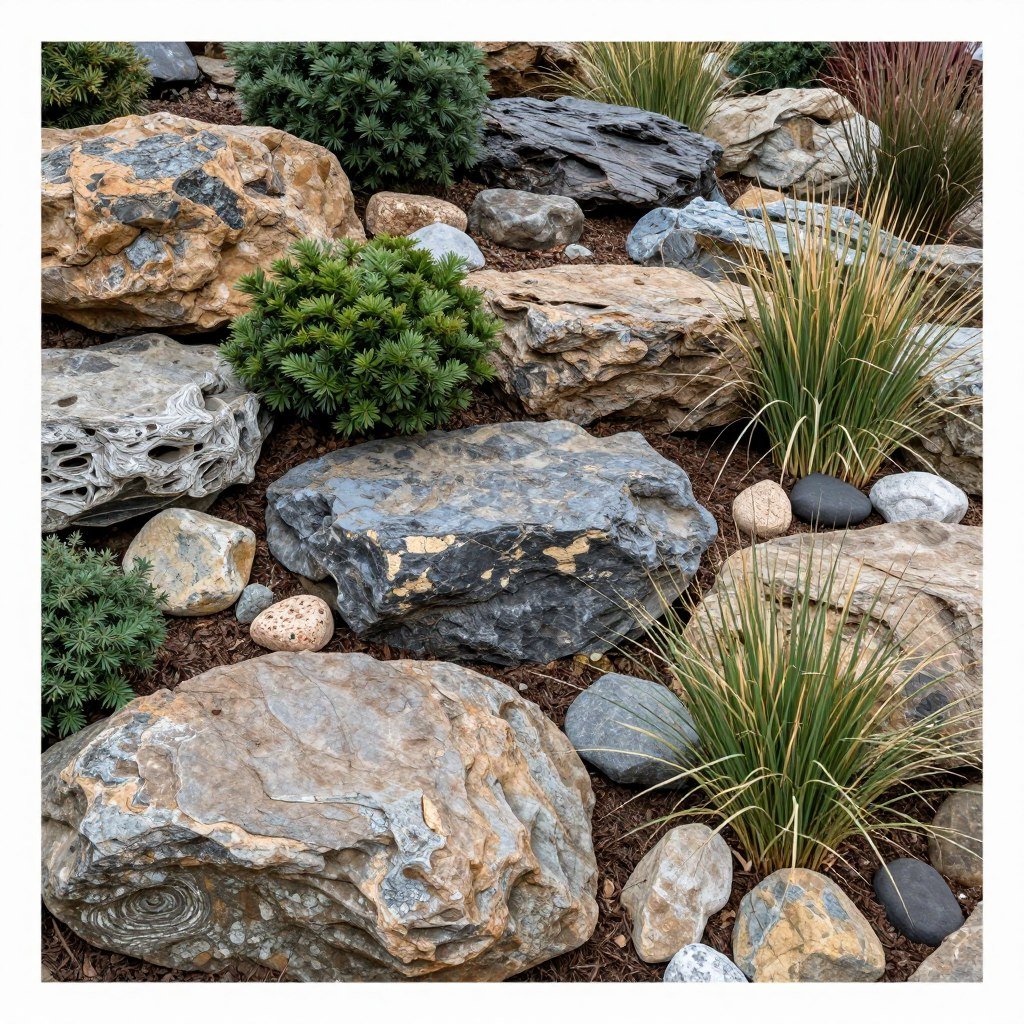
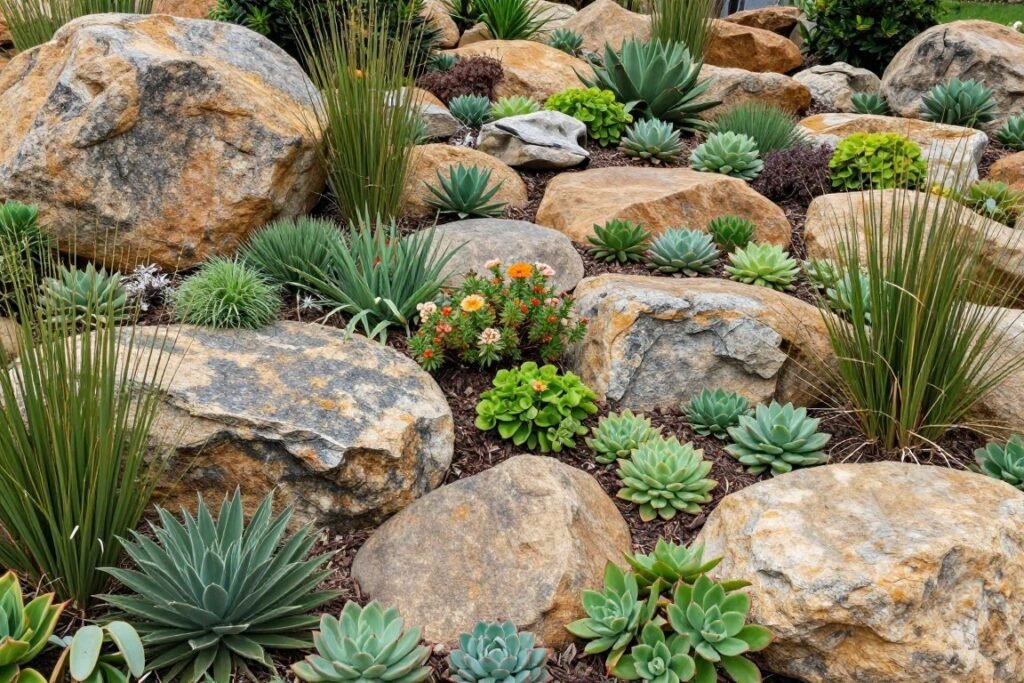
Rock gardens combine stones of various sizes with carefully selected plants to create a naturalistic, low-maintenance landscape feature. Traditionally inspired by alpine environments, modern rock gardens can adapt to almost any climate when designed with locally appropriate plants.
The key to a successful rock garden is creating proper drainage and selecting plants that thrive in rocky conditions. Succulents, small conifers, and drought-resistant perennials typically work well. Arrange rocks to create microclimates—sunny spots, shaded areas, and protected nooks—to support different plant varieties.
Stone Pathways
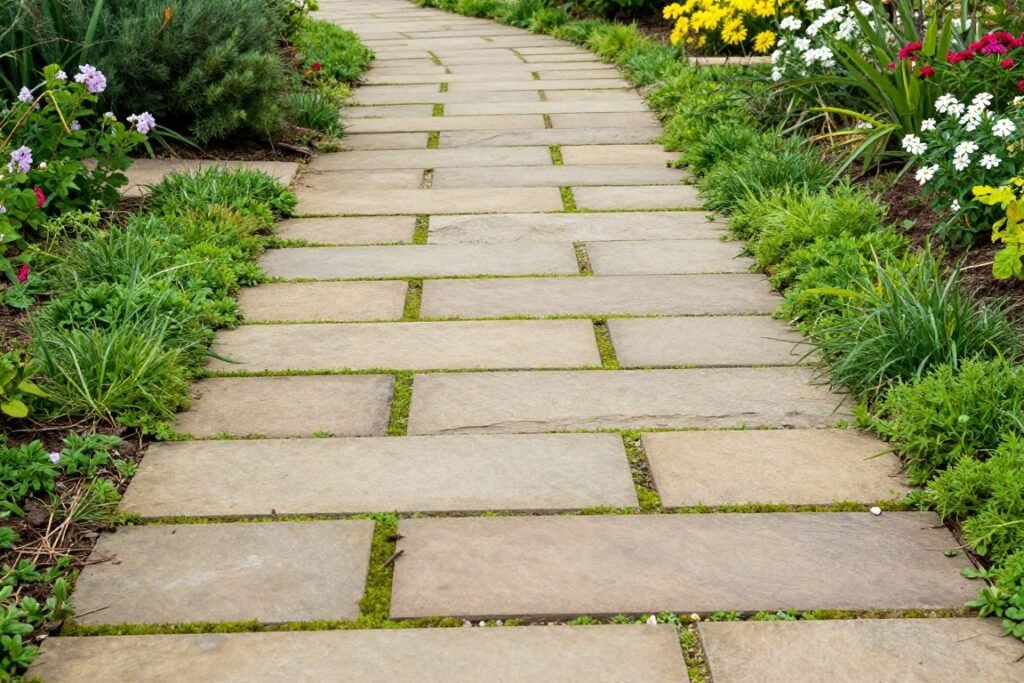
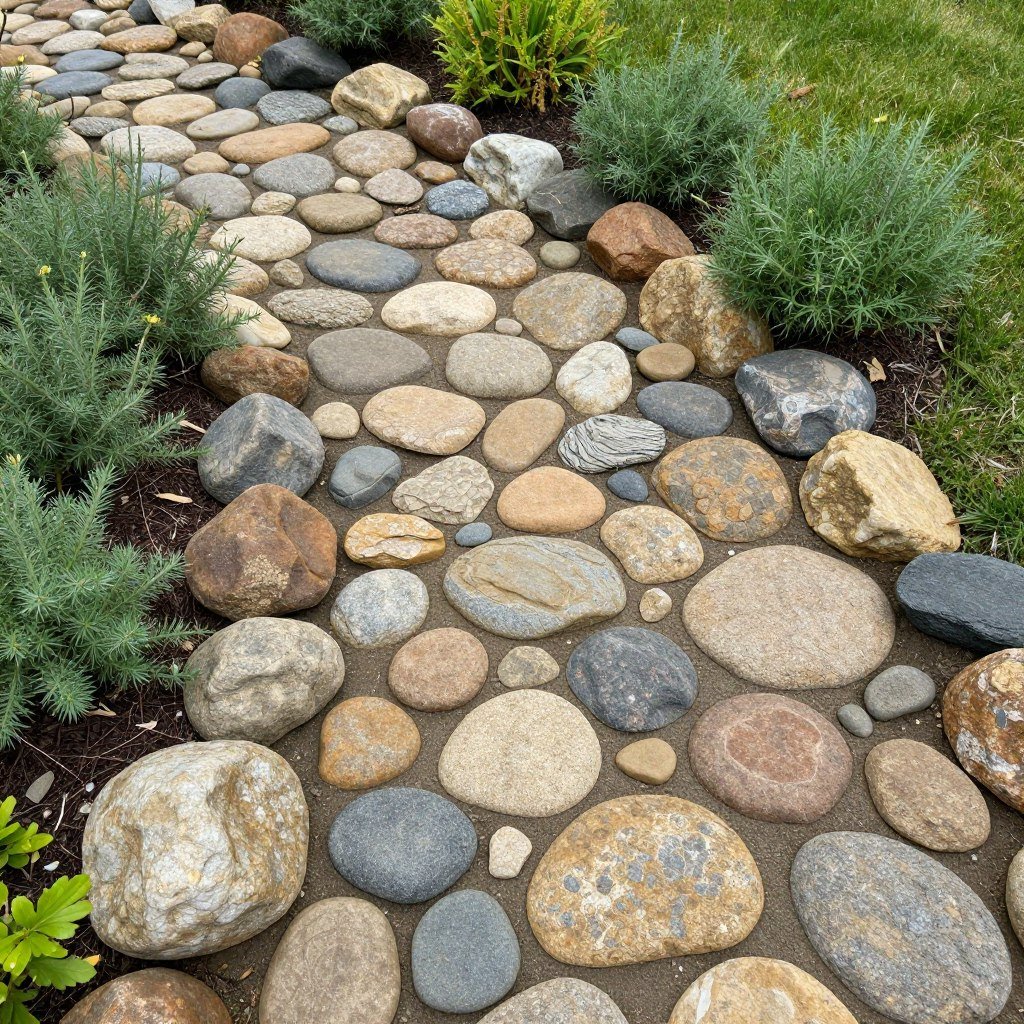
A stone pathway not only serves the practical purpose of guiding movement through your yard but also adds structure and visual appeal to your landscape. Depending on your style preference, pathways can be formal with precisely cut stones or casual with irregularly shaped flagstones.
For a natural look, use flagstone with groundcover plants growing between the stones. For a more modern aesthetic, consider uniform pavers with pea gravel or crushed granite filling the gaps. Edging your pathway with smaller decorative stones or plants helps define the space and prevents material from spreading into lawn areas.
Retaining Walls and Terraces
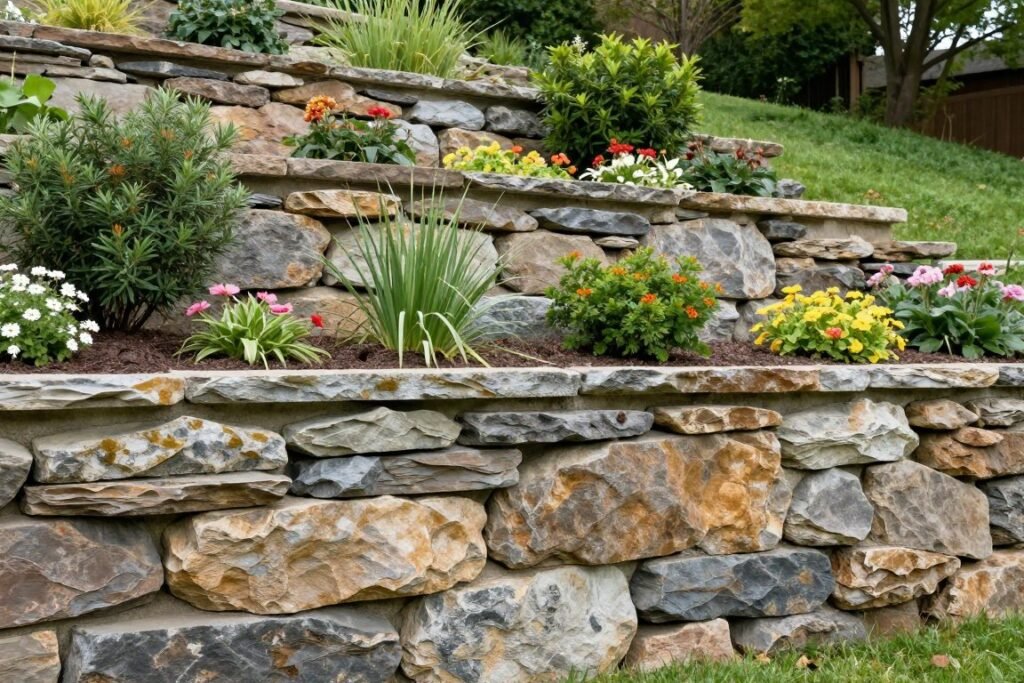
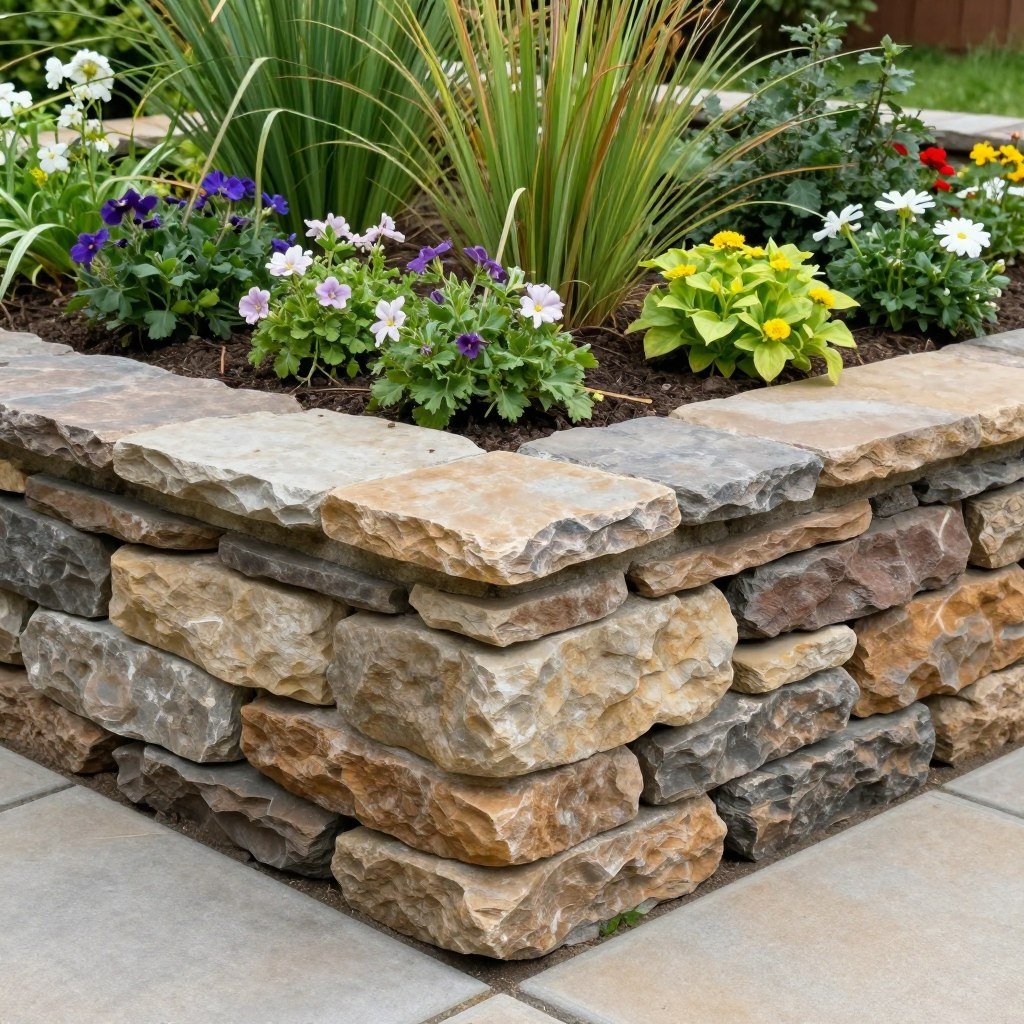
If your property has slopes or elevation changes, stone retaining walls offer both practical and aesthetic benefits. They prevent erosion, create level planting areas, and add architectural interest to your landscape.
Natural stone retaining walls blend beautifully with the landscape and age gracefully over time. For a more rustic look, use irregularly shaped boulders stacked to create a natural-looking wall. For a more formal appearance, consider cut stone blocks or manufactured stone designed specifically for wall construction.
Build Your Perfect Stone Retaining Wall
Find quality materials and tools for creating durable, beautiful retaining walls.
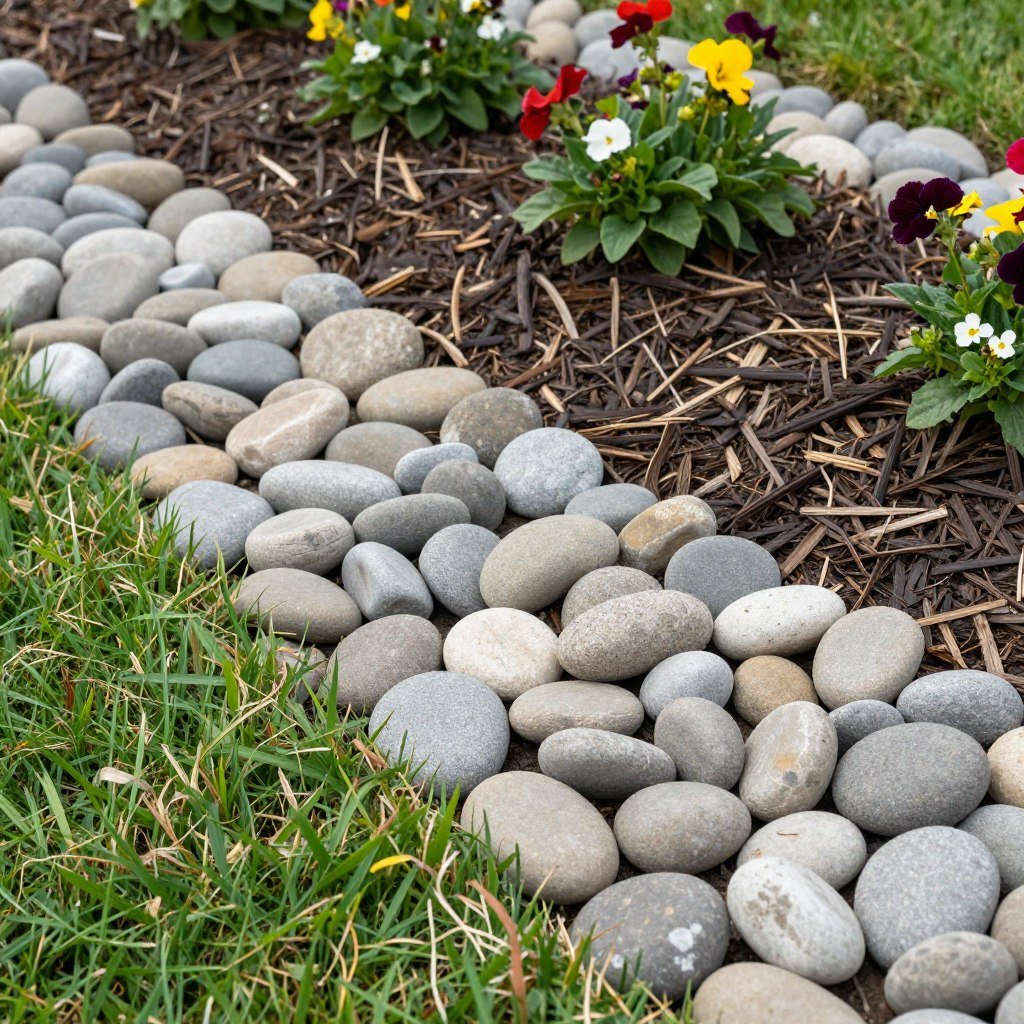
One of the simplest ways to incorporate rocks into your landscape is by using them as borders or edging. Rock borders clearly define the edges of garden beds, walkways, or other landscape features while adding texture and visual interest.
Uniform Borders
Using stones of similar size and color creates a more formal, structured look. This works well in contemporary landscapes or to define geometric garden beds.
Mixed Stone Borders
Combining different sizes, shapes, and colors of stones creates a more natural, organic look that works well in cottage gardens or naturalistic landscapes.
Stacked Stone Edging
For a more substantial border, stack flat stones to create a low wall. This creates definition while adding height and dimension to your landscape.
Practical Guide to Landscaping with Rocks
Now that you have inspiration for your rock landscaping project, let’s cover the practical aspects of planning and implementation. Following these guidelines will help ensure your project turns out beautifully and stands the test of time.
Planning Your Rock Landscape
Before purchasing materials or moving any rocks, take time to plan your project thoroughly. Consider the following:
Identify your goals: Are you solving a drainage problem, reducing maintenance, or purely focused on aesthetics?
Analyze your site: Note sun exposure, existing plants, drainage patterns, and views from inside your home.
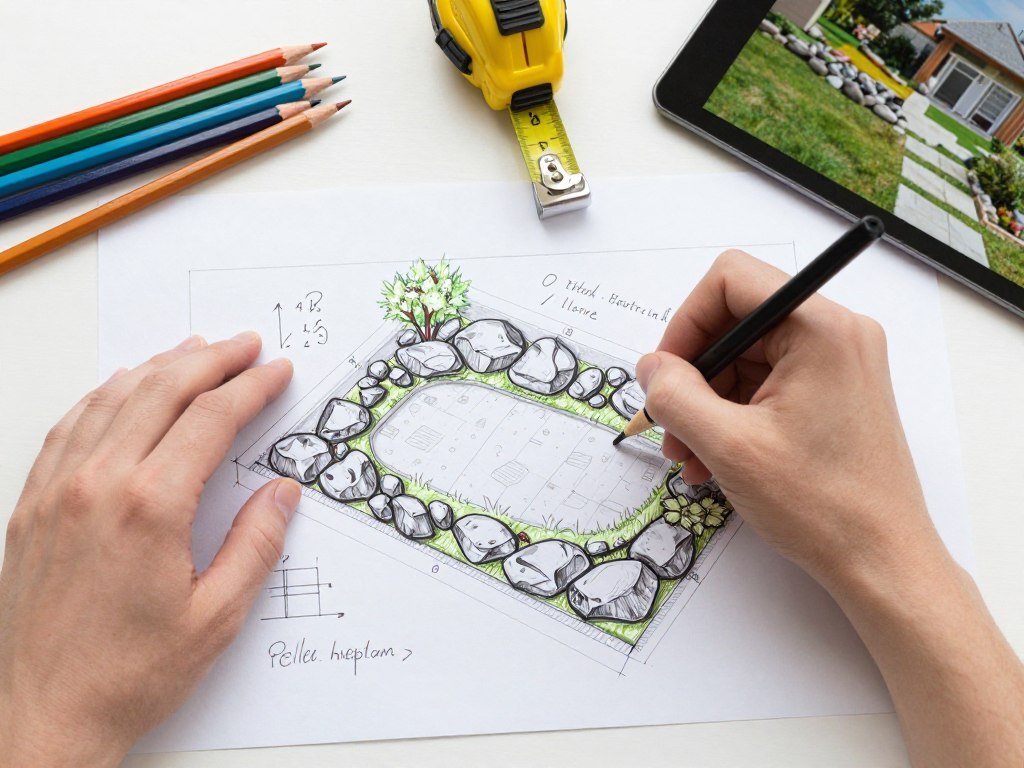
Create a design: Sketch your ideas on paper or use a landscaping app to visualize the finished project.
Calculate materials: Estimate how much rock you’ll need based on the square footage and desired depth.
Consider maintenance: Think about long-term care and how your design will age over time.
Site Preparation
Proper preparation is crucial for the success and longevity of your rock landscaping project:
Clearing and Grading
Remove existing vegetation, including roots, from the area. For larger projects, consider renting a sod cutter to remove grass efficiently. Grade the area to ensure proper drainage away from your home’s foundation. For pathways or patios, create a slight slope (about 1/4 inch per foot) to prevent water pooling.
Weed Prevention
Install high-quality landscape fabric to prevent weeds from growing through your rock features. Overlap the edges by at least 6 inches and secure with landscape pins. For added protection, consider applying a pre-emergent herbicide before laying the fabric.
Essential Tools for Your Rock Landscaping Project
Get the right tools to make your landscaping project easier and more professional.
Create a base layer of crushed stone or gravel (about 2-3 inches) before adding decorative rocks. This improves drainage and prevents settling. For pathways or patios, compact this base layer thoroughly before adding the final surface material.
Rock Placement
When placing larger rocks or boulders, bury about 1/3 of the rock below ground level for a natural look and stability. Group rocks in odd numbers (3, 5, 7) for the most pleasing aesthetic. Position the most interesting sides of the rocks facing the primary viewing angles.
Depth Guidelines
For most decorative rock applications, aim for a depth of 2-3 inches. Areas with heavy foot traffic or drainage functions may require 3-4 inches. Insufficient depth can lead to rocks mixing with soil and looking messy over time.
Maintenance and Care
While rock landscapes require significantly less maintenance than traditional gardens, some periodic care will keep them looking their best:
Leaf removal: Use a leaf blower on a low setting to remove fallen leaves and debris. For smaller rocks, consider using a rake designed specifically for gravel.
Weed management: Pull any weeds that manage to grow through or between rocks promptly before they establish deep roots.
Refreshing: Every few years, you may need to add a thin layer of new rock to refresh areas that have settled or lost color.
Cleaning: For areas with algae or moss growth, a gentle pressure washing can restore the natural color and texture of the rocks.
Edging maintenance: Periodically redefine the edges of rock areas to prevent materials from spreading into lawn areas.
Step-by-Step Project: Creating a Simple Rock Garden
Ready to try your hand at rock landscaping? This beginner-friendly project creates an attractive rock garden that requires minimal maintenance and provides year-round visual interest.
Materials Needed:
Assorted landscaping rocks (small, medium, and a few larger statement pieces)
Landscape fabric
Landscape pins
Drought-tolerant plants suitable for your climate
Compost or topsoil
Mulch (optional, for around plants)
Tools Needed:
Shovel and rake
Wheelbarrow
Garden gloves
Utility knife (for cutting landscape fabric)
Tape measure
Garden hose (for outlining the area)
Instructions:
Select and prepare the site: Choose an area that receives appropriate sunlight for your chosen plants. Remove existing vegetation, including roots, and loosen compacted soil.
Define the area: Use a garden hose to outline the shape of your rock garden. Aim for natural, flowing curves rather than perfect geometric shapes for a more organic look.
Improve drainage: If your soil drains poorly, mix in some sand or small gravel to improve drainage. For rock gardens, good drainage is essential to prevent root rot in plants.
Install landscape fabric: Cover the entire area with landscape fabric, overlapping edges by 6 inches. Secure with landscape pins placed every 12-18 inches.
Place larger rocks first: Position your largest rocks or boulders first, burying about 1/3 of each rock for stability and a natural appearance. These will serve as anchor points for your design.
Add planting pockets: Cut X-shaped slits in the landscape fabric where you plan to place plants. Dig holes and amend the soil with compost for each plant.
Install plants: Place plants in prepared holes, ensuring they’re at the same depth as they were in their containers. Water thoroughly.
Add remaining rocks: Arrange medium and smaller rocks around the plants and larger rocks, creating a natural-looking distribution. Group smaller rocks to create visual interest.
Apply mulch around plants (optional): A thin layer of mulch around the base of plants can help retain moisture while they establish.
Water thoroughly: Give your new rock garden a deep watering to help settle the soil around plants and clean dust from the rocks.
Ready to Create Your Own Rock Garden?
Find all the supplies you need to build a beautiful, low-maintenance rock garden.
Choosing the right plants to complement your rock features is crucial for creating a cohesive, low-maintenance landscape. The best plants for rock gardens typically share characteristics like drought tolerance, compact growth habits, and the ability to thrive in well-drained soil.
Succulents
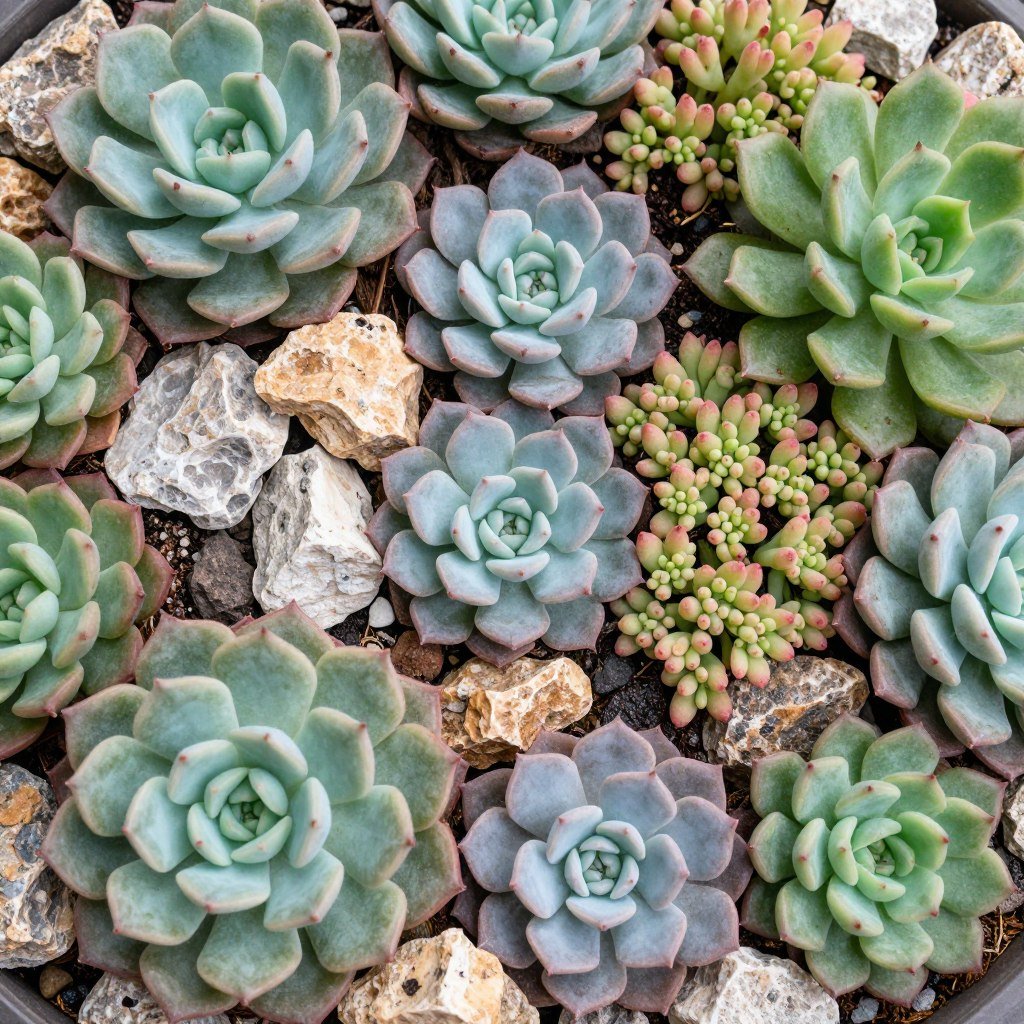
With their water-storing abilities and architectural forms, succulents are perfect companions for rock landscapes. Varieties like Sedum, Sempervivum (hens and chicks), Echeveria, and Agave offer interesting textures and colors that complement the natural tones of rocks.
Ornamental Grasses
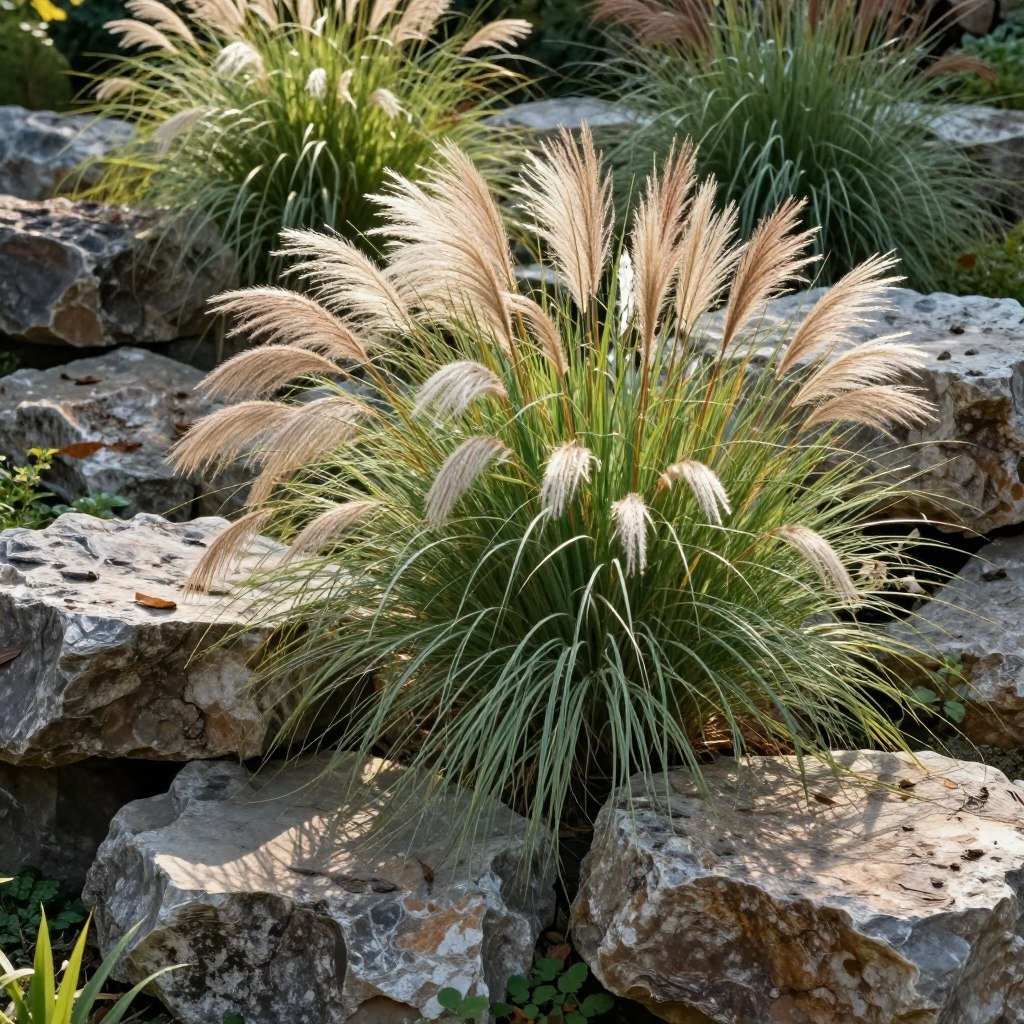
The flowing, textural quality of ornamental grasses creates a beautiful contrast with the solid form of rocks. Consider drought-tolerant varieties like Blue Fescue, Feather Reed Grass, or Mexican Feather Grass for movement and year-round interest.
Alpine and Rock Garden Perennials
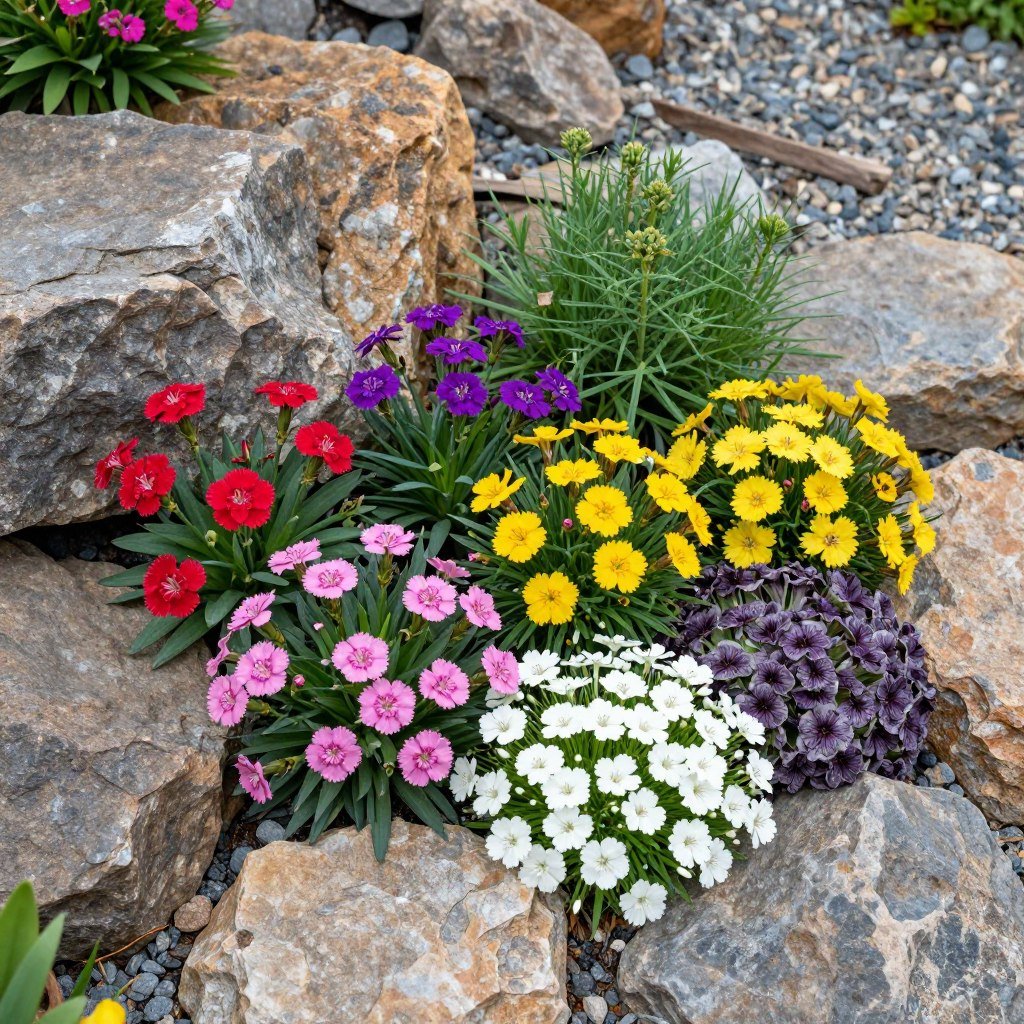
Plants like Dianthus, Armeria, Saxifraga, and Thymus are naturally adapted to rocky conditions. These low-growing perennials offer seasonal blooms while maintaining an attractive compact form that won’t overwhelm your rock features.
When selecting plants for your rock landscape, consider not just their appearance but also their growth habits and maintenance requirements. Choose plants that won’t require frequent division or pruning, and group plants with similar water needs together for efficient irrigation.
Transform Your Yard with Rock Landscaping
Landscaping with rocks offers a perfect blend of beauty, functionality, and low maintenance that can transform any outdoor space. Whether you’re creating a dramatic boulder arrangement, a peaceful rock garden, or a practical stone pathway, the timeless appeal of natural stone adds character and value to your property.
By thoughtfully combining different rock types, sizes, and complementary plants, you can create a landscape that looks beautiful in every season with minimal ongoing care. The initial investment in quality materials and proper installation will reward you with years of enjoyment and significantly reduced maintenance compared to traditional landscaping.
Ready to begin your rock landscaping journey? Start with a small project to develop your skills and confidence, then expand as you discover the satisfaction of working with these enduring natural materials. Your perfect outdoor oasis awaits!
Start Your Rock Landscaping Project Today
Find everything you need to create beautiful, low-maintenance landscapes with rocks.