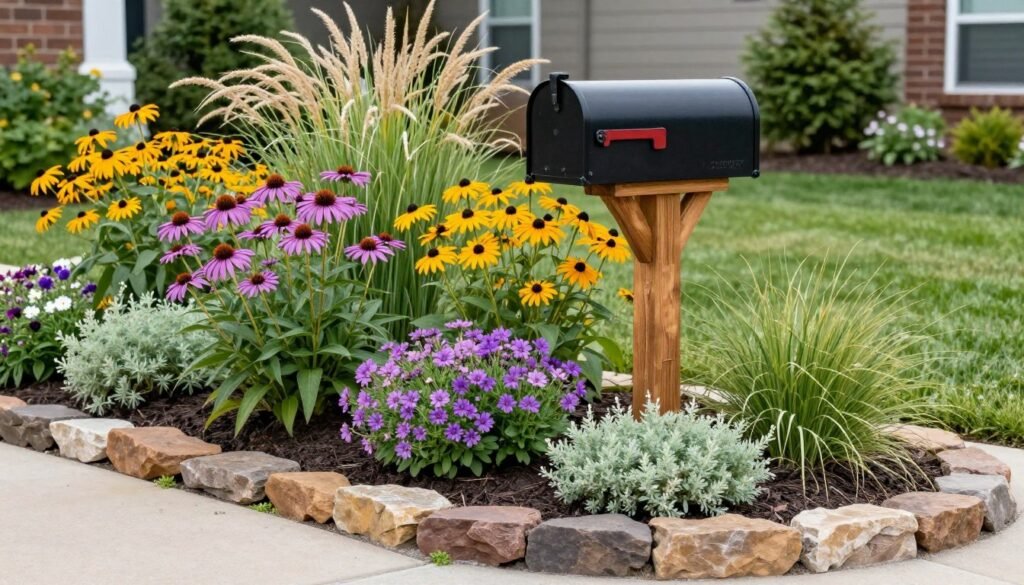
Your mailbox is often the first thing visitors notice about your home. A thoughtfully designed mailbox landscape creates a welcoming first impression and significantly boosts your property’s curb appeal. Whether you have a traditional post-mounted mailbox by the street or a wall-mounted one near your front door, these mailbox landscaping ideas will help you create a beautiful focal point that reflects your personal style and complements your home’s architecture.
This Website contains affiliate links. That means I may earn a small commission if you purchase through my links, at no extra cost to you.
Essential Design Principles for Mailbox Landscaping
Before diving into specific mailbox landscaping ideas, it’s helpful to understand some basic design principles that will ensure your mailbox garden looks polished and professional.
Scale and Proportion
The size of your mailbox garden should be proportional to your mailbox and the surrounding area. For a standard curbside mailbox, a garden bed extending 2-3 feet around the post creates a balanced look. For larger properties, you might extend this further to create a more substantial focal point.
Style Consistency
Your mailbox landscaping should complement your home’s architectural style. A cottage-style garden works beautifully with traditional homes, while clean lines and minimal plantings pair well with modern architecture. This consistency creates a cohesive look that enhances your overall curb appeal.
Seasonal Interest
The best mailbox gardens look attractive year-round. Include a mix of plants that provide visual interest across different seasons through flowers, foliage, texture, and structure. This ensures your mailbox area remains an attractive focal point regardless of the season.
Related Posts:




Choosing the Right Plants for Your Mailbox Garden
Plant selection is crucial for creating a mailbox landscape that thrives with minimal maintenance. Since mailboxes are typically located in full sun near the street, choose plants that can withstand these challenging conditions.
Perennials for Long-Term Beauty
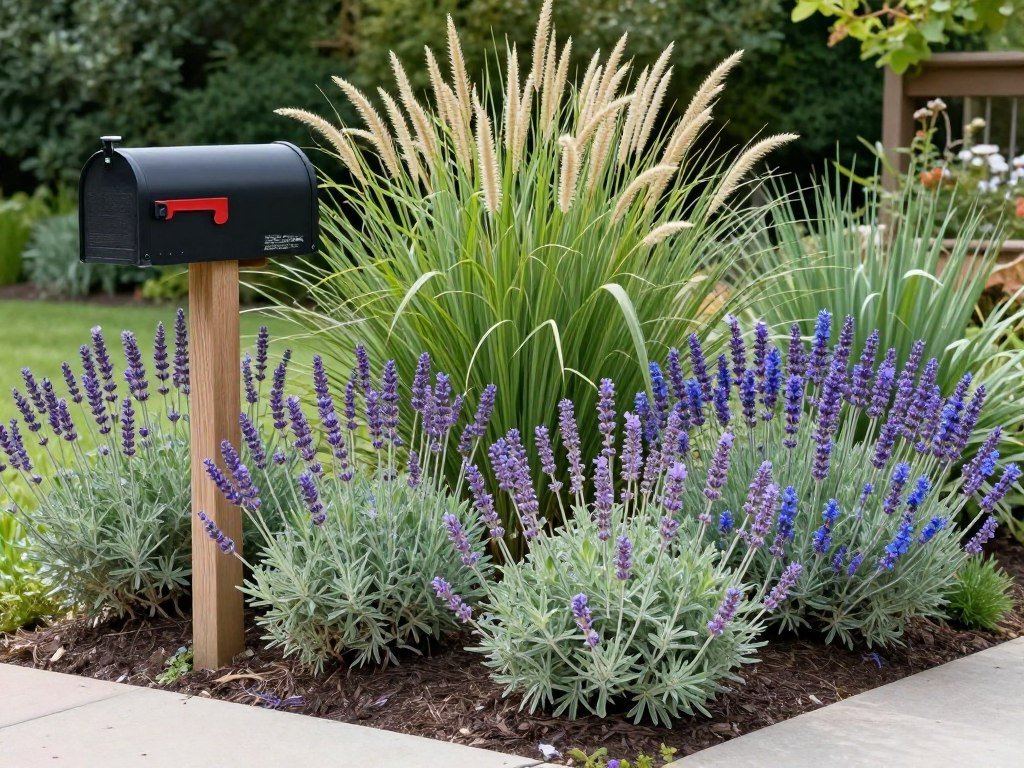
Perennials form the backbone of a low-maintenance mailbox garden, returning year after year with minimal care. Some excellent perennial choices include:
- Coneflowers (Echinacea) – drought-tolerant with long-lasting blooms
- Black-eyed Susans (Rudbeckia) – cheerful yellow flowers that attract pollinators
- Lavender – fragrant, drought-resistant, and deer-resistant
- Salvia – vertical interest with spikes of blue, purple, or pink flowers
- Sedum – succulent foliage and late-season blooms
- Daylilies – tough, adaptable plants with striking flowers
- Russian Sage – silvery foliage and purple blooms in late summer
- Yarrow – flat-topped flower clusters in various colors
- Dianthus – low-growing with fragrant blooms
- Catmint – aromatic foliage with purple-blue flowers
For perennial plants that will thrive in your mailbox garden, you can search for options on Amazon to find varieties that match your climate and preferences.
Ornamental Grasses for Structure and Movement
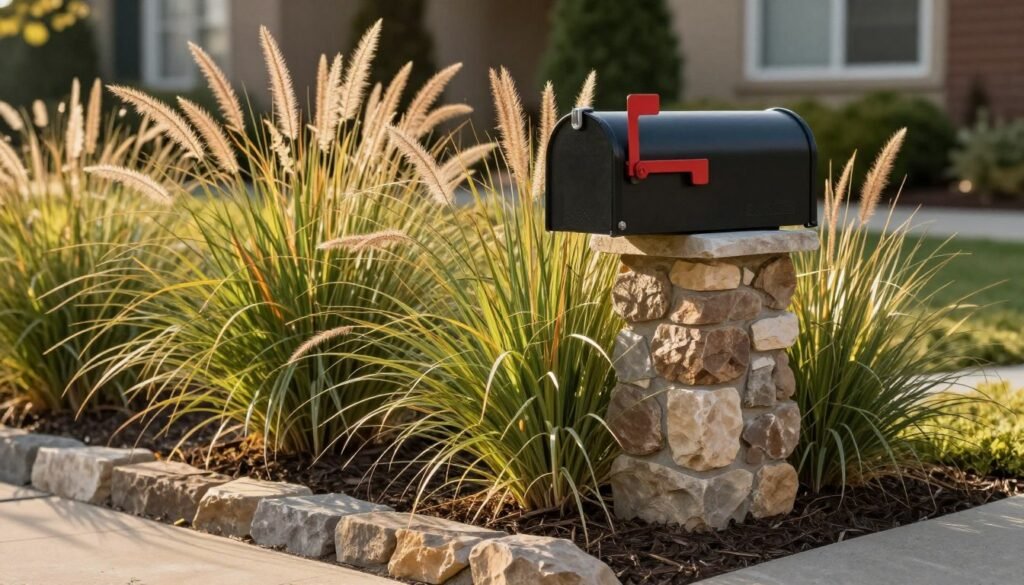
Ornamental grasses add height, texture, and movement to mailbox landscaping. They’re extremely low-maintenance and provide visual interest even in winter. Consider these varieties:
- Feather Reed Grass (Calamagrostis) – upright habit with golden seed heads
- Fountain Grass (Pennisetum) – arching form with fluffy seed heads
- Blue Fescue (Festuca glauca) – compact with blue-gray foliage
- Little Bluestem (Schizachyrium) – native grass with blue-green summer color and russet fall tones
- Japanese Forest Grass (Hakonechloa) – graceful arching habit for partial shade
Annuals for Seasonal Color
While perennials and grasses form the foundation, annuals can add bursts of color throughout the growing season. Plant them in spring after the last frost for immediate impact. Some reliable annuals for mailbox gardens include:
- Petunias – cascading habit with abundant blooms
- Zinnias – heat-loving with long-lasting flowers
- Marigolds – bright colors and pest-repelling properties
- Sweet Alyssum – fragrant white or purple flowers that spill over edges
- Lantana – heat and drought tolerant with multicolored blooms
Annual flower seeds or starter plants can be found on Amazon, offering an affordable way to add seasonal color to your mailbox garden.
Hardscaping Elements for Mailbox Gardens
Hardscaping elements provide structure and definition to your mailbox landscaping while reducing maintenance needs. These non-plant elements create visual interest year-round and help define the boundaries of your garden.
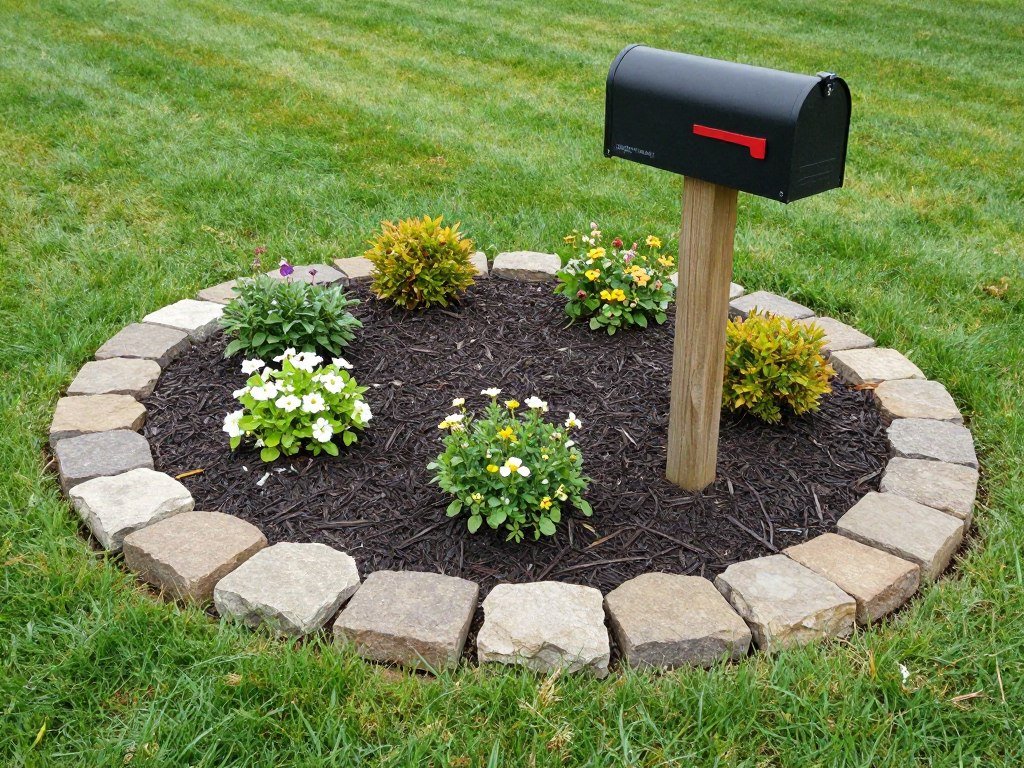
Decorative Stone and Rock Borders
Stone borders are both functional and attractive, clearly defining your mailbox garden while protecting plants from lawn mowers and string trimmers. Options include:
- Natural fieldstone for a rustic look
- Cut limestone blocks for a more formal appearance
- River rocks for a smooth, natural border
- Cobblestones for traditional charm
- Concrete edging stones for clean, modern lines
You can find decorative stone and edging materials on Amazon to create defined borders for your mailbox garden.
Mulch and Ground Covers
Mulch suppresses weeds, retains moisture, and provides a neat, finished look to your mailbox garden. Choose from:
- Shredded hardwood mulch – natural appearance that stays in place
- Pine straw – lightweight and ideal for acid-loving plants
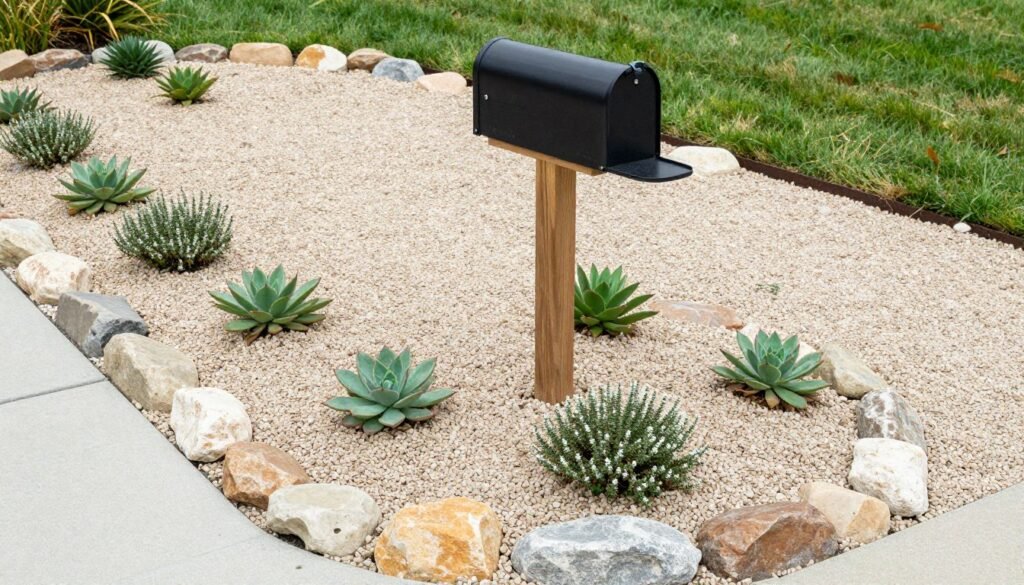
- Decorative stone – permanent solution that never needs replacement
- Living ground covers like creeping thyme or sedum – creates a carpet of foliage and flowers
Pathways and Stepping Stones
If your mailbox is set back from the street, consider adding a small pathway to create a cohesive look and provide easy access. Options include:
- Flagstone stepping stones for a natural look
- Brick pavers for traditional charm
- Concrete stepping stones in various shapes and colors
- Gravel paths edged with stones or metal edging
Upgrading Your Mailbox Post and Structure
The mailbox itself is a central element of your landscape design. Upgrading from a standard metal box on a wooden post can dramatically enhance your curb appeal.
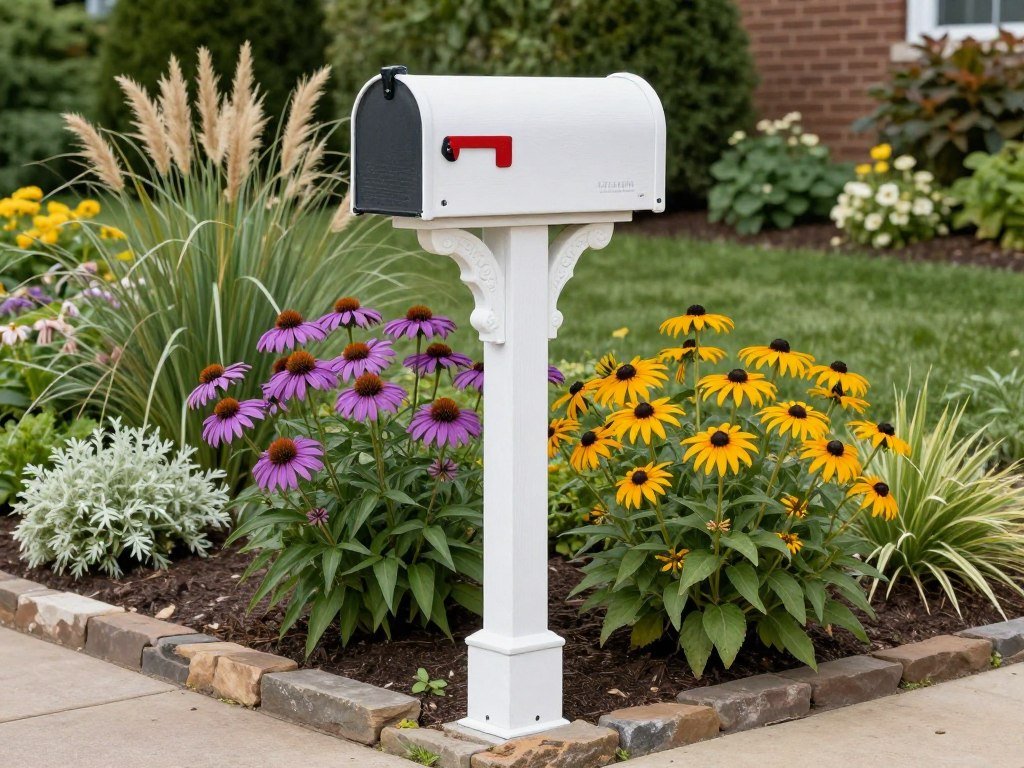
Mailbox Post Options
Consider these materials for a mailbox post upgrade:
- Cedar or redwood – naturally resistant to decay and insects
- Pressure-treated lumber – economical and long-lasting
- Wrought iron – elegant and extremely durable
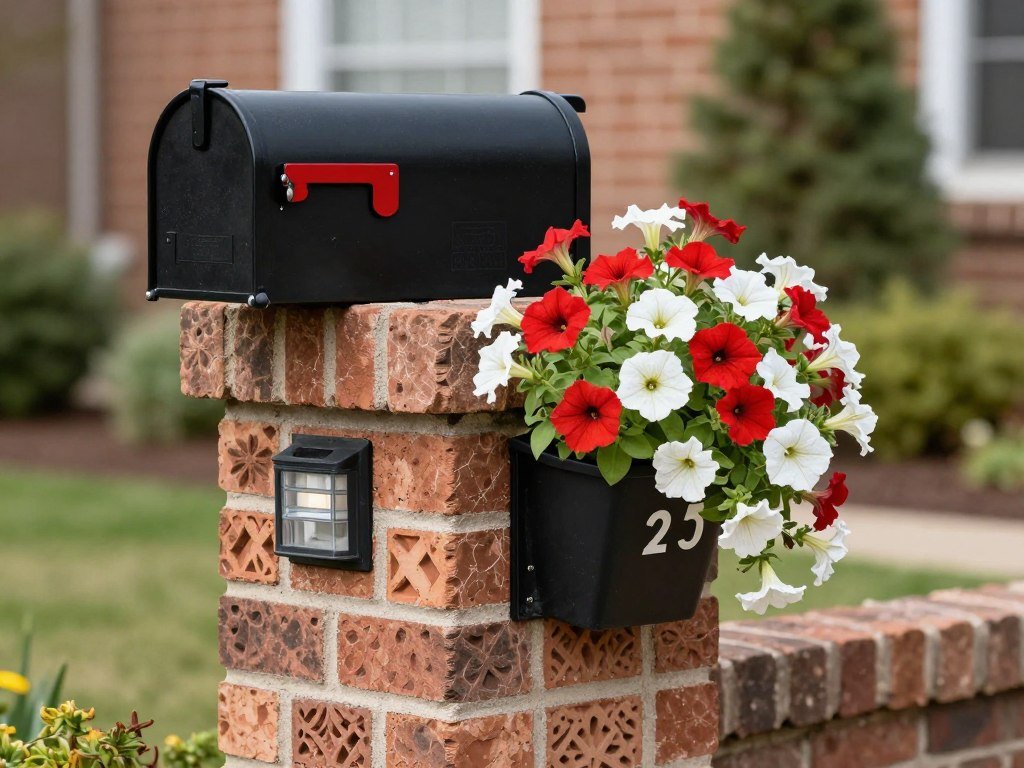
- Stone or brick columns – permanent and substantial
- Composite materials – low-maintenance alternative to wood
You can find decorative mailbox posts on Amazon that instantly upgrade your curb appeal.
Decorative Mailbox Features
Enhance your mailbox with these decorative elements:
- House numbers in decorative fonts or materials
- Solar-powered cap lights for nighttime visibility
- Decorative brackets or corbels
- Weather-resistant vinyl or metal mailbox covers
- Custom paint colors that complement your home
Themed Mailbox Landscaping Ideas
Creating a themed mailbox garden adds personality and charm to your home’s entrance. Here are some inspiring themed approaches to mailbox landscaping:
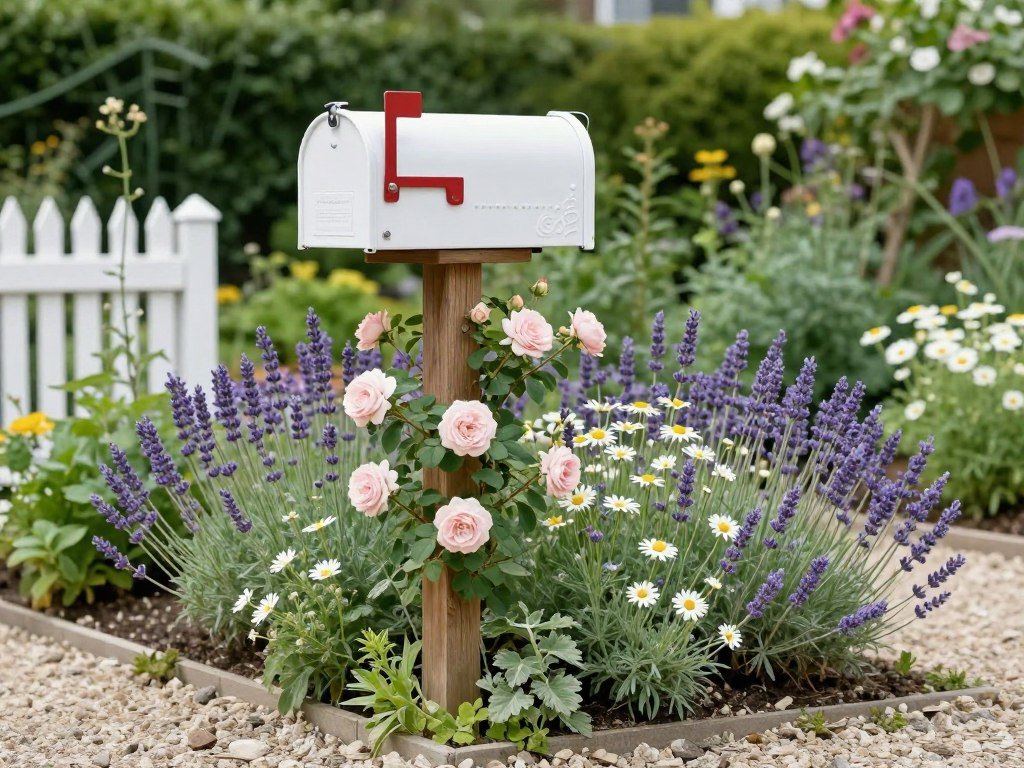
Cottage Garden Mailbox
Create a romantic, slightly wild look with these elements:
- Climbing roses trained up the mailbox post
- Lavender, daisies, and other cottage favorites
- White picket fence section as a backdrop
- Informal, abundant plantings that spill onto pathways
- Vintage-style mailbox with decorative details
Modern Minimalist Mailbox
For contemporary homes, a clean, structured approach works best:
- Geometric planting bed with clean edges
- Limited plant palette in a monochromatic scheme
- Architectural plants like ornamental grasses or yucca
- Decorative gravel or stone mulch
- Sleek, modern mailbox design
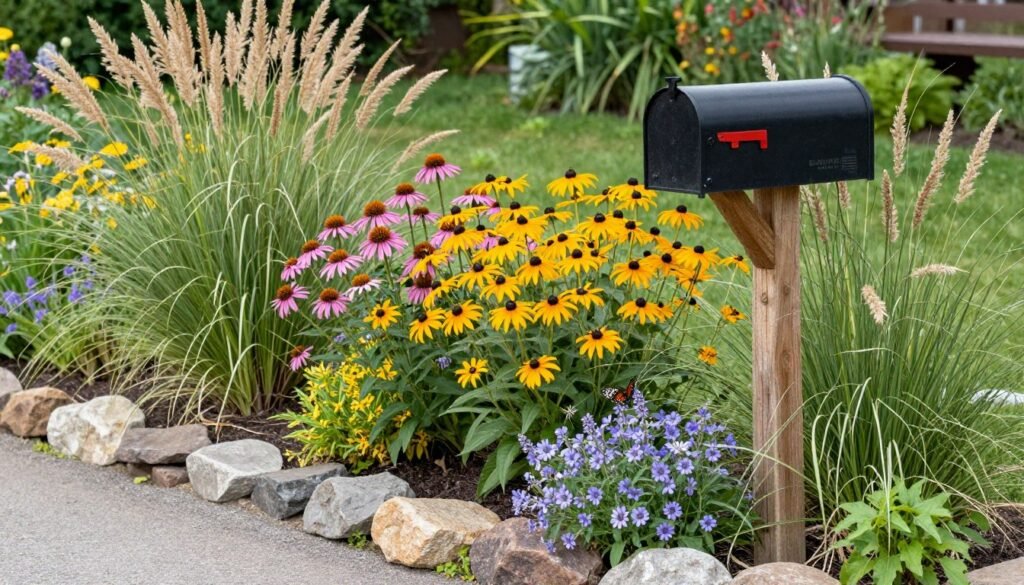
Native Plant Mailbox Garden
Support local ecology while creating a beautiful, low-maintenance landscape:
- Regional native wildflowers that attract pollinators
- Native grasses that provide winter interest
- Natural stone edging collected locally
- Rustic wooden mailbox post
- Bird-friendly features like a small bird bath
Seasonal Considerations for Mailbox Landscaping
A truly successful mailbox garden looks attractive throughout the year. Here’s how to ensure year-round appeal:
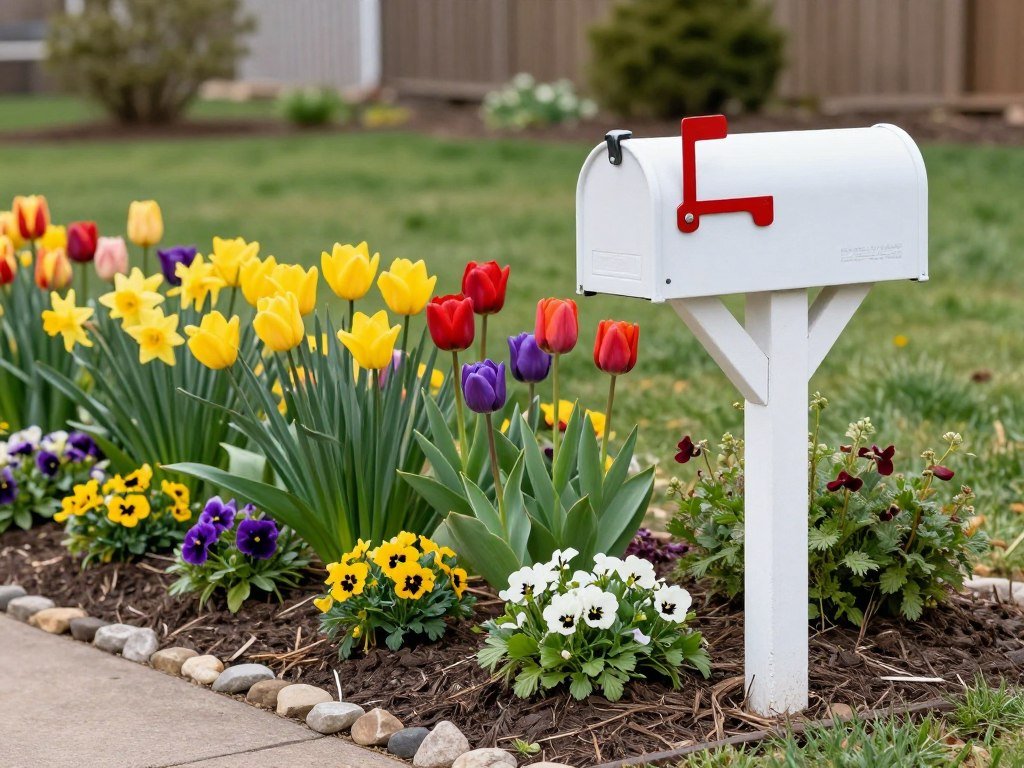
Spring Mailbox Gardens
Welcome the growing season with these spring features:
- Early-blooming bulbs like daffodils, tulips, and crocuses
- Spring-flowering perennials such as columbine and bleeding heart
- Fresh mulch application to suppress weeds
- Pruning of ornamental grasses and perennials
Summer Mailbox Landscaping
Keep your mailbox garden looking great during hot summer months:
- Drought-tolerant plants that thrive in heat
- Regular deadheading to encourage continuous blooming
- Occasional deep watering during dry spells
- Heat-loving annuals to fill any gaps
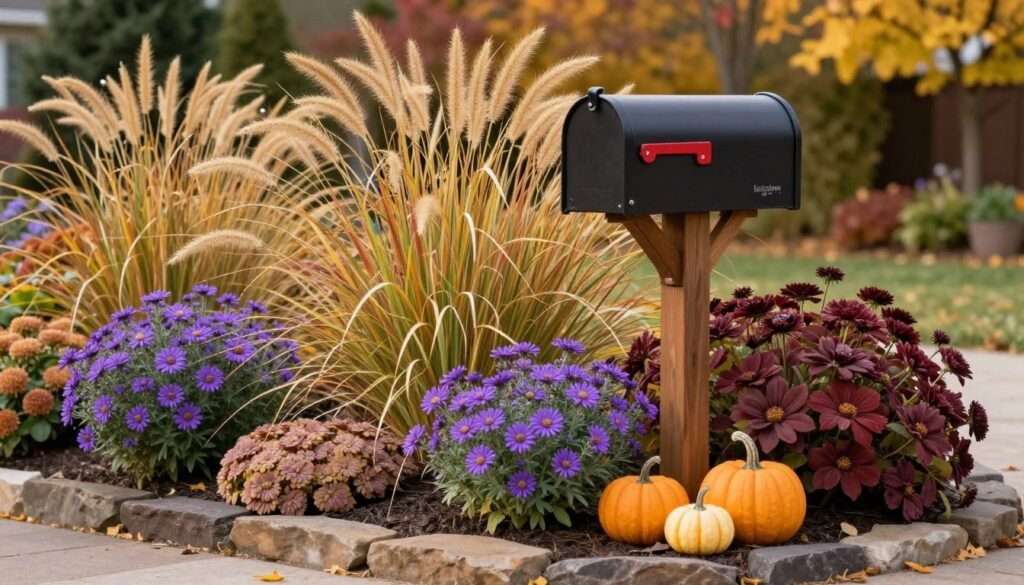
Fall Mailbox Gardens
Embrace autumn colors and textures:
- Ornamental grasses with striking seed heads
- Late-blooming perennials like asters and sedum
- Plants with colorful fall foliage
- Seasonal decorations like small pumpkins or gourds
Winter Interest for Mailbox Landscaping
Ensure your mailbox area remains attractive even in winter:
- Evergreen shrubs or perennials for year-round structure
- Ornamental grasses left standing for winter texture
- Plants with interesting seed heads or berries
- Decorative elements like frost-resistant garden art
- Solar lighting to highlight the area during short winter days
Low-Maintenance Mailbox Landscaping Solutions
For busy homeowners, creating a low-maintenance mailbox garden is a priority. These approaches minimize upkeep while maximizing curb appeal:
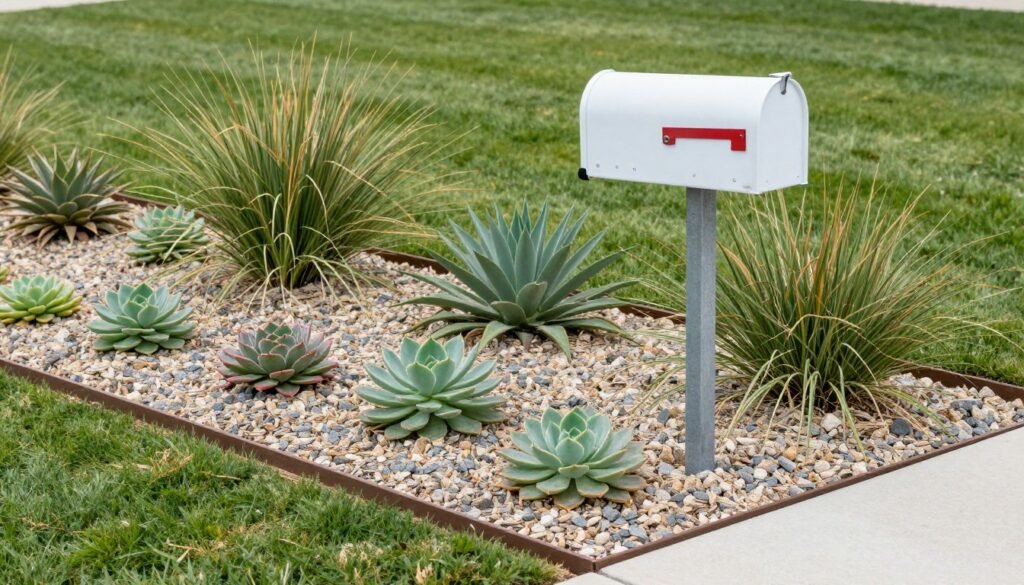
Drought-Tolerant Mailbox Gardens
Create a water-wise mailbox landscape with these elements:
- Succulents and sedums that thrive in dry conditions
- Mediterranean herbs like lavender, rosemary, and thyme
- Native plants adapted to your local rainfall patterns
- Decorative gravel mulch that never needs replacement
- Drip irrigation system for efficient watering
You can find drought-tolerant plants and succulents on Amazon that will thrive in sunny mailbox locations with minimal care.
No-Mow Solutions
Eliminate the need to mow or trim around your mailbox with these approaches:
- Wide garden bed that keeps grass well away from the post
- Decorative stone or pavers creating a mowing strip
- Ground covers that eliminate the need for mulching
- Raised bed with stone or brick edging
- Metal edging that creates a clean barrier between garden and lawn
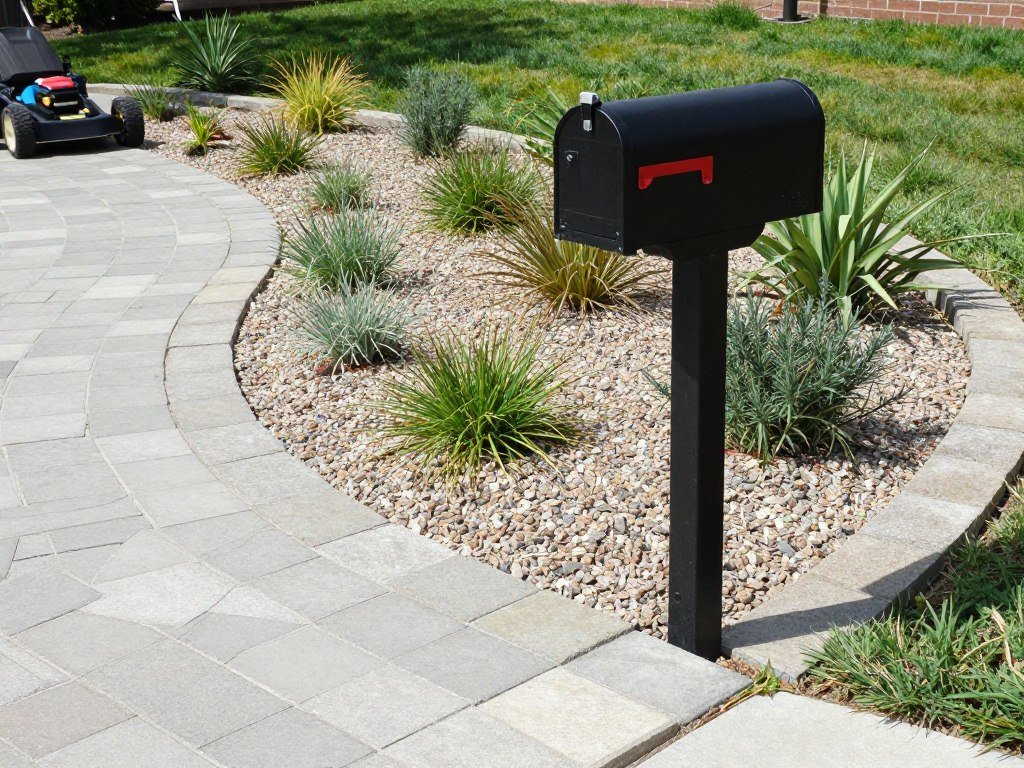
Four-Season Structure with Minimal Care
Create year-round interest with these low-maintenance elements:
- Dwarf evergreen shrubs that maintain their appearance without pruning
- Ornamental grasses that only need cutting back once yearly
- Long-blooming perennials like coreopsis and black-eyed Susans
- Decorative rocks or garden art for non-plant interest
- Self-cleaning varieties of plants that don’t require deadheading
Mailbox Lighting Ideas for Safety and Style
Adding lighting to your mailbox area serves both practical and aesthetic purposes. It helps mail carriers and visitors locate your address after dark while highlighting your beautiful landscaping.
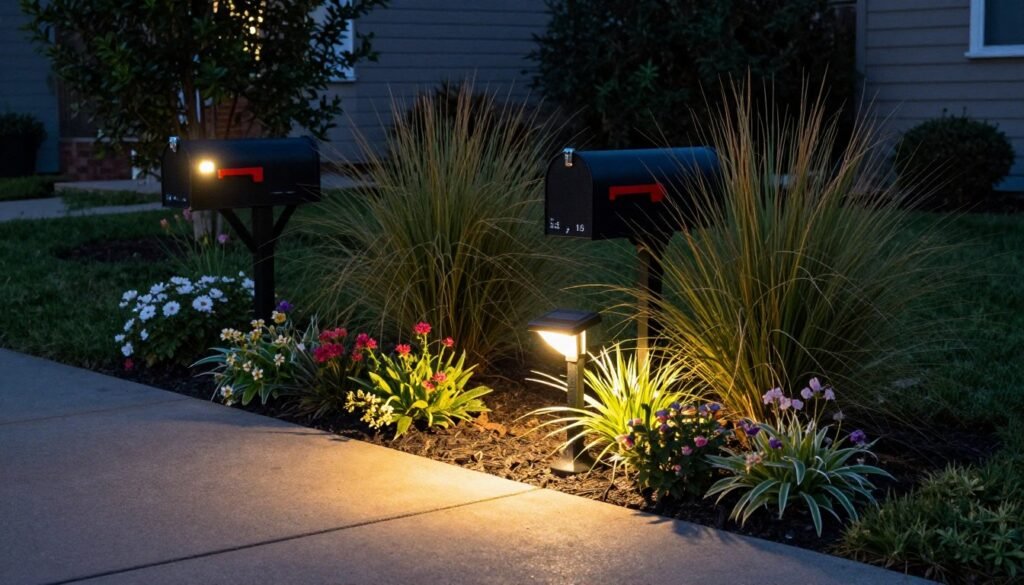
Solar Lighting Options
Solar-powered lights are ideal for mailbox areas where electrical outlets may not be available:
- Solar path lights to line a walkway to the mailbox
- Solar spotlight to illuminate the mailbox and house numbers
- Solar-powered address numbers that glow at night
- Solar post cap light that fits on top of a wooden mailbox post
- Solar string lights wrapped around plants or the mailbox post for a decorative touch
You can find solar lighting options for your mailbox on Amazon that require no wiring and install in minutes.
Low-Voltage Lighting Systems
For a more permanent and reliable lighting solution, consider low-voltage landscape lighting:
- Path lights that illuminate the approach to your mailbox
- Uplights to highlight ornamental grasses or structural plants
- Small spotlights directed at your house numbers
- Hardwired address plaque with built-in lighting
- Step lights if your mailbox area includes any elevation changes
Regional Considerations for Mailbox Landscaping
Your climate and region play a significant role in determining which plants and materials will work best in your mailbox garden. Here are some considerations for different U.S. regions:
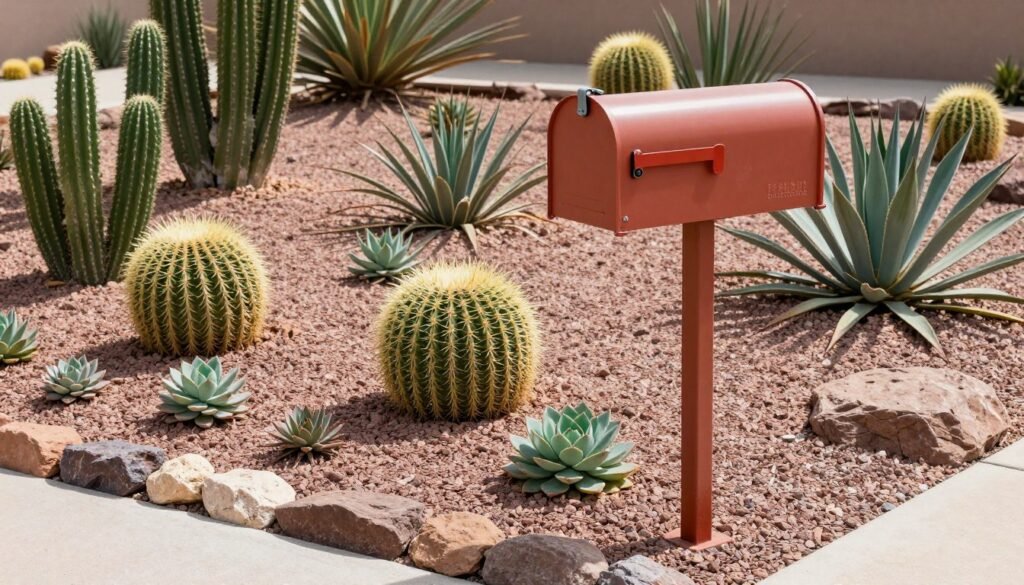
Hot, Dry Climates (Southwest)
For areas with intense sun and limited rainfall:
- Succulents and cacti that thrive in heat and drought
- Desert-adapted perennials like desert marigold and penstemon
- Decorative gravel mulch in earth tones
- Larger stones or boulders as accent features
- Limited plant palette to conserve water
Hot, Humid Climates (Southeast)
For areas with high humidity and rainfall:
- Plants that resist fungal issues in humid conditions
- Good spacing between plants to promote air circulation
- Raised beds for improved drainage during heavy rains
- Heat-tolerant perennials like lantana and salvia
- Tropical accents like cannas or elephant ears
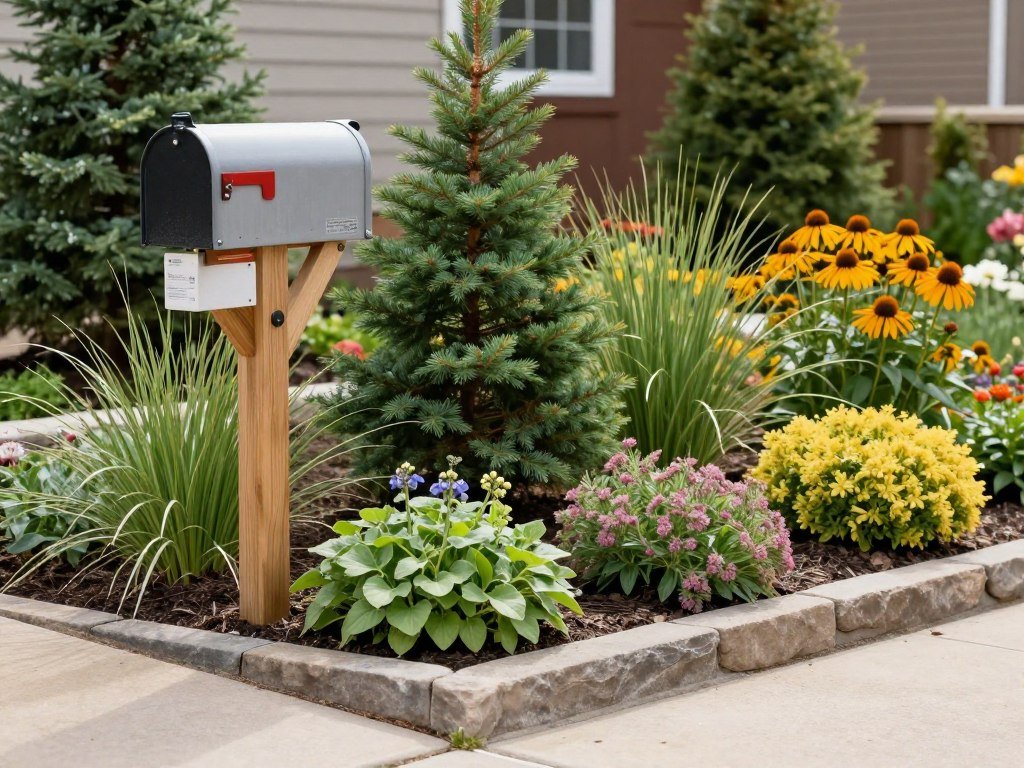
Cold Climates (Northeast/Midwest)
For areas with freezing winters and snow:
- Cold-hardy perennials rated for your specific hardiness zone
- Dwarf evergreens for winter structure
- Sturdy mailbox post that can withstand snow plowing
- Salt-tolerant plants if near a road that gets de-iced
- Flexible markers to protect the garden from snow plows
Coastal Areas
For locations with salt spray and wind:
- Salt-tolerant plants like beach grass, rugosa roses, and seaside goldenrod
- Wind-resistant, low-growing plants
- Heavier stones or edging that won’t blow away
- Corrosion-resistant mailbox and hardware
- Nautical-themed decorative elements
Creating Your Perfect Mailbox Landscape
Your mailbox area offers a unique opportunity to create a beautiful focal point that enhances your home’s curb appeal. Whether you prefer a lush cottage garden bursting with flowers or a modern, low-maintenance design with clean lines, the right mailbox landscaping can transform this utilitarian feature into a stunning accent for your property.
Start with a thoughtful plan that considers your climate, maintenance preferences, and home’s architectural style. Choose plants and materials that will thrive in your specific conditions, and don’t be afraid to express your personality through your design. With these mailbox landscaping ideas as inspiration, you’ll be well on your way to creating an entrance that makes a memorable first impression.