Combining artificial turf with pavers creates one of the most versatile and low-maintenance backyard solutions available today. This modern landscaping approach offers the perfect balance between hardscaping structure and the lush appearance of greenery, all without the endless mowing, watering, and weeding of traditional lawns. Whether you’re dreaming of an elegant outdoor entertaining space, a kid-friendly play area, or simply a beautiful backyard that stays pristine year-round, the turf and pavers combination delivers exceptional results for homeowners seeking both style and practicality.
This Website contains affiliate links. That means I may earn a small commission if you purchase through my links, at no extra cost to you.
Why Combine Artificial Turf and Pavers in Your Backyard?
Before diving into design ideas and installation tips, let’s explore why this landscaping combination has become increasingly popular among homeowners:
Benefits of Turf and Pavers
Dramatically reduced maintenance compared to natural grass
No mowing, watering, fertilizing, or dealing with brown patches
Year-round green appearance regardless of weather conditions
Excellent drainage when properly installed
Durable surfaces that withstand heavy foot traffic
Versatile design possibilities from modern to traditional
Environmentally friendly with significant water savings
Perfect for drought-prone areas or water-restricted regions
Clean surfaces that won’t track mud into your home
Considerations
Higher upfront installation cost than natural grass
Professional installation recommended for best results
Artificial turf can heat up in direct sunlight
Quality varies significantly between turf products
May require occasional cleaning and infill refreshing
Not biodegradable at end of lifespan (8-15 years)
For most homeowners, the long-term benefits far outweigh the initial investment, especially when considering the ongoing costs and time commitment of maintaining a natural lawn. The turf and pavers combination offers the perfect balance between aesthetics and practicality.
Inspiring Design Ideas for Your Turf and Pavers Backyard
The versatility of artificial turf and pavers allows for countless creative design possibilities. Here are some popular approaches to inspire your backyard transformation:
Geometric Patterns and Checkerboard Layouts
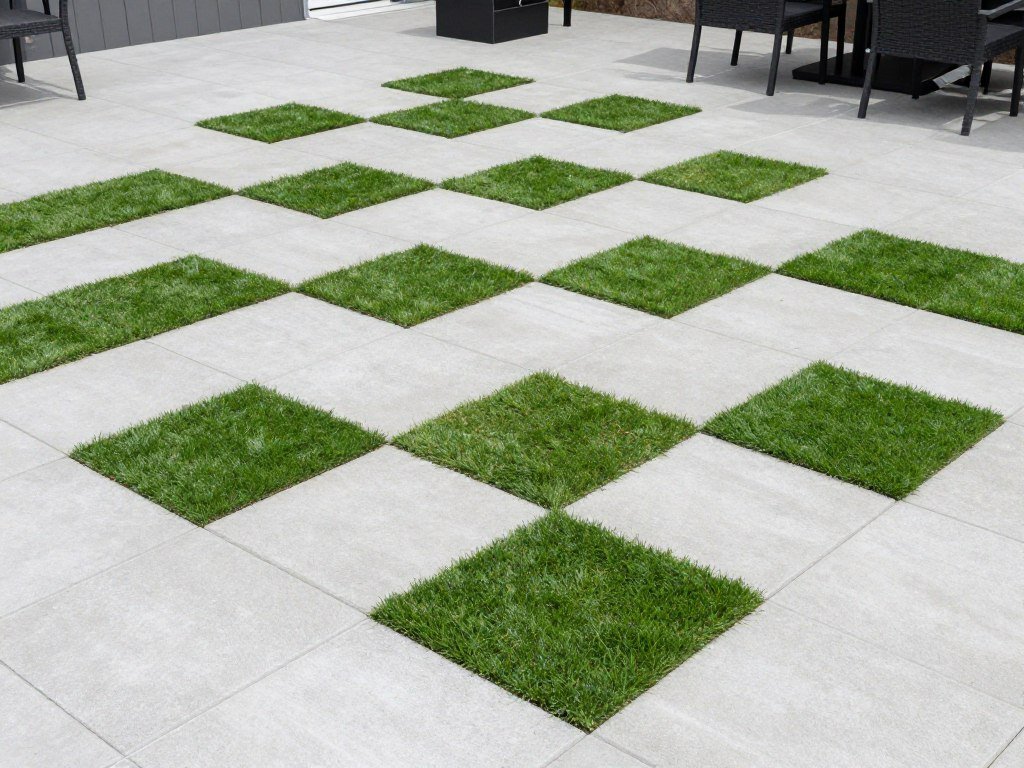
One of the most striking designs pairs square pavers with equally sized turf sections to create a checkerboard effect. This approach works beautifully for patios and seating areas, offering a modern, structured look that immediately catches the eye. The clean lines and alternating textures create visual interest while maintaining a cohesive overall design.
Stepping Stone Pathways
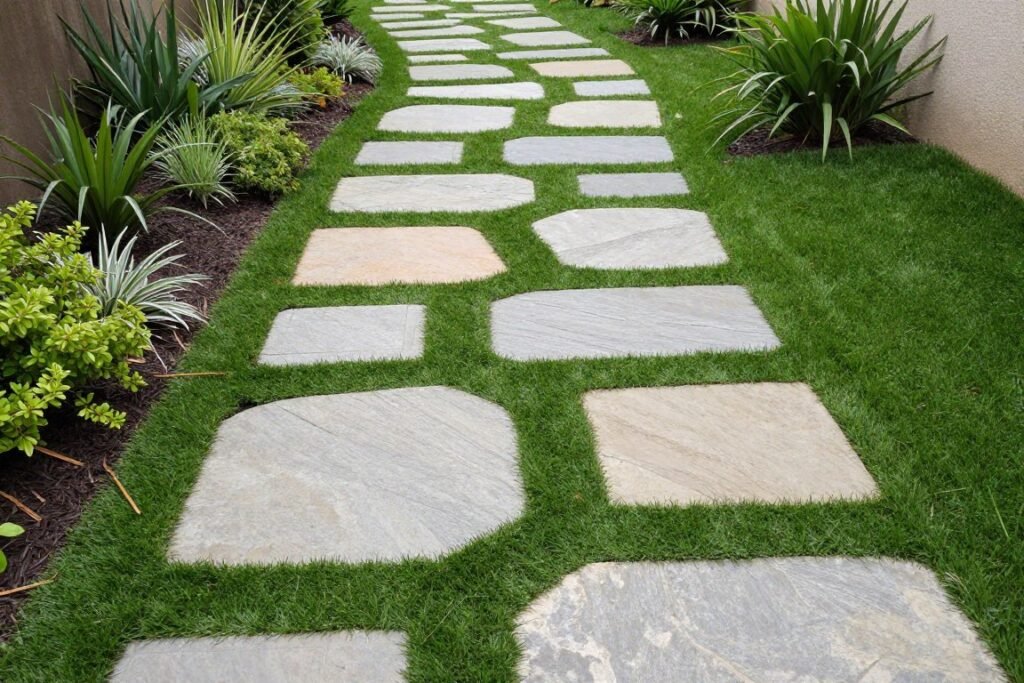
Create inviting garden pathways by embedding pavers as stepping stones within a sea of artificial turf. This design works wonderfully for connecting different areas of your yard while maintaining a cohesive, green appearance. Irregular natural stone pavers create a more organic feel, while uniform concrete pavers offer a more contemporary look.
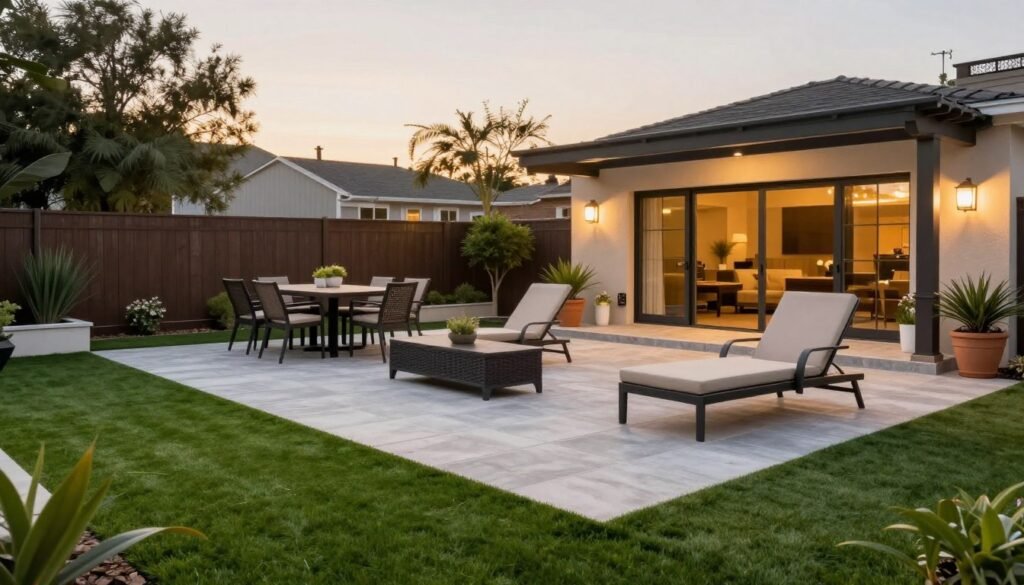
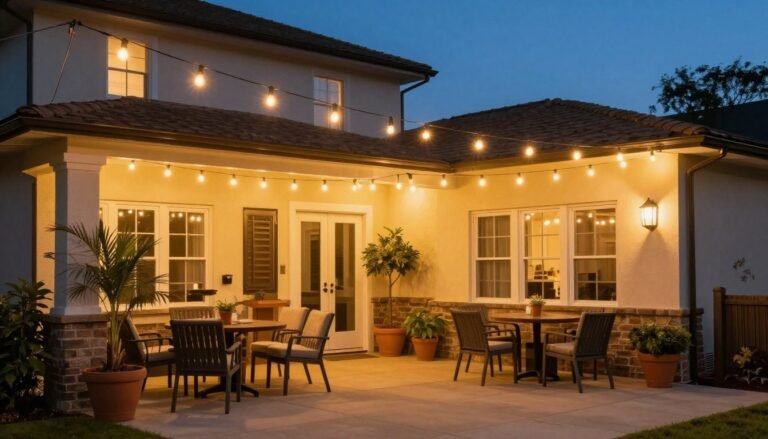
Use pavers to create defined patio areas for dining and lounging, surrounded by artificial turf that softens the edges and connects to the rest of your landscape. This approach creates clear functional zones while maintaining visual flow throughout your outdoor space. Add outdoor furniture, fire pits, or outdoor kitchens to complete your entertainment area.
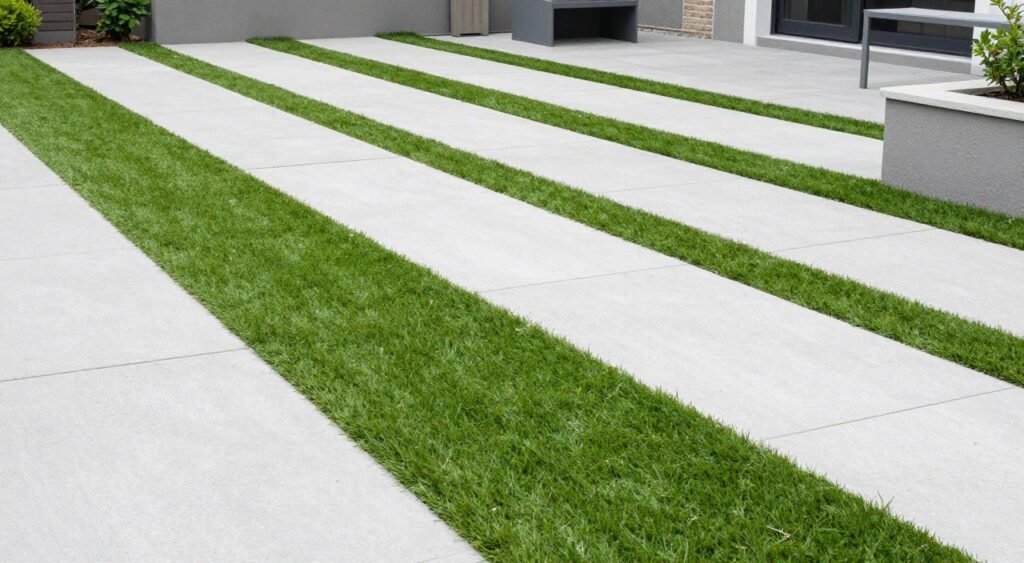
Modern Linear Designs
For a distinctly contemporary look, consider arranging long, rectangular pavers in parallel lines with turf strips between them. This creates a strong directional flow that can make spaces appear larger and more organized. The linear pattern works particularly well in modern architectural settings and smaller urban yards.
Ready to start planning your design?
Browse high-quality artificial turf options to find the perfect match for your backyard vision.
Proper planning is essential for a successful turf and pavers installation. Follow these steps to ensure your project runs smoothly:
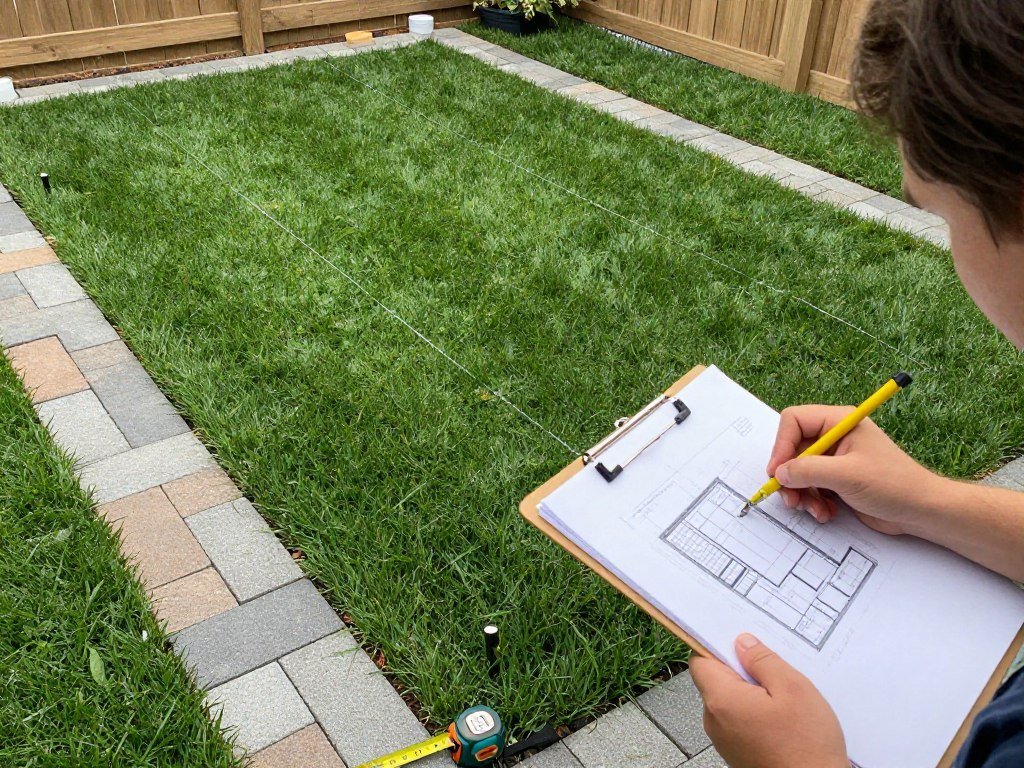
Measure and Map Your Space
Start by taking accurate measurements of your backyard and creating a scaled drawing. Mark existing features like trees, structures, and utility lines that need to be worked around. Divide your space into functional zones based on how you plan to use different areas. This blueprint will help determine material quantities and guide your installation process.
Consider Traffic Flow and Functionality
Think carefully about how people will move through your space and what activities will take place in different areas. Place pavers in high-traffic zones like pathways and around seating areas where durability is essential. Use turf in areas where you want a softer surface, such as children’s play spaces or lounging areas.
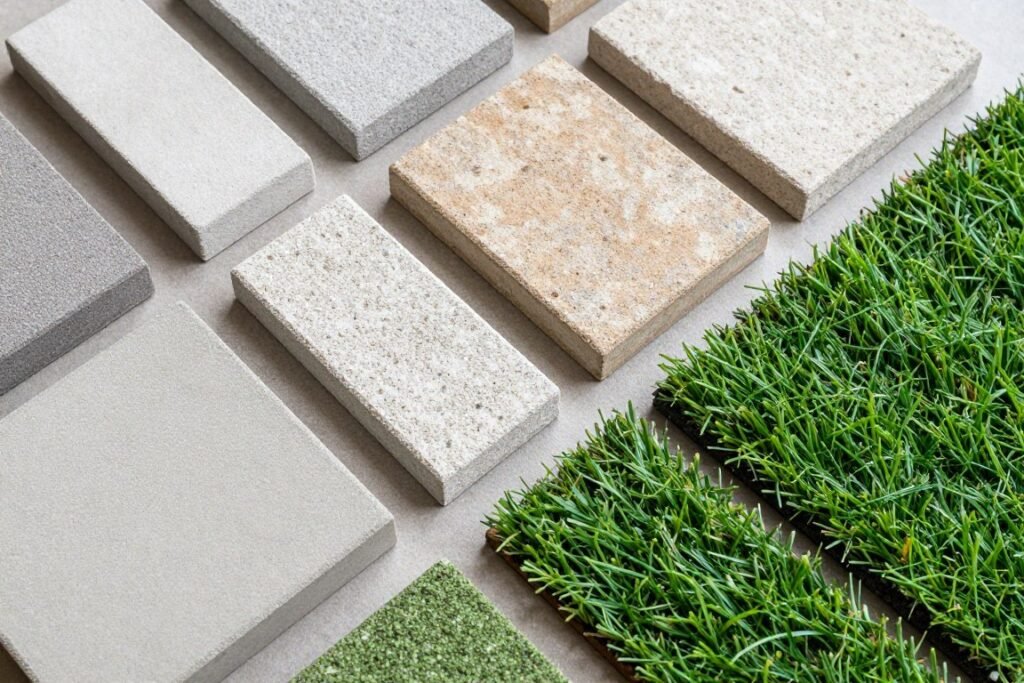
Select Quality Materials
The longevity of your backyard depends largely on material quality. For artificial turf, look for products with:
UV stabilization to prevent fading
Proper pile height (1.5-2 inches for most residential applications)
Realistic appearance with multiple blade colors
Quality backing with excellent drainage capabilities
Appropriate face weight (at least 60-80 oz for residential use)
For pavers, consider these factors:
Material type (concrete, natural stone, porcelain)
Thickness (at least 2 inches for residential applications)
Color retention properties
Texture (smooth vs. textured for slip resistance)
Shape and size that complements your design vision
Find the perfect pavers for your project
Browse a wide selection of durable, attractive paving options for your backyard transformation.
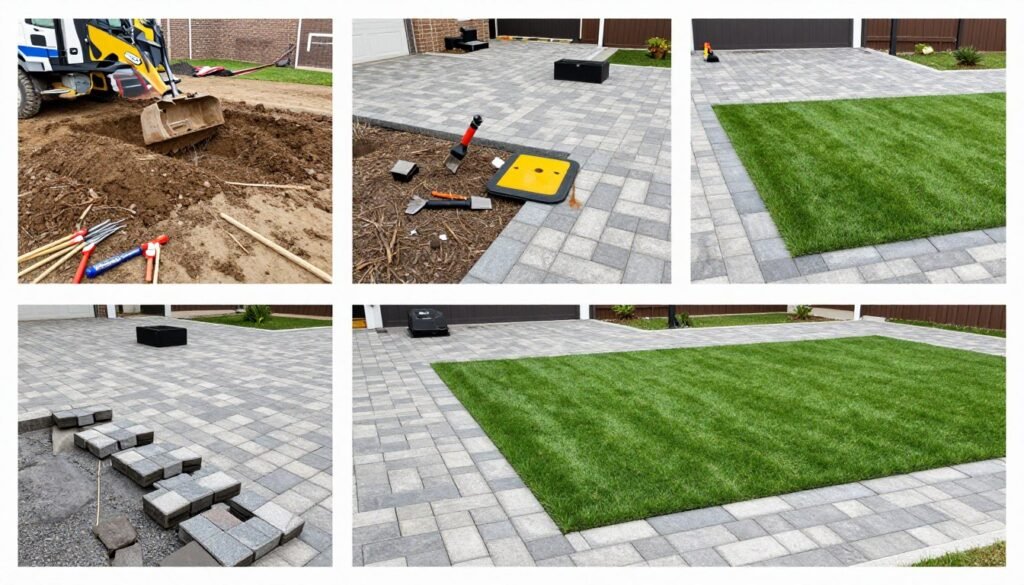
While professional installation is recommended for the best results, understanding the process helps you make informed decisions and properly evaluate contractor proposals. Here’s a simplified overview of the installation process:
Site Preparation: Remove existing grass, vegetation, and debris. Excavate to a depth of 4-6 inches depending on your base requirements.
Install Proper Drainage: Ensure the area has slight grading (1-2% slope) away from structures to prevent water pooling.
Add Base Material: Lay 2-4 inches of compactable base material like crushed stone or decomposed granite.
Compact the Base: Use a plate compactor to create a firm, stable foundation for both pavers and turf.
Add Bedding Sand: For pavers, add a 1-inch layer of leveling sand and screed it flat.
Install Pavers: Place pavers according to your design plan, checking frequently for level placement.
Install Edging: Secure the perimeter with paver restraints to prevent shifting.
Prepare for Turf: In areas designated for turf, add a layer of fine crushed stone or decomposed granite.
Install Weed Barrier: Place landscape fabric in turf areas to prevent weed growth.
Lay Artificial Turf: Roll out the turf, cutting precisely to fit around pavers and edges.
Secure and Seam: Secure turf edges with landscape stakes or adhesive. Join sections with seam tape and adhesive.
Add Infill: Spread infill material (silica sand or rubber) to help turf blades stand upright and provide ballast.
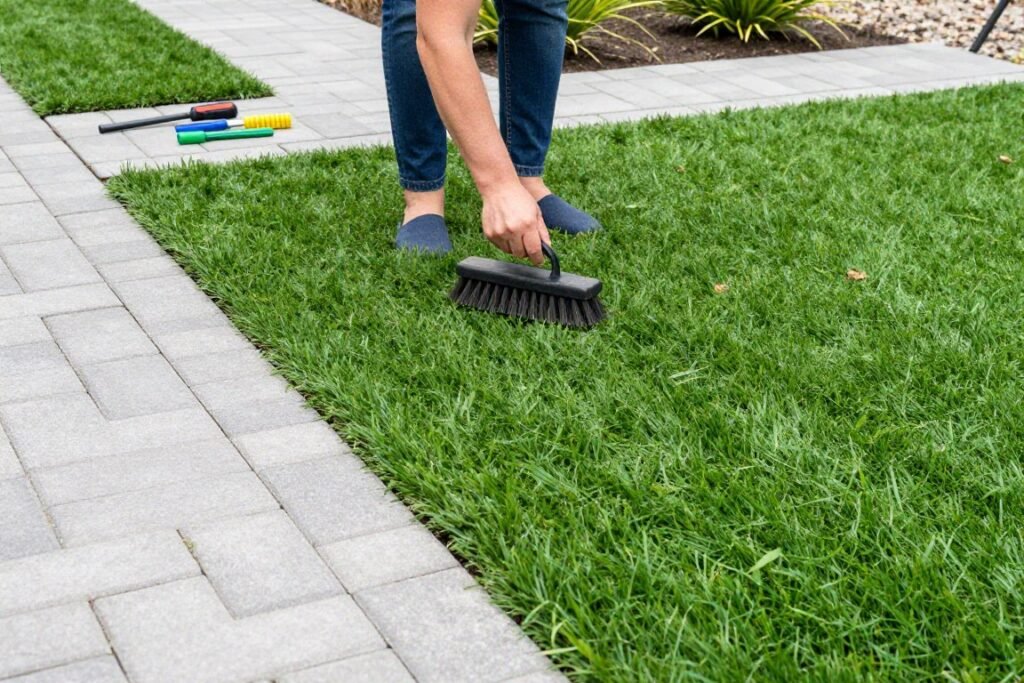
Brush and Finish: Brush the turf to distribute infill and create a natural appearance.
Pro Tip: When installing turf adjacent to pavers, ensure the turf pile height is slightly below the paver surface to prevent tripping hazards and allow for smooth transitions. Leave approximately 1/8 inch clearance between the top of the turf and the paver surface.
Get the right tools for your installation
Ensure professional-quality results with the proper installation tools and materials.
One of the biggest advantages of a turf and pavers backyard is the minimal maintenance required compared to traditional landscaping. However, some regular care will keep your outdoor space looking its best for years to come:
Artificial Turf Maintenance
Regular Rinsing: Hose down your turf every few weeks to remove dust and small debris.
Brush as Needed: Use a stiff brush or rake to fluff up turf fibers in high-traffic areas.
Remove Debris: Clear leaves and organic matter promptly to prevent decomposition on the turf surface.
Address Spills Quickly: Clean spills with mild soap and water to prevent staining.
Replenish Infill: Add infill material annually or as needed to maintain proper turf support.
Paver Maintenance
Regular Sweeping: Keep pavers clean by sweeping away debris regularly.
Occasional Washing: Pressure wash pavers annually to remove stubborn dirt and prevent moss growth.
Weed Management: Remove any weeds that appear between pavers promptly.
Joint Sand Replenishment: Add polymeric sand to joints as needed to maintain stability.
Sealing: Consider sealing concrete pavers every 3-5 years to enhance color and prevent staining.
Pet Owner Tip: For homes with pets, rinse turf areas regularly where pets relieve themselves. Consider specialized pet-friendly infill products that help neutralize odors and prevent bacterial growth. Promptly remove solid waste and occasionally use an enzymatic cleaner designed for artificial turf.
Cost Considerations for Turf and Pavers Projects
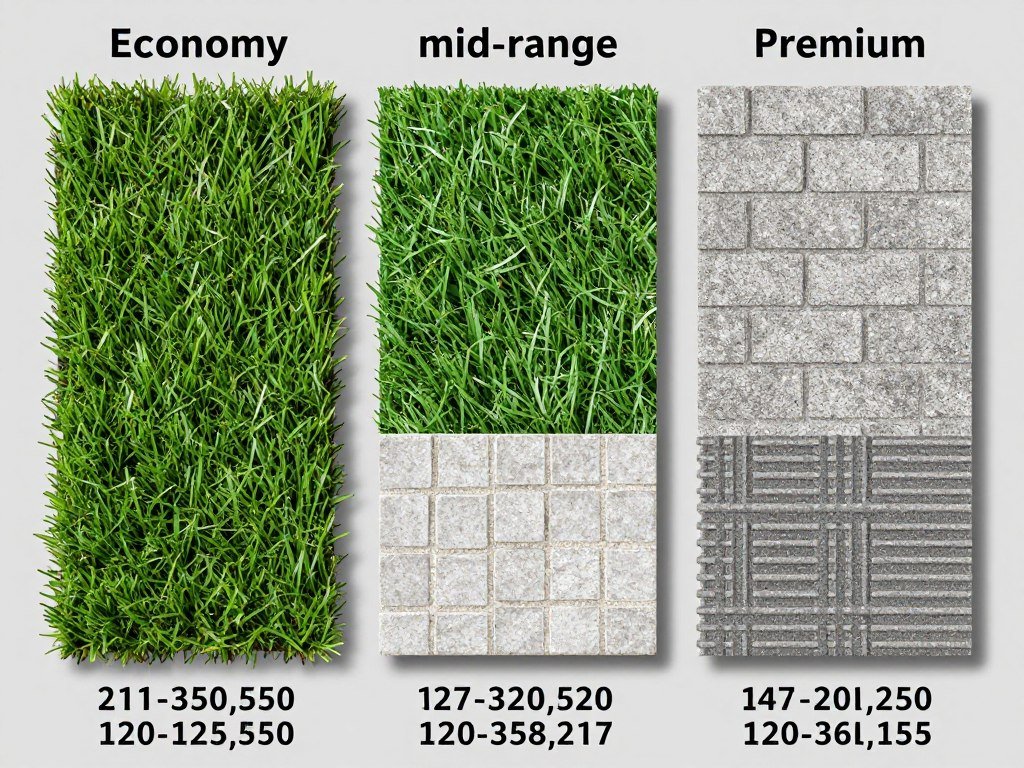
Understanding the cost factors involved in a turf and pavers project helps you budget appropriately and make informed decisions about materials and installation approaches:
Component
Economy Option
Mid-Range Option
Premium Option
Artificial Turf (per sq ft)
$2-$4
$5-$8
$9-$15
Pavers (per sq ft)
$2-$5
$6-$10
$11-$20
Base Materials (per sq ft)
$1-$2
$2-$3
$3-$5
Professional Installation (per sq ft)
$8-$12
$12-$18
$18-$25
DIY Installation Supplies
$200-$500
$500-$1,000
$1,000-$2,000
For a typical 500 square foot backyard project, total costs can range from $6,500 for a DIY installation with economy materials to $25,000+ for premium materials with professional installation. While the upfront investment is significant, consider the long-term savings on water bills, lawn care equipment, and regular maintenance services over the 15+ year lifespan of quality installations.
Ready to calculate your project costs?
Find affordable, high-quality materials to bring your turf and pavers backyard to life.
Frequently Asked Questions About Turf and Pavers Backyards
How long do artificial turf and pavers last?
Quality artificial turf typically lasts 15-20 years in residential applications, while properly installed pavers can last 25+ years or even a lifetime with appropriate maintenance. This makes the combination one of the most durable backyard solutions available.
Is artificial turf safe for children and pets?
Modern artificial turf products are designed to be safe for both children and pets. Look for non-toxic materials, lead-free certification, and antimicrobial properties. The turf provides a soft surface for play without the chemicals often used on natural lawns. For pets, select turf with efficient drainage and consider antimicrobial infill options.
How does weather affect turf and pavers?
Both materials are highly weather-resistant. Quality artificial turf is designed to withstand UV exposure without fading significantly, though extreme heat can cause it to become hot to the touch. Pavers expand and contract slightly with temperature changes but remain stable when properly installed. Both materials provide excellent drainage during heavy rain when installed with appropriate base preparation.
Can I install turf and pavers myself?
DIY installation is possible for those with good physical fitness and basic landscaping skills. However, proper base preparation is critical for longevity, and mistakes can be costly to fix later. Many homeowners choose to handle simpler aspects themselves while hiring professionals for critical components like base preparation and final turf installation. Complex designs or sloped yards typically benefit from professional installation.
Transform Your Backyard with the Perfect Turf and Pavers Combination
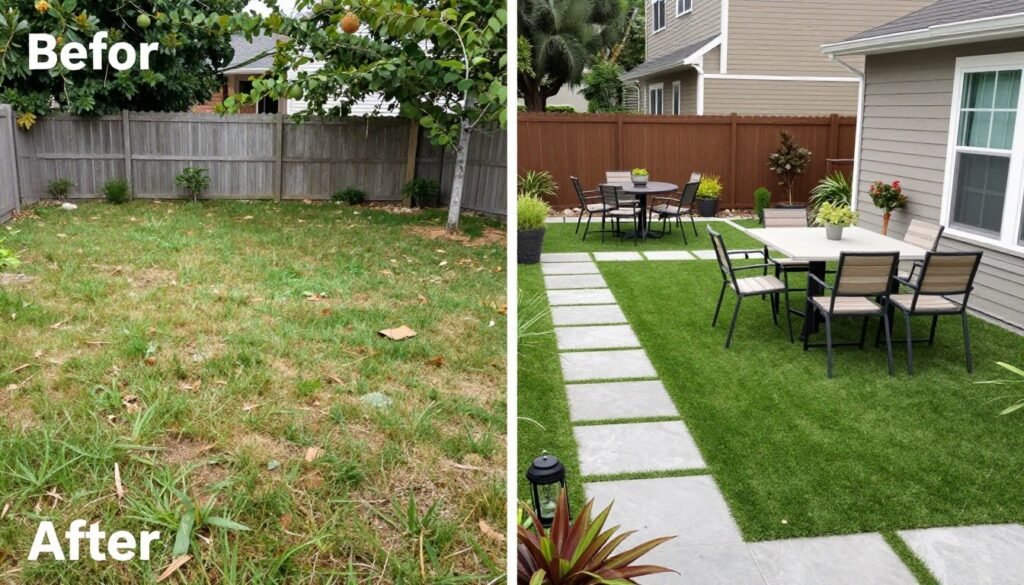
Creating a turf and pavers backyard offers the ideal balance of beauty, functionality, and low maintenance for today’s busy homeowners. By thoughtfully combining these versatile materials, you can design an outdoor space that enhances your lifestyle while reducing ongoing yard work and water consumption.
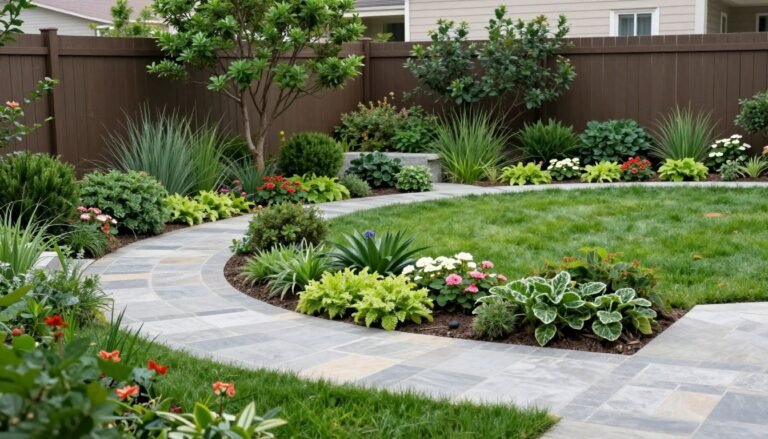
Whether you’re creating a sleek modern entertainment area, a family-friendly play space, or a tranquil garden retreat, the combination of artificial turf’s lush greenery with the structure and durability of pavers provides endless design possibilities. With proper planning, quality materials, and careful installation, your transformed backyard will provide years of enjoyment with minimal upkeep.
Ready to create your dream backyard?
Start your transformation today with quality materials that will last for years to come.