Tired of scrolling through endless bathroom vanities that don’t quite fit your space or style? Building your own DIY bathroom vanity might be easier than you think. Not only will you save hundreds (or even thousands) of dollars, but you’ll also get the exact size, style, and features you want. Plus, there’s nothing quite like the pride of telling guests, “I built that myself!”
This Website contains affiliate links. That means I may earn a small commission if you purchase through my links, at no extra cost to you.
Whether you’re a seasoned woodworker or just starting your DIY journey, this comprehensive guide will walk you through creating a custom bathroom vanity that looks like it came from a high-end furniture store. We’ll cover building from scratch or transforming an existing piece of furniture into a stunning bathroom centerpiece.
Planning Your DIY Bathroom Vanity
Before grabbing your tools, proper planning will save you time, money, and frustration. Let’s start with the essential first steps.
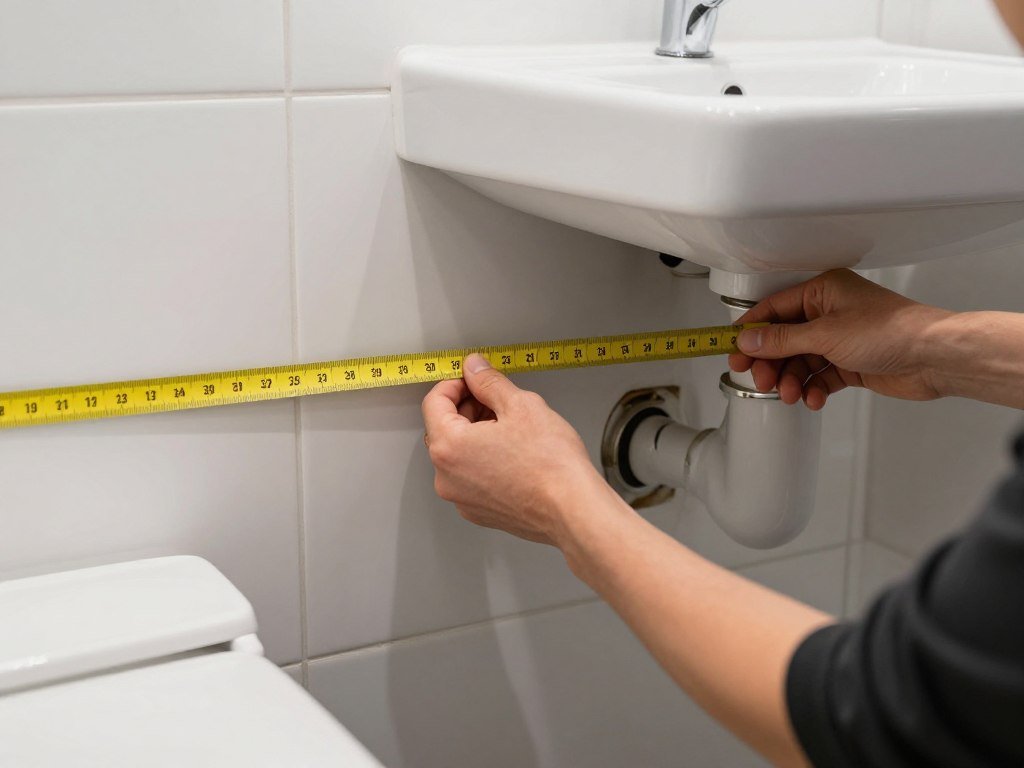
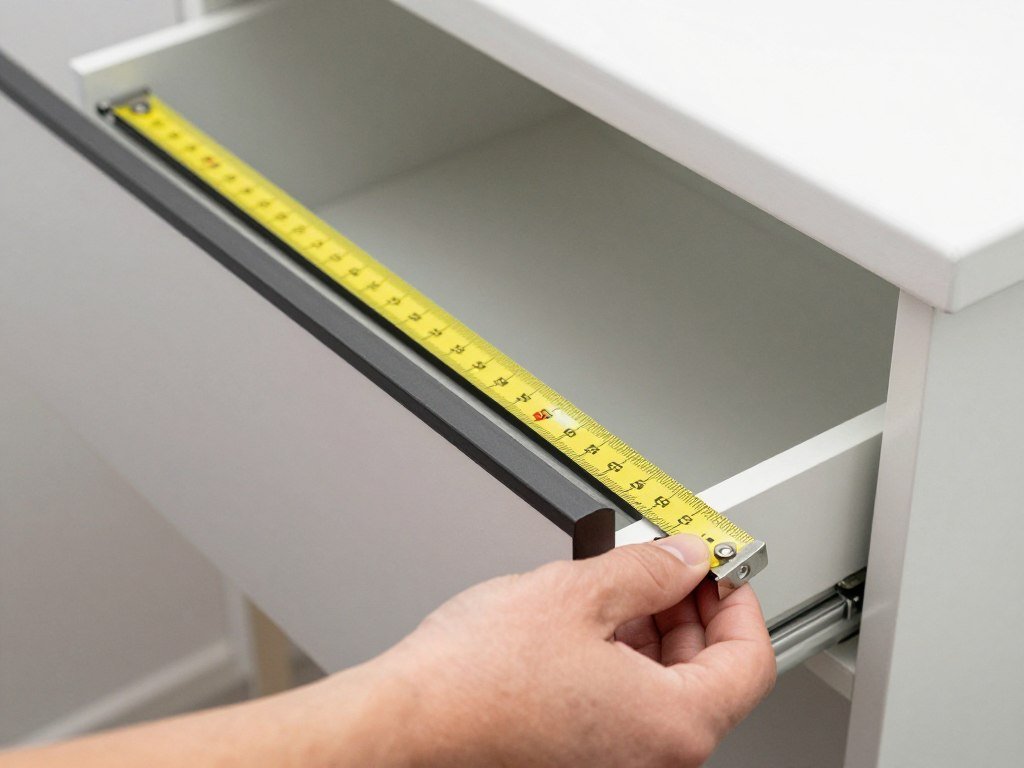
Measuring Your Space
Accurate measurements are crucial for a vanity that fits perfectly in your bathroom. Measure the available width, depth, and height where your vanity will go. Don’t forget to account for door clearance, existing plumbing locations, and comfortable walking space around the vanity.
Choosing Your Style
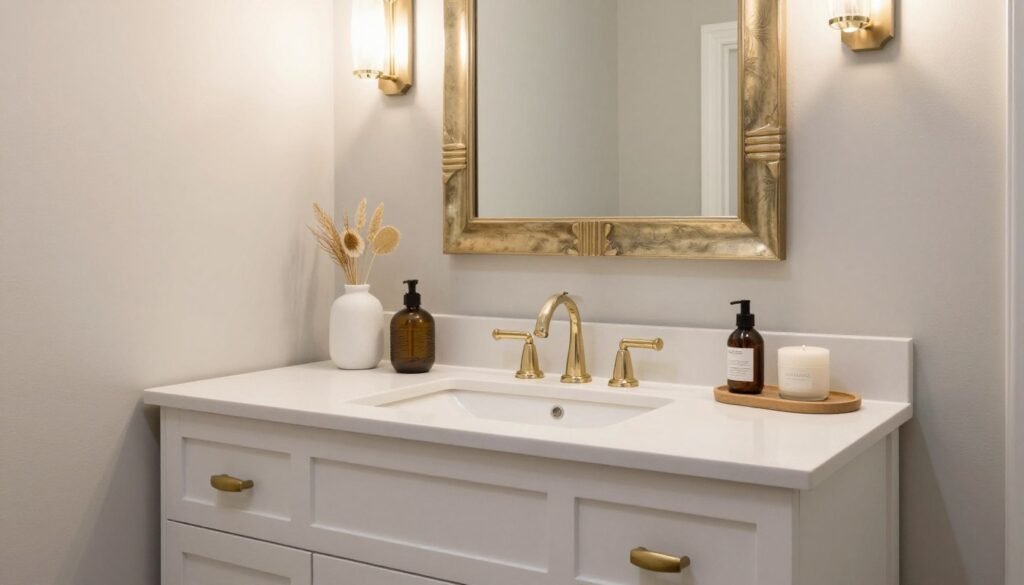
The style of your DIY bathroom vanity should complement your overall bathroom design. Popular styles include:
Now that you have your design and materials ready, let’s break down the building process into manageable steps.
Step 1: Building the Cabinet Box
The cabinet box is the foundation of your vanity. Start by cutting your plywood pieces according to your measurements:
Cut the side panels, bottom panel, and back panel from 3/4″ plywood.
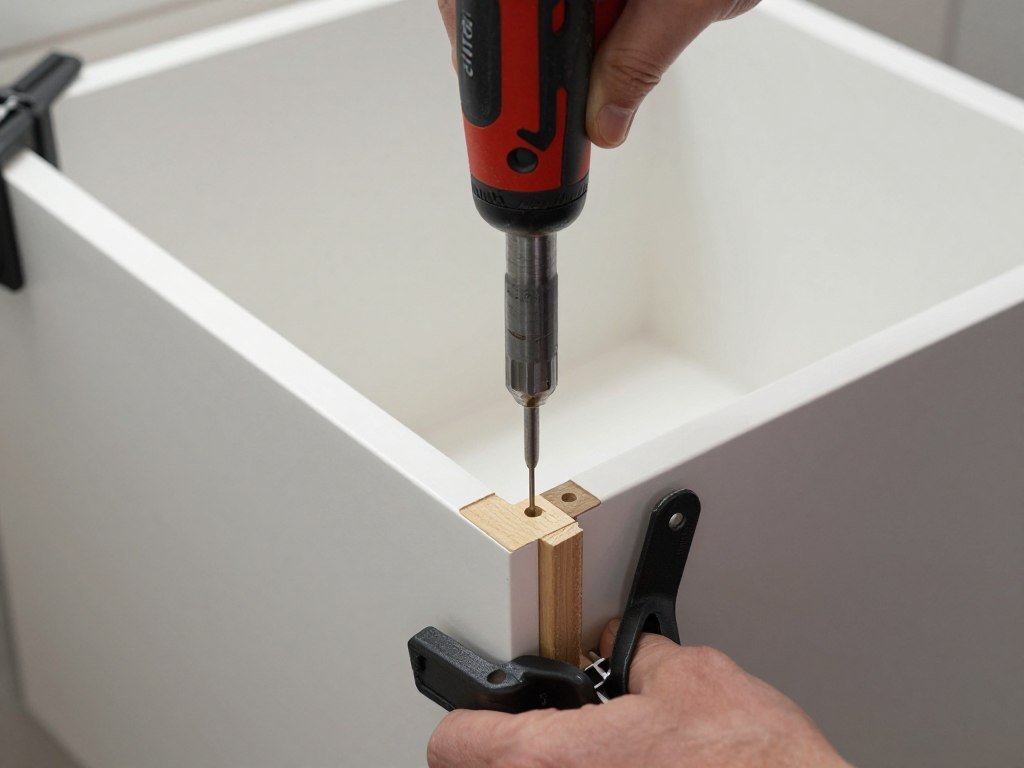
If using a Kreg Jig, drill pocket holes along the edges of the side panels where they’ll connect to the bottom panel.
Assemble the box by attaching the side panels to the bottom panel using wood glue and screws.
Attach the back panel, ensuring the cabinet box is square by measuring diagonally from corner to corner.
Add support cleats inside the cabinet for the countertop and sink.
“Make sure your cabinet box is perfectly square before moving forward. This is the foundation of your entire vanity, and any issues here will cause problems later.”
Step 2: Building the Face Frame
The face frame gives your vanity a finished look and provides mounting surfaces for doors and drawers.
Cut 1×2 or 1×3 boards for the vertical stiles and horizontal rails of your face frame.
Use pocket holes to join the pieces, creating a frame that’s slightly larger than your cabinet box.
Sand all edges smooth before attaching to the cabinet box.
Attach the face frame to the cabinet box using glue and finish nails or pocket screws from inside the cabinet.
Step 3: Adding Drawers and Doors
Drawers and doors add functionality and style to your vanity. Here’s how to create them:
For Drawers:
Cut drawer fronts from your chosen material.
Build drawer boxes using 1/2″ plywood for sides and 1/4″ plywood for bottoms.
Install drawer slides according to manufacturer instructions.
Attach drawer fronts to drawer boxes after painting or staining.
For Doors:
Cut door panels to size from solid wood or plywood with trim.
Sand edges smooth and drill holes for hinges.
Install hinges and attach doors to the face frame.
Add magnetic catches or soft-close mechanisms.
Pro Tip: For a more professional look, use a router to add decorative edges to drawer fronts and doors. If you don’t have a router, you can also use pre-made trim pieces attached to flat panels.
Installing the Countertop and Plumbing
This critical phase transforms your cabinet into a functional bathroom vanity.
Countertop Installation
Measure and cut your countertop material to size (or have it professionally cut if using stone).
For undermount sinks, attach the sink to the countertop before installing.
For drop-in sinks, cut the appropriate hole in the countertop.
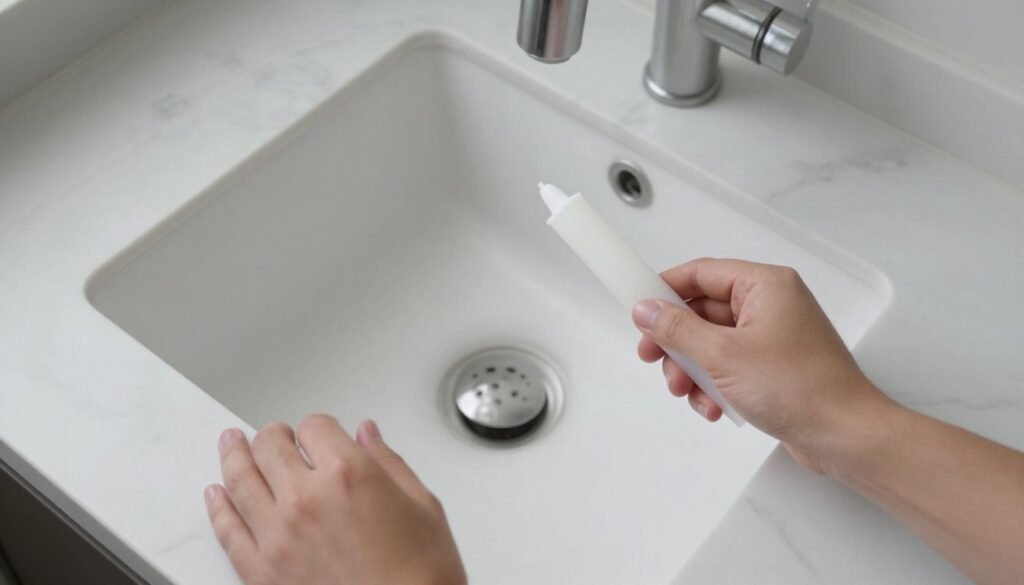
Secure the countertop to the vanity with silicone adhesive or screws from underneath.
Seal any seams or edges according to the countertop material requirements.
Plumbing Connections
If you’re not comfortable with plumbing, consider hiring a professional for this step.
Install the faucet according to manufacturer instructions.
Connect the P-trap and drain assembly to your sink.
Connect the water supply lines to the faucet.
Test for leaks before finishing the back panel of the vanity.
Important: Always turn off the water supply before beginning any plumbing work. Check local building codes to ensure your installation meets requirements, especially if you’re doing the plumbing yourself.
Finishing Your DIY Bathroom Vanity
The finishing touches will elevate your vanity from homemade to professional-looking.
Sanding and Prep Work
Proper preparation is key to a beautiful finish:
Sand all surfaces with progressively finer grits (start with 80-120, finish with 220).
Remove all dust with a tack cloth or slightly damp microfiber cloth.
Fill any gaps or nail holes with wood filler and sand smooth.
Apply wood conditioner if staining pine or other soft woods.
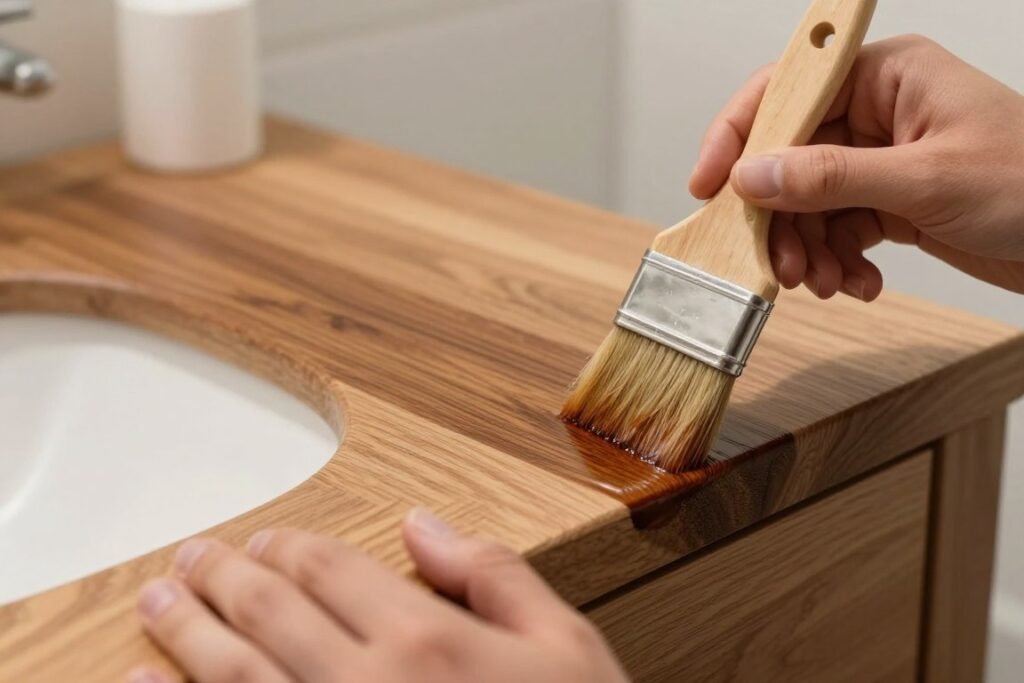
Painting or Staining
Choose the finish that best suits your style:
For Paint:
Apply a high-quality primer designed for bathrooms.
Once dry, lightly sand with 220-grit sandpaper.
Apply 2-3 coats of semi-gloss or satin paint, sanding lightly between coats.
Consider a paint sprayer for the smoothest finish.
For Stain:
Apply pre-stain wood conditioner if using pine or other soft woods.
Apply stain according to the manufacturer’s instructions, wiping off excess.
Allow to dry completely between coats if a darker finish is desired.
Apply 3-4 coats of polyurethane for durability in bathroom conditions.
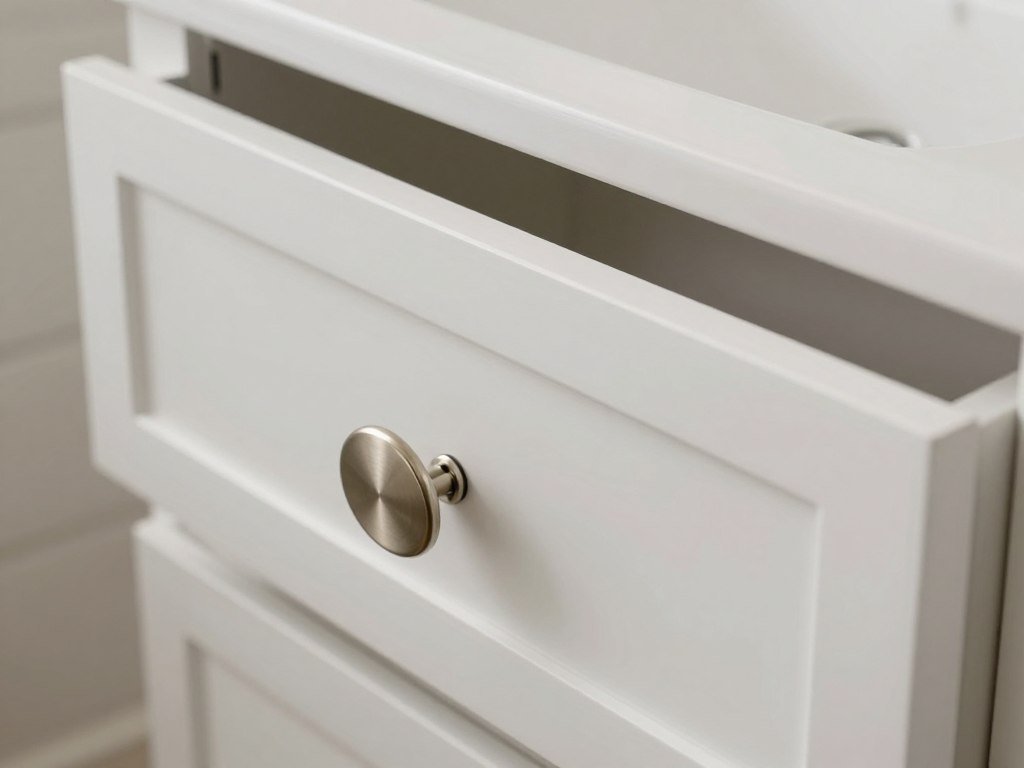
Hardware Installation
The right hardware can transform your vanity:
Measure and mark precise locations for knobs or pulls.
Use a cabinet hardware jig for perfect alignment.
Install knobs or pulls with the provided screws.
Add soft-close hinges or drawer slides if desired.
Upcycling Furniture into a Bathroom Vanity
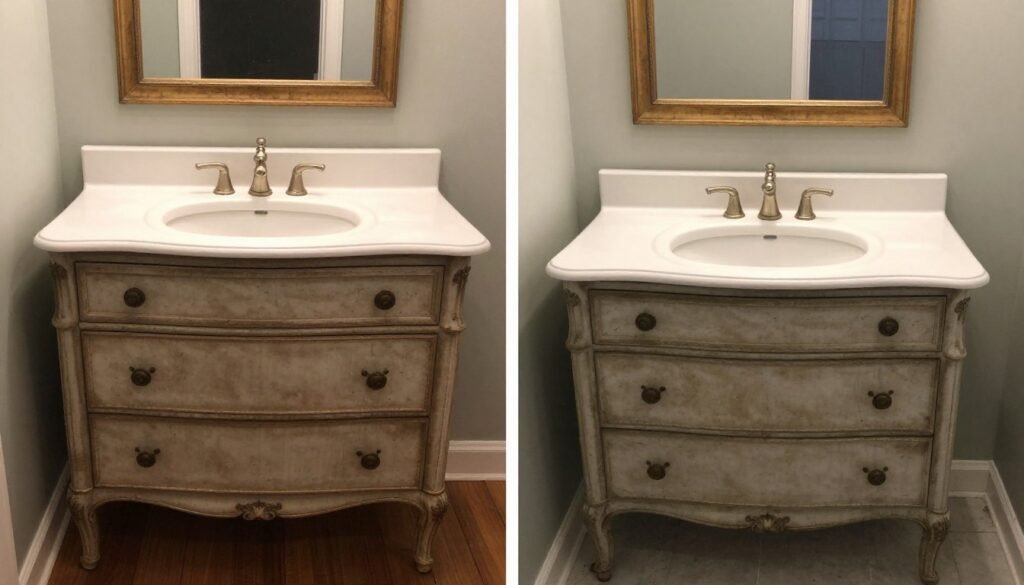
Don’t want to build from scratch? Transform an existing piece of furniture into a unique bathroom vanity!
Choosing the Right Piece
Not all furniture is suitable for bathroom conversion. Look for:
Solid wood construction (avoid particleboard if possible)
Appropriate height (standard vanity height is 30-36″)
Sufficient depth to accommodate a sink and plumbing
Good structural integrity (or easily repairable)
Modification Steps
Converting furniture requires some specific modifications:
Remove or modify the top drawer to accommodate plumbing.
Reinforce the top if needed to support a sink and countertop.
Cut holes for plumbing access in the back and interior shelves.
Apply multiple coats of water-resistant sealer to protect from moisture.
Install a countertop material that provides a waterproof surface.
Ideal Furniture for Conversion: Dressers, sideboards, console tables, and desks often make excellent bathroom vanities. Look for pieces with drawers or cabinets for storage and a sturdy construction that can handle the weight of a sink and countertop.
Styling and Customizing Your DIY Bathroom Vanity
Make your vanity truly unique with these designer touches:
Hardware and Fixtures
Statement pulls or knobs in contrasting finishes
Decorative feet or furniture legs
Vessel sink for a dramatic look
Waterfall faucet or wall-mounted fixtures
Decorative Elements
Applied molding or trim work
Beadboard or shiplap panels
Contrasting paint colors for drawers/doors
Integrated towel bars or hooks
Functional Upgrades
Consider these practical additions to enhance your vanity:
Pull-out storage trays for small items
Built-in electrical outlets for hair tools
Soft-close drawer slides and hinges
Under-cabinet lighting
Custom drawer dividers for organization
Frequently Asked Questions About DIY Bathroom Vanities
How much money can I save by building my own bathroom vanity?
You can save anywhere from 40-70% compared to purchasing a similar quality pre-made vanity. A custom solid wood vanity that might cost
Frequently Asked Questions About DIY Bathroom Vanities
How much money can I save by building my own bathroom vanity?
You can save anywhere from 40-70% compared to purchasing a similar quality pre-made vanity. A custom solid wood vanity that might cost $1,200-2,500 in stores can often be built for $300-600 in materials, depending on your choice of wood, hardware, and countertop.
How long does it take to build a DIY bathroom vanity?
For a beginner to intermediate DIYer, expect to spend 2-3 weekends (20-30 hours total) on the project. This includes planning, building, finishing, and installation. Experienced woodworkers might complete it in a single weekend.
What’s the most challenging part of building a bathroom vanity?
Most DIYers find that making precise cuts for the sink opening and accommodating plumbing are the most challenging aspects. Taking accurate measurements and using templates can help overcome these challenges.
Do I need special tools to build a bathroom vanity?
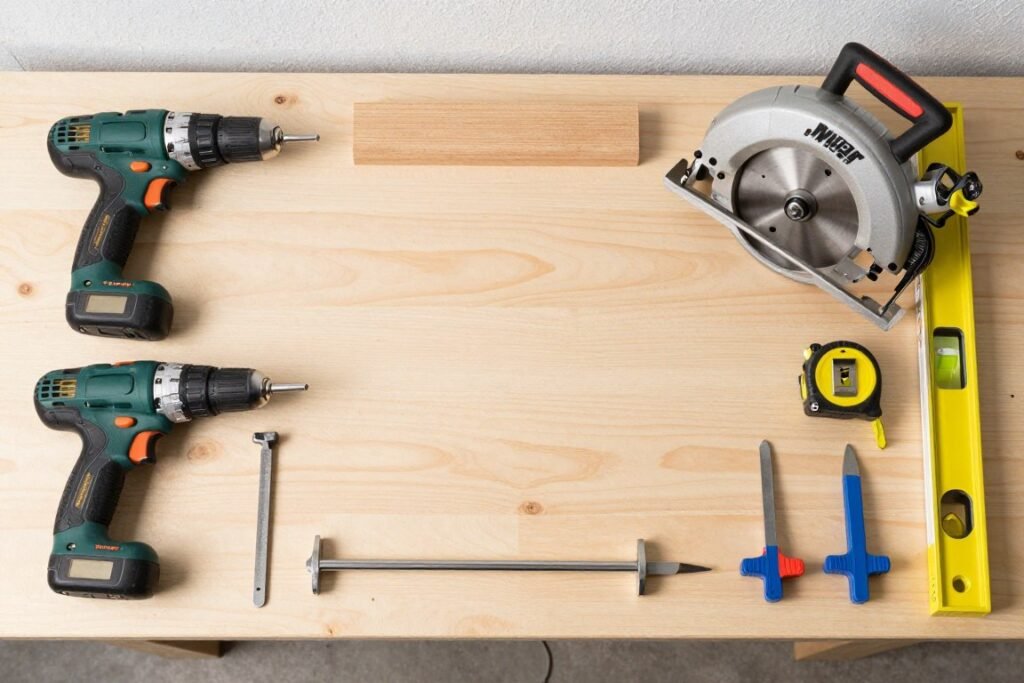
While you can build a basic vanity with just a circular saw, drill, and sander, having access to a table saw, pocket hole jig, and router will make the job easier and result in a more professional finish. Consider renting specialty tools or using a makerspace if you don’t want to purchase them.
What’s the best wood to use for a bathroom vanity?
Hardwoods like oak, maple, and walnut are excellent choices due to their durability and resistance to moisture. Cedar and cypress are naturally resistant to humidity as well. If using pine or other softwoods, be sure to seal them thoroughly with multiple coats of polyurethane.
,200-2,500 in stores can often be built for 0-600 in materials, depending on your choice of wood, hardware, and countertop.
How long does it take to build a DIY bathroom vanity?
For a beginner to intermediate DIYer, expect to spend 2-3 weekends (20-30 hours total) on the project. This includes planning, building, finishing, and installation. Experienced woodworkers might complete it in a single weekend.
What’s the most challenging part of building a bathroom vanity?
Most DIYers find that making precise cuts for the sink opening and accommodating plumbing are the most challenging aspects. Taking accurate measurements and using templates can help overcome these challenges.
Do I need special tools to build a bathroom vanity?
While you can build a basic vanity with just a circular saw, drill, and sander, having access to a table saw, pocket hole jig, and router will make the job easier and result in a more professional finish. Consider renting specialty tools or using a makerspace if you don’t want to purchase them.
What’s the best wood to use for a bathroom vanity?
Hardwoods like oak, maple, and walnut are excellent choices due to their durability and resistance to moisture. Cedar and cypress are naturally resistant to humidity as well. If using pine or other softwoods, be sure to seal them thoroughly with multiple coats of polyurethane.
Ready to Build Your DIY Bathroom Vanity?
Building your own bathroom vanity is a rewarding project that can transform your bathroom while saving you money. With proper planning, the right tools, and a weekend or two of work, you can create a custom piece that perfectly fits your space and style.
Remember to take your time, measure twice (or three times!), and enjoy the process. The satisfaction of completing a functional, beautiful vanity that you built with your own hands is well worth the effort.
Share Your DIY Bathroom Vanity
We’d love to see your finished project! Pin this tutorial for later and tag us in your photos when you complete your DIY bathroom vanity.