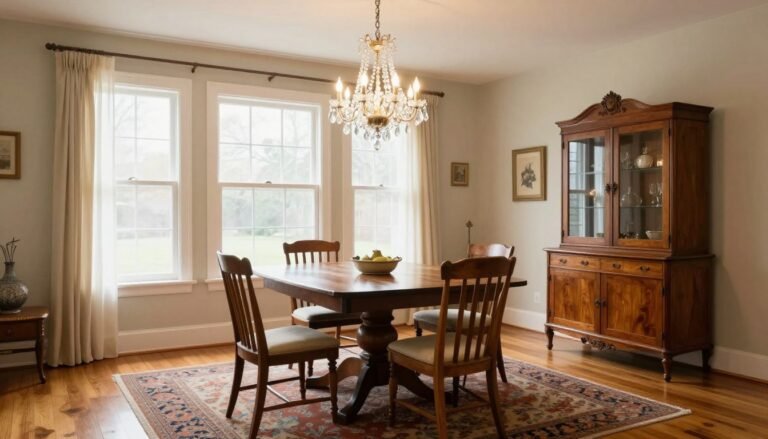
Planning your homestead layout determines whether you spend your days working efficiently or constantly walking back and forth across your land. A well-designed layout saves time, energy, and money while creating a space where your family can thrive for years to come.
This Website contains affiliate links. That means I may earn a small commission if you purchase through my links, at no extra cost to you.
Your land holds incredible potential. The difference between a frustrating homestead and a productive one often comes down to how you arrange everything on your property.
This guide walks you through every step of creating a functional homestead layout that works with your land, climate, and goals.
Understanding Homestead Layout Basics
Every successful homestead starts with understanding what you have and what you need. Your layout plan becomes the foundation for everything you build and grow in the coming year and beyond.
Assessing Your Available Land
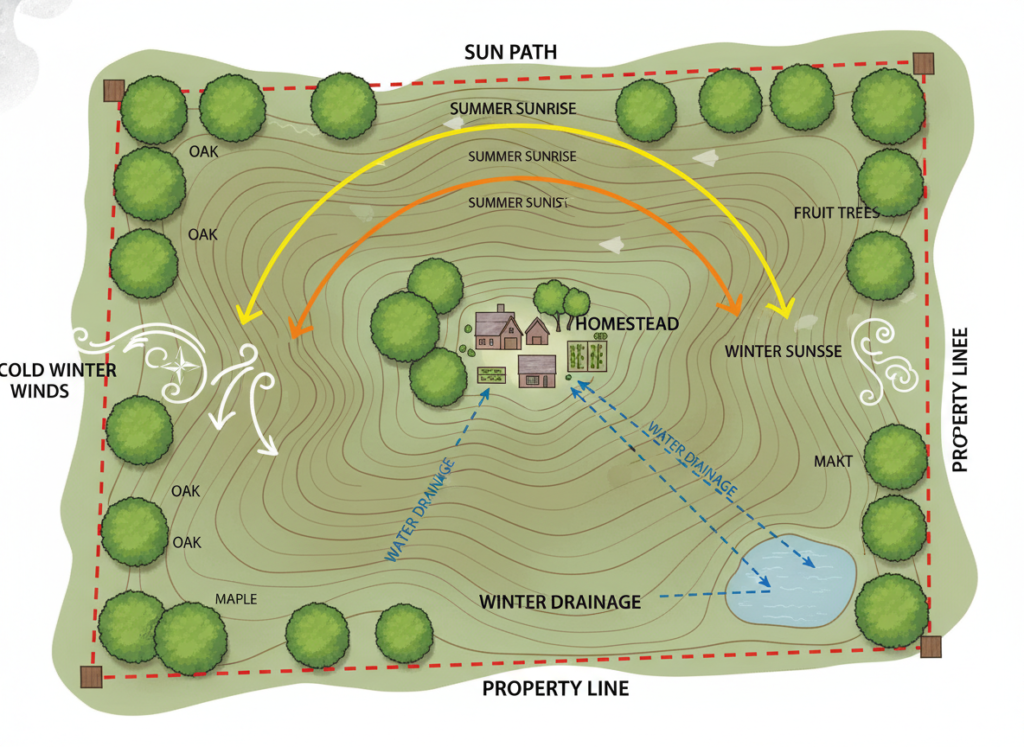
Walk every part of your property before making any decisions. Note where water naturally flows during rain. Mark areas that stay wet in winter and spots that dry out in summer.
Measure the actual usable space you have. Not all land on your property works for building or growing. Steep slopes, rocky areas, and low wet spots need different approaches than flat, well-drained soil.
Related Posts:


Take time to observe your land through different seasons. Watch where the sun hits throughout the day. Notice which areas get wind protection and which face harsh weather.
Identifying Your Homestead Goals
Write down what you want from your homestead. Some families focus on growing food. Others prioritize raising animals for meat and eggs. Many homesteaders aim for a mix of both.
Your goals shape your layout decisions. A family wanting fresh vegetables needs different space allocation than someone planning to raise goats and chickens.
Consider how much time you can dedicate to homesteading. A layout requiring three hours of daily chores works great if you have the time. If you work off the homestead, design something more manageable.
Climate and Regional Considerations
Your local climate changes everything about your homestead layout. Cold winter areas need different animal housing than warm regions. Summer heat requires shade structures that northern homesteads might skip.
Research your growing zone and frost dates. This information tells you when to plant crops and how to protect animals during extreme weather.
Wind patterns matter more than most people realize. Place your chicken coop and animal shelters where they get protection from prevailing winds. Position gardens to avoid harsh wind that damages plants.
Core Principles of Efficient Homestead Design
Smart homestead design follows patterns that nature already uses. These principles help you create a layout that works with your land instead of against it.
Zone Planning for Your Property
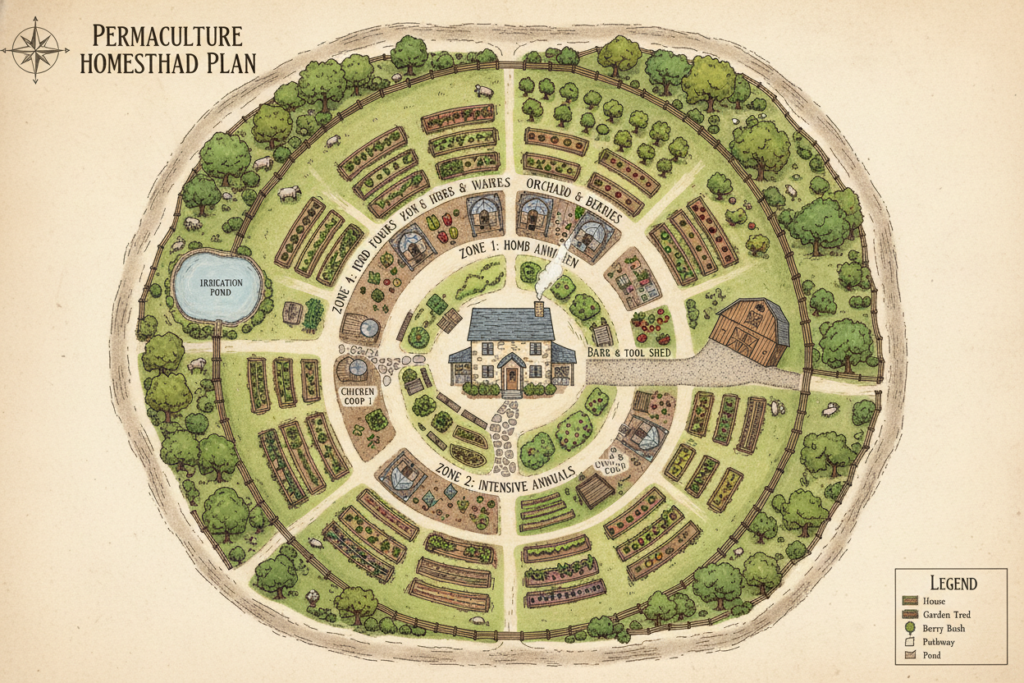
Permaculture design divides homesteads into five zones based on how often you visit each area. Zone 1 sits closest to your home and gets daily attention. Zone 5 remains mostly wild.
Place your kitchen garden in Zone 1 where you can step outside and grab herbs or vegetables for dinner. This area might include a small chicken coop you check multiple times per day.
Zone 2 works well for your main garden and fruit trees that need regular care but not daily visits. Position larger animal housing here where you check once or twice daily.
Zone 3 holds crops that need less frequent attention like hay fields or larger pasture areas. You might visit this area weekly for maintenance and harvesting.
Water Management and Access
Water flow shapes your entire homestead layout. Gravity moves water downhill, and working with this natural movement saves massive amounts of effort.
Position animal areas uphill from your gardens when possible. This prevents manure runoff from contaminating food crops. Run water lines downhill to avoid pump systems.
Plan for water access in every area where you need it. Hauling water long distances wastes time and energy. Install frost-free hydrants or water tanks in key locations before you need them.
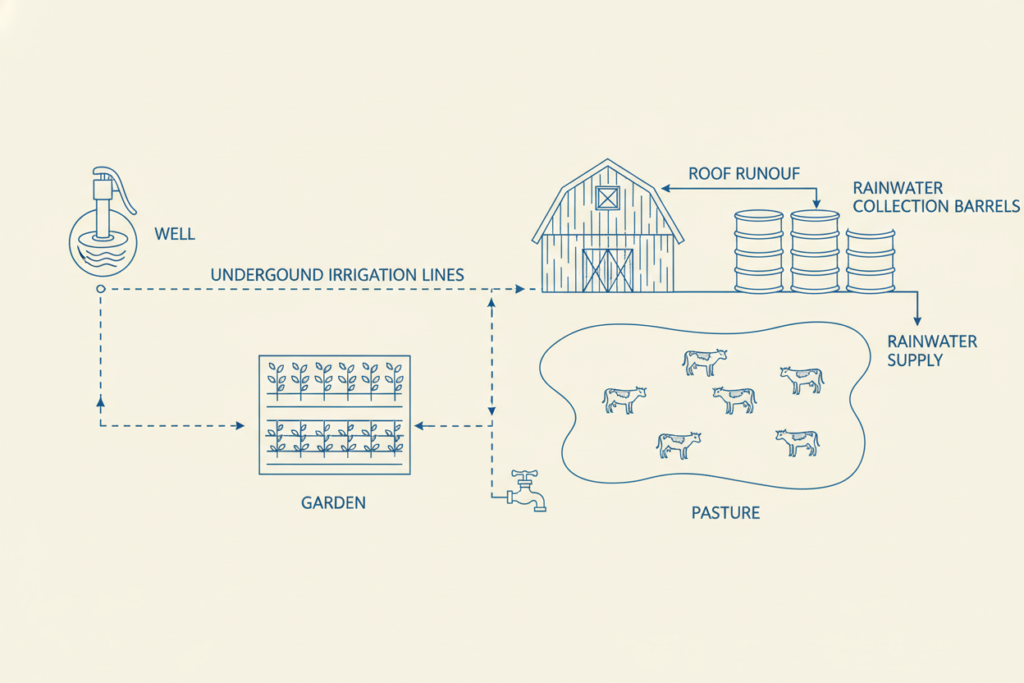
Capture and store rainwater where it makes sense. Roof runoff from barns can fill stock tanks. Swales along contour lines slow water movement and help moisture soak into soil.
Creating Efficient Movement Patterns
You will walk the same paths hundreds of times each year. Design routes that save steps and make chores easier during bad weather.
Connect your home, garden, and animal areas with clear pathways. Wide paths let you push wheelbarrows and garden carts without struggling through mud.
Position the most frequently visited areas closest together. Your daily egg collection should not require a quarter-mile hike. Place your compost pile between the kitchen and garden for easy access from both.
Planning Your Residential and Storage Structures
Buildings form the backbone of your homestead layout. Where you place your home and storage buildings affects every other decision you make.
House Placement and Orientation
Your house location determines convenience for everything else on your homestead. Choose a spot that gives you good views of animal areas so you can watch for problems.
Face the main living areas south in northern climates to capture winter sun. This passive solar design cuts heating costs and brings natural light into your home during short winter days.
Consider access during different seasons. A beautiful spot might become unreachable during spring mud season or winter snows. Make sure you can get vehicles to your home year-round.
Barn and Shed Positioning
Place your main barn where it serves multiple purposes. Good barn placement provides weather protection for animals while keeping feed and tools close to where you need them.
Position storage buildings on high ground that drains well. Wet areas lead to rot and mold in stored hay, feed, and building materials.
Think about prevailing winds when placing barns. Opening barn doors into the wind makes daily chores harder and lets cold air blast animals in winter.
Workshop and Tool Storage
A dedicated workshop space saves countless hours of searching for tools. Keep your workshop central to both your home and the areas where you work most.
Store tools near where you use them. Garden tools belong close to the garden. Animal care supplies work best near the barn.
Protect valuable equipment from weather. A simple three-sided equipment shed keeps tractors, mowers, and large tools out of rain and sun.
Ready to Design Your Perfect Homestead Layout?
Get access to comprehensive homestead planning guides and design templates that show you exactly how to create an efficient, productive layout for your property.
Designing Your Garden and Growing Areas
Your garden layout directly impacts how much food you grow and how much work you do. Smart garden design makes growing food easier and more productive.
Vegetable Garden Location
Vegetables need at least six hours of direct sunlight each day. More sun means better harvests. Survey your land to find the sunniest spot available.
Place your main vegetable garden close to your home. You will visit this area daily during the growing season to harvest, weed, and water.
Avoid low spots where cold air settles. These frost pockets kill plants earlier in fall and damage crops later in spring. Choose slightly elevated ground with good air circulation.
Level ground makes garden work easier, but gentle slopes work fine if you run rows along the contour. Steep slopes need terracing to prevent soil erosion.
Raised Bed Versus Row Garden Layout
Raised beds concentrate your efforts in smaller spaces. They warm up earlier in spring and drain better than in-ground gardens. Build beds four feet wide so you can reach the center from either side.
Traditional row gardens work better for larger homesteads and families who want to grow food in bulk. Rows let you use tillers and make space for sprawling crops like winter squash.
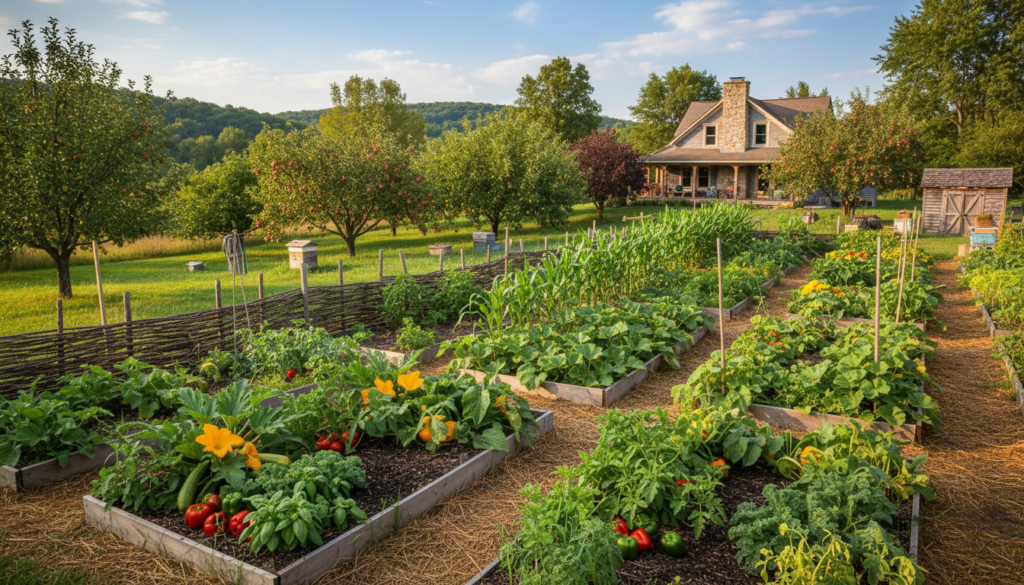
Many homesteaders use both approaches. Raised beds near the home grow salad greens, herbs, and vegetables you pick often. Row gardens farther out produce staple crops like potatoes, corn, and dried beans.
Orchard and Berry Plantings
Fruit trees and berry bushes produce for many years. Place them carefully because moving mature plants damages them.
Give fruit trees full sun and space them based on mature size. Dwarf trees need twelve feet between them. Standard-size trees require thirty feet or more.
Plant berries on the edge of your garden area or along pathways. Raspberries, blackberries, and blueberries need different soil conditions. Group plants with similar needs together.
Consider how tall trees affect other areas. Large fruit trees cast shade that kills vegetable gardens. Position orchards where shade falls on pasture or pathways instead of growing areas.
Greenhouse and Season Extension
A greenhouse extends your growing season on both ends. In cold climates, greenhouses let you start spring planting weeks earlier and keep harvesting into winter.
Attach your greenhouse to the south side of a building if possible. Attached greenhouses stay warmer and cost less to build than freestanding structures.
Position freestanding greenhouses where they get maximum sun exposure. Orient the long side facing south to capture the most light during short winter days.
Run water and electricity to your greenhouse during construction. Adding these utilities later costs much more and causes frustration.
Animal Housing and Infrastructure Planning
Animals need appropriate housing, secure fencing, and daily care. Planning these areas well makes animal care enjoyable instead of exhausting.
Chicken Coop Placement
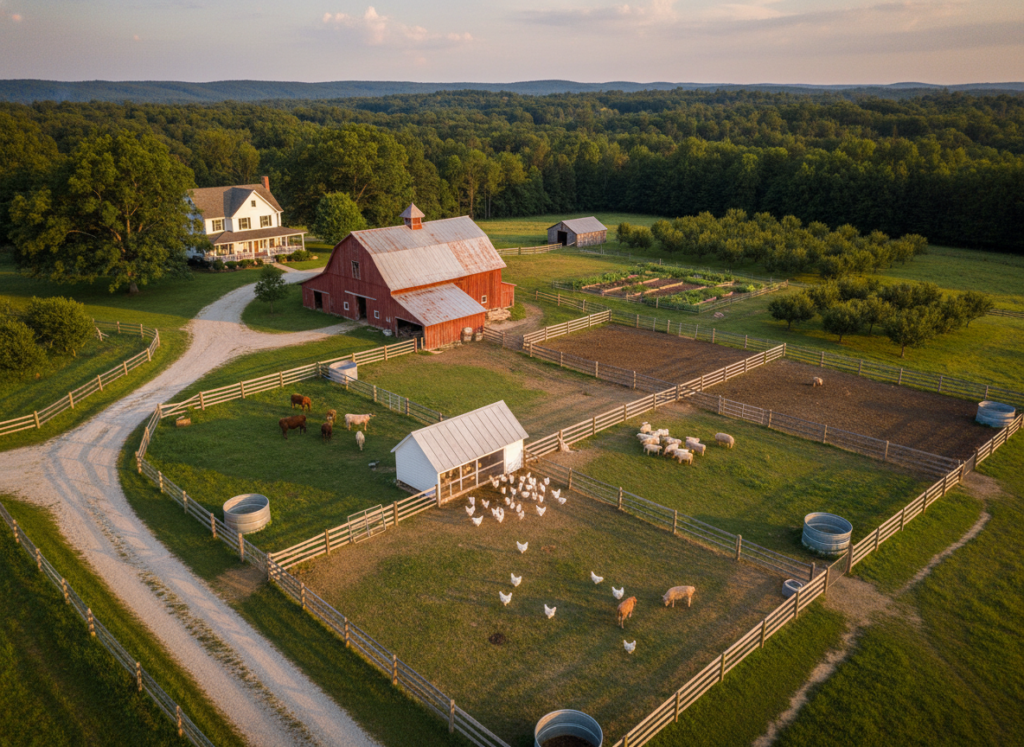
Chickens rank as the most common homestead animal. They provide fresh eggs, meat, and entertainment. Your chicken coop location affects how well birds thrive and how easy they are to tend.
Position chicken coops where you can see them from your home. This visibility helps you notice predator problems or sick birds quickly.
Provide morning sun exposure for the coop. Chickens wake with sunrise, and morning light encourages egg laying. Afternoon shade keeps coops cooler during summer heat.
Place coops upwind of your home to avoid smell issues. Add ventilation at the top of coops to remove moisture without creating drafts that chill birds.
Connect the coop to a secure run where chickens can scratch and forage. Give birds at least ten square feet per chicken in the run area.
Larger Livestock Facilities
Goats, sheep, pigs, and cattle need more space and stronger facilities than chickens. Plan livestock areas based on the number of animals you intend to keep.
Locate large animal housing away from your immediate home area. Even well-maintained livestock areas create noise and smell. Position barns and animal shelters at least fifty feet from your house.
Provide shelter from wind and precipitation. Animals can handle cold temperatures if they stay dry and out of wind. Three-sided shelters work well in many climates and cost less than fully enclosed barns.
Plan for manure management from day one. Large animals produce surprising amounts of manure. Designate a composting area downhill and downwind from your home.
Pasture Layout and Rotation
Rotational grazing keeps pasture healthy and reduces parasite problems in animals. Divide large pastures into smaller paddocks using permanent or temporary fencing.
Size paddocks based on how many animals you have and how fast grass grows. In productive pasture, you might move animals every few days. Slower-growing areas need more space per animal.
Create a lane or alley that connects all pasture areas to your barn. This covered pathway gives animals a route to shelter and lets you move them easily without fighting through mud.
Include water access in every pasture section. Animals need fresh water available at all times. Install frost-free hydrants or use portable water tanks you can move with the animals.
Water Systems and Infrastructure
Reliable water access makes the difference between a homestead that functions smoothly and one where you constantly struggle. Plan your water system to serve all areas of your property.
Well and Water Source Location
Most rural homesteads depend on well water. Position your well uphill from animal areas, septic systems, and compost piles to protect water quality.
Drill your well before you build. Knowing where water sits underground helps you plan building locations and avoid placing structures over the best drilling spots.
Some homesteads access springs or surface water. Protect water sources with fencing to keep animals out. Test water quality regularly if you use it for drinking.
Irrigation Planning
Gardens need consistent moisture to produce well. Hand watering works for small gardens but becomes overwhelming as your growing area expands.
Install permanent water lines to garden areas during initial site development. Buried lines avoid damage from frost and garden work.
Drip irrigation saves water and keeps plant leaves dry, reducing disease problems. Run drip lines along each garden row or between raised beds.
Sprinkler systems work well for large gardens and pastures. Choose sprinkler heads based on water pressure and coverage needs.
Rainwater Collection Systems
Rainwater harvesting reduces dependence on well water and provides chemical-free water for gardens. Roof surfaces collect surprisingly large amounts of water during rain events.
Install gutters on all buildings to catch roof runoff. Direct downspouts into storage tanks sized to meet your needs.
Position storage tanks on high ground when possible. Gravity pressure eliminates the need for pumps when watering gardens below tank level.
Use first-flush diverters to keep the dirtiest water from entering storage tanks. These simple devices let the first rain wash debris off roofs before filling tanks.
Master Permaculture Design for Your Homestead
Learn proven permaculture design principles that create water-efficient, productive homesteads. Get detailed plans and strategies used by successful homesteaders.
Essential Support Systems
Beyond basic structures and growing areas, successful homesteads need support systems that handle waste, provide energy, and store harvests.
Composting Areas and Waste Management
A good compost pile turns waste into valuable soil amendment. Every homestead generates organic waste from gardens, kitchens, and animal areas.
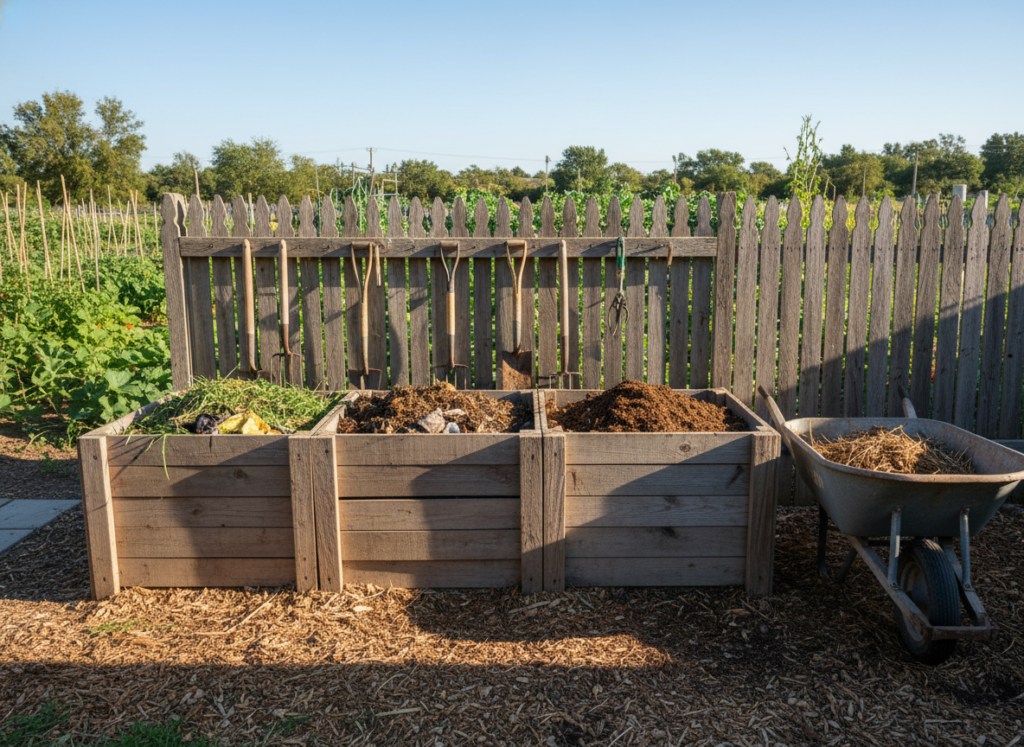
Create a composting area between your home and garden. This central location makes it easy to add kitchen scraps and transport finished compost to beds.
Build at least three compost bins. One holds new material. Another contains material breaking down. The third stores finished compost ready to use.
Keep compost piles at least thirty feet from your home to avoid attracting pests. Position them where neighbors cannot see them if you live in a residential area.
Energy and Utility Planning
Modern homesteads need electricity even when aiming for self-sufficiency. Plan electrical service to reach all buildings and outdoor areas where you need power.
Consider solar panels if your property gets good sun exposure. Mount panels on south-facing roof surfaces or on ground mounts in open areas.
Run electrical lines underground when possible. Buried lines avoid storm damage and look better than overhead wires.
Include outdoor outlets near gardens, animal areas, and workshops. These convenient power sources let you use electric tools without running extension cords.
Food Storage and Preservation Areas
Harvests need proper storage to avoid waste. Plan dedicated spaces for food preservation and storage when designing your homestead layout.
Include a root cellar in your plans if possible. These underground rooms store root vegetables, apples, and canned goods at ideal temperatures.
Create a processing area near your kitchen for canning and food preservation. This space needs good ventilation, plenty of counter space, and easy cleanup.
Designate freezer space for meat and frozen produce. Many homesteaders need chest freezers that require dedicated space in a garage, barn, or utility room.
Seasonal Considerations for Your Homestead Layout
Your homestead functions year-round, but each season brings different challenges and opportunities. Design your layout to work in all seasons.
Winter Access and Snow Management
Winter transforms easy tasks into challenges. Snow and ice make pathways dangerous and animal care difficult.
Widen main pathways to accommodate snow removal equipment. Clear routes need to be at least six feet wide for small tractors or ATVs with plows.
Position animal shelters where snow does not drift against doors. South-facing openings often stay clearer than other orientations.
Consider winter sun angles. Low winter sun creates long shadows. Place solar panels and greenhouses where winter shadows from buildings and trees will not block light.
Summer Heat and Shade
Extreme summer heat stresses animals and makes outdoor work exhausting. Plan shade for people, animals, and heat-sensitive plants.
Plant deciduous trees near animal areas to provide summer shade. These trees lose leaves in winter, allowing sun to warm animals when they need it.
Position chicken coops and rabbit hutches where afternoon shade protects animals during the hottest part of the day.
Create shaded rest areas along main pathways. Simple shade structures provide spots to cool off during summer garden work.
Spring Mud and Drainage
Spring thaw and rain create mud that bogs down vehicles and makes paths impassable. Good drainage planning prevents most mud problems.
Crown all pathways and roads so water sheds to the sides. Even a slight slope prevents water from pooling on walking surfaces.
Add gravel to high-traffic areas that stay muddy. A four-inch layer of crushed stone creates solid footing in areas you use daily.
Avoid building in low spots where spring water collects. These areas stay wet for weeks and cannot support structures or gardens.
Integrating Permaculture Principles Into Your Design
Permaculture design creates productive homesteads that require less work over time. These nature-based principles help your land become more fertile and diverse each year.
Creating Guilds and Plant Communities
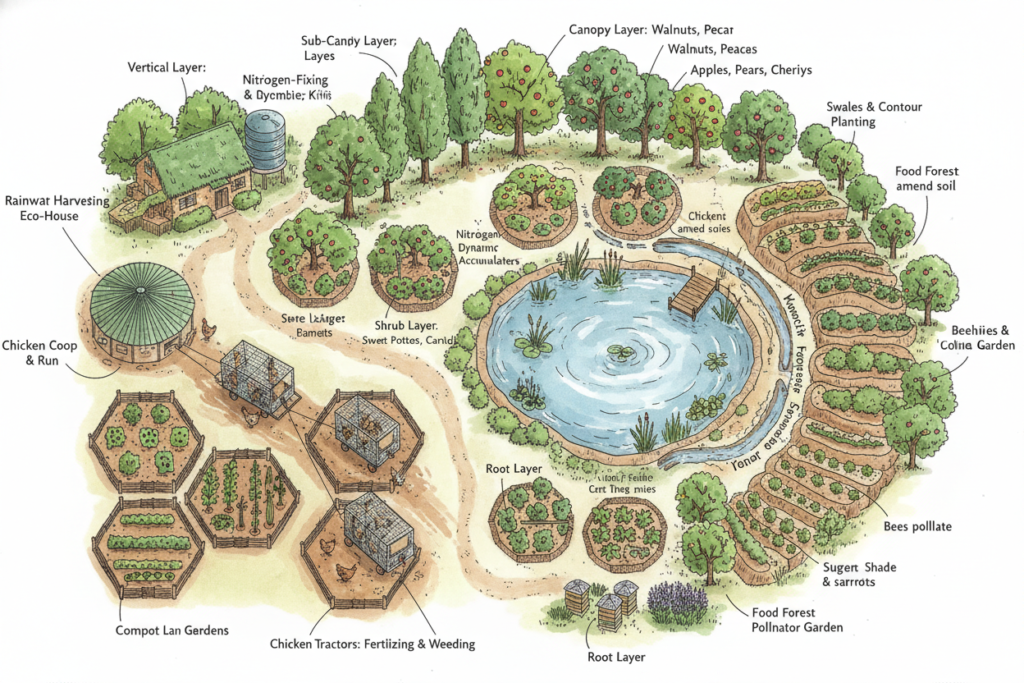
Plants growing together can support each other. Guilds group compatible plants that improve soil, attract beneficial insects, and increase yields.
Build fruit tree guilds by planting nitrogen-fixing shrubs under trees. Add flowers that attract pollinators and pest-eating insects. Include ground covers that prevent weeds and hold moisture.
Mix vegetables with herbs and flowers in garden beds. Basil planted near tomatoes improves flavor and repels pests. Marigolds throughout the garden deter harmful insects.
Let some areas develop diverse plant communities. These sections need little maintenance while providing habitat for beneficial wildlife.
Edge Effects and Diversity
Edges where different zones meet create productive spaces. The edge between forest and field supports more species than either area alone.
Design curved borders instead of straight lines. Curves create more edge area and look more natural than rigid geometric layouts.
Place perennial herbs and flowers along pathways and fence lines. These edge spaces produce food and beauty without taking space from main growing areas.
Stacking Functions
Good design makes each element serve multiple purposes. A chicken coop placed at the garden edge provides eggs, pest control, and fertilizer for beds.
Use animals to prepare garden areas. Chickens scratching through spent beds clear weeds and fertilize soil. Pigs can root out tough perennial weeds.
Choose multipurpose plants whenever possible. Comfrey produces animal feed, garden mulch, and fertilizer tea. Willow provides basket material, animal fodder, and erosion control.
Build Your Complete Self-Sufficient Homestead
Access step-by-step strategies for integrating animals, gardens, and sustainable systems. Learn techniques that reduce work while increasing productivity.
Small Space Homestead Layouts
Limited land does not prevent homesteading. Many productive homesteads operate on less than one acre. Smart design maximizes what small spaces can produce.
Urban and Suburban Homesteading
Suburban lots offer more homesteading potential than most people realize. Quarter-acre properties can produce significant amounts of food with intensive methods.
Replace lawn with productive landscaping. Front yard gardens can produce vegetables while looking attractive enough to satisfy neighborhood standards.
Use vertical space for climbing crops. Beans, peas, cucumbers, and small squash varieties grow up trellises, saving ground space for other plants.
Check local regulations before adding animals. Many suburbs allow chickens with restrictions on rooster keeping and coop placement.
Maximizing Limited Space
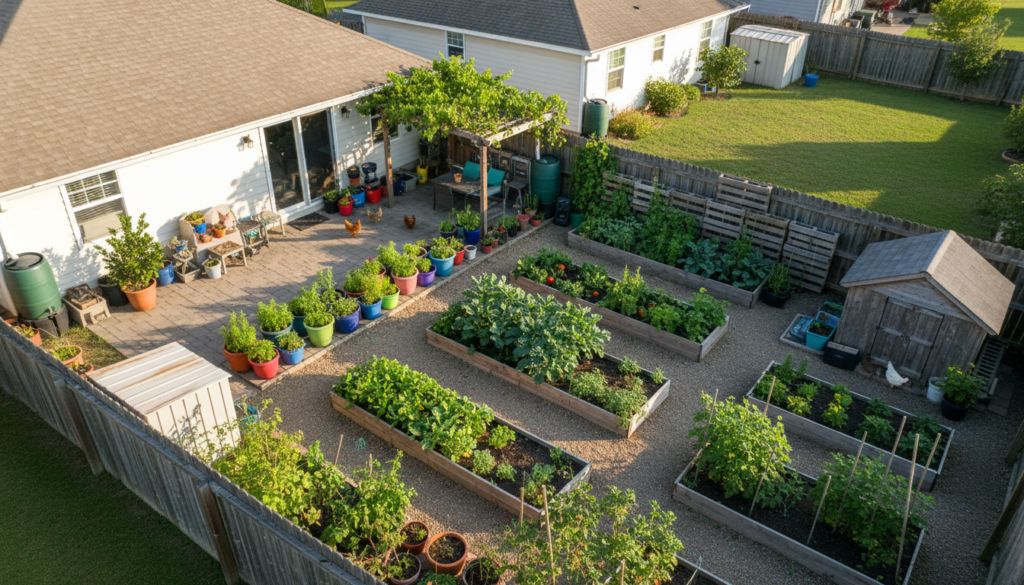
Intensive planting methods produce more food per square foot. Raised beds, square foot gardening, and succession planting help small homesteads stay productive.
Grow crops vertically whenever possible. A-frame trellises support heavy crops like melons and winter squash while using minimal ground space.
Container gardens expand growing space onto patios, decks, and driveways. Large pots and fabric grow bags work for vegetables, herbs, and even dwarf fruit trees.
Succession planting keeps beds producing all season. Plant new crops every two weeks to harvest continuously rather than getting one large harvest.
Apartment and Container Growing
Even apartment dwellers can produce food. Balconies, patios, and sunny windows provide enough space for meaningful harvests.
Choose compact plant varieties bred for containers. Cherry tomatoes, lettuce, herbs, and peppers all grow well in pots.
Use self-watering containers to reduce maintenance. These planters hold water reservoirs that keep soil moist for several days.
Grow microgreens indoors year-round. These fast-growing greens mature in two weeks and pack intense flavor and nutrition.
Large Property Homestead Planning
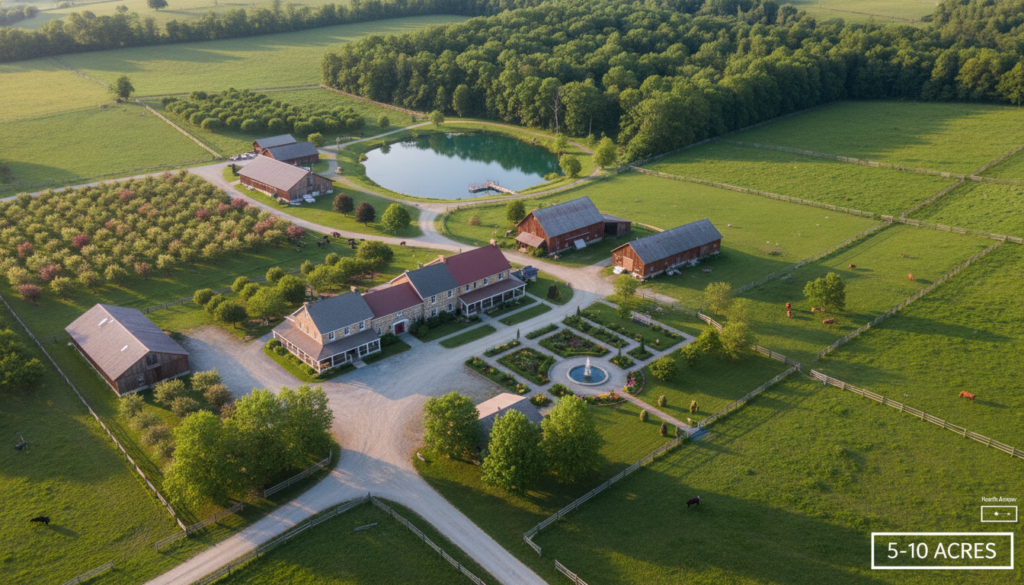
Multiple acres provide room to spread out but require careful planning to avoid wasting time traveling between areas. Larger homesteads need efficient organization more than small ones.
Developing in Phases
Starting everything at once on a large property leads to burnout. Develop your homestead in stages over several years.
Begin with areas closest to your home. Establish gardens and small animal housing before tackling distant sections of the property.
Build infrastructure first. Install water lines, electricity, and main pathways before you need them. Adding utilities later costs more and disrupts established areas.
Leave some land undeveloped initially. You can always expand, but rushing into too many projects creates half-finished areas that become problems.
Managing Larger Animal Operations
Multiple acres support cattle, horses, or larger flocks and herds. These operations need substantial infrastructure and daily management.
Divide large pastures into manageable sections. Rotational grazing works better with multiple smaller paddocks than one giant field.
Locate feed storage near animal areas. Hauling hay and grain long distances wastes time and energy every single day.
Include handling facilities for large animals. Chutes, loading ramps, and sorting pens make animal care safer and easier.
Creating Distinct Production Zones
Large properties work best when organized into clear zones. Separate production areas prevent conflicts and make management simpler.
Designate specific areas for gardens, animals, orchards, and woodlots. Clear boundaries help you focus efforts and track what each zone produces.
Include buffer zones between different areas. These transition spaces provide room for equipment, prevent contamination between zones, and create wildlife habitat.
Plan for future expansion within each zone. Leave room to add garden beds, animal shelters, or orchard trees as your homestead grows.
Common Layout Mistakes and How to Avoid Them
Learning from others’ mistakes saves time, money, and frustration. These common homestead layout errors appear repeatedly across properties of all sizes.
Poor Water Planning
Inadequate water access ranks as the most common homestead planning mistake. Hauling water long distances makes simple tasks exhausting.
Install water lines to all areas before you build or plant. Adding water later requires digging through established gardens and disrupting animal areas.
Size water lines appropriately for future needs. Undersized pipes create low pressure that makes watering difficult. Oversizing pipes costs little extra and prevents problems.
Ignoring Prevailing Winds
Wind affects every aspect of homestead life. Strong winds damage plants, chill animals, and make outdoor work miserable.
Observe wind patterns before placing permanent structures. Notice which direction strong winds come from during different seasons.
Use buildings, trees, and landforms to create windbreaks. Position animal shelters and greenhouses where they get wind protection.
Insufficient Animal Space
Overcrowding animals creates health problems and makes care harder. Animals need more space than beginners usually expect.
Research space requirements before building animal housing. Each chicken needs four square feet inside the coop plus ten square feet in the run.
Plan for herd or flock expansion. If you enjoy keeping animals, you will probably add more. Build housing that accommodates growth.
Forgetting About Access
Vehicles need to reach most areas of your homestead. Forgetting about equipment access causes problems when you need to deliver materials or remove waste.
Design pathways wide enough for your largest equipment. Small tractors need twelve-foot-wide paths for comfortable maneuvering.
Include turnaround areas at dead ends. Backing long distances with trailers leads to frustration and damaged fencing.
Layout Mistakes to Avoid
- Placing gardens too far from water sources
- Locating animal housing upwind of the home
- Building in low areas with poor drainage
- Creating pathways that become mud pits
- Ignoring sun angles and shade patterns
- Overcrowding animals in undersized housing
- Skipping infrastructure in early planning
- Designing pathways too narrow for equipment
Smart Planning Solutions
- Install permanent water lines before planting
- Position barns downwind and downhill from home
- Choose elevated, well-drained building sites
- Add gravel or mulch to high-traffic areas
- Observe property through all four seasons
- Build larger housing than minimum requirements
- Run utilities during initial development
- Create twelve-foot-wide main pathways
Tools and Resources for Layout Planning
Good tools make homestead planning easier and more accurate. Modern technology offers helpful resources for designing your property.
Mapping and Design Software
Computer programs let you experiment with different layouts before moving dirt. Digital planning catches problems that paper sketches miss.
Free online tools provide satellite images of your property. These images show actual distances, existing features, and terrain details.
Draw your proposed layout over satellite images to see how designs fit your actual land. Scale drawings help you avoid placing buildings in spots that look good on paper but have problems in reality.
Physical Planning Methods
Walking your land with stakes and string makes plans real. Physical marking helps you visualize actual sizes and distances.
Use surveyor flags or stakes to mark building corners. Live with these markers for a few weeks. Notice if morning sun hits where you expected. Check whether pathways flow naturally.
Create temporary garden beds with cardboard or tarps. These mock-ups show whether proposed garden locations work as well as you imagined.
Professional Consultation
Complex projects benefit from professional help. Experts catch issues that cost thousands to fix later.
Hire surveyors to establish exact property boundaries. Knowing precisely where you can build prevents legal problems with neighbors.
Consult with excavation contractors about grading and drainage. These professionals spot drainage problems that homeowners miss.
Work with permaculture designers for complex layouts. These consultants specialize in creating integrated systems that minimize work.
Transform Your Property Into a Thriving Homestead
Get instant access to proven homestead design plans, seasonal checklists, and expert guidance that takes the guesswork out of creating your self-sufficient property.
Implementing Your Homestead Layout Plan
Creating a plan means nothing without action. Implementation turns ideas into functioning reality.
Breaking Down Projects
Large homestead layouts overwhelm when viewed as single projects. Break your plan into small, achievable tasks.
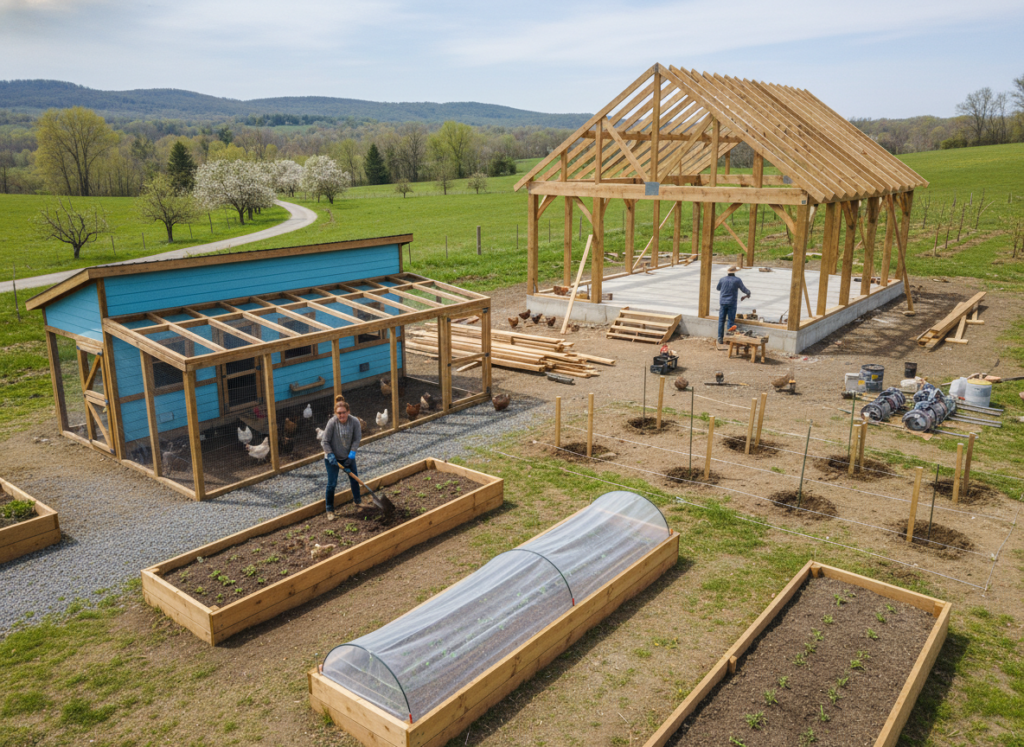
Focus on one area at a time. Complete your initial garden area before starting the orchard. Finish the chicken coop before adding goats.
Set realistic timelines. Most homestead development takes three to five years. Expecting everything finished in one year leads to burnout and half-completed projects.
Prioritizing Development
Some projects need completion before others can start. Identify which developments must happen first.
Install infrastructure before adding production areas. Run water lines and electricity before building animal housing or planting large gardens.
Establish perennials early. Fruit trees and asparagus beds take years to produce. Plant these first so they mature while you develop other areas.
Staying Flexible
Plans change as you learn what works on your specific property. Build flexibility into your design.
Avoid permanent changes until you gain experience. Use temporary fencing and movable structures during your first year. Permanent installations can wait until you know what works.
Learn from mistakes without getting discouraged. Every homesteader makes layout errors. View these as learning experiences that improve future decisions.
Maintaining and Adapting Your Layout Over Time
Successful homesteads evolve constantly. Your needs change as you gain experience and as your family grows or shrinks.
Annual Reviews and Adjustments
Review your layout each year. Note what worked well and what caused problems. Make small improvements continuously rather than waiting for major overhauls.
Keep records of production from different areas. Track which garden beds produced best. Note which animal housing designs worked better.
Photograph your homestead through the seasons. These images help you see patterns you miss when living on the property daily.
Expanding Existing Areas
Growth happens naturally on productive homesteads. Plan expansions that integrate with existing layouts rather than conflicting with established areas.
Expand gardens outward from successful beds. Adding new beds adjacent to productive areas simplifies watering and care.
Increase animal numbers gradually. Add housing before you need it so new animals have proper space from day one.
Learning from Each Season
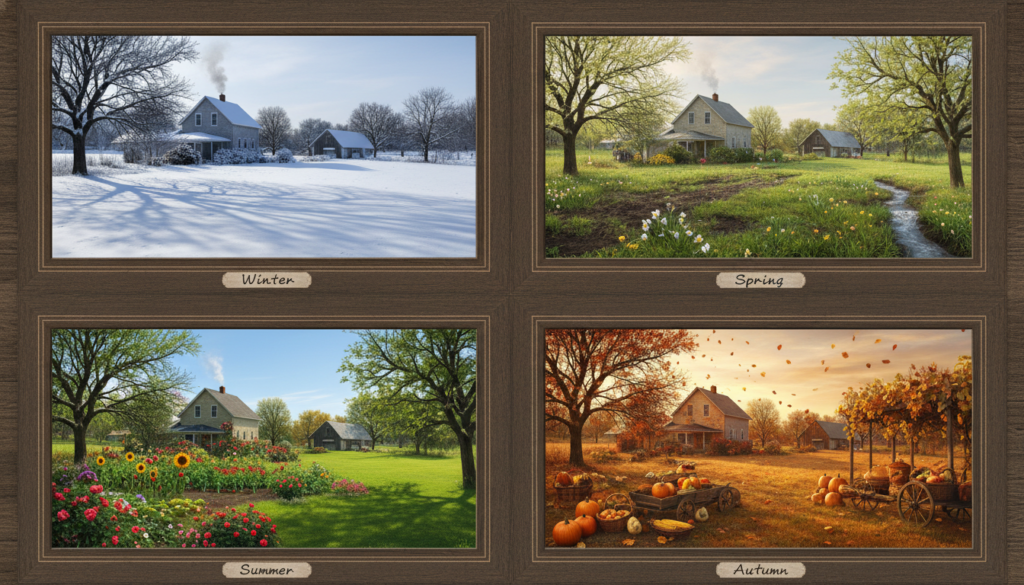
Each season teaches lessons about your specific property. Cold winters reveal which buildings need better insulation. Wet springs show where drainage improvements help most.
Take notes throughout the year about problems and ideas. Review these notes during winter when you have time to plan changes.
Talk with other homesteaders in your region. Local experience teaches you what works in your specific climate and soil conditions.
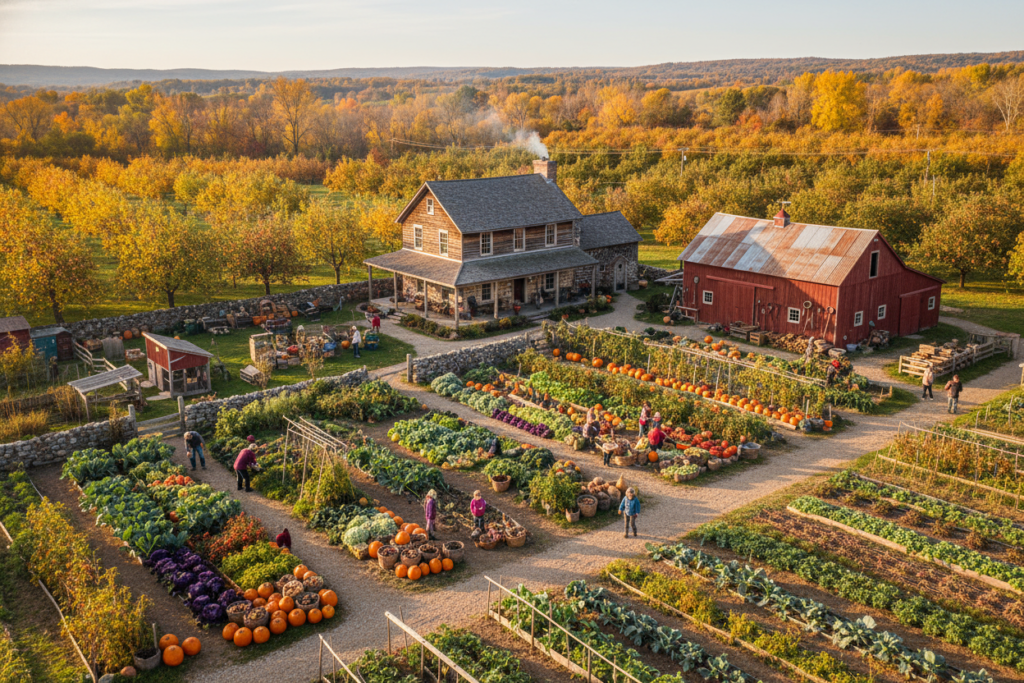
Creating Your Perfect Homestead Layout
Your homestead layout shapes every aspect of your self-sufficient life. A well-designed property makes daily work easier, animals healthier, and gardens more productive.
Start with careful observation of your land. Understand water flow, sun patterns, wind direction, and soil conditions before making permanent changes.
Design your layout based on how you will actually use the space. Place frequently visited areas close to your home. Position related activities near each other to save time and steps.
Begin with essential infrastructure and core production areas. Add complexity gradually as you gain experience and understand what your family needs most.
Remember that every homestead develops uniquely. Your property, climate, and goals differ from others. Design a layout that serves your specific needs rather than copying someone else’s plan.
Take time to plan carefully, but don’t let planning prevent action. Start small, learn continuously, and improve your layout each year. Your homestead will grow more efficient and productive as you adapt the design to match real-world experience.
The work you put into thoughtful layout planning pays dividends for decades. A well-organized homestead becomes easier to manage over time as systems mature and work patterns become established.