Planning a small bathroom layout requires careful thought. Every square inch matters when space is limited. The right floor plan transforms a cramped powder room into a functional and beautiful space that works for your daily routine.
This Website contains affiliate links. That means I may earn a small commission if you purchase through my links, at no extra cost to you.
Whether you’re remodeling an existing bathroom or designing a new one, understanding layout options helps you make smart choices. The difference between a bathroom that feels tight and one that flows smoothly often comes down to fixture placement and door swing considerations.
Most small bathrooms measure between 25 and 40 square feet. That’s just enough room for essential fixtures when planned correctly. The key is choosing a layout that fits your space while meeting your needs.
Save This Guide: Pin these small bathroom layout ideas to your Pinterest board so you can reference them throughout your renovation planning process. These floor plans work in real homes and help you visualize possibilities for your own space.
Understanding Bathroom Floor Plan Basics
A good bathroom design starts with understanding how people move through the space. The layout determines whether your bathroom feels cramped or comfortable. Floor plans show the arrangement of fixtures, doors, and walls from above.
Each bathroom layout serves different purposes. Some work better for guest bathrooms, while others suit primary bath designs. Your choice depends on available space, plumbing locations, and who will use the room.
Building codes set minimum clearances for bathroom fixtures. These rules exist for safety and comfort. A toilet needs at least 15 inches of space from its center to any wall or fixture. Front clearance requires 21 inches minimum, though 30 inches works better.
Sinks require 20 to 30 inches of width. Wall space on each side helps prevent water splashing onto adjacent surfaces. Showers need a minimum of 30 by 30 inches of floor space, but 36 by 36 inches provides more comfort.
Door swing direction affects how much usable floor space remains. A door that swings into the bathroom requires clearance that could otherwise hold a fixture. Pocket doors save significant space in tight layouts.
Common Layout Configurations
Most small bathroom floor plans fall into several standard types. Each configuration solves specific space challenges. The three-wall layout places fixtures along three walls with the door on the fourth. This arrangement works well for rectangular rooms.
One-wall layouts line all fixtures along a single wall. This design works perfectly for narrow powder rooms and guest bathrooms. Corner layouts tuck fixtures into corners to maximize open floor space in the center.
Three-Wall Bathroom Layouts
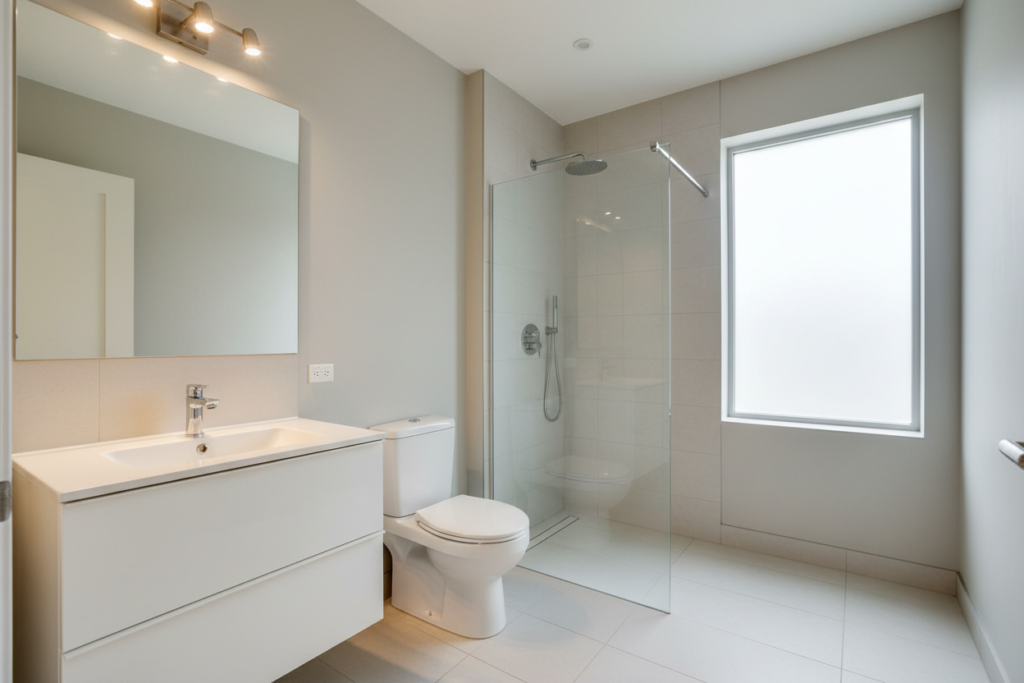
The three-wall bathroom layout ranks as one of the most popular designs for small spaces. This configuration uses three walls for fixtures, leaving the fourth wall for the door. The arrangement creates a balanced and functional room.
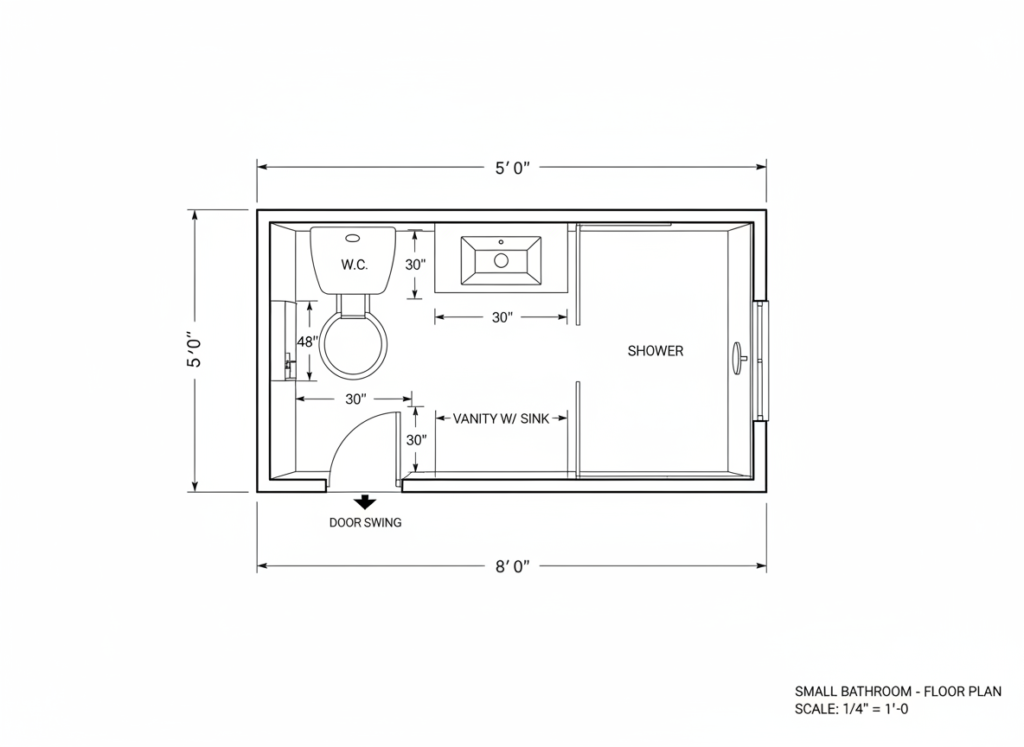
This layout typically places the toilet between the sink and shower or tub. The symmetry makes the space feel organized. Three-wall designs work especially well in rectangular bathrooms measuring 5 by 8 feet or similar dimensions.
Standard Three-Wall Arrangement
The classic three-wall setup positions the vanity and sink on one short wall. The toilet sits on a long side wall, and the tub or shower occupies the opposite short wall. This creates a natural flow through the space.
Walking into this bathroom, you face the vanity straight ahead. The toilet sits to one side, providing some privacy from the doorway. The shower or tub area remains separate, making the space feel larger than it actually measures.
This arrangement works well because it separates wet and dry areas naturally. The shower stays away from the door, preventing water from splashing into other parts of the house. The vanity provides a focal point that looks welcoming when you enter.
Variations for Different Room Shapes
Square bathrooms need a modified approach. In a 6 by 6 foot space, the three-wall layout might place the toilet on one wall, the sink on an adjacent wall, and a corner shower on the third. This maximizes floor space in the center.
Long, narrow bathrooms work differently. A 4 by 9 foot room might align the toilet and sink along one long wall, with a shower on the short end wall. This keeps the walking path clear down the center of the room.
Find Space-Saving Fixtures
The right fixtures make any three-wall layout work better. Compact vanities, wall-mounted toilets, and corner showers help you maximize every inch of floor space in your bathroom design.
The one-wall bathroom layout lines all fixtures along a single wall. This minimalist approach works perfectly for powder rooms, guest bathrooms, and small half baths. The design creates maximum open floor space while providing all necessary fixtures.
This layout shines in narrow spaces where width is limited. A 3-foot-wide room can accommodate a one-wall design, making it ideal for spaces carved from hallways or under stairs. The entire plumbing system runs along one wall, which can reduce installation costs.
Planning Your One-Wall Layout
The typical arrangement places the sink nearest the door, followed by the toilet, then the shower at the far end. This sequence makes practical sense. Guests can wash hands without walking past the toilet, and the shower stays farthest from the entry.
Some homeowners reverse this order based on plumbing locations. If existing pipes sit at one end of the room, starting the layout there saves money on remodel costs. Flexibility in fixture order lets you work with your home’s existing infrastructure.
Wall length determines what fits in a one-wall layout. A 6-foot wall can hold a 24-inch vanity, a standard toilet, and a 30-inch shower. An 8-foot wall provides more breathing room between fixtures and improves comfort.
Making One-Wall Bathrooms Work
Storage becomes the main challenge in one-wall designs. Without multiple walls for cabinets, you need creative solutions. A medicine cabinet above the sink provides essential storage. Wall-mounted shelves between fixtures add space for towels and toiletries.
The opposite wall often remains completely empty in one-wall layouts. This blank wall works perfectly for a full-length mirror, which makes the narrow space feel wider. Some people add floating shelves or towel hooks to this wall for extra function.
Lighting matters more in one-wall bathrooms. A single overhead light casts shadows on faces at the mirror. Adding sconces on either side of the mirror or a light bar above it improves visibility for grooming tasks.
Ideal For
Powder rooms and half baths
Guest bathrooms with limited use
Narrow spaces under 4 feet wide
Budget-conscious remodels
Minimalist design preferences
Works Best With
Wall-mounted fixtures that save floor space
Pocket or sliding doors
Vertical storage solutions
Light colors to enhance openness
Large mirrors for visual expansion
Door placement significantly impacts one-wall layouts. A door at the end of the room opposite the fixtures creates a long, narrow corridor effect. Placing the door on a side wall near the sink end improves the flow and makes the space feel less tunnel-like.
Corner and L-Shaped Bathroom Layouts
Corner bathroom layouts place fixtures along two adjacent walls, forming an L shape. This configuration maximizes floor space in the center of the room. The design works especially well in square bathrooms where you want an open feel.
This layout often features a corner shower or tub as the anchor point. The other fixtures arrange along the two walls extending from that corner. The result is an efficient use of space that keeps the middle of the room clear for movement.
Corner Shower and Tub Options
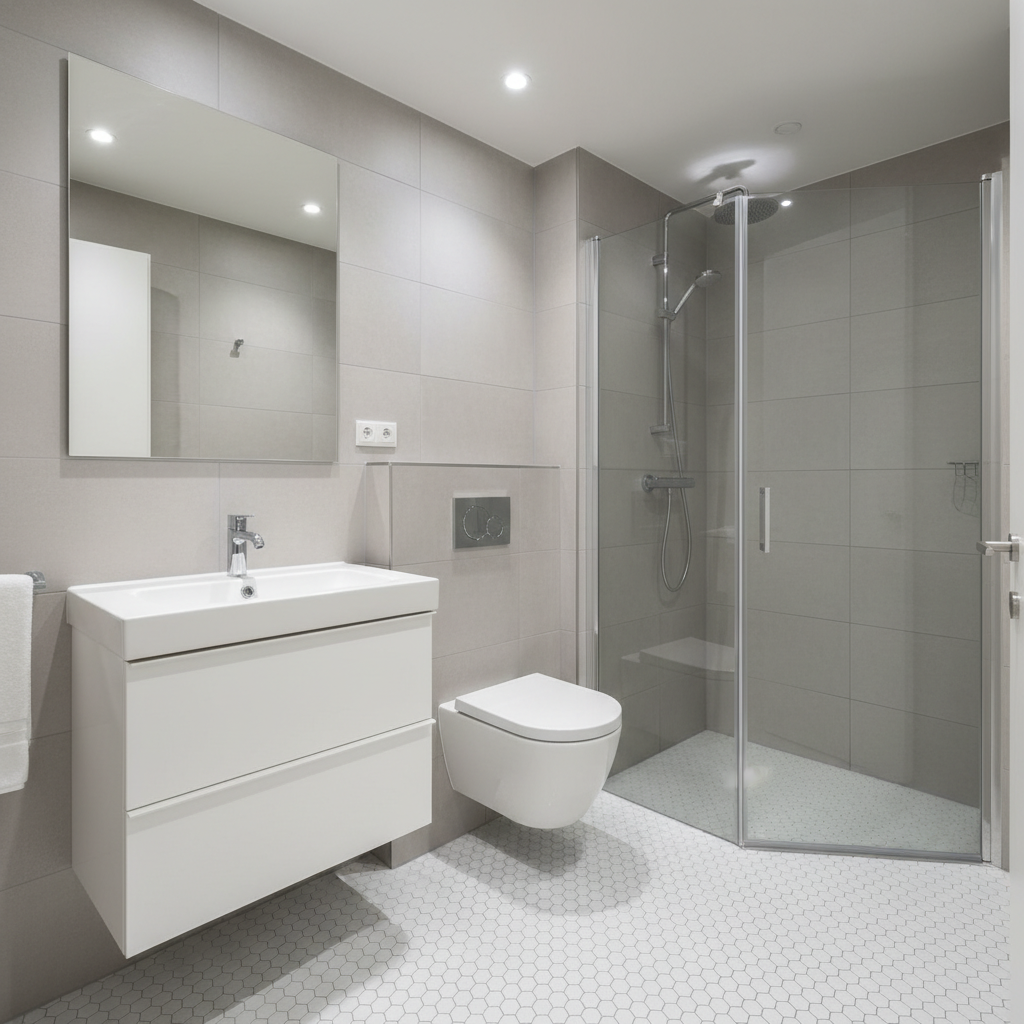
Corner showers come in neo-angle and quarter-round designs. The neo-angle style features a flat front panel with angled sides that fit neatly into the corner. This shape saves more space than a standard square shower and adds visual interest to the room.
Quarter-round corner showers curve outward from the corner. The rounded shape softens the bathroom’s appearance and creates a more spa-like atmosphere. These work beautifully in powder rooms where the shower becomes a design focal point.
Corner tubs also maximize space efficiency. These triangular or rounded tubs fit into corners that would otherwise go unused. While they take up less wall space than standard tubs, they often provide surprisingly comfortable soaking room.
Fixture Arrangement Along Two Walls
The most common L-shaped arrangement places the corner shower or tub at the junction of the two walls. The toilet sits along one wall, while the vanity occupies the other. This creates balance and keeps fixtures separated for better function.
Another popular option positions the vanity along one wall with the toilet and shower along the adjacent wall. This grouping keeps all the plumbing on one side of the room, which can reduce costs during installation or remodeling projects.
The open center floor space in corner layouts makes the bathroom feel larger than its actual square footage. This psychological effect matters in small bathrooms where every visual trick helps. People perceive rooms with clear center space as more spacious and less cluttered.
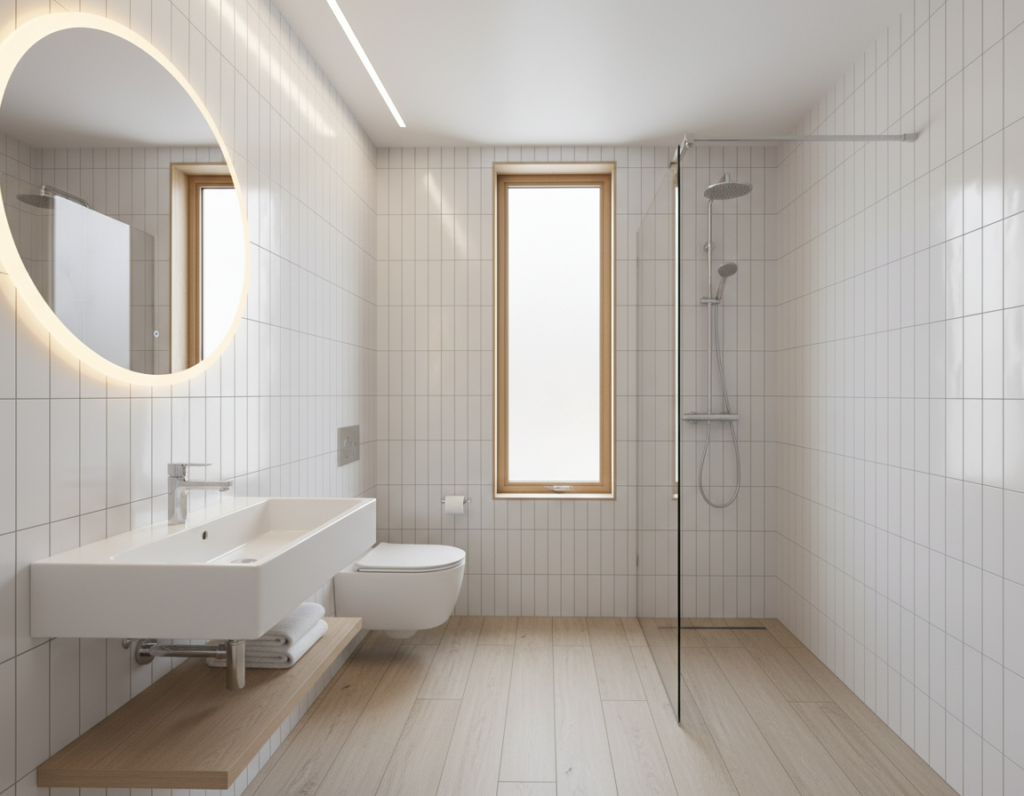
Wet room layouts treat the entire bathroom as a waterproof space. The shower area has no curb or enclosure, and the whole room slopes gently toward a floor drain. This European-inspired design maximizes the sense of space in small bathrooms.
The wet room approach works especially well in bathrooms measuring 5 by 7 feet or smaller. Without a separate shower enclosure, the room feels significantly larger. The continuous floor surface creates a seamless, spa-like appearance that many homeowners love.
Designing an Effective Wet Room
Proper waterproofing is essential for wet room success. The entire floor requires a waterproof membrane beneath the tile or other flooring material. Walls need protection up to at least 6 feet high, and preferably to the ceiling in the shower zone.
Floor slope makes or breaks a wet room design. The floor must pitch toward the drain at a rate of about 1/4 inch per foot. This gentle slope allows water to flow naturally without creating an uneven walking surface that feels awkward or unsafe.
A partial glass panel often separates the shower area from the rest of the bathroom. This panel doesn’t enclose the shower completely but directs water spray toward the drain. It prevents the entire room from getting soaked during every shower while maintaining the open feel.
Fixture Placement in Wet Rooms
The toilet and vanity need strategic placement away from direct water spray. Even though the whole room handles moisture, you want these fixtures in drier zones. Positioning them opposite the showerhead or behind the glass panel keeps them more comfortable to use.
Wall-mounted toilets and floating vanities work beautifully in wet rooms. These suspended fixtures make floor cleaning easier and enhance the modern, minimal aesthetic. The visible floor space beneath them contributes to the sense of openness.
Storage becomes more challenging in wet rooms since everything gets exposed to humidity. Choose moisture-resistant materials for any cabinetry. Sealed wood, marine-grade plywood, or solid surface materials resist warping better than standard bathroom cabinets.
Important Consideration: Wet rooms require professional installation with careful attention to waterproofing details. Improper installation leads to water damage in surrounding rooms. Always hire experienced contractors familiar with wet room construction techniques.
Ventilation Requirements
Excellent ventilation is critical in wet room designs. The increased moisture exposure demands a more powerful exhaust fan than standard bathrooms need. Look for fans rated for the room’s cubic footage plus 20 percent to handle the extra humidity.
Some wet rooms benefit from heated floors. The gentle warmth helps dry the floor faster after showers and adds comfort. Radiant floor heating also prevents that cold, damp feeling that sometimes affects wet rooms in cooler climates.
Powder Room and Half Bath Layouts
Powder rooms serve as guest bathrooms with just a toilet and sink. These small spaces typically measure 20 to 30 square feet. The compact size demands efficient layouts that don’t feel cramped when someone steps inside to wash their hands.
The best powder room layouts maximize the sense of space while providing adequate clearance around fixtures. Even though these rooms lack showers or tubs, poor planning can make them feel uncomfortably tight. Smart fixture choices and layout decisions create welcoming spaces despite limited square footage.
Standard Powder Room Configurations
The most common powder room layout places the sink on the wall opposite the door. The toilet sits on an adjacent side wall. This arrangement lets guests see the vanity first when entering, which creates a better impression than facing the toilet immediately.
In very narrow powder rooms, a one-wall layout works best. The sink and toilet line up along a single wall, leaving the opposite wall open. This configuration works in spaces as narrow as 3 feet wide, though 4 feet provides more comfortable clearance.
Corner sink layouts work wonders in tight powder rooms. A corner-mounted sink frees up valuable wall space for the toilet while providing adequate handwashing facilities. These small corner sinks come in pedestal, wall-mounted, and small vanity styles.
Door Swing Considerations
Door swing direction significantly impacts powder room function. A door that swings into the room must clear the toilet and sink. This requirement often forces fixtures further into the space, making the room feel cramped. The door also blocks access when someone stands at the sink.
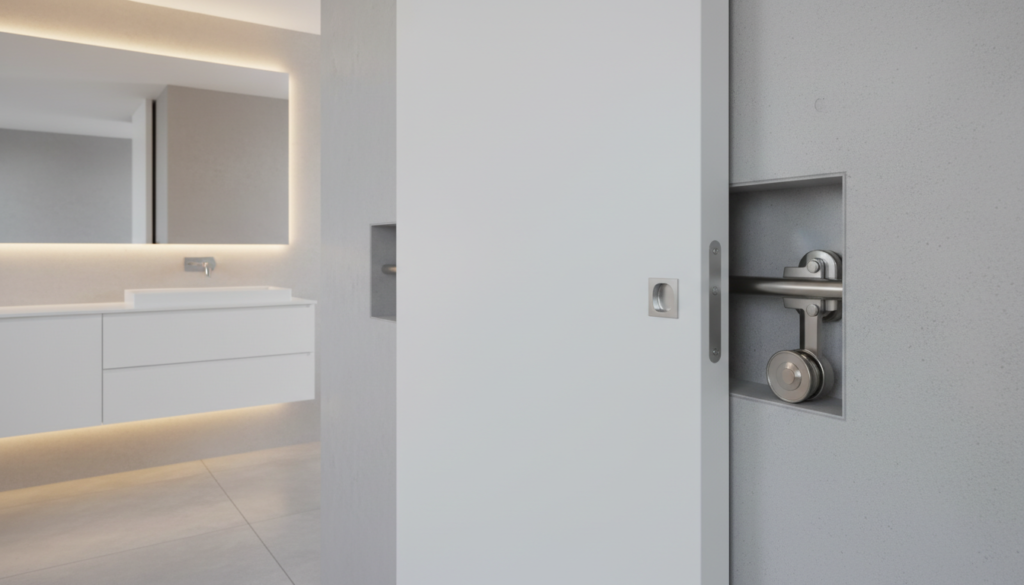
Pocket doors solve many powder room layout challenges. These space-saving doors slide into the wall cavity rather than swinging into the room. The saved space allows fixtures to sit closer to the entry wall, creating better flow and more usable floor area.
Outward-swinging doors work when hallway space permits. The door opens into the hallway instead of the bathroom, freeing up every inch inside the powder room. This solution works best in private homes rather than commercial spaces where accessibility codes may prohibit outward swings.
Optimize Your Powder Room
Small doesn’t mean sacrificing style or function. The right compact fixtures transform tight powder rooms into impressive guest bathrooms that maximize every available inch.
Light colors expand visual space in powder rooms. White or pale walls reflect light and make the room feel more open. Dark colors can work but require excellent lighting to avoid a cave-like atmosphere.
Large mirrors create the illusion of depth. A mirror extending from the backsplash to the ceiling makes the wall appear to recede, doubling the perceived space. Mirrors also reflect light, brightening the room naturally.
Wall-mounted toilets and floating vanities expose more floor surface. Seeing the floor beneath fixtures tricks the eye into perceiving more space. This design approach also simplifies cleaning, making maintenance easier in tight quarters.
Accessible and Universal Design Layouts
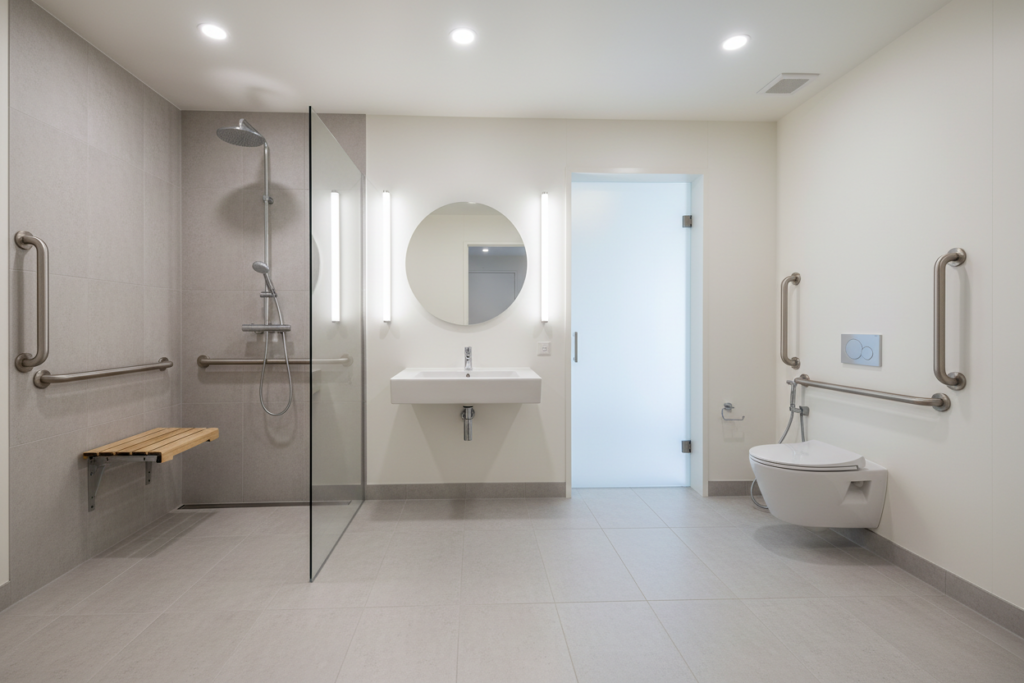
Accessible bathroom layouts accommodate people with mobility challenges, wheelchair users, and aging adults. These designs follow universal design principles that make spaces usable for everyone regardless of physical ability. Planning for accessibility from the start costs less than retrofitting later.
Building codes specify minimum requirements for accessible bathrooms. The Americans with Disabilities Act (ADA) sets standards for commercial spaces, while residential designs often adapt these guidelines for home use. Understanding these requirements helps create bathrooms that serve all family members and guests.
Clearance and Turning Space
Wheelchairs need a 60-inch diameter turning circle or a T-shaped turning space. This clearance allows users to maneuver and change direction comfortably. In small bathrooms, the turning space often overlaps with clearances in front of fixtures to meet this requirement efficiently.
Each fixture requires specific clearances. Toilets need 60 inches of clear floor space measured from the side wall, though 56 inches works in some residential applications. The space extends 48 inches from the back wall to allow transfer from a wheelchair to the toilet.
Sinks must provide knee and toe clearance underneath. The sink should mount 34 inches high with nothing underneath for at least 27 inches high, 30 inches wide, and 19 inches deep. This space allows wheelchair users to roll close to the sink for comfortable use.
Fixture Selection for Accessibility
Wall-mounted toilets simplify accessible bathroom design. These units mount at any height, allowing customization to user needs. Standard accessible toilets sit 17 to 19 inches high, which helps people with limited mobility transfer more easily.
Comfort-height toilets work well for aging adults and people with knee or back problems. These taller fixtures reduce the distance users must lower themselves when sitting down. The extra height also makes standing up easier, requiring less leg strength and balance.
Roll-in showers eliminate the barrier of a curb or threshold. The shower floor sits level with the bathroom floor, allowing direct wheelchair access. A built-in or fold-down seat provides a safe place to shower for people who cannot stand for extended periods.
Accessible bathrooms require wider doors than standard designs. A 32-inch clear opening accommodates most wheelchairs, though 36 inches provides easier passage. The door opening measurement excludes the door thickness when fully opened.
Doors should swing outward when possible in accessible bathrooms. If someone falls inside the bathroom, an inward-swinging door becomes blocked. Outward swings also free up interior floor space for maneuvering.
Lever handles work better than round doorknobs for people with limited hand strength or dexterity. These handles operate with a downward press that requires less grip strength. Motion-sensor automatic doors offer the ultimate accessibility but increase project costs significantly.
Storage Solutions for Small Bathroom Layouts
Storage challenges plague most small bathroom designs. Limited floor space leaves little room for traditional cabinets and linen closets. Creative storage solutions keep essential items organized without making the space feel cluttered or cramped.
The key to small bathroom storage is utilizing vertical space and hidden areas. Walls, corners, and the space above the toilet all offer storage potential. Smart fixture choices also incorporate storage in unexpected places.
Vanity and Cabinet Storage
The vanity provides the most significant storage opportunity in small bathrooms. Choose designs with drawers rather than cabinet doors when possible. Drawers offer better organization and make items easier to find and access.
Floating vanities create storage while maintaining an open feel. The wall-mounted design provides cabinet space above the floor, and the visible floor beneath makes the room appear larger. Many floating vanities include soft-close drawers that prevent slamming.
Medicine cabinets recessed into walls provide storage without protruding into the room. These built-in units utilize space inside the wall cavity between studs. Surface-mounted medicine cabinets work when wall recessing isn’t possible, though they reduce the sense of space slightly.
Vertical and Wall-Mounted Storage
Wall shelves mounted above the toilet create storage in otherwise wasted space. This area typically sits empty in small bathrooms, but floating shelves or an over-toilet cabinet unit transform it into valuable storage. Keep the lowest shelf at least 12 inches above the toilet tank for comfortable access.
Corner shelves maximize tight spaces that standard furniture can’t occupy. These triangular units fit into corners to hold toiletries, towels, or decorative items. Glass corner shelves maintain an open, airy feel while providing function.
Wall-mounted cabinets and tall, narrow storage towers use vertical space efficiently. A floor-to-ceiling cabinet in an unused corner provides substantial storage with a small footprint. Choose slim profiles, typically 12 to 18 inches deep, to avoid overwhelming the space.
In-Shower Storage
Maximize function without sacrificing floor space.
Recessed shower niches built into walls
Corner shower caddies for organization
Wall-mounted dispensers for products
Hanging organizers on showerheads
Door and Hook Storage
Use often-overlooked vertical surfaces.
Over-door organizers for toiletries
Towel hooks instead of space-hogging bars
Behind-door shelving units
Multi-hook wall racks for robes
Hidden Storage Ideas
Incorporate storage in unexpected places.
Toe-kick drawers under vanities
Mirror cabinets with interior storage
Bench seats with lift-up storage
Recessed toilet paper holders
Multi-Purpose Fixtures
Choose items that serve double duty.
Vanity mirrors with built-in lighting and storage
Toilet tanks with shelf surfaces on top
Ladder-style towel racks that lean on walls
Shower rods with built-in shelves
Organizing Without Clutter
Open shelving keeps items accessible but requires disciplined organization. Use matching baskets or bins to contain smaller items and create a cohesive look. Glass or clear containers let you see contents while maintaining a tidy appearance.
Drawer dividers prevent bathroom essentials from becoming jumbled messes. Organize items by category and frequency of use. Keep daily items in the most accessible spots, and store occasional-use items in harder-to-reach areas.
Regular decluttering maintains organization in small bathrooms. Limited space means less room for accumulation. Edit your items seasonally and remove expired products, empty containers, and things you no longer use.
Choosing the Right Fixtures for Compact Spaces
Fixture selection dramatically impacts small bathroom functionality. The right pieces provide necessary features without overwhelming limited square footage. Manufacturers design specific products for tight spaces, offering full function in smaller packages.
Size isn’t the only consideration when choosing bathroom fixtures. Installation type, style, and features all affect how well fixtures work in your layout. Understanding your options helps you make choices that maximize both space and usability.
Toilet Options for Small Bathrooms
Round-front toilets save 2 to 3 inches compared to elongated models. This small difference matters in tight bathrooms where every inch counts. Round bowls measure about 28 inches from the wall, while elongated styles extend to 30 or 31 inches.
Wall-mounted toilets create the illusion of more space by exposing the floor beneath. The tank hides inside the wall, and the bowl mounts to a carrier system. This European-style design also simplifies floor cleaning and contributes to a modern, minimalist aesthetic.
Corner toilets fit into spaces too small for standard models. These specialized fixtures angle into the corner, freeing wall space for other fixtures. While less common than standard toilets, corner models solve layout challenges in powder rooms and small guest bathrooms.
Sink and Vanity Selections
Pedestal sinks offer a classic look with minimal footprint. The basin sits atop a narrow pedestal that conceals plumbing while using very little floor space. The tradeoff is zero storage, making pedestal sinks best for powder rooms or as secondary sinks.
Wall-mounted sinks float above the floor with plumbing visible or enclosed in a decorative shroud. These compact fixtures work in very small bathrooms where even a pedestal feels too large. Some models include a small towel bar or shelf attached to the mounting bracket.
Narrow-depth vanities measure 16 to 18 inches deep instead of the standard 21 inches. This reduced depth saves significant floor space in small bathrooms while still providing storage beneath the sink. Many manufacturers offer stylish narrow vanities that don’t look compromised.
Find Your Perfect Fixtures
Explore space-efficient bathroom fixtures designed specifically for small layouts. From wall-mounted toilets to compact vanities, the right choices help you create a fully functional bathroom in any size space.
Standard showers measure 32 by 32 inches or 36 by 36 inches. Smaller units exist but feel cramped during use. Neo-angle and corner showers save space by fitting into corners while providing adequate interior room.
Shower stalls beat tub-shower combinations for space efficiency in small bathrooms. A separate shower typically requires less room than a tub and allows better layout flexibility. Glass enclosures make showers feel more open than curtained designs.
Japanese-style soaking tubs work in small spaces where standard tubs don’t fit. These compact, deep tubs measure shorter in length but deeper than American-style tubs. The design allows comfortable soaking while occupying less floor space.
Door Solutions That Save Space
Door type and swing direction significantly affect small bathroom layouts. A standard hinged door requires 6 to 9 square feet of clearance to swing fully open. In a tiny bathroom, this clearance zone eliminates potential fixture placement options and reduces usable space.
Alternative door styles recover this lost space or redirect the swing to less critical areas. The right door choice can make the difference between a cramped layout and one that flows comfortably. Consider door options early in the planning process for maximum impact.
Pocket Doors for Maximum Space Savings
Pocket doors slide completely into the wall cavity when opened. This design eliminates door swing clearance entirely, freeing floor space for fixtures or movement. A pocket door in a 5 by 8 foot bathroom can reclaim 6 to 8 square feet of usable area.
Installation requires a pocket door frame kit that mounts inside the wall during construction or remodeling. The wall cavity must be deep enough to accommodate the door thickness, typically 4 to 6 inches. You cannot install pocket doors in walls containing plumbing, electrical, or HVAC components.
Pocket door hardware quality matters for long-term satisfaction. Cheap hardware leads to sticking, binding, and doors jumping off tracks. Invest in high-quality tracks, rollers, and soft-close mechanisms for smooth operation that lasts years without problems.
Barn Doors and Sliding Doors
Barn-style sliding doors mount to a track on the wall surface rather than hiding in the wall. The door slides along the bathroom’s exterior wall, covering artwork or a light switch when open. This installation method works when pocket door installation isn’t feasible.
Sliding barn doors require clearance along the wall equal to the door width. A 30-inch door needs 30 inches of clear wall space beside the doorway. Plan furniture placement and light switches accordingly, keeping the slide path clear of obstructions.
Privacy concerns affect barn door suitability for some bathrooms. Most barn doors don’t seal tightly against the doorframe, leaving small gaps at the edges. This design works fine for powder rooms and guest bathrooms but may feel less private for primary bathrooms shared by families.
Bifold and Accordion Doors
Bifold doors fold in half when opening, requiring only half the swing clearance of standard doors. A 30-inch bifold door needs about 15 inches of clearance instead of 30 inches. This reduced swing helps in tight spaces where a full swing door won’t work.
Accordion doors fold into multiple panels like a room divider. These doors save even more space than bifolds but feel less substantial and provide less sound privacy. Accordion doors work best for closets and less-used bathrooms where solid door construction isn’t essential.
Both bifold and accordion doors require tracks at the top and sometimes the bottom. These tracks can collect dirt and need regular cleaning to maintain smooth operation. Hardware quality varies widely, so choose well-reviewed products from reputable manufacturers.
Plumbing location shapes bathroom layout decisions and affects remodeling costs. Moving plumbing lines increases project expenses significantly. Understanding how plumbing constraints influence design helps you create cost-effective layouts that work within budget limitations.
Water supply lines and drain pipes run through walls and floors following specific paths. Repositioning fixtures requires extending or rerouting these lines. The complexity of plumbing work directly impacts your remodeling budget and project timeline.
Working With Existing Plumbing
Keeping fixtures near their current locations saves substantial money during remodels. When the toilet stays in the same spot, you avoid moving the main drain line. Similarly, keeping the sink location unchanged means you don’t need to extend water supply lines and drainage.
Toilets are the most expensive fixtures to relocate. The toilet drain, called the closet flange, connects to a 3 or 4-inch drain pipe that typically runs through the floor. Moving this connection requires opening the floor, extending drain lines, and ensuring proper slope for drainage.
Sinks and showers offer more flexibility than toilets. Water supply lines are smaller and easier to extend. Drain lines for sinks use 1.5-inch pipe, and shower drains use 2-inch pipe. Both connect to the main drain stack but don’t require the same level of structural work as toilet relocation.
Venting Requirements
Every plumbing fixture needs proper venting to function correctly. Vents allow air into drain lines, preventing negative pressure that would slow drainage. Adding fixtures or moving them often requires new vent pipes or extending existing ones.
The toilet vent typically ties into the main vent stack that runs through the roof. Moving a toilet far from the existing vent location means running new vent pipes through walls and potentially the roof. This work adds labor costs and complexity to remodeling projects.
Back-to-back bathroom layouts share plumbing walls, reducing material and labor costs. Two bathrooms on opposite sides of the same wall can share drain stacks and vent pipes. This efficient arrangement works well in two-story homes and apartment buildings.
Budget-Friendly Layout Strategies
One-wall bathroom layouts minimize plumbing costs by keeping all fixtures along a single plumbing wall. Water supply and drain lines run in one wall rather than multiple walls. This concentration reduces pipe lengths and installation time.
Adding a bathroom near existing plumbing saves money. A new powder room located next to the kitchen or laundry room can tap into nearby supply and drain lines. The shorter pipe runs and shared walls reduce materials and labor.
Vertical stacking of bathrooms works well in multi-story homes. When an upper-floor bathroom sits directly above a lower-floor bathroom, drain and supply lines run straight down through one vertical chase. This efficient approach cuts costs compared to bathrooms located on opposite sides of the house.
Cost Comparison: Keeping fixtures in their existing locations typically costs 30 to 50 percent less than layouts requiring extensive plumbing relocation. A toilet moved 3 feet from its current location might add $500 to $1,000 to your project budget, while keeping it in place avoids these expenses entirely.
Lighting and Ventilation in Small Bathrooms
Proper lighting and ventilation transform small bathrooms from dark, damp spaces into bright, comfortable rooms. These elements affect both function and perceived space. Good lighting makes small bathrooms feel larger, while effective ventilation prevents moisture problems that damage finishes and encourage mold growth.
Building codes specify minimum lighting and ventilation requirements for bathrooms. Meeting these standards ensures safe, healthy spaces. Going beyond code minimums creates even better results in terms of comfort and usability.
Layered Lighting Design
Small bathrooms need multiple light sources for optimal function. Relying on a single overhead fixture creates shadows on faces at the mirror, making grooming tasks difficult. Layered lighting combines ambient, task, and accent lighting for better results.
Ceiling-mounted fixtures provide ambient lighting that illuminates the whole room. Recessed lights work well in bathrooms with low ceilings, while flush-mount or semi-flush fixtures suit standard ceiling heights. Place ambient lights centrally to distribute light evenly throughout the space.
Task lighting around the vanity mirror eliminates shadows for shaving, makeup application, and other grooming activities. Vertical lights flanking the mirror provide even illumination across the face. A horizontal light bar above the mirror works but can create under-eye shadows.
Natural Light Strategies
Windows bring natural light and ventilation to small bathrooms. Even a small window makes a significant difference in how the space feels during daytime hours. Privacy concerns affect window placement and style in bathrooms, especially those facing neighbors or streets.
Frosted or textured glass provides privacy while admitting natural light. These specialty glass types obscure views while allowing light transmission. Placement higher on walls maintains privacy at eye level while still brightening the room.
Skylights and solar tubes deliver natural light when wall windows aren’t practical. A skylight in the shower area adds drama and reduces the enclosed feeling of small spaces. Solar tubes work in interior bathrooms or where roof access makes traditional skylights challenging.
Ventilation Requirements
Exhaust fans remove moisture and odors from bathrooms. Building codes typically require either an operable window or a mechanical exhaust fan. Bathrooms without windows must have fans that vent to the exterior, not into attics or wall cavities.
Fan sizing depends on bathroom square footage. For bathrooms up to 100 square feet, multiply length by width to get square footage, then use that number as the minimum CFM (cubic feet per minute) rating. A 6 by 8 foot bathroom needs a 48 CFM fan at minimum.
Humidity-sensing fans turn on automatically when moisture levels rise. These smart fans continue running until humidity drops to normal levels, preventing mold growth and moisture damage. The automatic operation means you don’t have to remember to turn the fan on or off.
Energy-Efficient Options
LED lighting reduces energy costs while providing excellent illumination. LED bulbs last years longer than incandescent bulbs and use 75 percent less energy. Color temperature matters in bathrooms, with 2700K to 3000K (warm white) creating a flattering, spa-like atmosphere.
Energy Star-certified exhaust fans operate quietly while using less electricity. These efficient fans move air effectively without the loud noise that discourages people from running them. Quiet operation encourages regular use, improving bathroom air quality and reducing moisture problems.
Materials and Finishes for Small Bathrooms
Material choices influence how small bathrooms look and function. The right finishes make compact spaces feel larger and brighter. Materials also affect durability, maintenance requirements, and overall project costs.
Small bathrooms benefit from light-reflective surfaces that bounce light around the room. Glossy finishes, glass, and mirrors all contribute to this effect. Matte surfaces absorb light and can make small spaces feel darker and more confined.
Wall and Floor Finishes
Large-format tiles make small bathrooms appear more spacious. Fewer grout lines create a more continuous surface that the eye reads as larger. Tiles measuring 12 by 24 inches or larger work better than small mosaic patterns in tight spaces.
Light-colored materials expand visual space more effectively than dark tones. White, cream, light gray, and pale blue walls reflect light and create an airy atmosphere. Dark walls can work but require excellent lighting to avoid feeling cave-like.
Continuous flooring from the bathroom into adjacent hallways makes spaces feel larger. When the same floor material extends beyond the bathroom doorway, the eye perceives the bathroom as part of a larger area. This trick works especially well with tile or luxury vinyl plank.
Glass and Reflective Surfaces
Glass shower enclosures maintain visual openness better than shower curtains or opaque doors. Frameless glass disappears visually, making the bathroom feel more spacious. The transparency lets you see the full room dimensions rather than stopping at a visual barrier.
Mirrors multiply light and space perception in small bathrooms. A large mirror over the vanity is standard, but consider extending mirrors to additional walls. Mirrored medicine cabinets add function while contributing to the sense of space.
Glossy ceramic or porcelain tiles reflect more light than matte finishes. The shinier surface bounces light around the room, brightening the space naturally. This reflective quality particularly benefits bathrooms with limited natural light.
Color Psychology and Space Perception
Cool colors recede visually, making walls appear farther away. Blues, greens, and gray-blues create depth in small bathrooms. These colors also evoke calm and cleanliness, reinforcing the bathroom’s purpose.
Monochromatic color schemes unify small spaces and reduce visual clutter. Using varying shades of one color creates interest without the fragmentation that multiple colors introduce. This approach makes small bathrooms feel cohesive and larger.
Strategic accent colors add personality without overwhelming compact rooms. A single accent wall, colorful accessories, or patterned floor tiles provide visual interest while keeping the overall palette light and airy.
Common Small Bathroom Layout Mistakes
Even experienced designers make mistakes when planning small bathroom layouts. Understanding common pitfalls helps you avoid costly errors during your project. Many of these mistakes seem minor during planning but create daily frustration once the bathroom is built.
Learning from others’ experiences saves time, money, and regret. These frequent errors span planning, fixture selection, and installation decisions. Awareness of potential problems helps you make better choices throughout your bathroom design process.
Inadequate Clearances
Ignoring minimum clearance requirements creates uncomfortable, potentially unsafe bathrooms. Codes specify these minimums for good reasons. A toilet placed too close to the wall or another fixture becomes difficult to use and clean.
Door swing paths that intersect with fixtures cause daily annoyance. Imagine opening the bathroom door and hitting the toilet or blocking access to the sink. This common mistake results from not mapping door swing radius during planning.
Shower doors that swing outward into limited floor space create access problems. The door can block the toilet or vanity when open, forcing awkward maneuvering. Sliding shower doors or inward-swinging doors work better in tight layouts.
Poor Fixture Sizing
Oversized vanities overwhelm small bathrooms and reduce clearance around other fixtures. A beautiful 48-inch double vanity might look perfect in the showroom but dominate a small bathroom. Choose appropriately scaled fixtures that fit the room’s proportions.
Standard-depth fixtures waste space in compact layouts. Manufacturers make shallower vanities, toilets, and even showers specifically for small bathrooms. Using these space-saving options creates better clearances and improved flow.
Bathtubs in tiny bathrooms often go unused while occupying valuable floor space. If you rarely take baths, that tub steals space that could accommodate a more generous shower or additional storage. Consider whether you truly need a tub before committing floor space to one.
Lighting and Ventilation Oversights
Single overhead lights create shadows that make bathrooms less functional. This common mistake stems from viewing lighting as an afterthought rather than an integral design element. Plan for task lighting at the mirror from the beginning.
Undersized exhaust fans fail to remove moisture adequately. A fan that’s too small or too weak allows humidity to linger, promoting mold growth and damaging finishes. Calculate the proper fan size based on room volume and install quality equipment.
Forgetting to account for fan noise leads to fans that never get used. Loud, rattling fans are so unpleasant that people avoid turning them on. Invest in quiet fans rated at 1.0 sones or less for comfortable operation.
Storage Planning Failures
Sacrificing all storage for aesthetics creates beautiful but impractical bathrooms. Open, minimalist designs look stunning in photos but lack space for toiletries, towels, and cleaning supplies. Real life requires storage, so plan for it creatively.
Ignoring vertical space wastes valuable storage potential. Walls extend up to the ceiling, but many small bathroom designs only use the lower portions. Wall cabinets, tall storage towers, and shelving above the toilet reclaim this unused area.
Installing shallow medicine cabinets when deeper recessed units would fit misses storage opportunities. Check wall framing during planning to determine if you can recess cabinets between studs for extra storage depth without protruding into the room.
Reality Check: Beautiful bathroom photos in magazines and online often show spaces staged without personal items, cleaning supplies, or daily necessities. Plan storage for your real life, not an idealized version. You need somewhere to put everything.
Step-by-Step Bathroom Layout Planning
Successful bathroom design follows a logical planning process. Jumping straight to fixture selection without proper preparation often leads to layout problems and budget overruns. A systematic approach helps you make informed decisions and avoid costly mistakes.
Professional designers follow established workflows when creating bathroom layouts. You can apply these same methods to your own project. The planning process doesn’t require special skills, just patience and attention to detail.
Measure and Document Existing Space
Start by measuring your bathroom accurately. Record wall lengths, ceiling height, and the locations of doors, windows, and any architectural features. Note existing plumbing fixture locations, electrical outlets, and light switches.
Photograph the space from multiple angles. These reference photos help during planning and serve as before pictures for later comparison. Capture details like how doors swing, where natural light enters, and any problem areas you want to address.
Create a simple floor plan on graph paper or using free online planning tools. Draw walls to scale and mark permanent features like windows and doors. This base plan becomes your canvas for exploring different layout options.
Define Your Needs and Priorities
List everyone who will use the bathroom and consider their specific needs. A primary bathroom shared by two adults has different requirements than a powder room for occasional guests. Think about morning routines, storage needs, and accessibility considerations.
Identify must-have features versus nice-to-have extras. Limited space means you may need to compromise on some preferences. Knowing your priorities helps you make trade-offs that align with how you’ll actually use the space.
Set a realistic budget early in the planning process. Research typical costs for fixtures, materials, and labor in your area. Understanding budget constraints helps guide decisions about which layouts are financially feasible.
Explore Layout Options
Sketch several different layout possibilities using your base floor plan. Try a three-wall layout, then explore one-wall and corner configurations. Don’t commit to a single idea immediately. The best solution often emerges after considering multiple options.
Check clearances for each layout option. Make sure you maintain minimum distances between fixtures and adequate space for door swings. Layouts that look fine on paper sometimes have clearance problems that become obvious when you verify measurements.
Consider how each layout affects your daily routine. Visualize yourself moving through the space. Can you comfortably reach the toilet paper? Is there enough room to dry off after a shower? Practical use matters more than aesthetic appeal alone.
Select Fixtures and Materials
Choose fixtures that fit your selected layout and space constraints. Verify actual dimensions of toilets, sinks, and showers before finalizing plans. A fixture that’s 2 inches larger than you estimated can throw off the entire layout.
Research product reviews and quality ratings for fixtures you’re considering. Price isn’t always an indicator of quality, and some budget-friendly options perform as well as premium products. Look for proven reliability and warranties that protect your investment.
Make material selections that balance budget, durability, and aesthetics. Small bathrooms need fewer materials than large spaces, sometimes making premium options more affordable. Calculate actual quantities before assuming expensive materials will break your budget.
Create Detailed Plans
Develop a final floor plan that shows exact fixture locations and dimensions. Include door swings, clearances, and any custom elements like built-in storage. This detailed plan guides contractors during installation and helps prevent miscommunication.
Create an elevation drawing showing wall views with cabinet heights, mirror placement, and light fixture locations. Elevations help visualize how the bathroom will look from inside and ensure elements align properly.
Document all finish selections, product specifications, and special installation requirements. A comprehensive planning document keeps the project organized and ensures you don’t forget important details during the chaos of construction.
Ready to Start Your Project?
Download our free bathroom planning checklist and measurement guide. These printable resources help you organize your project, track decisions, and ensure you don’t miss critical details during the design process.
Real-world examples demonstrate how different layout strategies work in actual homes. These inspiration ideas show creative solutions to common small bathroom challenges. Each design approach offers lessons you can adapt to your own space.
Small bathrooms don’t have to look or feel small. Smart design choices create spaces that appear larger and function better than their square footage suggests. These examples prove that limitations can inspire creativity.
Modern Minimalist Approach
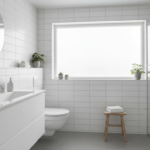
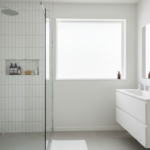
Minimalist bathrooms embrace simplicity and clean lines. This design style works exceptionally well in small spaces where visual clutter makes rooms feel cramped. A white wall-mounted toilet, floating vanity, and frameless glass shower create an open, airy atmosphere.
Limited color palettes unify minimalist designs. White walls, gray floors, and chrome fixtures provide a neutral backdrop that feels calm and spacious. A single plant or piece of artwork adds personality without overwhelming the space.
Hidden storage maintains the clean aesthetic while providing necessary function. Recessed medicine cabinets, in-wall shelving niches, and drawers with push-to-open mechanisms keep essentials accessible but out of sight.
Traditional Charm in Compact Spaces
Traditional bathroom design translates beautifully to small spaces with careful editing. A pedestal sink with classic lines, hexagonal floor tiles, and subway tile walls create timeless appeal. Brushed nickel or oil-rubbed bronze fixtures add warmth.
Wainscoting or beadboard on lower walls adds traditional character while protecting walls from water damage. Paint the wainscoting and upper walls in coordinating shades to maintain visual flow. A vintage-inspired mirror and sconce lights complete the look.
Traditional doesn’t mean outdated. Modern traditional styles blend classic elements with updated proportions and finishes. A clawfoot tub in a small bathroom makes a dramatic statement when the rest of the design stays streamlined.
Spa-Inspired Serenity
Spa bathrooms prioritize calm and relaxation through material choices and lighting. Natural materials like stone-look tiles, wood accents, and plants create connections to nature. Soft, warm lighting sets a peaceful mood.
A rainfall showerhead and bench seating transform a small shower into a spa experience. Glass enclosures maintain openness while creating a distinct shower zone. Adding a handheld shower wand increases functionality for cleaning and rinsing.
Heated floors add luxury that’s especially appreciated in small bathrooms. The warmth underfoot creates comfort that makes the space feel more spa-like. Radiant floor heating works under tile, stone, and some luxury vinyl products.
Bold Pattern and Color
Small bathrooms can handle bold design when executed thoughtfully. A dramatic wallpaper or tile pattern on one wall creates a focal point without overwhelming the space. Keep other surfaces neutral to let the bold element shine.
Colorful painted vanities add personality to small bathrooms. Navy blue, forest green, or even black cabinets create drama against white walls and floors. The color draws the eye and makes the vanity a feature rather than an afterthought.
Patterned floor tiles make design statements in small bathrooms. Moroccan-inspired cement tiles, geometric patterns, or classic black-and-white checkerboard floors add visual interest underfoot. Balance bold floors with simpler wall treatments.
Pinterest-Perfect Bathroom Photography Tips
Creating shareable bathroom content for Pinterest requires photography that captures your design’s best features. The right images inspire others while showcasing your layout solutions. Pinterest favors vertical images that display well on mobile devices where most users browse.
Professional-looking photos don’t require expensive equipment. Smartphone cameras capture excellent images when you understand basic photography principles. Lighting, composition, and styling make the difference between snapshots and pin-worthy photos.
Lighting for Great Photos
Natural light creates the most flattering bathroom photos. Shoot during daytime hours when sunlight fills the room. Turn off artificial lights if they create color casts that make white fixtures look yellow or blue.
Diffused light works better than direct harsh sunlight. If sun streams directly through windows creating strong shadows, shoot during cloudy weather or when the sun isn’t directly hitting the bathroom. Soft, even light shows details without harsh contrasts.
For bathrooms without windows, use all available light fixtures and consider adding supplemental lighting. Avoid using camera flash, which creates harsh shadows and glare on reflective surfaces like mirrors and tiles.
Composition and Angles
Photograph from the doorway to show the full layout at a glance. This establishing shot helps viewers understand the space organization and fixture placement. Shoot at standing height rather than holding the camera too high or low.
Detail shots highlight specific design features. Capture close-ups of beautiful tile work, fixture finishes, or storage solutions. These detailed images complement full-room shots and provide Pinterest users with specific inspiration.
Vertical orientation works best for Pinterest. The platform displays vertical images more prominently than horizontal photos. Shoot in portrait orientation to create pins that stand out in users’ feeds.
Styling Your Bathroom for Photos
Remove personal items and clutter before photographing. Toothbrushes, shampoo bottles, and scattered towels distract from the design. Style with fresh towels, a small plant, or simple accessories that enhance rather than overwhelm.
Keep styling minimal and purposeful. One or two well-chosen elements look intentional, while too many accessories create visual noise. A folded towel on the vanity and a small potted plant provide just enough warmth.
Clean everything thoroughly before the photo session. Water spots on faucets, soap residue on glass, and dust on surfaces show up clearly in photos. A truly clean bathroom photographs better and represents the space more accurately.
Creating Your Ideal Small Bathroom Layout
Small bathroom design combines practical planning with creative problem-solving. The right layout maximizes limited space while creating a room that serves your needs beautifully. Every decision from fixture selection to door type affects how well your bathroom functions daily.
Understanding standard layouts provides a foundation for planning. Three-wall, one-wall, corner, and wet room designs each offer advantages for different spaces and needs. Your ideal layout depends on room dimensions, existing plumbing locations, budget, and personal preferences.
Success requires attention to clearances, fixture sizing, and traffic flow. Small mistakes like inadequate door swing clearance or oversized vanities create daily frustration. Measure carefully, verify dimensions, and think through how you’ll actually use the space before finalizing plans.
Storage solutions transform small bathrooms from cramped to functional. Vertical space, wall-mounted fixtures, and creative built-ins provide room for necessities without cluttering limited floor area. Plan storage from the beginning rather than trying to add it later.
Material and color choices influence how spacious your bathroom feels. Light colors, reflective surfaces, and continuous flooring all contribute to visual expansion. These design tricks make real differences in how comfortable and welcoming small bathrooms feel.
Your small bathroom can become your favorite room in the house with thoughtful planning and smart design choices. The constraints of limited space often inspire creative solutions that result in uniquely personal and highly functional bathrooms. Start with careful measurement and planning, then let your vision guide you toward the perfect layout for your home.