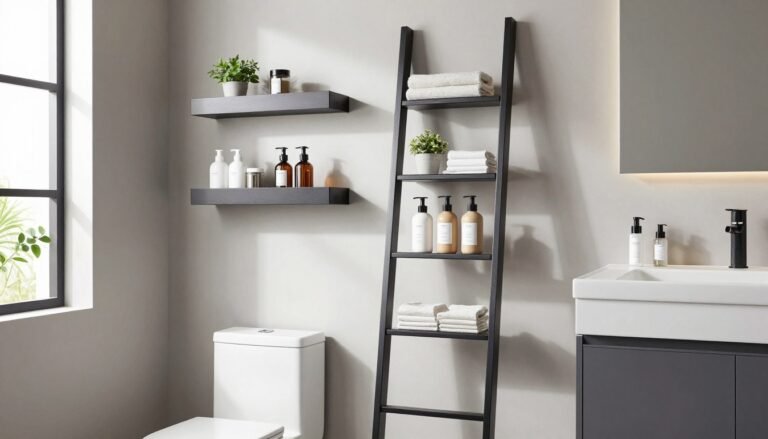
Your small bathroom deserves the same style and comfort as larger spaces. The right shower design can completely transform how your bathroom feels and functions. Whether you’re working with a compact powder room or a narrow ensuite, creative shower solutions make every inch count.
This Website contains affiliate links. That means I may earn a small commission if you purchase through my links, at no extra cost to you.
Small spaces present unique challenges, but they also offer opportunities for innovative design. From glass enclosures that create the illusion of more space to strategic tile choices that draw the eye upward, the possibilities are endless. The key lies in understanding how different elements work together to maximize both function and visual appeal.
This comprehensive guide explores proven strategies that interior designers use to make small bathroom shower spaces feel open, bright, and beautifully appointed. You’ll discover how to choose materials, fixtures, and layouts that work specifically for compact rooms.
Glass Shower Enclosures That Create Visual Space
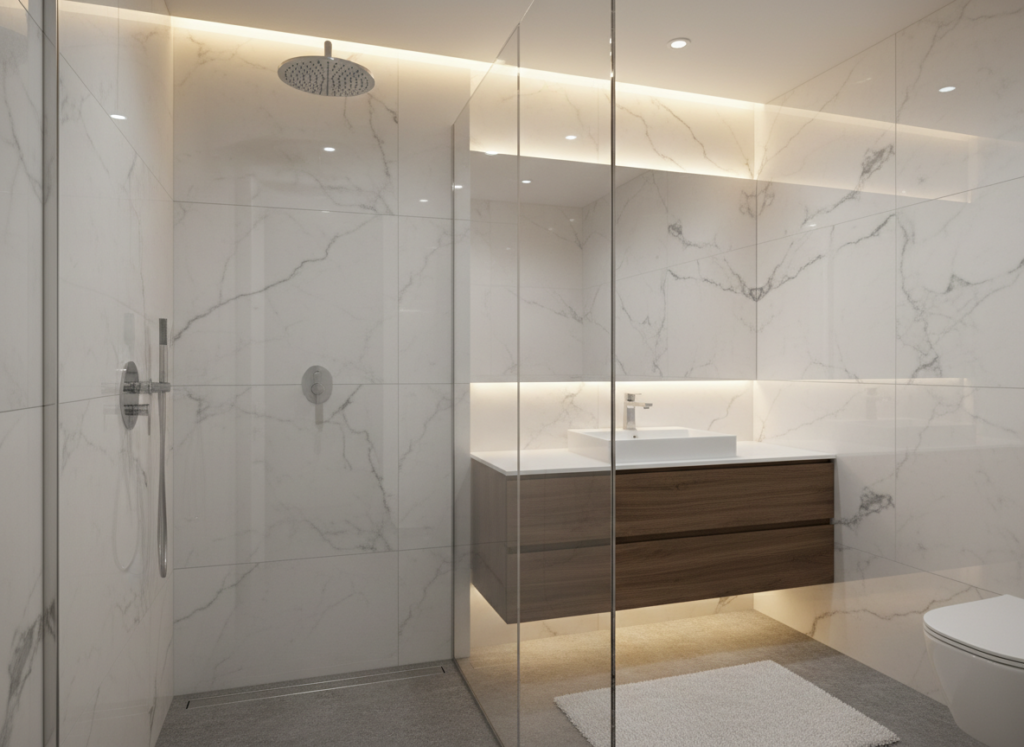
Glass shower doors and panels are the single most effective way to make a small bathroom feel larger. Unlike shower curtains or opaque doors that visually divide the room, clear glass allows your eye to travel across the entire space uninterrupted. This creates a sense of openness that’s essential in tight quarters.
Frameless glass enclosures offer the cleanest look. Without metal framing breaking up sight lines, these systems practically disappear. The seamless appearance lets your beautiful tile work and fixtures take center stage. For bathrooms with interesting wall tiles or accent features, frameless glass ensures nothing blocks the view.
Related Posts:





The thickness of the glass matters more than you might think. While standard quarter-inch glass works fine, upgrading to three-eighths or half-inch glass provides a more substantial, luxury feel. Thicker glass also stays cleaner longer and resists water spotting better than thinner alternatives.
Consider the door style carefully. Sliding doors work well when floor space is limited, as they don’t require clearance to swing open. Pivot doors create a spa-like entrance but need room to operate. For extremely tight spaces, a simple glass panel with an open entry might be your best option.
Find Your Perfect Glass Shower Solution
Discover frameless glass shower doors, panels, and complete enclosure systems designed specifically for small bathrooms.
Semi-Frameless and Framed Options
Budget-conscious homeowners often choose semi-frameless designs. These systems use minimal framing only where structurally necessary, typically along the door edges. They cost considerably less than fully frameless installations while still providing a relatively open look.
Framed shower enclosures have evolved significantly. Modern framed systems feature slim, low-profile frames in finishes like brushed nickel, matte black, or champagne bronze. When matched to your other bathroom fixtures, these frames can actually enhance your design rather than detract from it.
The finish you select for any metal components should coordinate with your faucets, towel bars, and light fixtures. This cohesive approach ties the room together and makes it feel intentionally designed rather than haphazardly assembled.
Maintaining Crystal-Clear Glass
Glass treatments make cleaning easier and keep your enclosure looking new. Many manufacturers offer protective coatings that repel water and soap scum. These treatments are worth the additional investment, especially in hard water areas where mineral deposits can quickly cloud untreated glass.
A simple squeegee routine after each shower takes just thirty seconds but prevents most buildup. Keep one hanging inside your shower as a visual reminder. This small habit preserves the clarity that makes your space feel open and inviting.
Strategic Tile Choices That Expand Visual Space
Tile selection dramatically impacts how spacious your small bathroom shower feels. The right patterns, sizes, and layouts can make walls appear taller and the room feel wider. Understanding these visual tricks helps you make choices that maximize your space.
Large-format tiles create fewer grout lines, which makes surfaces appear more continuous and expansive. Twelve-by-twenty-four-inch tiles or even larger formats work beautifully in small showers. The reduced grid of grout lines prevents the busy, choppy look that many small tiles can create.

Vertical tile patterns draw the eye upward, making ceilings feel higher. Installing rectangular tiles in a vertical stack bond pattern or running subway tiles vertically instead of horizontally creates this lifting effect. The vertical emphasis counteracts the potentially cramped feeling of a small footprint.
Color Psychology in Small Showers
Light colors reflect more light, which naturally makes spaces feel larger and brighter. White, cream, light gray, and soft beige tiles remain popular for good reason. These neutral backgrounds also provide versatility, allowing you to change accent colors through towels and accessories without redoing tile work.
Monochromatic color schemes work particularly well. Using varying shades of the same color family creates depth without the visual fragmentation that high contrast patterns can cause. Consider a palette of three coordinating tones for your floor tile, wall tiles, and accent niche.
Don’t fear darker colors entirely. A charcoal or navy accent wall can actually create drama and depth when balanced with lighter surrounding surfaces. The key is using dark tones intentionally as a focal point rather than covering all surfaces.
Light Tile Benefits
- Reflects natural and artificial light
- Creates airy, open feeling
- Makes space appear larger
- Shows less water spotting
- Coordinates with any accent color
Dark Tile Considerations
- Creates dramatic focal point
- Hides stains and discoloration
- Adds sophisticated depth
- Works best on single accent wall
- Requires excellent lighting
Pattern and Texture Decisions
Subtle patterns add interest without overwhelming small spaces. Tone-on-tone designs, gentle veining in marble-look tiles, or delicate geometric prints provide visual texture while maintaining a calm, spacious feeling. Save bold patterns for small accent areas like a shower niche or a narrow vertical strip.
Textured tiles offer practical benefits in showers. Slight texture on floor tile provides slip resistance, while three-dimensional wall tiles catch light beautifully. Just remember that heavily textured surfaces collect more soap residue and require more scrubbing during cleaning.
The grout color you choose affects the overall look as much as the tile itself. Matching grout to your tile creates seamless, continuous surfaces. Contrasting grout emphasizes the tile pattern and grid. For small spaces, matched or slightly lighter grout typically works best to maintain that expansive feeling.
Explore Bathroom Tile Options
Browse subway tiles, large format porcelain, and marble-look tiles perfect for creating stunning small bathroom showers.
Corner Shower Configurations That Maximize Floor Space
Corner showers are specifically designed for small bathroom layouts. By utilizing the intersection of two walls, these configurations leave more open floor area than traditional alcove installations. This preserved floor space makes the entire bathroom feel less crowded and more functional.
Neo-angle corner showers feature a distinctive angled front panel that provides surprisingly generous interior space while keeping the exterior footprint compact. The angled entry creates easier access compared to standard square corners. These units work particularly well in bathrooms where the shower sits opposite the vanity.

Quadrant corner showers have a curved front that bows outward slightly. This gentle curve adds visual softness to the room while providing excellent elbow room inside the shower. The rounded glass also catches and reflects light beautifully, adding to the overall sense of openness.
Optimizing Corner Shower Layout
The shower door placement affects traffic flow in your bathroom. Positioning the door opening toward the center of the room rather than directly facing a wall creates a more inviting entry. This orientation also makes it easier to access the shower controls before stepping fully inside.
Built-in corner benches add luxury and functionality without consuming much space. A small triangular seat tucked into the corner provides a place to rest during long showers and makes tasks like shaving much more comfortable. These benches also double as convenient shelf space for bath products.
Storage becomes critical in compact corner showers. A recessed shower niche built into the wall keeps toiletries organized without protruding into your showering space. Position the niche at a comfortable height, typically between chest and shoulder level, for easy reach.
Selecting the Right Size
Even within corner shower categories, sizes vary significantly. Standard corner units start at thirty-two inches on each wall, but if your space allows, upgrading to a thirty-six or forty-inch configuration makes a noticeable comfort difference. Those extra four inches translate to meaningful elbow room.
Measure your available space carefully before purchasing. Account for the door swing, if applicable, and ensure you’ll have adequate clearance for towel storage and movement around the bathroom. A shower that technically fits but leaves no breathing room will make the entire bathroom feel cramped.
Custom corner showers offer maximum flexibility. If you have an unusual wall configuration or specific size requirements, a custom glass enclosure can be fabricated to your exact specifications. While more expensive than standard sizes, custom solutions ensure perfect fit and optimal space utilization.
Walk-In Shower Designs for Barrier-Free Access
Walk-in showers without doors or curbs create incredibly open, accessible spaces. These curbless designs make small bathrooms feel larger by eliminating visual barriers. The continuous floor plane from bathroom to shower expands the perceived square footage dramatically.
Proper waterproofing is essential for doorless walk-in showers. The floor must slope correctly toward the drain to prevent water from escaping into the main bathroom. Most building codes require a minimum slope, and experienced tile installers know how to create this gradient while maintaining a level appearance.
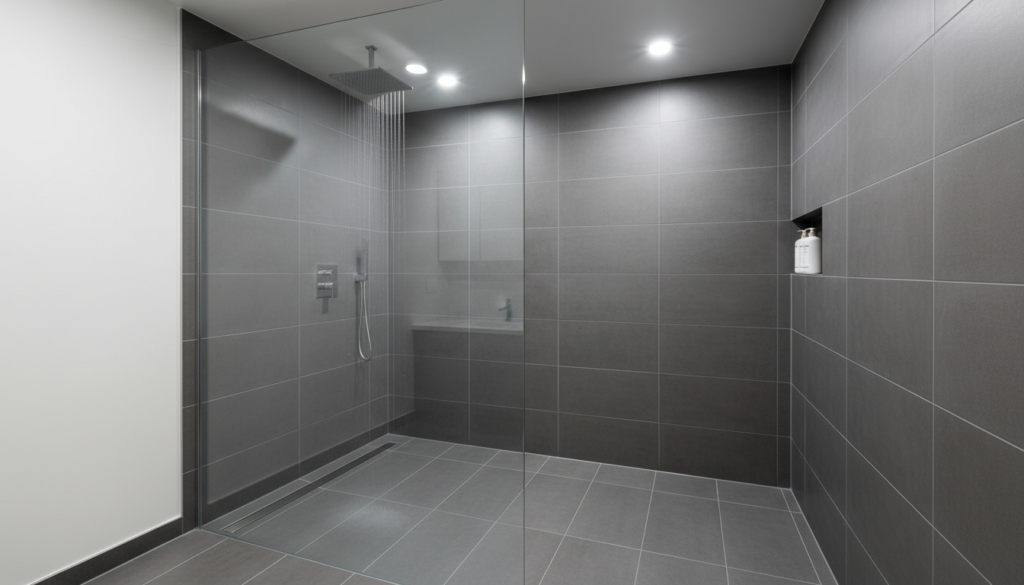
A single glass panel often provides sufficient water containment while maintaining the open feeling. Position this panel to block spray from the showerhead while leaving the entry completely open. This partial enclosure offers the best of both worlds: openness and practicality.
Drainage Solutions for Walk-In Showers
Linear drains have revolutionized curbless shower design. These elongated drains allow for simpler floor sloping compared to traditional center drains. Many linear drains can be tiled over or fitted with decorative grates that complement your overall design aesthetic.
Placement of your linear drain affects both function and appearance. Installing the drain along the shower entry creates a barrier that catches water before it can escape. Alternatively, positioning it against the back wall creates a clean threshold at the entrance.
Point drains remain a viable option, especially for smaller shower areas. Modern point drain designs include attractive covers in various finishes. The key is ensuring the floor slopes evenly from all directions toward the drain, creating a shallow bowl effect.
Making Walk-In Showers Work in Small Spaces
Scale matters with doorless designs. You generally need at least thirty-six inches of shower depth to keep water contained without a door. If your bathroom can’t accommodate this depth, a minimal glass panel or partial wall helps control spray.
The showerhead position and type influence how much water spreads. Rainfall showerheads mounted directly overhead keep water more centralized compared to wall-mounted heads that spray outward. Combining a fixed overhead head with a handheld option provides flexibility.
Heating considerations become important in doorless showers. Without an enclosed space, you lose some heat. Ensure your bathroom has adequate heating, or consider installing a heat lamp or radiant floor heating to maintain comfort during and after showering.
Shop Linear Drain Systems
Find modern linear drains, channel drains, and curbless shower drainage solutions for barrier-free bathroom designs.
Shower Niches and Storage Solutions
Built-in shower niches provide essential storage without consuming any floor space. These recessed shelves sit flush with your shower wall, keeping shampoo, soap, and other necessities organized and accessible. In small showers where every inch counts, niches are far superior to bulky caddies or shelves.
The ideal niche placement depends on your shower layout and height. Most homeowners prefer positioning the niche between chest and shoulder height for easy reach. If you’re installing multiple niches, consider stacking them vertically to create a cohesive storage column.
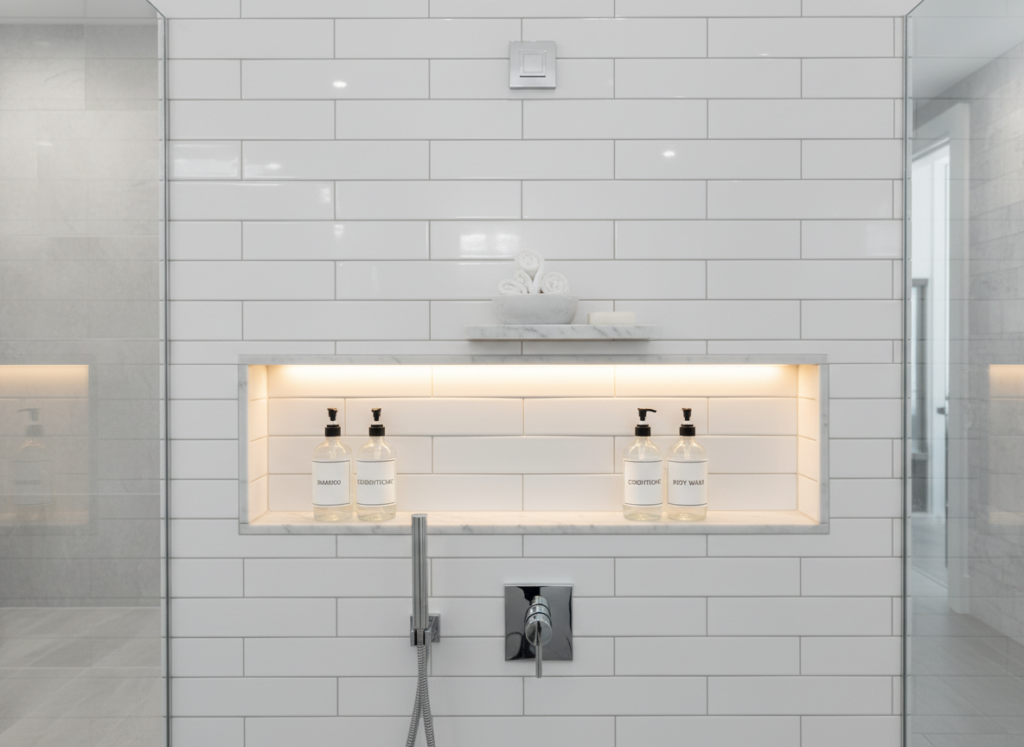
Sizing your shower niche appropriately ensures it’s functional without overwhelming your design. A standard niche measures twelve inches wide by twenty-four inches tall, which accommodates most bottles comfortably. Narrower niches work for soap and smaller items, while wider versions can hold multiple bottles side by side.
Niche Design and Finishing Details
The interior finish of your shower niche creates visual interest. Continuing your main tile pattern into the niche provides seamless integration. Alternatively, using an accent tile or contrasting material makes the niche a focal point that adds personality to your shower.
Shelves within niches prevent bottles from toppling and make cleaning easier. A single shelf dividing a tall niche creates two functional levels. Use the same tile as your surround, install a coordinating marble or quartz slab, or choose a ready-made niche system with integrated shelving.
Lighting your shower niche transforms it from purely functional to beautifully decorative. LED strip lighting installed around the perimeter or across the top casts a warm glow that highlights your tiles and creates ambiance. Waterproof LED strips specifically designed for shower use are widely available.
Alternative Storage Options
Corner shelves maximize awkward spaces that often go unused. Triangular glass or stone shelves mounted in shower corners provide landing spots for essentials. Multiple corner shelves at different heights create vertical storage without the construction required for recessed niches.
Built-in benches with hollow interiors offer hidden storage potential. The bench top provides seating while the space beneath can be accessed through a small door or lift-up lid. This dual-purpose design is perfect for storing less-frequently used items.
Wall-mounted dispensers eliminate bottle clutter entirely. Refillable dispensers mounted on the shower wall keep soap, shampoo, and conditioner neatly organized. Choose high-quality dispensers that complement your fixtures and won’t corrode in the constant moisture.
Recessed Niche Benefits
- No protruding elements to bump into
- Clean, streamlined appearance
- Custom-sized for your needs
- Integrated into tile design
- Permanent, durable solution
Surface-Mount Storage
- Easy to install without wall modification
- Adjustable and removable
- Wide variety of styles available
- Lower installation cost
- Works in any shower type
Fixtures and Hardware That Enhance Small Showers
The fixtures you select impact both the functionality and visual appeal of your small bathroom shower. Modern shower fixtures offer innovative features that maximize comfort without requiring additional space. Choosing the right combination creates a luxurious experience regardless of your shower’s size.
Rainfall showerheads mounted overhead provide a spa-like experience. These large-diameter heads deliver water in a gentle, encompassing pattern that feels indulgent. In small showers, a ceiling-mounted rainfall head eliminates the need for wall space while creating an upscale focal point.
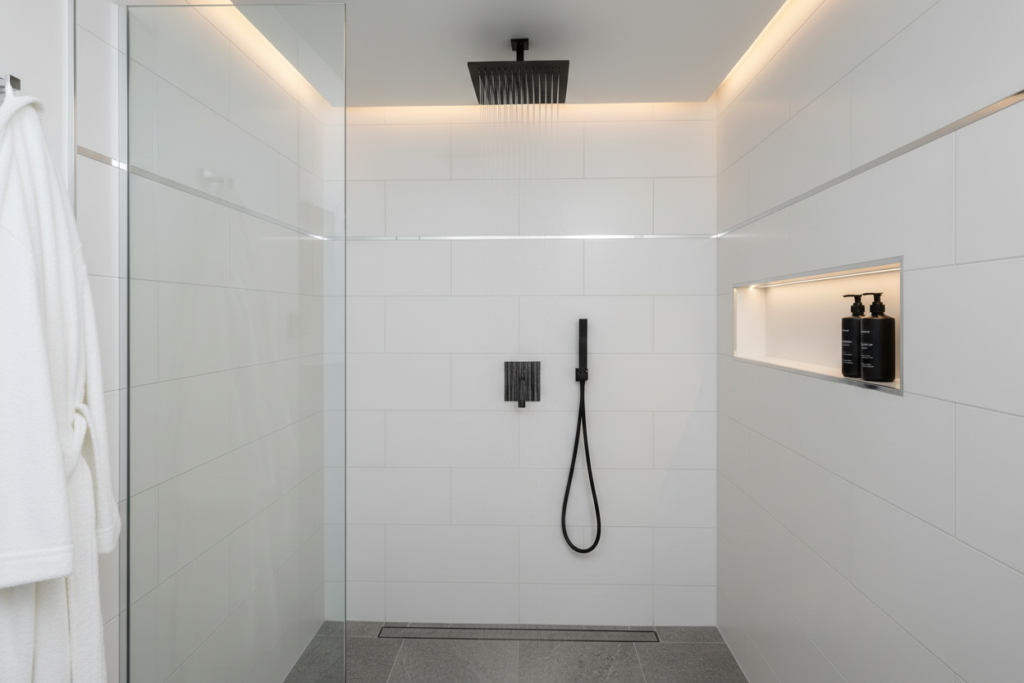
Handheld shower wands add versatility to any shower system. Mounted on a slide bar, these adjustable fixtures accommodate users of different heights and make cleaning the shower much easier. Many quality systems now include both a fixed head and handheld option, controlled by a simple diverter.
Thermostatic and Pressure-Balance Valves
The shower valve controls water temperature and flow. Thermostatic valves maintain your selected temperature precisely, even when water pressure fluctuates. This prevents sudden temperature spikes when someone flushes a toilet or starts the washing machine elsewhere in your home.
Pressure-balance valves offer a more budget-friendly alternative. These standard valves automatically adjust the mix of hot and cold water to maintain relatively stable temperature. While less precise than thermostatic options, they provide adequate temperature control for most households.
Digital shower controls represent the latest innovation. These systems allow you to set your preferred temperature digitally, often with multiple programmable presets. Some even connect to smartphone apps, letting you start your shower remotely so it’s perfectly warm when you step in.
Finish Selections That Complete the Look
Coordinating all your fixture finishes creates a polished, intentional design. Chrome remains the most popular choice for its affordability, durability, and timeless appeal. The reflective surface also bounces light around small spaces, contributing to that open, bright feeling.
Brushed nickel offers warmth while hiding water spots better than chrome. This finish works beautifully with both traditional and contemporary designs. The subtle texture adds visual interest without the high maintenance that polished finishes sometimes require.
Matte black fixtures have surged in popularity. This bold choice creates striking contrast against light tiles and adds modern sophistication. Oil-rubbed bronze provides similar drama with a warmer, more traditional character. Both dark finishes make stunning statements in small showers when balanced with lighter surrounding surfaces.
Brass and gold tones bring luxury and personality. Champagne bronze, brushed gold, and polished brass add warmth and elegance. These metallic finishes pair beautifully with marble-look tiles and create a high-end aesthetic even in compact spaces.
Upgrade Your Shower Fixtures
Explore rainfall showerheads, handheld systems, thermostatic valves, and complete fixture sets in coordinating finishes.
Water-Efficient Options
Low-flow showerheads conserve water without sacrificing performance. Modern aerating technology mixes air with water, maintaining pressure while using fewer gallons per minute. Many premium showerheads now achieve excellent pressure at just 1.8 or even 1.5 gallons per minute.
Look for WaterSense labeled products when shopping for fixtures. This EPA certification ensures the product meets strict efficiency and performance criteria. These fixtures reduce water consumption and lower utility bills while delivering satisfying shower experiences.
Lighting Strategies That Brighten Small Shower Spaces
Proper lighting transforms a small bathroom shower from a cramped necessity to an inviting retreat. Natural light offers the most dramatic impact, but strategic artificial lighting creates ambiance and functionality even in windowless showers. The right combination makes your space feel larger, brighter, and more luxurious.
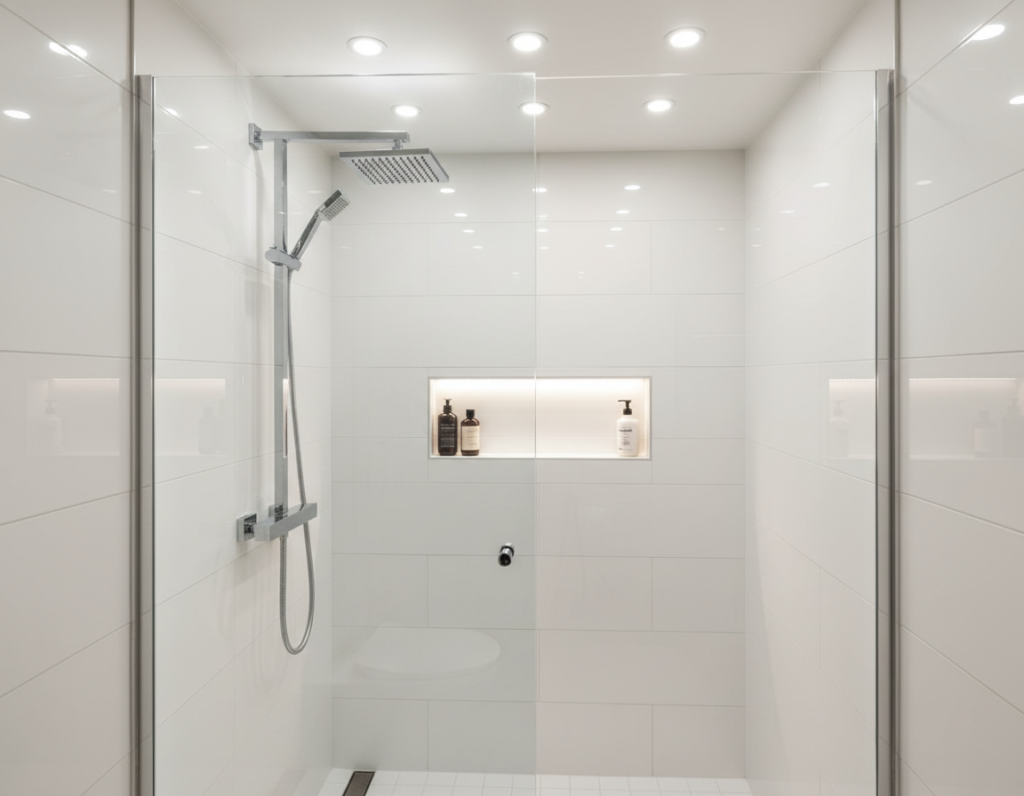
Recessed ceiling lights provide general illumination without protruding into your space. Installing these fixtures directly above your shower ensures even lighting throughout. Choose wet-rated or shower-rated recessed lights specifically designed to handle moisture and direct water exposure.
LED technology has revolutionized bathroom lighting. These energy-efficient bulbs produce excellent light quality, last for years, and generate minimal heat. Many LED shower lights now offer color temperature adjustment, allowing you to switch between cool white for morning routines and warm white for relaxing evening showers.
Maximizing Natural Light
Windows in showers create beautiful, naturally-lit spaces. Privacy glass or textured window films allow light to flood in while maintaining discretion. Position windows higher on the wall, typically starting at least five feet from the floor, to maximize privacy without sacrificing illumination.
Skylights above showers provide spectacular natural light without any privacy concerns. A single skylight can completely transform a small shower, making it feel open to the sky. Modern skylights include options for electronic shades, rain sensors, and even solar-powered operation.
Glass block windows offer a compromise between privacy and light transmission. These architectural elements add textural interest while allowing diffused natural light to enter. The translucent blocks work particularly well in vintage-inspired or eclectic bathroom designs.
Layered Lighting Approach
Combining multiple light sources creates depth and functionality. Overhead ambient lighting provides overall illumination, while accent lights highlight architectural features. Task lighting around the vanity area ensures adequate light for grooming, while decorative lighting adds ambiance and personality.
Under-bench lighting creates a floating effect if you have a built-in shower seat. LED strips mounted beneath the bench cast a gentle glow on the floor tile, adding drama while providing subtle nighttime orientation. This same technique works beautifully under floating vanities visible through glass shower enclosures.
Niche lighting elevates your shower storage from practical to beautiful. Installing LED strip lights or small puck lights inside recessed niches highlights your tile work and creates focal points. Waterproof, color-changing LEDs even allow you to customize the mood.
Color Temperature Considerations
The warmth or coolness of your lighting affects how your space feels. Cool white light between 4000-5000K creates an energizing, crisp atmosphere perfect for morning showers. This color temperature also makes white tiles appear brighter and more pristine.
Warm white light between 2700-3000K creates a relaxing, spa-like ambiance. This softer tone flatters skin tones and creates a more intimate feeling. Many homeowners prefer this warmth for evening showers and unwinding routines.
Tunable white LED systems offer the best of both worlds. These smart lights allow you to adjust color temperature throughout the day. Start with energizing cool white in the morning, then shift to warm, relaxing tones in the evening.
Color Schemes That Make Small Showers Feel Larger
Color choices profoundly influence how spacious your small bathroom shower appears. Light, reflective colors expand visual space, while strategic use of darker tones adds depth and sophistication. Understanding color psychology helps you create a shower that feels comfortable rather than confined.
All-white showers remain timeless for good reason. White tiles, white grout, and chrome fixtures create a clean, bright aesthetic that maximizes the sense of space. This monochromatic approach works especially well in showers with limited natural light, as white surfaces reflect every bit of available illumination.
Soft neutral palettes offer warmth while maintaining spaciousness. Combinations of cream, beige, light gray, and taupe create sophisticated, calming environments. These colors hide water spots and soap residue better than pure white, making maintenance easier while still feeling open and airy.

Strategic Use of Accent Colors
A single accent wall adds personality without overwhelming small spaces. Choose one shower wall for a bolder color or pattern while keeping remaining surfaces neutral. This focal point creates visual interest and depth, making the shower feel thoughtfully designed rather than generic.
Vertical color gradients draw the eye upward, emphasizing ceiling height. Installing darker tiles at the floor level and gradually transitioning to lighter shades near the ceiling creates this lifting effect. The ombre progression feels natural and adds dimension to compact spaces.
Accent strips provide pops of color in controlled doses. A single row of mosaic tiles in a complementary hue breaks up expanses of neutral tile without fragmenting the space. Position these accents strategically at comfortable sight lines, typically around chest or eye level.
Coordinating With Existing Bathroom Colors
Your shower should harmonize with the overall bathroom color scheme. If your vanity, walls, or flooring feature specific colors, echo those tones in your shower design. This cohesive approach makes the entire bathroom feel larger by creating visual continuity.
Limiting your total color palette to three main colors prevents visual chaos. Choose one dominant color for the majority of surfaces, one secondary color for substantial accents, and one accent color for small details. This rule creates balanced, professional-looking results.
Natural materials introduce color through texture and variation. Stone-look tiles, wood-toned accent walls, and metallic fixtures add color interest through their inherent characteristics rather than bold pigments. These organic variations feel sophisticated and timeless.
Light Color Advantages
- Reflects light throughout space
- Creates open, airy feeling
- Makes ceilings appear higher
- Timeless and versatile
- Easy to accessorize and update
Dark Accent Benefits
- Adds dramatic visual interest
- Creates sophisticated depth
- Hides stains and wear
- Anchors floating fixtures
- Makes statement in small doses
Flooring Options for Small Shower Spaces
Shower floor tile must balance aesthetics with critical safety and drainage requirements. The right flooring provides secure footing, directs water efficiently toward the drain, and complements your overall design. Small shower floors present unique challenges that specialized tile solutions address effectively.
Small mosaic tiles excel on shower floors because they allow for proper sloping. The numerous grout lines create natural texture that prevents slipping, while the small tile size accommodates the compound angles needed for effective drainage. These tiles come in endless colors and patterns to match any design vision.

Pebble tiles bring natural texture and exceptional slip resistance. These rounded stones held in mesh backing create massage-like sensations underfoot while providing excellent traction. Available in river rocks, polished pebbles, or flat stacked stones, these options add organic beauty and spa-like character.
Large Format Tiles on Shower Floors
While large tiles work beautifully on walls, using them on shower floors requires expertise. Proper sloping becomes more challenging with bigger tiles, and fewer grout lines mean less texture for traction. If you love the seamless look, work with experienced installers who understand the complexities.
Textured large-format tiles solve the slip-resistance issue. Many manufacturers produce tiles with subtle raised patterns or rough finishes specifically for wet areas. These designs provide safety without the busy appearance of small mosaics.
Cutting large tiles to accommodate drains often creates awkward layouts. Linear drains align better with large-format flooring because they require only parallel cuts along one edge. This creates cleaner lines and wastes less tile compared to cutting around centered point drains.
Slip-Resistance Ratings
The Dynamic Coefficient of Friction (DCOF) measures how slippery tile becomes when wet. For shower floors, aim for a DCOF rating of 0.42 or higher. This ensures safe footing even with soap and water present. Reputable tile manufacturers provide these ratings for their products.
Matte and textured finishes inherently offer more traction than polished surfaces. Even if you love the look of glossy tiles for your walls, choose unpolished options for the floor. The slight texture makes a significant safety difference without dramatically changing the aesthetic.
Anti-slip treatments can be applied to existing tiles if needed. These chemical applications increase surface friction, though they may alter the tile’s appearance slightly. Professional-grade treatments work better than DIY options and last longer under constant water exposure.
Find Safe Shower Flooring
Browse slip-resistant mosaic tiles, pebble tiles, and textured floor tiles designed specifically for shower installations.
Coordinating Floor and Wall Tiles
Using the same tile on floors and walls creates seamless continuity. This approach works particularly well in curbless showers where the floor tile extends into the bathroom. The unbroken surface makes the entire area feel more expansive.
Contrasting floor tiles define the shower area while adding visual interest. A different color, pattern, or material distinguishes the wet zone from the dry bathroom floor. This delineation can actually make both spaces feel more defined and intentional.
Transitioning from small floor mosaics to larger wall tiles creates pleasing contrast while addressing each surface’s specific needs. The combination looks custom and considered, showing attention to both form and function.
Space-Saving Shower Benches and Seating
Built-in shower benches add comfort and functionality without consuming valuable floor space. These integrated seats provide a place to rest, assist with grooming tasks, and make showers accessible for users with mobility limitations. Even in the smallest showers, thoughtful bench design creates luxury without crowding.
Corner benches maximize awkward triangular spaces. A small bench tucked into the corner occupies area that might otherwise go unused. These compact seats measure as little as twelve inches on each side yet provide enough surface for comfortable seating or setting down bath products.
Floating benches create a sleek, modern aesthetic. Cantilevered from the wall without visible supports, these seats appear to hover above the shower floor. The open space beneath makes cleaning easier and contributes to an uncluttered, spacious feeling. Proper structural support within the wall ensures these benches safely hold weight.

Bench Materials and Finishes
Tiled benches match your shower surround for seamless integration. Using the same tile as your walls creates visual continuity, while accent tiles make the bench a focal point. Ensure the bench surface slopes slightly to prevent water pooling, and use small tiles for better water drainage between grout lines.
Solid surface materials like quartz or cultured marble create smooth, luxurious bench tops. These non-porous surfaces resist mold and mildew better than porous materials. They’re also more comfortable to sit on than textured tile. Many homeowners use solid surface bench tops even when the rest of the shower features tile.
Wood-look tiles offer warmth without the maintenance concerns of real wood. Porcelain or ceramic tiles that convincingly mimic wood grain bring organic beauty to shower benches. These tiles provide the visual warmth of wood while standing up perfectly to constant moisture.
Bench Height and Depth
Standard shower bench height ranges from seventeen to nineteen inches, similar to standard chair height. This measurement works comfortably for most adults. If you’re tall or short, adjust accordingly—taller users often prefer eighteen to nineteen inches, while shorter users may find seventeen inches more comfortable.
Bench depth affects both comfort and space consumption. A shallow bench of twelve to fourteen inches provides adequate seating without protruding far into the shower. Deeper benches of fifteen to eighteen inches offer more comfort but require more shower depth to avoid feeling cramped.
The bench should not interfere with shower controls or spray patterns. Position seating far enough from the showerhead that water doesn’t constantly hit the bench, but close enough that someone seated can still reach the handheld wand if needed.
Fold-Down Shower Seats
Wall-mounted fold-down seats provide seating when needed and fold away when not in use. These space-saving solutions work perfectly in extremely tight showers where a permanent bench would overwhelm the space. Quality fold-down seats support several hundred pounds yet occupy just inches when folded.
Materials for fold-down seats range from plastic to teak to stainless steel. Choose based on your aesthetic preferences and budget. Teak models offer natural beauty and warmth, while molded plastic seats provide affordability and easy cleaning. Stainless steel delivers contemporary style and exceptional durability.
Installation requires securing the seat mechanism to wall studs for safety. Professional installation ensures proper support and prevents accidents. Many models include rubber feet that grip tile surfaces when deployed, adding stability during use.
Ventilation and Moisture Control
Proper ventilation protects your small bathroom investment from moisture damage while maintaining air quality and comfort. Small spaces accumulate humidity quickly, making effective moisture management essential. The right combination of ventilation solutions keeps your shower and bathroom healthy for years.
Exhaust fans remove moisture-laden air, preventing mold, mildew, and material degradation. For bathrooms under one hundred square feet, choose a fan rated for at least fifty cubic feet per minute (CFM). Larger bathrooms require higher CFM ratings. Quality fans operate quietly, encouraging regular use.
Timer switches ensure fans run long enough after showering. Moisture continues evaporating for twenty to thirty minutes after you finish showering. Setting your fan to run for this duration removes residual humidity effectively. Some advanced fans include humidity sensors that automatically turn on when moisture levels rise.

Window Ventilation Options
Operable windows provide natural ventilation and fresh air circulation. Even a small window makes a significant difference in moisture control. Position windows to encourage cross-ventilation when possible, creating airflow that quickly dries surfaces.
Privacy concerns often limit window options in showers. Frosted, textured, or tinted glass maintains discretion while allowing windows to open for ventilation. Alternatively, position windows higher on walls where they provide air circulation without compromising privacy.
Window fans combine the benefits of natural and mechanical ventilation. Small, reversible fans mounted in window openings actively pull humid air out or draw fresh air in. These work particularly well in bathrooms with windows but inadequate ceiling fan capacity.
Preventing Moisture Damage
Waterproof barriers behind tile prevent water from penetrating walls and causing structural damage. Modern waterproofing systems include membranes, boards, and liquid-applied products. Proper installation of these barriers is crucial—even the smallest gap can allow moisture infiltration.
Grout sealing protects the porous material from water absorption. Seal grout lines after installation and reseal annually in shower areas. This simple maintenance prevents staining, mold growth, and grout deterioration. Quality sealers take minutes to apply and provide months of protection.
Regular cleaning and drying minimize moisture-related problems. Wiping down walls after showering removes standing water before it can cause issues. A simple squeegee routine takes thirty seconds but significantly reduces mold and mildew growth.
Heated Floors and Towel Warmers
Radiant floor heating keeps bathroom floors dry and comfortable. The gentle warmth evaporates water and prevents cold, damp conditions where mold thrives. Electric floor heating systems install easily during renovations and consume minimal energy.
Heated towel racks serve double duty in moisture control. Beyond providing warm, dry towels, they help remove humidity from the air. Wet towels hung on heated racks dry quickly rather than remaining damp and contributing to overall moisture levels.
Dehumidifiers offer additional moisture control in particularly humid climates. Small bathroom dehumidifiers remove excess moisture from the air, complementing your ventilation system. These units work especially well in windowless bathrooms where air circulation is limited.
Creating Focal Points in Small Shower Designs
Strategic focal points draw attention and create visual interest in small bathroom showers. Rather than treating the shower as purely functional, incorporating a designed focal point elevates the space to a thoughtful, intentional design. These attention-grabbing elements make small showers feel special and well-considered.
Accent walls create immediate impact. Choose one shower wall for special treatment—perhaps a stunning mosaic pattern, natural stone slab, or bold tile color. This focal point wall becomes the star of your shower while remaining surfaces play supporting roles in complementary neutral tones.
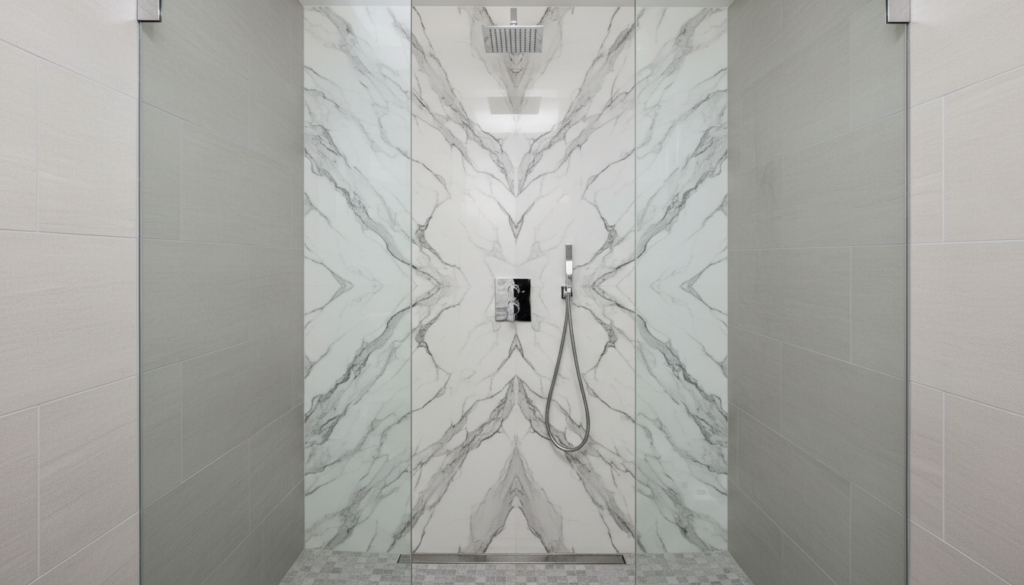
Decorative tile borders or medallions add artistic flair. A carefully placed mosaic medallion at eye level creates a point of interest without overwhelming the space. Borders at strategic heights add horizontal lines that can make showers feel wider.
Architectural Features as Focal Points
Arched shower niches provide architectural interest. Rather than standard rectangular recesses, an arched niche adds classical elegance. The curved top draws the eye and creates a sense of height, making ceilings feel taller.
Ceiling details transform often-overlooked surfaces. A different tile pattern on the ceiling, recessed lighting arranged in interesting configurations, or even a painted ceiling in a coordinating color creates upward visual interest. This encourages eyes to travel up, emphasizing vertical space.
Unique showerheads become sculptural elements. An oversized rainfall head, waterfall-style fixture, or artistically designed shower arm creates a functional focal point. These pieces serve practical purposes while adding visual drama.
Using Pattern and Texture
Herringbone or chevron tile patterns add dynamic movement. These diagonal patterns create energy and visual interest even when using simple subway tiles. The installation angle makes spaces feel larger by drawing the eye along the pattern’s direction.
Three-dimensional tiles provide depth through shadows and highlights. Textured tiles with raised patterns catch light beautifully, creating ever-changing visual interest as light shifts throughout the day. These tiles work particularly well as accent features where their texture can be appreciated.
Contrasting grout makes tile patterns pop. Dark grout against light tiles emphasizes the geometric grid, turning simple tiles into graphic statements. This contrast creates defined patterns that add character without additional expense or complexity.
Discover Decorative Shower Tiles
Find accent tiles, mosaic medallions, textured tiles, and statement-making materials to create stunning shower focal points.
Metallic and Reflective Elements
Metallic tile accents add luxury and light reflection. Small amounts of gold, silver, copper, or bronze tile create sparkle without overwhelming small spaces. These reflective surfaces bounce light around, contributing to brightness and openness.
Mirror or glass accents expand visual space. Glass tile inserts or mirrored mosaic pieces reflect light and views, making showers feel more spacious. Use these materials strategically in niches or as accent strips for maximum impact.
Metallic fixtures in statement finishes become focal points. A matte black rainfall showerhead against white tile or brass fixtures with marble-look tile creates intentional contrast that draws attention and establishes design sophistication.
Accessibility Considerations for Small Showers
Designing for accessibility ensures your shower remains functional throughout life’s changes. Universal design principles create spaces that work beautifully for everyone, regardless of age or ability. Many accessibility features enhance comfort and safety for all users while preparing your bathroom for aging in place.
Curbless entry eliminates the tripping hazard that shower curbs present. Beyond accessibility, these barrier-free thresholds create sleek, modern aesthetics while making daily showering safer for everyone. The continuous floor plane also simplifies cleaning and maintenance.
Grab bars provide essential support for balance and stability. Modern grab bars come in attractive finishes and designs that complement contemporary bathrooms. Strategic placement near shower controls and along walls offers support without institutional appearance.

Shower Seats and Benches
Built-in seating makes showering more comfortable and safer. Permanent benches or fold-down seats allow users to sit while bathing, reducing fall risk. These features benefit people recovering from surgery, pregnant women, elderly users, and anyone who simply prefers sitting.
Transfer seats bridge the shower entry for wheelchair users. These specialized benches span from outside to inside the shower, facilitating safe transfers. Even if not immediately needed, planning space and support for potential future installation demonstrates thoughtful design.
The bench height and placement affect accessibility. Install seats at appropriate heights for the primary users, typically seventeen to nineteen inches. Position seating to allow comfortable access to controls and avoid blocking the shower spray.
Controls and Hardware Placement
Accessible shower controls mount within easy reach from both standing and seated positions. Place thermostatic valves and diverters between thirty-eight and forty-eight inches from the floor. This height works for most users and allows operation before entering the water spray.
Lever handles operate more easily than knobs. Large, easy-to-grip handles accommodate users with limited hand strength or dexterity challenges. These user-friendly controls benefit everyone, not just those with disabilities.
Handheld showerheads on slide bars provide flexibility. Users can adjust the height and direct the spray exactly where needed. The ability to remove and hold the showerhead makes showering possible while seated and simplifies rinsing.
Visual and Tactile Indicators
Contrasting colors help users with visual impairments distinguish different surfaces and features. Using different tile colors for walls versus floors or around controls improves visibility. This contrast also adds design interest for all users.
Tactile differences indicate functional changes in the space. Textured floor tiles in the shower area versus smooth bathroom floor tiles provide non-visual cues about the wet zone. This helps everyone navigate safely, particularly when eyes are closed or full of shampoo.
Adequate lighting proves essential for accessibility. Bright, even illumination helps users with vision challenges while making the space safer for everyone. Eliminate shadows around controls and potential tripping hazards.
Tub-Shower Combinations for Small Bathrooms
Combining bathing and showering functions in one fixture maximizes versatility in small bathrooms. Modern tub-shower combinations offer stylish solutions that don’t sacrifice aesthetics for practicality. The right combination provides flexibility without making the bathroom feel crowded.
Alcove tub-shower units fit efficiently into three-walled recesses. These standard configurations measure sixty inches long and thirty to thirty-two inches wide, fitting comfortably in most bathrooms. Glass doors or panels prevent water from escaping while maintaining visual openness.
Japanese soaking tubs offer deep bathing in compact footprints. These shorter, deeper tubs allow full-body immersion while consuming less floor space than traditional American tubs. Adding a shower component creates a highly functional combination unit.

Shower Doors for Tub Combinations
Frameless glass panels create clean, modern tub-shower enclosures. A single fixed panel combined with an open end provides easy access while containing shower spray. This minimalist approach feels less confining than fully enclosed systems.
Sliding doors save space in tight bathrooms. These bypass-style doors slide along tracks rather than swinging outward. They work well when wall or toilet placement prevents traditional hinged doors from opening fully.
Shower curtains remain the most budget-friendly option. Modern curved curtain rods bow outward, creating more interior space while adding architectural interest. Quality fabric curtains can look surprisingly upscale when properly styled.
Maximizing Tub-Shower Functionality
Tub spouts with integrated diverters streamline the fixture count. These combination units eliminate the need for separate controls, reducing visual clutter on your wall. Sleek, modern designs make these functional components attractive.
Overhead shower conversions transform standard tubs into shower-first spaces. Adding a rainfall showerhead above the tub creates a luxurious shower experience while maintaining bathing capability. The tub becomes a large shower base with the bonus option of occasional baths.
The soaking tub placement affects the entire bathroom layout. Corner installations can free up wall space for vanities or storage. Freestanding soaking tubs surrounded by shower enclosures create spa-like focal points in slightly larger bathrooms.
Explore Tub-Shower Solutions
Browse combination faucets, shower conversion kits, glass enclosures, and accessories designed for tub-shower installations.
Mirrors and Reflective Surfaces
Strategic use of mirrors and reflective materials dramatically expands perceived space in small bathrooms. These surfaces bounce light around the room, create depth, and make tight quarters feel substantially larger. Thoughtful mirror placement transforms cramped bathrooms into bright, open-feeling spaces.
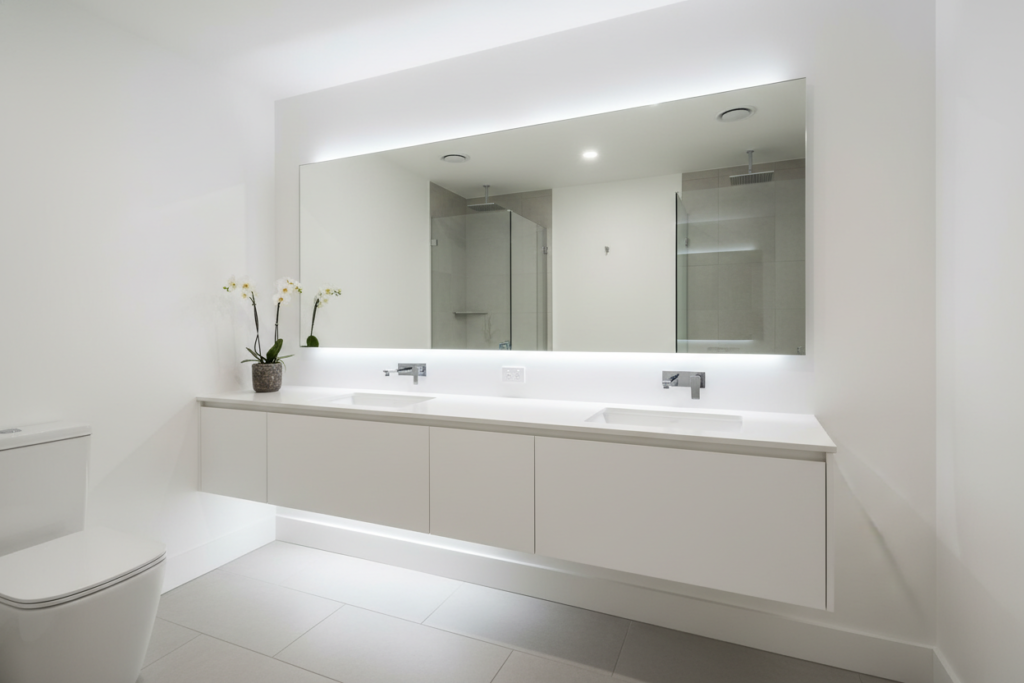
Large mirrors above vanities are standard, but extending mirrors further enhances spaciousness. Floor-to-ceiling mirrors or mirrors that wrap around corners multiply visual space. The expanded reflection makes the bathroom appear to continue beyond its actual dimensions.
Mirrored shower doors create interesting effects. While less common than clear glass, mirrored or tinted reflective glass on shower exteriors reflects the bathroom back on itself. This works particularly well when the view into the shower is less important than expanding the bathroom’s perceived size.
Reflective Tile and Materials
Glossy tile finishes reflect more light than matte surfaces. High-gloss white subway tiles or polished porcelain maximize light reflection, brightening the entire space. This works especially well on walls, though glossy floor tiles can become slippery when wet.
Glass tile accents add sparkle and light play. Small amounts of glass mosaic tile in niches, as accent strips, or mixed into field tile patterns catch and reflect light beautifully. The subtle shimmer adds luxury while enhancing brightness.
Metallic finishes on fixtures serve as small reflective elements. Chrome, polished nickel, and brass fixtures act as tiny mirrors, bouncing light around the room. Coordinating all fixtures in reflective finishes maximizes this effect.
Strategic Mirror Placement
Positioning mirrors opposite windows doubles natural light impact. The mirror reflects daylight deep into the room, illuminating areas that direct window light wouldn’t reach. This placement makes bathrooms feel brighter throughout the day.
Mirrors placed to reflect attractive features enhance your design. Position mirrors to capture views of beautiful tile work, elegant fixtures, or architectural details. This draws attention to your best design elements while expanding space.
Avoid mirrors that reflect cluttered areas or toilets. Thoughtful placement ensures mirrors show only the most attractive aspects of your bathroom. If a mirror would reflect the toilet or messy storage, adjust the positioning or size.
Lighted Mirrors
Backlit mirrors provide ambient lighting while serving their reflective function. LED lights behind or within the mirror create a floating effect and eliminate shadows on faces. This dual-purpose design element saves space while adding modern sophistication.
Medicine cabinets with mirrored doors combine storage and reflection. These space-saving fixtures hide toiletries while providing necessary mirror surface. Recessed models built into wall cavities preserve precious square footage.
Magnifying mirrors assist with grooming tasks. Small wall-mounted magnifying mirrors on extending arms provide close-up views for detailed work without occupying counter space. These practical additions enhance functionality in compact bathrooms.
Smart Storage Solutions Beyond the Shower
Comprehensive storage planning extends beyond the shower itself to the entire small bathroom. Clever storage solutions keep necessities organized and accessible without cluttering limited space. These ideas help maintain the open, uncluttered feeling essential in compact bathrooms.
Recessed medicine cabinets utilize wall cavity space. Building storage into walls rather than onto them preserves square footage. Modern recessed cabinets feature attractive mirrored fronts, interior lighting, and adjustable shelves that accommodate various bottle sizes.
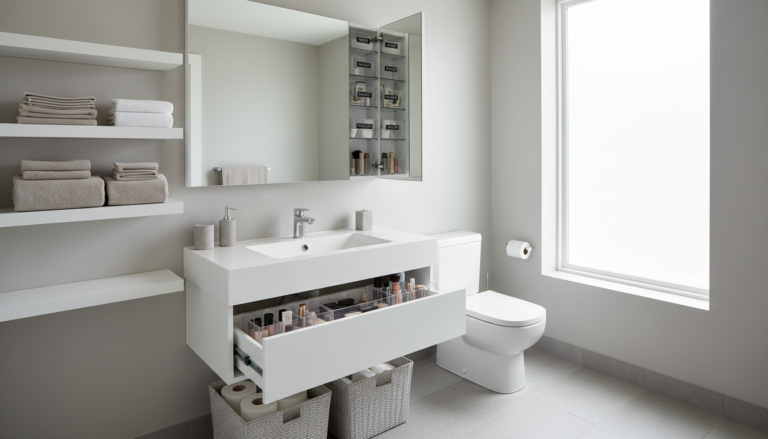
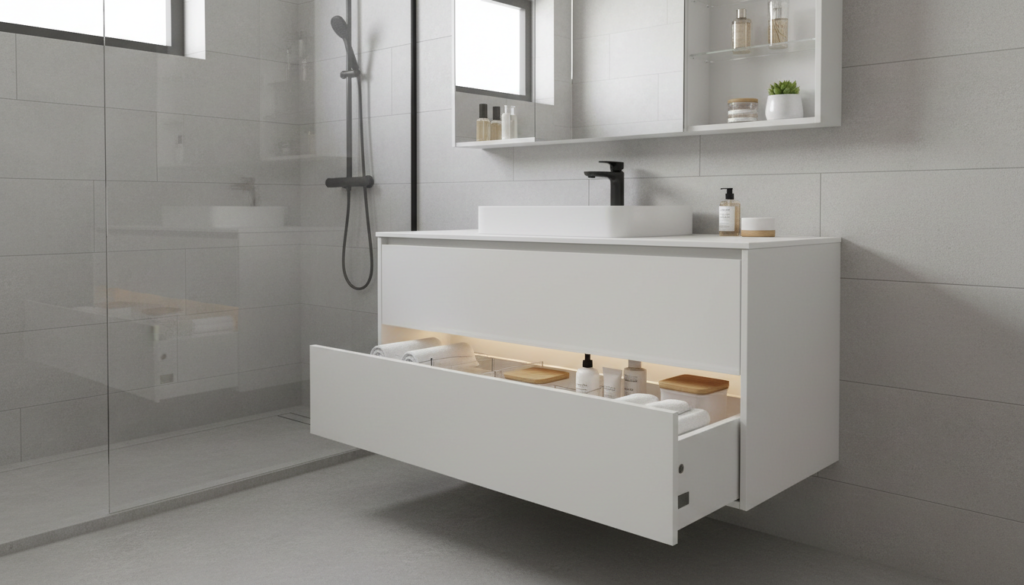
Floating vanities create storage while maintaining visual openness. The space beneath floating cabinets makes bathrooms feel less crowded. This design also simplifies floor cleaning and can accommodate small storage baskets for additional organization.
Vertical Storage Opportunities
Wall-mounted shelving utilizes vertical space efficiently. Open shelves display attractive items like rolled towels or decorative bottles while keeping them accessible. Installing shelves above the toilet or near the ceiling captures otherwise wasted space.
Tall, narrow cabinets fit into tight spots. A slim floor-to-ceiling cabinet occupies minimal floor space while providing substantial storage capacity. These tower-style units work particularly well in corners or narrow wall sections.
Over-toilet storage systems maximize the area above the toilet. Freestanding units or wall-mounted cabinets create storage without consuming additional floor space. This often-overlooked area provides valuable storage real estate.
Hidden and Multi-Functional Storage
Vanity drawers with organizational inserts keep small items tidy. Drawer dividers, pull-out trays, and specialized inserts prevent toiletries from becoming jumbled. This organization makes everything easy to find and maximizes usable drawer space.
Mirror cabinets serve double duty. The mirrored front provides necessary reflection while the cabinet interior stores medications, skincare, and grooming tools. Some models include interior outlets for charging electric toothbrushes and razors.
Built-in hampers hide dirty clothes and laundry. Integrating a pull-out hamper into the vanity or a nearby cabinet keeps laundry out of sight. This prevents piles of clothes from cluttering the bathroom floor.
Towel Storage Solutions
Heated towel racks provide storage while adding luxury. Wall-mounted towel warmers hold multiple towels in minimal space. The warming function keeps towels fresh-smelling and provides cozy comfort after showering.
Hooks occupy less space than towel bars. Multiple hooks mounted along a wall provide hanging spots for several towels without the linear space that bars require. Decorative hooks add style while serving practical purposes.
Ladder-style towel storage creates attractive displays. Leaning or wall-mounted ladder racks hold multiple towels while looking intentionally decorative. This solution works particularly well in bathrooms with vintage or farmhouse aesthetics.
Organize Your Bathroom Storage
Discover space-saving storage solutions including floating shelves, over-toilet cabinets, drawer organizers, and towel storage systems.
Budget-Friendly Updates That Make Big Impacts
Transforming a small bathroom shower doesn’t always require complete renovation. Strategic updates and refresh projects deliver impressive results without the expense of full remodels. These budget-conscious improvements make significant visual and functional differences.
New shower curtains instantly update tub-shower combinations. A quality fabric curtain in a fresh color or pattern changes the entire room’s appearance. Pair with a new curved or straight curtain rod in a modern finish for maximum impact.
Replacing outdated fixtures modernizes the space quickly. Swapping old faucets, showerheads, and towel bars for contemporary designs in coordinating finishes creates a cohesive, updated look. This relatively simple DIY project costs hundreds rather than thousands.

Cosmetic Improvements
Regrouting refreshes tired tile work. Removing old, stained grout and applying fresh grout in a contemporary color revitalizes existing tile. This labor-intensive but inexpensive project makes old tile look nearly new.
Paint transforms bathroom walls and ceilings. A fresh coat in a modern color instantly updates the space. Use moisture-resistant bathroom paint formulated to resist mildew in humid environments. Consider an accent wall for maximum impact with minimal paint.
Updated lighting changes the entire atmosphere. Replacing builder-grade light fixtures with more attractive options improves both function and style. Modern LED fixtures provide better light quality while reducing energy costs.
Accessory Upgrades
New mirrors make substantial visual impact. Replacing a basic mirror with a larger, framed, or lighted version changes the room’s character. This single swap often provides the biggest visual return on investment.
Matching accessory sets create cohesive design. New towel bars, toilet paper holders, robe hooks, and other hardware in coordinating finishes tie the room together. Complete sets often cost less than purchasing pieces individually.
Decorative elements add personality inexpensively. Attractive storage baskets, new towels in coordinating colors, small plants, and artwork personalize the space. These finishing touches make bathrooms feel designed rather than merely functional.
DIY Projects for Small Budgets
Peel-and-stick tiles offer temporary solutions for renters. Removable tile products adhere to existing surfaces and can be removed without damage. While not as durable as traditional tile, they provide affordable updates in rental situations.
Refinishing existing fixtures extends their life. Bathtub refinishing, sink reglazing, and tile painting products restore worn surfaces at fractions of replacement costs. These solutions work well for outdated but structurally sound fixtures.
Creative organization improves functionality without construction. Adding storage solutions like over-toilet shelves, shower caddies, or under-sink organizers maximizes existing space. These purchases cost little but significantly improve daily function.
Maintenance and Care for Lasting Beauty
Proper maintenance preserves your small bathroom shower investment and keeps it looking beautiful for years. Regular care prevents expensive repairs and ensures your shower remains a pleasant, hygienic space. These simple routines protect materials and finishes while minimizing long-term maintenance.
Daily wiping prevents buildup that leads to stubborn stains. A quick squeegee session after each shower removes standing water from glass and tile. This thirty-second habit prevents hard water deposits, soap scum, and mold growth more effectively than any cleaning product.
Weekly cleaning maintains surfaces between deep cleans. A mild bathroom cleaner applied to tiles, glass, and fixtures prevents dirt accumulation. Regular attention keeps cleaning tasks manageable rather than allowing grime to build up to overwhelming levels.

Grout and Sealant Care
Grout sealing protects against moisture and staining. Apply grout sealer after installation and reapply annually in shower areas. This simple step prevents water absorption that leads to mold, mildew, and grout deterioration. Quality sealers are inexpensive and easy to apply.
Caulk replacement prevents water damage. The flexible caulk between tile and fixtures eventually shrinks, cracks, or becomes moldy. Removing old caulk and applying fresh caulk maintains waterproof seals. Replace caulk every year or two depending on condition.
Mold and mildew removal keeps showers healthy. At first signs of growth, treat affected areas with appropriate cleaners. Preventing mold is easier than removing established colonies. Good ventilation and regular cleaning prevent most mold problems.
Fixture and Hardware Maintenance
Showerhead cleaning maintains water pressure and spray patterns. Mineral deposits clog showerhead nozzles over time. Soaking showerheads in vinegar solution dissolves these deposits and restores proper function. This simple maintenance prevents the need for premature replacement.
Valve cartridge servicing ensures smooth operation. If temperature control becomes inconsistent or handles become difficult to turn, the internal cartridge likely needs cleaning or replacement. Many manufacturers provide service kits for maintaining these essential components.
Finish protection preserves fixture appearance. Avoid abrasive cleaners that scratch protective coatings on faucets and hardware. Use soft cloths and appropriate cleaning products formulated for specific finishes. This gentle care prevents permanent damage to decorative surfaces.
Glass Enclosure Care
Water spot prevention keeps glass clear. Beyond daily squeegeeing, applying rain repellent treatments helps water bead and roll off more easily. These products, originally designed for automobile windshields, work excellently on shower glass.
Mineral deposit removal restores clouded glass. Vinegar solution or commercial lime removers dissolve hard water buildup. For stubborn deposits, specialized glass cleaning tools provide scrubbing power without scratching. Regular treatment prevents permanent etching.
Track and hinge maintenance ensures smooth operation. Glass door tracks accumulate soap scum and hair. Regular cleaning prevents buildup that impedes door movement. Lubricating hinges and rollers annually maintains smooth, quiet operation.
Creating Your Perfect Small Bathroom Shower
Small bathroom showers offer exciting design opportunities when approached thoughtfully. The strategies explored throughout this guide demonstrate that limited square footage doesn’t limit style, comfort, or functionality. Glass enclosures expand visual space, strategic tile choices enhance the sense of room, and smart storage keeps everything organized.
Your ideal shower balances aesthetics with practical considerations. The right fixtures provide luxury experiences, proper lighting creates ambiance and safety, and adequate ventilation protects your investment. Accessibility features ensure your shower works beautifully for everyone while preparing for future needs.
Budget-conscious updates prove that transformation doesn’t require complete renovation. Simple changes like new fixtures, fresh grout, or improved lighting make substantial differences. Even small investments in quality materials and thoughtful design deliver lasting satisfaction.
Begin your project by identifying your highest priorities. Whether you need better storage, improved accessibility, more natural light, or simply a more beautiful space, focusing on specific goals guides decision-making. Take measurements carefully, research products thoroughly, and don’t hesitate to consult professionals for technical aspects.
Your small bathroom shower can become a favorite space in your home. With the ideas and strategies presented here, you have the knowledge to create a shower that feels spacious, functions perfectly, and reflects your personal style. The journey from cramped necessity to luxurious retreat begins with a single decision to invest in your daily comfort and your home’s value.