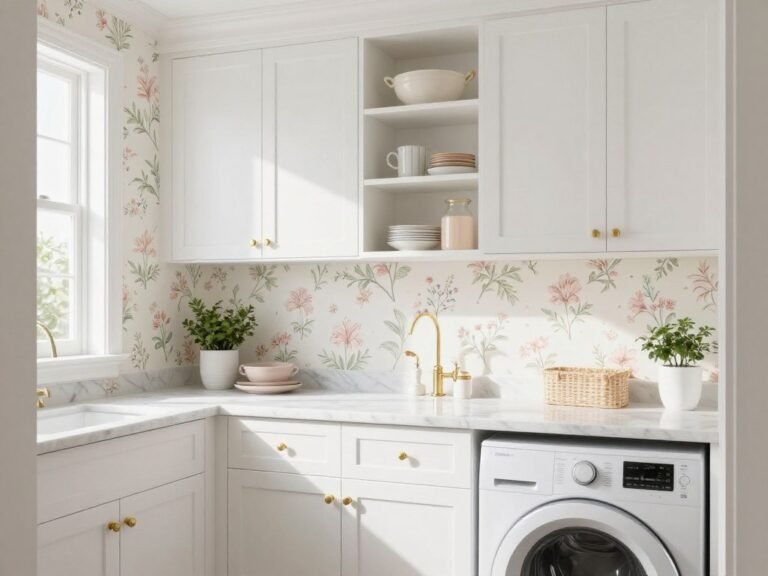
Limited space does not mean sacrificing style or functionality in your laundry room. Stackable washer dryer combinations offer the perfect solution for compact homes and apartments.
This Website contains affiliate links. That means I may earn a small commission if you purchase through my links, at no extra cost to you.
Creating an efficient laundry space requires smart planning and creative thinking. This comprehensive guide presents practical ideas to maximize every inch of your small laundry room.
From clever storage solutions to design tricks that make rooms feel larger, these stackable laundry room ideas deliver both beauty and efficiency.
Planning Your Stackable Laundry Room Layout
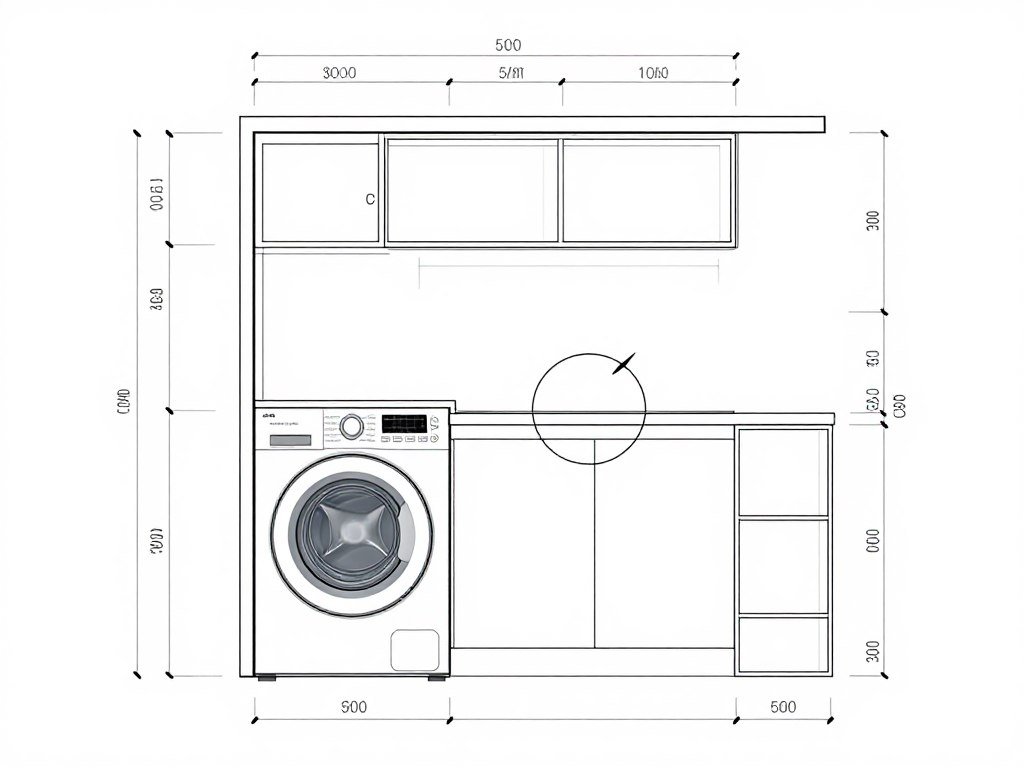
Proper planning forms the foundation of any successful laundry room project. Start by measuring your available space carefully before purchasing appliances or storage solutions.
Standard stacked washer dryer units require approximately 27 inches of width and 75 to 80 inches of height. However, compact models offer space-saving alternatives for particularly tight areas.
Consider door clearance and walking space when positioning your stackable units. Leaving at least 36 inches of clearance in front of appliances allows comfortable access for loading and unloading clothes.
Related Posts:






Essential Measurements
- Appliance width: 24-27 inches typical
- Stacked height: 75-80 inches standard
- Door clearance: 36 inches minimum
- Side clearance: 1-2 inches per side
- Ventilation space: 4-6 inches behind unit
Planning Considerations
- Electrical outlet placement and voltage
- Water supply line accessibility
- Drain connection location
- Ventilation duct routing
- Flooring weight capacity
Start Your Laundry Room Transformation
Explore essential organizing products and storage solutions to maximize your stackable laundry setup.
Smart Cabinet and Storage Solutions
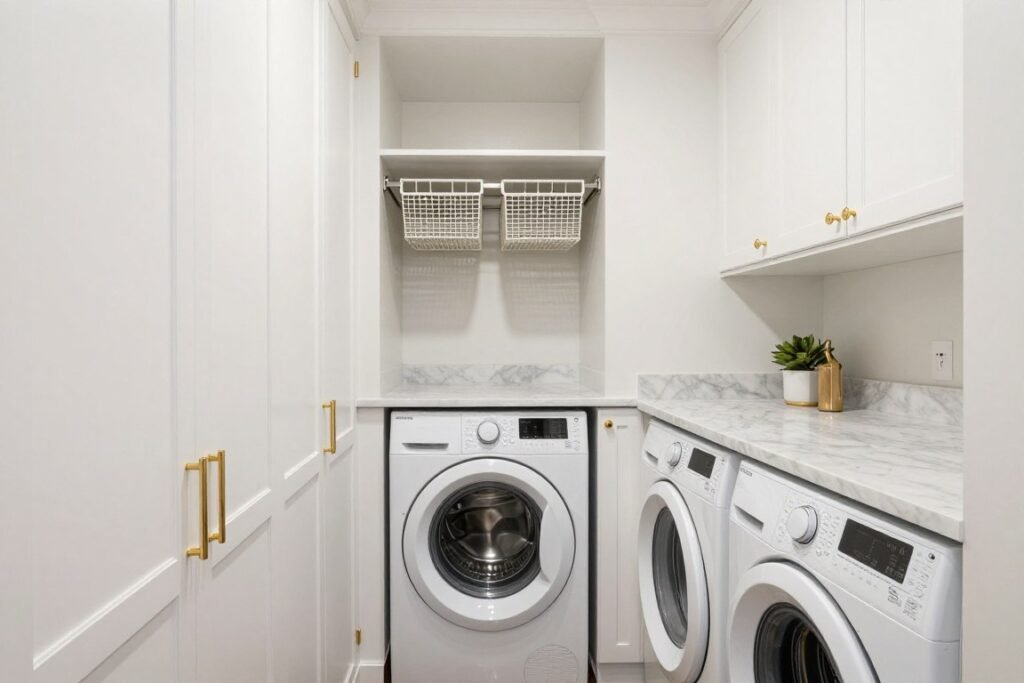
Cabinets maximize vertical space and keep laundry essentials organized and accessible. Floor-to-ceiling cabinetry transforms walls into functional storage without consuming precious floor space.
Installing cabinets around your stacked washer dryer creates a built-in appearance while providing abundant storage. This approach works exceptionally well in closet laundries or dedicated small rooms.
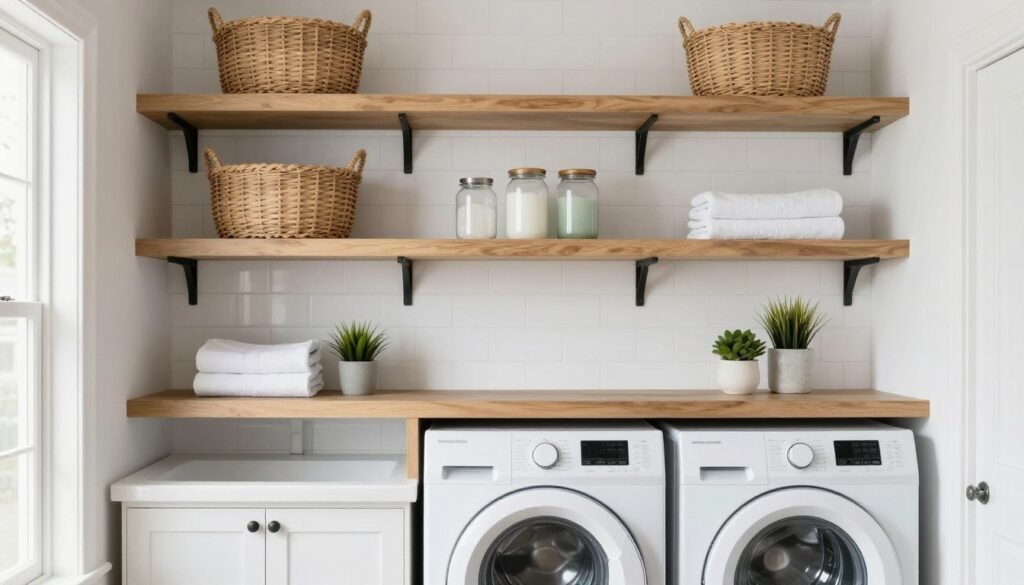
Open shelving offers an affordable alternative to traditional cabinets. Floating shelves above appliances provide convenient storage for frequently used items like detergent and fabric softener.
Upper Cabinet Options
Overhead cabinets utilize the space above your stacked units effectively. These cabinets store seasonal items, extra supplies, and cleaning products you do not need daily access to.
Choose shallow depth cabinets to prevent items from getting lost in the back. Cabinet depths of 12 to 15 inches work perfectly above laundry appliances.
Base Cabinet Solutions
Installing base cabinets beside your stackable units creates additional workspace. A countertop spanning these cabinets provides a folding station and landing spot for laundry baskets.
Pull-out drawers in base cabinets keep laundry room essentials organized and easily accessible. Consider installing special organizers for detergent bottles and cleaning supplies.
Wall-Mounted Cabinets
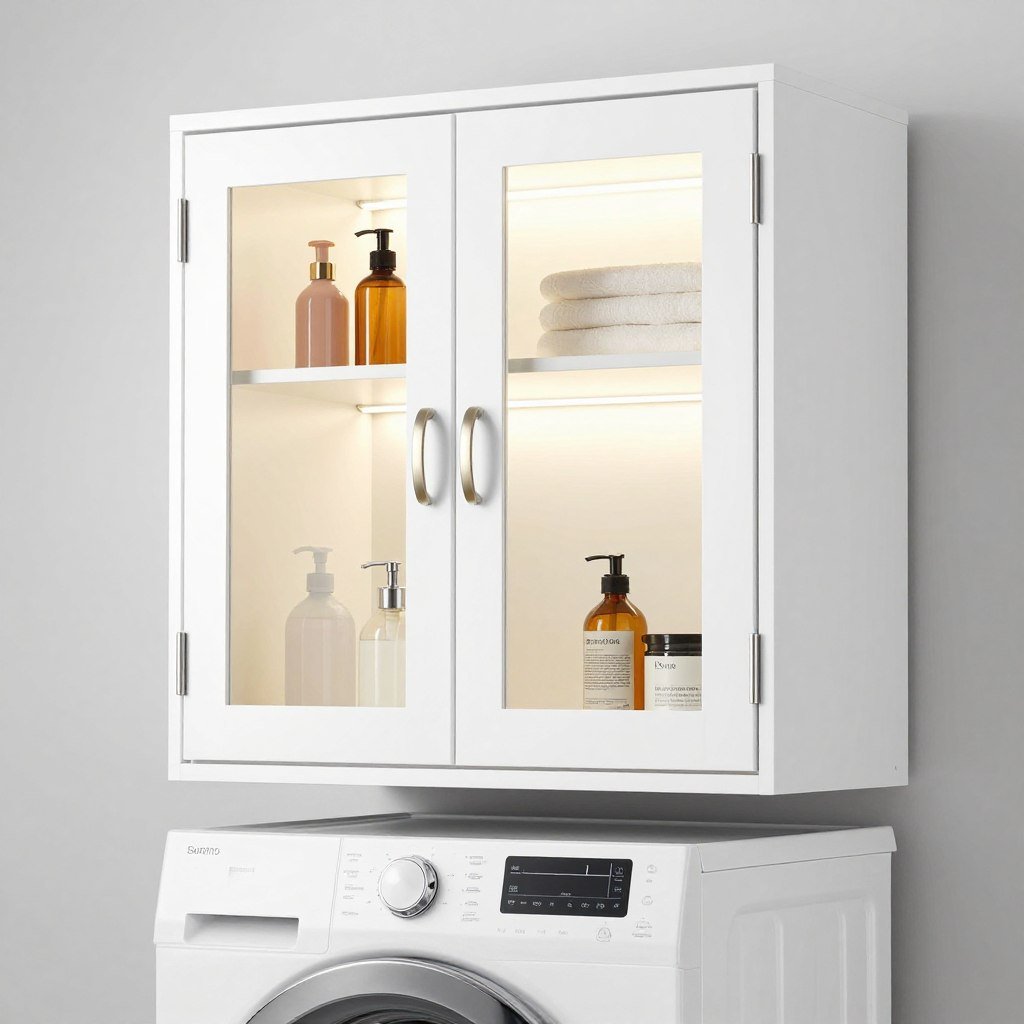
Wall-mounted storage keeps floors clear while providing ample space for supplies and essentials.
Pull-Out Storage
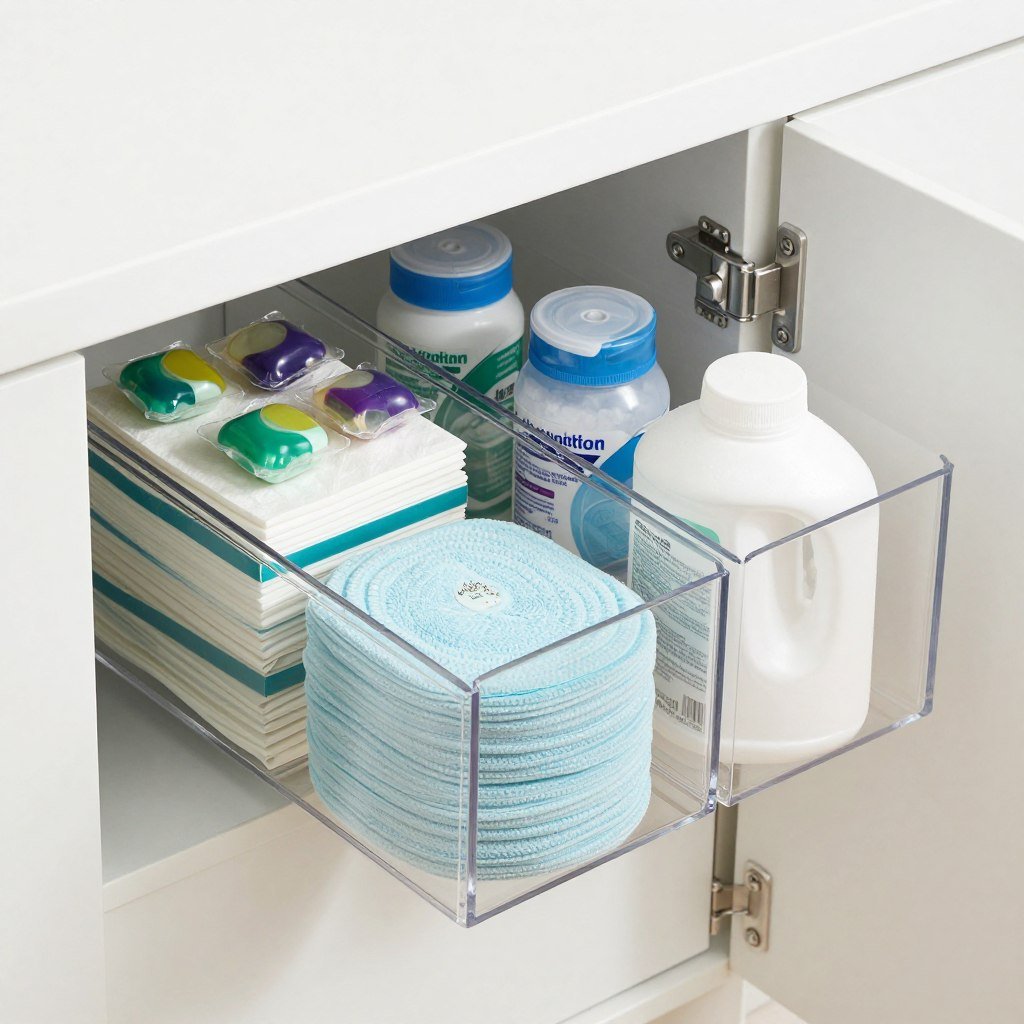
Sliding drawers and pull-out organizers maximize deep cabinet space and improve accessibility.
Open Shelving
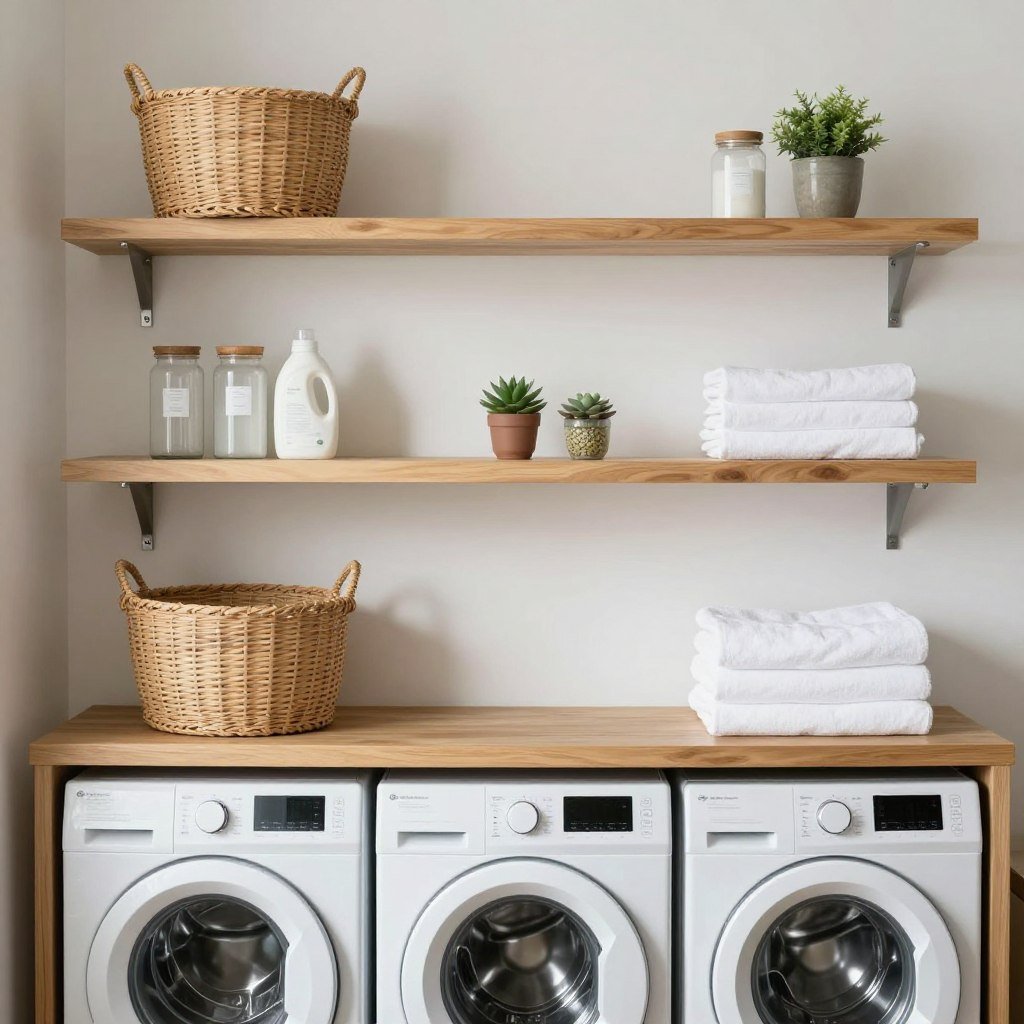
Floating shelves create visual interest while keeping frequently used items within easy reach.
Maximizing Vertical Space in Small Laundry Rooms
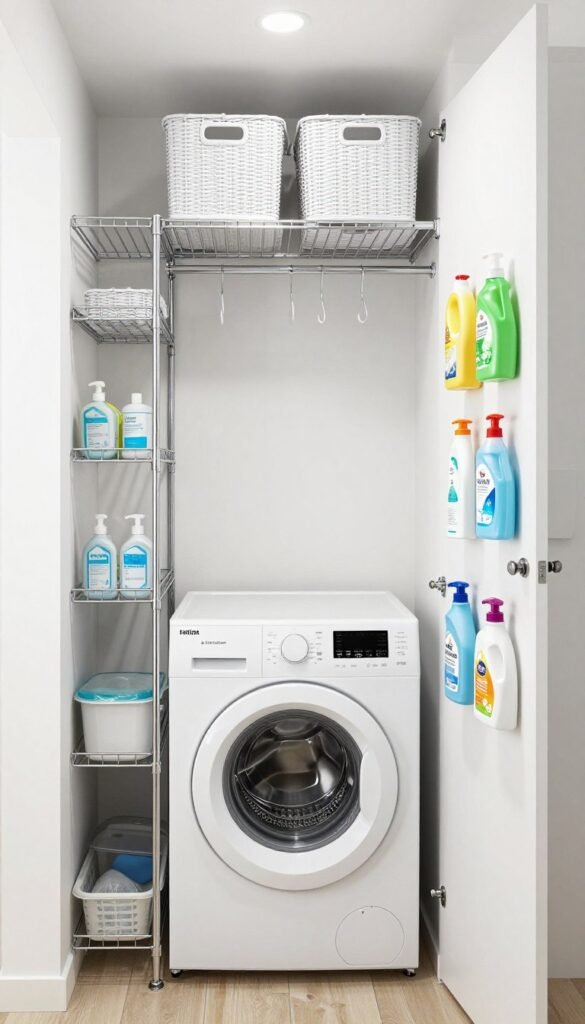
Vertical space represents your greatest asset in small laundry rooms. Stacking your washer dryer already utilizes height, but additional vertical storage multiplies your organizational capacity.
Install shelving or cabinets from floor to ceiling to capture every available inch. This strategy works particularly well in closet laundries where wall space remains limited.
Wall-Mounted Solutions
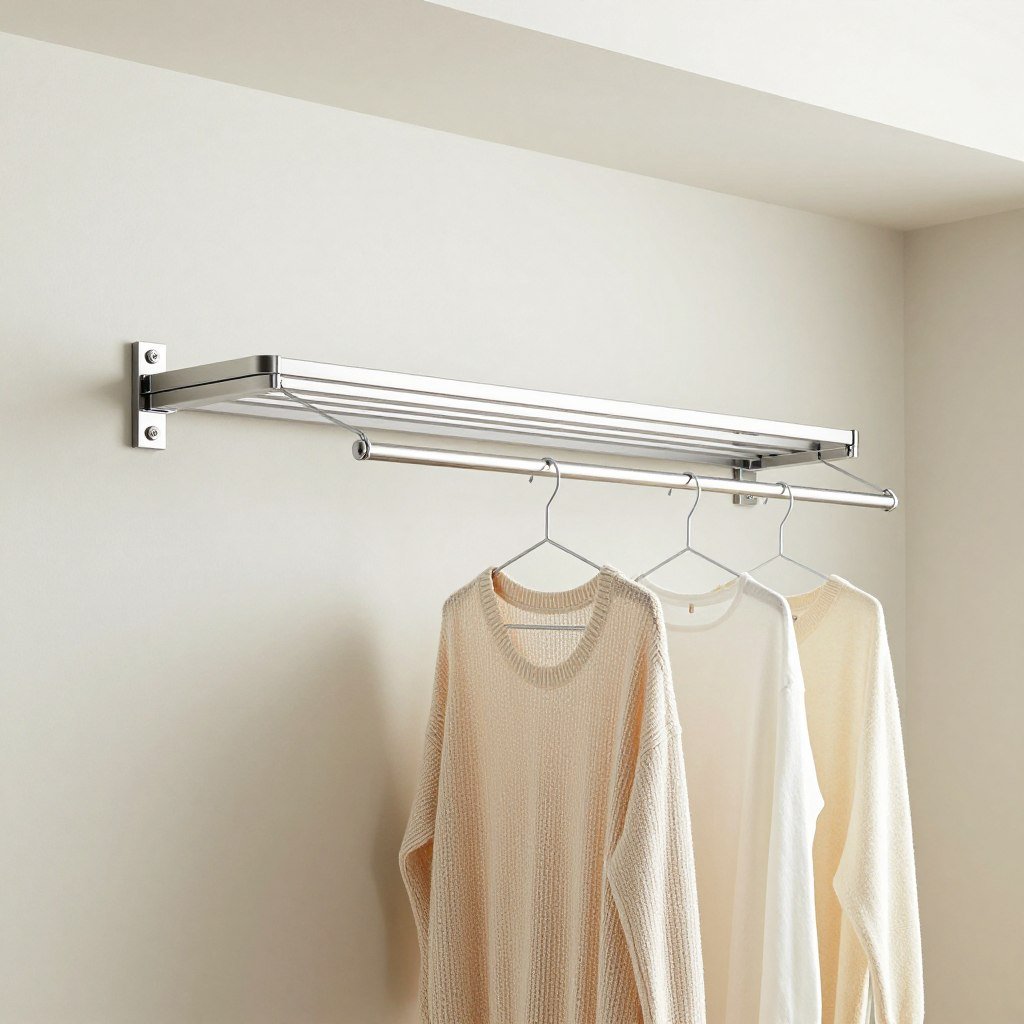
Wall-mounted drying racks fold away when not in use, preserving valuable floor space. These racks extend when needed and collapse flat against the wall for a streamlined appearance.
Pegboard installations create customizable storage walls. Hooks, baskets, and shelves attach to pegboard, allowing you to adjust your organization system as needs change.
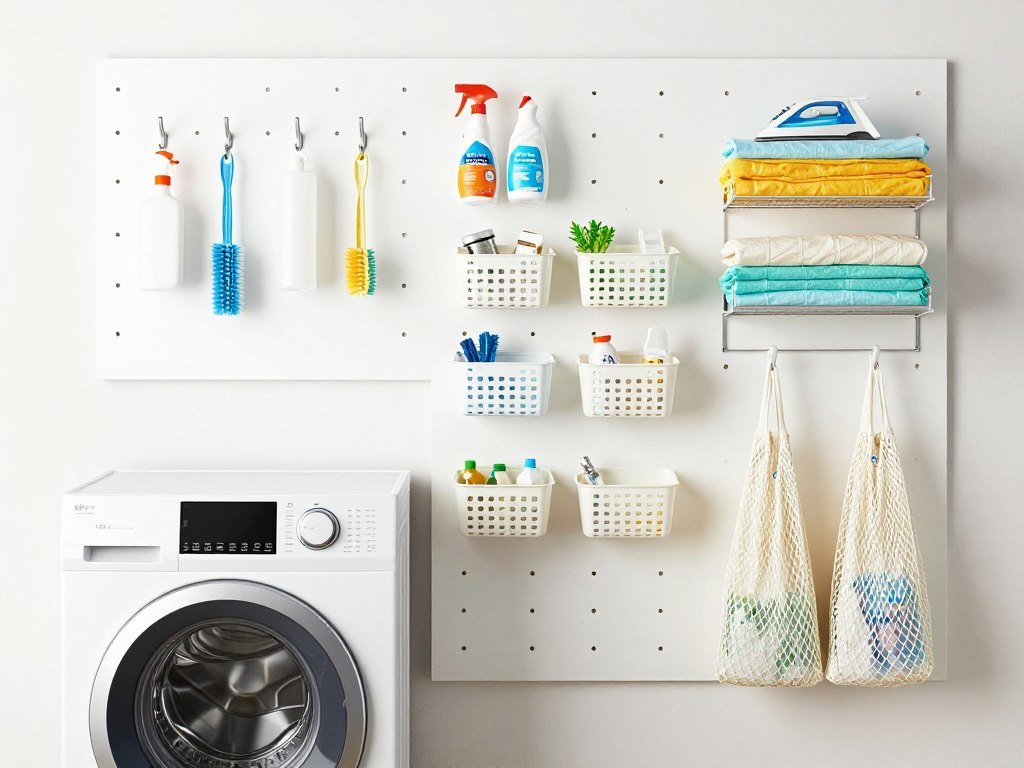
Over-the-Door Storage
The back of your laundry room door provides often-overlooked storage real estate. Over-the-door organizers hold cleaning supplies, dryer sheets, and other essentials without requiring installation.
Hanging organizers with clear pockets let you see contents at a glance. This visibility helps prevent overbuying supplies you already own.
Color and Design Strategies for Small Spaces
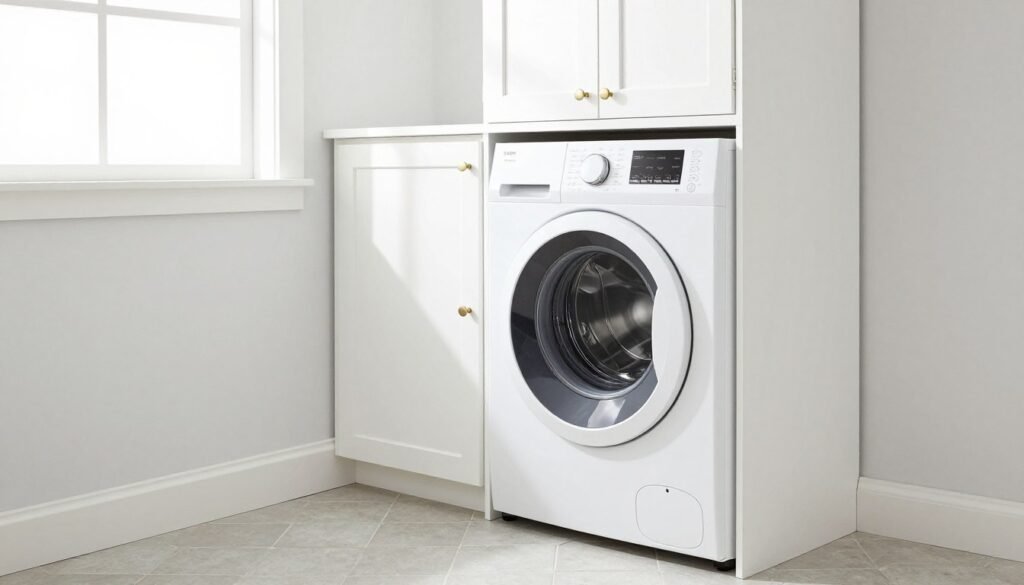
Light colors make small laundry rooms feel larger and more inviting. White, cream, and pale gray reflect light and create an open atmosphere in compact spaces.
Paint your walls, cabinets, and trim in coordinating light tones for a cohesive look. This monochromatic approach visually expands the room by eliminating harsh color contrasts.
Strategic Color Placement
Add personality through small touches of color without overwhelming the space. A colorful backsplash behind your stacked washer dryer creates visual interest while maintaining an open feel.
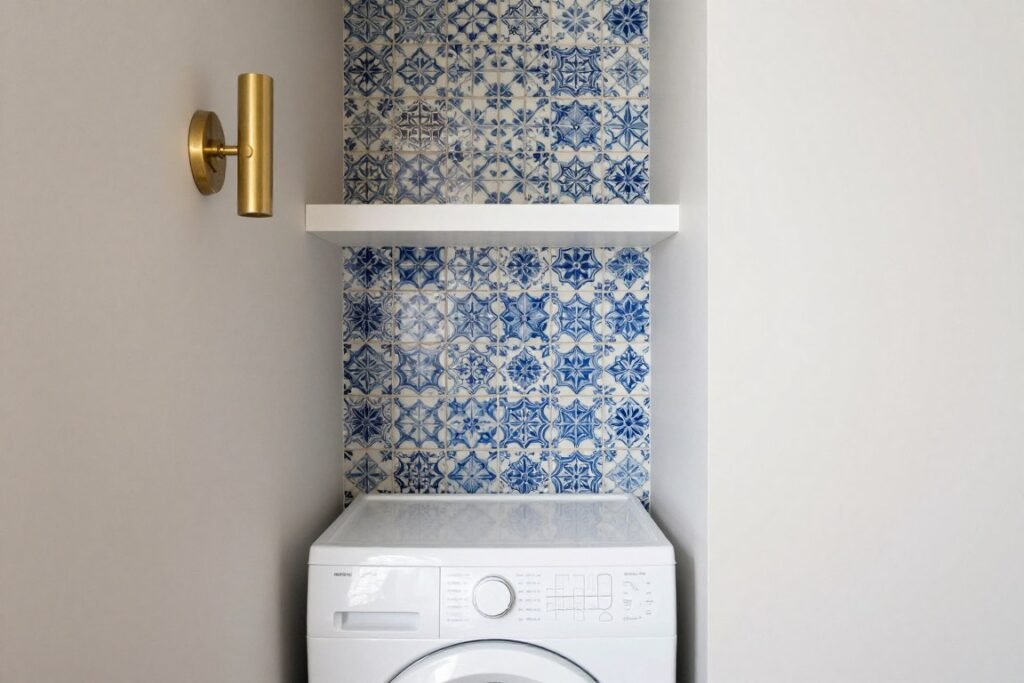
Wallpaper offers another way to inject color and pattern into your laundry room. Stick to light backgrounds with small-scale patterns to avoid making the space feel cramped.
Lighting Design
Proper lighting transforms small laundry rooms from dark and dreary to bright and functional. Layer different light sources for optimal visibility and ambiance.
Install bright overhead lighting for general illumination. Add under-cabinet lights to eliminate shadows on countertops where you fold clothes and treat stains.
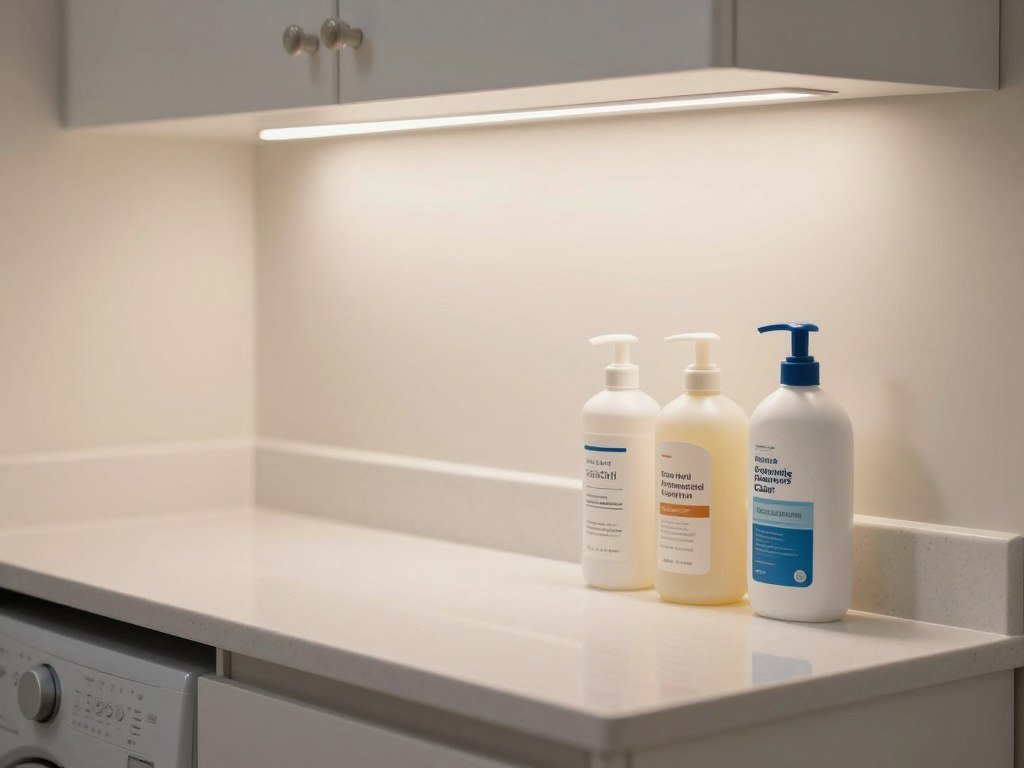
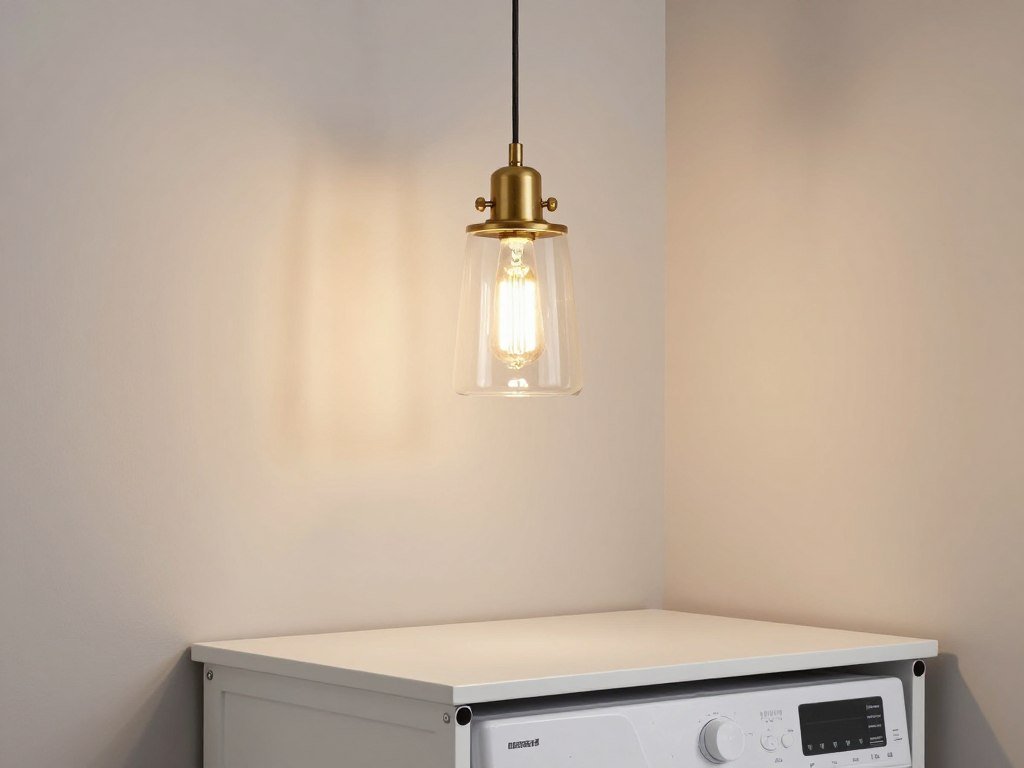
Task lighting above your folding area prevents eye strain. Pendant lights or wall sconces add style while providing focused illumination where you need it most.
Creating Folding and Drying Stations
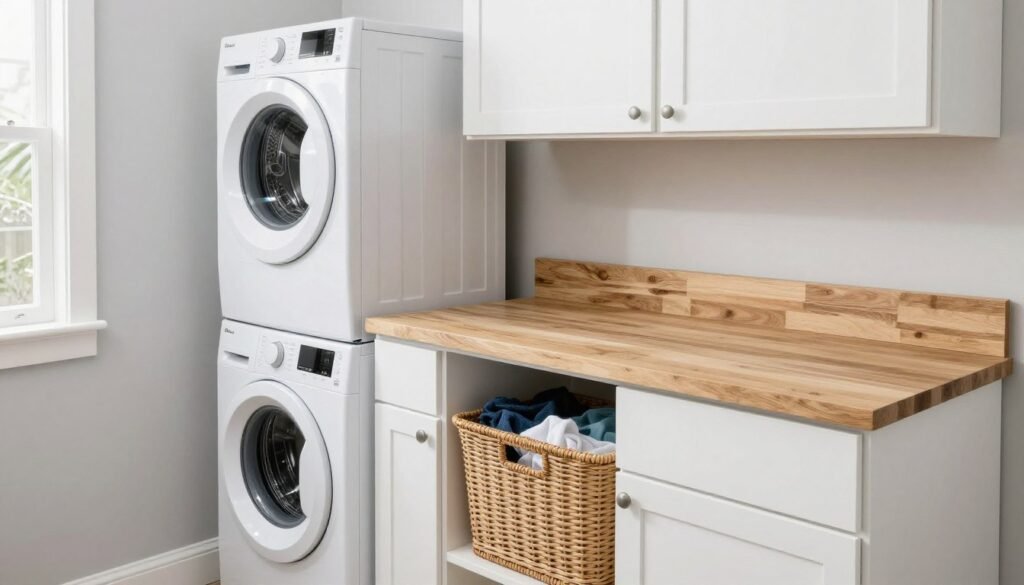
A dedicated folding surface streamlines your laundry routine and prevents wrinkled clothes from piling up. Even small laundry rooms can incorporate compact folding stations.
Install a countertop beside your stacked washer dryer if space permits. A depth of 24 inches provides adequate folding space without protruding too far into the room.
Wall-Mounted Folding Tables
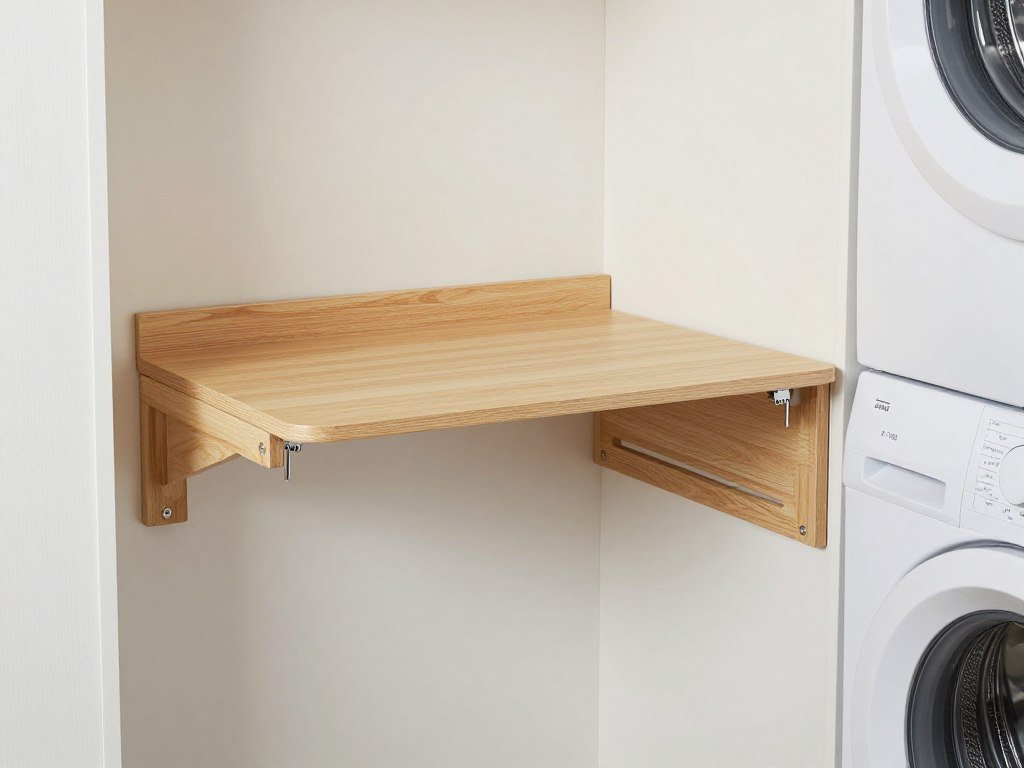
Wall-mounted drop-down tables offer folding surfaces that disappear when not needed. These space-saving solutions attach to the wall and fold flat, maintaining an open floor plan.
Some models include storage shelves or drying racks integrated into the design. This multipurpose approach maximizes the functionality of each element in your laundry room.
Drying Rack Options
Air drying delicate items requires dedicated drying space. Wall-mounted racks, retractable clotheslines, and accordion-style racks provide solutions for various space configurations.
Install a drying rack above your washer dryer where rising heat helps clothes dry faster. This positioning takes advantage of otherwise wasted space while improving efficiency.
Retractable Drying Lines
Pull-out clotheslines extend when needed and retract completely out of sight when not in use.
Wall-Mounted Racks
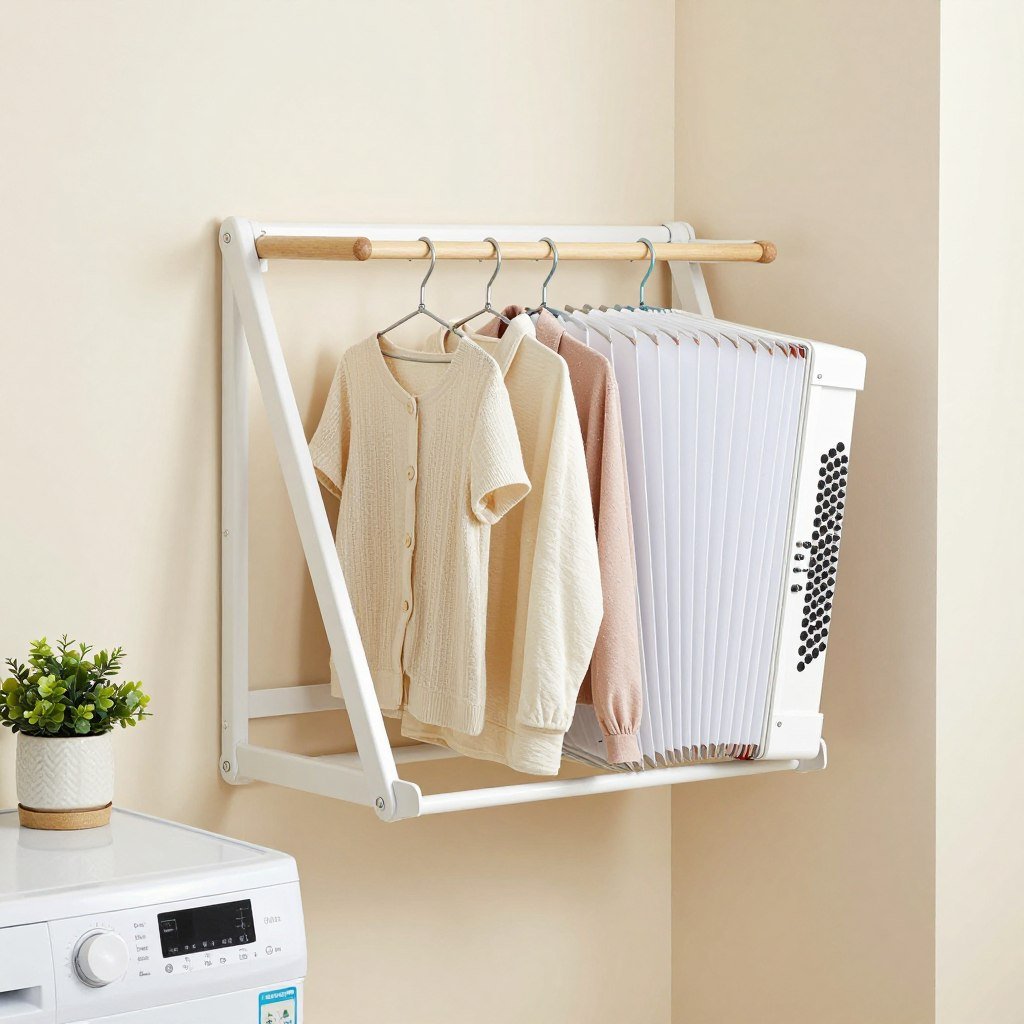
Accordion-style racks fold flat against walls when empty and extend to provide substantial drying space.
Ceiling-Mounted Options
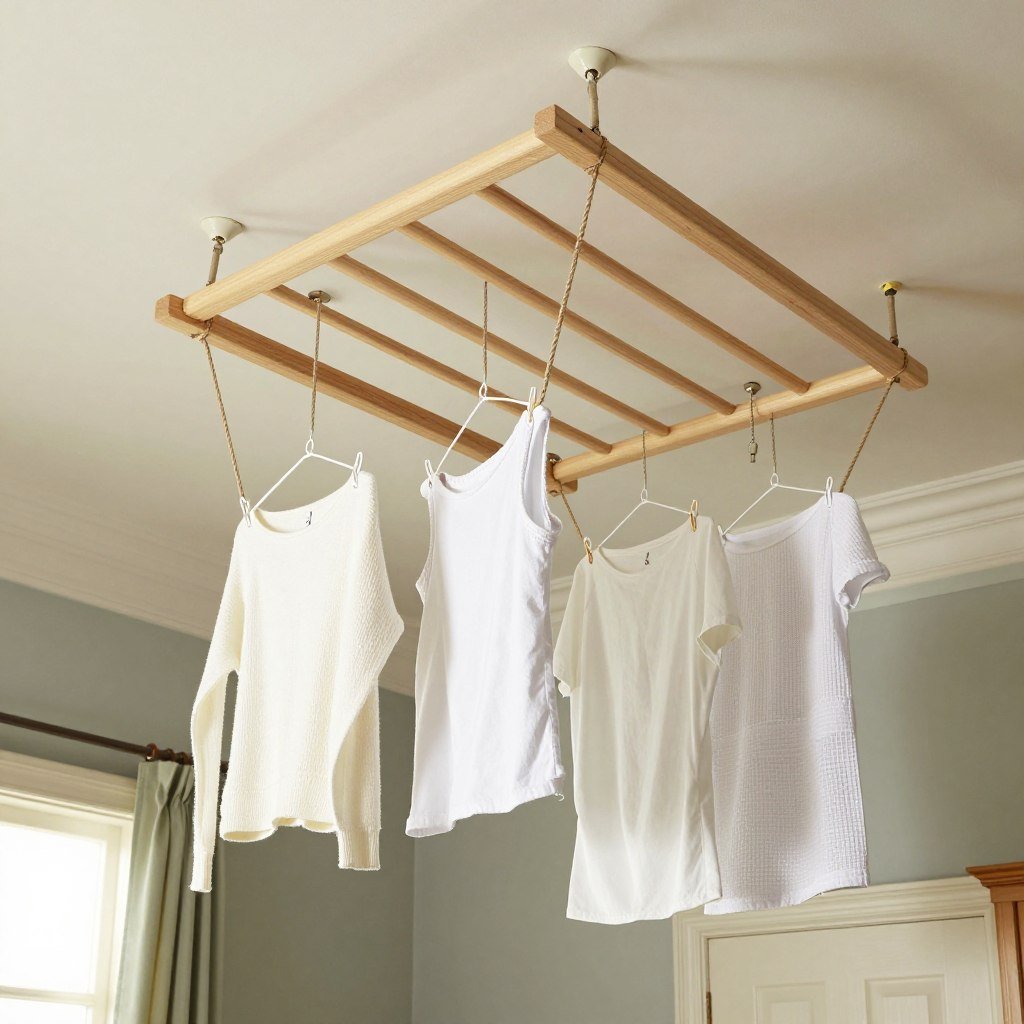
Pulley-operated ceiling racks utilize overhead space efficiently and raise completely out of the way.
Closet Laundry Room Conversions
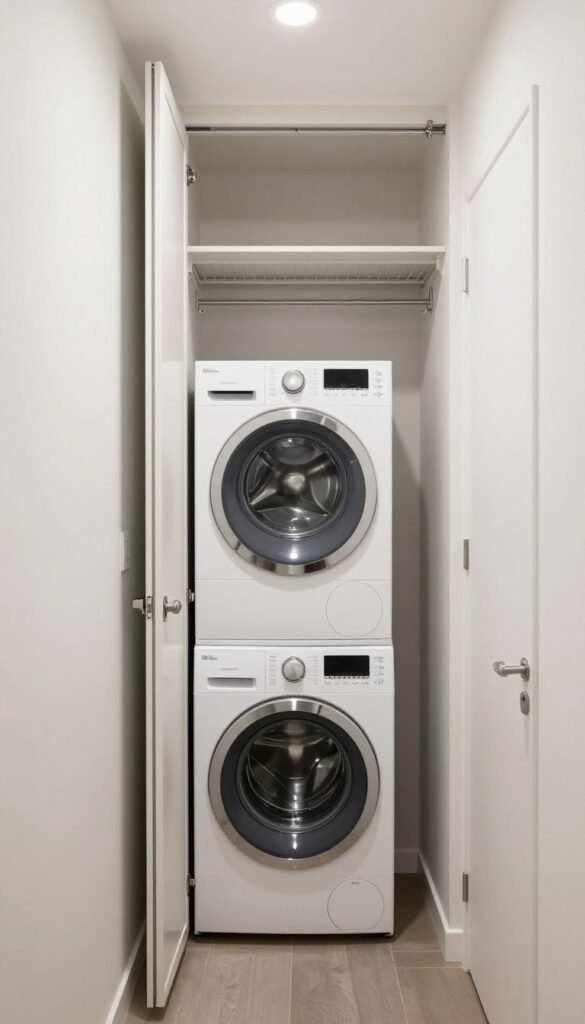
Closets provide ideal locations for stackable laundry setups in homes without dedicated laundry rooms. Standard closet widths accommodate most stackable units with minimal modifications.
Remove existing closet shelving and rods to create clearance for your appliances. Ensure adequate ventilation by installing a louvered door or leaving space around the door frame.
Ventilation Considerations
Proper airflow prevents moisture buildup and potential mold growth in closet laundries. Your dryer vent must exhaust to the outside following manufacturer specifications and local building codes.
Consider hiring a professional to run vent ducting if your closet sits far from exterior walls. Proper venting ensures appliance efficiency and home safety.
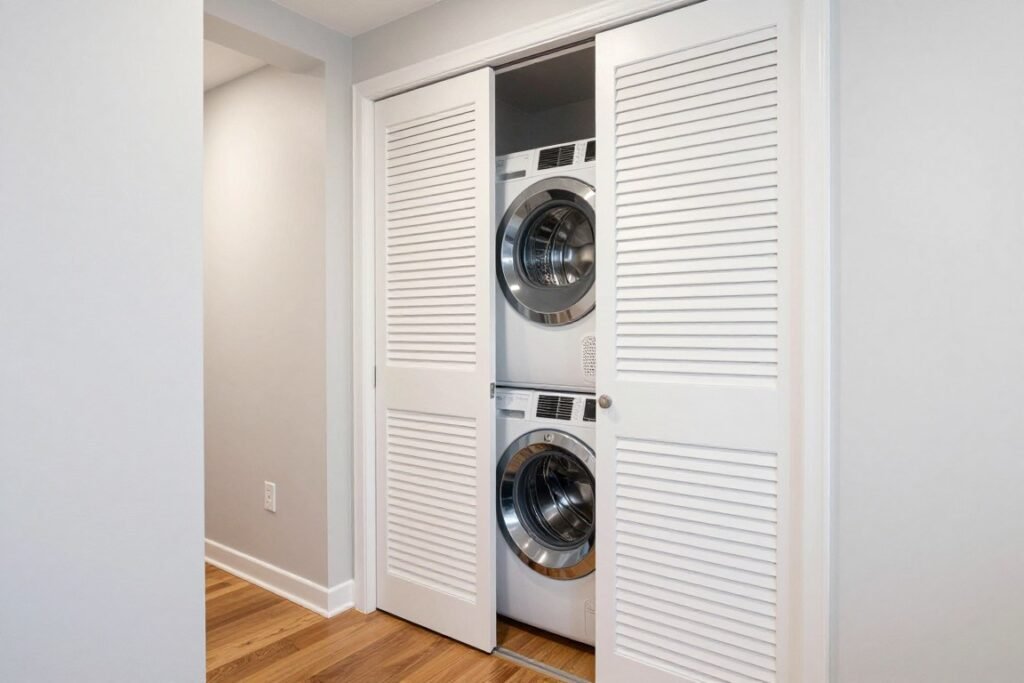
Door Options
Bifold doors work well for closet laundries because they require less clearance than traditional swing doors. Sliding barn doors offer another space-saving alternative with added style.
Leave doors open during washer dryer operation if ventilation concerns exist. Some homeowners remove doors entirely and add a decorative curtain for a softer look.
Implementing Organization Systems
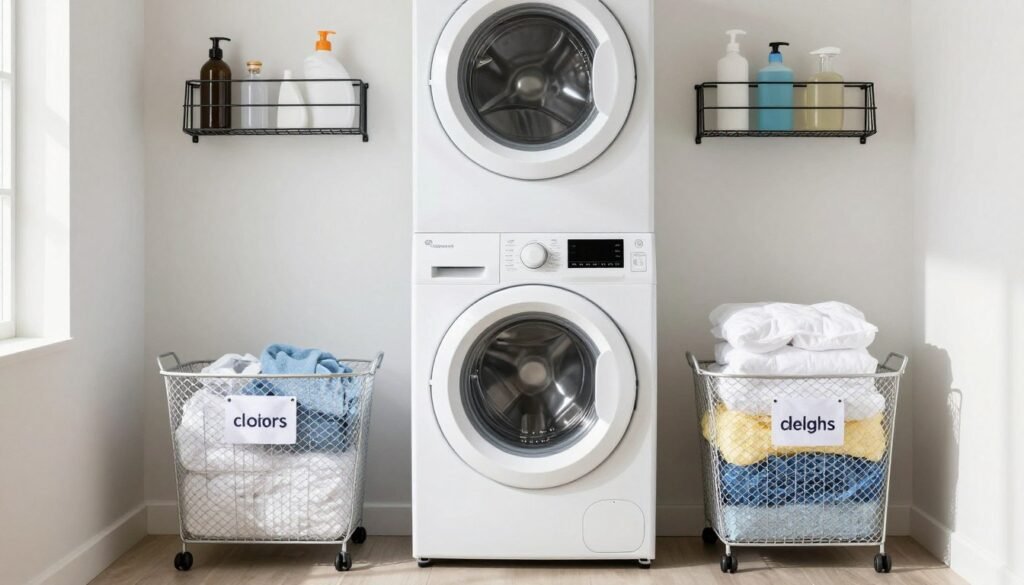
Effective organization systems maintain order in small laundry rooms where clutter accumulates quickly. Dedicate specific storage locations for each laundry item to streamline your routine.
Baskets provide portable storage for sorted laundry and clean items waiting to be folded. Choose baskets that fit your available space and match your room aesthetic.
Sorting Solutions
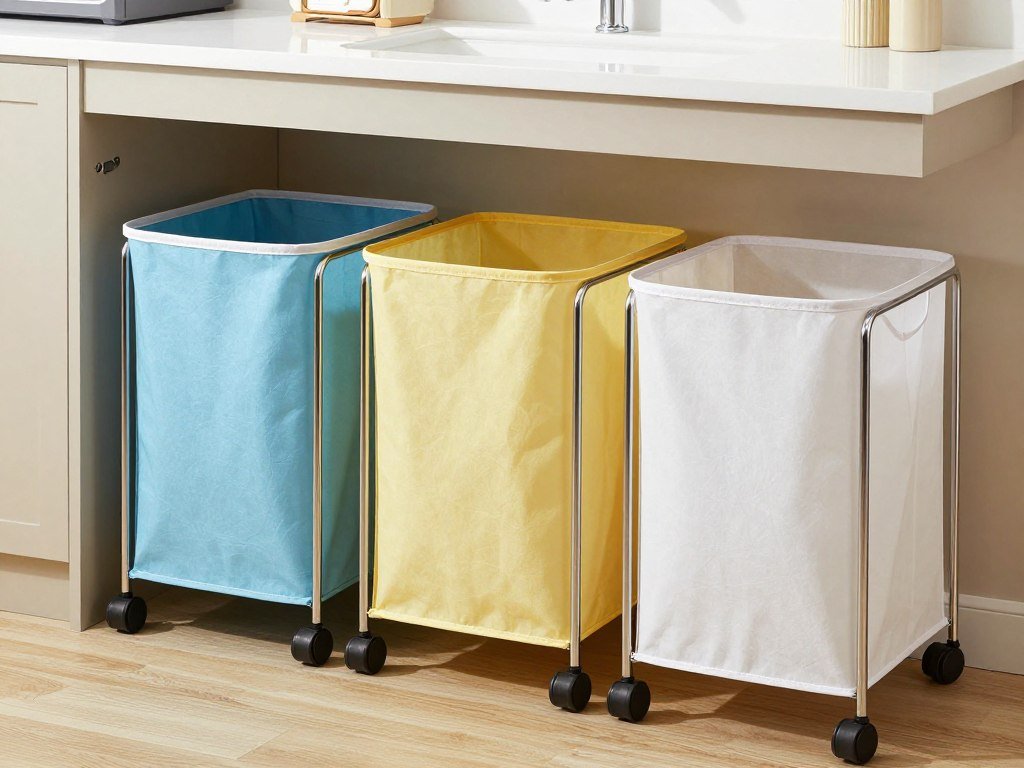
Pre-sorting dirty laundry by color and fabric type saves time on laundry day. Install a multi-compartment hamper or use separate baskets designated for whites, colors, and delicates.
Rolling hampers move easily between rooms and slide under counters when not in use. This mobility proves especially valuable in compact laundry spaces.
Supply Storage
Consolidate laundry supplies to prevent clutter and make items easy to find. Transfer detergent and softener into matching dispensers for a cohesive appearance.
Use lazy Susans in deep cabinets to access items stored in back corners. This simple addition prevents supplies from becoming lost and forgotten.
Complete Your Organization System
Find sorting hampers, storage baskets, and organizational accessories to keep your laundry room tidy and functional.
Backsplash and Wall Treatment Ideas
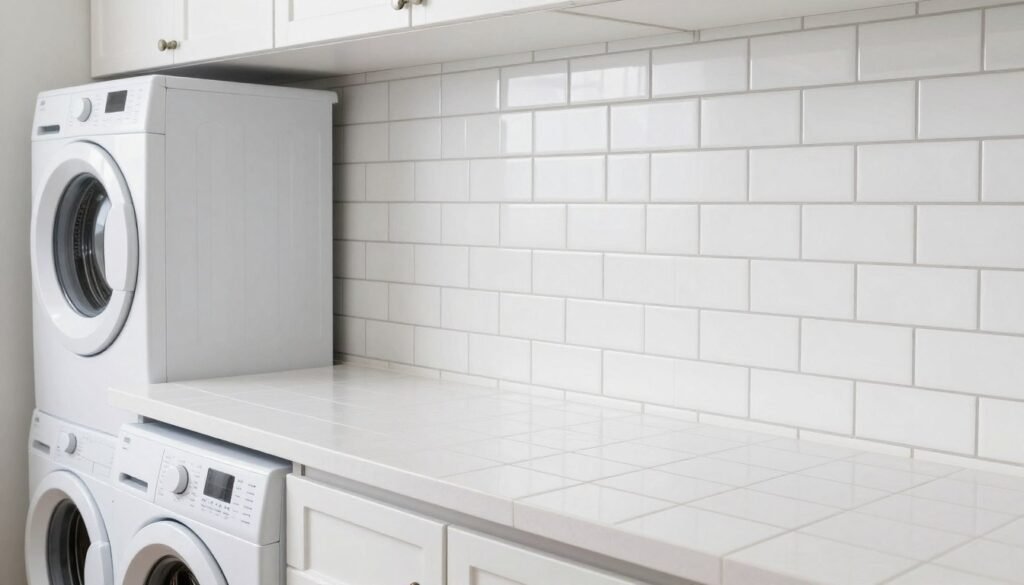
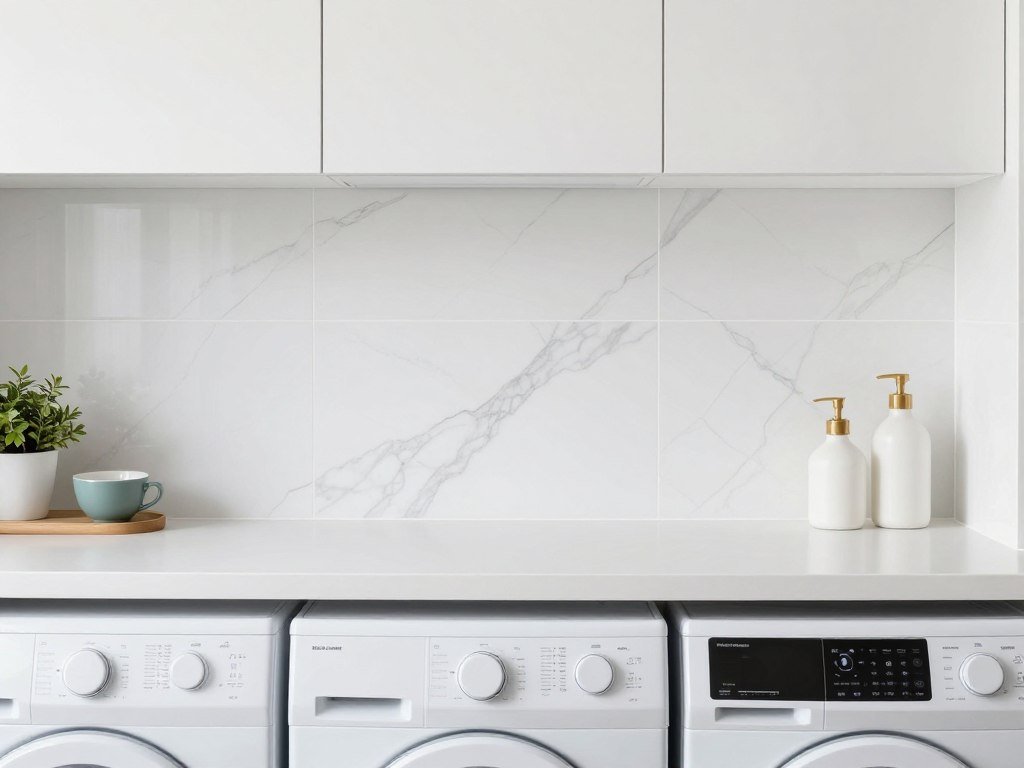
A backsplash protects walls from water splashes and detergent spills while adding decorative appeal. Tile, vinyl, and beadboard each offer distinct aesthetic and practical benefits.
Install your backsplash from the countertop or appliance top to the bottom of upper cabinets. This coverage area provides adequate protection while creating visual continuity.
Tile Options
Ceramic and porcelain tile withstand moisture and clean easily with simple wiping. Subway tile remains popular for its timeless appearance and affordable price point.
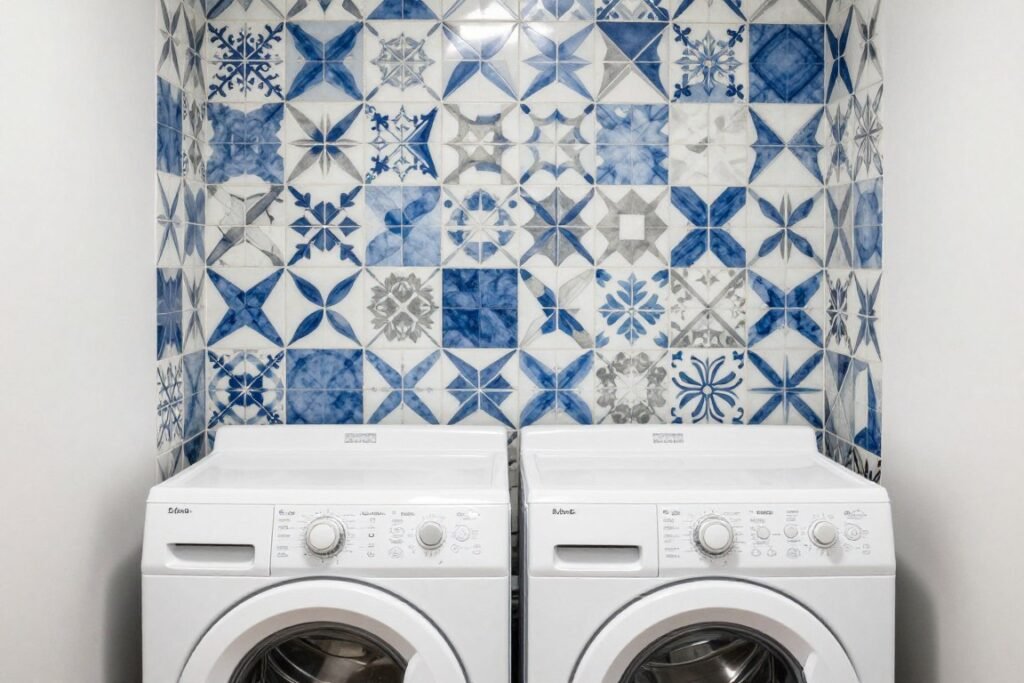
Patterned cement tile adds bold personality to small laundry rooms. The intricate designs draw the eye and create a focal point that distracts from the compact dimensions.
Alternative Wall Treatments
Peel-and-stick backsplash tiles offer a budget-friendly and renter-friendly alternative to traditional tile. These products install without grout or special tools and remove cleanly when needed.
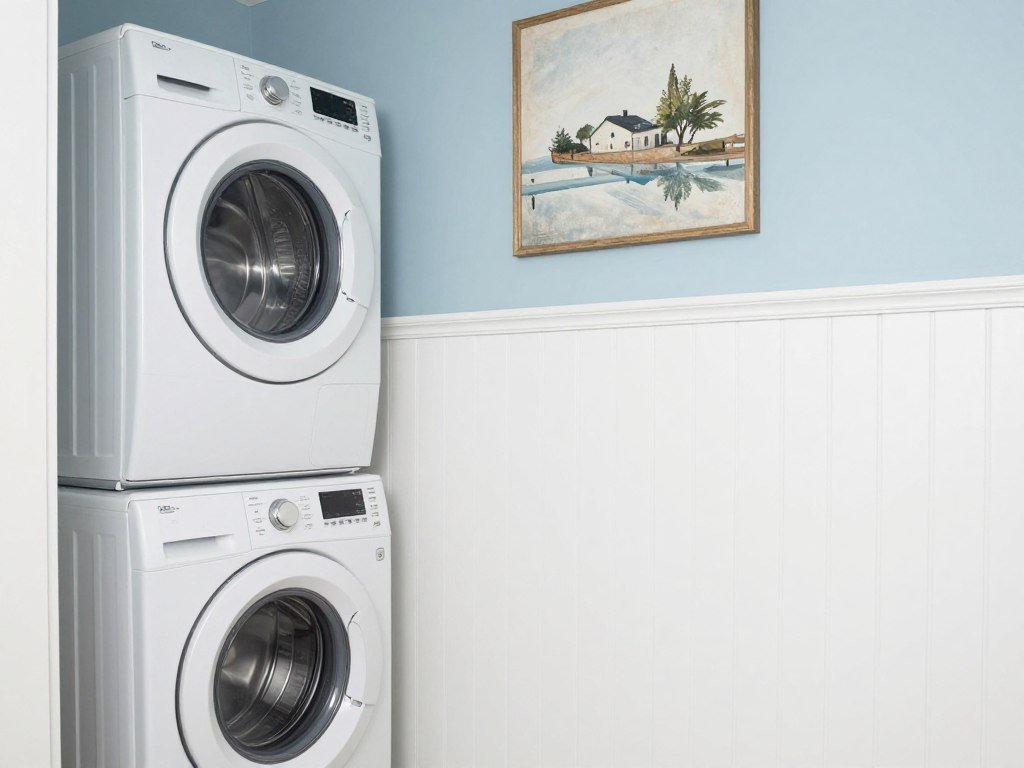
Beadboard wainscoting creates cottage charm while protecting lower walls from bumps and scratches. Paint beadboard in light colors to maintain an airy feel in small spaces.
Selecting Durable Laundry Room Flooring
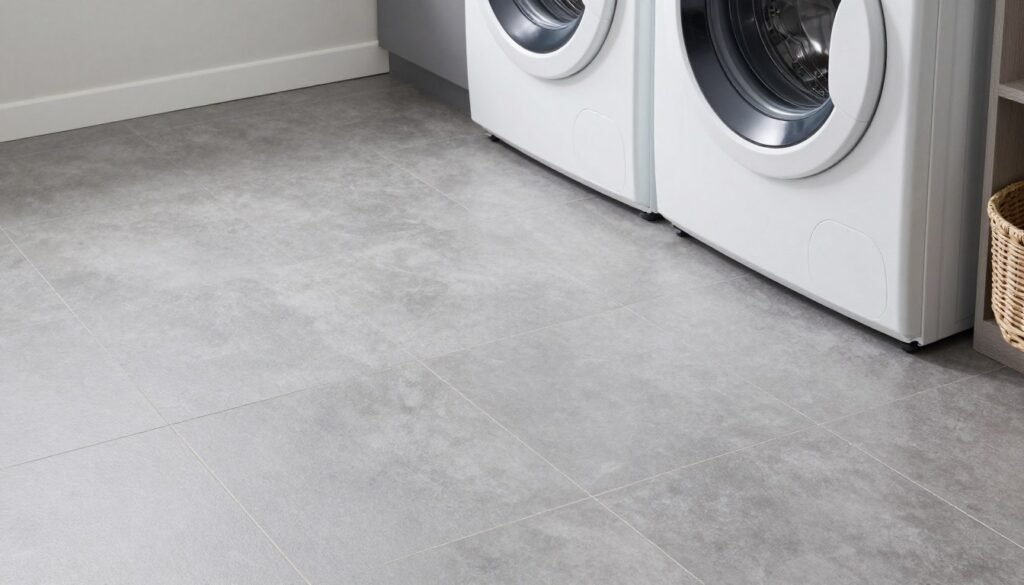
Laundry room flooring must withstand moisture, detergent spills, and heavy appliance weight. Waterproof materials prevent damage from leaks and provide long-lasting performance.
Ceramic and porcelain tile top the list for laundry room durability. These materials resist water damage and clean easily while offering countless design possibilities.
Waterproof Alternatives
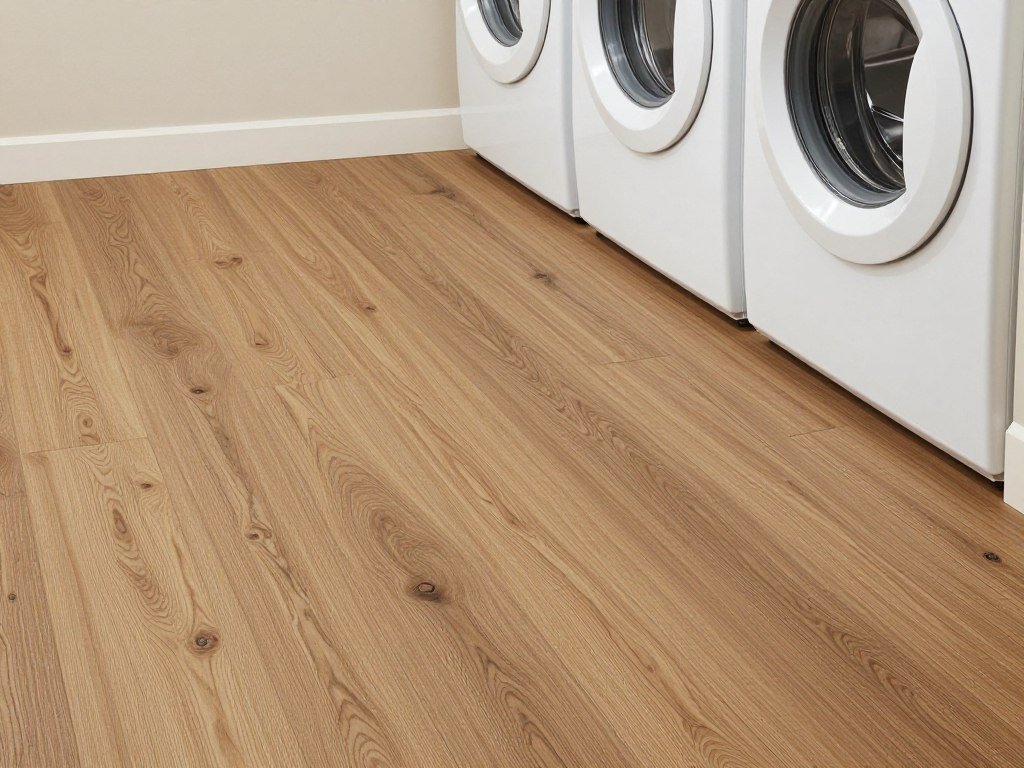
Luxury vinyl plank flooring mimics wood or stone while providing complete waterproofing. This material installs easily and costs less than traditional tile.
Sheet vinyl offers budget-conscious waterproofing with minimal seams. Modern vinyl comes in attractive designs that look far more sophisticated than outdated vinyl of the past.
Design Considerations
Light-colored flooring makes small laundry rooms feel more spacious. Gray, beige, and light wood tones reflect light and blend seamlessly with various design styles.
Consider adding a colorful or patterned tile accent to inject personality into neutral spaces. A small section of decorative tile creates interest without overwhelming compact dimensions.
Comprehensive Lighting Solutions
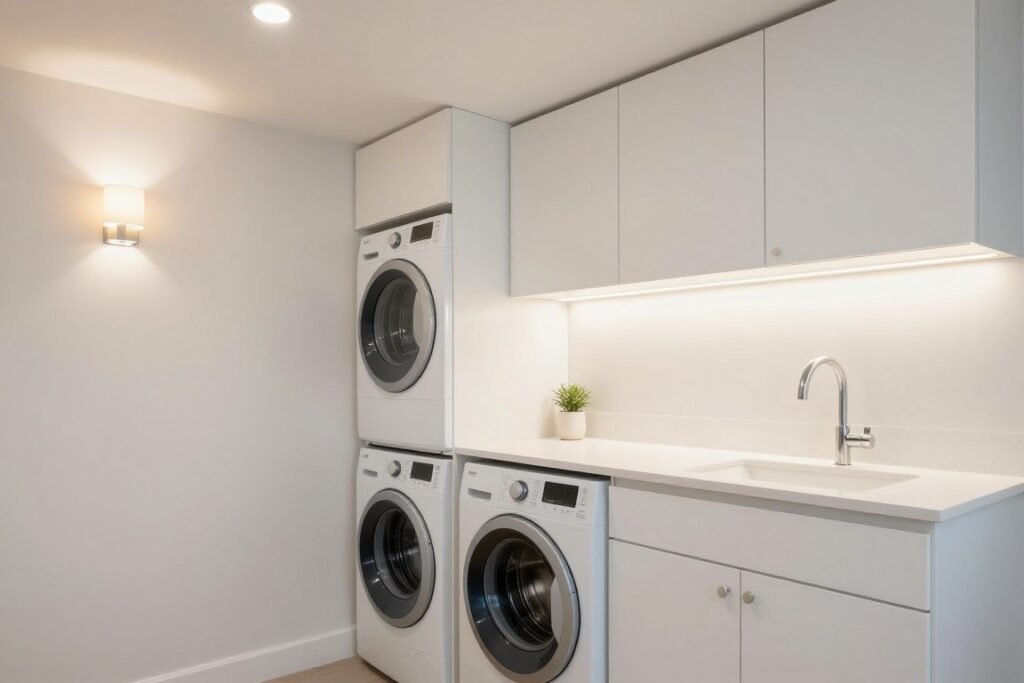
Adequate lighting transforms functionality and mood in laundry rooms. Dark spaces make sorting colors difficult and create an uninviting atmosphere for an already tedious chore.
Start with bright ambient lighting from recessed cans or flush-mount fixtures. Position lights to illuminate the entire room evenly without creating harsh shadows.
Task Lighting Additions
Add focused task lighting above work surfaces where you fold clothes and treat stains. Under-cabinet LED strips provide shadow-free illumination exactly where needed.
Install dimmer switches to adjust lighting levels based on the time of day and task at hand. Bright light helps with detailed work while softer light creates ambiance.
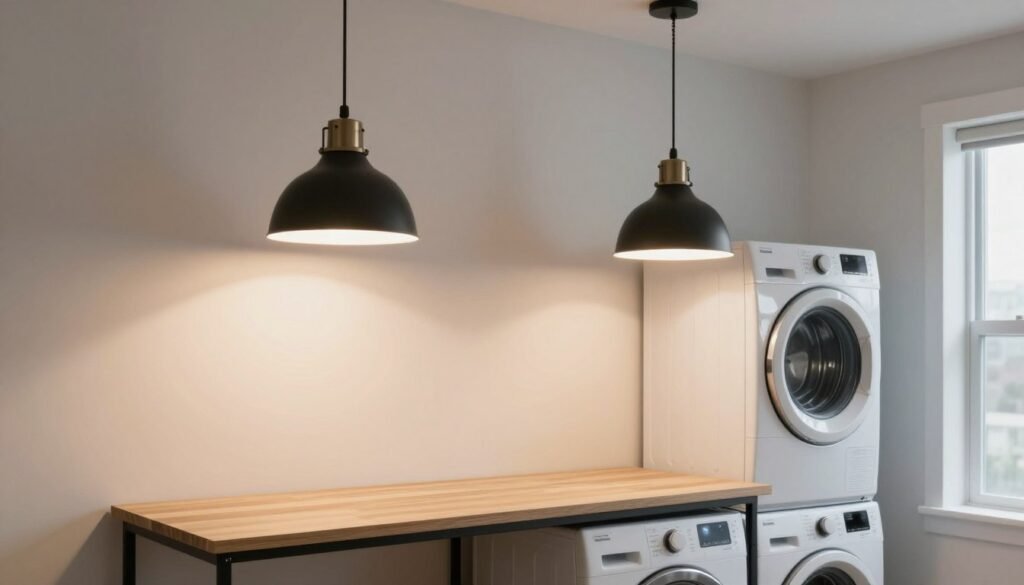
Accent and Decorative Lighting
Wall sconces add style while supplementing ambient light. Place sconces on either side of a mirror or artwork to create a balanced, finished look.
LED strip lights inside glass-front cabinets showcase organized supplies and add warm ambiance. This subtle lighting makes the space feel more finished and intentional.
Creating Multi-Purpose Laundry Spaces
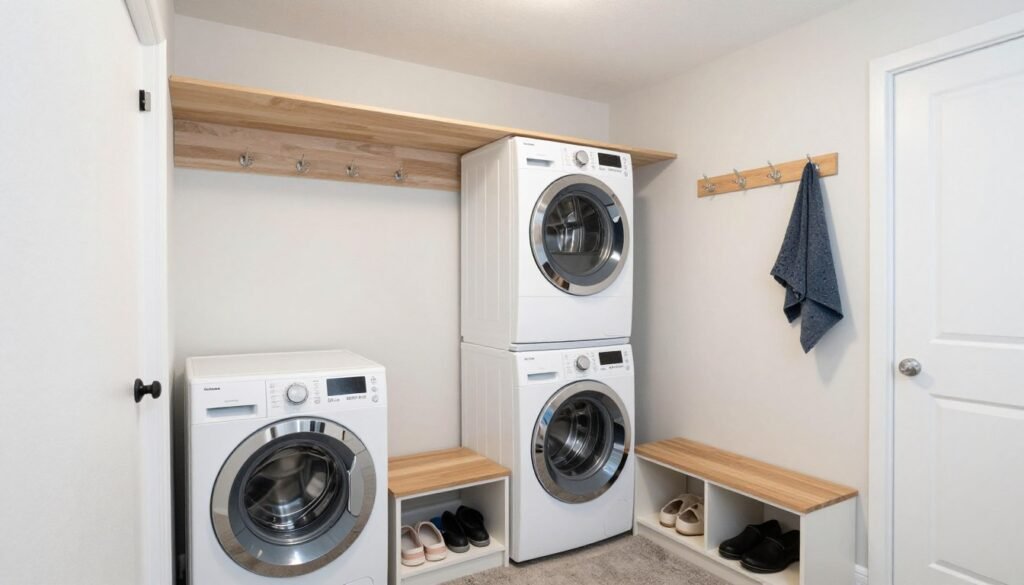
Many homes combine laundry facilities with other functions due to space constraints. Stackable appliances work particularly well in multi-purpose rooms because of their compact footprint.
Laundry and mudroom combinations prove especially practical for families. Soiled clothes go directly into the washer while storage cubbies organize coats, shoes, and backpacks.
Laundry-Bathroom Combos
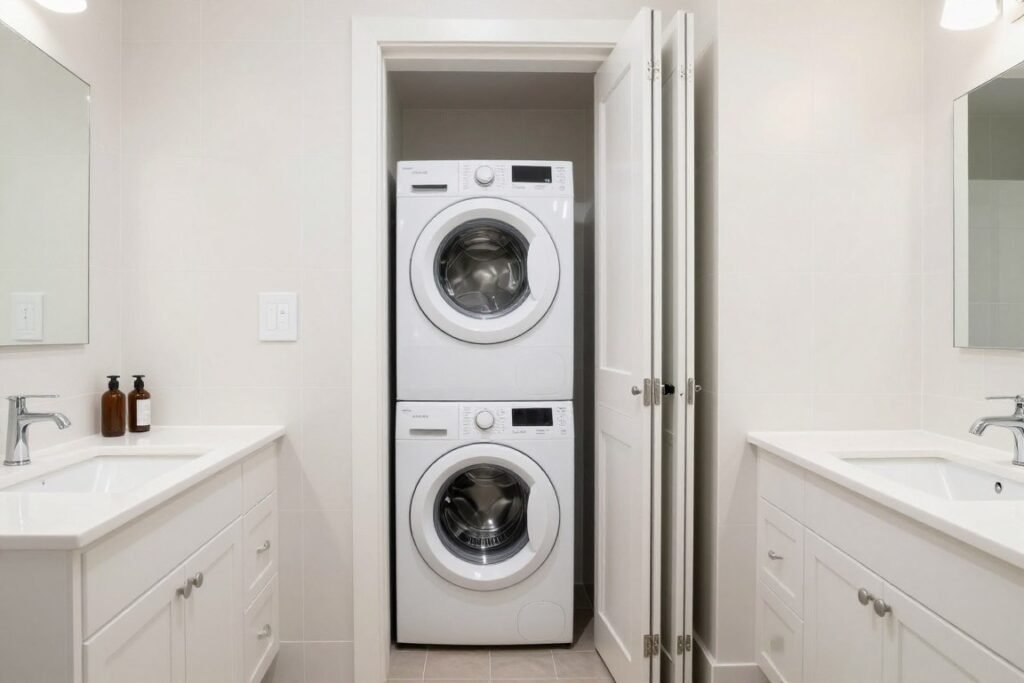
Installing stackable units in a bathroom saves space in small homes and apartments. This arrangement places laundry facilities near existing plumbing, simplifying installation.
Use a folding screen or curtain to visually separate the laundry area from bathroom fixtures. This division creates privacy and prevents the bathroom from feeling cluttered.
Laundry-Office Spaces
Work-from-home professionals often incorporate laundry into office spaces. Position stackable units in a closet or behind closed doors to minimize noise during work hours.
Coordinate your laundry storage with office storage for a cohesive design. Matching cabinets and shelving unite both functions visually.
Choosing the Right Stackable Appliances
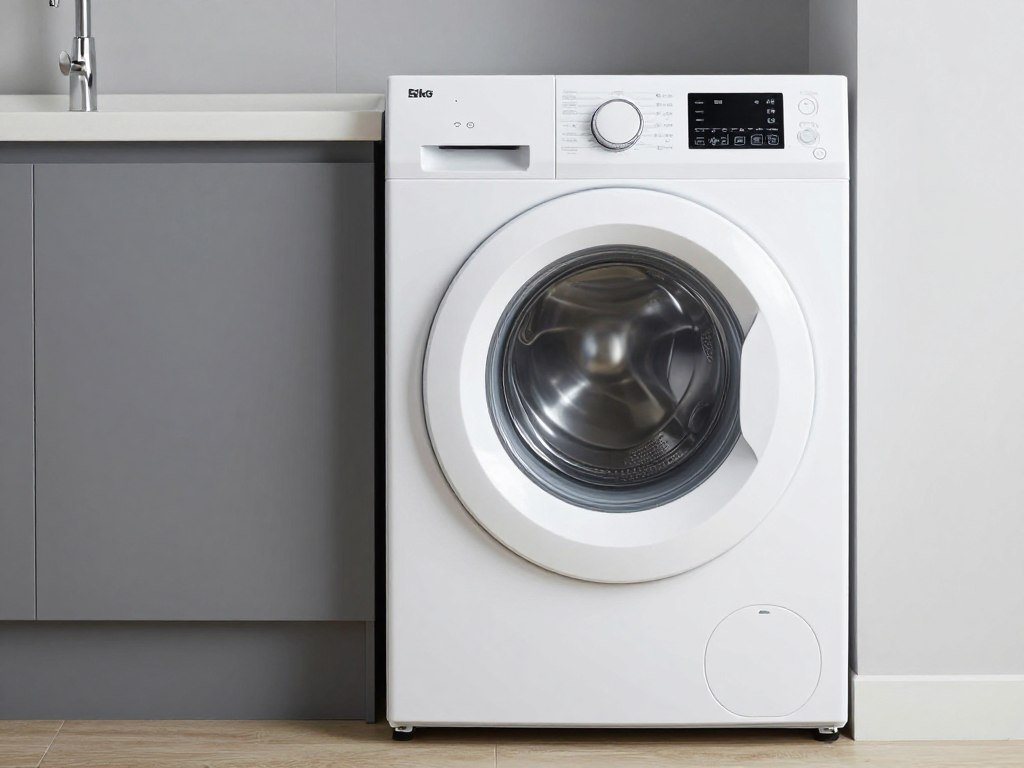
Selecting appropriate appliances determines your laundry room success. Measure your space carefully before shopping to ensure your chosen models fit properly.
Front-loading washers pair best with dryers for stacking because of their consistent dimensions. Many manufacturers sell matching sets designed specifically for vertical installation.
Capacity Considerations
Balance capacity needs with available space. Compact models with smaller drums fit tight spaces but require more frequent loads for large families.
Standard capacity stackable units typically accommodate 4.5 to 5 cubic feet in the washer. This size handles most household laundry needs without occupying excessive space.
Features Worth Considering
Ventless dryers eliminate the need for external venting, expanding installation location options. These models use condensation or heat pump technology to dry clothes.
Look for units with pedestals or storage drawers built into the base. These additions provide convenient storage without consuming wall or floor space.
Washer Features
- Energy-efficient models reduce utility costs
- Quick wash cycles save time
- Steam cleaning removes tough stains
- Allergen cycles eliminate irritants
- Quiet operation for shared spaces
Dryer Features
- Moisture sensors prevent over-drying
- Wrinkle prevention cycles reduce ironing
- Sanitize settings kill bacteria
- Reversible doors accommodate layouts
- Drum lights improve visibility
Adding Personality with Decorative Elements
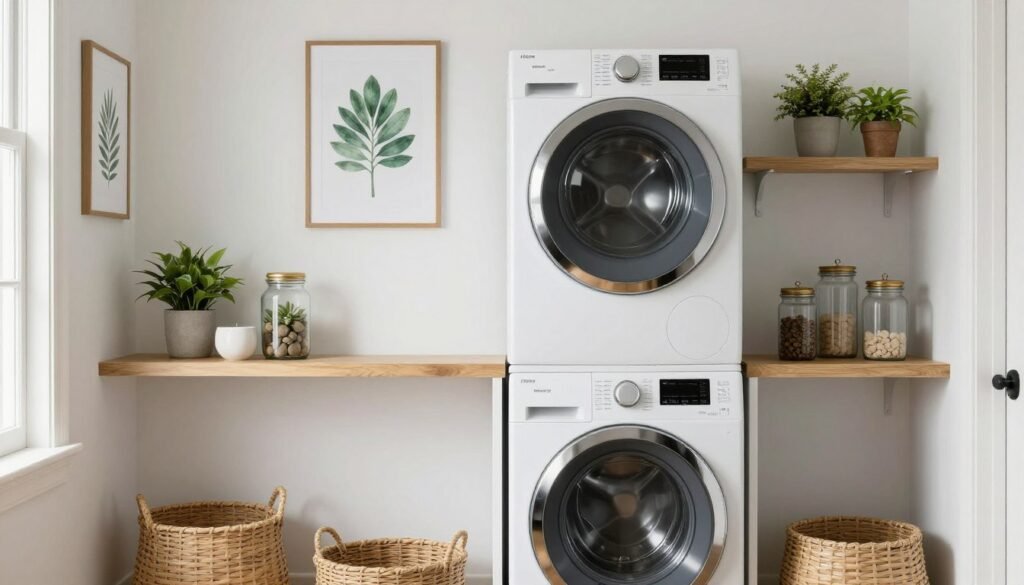
Decorative touches transform utilitarian laundry rooms into pleasant spaces. Small additions like artwork, plants, and attractive storage containers make chores more enjoyable.
Hang artwork or prints that withstand humidity without damage. Frame pieces behind glass to protect paper from moisture in this high-humidity environment.
Textile Additions
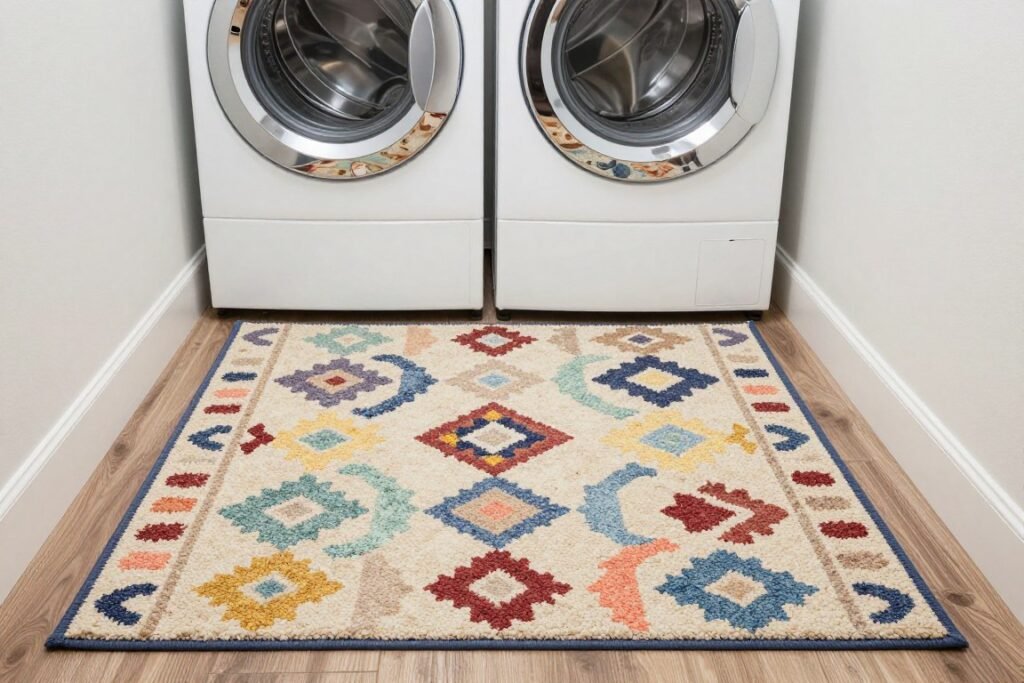
Add a colorful rug to define the space and provide comfortable standing surface. Choose washable rugs designed for high-traffic areas that resist staining.
Window treatments soften hard surfaces while providing privacy if your laundry room has windows. Faux wood blinds resist moisture better than fabric curtains.
Functional Decor
Display pretty containers that serve dual purposes as decor and storage. Glass jars with wooden lids hold detergent pods while looking attractive on open shelves.
Install hooks in decorative finishes to hang items while adding visual interest. Brass, bronze, or matte black hooks complement various design styles.
Budget-Friendly Small Laundry Room Solutions
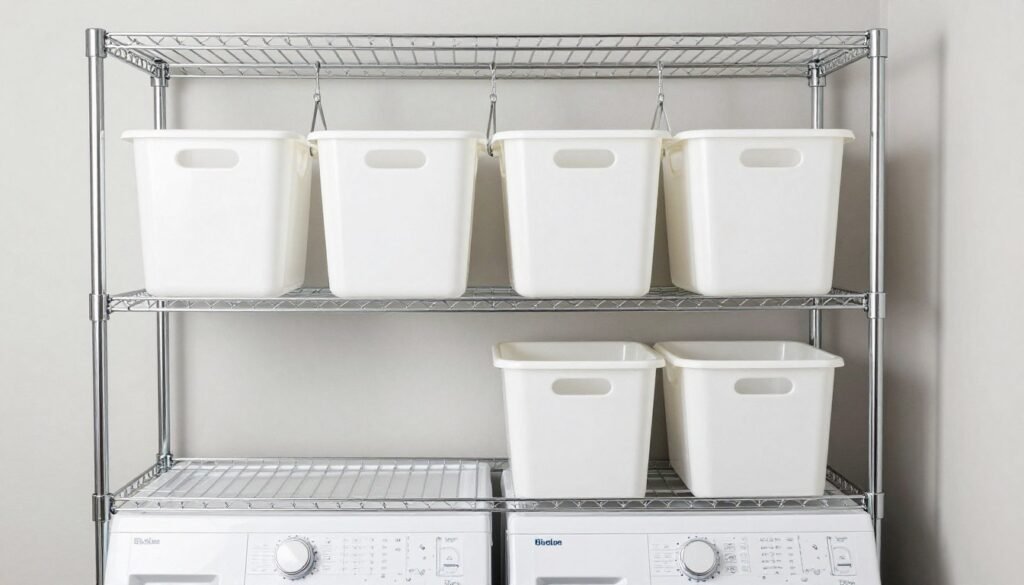
Creating an efficient laundry room does not require expensive renovations. Strategic planning and smart shopping deliver professional results on limited budgets.
Start with organizational improvements before tackling cosmetic updates. Proper storage and workflow matter more than fancy finishes for daily functionality.
Affordable Storage Options
Wire shelving systems from home improvement stores cost significantly less than custom cabinetry. These adjustable systems provide flexibility and adequate storage capacity.
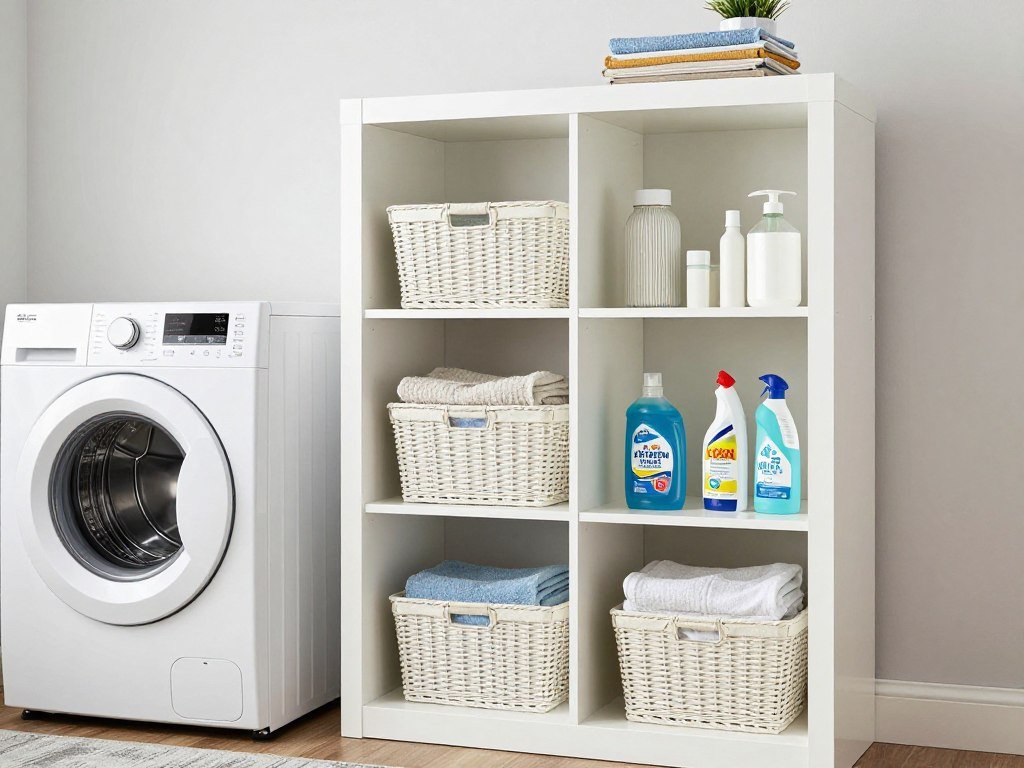
Repurpose furniture pieces as laundry room storage. A bookshelf stores supplies while a small dresser holds folded items waiting for distribution.
DIY Improvements
Paint delivers dramatic transformation at minimal cost. Choose moisture-resistant paint formulated for bathrooms and apply two coats for best coverage and durability.
Build your own shelves from wood boards and brackets for custom storage at a fraction of professional installation costs. Sand and paint boards to match your design scheme.
Shop Budget-Friendly Organization
Discover affordable storage solutions, shelving systems, and organizational tools that maximize your small laundry room without breaking the budget.
Maintaining Your Stackable Laundry Setup

Regular maintenance extends appliance life and prevents costly repairs. Establish simple routines that keep your stackable units running efficiently.
Clean the dryer lint trap after every load to maintain optimal performance and reduce fire risk. Deep clean the entire lint system quarterly by vacuuming the vent opening and ductwork.
Washer Maintenance
Leave your washer door open between loads to allow moisture evaporation and prevent mildew growth. Wipe door seals monthly to remove detergent residue and prevent odor buildup.
Run an empty hot water cycle with washer cleaner monthly to eliminate soap scum and mineral deposits. This maintenance cycle keeps your machine clean and smelling fresh.
Dryer Care
Check and clean the external dryer vent annually to ensure proper airflow. Blocked vents force dryers to work harder, increasing energy costs and wear on components.
Inspect the dryer drum for residue from fabric softener sheets. Wipe the drum with a damp cloth if buildup occurs to prevent transfer onto clothes.
Monthly Tasks
- Wipe down appliance exteriors
- Clean washer door seals
- Run washer cleaning cycle
- Check hoses for leaks
- Organize storage areas
Quarterly Tasks
- Deep clean lint system
- Vacuum behind appliances
- Check stacking kit stability
- Inspect vent ductwork
- Test door latches and seals
Maximizing Laundry Room Efficiency
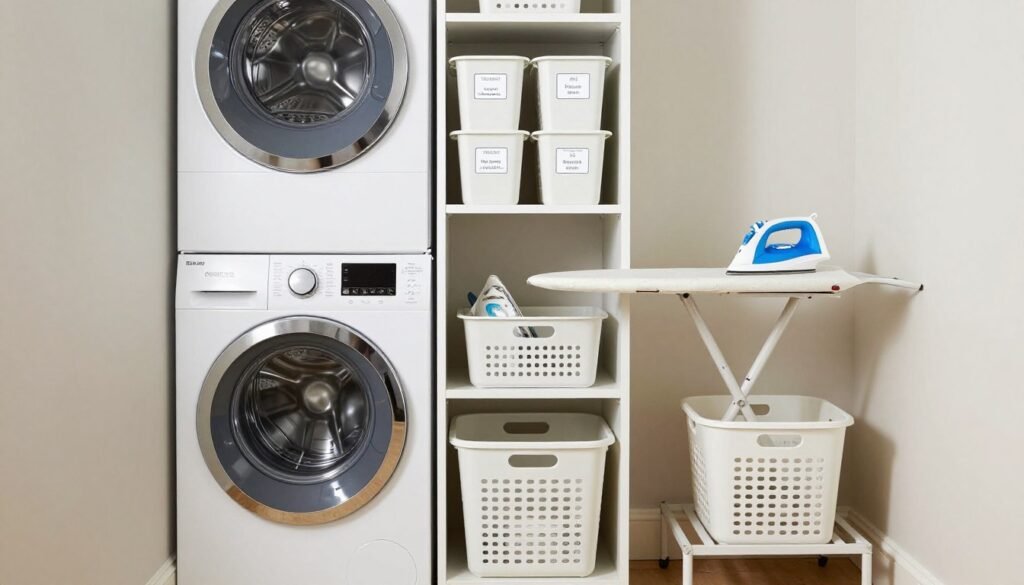
An efficient laundry room setup saves time and reduces stress. Organize your space to support a logical workflow from sorting through folding and storage.
Position sorting baskets near the room entrance so dirty clothes go directly into appropriate categories. This system eliminates sorting time on laundry day.
Workflow Optimization
Arrange supplies in the order you use them during the laundry process. Store detergent and stain treatments near the washer for easy access when loading machines.
Keep folding surfaces clear and ready for use. A clutter-free countertop encourages immediate folding rather than allowing clean clothes to pile up in baskets.
Time-Saving Strategies
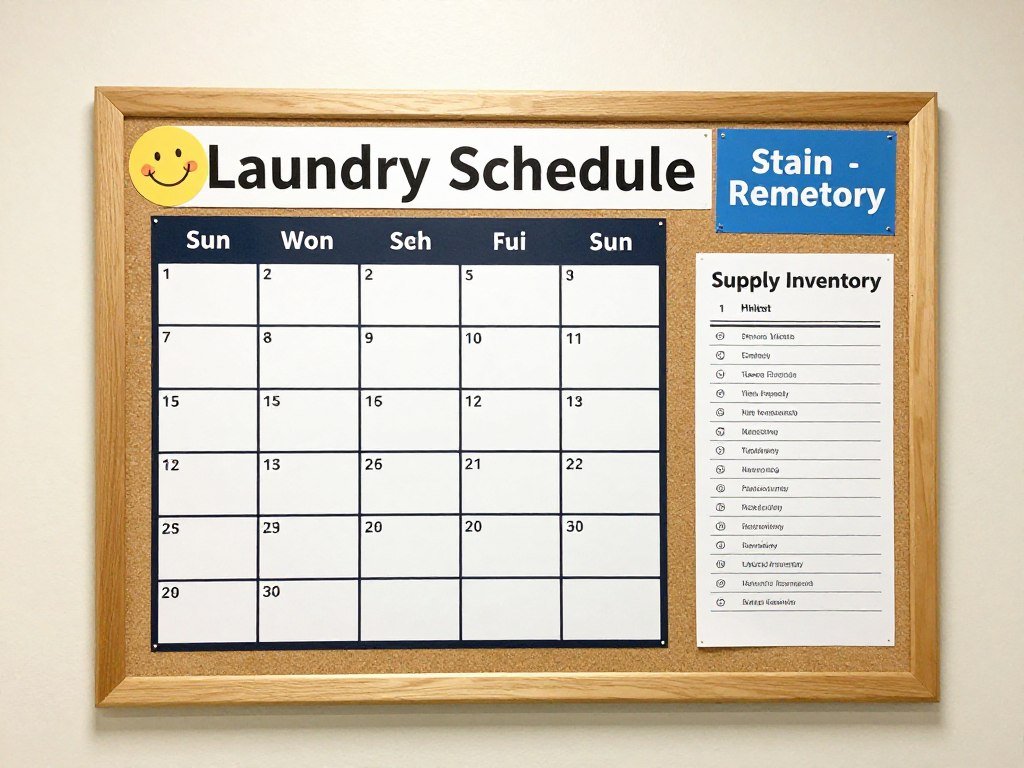
Designate specific laundry days to maintain routine and prevent overwhelming accumulation. Running multiple loads in sequence maximizes dryer heat carryover for energy efficiency.
Prep stain treatments immediately when items enter the laundry room. Fresh stains respond better to treatment than those allowed to set for days.
Safety Considerations for Stacked Units
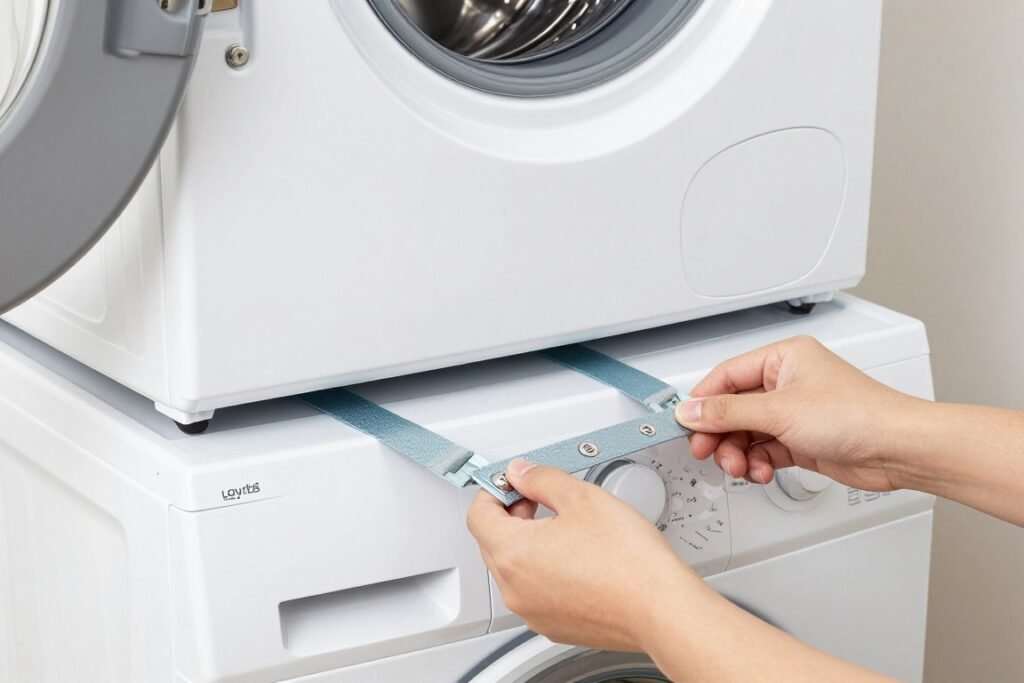
Proper installation ensures safety and optimal performance from stackable appliances. Never stack a dryer directly on a washer without an appropriate stacking kit.
Stacking kits include brackets that secure the dryer to the washer, preventing movement and potential tipping. Use only kits designed specifically for your appliance models.
Installation Requirements
Level your washer carefully before stacking the dryer on top. An unlevel washer causes vibration that affects both appliances and potentially damages flooring.
Secure all hoses and connections properly to prevent leaks and water damage. Check connections periodically for signs of wear or loosening.
Operational Safety
Never overload your washer beyond its rated capacity. Overloading strains components and causes excessive vibration that stresses the stacked configuration.
Keep the area around appliances clear of flammable materials. Lint accumulation poses fire risk, so maintain clean surroundings and proper ventilation.
Important Safety Reminders
- Always use manufacturer-approved stacking kits
- Ensure proper electrical grounding for both appliances
- Never stack units without securing them properly
- Clean dryer lint trap after every single load
- Install smoke detectors near laundry areas
- Keep fire extinguisher accessible in laundry room
Seasonal Laundry Room Refresh Ideas
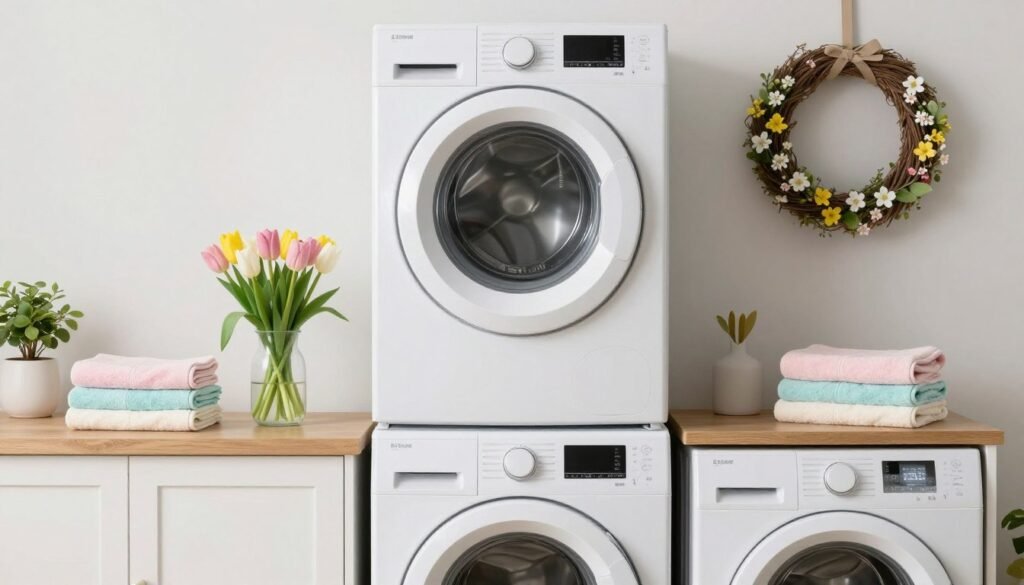
Refreshing your laundry room seasonally keeps the space feeling current and enjoyable. Simple changes create new energy without requiring major time or financial investment.
Swap out small decorative items like artwork, rugs, and storage containers to reflect changing seasons. Spring florals give way to summer brights, autumn warmth, and winter coziness.
Quick Update Ideas
Change towels and cleaning cloths to seasonal colors for instant visual impact. These functional items serve dual purposes as practical tools and color accents.
Rotate scented products to match seasons. Fresh citrus for spring, coconut for summer, cinnamon for fall, and pine for winter enhance the sensory laundry experience.
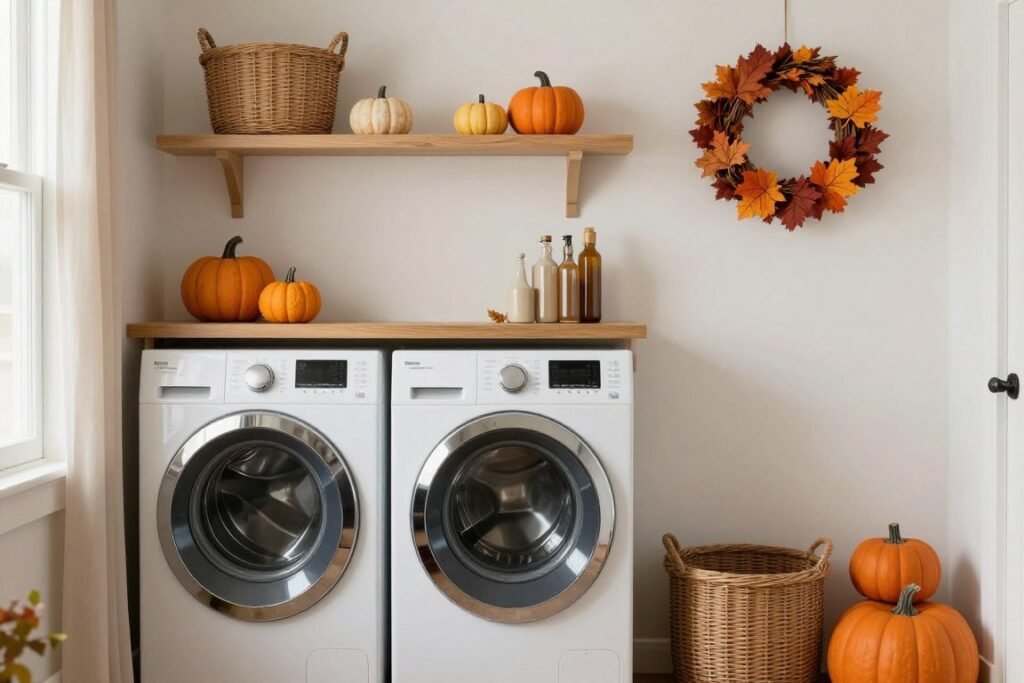
Holiday Touches
Add subtle holiday decorations that do not interfere with laundry room functionality. A small wreath or string of lights brings festive cheer without cluttering work surfaces.
Use seasonal storage containers that reflect upcoming holidays. These practical items store supplies while contributing to the room aesthetic.
Bringing Your Vision Together
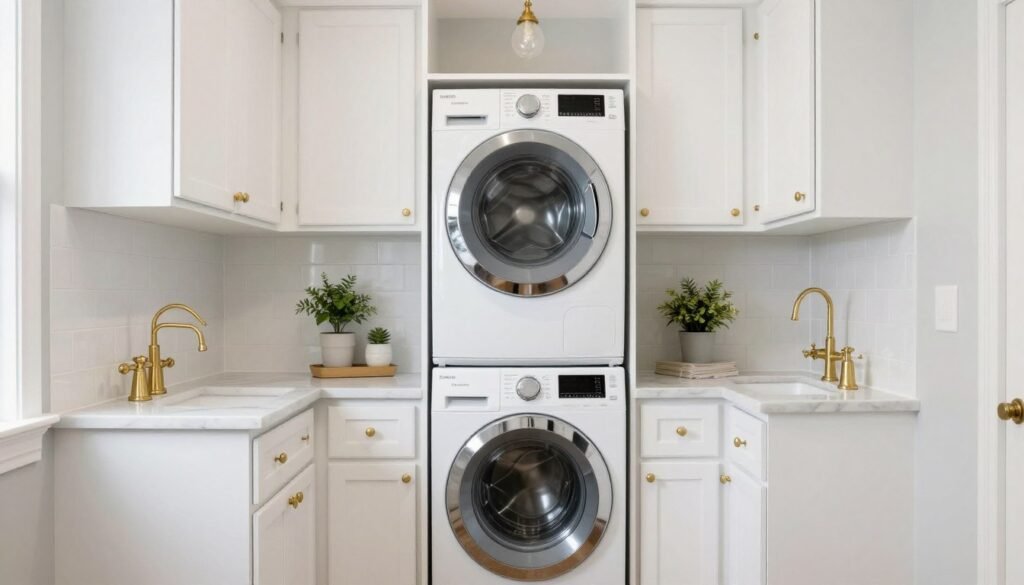
Creating your ideal small laundry room with stackable appliances combines practical planning with personal style preferences. Every element works together to form a cohesive, functional space.
Begin with essential infrastructure and storage before adding decorative touches. This approach ensures your room works efficiently while looking exactly how you envisioned.
Implementation Steps
Start by measuring your space and determining appliance placement. Electrical, plumbing, and ventilation requirements guide these fundamental decisions.
Install storage solutions next, maximizing vertical space with cabinets or shelving. Add organizational systems that support your specific laundry workflow and family needs.
Complete cosmetic updates like paint, backsplash, and flooring to establish your desired aesthetic. These finishing touches transform the space from purely functional to genuinely enjoyable.
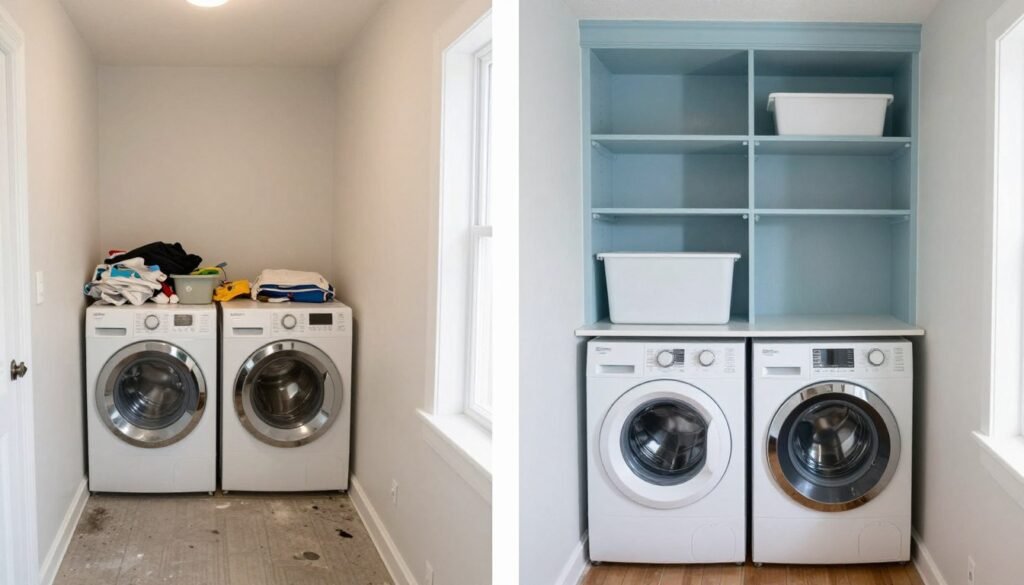
Complete Your Laundry Room Transformation
Find everything you need to create the organized, stylish stackable laundry room of your dreams. From stacking kits to storage solutions, start building your perfect space today.
Creating Your Perfect Small Laundry Space
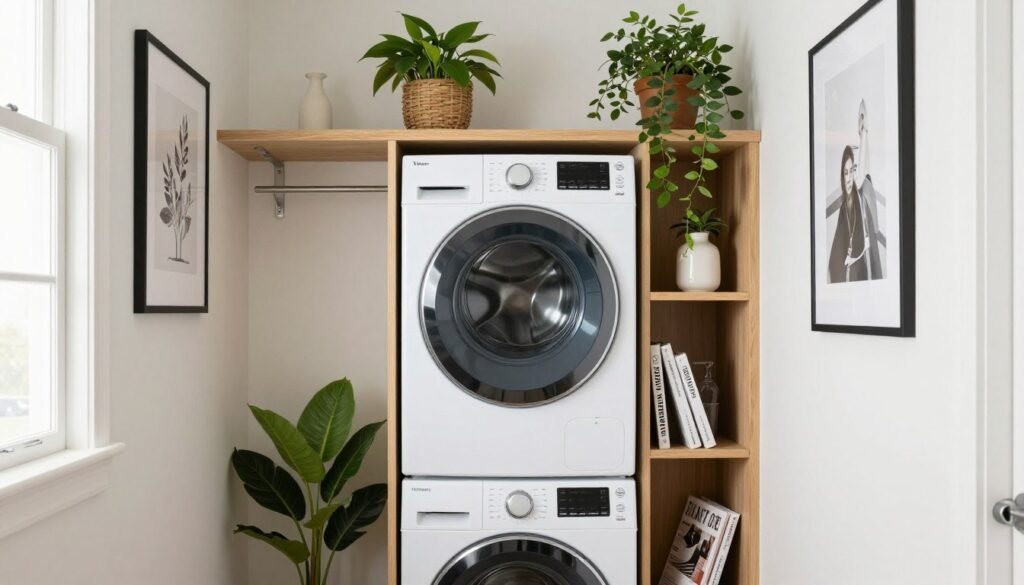
Small laundry rooms with stackable washer dryer units prove that limited space does not limit possibilities. Thoughtful planning and creative solutions transform even the tiniest areas into highly functional spaces.
The ideas presented throughout this guide offer starting points for your unique situation. Mix and match concepts to create a laundry room that reflects your style while meeting practical needs.
Remember that your laundry room should work for your specific lifestyle and household. Prioritize features that simplify your routine and create an environment where you actually enjoy completing this essential household task.
Start with one improvement and build from there. Even small changes create noticeable impacts in functionality and appearance. Your perfect small laundry room awaits creation, one thoughtful decision at a time.