Imagine stepping into your backyard on a warm summer evening, firing up the grill in your custom outdoor kitchen, and preparing a delicious meal while your friends and family gather around. A DIY outdoor kitchen isn’t just a cooking space—it’s the heart of outdoor entertaining and a valuable addition to your home. The best part? You can build one yourself with the right guidance, tools, and materials.
This Website contains affiliate links. That means I may earn a small commission if you purchase through my links, at no extra cost to you.
This comprehensive guide will walk you through everything you need to know about creating your own outdoor kitchen, from initial planning to final touches. Whether you’re looking for a simple grill station or a fully equipped cooking area with all the amenities, we’ll help you bring your vision to life while staying within your budget and skill level.
A well-designed DIY outdoor kitchen transforms your backyard into an entertainment hub
Why Build Your Own Outdoor Kitchen?
Before diving into the how-to, let’s explore why a DIY outdoor kitchen is worth your time and effort:
- Save thousands compared to professional installation (typically 40-60% less expensive)
- Customize every aspect to match your specific cooking style and needs
- Increase your home’s value (outdoor kitchens can provide up to 100-200% ROI)
- Create a focal point for outdoor entertaining
- Enjoy the satisfaction of building something functional with your own hands
- Keep cooking odors outside, especially for strong-smelling foods
- Expand your living space into the outdoors
Related Posts:





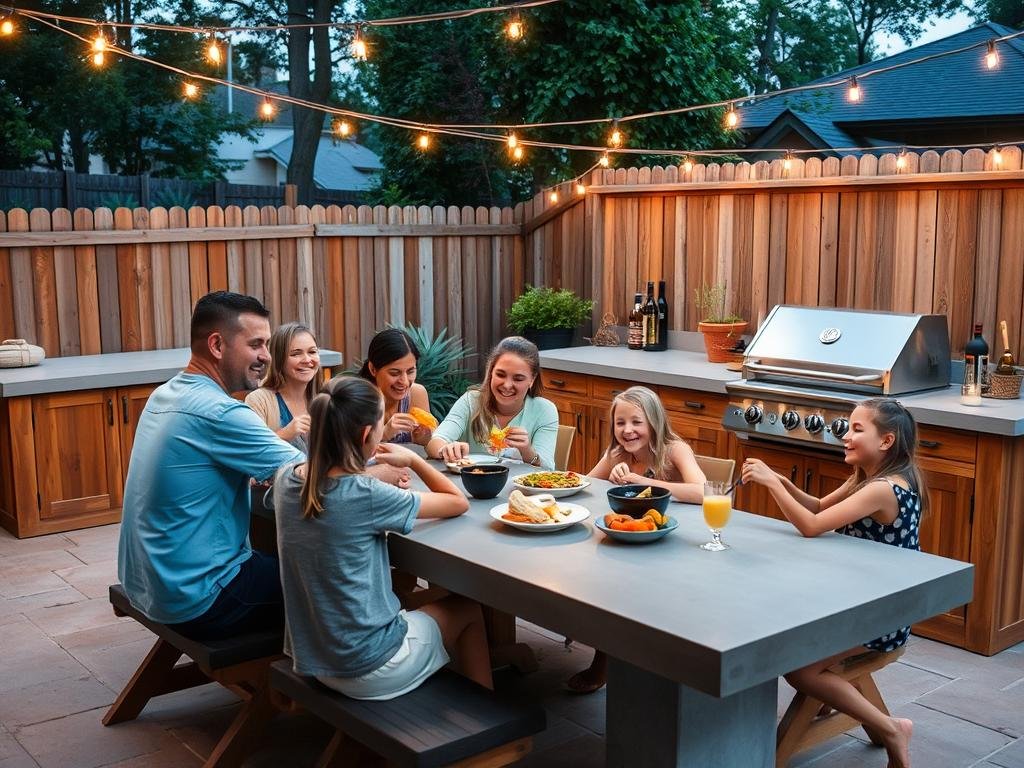
A DIY outdoor kitchen creates the perfect gathering space for family and friends
Ready to Start Your Outdoor Kitchen Project?
Gather inspiration and find the best tools for your DIY outdoor kitchen build. Browse our recommended essentials to get started on the right foot.
Planning Your DIY Outdoor Kitchen
Successful DIY outdoor kitchen projects begin with thorough planning. This foundation stage will save you time, money, and frustration down the road.
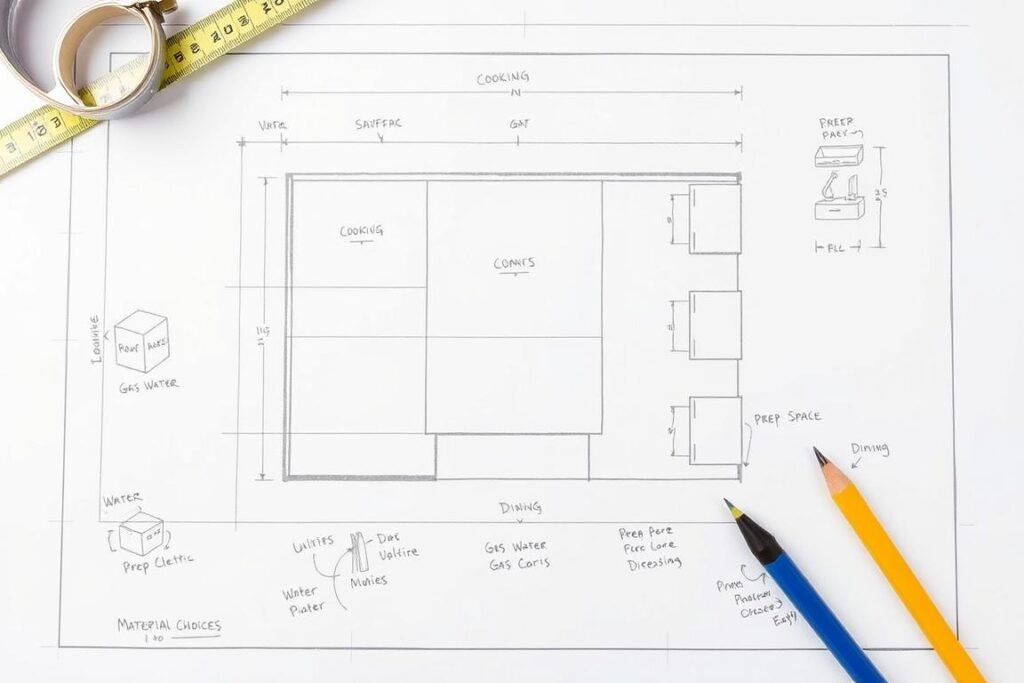
A well-thought-out plan is essential for a successful outdoor kitchen build
Choosing the Perfect Location
The location of your outdoor kitchen can make or break your project. Consider these factors:
- Proximity to your indoor kitchen – Closer is usually better for convenience
- Wind patterns – Avoid smoke blowing into your home or seating areas
- Existing structures – Can you build near a wall or under an existing roof?
- Sun exposure – Consider shade options for comfortable cooking
- Views – Position to enjoy your yard or screen unsightly areas
- Utilities access – How difficult will it be to run water, gas, or electric?
Setting a Realistic Budget
DIY outdoor kitchens can range from a few hundred dollars for a simple setup to several thousand for more elaborate designs. Break down your budget into these categories:
| Category | Basic ($) | Mid-Range ($$) | Premium ($$$) |
| Foundation/Structure | Concrete blocks, wood frame | Poured concrete, metal frame | Custom masonry, stone base |
| Countertops | Tile, concrete | Granite remnants, quartz | Full slab granite, specialty stone |
| Cooking Equipment | Built-in grill | Grill, side burner | Grill, burners, smoker, pizza oven |
| Storage/Cabinets | Open shelving | Basic cabinets | Weather-resistant cabinets |
| Utilities | Propane tank, no water | Gas line, basic electric | Gas, electric, plumbing |
Pro Tip: Set aside 10-15% of your total budget for unexpected expenses. DIY projects almost always have surprises!
Determining Your Skill Level
Be honest about your DIY abilities. Outdoor kitchens can involve multiple skills:
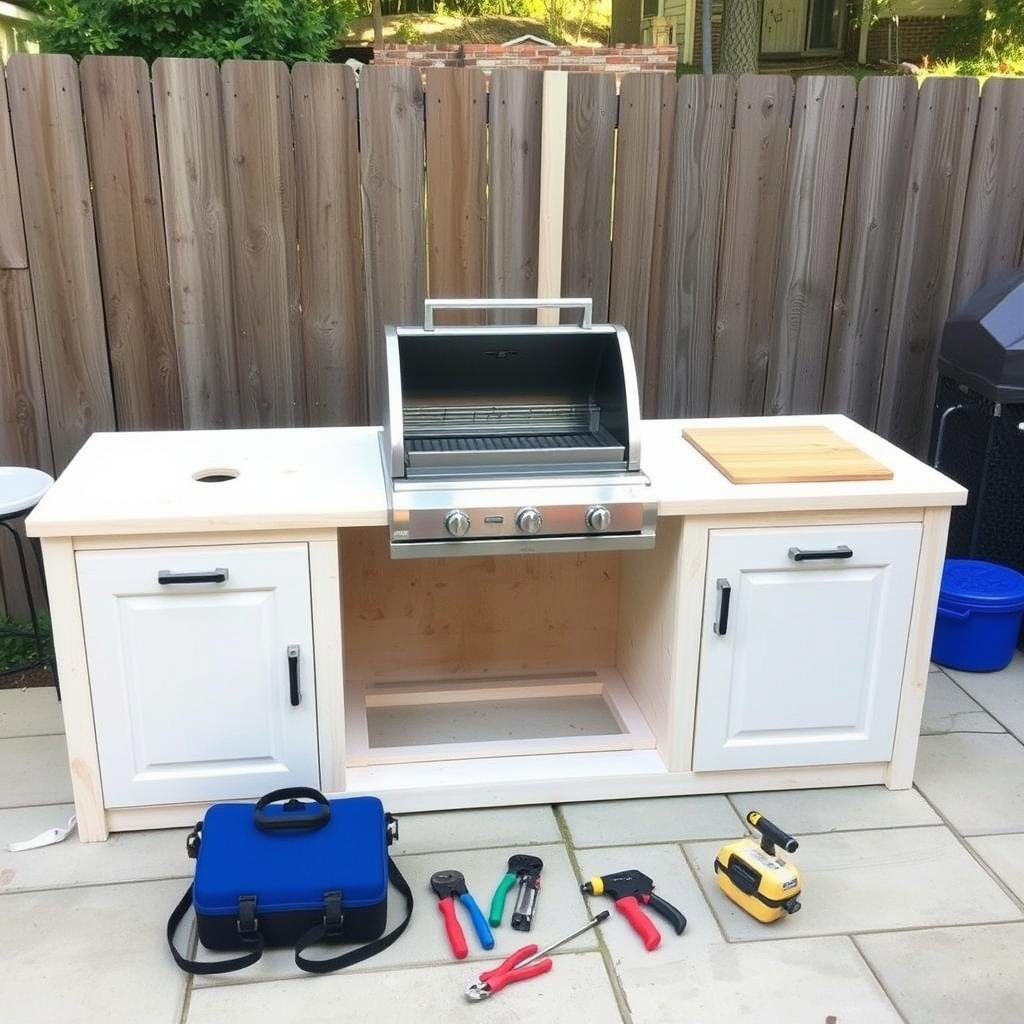
Beginner Level
Ready-to-assemble (RTA) kits, simple frames, basic tools
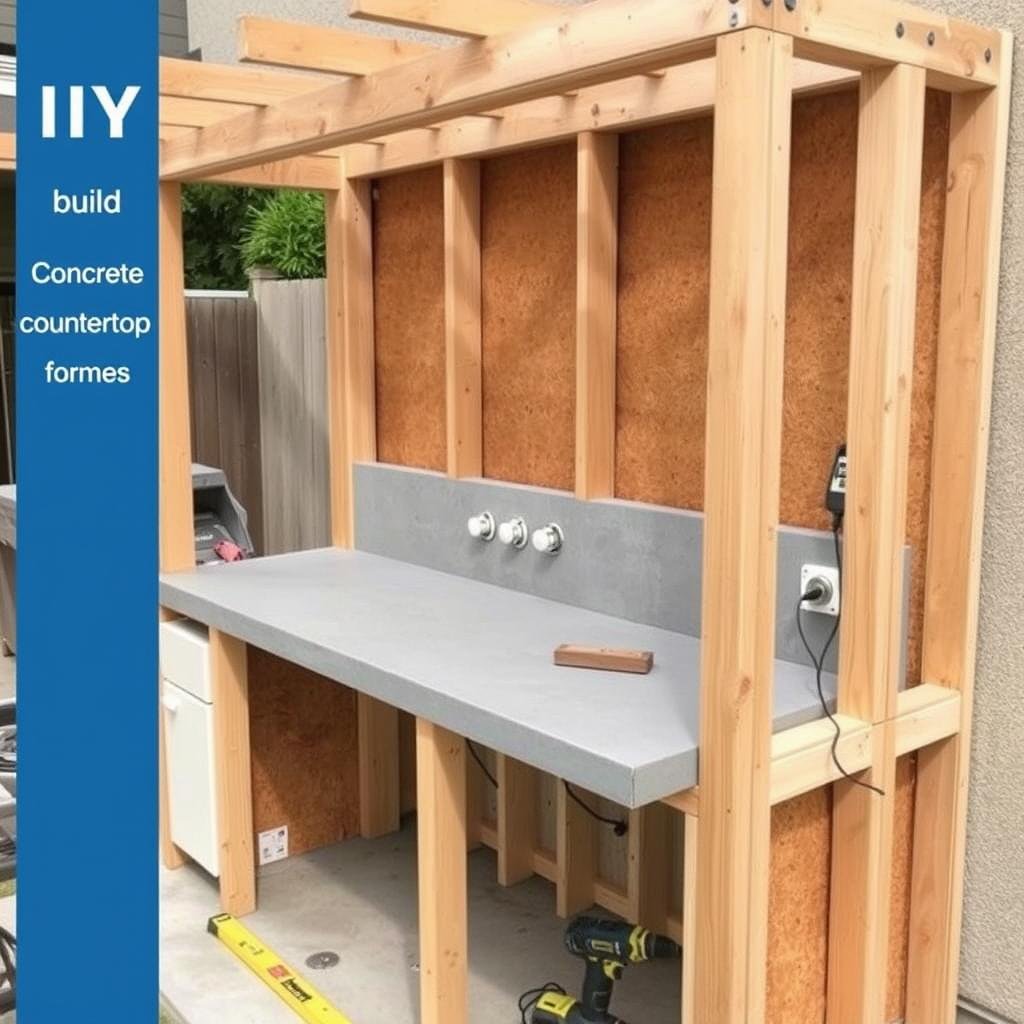
Intermediate Level
Custom framing, concrete work, basic electrical
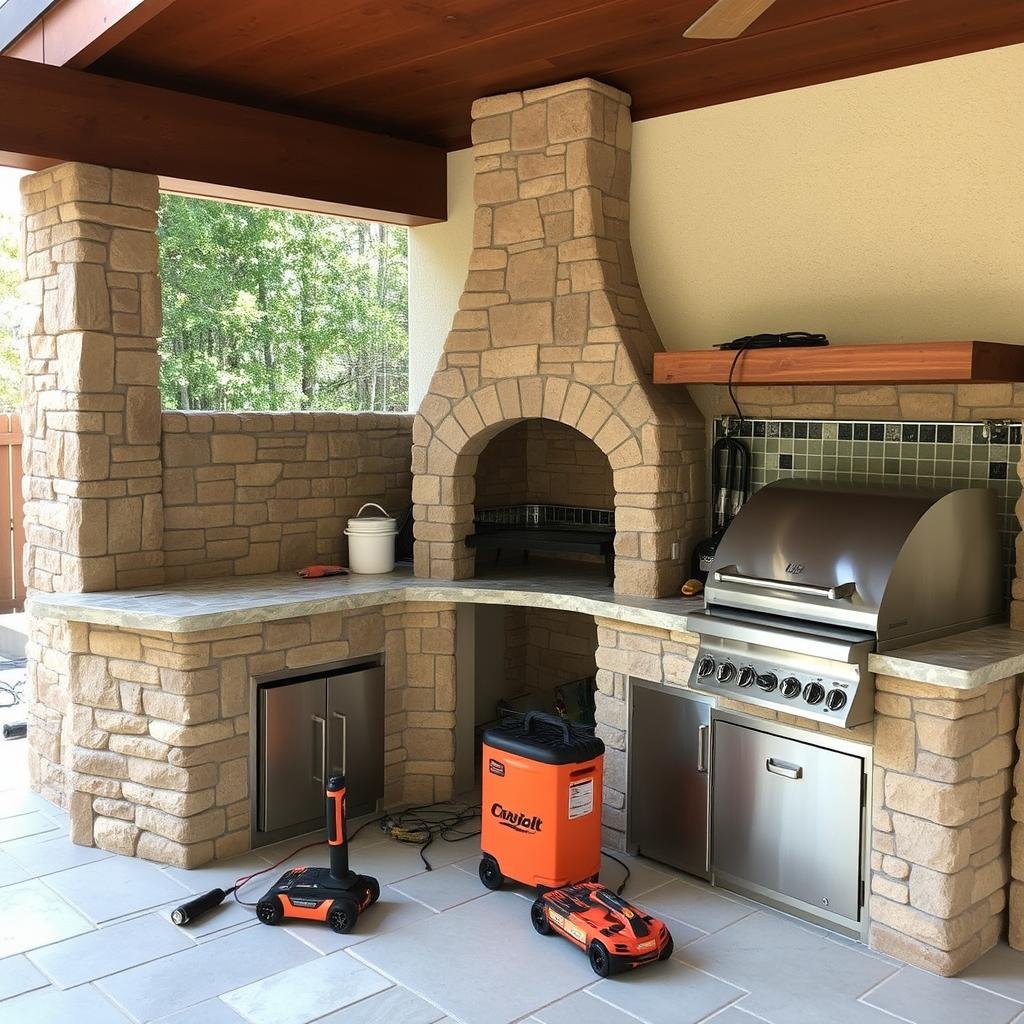
Advanced Level
Masonry work, complex utilities, custom features
Don’t hesitate to hire professionals for specialized work like gas lines, electrical connections, or plumbing. Safety should always be your priority.
Creating a Functional Layout
Your outdoor kitchen should have designated zones for efficient workflow:
- Hot Zone – Grills, burners, and cooking appliances
- Cold Zone – Refrigeration and ice makers
- Wet Zone – Sink and cleaning area
- Dry Zone – Food prep counters and cutting surfaces
- Storage Zone – Cabinets, drawers, and shelving
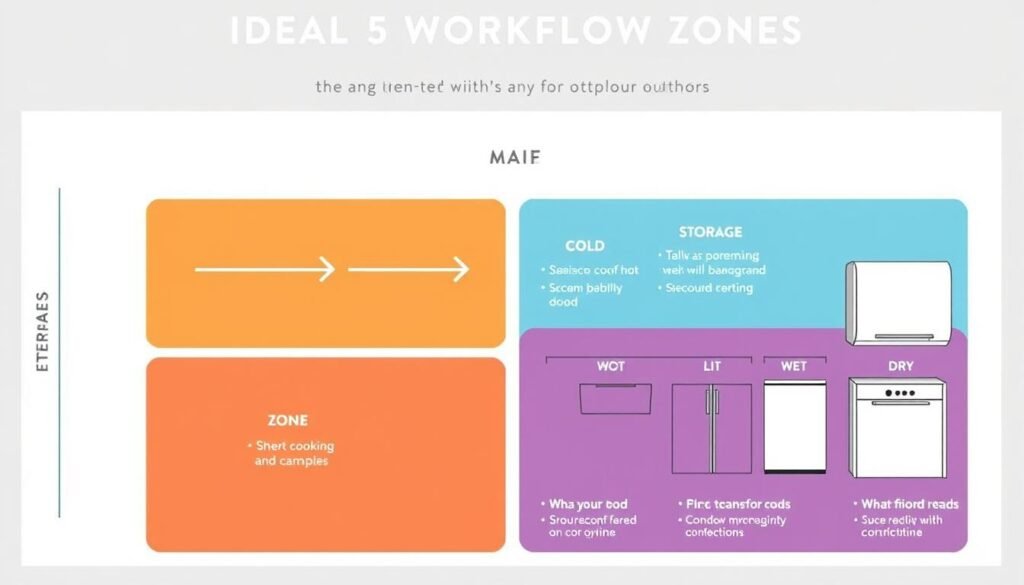
Properly arranged zones create an efficient cooking workflow
Plan Like a Pro
Get the right measuring and planning tools to ensure your outdoor kitchen is perfectly designed before you start building.
Choosing the Right Materials for Your DIY Outdoor Kitchen
Outdoor kitchens face harsh conditions—sun, rain, temperature fluctuations, and more. Selecting durable, weather-resistant materials is crucial for longevity.
Frame and Structure Options
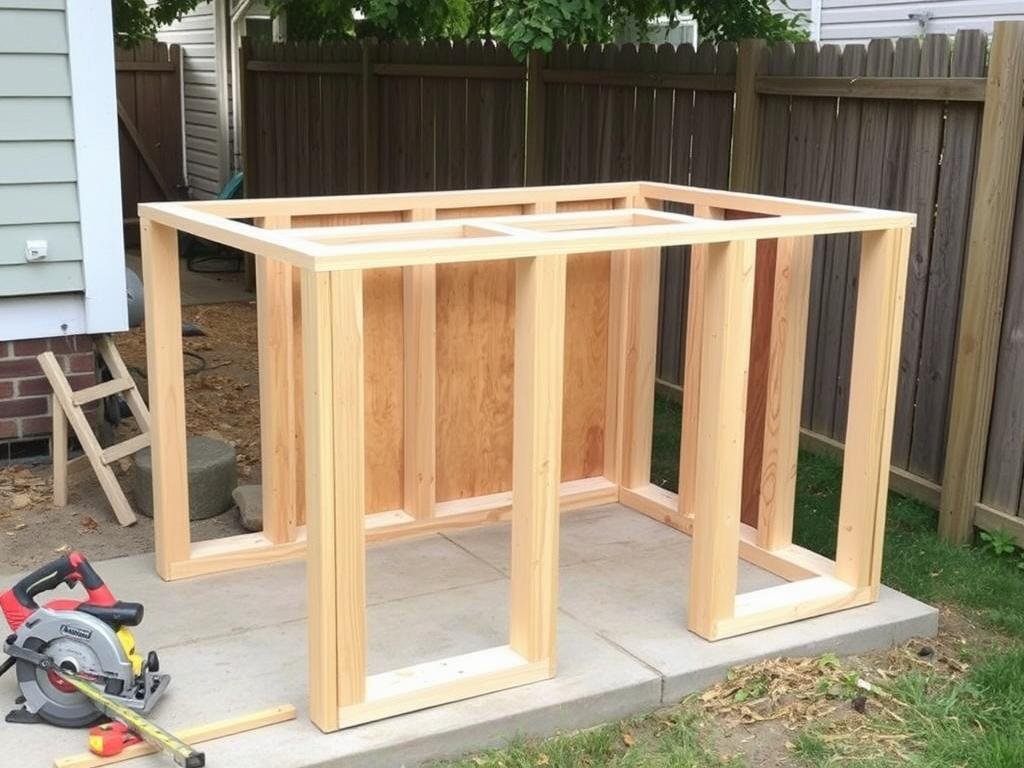
Pressure-treated wood frame construction
Frame Material Options
- Pressure-Treated Wood: Affordable, easy to work with, requires maintenance
- Metal Framing: Durable, fire-resistant, requires specialized tools
- Concrete Blocks: Very durable, weather-resistant, heavier and more difficult
- Modular Kits: Pre-designed, easier assembly, less customization
Important: If using wood framing near cooking appliances, you MUST use proper insulated jackets designed for combustible materials. This is a critical safety requirement.
Countertop Materials
Your countertop needs to withstand the elements while providing a functional work surface.
| Material | Pros | Cons | Maintenance | Cost |
| Concrete | Customizable, durable, heat-resistant | Heavy, can crack, porous | Seal every 1-3 years | $-$$ |
| Granite | Beautiful, very durable, heat-resistant | Expensive, heavy, limited DIY-ability | Seal annually | $$$ |
| Tile | Affordable, DIY-friendly, customizable | Grout can stain, uneven surface | Clean and seal grout regularly | $ |
| Stainless Steel | Sanitary, heat-resistant, durable | Can get hot in sun, shows fingerprints | Regular cleaning | $$-$$$ |
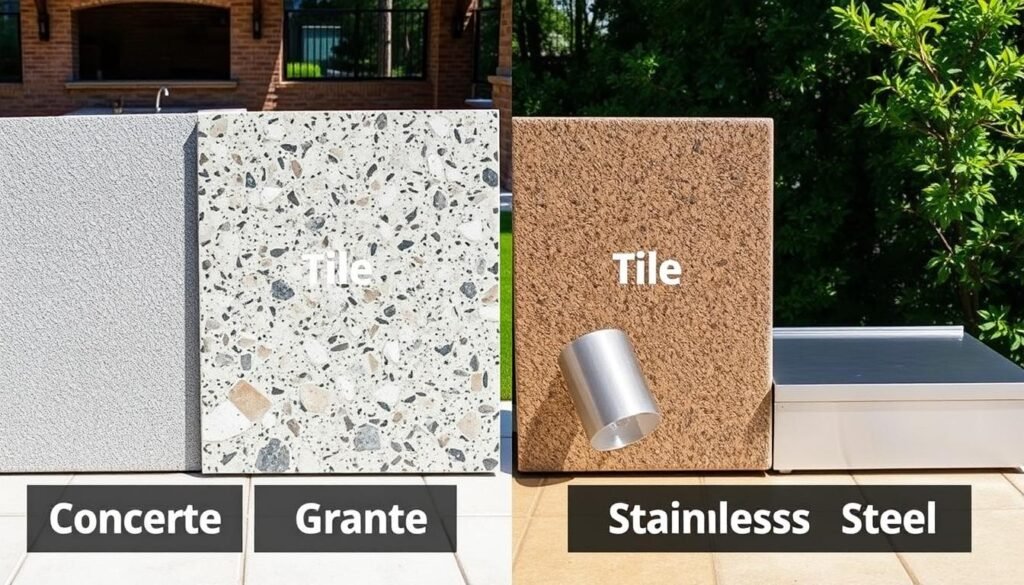
Popular outdoor kitchen countertop materials (L-R): Concrete, Granite, Tile, and Stainless Steel
Finishing and Cladding Materials
The exterior finish of your outdoor kitchen affects both aesthetics and durability:
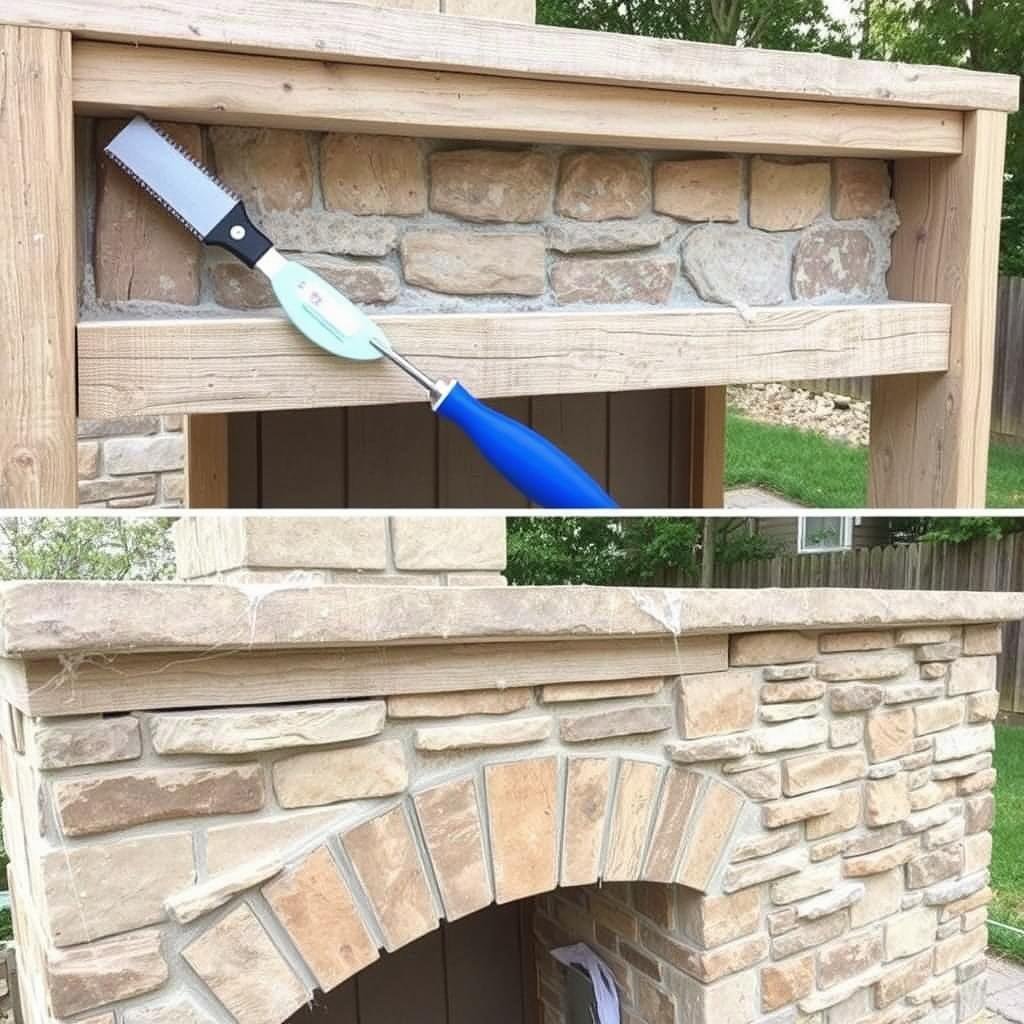
Stone Veneer
Natural appearance, durable, weather-resistant
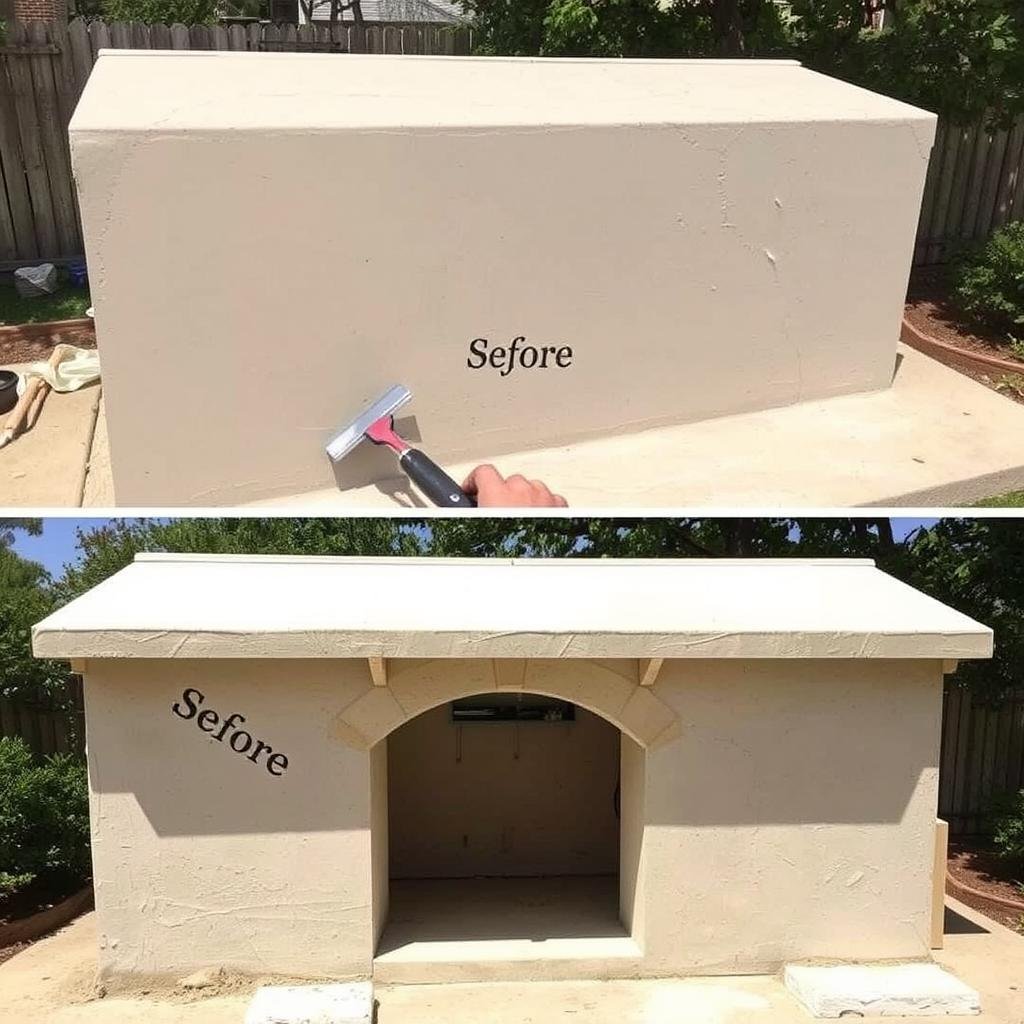
Stucco
Smooth finish, customizable color, affordable
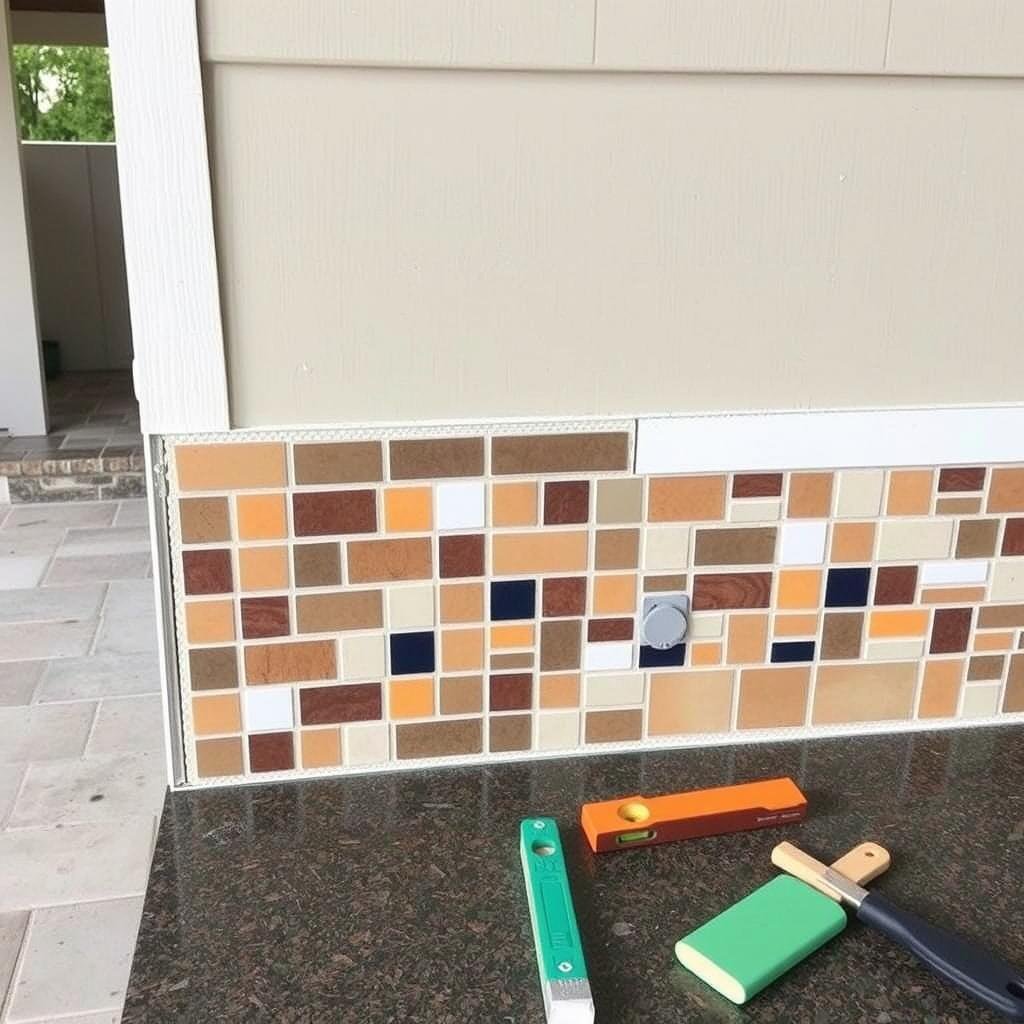
Tile
Endless design options, moderate durability
Find Quality Outdoor Materials
Browse our selection of weather-resistant materials specifically designed for outdoor kitchen projects.
Essential Components for Your DIY Outdoor Kitchen
A well-designed outdoor kitchen combines cooking functionality with convenience features. Let’s explore the key components you might want to include:
Cooking Appliances
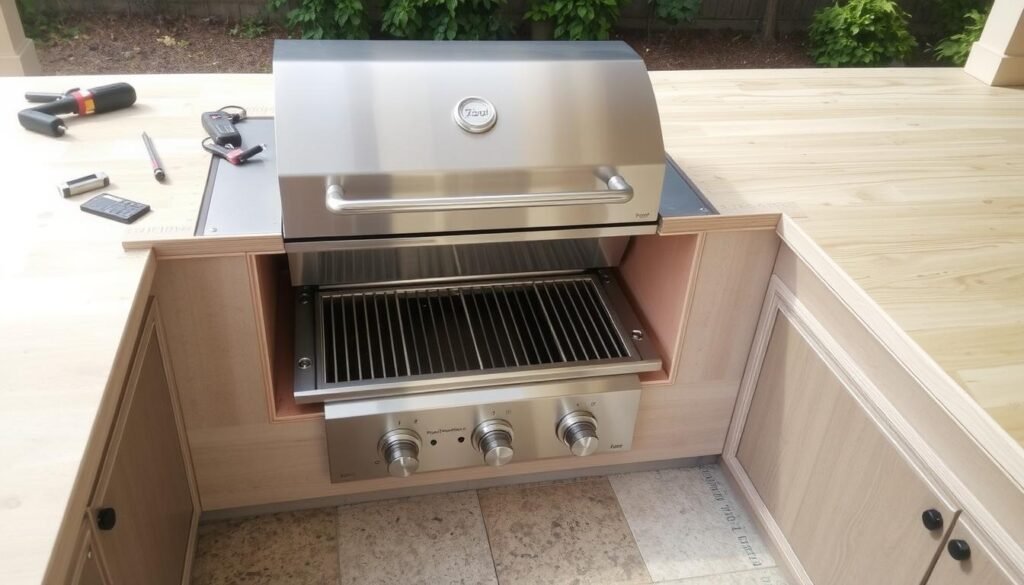
Installing a built-in grill is often the centerpiece of an outdoor kitchen
- Built-in Grill – The heart of most outdoor kitchens. Consider size, fuel type (gas, charcoal, pellet), and features like searing stations or rotisseries.
- Side Burners – Great for cooking sides, sauces, or boiling while grilling.
- Pizza Oven – A popular addition for authentic wood-fired pizzas.
- Smoker – For slow-cooked, flavorful meats and vegetables.
Safety First: Always follow manufacturer specifications for clearance around cooking appliances. Proper ventilation and heat barriers are essential to prevent fires.
Storage and Functional Elements
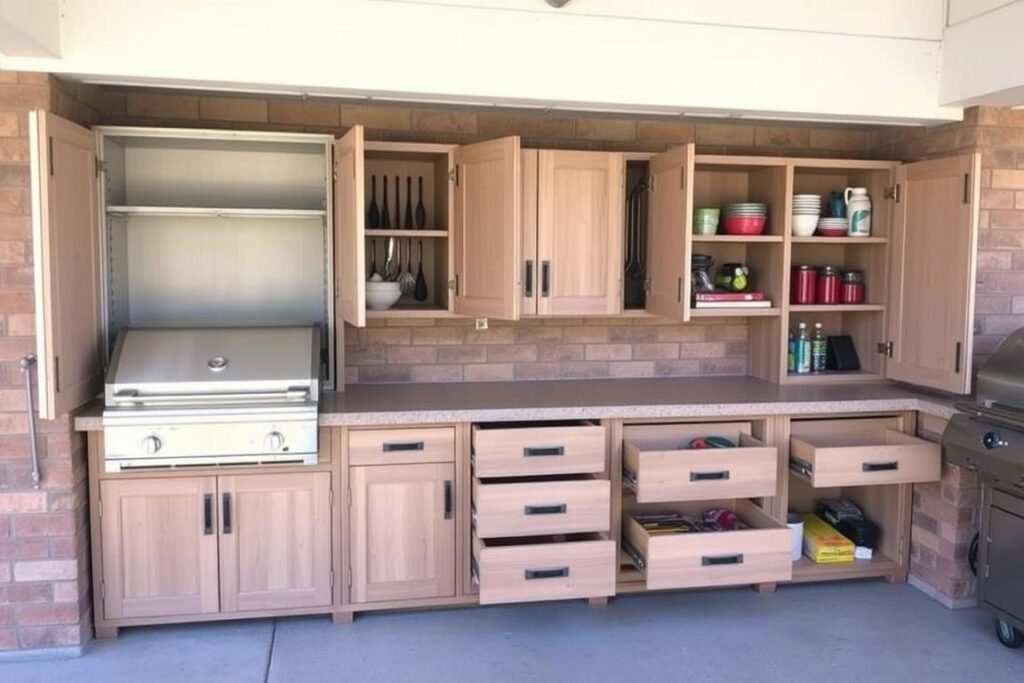
Well-designed storage keeps your outdoor kitchen organized
- Cabinets & Drawers – Store utensils, tools, and supplies. Choose weather-resistant materials.
- Countertop Space – Allow enough room for food prep (minimum 24″ on each side of cooking areas).
- Sink – Convenient for washing hands and food prep. Consider water supply and drainage.
- Refrigeration – Outdoor-rated refrigerators or coolers keep beverages and ingredients cold.
- Trash/Recycling – Integrated bins keep your space tidy.
Comfort and Convenience Features
- Lighting – Task lighting for cooking areas and ambient lighting for dining.
- Overhead Cover – Pergola, roof extension, or large umbrella for shade and weather protection.
- Seating – Bar-height counter with stools or adjacent dining area.
- Heating – Fire pit, patio heater, or built-in fireplace for cooler evenings.
- Entertainment – Weather-resistant speakers or TV mount.
Thoughtful comfort features extend the usability of your outdoor kitchen
Essential Outdoor Kitchen Appliances
Find the perfect cooking equipment for your DIY outdoor kitchen project.
Three Approaches to Building Your DIY Outdoor Kitchen
Depending on your skills, budget, and time constraints, you can choose from three main approaches to creating your outdoor kitchen:
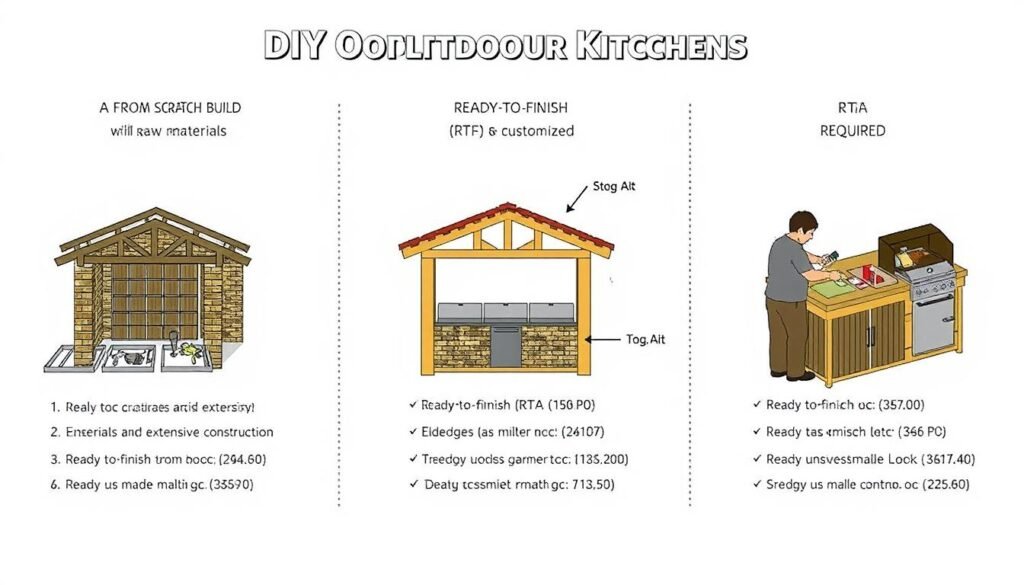
Choose the building method that matches your skills and available time
Method 1: Building from Scratch
This approach gives you complete customization but requires the most skills and time.
- Create a foundation – Typically a concrete pad or pavers
- Build the frame – Using wood, metal, or concrete blocks
- Run utilities – Gas, water, and electrical lines (hire professionals if needed)
- Apply sheathing – Cover the frame with cement board or similar material
- Add a scratch coat – Apply mortar to create a surface for finishing materials
- Install countertops – Cut and secure your chosen countertop material
- Apply finishing materials – Stone, stucco, tile, or other cladding
- Install appliances – Set your grill and other components in place
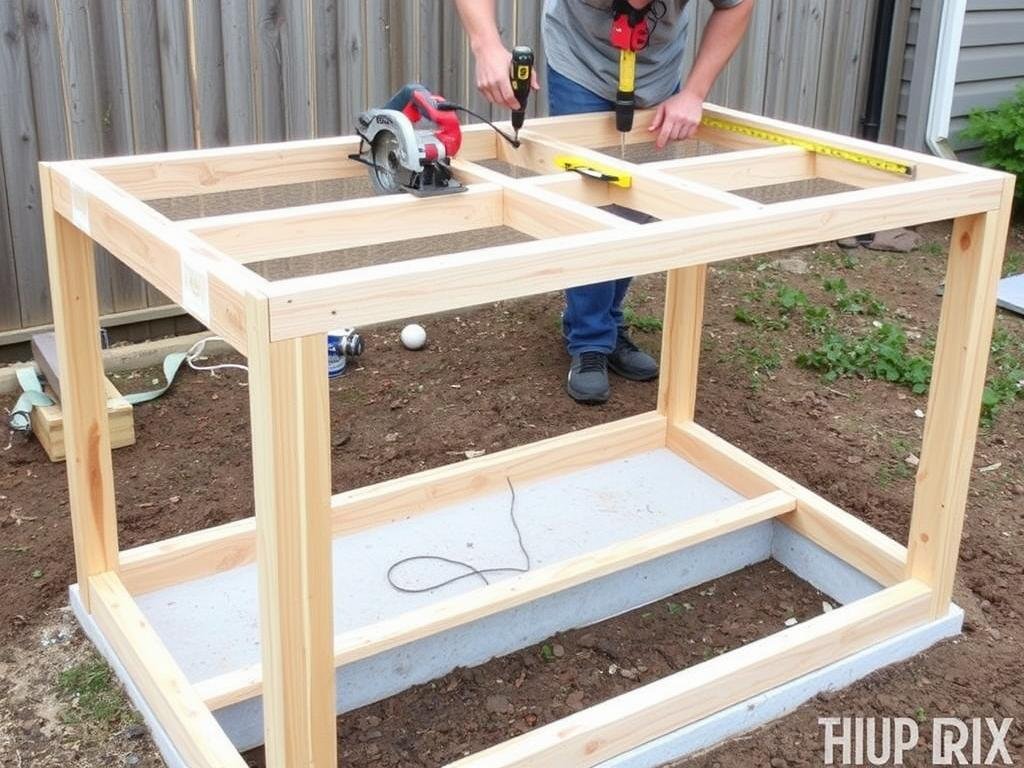
Building a frame from scratch offers maximum customization
Method 2: Ready-to-Finish (RTF) Kits
RTF kits provide the structural elements while letting you customize the finishing.
- Assemble the pre-made frame – Connect the provided structural pieces
- Create appliance cutouts – Measure and cut openings for your specific appliances
- Install support elements – Add grill supports and other reinforcements
- Apply finishing materials – Customize with your choice of stone, stucco, etc.
- Install countertops – Add your preferred countertop material
- Set appliances in place – Install your grill and other components
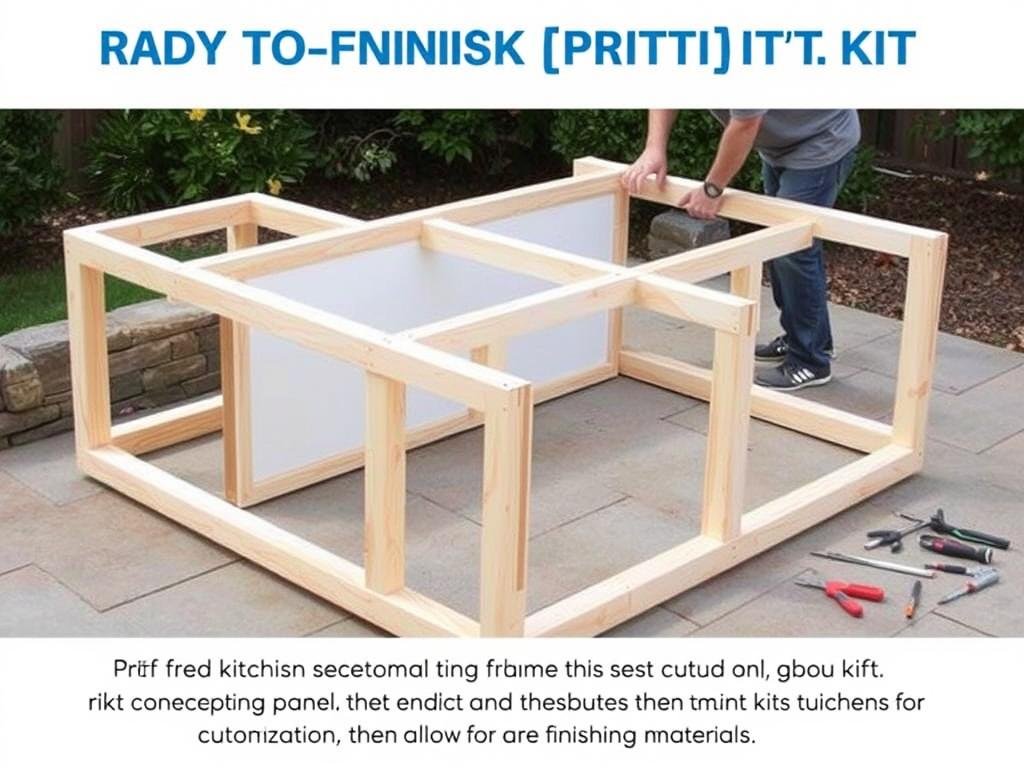
RTF kits simplify the structural work while allowing custom finishes
Method 3: Ready-to-Assemble (RTA) Kits
The simplest approach, RTA kits come nearly complete and require minimal assembly.
- Prepare your site – Ensure you have a level surface
- Unpack components – Organize all the pre-finished pieces
- Assemble the structure – Connect panels according to instructions
- Install countertops – Place the pre-cut countertops
- Add appliances – Drop in your grill and other components
- Connect utilities – Hook up gas, water, and electric as needed
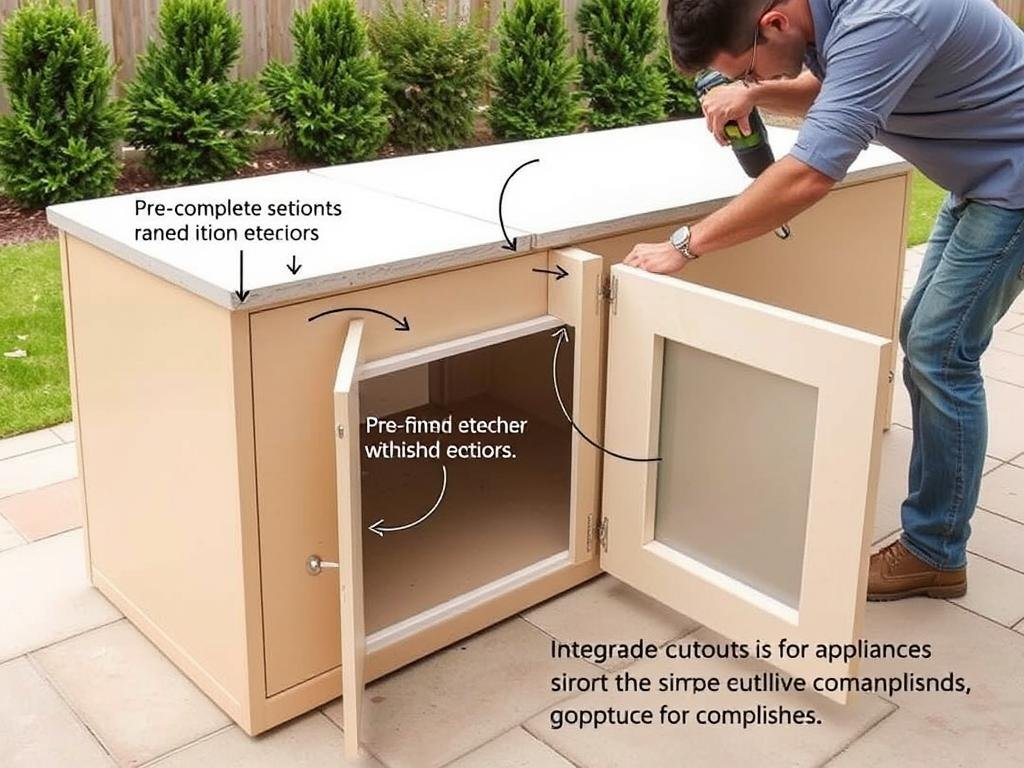
RTA kits offer the fastest path to a finished outdoor kitchen
Get the Right Tools for Your Build
Find all the essential tools you’ll need based on your chosen building method.
Step-by-Step Guide to Building a Basic DIY Outdoor Kitchen
Let’s walk through the process of building a straightforward outdoor kitchen with a grill, countertop space, and storage. This guide assumes you’re building from scratch with a wood frame on an existing concrete pad.
Step 1: Gather Materials and Tools
Materials Needed:
- Pressure-treated 2x4s and 4x4s
- Cement board
- Concrete blocks (optional)
- Exterior screws and bolts
- Stone veneer or finishing material
- Mortar and grout
- Countertop material
- Built-in grill and appliances
- Weather-resistant cabinets/doors
Tools Needed:
- Circular saw or miter saw
- Drill/driver
- Level and square
- Measuring tape
- Masonry tools (if using stone)
- Safety equipment (gloves, goggles)
- Angle grinder (for cuts)
- Mortar mixer
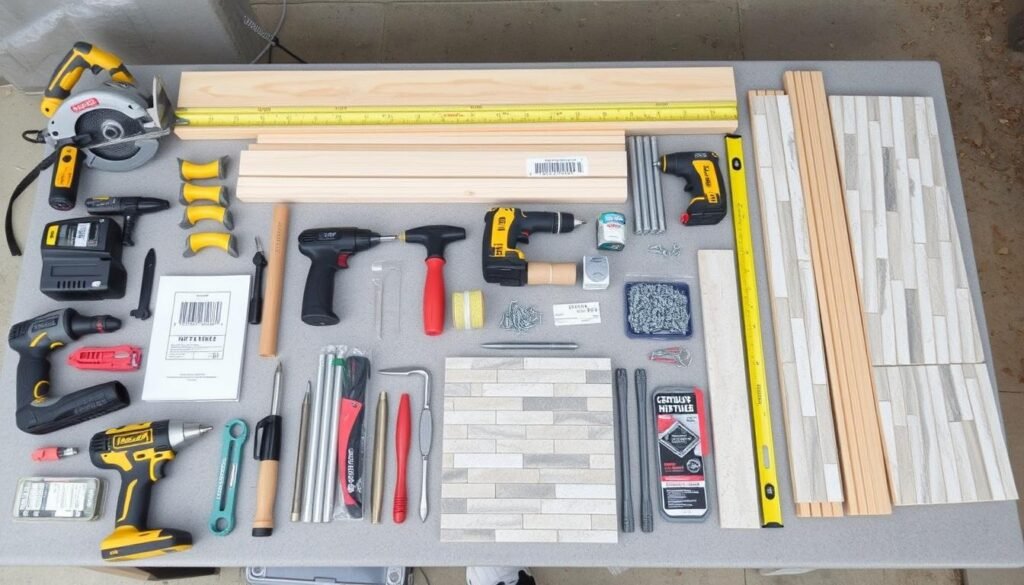
Proper preparation with all necessary tools and materials is crucial
Step 2: Build the Frame
- Measure and mark your layout on the concrete pad
- Cut 2x4s to create a base frame according to your design
- Secure the frame to the concrete using concrete anchors
- Add vertical 2×4 supports at corners and every 16″ along the frame
- Install horizontal supports for countertop and appliance openings
- Double-check that everything is level and square
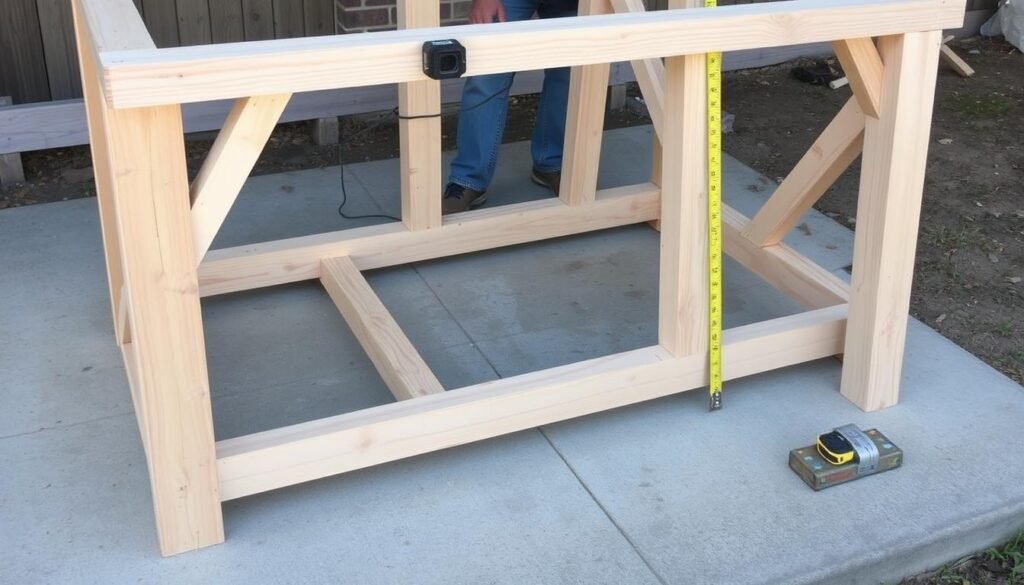
A solid, square frame is the foundation of your outdoor kitchen
Step 3: Create Appliance Openings
- Refer to the manufacturer’s specifications for your grill and appliances
- Measure and mark the openings in your frame
- Add additional support around openings
- For combustible materials (wood), ensure you have proper clearance or insulated jackets
Critical Safety Note: Always follow the manufacturer’s specifications for clearance around heat-producing appliances. Improper installation can create fire hazards.
Step 4: Apply Cement Board
- Cut cement board to fit the exterior of your frame
- Secure it with exterior-grade screws every 8 inches
- Cut out openings for appliances and access doors
- Apply mesh tape to seams between boards
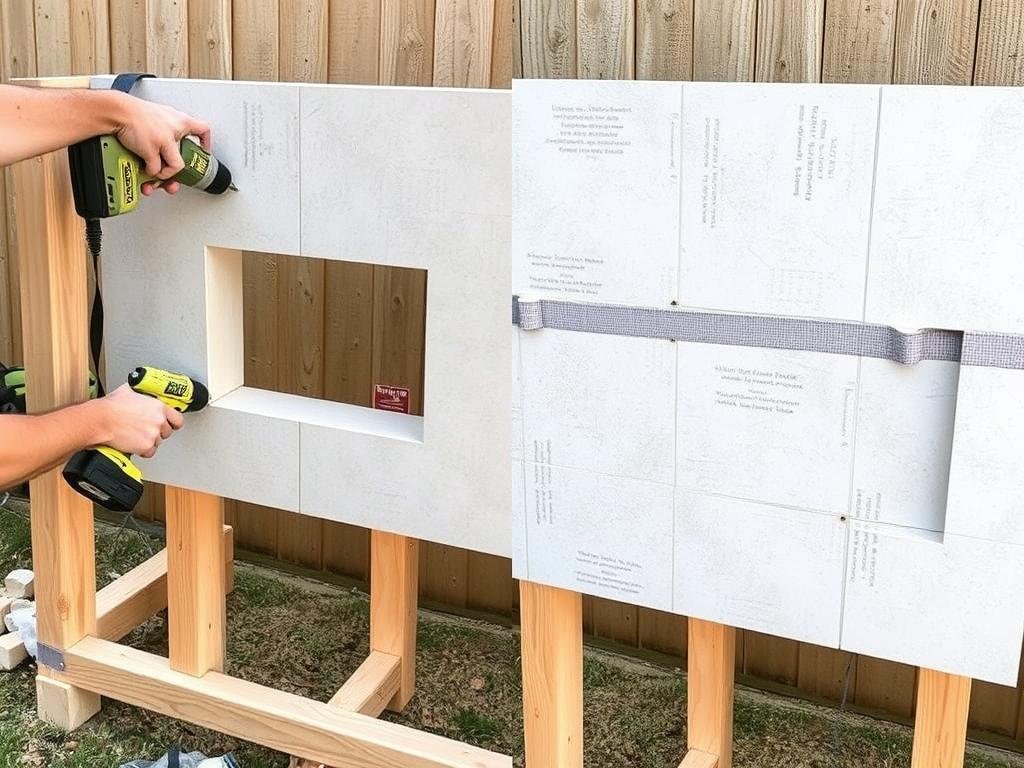
Cement board provides a durable base for finishing materials
Step 5: Apply a Scratch Coat
- Mix mortar according to package directions
- Apply a ½-inch layer of mortar to the cement board
- Use a notched trowel to create horizontal lines in the mortar
- Allow the scratch coat to cure for 24 hours
Step 6: Install Finishing Materials
- For stone veneer: Apply mortar to the back of each stone and press onto the scratch coat
- Start from the bottom and work up, using spacers if needed
- Cut stones as needed using a masonry saw or grinder
- Allow mortar to set according to manufacturer’s instructions
- Apply grout between stones if required
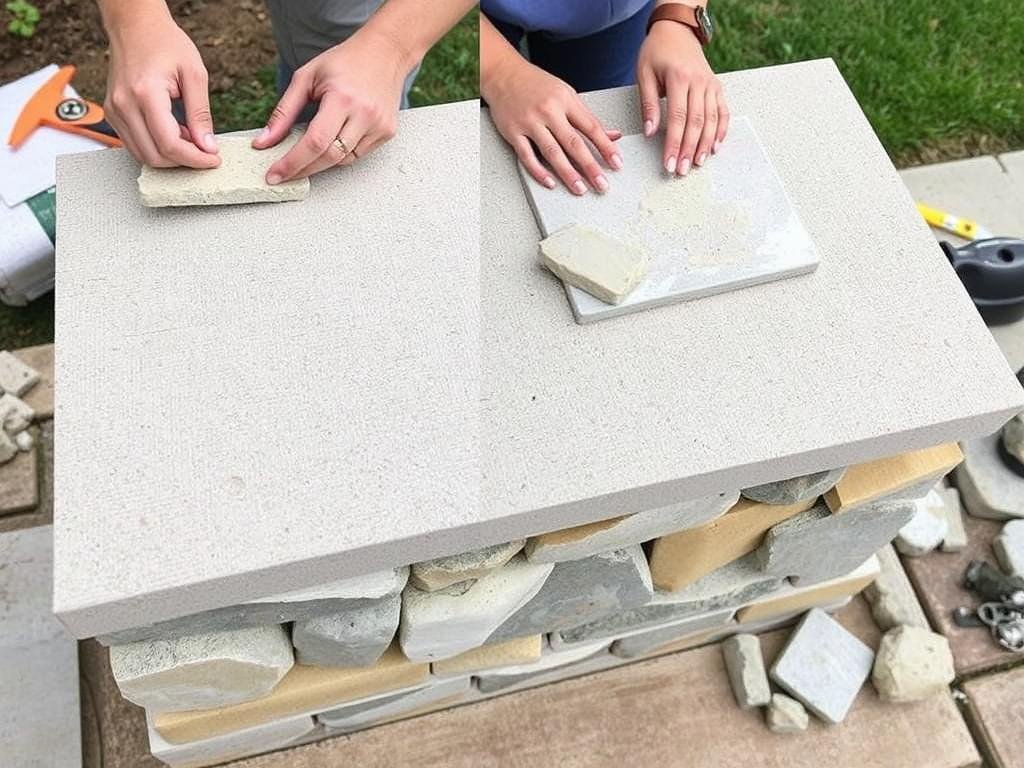
Stone veneer creates a durable and attractive finish
Step 7: Install Countertops
- Measure and cut your countertop material (or have it professionally fabricated)
- Create cutouts for the grill and other built-in appliances
- Apply construction adhesive to the top of the frame
- Carefully set the countertop in place
- Seal edges and seams as appropriate for your material
Step 8: Install Appliances and Fixtures
- Drop in your grill and other appliances
- Connect gas lines (have a professional handle this)
- Install any electrical components (hire an electrician if needed)
- Add cabinet doors and storage components
- Install any plumbing fixtures like sinks
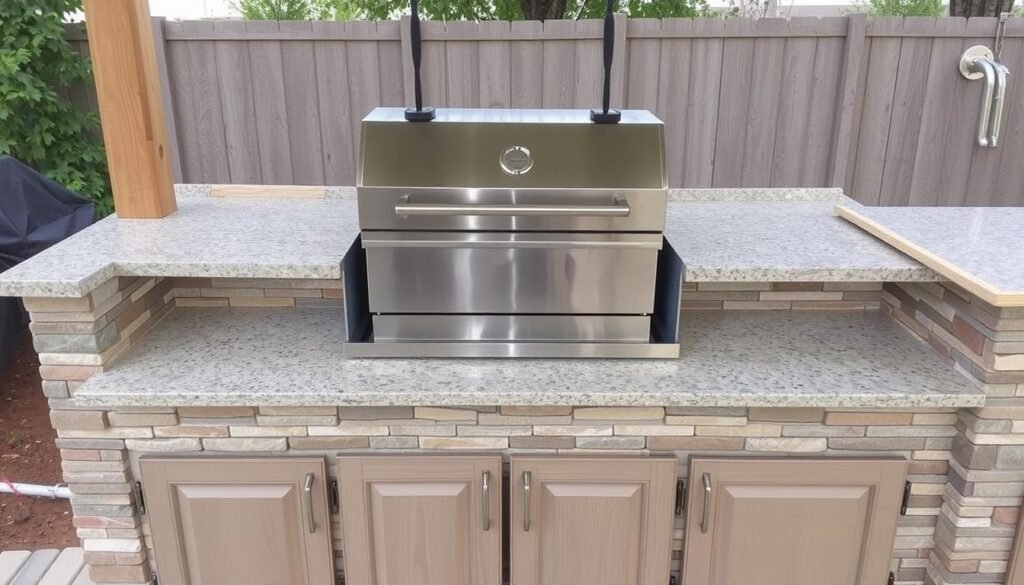
Installing appliances is one of the final and most satisfying steps
Ready to Start Building?
Find everything you need for your DIY outdoor kitchen project in one place.
Styling and Personalizing Your DIY Outdoor Kitchen
Once the construction is complete, it’s time to add those personal touches that make your outdoor kitchen uniquely yours.
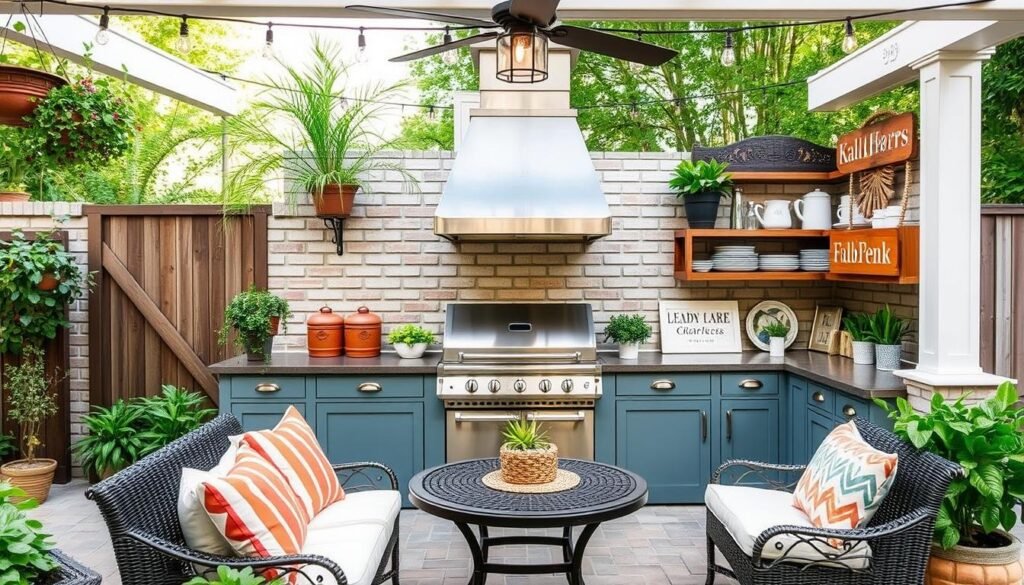
Thoughtful styling transforms your outdoor kitchen into an inviting space
Lighting for Ambiance and Function
- Task Lighting – Ensure cooking areas are well-lit for safety
- Ambient Lighting – String lights, lanterns, or recessed lighting for atmosphere
- Accent Lighting – Highlight architectural features or plantings
- Solar Options – Eco-friendly lighting that doesn’t require electrical work
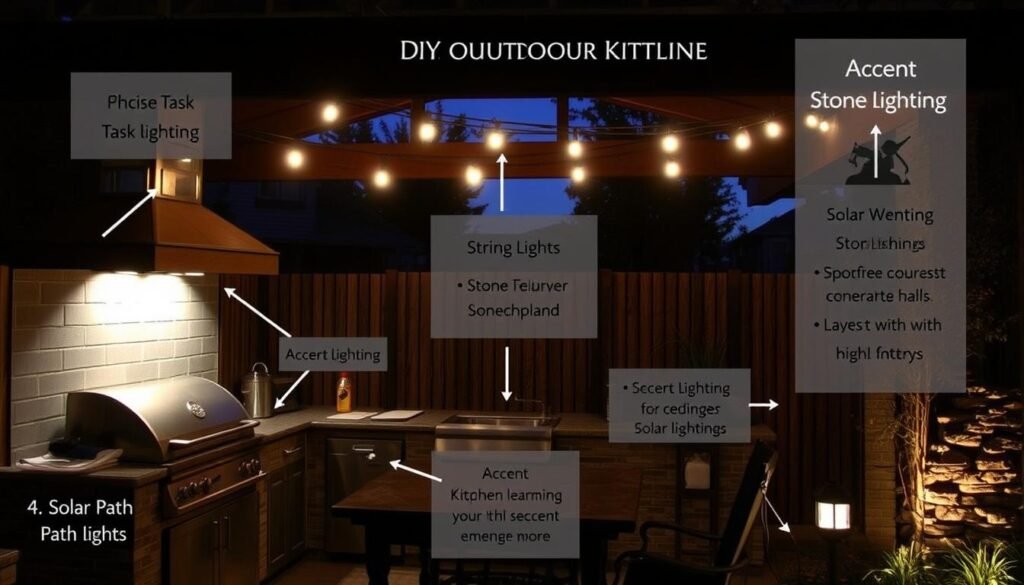
Proper lighting extends the usability of your outdoor kitchen into the evening
Seating and Dining Areas
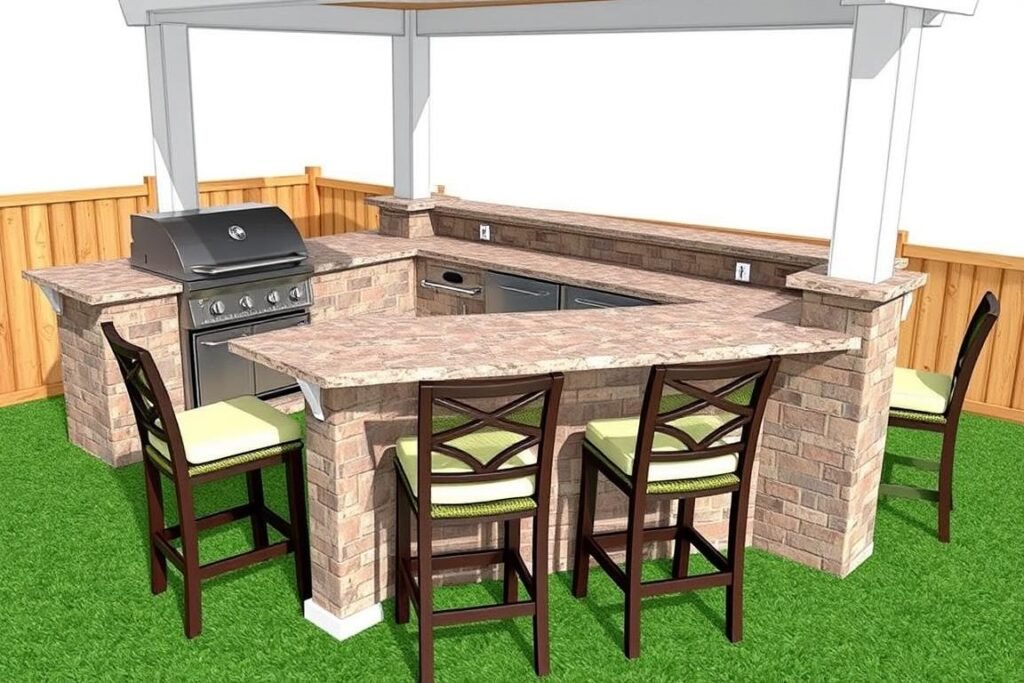
Integrated bar seating creates a social cooking experience
- Bar Seating – Counter-height seating creates a casual, social atmosphere
- Dining Table – Nearby table for more formal meals
- Lounge Area – Comfortable seating for relaxing before or after meals
- Weather-Resistant Fabrics – Choose materials designed for outdoor use
- Shade Options – Umbrellas or pergolas make seating comfortable in hot weather
Decorative Elements
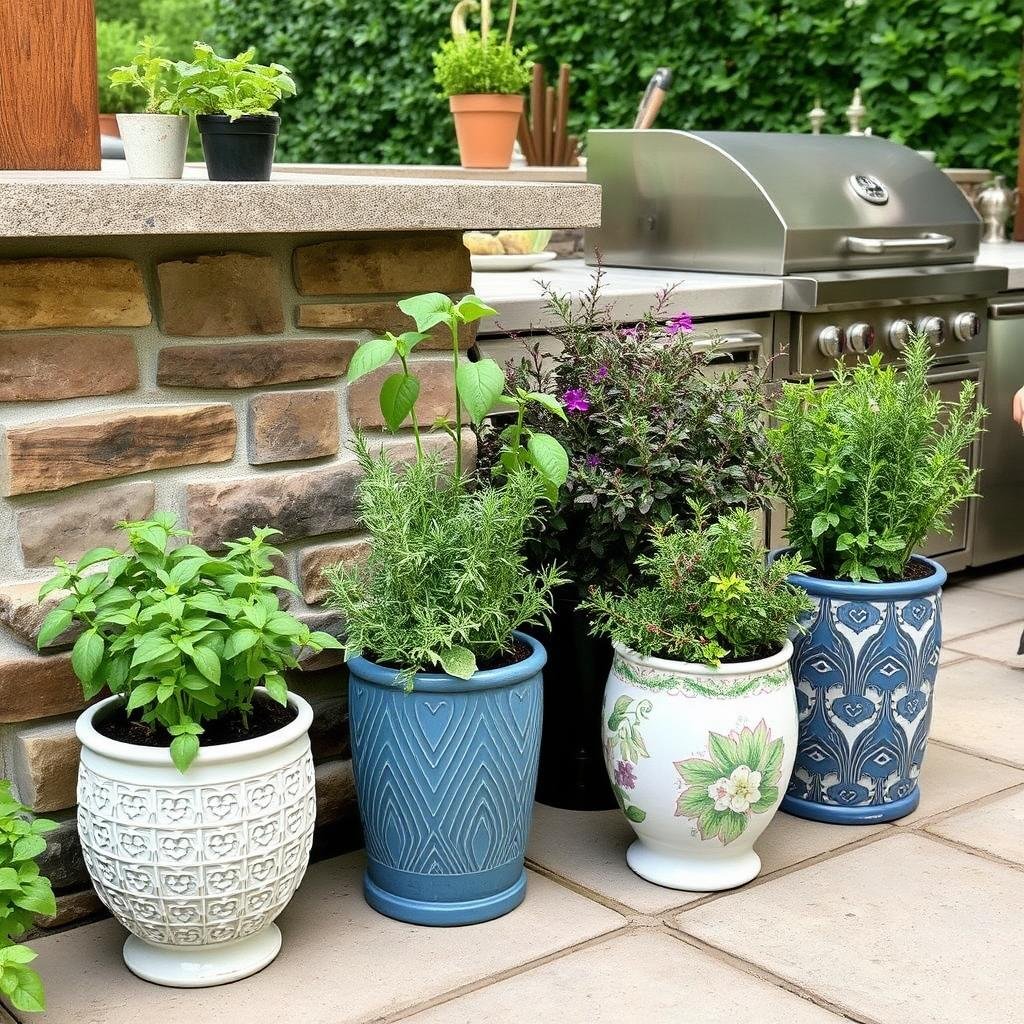
Plantings
Herb gardens, container plants, vertical gardens
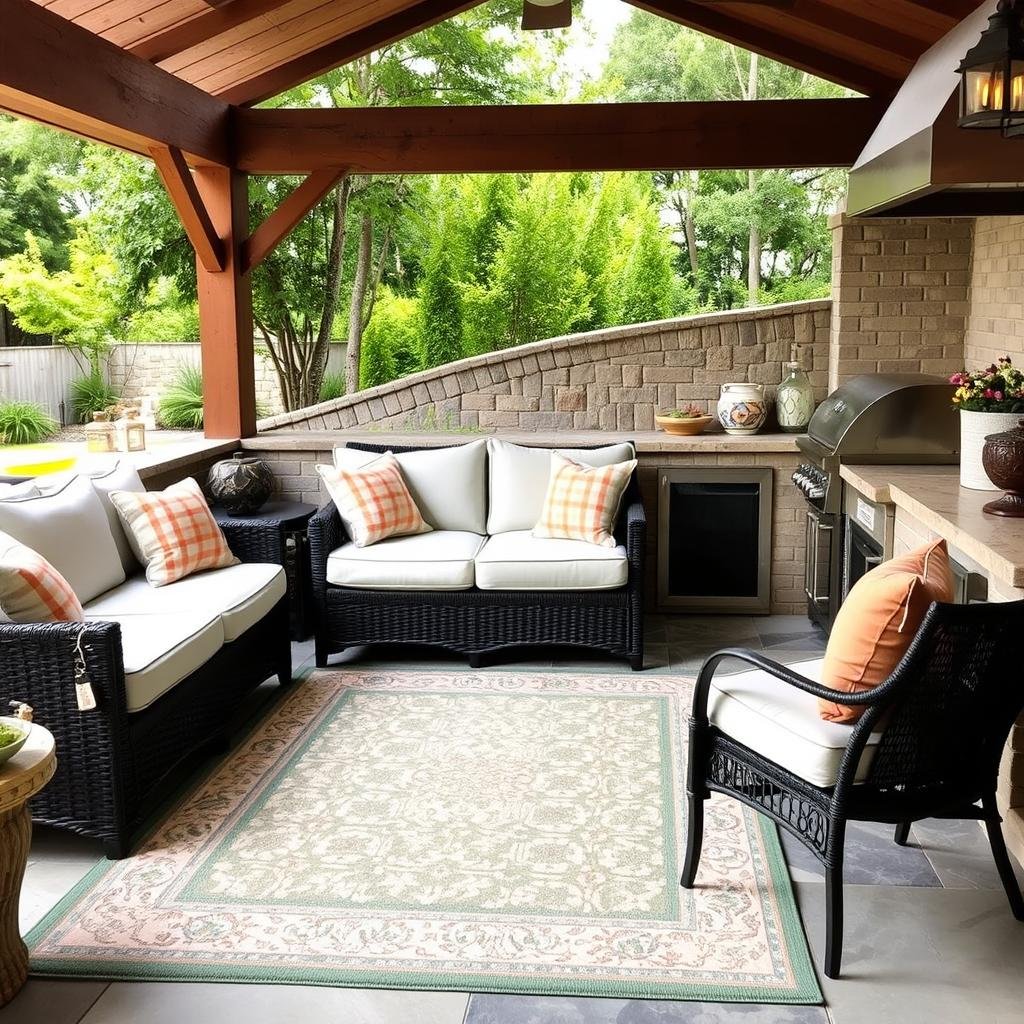
Textiles
Outdoor rugs, cushions, throw pillows
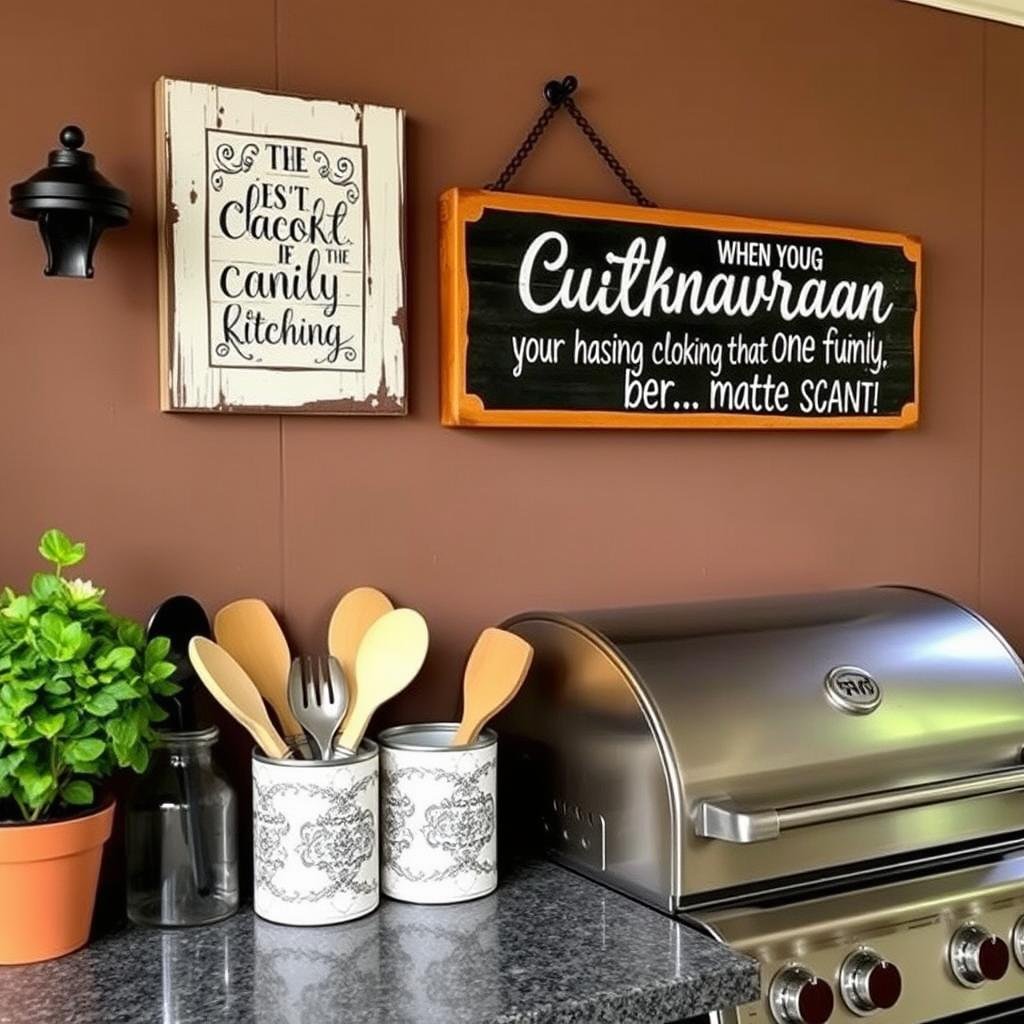
Accessories
Wall art, signage, decorative containers
Style Your Outdoor Space
Find the perfect decorative elements to personalize your outdoor kitchen.
Maintaining Your DIY Outdoor Kitchen
Proper maintenance ensures your outdoor kitchen remains beautiful and functional for years to come.

Regular maintenance protects your investment and extends its lifespan
Seasonal Maintenance Checklist
Spring Preparation:
- Deep clean all surfaces
- Inspect for winter damage
- Check gas connections
- Clean and calibrate grill
- Reseal countertops if needed
- Touch up any damaged finishes
Fall Winterization:
- Clean all appliances thoroughly
- Shut off and drain water lines
- Cover grill and appliances
- Store removable items indoors
- Secure cabinet doors
- Consider a full kitchen cover for harsh climates
Routine Care Tips
- Countertops – Clean after each use; reseal according to material requirements
- Grill – Brush grates after each use; deep clean monthly
- Cabinets – Wipe down regularly; check for moisture issues
- Stone and Masonry – Inspect for cracks; reseal annually
- Metal Components – Check for rust; apply protective coatings as needed
- Plumbing – Check for leaks; winterize in cold climates
Protect Your Outdoor Investment
Find quality covers and maintenance products to keep your outdoor kitchen looking great year after year.
Creating Pinterest-Worthy Photos of Your DIY Outdoor Kitchen
Share your outdoor kitchen journey and inspire others by creating stunning, pinnable images for Pinterest.
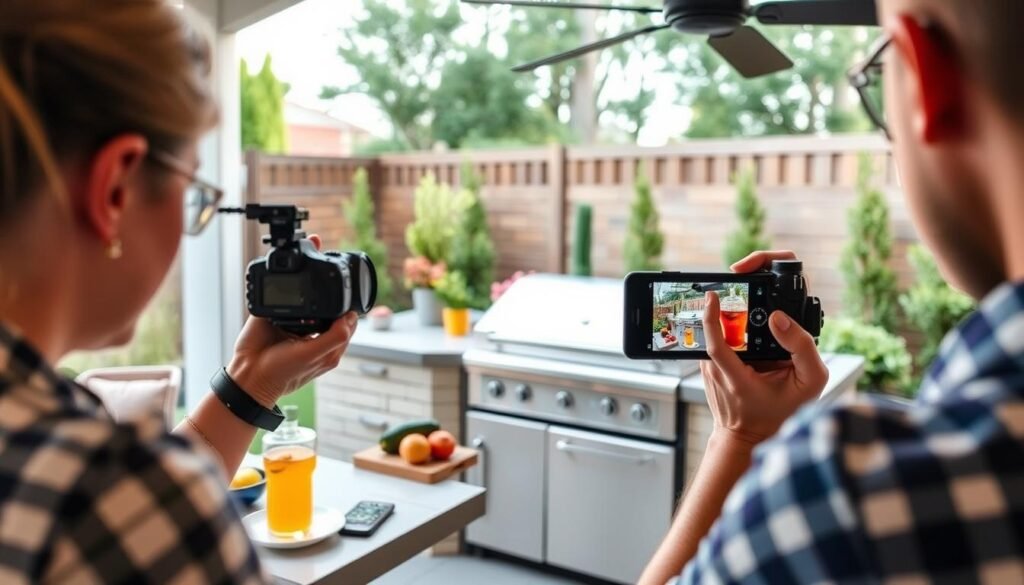
Great photography helps showcase your hard work and inspire others
Photo Ideas to Document Your Project
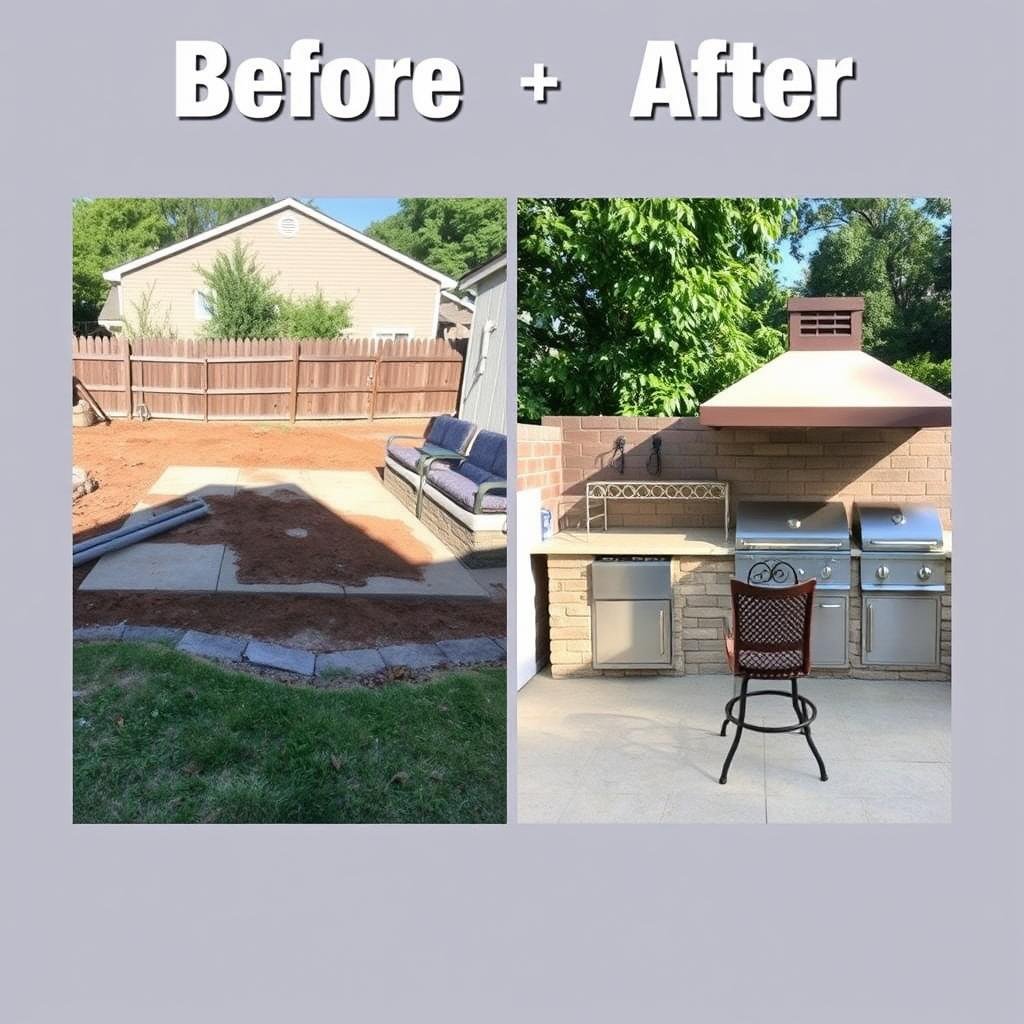
Before & After
Dramatic transformations get the most engagement
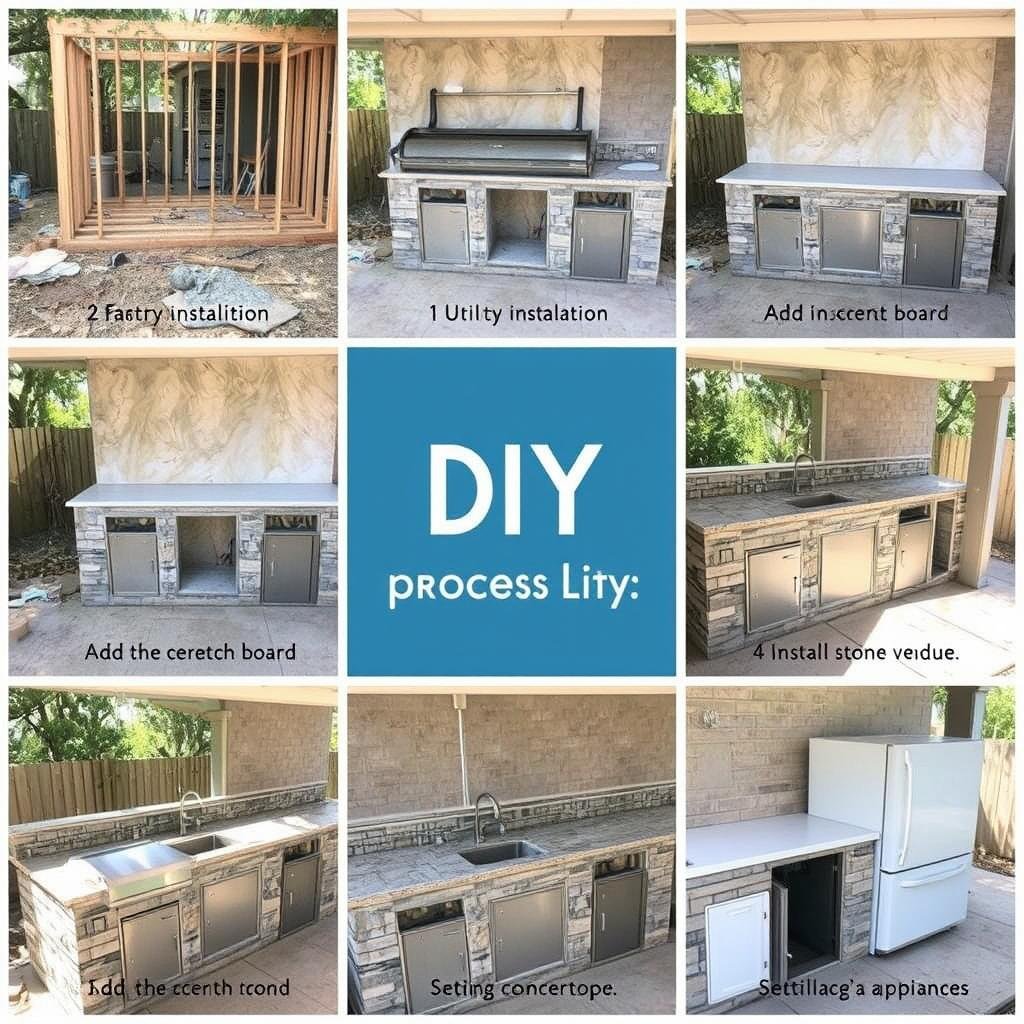
Process Shots
Step-by-step images of the building process
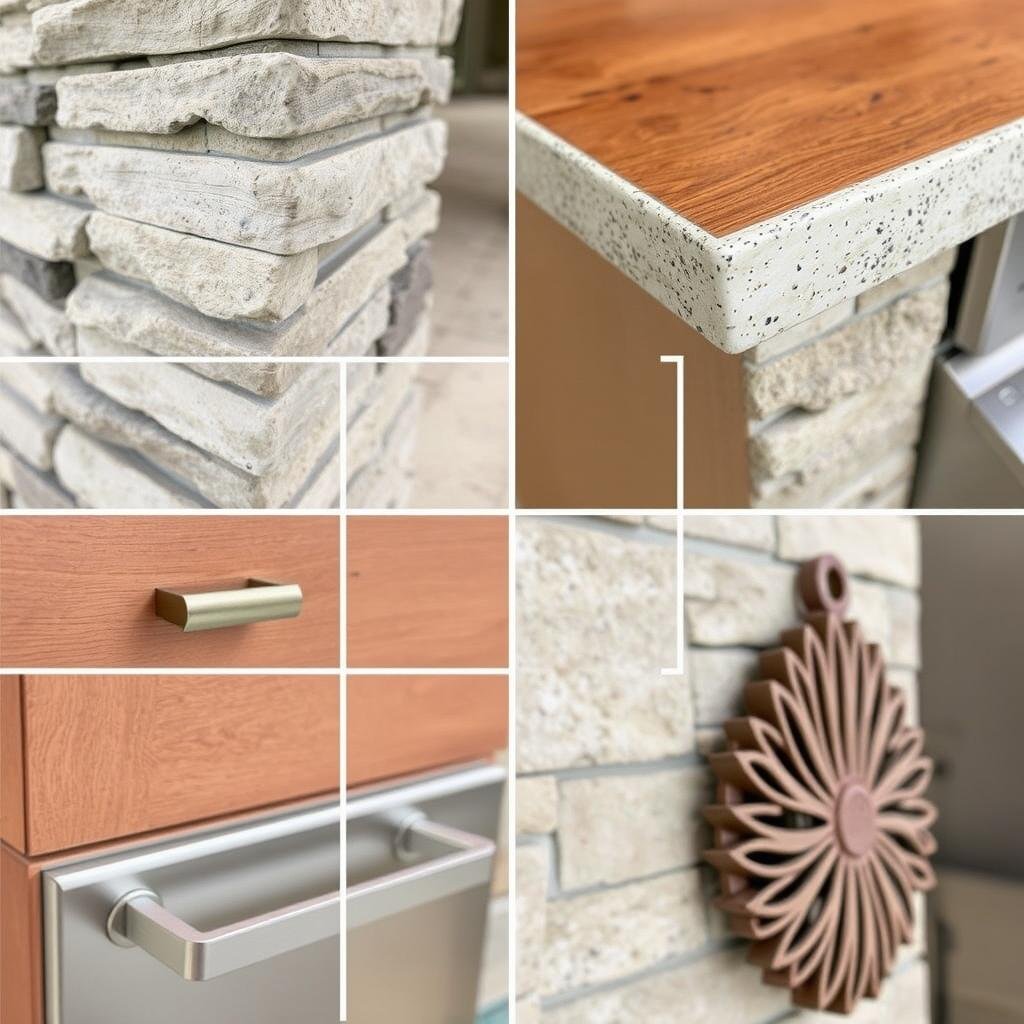
Detail Closeups
Highlight special features and craftsmanship
Styling Tips for Great Photos
- Clean and Declutter – Remove hoses, tools, and other distractions
- Add Life – Include fresh herbs, colorful ingredients, or a prepared dish
- Consider Lighting – Shoot during “golden hour” for warm, flattering light
- Style with Props – Add cutting boards, utensils, and glassware
- Show Scale – Include people using the space to demonstrate functionality
- Capture Multiple Angles – Wide shots, medium views, and close details
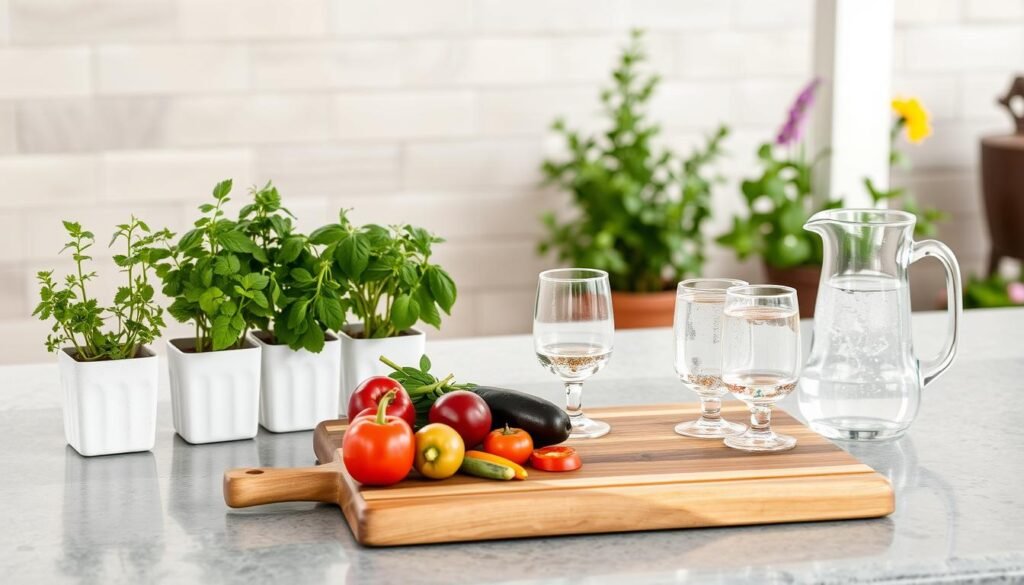
Thoughtful styling makes your photos more engaging and shareable
Capture Your Creation
Find photography accessories to help document your DIY outdoor kitchen journey.
Your DIY Outdoor Kitchen Journey Starts Now
Building your own outdoor kitchen is a rewarding project that enhances your home and creates a space for countless memories with family and friends. Whether you choose to build from scratch, use a ready-to-finish kit, or opt for a simple ready-to-assemble solution, the satisfaction of cooking in a space you created yourself is unmatched.
Remember that your outdoor kitchen doesn’t need to be completed all at once. Many successful projects evolve over time as budget allows and as you discover what features you use most. Start with the essentials—a good grill and adequate counter space—and expand from there.
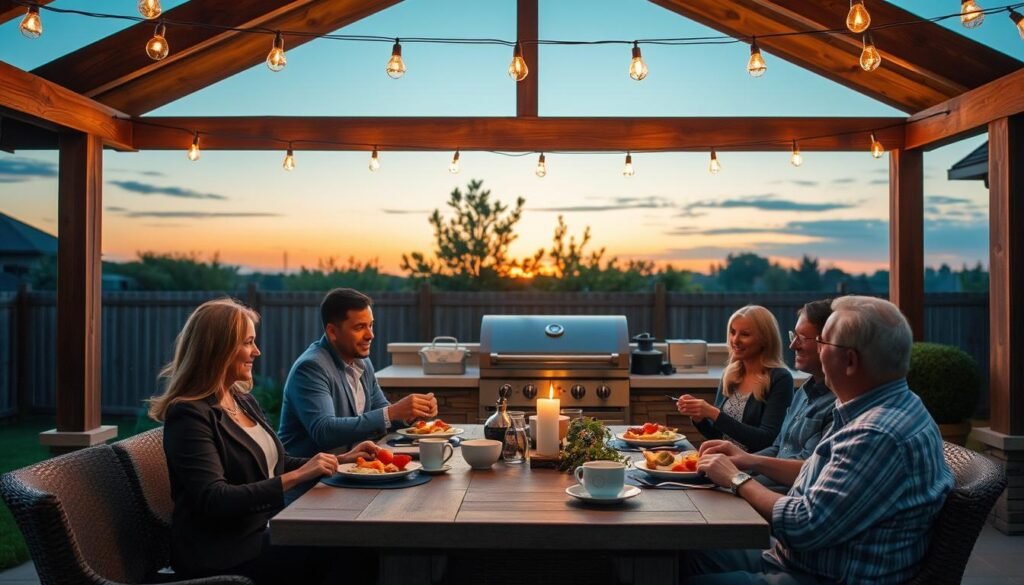
Your DIY outdoor kitchen will become the heart of outdoor entertaining
We hope this guide has inspired you to take the first step toward creating your dream outdoor kitchen. With proper planning, the right materials, and a bit of patience, you’ll soon be enjoying delicious meals in your custom outdoor space.
Start Your Outdoor Kitchen Adventure
Browse all the supplies you need to begin your DIY outdoor kitchen project today.